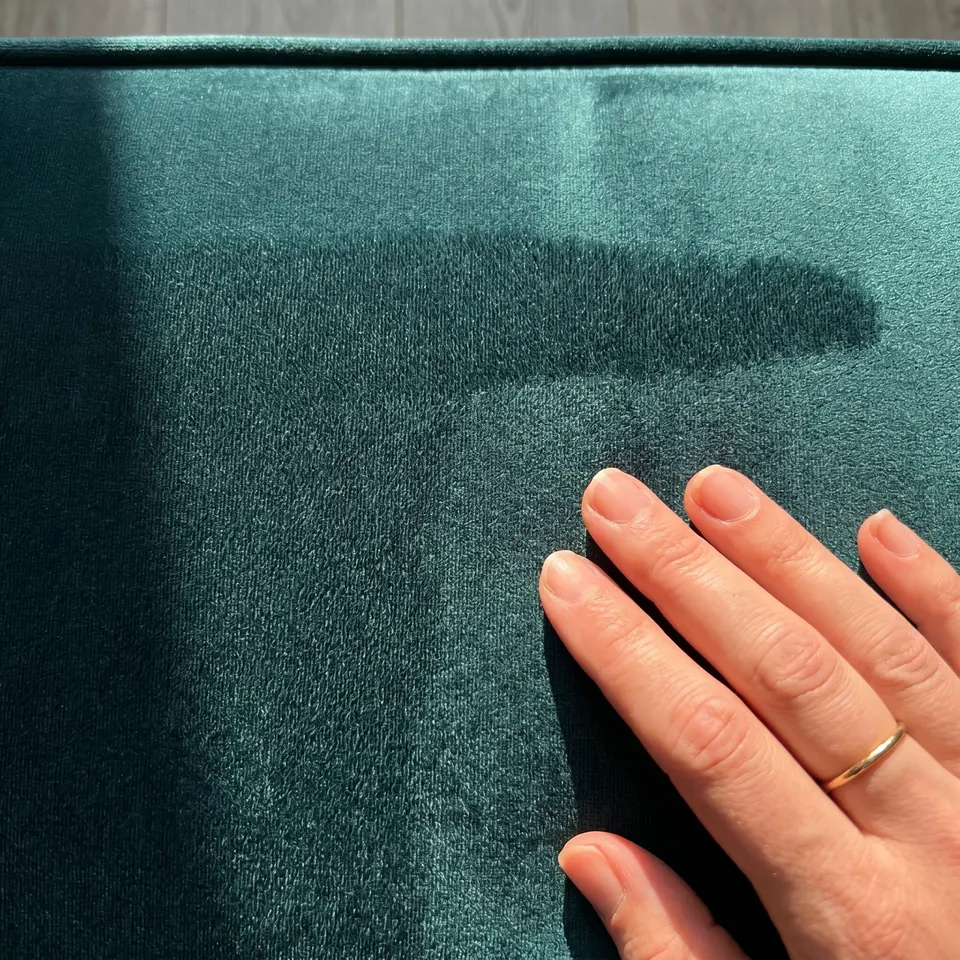
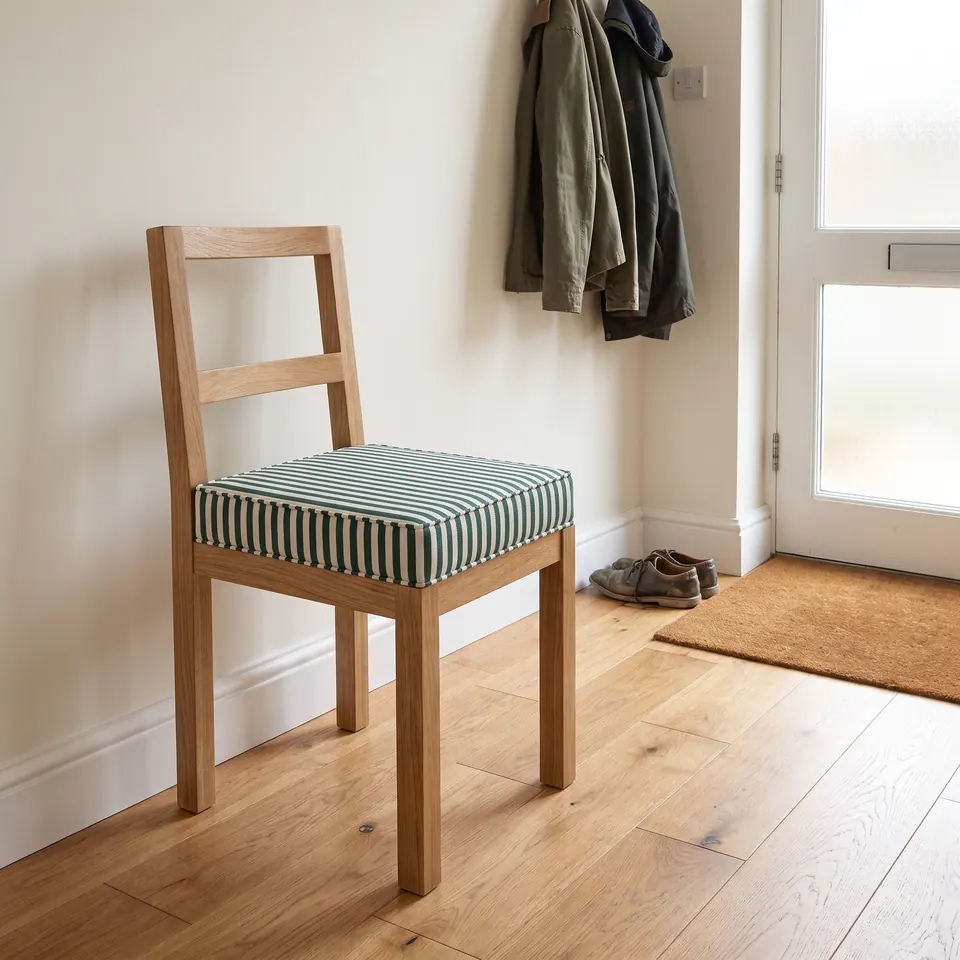
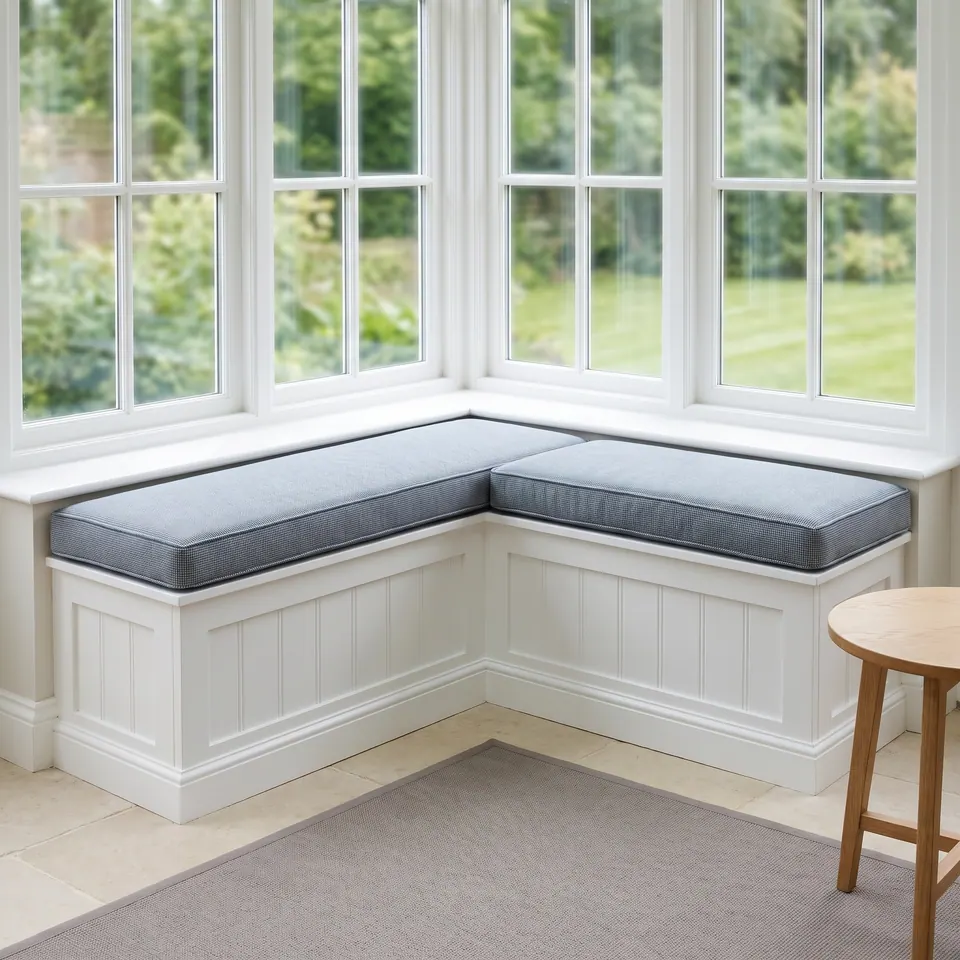
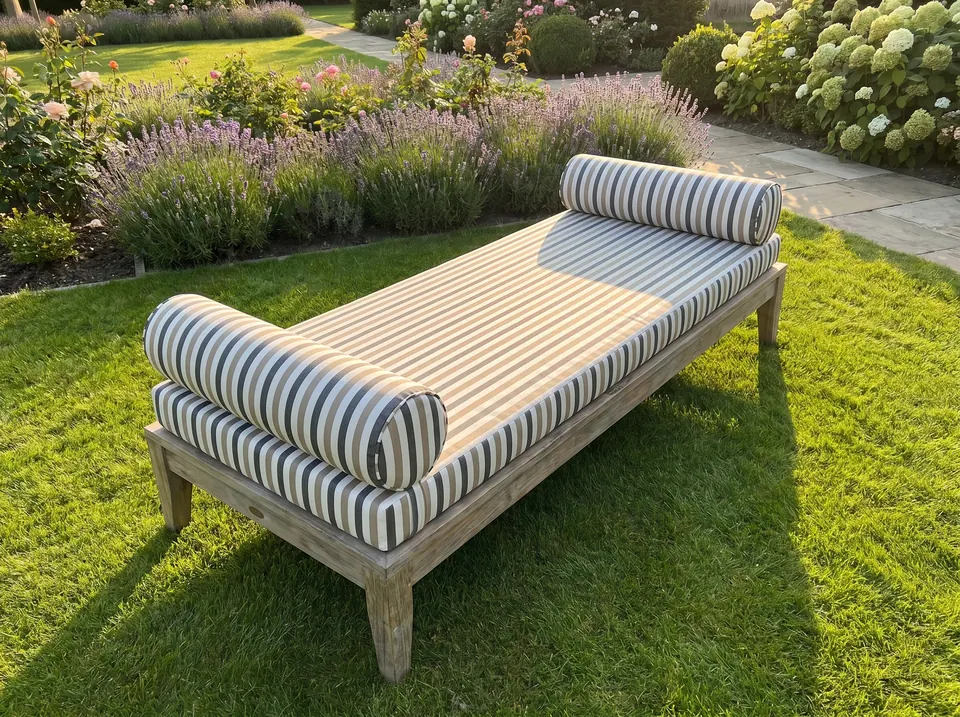
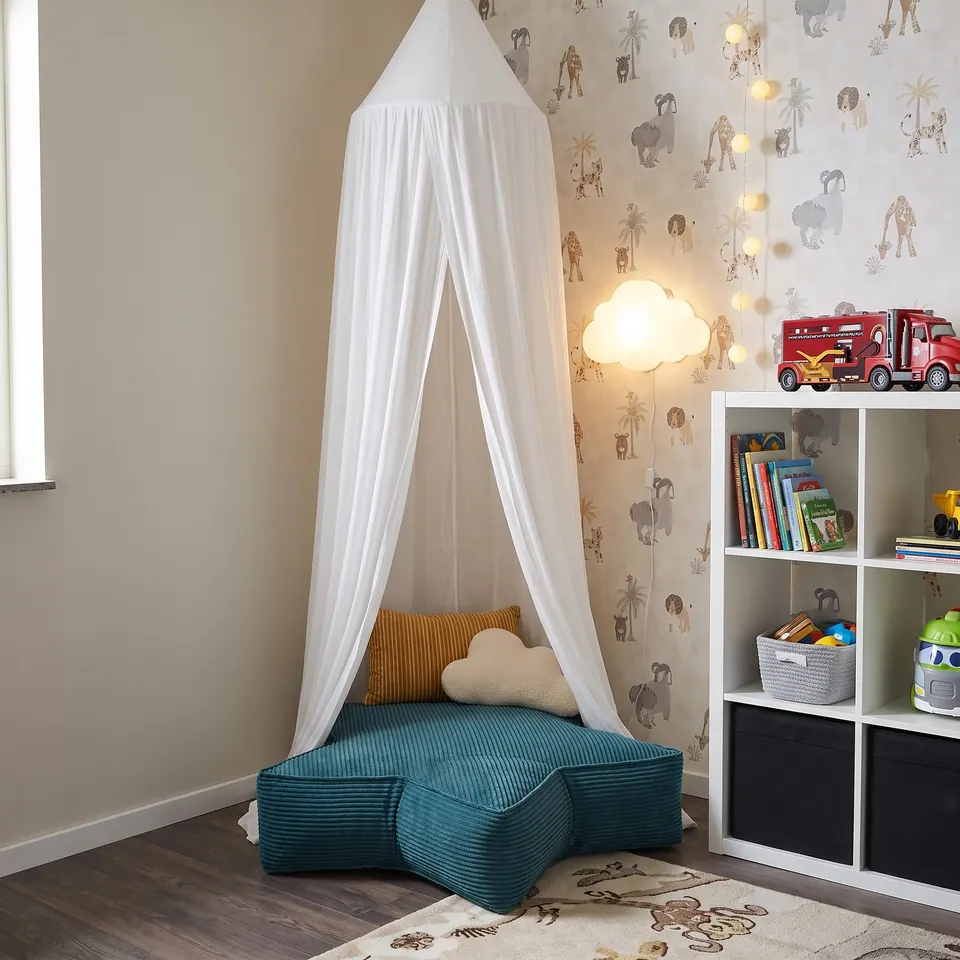
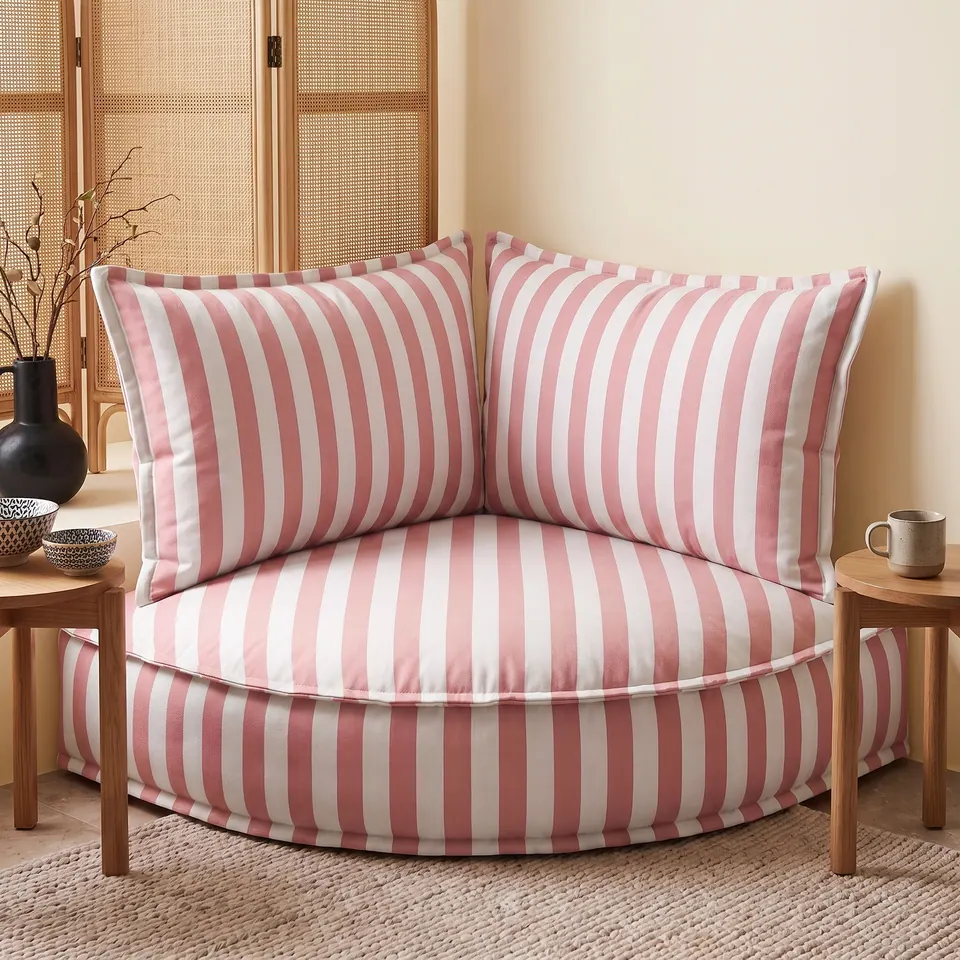
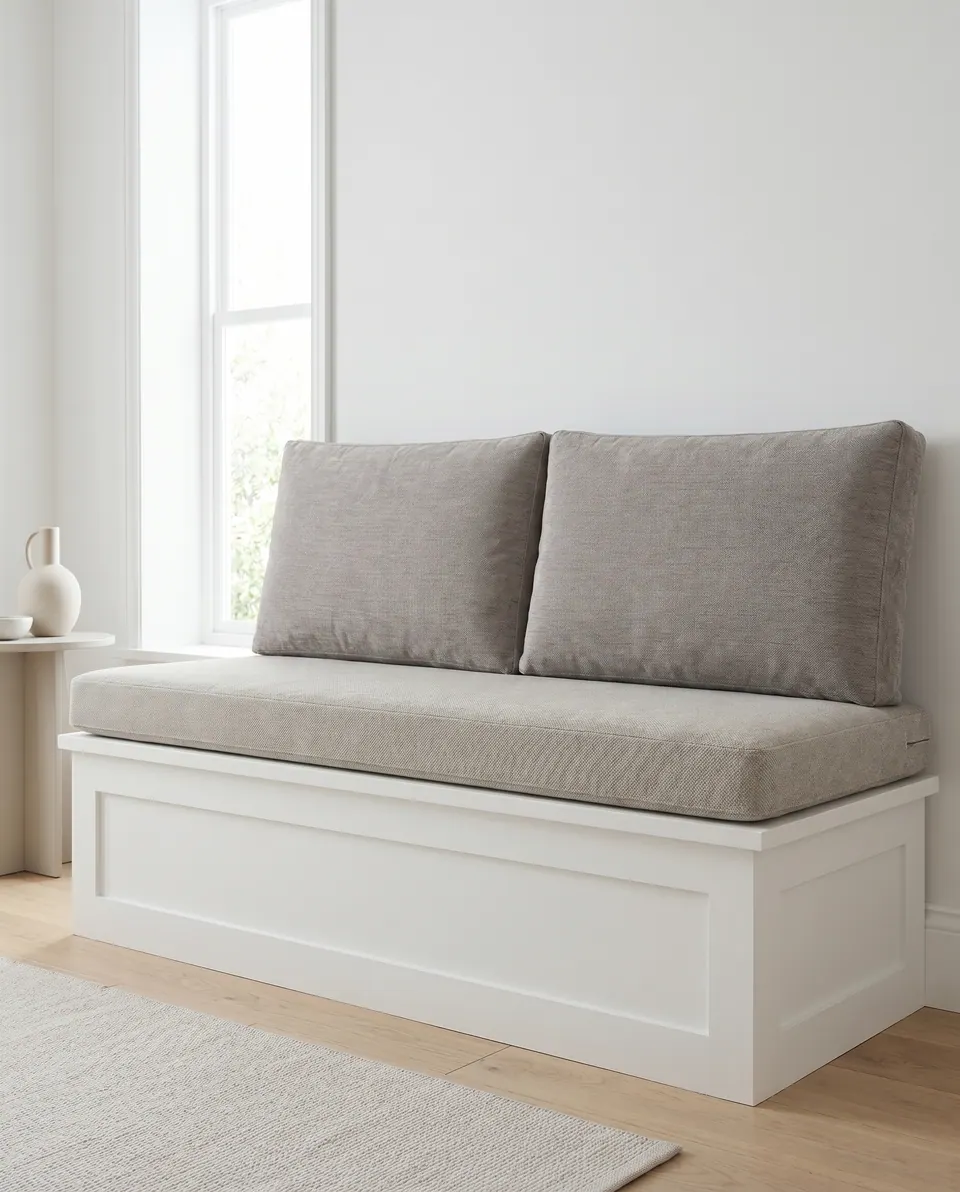
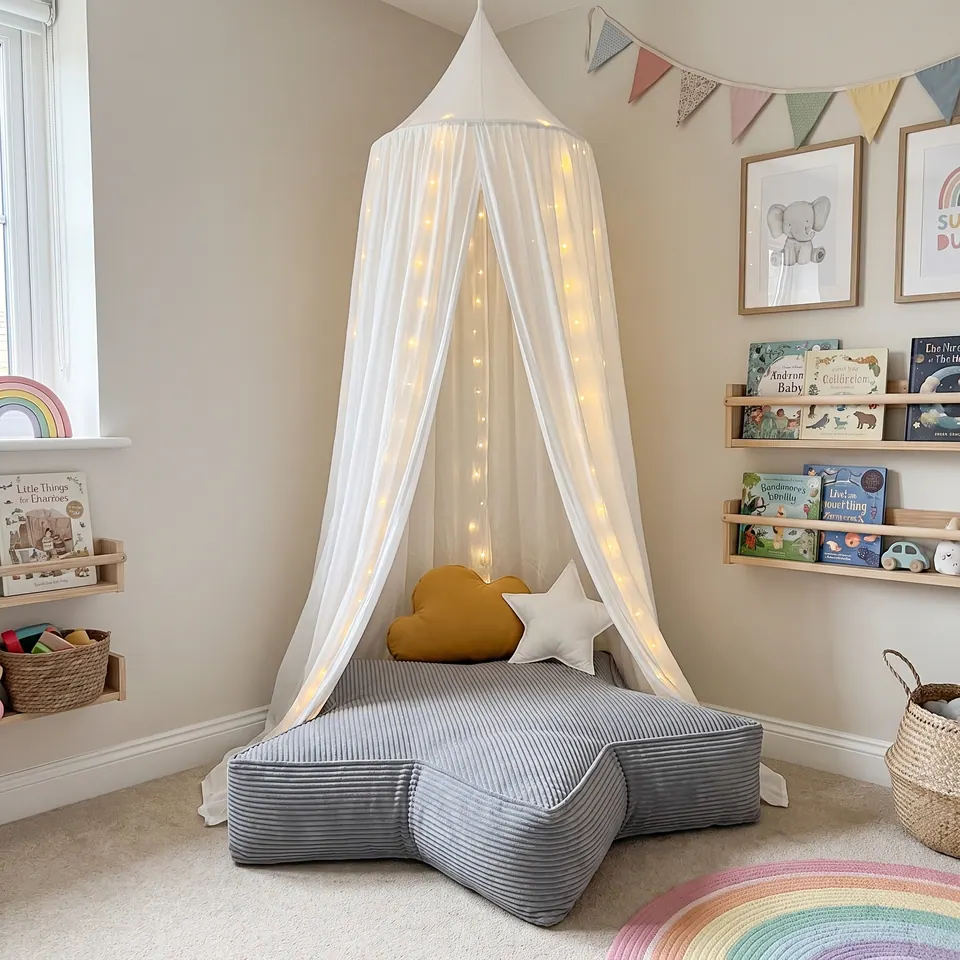
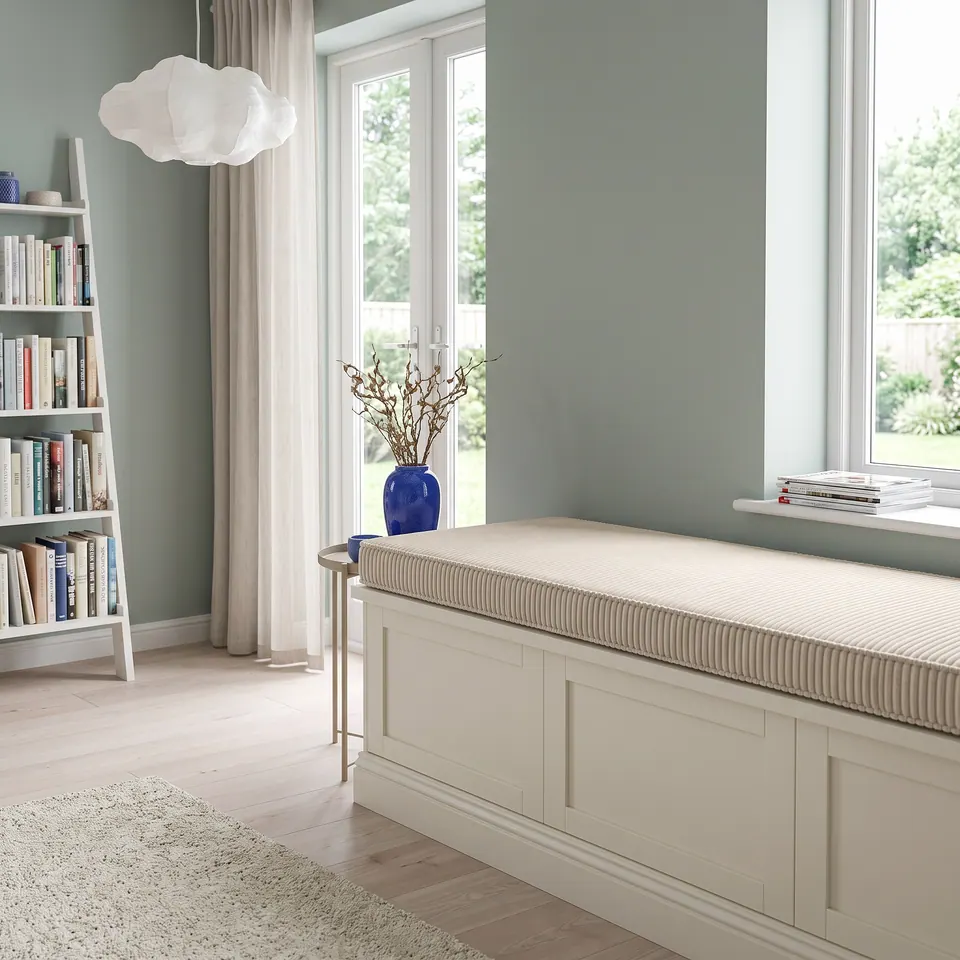
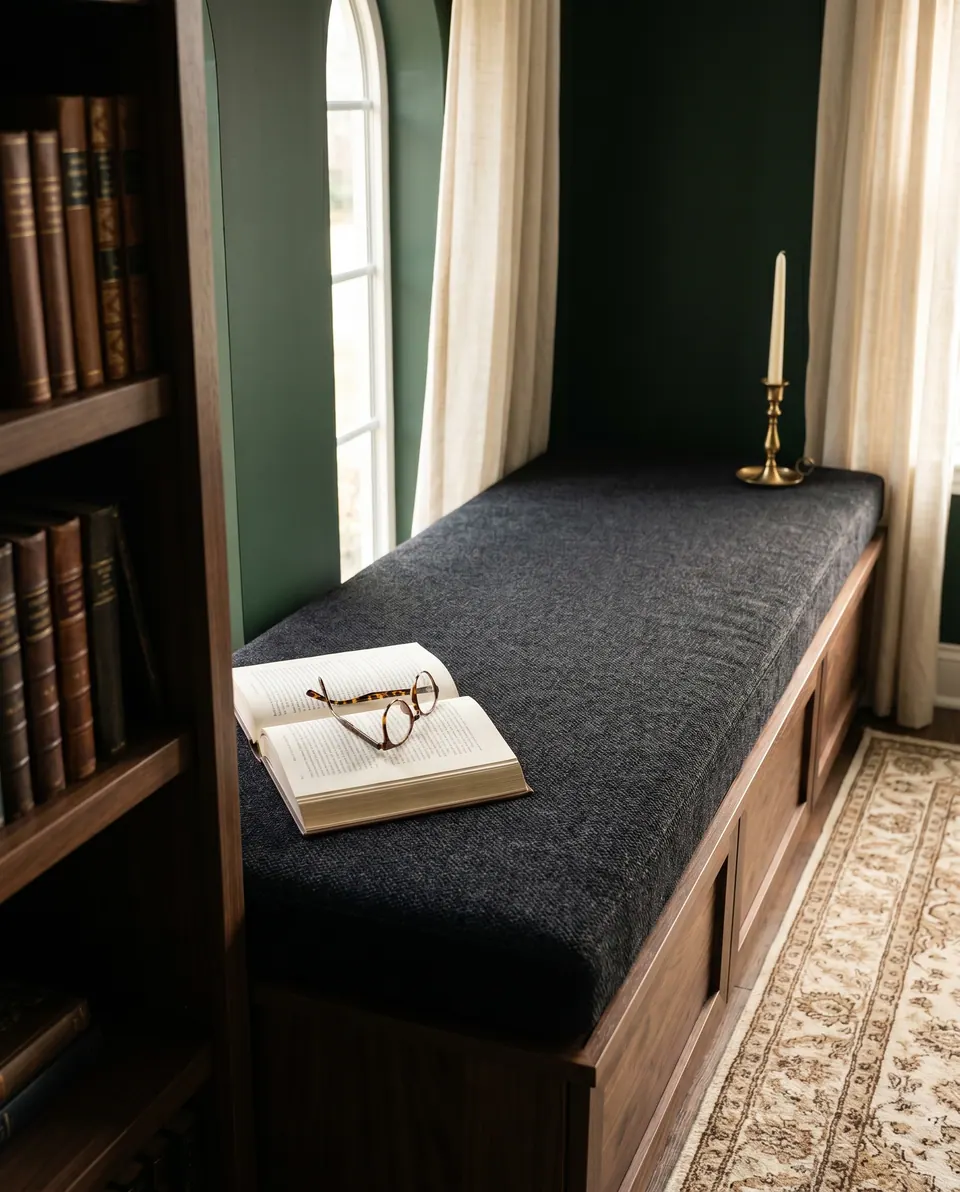
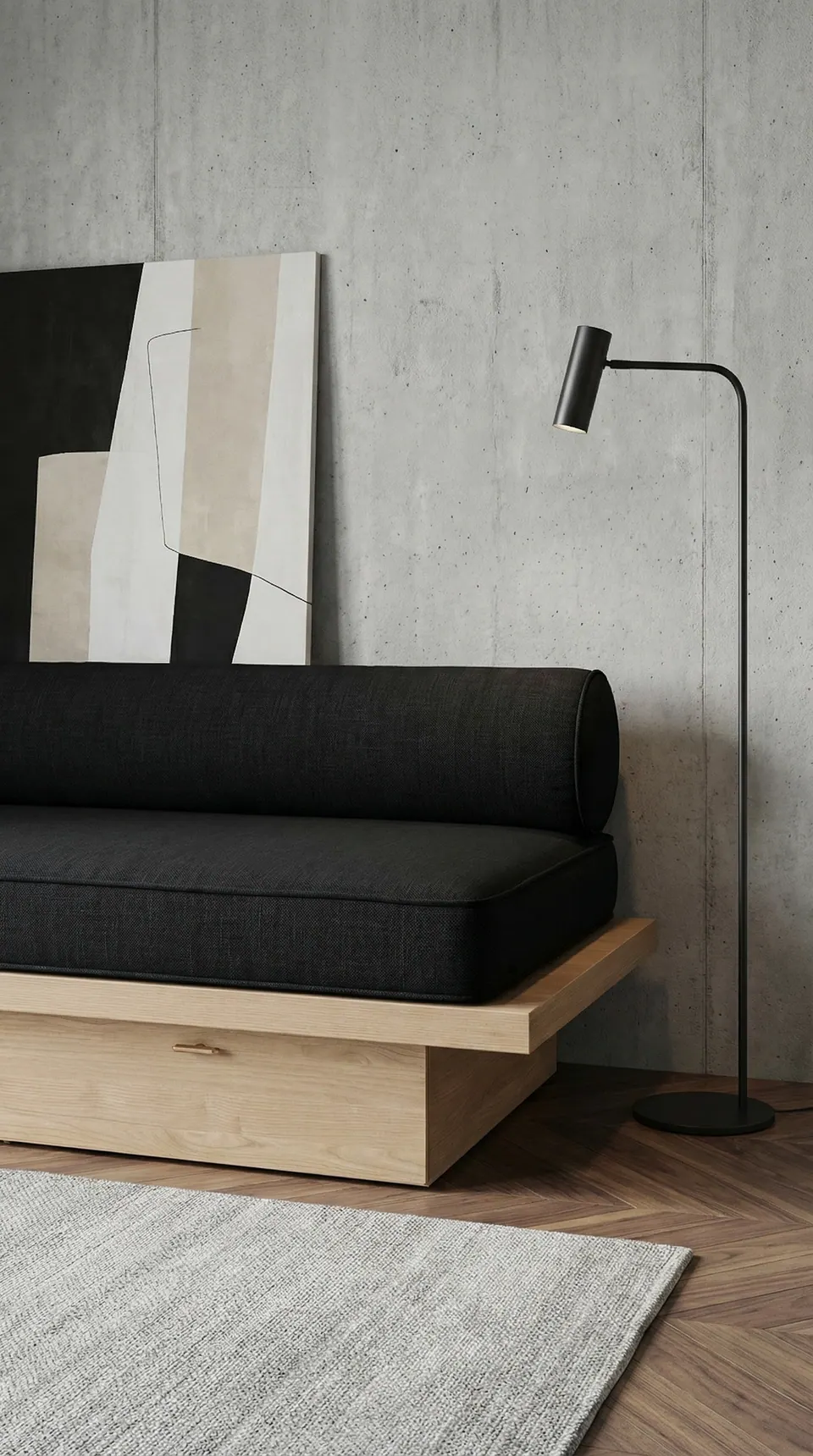
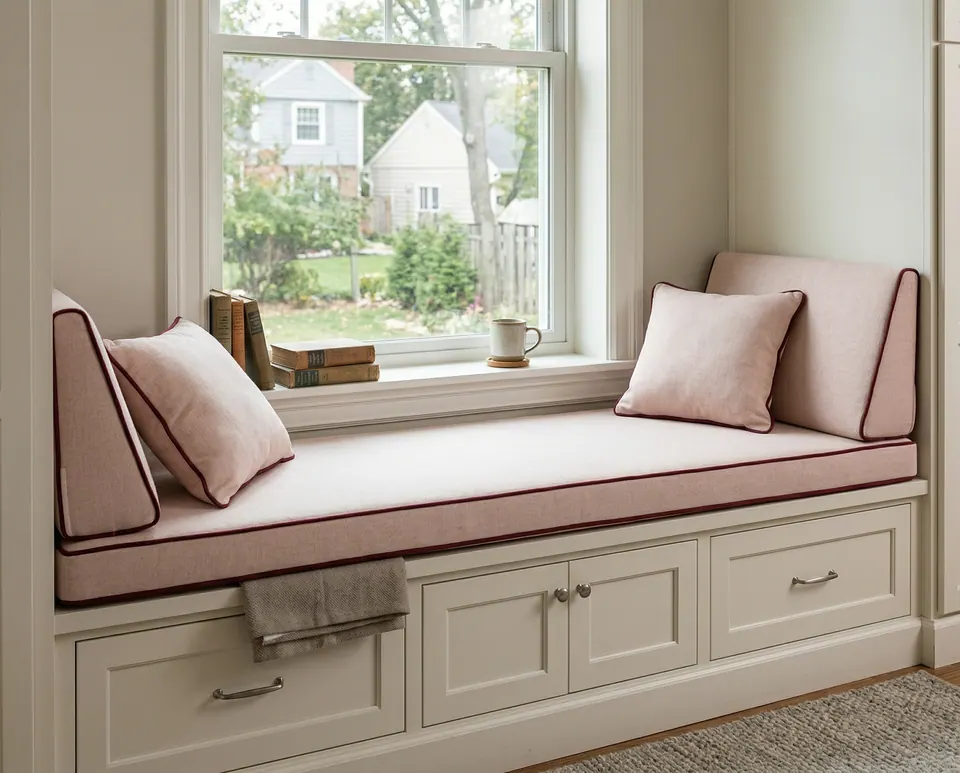
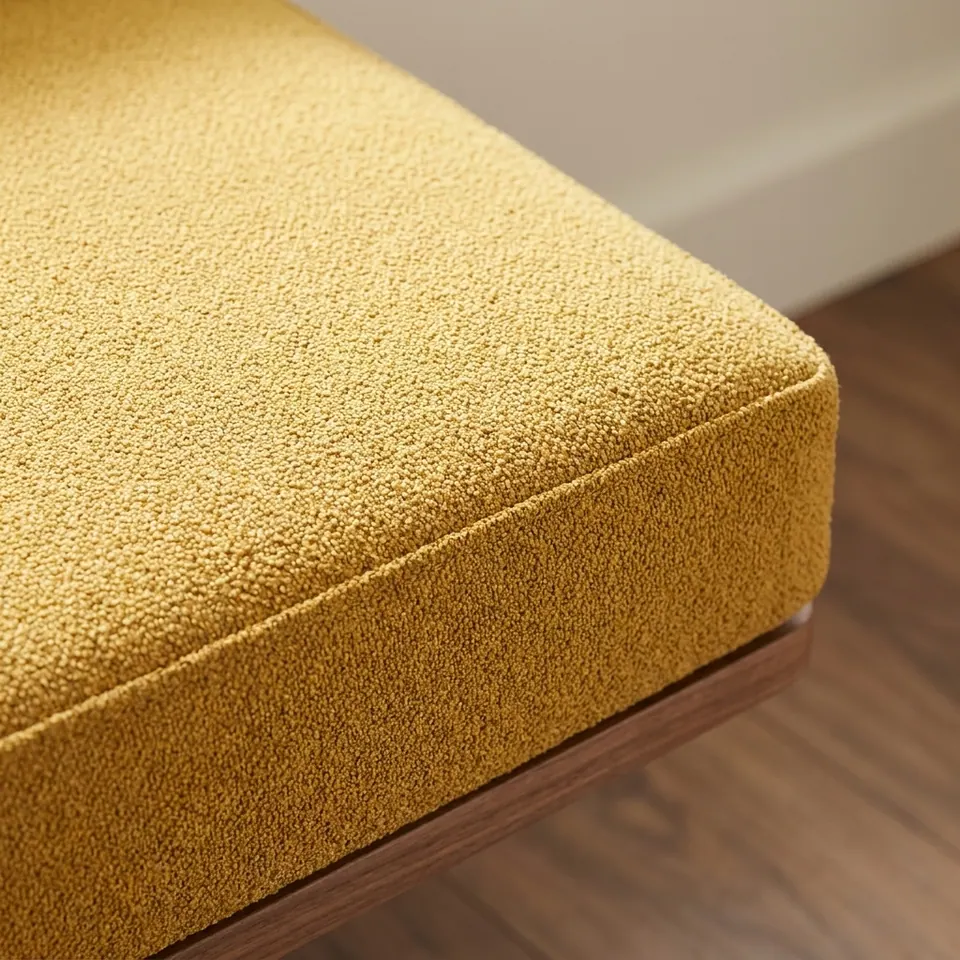
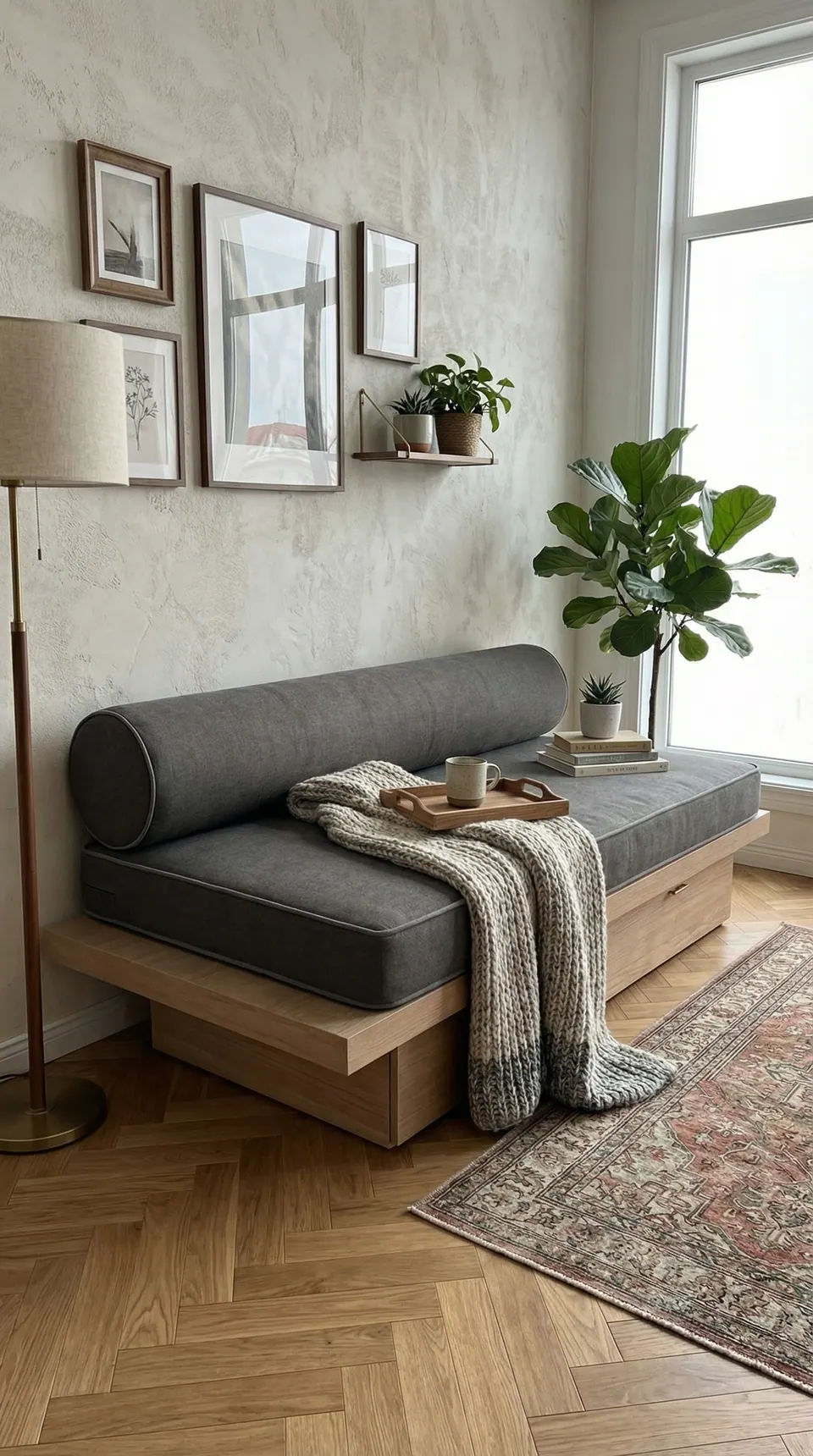
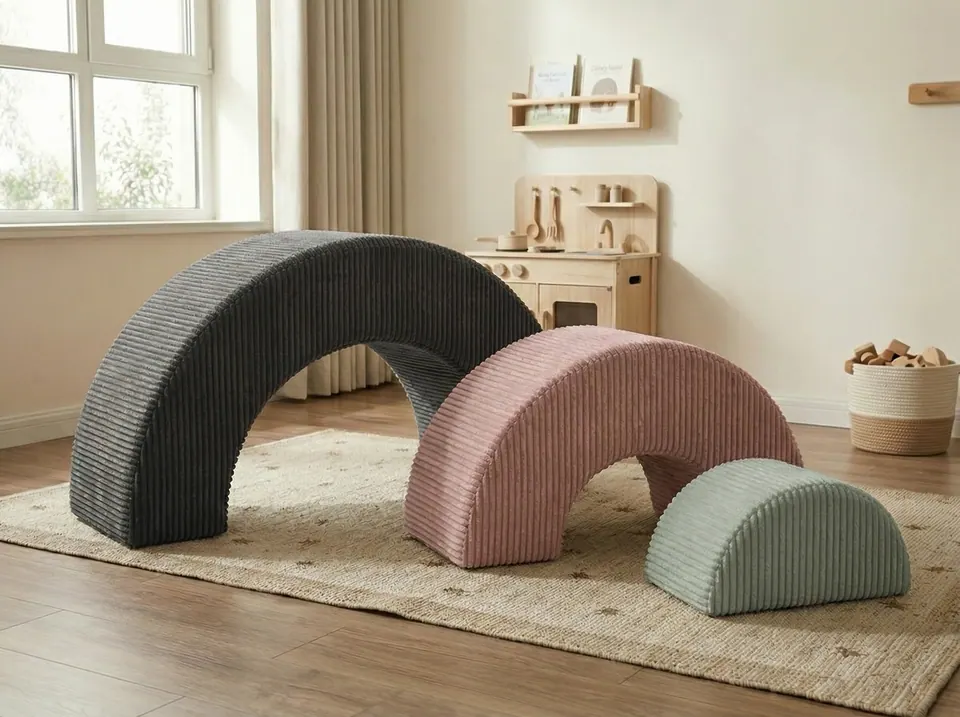
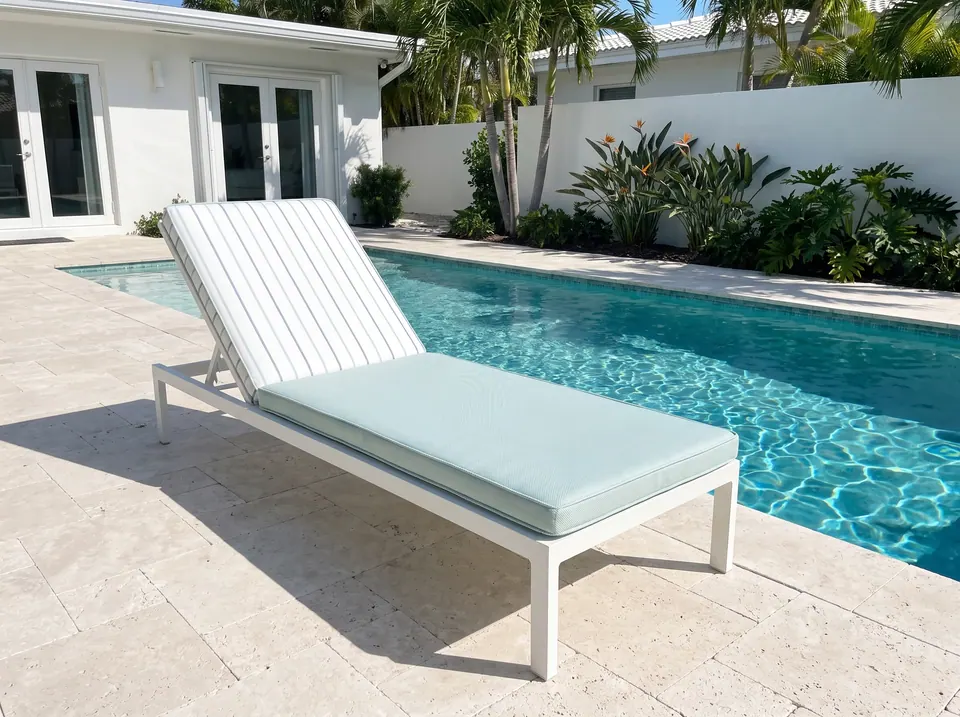
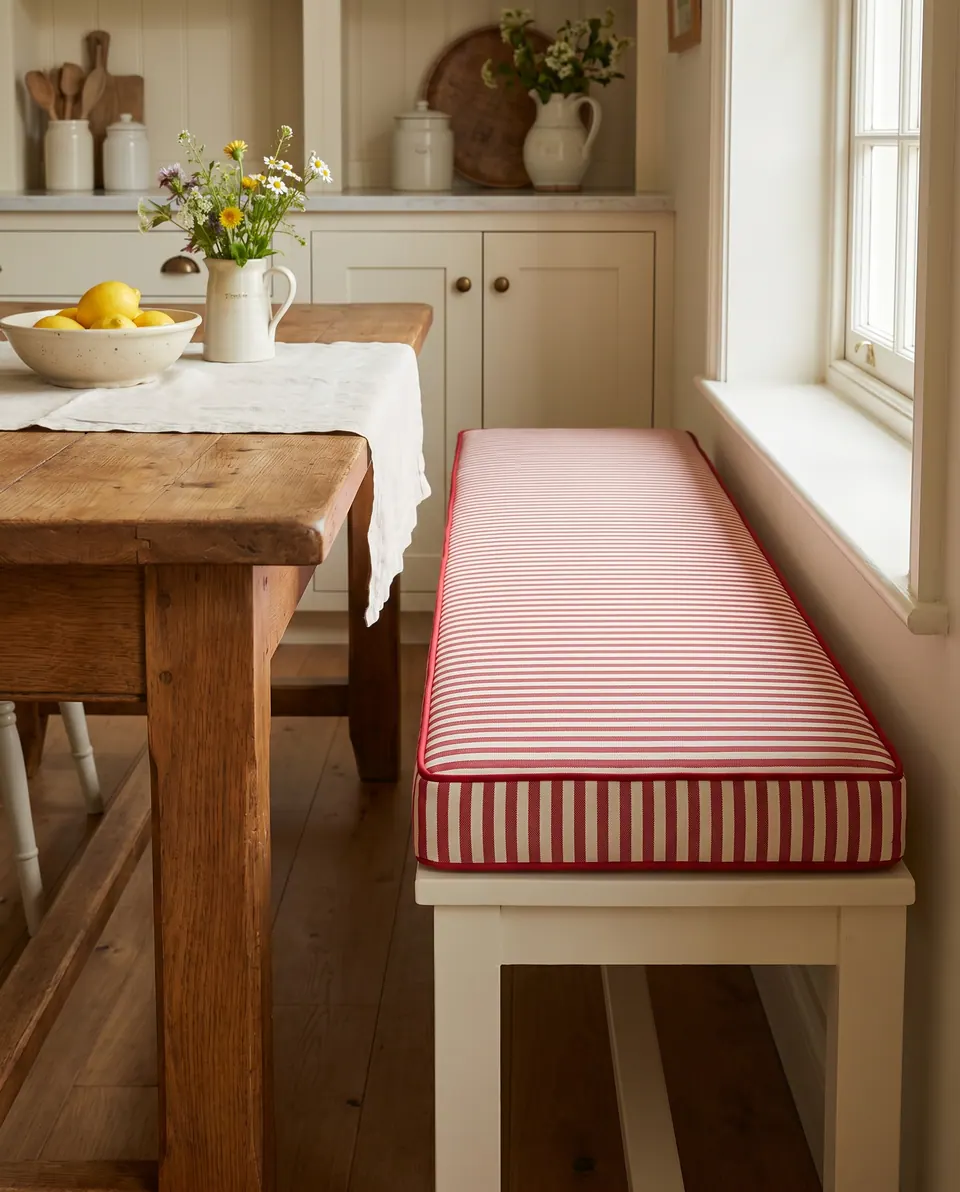
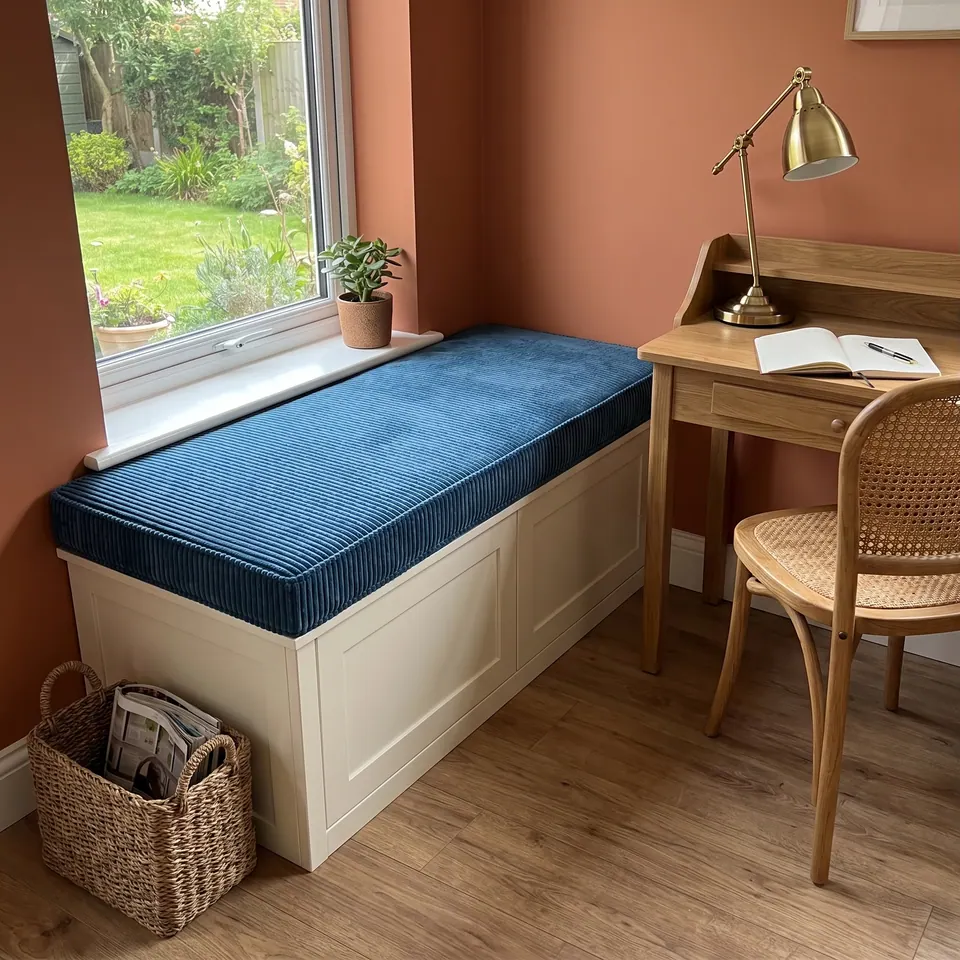
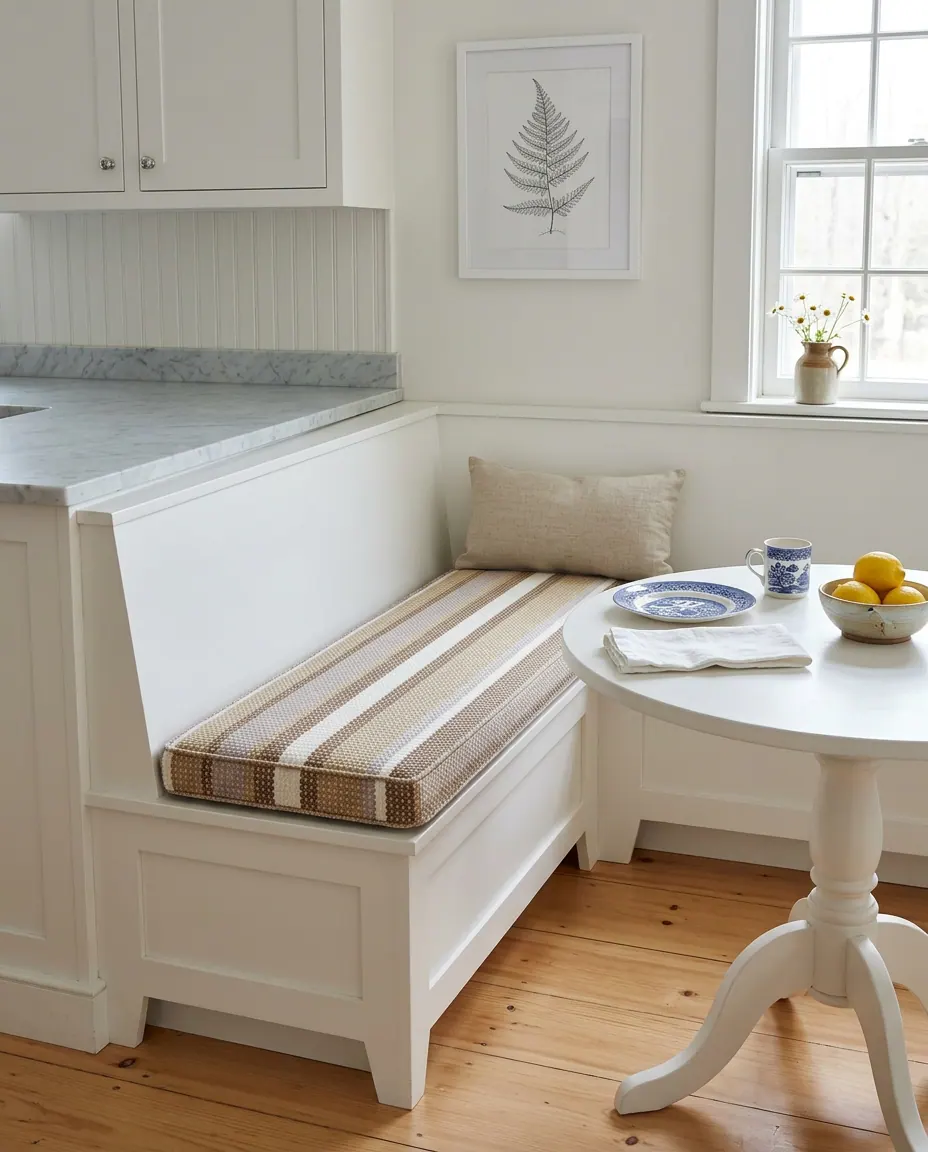
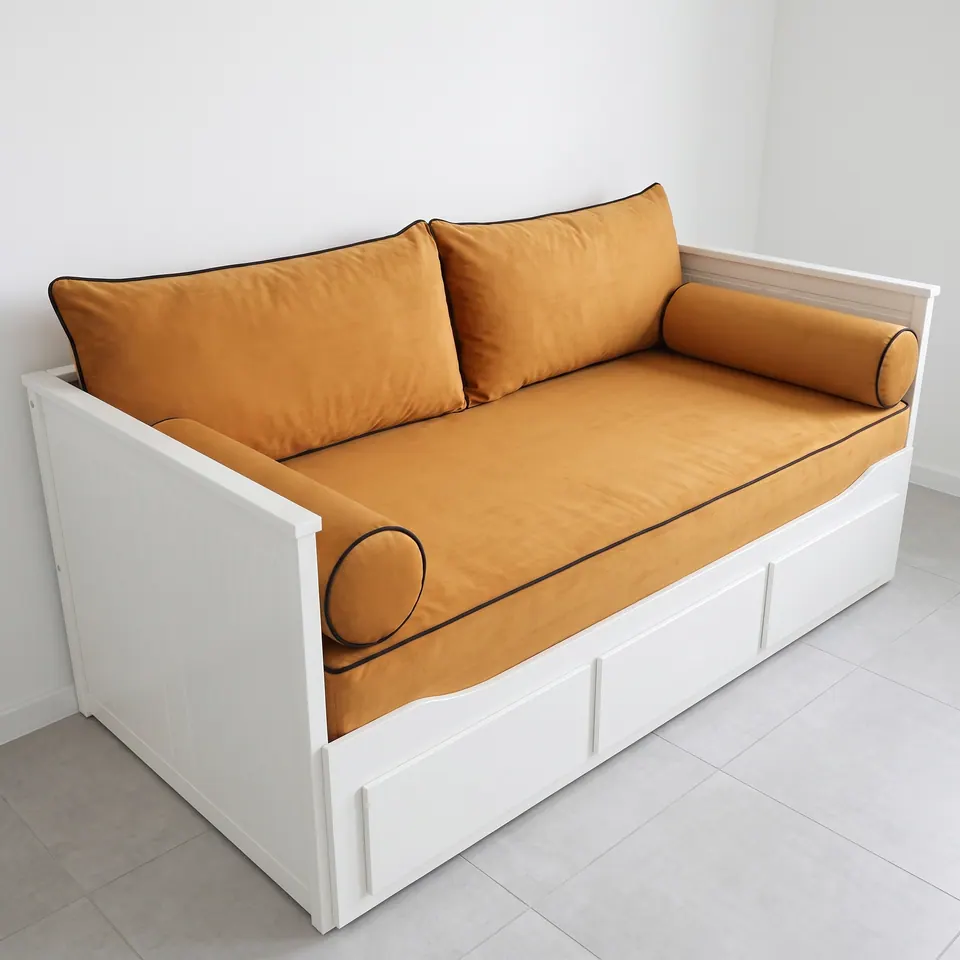
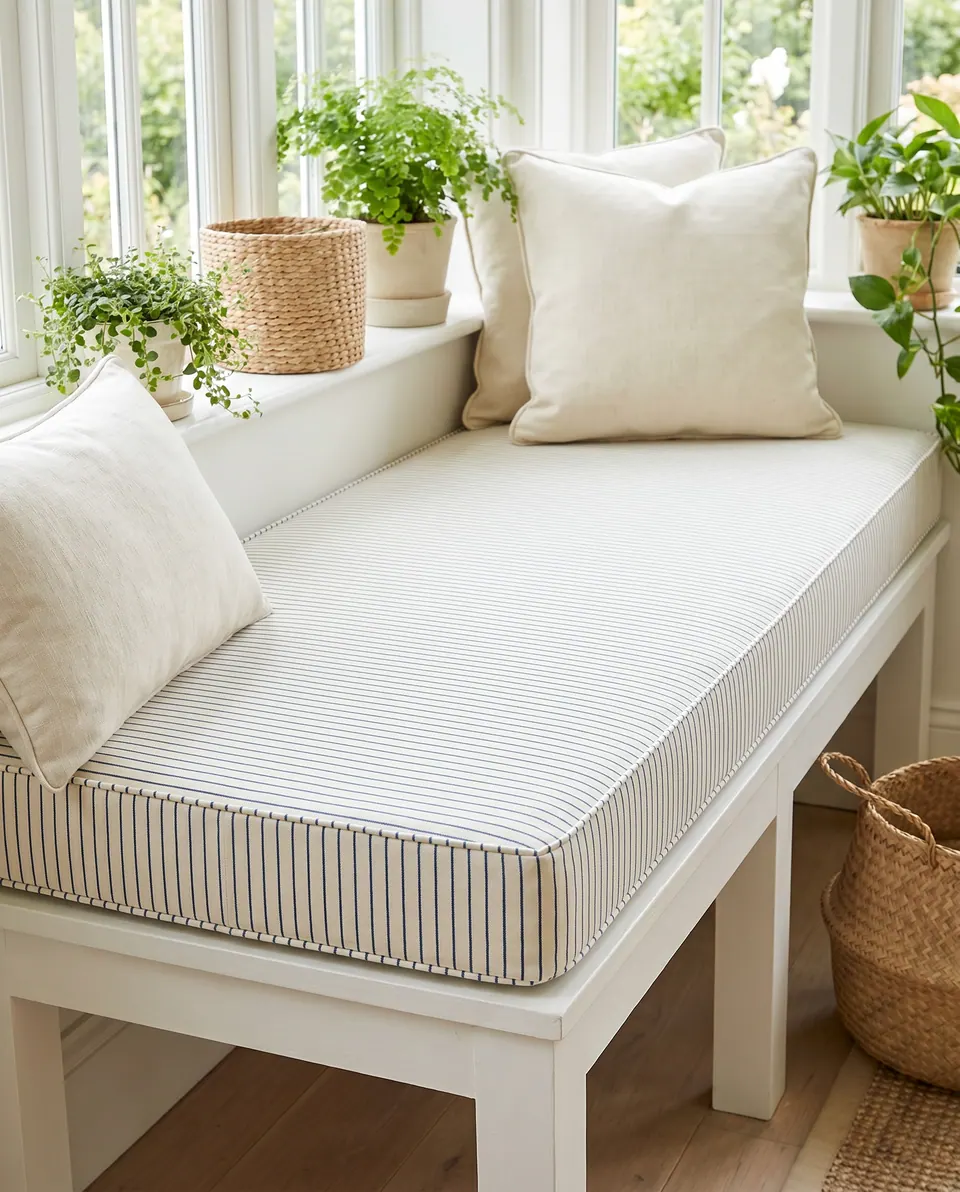
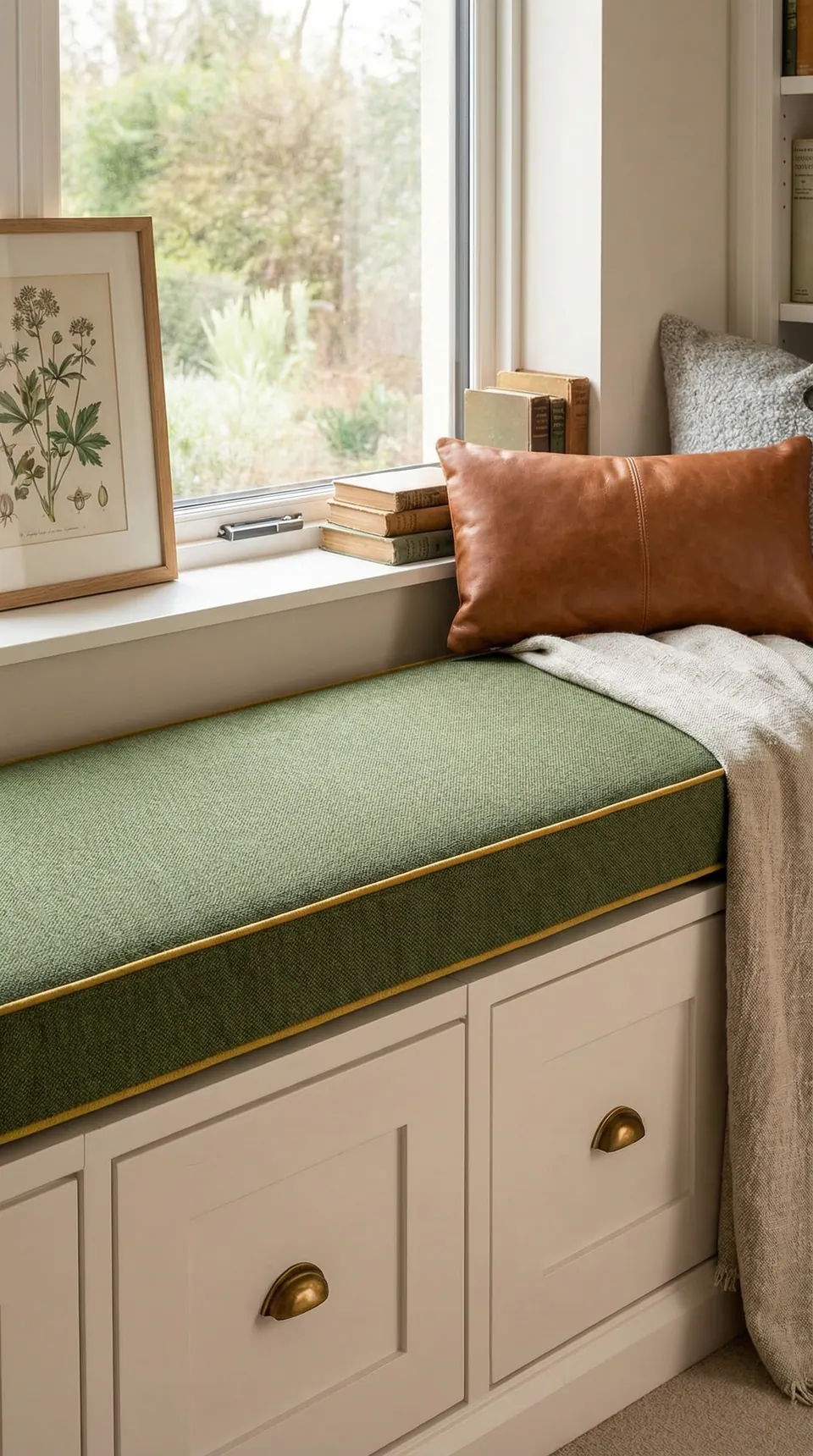
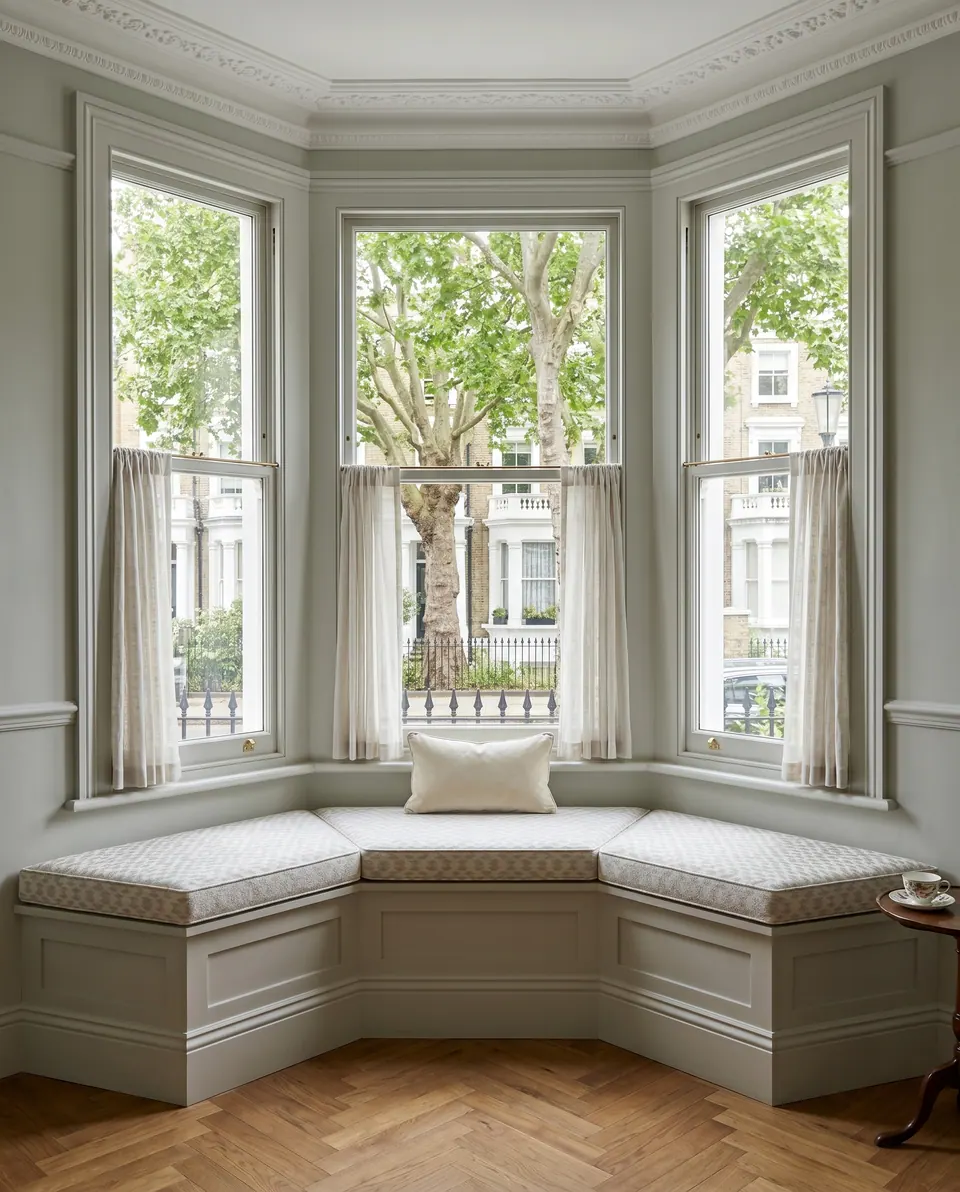
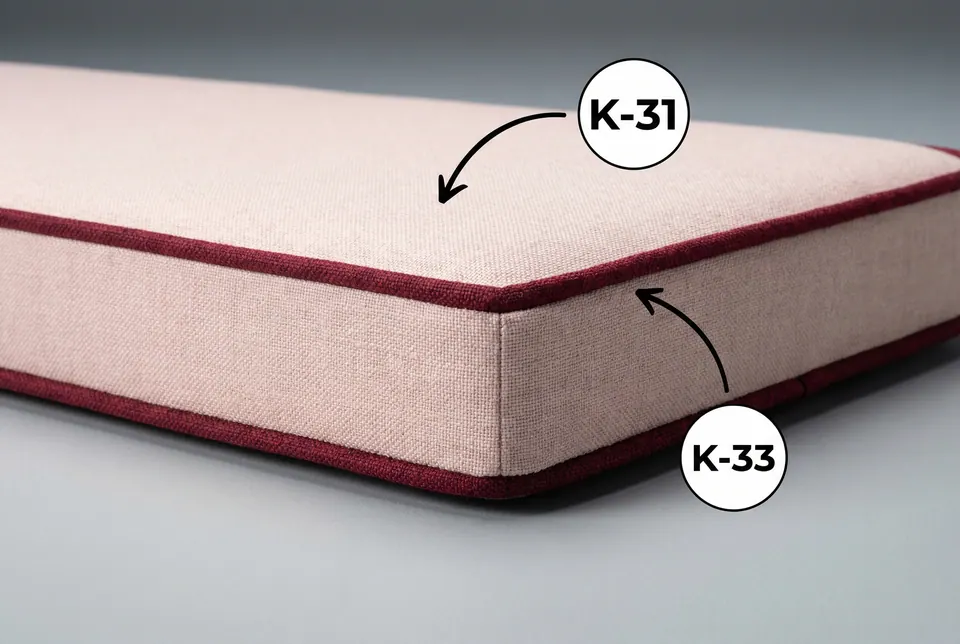
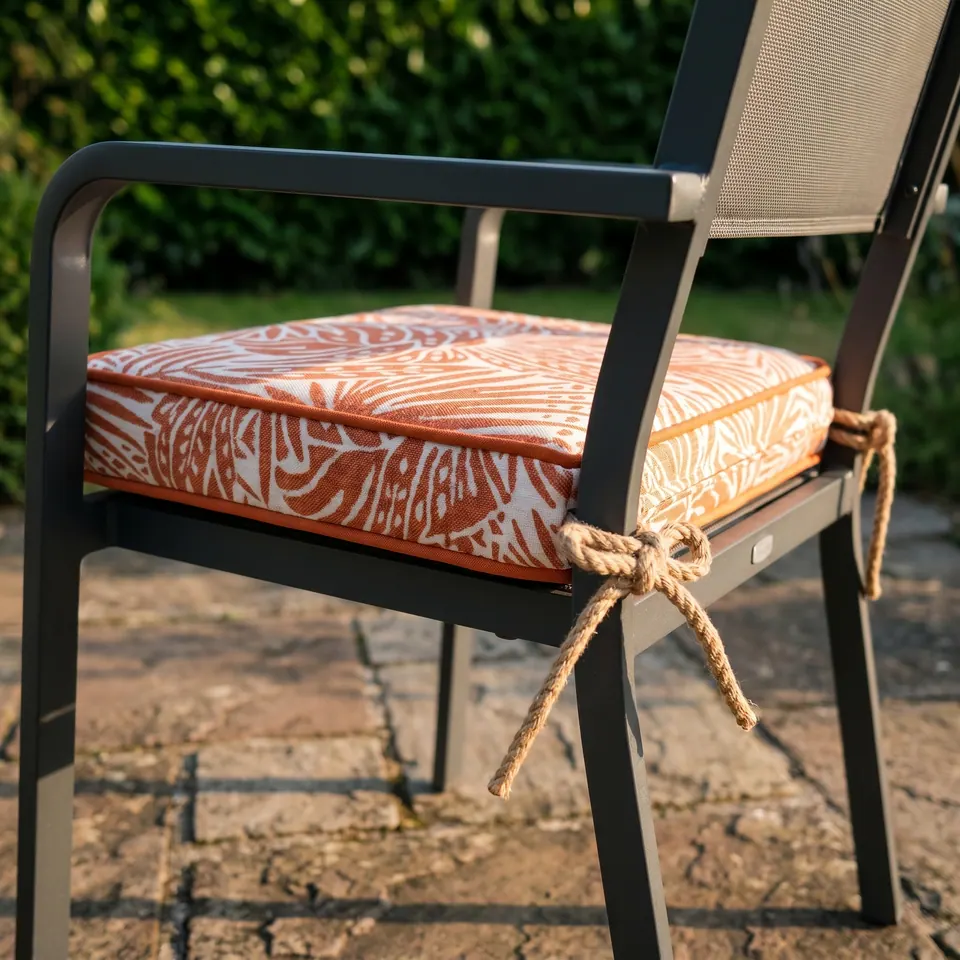
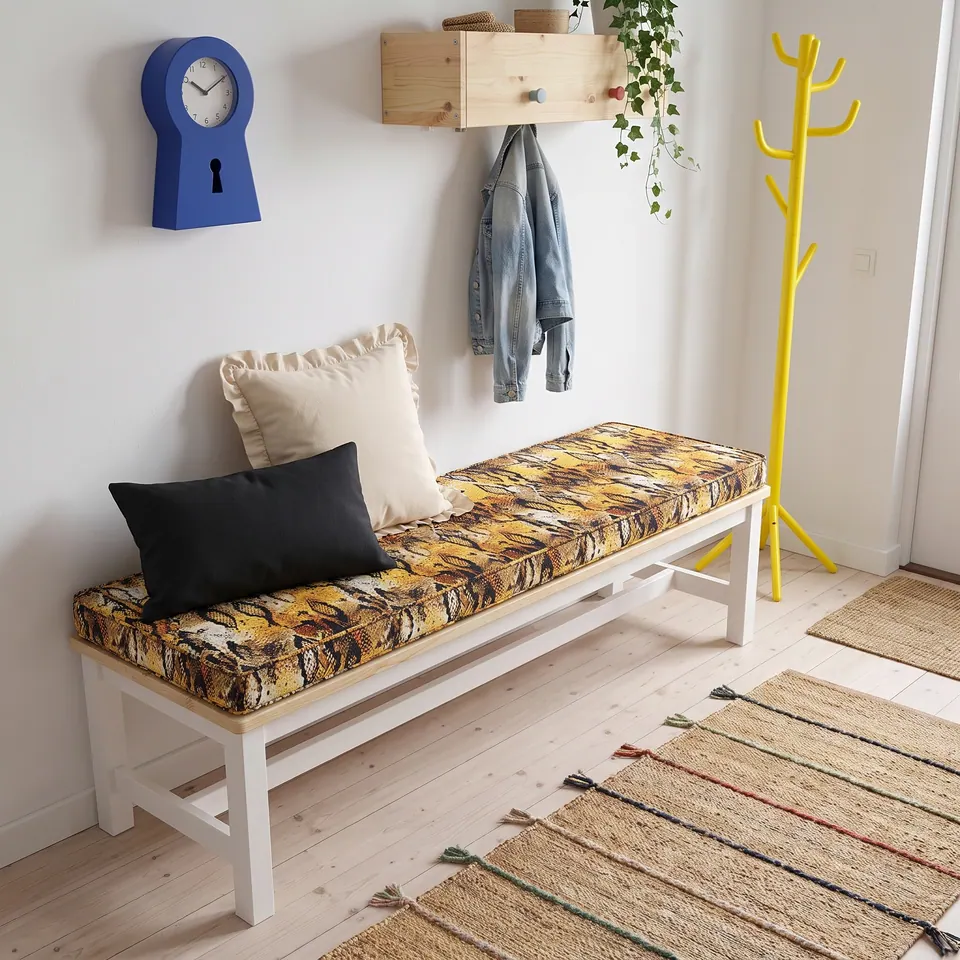
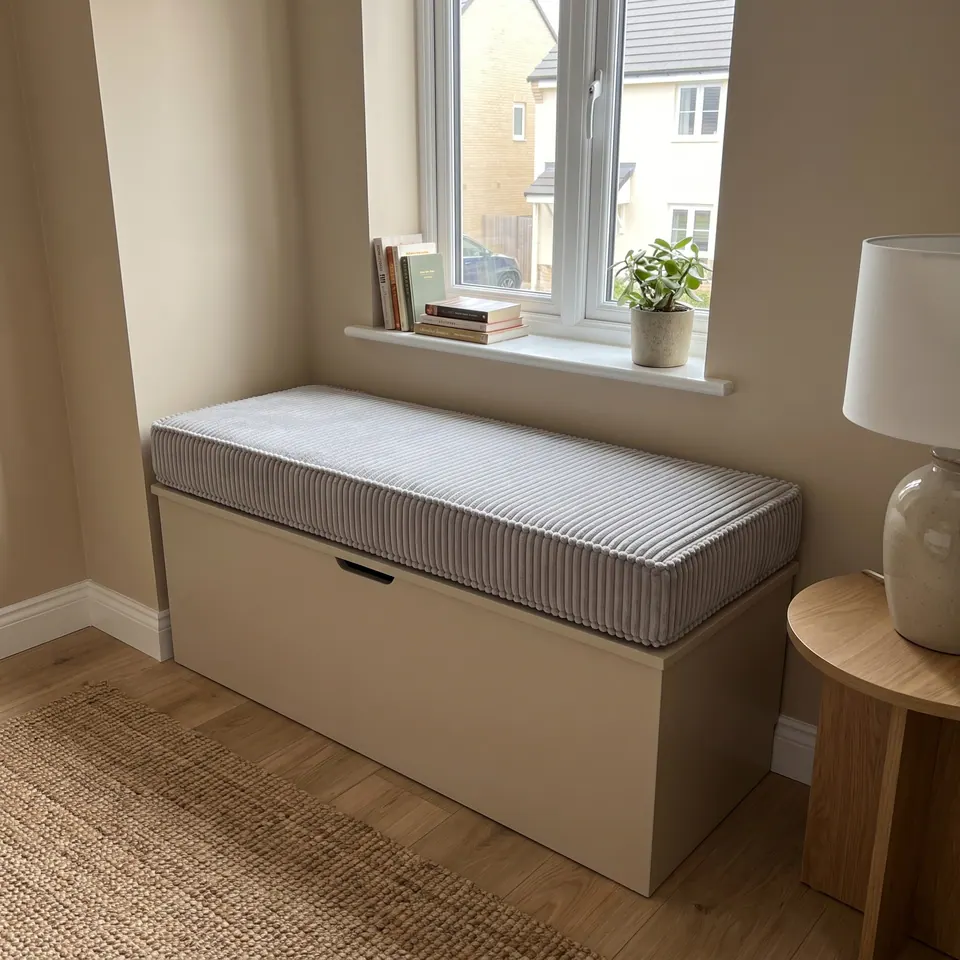
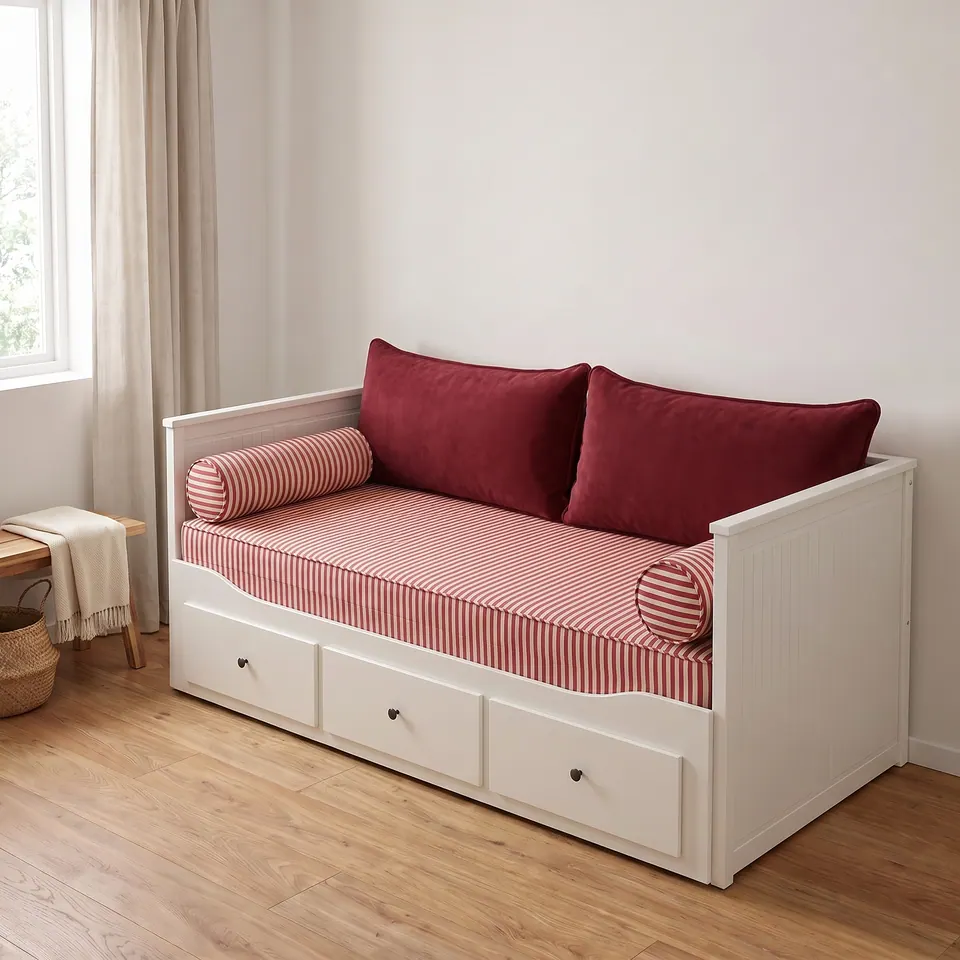
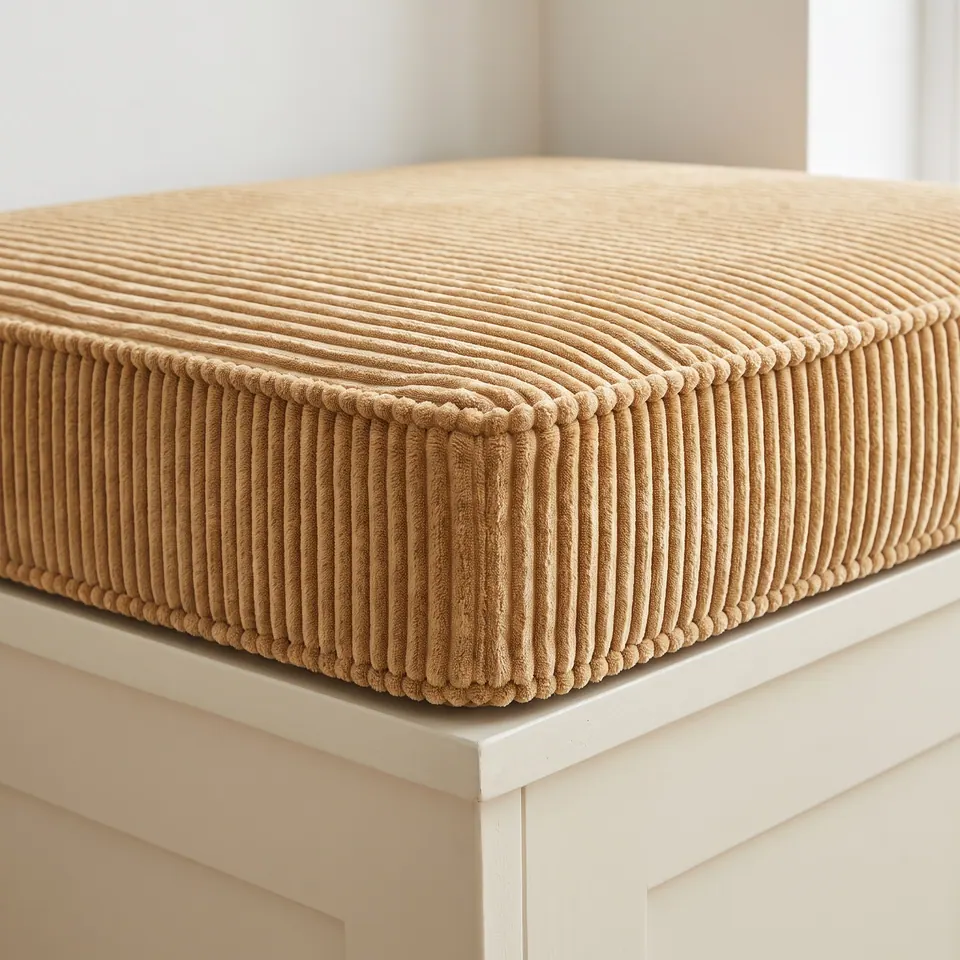
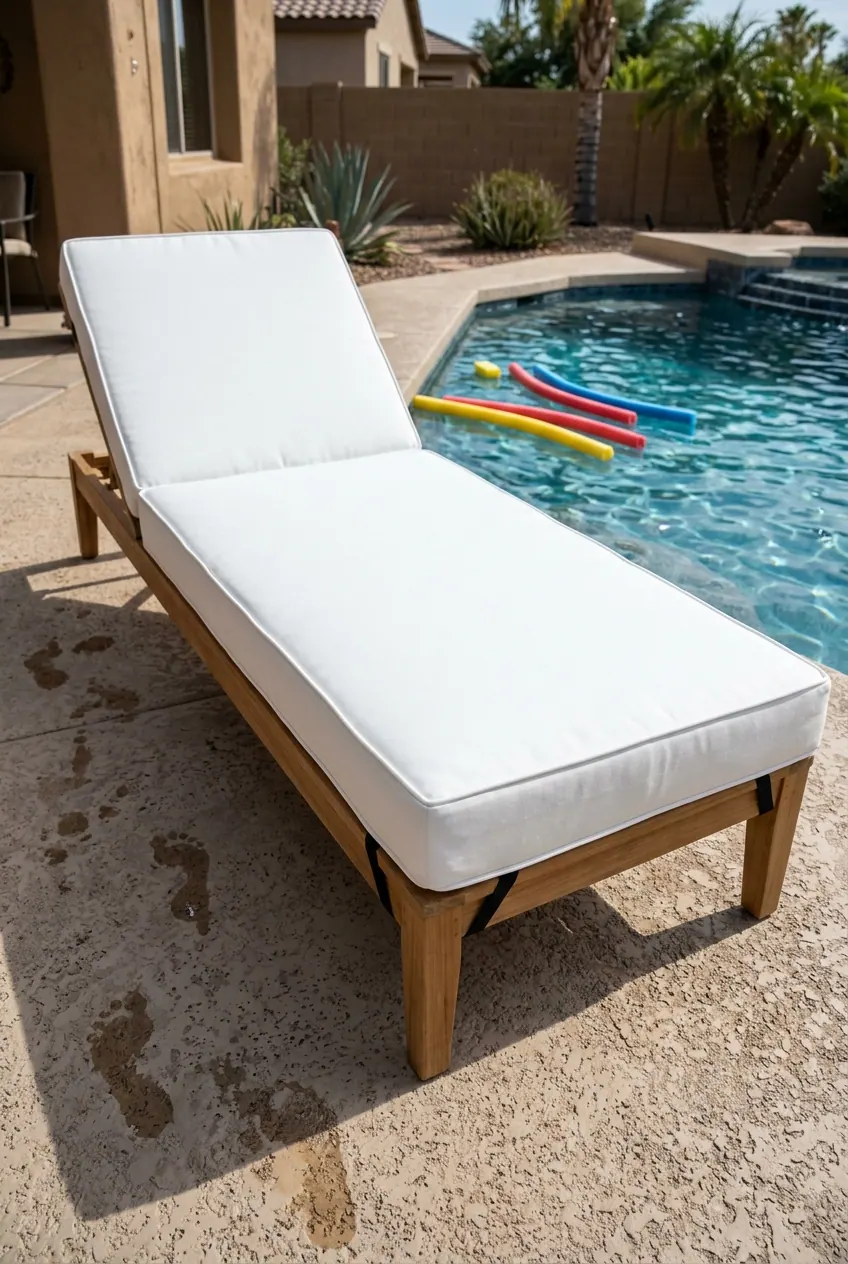
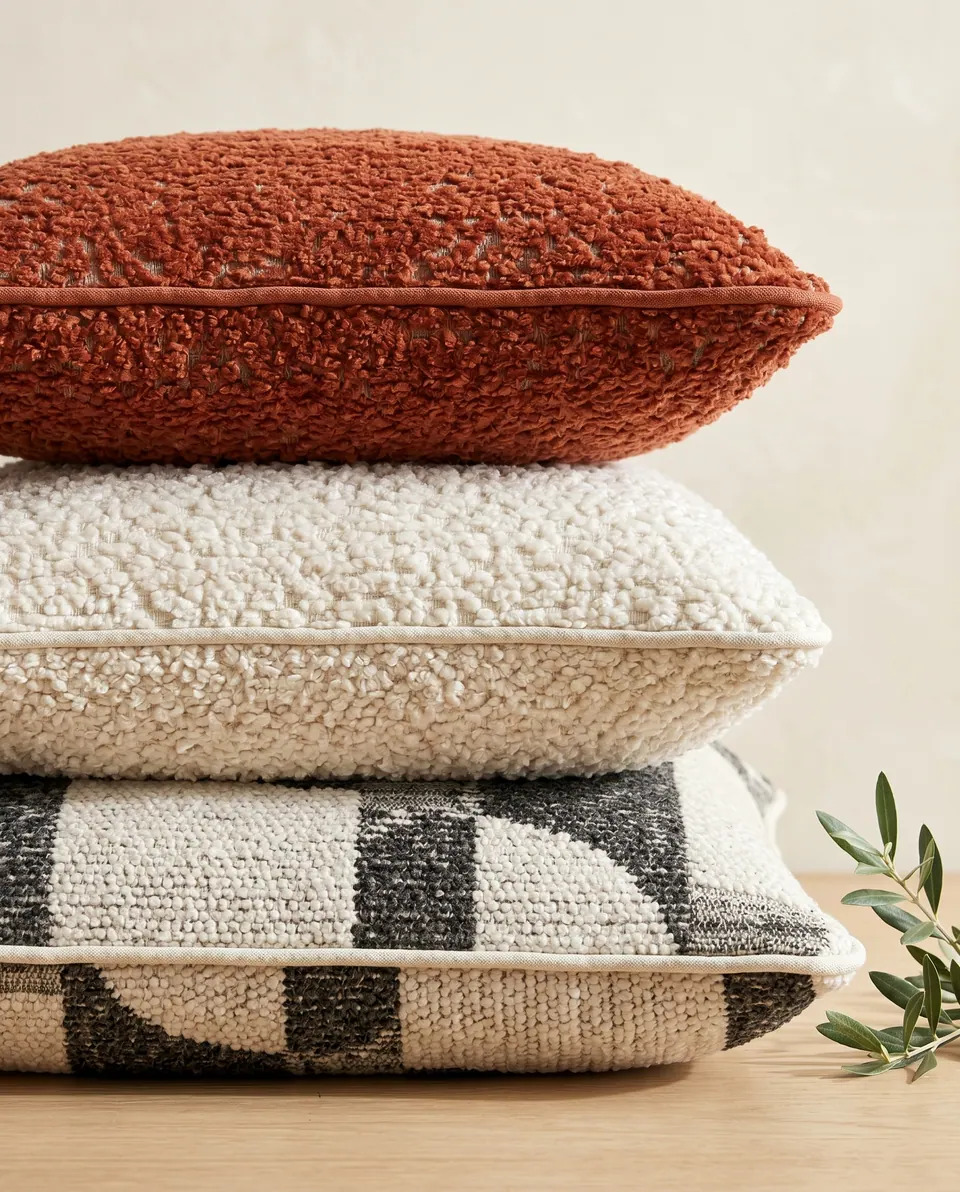
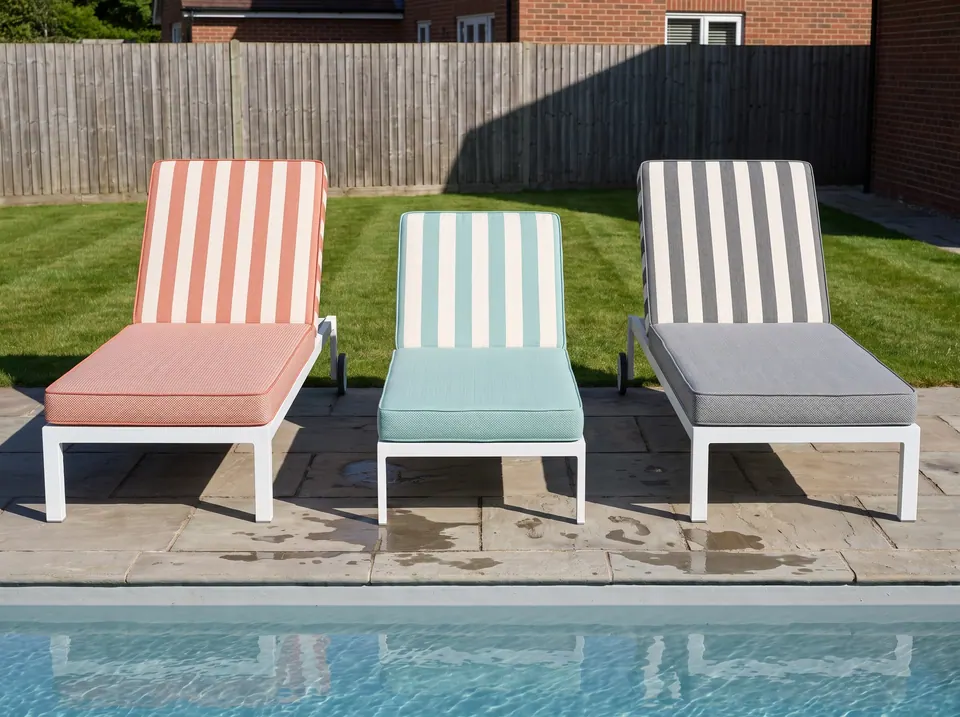
One photograph at a time, the masters read what a made-to-measure cushion is doing: its proportion, the line of the piping, the fabric against the light, and the questions that come up before cutting one like it.
I measured wrong and my cushion came out about 15 in short of a 70 in space. Can I send it back and reorder?
The workshop's answer
Returns are possible, but return shipping is costly and the workshop does not provide return labels. Instead it offered small filler cushions: two 7.5 in (19 cm) seat pieces and two 7.5 in back pieces, one of each at either end, so the main cushion stays centered. The price for the four fillers was reduced, too.
My chair seat is rounded at the back and dips a little. Can you make a horseshoe-shaped cushion?
The workshop's answer
Yes, a curved edge can be made. For a horseshoe shape the workshop needs a clear drawing with the width, the depth, where the curve starts and ends on each side, and how deep the curve runs, plus a photo of the chair. The shape is confirmed with you before you order.
Can the cushion be thinner or thicker than the standard 4 in?
The workshop's answer
Yes. The workshop has made 2 in (5 cm) and even 3/4 in (2 cm) cushions, 2.5 in (6.5 cm) dining bench pads, 6 in (15 cm) daybed cushions and an 8 in (20 cm) deep banquette seat. Thicker foam raises the price: one 91.5 x 31 in daybed cushion cost about a fifth more at 6 in.