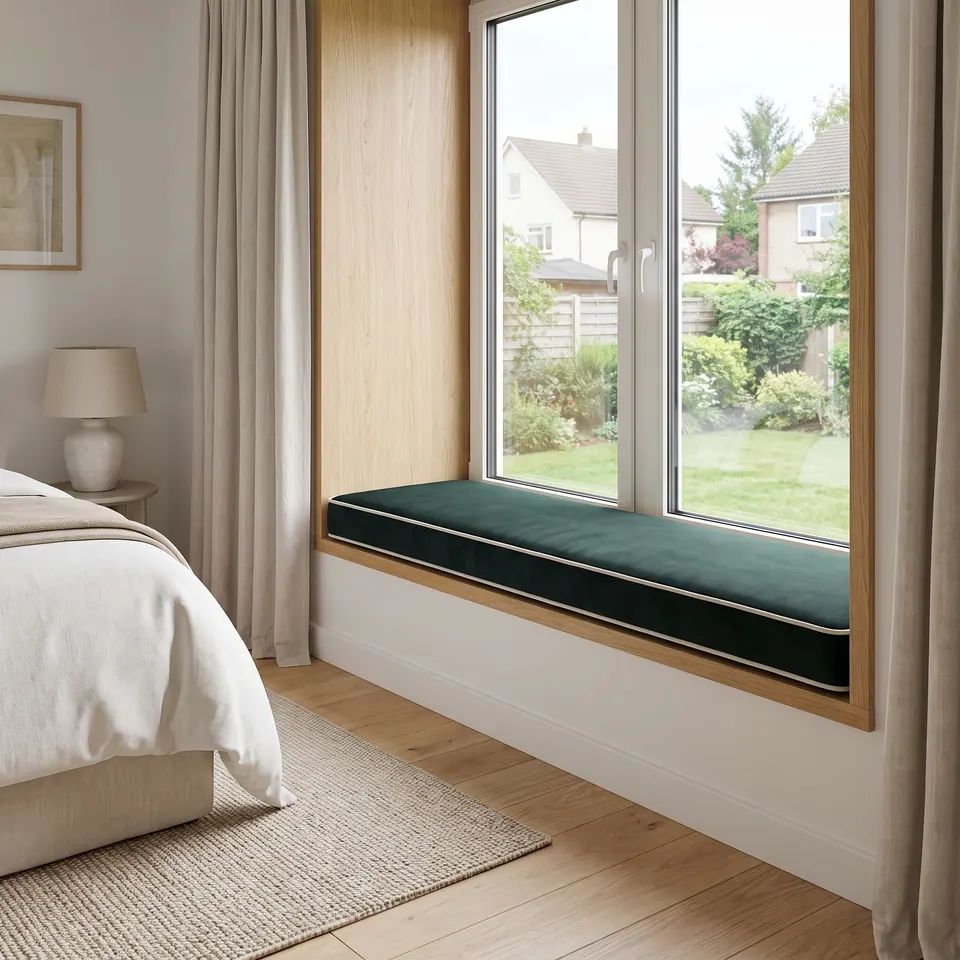
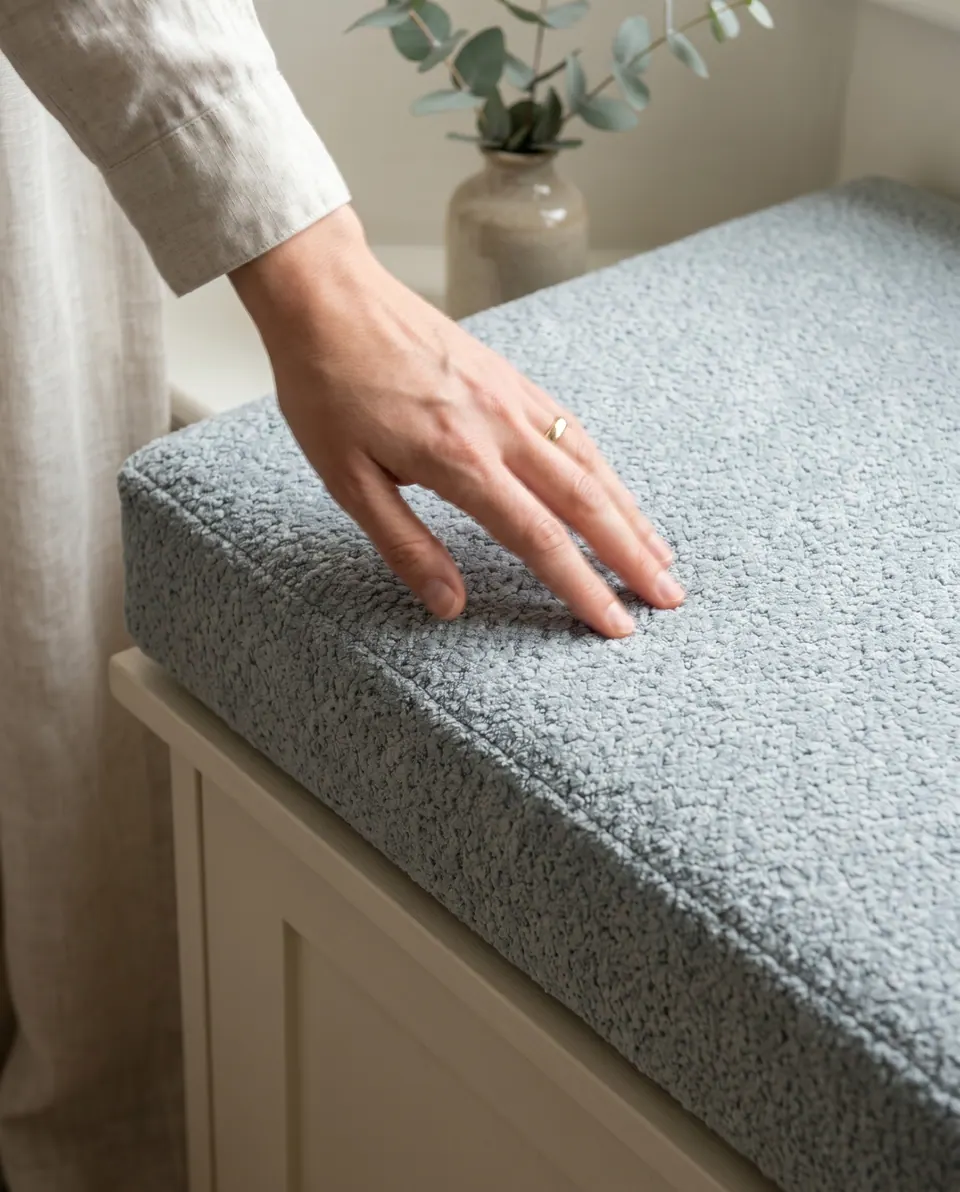
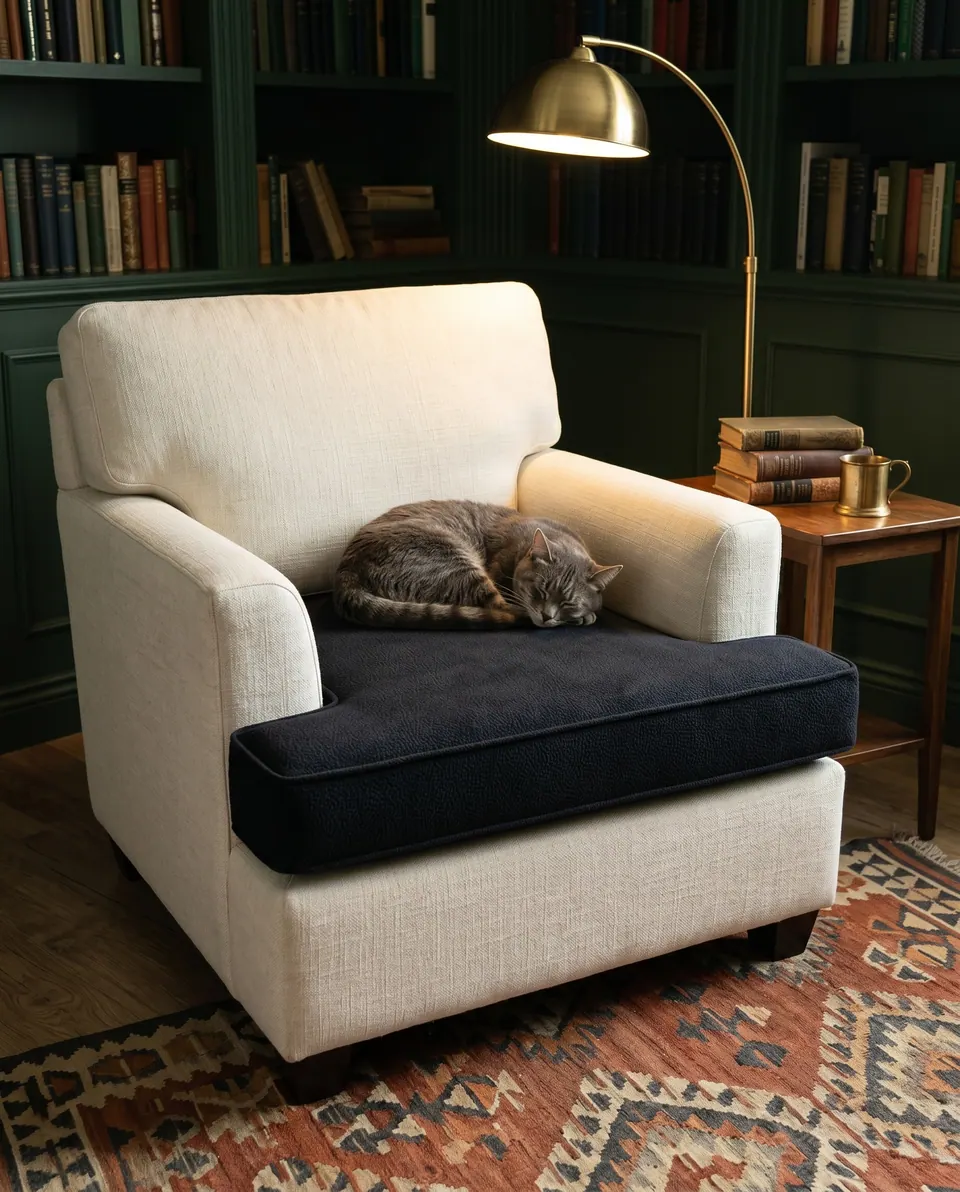
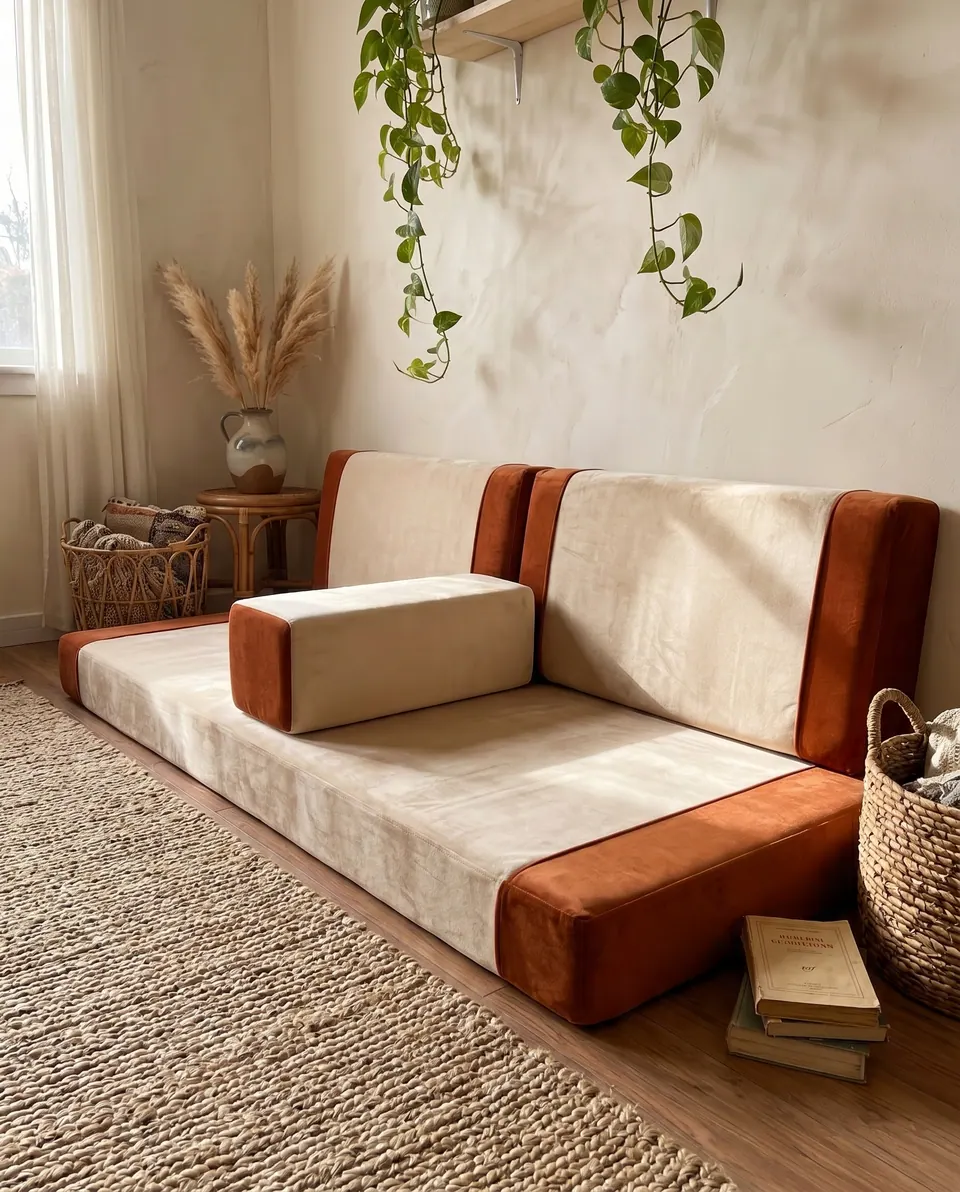
3D bench cushion builder for benches, window seats and bays
Every odd shape is just a list of honest measurements, partner. Put yours in, turn the cushion in your hand, and leave with a cutting ticket that lists every edge in inches and centimeters.
Nate KowalskiThe Pattern Engineer of DetroitBuilt · updated
The quick answer
Choose the shape — rectangle, rounded front, trapezoid, three-sided bay, L or U — and enter the exact seat size wall to wall. Most buyers choose 3–4 in (7.5–10 cm) of firm 2.0 lb foam. Add fabric, piping, tufting, ties and back cushions; the builder draws it in 3D and writes a cutting ticket with every edge, the fabric yardage and the foam volume.
The 3D view could not start on this device (WebGL is switched off or blocked). Every control still updates the plan drawing and the cutting ticket below, and the PNG button saves the plan.
Threading the needle — loading the 3D workbench…
Still loading on a slow connection. The plan and the cutting ticket already work.
Drag to turn, pinch or scroll to zoom. With the preview focused: arrow keys turn it, + and − zoom, Home resets.
Cutting ticketNo. 0000
Your cushion cutting ticket
checked Nate ± ¼ in
The plan drawing appears here once the builder loads.
Plan view: every edge lettered and measured, the zipper side marked with a zigzag.
Pieces & measurements
Fabric, foam & trim estimate
Specification
Check before you order
Workshop notes
What to send the workshop
This ticket, copied or printed.
A top-view sketch with a measurement on every edge — the plan above does the job.
A photo of the seat taken from directly above.
Which edge faces the wall or window, so the zipper goes out of sight.
Hinges, handles or cut-outs, each measured from a named end.
Every control in this builder answers a question buyers commonly ask. Here are some of them, with the workshop’s answers.
A common question
My window seat is narrower at the back and wider at the front. How do I order it?
The workshop's answer
That shape is a trapezoid, so it needs a drawing rather than a rectangle size. Measure every edge — front, back and both sides — plus the depth, and send the drawing with your thickness and fabric. The cushion is cut exactly to it.
A common question
The slanted sides on my sketch don’t add up. What happens then?
The workshop's answer
Front, back and depth always decide the slant, so the workshop checks the geometry before cutting. With 70¾ in at the front, 39¼ in at the back and 21¼ in of depth, the slanted sides come out at about 26½ in, not the 25½ in written, and they were made at 26½.
A common question
For a corner bench, is it one L-shaped cushion or two pieces?
The workshop's answer
Two separate cushions meeting flush at the corner. They are easier to take on and off and sit more neatly. Order each at its own size and take the overlap off one of them, or that piece comes out too long.
A common question
Should I make my measurements a little smaller so the cushion fits?
The workshop's answer
No. Give the exact seat size end to end, wood to wood inside a frame. The cushion is made to the numbers you write, and the fitting allowances are handled in the workshop.
A common question
Where does the zipper go, and will it show?
The workshop's answer
Every cover has a zipper on the back side, the edge against the wall or window, so only the clean face shows. If you can see the zipper, the cushion is probably upside down or turned around.
A common question
Can I have a button-tufted cushion and still wash the cover?
The workshop's answer
Tufted cushions are made — even with a diagonal button pattern instead of rows — but the buttons are sewn through the foam, so the cover cannot come off. Tufted means spot clean only.
A common question
What thickness do most people choose for an everyday bench?
The workshop's answer
Most buyers pick 3 or 4 inches (7.5 or 10 cm). The foam is firm 32-density (about 2.0 lb/ft³), so 3 in stays supportive and keeps a dining bench at table height, while 4 in looks plusher.
How to use the builder
Pick the shape your seat really has
A window seat that is narrower at the back is a trapezoid, not a rectangle. Three angled walls make a bay; a corner bench is an L or a U. If one side is square and the other slants, choose the trapezoid and set which side slants.
Measure the seat, not the old cushion
Measure wall to wall — or wood to wood inside a frame — with a rigid tape on the seat itself. Give the exact numbers: the workshop handles the allowances, and piping sits on the seam, so it never changes the size.
Set the thickness for the way you sit
4 in (10 cm) is the standard, plushest look; 3 in (7.5 cm) keeps a dining bench at table height. The foam is firm, about 2.0 lb/ft³ (32 kg/m³), so even 2 in (5 cm) still supports.
Choose fabric, piping and finish
Matching piping is the quiet, lower-risk choice; contrast piping draws the outline. Tufting is lovely, but the buttons go through the foam, so the cover no longer comes off.
Check the geometry on the ticket
For slanted and angled shapes the ticket works out the sides from the front, back and depth. Measure your slanted side: if it reads more than ¼ in off the ticket, re-measure every edge before you order.
Send the ticket with one photo
Copy or print the ticket, add a photo of the seat taken from directly above, and say which edge faces the wall. Hinges, handles and cut-outs are measured from a named end.
A real project
The 26½-inch side
A buyer sketched a trapezoid seat: 70¾ in along the front, 39¼ in at the back, 21¼ in deep, 5 in thick, and 25½ in written on each slanted side. Before any foam was cut, we checked the triangle. With those three main measurements the slanted sides must be about 26½ in, so we proposed 26½, the buyer agreed, and the cushion sat flush.
Type 70¾, 39¼ and 21¼ into the builder and the ticket says the same: 26½ in (67.2 cm). Angles are just lengths in disguise. The two numbers you cannot fake are the front and the depth — measure those twice.
A real project
An L-shaped nook, and where the corner goes
Another buyer had a new L-shaped breakfast nook: runs of 74 in and 180 in wall to wall, 19 in deep, with a 14 in backrest. The seats were made at 74 in and 161 in — the second run loses the depth of the first — and the backs at 74 in and 178 in, the second shortened by the back’s thickness so the corner does not collide. Switch the builder to L-shape and add back cushions: it applies both rules for you.
Made from tickets like this one
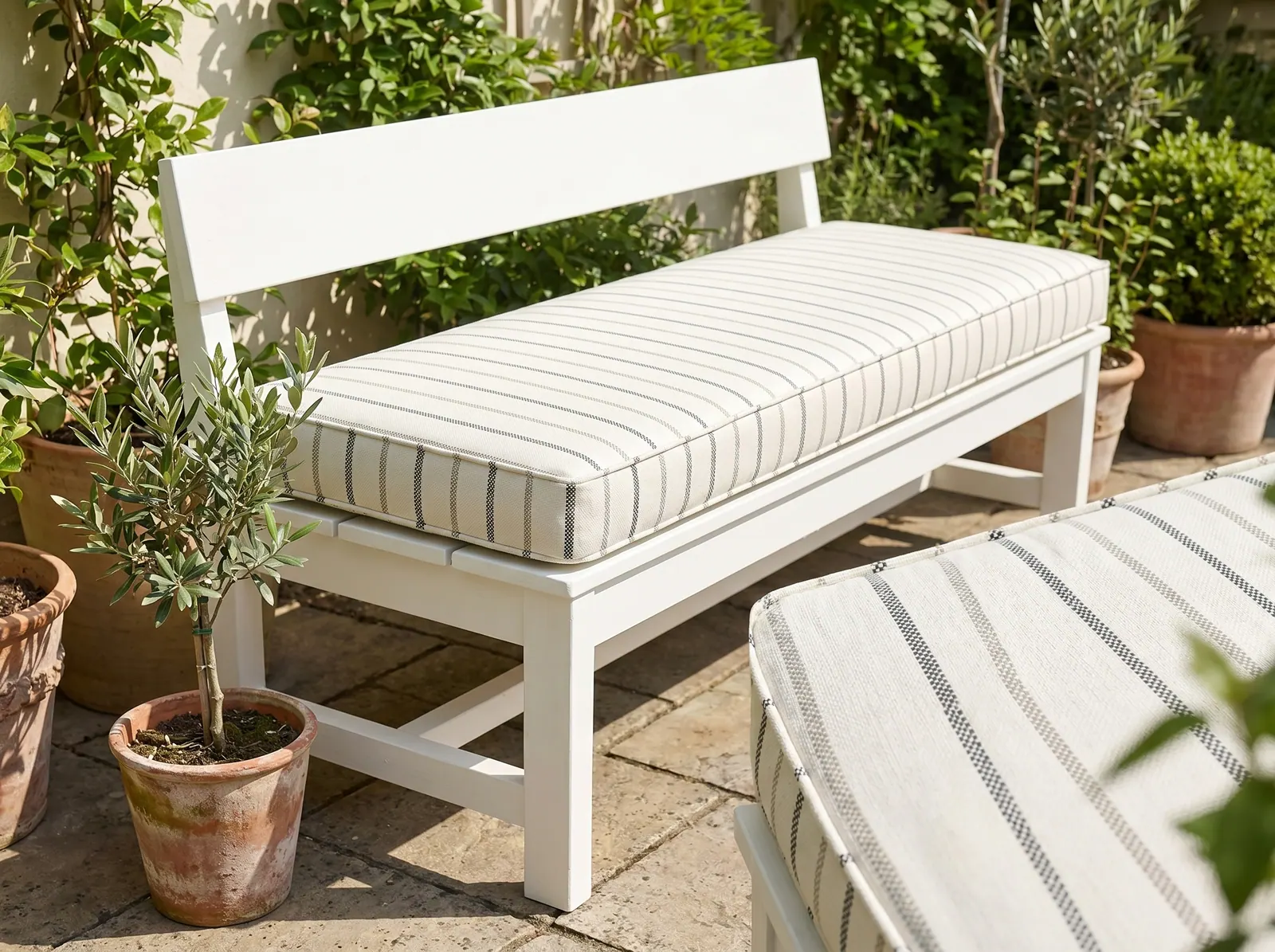
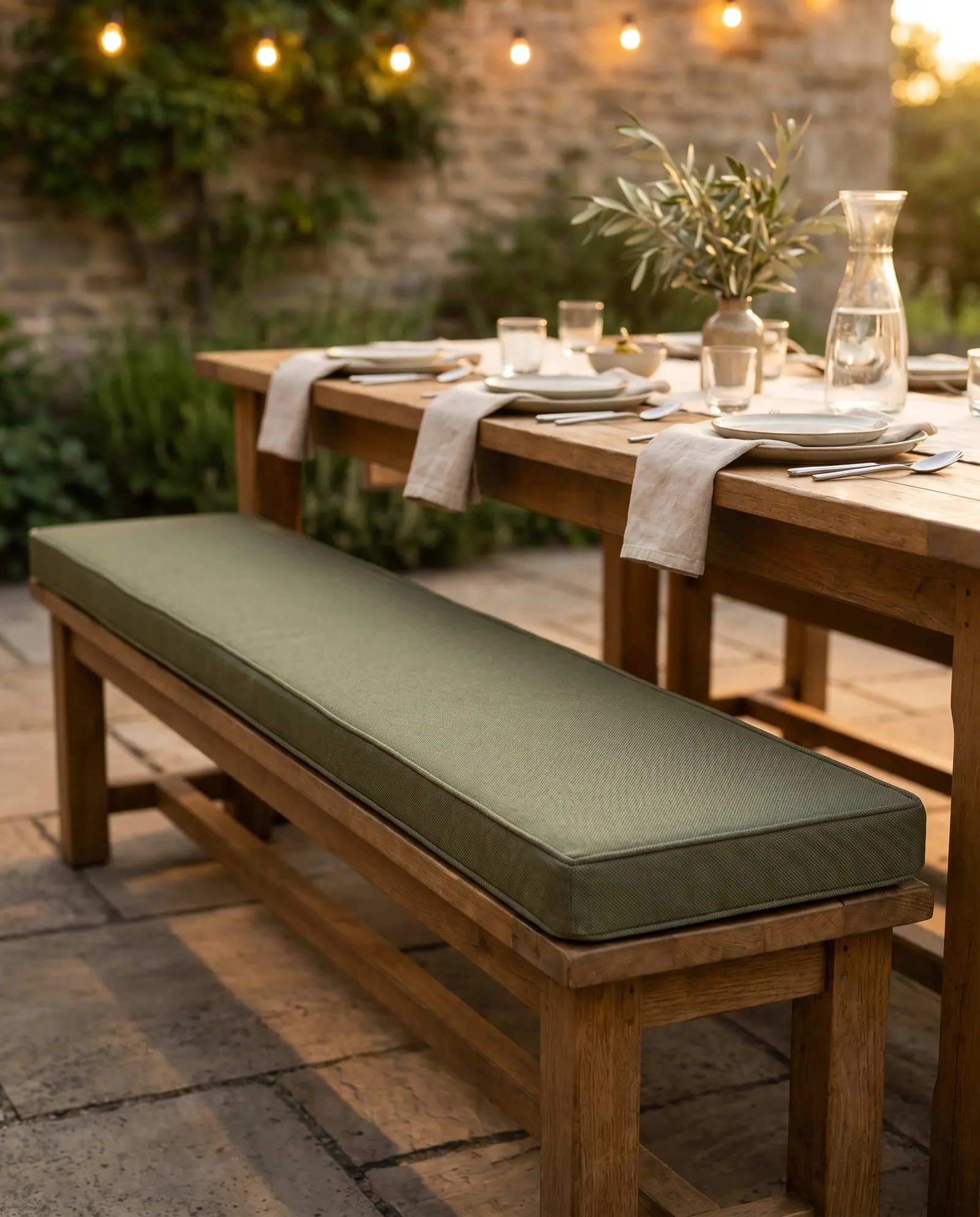
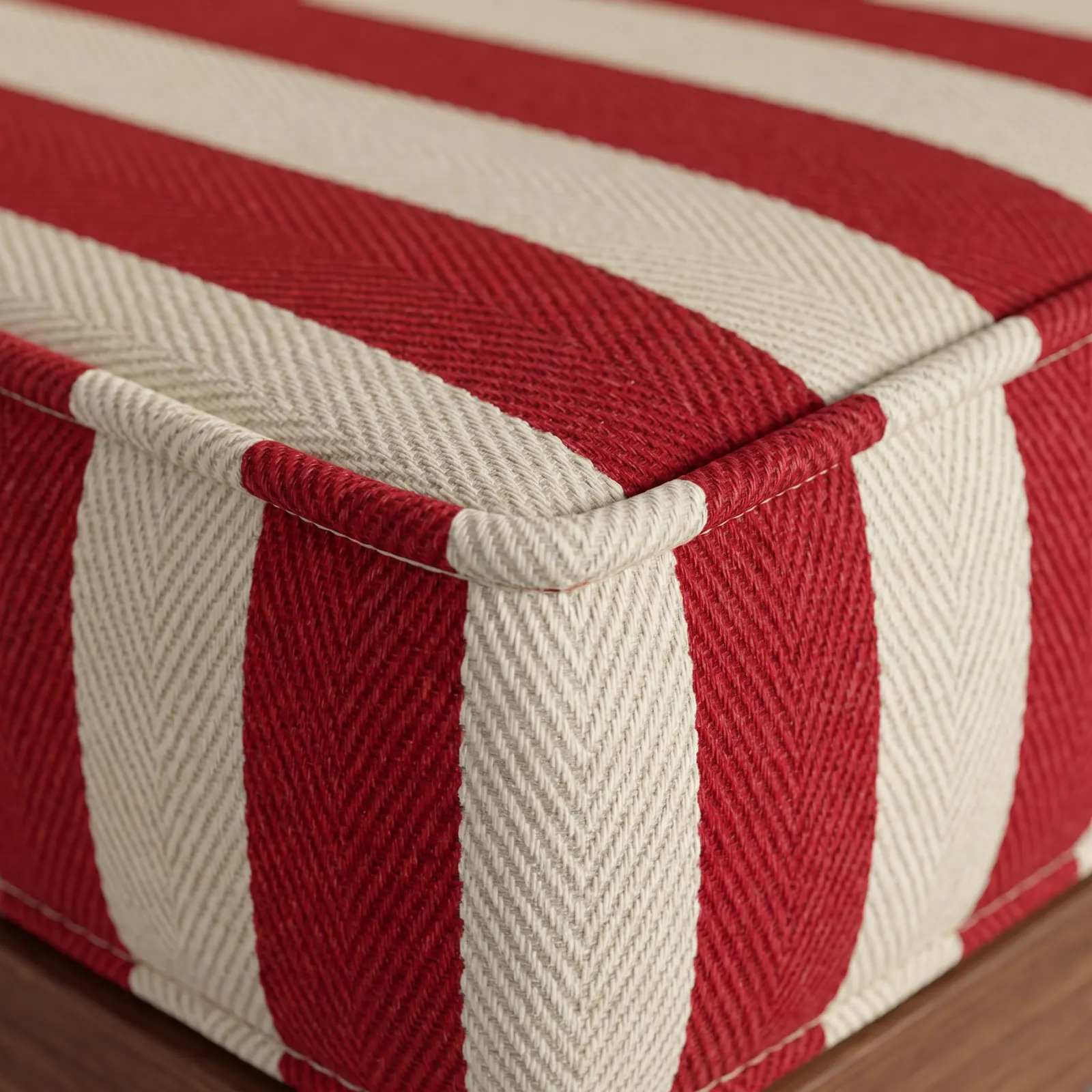
SaveA crisp ivory cushion with charcoal ticking stripes suits a painted white bench on a sunlit patio.SaveA long olive pad on a rustic dining bench, laid for dinner under string lights with linen napkins and olive branches.SaveUp close, the herringbone twill in each stripe and the alternating red-and-cream welt are clearly visible.
Questions about the builder
Can the builder handle a bay window with a straight return at each end?
Yes. Choose Bay window, set the front width, depth and wall angle, then add the side return — the short straight wall before the angle starts. The ticket lists every edge in order, left to right, the way the workshop asks for them.
How exact is the fabric estimate?
It is an estimate for a 55 in (140 cm) roll with ⅝ in seams, including boxing strips and bias-cut piping. Stripes and checks add extra for matching. A maker may nest the pieces differently, so use it to buy fabric, not to cut it.
Why does the builder split long back cushions?
A single soft back cushion much over 40 in sags in the middle. The builder divides long walls into equal pieces automatically, and where two walls meet it shortens one run by the cushion’s thickness so the corners do not collide.
Does the 3D view work on a phone?
It runs in modern mobile and desktop browsers with WebGL. If the 3D view cannot start, every control still updates the plan drawing and the cutting ticket, and the PNG button saves the plan instead.

 Save
 Save
 Save