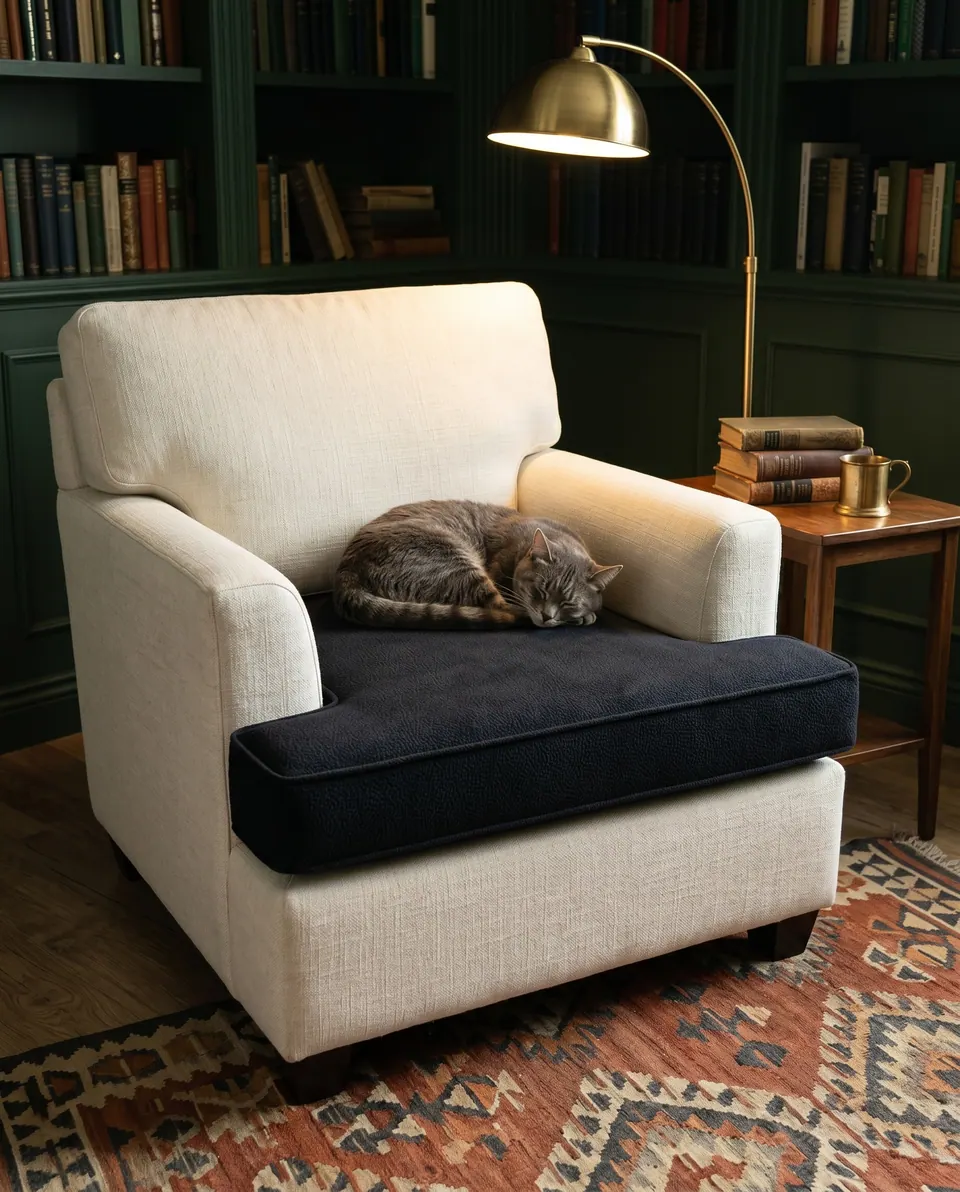
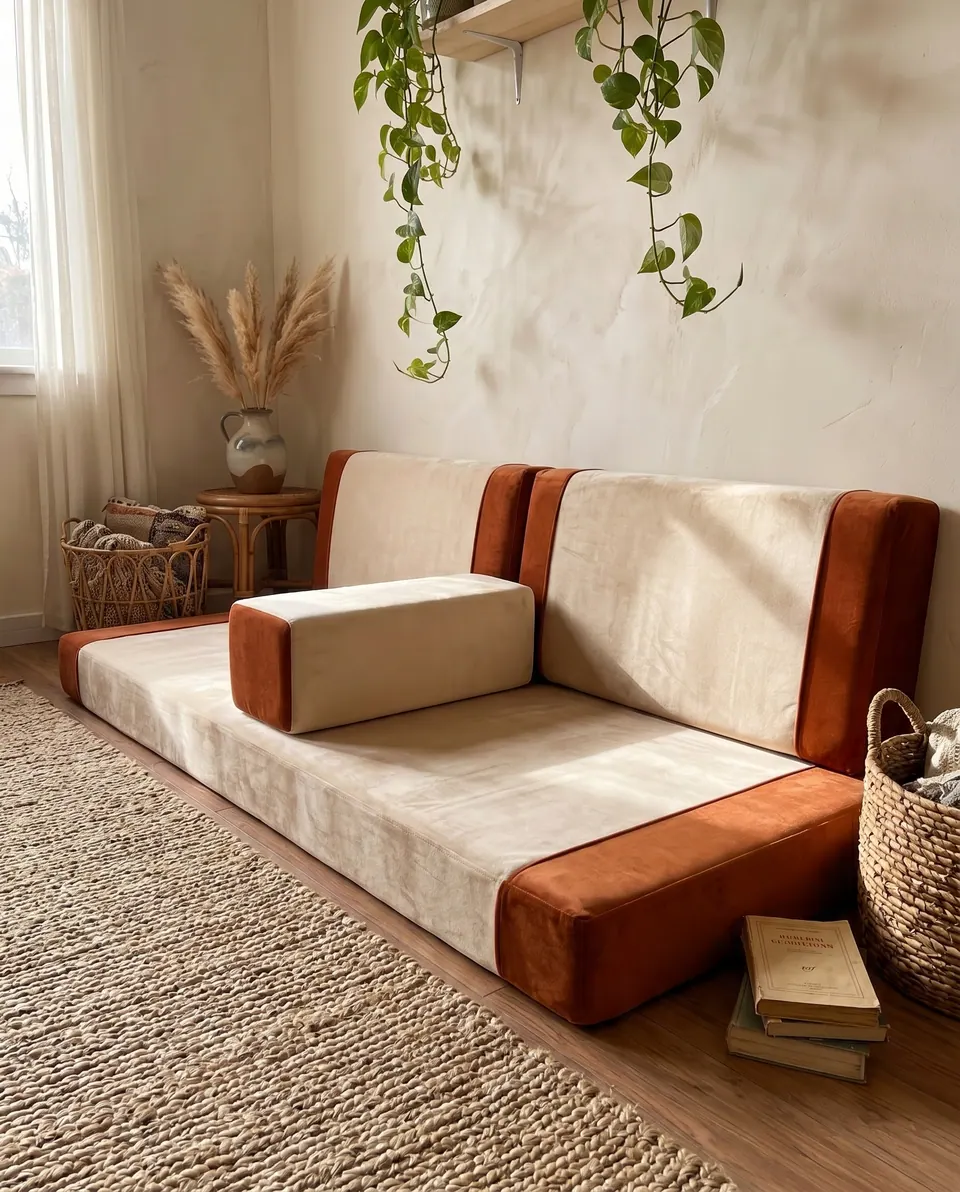
Chair cushion builder: seat pads that tie on and stay put
Right, then. Tell me the shape of your chair seat and I’ll show you the pad on a proper ladder-back — ties bowed, piping straight, and every measurement in both inches and centimeters.
Pick the seat shape — square, tapered (wider at the front), horseshoe with an arched back, or round — then width, depth and a thickness of about 2 in (5 cm). Add ties at the back posts, piping and up to five tufts. The builder shows the pad on a dining or rocking chair and writes a ticket with every edge, the fabric and the foam for the whole set.
The 3D view could not start on this device (WebGL is switched off or blocked). Every control still updates the plan drawing and the cutting ticket below, and the PNG button saves the plan.
Threading the needle — loading the 3D workbench…
Still loading on a slow connection. The plan and the cutting ticket already work.
Drag to turn, pinch or scroll to zoom. With the preview focused: arrow keys turn it, + and − zoom, Home resets.
Cutting ticketNo. 0000
Your cushion cutting ticket
checked Maggie ± ¼ in
The plan drawing appears here once the builder loads.
Plan view: every edge lettered and measured, the zipper side marked with a zigzag.
Pieces & measurements
Fabric, foam & trim estimate
Specification
Check before you order
Workshop notes
What to send the workshop
This ticket, with the number of chairs.
A photo of one chair seat taken from directly above, tape measure in view.
For curved seats: a paper tracing of the seat, photographed flat.
Where the ties should sit, measured from the back corners.
Every control in this builder answers a question buyers commonly ask. Here are some of them, with the workshop’s answers.
A common question
My wooden chair seats are wider at the front than at the back. Can you make cushions for them?
The workshop's answer
Yes, tapered pads are routine. Send a simple sketch or photo with the front width, back width and depth so the shape comes out exactly right.
A common question
Can you add two ties to each dining chair pad so I can tie them on?
The workshop's answer
Yes. The ties are sewn into the back seam so they wrap around the chair posts. They are only added when you ask, so mention them with your order.
A common question
My chair is rounded at the back and dips. Can you make a horseshoe-shaped pad?
The workshop's answer
Yes. Send a clear drawing with the width, the depth, where the curve starts and ends on each side and how deep it runs, plus a photo of the chair. The shape is confirmed with you before anything is cut.
A common question
How should I measure a curved wooden rocking-chair seat?
The workshop's answer
Make a paper template: lay paper on the seat, trace the edge, cut it out and write the widest width and the front-to-back depth on it. Photograph it flat from directly above with a tape measure in view — no need to mail it.
A common question
Can the pads be a little smaller than the seat so the wood trim shows?
The workshop's answer
Yes. Product pages rarely give real seat sizes, so measure your chairs by hand and take off what you want to leave visible.
A common question
I want a tapered seat pad and a back cushion for a covered outdoor chair. What do you need?
The workshop's answer
A drawing with the back edge, front edge, depth and both side edges, plus the back cushion size and the thickness. The back cushion’s height is the seat-to-top distance minus the seat thickness: 19 in minus a 3 in seat gives 16 in.
How to use the builder
Choose the seat shape
Most kitchen chairs are tapered — wider at the front than at the back. Bistro and spindle chairs often have an arched back: choose Horseshoe and set how deep the curve runs.
Measure the seat itself
Width at the front and at the back posts, and depth all the way to the front edge of the seat. If you want the wood rim to show, size the pad down on purpose.
Set thickness and ties
About 2 in (5 cm) keeps a dining chair at table height. Ties are only added when you ask: two at the back posts suit most chairs, one at every leg holds a pad on a stool.
Dress it
Choose the cloth, then piping — same fabric or contrast — and, if you like, a button or four.
Add a back cushion if the chair wants one
Its height is the seat-to-top distance minus the seat pad’s thickness.
Set the quantity and send the ticket
List every piece with its quantity. Four chairs with back cushions is eight cushions, and the ticket counts them for you.
A real project
Eight chairs, and why the notches became an arch
A buyer had eight wooden chairs whose back supports cut deep into the seat. Notches like that cannot be cut reliably from a photograph, so we agreed an arched back instead. The workshop checked the drawing, caught a 1 in slip in the depth, and confirmed the diagram: 20 in wide, 18¼ in deep, 13½ in straight sides, a 5 in arc, 1 in rounded front corners, the zipper along the arc, ties inset 4½ in and a non-slip base.
That is the Horseshoe setting in this builder, dear — put in 20 in, 18¼ in and a 5 in arc and you are looking at it.
Made from tickets like this one
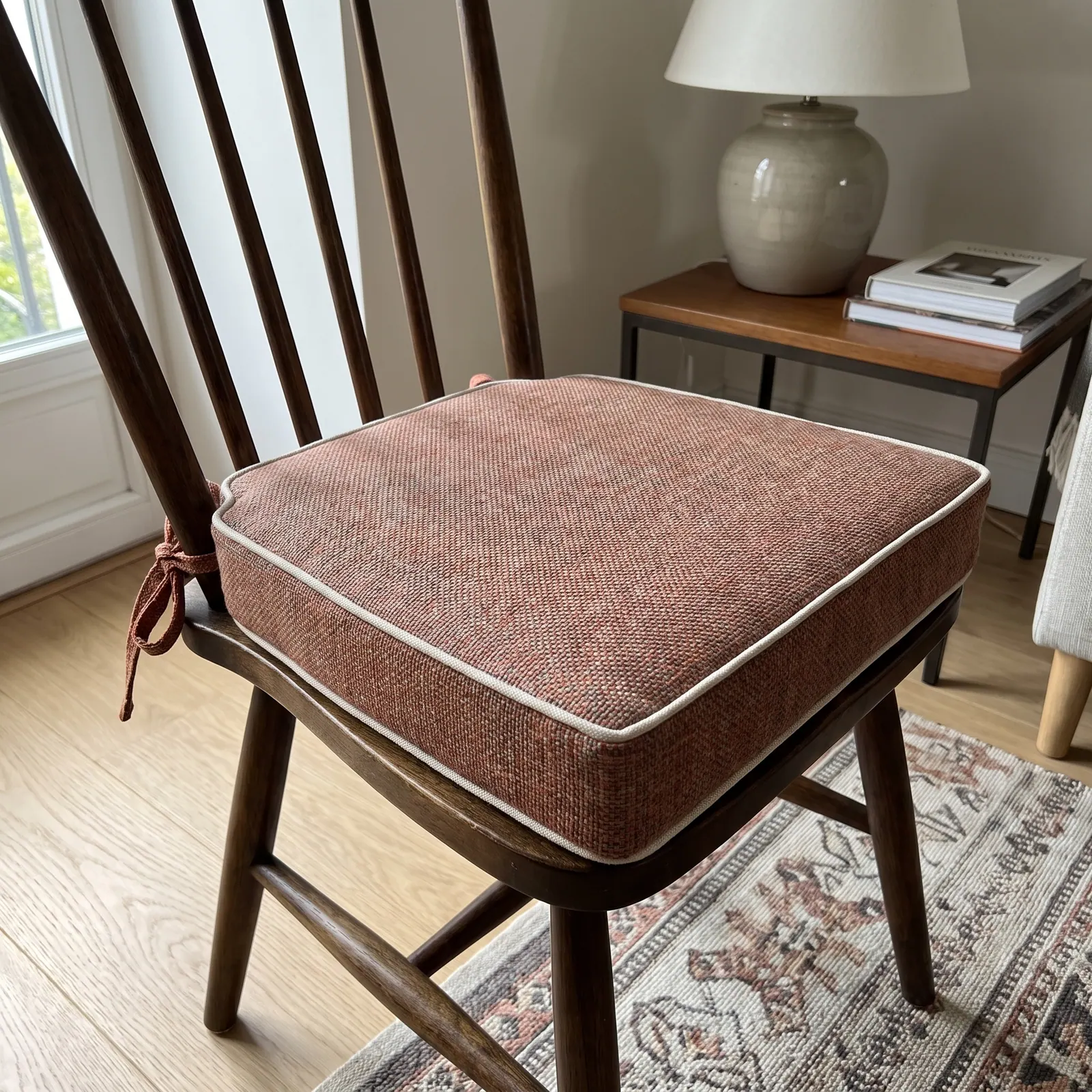
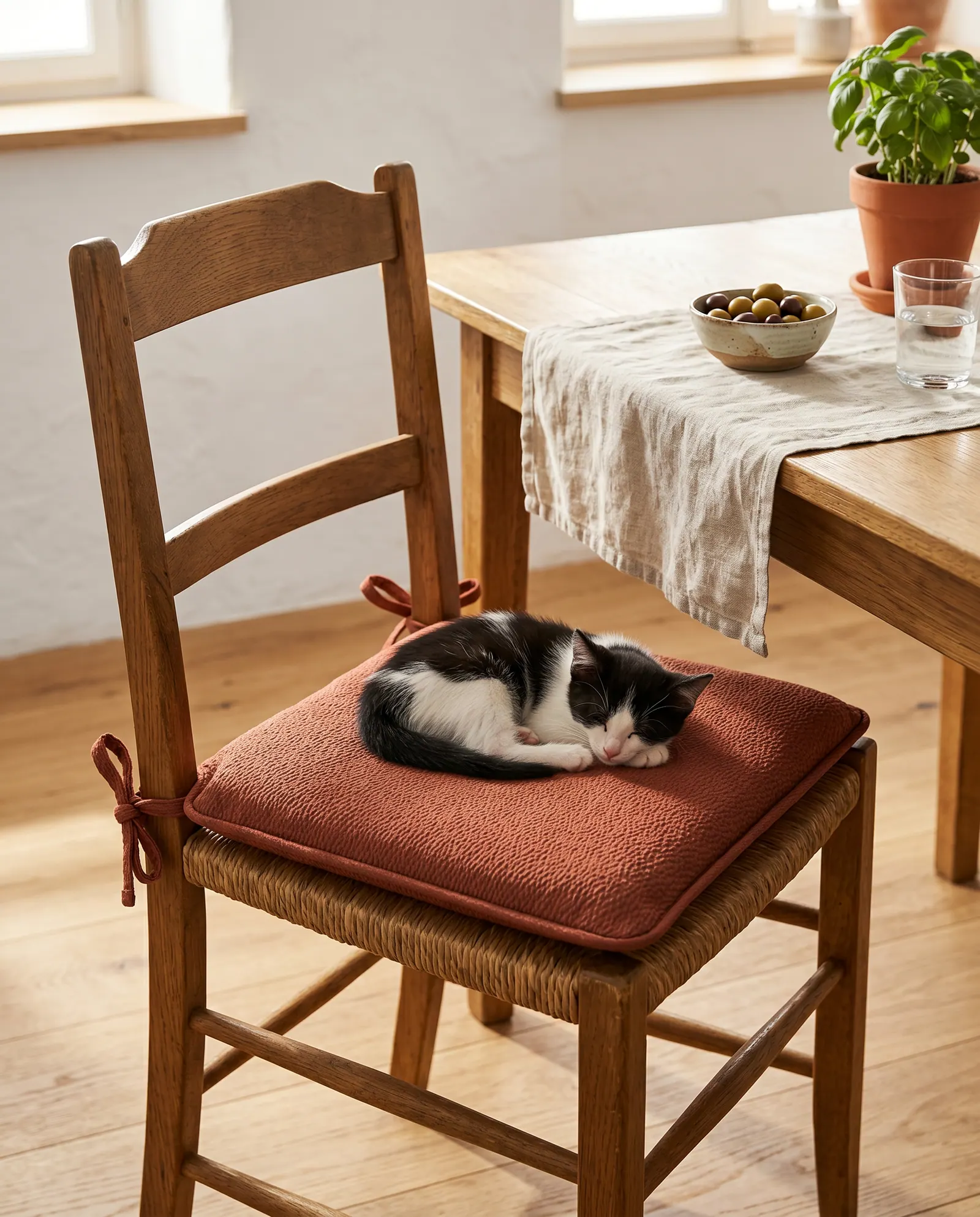
SaveTerracotta flecked with cream gives an old chair a warm, earthy update without hiding its dark wood.SaveA terracotta chair pad with fabric ties softens a rush-seat kitchen chair. The kitten proves it is the comfiest seat at the table.
Questions about the builder
Why offer ties at every leg as well as at the back?
Two ties at the back posts suit most dining chairs. A stool or a chair without back posts needs one at each leg so the pad cannot slide forward. The builder counts every tie into the fabric estimate.
How thick should a dining chair pad be?
Around 2 in (5 cm) keeps a dining chair at the height the table was made for; 3 in (7.5 cm) feels softer on a kitchen chair you sit on for long. The foam is firm, about 2.0 lb/ft³, so a thin pad does not bottom out.
Can a chair pad be washed?
Untufted pads have a zipper along the back edge or the back curve, and the cover washes at 86°F (30°C) on a gentle cycle. Tufted pads keep their cover on because the buttons go through the foam, so they are spot-cleaned.
Does the rocking chair change the cushion?
The pad is the same; the rocking chair is there so you can judge proportions against spindles and arms. On a curved seat, a traced paper template beats a tape measure.