Custom outdoor cushions, water-repellent, for benches that live outside
Water-repellent is a promise; waterproof is a contract. Most outdoor benches need the first, a few need the second, and every one needs a maker who knows which you meant.
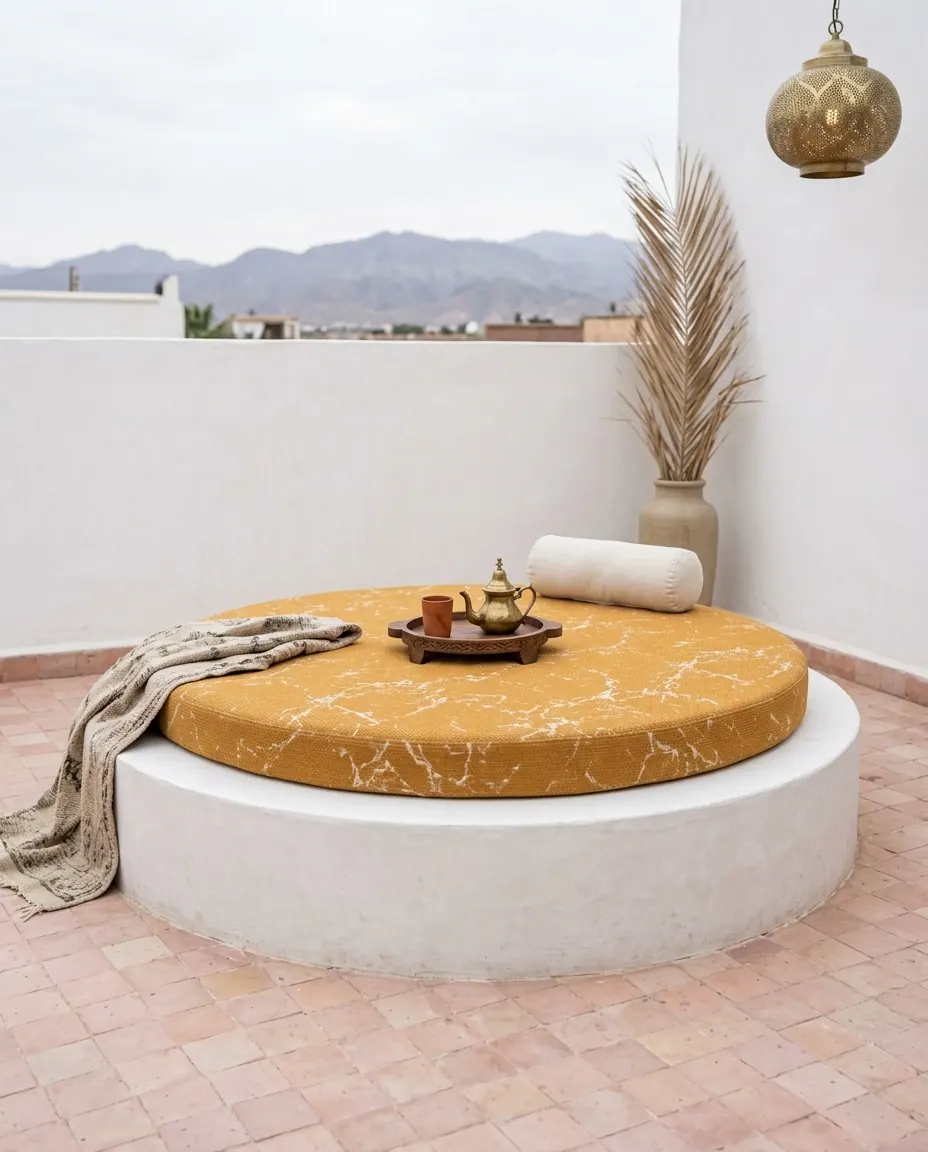
SaveA made-to-measure round cushion crowns a plaster plinth on a Moroccan rooftop, with a bolster for leaning back.
The quick answer
An outdoor bench cushion is measured like an indoor one, on the seat inside the frame, then made 3 to 4 in thick in outdoor fabric that resists water, UV and fading. Under a closed roof with no rain or direct sun, regular fabric can work. Very long benches are made in sections, and ties or a non-slip base keep cushions in place.
Every one is cut to your measurements. The number is how many readings the atelier has published for that shape.
Sizes & measuring
Measuring a bench that lives outside
Measure the seat itself, inside the frame. Old outdoor cushions shrink, fade and flatten; they make poor rulers.
How to measure Seen from above, the cushion fills the frame: measure length and depth inside it, wood to wood. Seen from the front: the thickness you want.
Thickness
3 to 4 in for outdoor benches; 4 in (10 cm) is the standard
Thinnest
2 in (5 cm) is the thinnest standard foam
Very long benches
Often made in sections; a 142 in (360 cm) bolster went as two 71 in (180 cm) pieces. You choose where the joins fall.
Pool benches
One piece, two long cushions, or one cushion per seat
Cutouts
Cut from your drawing, including around drains
Backrests
Same fabric as the seat; firm foam or a soft pillow fill; ordered as a separate piece
Covers only
New zippered covers for inserts you already own, made from measurements alone
Stripes
State the direction for each cushion; a bench and its chairs often need opposite ways
Storage
The foam folds or rolls for winter storage without creasing
An outdoor bench cushion is the seat on a patio bench, a pool bench, a garden loveseat or a built-in along the deck rail. It is cut like any bench cushion. What changes is the weather it has to live with.
So ask the bench one question before the swatch book. Under a closed roof where rain and direct sun never reach, regular fabrics such as linen-look and velvet are fine. A screened porch still lets in pollen, dust and humidity, so it gets outdoor fabric. Open sky gets outdoor fabric, full stop.
Where does the rain come from at your place, straight down or sideways off the lawn? That answer is the first line of the order note. For loungers, see sunbed cushions; for the whole porch, patio and porch cushions.
Edges, joins and the foam inside
A box edge with piping is the outdoor standard. It keeps a square line through a season of rain and sun, and the piping can be any color from the outdoor range. Under a covered terrace, an indoor-fabric piping on an outdoor cushion is fine.
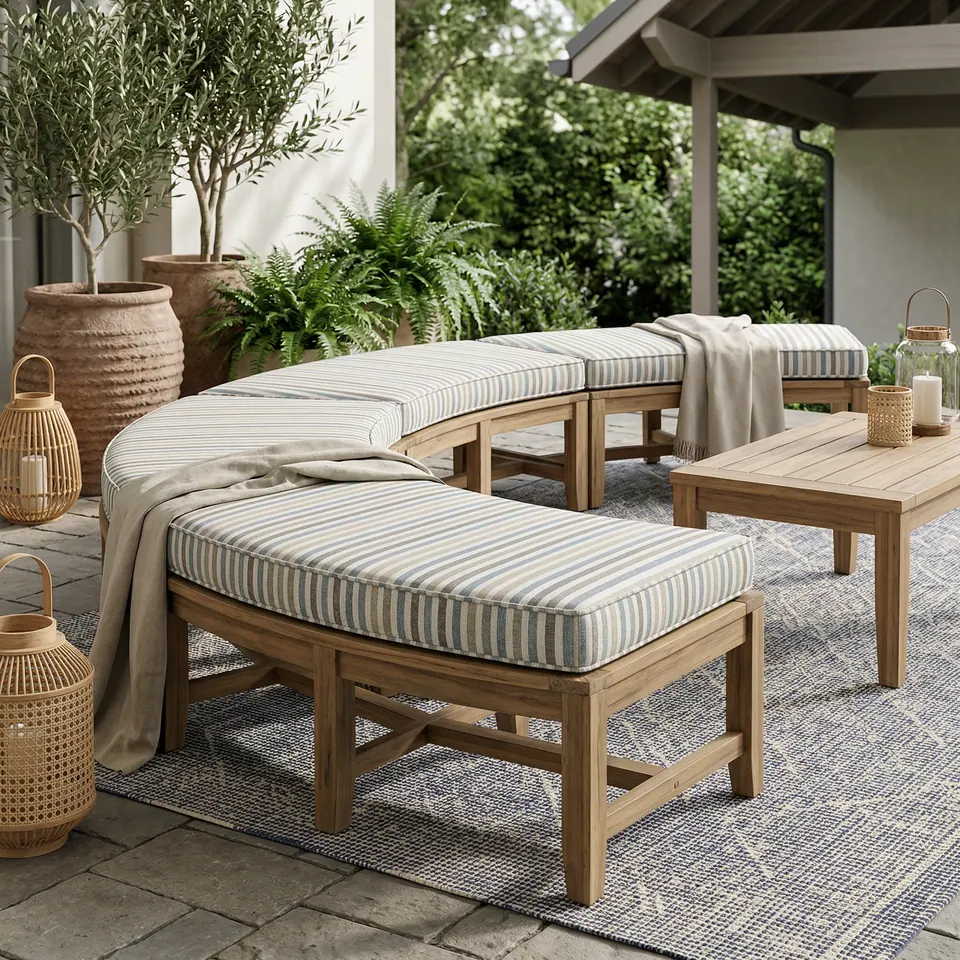
Long benches are where the planning is. Past a certain length a cushion exceeds the single-piece limit, so it comes in sections, and the joins are yours to place: at a post, at the middle, or one cushion per sitter. Shorter pieces are also quicker to carry in before a storm. See one piece or two.
The foam is high-density and medium-firm, 4 in unless you say otherwise. Remember that fabric sheds water and foam soaks it up. Stand a wet cushion on its edge to drain, and let it dry before it goes back out.
Close to 200 fabrics made for weather
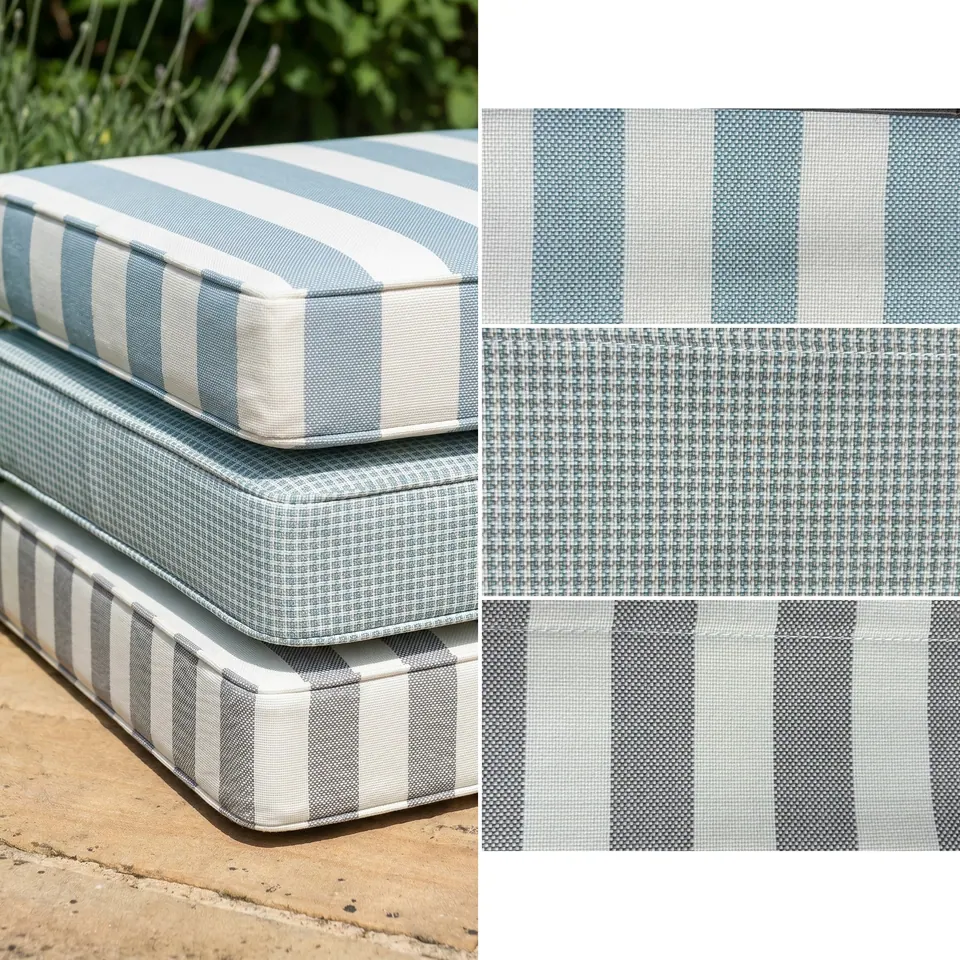
The outdoor range is close to 200 fabrics on four or five charts. All of them are water-resistant, UV-resistant and fade-resistant, woven like real cloth rather than vinyl. They come from one factory at one quality, so choose by texture, tone and pattern, not by chart.
A dedicated water-repellent outdoor fabric exists too. Under a real roof, the workshop prefers the softer regular fabric where rain protection isn't needed.
Most cushions in the atlas can be made in outdoor fabric: chair pads, square cushions, even a star floor cushion. Write the outdoor code on every piece and the whole set matches. Outdoor fabrics cost more than the standard indoor charts.
The count is how many published readings use each family. Open a family for its swatch book, care notes and neighbors.
Ties, grip or hook-and-loop
Option
How it holds
Best for
How to ask
Ties
Sewn into the seams and tied to the frame
Benches and chairs with slats, rails or legs
Number, position, length and color in the order note
Non-slip base
Grippy fabric replaces the bottom panel; friction, no adhesive
Smooth, solid bench tops
In personalization, at extra cost
Hook-and-loop strip
One side sewn under the cushion, the other fixed to the bench
Where ties have nothing to wrap around
On request, at extra cost; wait for confirmation
Hook-and-loop tabs and snap fasteners are not made. When in doubt, ties.
A real project
Six covers for two tired lounge chairs
A buyer in the US had two identical outdoor lounge chairs, three cushions each, with inserts that were still good. What was needed was six zippered covers: 31.5 x 31.5 x 3.5 in, 26.5 x 26.5 x 3.5 in and 12 x 28 x 3.5 in, two of each, plus pillow covers at 24 x 24 and 20 x 20 in, all with contrast piping.
The buyer had a branded outdoor acrylic in mind. The workshop works from its own outdoor range, so it asked for photos and a sized drawing and offered to match the look from a photograph instead. The foam stayed. The covers changed.
Measured
31.5 x 31.5 x 3.5 in, 26.5 x 26.5 x 3.5 in, 12 x 28 x 3.5 in (two of each)
What it taught
Replacement covers can be made from measurements alone. Choose from the maker's own outdoor range.
What the weather, and the paperwork, will catch
Ordering one bench cushion and expecting the back with it. Each listing price is one piece; the backrest is its own item.
Approving a drawing without checking every length. One buyer in the US approved a schematic and a cushion arrived 23 in short.
Indoor fabric under open sky. Tell the maker indoor or outdoor first, so the color search starts in the right chart.
Treating a screened porch as indoors. Pollen, dust and damp air get through the screen.
Typing ties into the size box. Write them in the order note, then check the pre-dispatch photo for them.
One stripe note for a whole set. Give the direction for the bench and for each chair.
Photographs from the workbench
Open any photograph large; each one has its own link and a Save button.
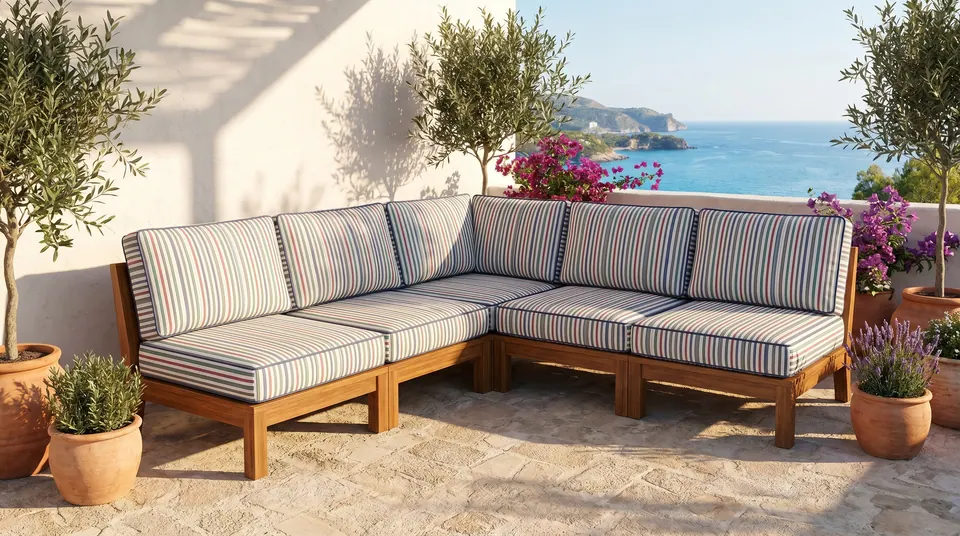
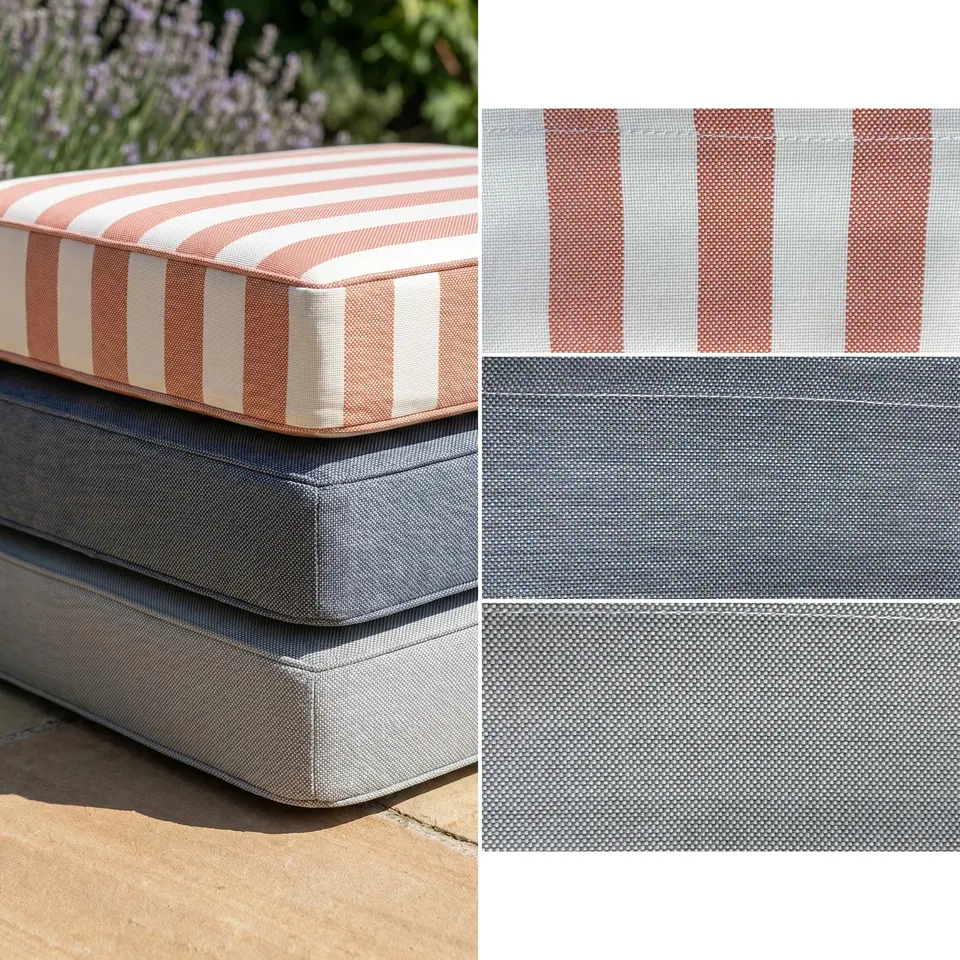
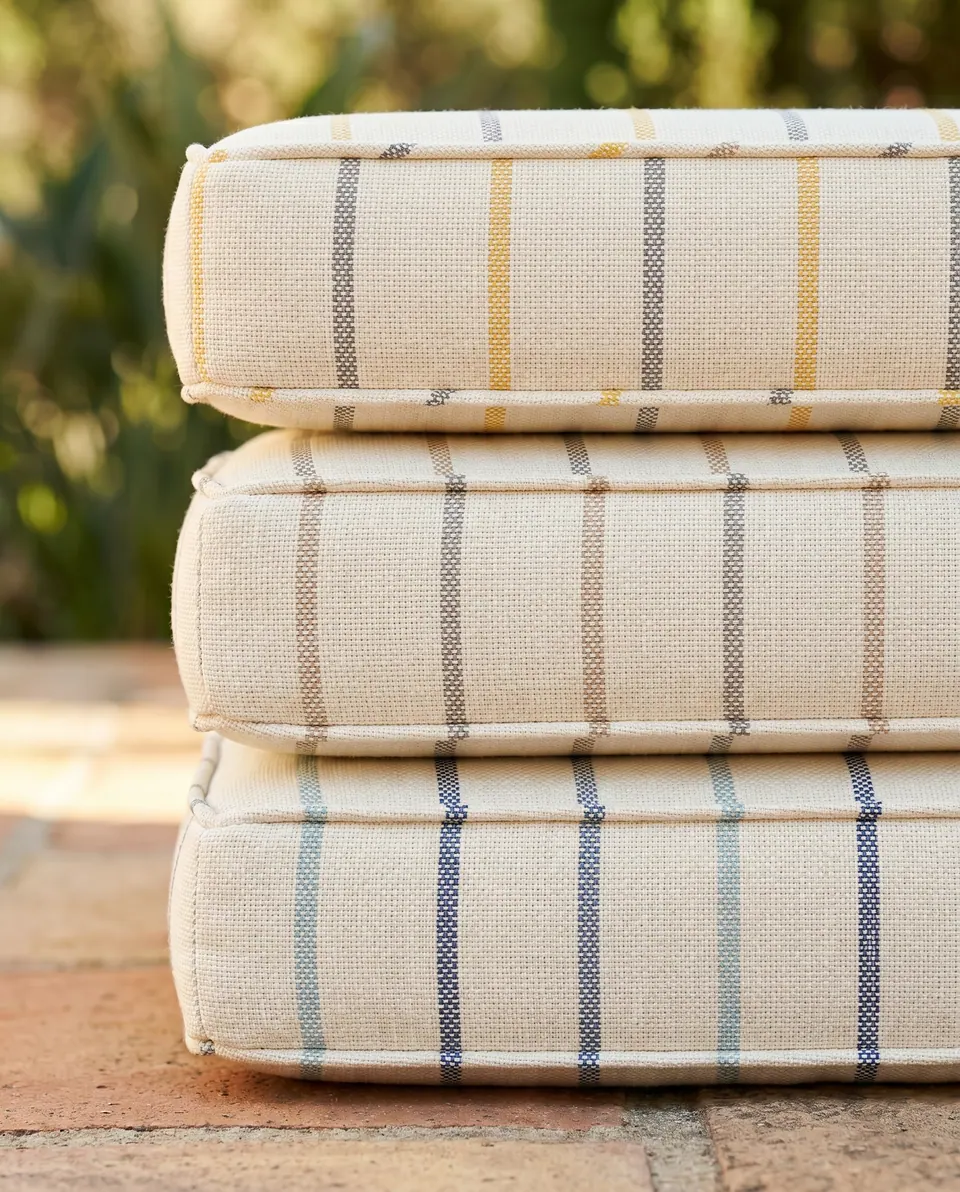
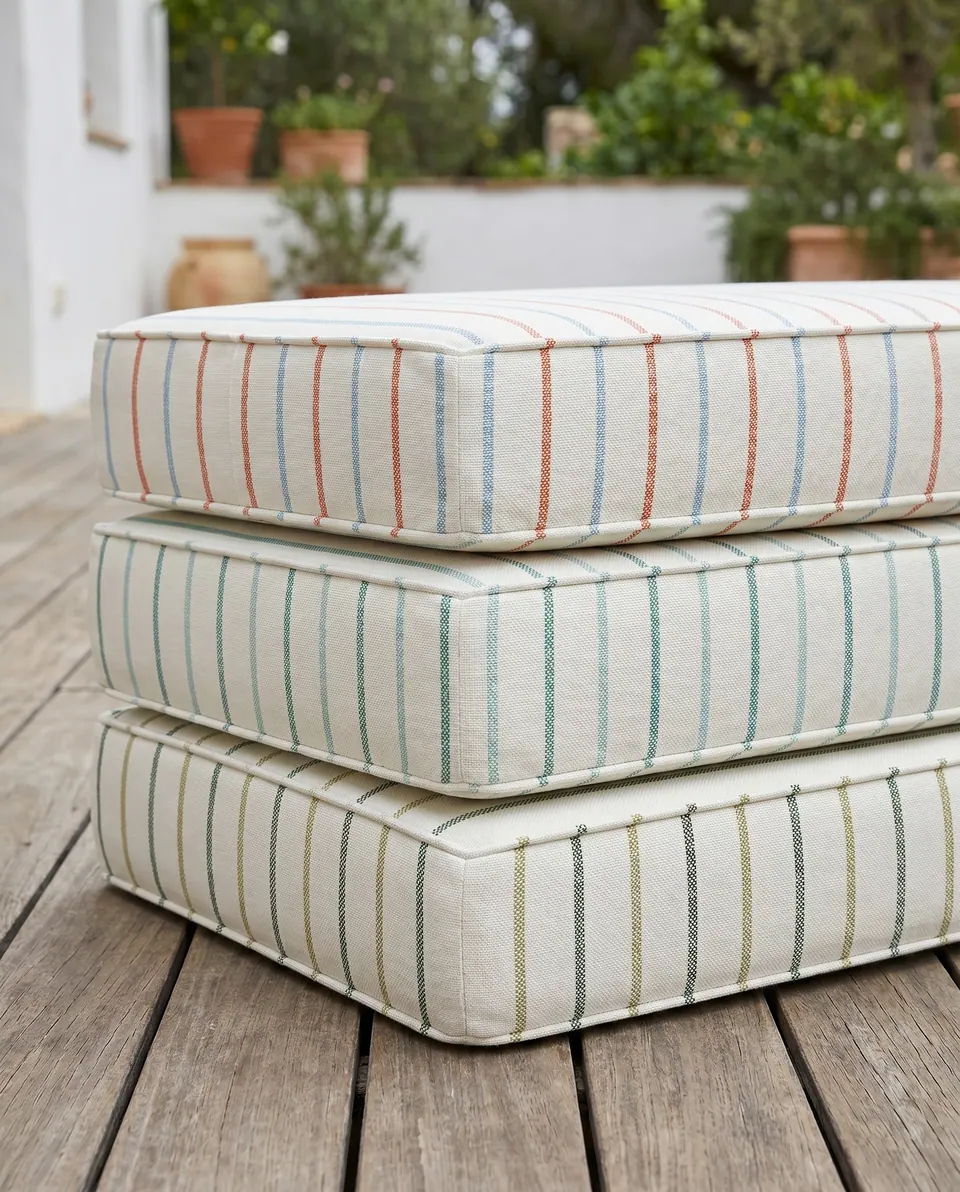
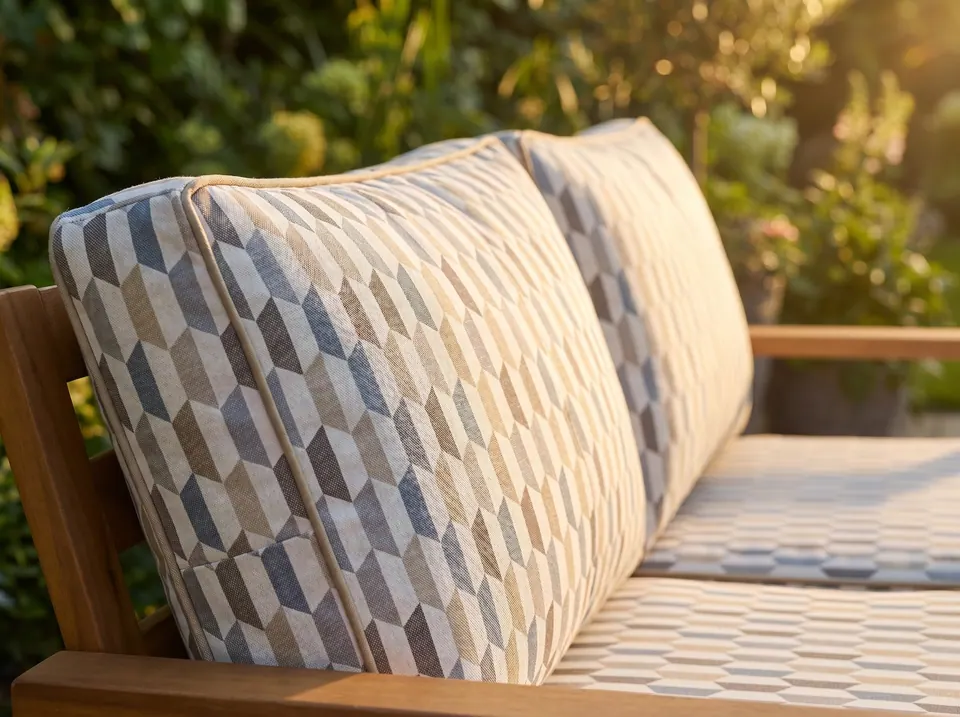
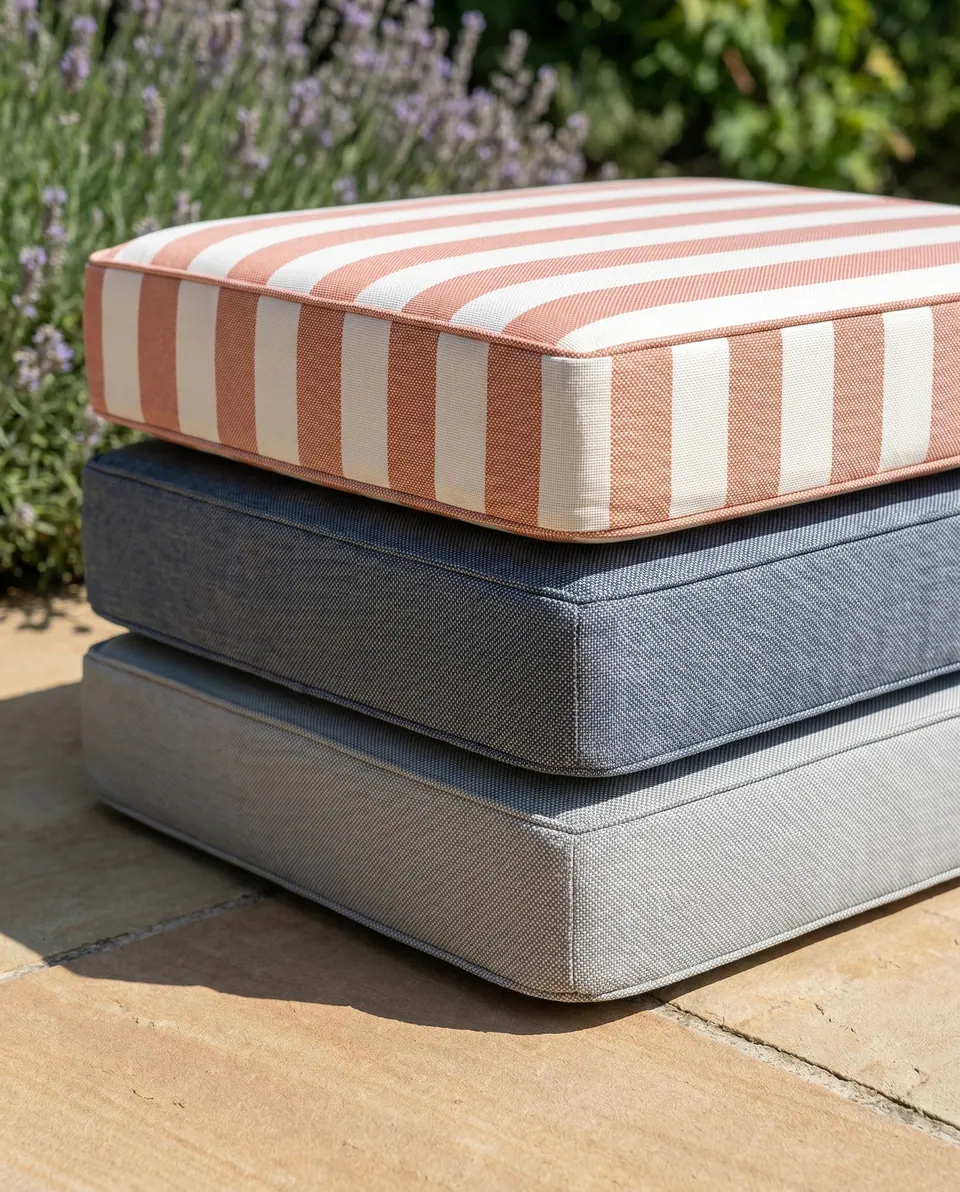
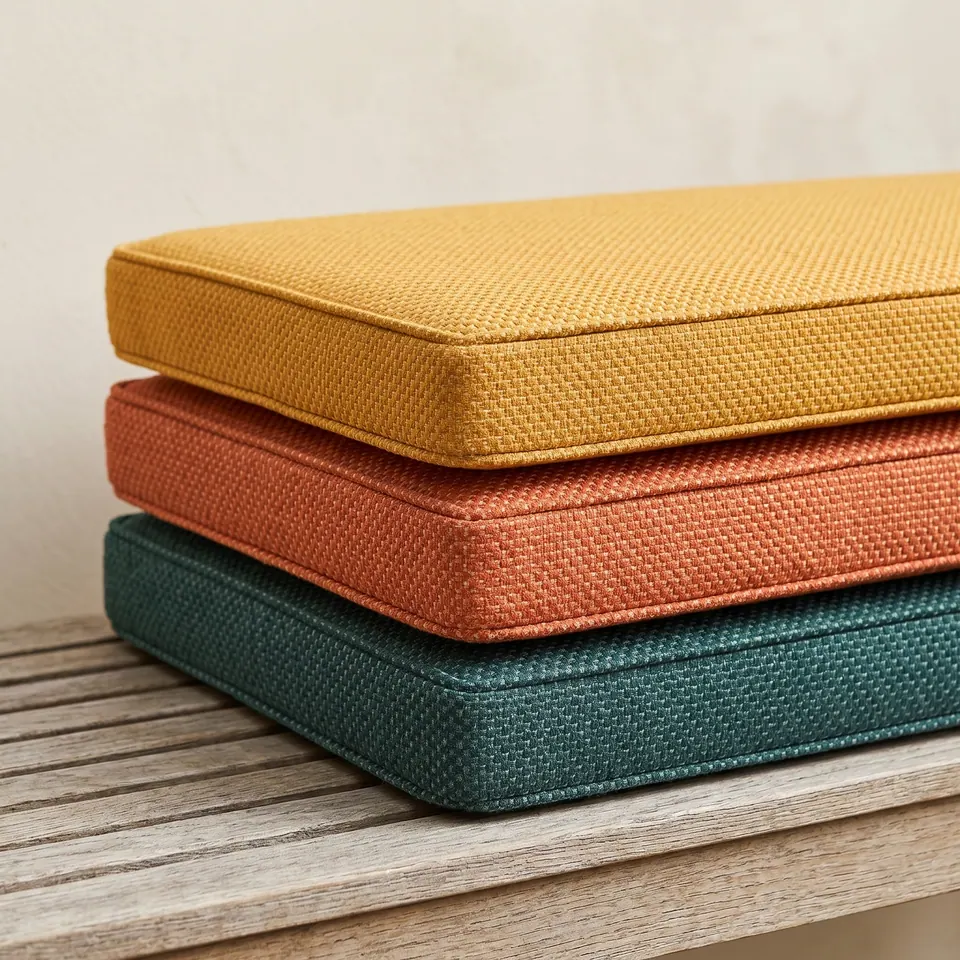
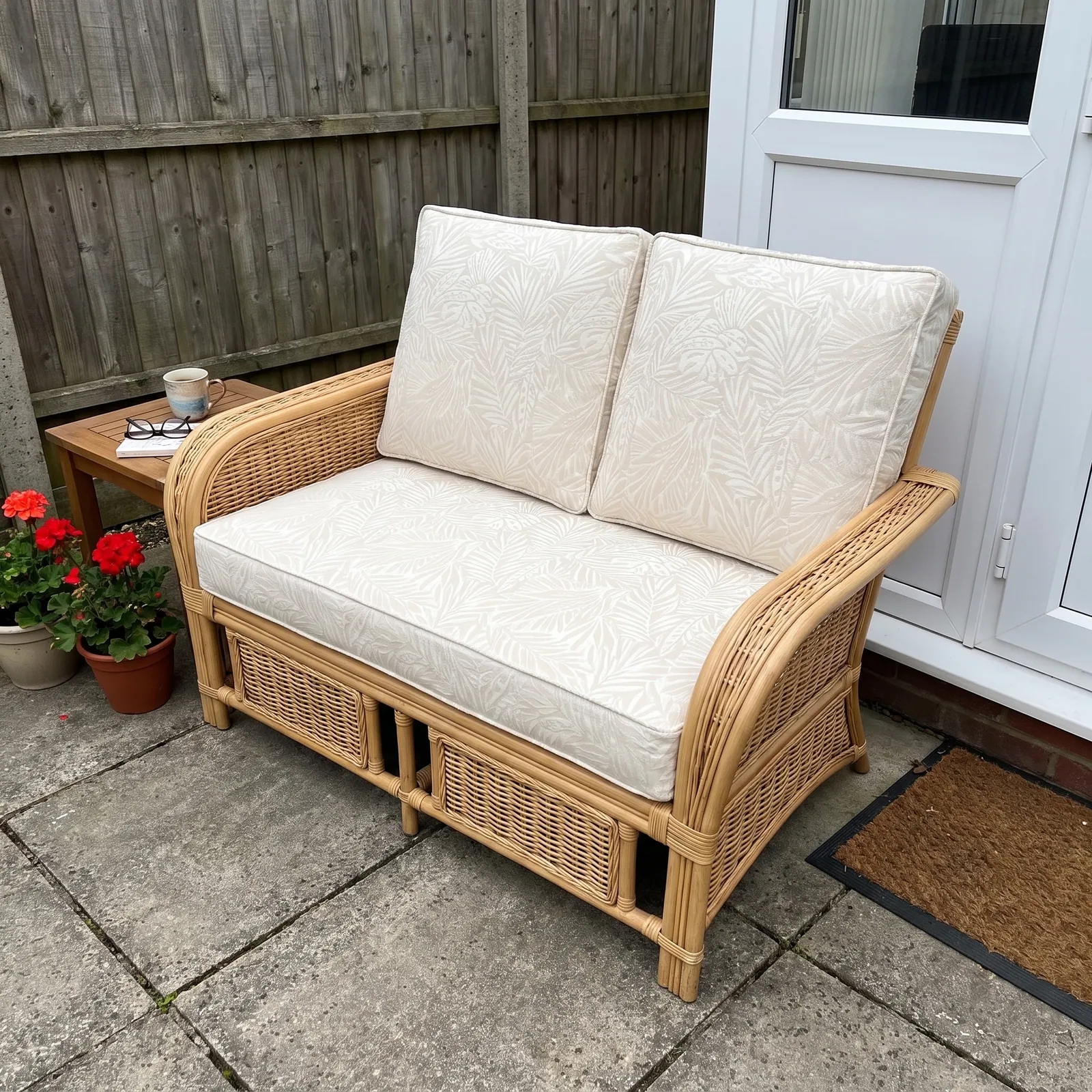
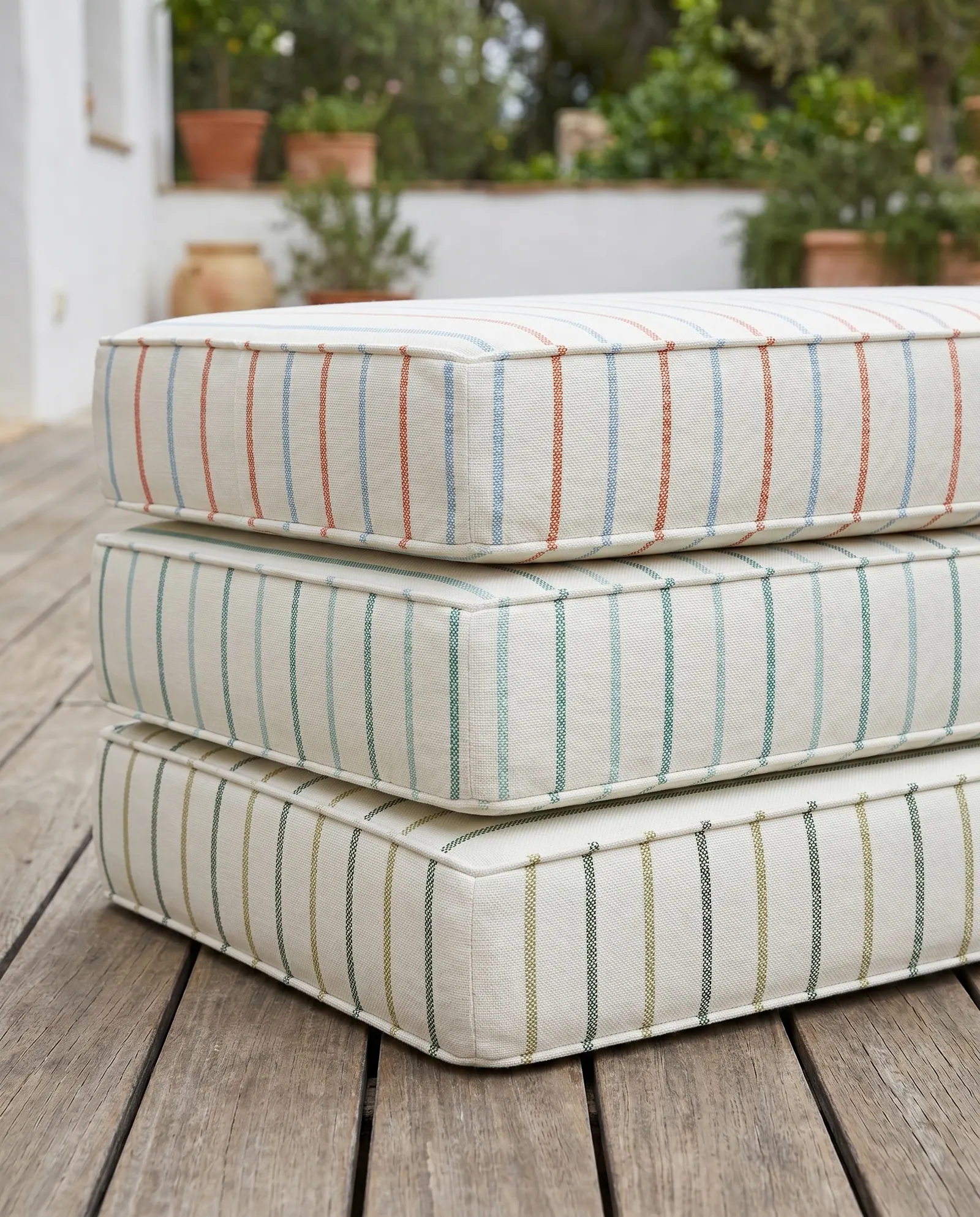
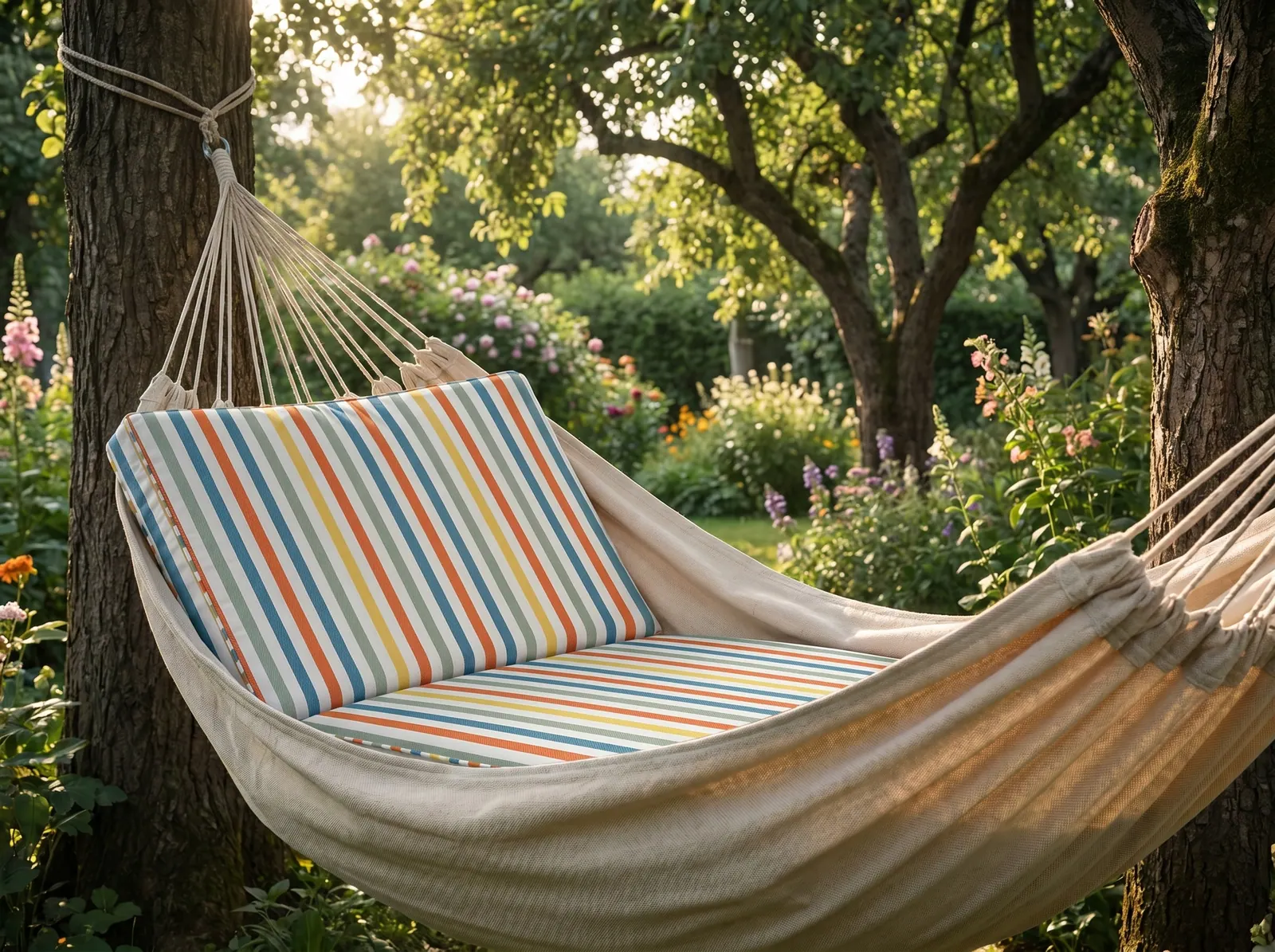
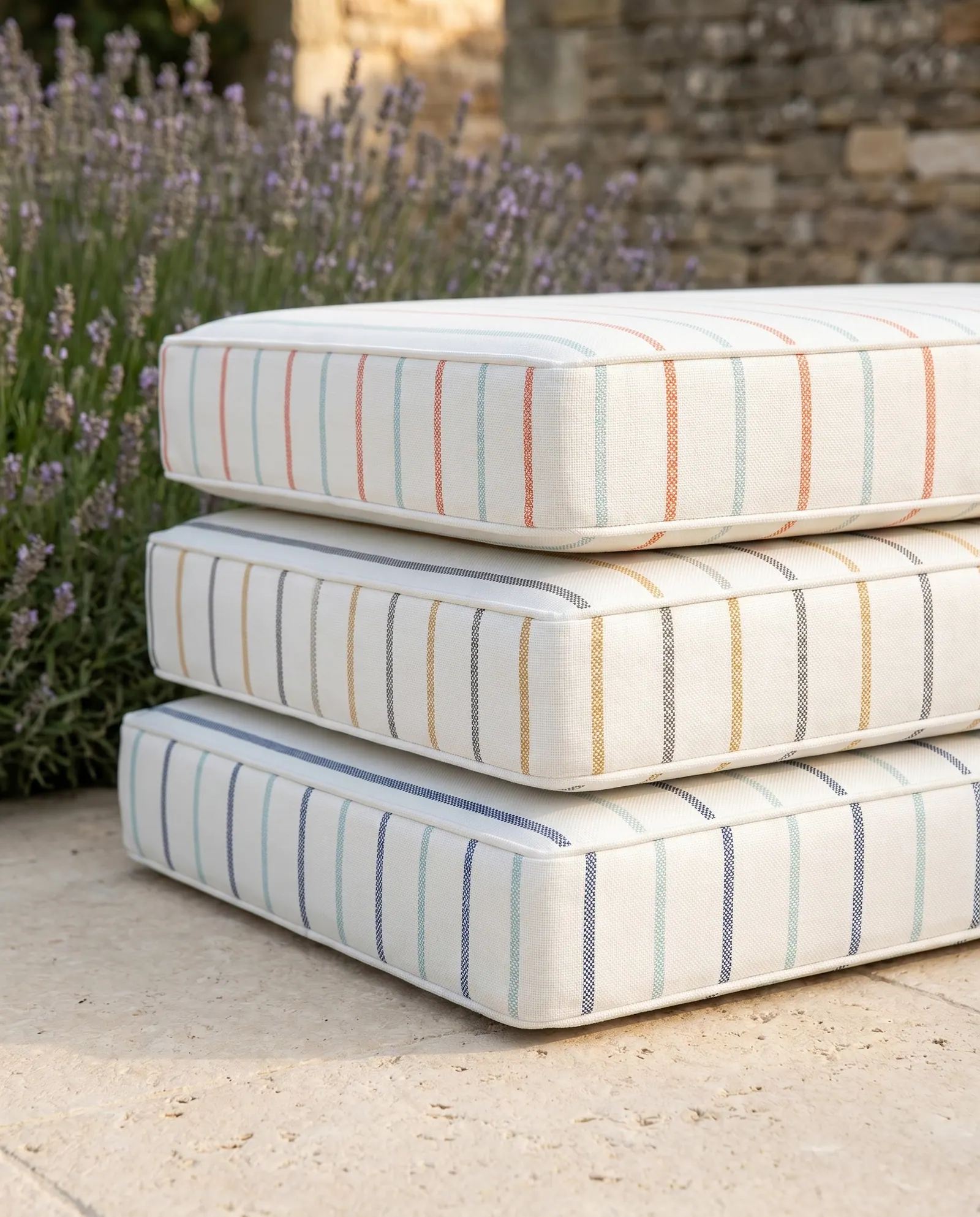
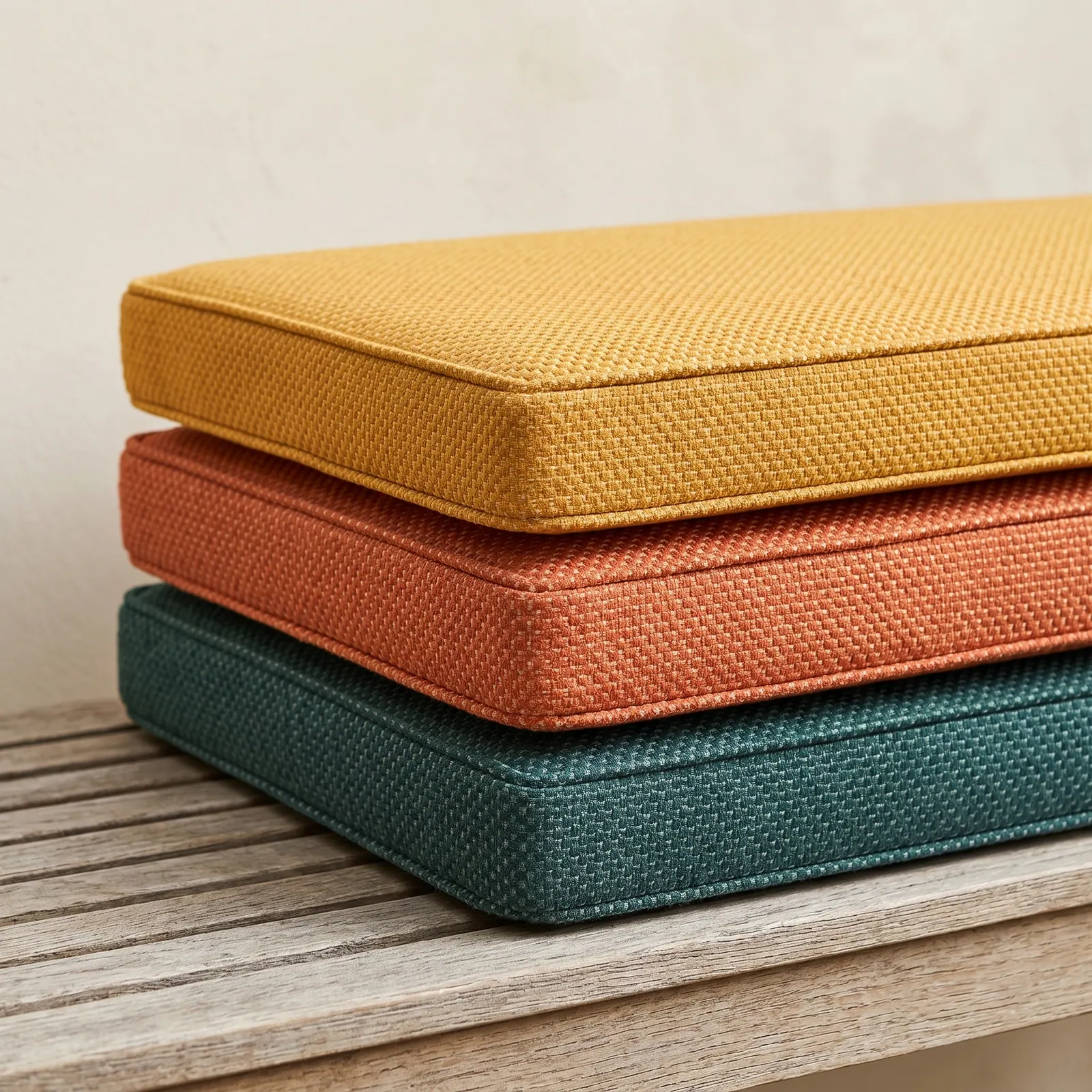
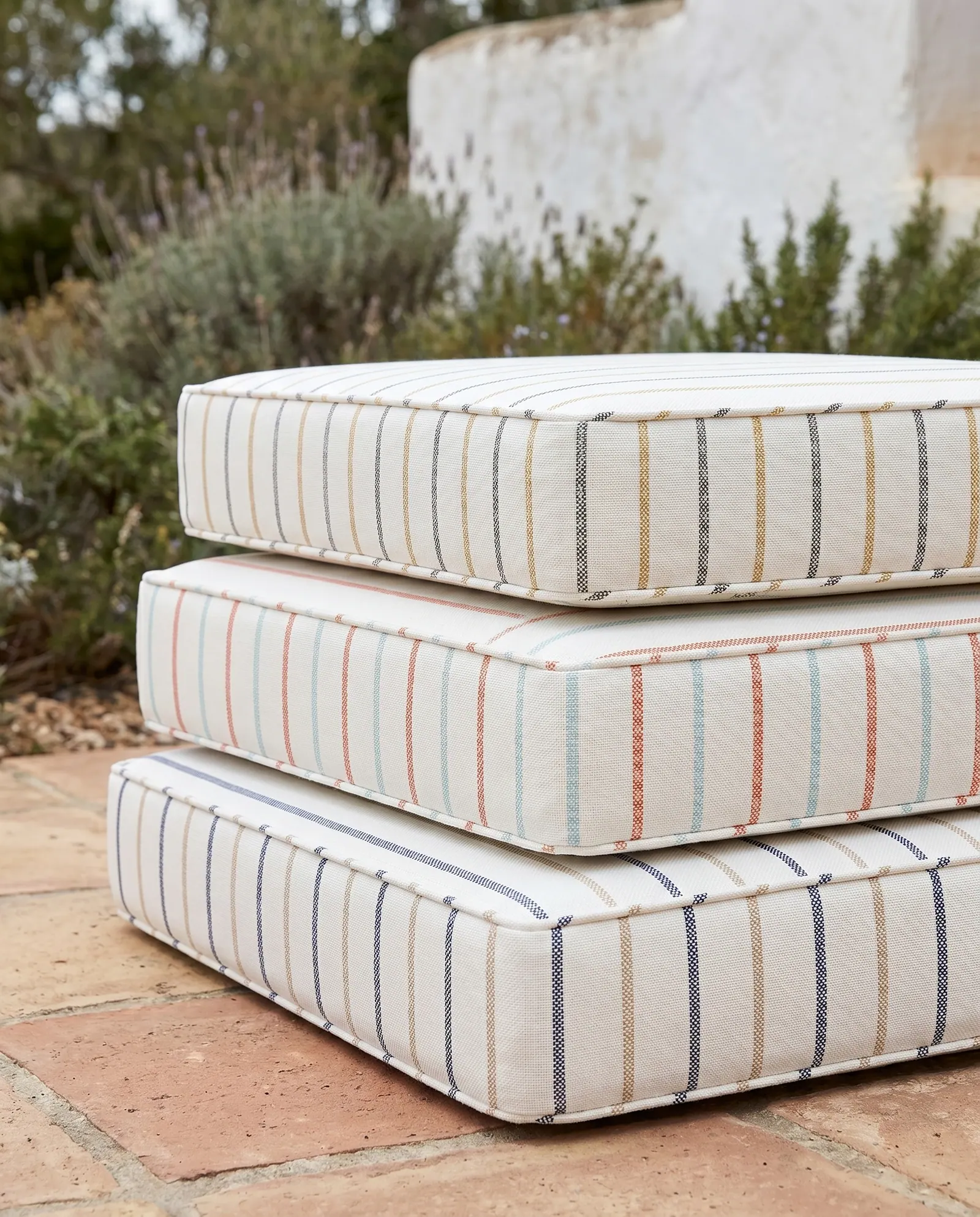
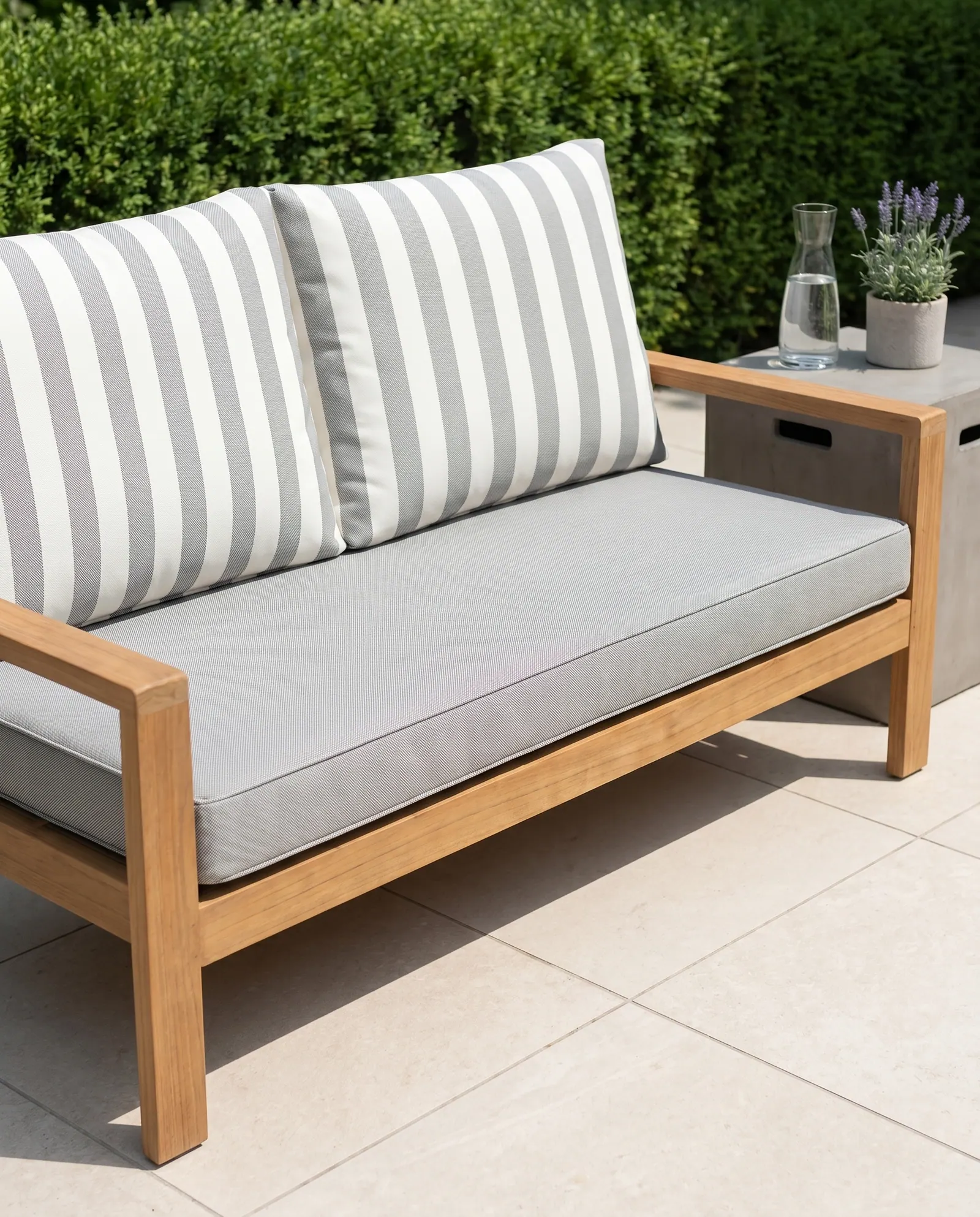
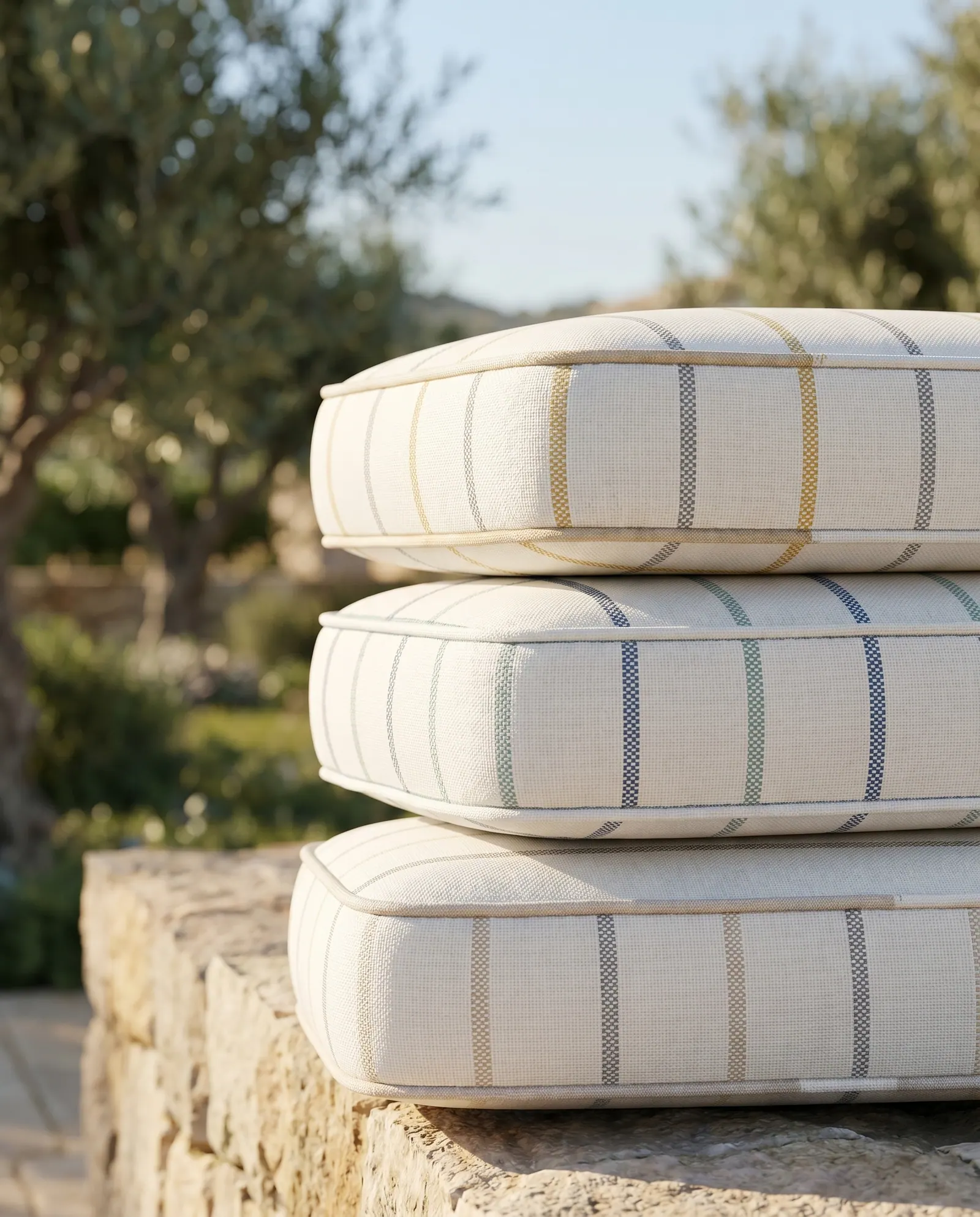
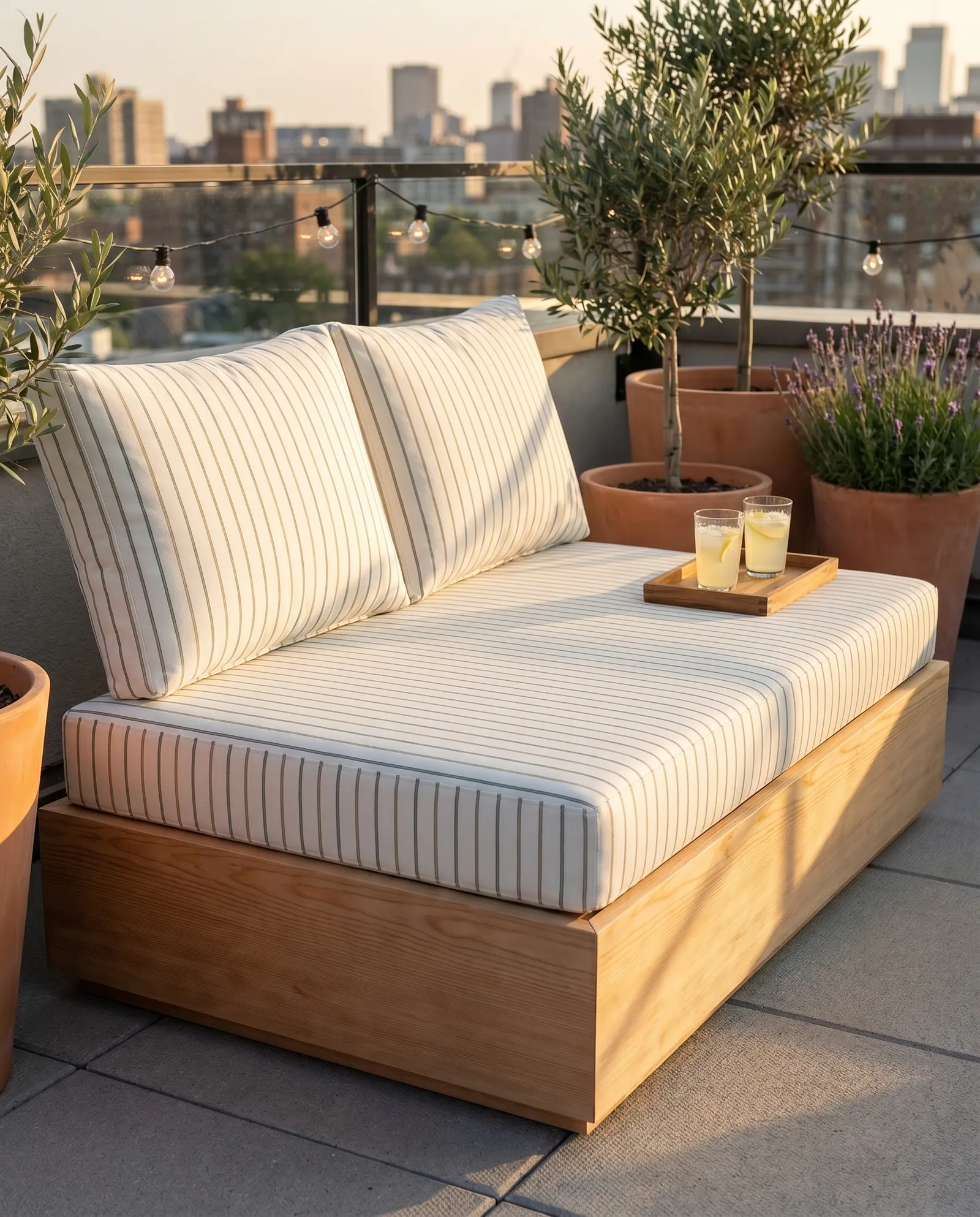
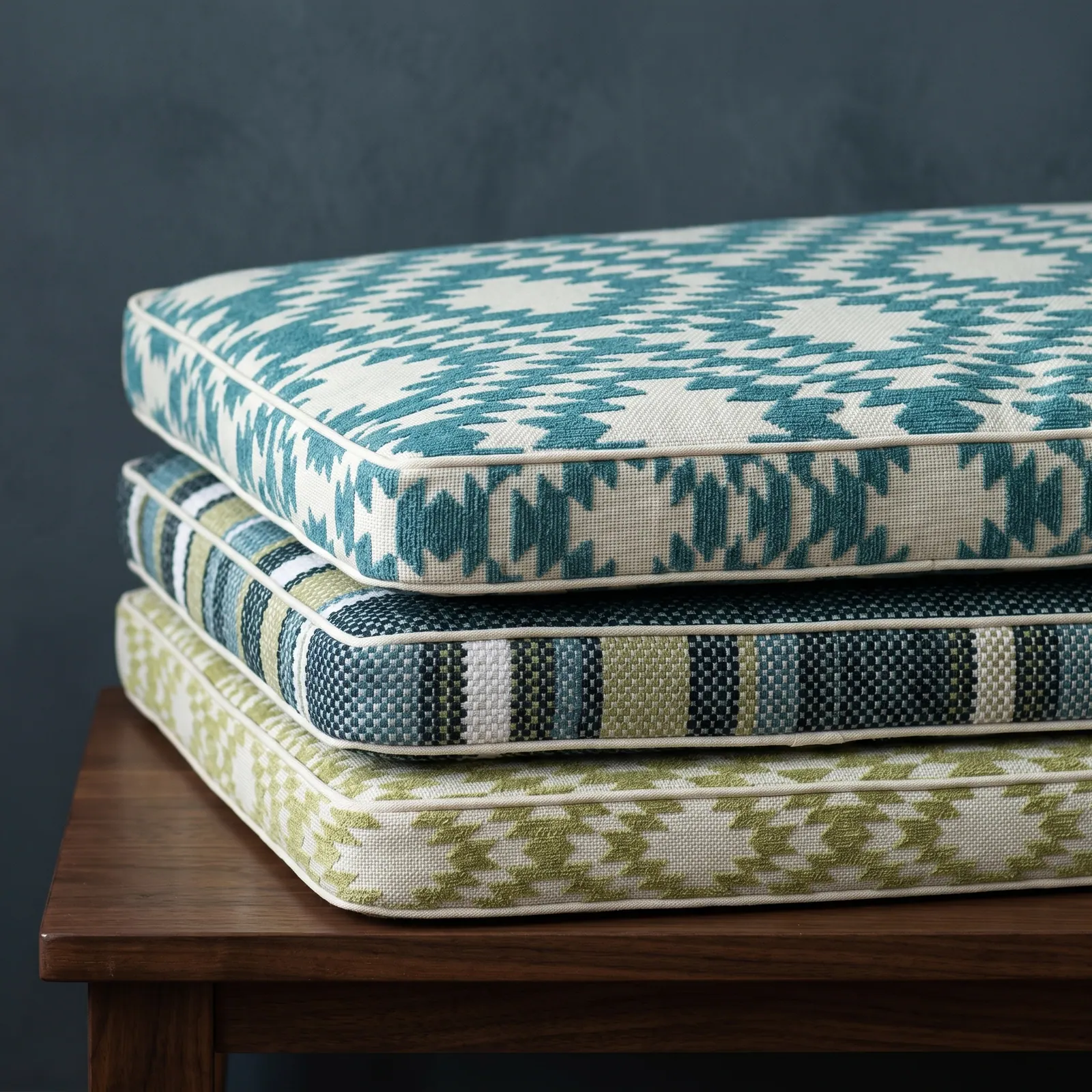
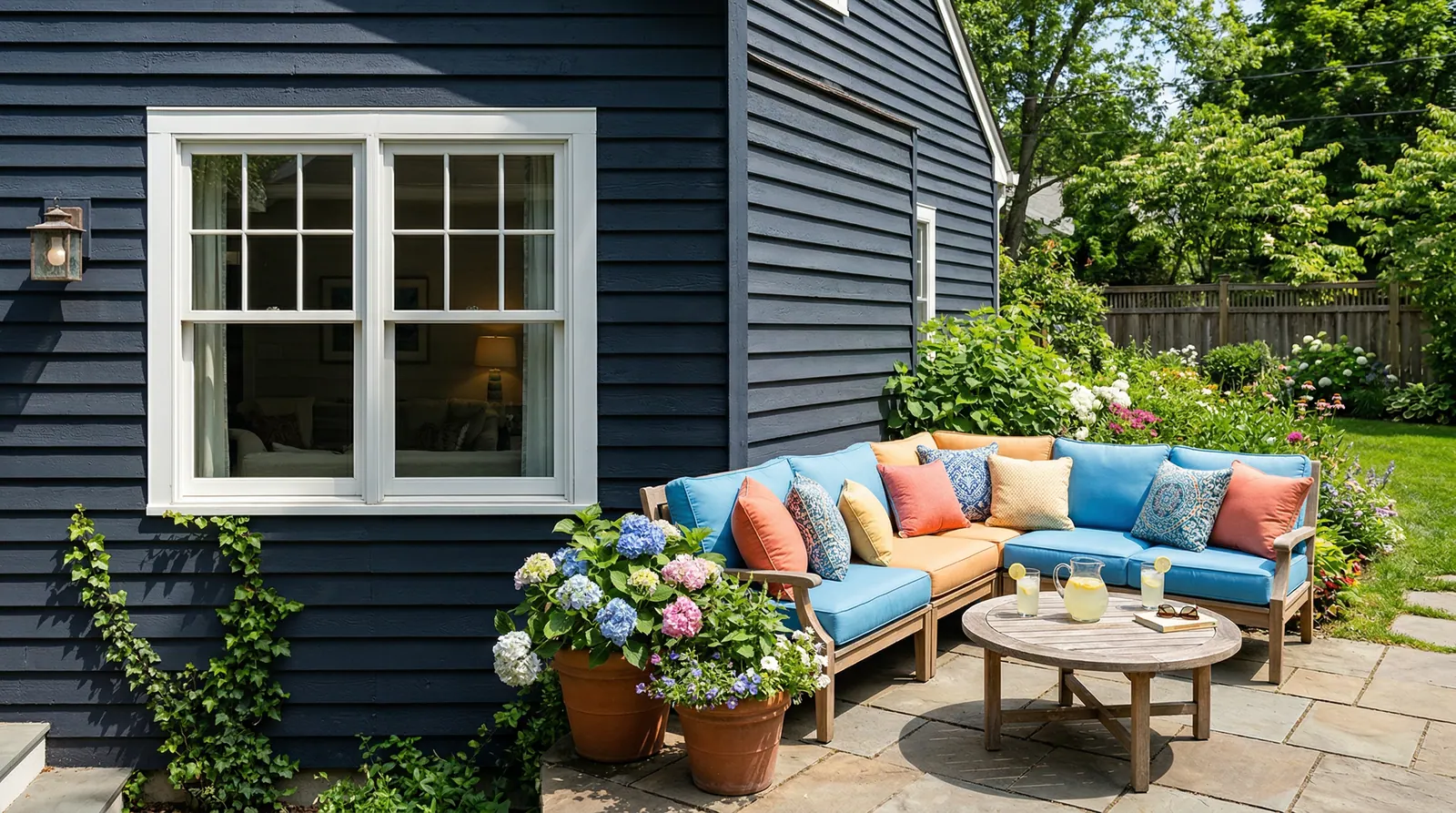
SaveA cane two-seater gets new box cushions in a cream-on-cream palm leaf jacquard, with geraniums and a mug beside it.SaveOne stripe design in three colorways can pull a set of mismatched outdoor chairs together.SaveA two-part striped pad turns a plain canvas hammock into a proper reading spot under the trees.SaveCoral at the top, navy at the bottom: a small color gradient makes three separate pads look planned.SaveThree solid basketweave colors stacked to show thickness, texture and the self-piped box edge.SaveOne bold coral stripe between two navy ones keeps this courtyard stack lively but balanced.SaveA mix-and-match set: plain gray on the seat, a gray awning stripe on the backs.SaveAgainst rough limestone, thick piped cushions show how a soft stripe can take the edge off a hard garden wall.SaveA deep pinstripe seat and two loose backs make a platform lounger on a city rooftop, among olives and lavender in clay pots.SaveThree woven patterns share one ivory piping, which lets a teal kilim, a stripe and a lime diamond sit together.SaveSky blue cushions and warm pillows make a teak corner sofa the brightest spot on a navy-sided patio.
In one outdoor set, stripes often run opposite ways: along the length of the bench, across the width of each chair cushion. Write the direction for every piece.
Outdoor color works hardest in groups. Stack three stripes from one family, coral, navy and mustard, and they read as a set even when no two match. A solid gray seat under a striped back cushion on teak looks calm from the kitchen window. A round saffron cushion on a plaster plinth, with a cream bolster, shows that outdoor fabric does not have to be square; curved shapes are made from a drawing.
A buyer messaged the workshop wanting a 59 x 19.7 x 4 in bench cushion with piping and two ties on the back, and two chair cushions of 29.5 x 20 x 3 in, all in one striped outdoor fabric. The stripes ran along the bench and across the chairs, just as in the photo that came with the order.
2 to 3 in in one guide; the workshop suggests 3 to 4 in
Ties to slats or the frame
Porch swing seat
About 3 in
Measure inside the arms, not the label size
Chaise lounge
3 to 4 in; plush versions 6 to 8 in
Mark the hinge point
Deep-seat chair or sectional
4 to 6 in seats, often with 3 in backs
Back height = frame height minus seat thickness
Built-in outdoor bench
3 to 6 in
Standard here is 4 in (10 cm)
Outdoor daybed
5 to 8 in
State seat and back thickness separately
Buyer questions
A common question
The listing I want only shows indoor fabrics. Can it be made in outdoor fabric?
The workshop's answer
Yes, most cushions can. All the outdoor palettes are on the outdoor bench cushion listing, and the charts are sent on request. Pick a code, order the shape you want (chair pads, square cushions, even a star floor cushion) and write the outdoor code in the personalization box. That is also how chair pads come to match an outdoor bench: every piece is made in the same outdoor fabric. A patterned fabric with contrast piping is fine outside.
A common question
Can a very long outdoor bench cushion be made in one piece?
The workshop's answer
Often not. Very long pieces, roughly 75 to 142 in (1.9 to 3.6 m), can exceed the maximum single-piece length, so they are made in sections: a 142 in (360 cm) bolster went as two 71 in pieces, and a bay cushion about 160 in long was suggested in two. You choose where the joins fall. The foam is flexible, so a long cushion folds or rolls for storage without damage.
A common question
My porch has a solid roof. Do I still need outdoor fabric?
The workshop's answer
Not necessarily. Under a closed roof where rain and direct sun don't reach, regular fabrics such as linen-look, velvet and the soft fabric are fine, though they aren't waterproof; a water-repellent outdoor fabric is there if you want one. A screened porch that gets pollen, dust and humidity, or any open-air spot, should have outdoor fabric, and samples can be sent first. On a covered terrace, an outdoor main fabric with indoor-fabric piping also works.
A common question
Could you use velcro instead of ties to hold the cushion on the bench?
The workshop's answer
Ties and a non-slip bottom are the standard ways, and usually the suggestion. Velcro tabs and snap fasteners are not made. A two-sided velcro strip has been added on request, one side sewn under the cushion and the other sent for the bench, at extra cost. If you want it, write it in the personalization box with your fabric code and piping choice, and wait for confirmation.
A common question
Can you make back cushions to match the seat on my outdoor bench?
The workshop's answer
Yes. Backrests are made to any size in the same fabric as the seat, with firm foam that stands upright or a soft pillow fill that looks more relaxed; say which look you want. Seat and back can be ordered together through the bench-with-backrest listing, or a back added later by quoting the original fabric code.
A common question
Instead of returning a cushion in the wrong color, can I buy just a new cover?
The workshop's answer
Yes, and it is usually the cheapest fix. The workshop makes a new zippered cover to the same measurements in your chosen fabric, charged at cost, production plus shipping, and you keep the foam and swap the covers. Daylight photos of candidate fabrics come first. The new cover is made to the same handmade tolerance, so differences of about 1/4 in can recur.
Have it made
Have your outdoor bench cushion made — ask Callum’s workshop
Sun, rain, salt. Say which of them your cushion will meet, and the workshop will plan around it. — Callum
Leave your details and the workshop will call you to confirm measurements, fabric, foam and piping. No prices, dates or payment on this page: it is a request, not an order.
Fabric · Foam · Pipingwhat the workshop will confirm with you
3 to 4 in suits most outdoor benches, and 4 in (10 cm) is the standard most buyers keep. 3 in gives a lower, neater line. 2 in (5 cm) is the thinnest standard foam.
Does outdoor fabric feel like plastic?
No. The outdoor range is woven fabric that feels like real cloth, not vinyl and not a plastic finish. Every code in it resists water, UV and fading, and close-up photos are available before you choose.
Can a whole outdoor set be quoted together?
Yes. Send the full list of sizes, fabrics and quantities and the workshop quotes one package price for the order, rather than adding up single listings. The quote states the shipping cost; name any date you need, say before patio season, when you ask.
Can the piping be a different color from the cushion?
Yes. Piping can come in any color from the outdoor range. Under a covered terrace, an indoor-fabric piping on an outdoor cushion is acceptable; order through the outdoor listing and write the piping code in the personalization.
Do outdoor fabrics cost more than indoor fabrics?
Yes. The standard indoor charts share one price, while outdoor fabrics cost more. On a covered porch where regular fabric will do, that difference is a good reason to ask before choosing.
Where should outdoor cushions spend the winter?
Indoors and dry. The foam can be folded or rolled for storage without creasing or damage, so even a long cushion fits a closet or a garage shelf. Make sure it is completely dry before it goes in.
Which foam is best for outdoor cushions: dry-fast, high-density or closed-cell?
It depends on how wet the seat gets. Dry-fast, reticulated foam drains within hours; standard high-density foam is more comfortable but holds water and dries slowly; closed-cell foam floats and blocks water but feels firm, which suits boats. The workshop's outdoor cushions use its standard high-density foam, so plan to cover them or bring them in during storms.
Can I get a coated, fully waterproof cover instead of woven outdoor fabric?
Not from the workshop's charts. Covers sold as waterproof are usually coated, such as polyester with a polyurethane backing; they shed water but trap heat and feel less like cloth. The workshop's outdoor range is woven polyester with a water-repellent, UV-resistant finish. If the foam must stay dry, ask for a moisture-barrier liner around it at extra cost.
Fair winds — Callum
Share this atlas entry
Readings
Photographs read by the masters: outdoor & water-repellent cushions
Real cushions made for real rooms, each read for proportion, fabric and fit.
 Save
 Save
 Save
 Save
 Save
 Save
 Save
 Save
 Save
 Save
 Save
 Save