Concept Sketches · 9 scenes
When the patio set outlives its cushions
Teak and aluminum shrug off years of weather. The cushions on them don't. These are real patio sets from past orders, and how each one got a second season.
 Save
The quick answer
If the foam in your patio set still springs back, order replacement covers made to each insert's size, measured seam to seam; if the foam is flat, order full replacement patio cushions sized to the frame. List every piece in one table, choose a UV-resistant, water-repellent outdoor fabric with hidden zippers and double-stitched seams, and store the set indoors over winter.
The frame is fine. The cushions are tired.
The frame is fine. The cushions are tired. That's how most patio requests begin, and the first thing I ask back is about the foam.
If the foam still springs back, you need covers for your existing foam, made to each insert, and they cost less than filled cushions. If the foam is flat or crumbling, order whole replacement patio cushions sized to the frame.
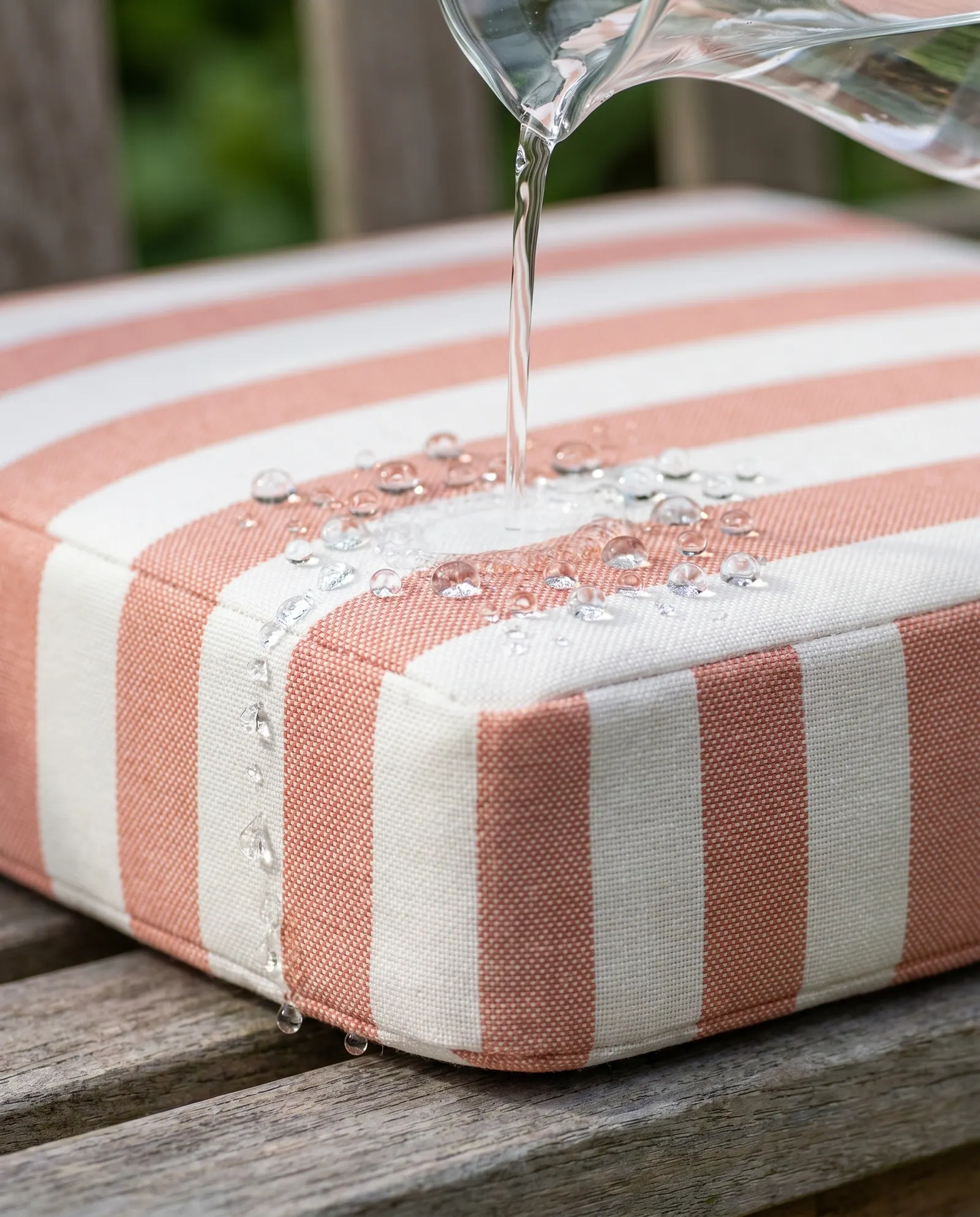
Now the honest part, friend. Buyers often ask for a big-name branded acrylic, quick-dry foam or mesh bottoms. The workshop carries no branded acrylic and no quick-dry foam as standard; a mesh base has been built on request for some projects, so ask. Its outdoor fabric line is a woven polyester with water-repellent, UV-resistant finishes, close to 200 colors on 4 to 5 charts. Water-repellent is a promise; waterproof is a contract.
So how many pieces does your set count, seats and backs together?
Nine patio sets, piece by piece
01A past project
Ten covers for one sectional
A buyer in the US kept the inserts from an outdoor sectional and needed ten covers with piping and zippers: seven at 25 x 15.5 x 4.25 in (64 x 39 x 11 cm), two at 76.5 x 30.5 x 5.5 in (194 x 77 x 14 cm) with rounded back corners, and one at 47 x 15 x 5.5 in. They measured the boxed side panel seam to seam, and the workshop asked where each curve begins.
The takeaway: Don't add to the panel measurement; a full insert crowns the top on its own.
02A past project
Good foam, tired cloth on an outdoor sofa
A buyer in the US had sound foam in an outdoor sofa and wanted a boxed, zippered 64.75 x 31 x 4 in (164 x 79 x 10 cm) seat cover plus three back covers in off-white or oatmeal, in a branded acrylic. The workshop doesn't carry one. It offered its water-repellent, UV-resistant polyester, with double-stitched seams, hidden zippers and self-piping.
The takeaway: Ask what the fabric is made of, not just whose name is on it.
03A past project
Seven chair backs that didn't need straps
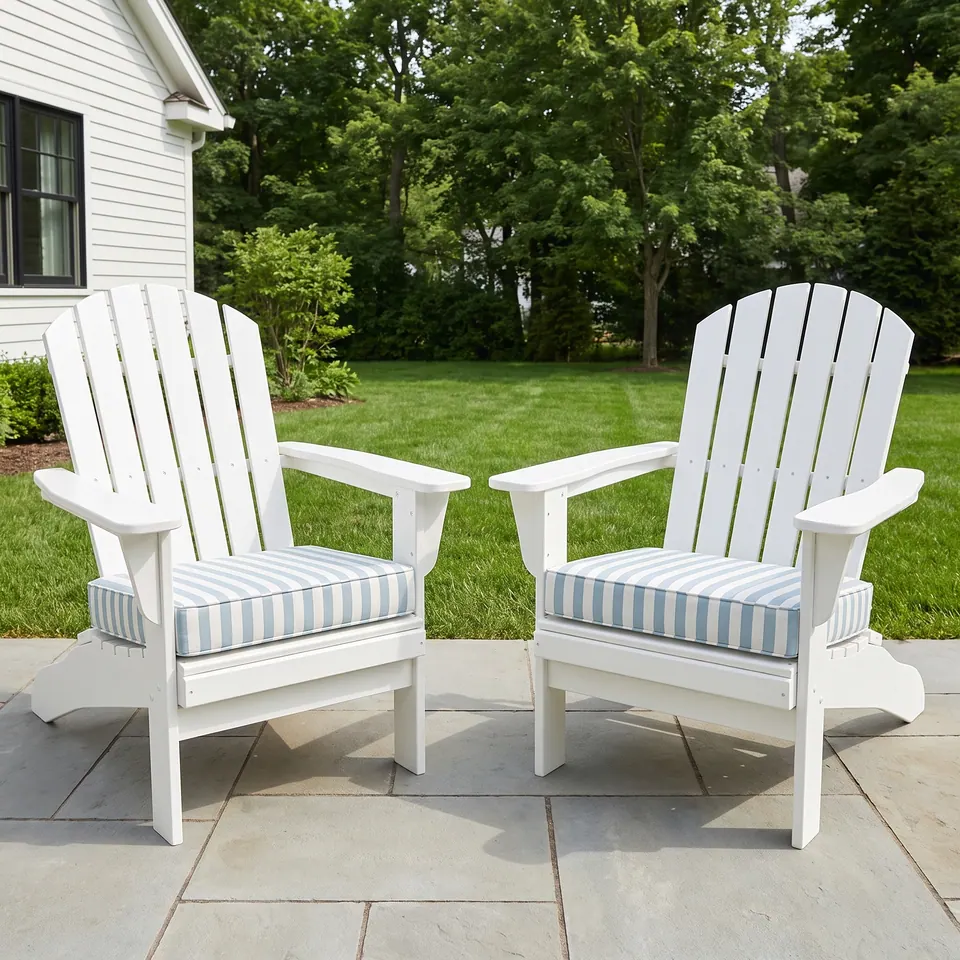
A buyer in the US ordered seven 15 x 25 in (38 x 64 cm) backs and six 25 x 25 x 5 in (64 x 64 x 13 cm) seats for patio chairs, with straps. After seeing photos of the chairs, the workshop suggested double-piped backs, which hold their place without straps.
The takeaway: Send a photo of the chairs before paying for straps.
04A past project
A conversation set, counted in one list
A buyer in the US sent the whole conversation set at once: five 22 x 21.5 x 4 in (56 x 55 x 10 cm) seats, five 21.5 x 15.5 x 4 in backs, an ottoman cushion with rounded corners and two 16 in (41 cm) pillows. The workshop quoted it as one bundle, in its own dark green and white outdoor stripe.
The takeaway: Put every piece, and every rounded corner, in one list.
05A past project
Two lounge chairs, six covers
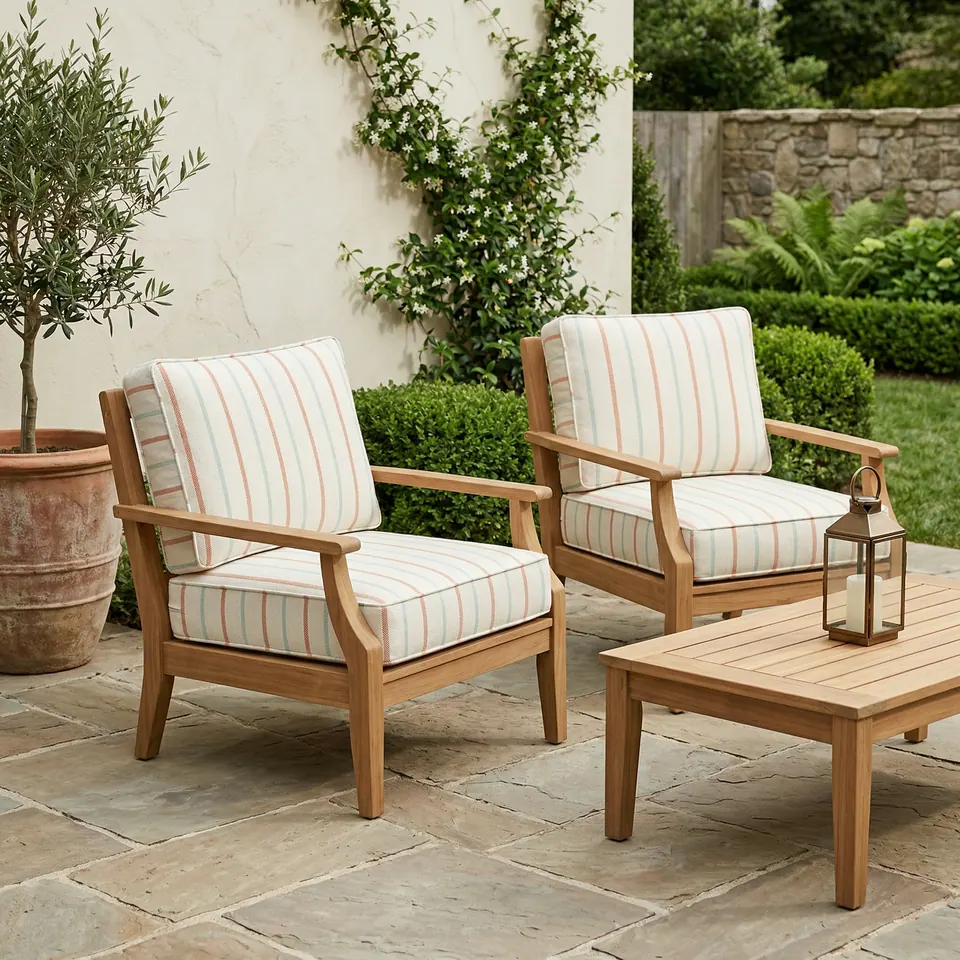
A buyer in the US had two identical lounge chairs with three cushions each: 31.5 x 31.5 in, 26.5 x 26.5 in and 12 x 28 in, all 3.5 in (9 cm) thick. They wanted zippered covers over the existing inserts, with contrast piping. The workshop worked from photos and a sized drawing and matched the color from a photo.
The takeaway: Covers can be made from measurements alone; a photo does the rest.
06A past project
A bare sofa frame, divided by three
A buyer in the US had a bare outdoor sofa frame 67.5 in long, 27.5 in deep and 21 in high at the back (171 x 70 x 53 cm). The workshop confirmed three 22.5 x 27.5 x 4 in seats and three 22.5 x 17 x 4 in backs, so a 17 in back on a 4 in seat reaches the 21 in frame.
The takeaway: Divide the frame length evenly for the seats.
07A past project
A bench seat and two back pillows
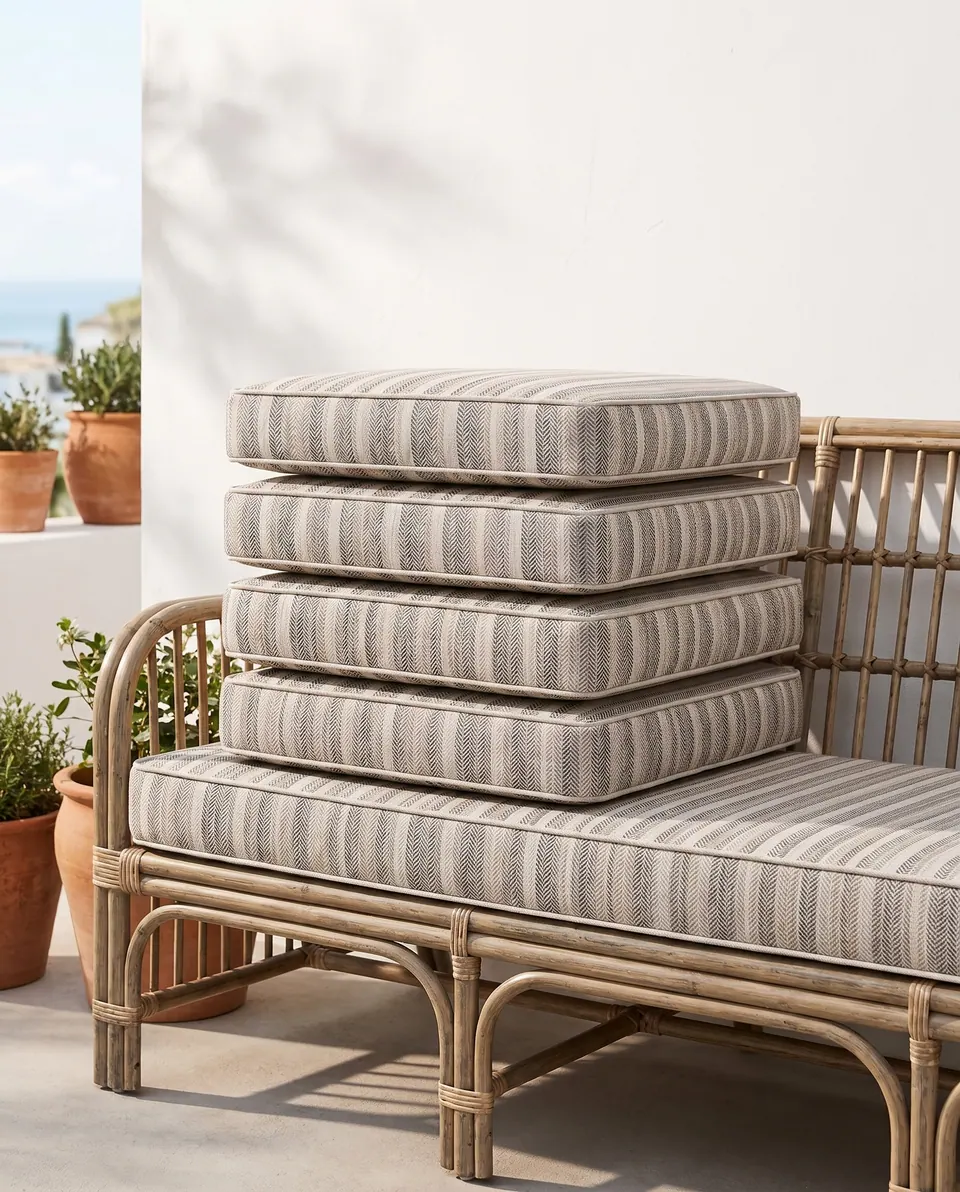
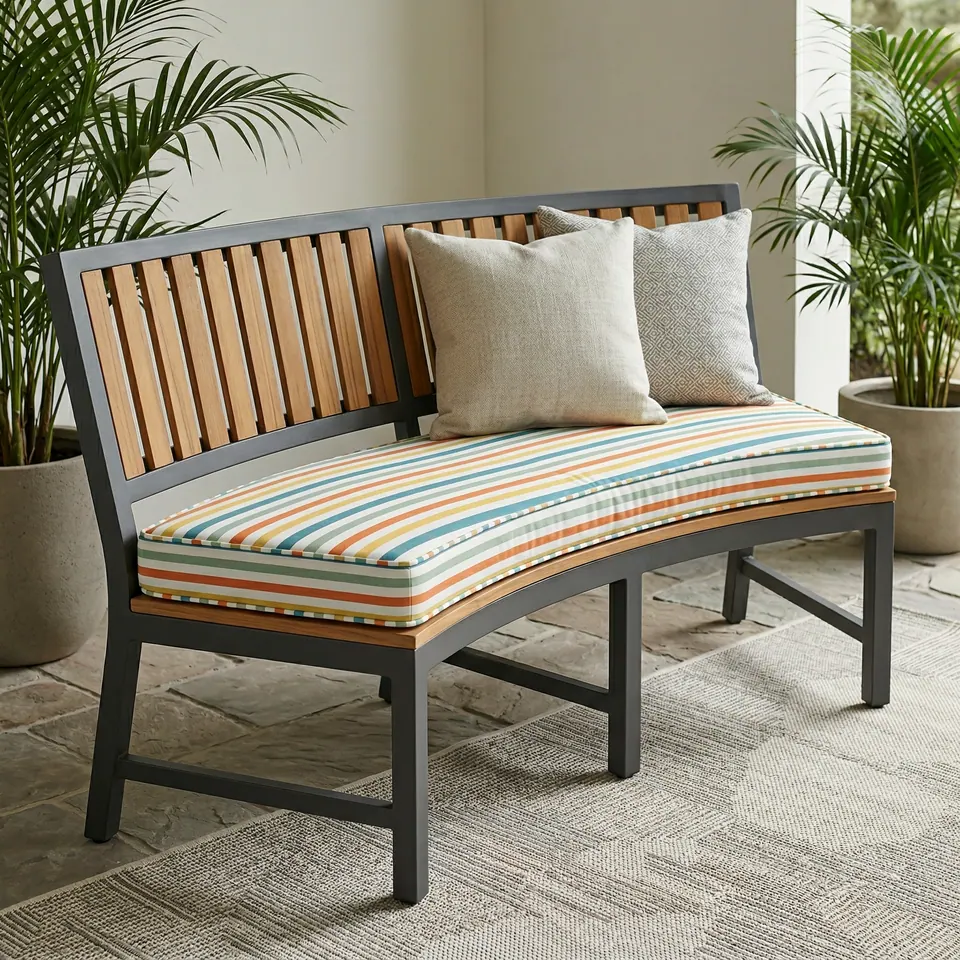
A buyer in the US wanted a 64.75 x 23 in (164 x 58 cm) outdoor bench seat and two 32.375 x 17 in (82 x 43 cm) back cushions. Two backs at 32.375 in make exactly 64.75 in. Back pillows are filled pillows about 4 in (10 cm) thick, so only width and height were needed.
The takeaway: Split the back into pillows that add up to the seat length.
08A past project
Four seats, four backs, one final table
A buyer in the US ordered four outdoor seats with non-slip bases, around 41.2 x 38 x 5 in (105 x 97 x 13 cm), and four 41.2 x 9 x 5 in backrests without. Asked whether the backs should be soft pillows or firm foam, the buyer chose foam, then sent one final table of every piece, which became the production reference.
The takeaway: One table, one row per piece: W x D x H plus extras.
09A past project
What holds an outdoor cover together
A buyer in the US asked what zippers and stitching go into the covers. The answer: hidden zippers, concealed as much as possible for a clean look, and double-stitched seams. Outdoor projects can have a concealed heavy-duty zipper and UV-resistant thread.
The takeaway: Ask for the heavy-duty zipper and UV thread by name.
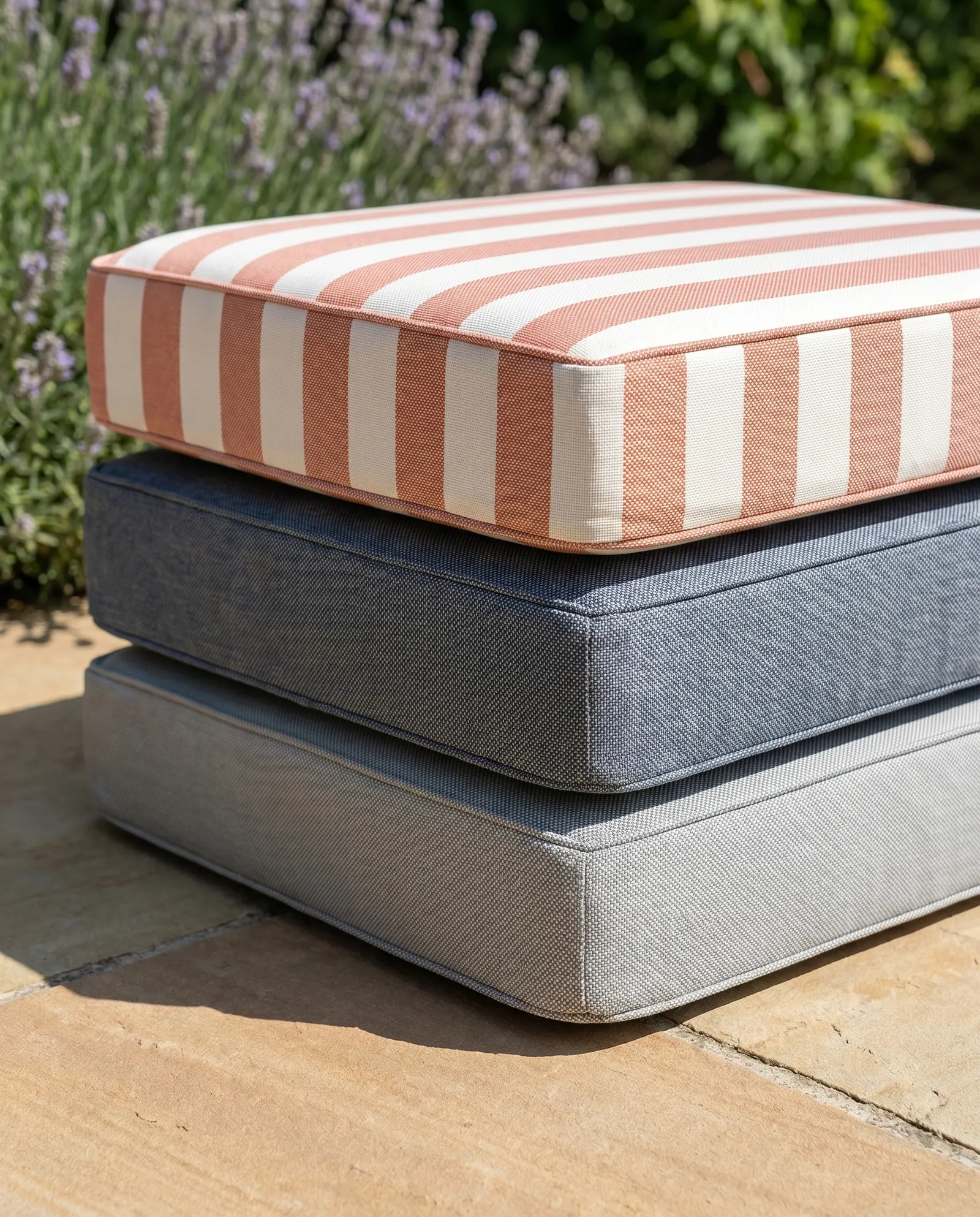
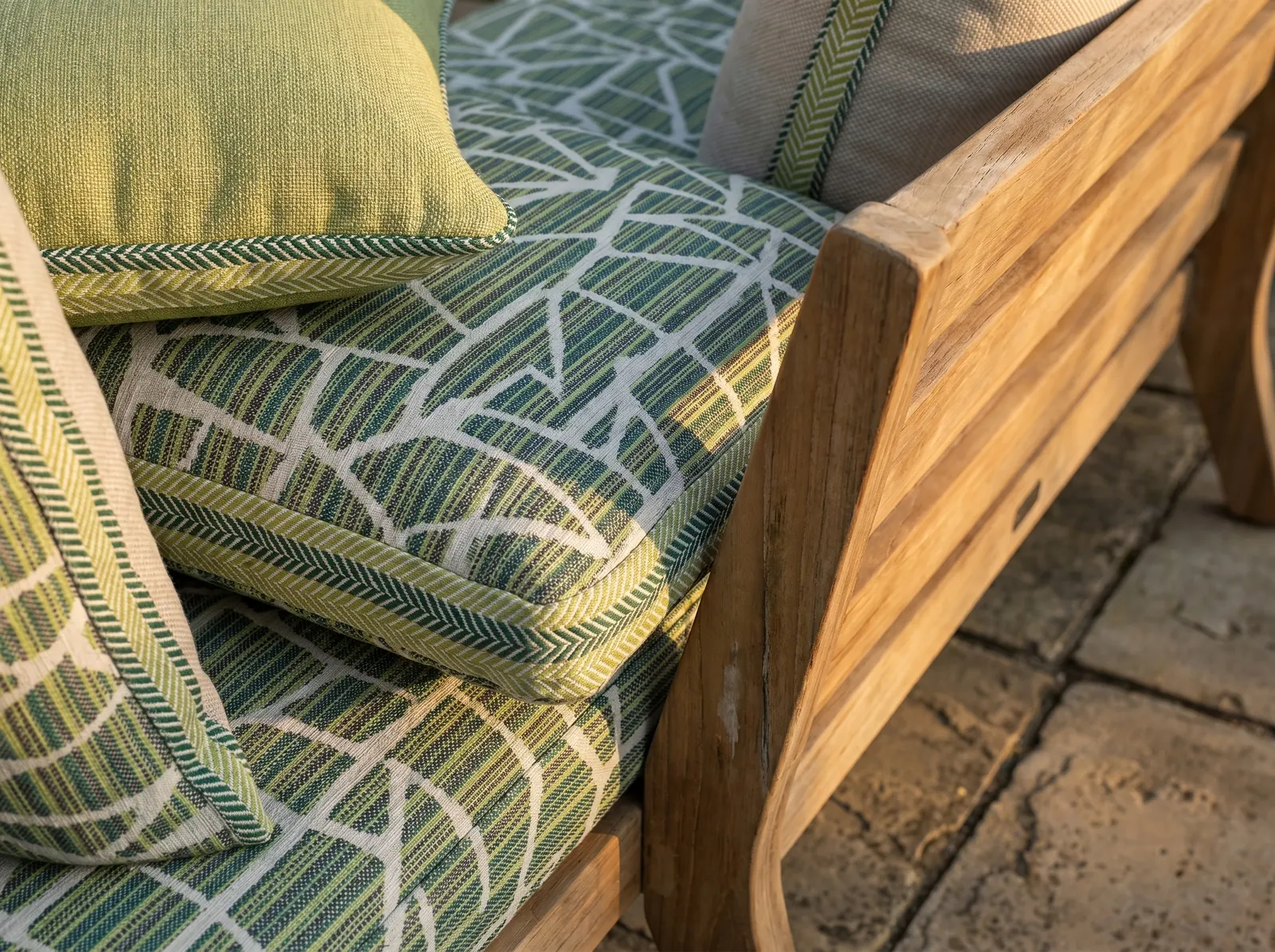
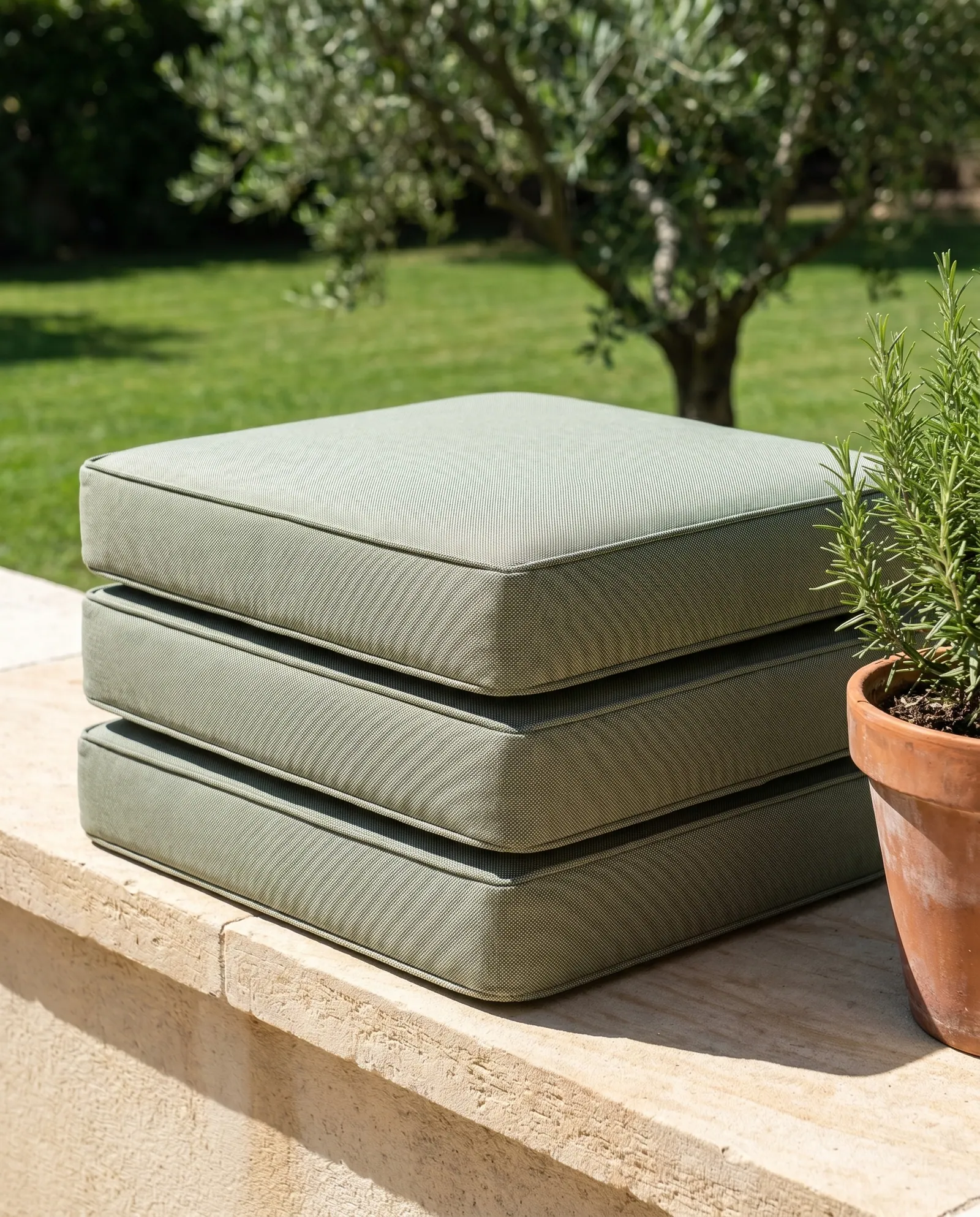
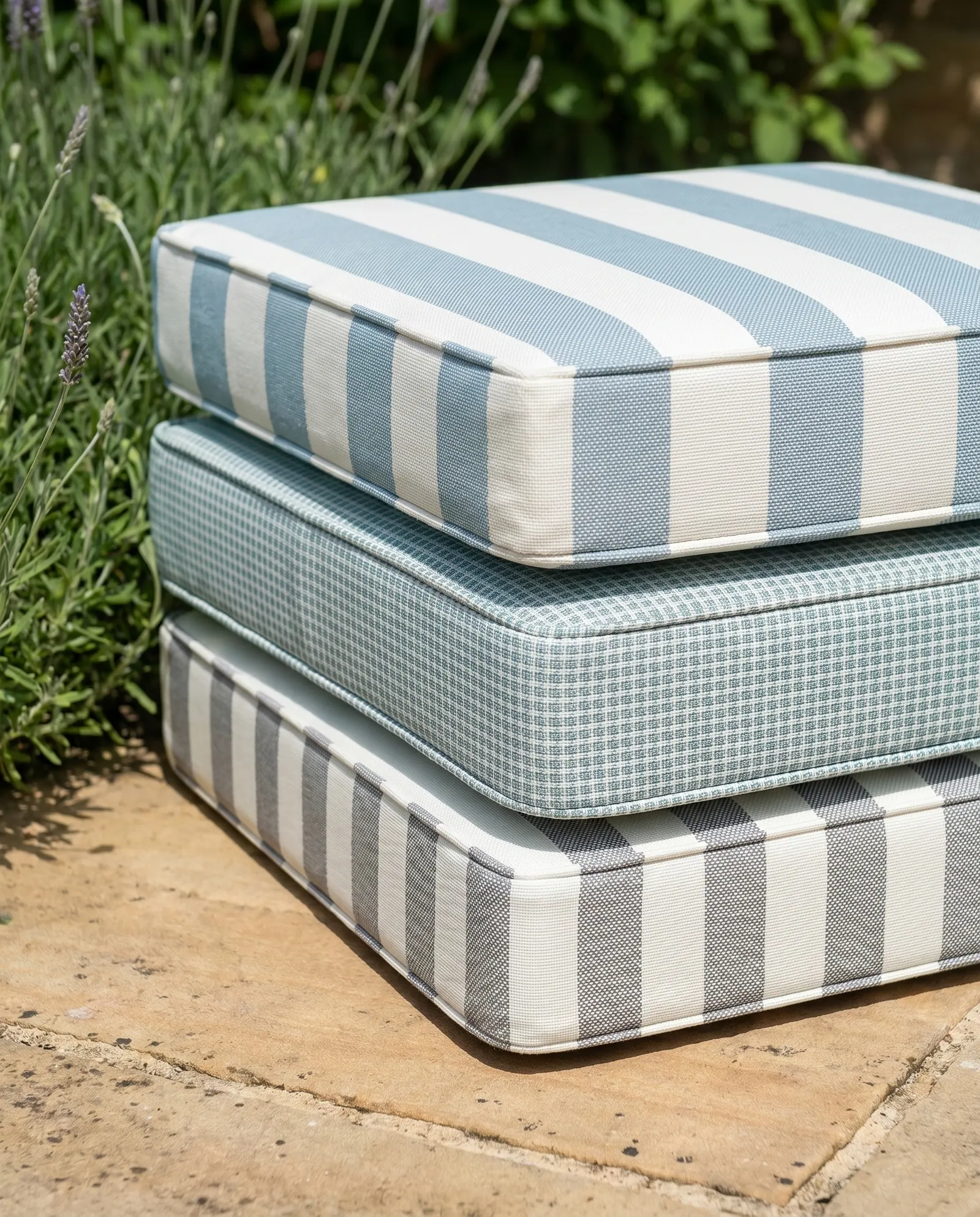
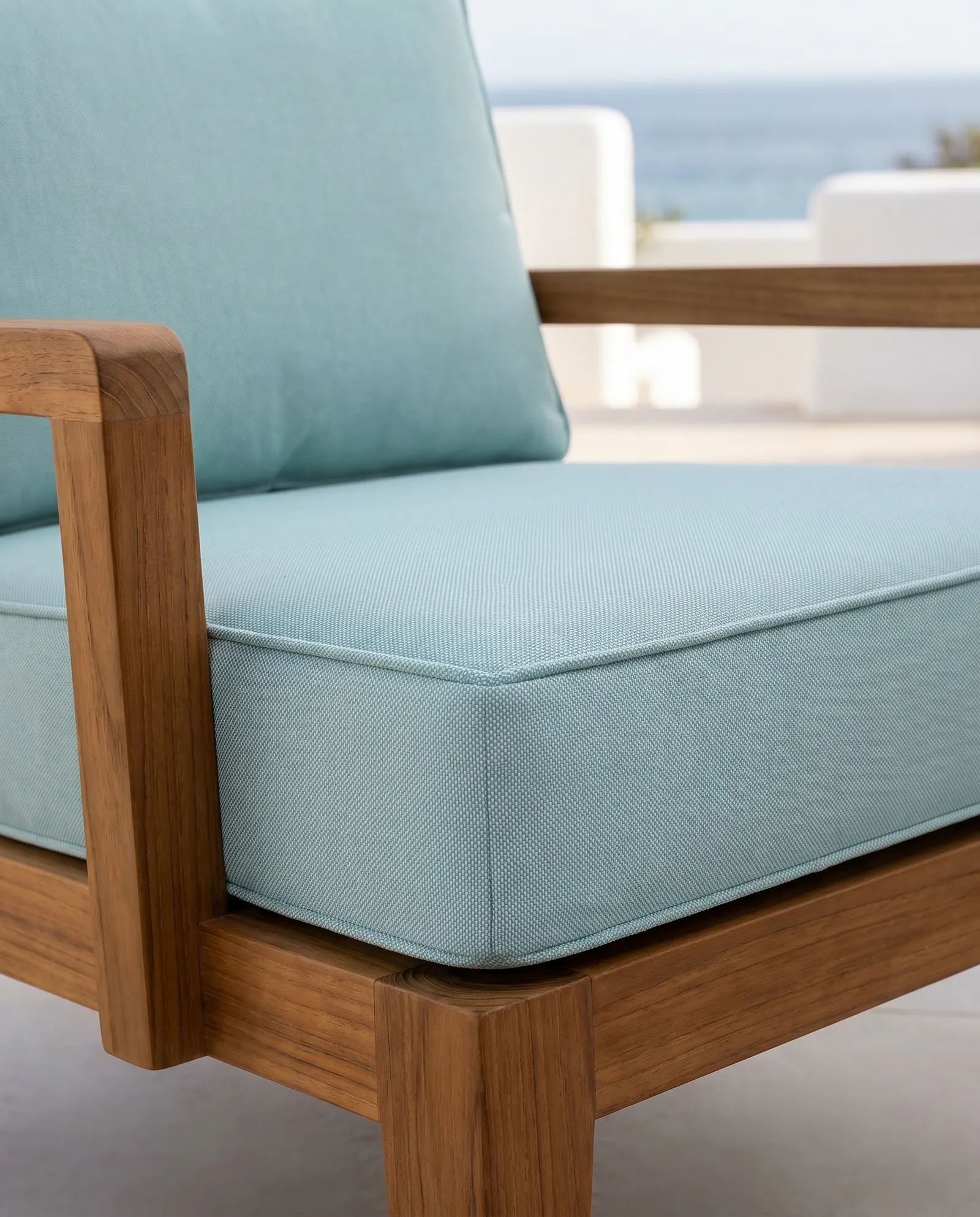
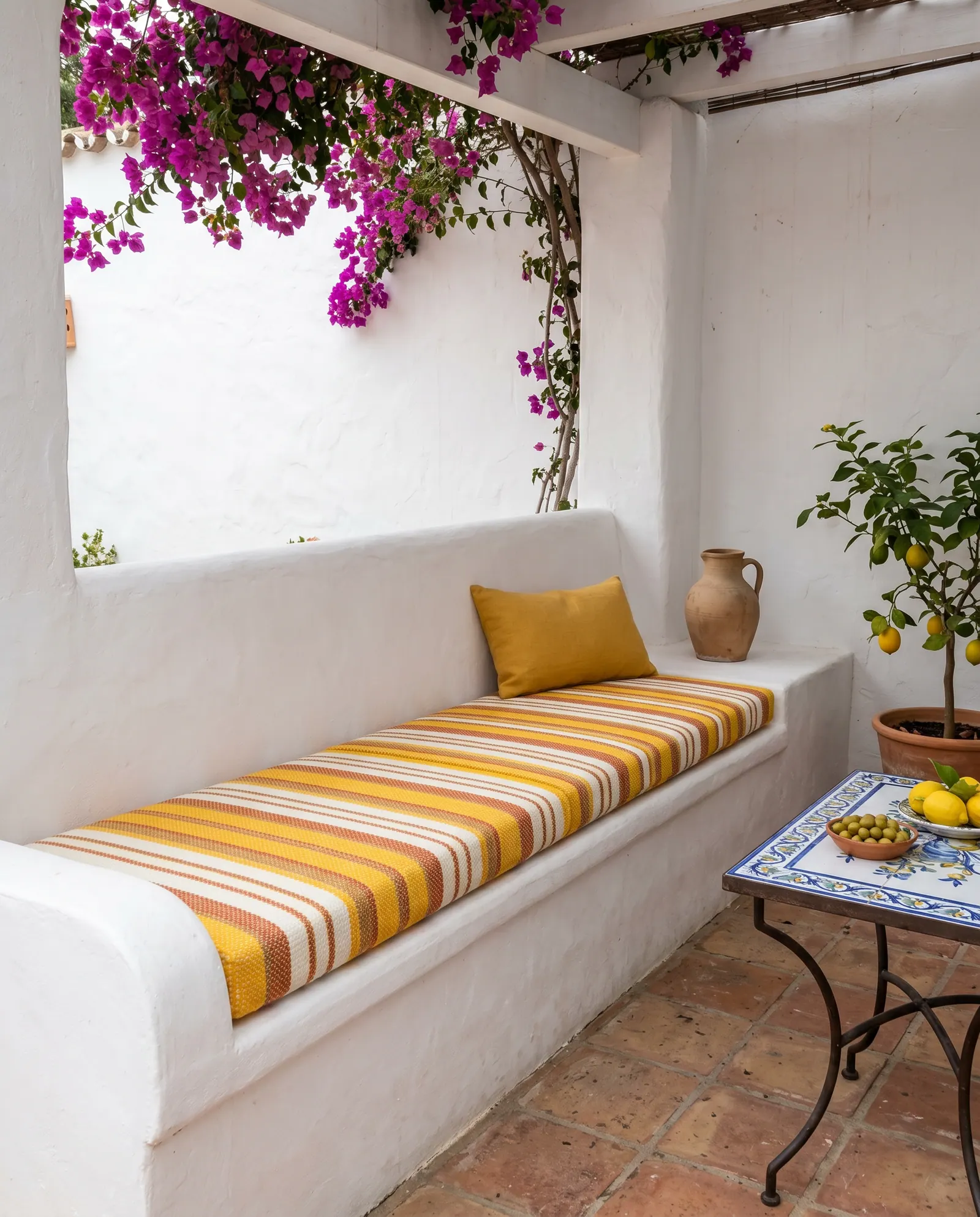
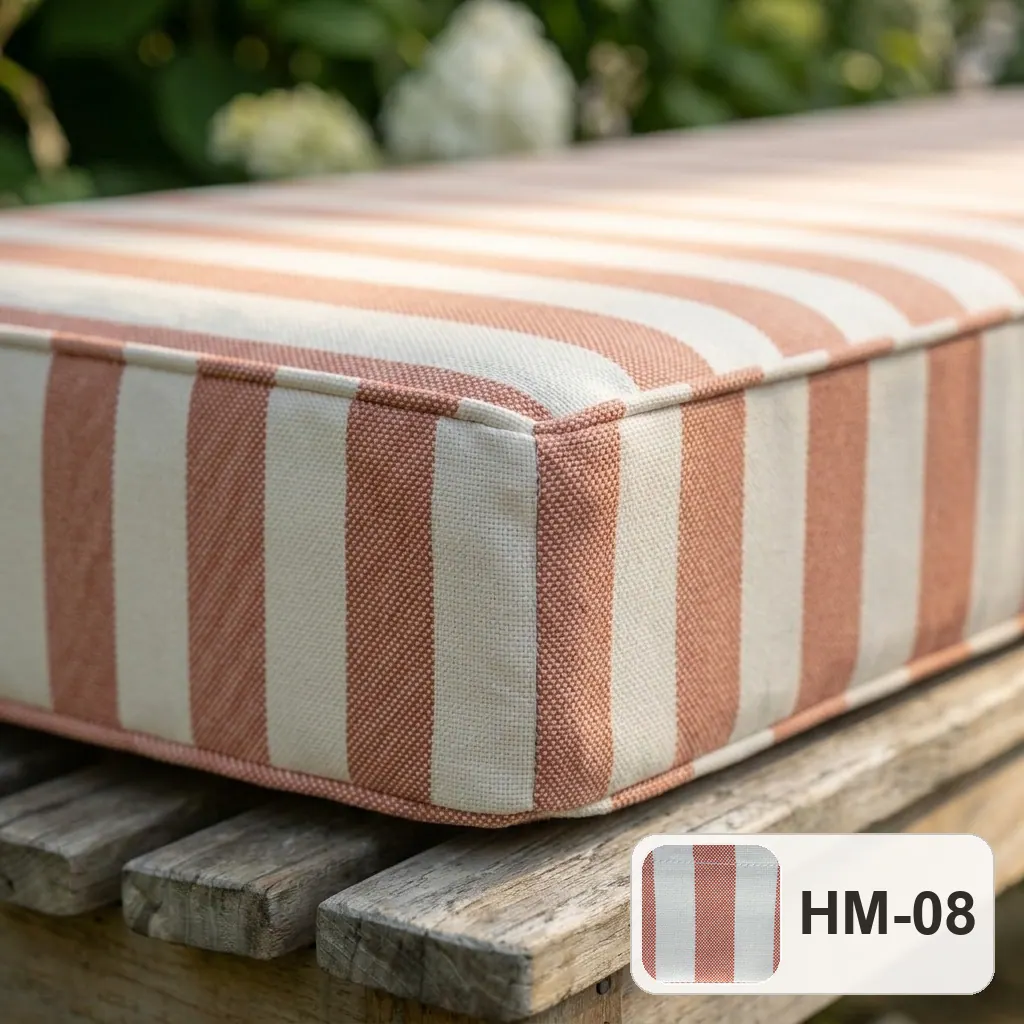
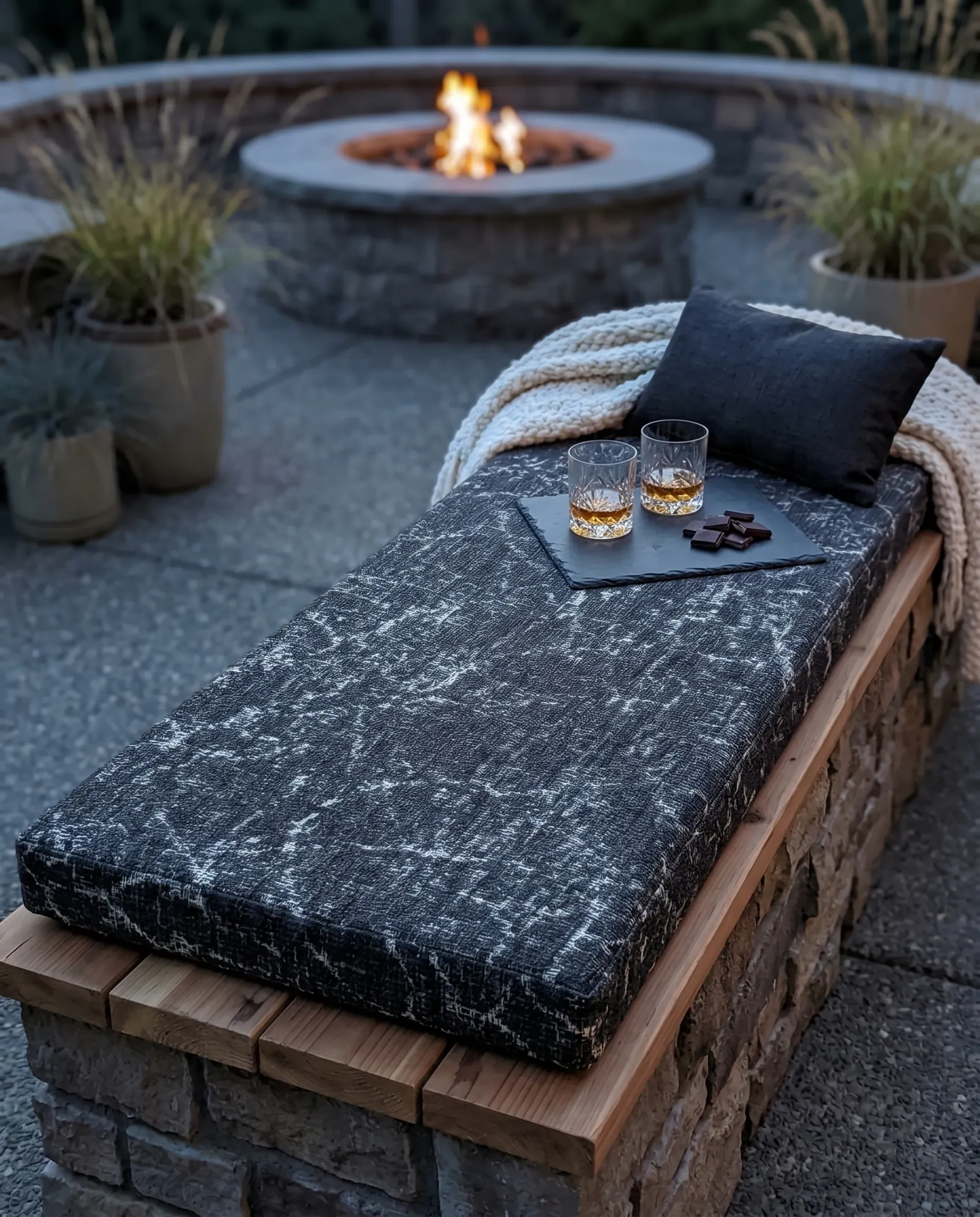
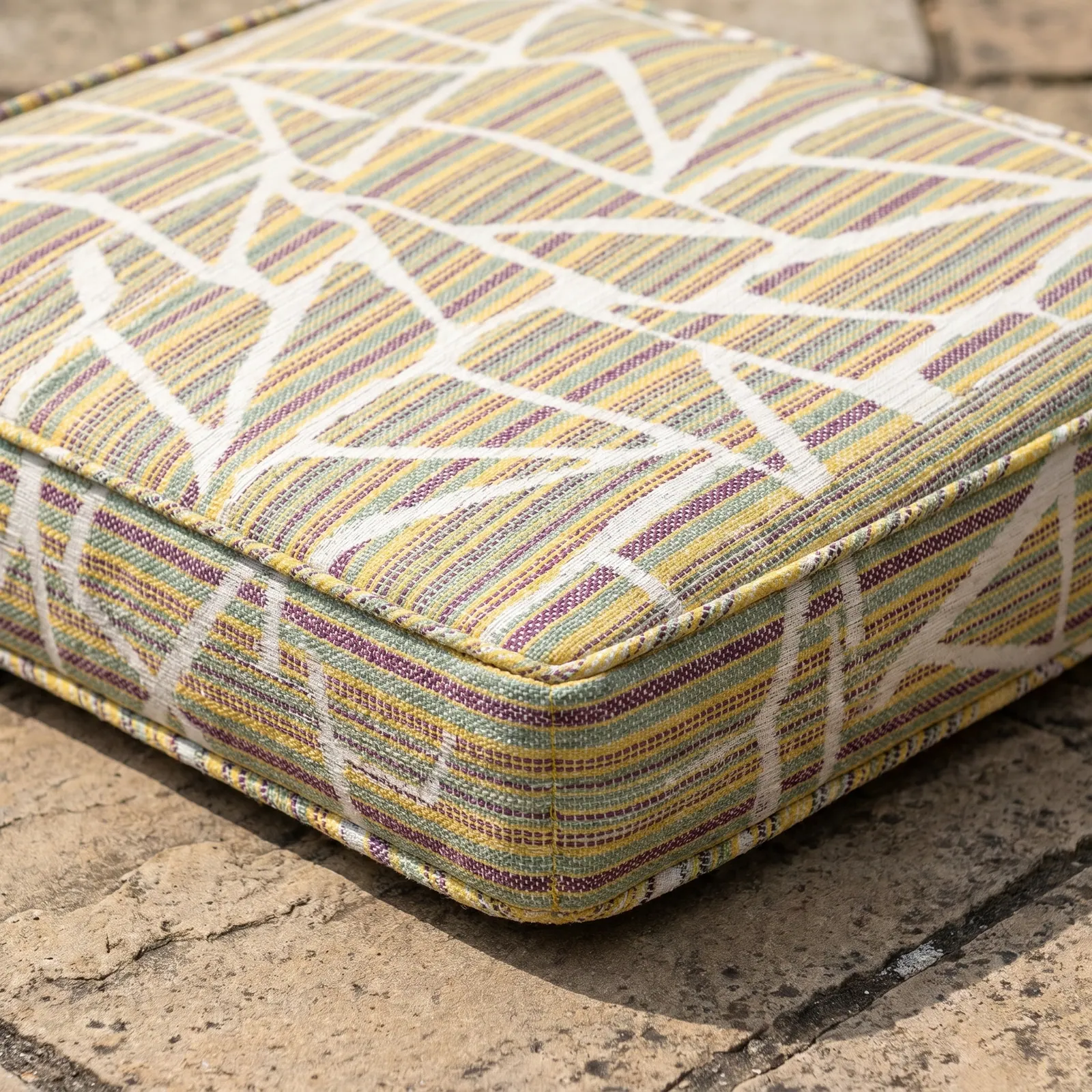
Covers only or whole cushions: reading your set
Lay the set out in the bench cushion builder, and if you're sewing any piece yourself, run the numbers through the fabric yardage calculator.
| If the set has | Order | Measure | Ask for |
|---|---|---|---|
| Foam that still springs back | Zippered covers only, made to your inserts | Each insert, boxed panel seam to seam | Hidden zipper and self-piping |
| Flat, crumbling or missing foam | Full cushions with outdoor-suitable inserts | The frame: length side to side, depth front to back | The standard 4 in (10 cm) seat unless you need otherwise |
| Backs that slump or slide | Double-piped or foam backs | Frame height minus seat thickness | Ties in named positions |
| A spot by the pool or fire pit | Non-tufted, foam-filled cushions | Every piece in one table | Outdoor fabric throughout; tufting lets water in |
What the outdoor line doesn't include
- No big-name branded acrylic; the outdoor line is the workshop's own water-repellent, UV-resistant polyester.
- No quick-dry foam as standard, and a mesh base only on request for some projects; the fabric suits a covered patio or porch, and the cushions go indoors for winter.
- No sealed, coated finish; the cloth is water-resistant and handles showers and spills.
- No tufting for wet spots; tufting lets water inside even on outdoor fabric.
Replacement patio cushions start at the foam: if the foam still springs back, order covers only, measured seam to seam.
Callum
Patio questions
- A common question
Are the outdoor cushions actually waterproof, or only water resistant?
The workshop's answerThey're made from a separate water-repellent outdoor range with its own color chart. In practice it's water-resistant rather than a sealed, coated material: it handles showers and spills well, and outdoor seats and backs get outdoor-suitable inserts. For a big patio project you can order one test cushion first. Store cushions indoors through the long off-season.
- A common question
My porch has a roof. Do I really need outdoor fabric?
The workshop's answerUnder a closed roof where rain and direct sun don't reach, regular fabrics such as linen and velvet are fine, though they aren't waterproof. For a screened porch with pollen, dust and humidity, or any open-air spot, choose outdoor fabric; samples can be sent first.
- A common question
What's the difference between the outdoor fabric charts?
The workshop's answerThere are close to 200 outdoor fabrics on 4 to 5 charts, all water-, UV- and fade-resistant woven cloth rather than vinyl, and all at the same quality. The charts differ only in texture, color tone and pattern. Close-up photos are available for any code, and orders can include foam, an anti-slip underside and piping.
- A common question
Can I get a tufted cushion for the patio?
The workshop's answerTufted shapes can be made in outdoor fabrics, but tufting lets water inside even then. For spots that get wet, like beside a pool or fire pit, the workshop recommends a non-tufted, foam-filled outdoor cushion; zippered outdoor versions are made without tufting.

Have it made
Have an idea like this made — ask Callum’s workshop
Short list: size, sun hours, how fast it has to dry. The workshop goes through it with you. — Callum
Leave your details and the workshop will call you to confirm measurements, fabric, foam and piping. No prices, dates or payment on this page: it is a request, not an order.
Questions buyers ask next
Can I order just new covers for the foam I already have?
Yes. Covers only are made in any size to fit your own foam and cost less than filled cushions. Every cover has a hidden, fully removable zipper on the back edge or underside, often running around two corners so the insert slides out. See cushion covers.
How do I measure a patio cushion for a replacement cover?
Measure each insert's length, depth and thickness, and measure a boxed side panel seam to seam rather than over the crown. Note rounded corners and where each curve begins, then list every piece in one table with its count. The patio replacement Pattern walks it through.
How do I stop patio cushions from sliding off the chairs?
Ties and straps aren't standard, so ask for them in writing with their position, length and color. A non-slip base can be added to seat cushions; ask whether it's washable. On chairs, double-piped backs can hold their place without straps.
Can replacement patio cushions stay outside all winter?
No. The outdoor fabric is water-repellent and UV-resistant, but the standard cushions have no quick-dry foam or mesh bottom; a mesh base has been built on request for some projects. Store them indoors and dry through the long off-season. The winter storage notes cover the rest.