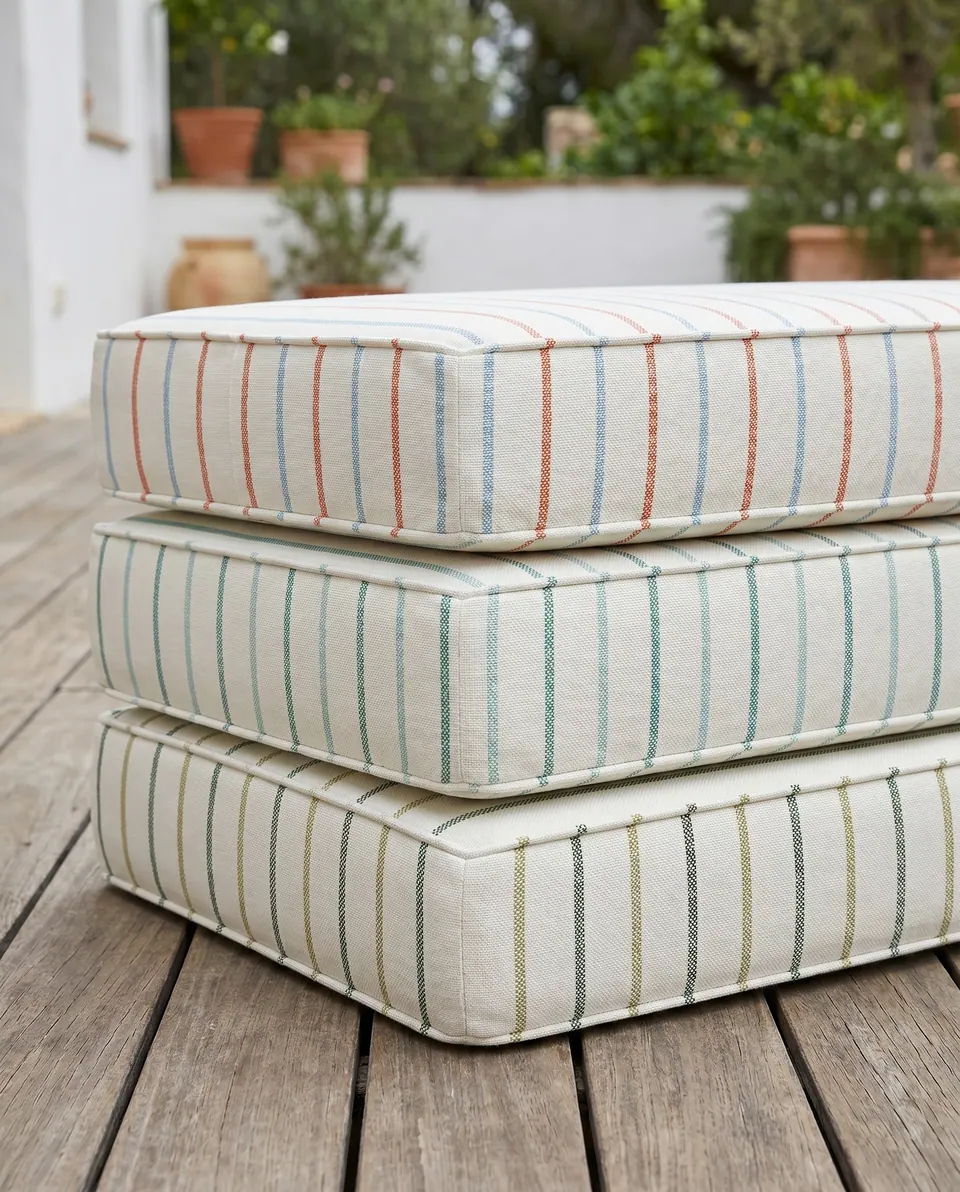
The Pattern Room · a side-by-side pattern
Waterproof outdoor cushions, honestly: fabric, seams, zippers and foam
Rain doesn't read the label. Here is how water really gets into an outdoor cushion, and the four things that keep the foam dry.

 Save
The quick answer
Most outdoor cushions are water-repellent, not waterproof: the fabric beads rain and sheds a shower, but water still gets in through needle holes, zippers and tufting. For a dry core, add a waterproof liner around the foam, choose plain rather than tufted cushions, and store them indoors in the off-season. A spray-test rating of 3 means water-resistant, not waterproof.
A promise, not a contract
Water-repellent is a promise; waterproof is a contract. Most outdoor cushions, the ones in the workshop's outdoor range included, make the promise.
So, are outdoor cushions waterproof? The straight answer about the fabric is: mostly no. A good outdoor canvas beads rain and handles a shower or a spilled drink. It is not sealed or coated. Leave it under a steady rain and water finds a way in. That is the whole of water repellent vs waterproof fabric in two sentences.
The test sheets say it in numbers. On the spray test, fabric scores from 5, no wetting, down to 0. A 3 means the surface wetted where the spray hit. That is water-resistant. It says nothing about water pushed through under pressure, which is a different test, the hydrostatic head, read in millimeters of water. The glossary has both: water-repellent and waterproof fabric.
Four ways to keep water out, side by side
| Water-repellent outdoor canvas | Coated waterproof fabric | Waterproof liner on the foam | Indoor fabric | |
|---|---|---|---|---|
| What it is | Woven outdoor fabric with a repellent finish | Fabric sealed by a coating or laminated membrane | A waterproof inner cover around the insert | Linen, velvet, chenille, the everyday charts |
| A rain shower | Yes Beads and sheds it | Yes Keeps it out | Yes Outer cover wets, foam stays dry | No Soaks in |
| Steady rain | Partly Gets in at seams and zipper | Partly Needle holes and zipper still leak | Yes Core protected | No Not for open air |
| Feel on a hot day | Yes Breathes; feels like real fabric | No Sticky and sweaty; blocks airflow | Partly Sits under the cover, away from skin | Yes Soft |
| Where it earns its keep | Patios, porches and swings, with winter storage | Spots that stay wet, if you accept the feel | Dog houses, pet beds, damp corners | Under a closed roof with no rain or direct sun |
A spray-test 3 means water-resistant. Waterproof is proven by a hydrostatic-head test, commonly about 59 in (1,500 mm) of water; ask for that number before you pay for the word.
Where the water actually gets in
Fabric is only the hull. Water comes aboard through the fittings.
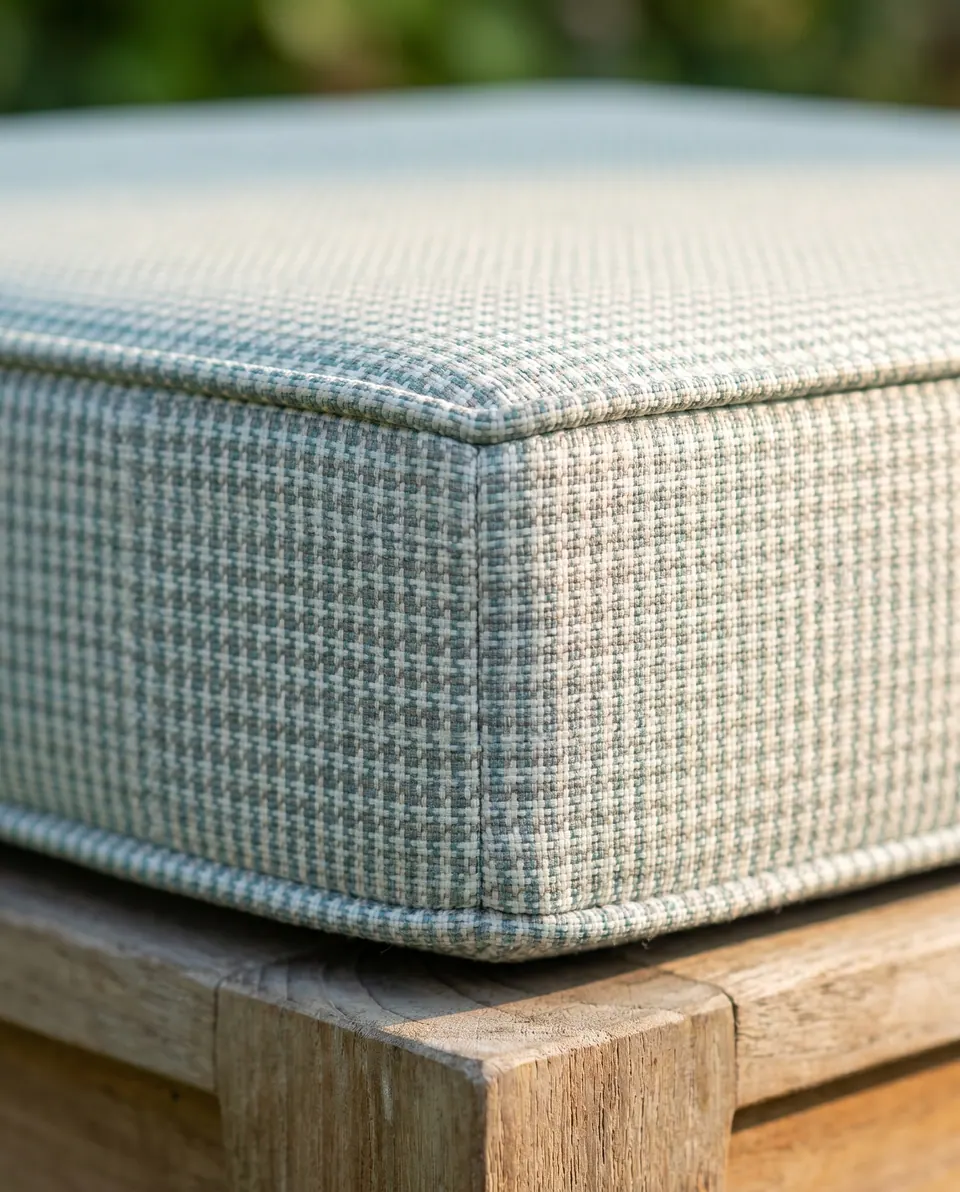
Every seam is a row of needle holes. Every zipper is a gap with teeth. Every tufting button pulls the top into a small dish that holds rain and feeds it to the foam. That is why the workshop won't recommend tufted cushions beside a pool or a fire pit, even sewn in outdoor fabric: tufting lets water inside. Plain foam cushions with a zippered cover are the outdoor build, and the zippered outdoor versions are made without tufting.
Standard outdoor covers are sewn with ordinary stitching and full zippers, so they come off for washing. Sealed seams and mesh breather strips are not part of normal production, and coated or membrane fabrics still have the same seams. For large projects the workshop has specified a fuller build: 2.0 lb/ft³ (32 kg/m³) medium-firm foam, UV-resistant thread, a breathable mesh base for drainage, a concealed heavy-duty zipper and double welt. See tufted vs plain cushions and the outdoor cushions collection.
The foam holds the grudge
Fabric sheds water. Foam keeps it. Standard foam takes 24 to 48 hours to dry out; reticulated quick-dry foam drains in 1 to 3 hours with air moving through it.
The workshop's outdoor seats and backs get outdoor-suitable inserts, but the standard foam is not a quick-dry foam and there is no mesh bottom as standard. In a climate with very hot summers and snowy winters, the workshop says plainly these are not cushions to leave uncovered through rain and snow. They do their best work as water resistant outdoor cushions on a covered porch, brought inside for winter.
If your seats will stay out in all weather, ask about dry-fast foam and a mesh bottom before you order, not after the first storm.
Two dog-house cushions with a second skin
A buyer in the US wrote to the workshop about an insulated dog house. Two cushions: 16 x 20 x 3 in (41 x 51 x 7.5 cm) and 16 x 20 x 2 in (41 x 51 x 5 cm). The question wasn't really about the fabric. It was about the foam, and how to keep it dry where damp comes in on four paws.
The answer was a waterproof foam liner: an inner cover around each insert. The liners were added through a separate payment link and made alongside the cushions, so everything left the workshop together. The outer cover stays fabric. The core stays dry. That is the system working: repellent outside, waterproof where it counts. More builds like it live under pet-friendly cushions.
- What it taught
- A waterproof inner liner protects the foam in pet beds and damp spaces.
The buyer who asked for a contract
A buyer wrote in asking for 100% waterproof, marine-grade covers: sealed seams, vents, the full treatment. The workshop told them the truth. Sealed seams are not what the workshop makes, and the standard outdoor canvas is water-repellent, not waterproof.
They didn't walk away. They ordered a sample pack, chose the water-repellent canvas, and made winter storage part of the plan. I'd have done the same, friend. The foam is flexible, so even a long bench cushion can be folded or rolled for the shed without creasing or damage.
Storage is half the system. Where will your cushions spend the winter? Bring them indoors for long off-seasons. For cushions in standard fabric that will live outside, the workshop recommends a fabric protectant spray; a repellent finish wears with time and cleaning and can be renewed. Details are in winter storage and indoor cushions on a covered porch, and the patio and porch collection shows the builds.
Wet-weather mistakes from real orders
- Ordering indoor cushions for a patio. Linen, velvet and chenille are indoor-only; those orders have been cancelled and refunded so buyers could reorder from the outdoor range. Say indoor or outdoor first.
- Tufting an outdoor seat. Every button is a drain into the foam, even in outdoor fabric.
- Skipping the liner where damp is certain. Pet beds and damp corners want a waterproof inner cover around the foam.
- Calling a screened porch indoors. Pollen, dust and humidity get through screens, so choose outdoor fabric there; only a closed roof with no rain or direct sun can take regular fabric.
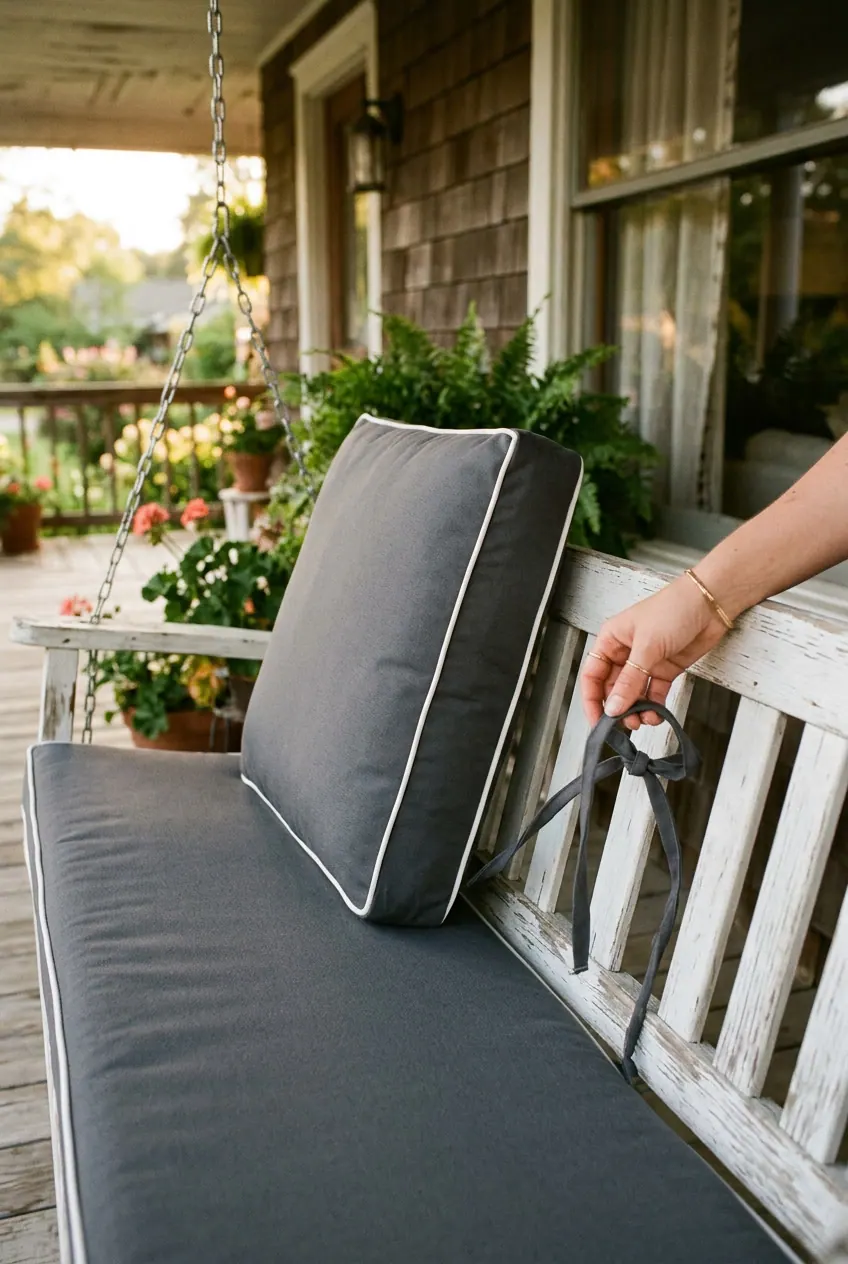
- Leaving ties and non-slip bases to chance. Ties on the back corners come included on outdoor cushions, but ask for add-ons in writing and check them in the photo before dispatch.
- Leaving standard foam out through a snowy winter. It isn't quick-dry; store it.
A water-repellent cushion sheds a rain shower; water still gets in at the needle holes, the zipper and every tufting button.
Callum
Covers sold as waterproof: coated versus woven
| Coated cover | Woven water-repellent fabric | |
|---|---|---|
| What it is | Polyester or olefin with a polyurethane or similar coating on the back | Woven fabric with a water-repellent, UV-resistant finish |
| Rain | Sheds water across the face; seams and zippers still let some in | Beads light rain; soaks through in a downpour |
| Feel in summer | Warmer and less breathable | Breathes like cloth |
| From the workshop | Not on its charts | Its outdoor range; a moisture-barrier liner around the foam is available at extra cost |
Buyer questions
- A common question
Are your outdoor cushions actually waterproof, or only water resistant?
The workshop's answerThey're made from a separate outdoor fabric range with its own color chart, sent on request. In practice it's water-resistant rather than a sealed, coated material: it handles rain showers and spills well, and outdoor seats and backs get outdoor-suitable inserts. For a bigger patio job you can order one cushion first to check the fit. Store them indoors through long off-seasons.
- A common question
Will regular indoor cushions be fine on our covered porch?
The workshop's answerYes, if it has a closed roof and rain and direct sun don't reach the cushions; the workshop checks that first. Linen, velvet and the soft everyday fabrics aren't waterproof, though. For a screened porch that gets pollen, dust and humidity, or any open-air spot, outdoor fabric is the recommendation, and samples can be sent before you order.
- A common question
Can I get a tufted cushion for outside?
The workshop's answerThe tufted shapes can be made in the outdoor range, but tufting lets water inside even in outdoor fabric. For places that get wet, like beside a pool or a fire pit, choose a non-tufted, foam-filled cushion in outdoor fabric. The zippered outdoor versions are made without tufting.
- A common question
Can I leave outdoor cushions out through rain and snow all year?
The workshop's answerNot these. The fabric is water-repellent and UV-resistant and the covers zip fully off for washing, but the foam isn't a quick-dry outdoor foam and there's no mesh drainage bottom as standard. Where summers are very hot and winters snowy, they belong on a covered porch or indoors over winter.
- A common question
Does the outdoor fabric feel like plastic?
The workshop's answerNo. It isn't a plastic, coated fabric; it feels like proper fabric, not a tarp. It is less soft than indoor upholstery and won't feel velvety, closer to a good sun-lounger cushion, and comfort feedback has been consistently good. It's built for outdoor durability first, worth knowing if you plan to use it indoors every day.

Have it made
Measured it? Have Callum’s workshop make it
Short list: size, sun hours, how fast it has to dry. The workshop goes through it with you. — Callum
Leave your details and the workshop will call you to confirm measurements, fabric, foam and piping. No prices, dates or payment on this page: it is a request, not an order.
Quick answers for wet weather
Can a waterproof liner be added inside an outdoor cushion?
Yes. A waterproof inner cover can wrap each foam insert, at extra cost, and is made together with the cushions. It suits dog houses, pet beds and any spot where moisture could reach the core, while the outer cover keeps its normal fabric feel.
Why do waterproof cushion covers feel hot?
A coating or membrane that stops water also stops air. Coated waterproof fabrics block airflow, so they turn sticky and sweaty in summer heat. PVC-coated polyester can reach about 79 to 157 in (2,000 to 4,000 mm) of water column but barely breathes.
What does a spray rating of 3 mean on a fabric test?
On the spray test the scale runs from 5, no wetting, to 0. A 3 means the surface wetted at the spray points, which is water-resistant, not waterproof. It isn't a pressure test; waterproof fabric is proven by hydrostatic head, commonly about 59 in (1,500 mm) of water.
Should outdoor cushions get a fabric protectant spray?
If they're made in standard fabric and will sit outside, the workshop recommends one. Better still is to have them made in the outdoor range. Repellent finishes wear with time and cleaning, so re-treat after a deep clean.
Can a long outdoor bench cushion be rolled up for storage?
Yes. The foam is flexible, so a long cushion can be folded or rolled without creasing or damage. Very long pieces are often made in sections anyway, since they can exceed the maximum single-piece length, and you choose where the joins fall.