The Cushion Atlas · Benches, window seats & banquettes
Custom bench cushions for indoor benches, measured to the one you own
Coats, groceries, snow boots and one determined terrier all land on a bench. A custom bench cushion has to fit wood to wood, stay put and forgive the traffic. Here is the checklist I wish I had started with.
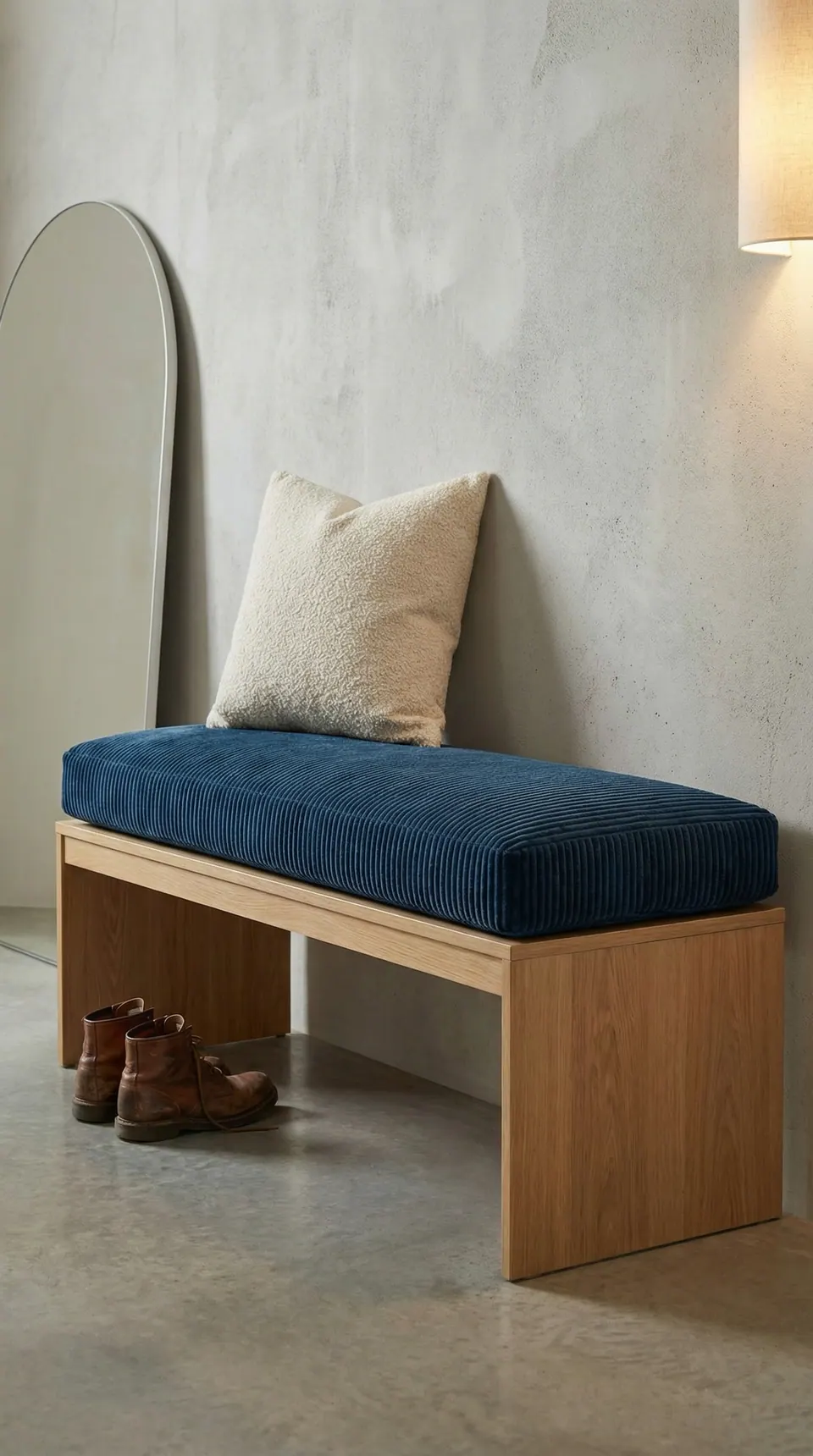
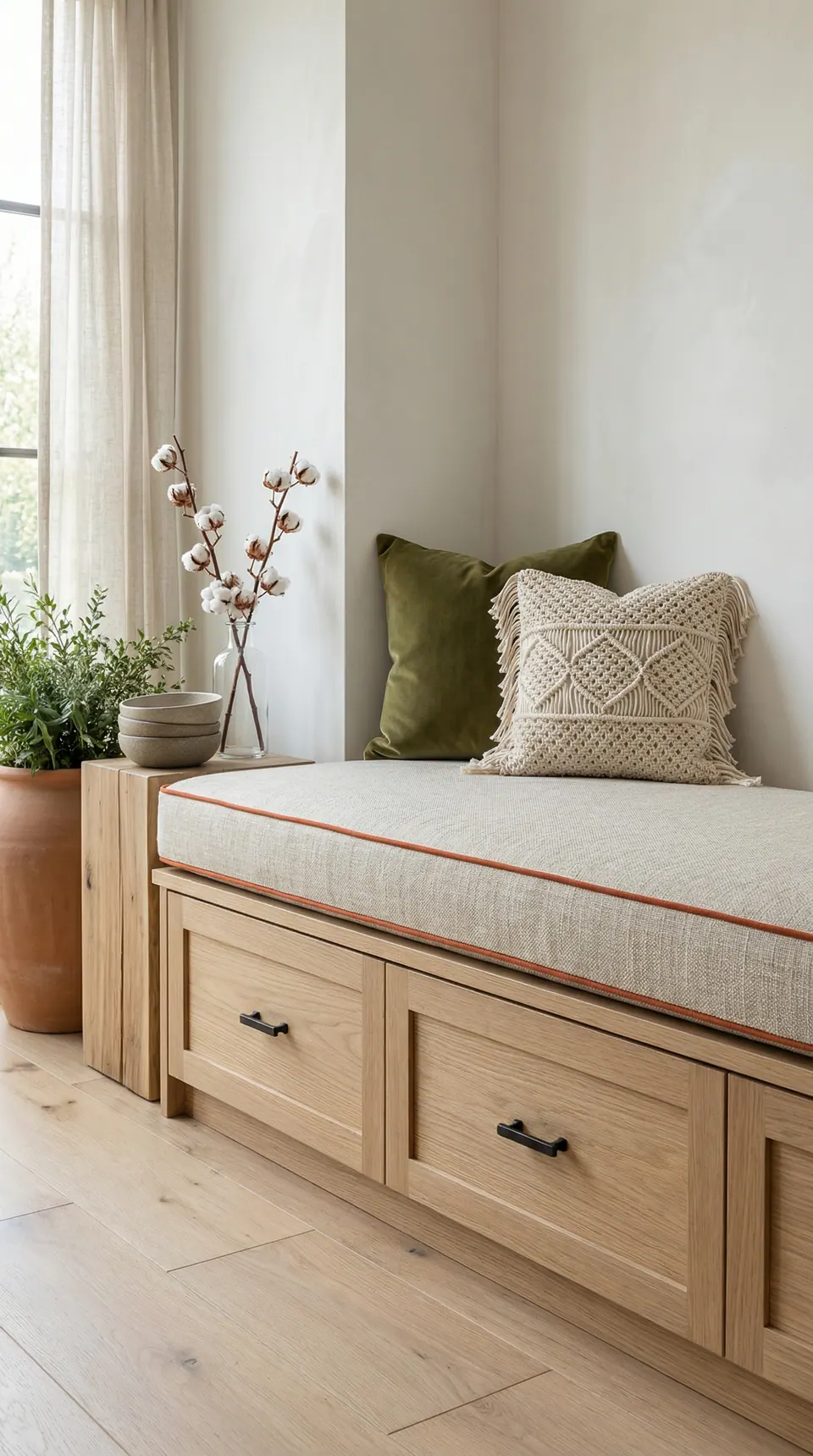
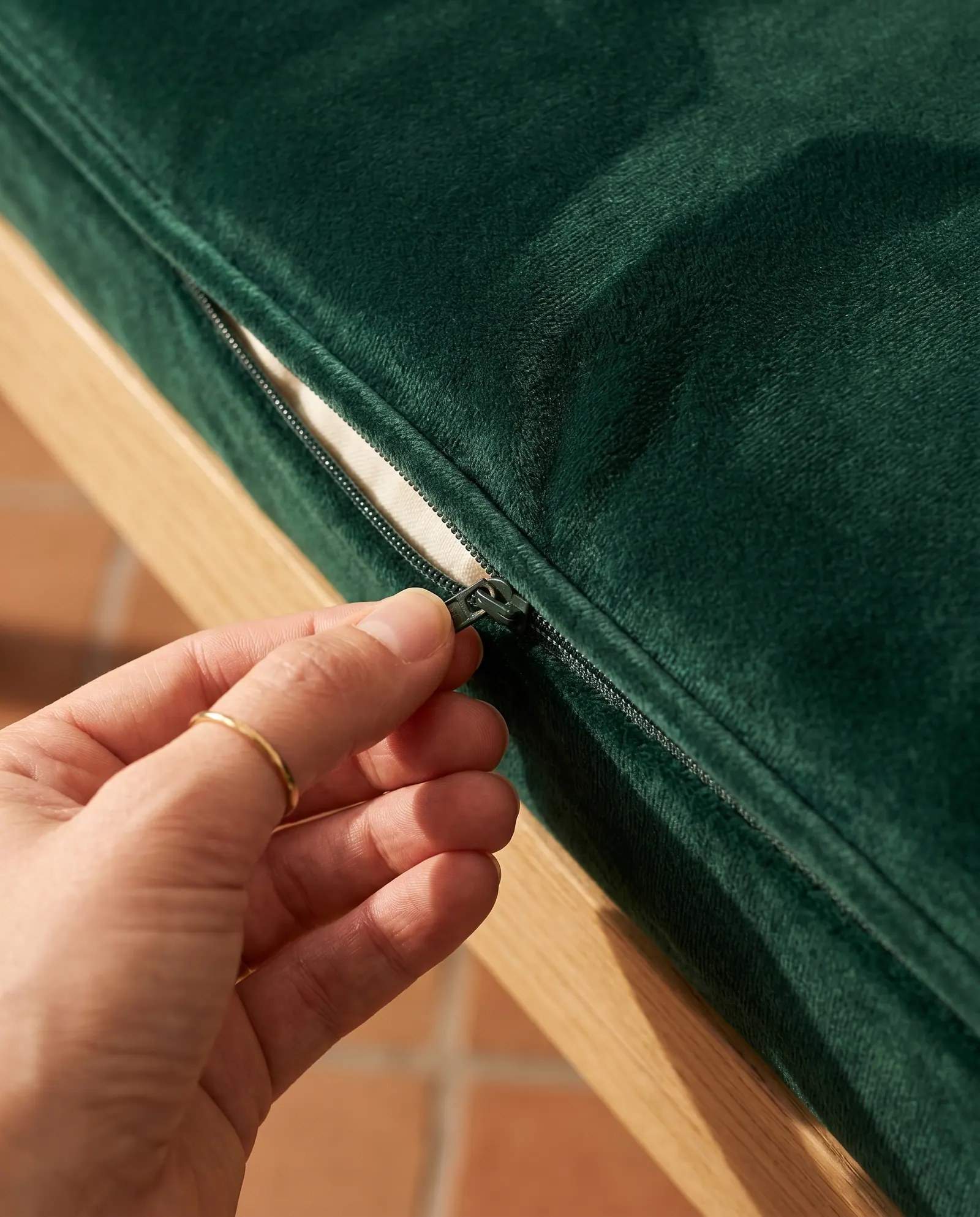
SaveA concealed zipper on the side band lets the velvet cover come off for cleaning while staying out of sight.
The quick answer
A custom bench cushion is cut to the inside of your bench, length by depth, from the exact numbers you send. The standard is 4 in (10 cm) of high-density foam in a zippered, removable cover; 3 in (7.5 cm) is the common thinner choice. Ties or a non-slip base stop narrow cushions sliding, and piping is included either way.
Every one is cut to your measurements. The number is how many readings the atelier has published for that shape.
Sizes & measuring
On the cutting table: bench cushion numbers
Measure the bench, not the cushion you used to have. Old foam sags; old covers lie.
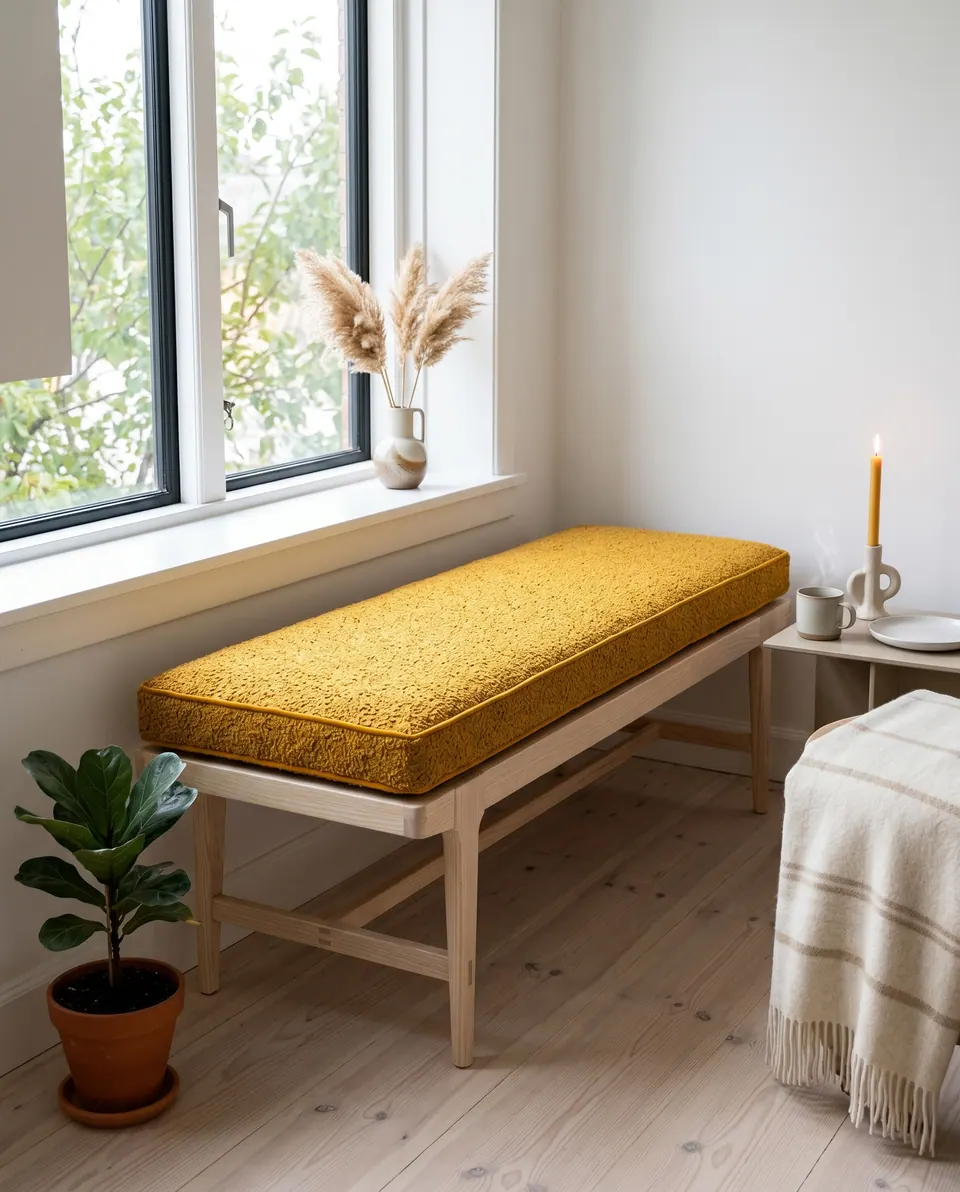
How to measure Seen from above, the cushion fills the frame: measure length and depth inside it, wood to wood. Seen from the front: the thickness you want.
Length x depth
Inside the frame, wood to wood, to the nearest 1/4 in. Send the true size and subtract nothing.
Standard thickness
4 in (10 cm); most buyers keep it
Thinner
3 in (7.5 cm) is the common thinner choice; 2 in (5 cm) is the thinnest standard foam
Thicker
5, 6 and 8 in have been made; thicker than standard is quoted higher
Foam
High-density, high-resilience polyurethane, about 2.0 lb/ft³ (32 kg/m³), medium-firm
Cover
Zippered and removable at no extra charge; the zipper wraps two corners on the underside
Piping
Included in the price: matching, contrast, double, or none
Very long benches
Around 108 in (274 cm) and up usually come in two pieces; one piece on request
Who orders a bench cushion, and what they ask first
The bench cushion is the workhorse: the hall bench under the coat hooks, the dining bench along a farm table, the blanket chest at the foot of a bed. A custom bench cushion is foam and fabric cut to one bench, not to a catalog size.
Buyers rarely ask about shape. They ask three things: how thick, which fabric, and how to stop the thing sliding. I have got all three wrong at some point in nearly forty years, so take this list, dear, from a woman who has re-sewn her share of ties.
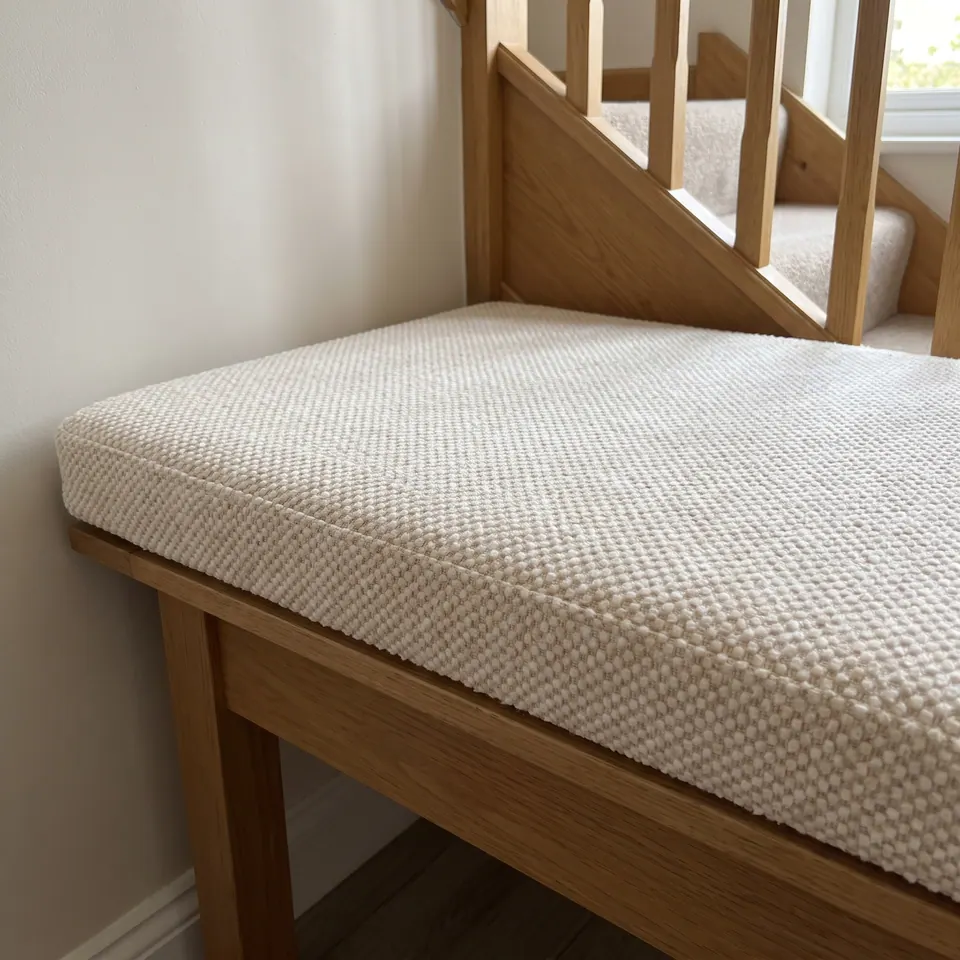
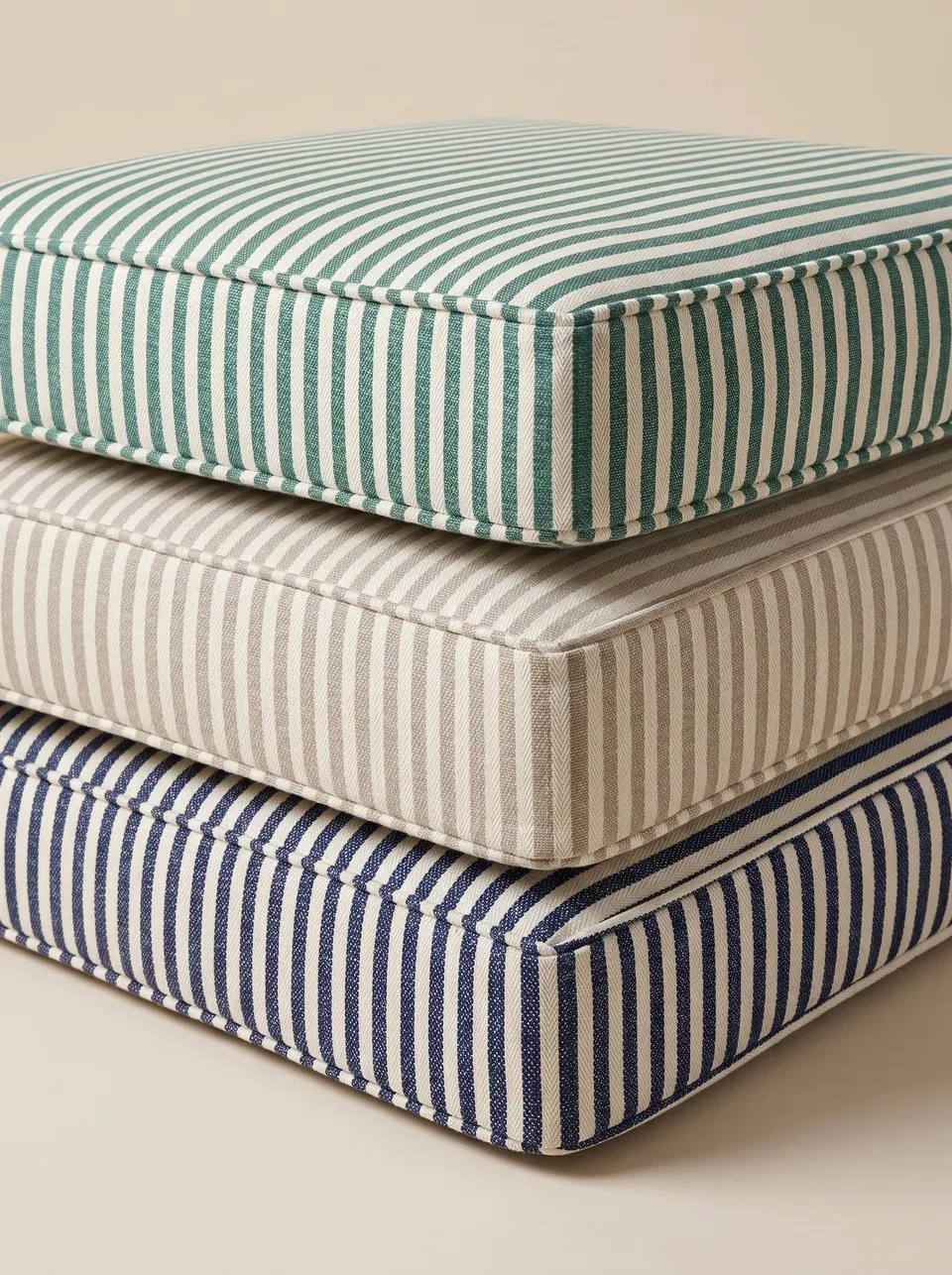
Most bench cushions are box cushions: a flat top and bottom joined by a side band, piped on both seams. The band squares up the front edge and hides small wobbles in an old bench. A knife edge, sewn flat with no band, looks softer and suits thin pads; box edge vs knife edge lays out both.
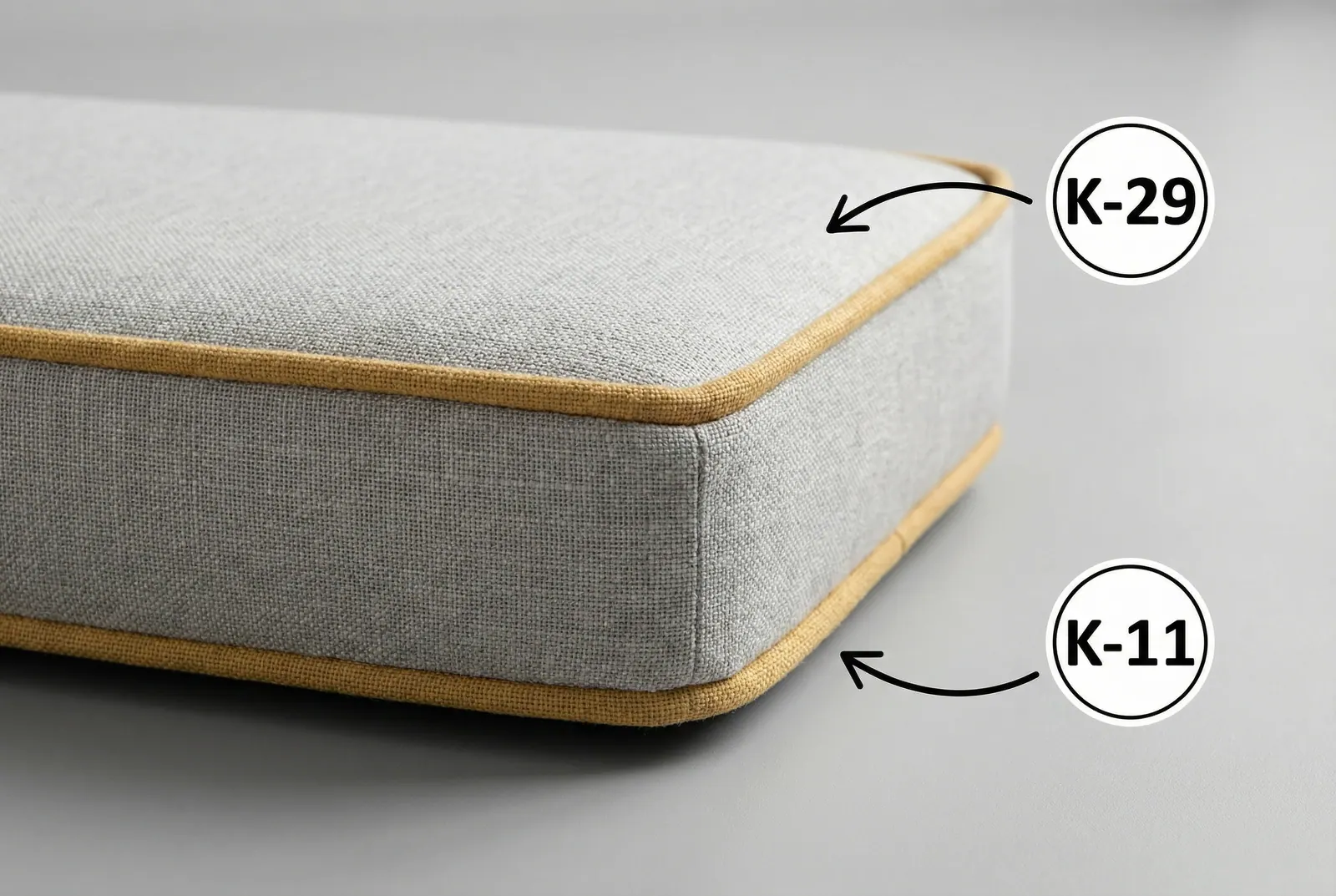
Piping is the line everyone sees first, so choose it on purpose. Matching keeps a bench calm, contrast draws the outline like a pencil, and none reads clean and modern. The price is the same all three ways. You can mix within a set, too: piped seats, plain backrests.
Fabric for a bench that gets sat on, stood on and napped on
A bench takes more wear than a sofa, so pick the fabric for the life it leads, not the photo.
The count is how many published readings use each family. Open a family for its swatch book, care notes and neighbors.
Foam and thickness: do the knee test
Standard foam is high-density, high-resilience polyurethane with a medium-firm feel. It holds a flat, tailored top for years without going lumpy.
Thickness is where buyers stumble. A dining bench already sits near chair height, so 4 in can push knees into the tabletop; 3 in, or even 2 in, is the safer call there. A hall bench or a bench at the foot of the bed is happy at 4 in.
Bench height plus cushion equals seat height. Check yours in the seat height calculator before you commit.
A real project
Two narrow benches, four ties each, one photo
A buyer in the US ordered two bench cushions, each 62 x 14 in (157 x 36 cm), in brown corduroy, with four ties set 2 in (5 cm) in from the ends. Before cutting, the workshop asked for a photo of the benches and a rough sketch, so the ties would land on the frame and not in thin air.
When the covers were sewn, a photo went back for approval. Only after a yes did the high-density foam go in, the next day. Narrow benches are exactly where cushions creep, and ties placed from a photo settled it.
Measured
62 x 14 in (157 x 36 cm), two pieces, four ties each
What it taught
Send a photo of the bench so the ties match the frame, and approve the cover photo before the foam goes in.
Five bench cushion mistakes, and how to dodge them
Measuring the old cushion instead of the bench. Measure wood to wood and send the true size.
Typing a request for ties into the size box, where it gets missed. Put ties, position and length in the order note, then confirm by message.
Putting a 4 in cushion on a dining bench without checking knee room under the table.
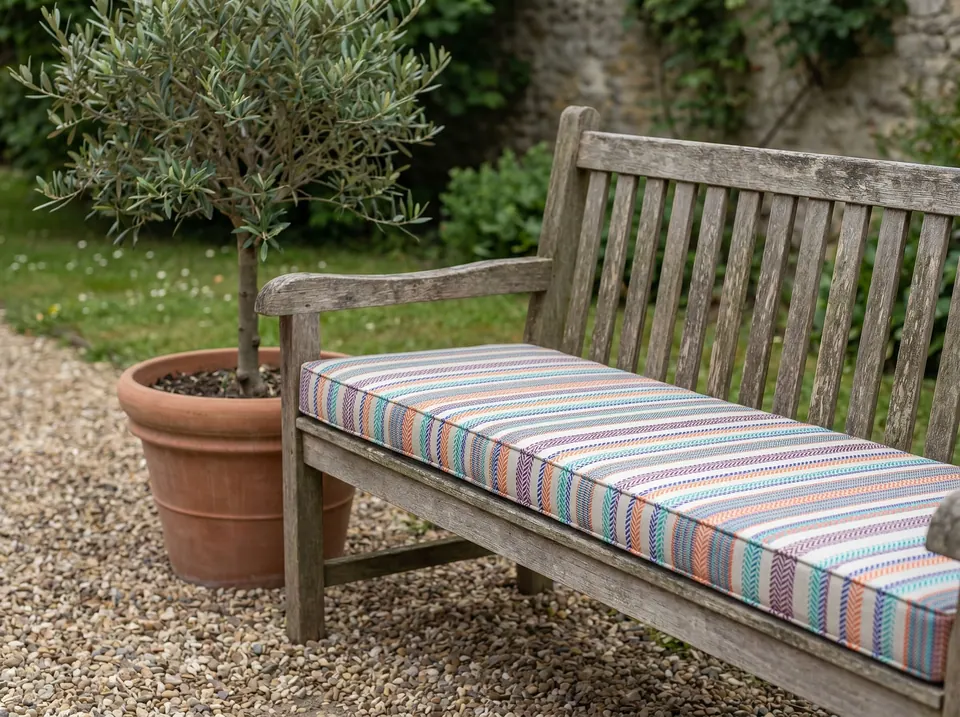
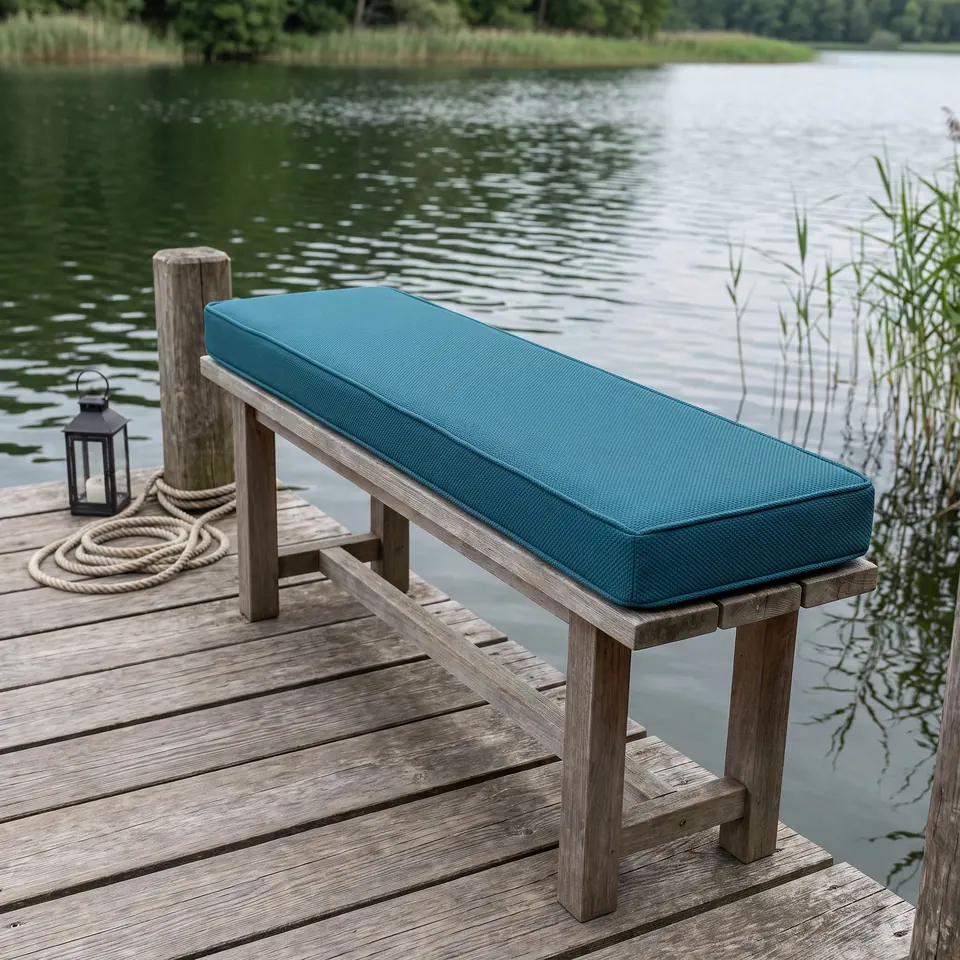
Picking fabric for looks alone: light linen in a rental, corduroy under a jumping dog, indoor fabric where rain reaches.
Approving the pre-dispatch photo without checking the small extras. Look for the ties before you say yes.
Photographs from the workbench
Open any photograph large; each one has its own link and a Save button.
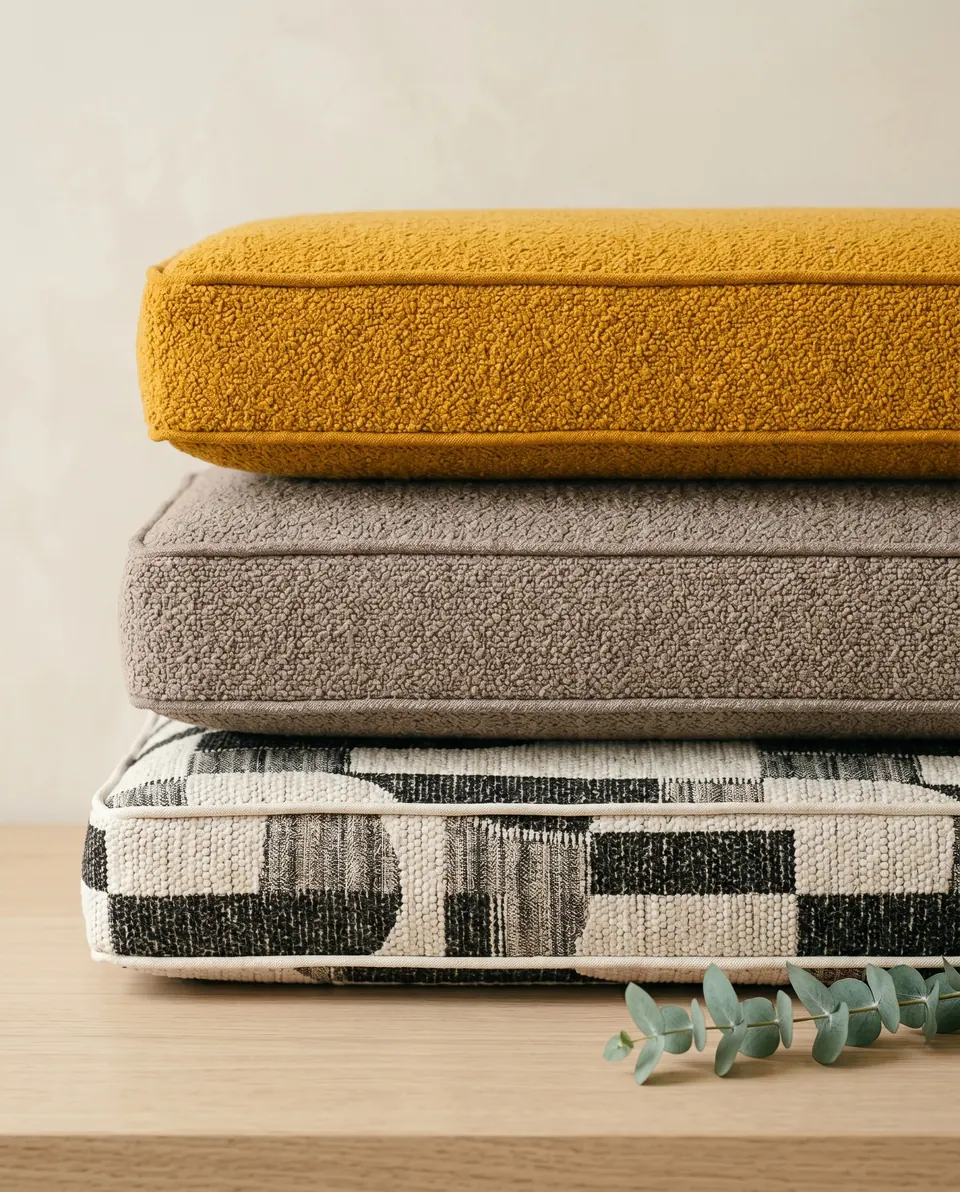
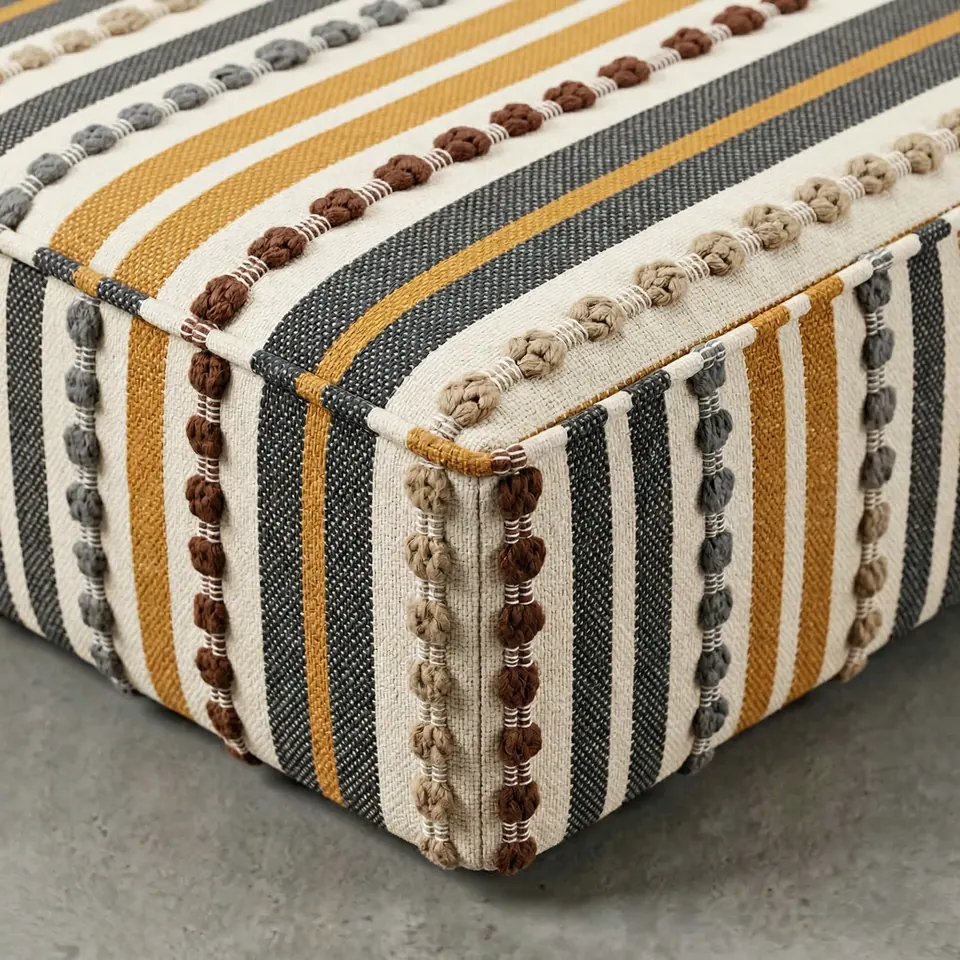
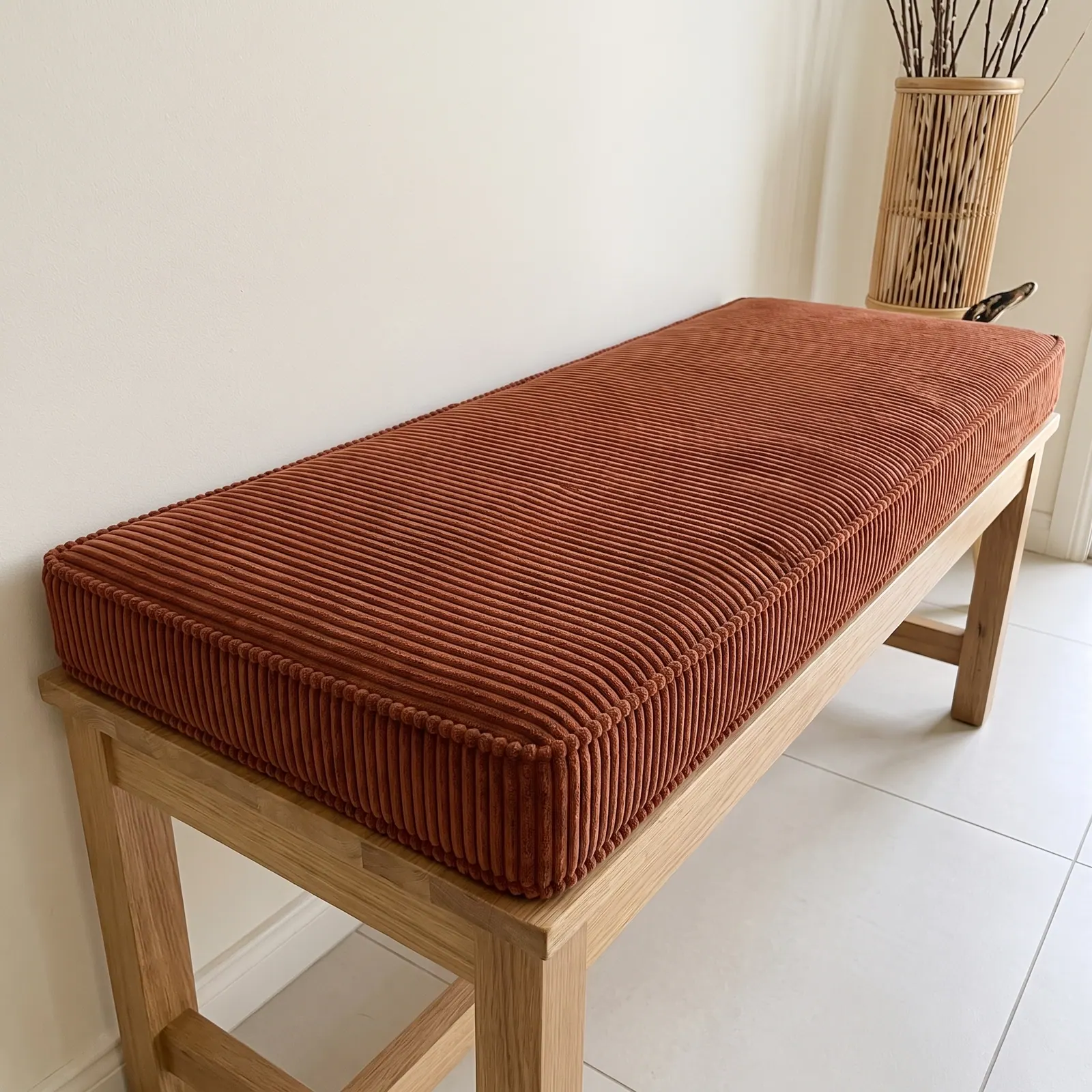
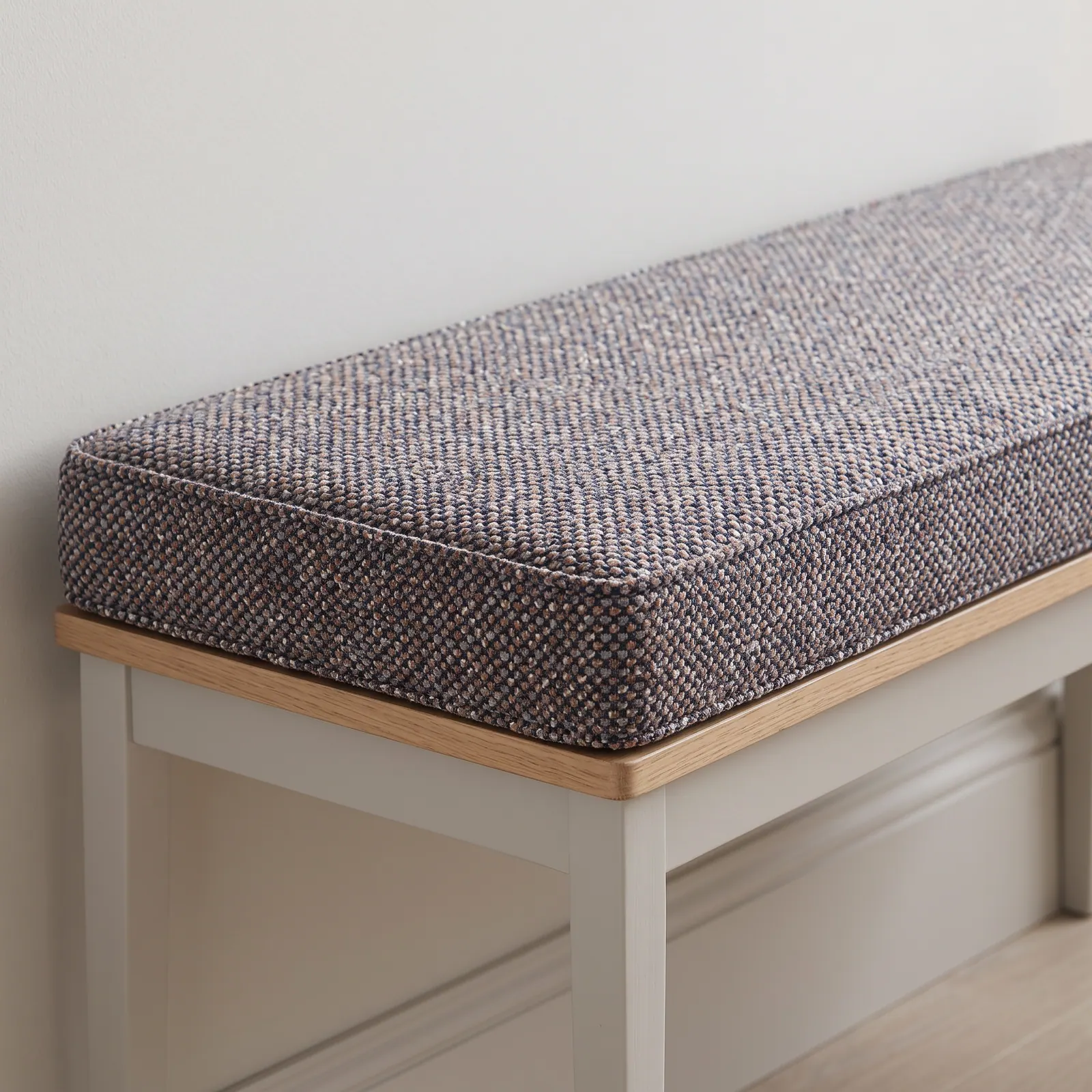
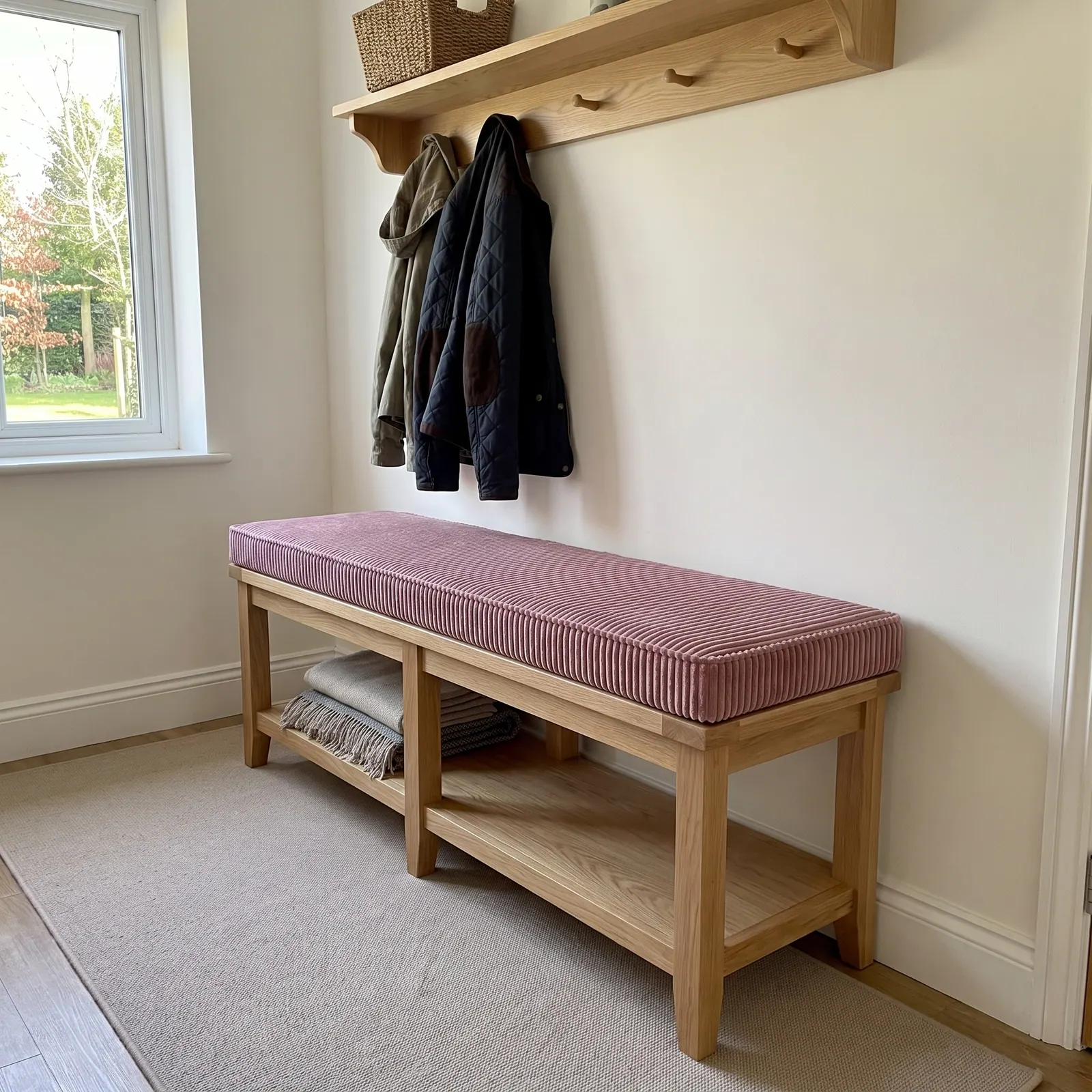
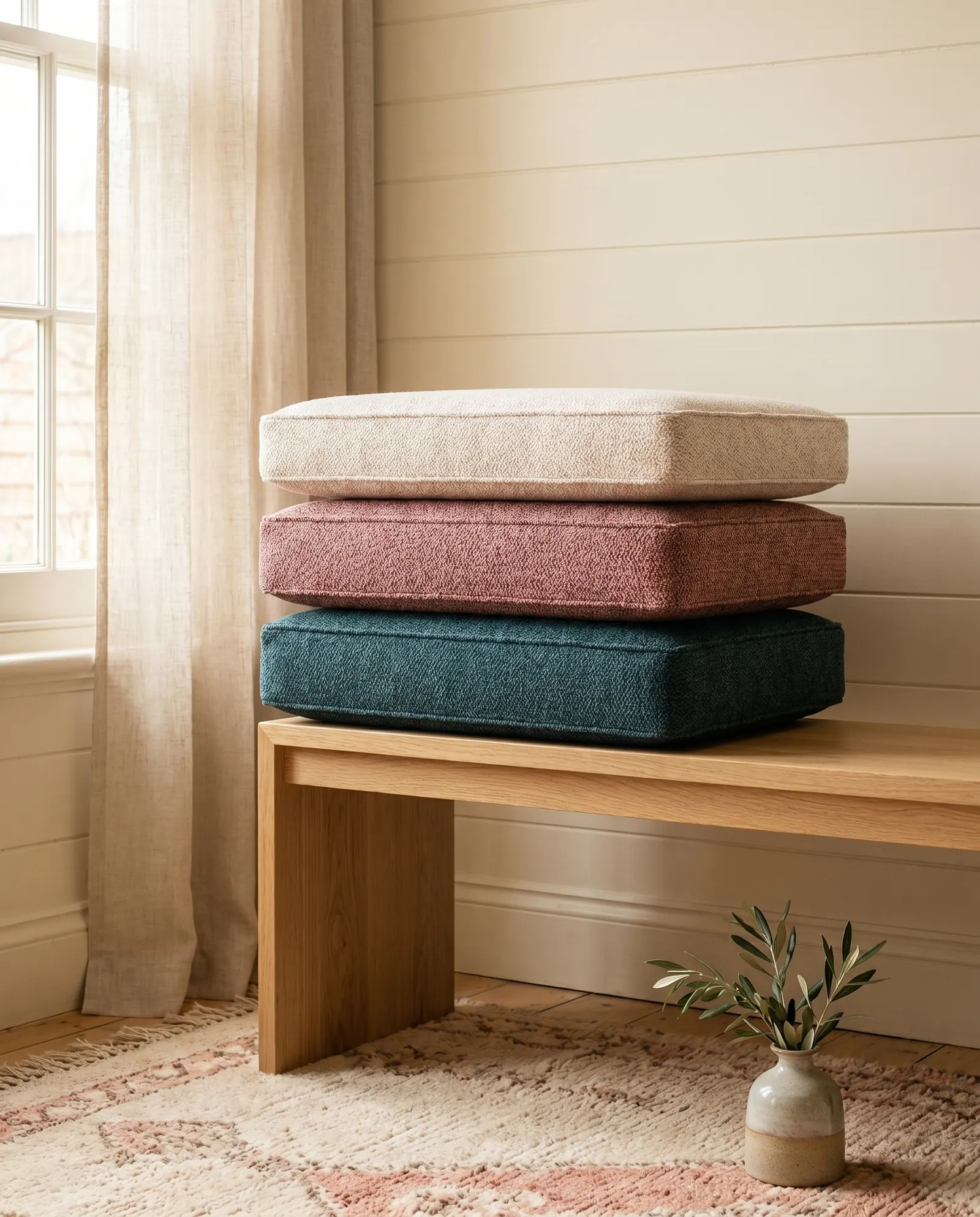
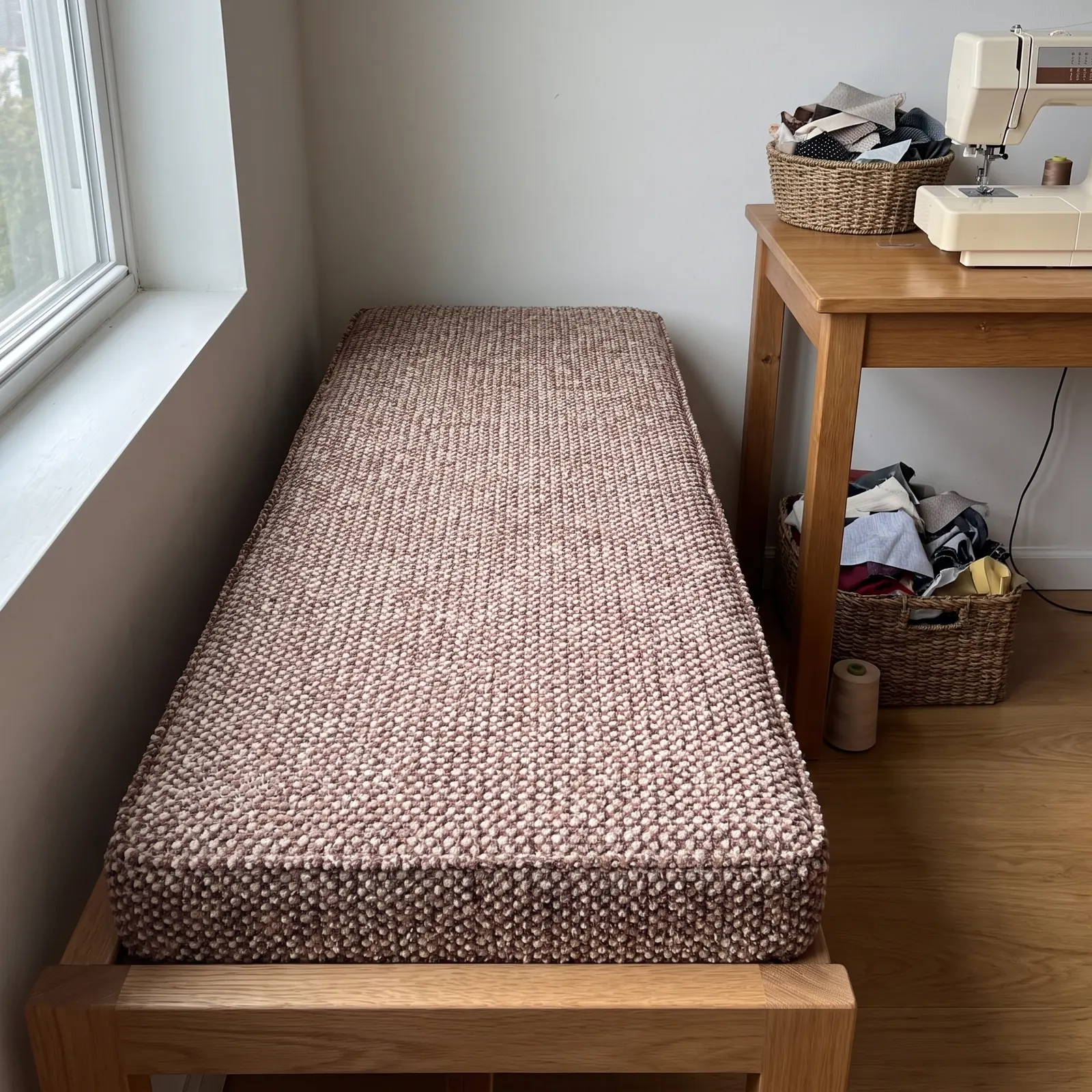
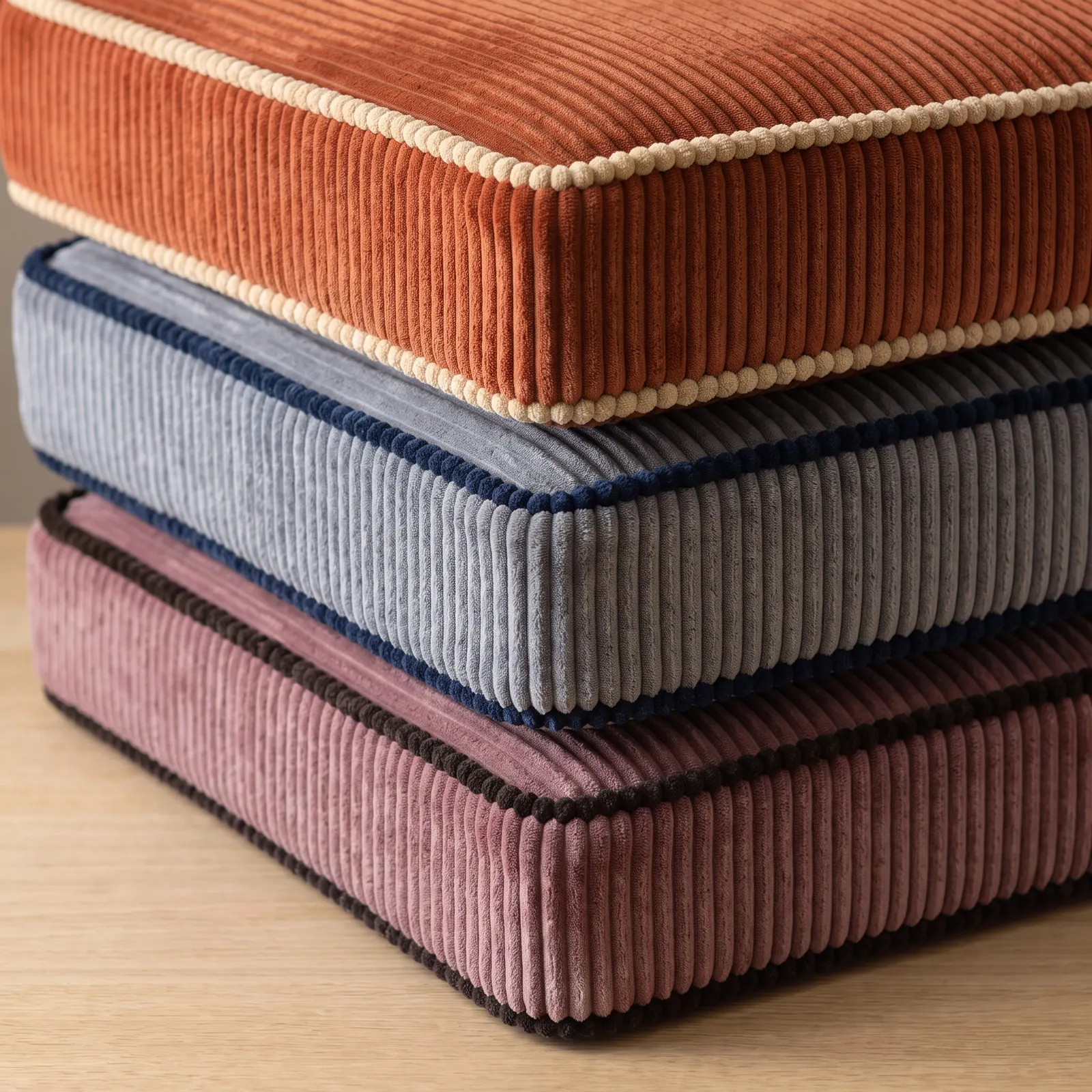
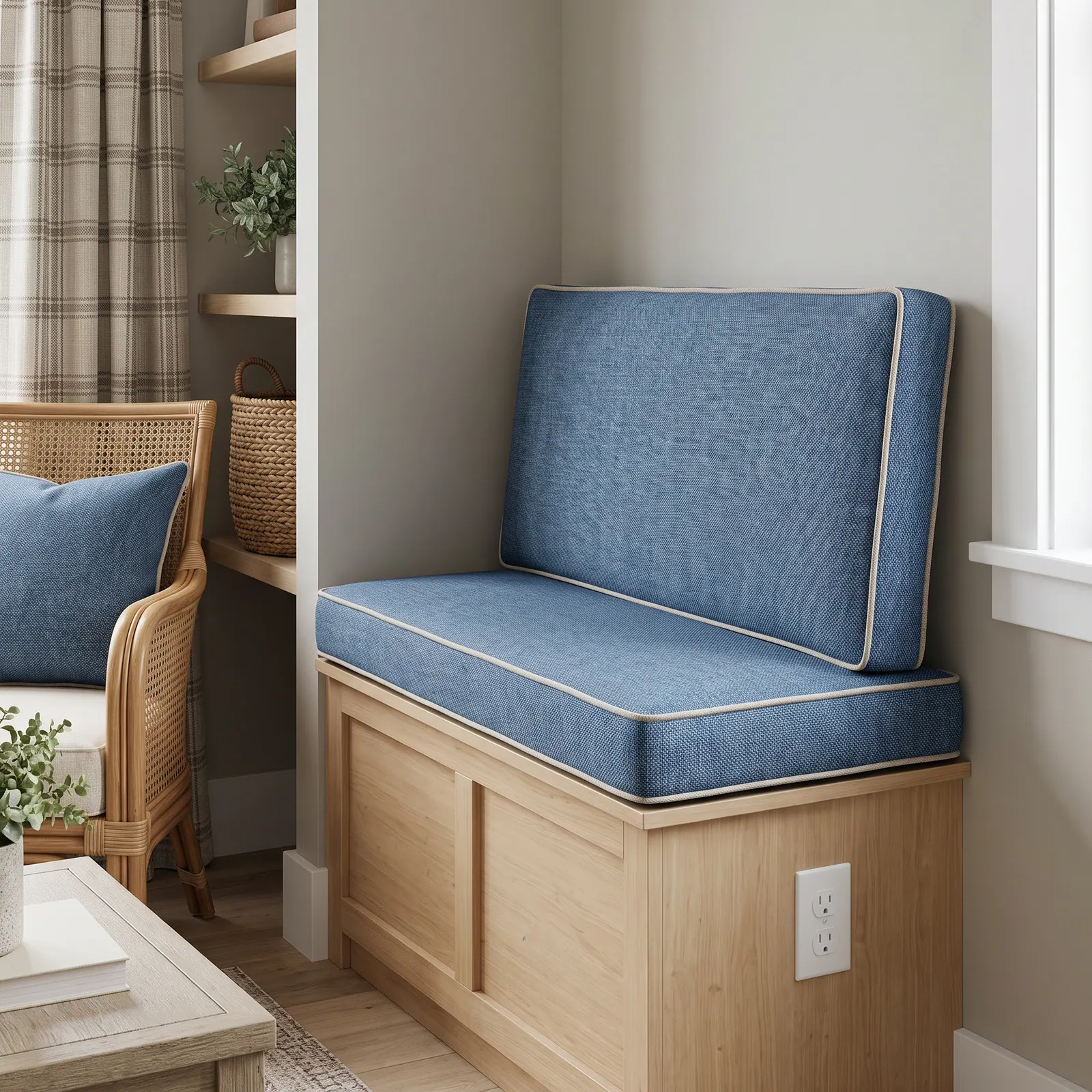
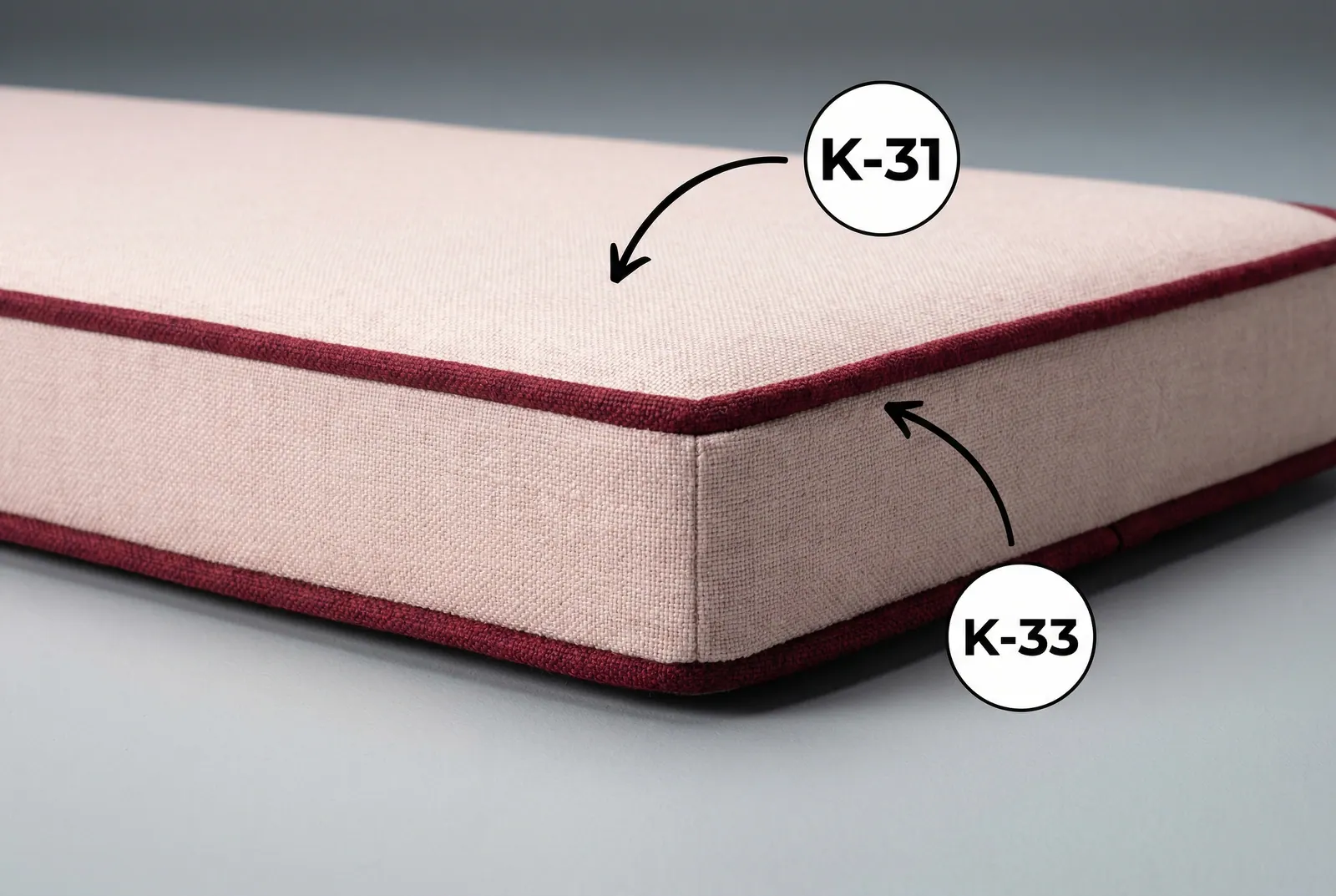
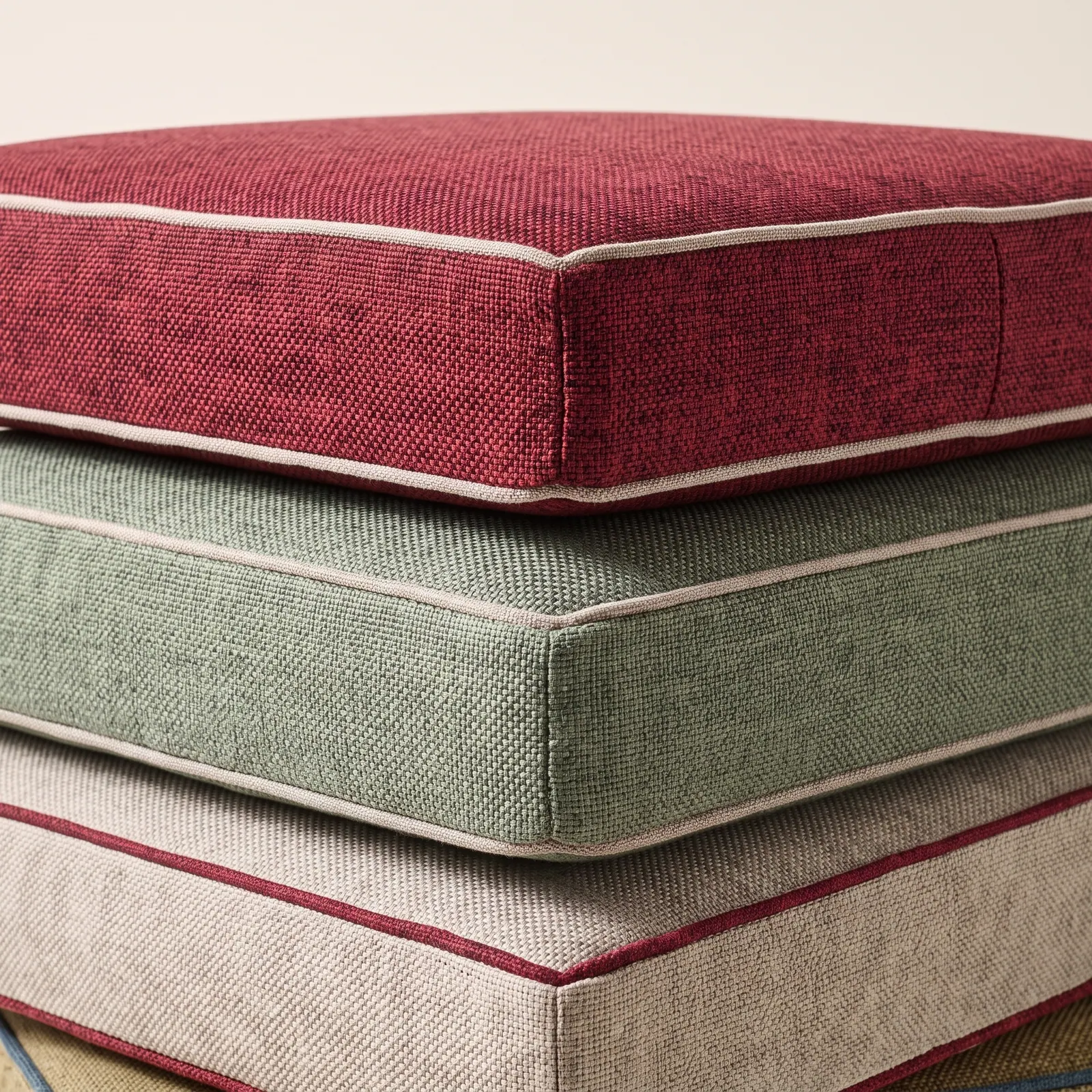
SaveRust corduroy on pale oak: a warm, earthy pairing that looks deliberate even in a bare white hallway.SaveA close look at a slate blue flecked weave on a two-tone hall bench. Peach and navy yarns give the plain-looking color its depth.SaveA warm ochre cord lifts a cool light gray body without turning the cushion into a statement piece.SaveA mauve cushion on a pale oak bench gives a plain hallway a soft spot to sit and lace up boots.SaveThree box cushions in the same textured weave show how cream, dusty rose and deep teal look side by side.SaveA mocha cushion on a low oak bench makes a window seat in a sewing room. Baskets of offcuts and a spool of thread set the scene.SaveFrom this angle the stripes can be seen running the full length and down the box gusset.SaveCropped tight, the stack shows how a dark welt sharpens pale gray and how a cream cord lifts rust.SaveA blue cushion set turns an oak blanket box into an extra seat that pairs with the rattan chair opposite.SaveBlush and wine sit in the same color family, so the piping reads as a drawn outline rather than a clash.SaveUp close, the red and oatmeal pair appears twice, once each way, with sage in between.
Ties and non-slip bases are never standard on a bench cushion. Write them in the order note, with position and length, or the cushion ships without them.
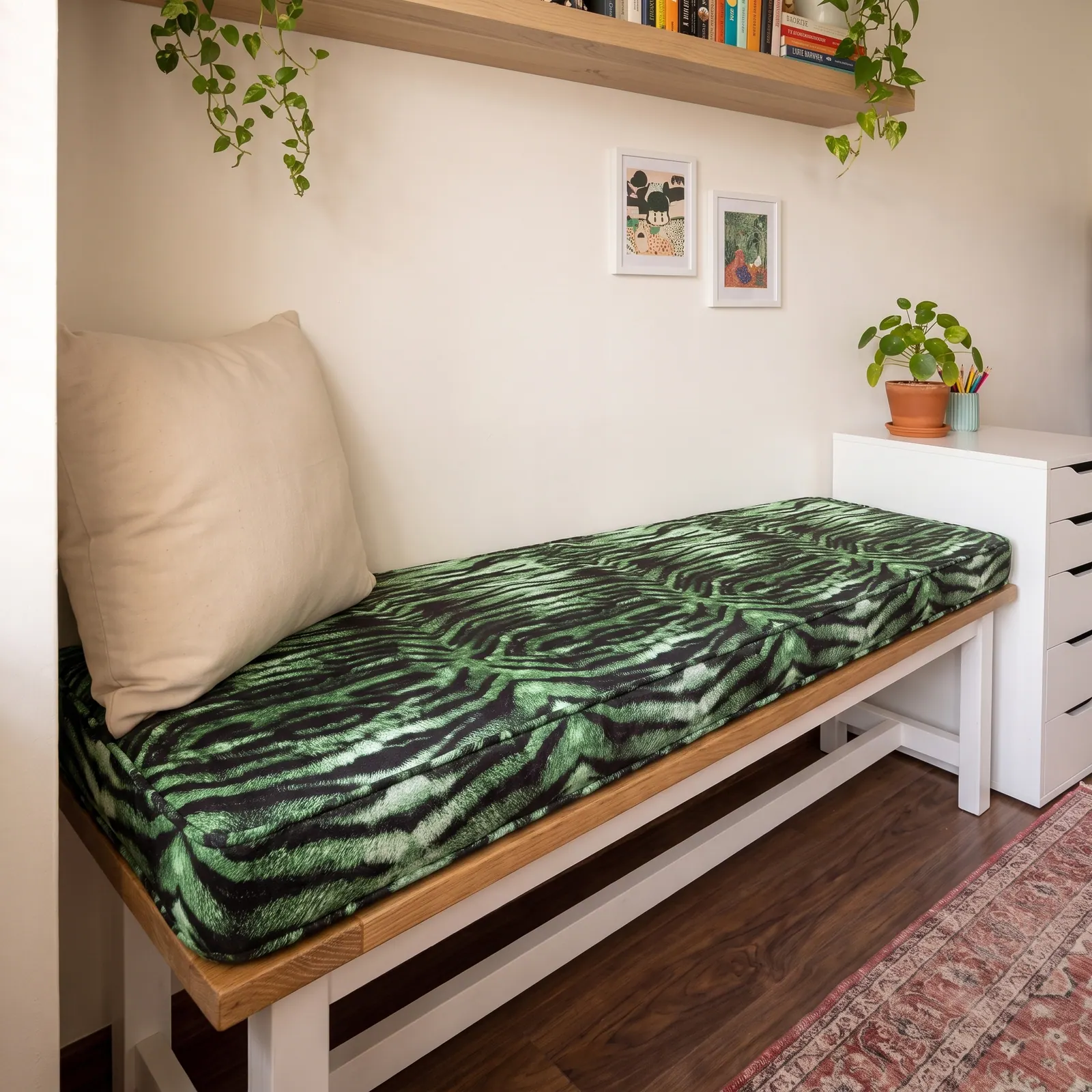
Treat a bench cushion as a stripe of color across the room. Pull the piping from something already there, a rug border or a picture frame. A buyer in the US went bold on a 104.5 in (265 cm) dining bench: emerald velvet with double piping in pale pink velvet, made in one piece at her request, plus four matching 18 in (46 cm) pillow covers.
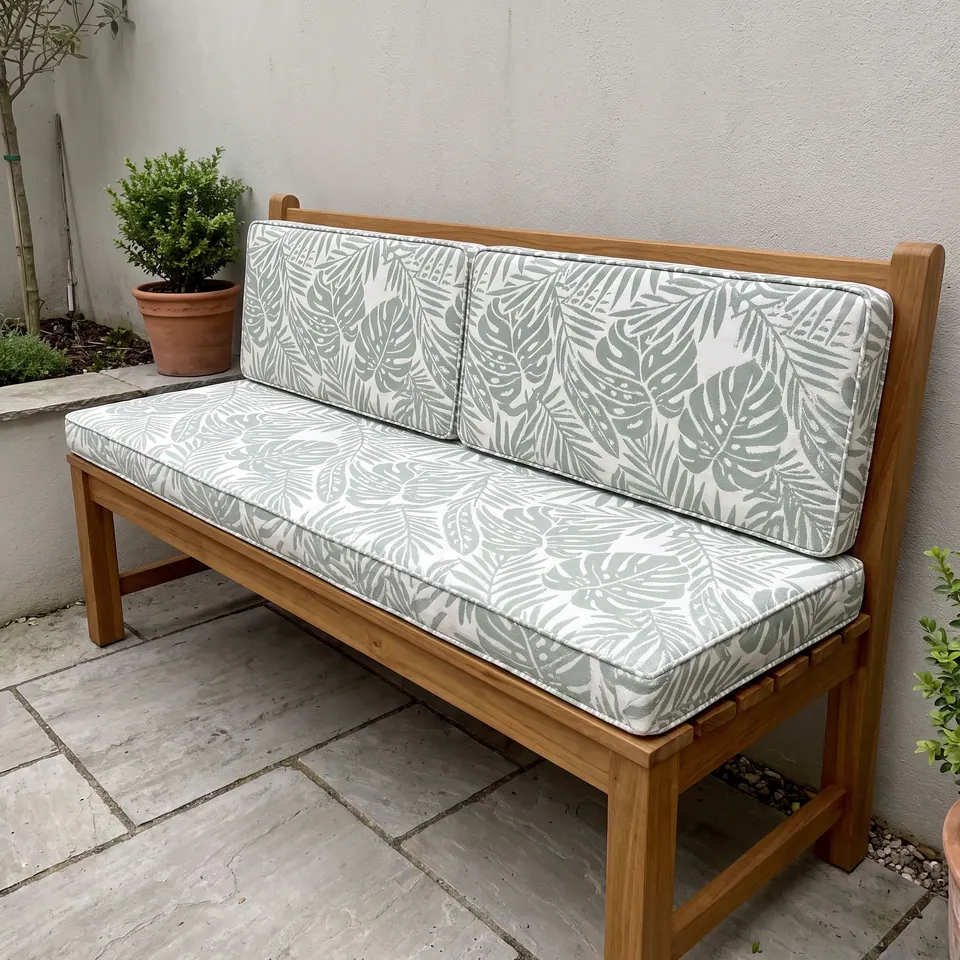
On a hall bench, keep pillows to two, one at each end. A matching backrest turns a perch into a proper seat; see seat-and-back cushions. What does your bench measure, wall to wall?
Boots on and off: 2 to 3 in; the workshop's thinnest standard foam is 2 in
Dining bench or nook
About 3 in, the most common choice
Bare bench plus cushion near 18 in, about 10 to 12 in below the tabletop
Window seat or reading bench
About 4 in for long sits
Clearance up to the sill, crank or lock
Deep, low lounge seat
5 to 7 in only for deep, low seats
Seat depth once back pillows are in
Any bench
Standard here: 4 in (10 cm)
2, 3, 4 and 5 in are standard options; thicker on request
Buyer questions
A common question
Is 4 inches the standard thickness for a bench cushion?
The workshop's answer
Yes. The standard is 4 in (10 cm), which is what most of the workshop's photographs show, and most buyers keep it. 3 in (7.5 cm) is the common thinner choice, and 2, 5, 6 and 8 in (5, 12.5, 15 and 20 cm) cushions have been made too. Thicker than standard is quoted higher; just write the thickness in your order.
A common question
Can you sew ties on so the cushion stays on my bench?
The workshop's answer
Yes, on any made-to-measure cushion. Write in the personalization box how many ties you want and where they go, such as the corners, two on the back edge or the wider side of an odd-shaped bench, plus a length if they must wrap a frame. Ties are never added unless you ask.
A common question
Where does the zipper go on a bench cushion, and will I see it?
The workshop's answer
Every cover gets a zipper at no extra charge, hidden on the back edge against the wall or on the underside. On bench cushions it runs in an L around two corners, so the foam slides out easily. If you can see the zipper, the cushion is probably upside down.
A common question
If I skip the piping, is the cushion cheaper?
The workshop's answer
Any cushion can be made without piping; write 'no piping' next to your fabric code and the edges are sewn plain and flat. The price stays the same, because piping is already included. For a quieter edge rather than none, choose self welt, cut from the cushion's own fabric.
A common question
Can I get a matching back cushion for my bench?
The workshop's answer
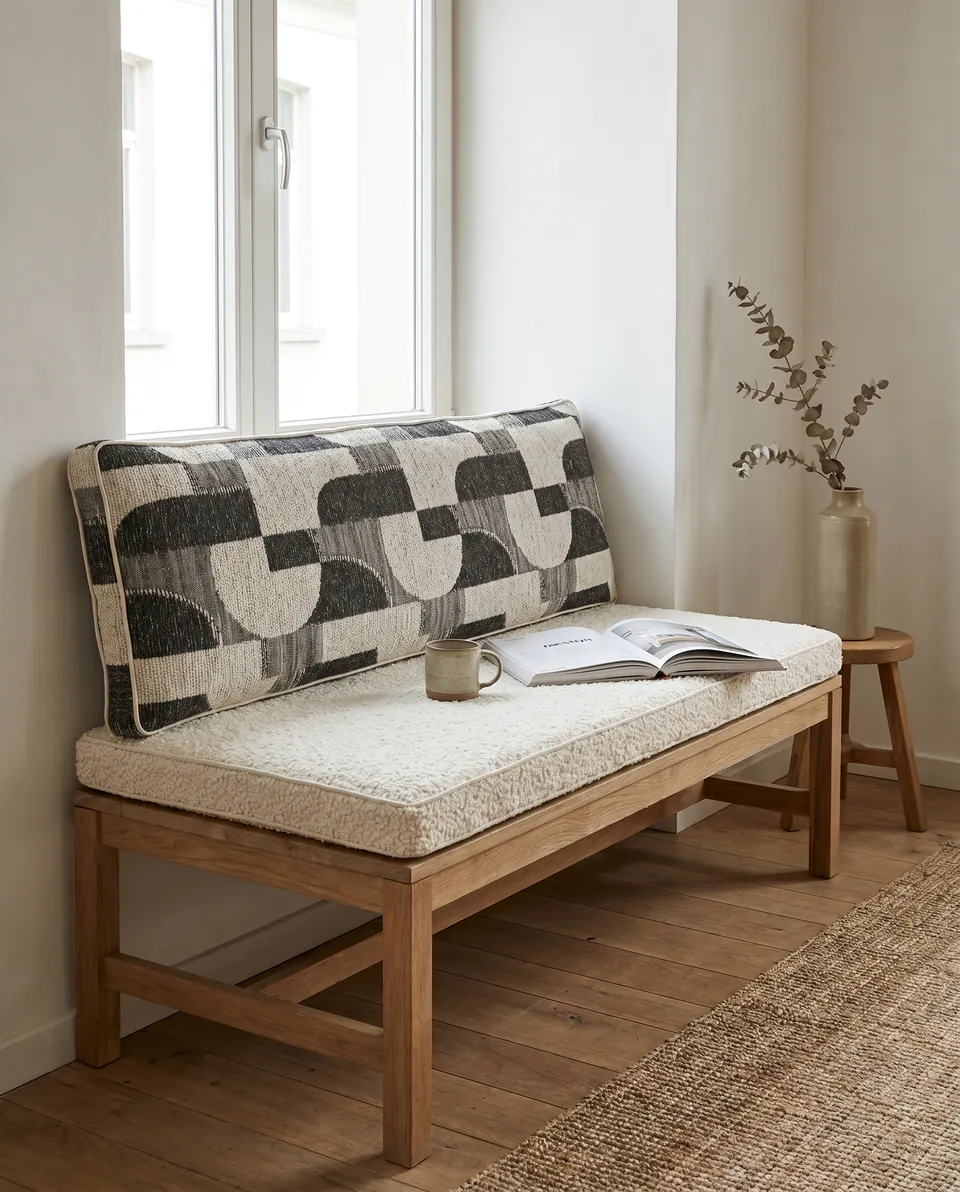
Yes. Backrests are made to any size in the seat's fabric, either firm foam like the seat, which stands up straight, or a softer pillow fill that looks more relaxed. Order them together, or add one later by quoting your original fabric code.
A common question
Is one long cushion cheaper than a few separate pieces?
The workshop's answer
Usually it comes out about the same, because price mainly follows total surface. Separate pieces add cutting, sewing and zippers, yet in real orders the splits came out equal or slightly cheaper. Cushions around 108 in (274 cm) and longer are made in two pieces anyway.
Have it made
Have your bench cushion made — ask Maggie’s workshop
Numbers first, fabric second, piping last. Jot down what you have, and the workshop will go down the list with you, item by item. — Maggie
Leave your details and the workshop will call you to confirm measurements, fabric, foam and piping. No prices, dates or payment on this page: it is a request, not an order.
Fabric · Foam · Pipingwhat the workshop will confirm with you
Should I send the bench size or the size I want the cushion to be?
Send the true size of the seat, measured inside the frame, and don't subtract anything. The workshop cuts to the numbers you write and handles any fitting allowance itself. Piping sits on the seams, so it doesn't change the size either.
Which way do stripes run on a long bench cushion?
Front to back, across the cushion, because the fabric roll is about 55 in (140 cm) wide. A long striped cushion therefore needs a seam somewhere, and the stripes are pattern-matched on the top face only.
Will a non-slip base mark a wooden bench?
No. The non-slip base replaces the whole bottom panel with a grippy fabric that holds by friction. It is not adhesive or rubber, leaves no residue and is safe on wood. It costs extra, and the newer washable version lengthens the lead time, so ask for the current estimate.
How long does a custom bench cushion take from order to door?
It depends on the piece: a simple bench cushion is quickest, while patterned fabric and custom velvet take longer, then delivery follows. Ask the workshop for current making and delivery times in writing, and allow extra in very busy periods.
Can I order a batch of identical bench cushions for a café or rental?
Yes. Identical batches are quoted individually and get the deepest reductions, because the cutting and sewing repeat. A quantity order can still be spread across several colors, and heavy-use buyers are pointed to the most durable fabrics.
How thick should a bench cushion be for a dining table, an entry bench or a reading bench?
Work from the seat height, not the foam. Published guides suggest about 2 in (5 cm) for quick sits at an entry bench, 3 in (7.5 cm) for everyday dining and 4 in (10 cm) for window seats and reading benches, aiming for a finished seat near 18 in (46 cm). The workshop's standard is 4 in (10 cm), with 2, 3 and 5 in at the same price, so subtract your bare bench height from 18 in and pick the nearest.
Is a ready-made bench cushion good enough, or do I need a custom size?
Store cushions come in a few fixed sizes, such as 48 in dining pads or 50 x 14 in pads 2 in thick. If your bench is free-standing and within an inch or two of one of those, a stock pad can work. Built-in benches between walls, odd depths, a particular thickness, or a fabric chosen to match the room are where a cushion cut to your own numbers pays off.
Which indoor benches can take a custom cushion?
Any bench with a flat top you can measure: dining and breakfast-nook benches, entry and mudroom benches, window seats, end-of-bed benches, piano benches, storage chests and cube shelves turned on their side. The cushion is cut to the length and depth you send, measured wood to wood inside any arms or side panels, in thicknesses from 2 in up.
Stitch straight — Maggie
Share this atlas entry
Readings
Photographs read by the masters: bench cushions
Real cushions made for real rooms, each read for proportion, fabric and fit.

 Save
 Save
 Save
 Save
 Save
 Save
 Save
 Save
 Save
 Save
 Save
 Save