The Pattern Room · a side-by-side pattern
Choosing cushion fabric: seven families compared for real homes
Seven fabric families cross my cutting table, and each one catches the light, forgives a spill and ages in its own way. Here they are side by side, with the honest notes the swatch cards leave out.

 Save
The quick answer
For most indoor cushions, the linen-look performance weave is the safest choice: the best seller, soft, durable, wipeable and machine washable at 86°F (30°C). Velvet wears about as well and adds sheen, real linen and cotton-linen suit natural-fiber buyers, 100% cotton stripes stain more easily, and anything rain can reach belongs in the outdoor range.
The window-seat question, answered plainly
The most durable cushion fabric is rarely the one people fall in love with first. One of the questions we hear most is some version of which fabric will last on my window seat?
The honest answer surprises people. The workshop's velvet, its linen-look weave and its linen are all upholstery fabric for cushions that live hard lives, and in daily use they wear about equally, so you may choose on color and texture. The nuance still matters: for the heaviest use the linen-look performance weave wins, velvet is the tougher of the two when set against linen, and the 100% cotton stripes are the least hard-wearing of the indoor families.
If you came looking for the best fabric for bench cushions, or simply want your custom cushion fabric options in one place, start with the table below. It sets the seven cushion fabric types against the things that decide a good year: feel, daylight, washing, wear, pets and sun. The bench cushions and living room cushions collections show them at work.
Seven fabric families side by side
| Family | Feel | In daylight | Washing | Everyday wear | Pets and kids | Sun and damp |
|---|---|---|---|---|---|---|
| Linen-look performance weave | Smooth, even, very soft; no slubs, no pile | Flat and matte; color reads true | Yes Wipeable; covers machine wash at 86°F (30°C) | Yes Best for the heaviest use | Yes First pick; doesn't collect dust or lint | No Indoor only |
| Real linen and cotton-linen | Dry, textured, natural slubs | Soft, chalky, slightly uneven | Partly 86°F (30°C); natural fibers can shrink a little | Partly Good; velvet is tougher | Partly Textured weave wipes less easily | No Indoor only |
| Velvet | Plush, short, tight pile | Sheen shifts with pile direction | Yes Easy to spot-clean; covers 86°F (30°C) | Yes Tougher than linen | Yes Easy-clean; few loops for claws | No Indoor only, not water resistant |
| Corduroy | Plush ribs (wales) | Ribs catch raking light | Yes Covers wash at 86°F (30°C) | Partly Ribs can split under hard use | Partly No fabric is claw-proof | No Indoor only |
| Bouclé and teddy | Looped, cloud-soft, warm | Matte; loops cast tiny shadows | Yes Covers wash at 86°F (30°C) | Partly Loops can snag | Partly Suggested for a playroom; loops catch claws | No Indoor only |
| Striped cotton and ticking | Crisp, woven, natural | Stripes woven in; colors fixed | Partly 86°F (30°C), gentle | No Least hard-wearing indoor family | No Stains more easily | No Indoor only |
| Outdoor canvas | Real fabric, firmer, like a good sun-lounger cushion | Matte; 100+ colors | Yes Zip-off covers | Yes The toughest family | Yes Wipes clean; less soft indoors | Yes Water-repellent, UV-resistant |
The standard indoor charts (linen-look, velvet, the soft performance weave) cost the same; real linen, 100% cotton, teddy and outdoor fabrics cost more. Non-tufted covers zip off.
Linen, linen-look, linen blend: read the fiber line
Here is where buyers get hurt, my friends, so I will be plain. A chart called linen is usually not 100% linen. The workshop's linen-look codes are polyester, its natural linen chart is described as half linen and half polyester, and another range is 50% cotton and 50% linen. These blends are chosen because they wear well and clean easily, and they are the best sellers.
If you want pure fiber, ask for the separate 100% linen chart or the 100% cotton fabrics, and get the composition in writing. A buyer in the US once asked for real linen or a natural linen-cotton blend for a floor cushion. It arrived well made and on time, in a synthetic blend. The workshop apologized and remade it in a natural light-blue fabric. A swatch would have told the truth first.
See the linen-look fabrics and linen and cotton-linen pages in the Swatch Library, and the longer real linen vs linen-look Pattern.
How each family holds the light
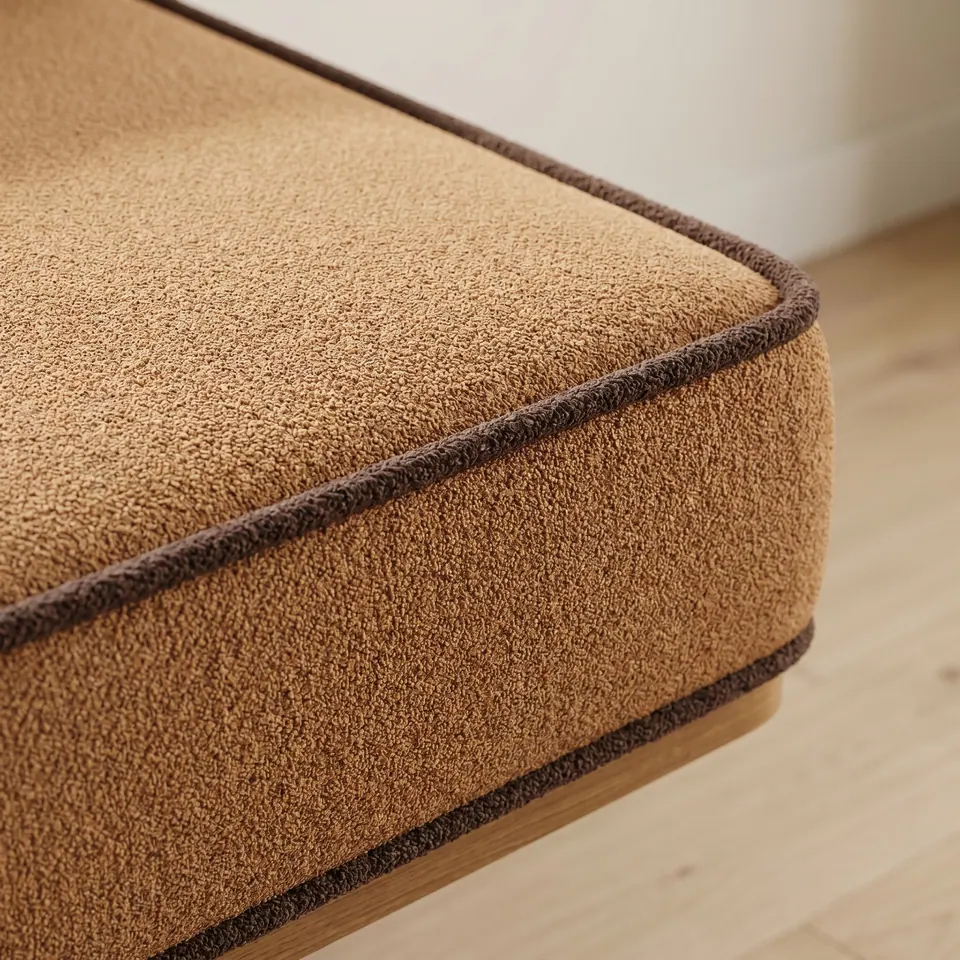
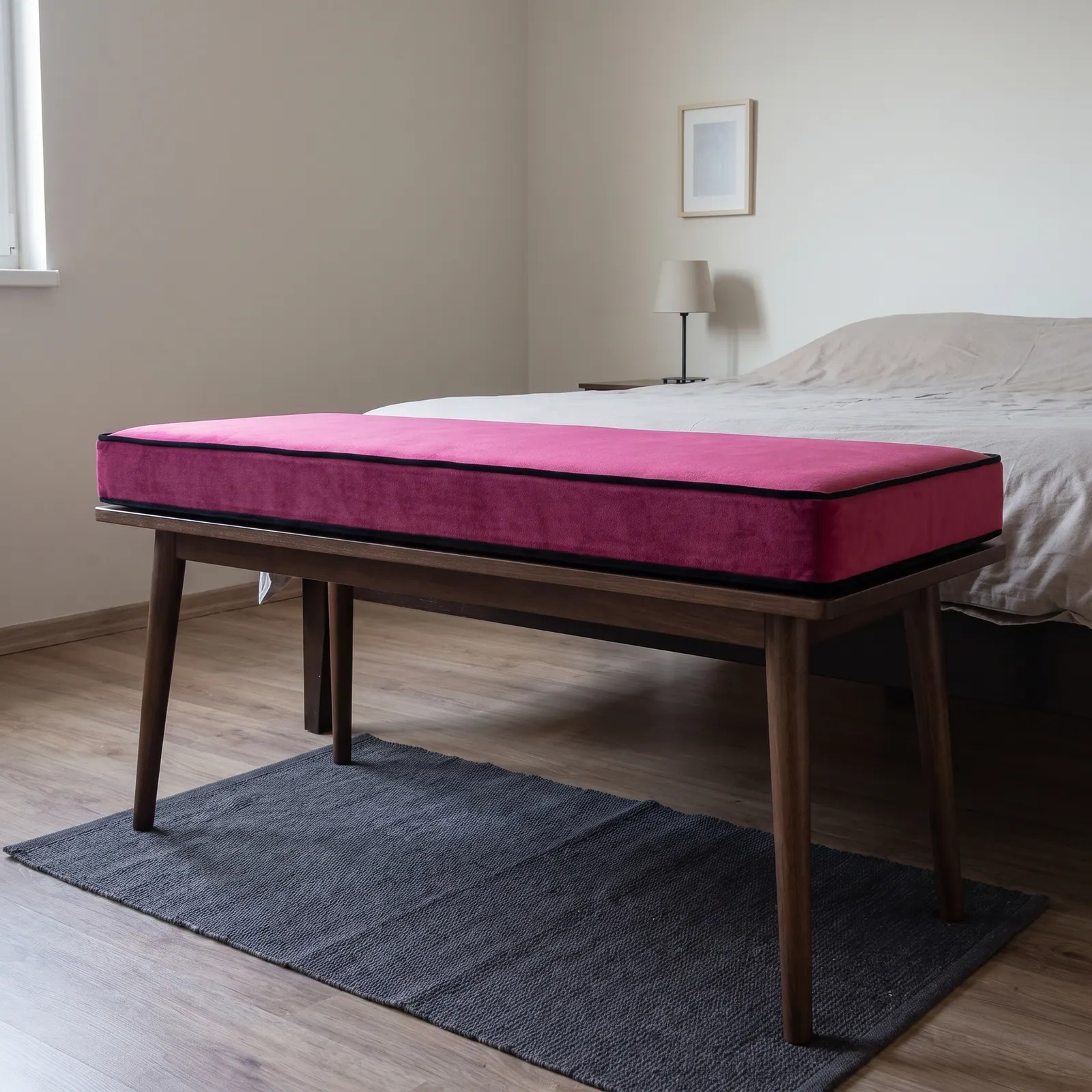
Look at the photograph at the top: a fuchsia velvet pad with a black welt on a walnut bench, a charcoal rug below. The pink glows where the pile turns toward the window and deepens to raspberry where it turns away. That shade would be impossible in corduroy, whose palette stops short of fuchsia, black, maroon, lilac and lavender. Velvet and the linen-look weave carry the wider ranges.
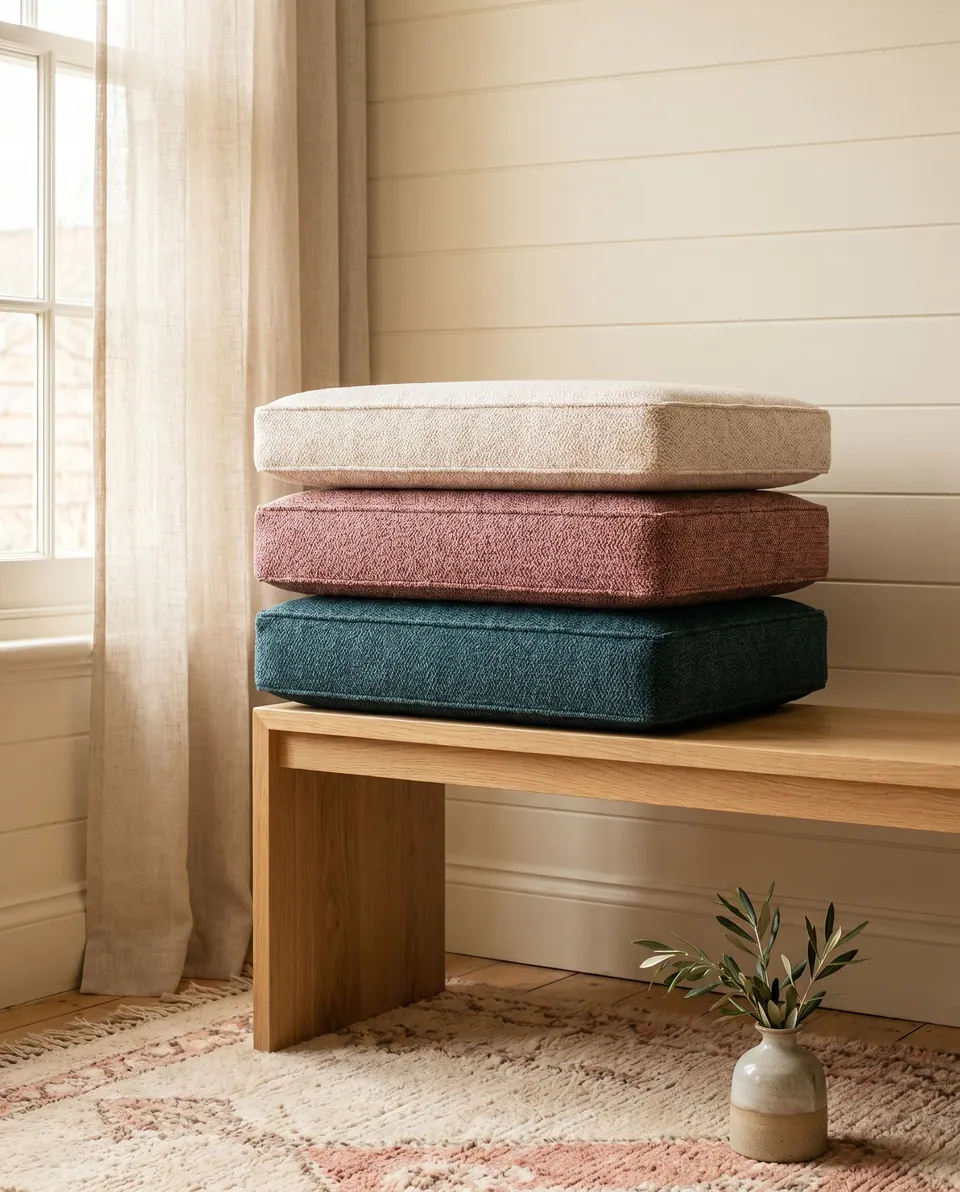
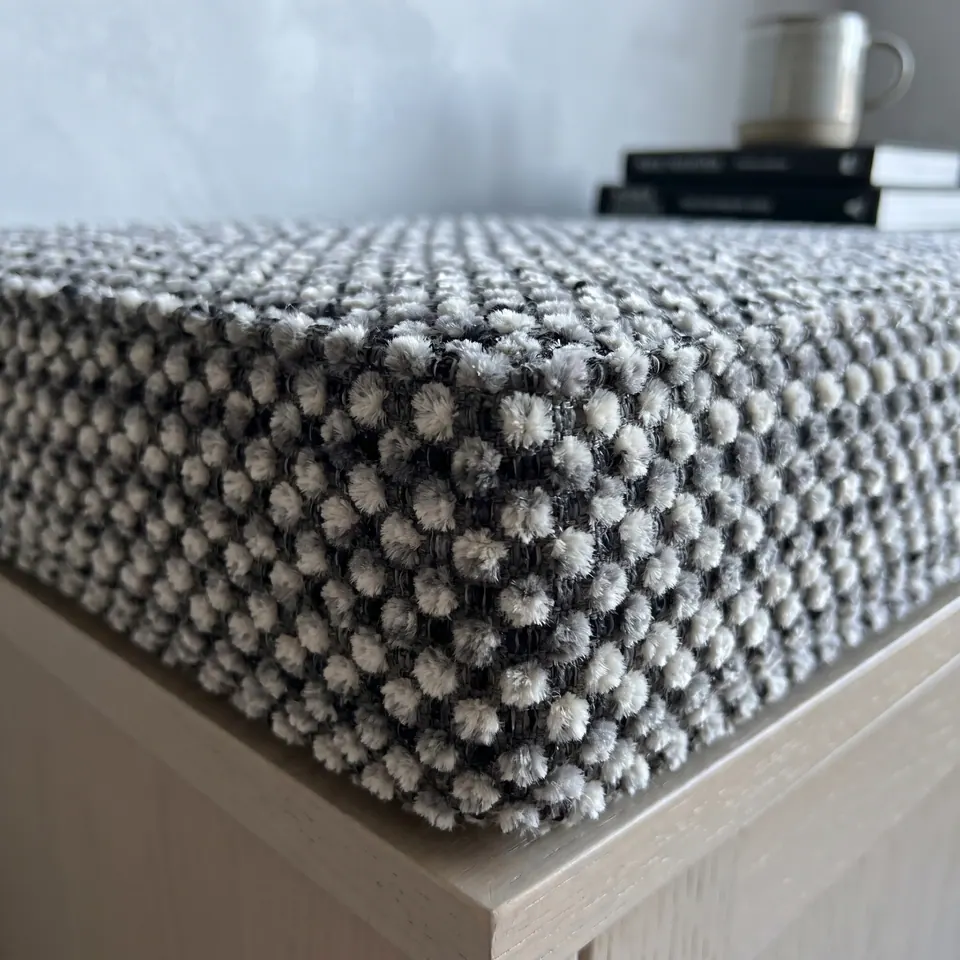
Each family bends light its own way. Velvet has direction, so an off-white can read beige or darker from one side of the room. Corduroy ribs catch raking afternoon sun. Bouclé and teddy scatter it into soft shadow. The linen-look weave stays flat and even, the easiest to match to a paint chip, while real linen reads a little chalky and alive with slubs.
Daylight never lies; your screen sometimes does. Order swatches, hold them where the cushion will live, and look in the morning and again at dusk. The swatch method and screen versus daylight Patterns walk you through it.
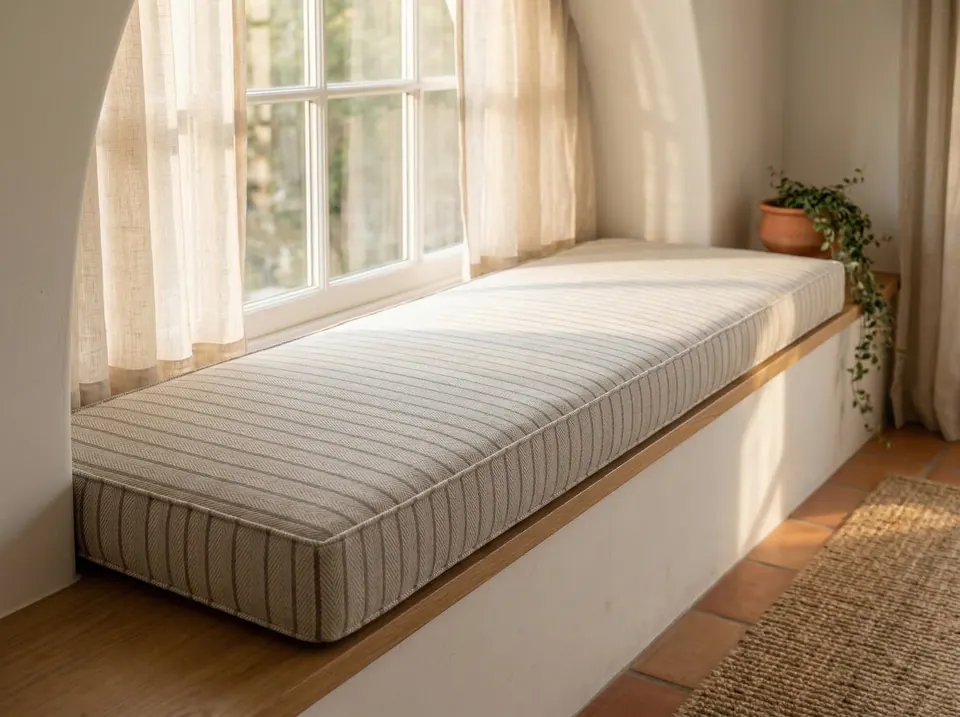
A striped bench and a 55-inch roll
An interior designer in the US ordered a bench cushion 32 x 57 1/2 in (81 x 146 cm), 4 in (10 cm) thick, in a black-and-white striped cotton that is 98% cotton, with piping. The request: stripes running side to side.
The stripes arrived running front to back. The workshop explained why. The roll is about 55 in (140 cm) wide, and turning the stripe the long way on a 57 1/2 in top would have forced a seam through the middle of it. Once the designer saw the choice laid out, the seamless top won.
Stripes are woven in, so their colors are fixed. Direction is the one thing you can negotiate, and it has to be settled before the cut. More in stripe direction.
- What it taught
- Check stripe direction against the 55 in (140 cm) roll width before a long cushion is cut.
Pets, children and the sunny window
What will your cushion live with: a dog, a toddler, an afternoon sun? No fabric is claw-proof, and I won't pretend otherwise. What helps is a tight, smooth weave in a mid-tone, with covers that zip off and wash at 86°F (30°C). For a home with a small dog and a toddler, the workshop steers people to the linen-look weave or velvet and away from the cotton stripes, which stain more easily. Velvet's short cut pile gives claws few loops to catch; bouclé's loops give them plenty. A pet-friendly chart exists too, described under performance and pet-friendly fabrics and in the pet-friendly fabric Pattern.
A window seat has its own weather. Sun reaches the cushion through the glass every day, so turn it now and then, and choose the same fabric on both faces so it can be flipped. Anything rain can reach, and any screened porch that breathes pollen, dust and humidity, belongs in outdoor fabric. More in window seat fading and the window seat cushions collection.
Where fabric choices go wrong
- Choosing for the photo, not the life. Velvet at a messy family table, light linen in a rental, indoor fabric on a patio: say indoor or outdoor first, so the color search starts in the right chart.
- Assuming linen means 100% linen. Ask for the fiber content and check a swatch before you pay.
- Falling for a corduroy color it doesn't come in. Black, maroon, fuchsia, lilac and lavender are made in velvet or the linen-look weave instead, and dyeing corduroy isn't advised.
- Corduroy on the hardest-working seat. Its ribs can split under heavy use; for rentals and daily wear, choose the linen-look weave or velvet.
- A slick fabric on a shallow window seat with nothing to grip. Ask for a non-slip base or ties by message, and confirm them before the cushion ships.
- Deciding stripe direction after the cut. On long cushions, settle it against the roll width first.
Velvet, linen and the linen-look weave wear about equally on a window seat; the 100% cotton stripe is the family that shows the first stain.
Élodie
Buyer questions
- A common question
What fabrics can I actually choose from for a custom cushion?
The workshop's answerThree main indoor families, each with its own numbered chart of about 40 colors: linen and linen-look, velvet, and the smooth, easy-clean performance weave the workshop calls soft fabric. Teddy, corduroy, 100% cotton, 100% linen, chenille, faux leather and a separate water-repellent outdoor range are available too, and more than 10,000 fabrics can be sourced on request. Teddy costs more than velvet or soft fabric.
- A common question
Is the linen on your charts 100% linen?
The workshop's answerUsually not. The standard linen charts are blends or linen-look fabrics: the linen-look codes are polyester, the natural linen chart is described as 50% linen and 50% polyester, and another range is 50% cotton and 50% linen. They are used because they're durable, easy to clean and the best sellers. For pure fiber, ask for the separate 100% linen chart or the 100% cotton fabrics.
- A common question
What is the soft fabric made of? Is it chenille?
The workshop's answerIt's the workshop's best-selling upholstery weave: thick, durable and soft to the hand, described in most replies as a polyester-cotton blend and in earlier ones as 100% polyester. It isn't chenille and isn't 100% cotton. It wipes clean, machine washes at 86°F (30°C) and lasts for years. If you want a natural fiber, choose cotton-linen instead.
- A common question
We have kids and a dog. Which fabric cleans up easiest?
The workshop's answerThe first question back is indoors or outdoors. Indoors, the soft fabric is the top easy-care pick: durable, smooth, fine in busy rooms, and it doesn't collect dust or lint. Velvet is also easy to clean and pet-friendly, wipe-clean water-resistant charts exist, and a thick teddy was suggested for a playroom. Outdoors, use the water-repellent range. Covers wash at 86°F (30°C).
- A common question
Can I get corduroy in black, maroon or lilac?
The workshop's answerNo. Corduroy comes in a fixed, limited palette without black, maroon, fuchsia, lilac or lavender, and there are no plans to add them. An exact velvet shade may not exist in corduroy either; the workshop sends the full chart and close-ups of the nearest codes. For those colors choose velvet or soft fabric, which have far wider ranges. Dyeing corduroy isn't recommended.

Have it made
Measured it? Have Élodie’s workshop make it
Color is easier to settle in a conversation than on a screen. Tell the workshop about the room and the light it gets, and the fabric choice follows. — Élodie
Leave your details and the workshop will call you to confirm measurements, fabric, foam and piping. No prices, dates or payment on this page: it is a request, not an order.
More fabric questions, briefly
Which cushion fabric type is the most durable?
All the indoor families are upholstery grade, and velvet, linen and the linen-look weave wear about equally. For the heaviest daily use choose the linen-look performance weave, pick velvet over linen, and use the outdoor range wherever the cushion can get wet. The 100% cotton stripes are the least hard-wearing.
Do the different fabric families cost the same?
The standard indoor charts, linen-look, velvet and the soft performance weave, are priced the same. Natural linen, 100% cotton, teddy, faux leather, outdoor fabrics and custom-sourced fabrics cost more, so ask for a quote if your choice sits outside the standard charts.
Can one cushion mix two fabrics?
Yes. Any families can be combined, such as a linen body with velvet piping, or one fabric on top and another on the side band. Two fabrics add a small surcharge, and each part's fabric code goes in the personalization note so nothing is guessed.
Is velvet a good choice for a covered porch?
Only under a closed roof where rain and direct sun never reach. Velvet is indoor-only and not water resistant. On a screened porch that lets in pollen, dust and humidity, or anywhere open to the sky, choose the outdoor range instead.