Striped bench cushions in cotton and ticking: which way the stripes run
Right, then. A stripe is the most honest fabric on the wall: it shows every crooked seam and every lazy cut. Here is how the workshop's woven cotton stripes behave on a cushion, and where they don't belong.
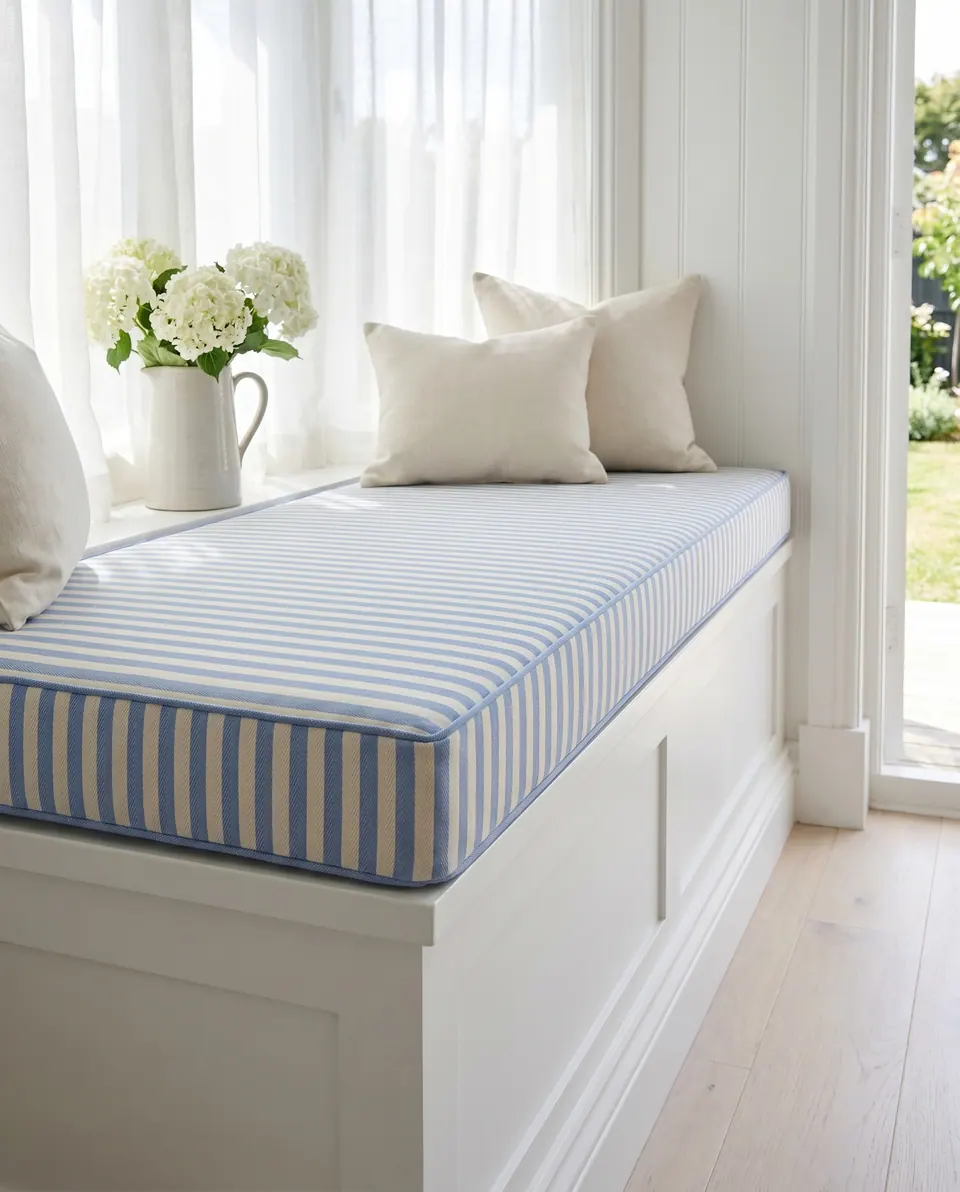
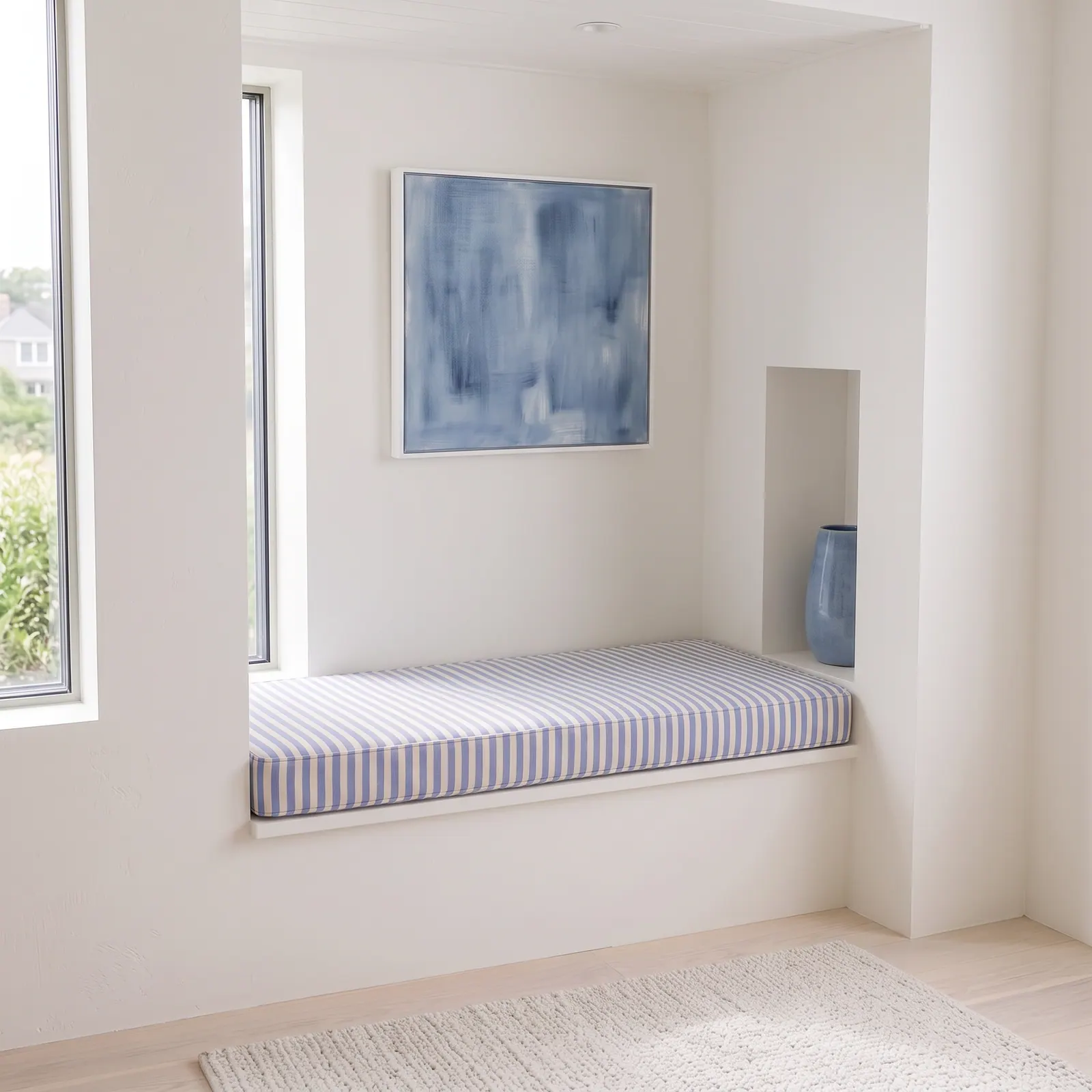
SaveA soft periwinkle stripe fills a white alcove, keyed to the blue canvas above and the vase in the niche.
Swatch stripmeasured from the photographs on this page
oatmeal#c3b9b3
pebble#a19c9c
linen#d4cecb
stone#767270
slate#504242
cream#f8f8f7
chestnut#695650
taupe#9a7c67
The quick answer
Striped cotton and ticking are woven 100% cotton cushion fabrics (one chart is 98% cotton, 2% polyester) for indoor window seats and benches. Stripes are woven in, about 1/4 in (0.7 cm) to 2-2 3/8 in (5-6 cm) wide. The roll is about 55 in (140 cm) wide, so long-cushion stripes run front to back. Covers wash at 86°F (30°C), gentle.
Swatch book · 6 cards
The swatch book
Swatch cards photographed in daylight. Open any card to zoom into the weave. Swipe or scroll sideways for all of them. Screens shift color, so a sample in your own light is the final word.
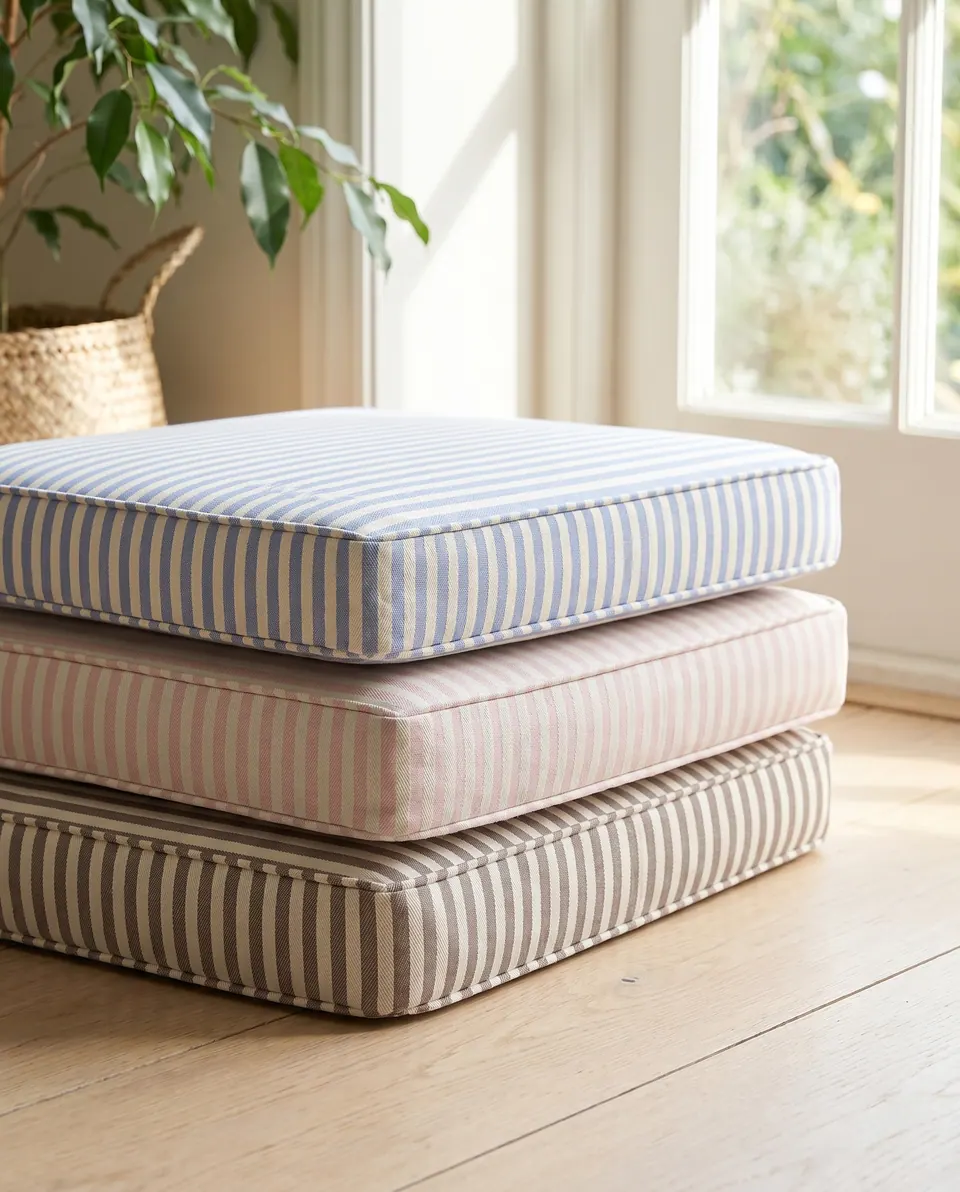
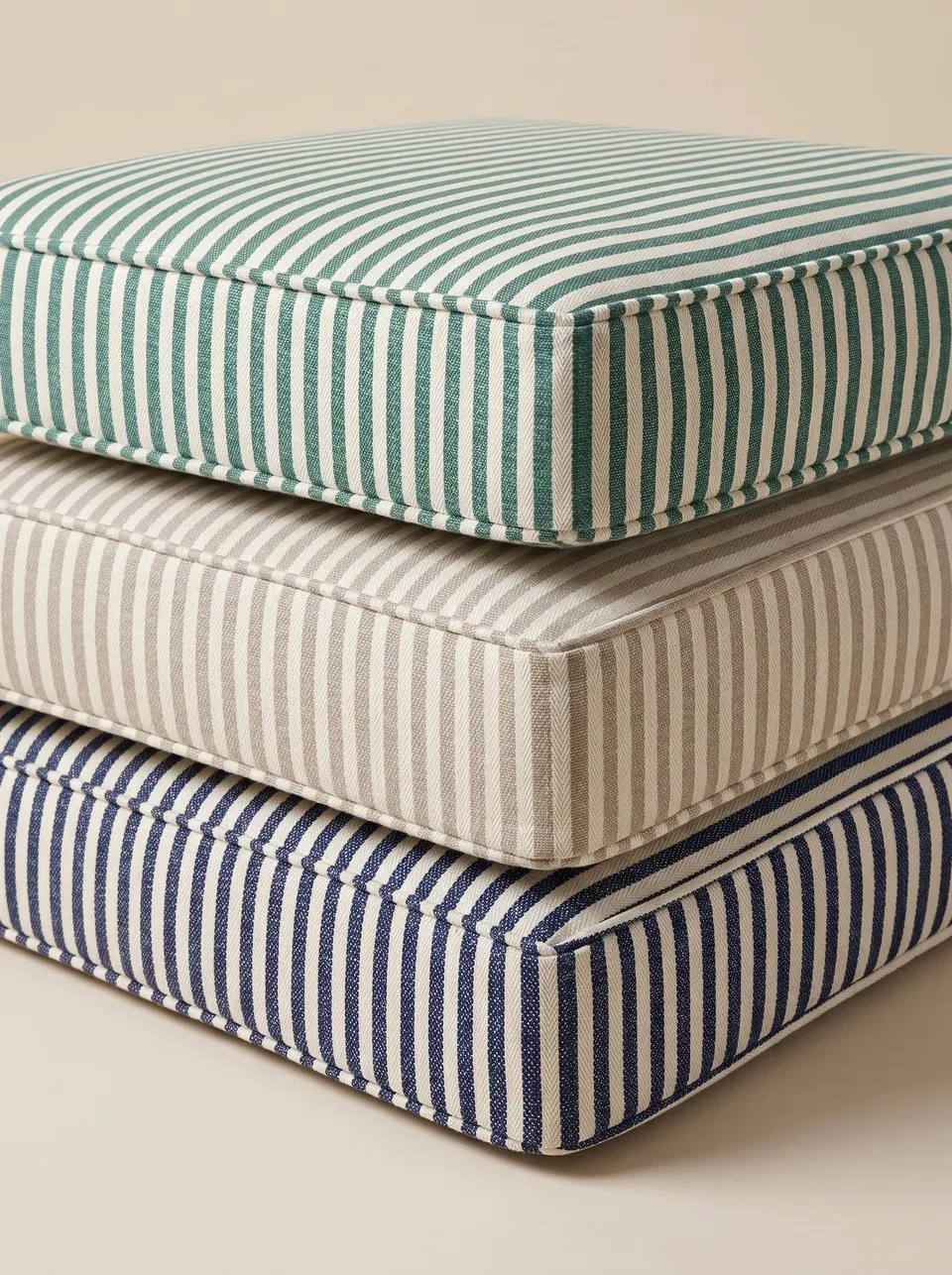
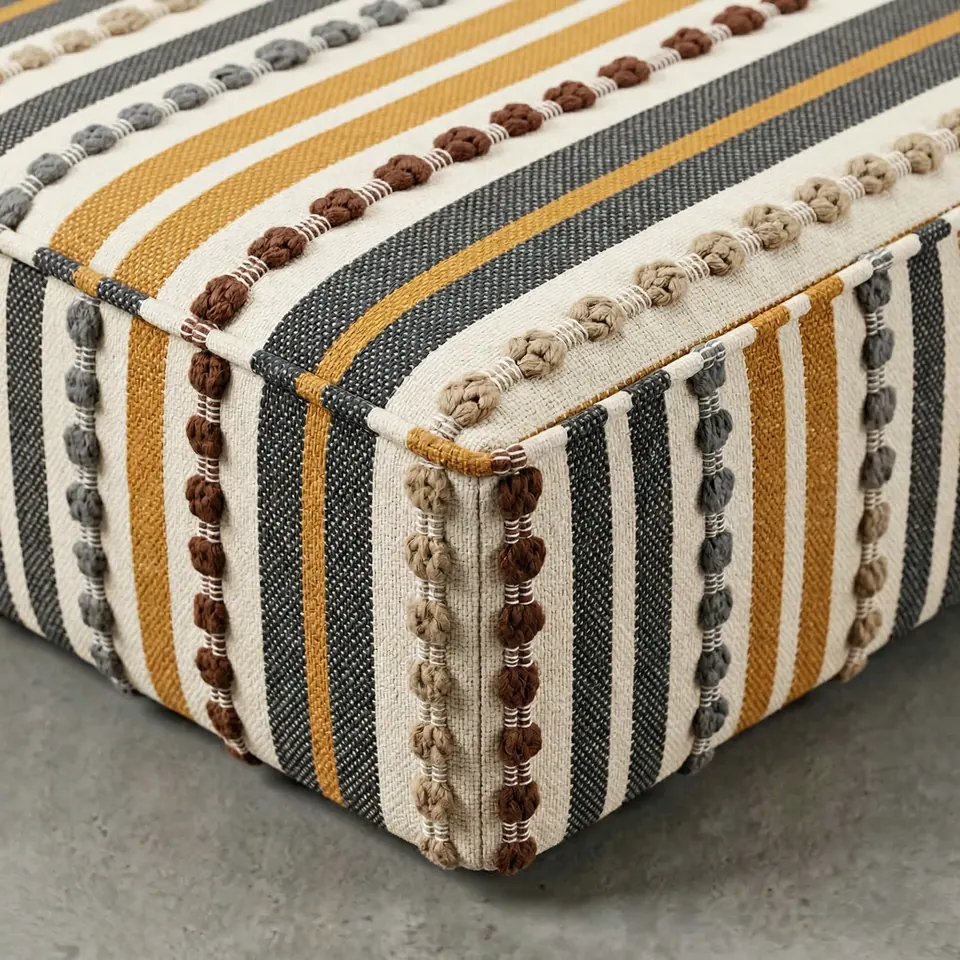
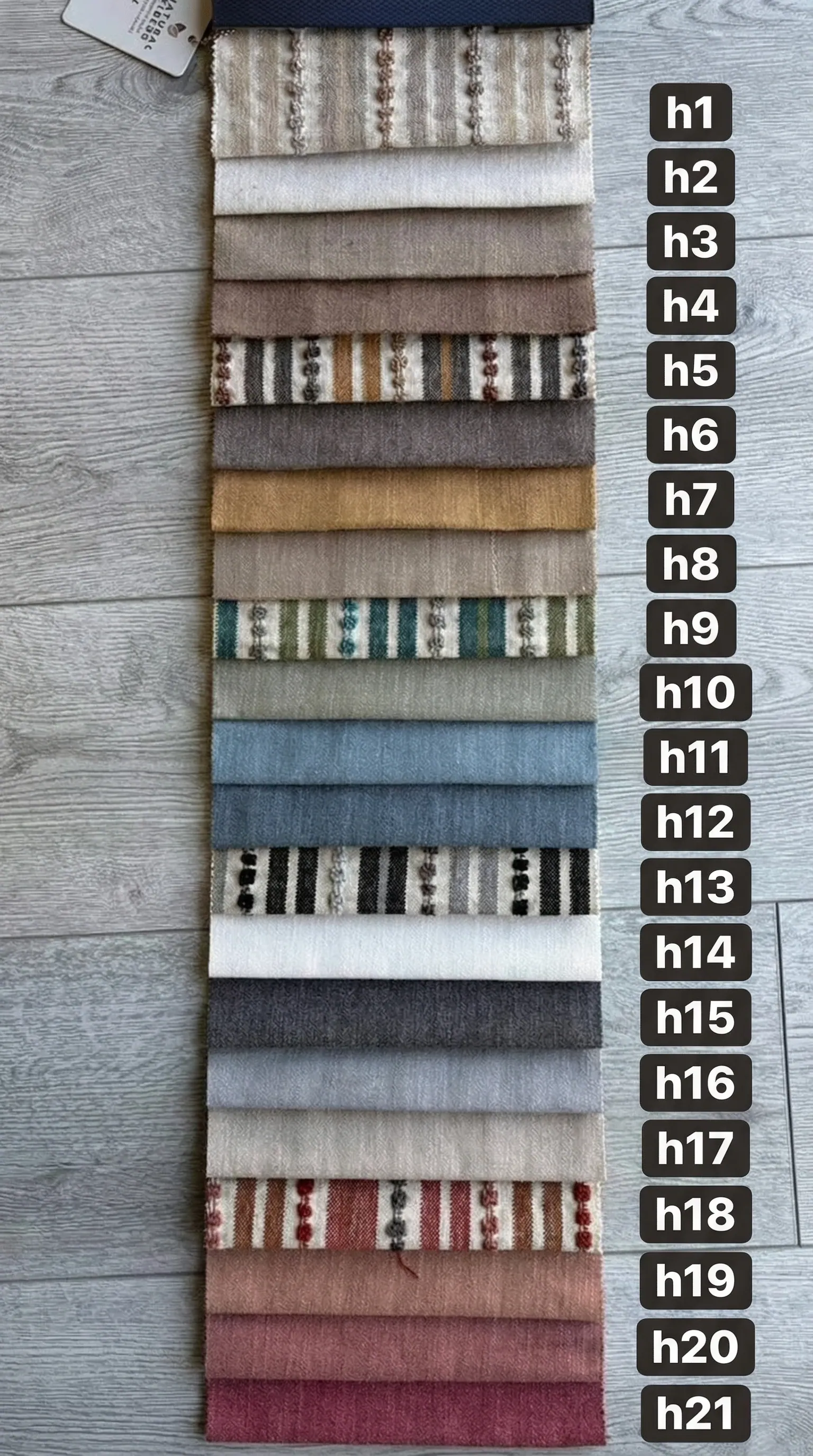
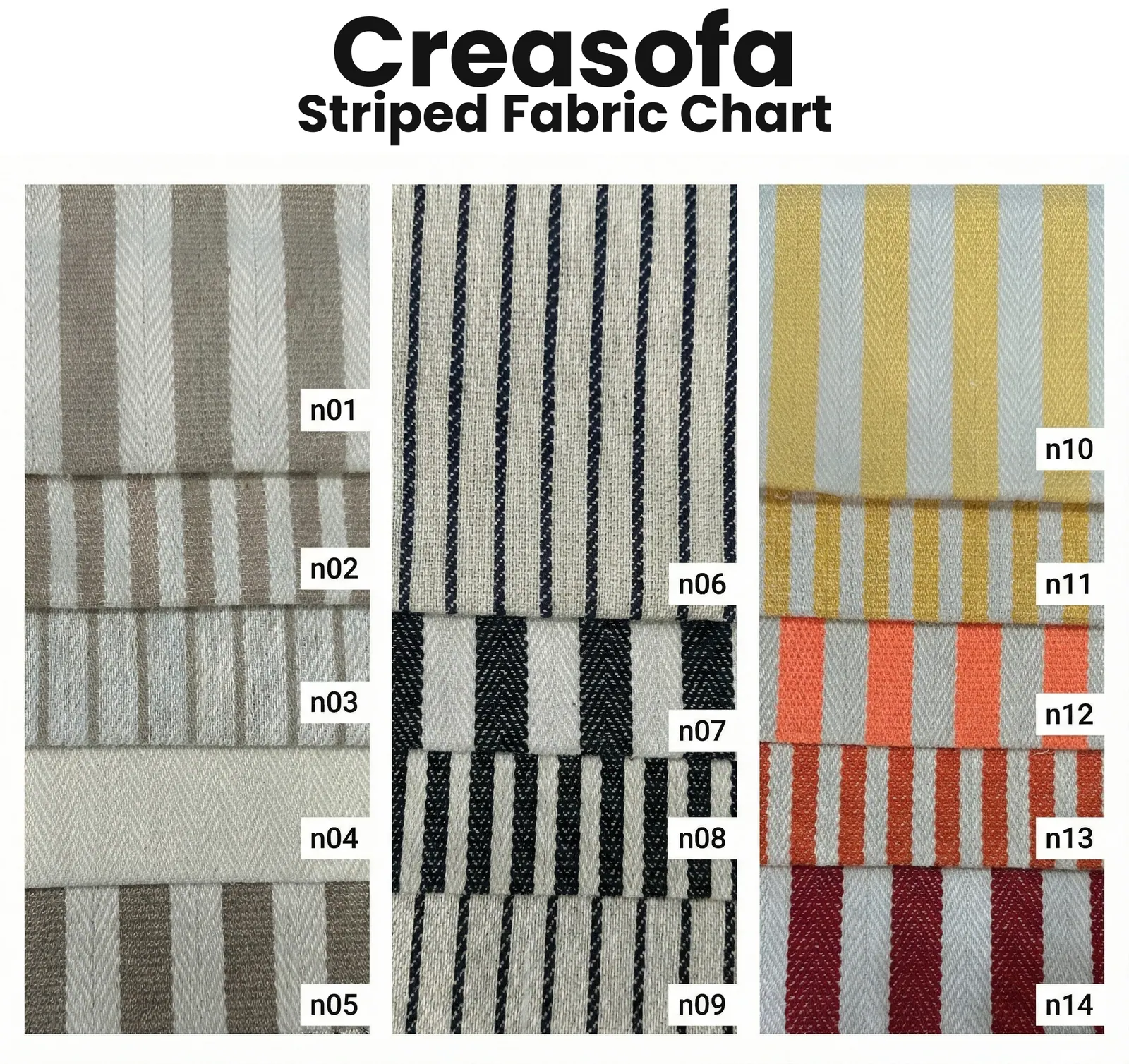
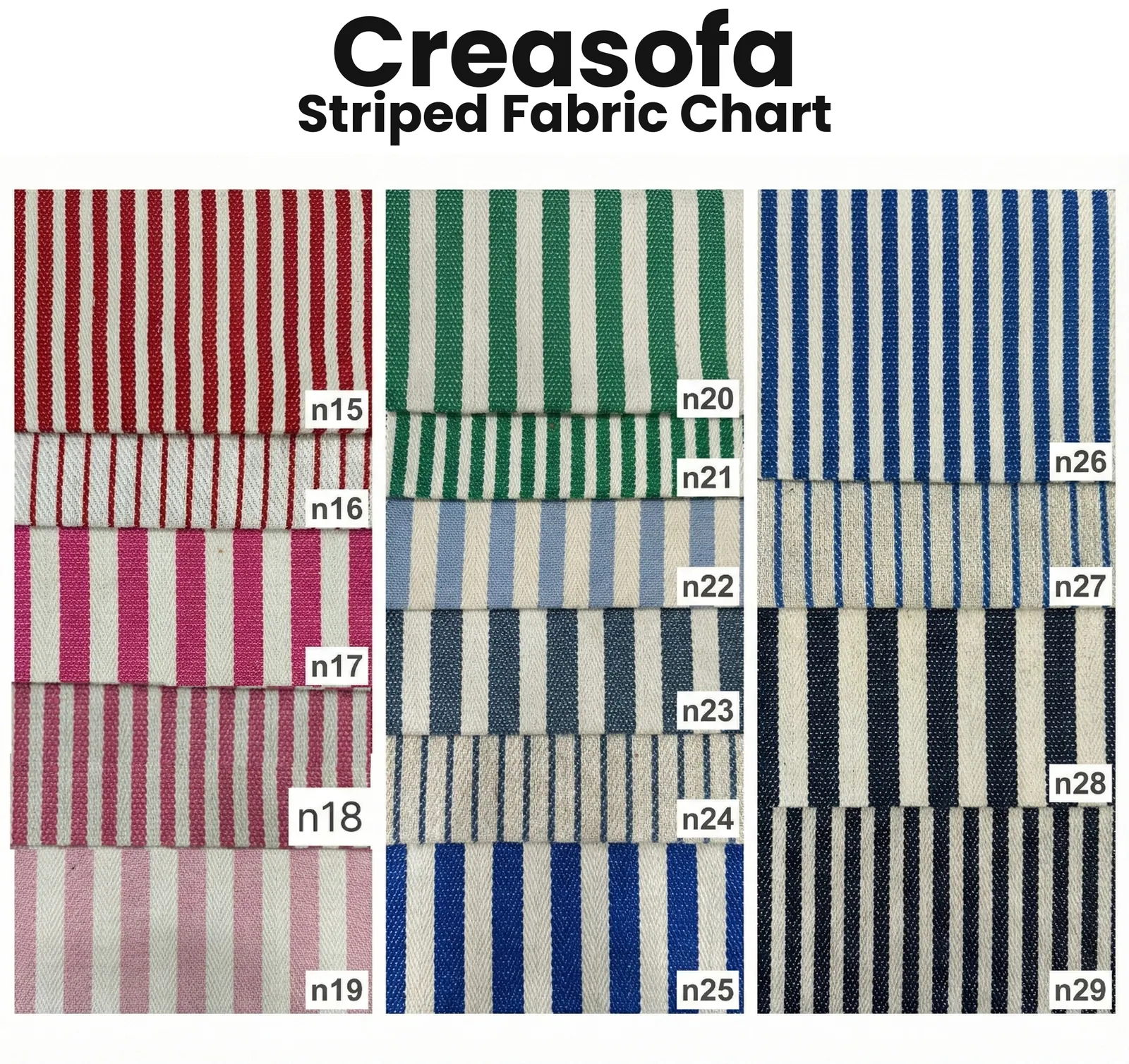
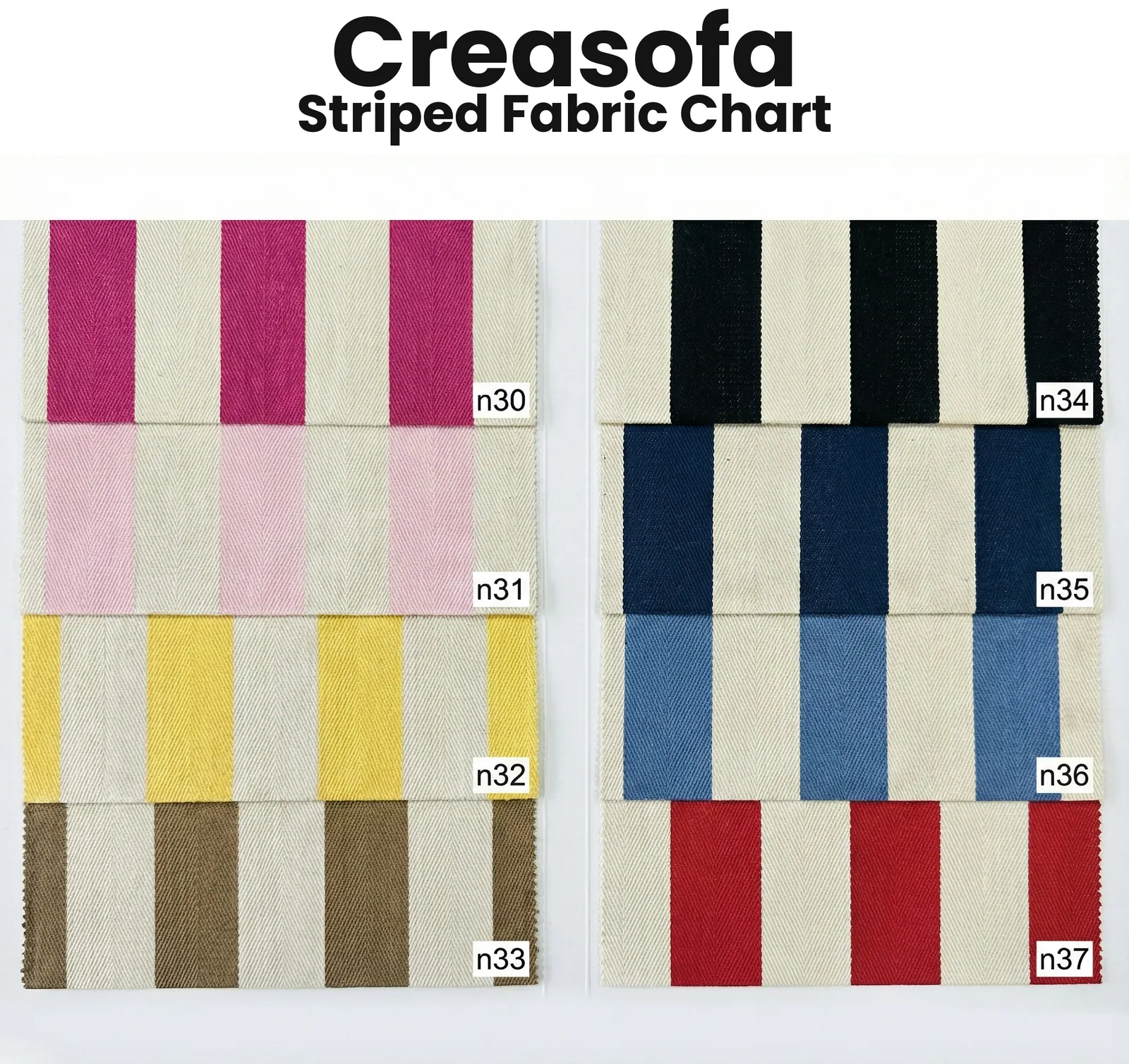
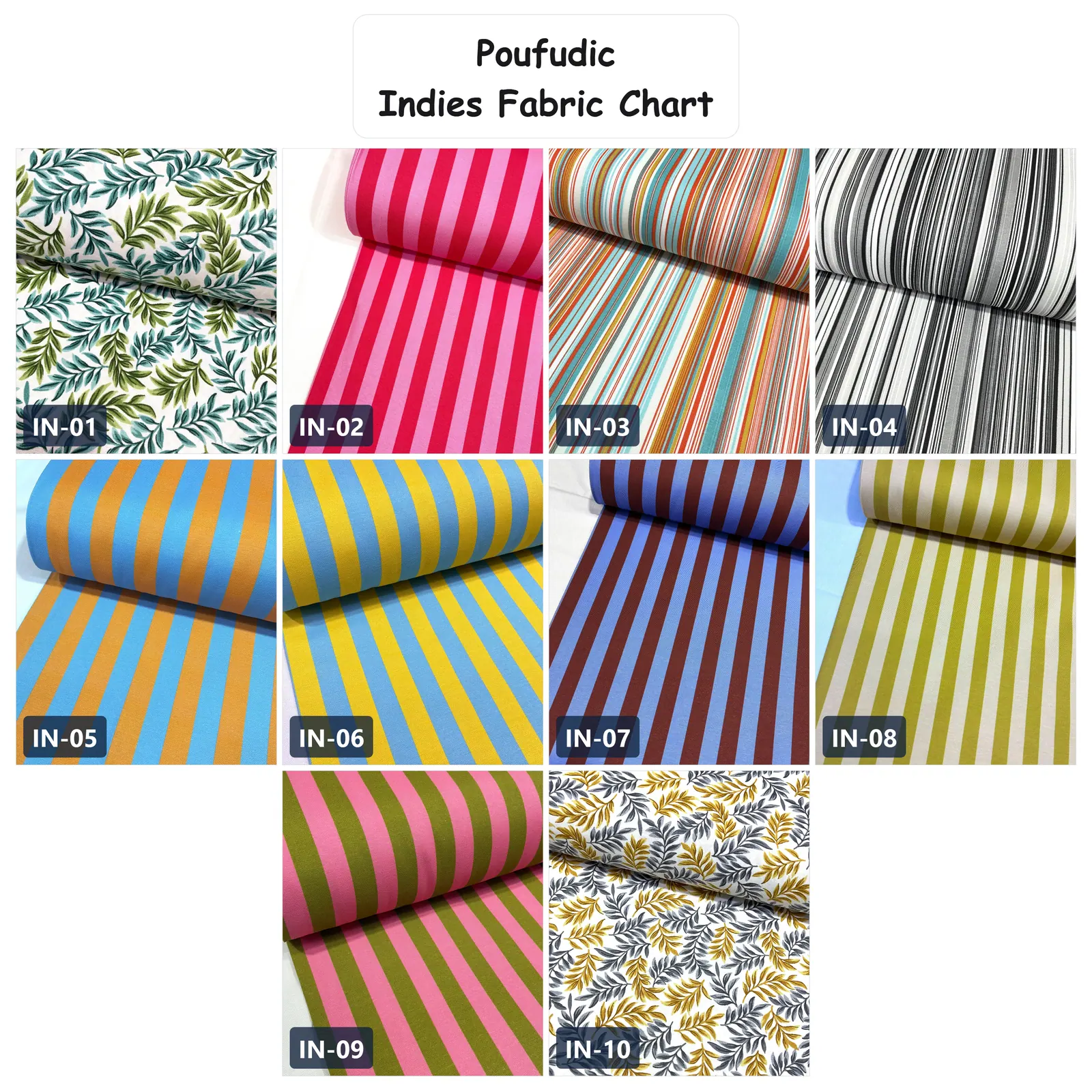
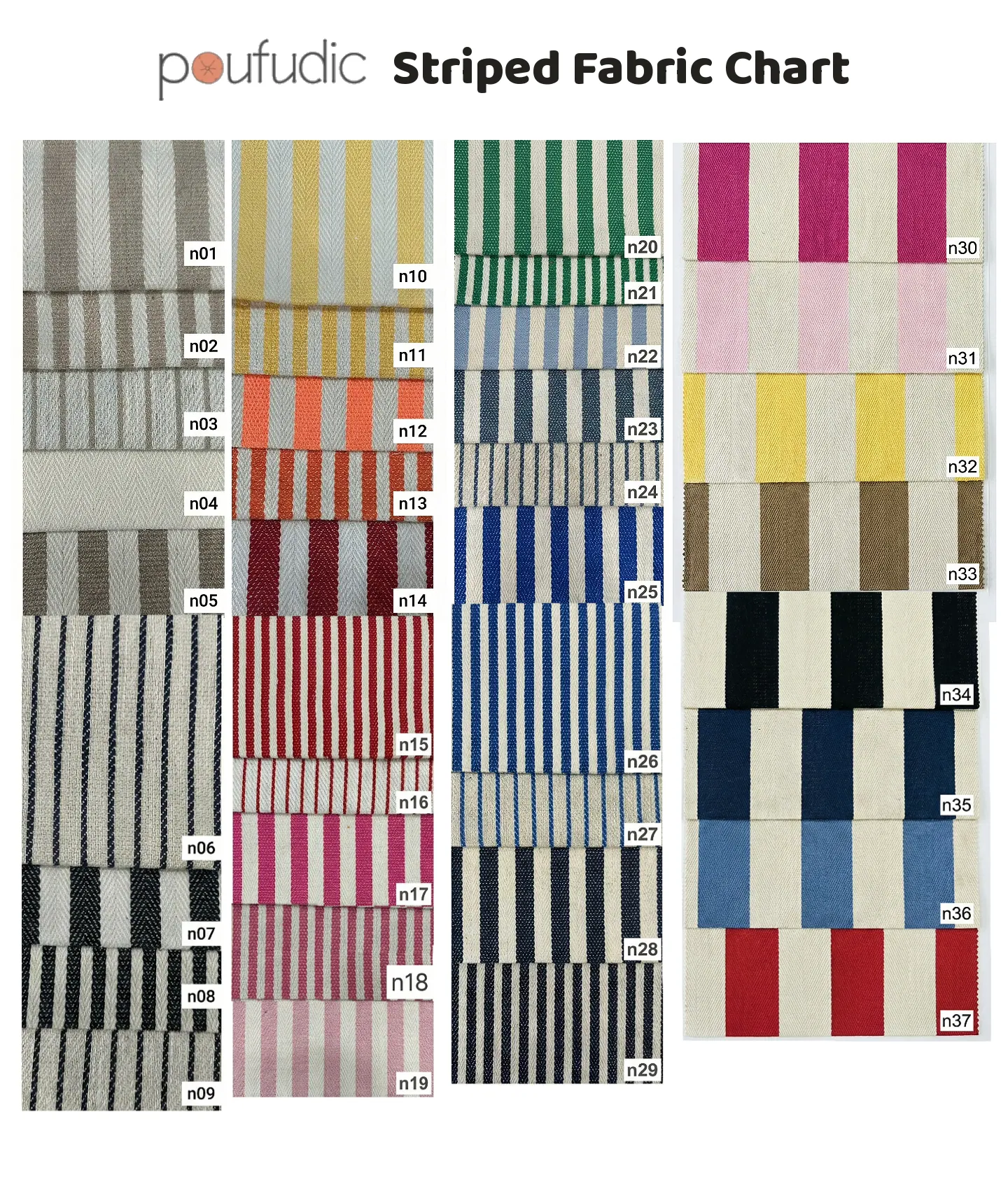
SaveThe full cotton card, with plain solids beside knotted stripes, so a body fabric and a matching piping can be picked from one sheet.SaveFourteen herringbone striped cottons, from soft taupe to bold black, mustard, coral and burgundy.SaveFifteen striped cottons in reds, pinks, greens and blues, from fine ticking to bold block stripes.SaveEight wide awning stripes on a cream ground, from candy pink and lemon to black, navy and red.SaveTen printed cotton options side by side, from multicolour pinstripes to bold awning stripes and two leaf prints.SaveNarrow ticking, classic pinstripes and wide block stripes laid out by color family for choosing a striped cushion.
Counted from the readings the masters have published in this family. Open a cushion type for its sizes and measuring.
A stripe woven in, not printed on
The workshop's stripes and ticking are 100% cotton; one chart is 98% cotton and 2% polyester. The stripe is woven into the cloth, not printed on top, so it goes clean through. It also means no custom color combinations. What's on the card is what the loom made.
Widths vary by code, from a pencil line about 1/4 in (0.7 cm) wide to a bold awning stripe of 2-2 3/8 in (5-6 cm). The cards on this page run from herringbone stripes in taupe, navy and ochre, through ticking in reds, pinks, green and five blues, to wide awning stripes from candy pink to black: 37 codes in all. A second card holds 21 plain and knotted-stripe cottons.
Next door sits cotton canvas, a plain cotton weave; a washable white canvas is an option on floor sofas.
Window seats, benches and a good book
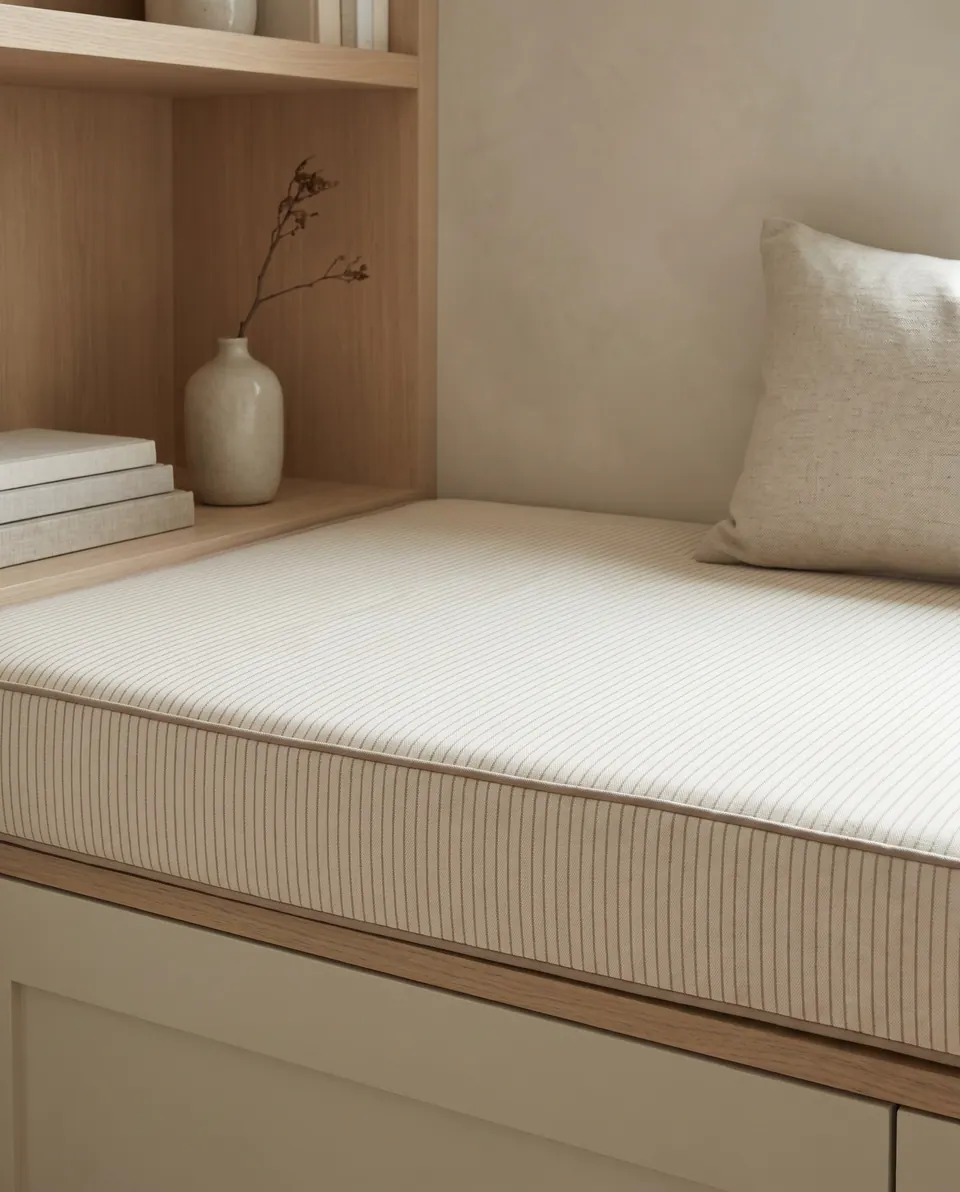
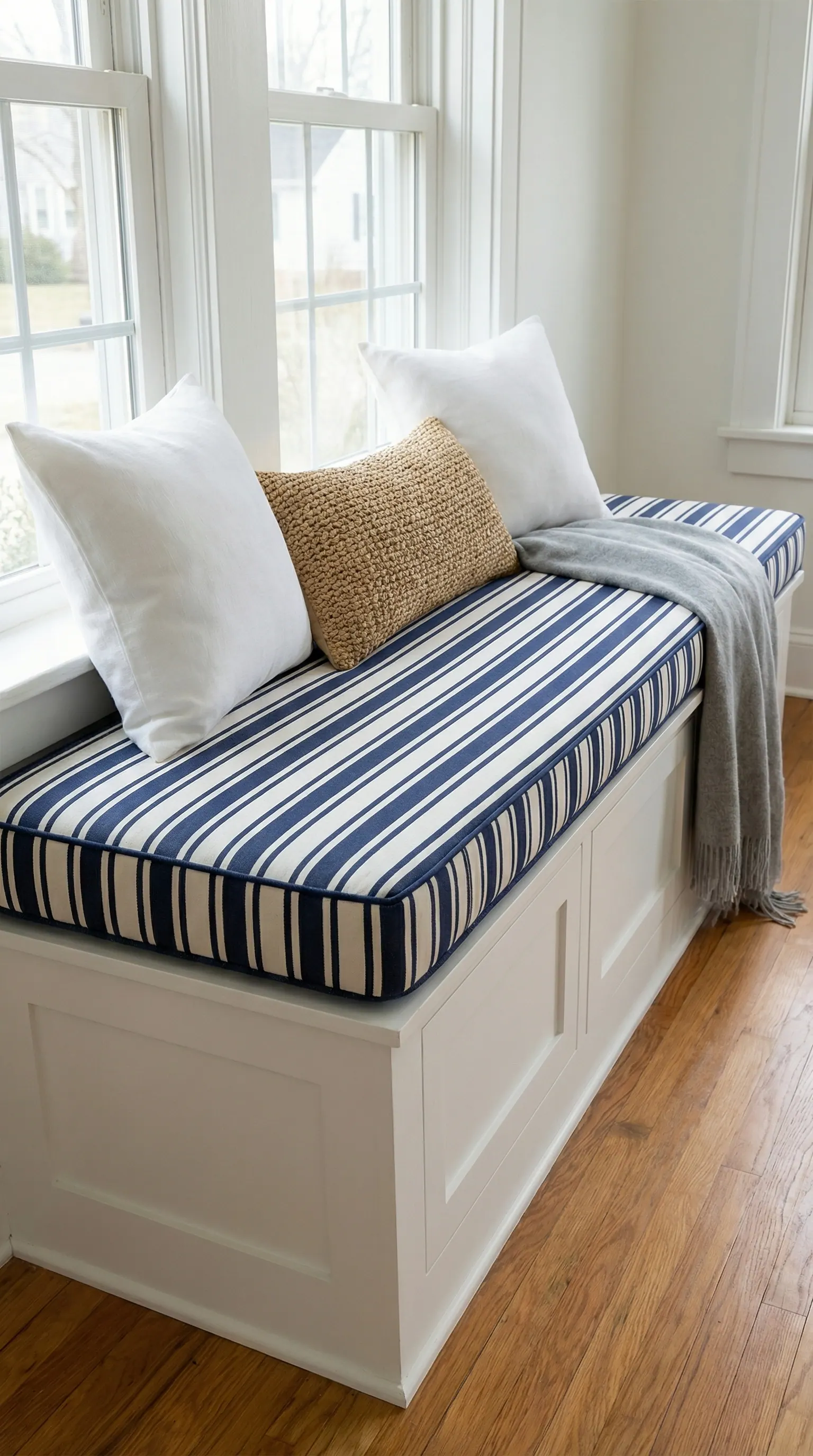
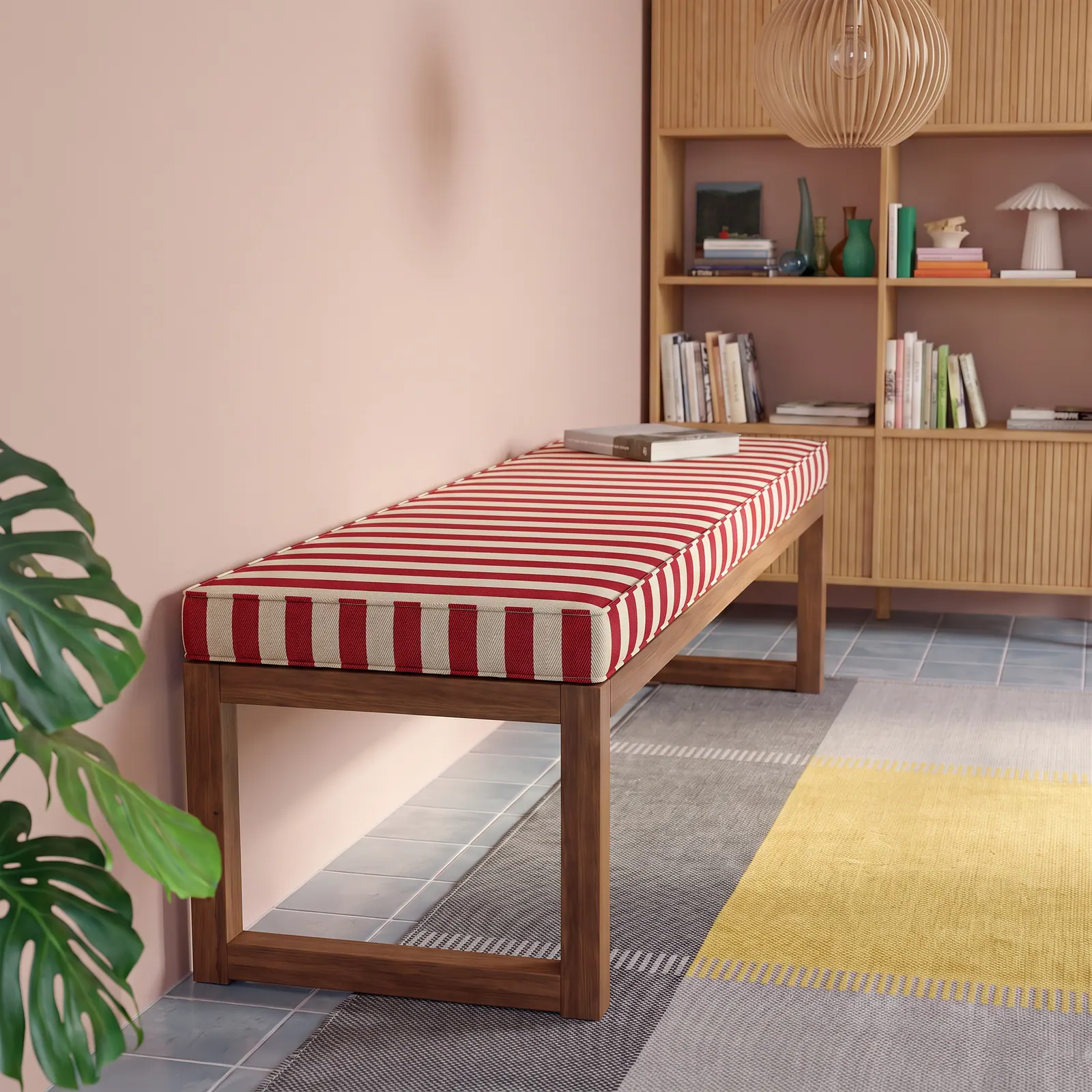
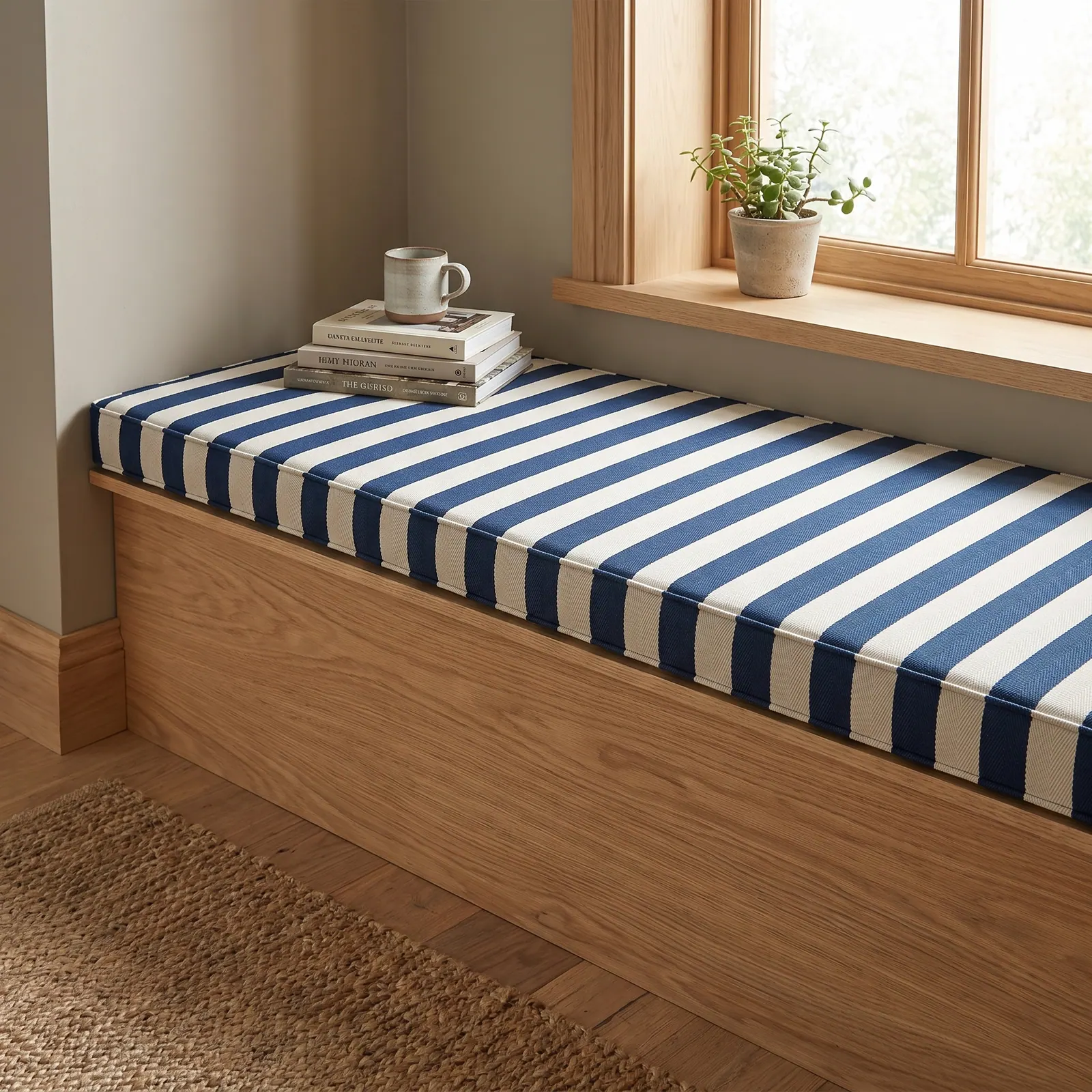
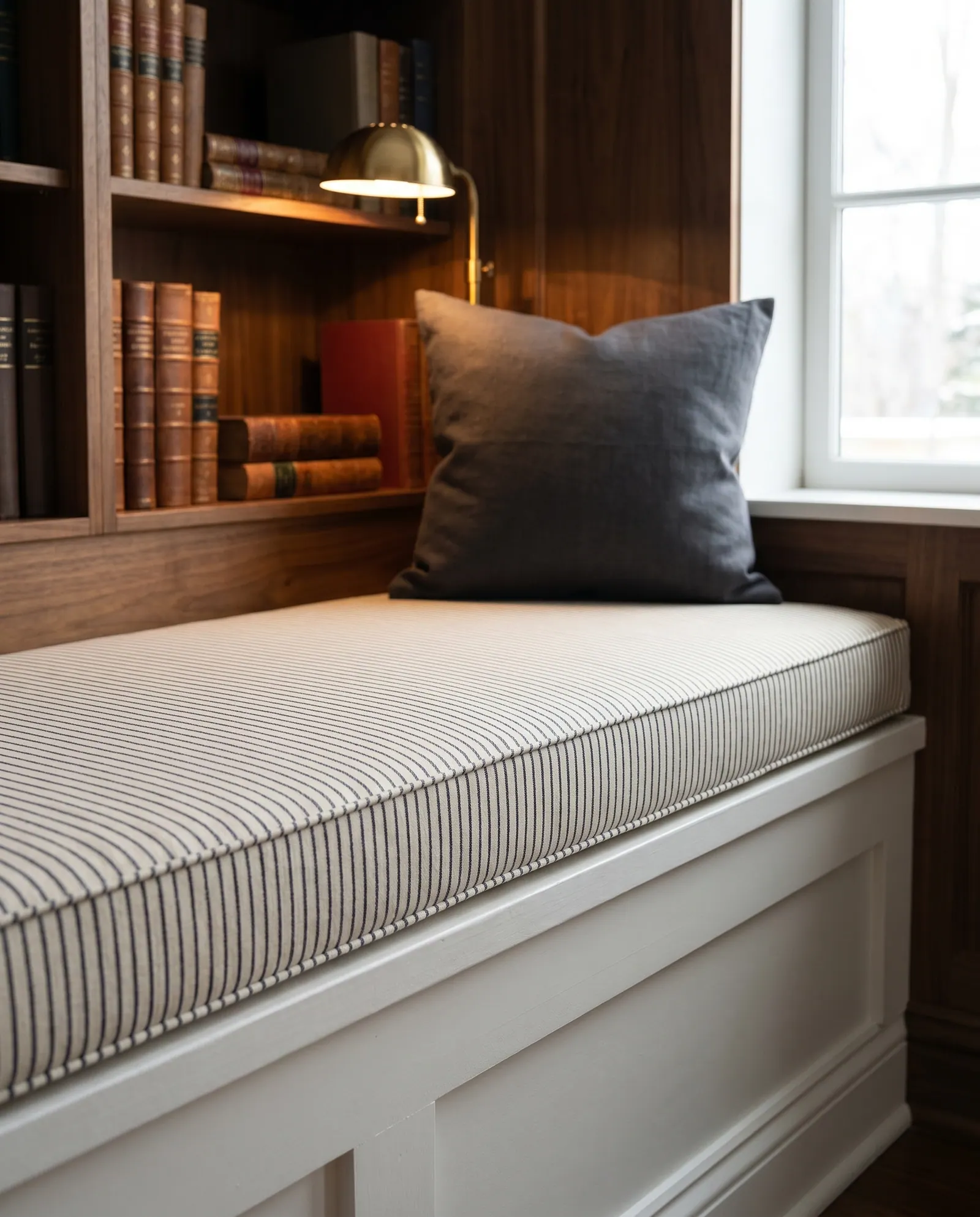
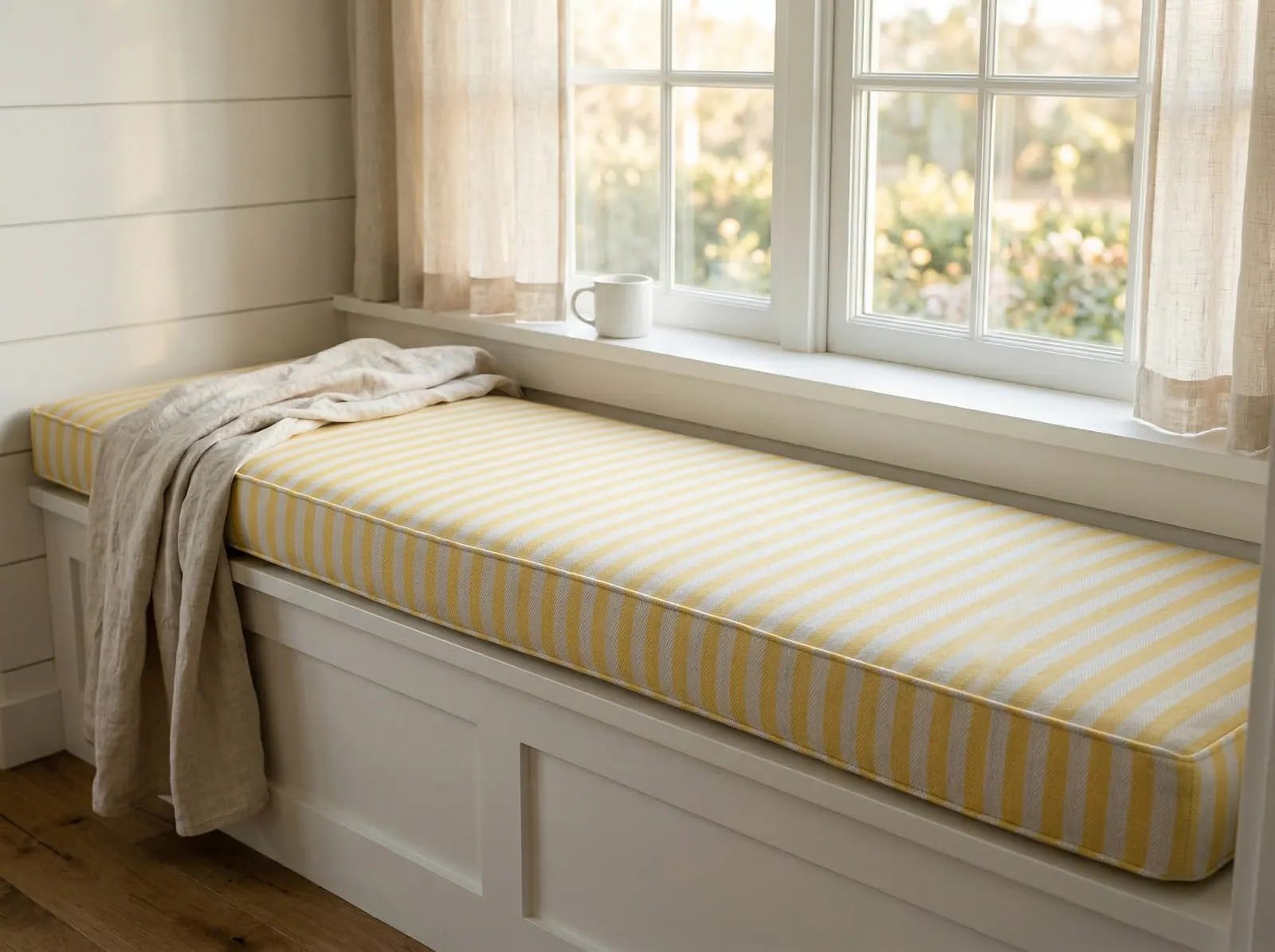
Stripes love a window seat. In the photographs here: a navy awning stripe in a sunny corner of sash windows, butter yellow against white shiplap, a pencil stripe in a walnut library nook, red on a freestanding bench against a blush wall. They're at home on a bench and in a reading nook, and a ten-pattern stripe and leaf chart is made up for floor cushions.
Now the part I tell everyone. These cottons are indoor only, and they take a stain more readily than a performance fabric. Keep them off the open porch, and think twice before a pale stripe goes into a kitchen nook where the syrup lands.
For a family bench, choose a mid-tone stripe over cream or butter yellow, keep the zip-off cover, and ask about a water-repellent inner liner where spills, pets or damp are likely. If the table sees daily battle, the performance weave is the wiser dress.
Washing a cotton stripe
Unzip the cover from the underside and take it off the foam.
Turn it inside out and machine wash at 86°F (30°C) at most on a gentle, delicate or cold cycle. The 30 is Celsius.
Mild detergent and no bleach, not even for the white stripe.
Air dry; skip the tumble dryer.
Iron on low if needed.
Button-tufted covers are sewn through and stay on; spot-clean those.
Which way the stripes run, and what to pipe them with
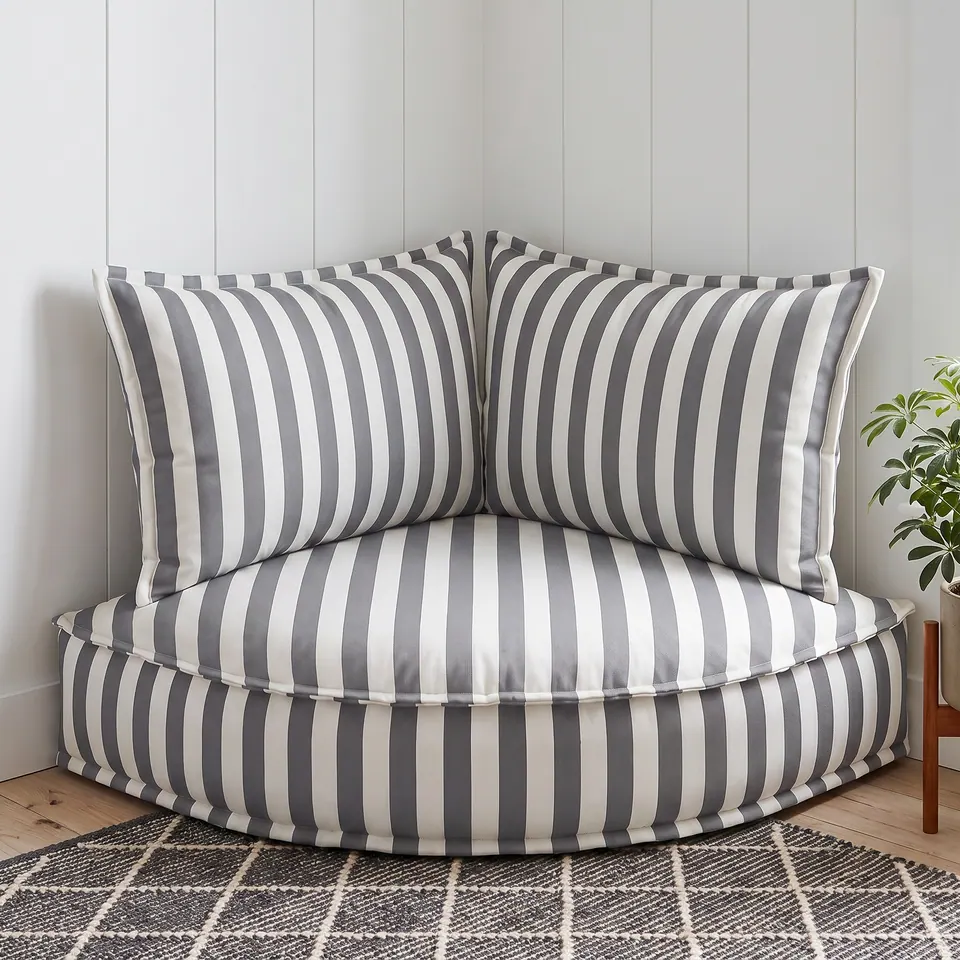
Here's the arithmetic. The roll is about 55 in (140 cm) wide, so on a long cushion the stripes run front to back, across the seat, by default. A long striped piece needs a seam, and the stripes are matched on one face only. Decide which face shows before you order. The stripe direction pattern has the drawings.
Piping can be any code from any chart, matching or contrast, and buyers have split roughly half and half. Take it from someone who learned the hard way, dear: a busy stripe piped in its own cloth loses its edge. A solid pulled from the stripe's darker line draws it cleanly.
Screens blur a fine stripe into a tint. Order the swatch and look at it in daylight; sunlight and camera angle shift a tone slightly, but it's the same cloth.
Stripes beside linen-look, the performance weave and outdoor fabric
For natural fiber without a stripe, ask for the 100% linen chart or plain 100% cotton.
In real rooms
Open any photograph large; each one has its own link and a Save button.
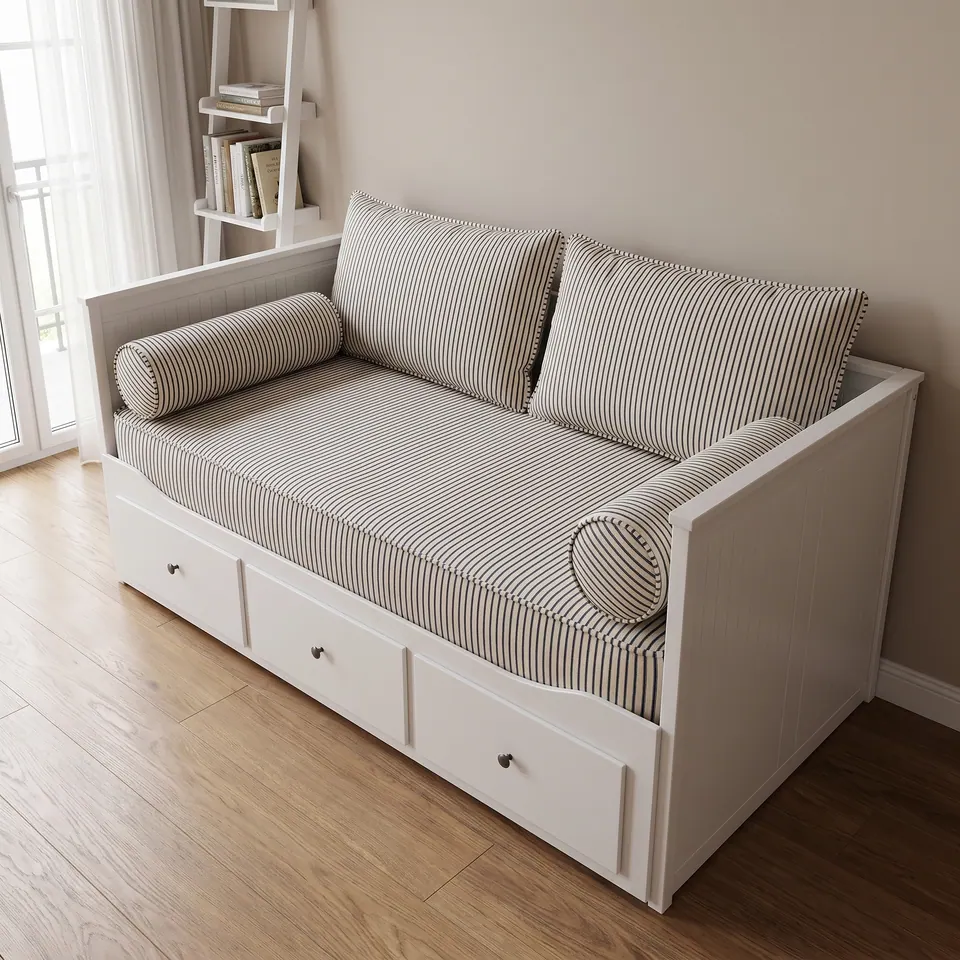
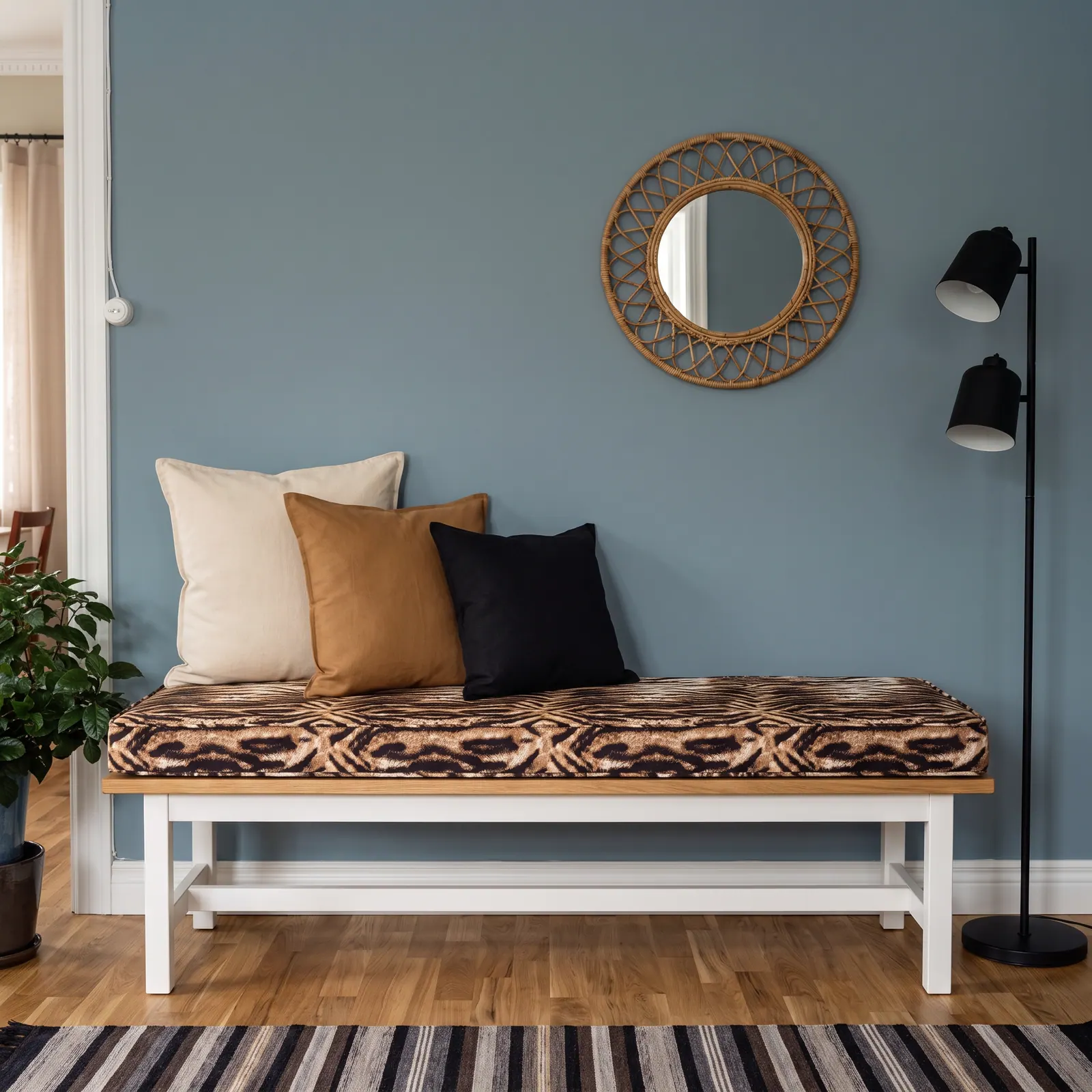
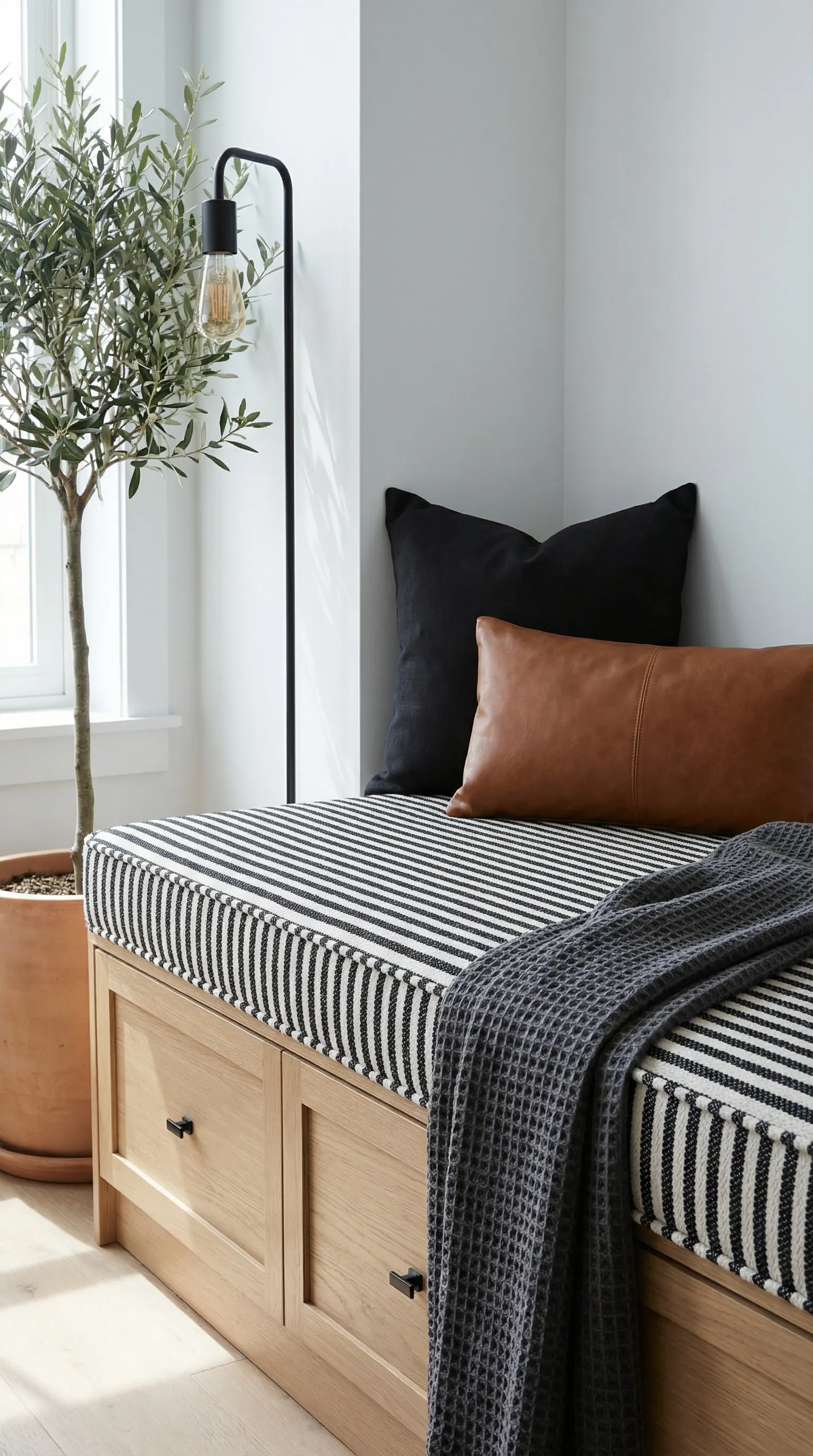
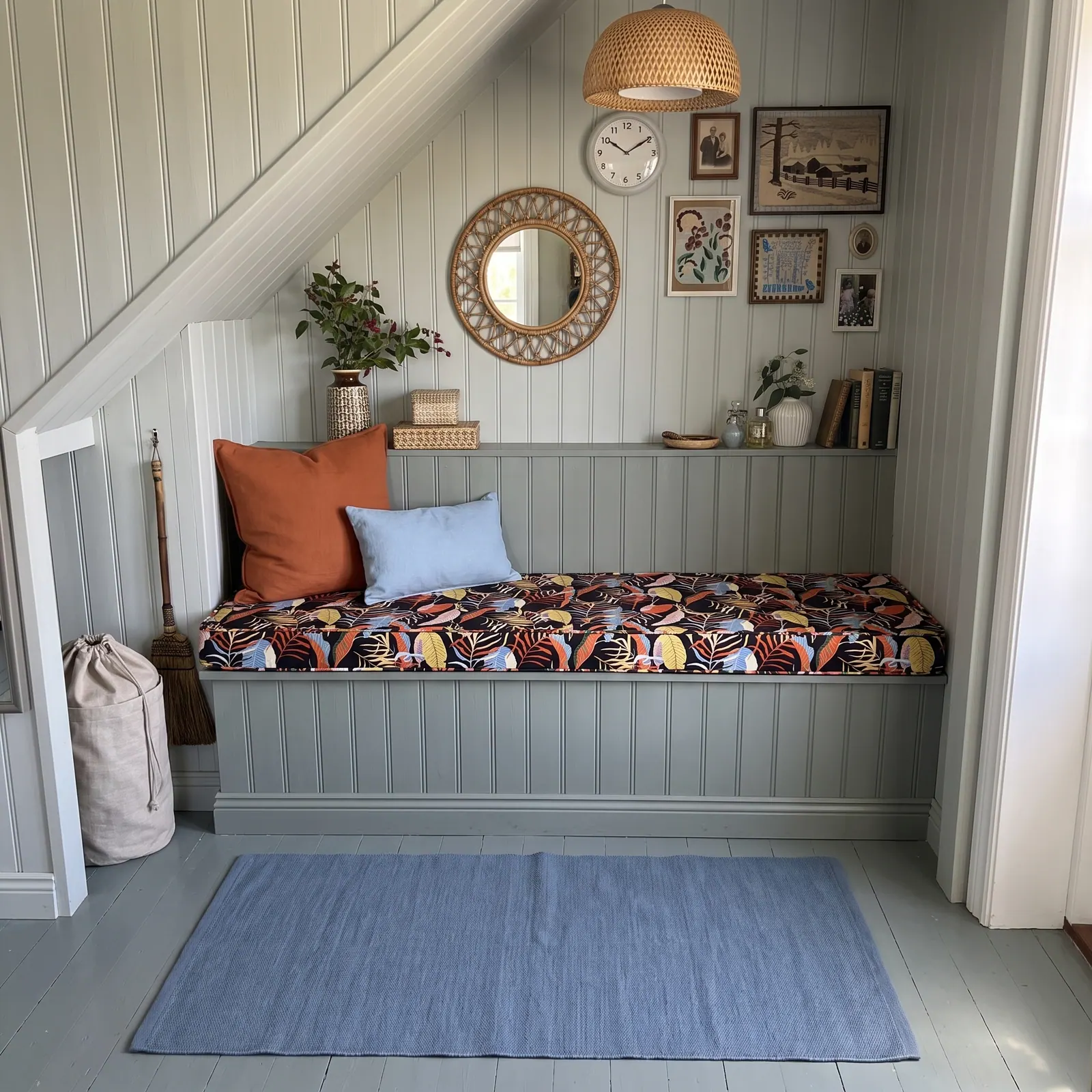
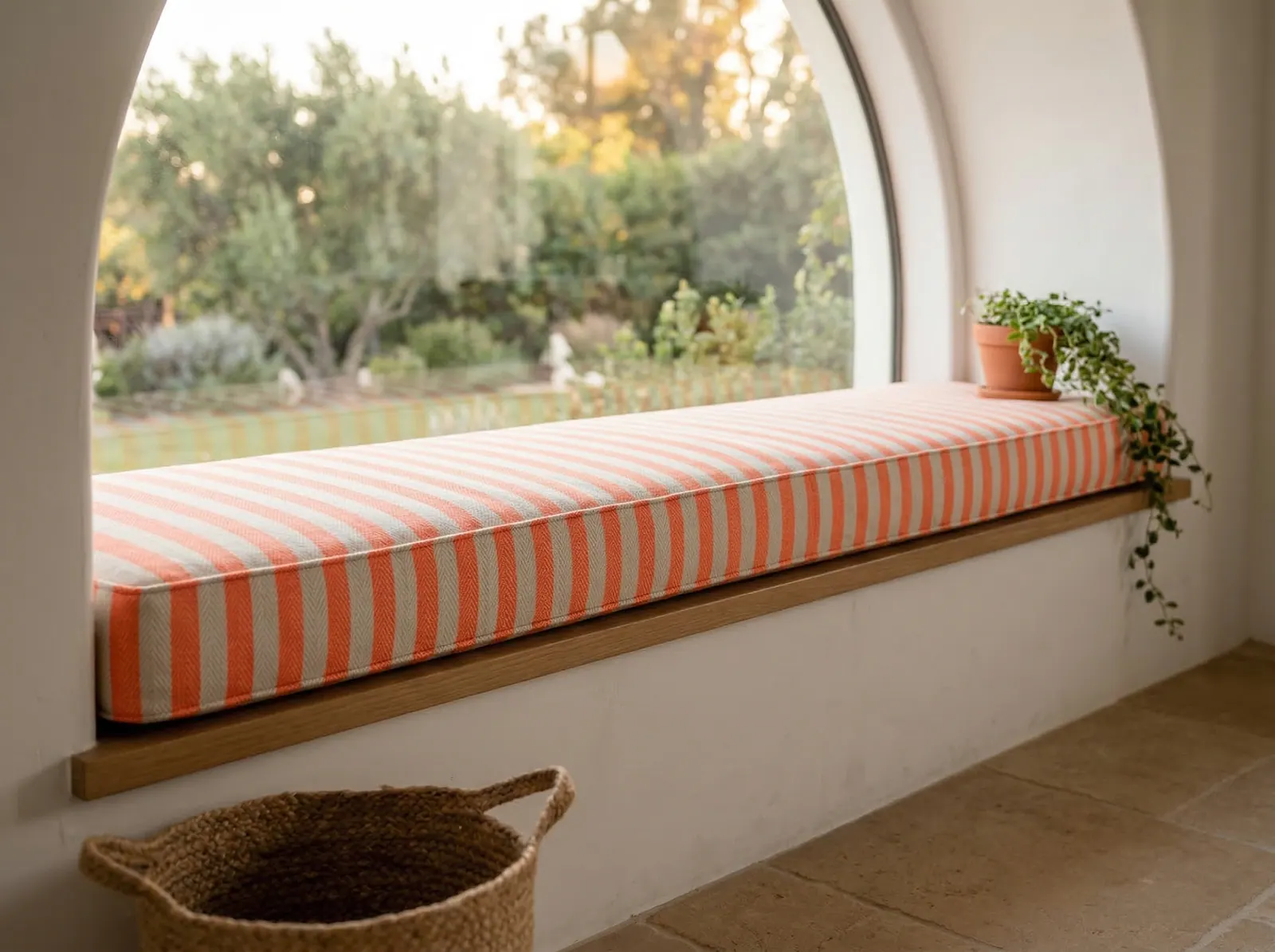
SaveBold navy stripes and a woven jute lumbar give a white corner window seat an easy Hamptons look.SaveWarm tiger tones against cool dusty blue: an opposite-color pairing that makes the print glow.SaveA freestanding bench wrapped in red stripes on every side, set against blush walls and fluted oak shelves.SaveA bold black-and-white stripe on oak drawers, warmed by a cognac leather pillow and a potted olive tree.SaveNavy stripes on a wall-to-wall oak window seat, with books and a mug marking the reading end.SaveA fine near-black pencil stripe keeps a library window seat crisp against dark walnut shelving. One charcoal pillow is all the dressing it needs.SaveThe space under the stairs became a paneled reading bench, with a leaf-print cushion at the center of its color.SaveButter-yellow stripes and morning sun make a white shiplap window seat the brightest spot in the house.SaveA coral stripe on an oak ledge picks up the sunset over the olive grove in a whitewashed arched window.
A real project
The valance the workshop doesn't sew
Buyers have asked the workshop for a valance to match the window seat beneath it. The workshop doesn't make valances. It can cut the same fabric by the yard, though, and that can ride in the box with the cushions.
So the answer has been a cut length: send the fabric code and how much you need, get a quote, and the yardage ships with the order. Others have used spare cloth to re-cover an ottoman or sew a backrest panel. The one limit is the roll, about 55 in (140 cm) wide for most fabrics and 79 in (2 m) for some, which sets the largest single piece. The yardage calculator does the sums.
Measured
Roll width about 55 in (140 cm), some 79 in (2 m)
What it taught
Order spare yardage with the cushions, quoting the fabric code and length.
Striped cushion fabric comes off a roll about 55 in (140 cm) wide, so on a long cushion the stripes run front to back and a long piece needs a seam.
Do you have stripes and other patterns, or only plain colors?
The workshop's answer
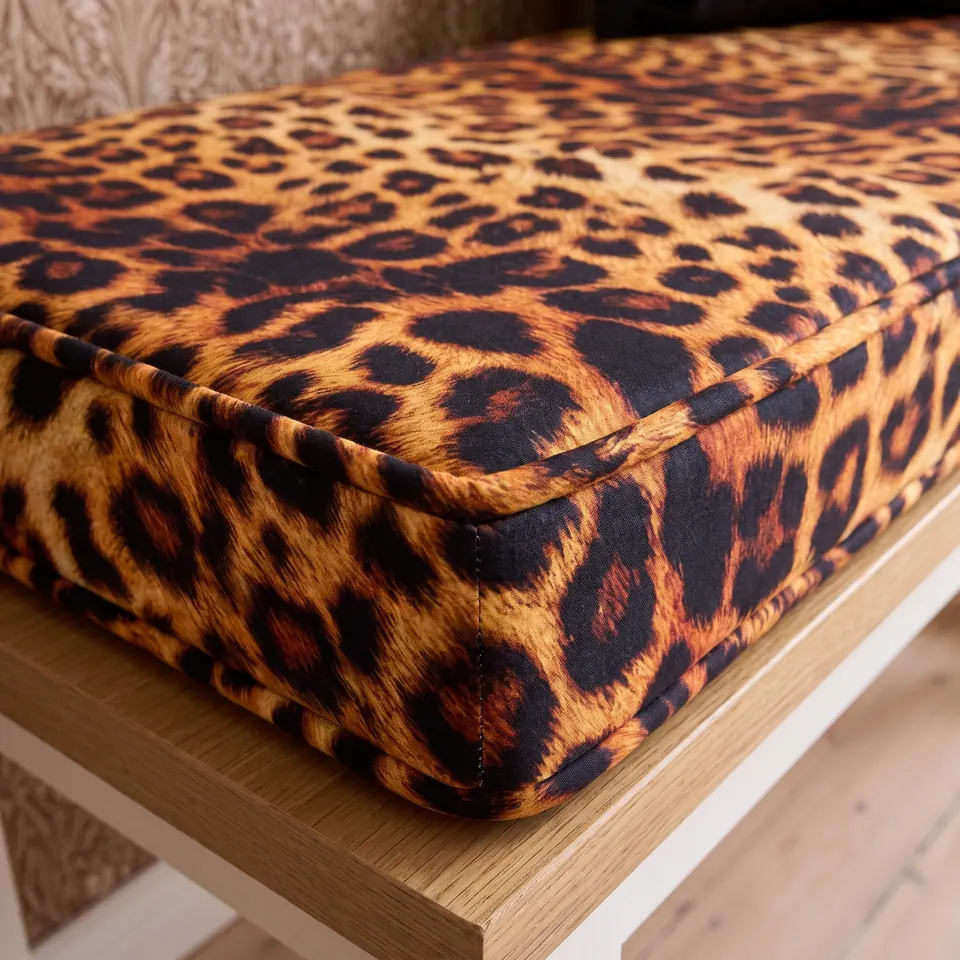
The range is mostly plain, but there are woven stripes, beige and white and black and white among them, plus oriental designs, plaid and tartan in brown, green, blue and red, and patterned velvets. Extra pattern charts come on request. Natural-fiber patterns are mostly the stripes, and a print seen elsewhere can sometimes be sourced from a photo, at a higher price.
A common question
Is your linen pure linen, or should I pick cotton for natural fiber?
The workshop's answer
The standard linen charts are blends or linen-look: the L codes are polyester, the natural linen chart is 50% linen and 50% polyester, and another range is 50% cotton, 50% linen. For pure fiber, ask for the separate 100% linen chart or the 100% cotton fabrics.
A common question
Which fabric and piping codes are on the striped cushion in your photo?
The workshop's answer
Send a screenshot of that exact photo, since listings show several cushions, and the workshop names both codes; the black-and-white stripe, for instance, is N-07. If an older photo uses codes that were later renumbered, write 'same as the first picture'. Sunlight and camera angle can shift a tone slightly, but it's the same fabric.
A common question
Can I buy extra striped fabric by the yard to match my cushions?
The workshop's answer
Yes. Samples and cut lengths come through the fabric listing, and larger pieces through a custom order link. Send the fabric code and length for a quote, and the fabric can ship with your cushions. A zippered covers-only listing also exists if you'd rather have covers made to size.
Have it made
Have it made in striped cotton or ticking — ask Maggie’s workshop
Numbers first, fabric second, piping last. Jot down what you have, and the workshop will go down the list with you, item by item. — Maggie
Leave your details and the workshop will call you to confirm measurements, fabric, foam and piping. No prices, dates or payment on this page: it is a request, not an order.
Stripe questions, answered straight
Why do the stripes on my long bench cushion run front to back?
Because of the roll. The cotton is about 55 in (140 cm) wide, so on a cushion longer than that the stripes run across the seat, front to back, and a long piece needs a seam. The stripes are matched on one face only.
Can you weave a stripe in my own two colors?
No. The stripes are woven into the cloth, not printed, and the workshop sources fabric rather than weaving it, so the combinations are fixed by the card. Choose the closest stripe, then pull it toward your room with a piping color from any chart.
Is ticking stain resistant?
Not especially. These are 100% cotton fabrics, and they stain more easily than performance weaves. For a busy family bench, choose a mid-tone stripe, keep the zip-off cover, and ask about a water-repellent inner liner where spills are likely.
How wide are the stripes on your cotton cards?
It depends on the code. The narrowest pencil stripes are about 1/4 in (0.7 cm), and the widest awning stripes run 2-2 3/8 in (5-6 cm). Order a sample to see the scale against your own seat before you commit.
Stitch straight — Maggie
Share this fabric family
Readings
Cushions made in striped cotton & ticking
Real pieces in real rooms, read by the masters for color, light and wear.

 Save
 Save
 Save
 Save
 Save
 Save
 Save
 Save
 Save
 Save
 Save
 Save
 Save
 Save
 Save
 Save