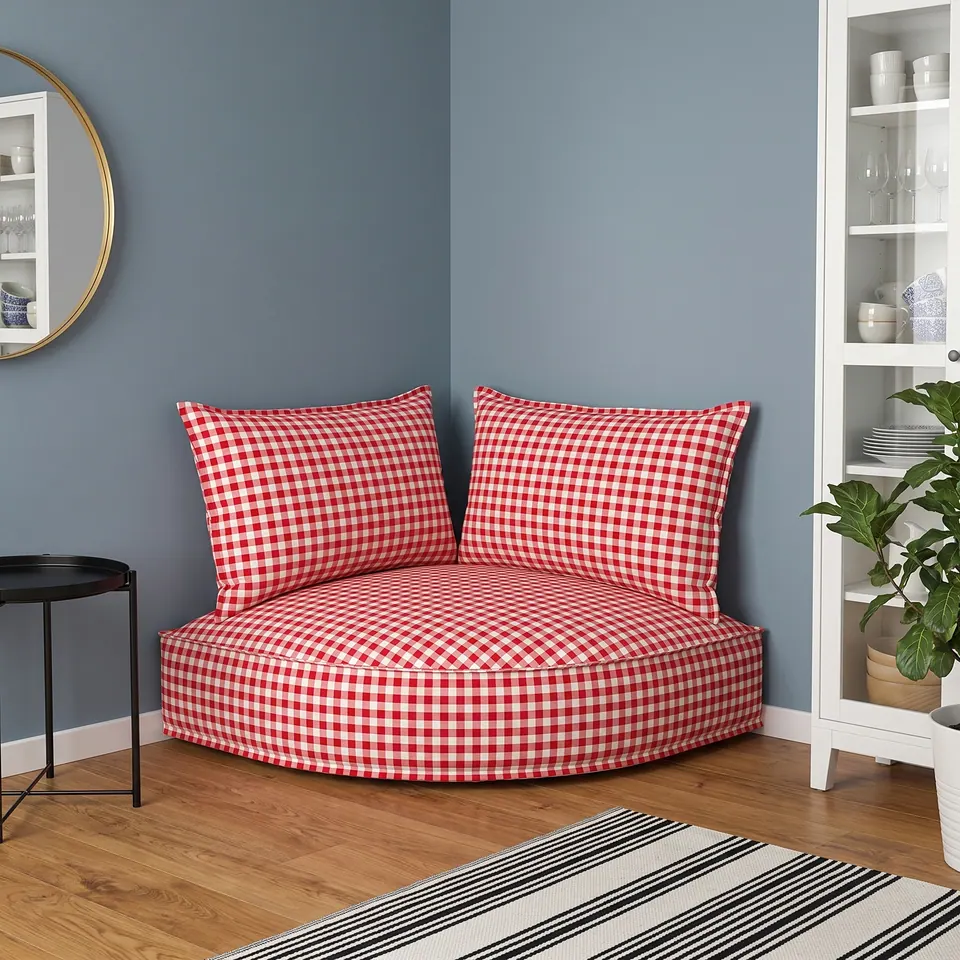
Gingham and checked linen cushions: a tidy check, honestly piped
Gingham is the most cheerful cloth on the card and the least forgiving of a lazy seam. Here is how the check behaves on a corner floor cushion, where it comes from, and why it never quite matches a solid from another chart.
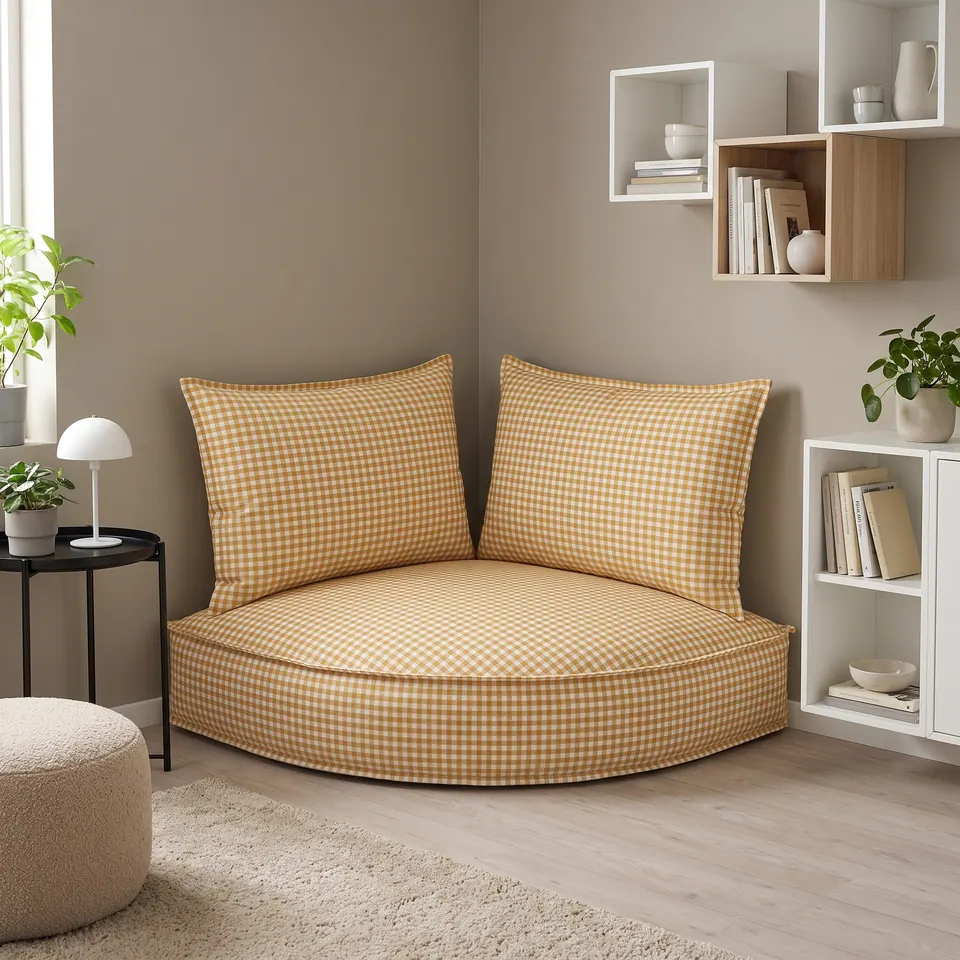
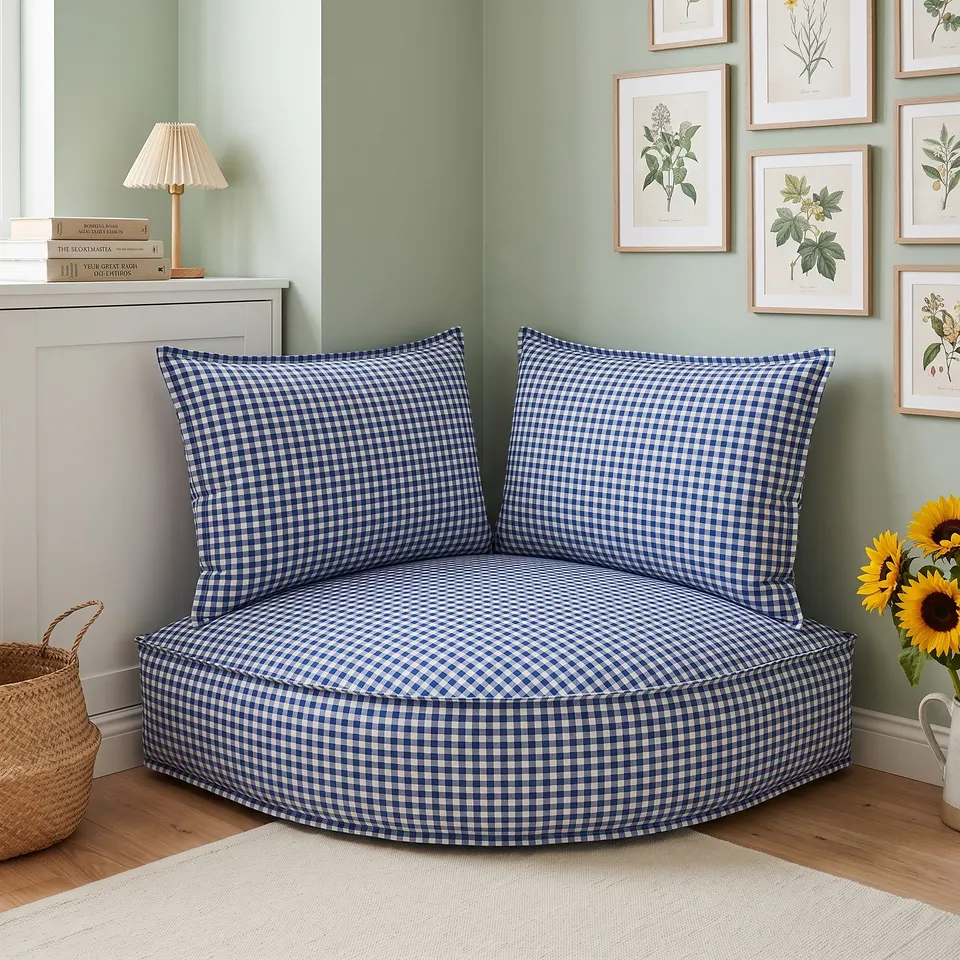
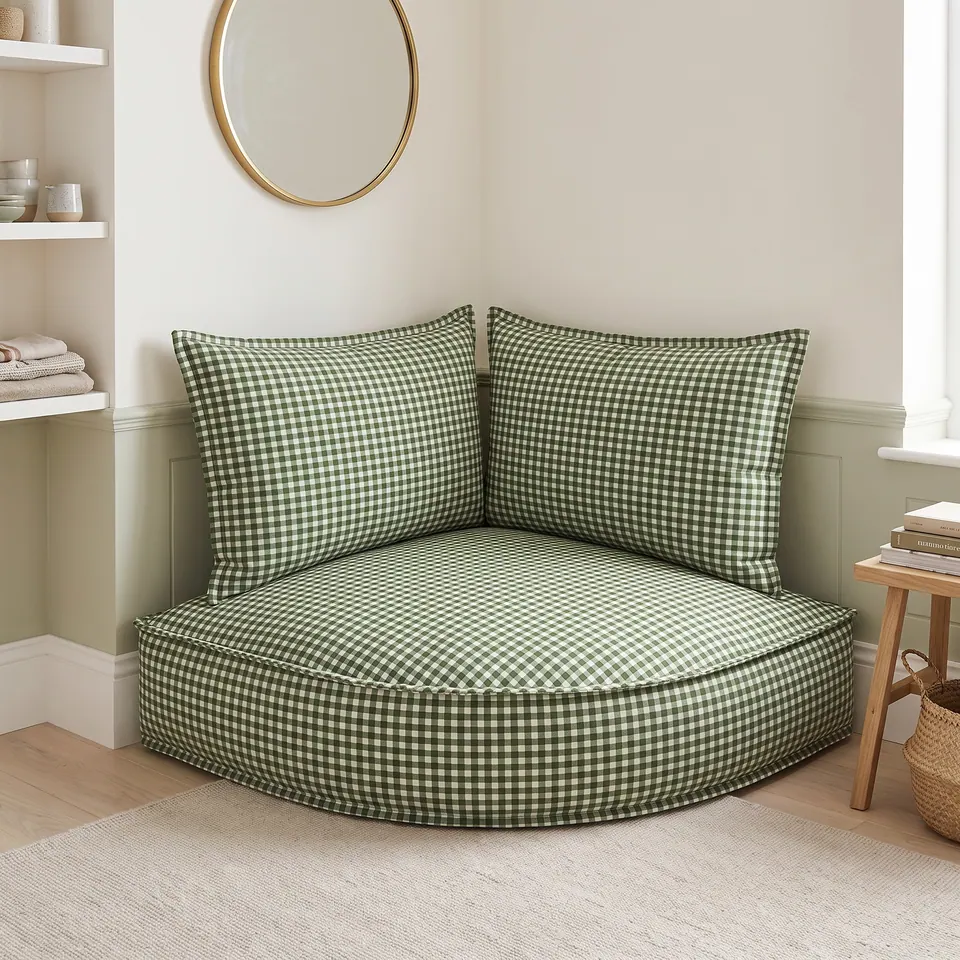
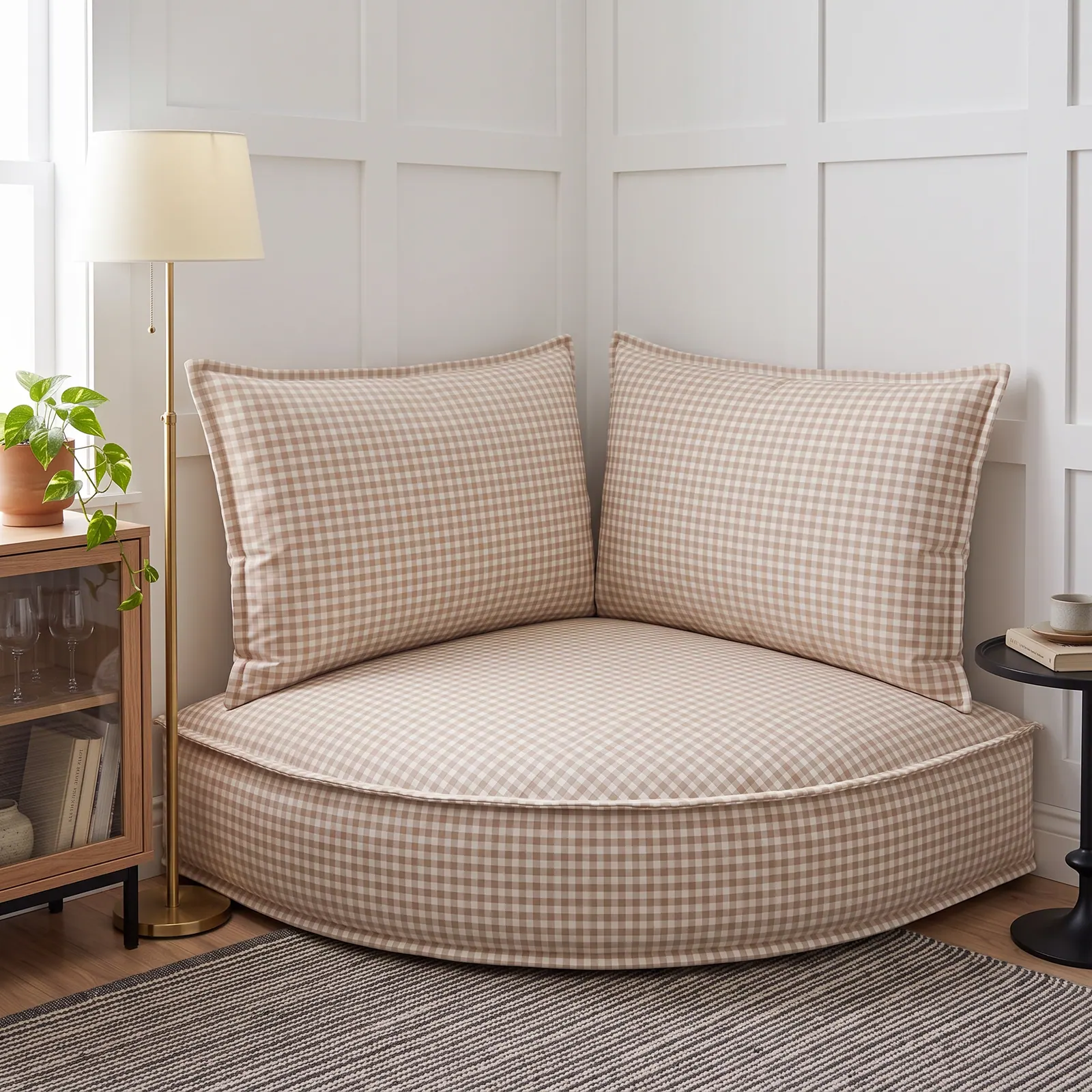
SaveA quarter-round floor seat with two flanged backrest pillows, fitted into an empty corner to make an instant reading spot.
Swatch stripmeasured from the photographs on this page
taupe#a88e79
sand#bdac9f
chestnut#745948
oatmeal#cec2ba
linen#d9d7d4
taupe#877b71
The quick answer
Gingham and checked linen are indoor cushion fabrics woven in an even check, and they suit corner floor cushions, reading nooks and kitchen chairs best. The gingham card, coded D-01 to D-24, comes from a separate mill, so it sits close to, not exactly on, solids from other charts. Covers unzip and machine wash at 86°F (30°C) on a gentle cycle, then air dry.
Swatch book · 1 card
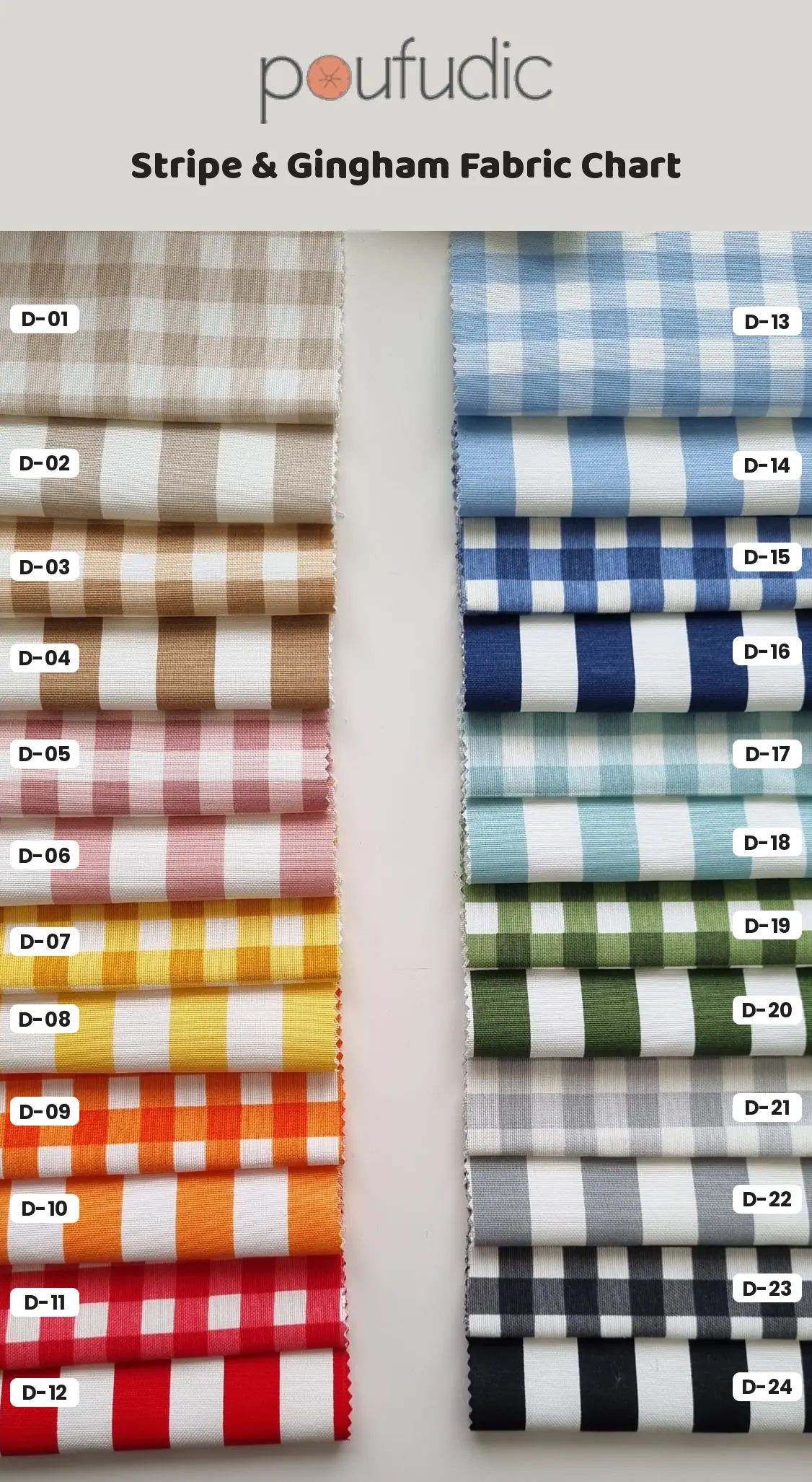
The swatch book
Swatch cards photographed in daylight. Open any card to zoom into the weave. Screens shift color, so a sample in your own light is the final word.
SaveEvery color comes as a check and a matching stripe, so a seat and its pillows can be mixed within one family.
Counted from the readings the masters have published in this family. Open a cushion type for its sizes and measuring.
Three tones in every square
Every gingham square is one of three tones. White crossing white gives the light square, color crossing white the middle one, color crossing color the dark. Cross equal stripes both ways and you have gingham; vary the colors and widths and you are in plaid country, madras included.
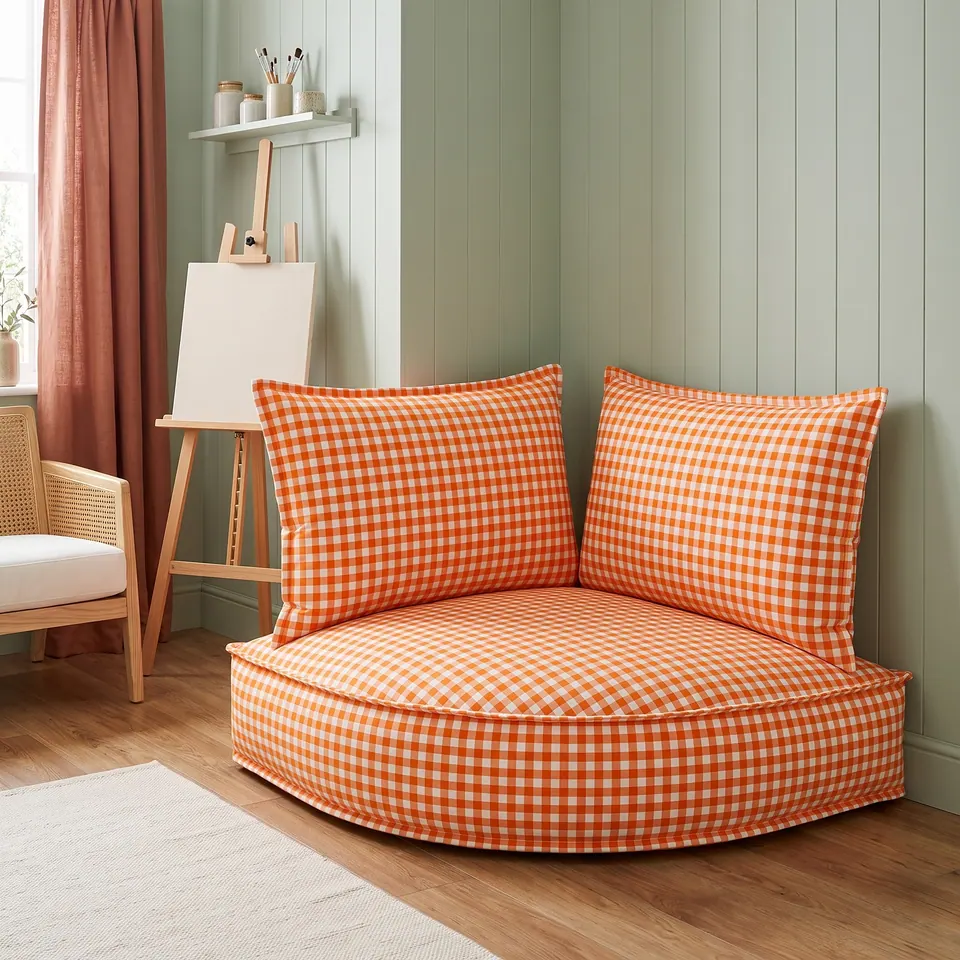
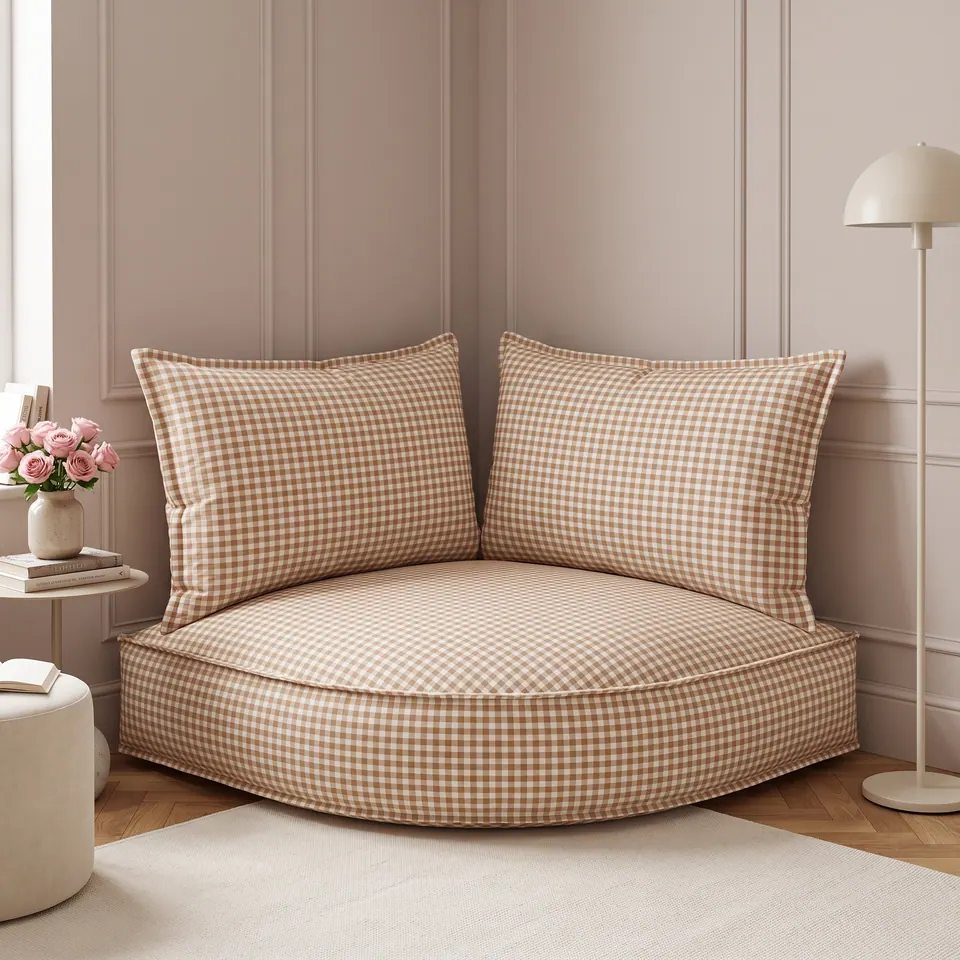
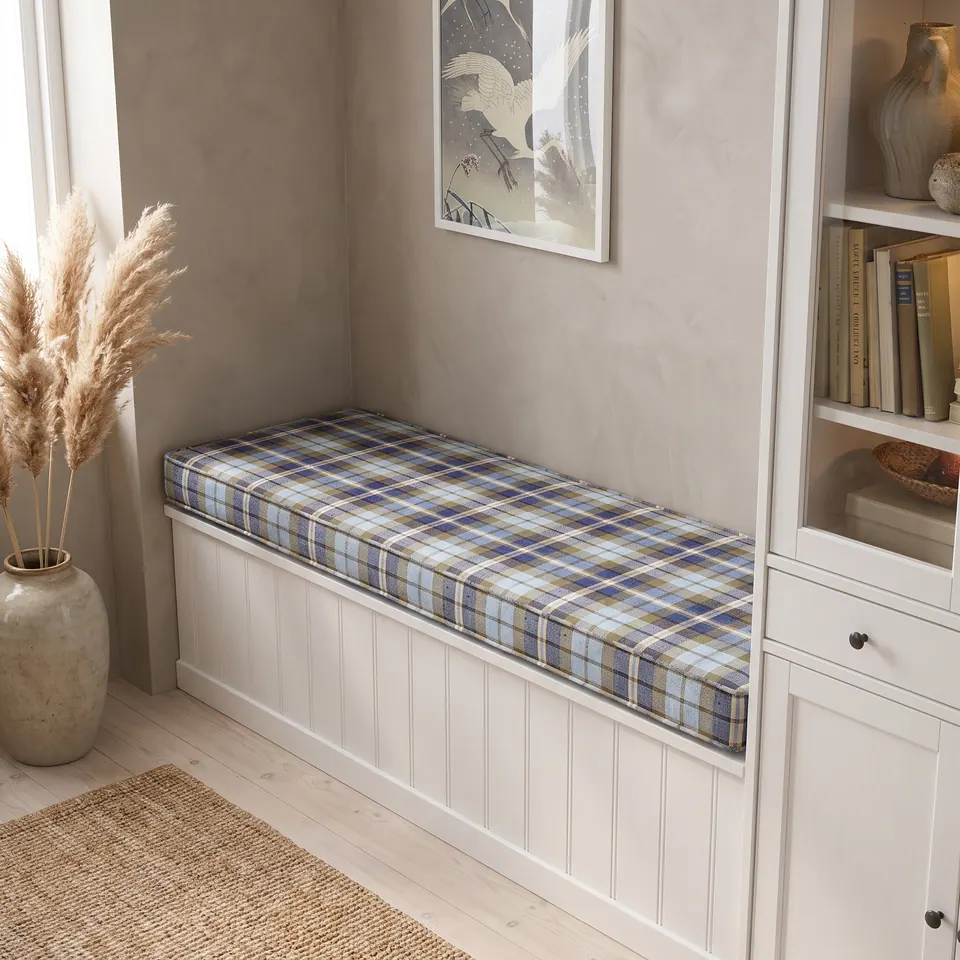
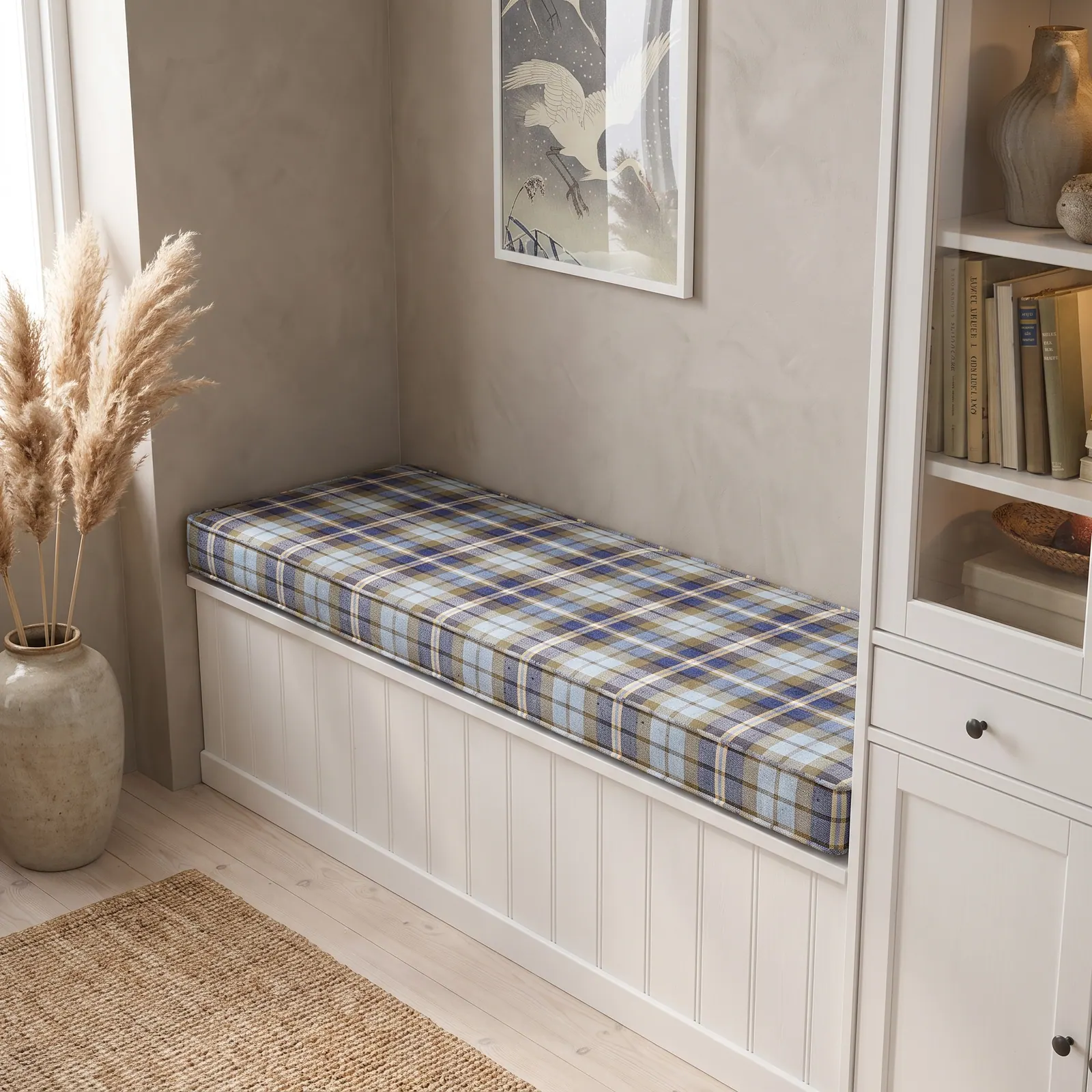
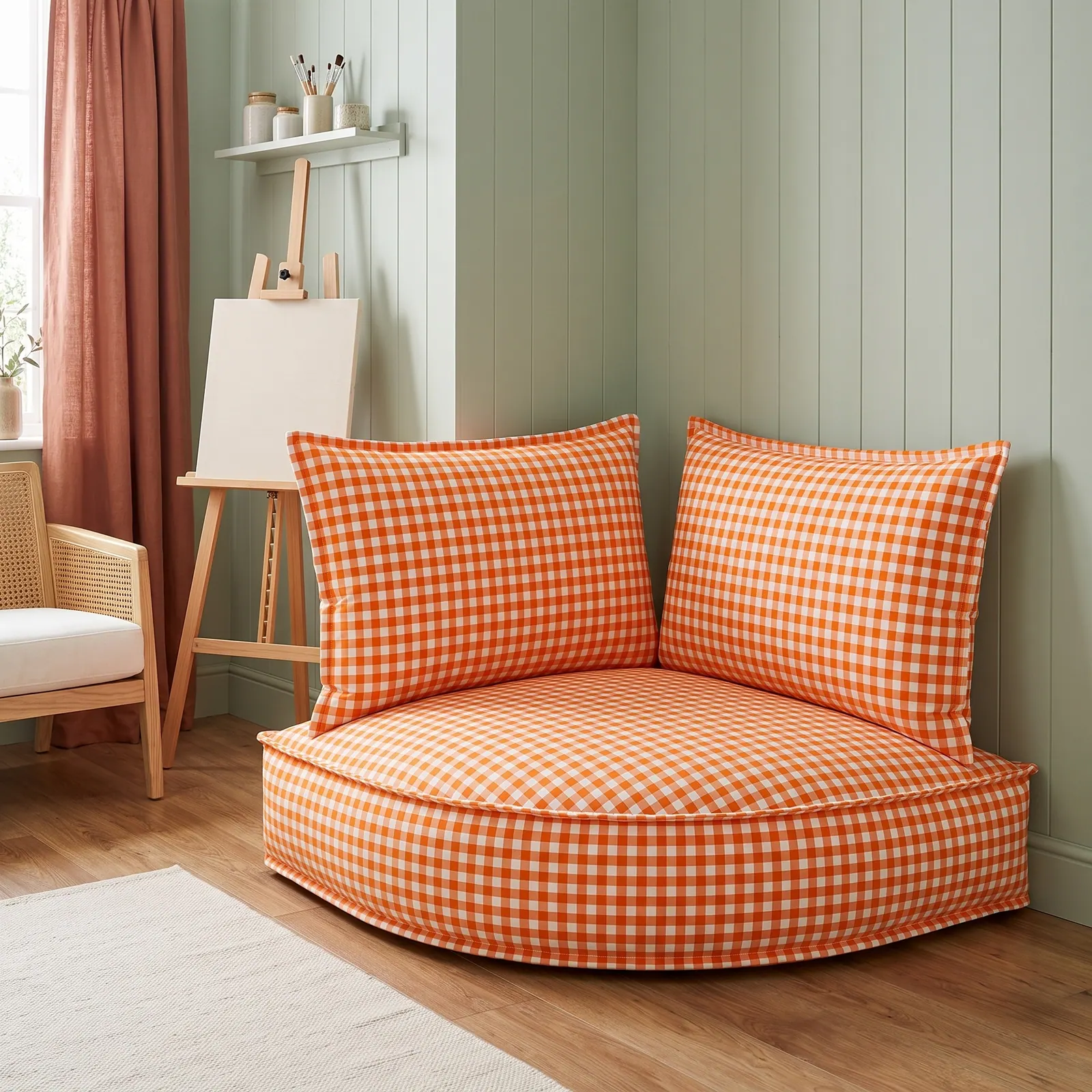
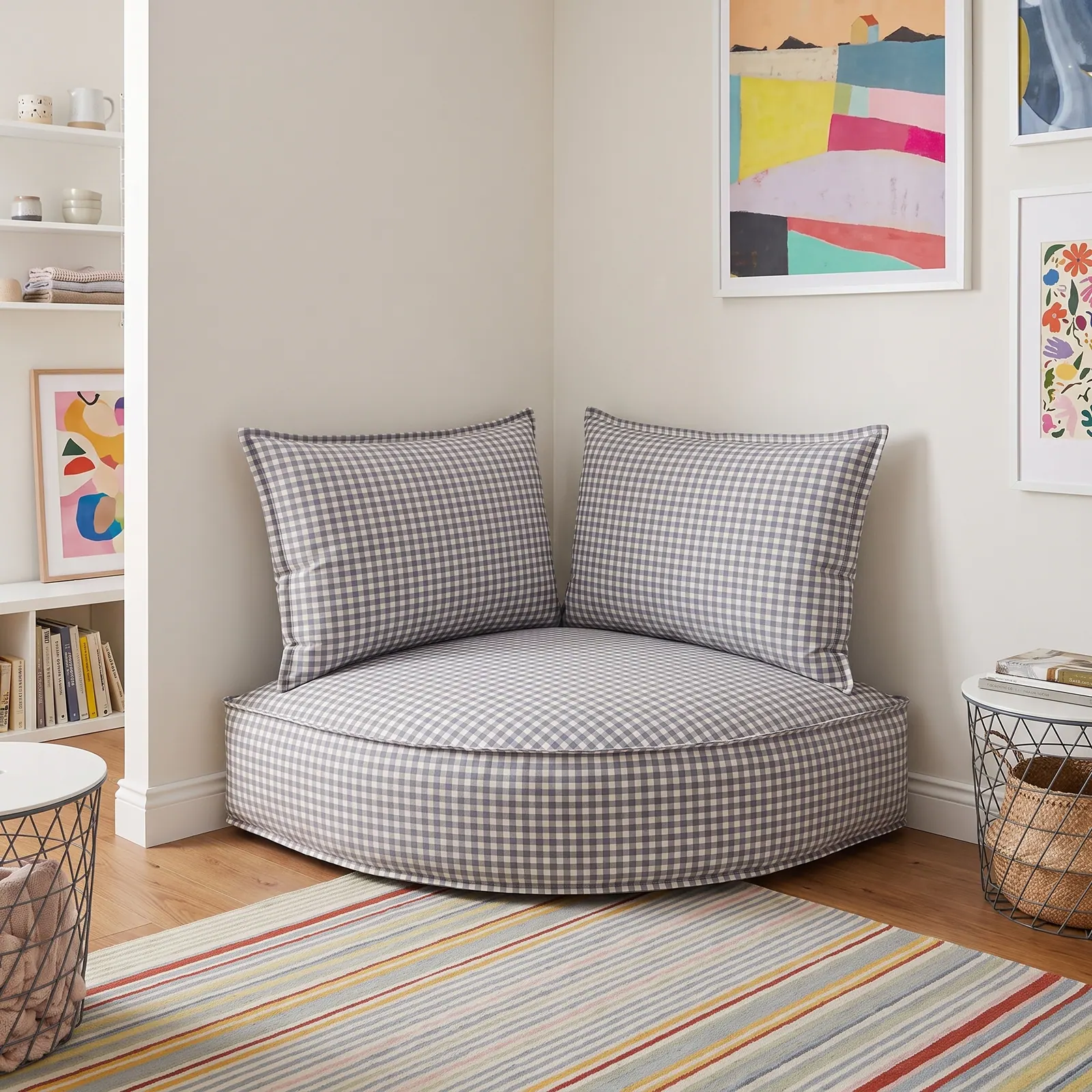
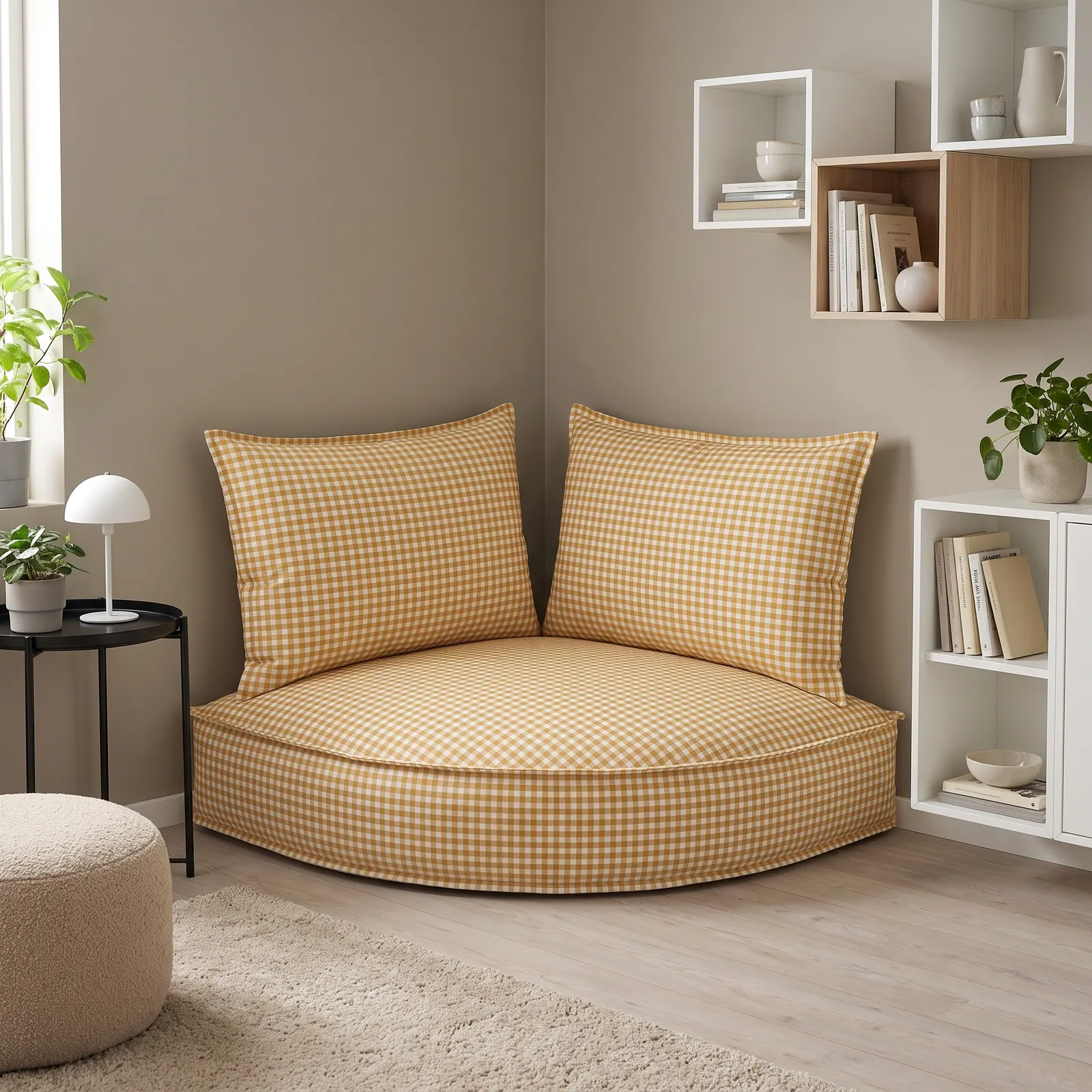
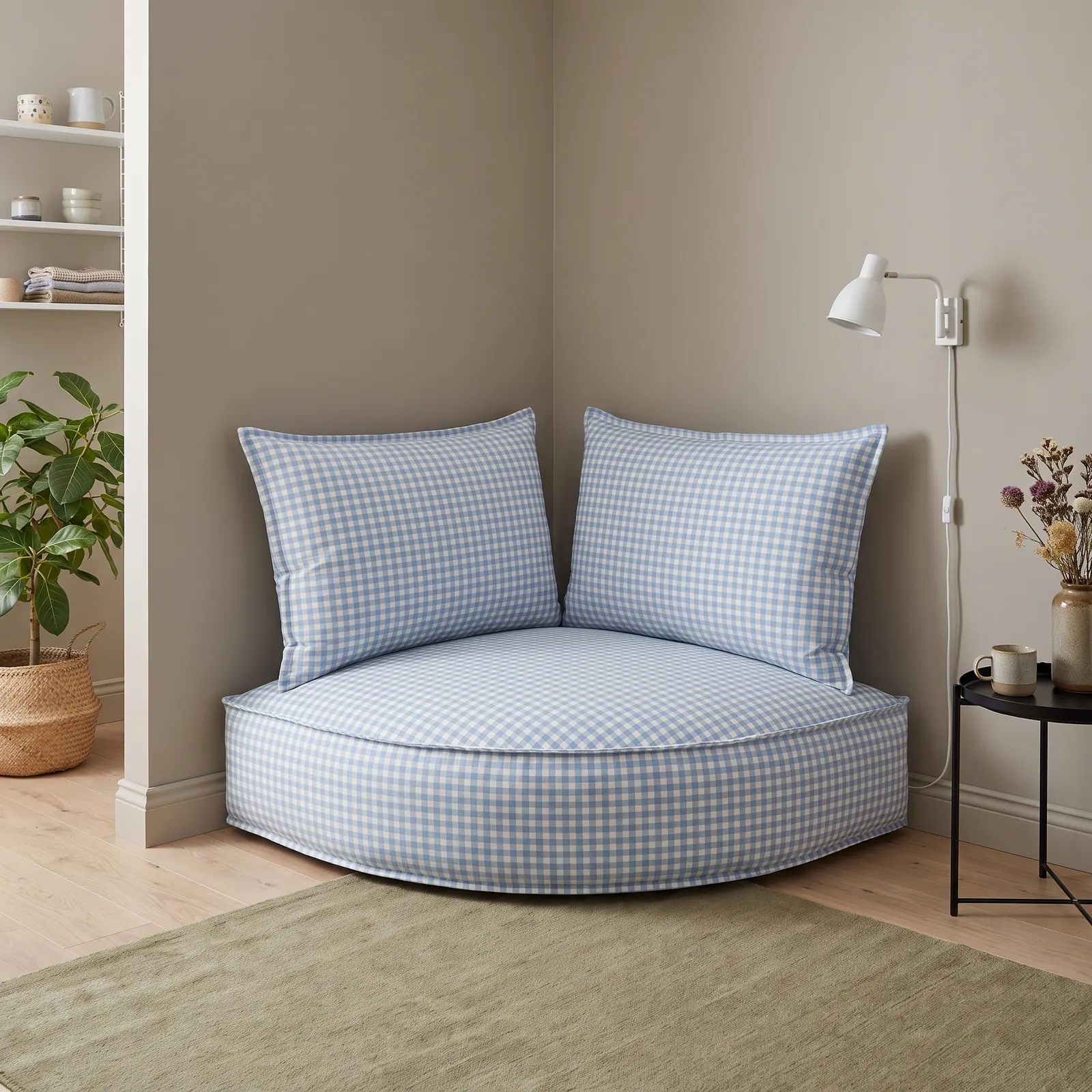
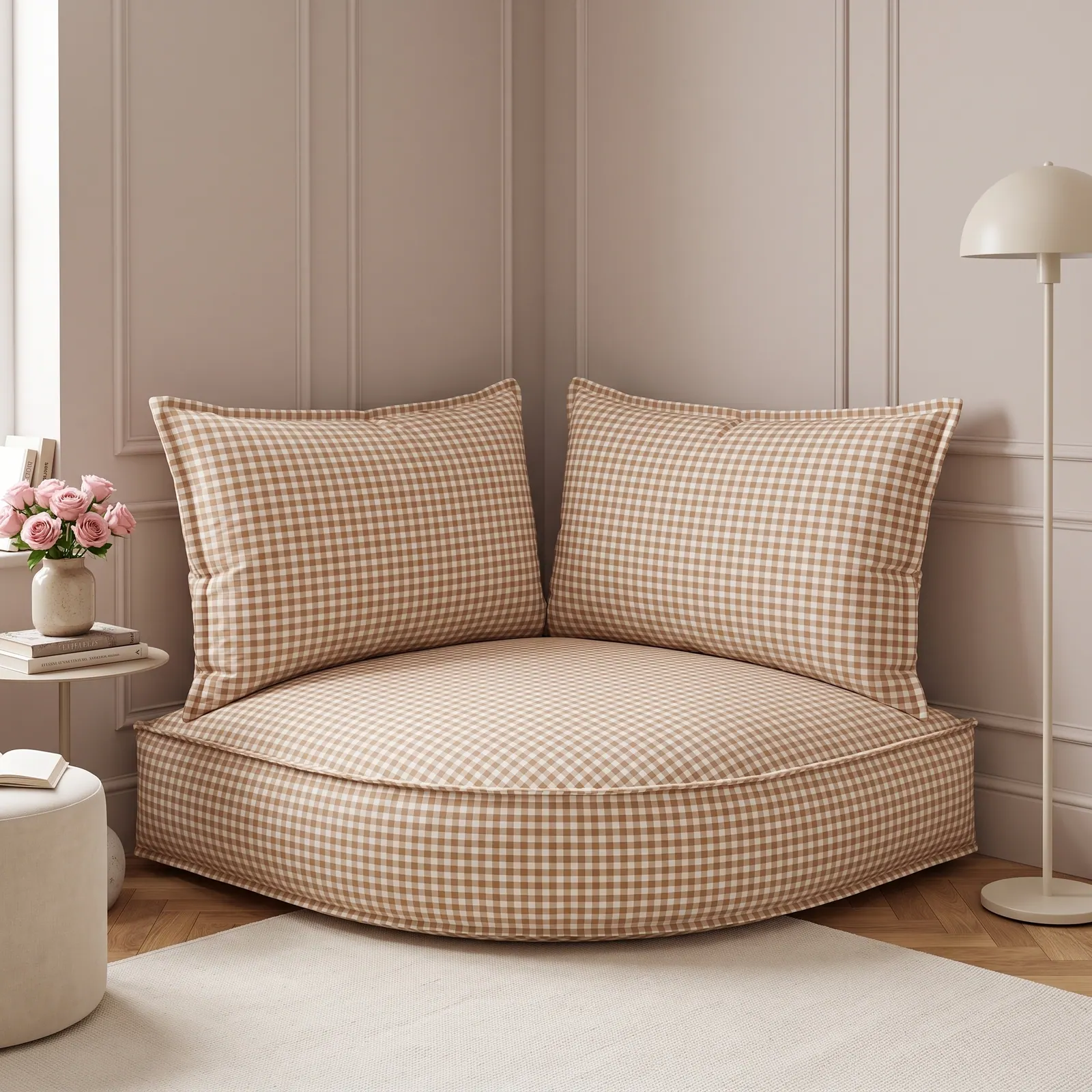
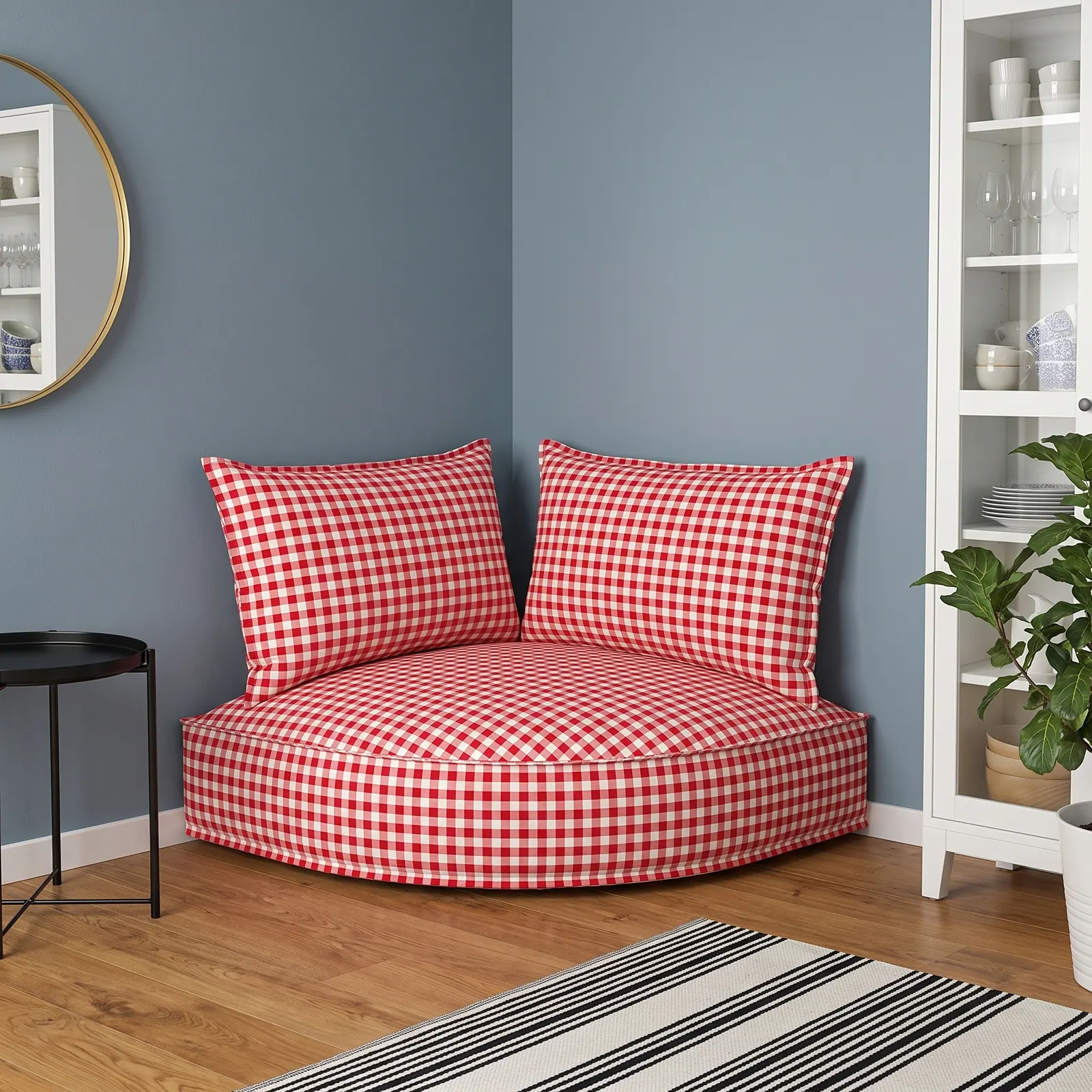
The corner floor cushions on this page wear a small, crisp check in warm beige, pale seafoam, bright orange, gray, mustard, pale sky blue, camel and red, each with two backrest pillows. The sky blue, navy and mustard seat on the paneled nook bench is madras, a looser plaid.
Pipe a check in a solid and it gets a frame. A straight welt is a kind of honesty, and on gingham every wobble shows.
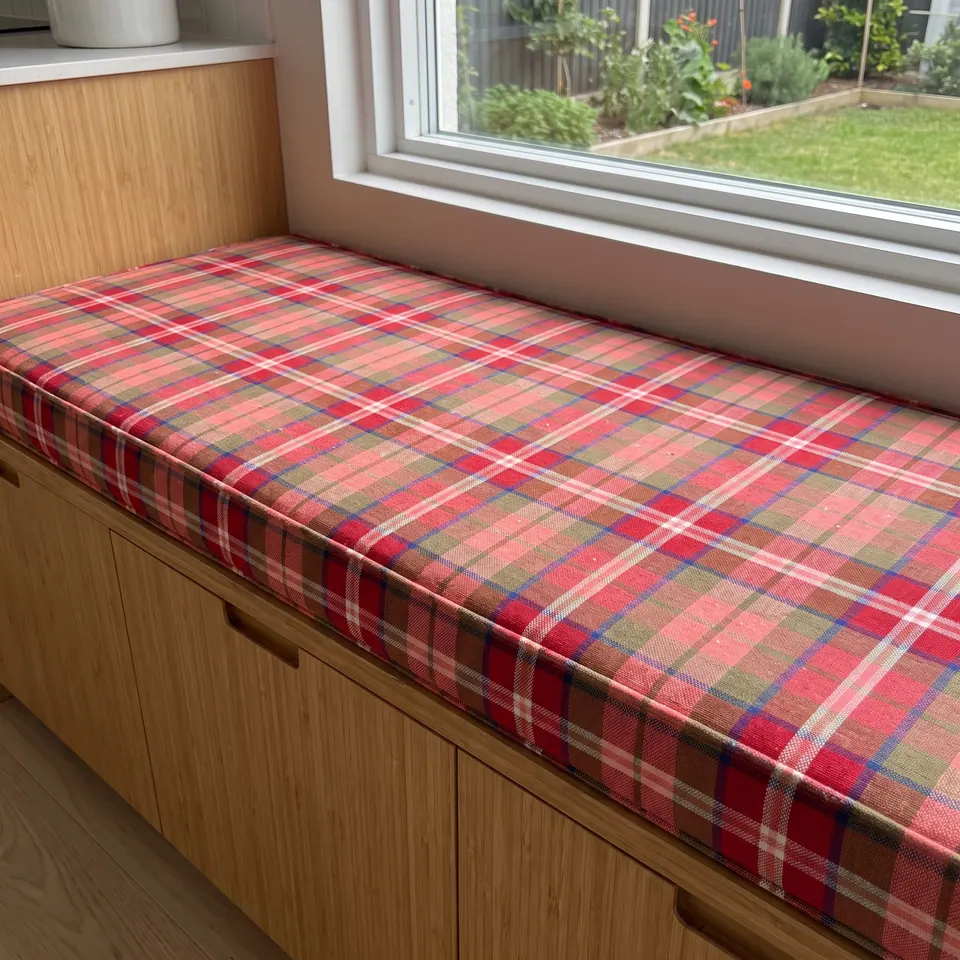
One honest word about 'checked linen': it usually names a look, not a fiber. Most patterned fabrics on the workshop's cards are polyester blends, and natural-fiber patterns are limited to the stripes and one other design.
Corner cushions, reading nooks, kitchen chairs
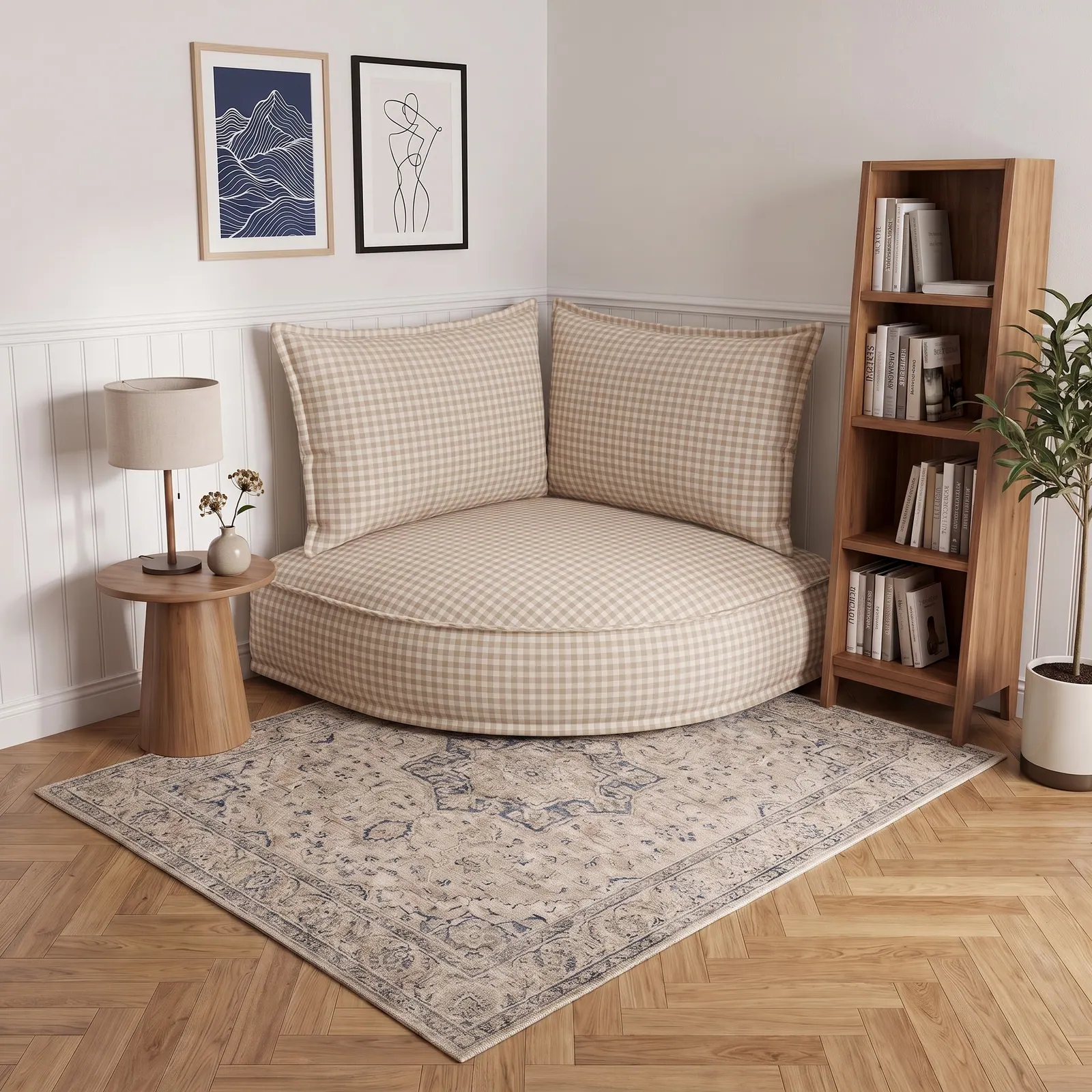
A check wants to be sat on and lived with. The quarter-round corner floor cushion is where it shines in these photographs: in a wainscoted corner by a walnut bookshelf, beside a brass floor lamp, under a wall of abstract prints, in a sage-paneled art corner with an easel. For sizing that curve, see quarter-circle floor cushion sizes.
Keep it indoors. Fabrics on the indoor listings are not made for open air. For the porch, the outdoor range runs 100+ colors, all outdoor-rated and UV-resistant; start with outdoor acrylic.
The cloth holds up; the floor is the trouble
Patterned blends earn their place: they are durable, easy to clean and the best sellers. If your project works harder than most, the workshop recommends a sturdy acrylic linen, and a separate 100% linen chart exists for anyone who wants pure fiber.
On a gingham floor cushion, the weak point is rarely the fabric. It is the floor. Lightweight foam on smooth hardwood moves when somebody drops onto it, and several of these corners sit on herringbone oak. A rug or grip mat underneath settles it. Ask me how I know.
On a bench or chair, order a non-slip base or ties in writing at the start. Neither comes standard, and a request typed into the size box can be missed.
Wash day, in order
Find the zipper on the underside and take the cover completely off the foam.
Turn it inside out.
Machine wash at 86°F (30°C) or cooler on a gentle, delicate or cold program. The 30 on the label is Celsius.
Mild detergent only. No bleach, however tempting those white squares look.
Air dry. The tumble dryer is not invited.
Iron on low only if it needs it.
Button-tufted cushions are the exception: the cover is sewn through, so it stays on.
Why a red check can look pink on your phone
A small check plays tricks on a screen. At thumbnail size the three tones blur into one flat middle color, so a red check can read pink and a camel check plain tan. Daylight tells the truth. Order a swatch and look at it by your own window, morning and evening. What color are the walls behind your corner?
If a cushion in a photograph won your heart, send a screenshot of that exact photo and the workshop names the fabric code and the piping code. Sun and camera angle can shift a tone slightly, but it is the same cloth.
The trickier job, dear, is matching across charts. Gingham comes from a different mill than the solids, so the two will sit close, not identical. Plan for that and it looks intentional; more in screen vs daylight.
A print you found elsewhere, such as a particular French stripe or graphic, can sometimes be sourced from a reference photo, at a higher price than standard fabrics.
In real rooms
Open any photograph large; each one has its own link and a Save button.
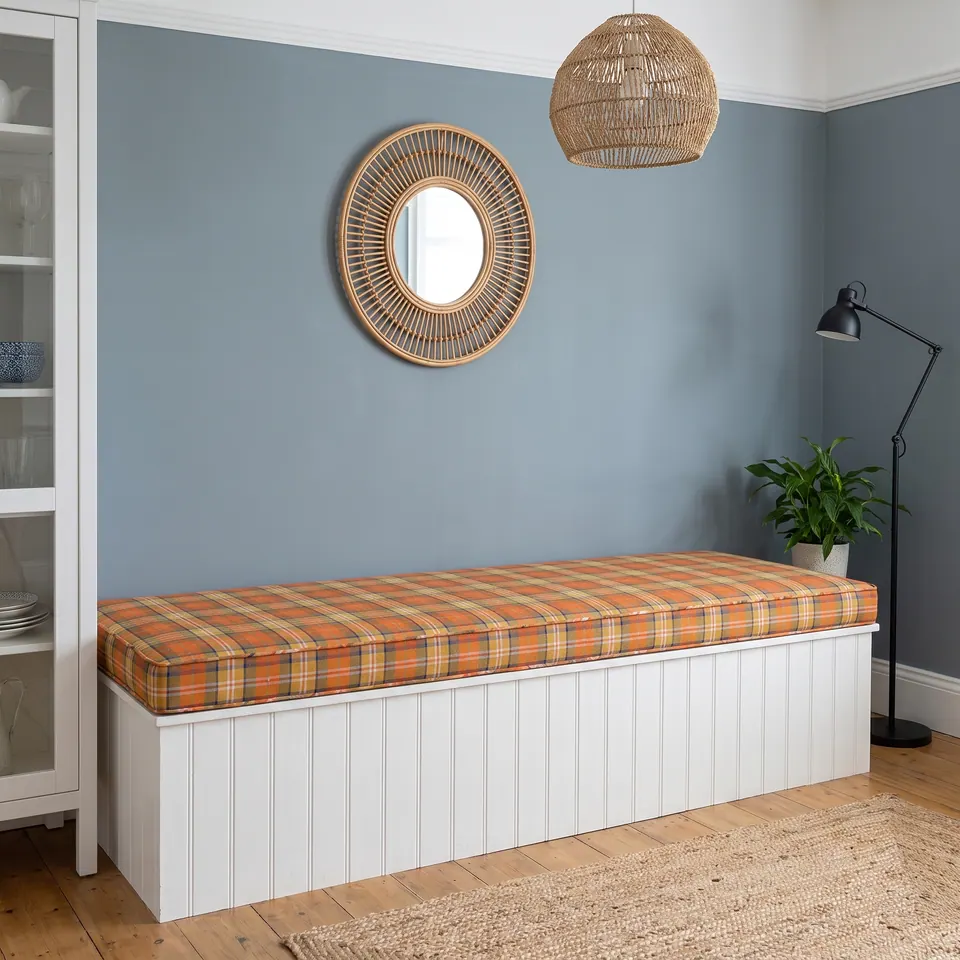
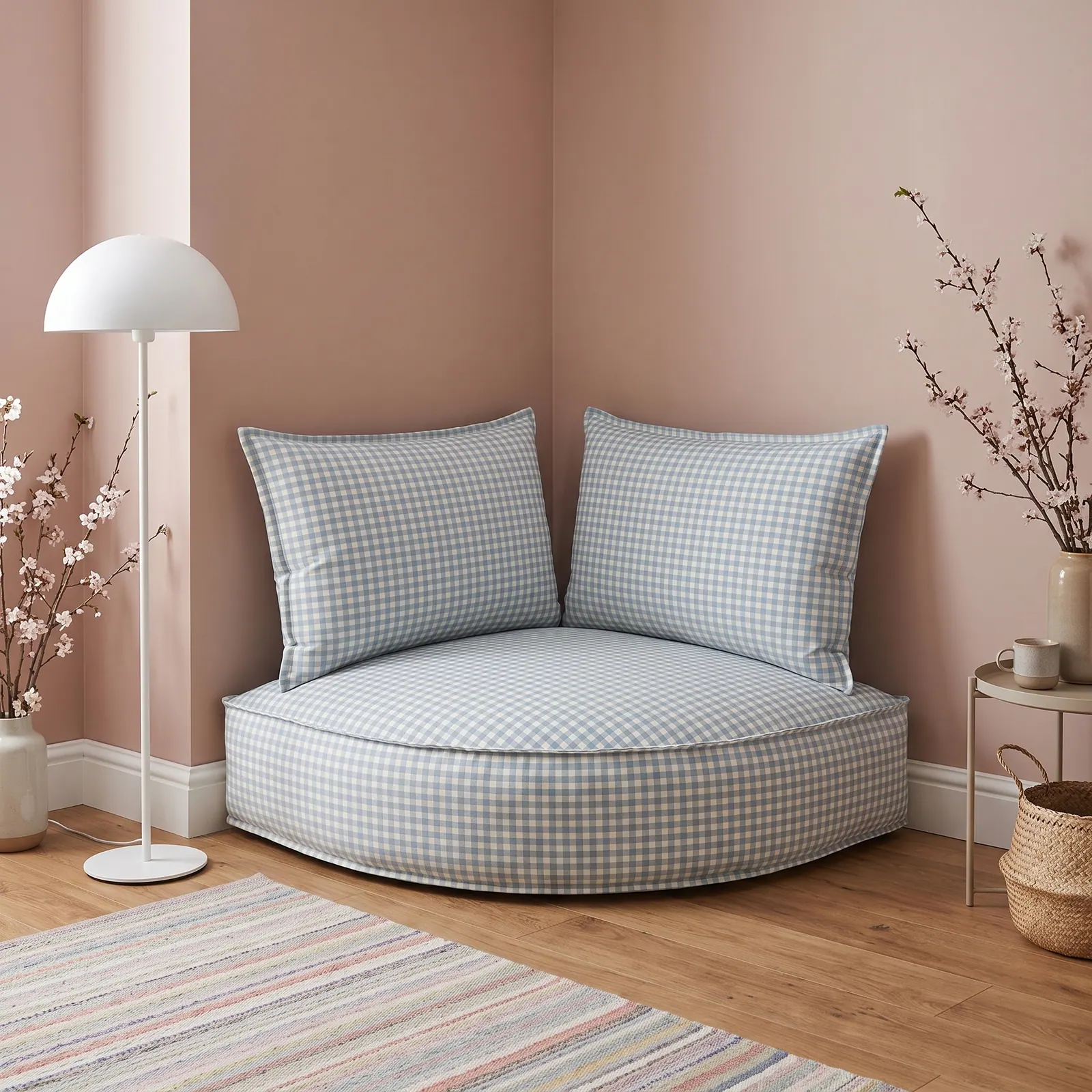
SavePowder-soft check and blush walls make a gentle pairing, framed by cherry blossom stems and a white dome lamp.SaveA checked quarter-round pouf tucked beside a window, with a brass lamp for reading and a small black table for a cup.SaveA cool blue plaid gives a quiet greige reading nook some structure, with a heron print and pampas softening the corner.SaveA tangerine check floor seat set up as a creative corner, beside an easel, a shelf of brushes and a cane armchair.SaveA neutral gray check lets the color-block art and candy-striped rug take the lead in a bright gallery corner.SaveSunny mustard checks in a minimal greige room of wall cubes, white shelves and a bouclé footstool.SaveSoft blue checks in a greige corner, lit by a swing-arm wall lamp, with a fiddle-leaf fig at the side.SaveTan checks on blush walls, with pink roses, a bouclé pouf and a white dome floor lamp keeping the palette soft.SaveClassic red checks against blue-gray paint, with a brass mirror, a glass cabinet and a striped rug.
A real project
Gingham backrests for an earlier order
A buyer messaged the workshop wanting gingham backrests to go with cushions from an earlier order. A good idea, with one catch the workshop said out loud before anyone cut: gingham is woven by a different fabric maker than the chart the first order came from, so the new backrests would land close to that earlier color, not exactly on it.
The workshop asked for three things: the backrest measurements, the gingham code and a reference photo of what was already there. With those in hand it set up a custom order link.
The same logic runs through every range. When a banquette seat is corduroy, the workshop suggests soft fabric, its performance weave, for the back pillows, because those tones come much closer to corduroy than velvet does.
What it taught
When a check joins an older solid, send measurements, the gingham code and a photo of the original, and expect close rather than identical.
Gingham comes from a different mill than most solid cushion fabrics, so a gingham backrest beside an older solid seat will be close, never identical.
Do you carry gingham and plaid, or is everything a plain color?
The workshop's answer
Mostly plain colors, but there are patterns: stripes in beige/white and black/white, plaid and tartan in brown, green, blue and red tones, and patterned velvets including black-and-white designs. Extra pattern charts are sent on request, with no price difference across the workshop's own fabrics. A specific print you saw elsewhere can sometimes be sourced from a photo, at a higher price.
A common question
Will new gingham backrests match the cushions I bought from you last time?
The workshop's answer
Close, but not exact. Gingham comes from a different fabric maker than the other charts, so a perfect match with an earlier order can't be promised. Send the measurements, the gingham code and a reference photo, and the workshop sets up a custom order link.
A common question
If I want a natural fiber, is your 'linen' actually 100% linen?
The workshop's answer
Usually not. The standard linen charts are blends or linen-look: the L codes are polyester, one natural linen chart is 50% linen and 50% polyester, and another range is half cotton, half linen. Ask for the separate 100% linen chart, or the 100% cotton fabrics, if pure fiber matters to you.
A common question
Can gingham covers go in the washing machine, and do they come off completely?
The workshop's answer
Yes. Each cover has a zipper on the underside and comes off the foam entirely. Wash at 86°F (30°C) at most on a gentle or delicate cycle, air dry, and iron on low only if needed. Button-tufted cushions are the one exception, since their covers are sewn through.
A common question
I love one of the cushions in your photos. Can you tell me exactly what it's made of?
The workshop's answer
Send a screenshot of that exact photo, since listings show several cushions, and the workshop names both the fabric code and the piping code. You can ask for your order to copy that colorway. If an older photo uses codes that have since been renumbered, write 'same as the first picture' and it will be matched.
Have it made
Have it made in checked linen or gingham — ask Maggie’s workshop
Have the tape measure handy when they call. Old cushions shrink and sag; the seat underneath does not. — Maggie
Leave your details and the workshop will call you to confirm measurements, fabric, foam and piping. No prices, dates or payment on this page: it is a request, not an order.
Gingham questions, settled
Should gingham cushions have matching or contrast piping?
Either works, and neither costs extra: piping can match the body fabric or contrast with any code from any chart, and no piping costs the same. Roughly half of orders choose matching and half contrast. On a small check, a solid welt pulled from the check's darker color frames it cleanly.
My gingham floor cushion creeps across the hardwood. What stops it?
Lightweight foam on a smooth floor shifts when someone sits down hard. A rug or anti-slip mat underneath is the simplest fix. For benches and window seats, order a non-slip base or ties at the start; both are add-ons and are made only when asked for in writing.
What separates gingham from plaid?
Gingham crosses white with one color in equal-width stripes both ways, so every square is light, middle or dark. Plaid mixes several colors and stripe widths into larger squares and rectangles. The workshop's extra pattern charts carry plaid and tartan in brown, green, blue and red tones.
Can I order gingham by the yard to recover a matching ottoman?
Yes. Short cuts come through the fabric samples listing and longer pieces through a custom order link; send the code and length for a quote, and it can ship with your cushions. Most rolls are about 55 in (140 cm) wide, which sets the largest single piece.
Stitch straight — Maggie
Share this fabric family
Readings
Cushions made in checked linen & gingham
Real pieces in real rooms, read by the masters for color, light and wear.

 Save
 Save
 Save
 Save
 Save
 Save
 Save
 Save
 Save
 Save
 Save