 Save
A Reading by HarlanCorner Floor Cushions & Poufs
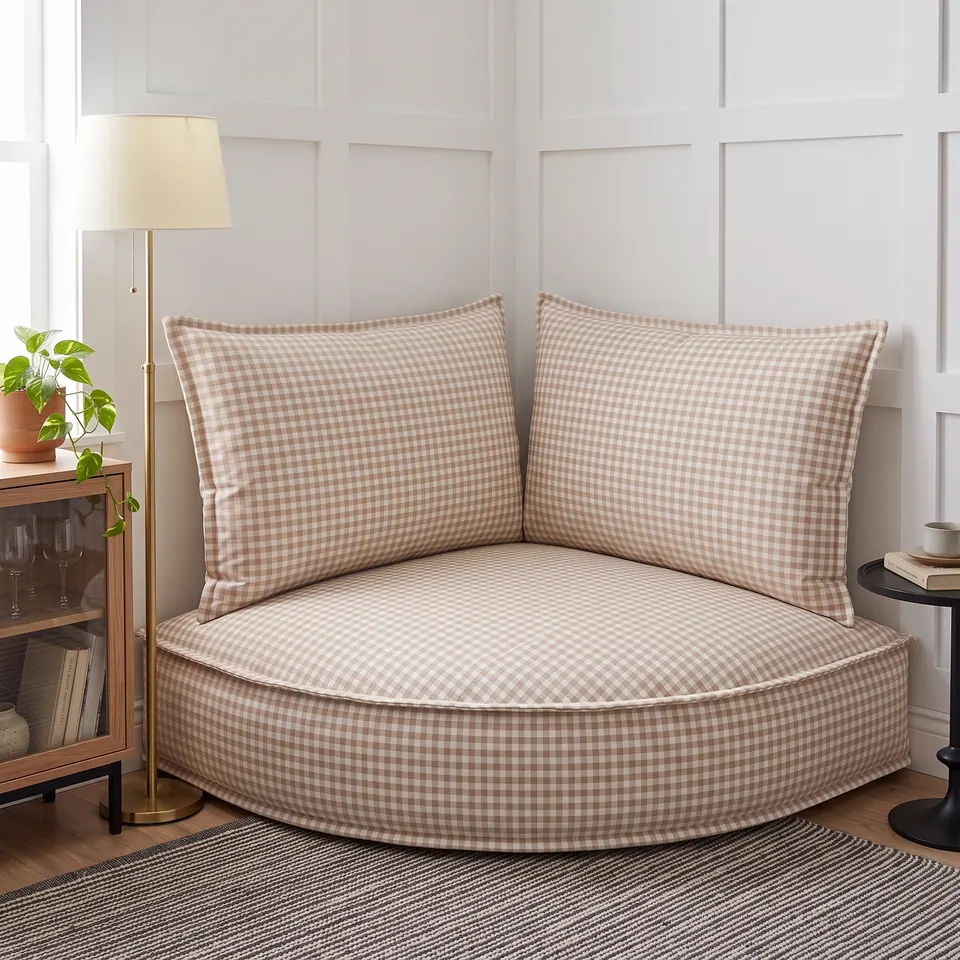
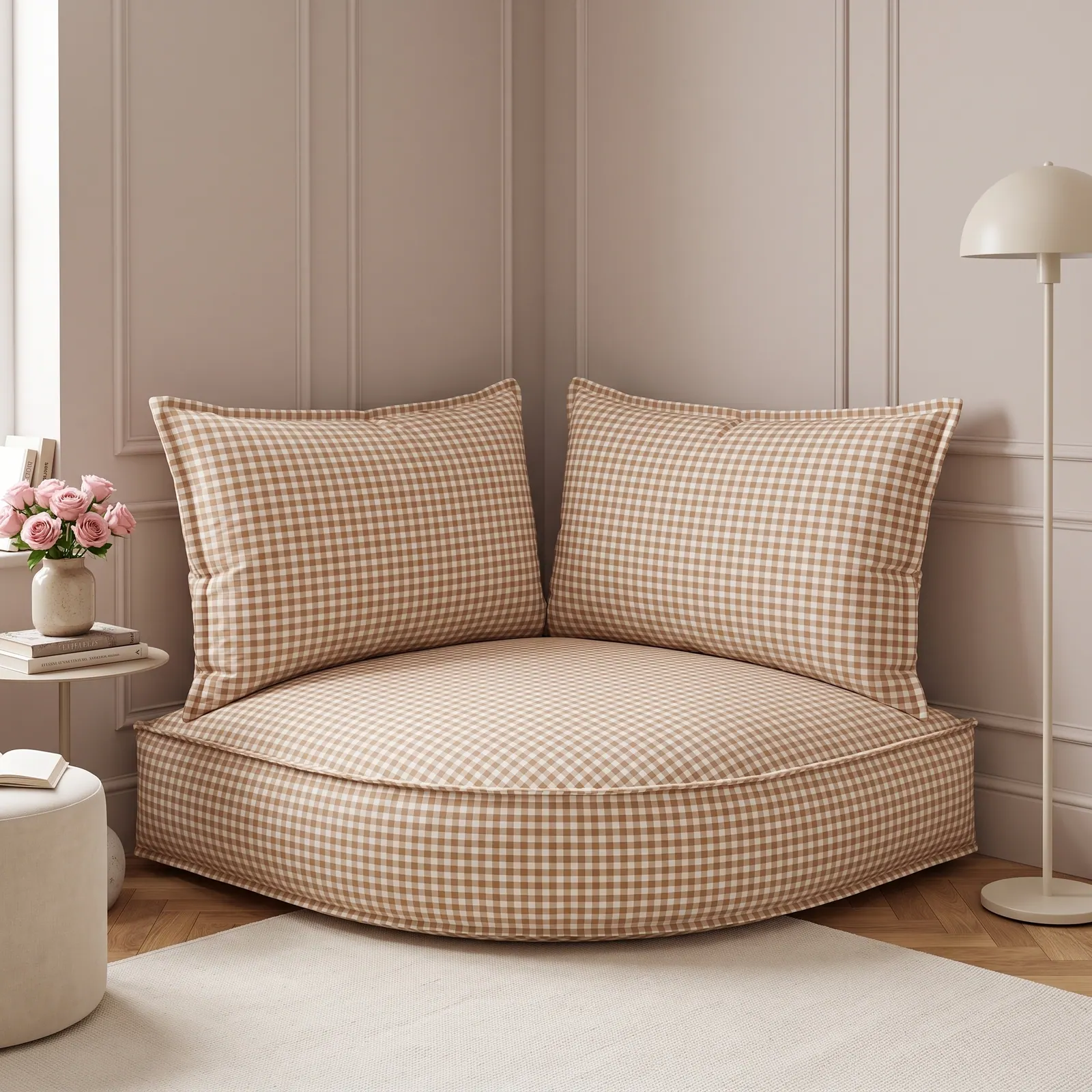
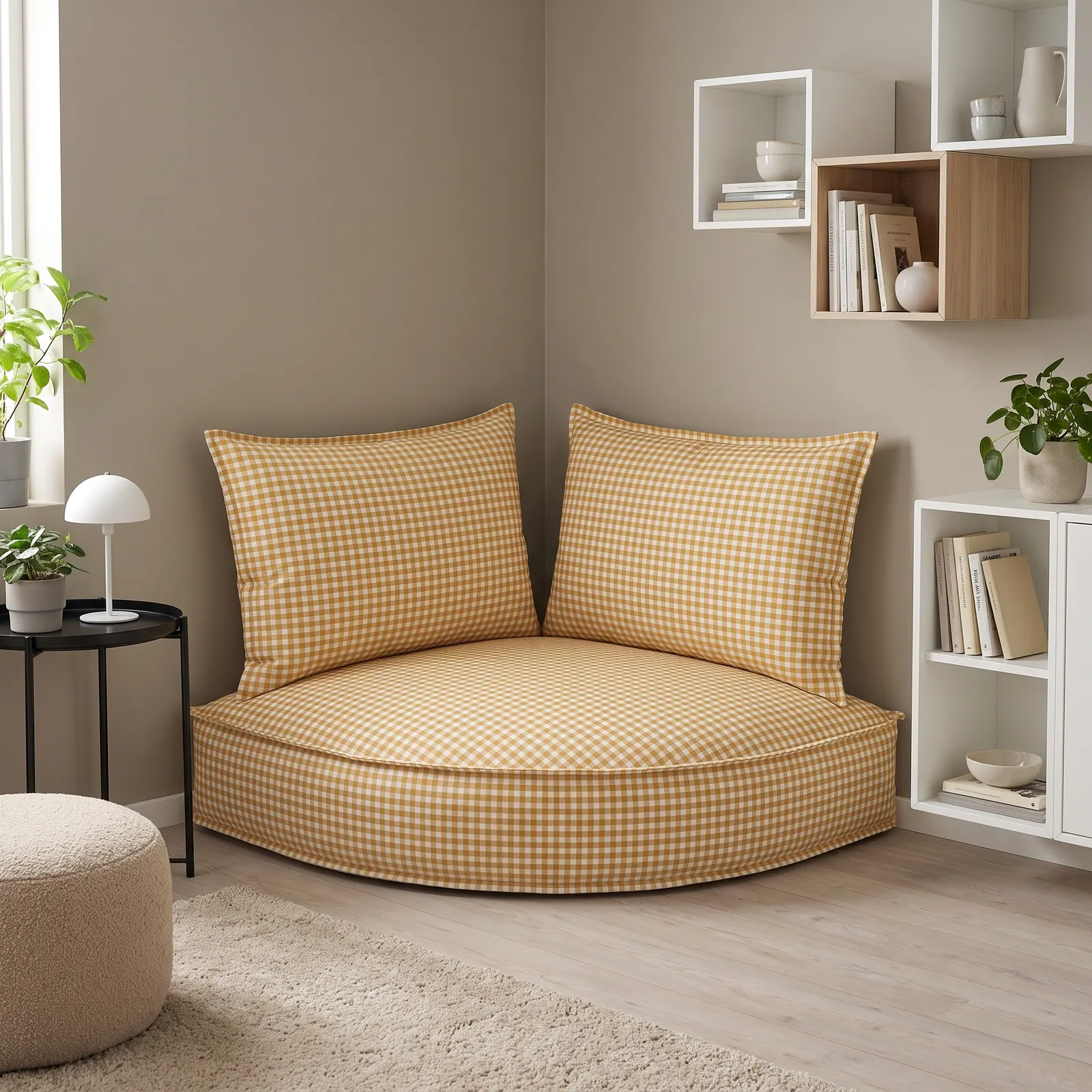
A camel check corner floor cushion, and the edge that makes it look built in
Some seats look set down in a corner. This one looks as if the corner grew it. I spent an afternoon working out why, and most of the answer is in the edge.
Tan checks on blush walls, with pink roses, a bouclé pouf and a white dome floor lamp keeping the palette soft.
The quick answer
A corner floor cushion looks built in when it has a box edge, with upright sides that square up to the walls, and when each backrest pillow is about one wall panel wide. Self piping in the same check keeps that edge crisp without outlining it. Save the thinner knife edge for pillows that lean.
A seat the wall seems to have grown
Tan checks against blush paneling. That's the first thing you see in this corner floor cushion, and it works because camel and blush share a warm undertone. The seat looks as if someone upholstered it to match the wall.
Now look lower, at the edge. It's a box edge: a flat top, a flat bottom and an upright side band between them. A floor seat in a corner needs that band. It gives the cushion a face to square up to the walls and a front that stands straight instead of rolling. Self piping cut from the same check sharpens the line without drawing a frame around it.
The two backrest pillows sit inside the molded panels like pictures in their frames, each about one panel wide. I've seen corner seats fussed over for weeks that never found that proportion. Here the wall did the work for free.
Nothing else in the corner is there by accident. Pink roses in a cream vase bring the blush down to seat height. A slim white dome floor lamp repeats the soft, rounded shapes without adding bulk. A round side table holds the books, a cream rug lies over the herringbone floor, and a cream bouclé pouf in front serves as a footrest and a second texture.
If you're choosing a check, pick one whose darker color shares your wall's undertone; the gingham and checked linen family has plenty to hold against the paint. How wide are the panels on your wall, my friend? Measure one before you size the backrests.
Five pins, floor to lamp
Five pins, from the camel seat up to the dome of the lamp.
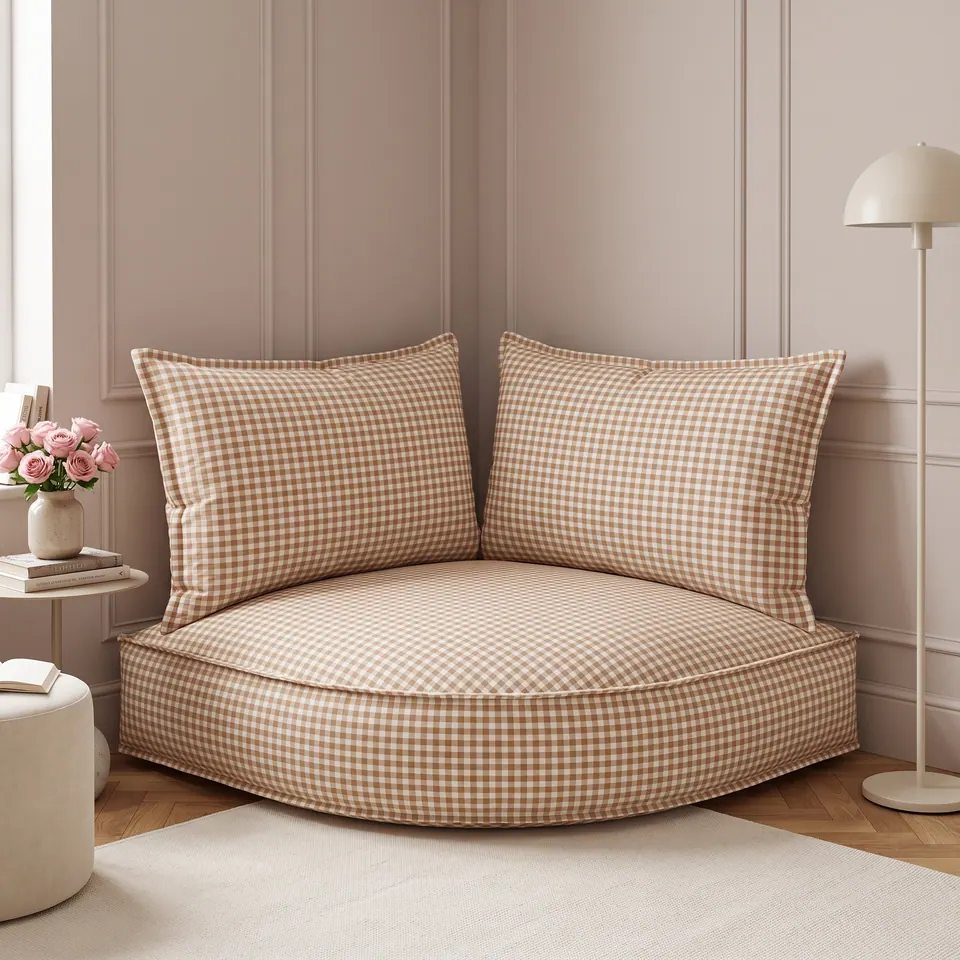
- Camel check seat
Tan and blush share a warm undertone, so the seat looks upholstered to match the wall.
- Backrest in a panel
Each pillow is roughly one wall panel wide, a proportion that looks built in.
- Pink roses
Flowers pick up the blush wall and bring it forward to seat height.
- White dome floor lamp
A slim, rounded lamp repeats the soft shapes without adding bulk.
- Boucle footstool
A cream pouf in front works as a footrest and adds a second texture.
- Camel check seatTan and blush share a warm undertone, so the seat looks upholstered to match the wall.
- Backrest in a panelEach pillow is roughly one wall panel wide, a proportion that looks built in.
- Pink rosesFlowers pick up the blush wall and bring it forward to seat height.
- White dome floor lampA slim, rounded lamp repeats the soft shapes without adding bulk.
- Boucle footstoolA cream pouf in front works as a footrest and adds a second texture.
Box, knife, rounded or angled: which edge for a corner
| Edge | How it is built | Where it earns its place |
|---|---|---|
| Box edge | Top and bottom joined by an upright side band | Corner seats and floor cushions that meet a wall |
| Knife edge | Two panels sewn straight together, thin at the rim | Backrest and throw pillows that lean |
| Rounded corners | Corners sewn on a curve instead of a point | Open-floor poufs that people walk past |
| Angled corner | A corner clipped on a diagonal | Seats that meet a wall at an odd angle |
Two boxes late, and one cushion that stayed flat
A buyer in the US wrote to the workshop about a floor sofa delivered to an apartment building with a shared package room. The metal frame box came first. The two cushion boxes turned up several days later, after the carrier lost track of them.
Once everything was unpacked, one base mattress and one backrest never fully expanded, even after a weekend lying flat. The workshop sent replacements, and those were firm and supportive right away. Then the buyer noticed the remaining original cushion had a different-colored, softer foam. Foam color varies between batches, the workshop explained; the type is the same.
A seam is a promise, and so is a cushion that stands up when it's unrolled. Lay every piece flat when it arrives and compare them side by side in the first days. The Pattern on vacuum-packed cushions walks you through it.
- Sizes
- a multi-piece floor sofa with base mattresses and backrests
The lesson: After vacuum shipping, lay every piece flat and compare firmness side by side within the first days.
Three questions from floor-seat buyers
- A common question
Can I send you my own fabric to cover the sofa?
The workshop's answerYes, if it's made for upholstery. Silk was turned down, since it suits neither upholstery nor the compressed packing; a heavy cotton was accepted. A teddy floor sofa takes about 13 yards. Ask for making and delivery time in writing once the fabric arrives.
- A common question
Why does a handmade cushion cost more than similar ones on the big shopping sites?
The workshop's answerEach piece is made by hand to order rather than in a factory, with dense filling and good upholstery fabric. The workshop describes its prices as producer prices.
- A common question
Is there an assembly guide, and can the corner couch turn into a bed?
The workshop's answerThe couch pieces and backrests arrive assembled, so you only arrange them; instructions come for the metal support bars. Like the other models, the closed corner couch becomes a bed when you lift off the top layer of cushions.
On the cutting table
| Cushion | Corner floor cushion with two backrest pillows |
|---|---|
| Fabric | Camel, tan and cream gingham check |
| Edge | Box edge with an upright side band |
| Piping | Self piping in the same check |
| Backrests | Two pillows, each about one wall panel wide |
| Footrest | A cream bouclé pouf in front |
| On arrival | Lay each piece flat; compare firmness side by side |
| Best for | Living-room corners with paneled or painted walls |
Have it made
Have this made — ask Harlan’s workshop
The best cushions I have known began with somebody asking one more question. Ask yours here. — Harlan
Leave your details and the workshop will call you to confirm measurements, fabric, foam and piping. No prices, dates or payment on this page: it is a request, not an order.
A corner floor cushion looks built in when each backrest pillow is about one wall panel wide; the molding frames the pillows for free.
Harlan, from the corner
Questions buyers ask next
What is the difference between a box edge and a knife edge?
A box edge has an upright side band between the top and bottom, so the cushion has straight sides and square corners. A knife edge joins two panels directly and thins to a rim, which suits pillows that lean more than seats.
Which check color suits a painted or paneled wall?
Pick a check whose darker color shares your wall's undertone. Camel against blush works because both lean warm, so the seat looks upholstered to match rather than added later.
How wide should backrest pillows be on a corner floor seat?
On a paneled wall, about one panel wide each. The molding then frames every pillow and the seat reads as built in. On a plain wall, measure the back edge of the seat and divide it evenly between the pillows.
Why is one foam cushion a different color from the others?
Foam color can vary between production batches while the foam type stays the same. Judge by firmness instead: lay the pieces side by side after unpacking and compare how each one feels under your hand.
Sit well. — Harlan
More corner floor seats against a wall
 Save
 Save
 Save
 Save
 Save
 Save