Concept Sketches · 8 scenes
Quarter-round floor cushions: a reading nook without carpentry
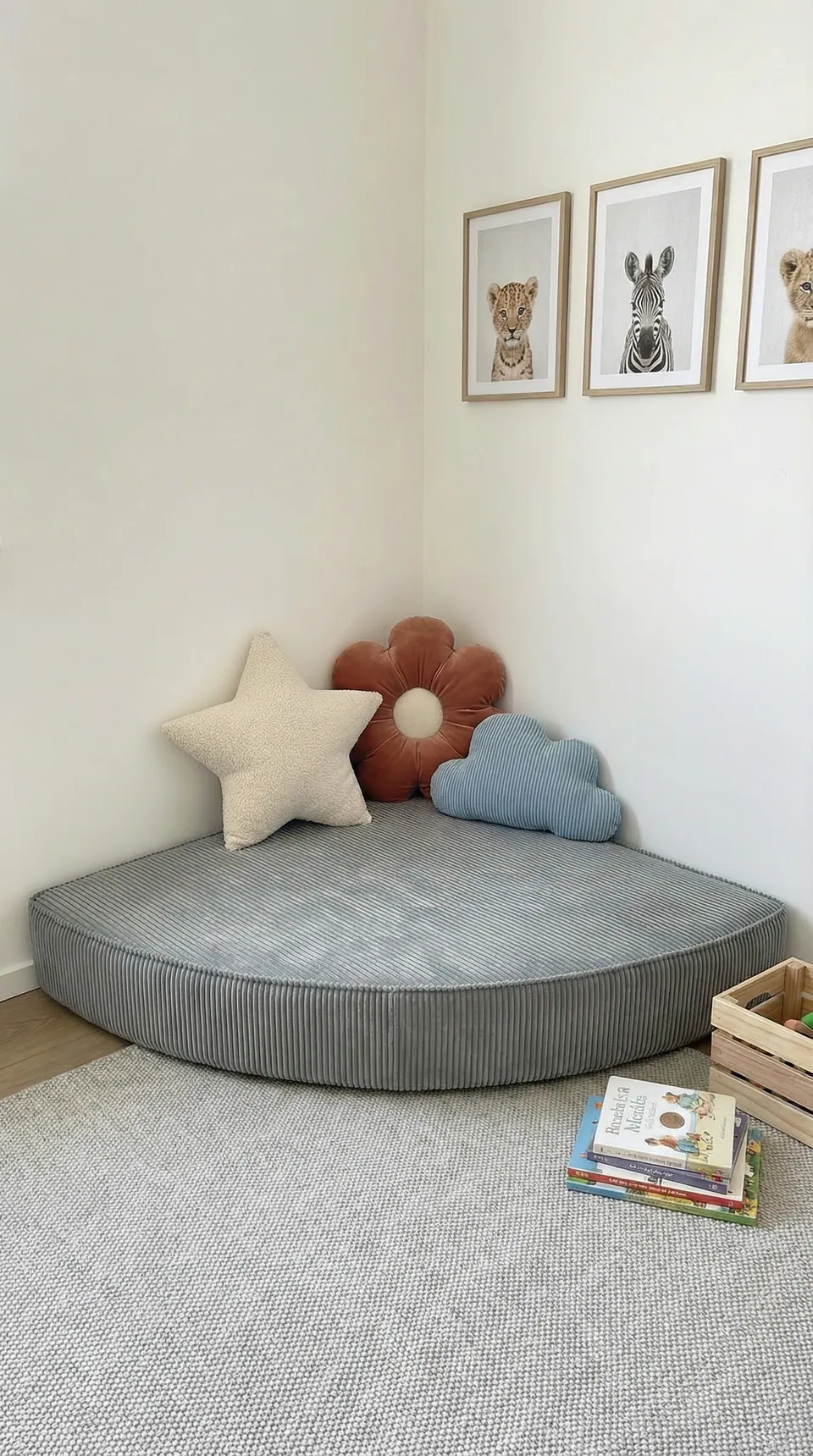
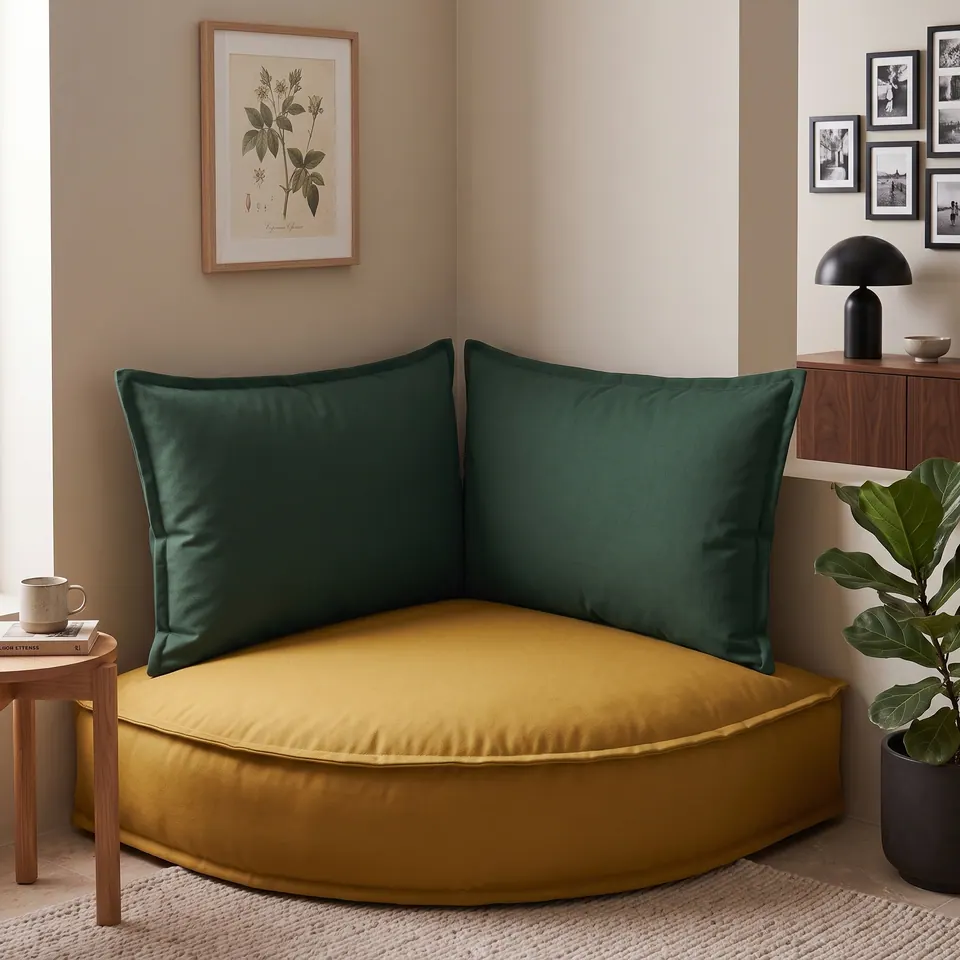
An empty corner is a room nobody has sat down in yet. Eight corners from past orders, measured wall by wall, and what each one taught me about the quarter-round.

 Save
The quick answer
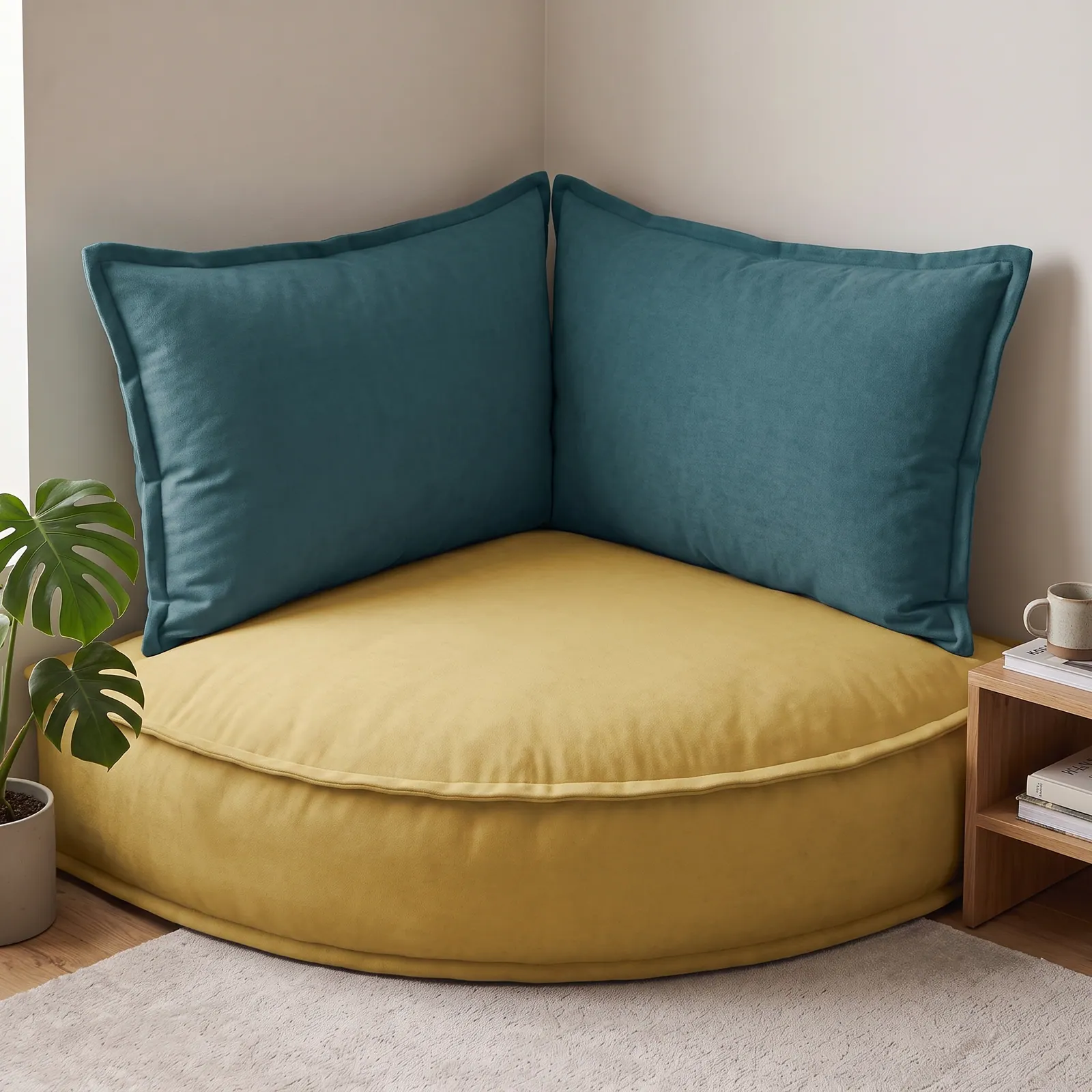
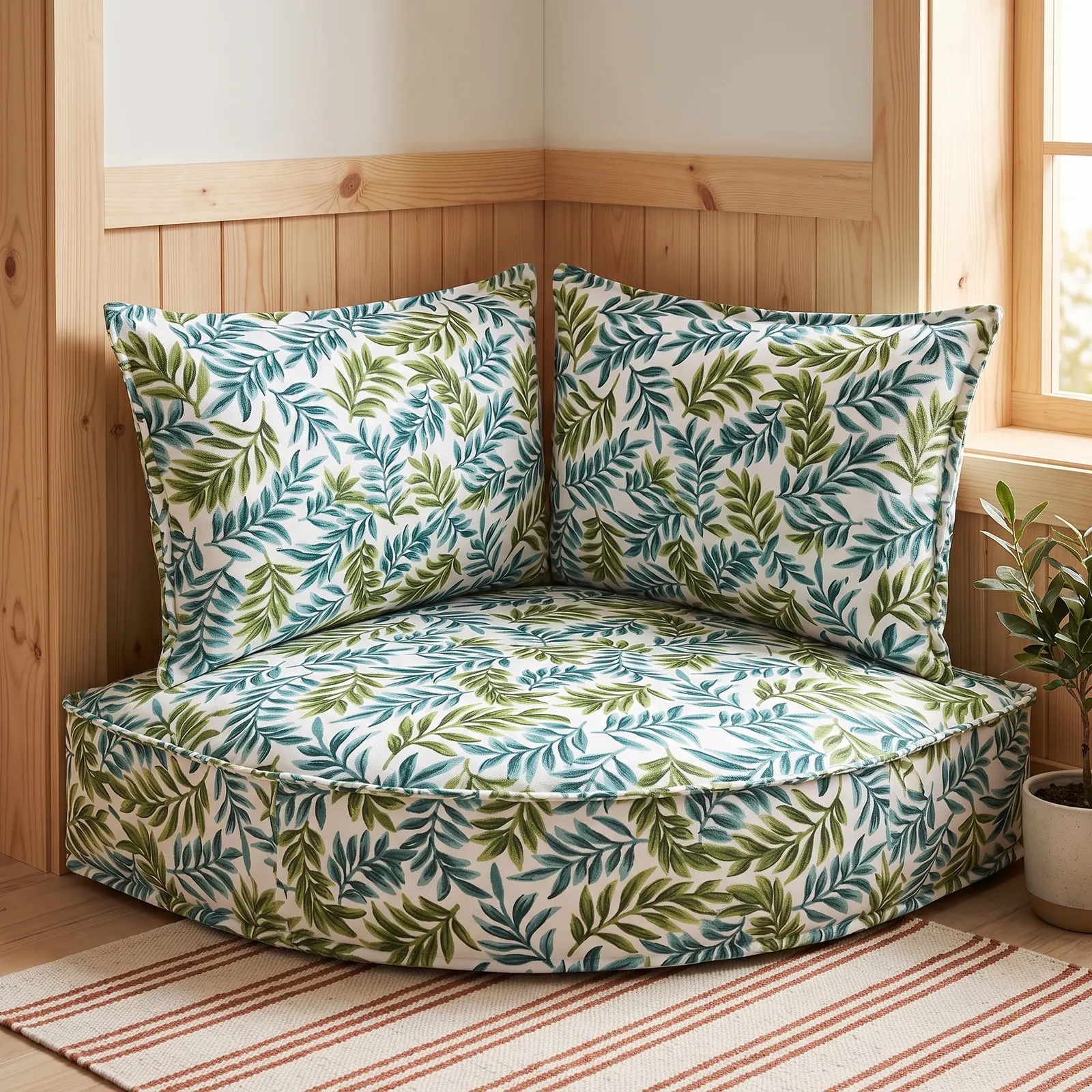
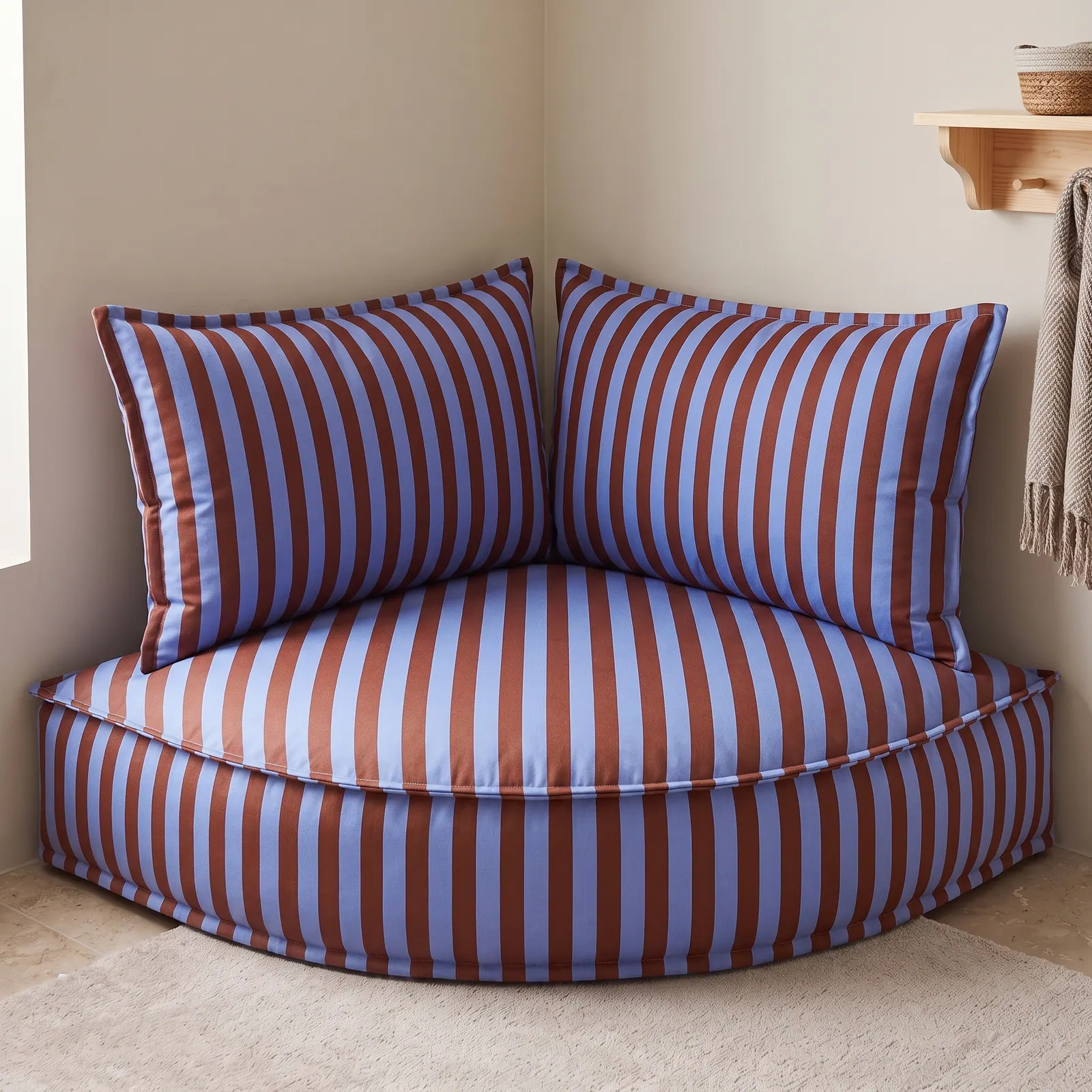
A corner floor cushion is sized by its two straight sides, the ones against the walls: 40 x 40 in (about 100 x 100 cm) suits toddlers, and 48 x 48 in (122 x 122 cm), the standard maximum, suits an adult reader. A 48 in quarter-round curves about 75.4 in across the front. Tufted corners are 4 in thick by default; plush corners are 8 in.
Two walls and a curve
A 48 in corner cushion curves about 75.4 in (192 cm) across its front. Nobody believes that number until they bend a tape along it.
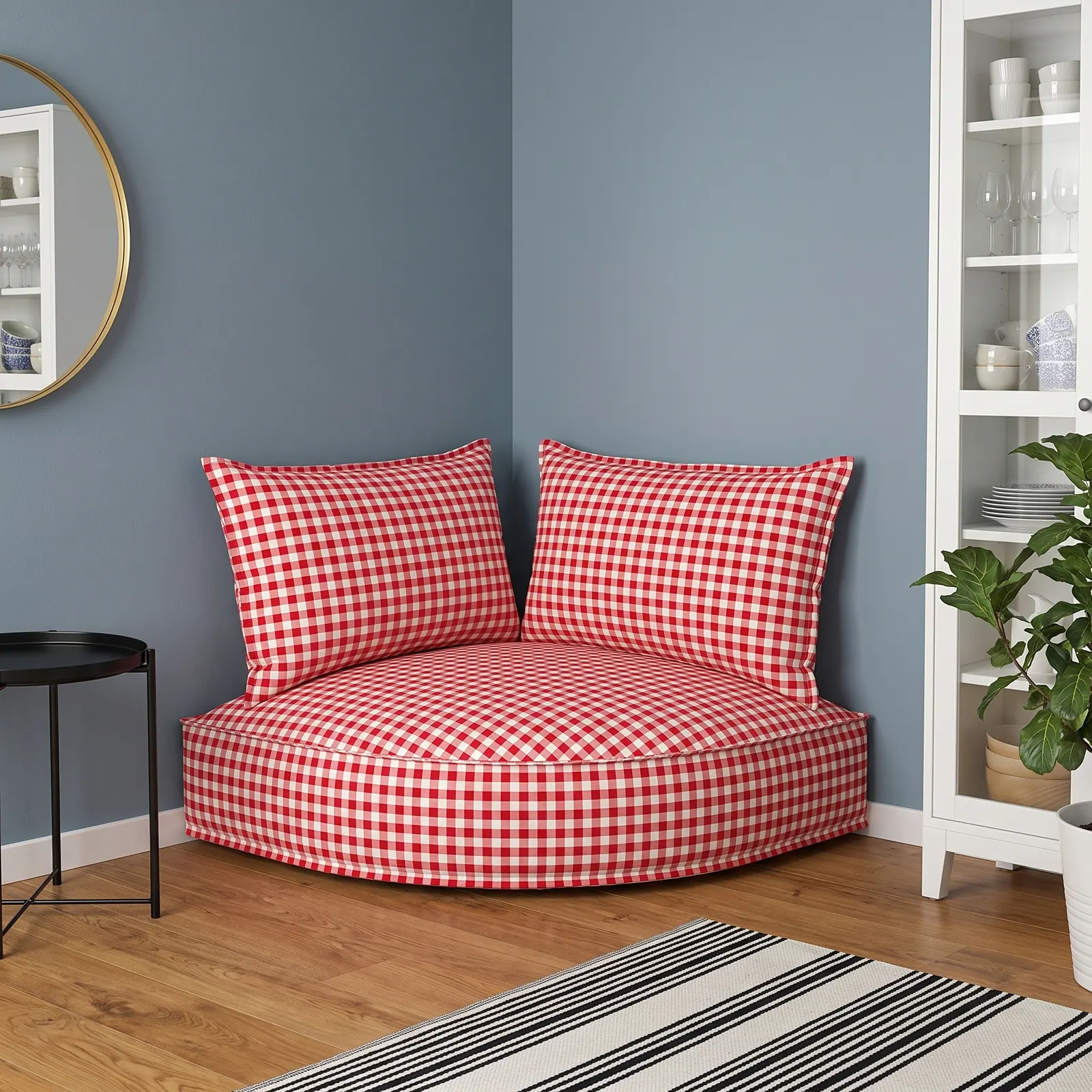
I have cut a good many quarter-rounds, and the first question is always the same: how big is it? A corner floor cushion is measured by its two straight sides, the ones that rest against the walls. The shop calls that side the radius. Common sizes are 40 x 40 in (about 100 x 100 cm) and 48 x 48 in (122 x 122 cm), and 48 is the standard ceiling. The curve takes care of itself.
What I admire in the shape is how little it asks. It turns a dead corner into a reading nook without a nail, a bracket or a carpenter's bill. The eight corners below are past orders, each with the sizes that were cut.
Start in the corner floor cushions Atlas, see the whole room in reading nook cushions, and read quarter-circle sizes before you tape the floor. Several of these buyers asked for corduroy or velvet. What does your corner measure along each wall, my friend?
Eight corners, read wall by wall
01A past project
Fifty-eight inches of corner, forty-eight of cushion
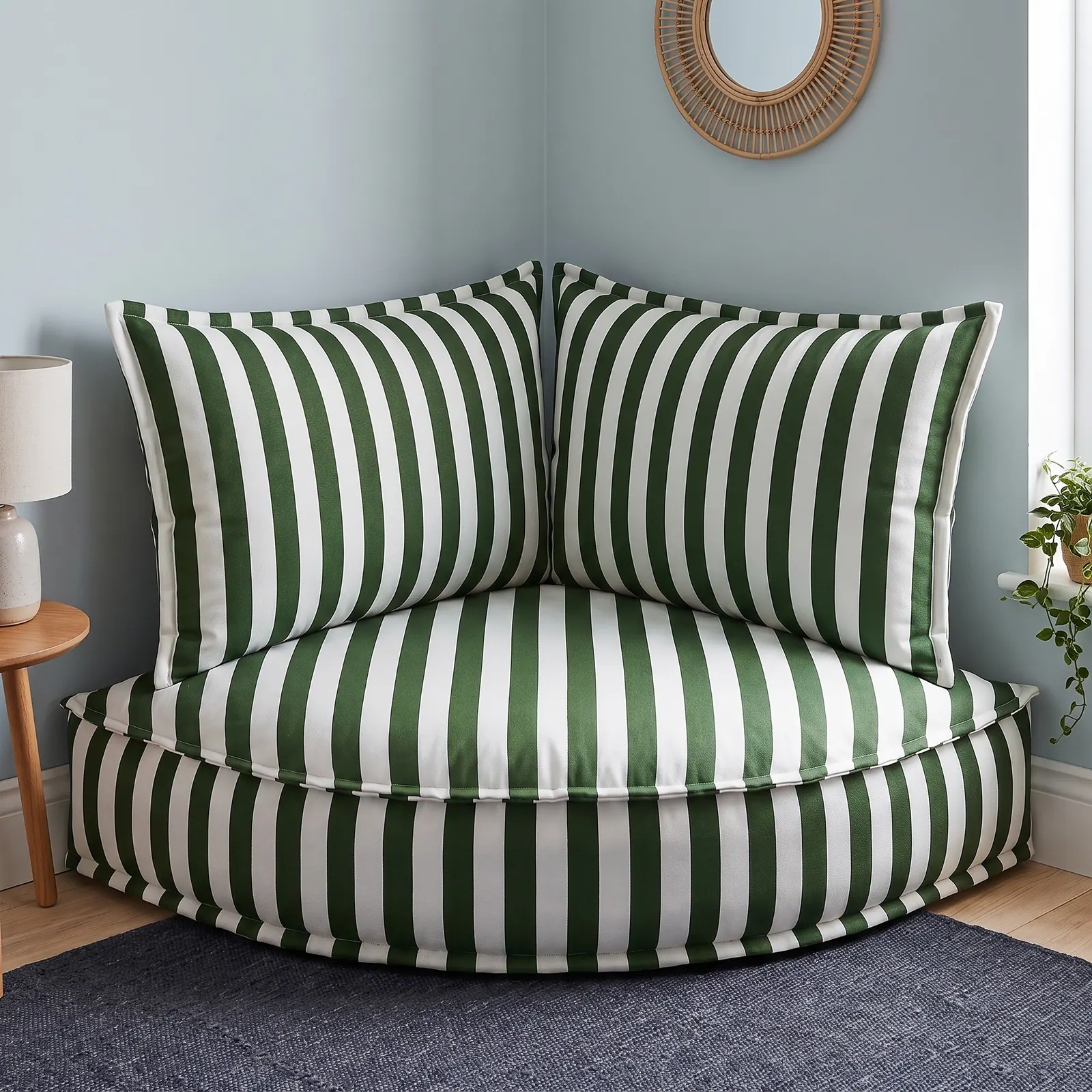
A buyer in the US wasn't sure how a quarter-circle is measured. The workshop explained that the size means the two straight wall sides, and that a 48 x 48 in cushion carries a curved front of about 75.4 in. Their corner ran 58 in (147 cm) out to the center, past the usual 48 in maximum, and the workshop quoted that custom size. They looked at the small room again and kept the standard 48, with emerald or forest-green velvet in mind.
The takeaway: Measure along both walls, then bend the tape around the arc before you settle on a size.
02A past project
Forty or forty-eight, in emerald
A buyer in the US weighed a 40 in radius against a 48 in radius for a reading-nook corner. They chose the 48 in emerald and ordered it the simple way, by picking 48 x 48 in. On a corner cushion the listing size is the radius twice, one number for each wall.
The takeaway: Forty inches per wall suits small readers; a grown-up reader wants the 48.
03A past project
Forty inches of beige corduroy
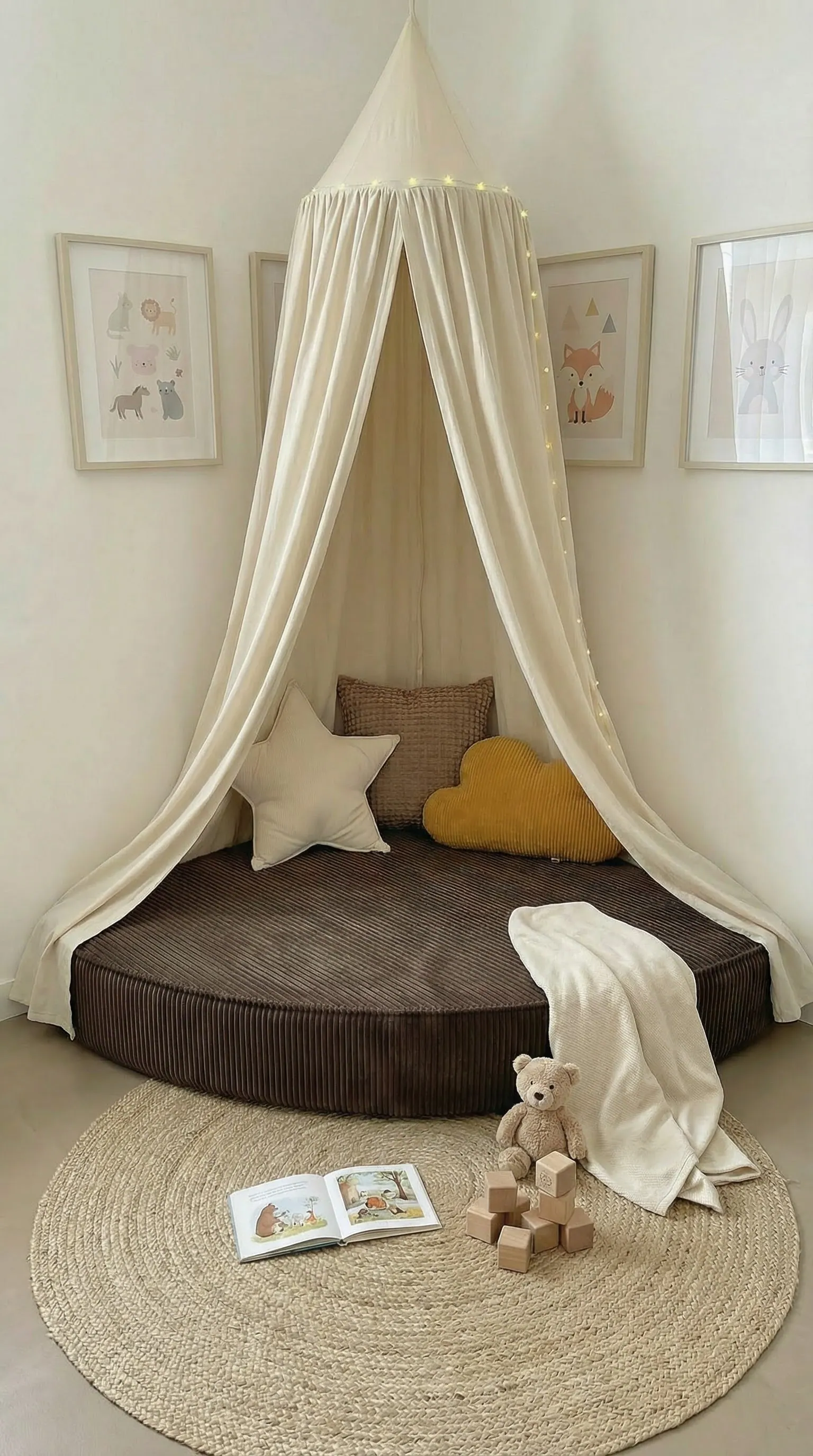
A buyer wrote to the workshop with a corner reading nook about 40 in (102 cm) on each side and a wish for beige corduroy. Forty is one of the two common corner sizes, so a corner like that fits a standard pattern with nothing to redraw. Corduroy has a rib you can feel in the dark, and in a nook that counts for something.
The takeaway: If both walls land on a standard size, take it; the fixed pattern means no curve to redraw.
04A past project
Brick corduroy and the pillows that finish it
One buyer wrote in planning a whole reading corner: a curved corner floor cushion, one 22 x 22 in (56 x 56 cm) pillow and 20 in (51 cm) round pillows, all in brick corduroy with off-white. The curve gives you a seat; the pillows give you something to lean on. Each fabric roll is dyed in its own batch, so a pillow added months later can sit a shade off beside the seat.
The takeaway: Order the corner cushion and every pillow on the same day, so they come off one roll.
05A past project
A square corner with a sour cherry back
Not every nook wants a curve. One buyer wrote in with a square corner and ordered a 38.2 in (97 cm) corner cushion with a 38.2 x 15.7 x 3.9 in (97 x 40 x 10 cm) backrest in sour cherry. The backrest runs the same length as the seat side, and like every floor-cushion backrest it leans on the wall rather than standing on its own.
The takeaway: Match the backrest length to the seat side it sits on, and let the wall hold it up.
06A past project
Three sides of glass, forty inches deep
One buyer wrote in with a three-sided corner window, about 40 in (102 cm) deep at the center, and wanted a tufted French-style finish. A quarter-round pattern cannot follow three walls of glass. A shape like that is drawn from the room itself: every side, the depth at the center, and a wide photo taken from across the room.
The takeaway: Measure the center depth straight out from the glass, then every side, and put them all on one drawing.
07A past project
Half a circle on a flat wall
A buyer in the US had a blue wall where a plant and a stack of records used to be, and no corner at all. They sent a photo and asked whether two quarter-circle corner cushions, side by side, would make a half circle. They do, and the workshop told them it would work well in mustard velvet. Velvet remembers, so both halves belong in the same order, off the same roll.
The takeaway: No corner needed: two quarter-rounds make a half-circle seat against any flat wall.
08A past project
Buttons, a dog, and a cover that comes off
A buyer in the US with a dog loved the tufted corner floor cushion but needed a cover that comes off for washing. Tufting is sewn straight through, so a tufted cover can't be removed. The workshop offered two honest roads: a zipped, untufted version, or the tufted look with a fixed cover.
The takeaway: In a home with pets, choose the zipped, untufted corner cushion so the cover can go in the wash.
How thick to cut the corner
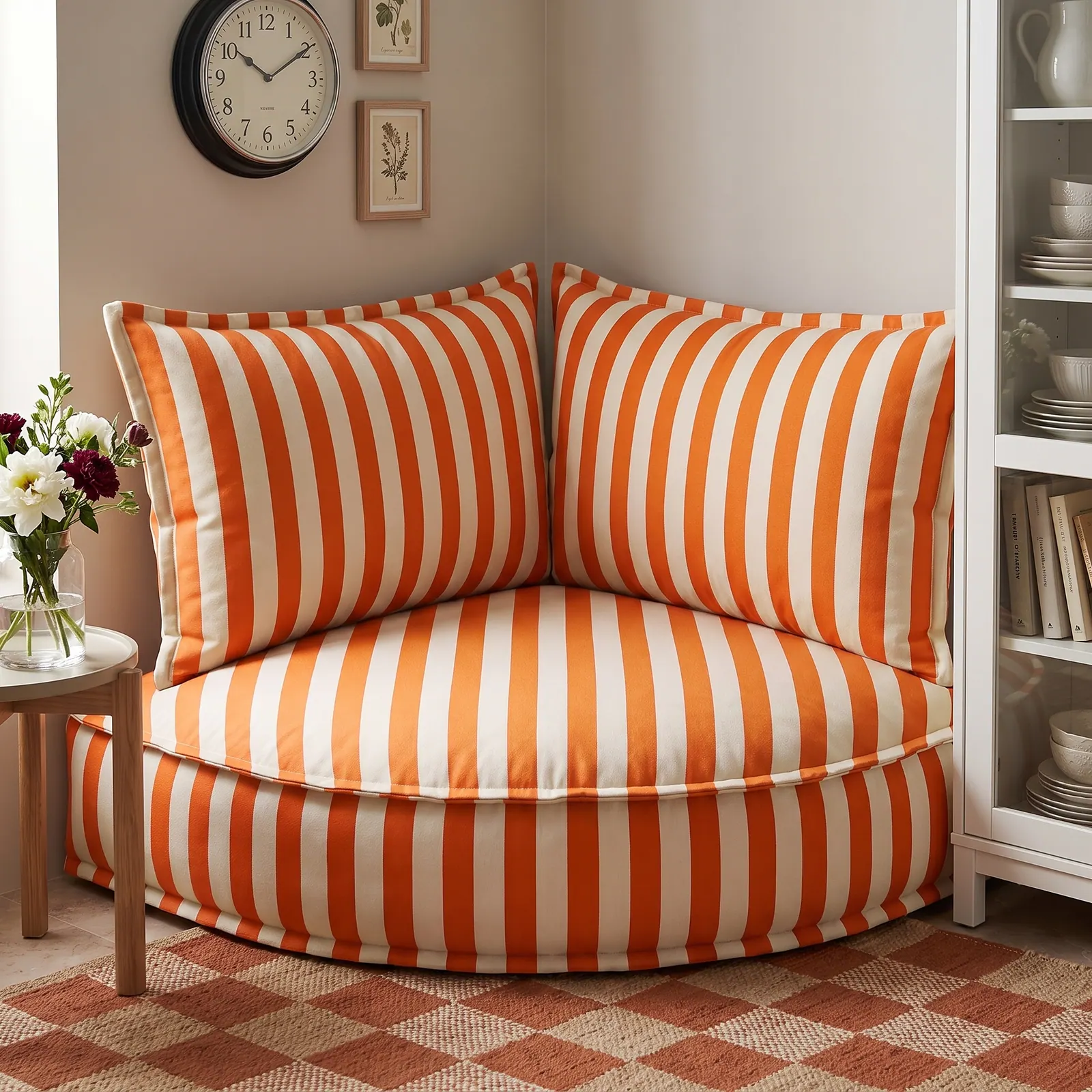
Thickness is the second number after the walls. The floor cushion thickness Pattern has the long version, tufted or plain settles the button question, and the foam firmness finder helps if you can't decide between sitting up and sinking in. Children's corners have their own sketchbook in kids' and classroom reading corners.
| Thickness | Which corner cushion | What to know |
|---|---|---|
| 4 in (10 cm) | Tufted corner cushion | The default; tufting is included |
| 5 or 6 in (13 or 15 cm) | Tufted corner cushion, made thicker | Made to order; the price rises with each step |
| 8 in (20 cm) | Plush corner cushion and kids' corner floor sofa | The kids' version is foam with a removable cover |
| 10 to 12 in (25 to 30 cm) | Quoted on a 60 in (152 cm) cushion | A 48 in tufted corner at 10 in ran well over one buyer's decor budget; say what the height is for |
Measure a corner floor cushion along the two walls, never across the curve; the standard pattern stops at 48 in per wall.
Harlan
What buyers ask before they tape the floor
- A common question
How large can a corner floor cushion be made, and how small?
The workshop's answerThe standard maximum is 48 in (122 cm) per side, though a 58 in (147 cm) custom corner has been quoted and small ones go down to 25 x 25 in (64 x 64 cm). The kids' corner cushion comes in about 32, 40 and 47 in (80, 100 and 120 cm) per side, all 8 in (20 cm) thick. Corners are cut from fixed patterns, so for a new curve, draw it with every measurement: the line across the curve, center of the curve to the corner, and both straight sides.
- A common question
My corner falls between two of your sizes. What do I order?
The workshop's answerThe next standard size up, with your exact size written in the order note. A 35 x 35 in (89 x 89 cm) corduroy corner, 10 in (25 cm) high, went through under the 39 x 39 in (99 x 99 cm) option, and 25 x 25 in and 28 to 29 in corners have been made. The price stays at the size you select, because a custom cut is extra work, not less. Message after ordering so the size can be confirmed.
- A common question
What size corner cushion suits a child's reading nook, and what suits an adult?
The workshop's answerAbout 40 x 40 in (100 x 100 cm) for a toddler's reading corner, and 32 x 32 in (80 x 80 cm) is cozy for a 4-year-old. For an adult about 5 ft 2 in to 5 ft 7 in (157 to 170 cm) tall, take the largest, 48 x 48 in (122 x 122 cm). Mark the size on the floor with tape before ordering, and ask about color: more exist than the listing shows.
- A common question
Can a tufted floor cushion go to 8 inches instead of 4?
The workshop's answerYes. The standard tufted floor cushion is 4 in (10 cm); the plush corner cushion is already 8 in (20 cm). For an 8 in tufted piece, pick a larger size option to cover the extra thickness and write your exact dimensions, such as 42.5 x 42.5 x 8 in (108 x 108 x 20 cm). Tufting costs nothing extra, and a stacked double layer is another way to gain height.

Have it made
Have an idea like this made — ask Harlan’s workshop
Fabric has a temper and foam has a memory. Better to settle both in a conversation than to guess at them alone. — Harlan
Leave your details and the workshop will call you to confirm measurements, fabric, foam and piping. No prices, dates or payment on this page: it is a request, not an order.
Questions buyers ask next
Why is a quarter-round cushion sized along the walls and not across the front?
The two straight sides are the lines you can measure cleanly against a wall, and the curve follows from them. A 48 x 48 in (122 x 122 cm) quarter-round has a front arc of about 75.4 in (192 cm). The chord, rise and radius Pattern shows how curves are measured.
Can the backrest be tied to the corner cushion so it stays in place?
Yes. Floor-cushion pieces arrive separate, not sewn together, and can be joined with ties or hook-and-loop on request. The backrest leans on the wall rather than standing alone; with no wall behind it, a back-supported version or a metal frame can be arranged. Back cushion height covers sizing.
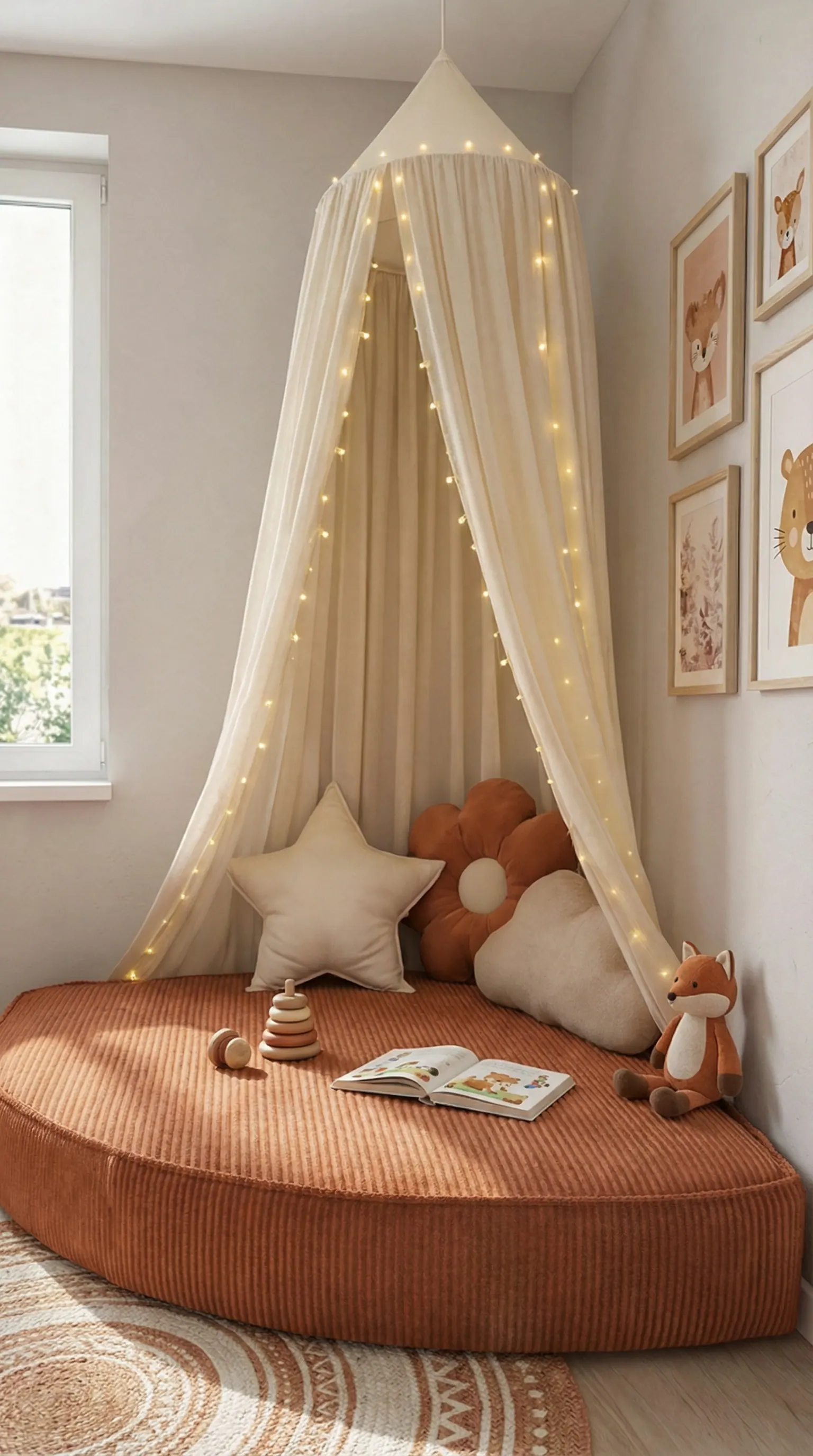
Does a corner cushion order include the fairy-light canopy in the pictures?
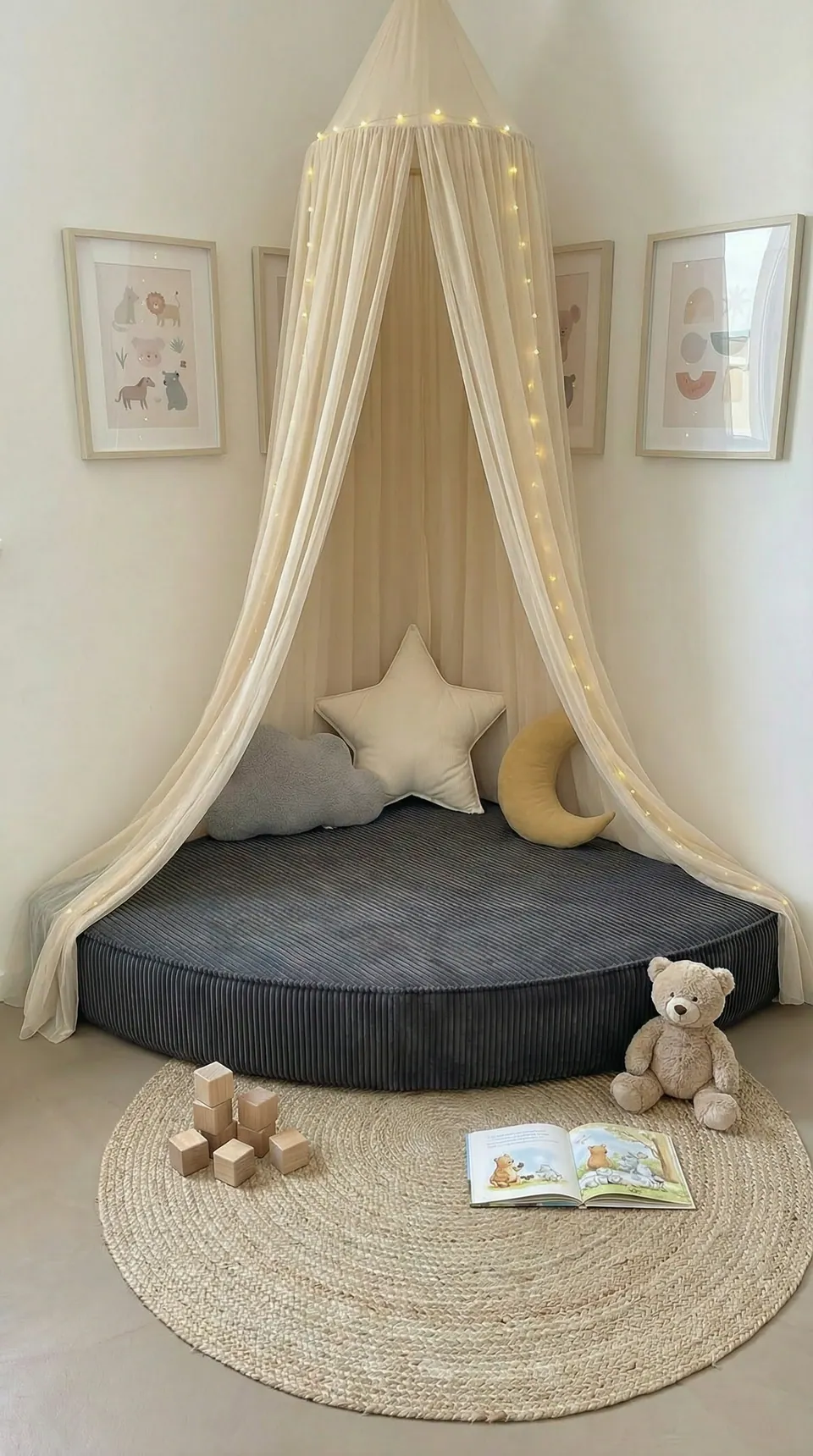
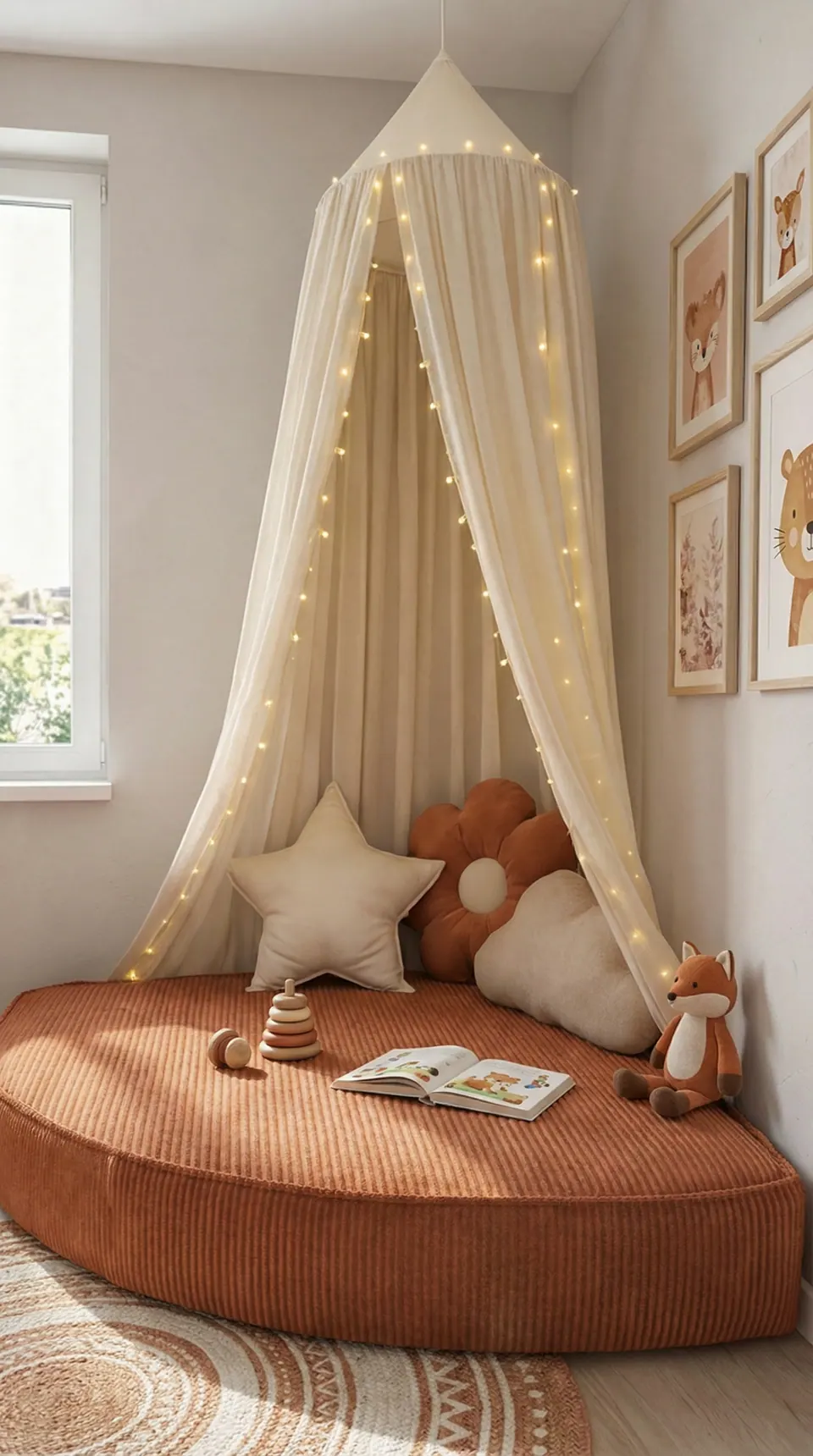
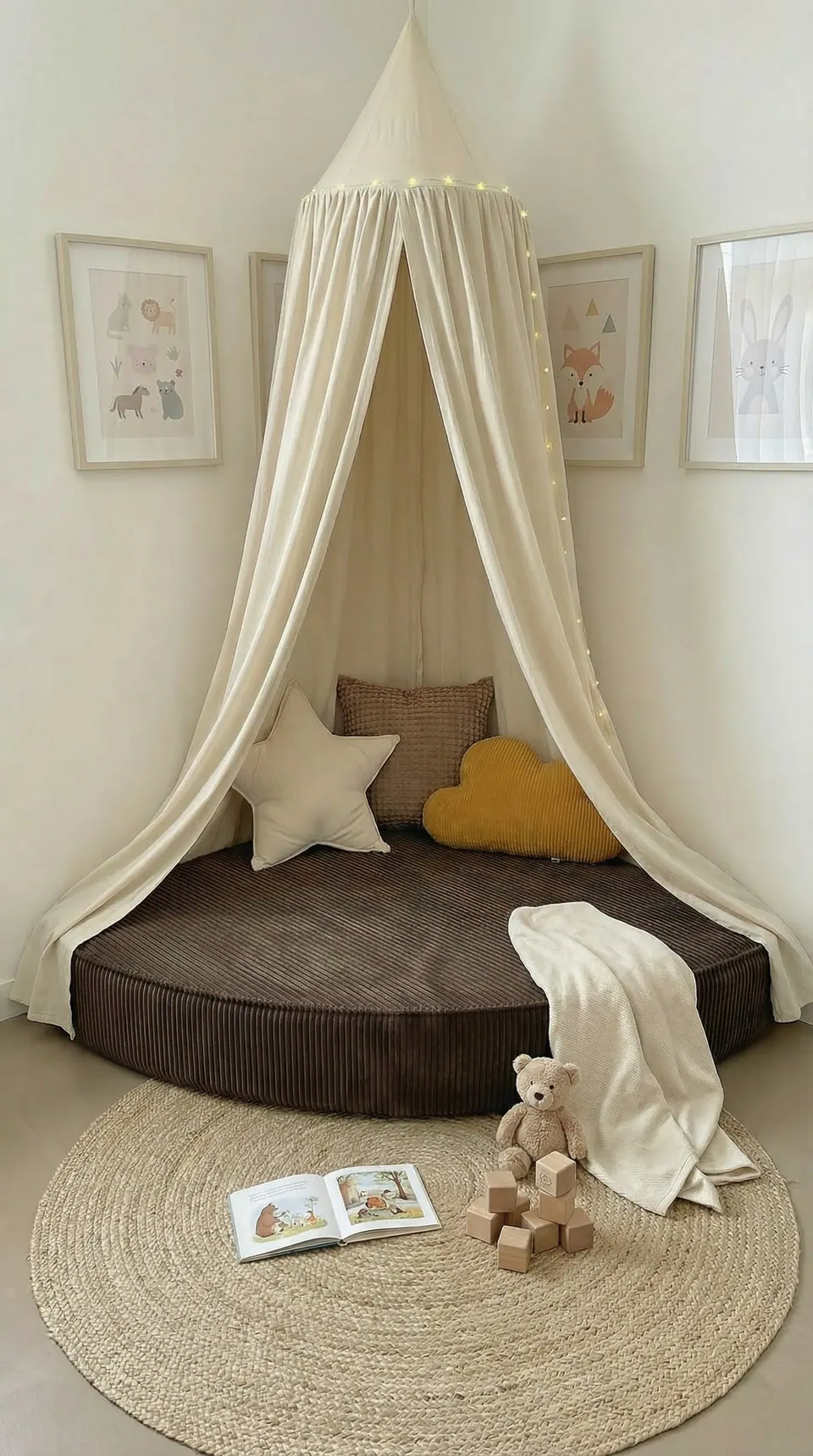
No. The order is the cushion only; the canopy in the listing photos isn't included. Review photos can also mislead on scale, because buyers chose different sizes and camera angles vary, so compare by the size on the order rather than by the picture.
Is a 10 inch thick corner cushion worth the extra cost?
Only if you know why you need the height. Thickness drives the price steeply: a 48 x 48 in tufted corner at 10 in (25 cm) came in well over one buyer's budget for a decor piece, and the workshop asked what the height was for. Answer that first; 5 and 6 in are steps in between.