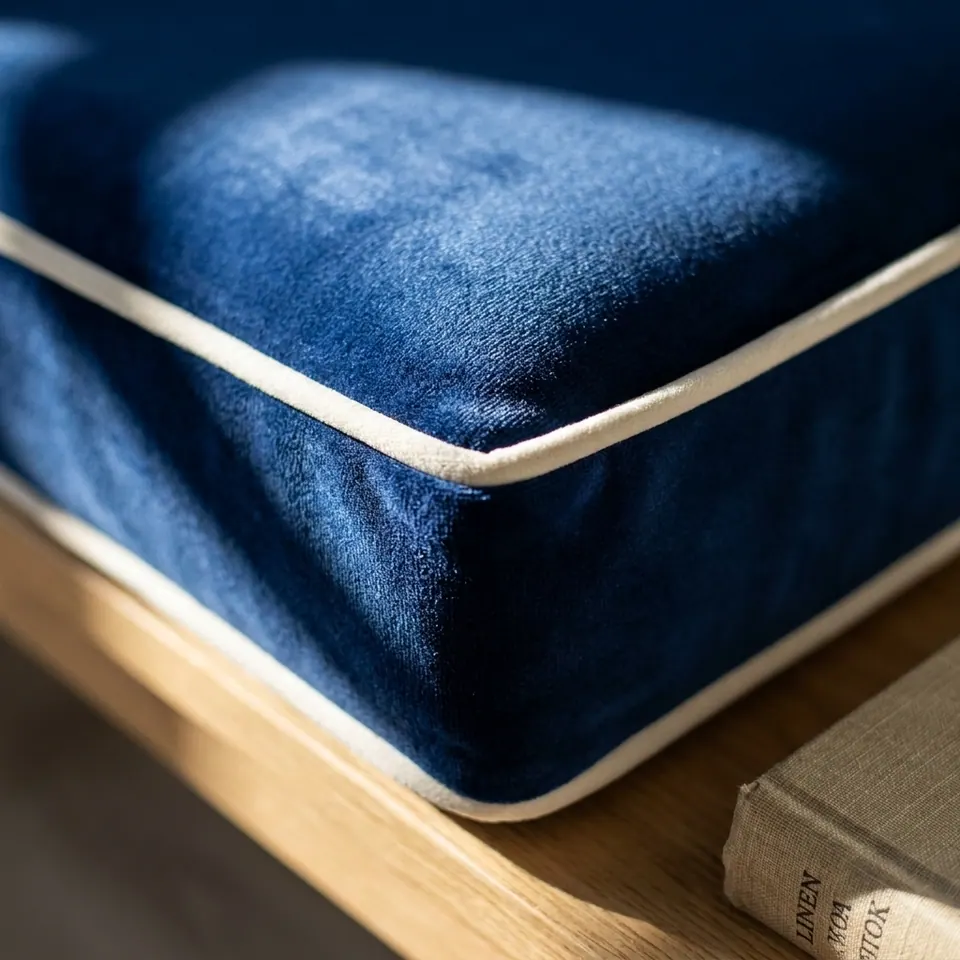
Velvet for cushions: pile, color and a gentle wash
Velvet is the cloth folks fall for first and keep longest. It wears well on a window seat or a busy family bench, washes gently, and asks one habit of you at ordering time.
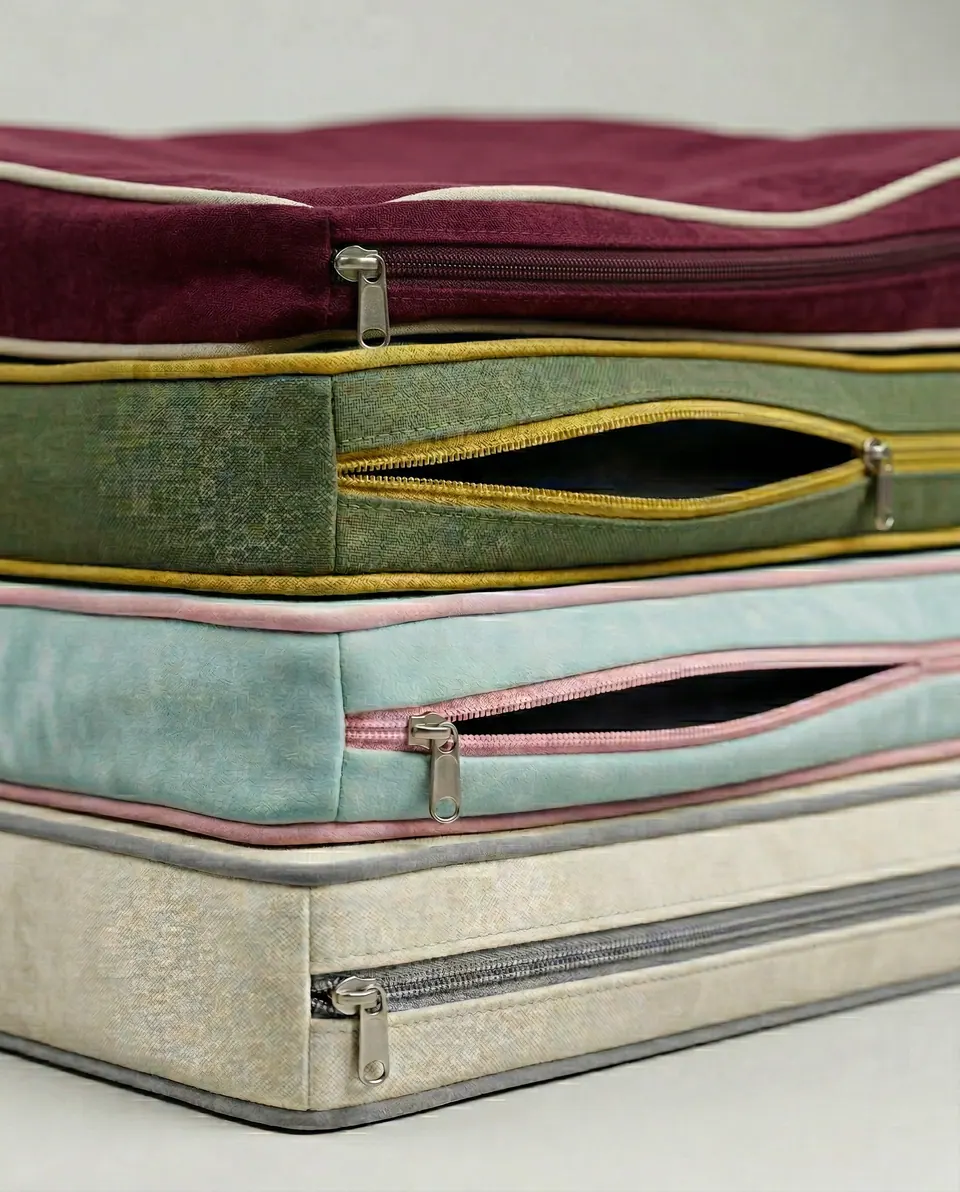
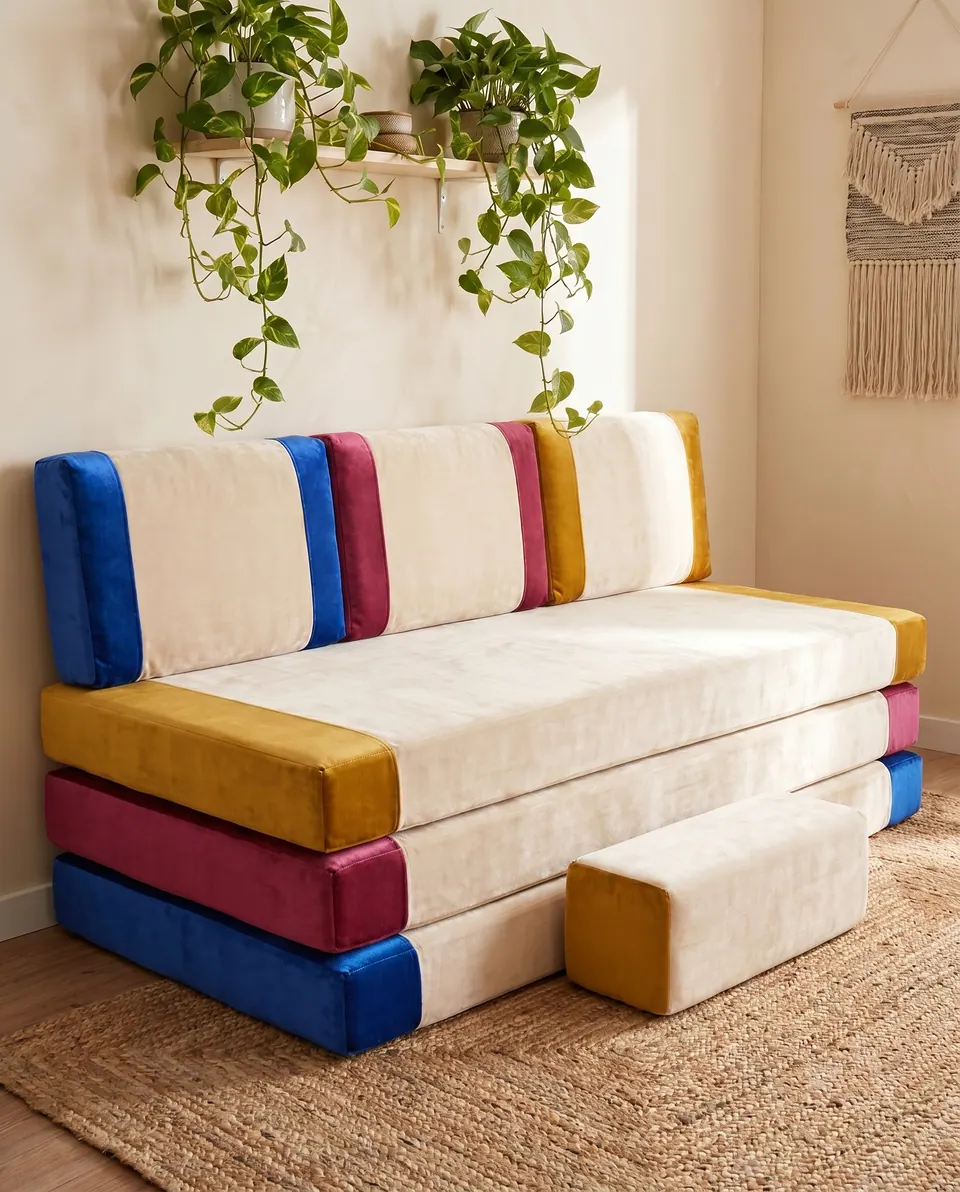
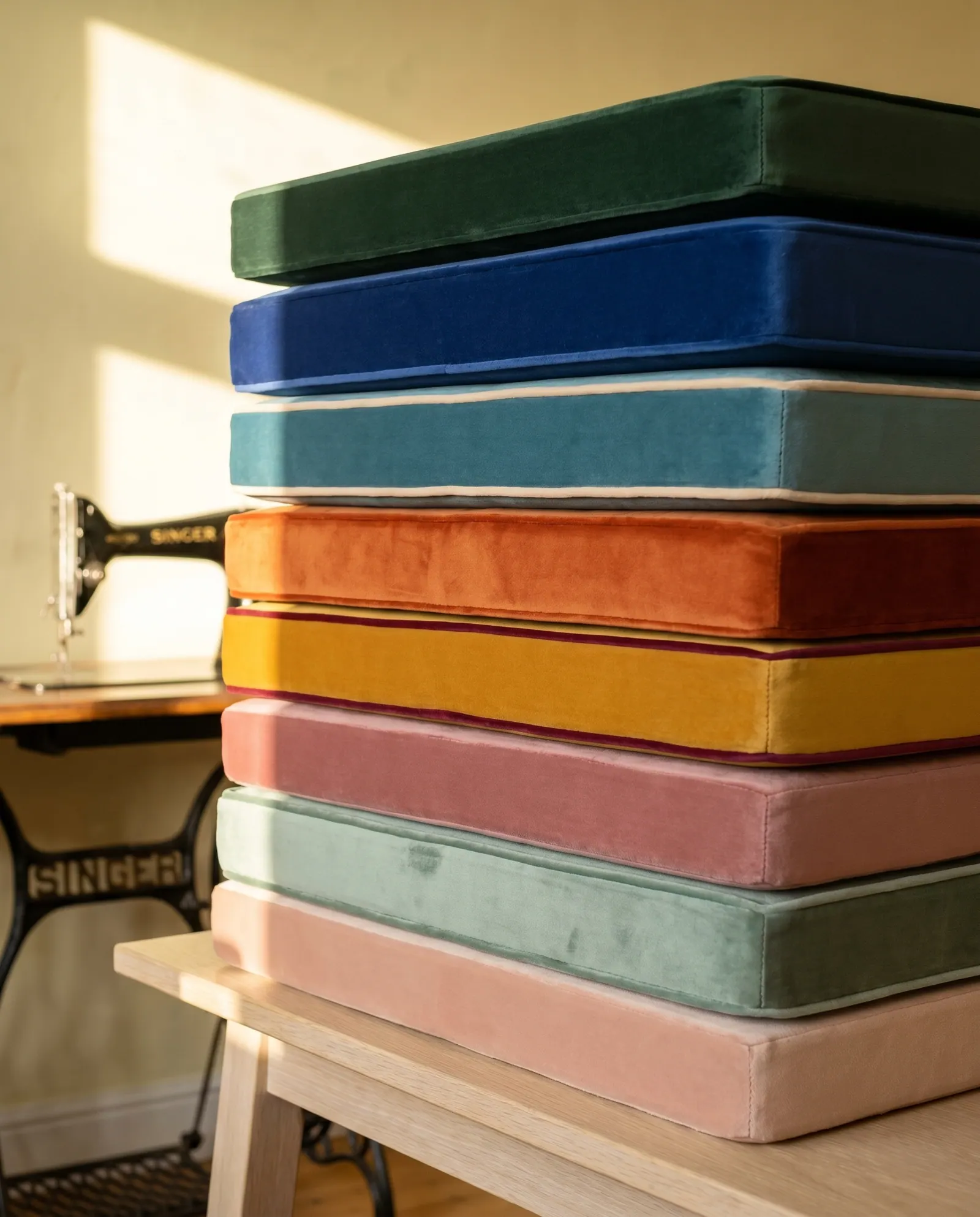
SaveOne stack, eight velvet colors. The teal and mustard pieces carry contrast piping; the rest are piped in their own color.
Swatch stripmeasured from the photographs on this page
charcoal#1e282c
sand#c4b08a
camel#ad8a61
dark terracotta#7c4e32
pebble#b1b3b1
taupe#7d766e
camel#9b8d7f
chestnut#5a4843
The quick answer
Velvet is a short, dense pile fabric, polyester on the workshop's charts, and one of two fabrics the workshop recommends for kids, rentals and heavy daily use. Covers unzip from the underside and machine wash at 86°F (30°C) on a gentle cycle, then air dry. The chart runs about 40 colors, and a whole set should be ordered at once because dye batches vary.
Swatch book · 8 cards
The swatch book
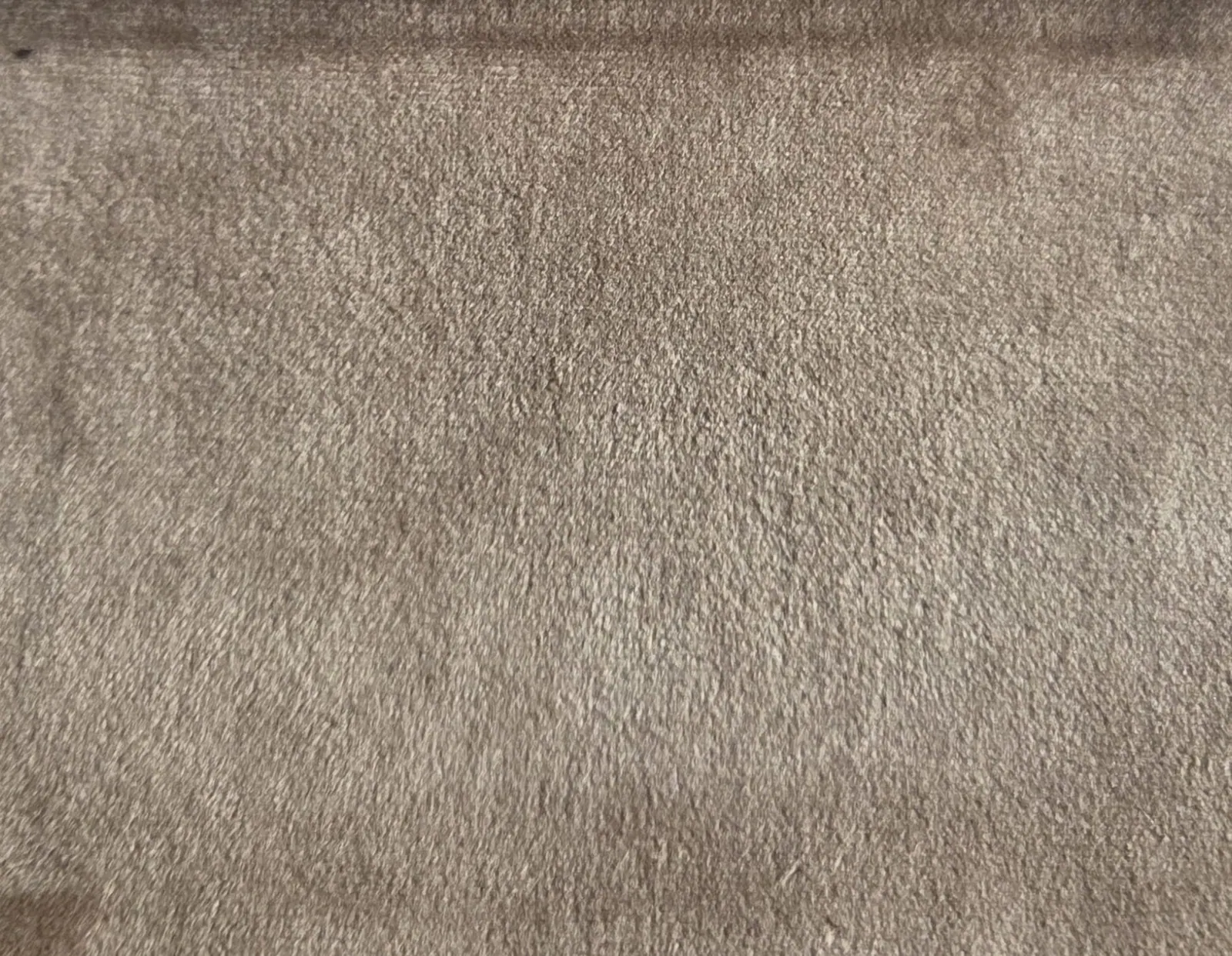
Swatch cards photographed in daylight. Open any card to zoom into the weave. Swipe or scroll sideways for all of them. Screens shift color, so a sample in your own light is the final word.
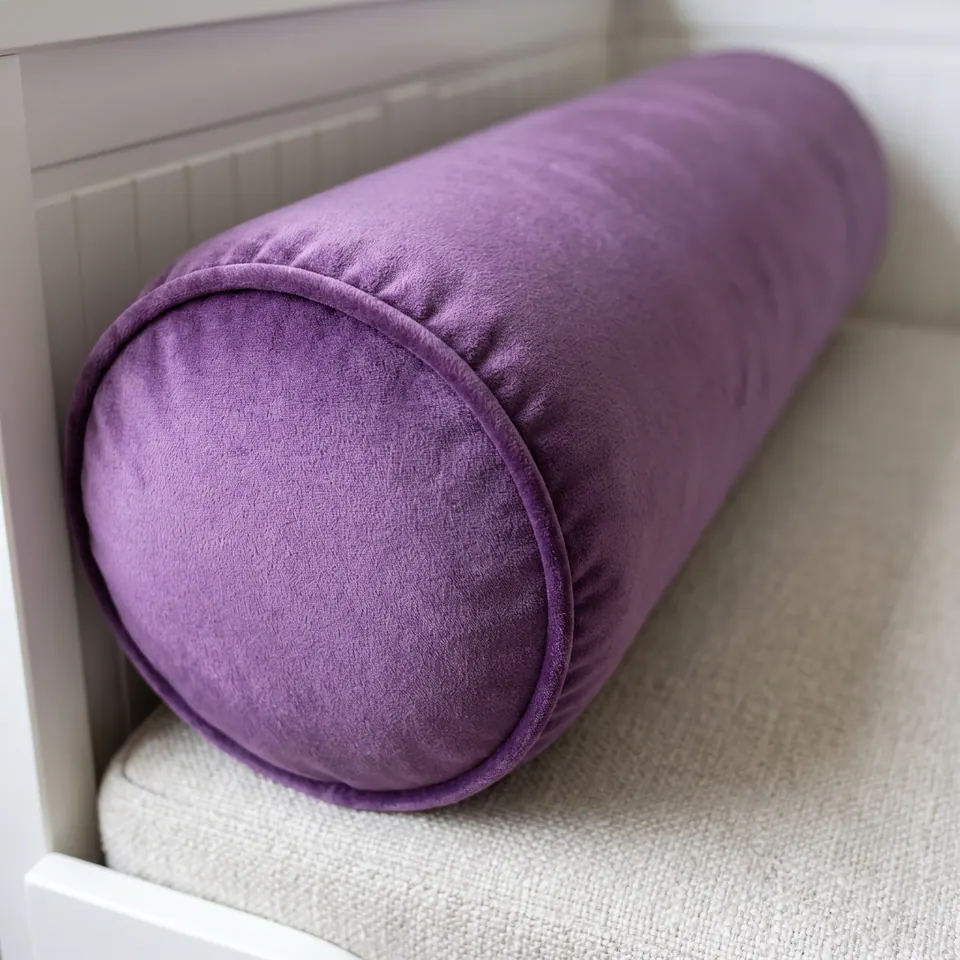
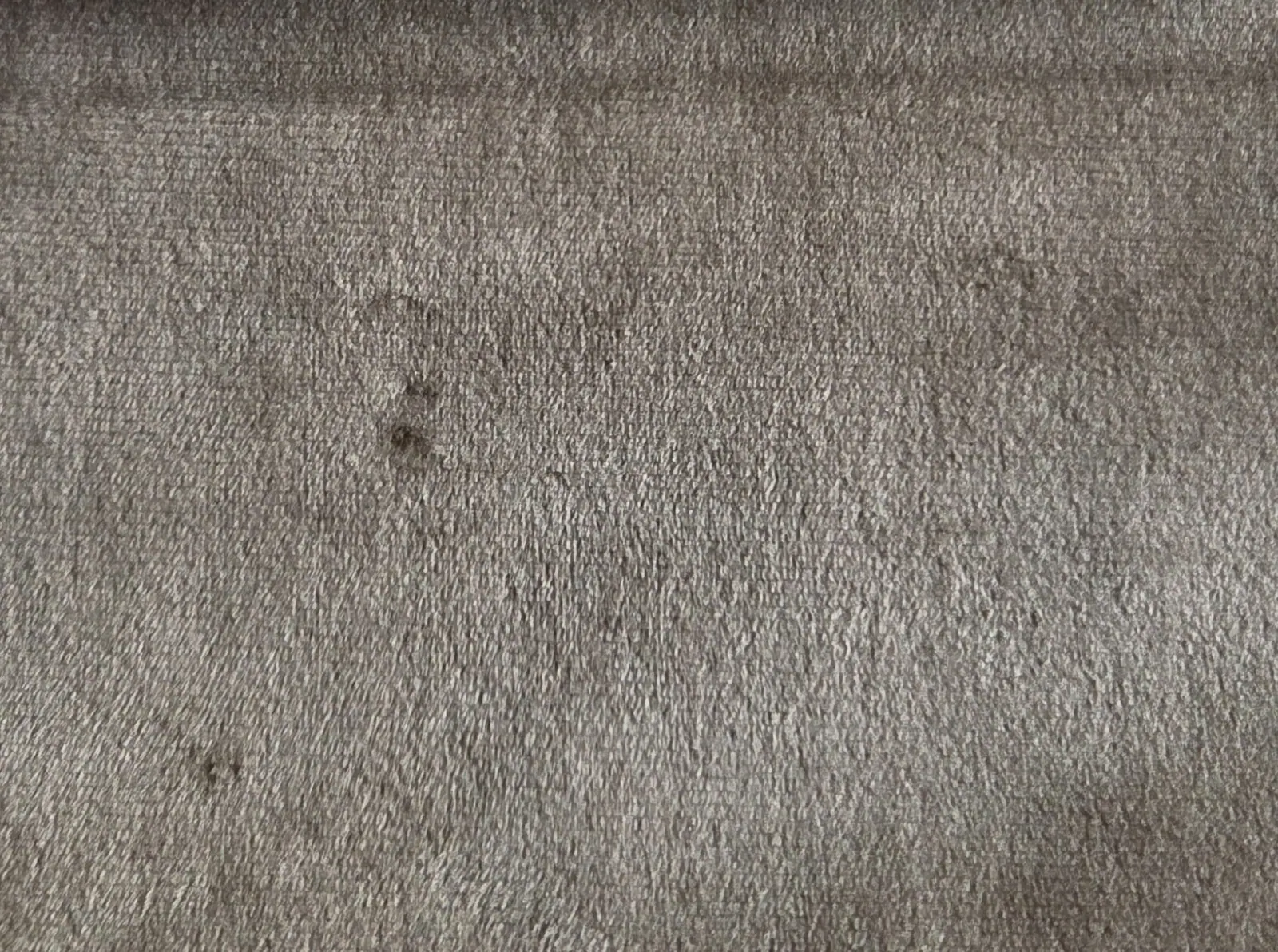
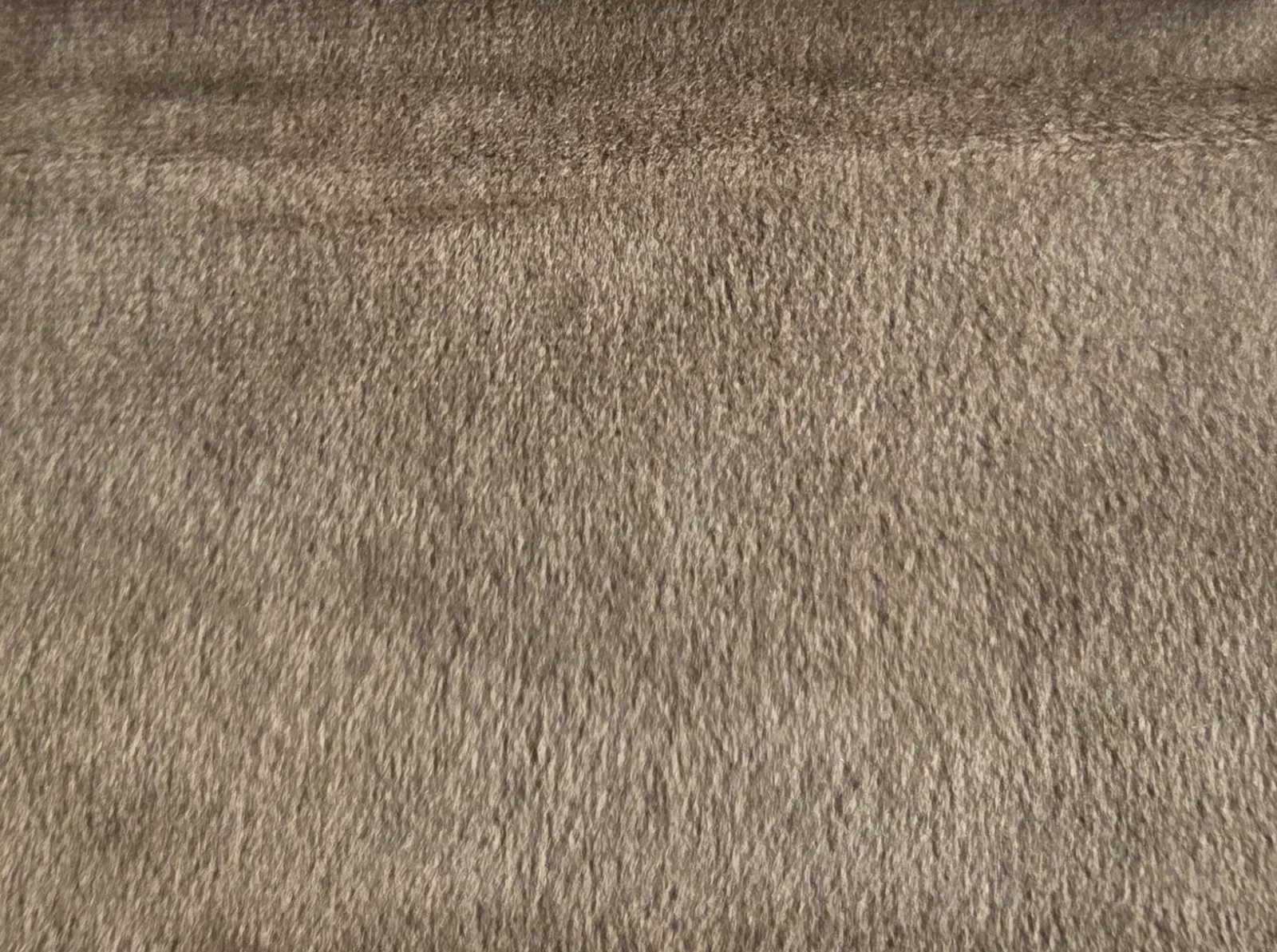
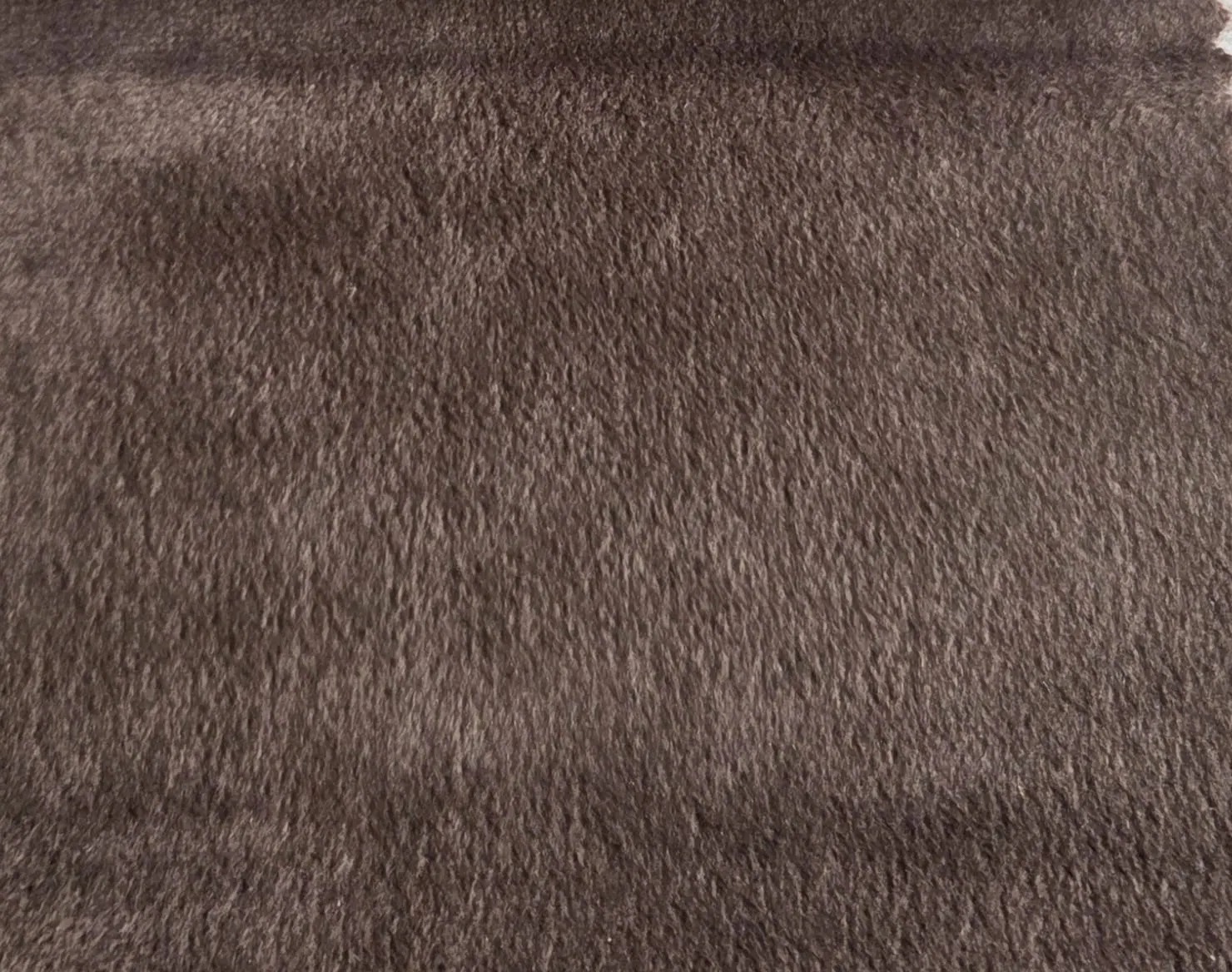
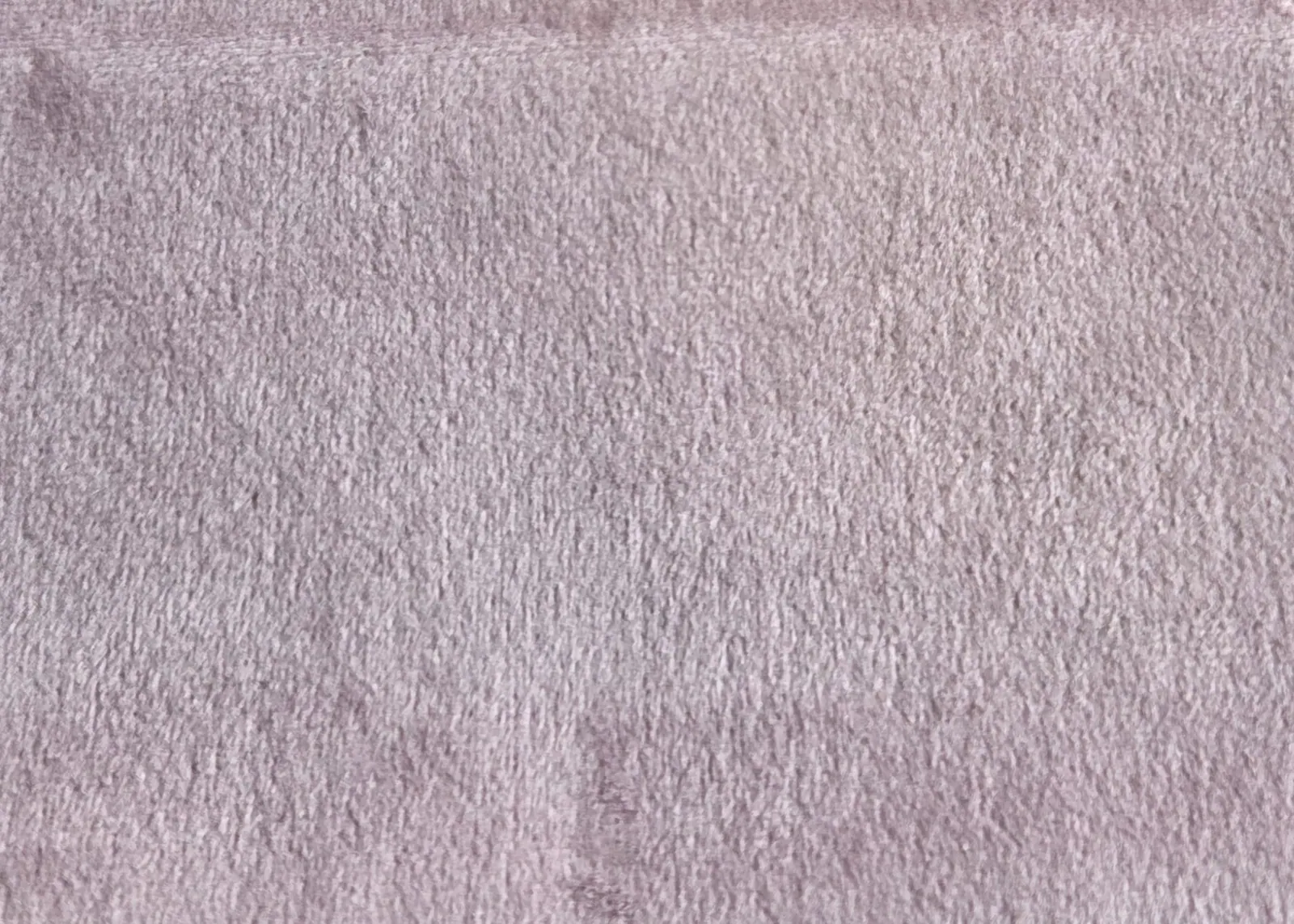
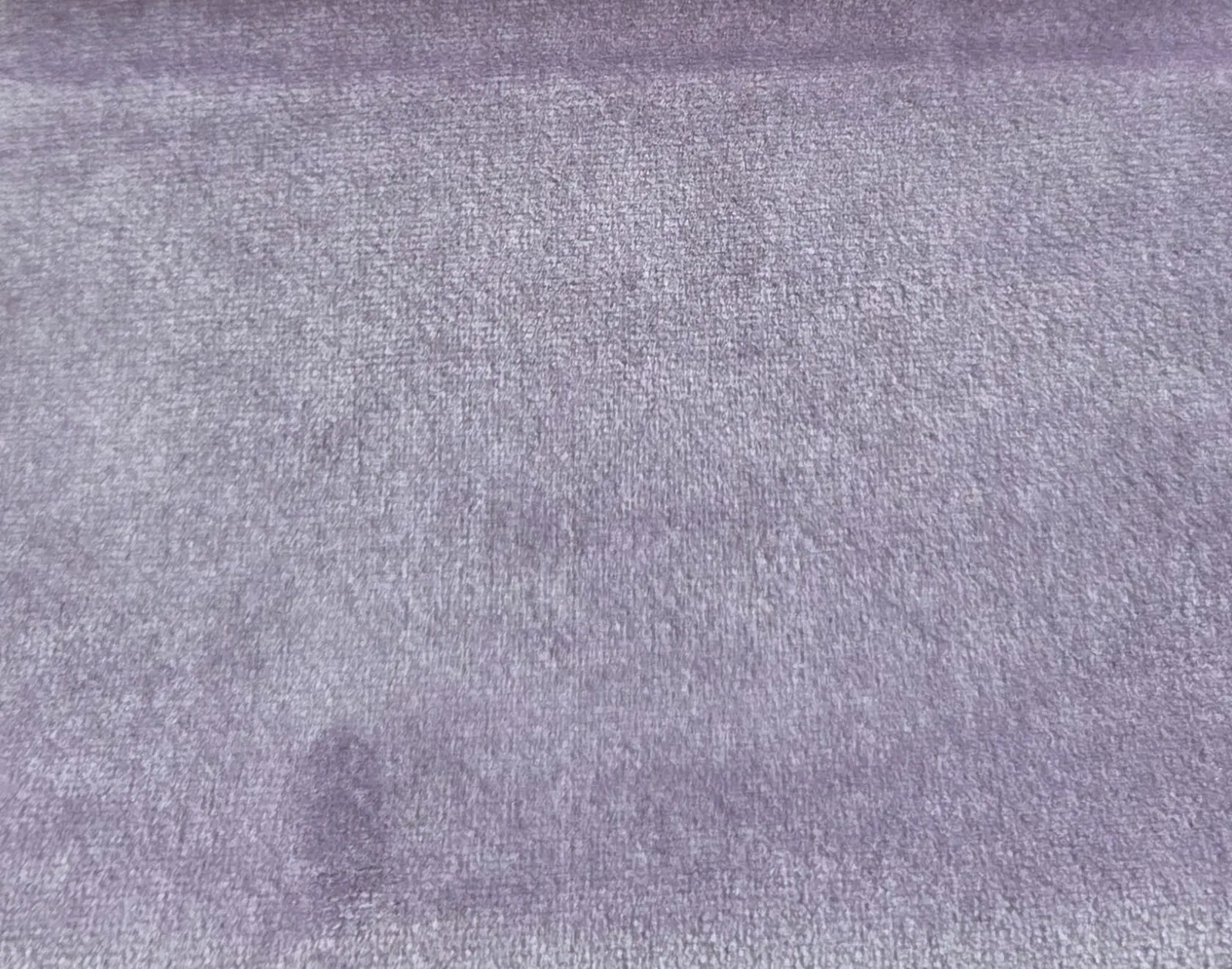
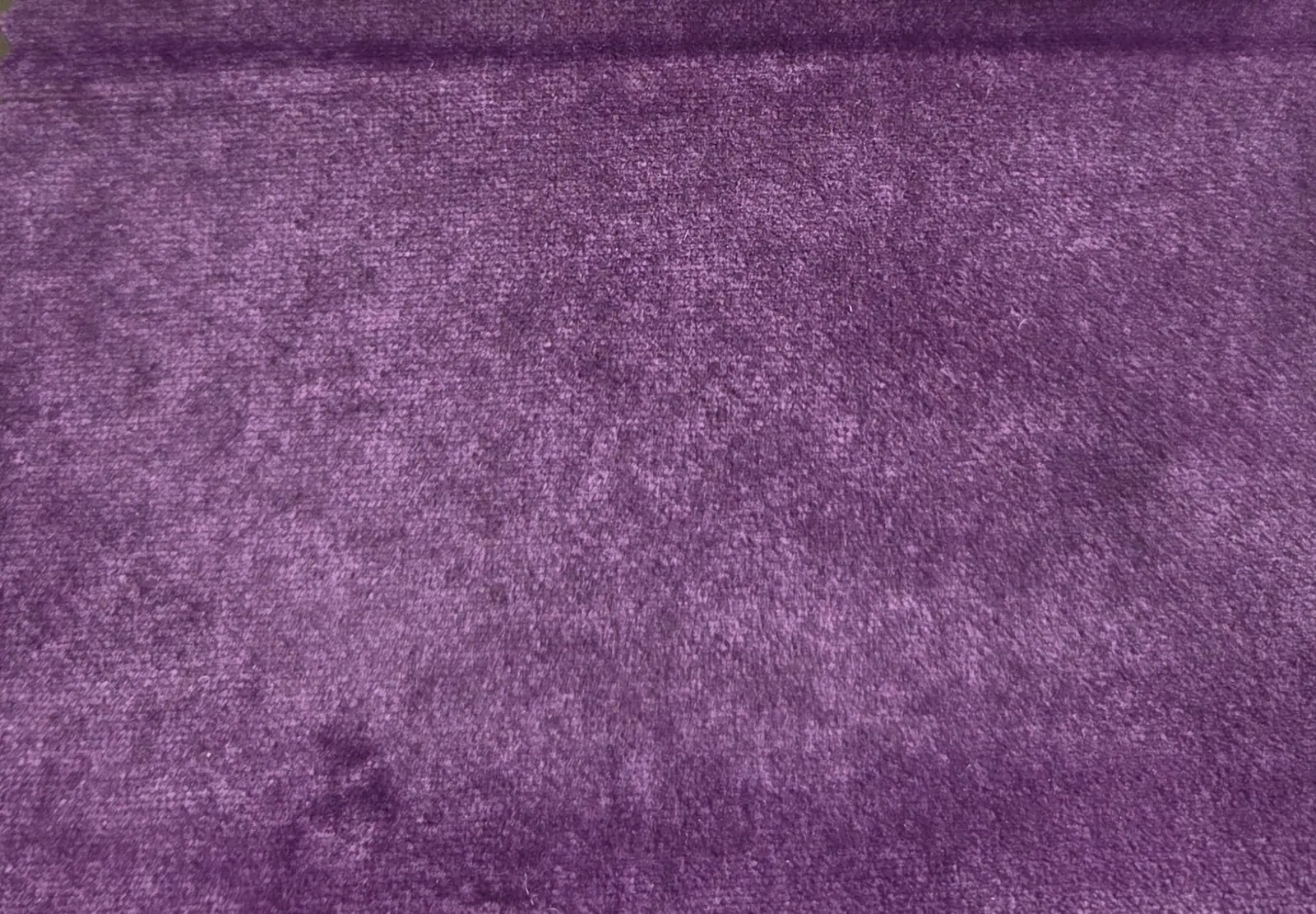
SaveIndoor light makes this white cream velvet look slightly gray; expect a soft warm white in daylight.SaveWarm taupe is the in-between neutral: gray enough for white shelving, brown enough to sit beside oak.SaveThe pile on this latte shade lies in one direction, so it shifts from milky coffee to cocoa as the light moves.SaveMushroom velvet is a pinkish taupe; one real order used it for the cushion body with cream velvet piping.SaveChocolate velvet shows lighter cocoa tips where the pile catches light, giving depth rather than a flat dark block.SaveDusty rose often photographs cooler than it looks in person; this sample drifts toward lilac under daylight.SaveA grayed lilac that stays gentle; the dark patch at lower left is simply pile that has been pressed flat.SaveDeep purple velvet shows light and dark patches as the pile moves, the same crushed-jewel effect seen on a finished seat.
Counted from the readings the masters have published in this family. Open a cushion type for its sizes and measuring.
Eight colors on an oak bench, and what the pile is doing
Stack eight velvet cushions by a sunny window and you will learn more about color than a chart can teach. Bottle green, royal blue, teal, burnt orange, mustard, dusty pink, sage and blush, and every one of them shifts as you walk past. That is the pile at work.
Velvet is a short, dense pile standing up from a woven back. Ours is polyester, and it is the fabric buyers love most: soft under the hand and durable under the seat. The cream card on this page shows how tight a good pile sits. The chocolate card shows two depths of brown in one piece of cloth, and the latte card has a frosted look, near to suede.
The main chart runs about 40 colors, coded in the 100s. I have handled velvet since 1968, and it still surprises me in afternoon light.
Library benches, window seats and a bistro banquette
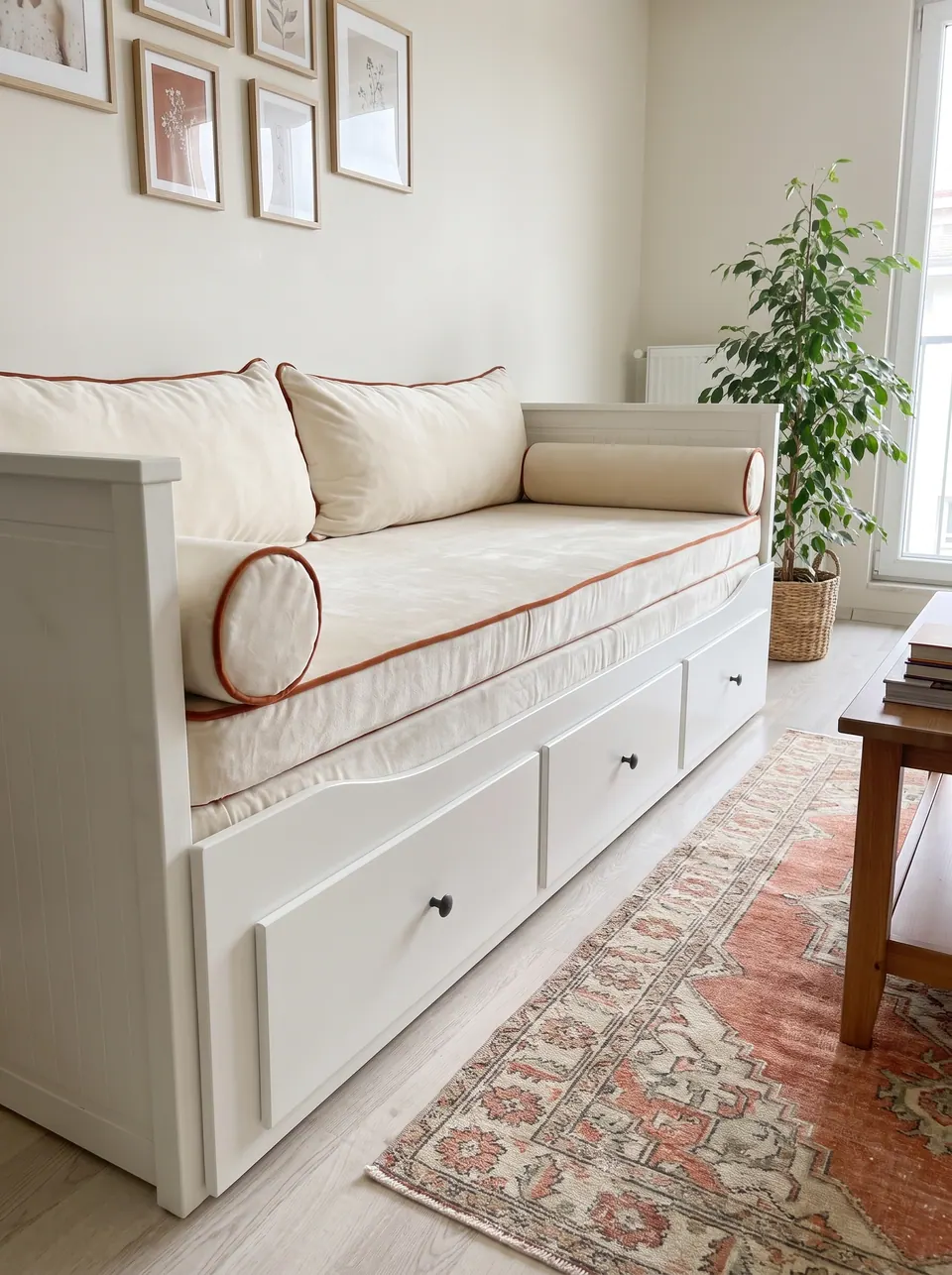
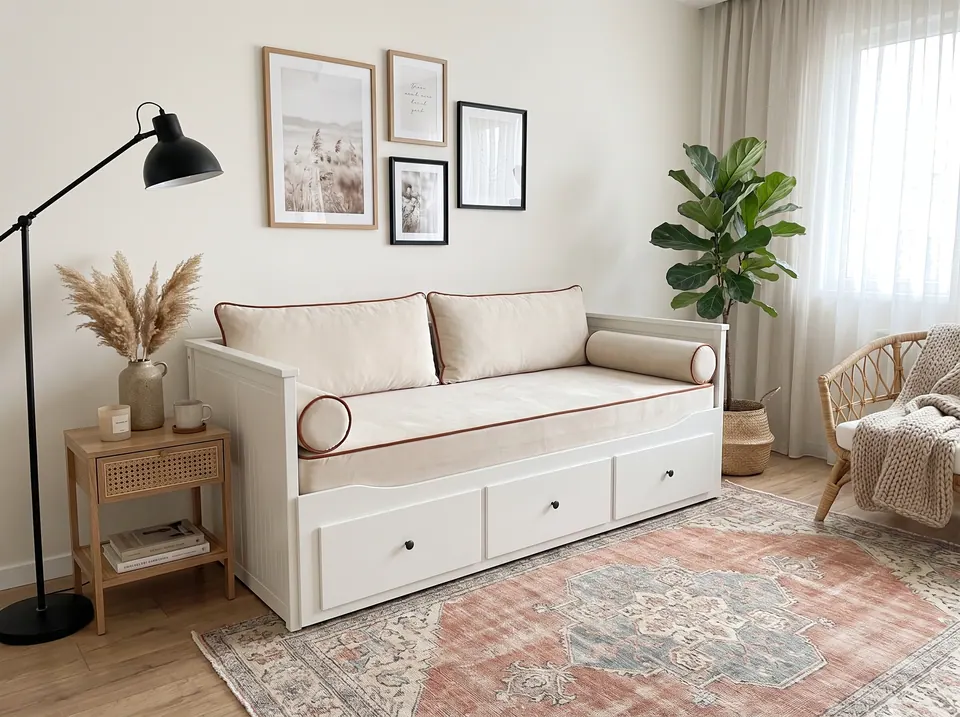
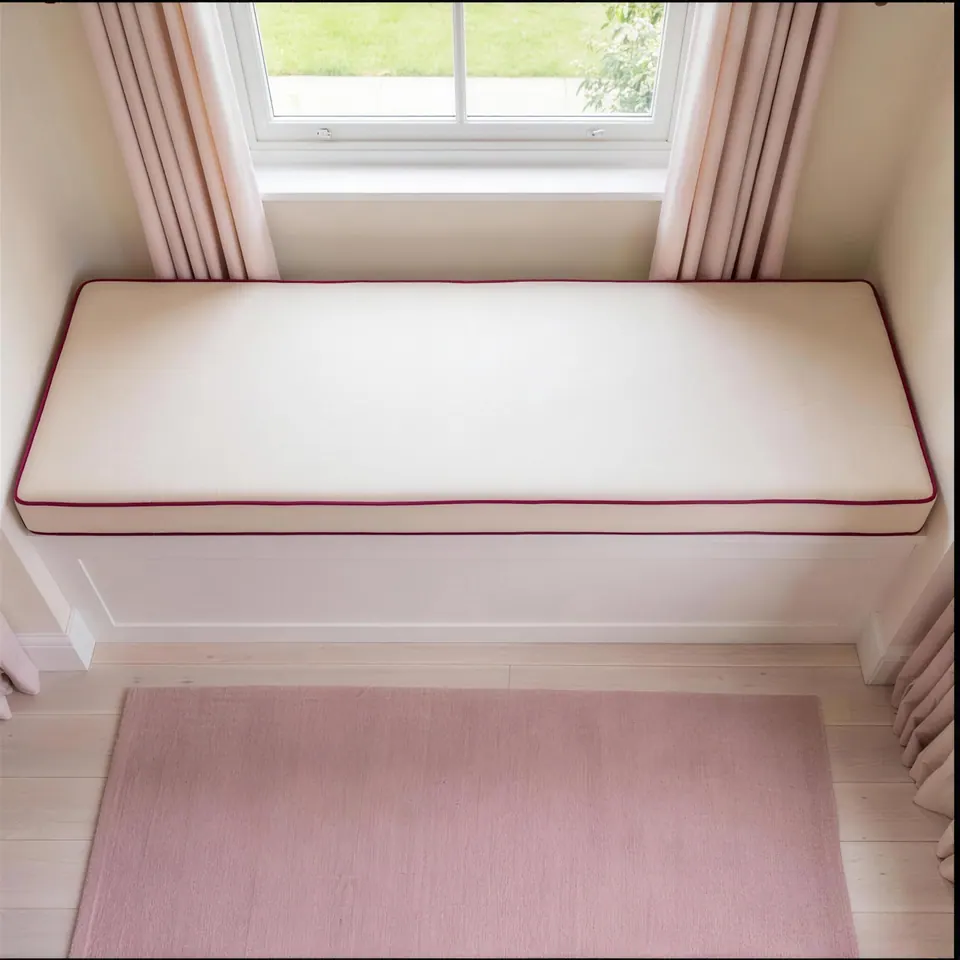
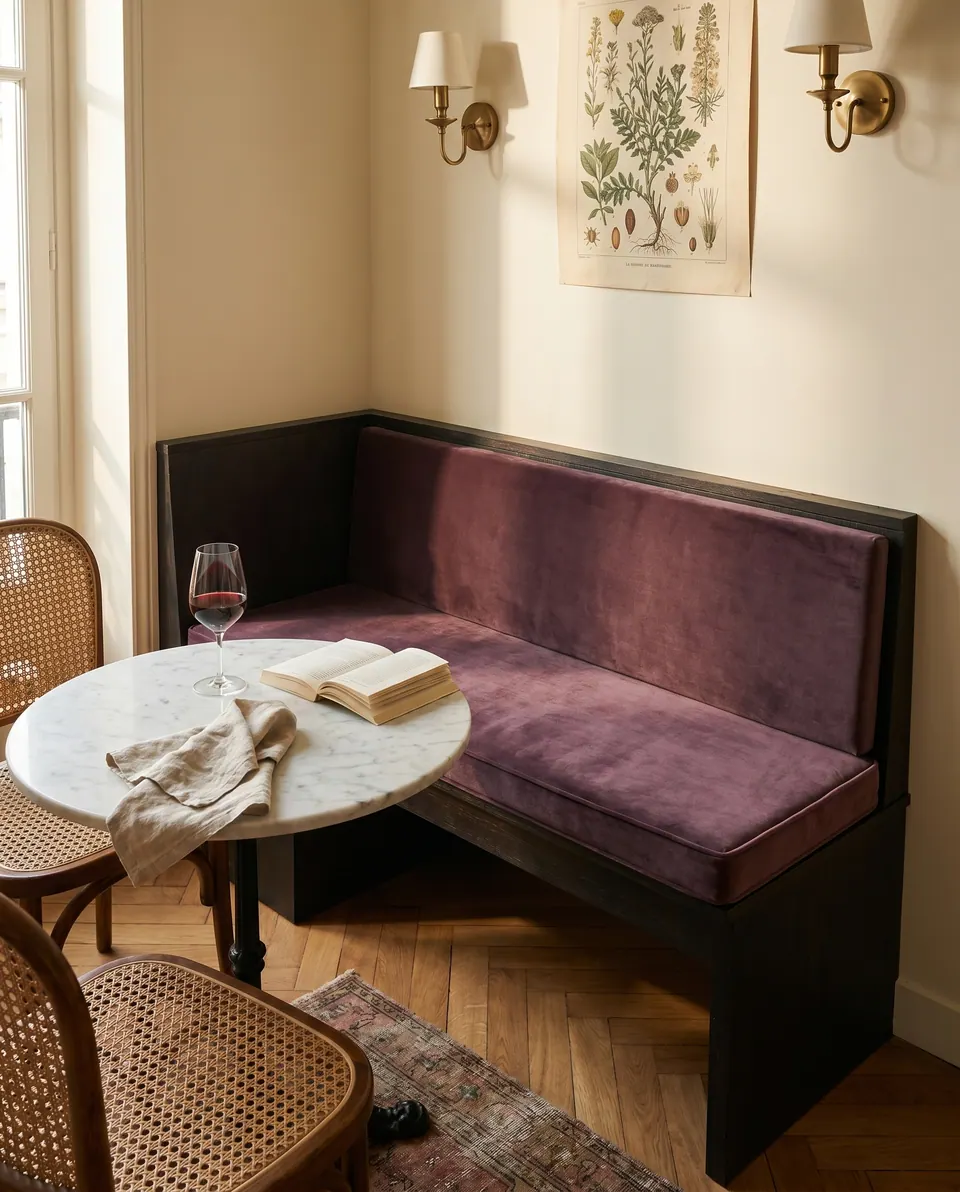
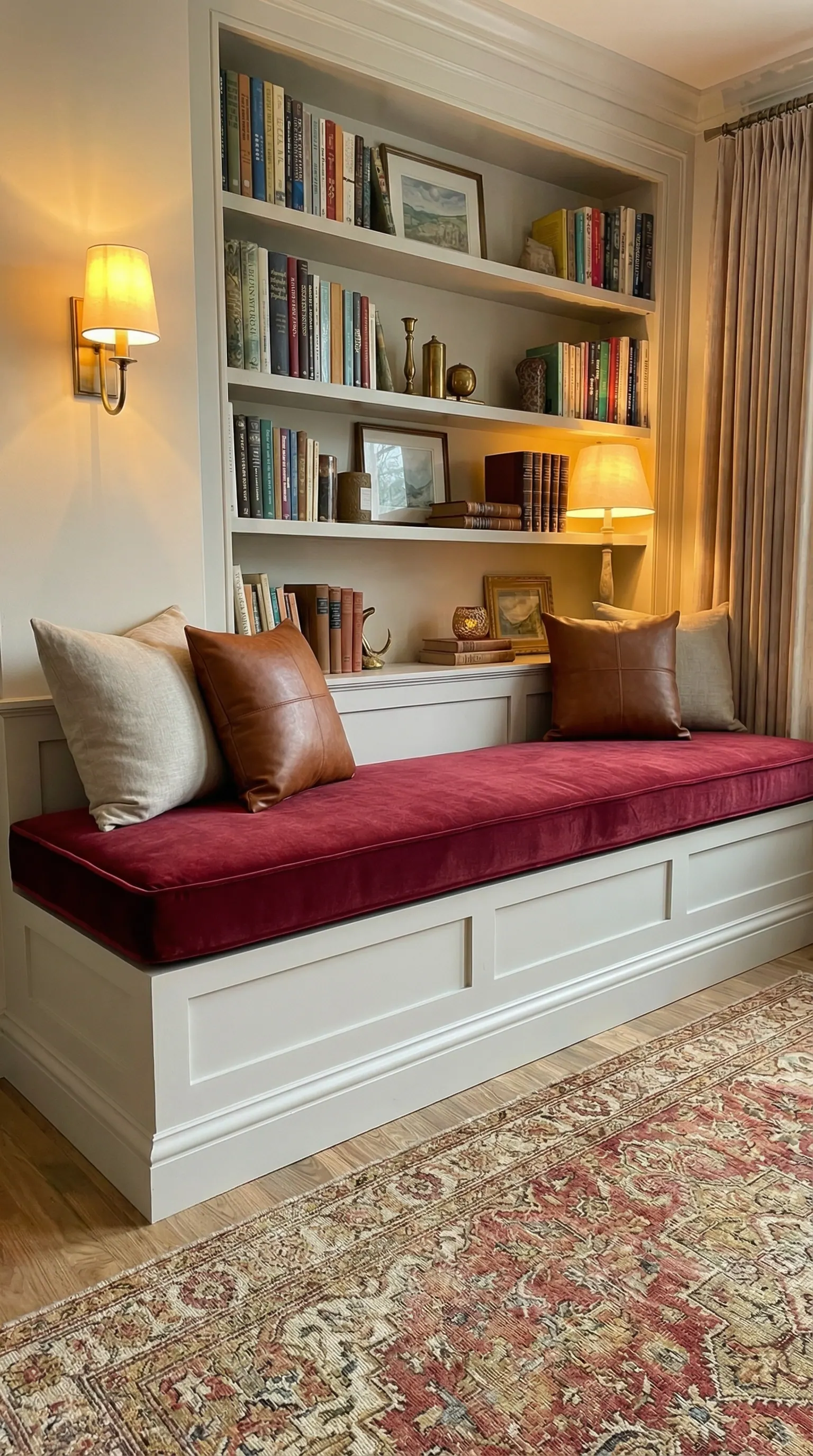
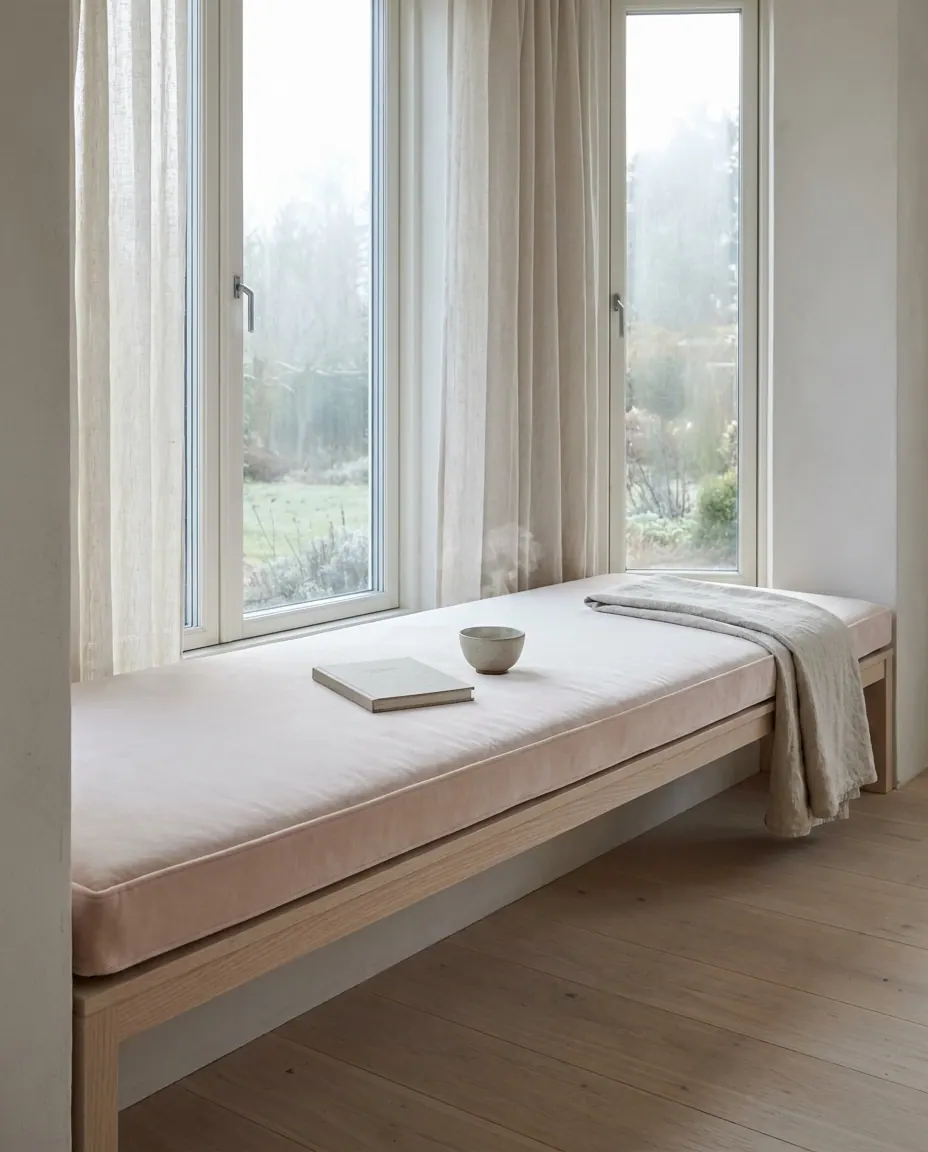
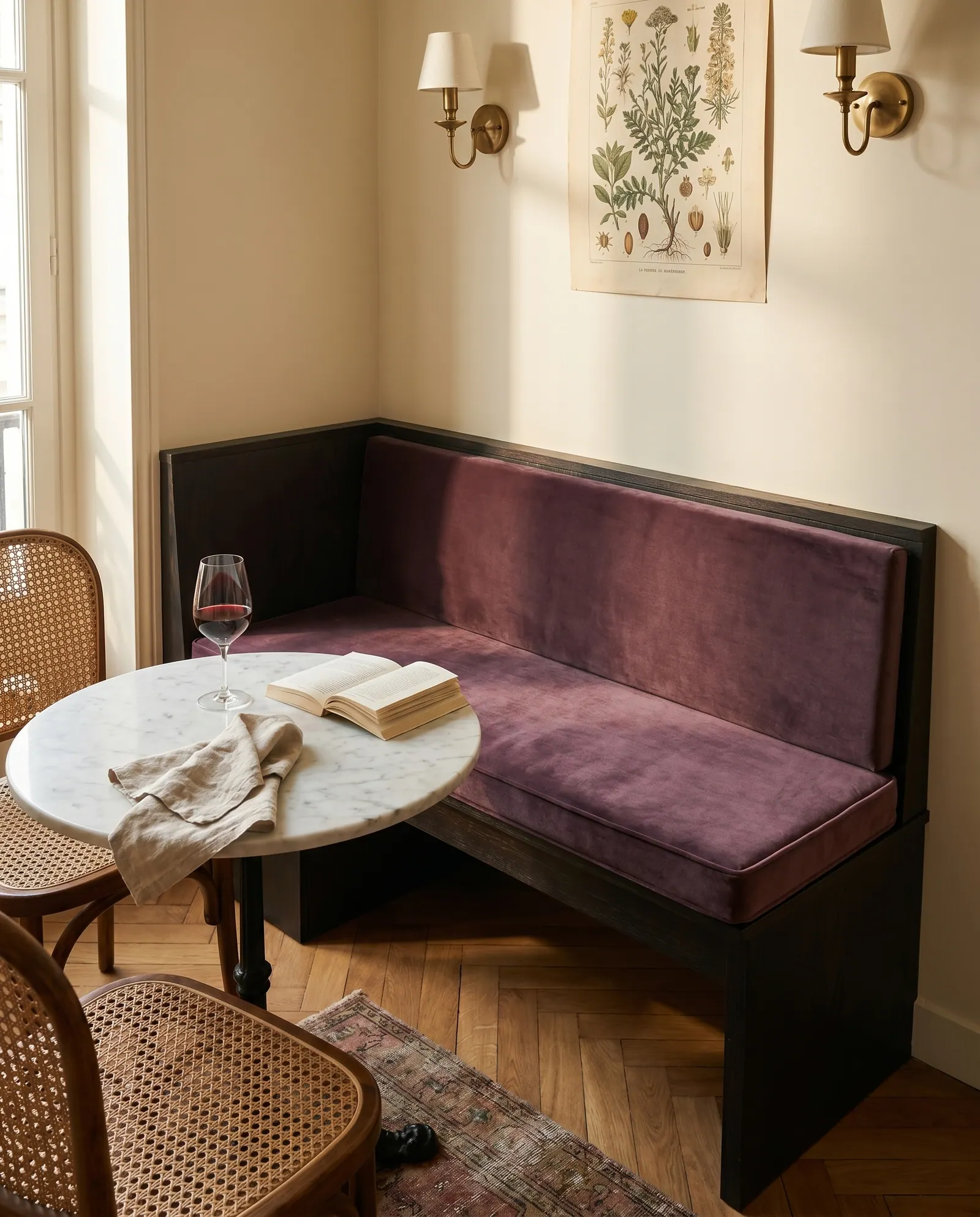
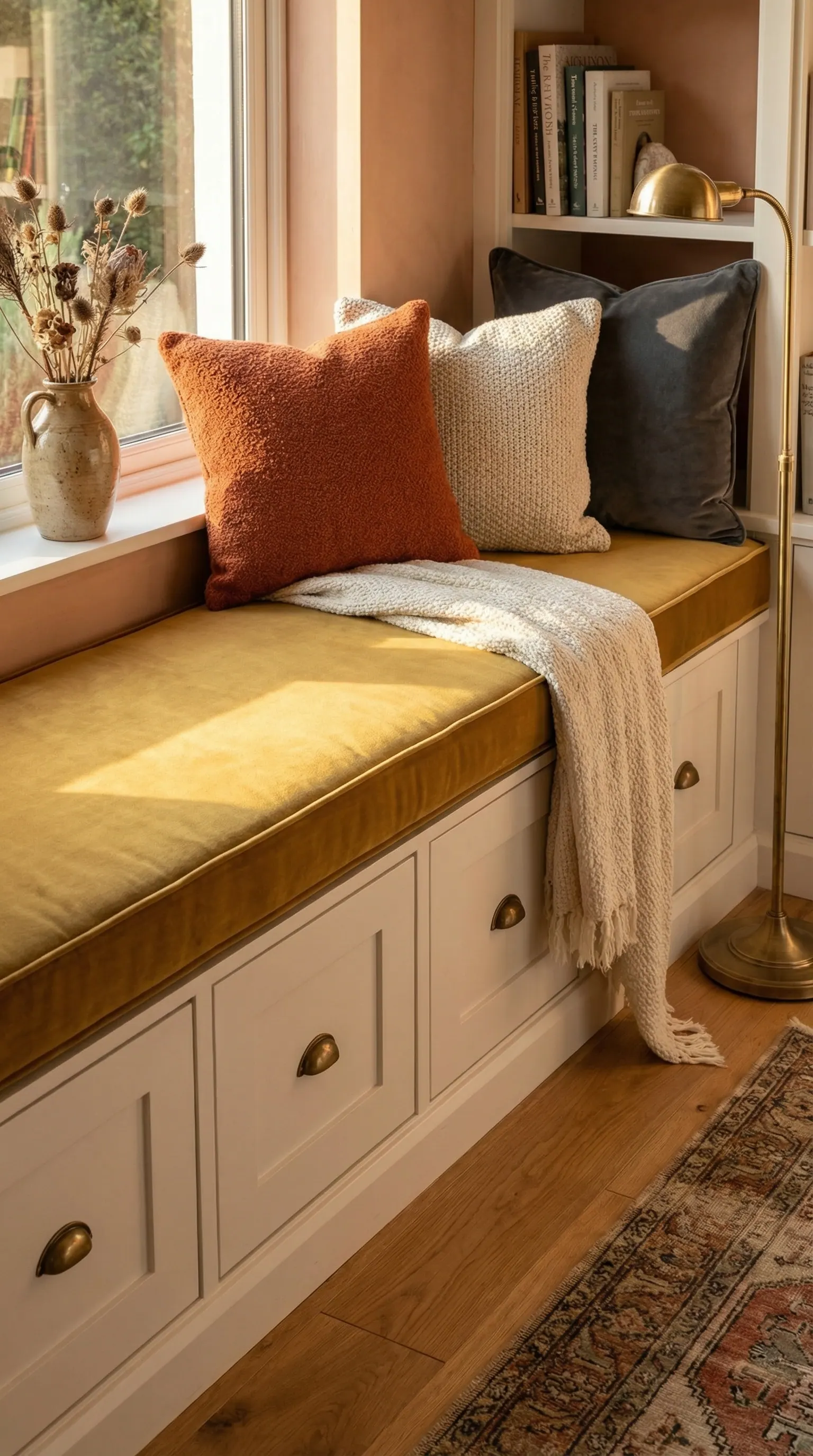
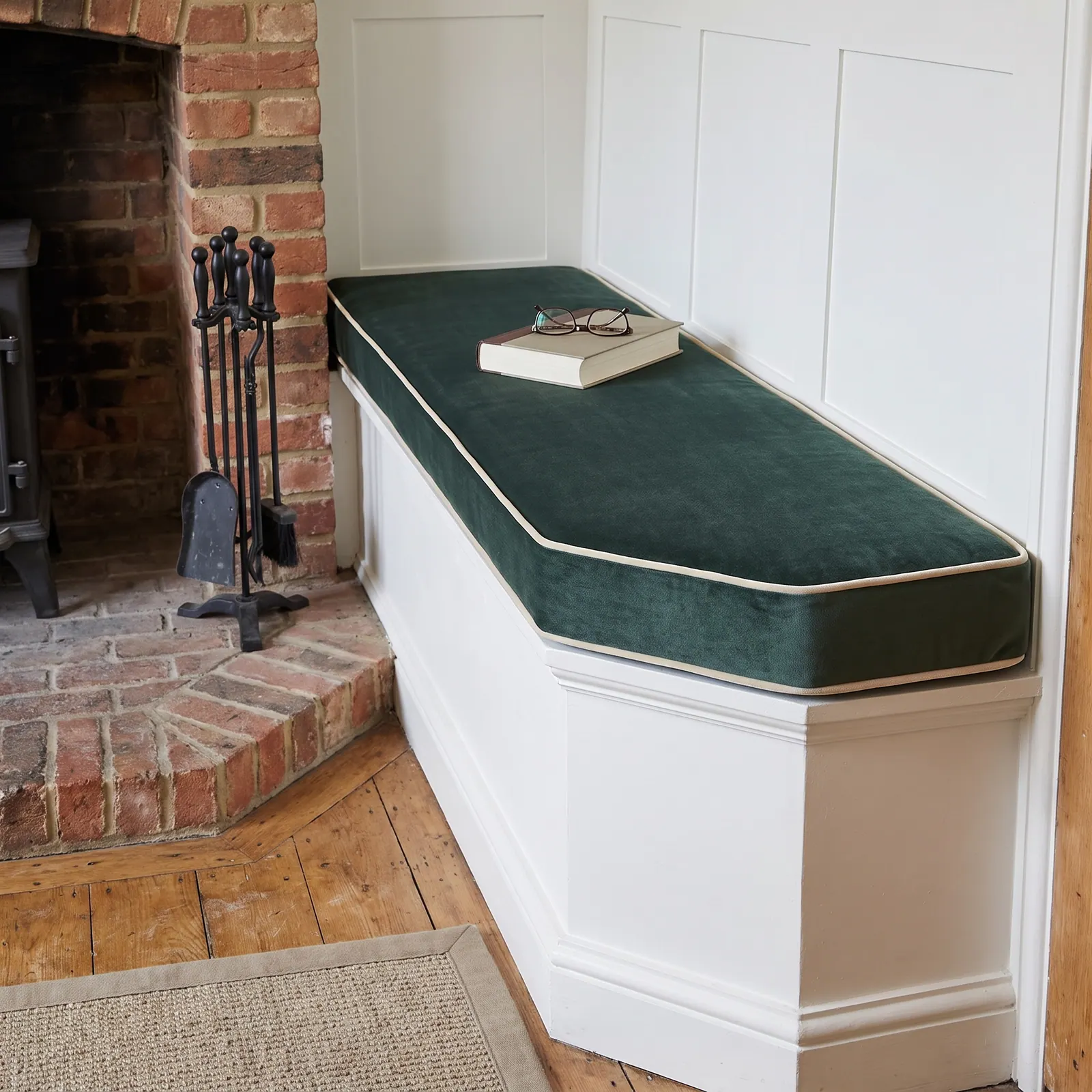
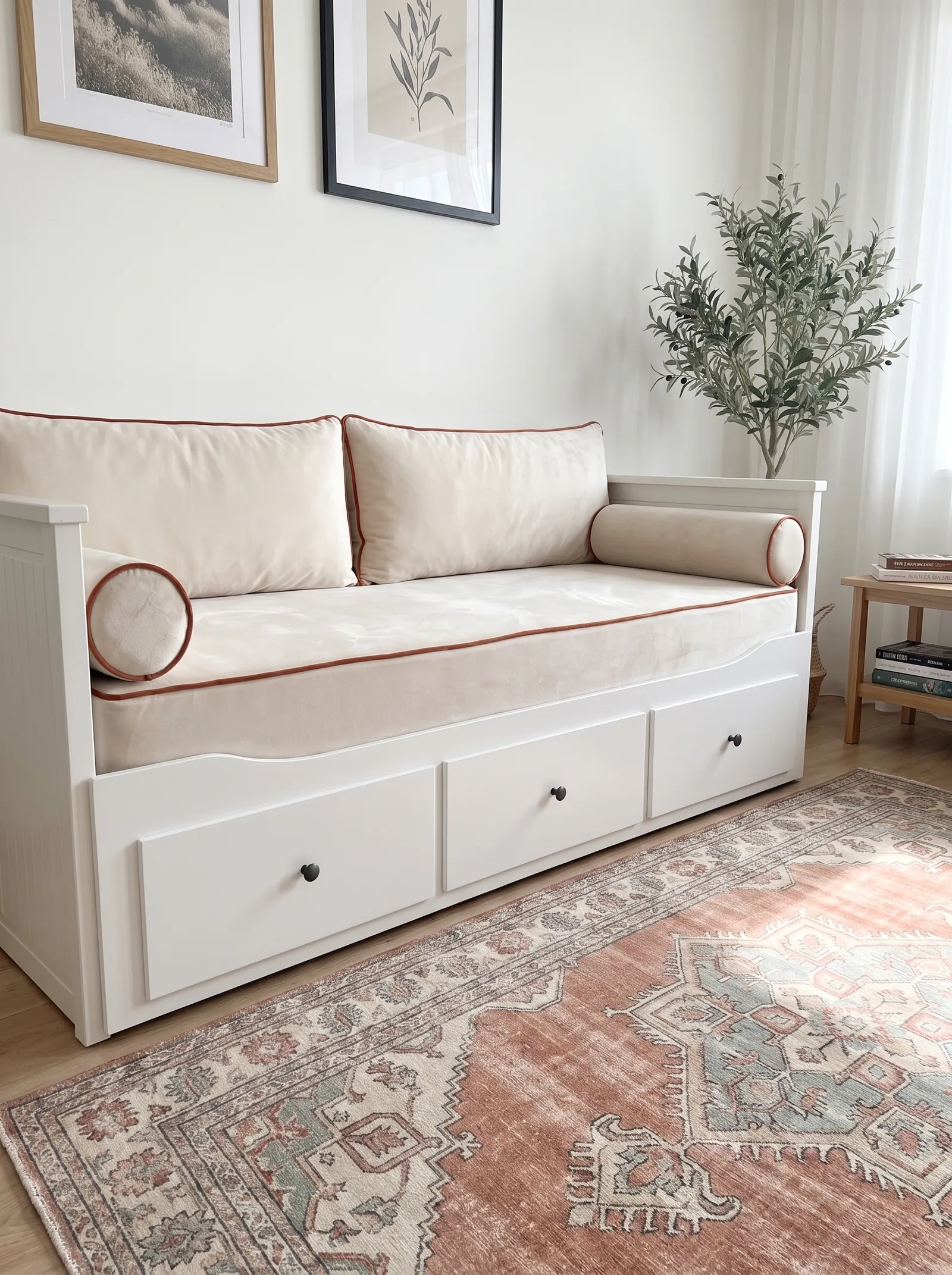
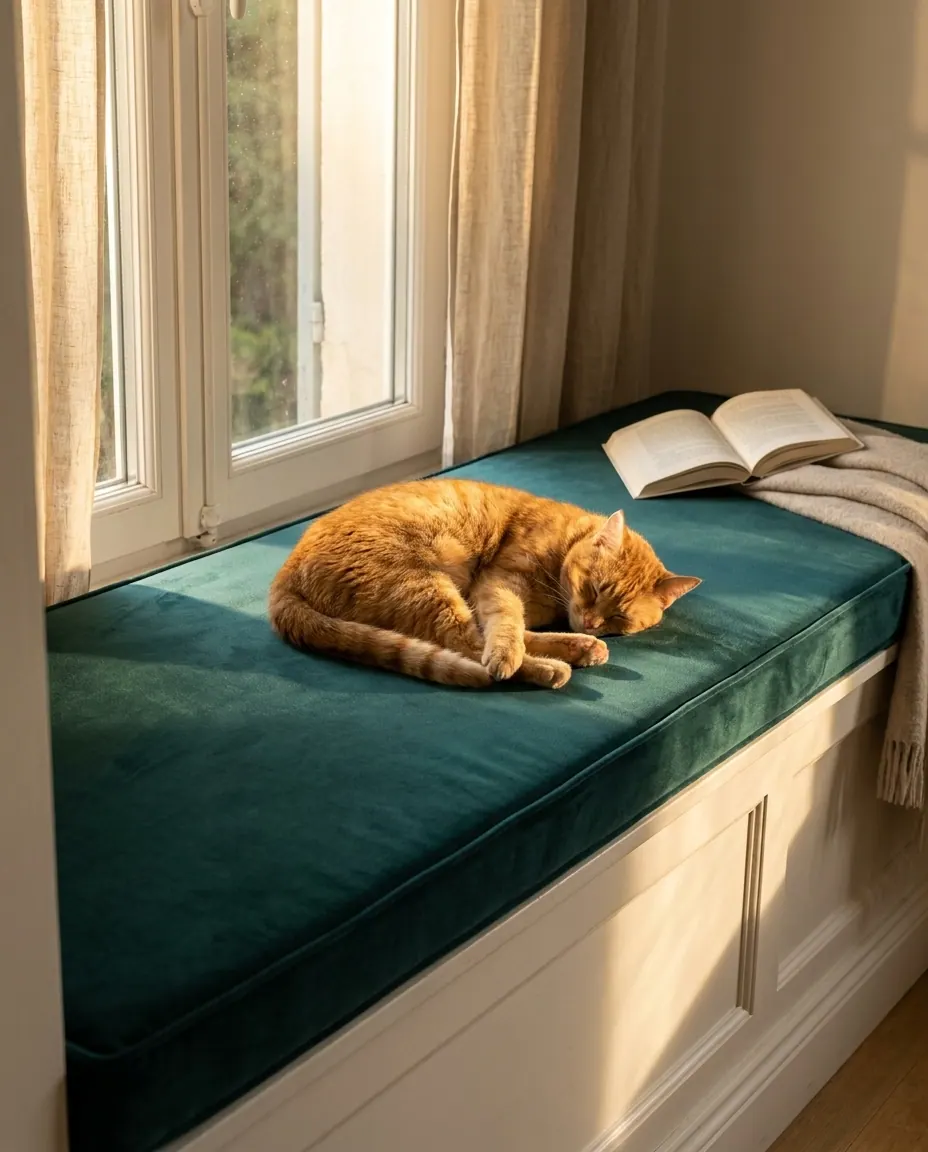
Velvet wants a seat where people linger. The photographs show it plain: cranberry on a built-in library bench, pale blush on a long oak window bench, aubergine seat and back cushions on a dark banquette, deep mustard over white drawers, forest green with cream piping on an angled fireside seat, and deep teal with a ginger cat asleep on it. Cream velvet with burnt-orange piping even dresses an IKEA Hemnes daybed.
For a window seat or a bench, many velvet buyers choose 3 in (7.5 cm) of foam for a neat, low line; 4 in (10 cm) suits everyday seating. The thickness Pattern goes further, and the deep shades have their own sketch in jewel-tone velvet cushions.
Kids, rentals and hard use: where velvet holds
For kids, rentals and heavy daily use, the workshop recommends two fabrics: the performance weave and velvet. Both are durable, wipeable and machine washable, and velvet is a good pick for a nursery, where 100% cotton is not.
Corduroy, velvet's ribbed cousin, is lovely but not as tough. When its ribs split under hard use, the workshop remade those covers and has since steered heavy-use buyers toward linen or velvet. The corduroy page tells that one.
Now the limits, my friend. Velvet is an indoor cloth. It is fine under a closed roof, but indoor fabric has limited UV resistance and can fade in strong, prolonged sun. A buyer in the US with a sunny trapezoid bay about 160 in (406 cm) long asked for a sun-resistant fabric instead of velvet, and that was the right call.
Washing a velvet cover, in order
Unzip the cover from the underside; it comes off the foam completely.
Machine wash at 86°F (30°C) at most, on a gentle or delicate cycle.
Let it air dry, and keep it away from the tumble dryer.
Iron on low only if it needs it.
Full cushions and cover-only orders take the same care.
Button-tufted velvet is the exception: the cover is sewn through and stays on.
Why velvet looks different on a phone, and in the next batch
Velvet is the hardest cloth to judge from a screen. Sheen shifts with light and camera angle: the dusty rose card leans lilac in a photograph, yet it is the same fabric. Close-ups run darker and coarser than the real thing. The truest reference is a finished cushion, and the workshop shares photos of pieces made for other buyers, such as a burnt terracotta velvet coded 112, along with review photos from real homes. Screen versus daylight has more, and so does velvet bench care.
Then there is the batch. Each roll is dyed on its own, batches vary a little, and velvet sheen makes a small gap look large. A cushion ordered months later can sit lighter or warmer beside the rest. Buy the cushion once, cry once: order the seat, backrests and bolsters together. If you must add a piece later, send a photo or an offcut of the original; dye lots explains the rest.
Velvet next to corduroy, the performance weave and linen-look
All four are indoor fabrics; a closed roof is as far outside as they go.
In real rooms
Open any photograph large; each one has its own link and a Save button.
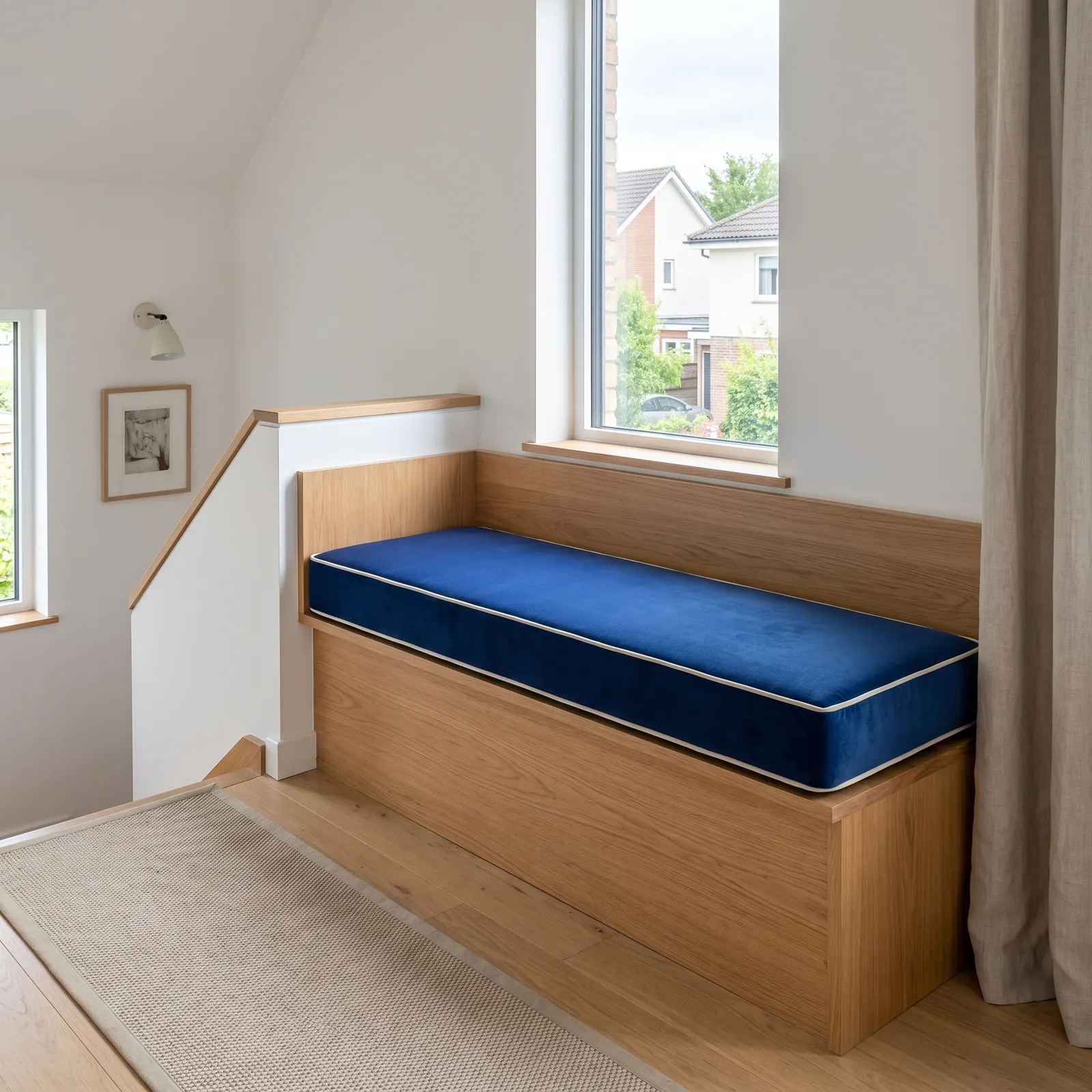
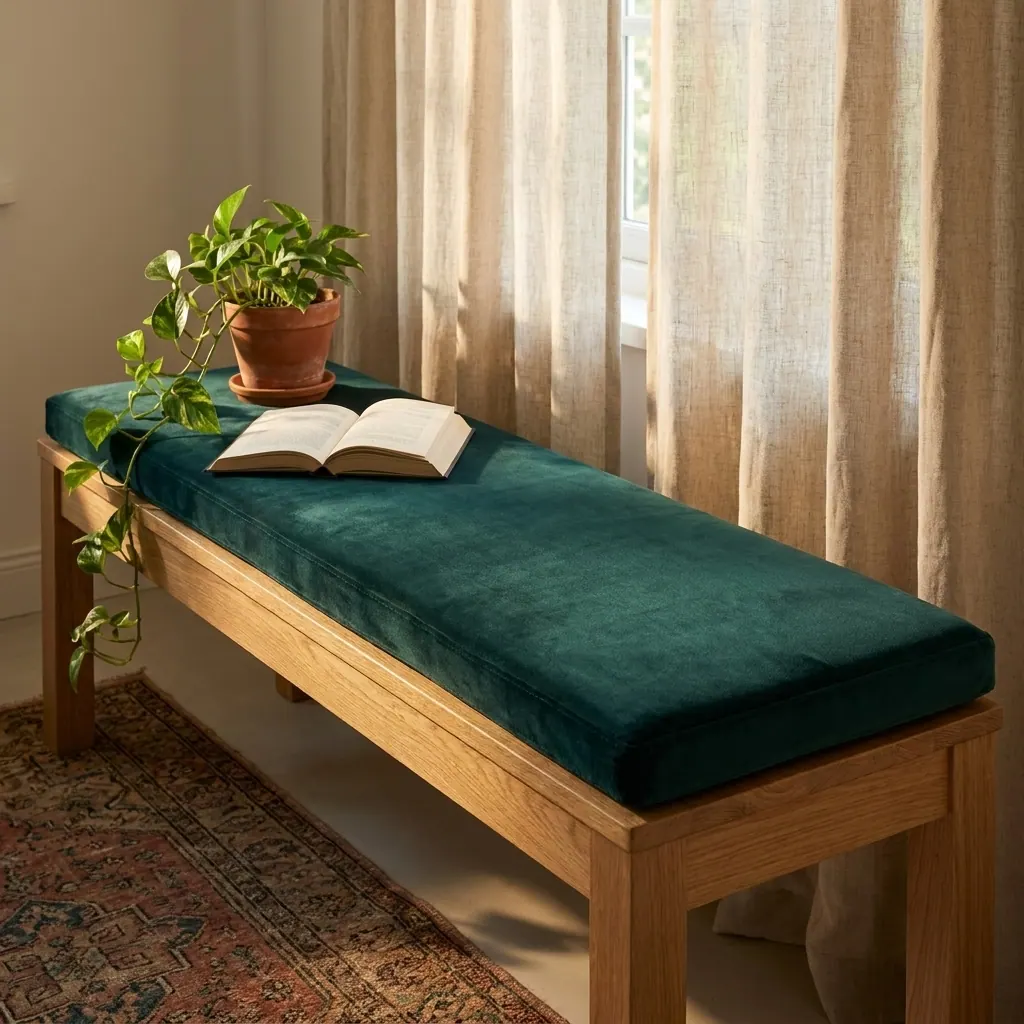
SaveA cranberry velvet cushion, leather pillows and a brass sconce turn a painted built-in into a proper library seat.SaveA full-depth blush cushion turns a plain oak bench under two casement windows into a daybed for gray mornings.SaveAubergine velvet seat and back cushions turn a dark wood banquette into a bistro corner at home.SaveDeep mustard velvet, rust and cream pillows and a brass arc lamp make a warm reading perch under a sunny window.SaveA fireside seat cut with a slanted end to follow the angled joinery, with a book and glasses waiting.SaveA firm royal-blue velvet cushion turns an oak box on the landing into a bright reading nook.SaveCream velvet with a burnt-orange welt turns a white daybed into a sofa that matches the terracotta rug below.SaveBottle-green velvet sits between honey oak and a faded red rug, with a trailing pothos softening one corner.SaveThe warmest seat in the house: deep teal velvet in the afternoon sun, already claimed by the cat.
A real project
Six brown velvet covers, and the old foam stayed
A buyer in the US ordered velvet samples in brown, dusty mauve and mustard, held them up at home, and chose brown velvet 110 for six sofa cushions. Three were 23 x 24 x 4.5 in (58 x 61 x 11.4 cm) and three were 23 x 20 x 3.5 in (58 x 51 x 9 cm), with the zippers on the 23-inch side.
The first quote, with new foam, came in at about twice their budget. But the inserts they had were still good. So the workshop switched the order to covers only and gave a further discount for taking all six.
I like this one because nobody had to be clever. They said what they already owned. More on that in covers for foam you already have.
Measured
3 x 23 x 24 x 4.5 in; 3 x 23 x 20 x 3.5 in
What it taught
If your foam is still good, say so up front: covers only can cut the price substantially.
A velvet swatch photographed up close looks darker and coarser than the finished cushion will; judge velvet color from a made-up piece in daylight.
Which fabric and piping codes are on the cushion in your listing photo?
The workshop's answer
Send a screenshot of that exact photo, since listings show several cushions, and the workshop names both codes. A tan cushion with brown piping, for example, is linen-look L07 with brown velvet 110, and the mauve is velvet Dusty Mauve 117. For older photos with renumbered codes, write 'same as the first picture'. Sunlight and camera angle can shift a tone, but it's the same fabric.
A common question
Is there any velvet with a pattern, or is it all plain?
The workshop's answer
The core range is mostly plain, but patterned velvets exist, black-and-white designs among them, alongside stripes, oriental designs, plaid and tartan. Extra patterned charts are shared on request, with no price difference between the workshop's own fabrics. A print you found elsewhere can sometimes be sourced from a photo, at a higher price.
A common question
Do you have a photo of a finished cushion in this velvet, not just the swatch?
The workshop's answer
Often, yes. The workshop shares photos of cushions, covers and sofas made for other buyers in that fabric, such as burnt terracotta velvet 112, plus review photos from real homes. If a color has never been made up, you get a close-up instead, and before dispatch it can photograph your chosen color. A sample is still the safest check.
A common question
What are the velvet and the other fabrics made of?
The workshop's answer
Mostly polyester or polyester blends, chosen because they last longer on seating and clean far more easily. The velvet is polyester, and it's the fabric buyers love most for being durable and soft. The natural choices are the 100% cotton stripes, linen-cotton blends and separate 100% cotton and 100% linen charts. Every range machine washes at 86°F (30°C).
Have it made
Have it made in velvet — ask Harlan’s workshop
Fabric has a temper and foam has a memory. Better to settle both in a conversation than to guess at them alone. — Harlan
Leave your details and the workshop will call you to confirm measurements, fabric, foam and piping. No prices, dates or payment on this page: it is a request, not an order.
Velvet questions from the bench
Can a cushion shown in linen be made in velvet instead?
Yes. Models pictured in linen can be made in velvet, and the standard velvet, linen-look and performance-weave charts are priced the same; teddy costs more. Name the velvet code, and ask for a side-by-side swatch photo if you are pairing it with a contrast piping.
Is velvet sensible for a busy family bench or a nursery?
Yes. For kids, rentals and heavy daily use the workshop recommends velvet and the performance weave, both durable, wipeable and machine washable. Velvet is also suggested for nurseries, where 100% cotton copes less well with repeated washing. A mid-tone forgives the most.
My velvet cushion from last year needs a partner. Will the new one match?
Not always exactly. Each roll is dyed in its own batch, and velvet sheen exaggerates small differences. Send a photo or offcut of the original, ask for a batch match and a real-life photo of the new fabric beside it before shipping. For a very visible group, remaking all of it from one roll is surest.
What should I check before ordering a thick velvet cushion for an RV bunk?
Headroom. A camper owner asked for two 71 x 28 in (180 x 71 cm) top-bunk cushions in beige velvet, and the pictured cushion was 12 in (30.5 cm) thick. They kept that thickness, but measure from the bunk to the ceiling first and leave room to sit up.
Sit well. — Harlan
Share this fabric family
Readings
Cushions made in velvet
Real pieces in real rooms, read by the masters for color, light and wear.

 Save
 Save
 Save
 Save
 Save
 Save
 Save
 Save
 Save
 Save
 Save
 Save
 Save
 Save
 Save
 Save
 Save
 Save