The Cushion Atlas · Benches, window seats & banquettes
L-shaped bench cushions: two rectangles and one honest corner
An L-shaped bench is two straight runs arguing over one corner. I settle it with a tape measure, one subtraction and a drawing you approve before any foam is cut.
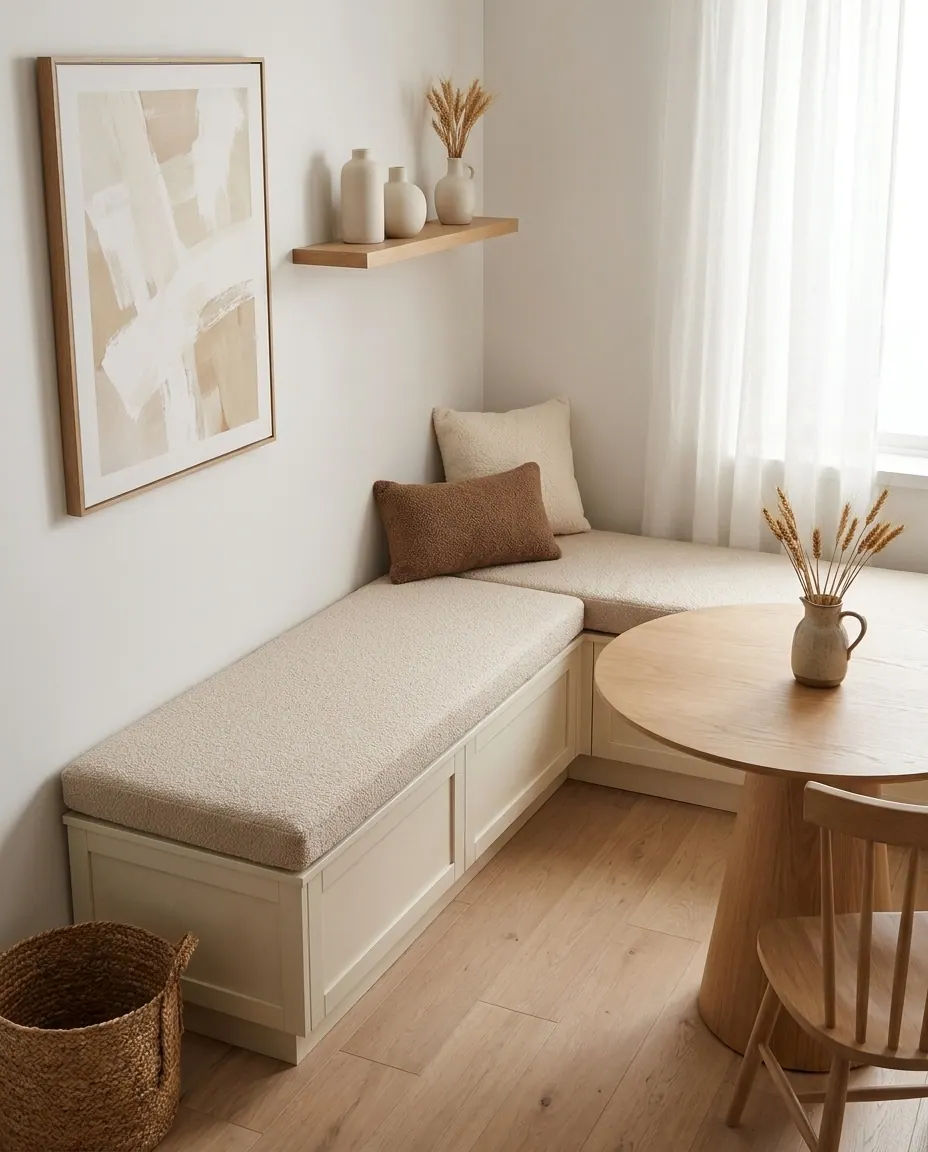
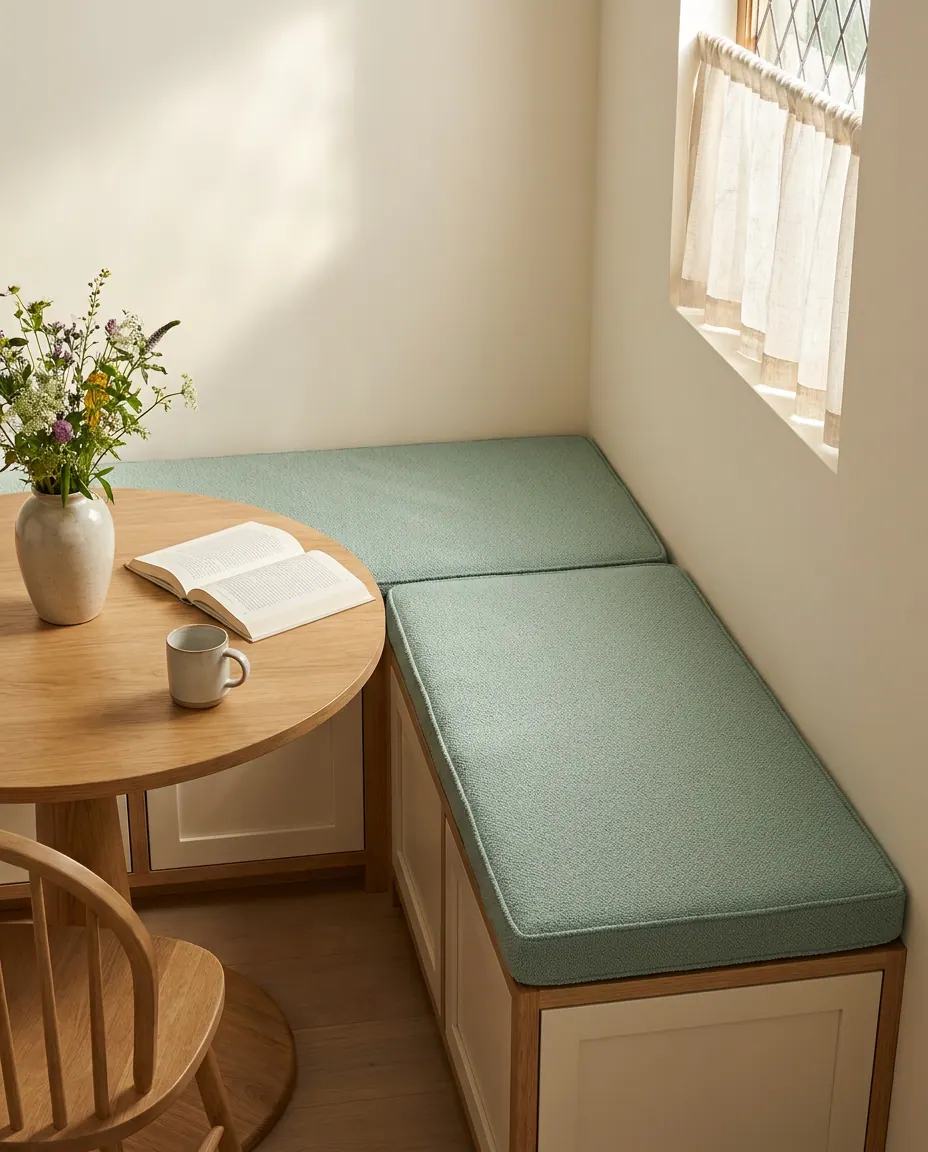
SaveTwo sage cushions meet in the corner of a kitchen nook, each cut to its own run of bench.
The quick answer
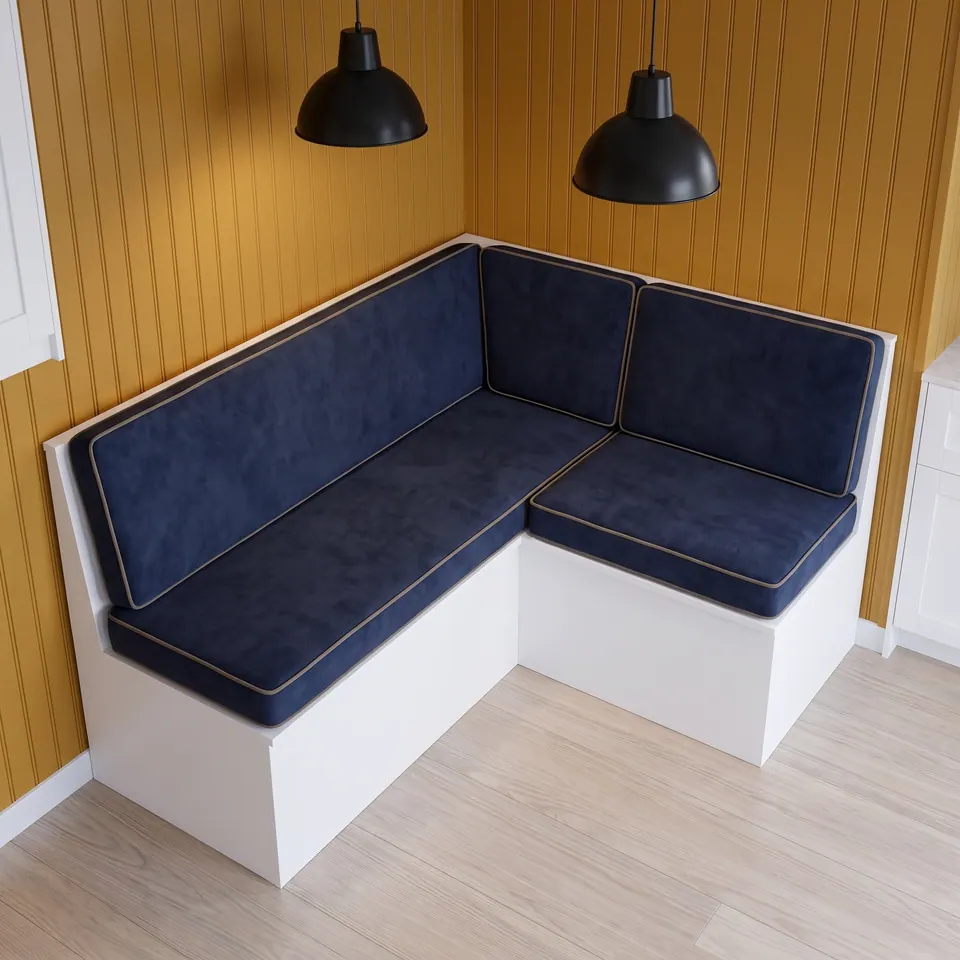
An L-shaped bench cushion is normally made as two separate rectangles that butt together at the corner. One runs the full length of its wall into the corner; the other is shortened by that cushion's depth, so a 61 in run beside a 19 in deep cushion needs a piece of about 42 in. A one-piece L is possible for small corners, from a confirmed template.
What an L-shaped cushion is, and where the corner lives
One mistake comes up again and again with L-shaped seats: one leg comes out too long, because the corner was counted twice. The fix costs one subtraction, so let's do it before you order.
An L-shaped bench cushion covers two benches that meet at a corner: a breakfast nook, a corner window seat between two windows, a mudroom bench under the coat hooks, a concrete fire-pit seat out back. The workshop almost always makes it as two separate rectangles that butt together, not one bent piece. They fit more cleanly, ship more safely and unzip for washing one at a time. If your bench wraps a table on three sides, see U-shaped banquette cushions; for straight built-ins, see banquette cushions. The short definition is in the glossary under L-shaped cushion.
Three ways to build the corner
Build
How the pieces meet
Good for
Watch for
Two pieces, one owns the corner
One cushion runs its full wall into the corner; the other is its wall run minus that depth
Most nooks and corner benches; the usual build
Decide which piece owns the corner before you measure
Corner square plus two arms
A square corner cushion, such as 20.75 x 20.75 in, with a separate cushion on each arm
Long, matching arms
Three pieces to order, each at its own size
One-piece L
Cut from a lettered template you confirm edge by edge, thickness included
Small corners only
Costs considerably more, the cover is hard to refit, much less margin for error
Angled corner? Use two rectangles and one trapezoid so every seam lands on a seat edge. A pillar mid-seat? One cushion notched around it, or separate sections that butt against it.
Fabrics for a corner that gets used
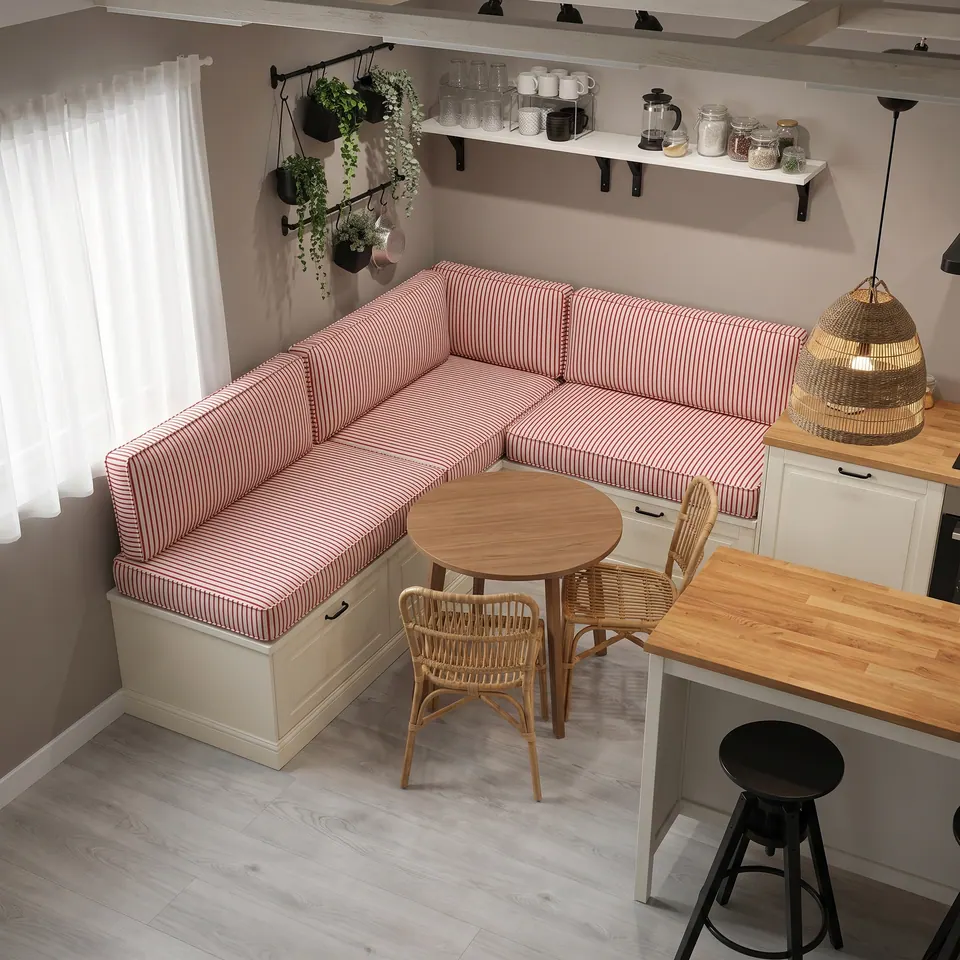
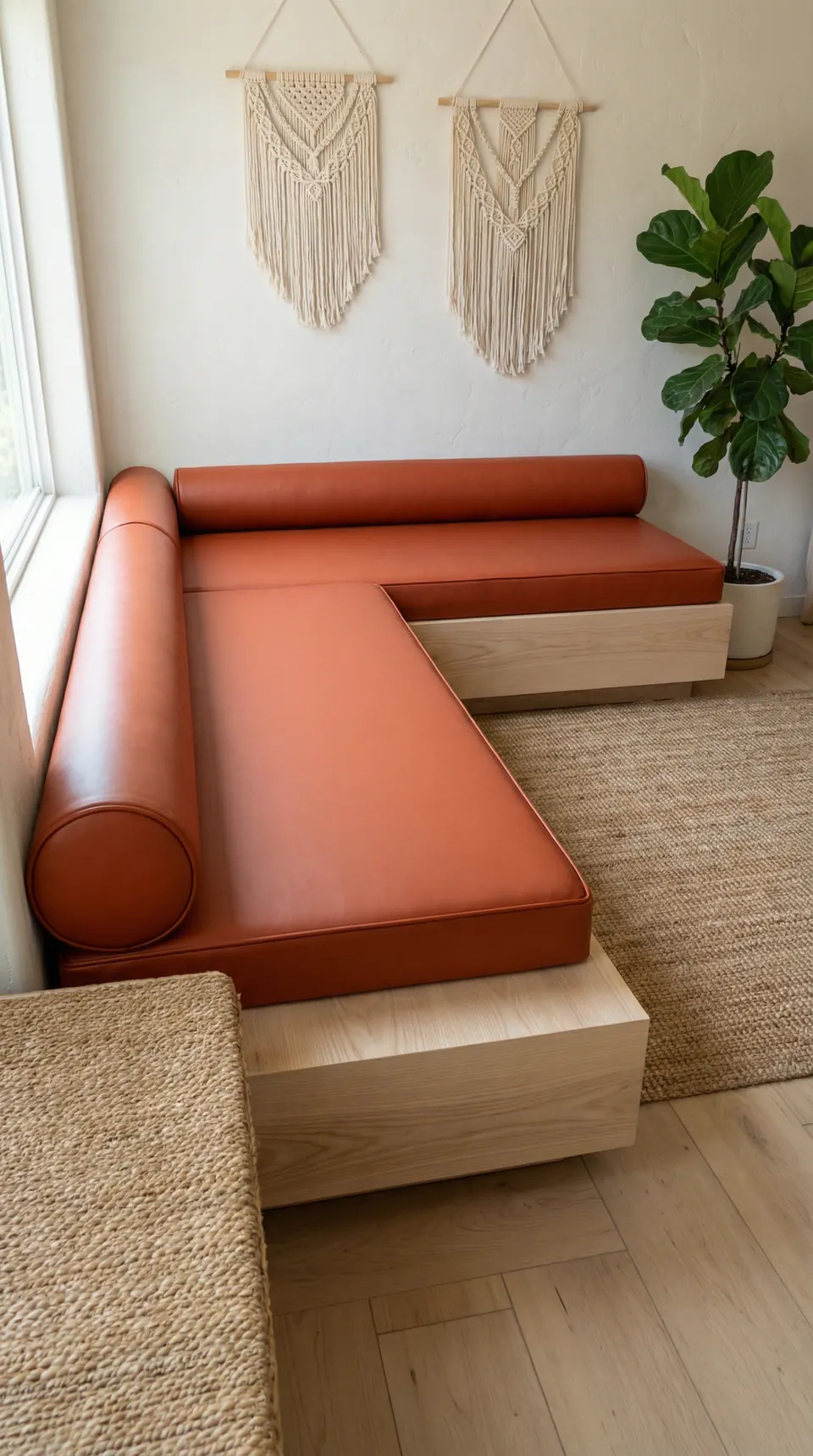
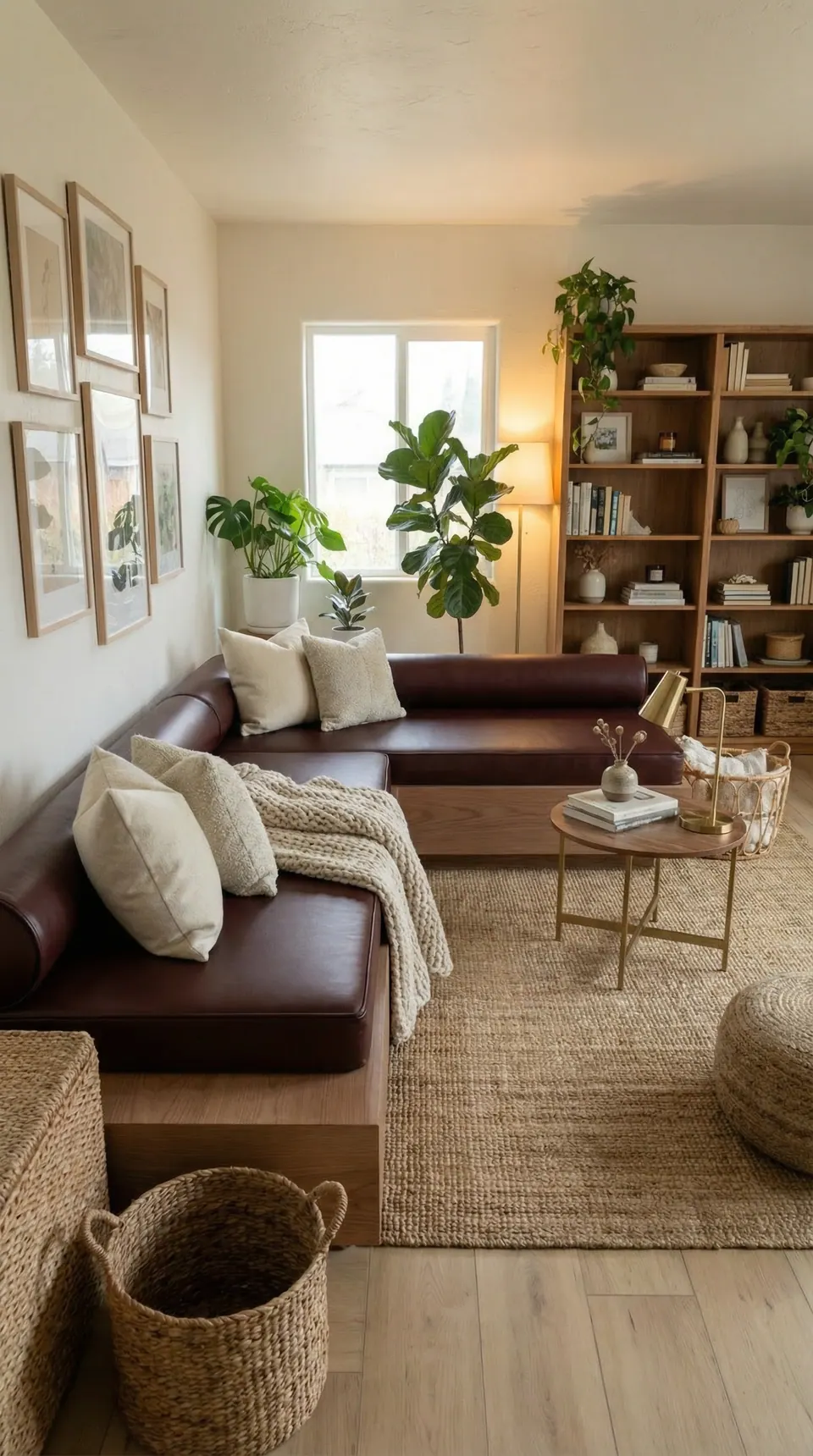
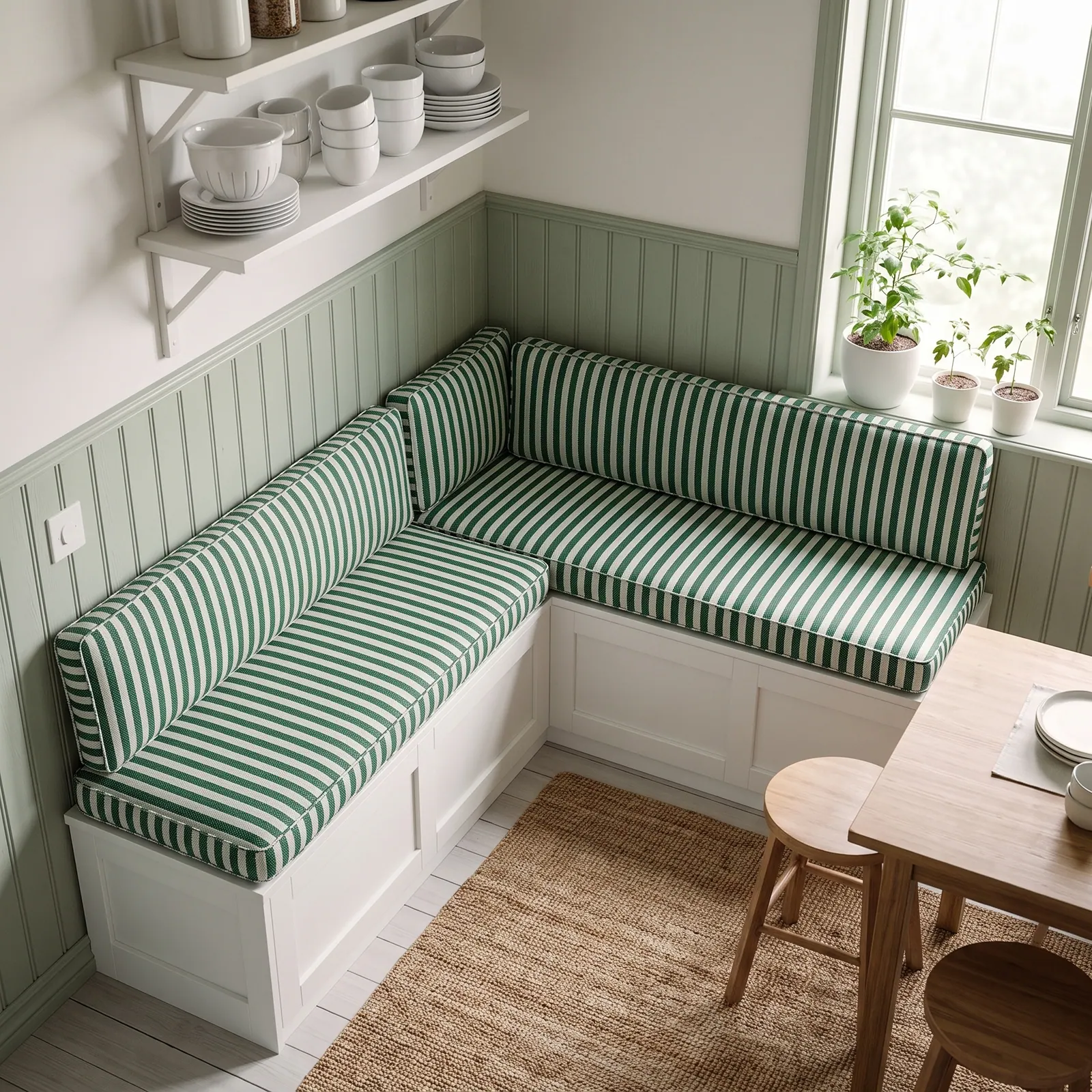
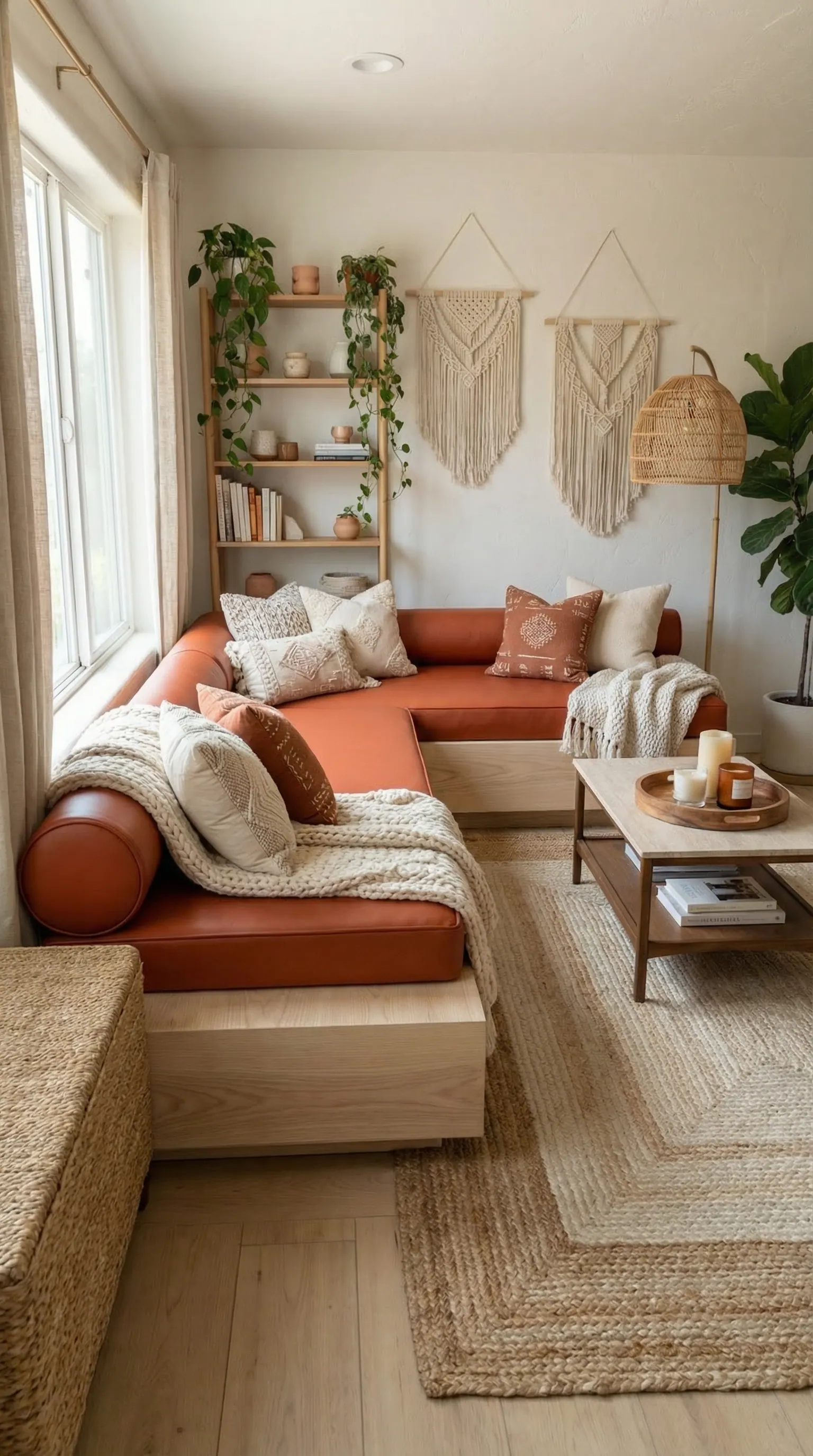
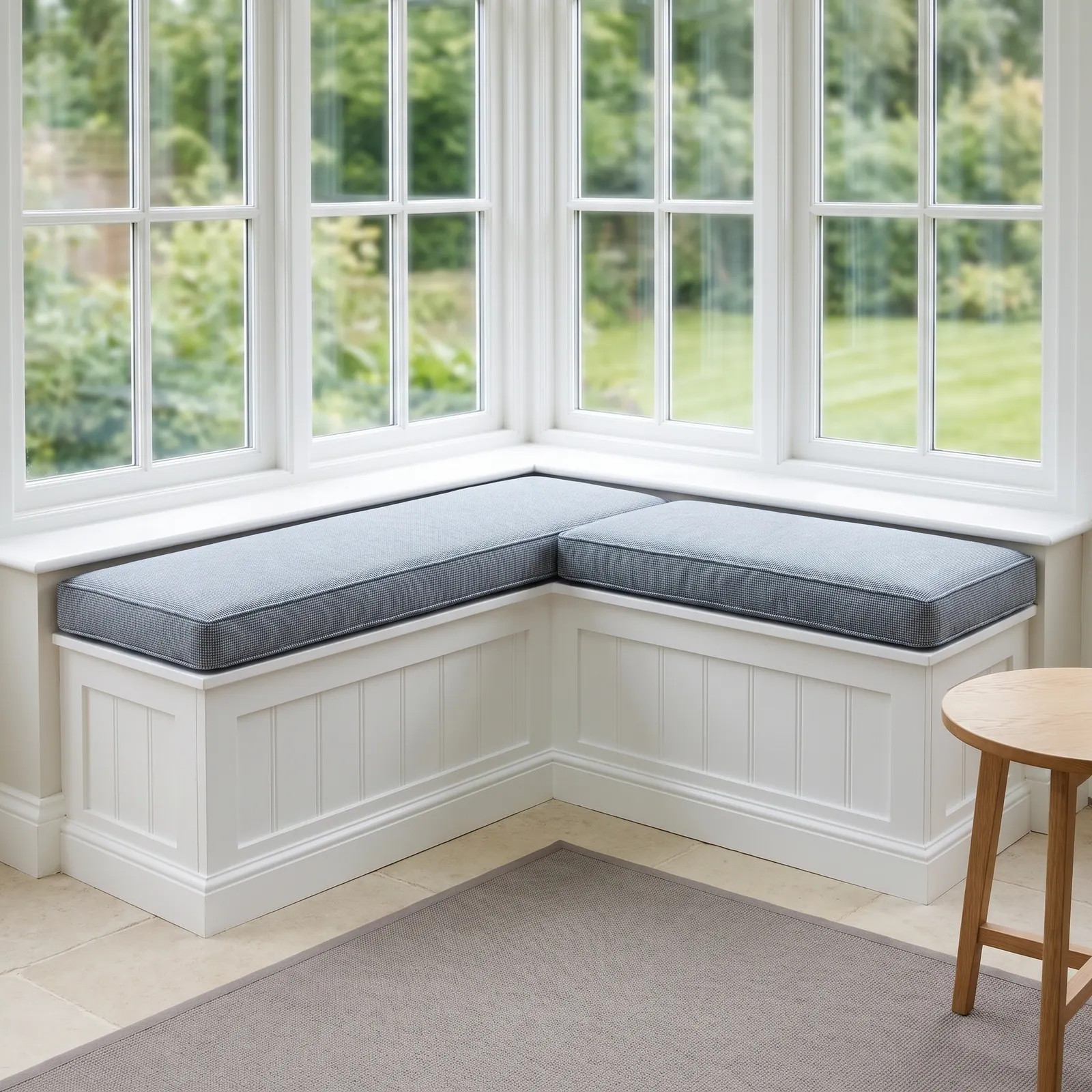
Corners collect people. Our gallery covers the range: sage bouclé on an oak-framed storage bench, cognac faux leather under a sunny window, a denim microcheck from the checked linen and gingham family on a corner window seat, and a green awning stripe in a cottage kitchen.
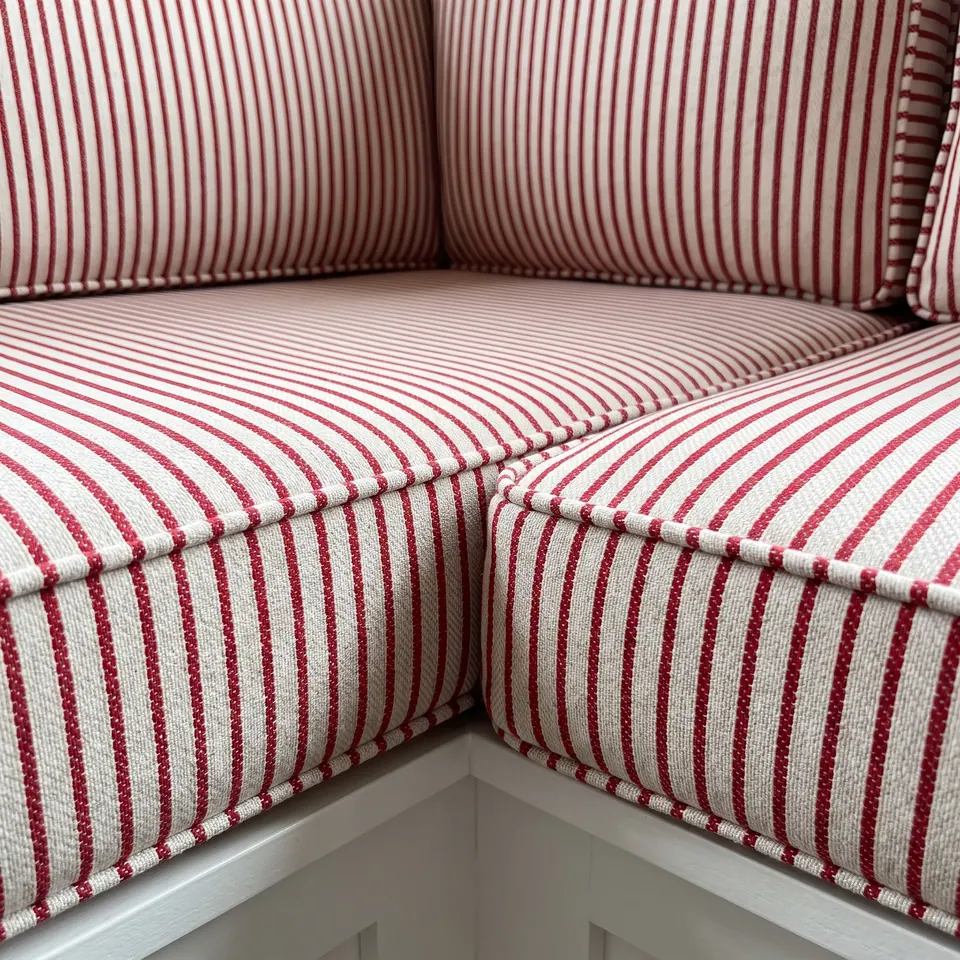
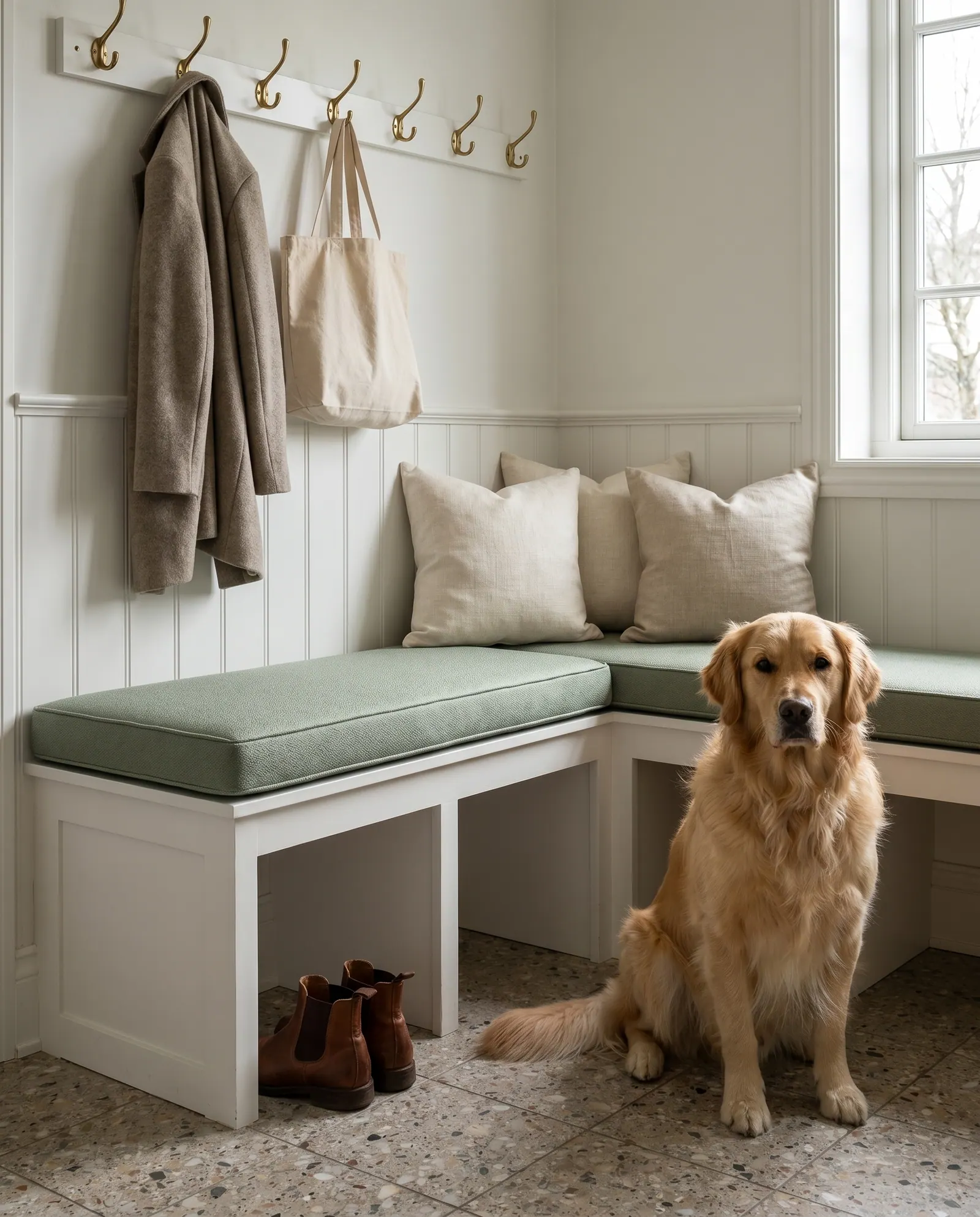
The mudroom corner with a golden retriever sitting under the coat hooks wears a pet-friendly weave, the right call anywhere paws and boots arrive together. For a fire-pit bench or any seat the rain can reach, use outdoor acrylic. Stripes come with one warning: the roll is about 55 in (140 cm) wide, so stripes run front to back and a long striped piece needs a seam.
The count is how many published readings use each family. Open a family for its swatch book, care notes and neighbors.
Foam, thickness and lift-up lids
Standard foam is high-density polyurethane, about 2.0 lb/ft³ (32 kg/m³), medium-firm at roughly 6 to 7 on a 1-to-10 scale. Standard thickness is 4 in (10 cm). On one US order the workshop confirmed that 3 in or 4 in didn't change the price of the L, so choose thickness on comfort and table height. Check it in the seat height calculator.
Many corner benches are storage benches. If a lid lifts, split the cushion at each lid break and add ties; storage bench cushions has the detail. Backrests can run along one leg only, such as a foam wedge along the longer run, and where two long cushions overlap in a corner, each can have its own backrest.
So, partner: which of your two legs is longer, and does either one open?
A real project
Sixty-five-inch arms and a square in the middle
A family in the US sent a hand sketch of their L-shaped kitchen bench: 65 in arms, 20.75 in deep, piping wanted. The workshop explained that L-shapes are made as separate cushions meeting at the corner, and together they settled on three pieces: one arm, a square corner, the other arm.
Then they re-measured, which I respect. The final sizes were 20.75 x 65 1/8 in, 20.75 x 20.75 in and 20.75 x 65 in, holding about 1/4 in back so no edge hangs over the frame. Each piece went through the standard listing with its own thickness, fabric and piping. Tolerance is kindness to your future self.
Measured
20.75 x 65 1/8 in; 20.75 x 20.75 in; 20.75 x 65 in
What it taught
Split an L-bench into a square corner plus two runs, and trim a fraction off lengths so edges don't overhang.
Where L-shaped orders go wrong
Giving the full wall run for both legs, or measuring the outside of the frame. Either way the corner is counted twice and one leg comes out long.
Forgetting the second backrest. It is shortened too, by the thickness of the first backrest.
Ordering an angled leg as a rectangle. If front and back lengths differ, it is a trapezoid; if checkout doesn't ask for a drawing, you are on the wrong listing.
Laying one long cushion across a storage bench with two lids. Split at each lid break and add ties.
Leaving the layout out of the order note. Write each piece's size and which piece owns the corner, then ask for a photo before dispatch.
Photographs from the workbench
Open any photograph large; each one has its own link and a Save button.
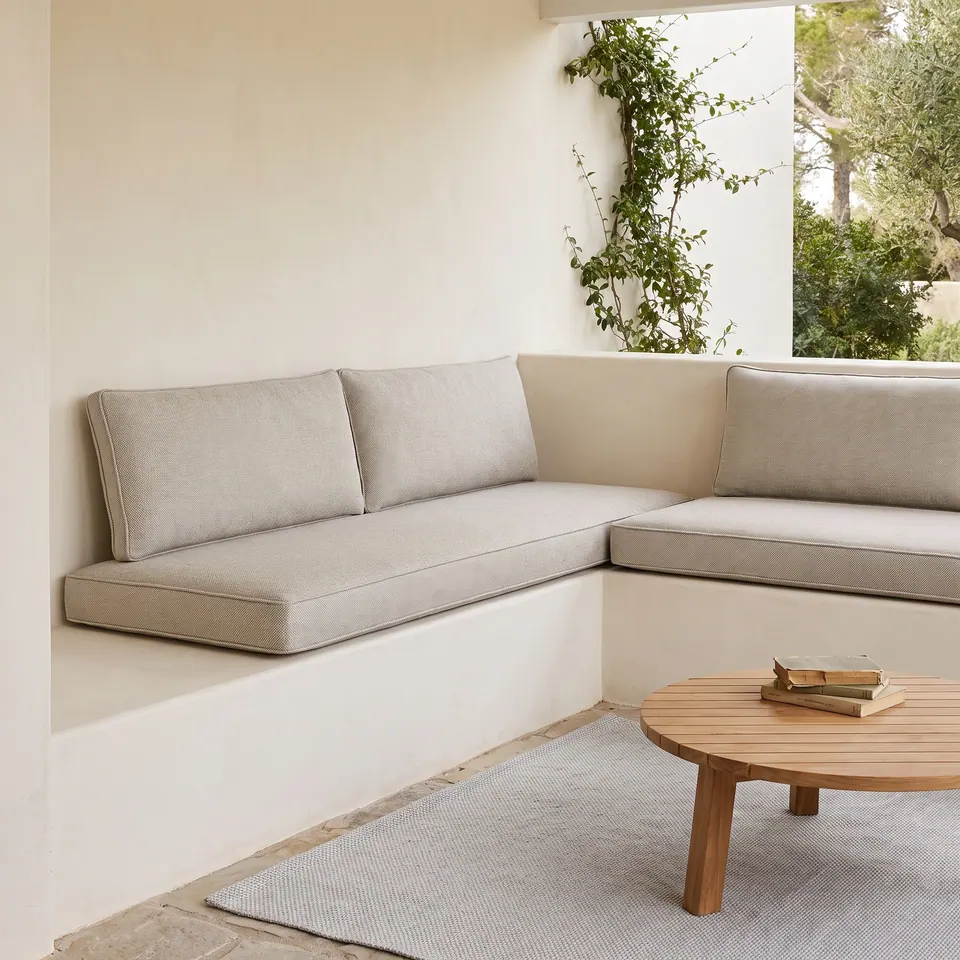
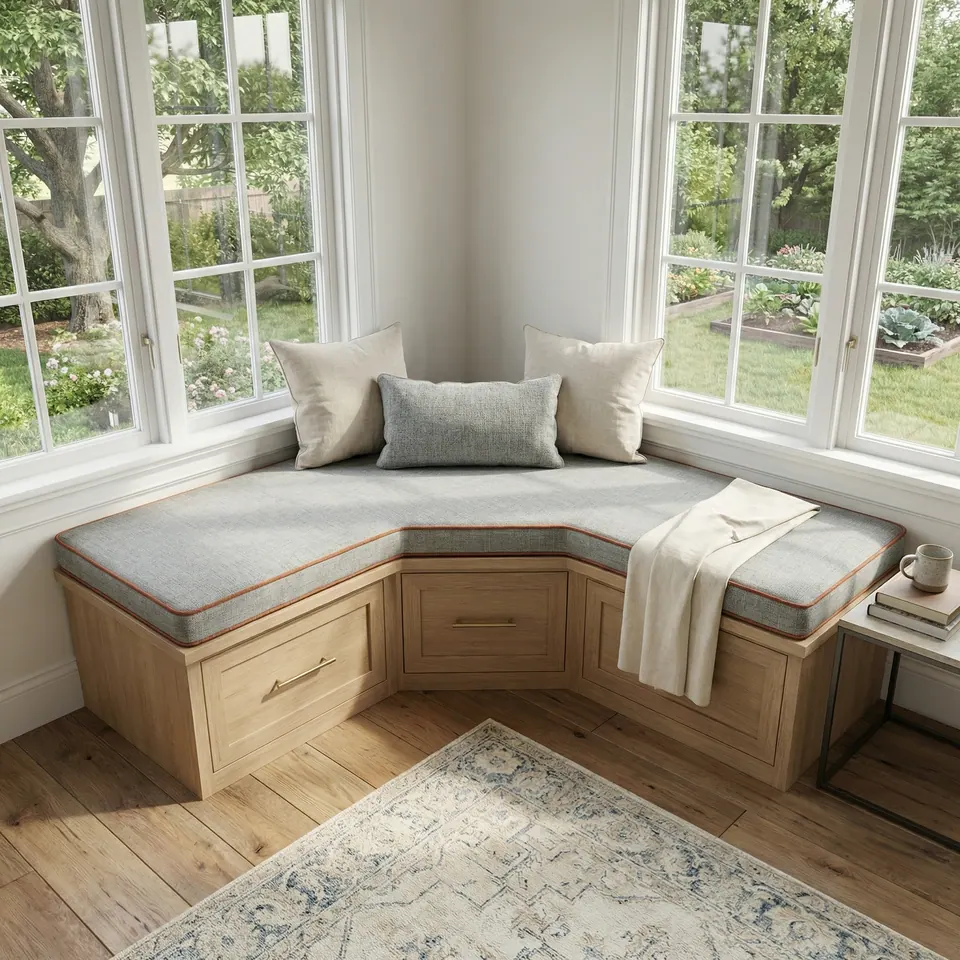
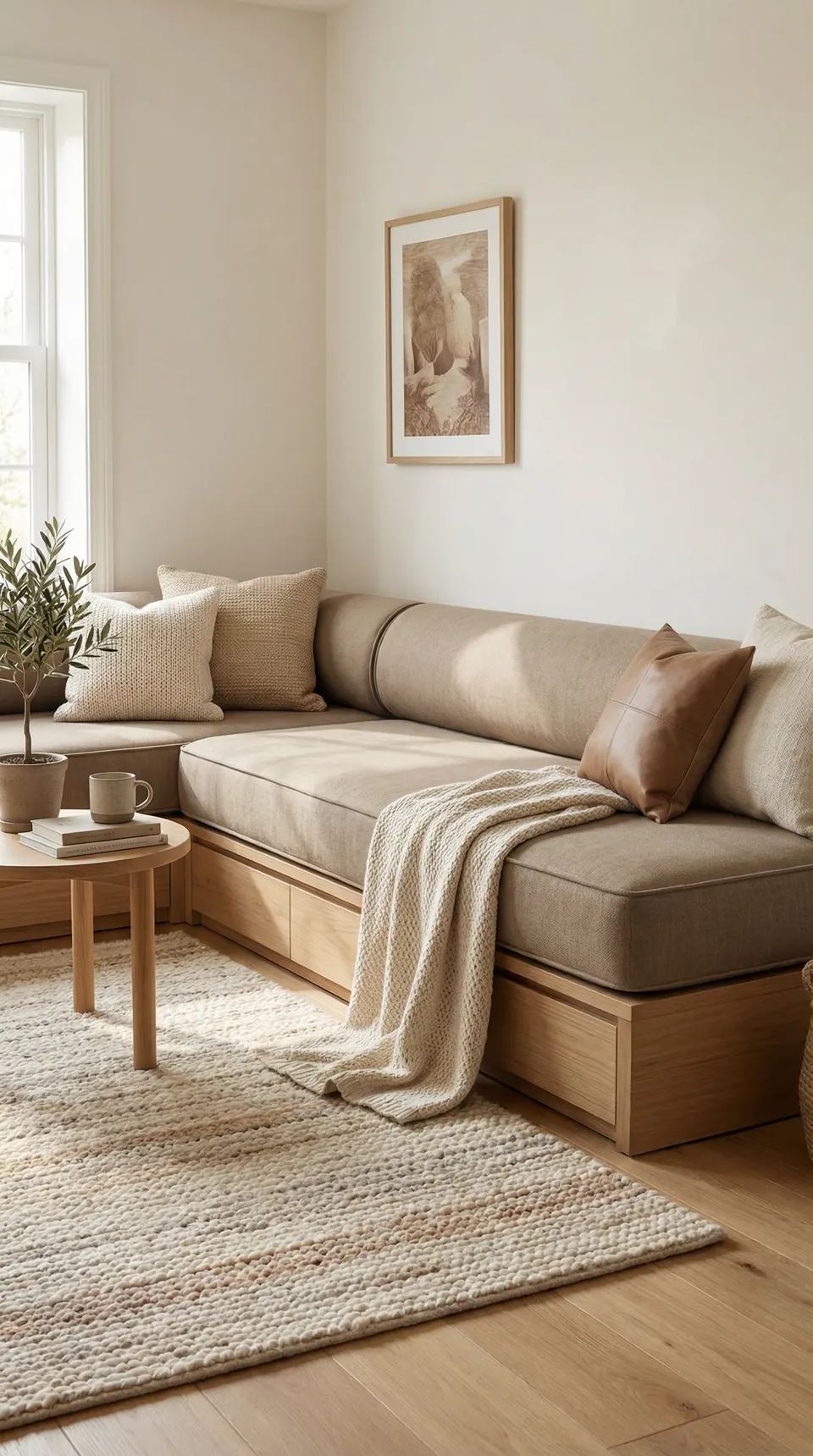
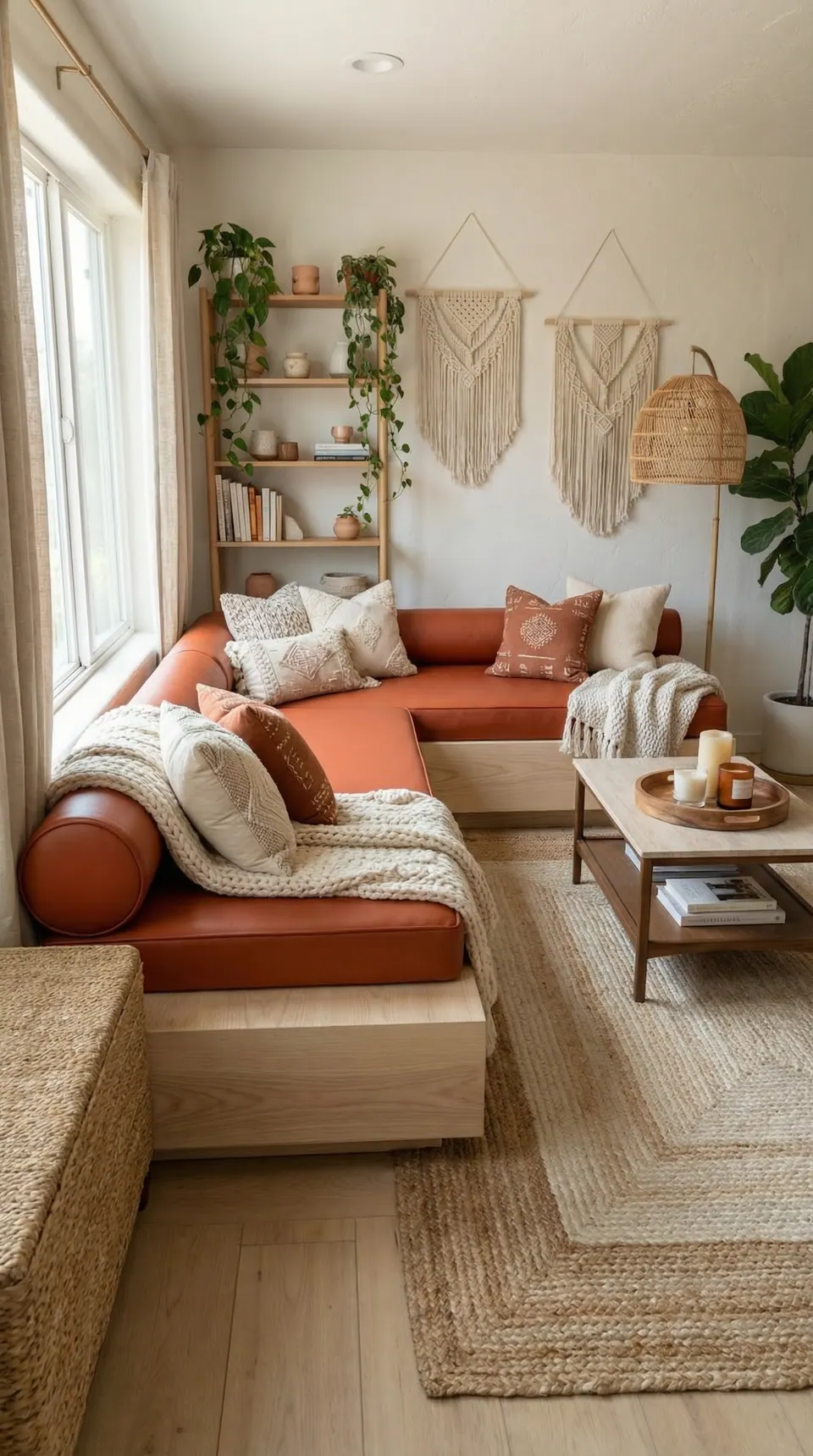
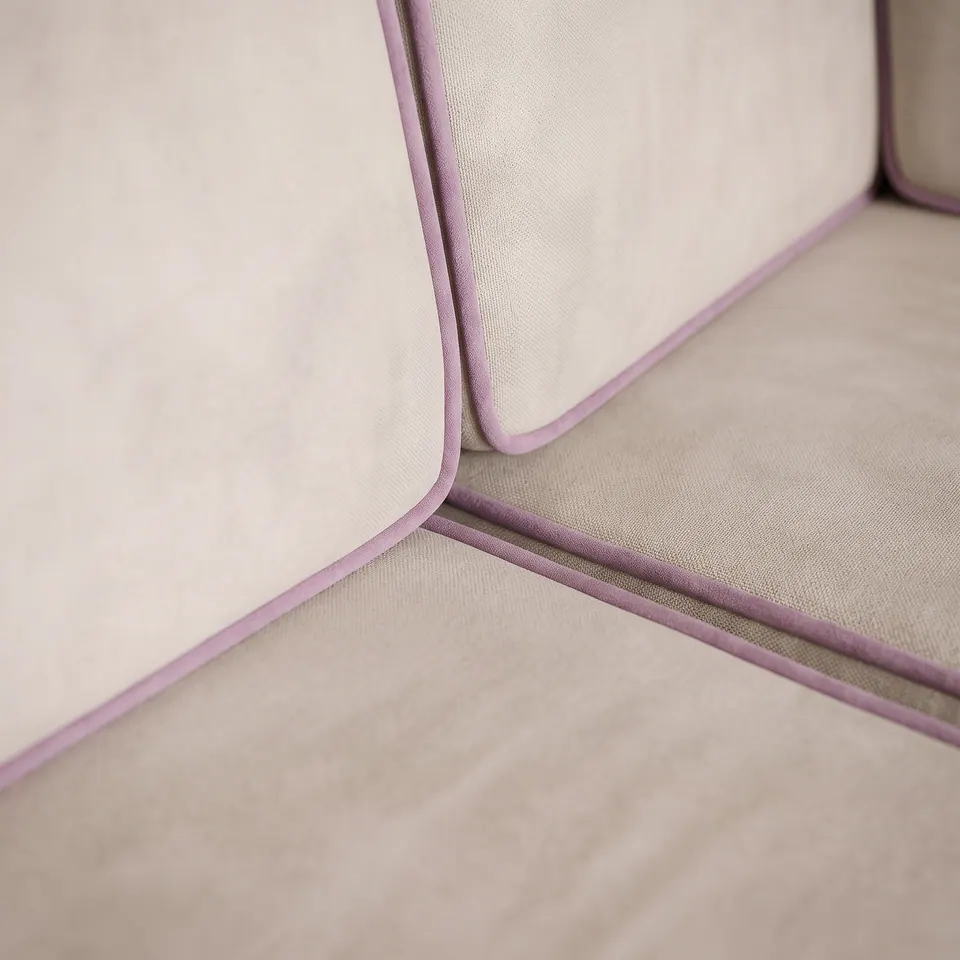
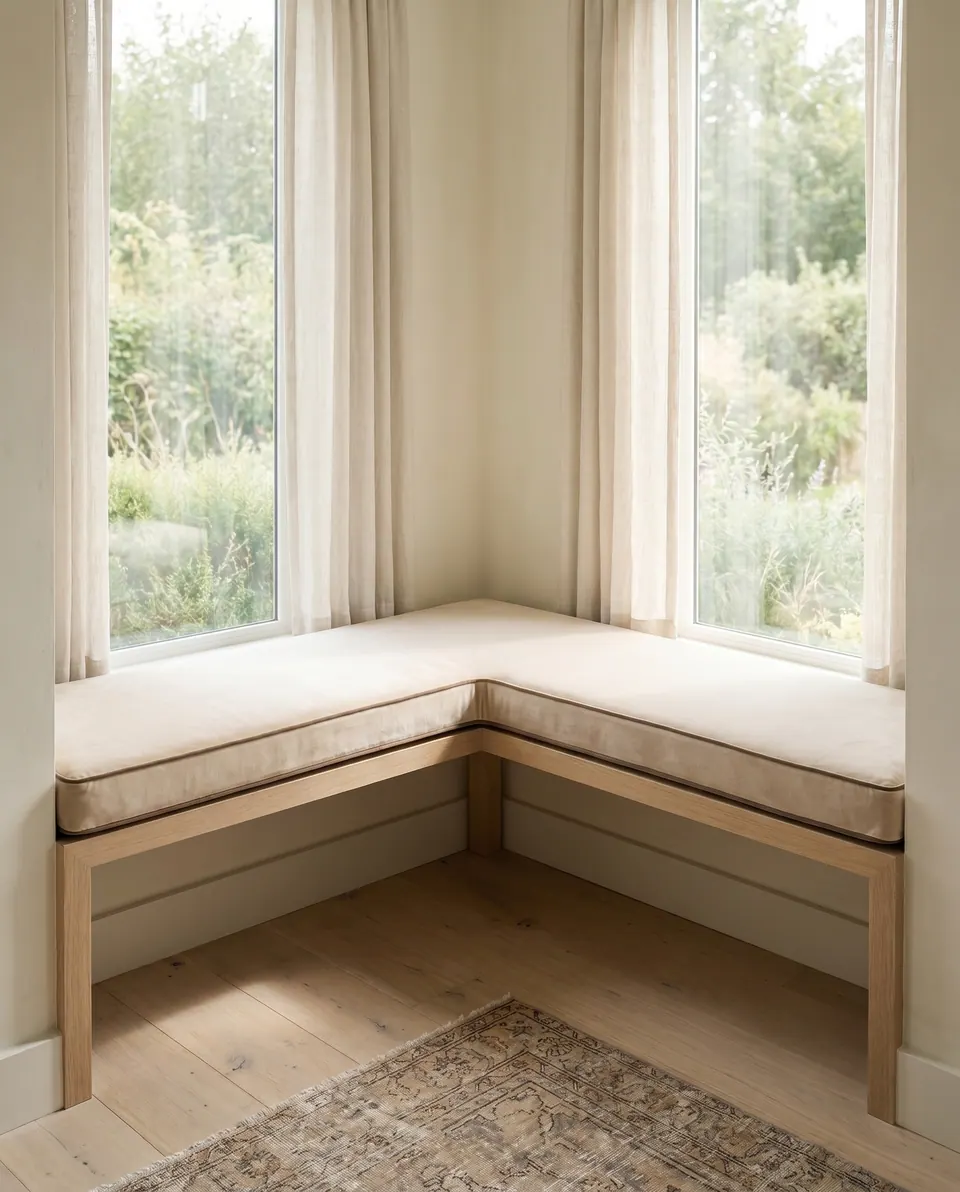
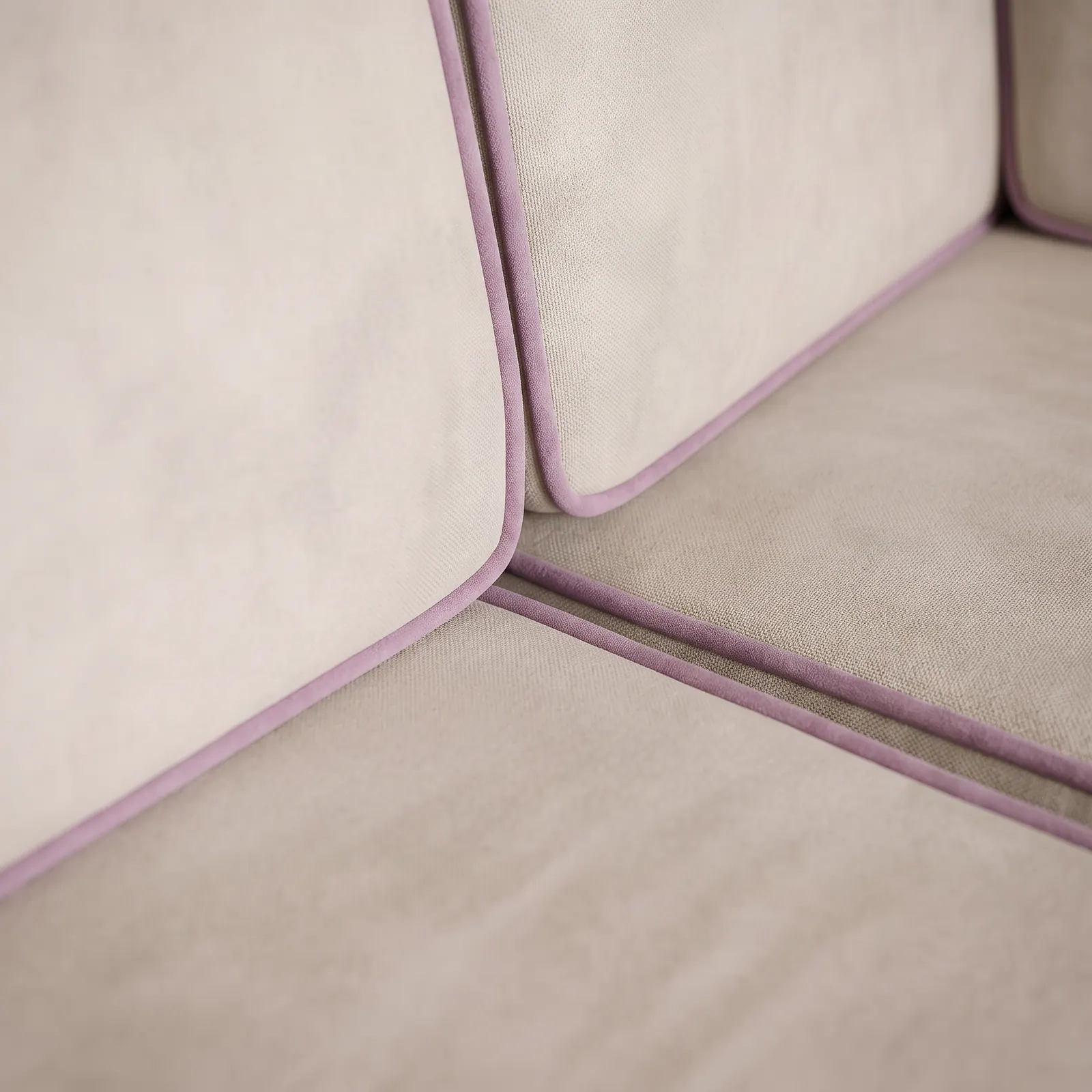
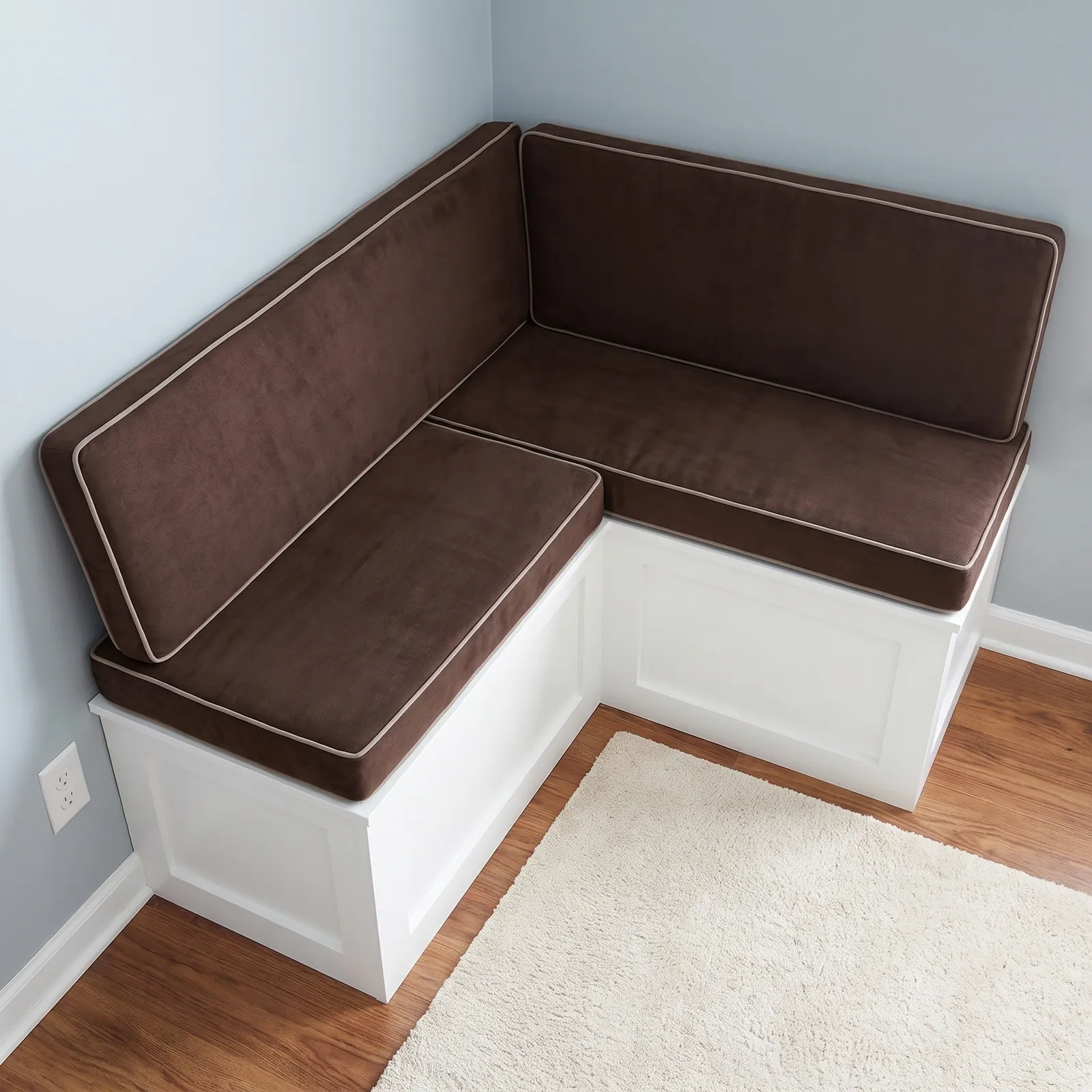
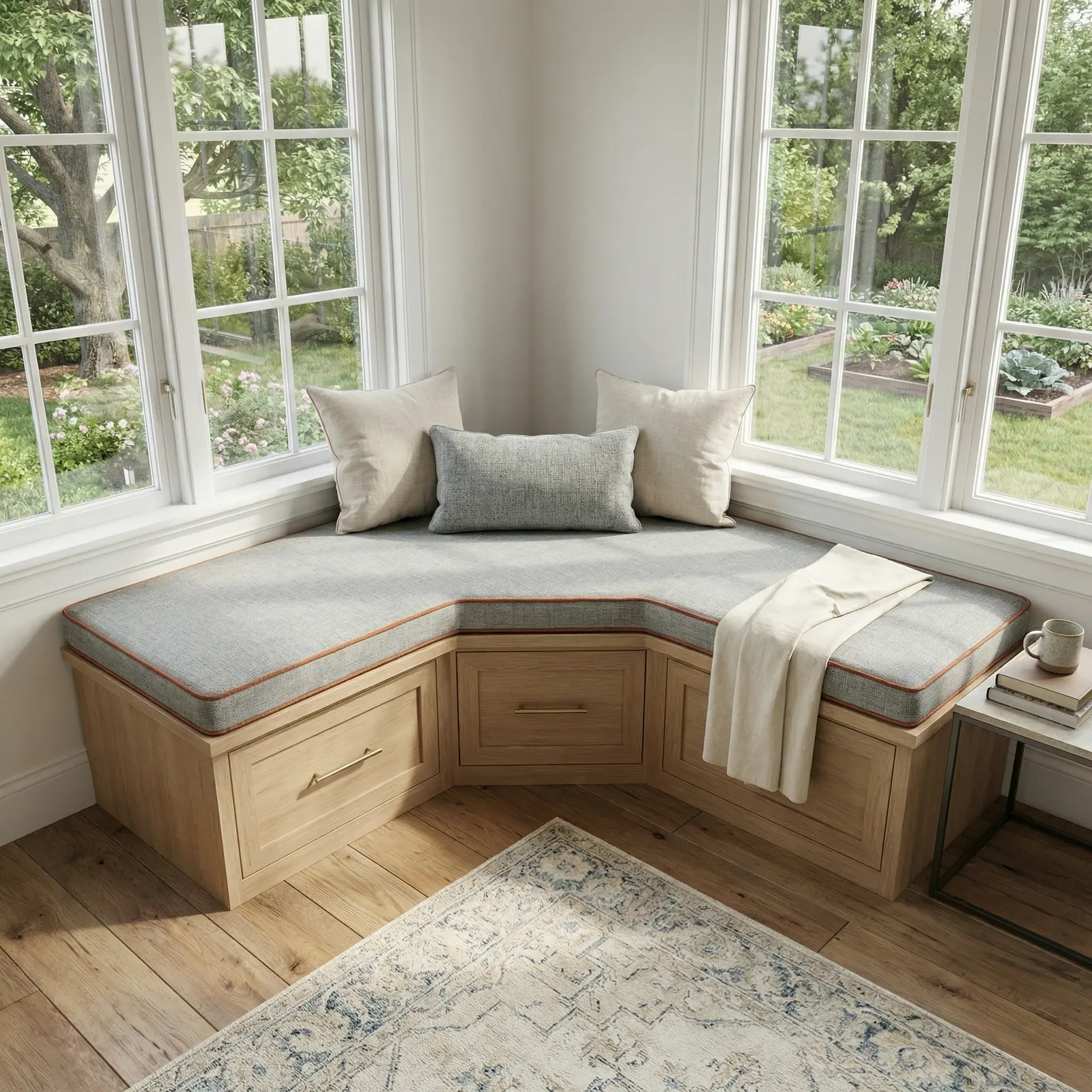
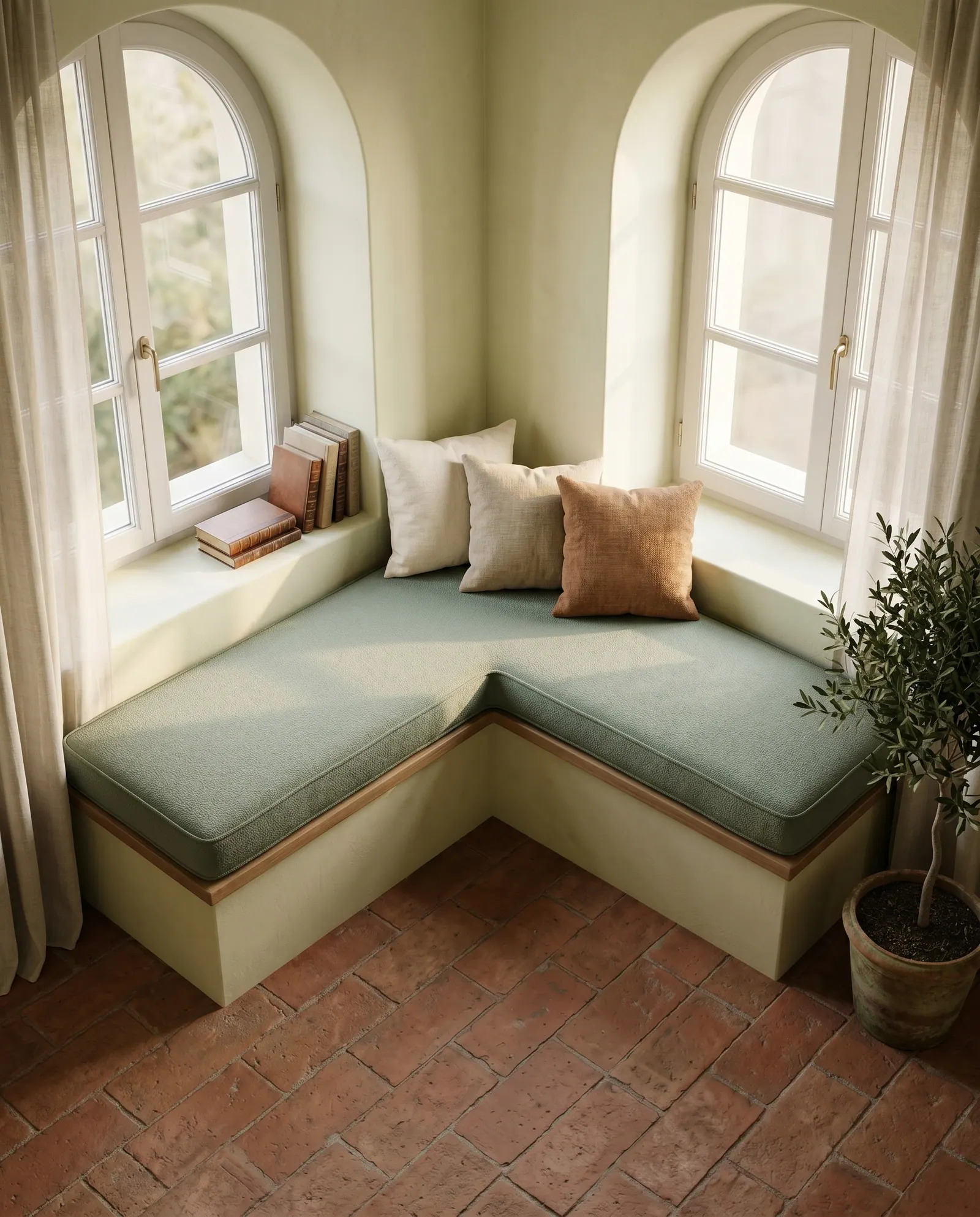
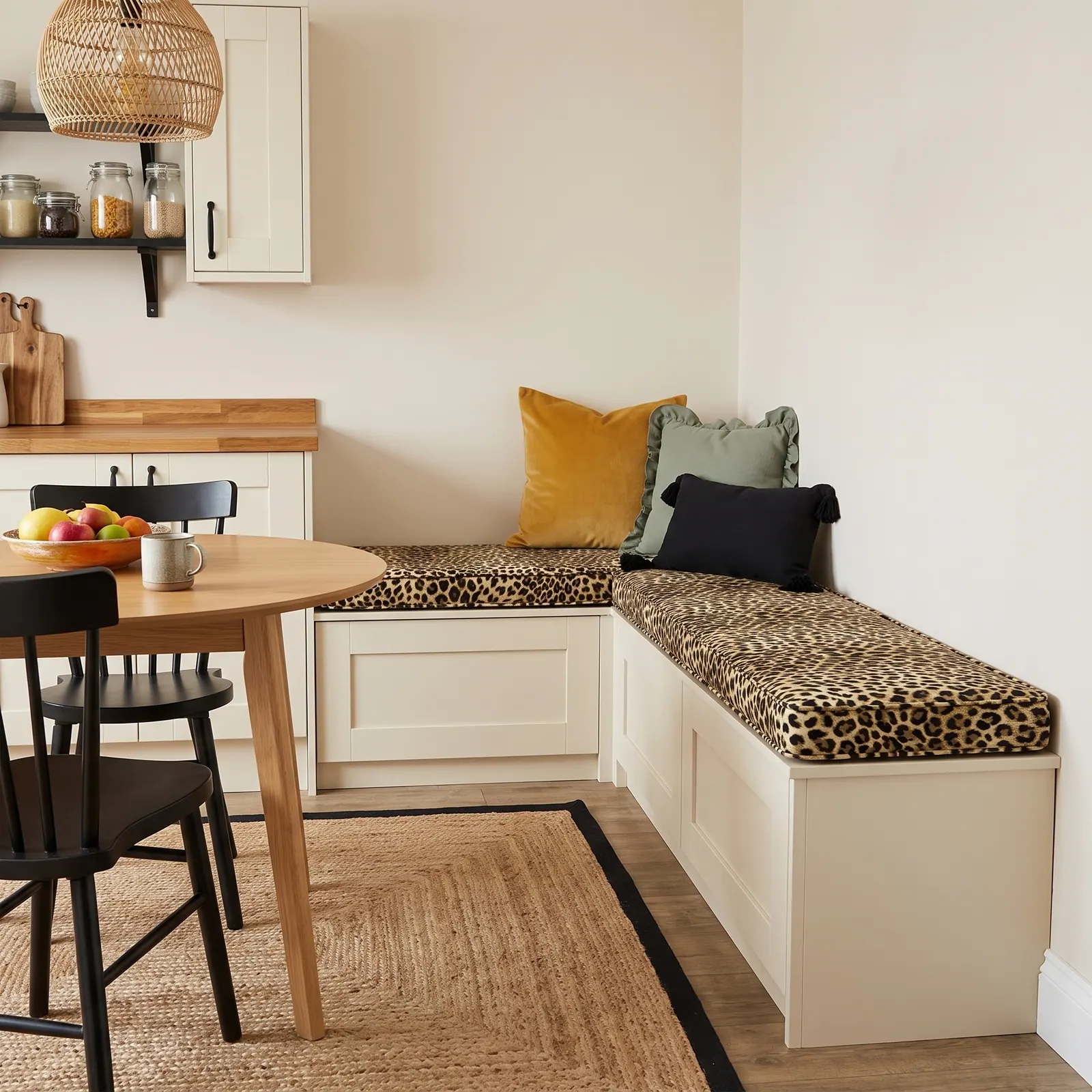
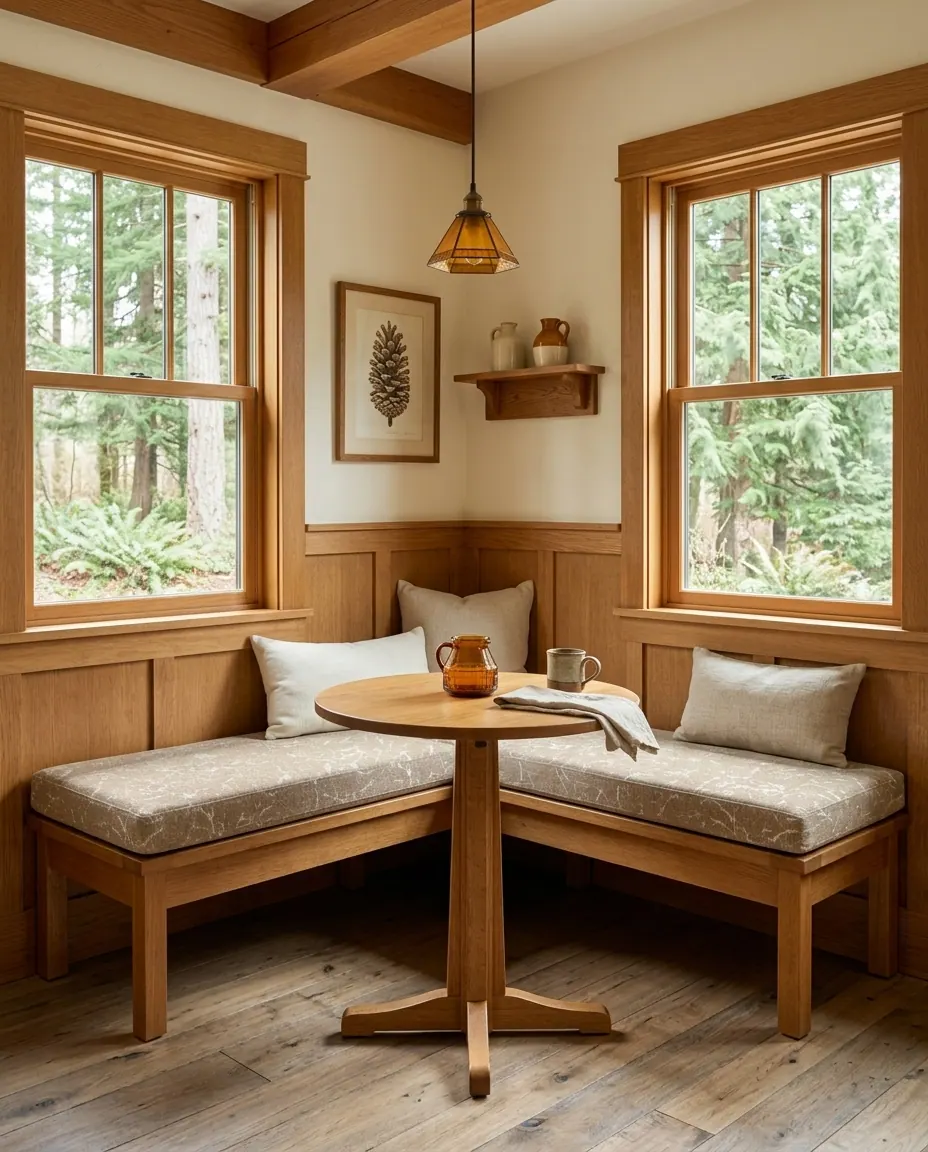
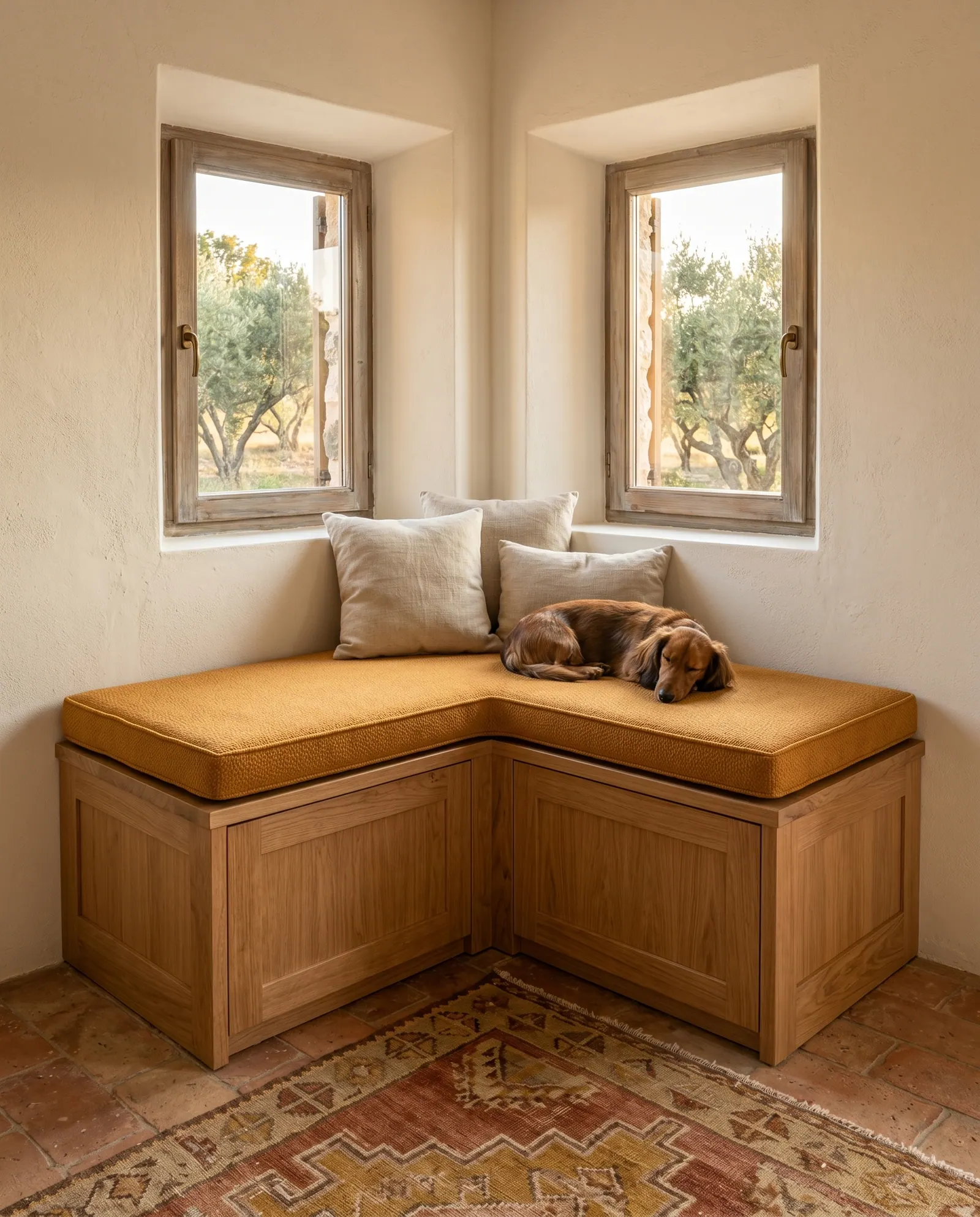
SaveUp close, the lilac welt turns each corner cleanly and doubles where back meets seat.SaveDark brown suede-look cushions with beige piping make a forgiving choice for a busy corner bench.SaveOne cushion wraps a corner with a 45-degree middle section, so there are no gaps between seats.SaveA sage L-shaped cushion wraps a plaster corner seat between two arched windows. Terracotta tiles and an olive tree set a villa mood.SaveA classic green awning stripe makes this beadboard corner bench look original to the house.SaveThe cognac L-bench styled for everyday living: knit throws, kilim and bouclé pillows, a rattan lamp and a coffee table pulled close.SaveTwo leopard cushions meet at the corner of a cream shaker banquette and turn a kitchen corner into a breakfast nook.SaveTwo box cushions meet in the corner of a double-aspect window seat, finished in a denim-blue microcheck.SaveTwo straight cushions meet in the corner of an oak breakfast nook, printed with a soft leaf pattern that forgives daily spills.SaveSage sits comfortably between the golden dog, the white beadboard and the gray terrazzo, and forgives muddy-paw days.SaveA mustard corner seat wraps two oak boxes under deep windows looking onto an olive grove.
On an L-shaped bench, one cushion owns the corner. The other is its wall run minus that cushion's depth: 61 in beside a 19 in deep cushion is about 42 in.
A corner wants one good pillow, not five. The sage bouclé nook pairs its cushions with a round table and a jar of wildflowers; the leopard-print shaker banquette lets black spindle chairs do the talking; the cognac window seat goes full boho with kilim pillows and a braided jute rug. Pick one direction and let the corner anchor it.
Is it better to make my corner bench cushion as one L-shaped piece or as two?
The workshop's answer
Two or more separate cushions meeting flush at the corner is what the shop recommends. They fit more cleanly, ship much more safely and are easier to handle, unzip and wash. A one-piece L makes the cover hard to take off and put back, costs considerably more and leaves far less margin for error. A small L can still be one piece: the shop turns your sketch into a lettered template and asks you to confirm every edge and the thickness.
A common question
What measurements do you need for an L-shaped bench that also gets back cushions?
The workshop's answer
The end-to-end length of each leg, the seat depth and thickness, and a sketch or photo. Say whether any part is angled and whether you need backrests, and add a photo of the nook plus a picture of the backrest style you like. Outside and inside dimensions of the L also work; the shop plans the two-piece split, confirms it and checks the units before quoting.
A common question
How do I measure a corner bench so the two cushions don't overlap?
The workshop's answer
Measure each arm wall to wall from the back corner, plus the seat depth, and send a photo or sketch; the shop works out the corner. One cushion runs its full wall into the corner and the other is shortened by the seat depth. Runs of about 68 1/2 in and 53 in (174 and 135 cm) at 17 3/4 in (45 cm) deep became 53 x 17 3/4 in and 50 3/4 x 17 3/4 in (135 x 45 cm and 129 x 45 cm). Back cushions are shortened the same way, by the backrest thickness.
A common question
My corner bench is an odd shape. How should I send the measurements?
The workshop's answer
Send a photo of the space and a hand-drawn sketch with every dimension written on it; labeling the sides A, B, C and so on works well. For a back cushion, include the wall height above the seat, and mention any trim that sticks out. For angled banquettes the shop can send a diagram of exactly which measurements it needs, and for complex pieces it sends its own drawing and waits for your OK before production.
A common question
On an L-shaped floor sofa, what's the difference between an open and a closed corner?
The workshop's answer
It's the backrest at the end of the run. A closed corner ends in an L-shaped backrest that wraps the end: 3 L-shaped backrests plus 1 straight, about 118 x 79 in (300 x 200 cm) overall. An open corner ends in a straight backrest and leaves that end open like a chaise: 2 L-shaped plus 2 straight. Pick the open-corner option or write it in the personalization box; an extra straight backrest lets you switch layouts.
Have it made
Have your L-shaped bench cushion made — ask Nate’s workshop
Send the numbers in inches: length × depth × thickness, plus any angle. The workshop checks them with you, because foam has no undo button. — Nate
Leave your details and the workshop will call you to confirm measurements, fabric, foam and piping. No prices, dates or payment on this page: it is a request, not an order.
Fabric · Foam · Pipingwhat the workshop will confirm with you
Are the pieces of a two-piece L-shaped cushion made at the same time?
Yes. Each piece is ordered as its own cart item at its exact drawn size, and the pieces are produced together. Write in the order note which piece owns the corner, so the set is checked against your layout.
Can an L-shaped bench have a back cushion on one side only?
Yes. Backrests can run along one leg only, such as a foam wedge along the longer run. Where two long cushions overlap in the corner, each can have its own backrest, with the second one shortened by the first one's thickness.
Does a notch for a post make an L-shaped cushion cost more?
On the custom-shape listing a notch adds nothing by itself; cut-outs around obstacles cost a little more. There is no charge for the template the workshop draws for your approval, though angled and custom-shaped pieces don't get extra discounts.
How thick should an L-shaped kitchen bench cushion be?
The standard is 4 in (10 cm) and can be changed. Kitchen corners often go thinner for table height; one buyer in the US chose 2 in for a small one-piece L. The thinnest standard foam is 2 in (5 cm), and anything thinner is made without piping.
Can two floor sofas be joined into an L-shaped corner?
Yes. Order two of the same teddy floor sofa and the workshop swaps in straight backrests where needed so they meet as a corner, refunding the backrest price difference. Colors can be mixed piece by piece, and an L set ships in about 6 parcels.
± 1/4 in — Nate
Share this atlas entry
Readings
Photographs read by the masters: l-shaped corner bench cushions
Real cushions made for real rooms, each read for proportion, fabric and fit.

 Save
 Save
 Save
 Save
 Save
 Save
 Save
 Save
 Save
 Save
 Save
 Save