The Cutting Table · compared on the table
How do I measure an L-shaped bench so the corner cushions don't overlap?
Also asked as:Not sure how to enter measurements for the cornerI would not like them to overlap
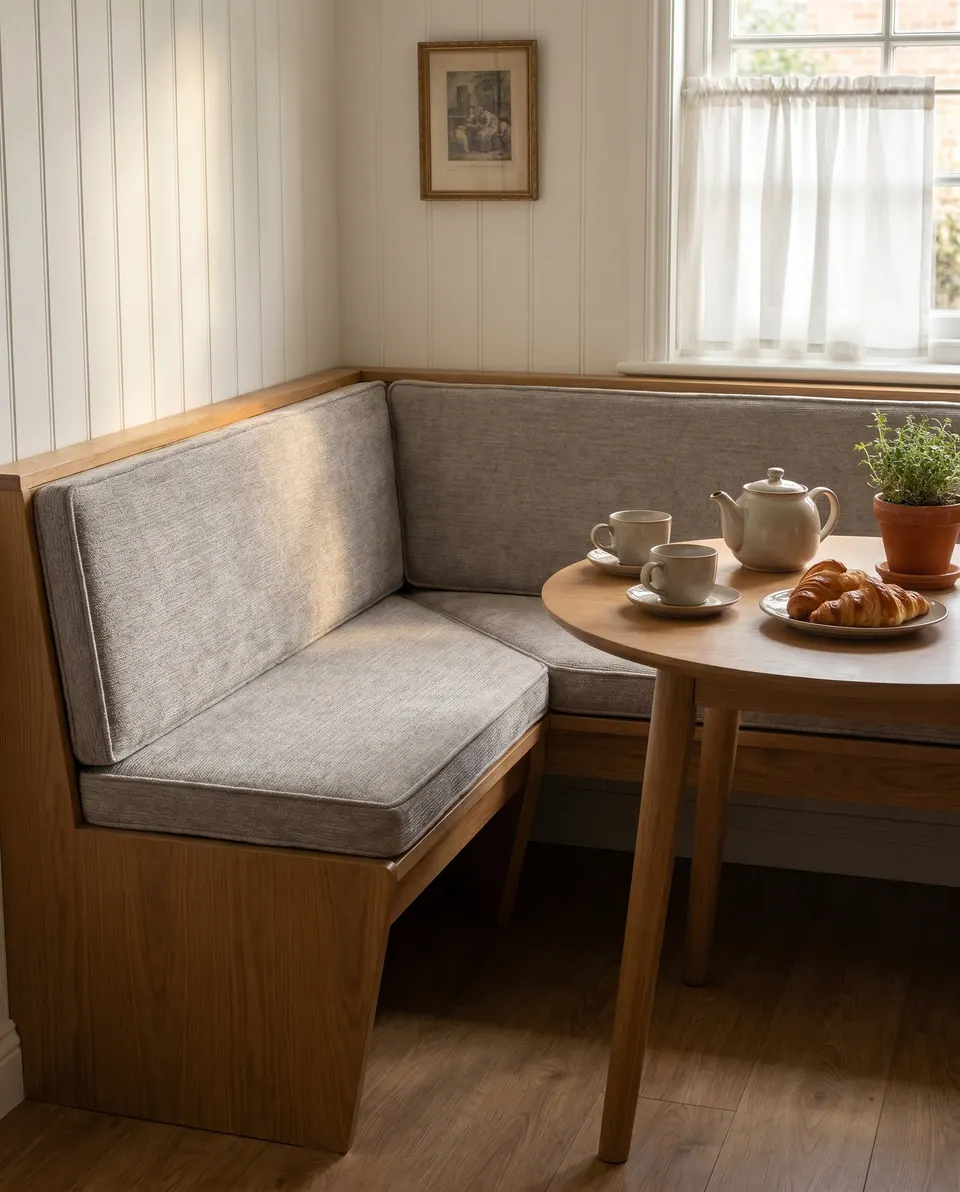
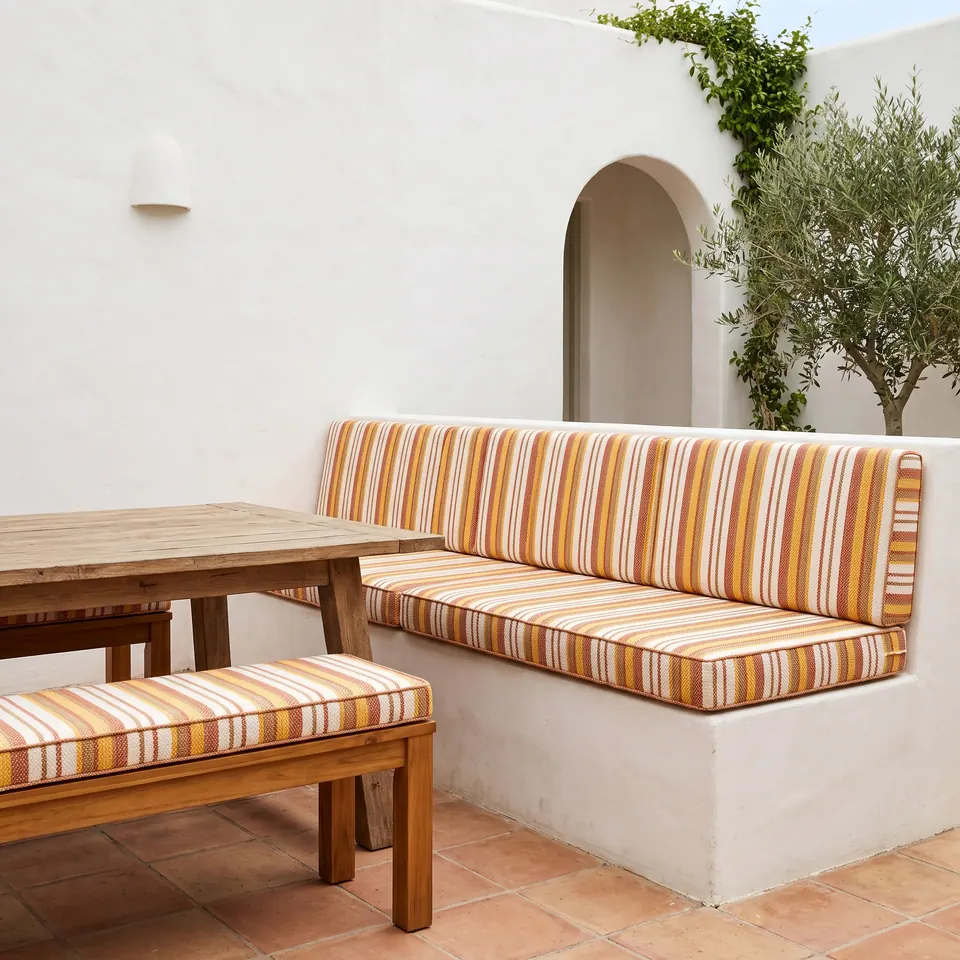
Two walls, one corner, and a square of seat only one cushion can own. The fix is a subtraction, and the workshop does it for you.

 Save
The quick answer
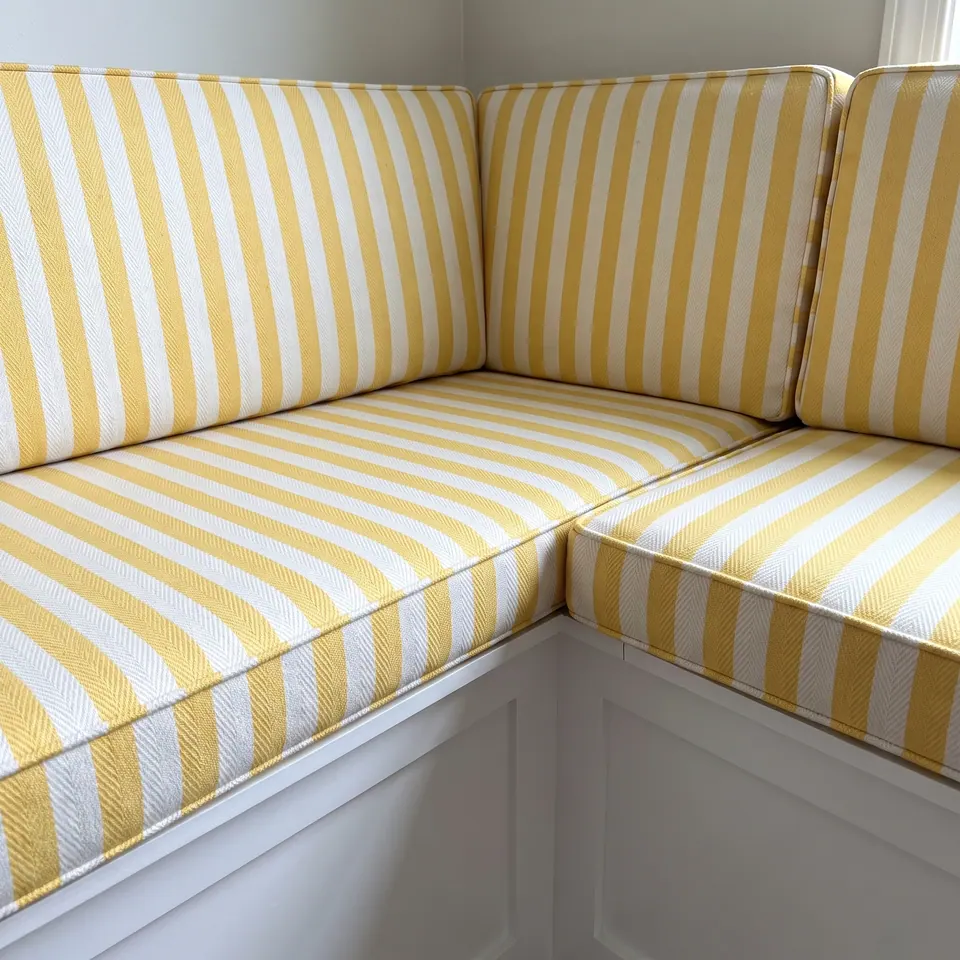
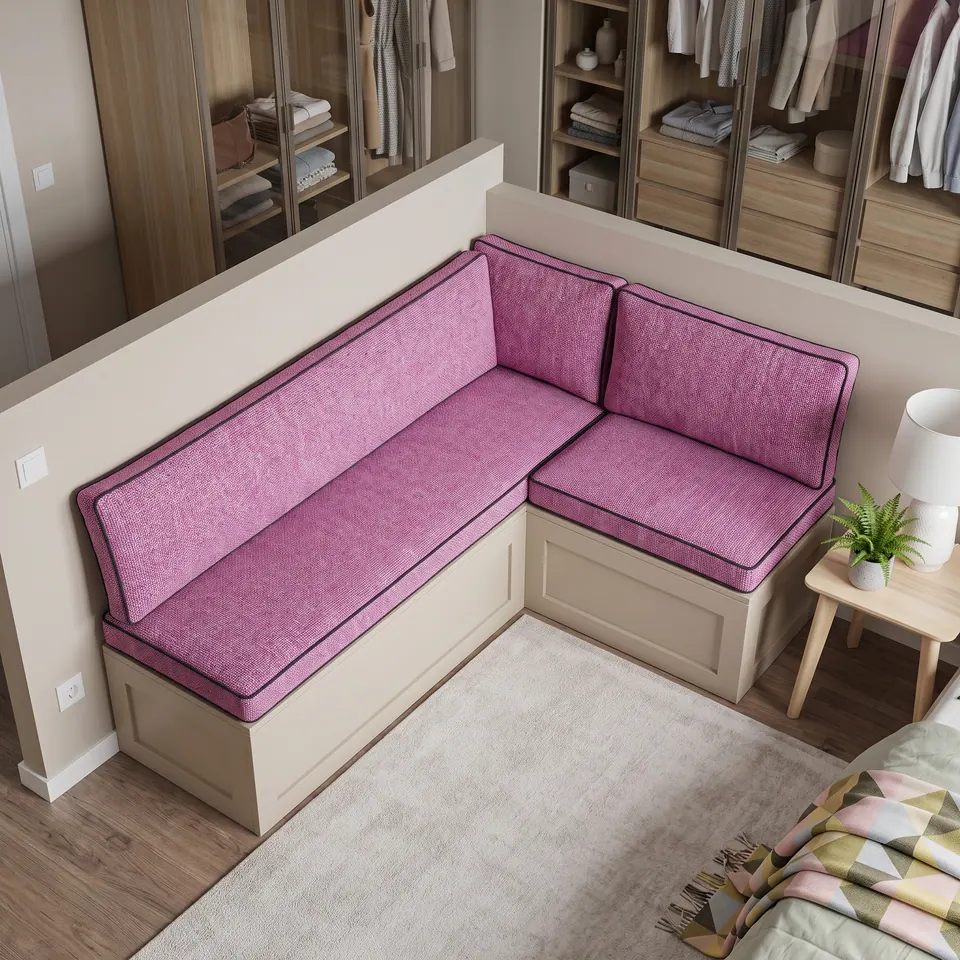
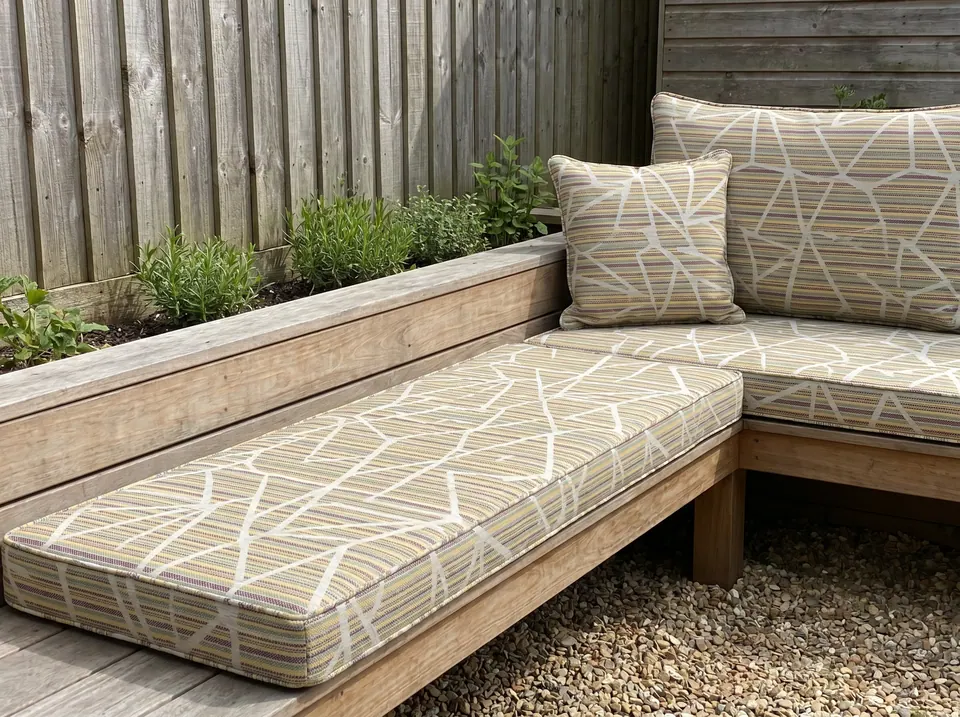
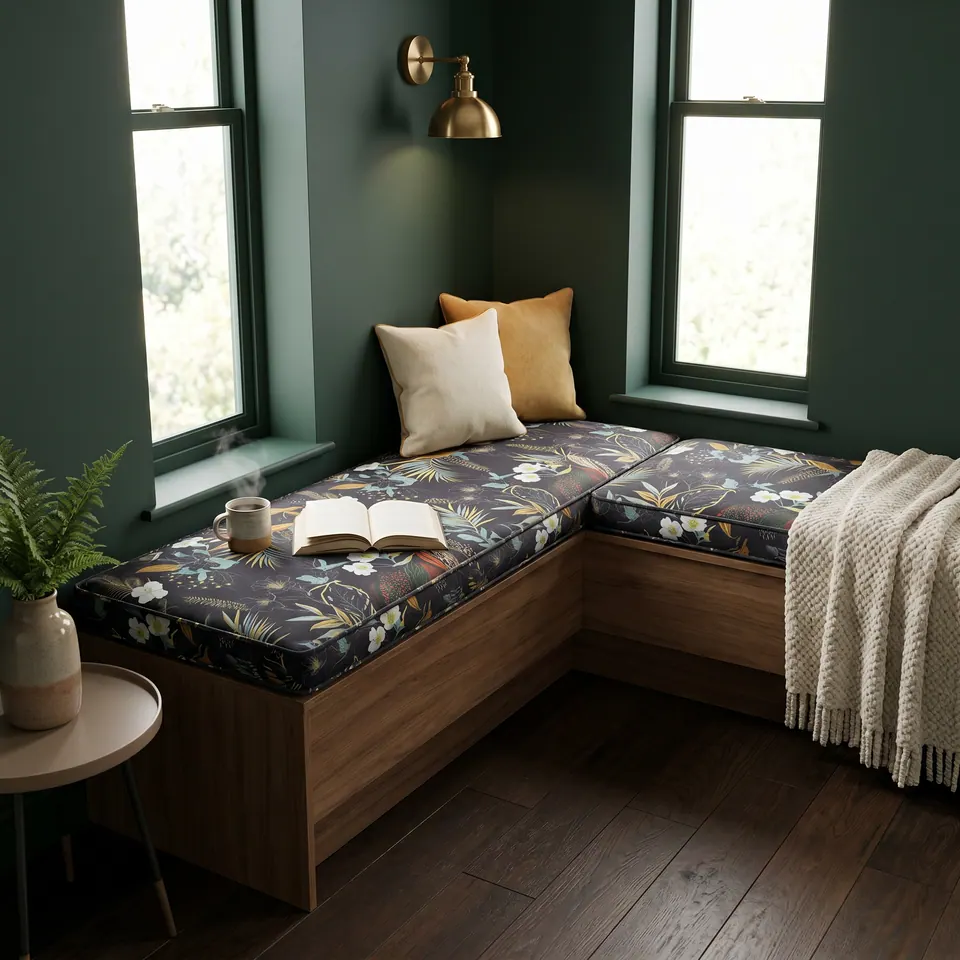
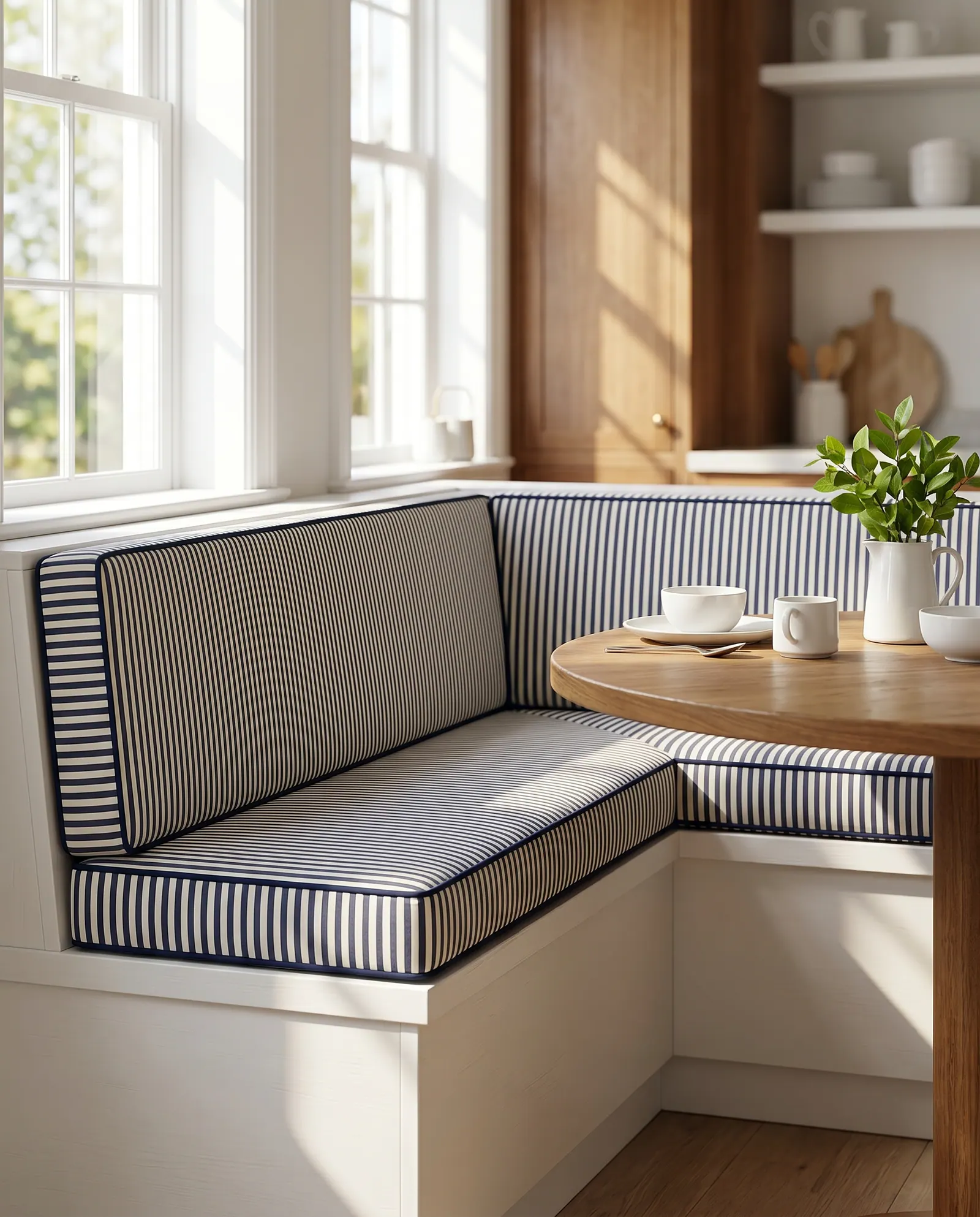
Measure each arm of the L from the back corner to its end, plus the seat depth, and the workshop shortens one cushion by that depth so the two butt together without overlapping. The other cushion runs the full length into the corner. Back cushions are shortened by the backrest thickness the same way. Send a photo or sketch with the numbers.
Get a quote for a L-shaped bench cushion
Three real L benches, before and after the corner math
| Wall runs | Seat depth | Corner cushion | Shortened cushion |
|---|---|---|---|
| 68.5 in + 53 in (174 + 135 cm) | 17.7 in (45 cm) | 53 x 17.7 in (135 x 45 cm) | 50.8 x 17.7 in (129 x 45 cm) |
| 63.8 in + 63 in (162 + 160 cm) | 15.7 in (40 cm) | 63.8 x 15.7 in (162 x 40 cm) | 47.2 x 15.7 in (120 x 40 cm) |
| 74 in + 180 in (188 + 457 cm) | 19 in (48 cm) | 74 x 19 in (188 x 48 cm) | 161 x 19 in (409 x 48 cm) |
Key facts
- An L-shaped bench is made as two separate cushions.
- One cushion runs the full length of its wall into the corner.
- The second seat cushion is shortened by the seat depth.
- Example: runs of 68.5 in and 53 in (174 and 135 cm) at 17.7 in (45 cm) deep became 53 x 17.7 in (135 x 45 cm) and 50.8 x 17.7 in (129 x 45 cm).
- The second back cushion is shortened by the backrest thickness, 2 in (5 cm) in one order.
- The workshop calculates the corner from your wall-to-wall sizes.
- L-shaped floor seating is also made of separate cushions placed side by side.

Have it made
Have Nate’s workshop cut this for you
Every edge and both diagonals, to the nearest 1/4 in. If the numbers do not close, the workshop will say so on the call. — Nate
Leave your details and the workshop will call you to confirm measurements, fabric, foam and piping. No prices, dates or payment on this page: it is a request, not an order.
Measuring the L in four moves
Measure each arm from the back corner
Run the tape along each wall from the inside back corner to the end of the arm. Wall to wall, not cushion to cushion.
Measure the seat depth
Back wall to front edge. This is the number the workshop subtracts from one arm.
Note the backrest thickness
If back cushions are coming too, say how thick they are. The second back loses that much: 2 in (5 cm) in one real order.
Send the raw numbers with a sketch
A photo or pencil sketch, plus a line saying whether the numbers run end to end or corner to corner. The L-shaped measuring Pattern walks the whole bench.
Why one cushion gives way at the corner
Here is the geometry, partner. Where the two arms meet there is a square of seat, depth by depth, that both arms claim. Only one cushion can sit on it, so one runs into the corner and the other stops short by the seat depth.
Back cushions follow the same logic with a different number: the second back loses the backrest thickness. On 74 in and 180 in runs, 2 in (5 cm) backs made the long back 178 in (452 cm). Measured your backs wall to wall? Say so; in one order the workshop took 4 in (10 cm) off one back so the pair wouldn't collide.
Measure twice; the fabric remembers. The corner joint Pattern and the L-shaped cushion hub show more corners. Which arm of your L is longer?
Back cushions in an L corner lose the backrest thickness, not the seat depth: a 180 in back run with 2 in thick backs becomes 178 in.
Nate
Buyer questions
- A common question
How do I work out cushion lengths at the corner of an L bench so they don't overlap?
The workshop's answerOne seat runs the full length of its wall and the other is shorter by the seat depth. For 74 in and 180 in runs at 19 in deep, the seats were 74 in and 161 in, and the 14 in high backs 74 in and 178 in. Send wall-to-wall sizes and the workshop works it out.
- A common question
How should I measure my L-shaped bench for cushions?
The workshop's answerMeasure each arm from the back corner to its end, and the seat depth. For runs of 63.8 in and 63 in (1620 and 1600 mm) at 15.7 in (400 mm) deep, that meant one 15.7 x 63.8 in (40 x 162 cm) cushion and one 15.7 x 47.2 in (40 x 120 cm) cushion.
- A common question
I measured my back cushions wall to wall in the corner. Is that a problem?
The workshop's answerNo, the workshop adjusts it. Where two back cushions meet in a corner, one is made 4 in (10 cm) shorter so they don't collide. Just say your numbers are wall to wall.
Questions buyers ask next
Which arm of the L gets the full-length cushion?
Either arm can. In one order the 53 in (135 cm) arm ran into the corner and the 68.5 in (174 cm) arm was shortened by the depth to 50.8 in (129 cm). In another, the shorter 74 in arm kept its full length.
What happens if my corner isn't a true 90 degrees?
The workshop draws the cushion to scale and checks that it closes. If it doesn't, you're asked to re-measure or check both diagonals. A gap within 1/4 in is accepted, and nothing is cut until you confirm.
Should I subtract the seat depth myself before ordering?
No. Send the raw wall-to-wall numbers and say that's what they are. The workshop calculates the corner deduction itself, so you avoid the same depth being taken off twice.