A Reading by NateL-Shaped Corner Bench Cushions
Anatomy of an L-shaped bench cushion set: three modules, one corner
Picture this sleeper-wood corner bare, then count what the cushions changed. I read it the way I used to read a car seat: part by part, tape measure out.

 Save
The quick answer
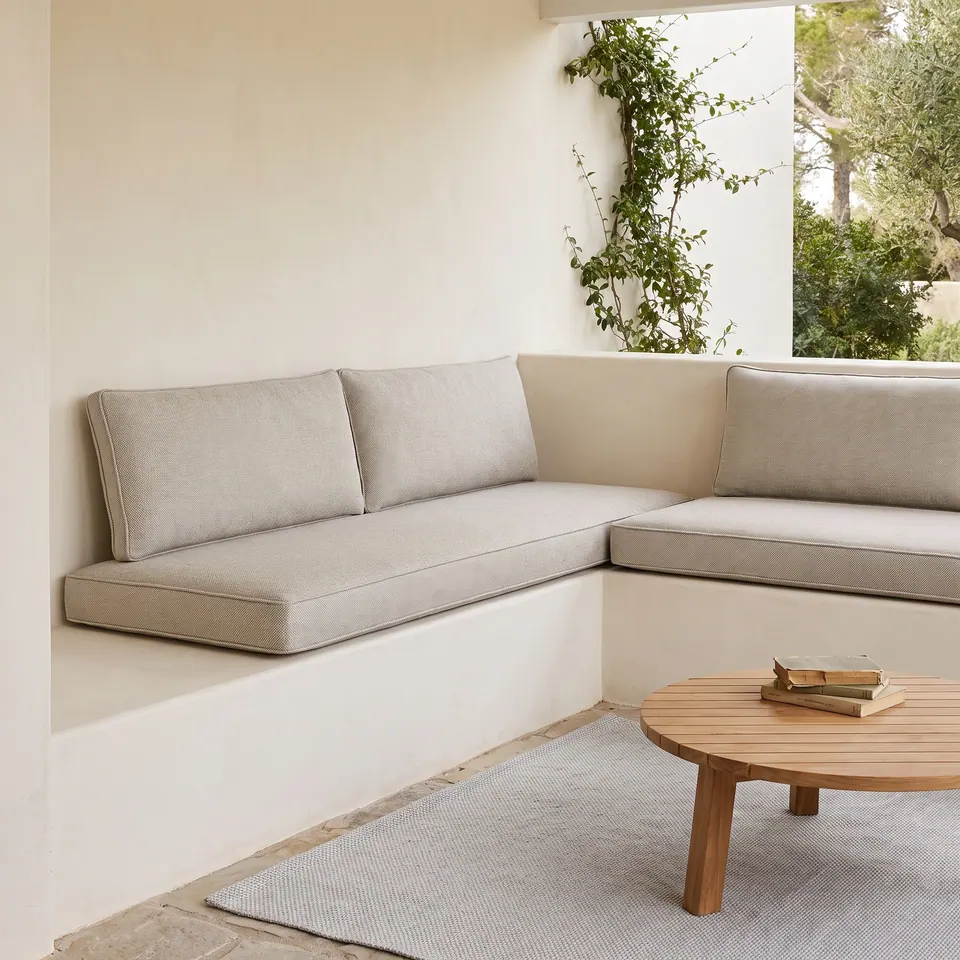
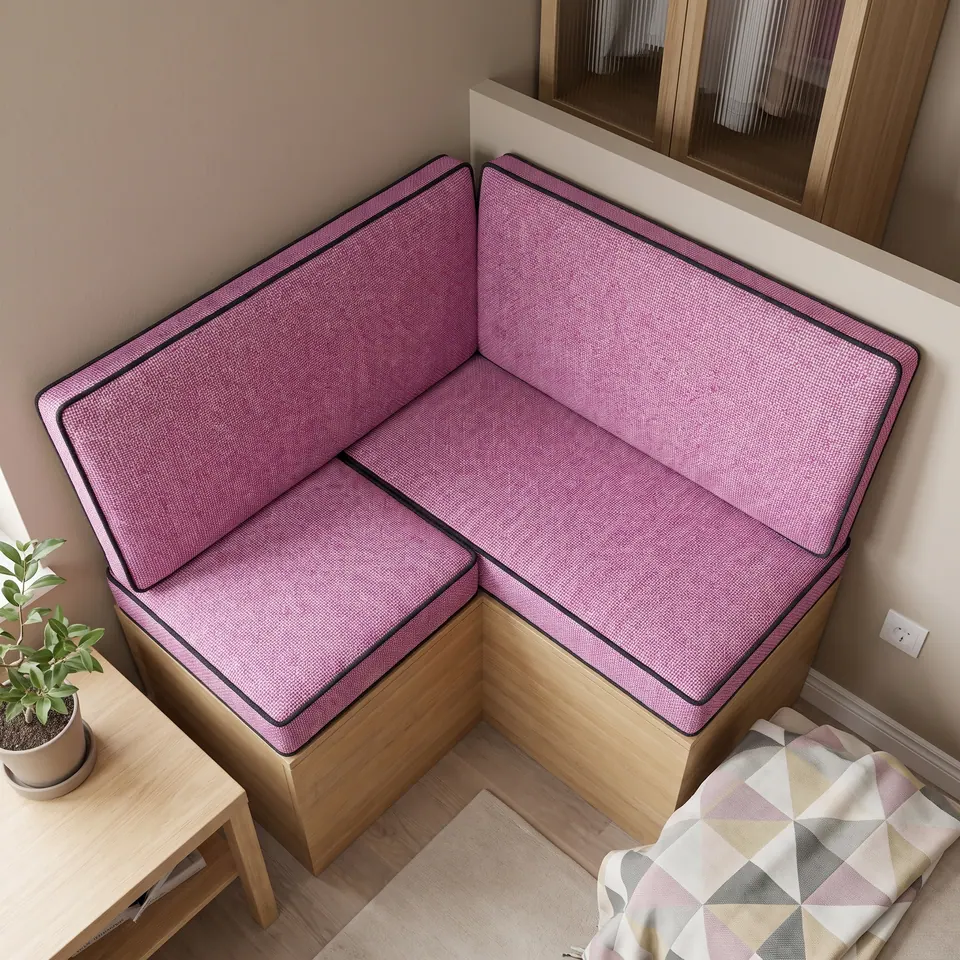
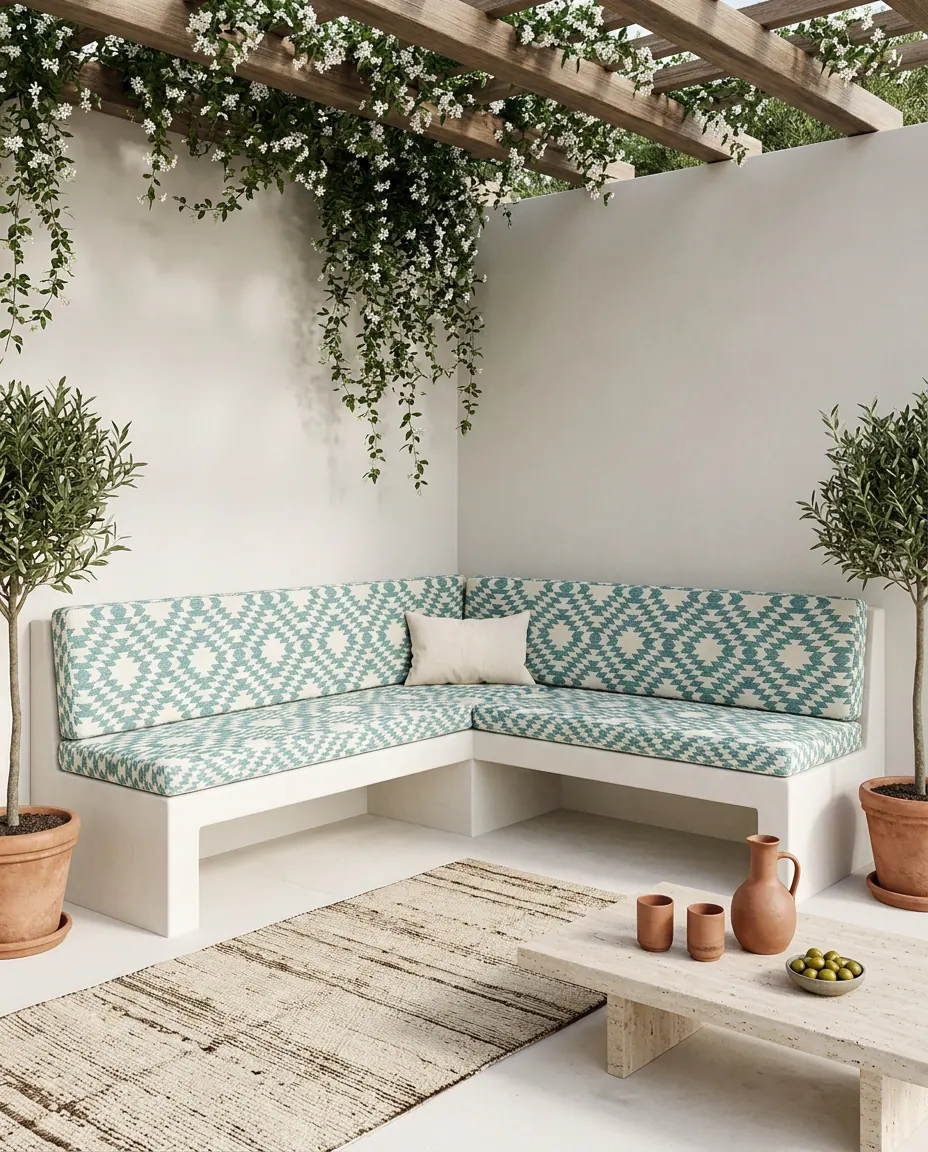
Build an L-shaped bench cushion as separate modules, not one L-shaped piece. Here a long rectangular seat runs down one side, a corner seat keeps the same depth on the other run, and a back cushion thicker than the seat keeps the bench low but good to lean on. Separate pieces are easier to lift, dry after rain and store.
The cushion, cut open
Cover fabric. A removable, zippered cover. Machine wash at 86°F (30°C) on a gentle cycle and air dry.
Piping. A fabric-covered cord sewn into the seams. It sits on the seam line, so it does not change the size.
Fiber wrap. Polyester fiber (Dacron) batting around the foam: it fills the cover out and softens the edges.
Foam core. About 2.0 lb/ft³ (32 kg/m³) high-resilience foam, firm to medium-firm, cut to the ordered size.
Zipper. Along the back band, as hidden as possible. The zipper side faces down or toward the wall.
Base panel. The underside of the cover. A non-slip fabric backing can cover the whole of it instead.
Before, after, and the cross-section in between
An L-shaped bench with no cushions is an excellent shelf for herb pots. Nobody sits on it for long.
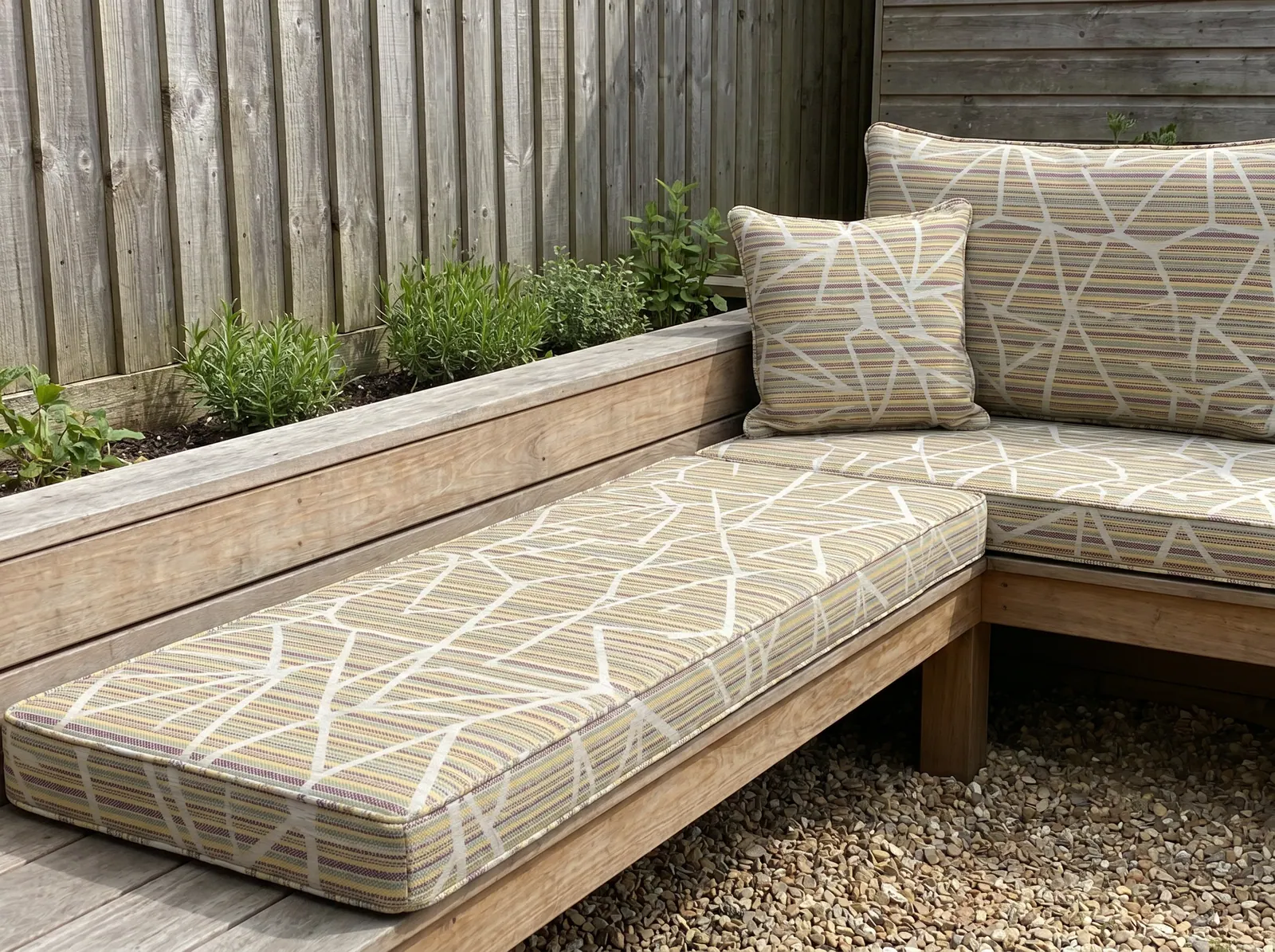
Picture this corner before the fabric arrived. Silvered sleeper wood, pea gravel, a feather-edge fence, a raised bed of lavender and herbs. Every surface is hard, and every color is gray or green. The bench is honest, but it is not an invitation.
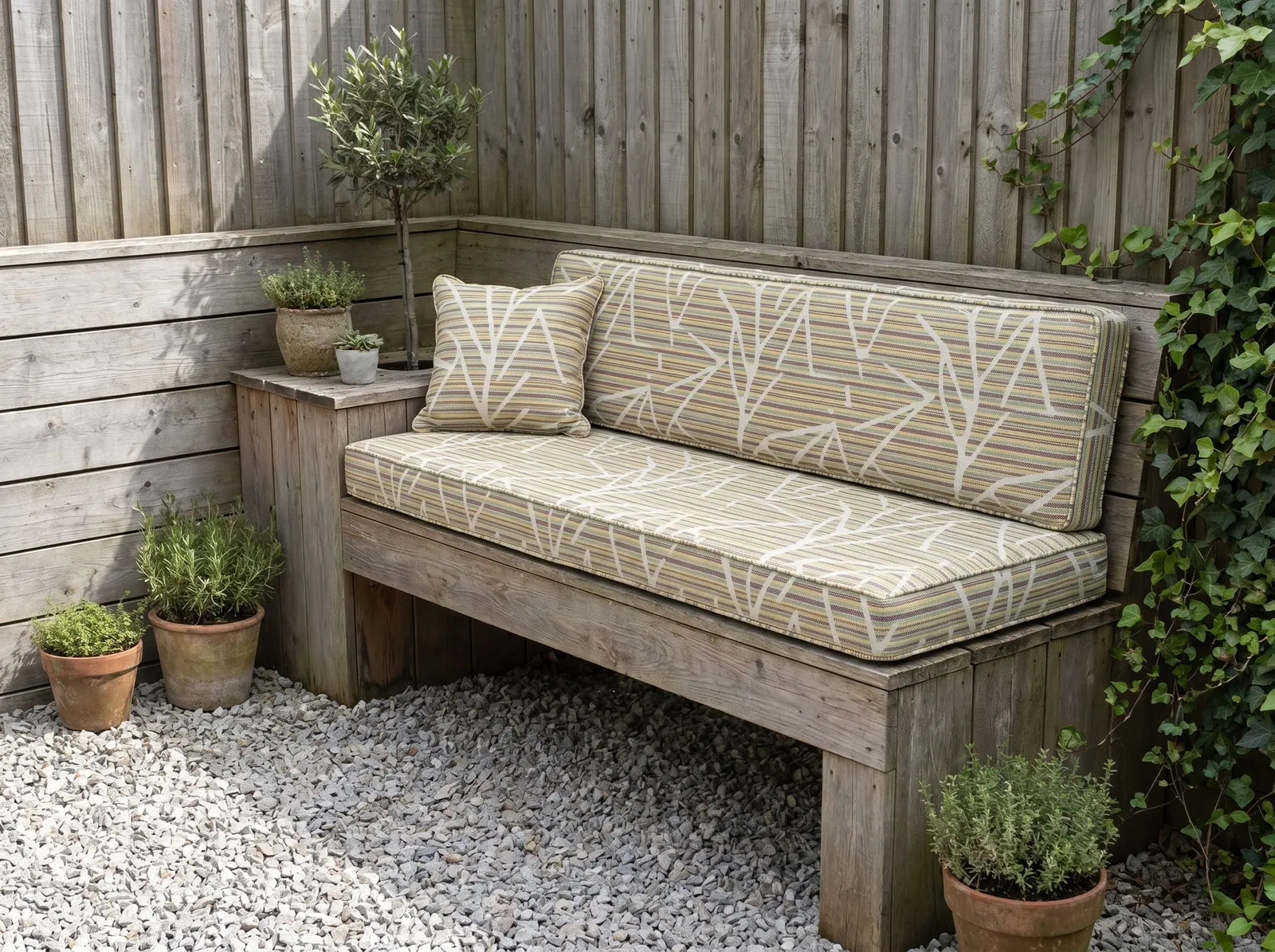
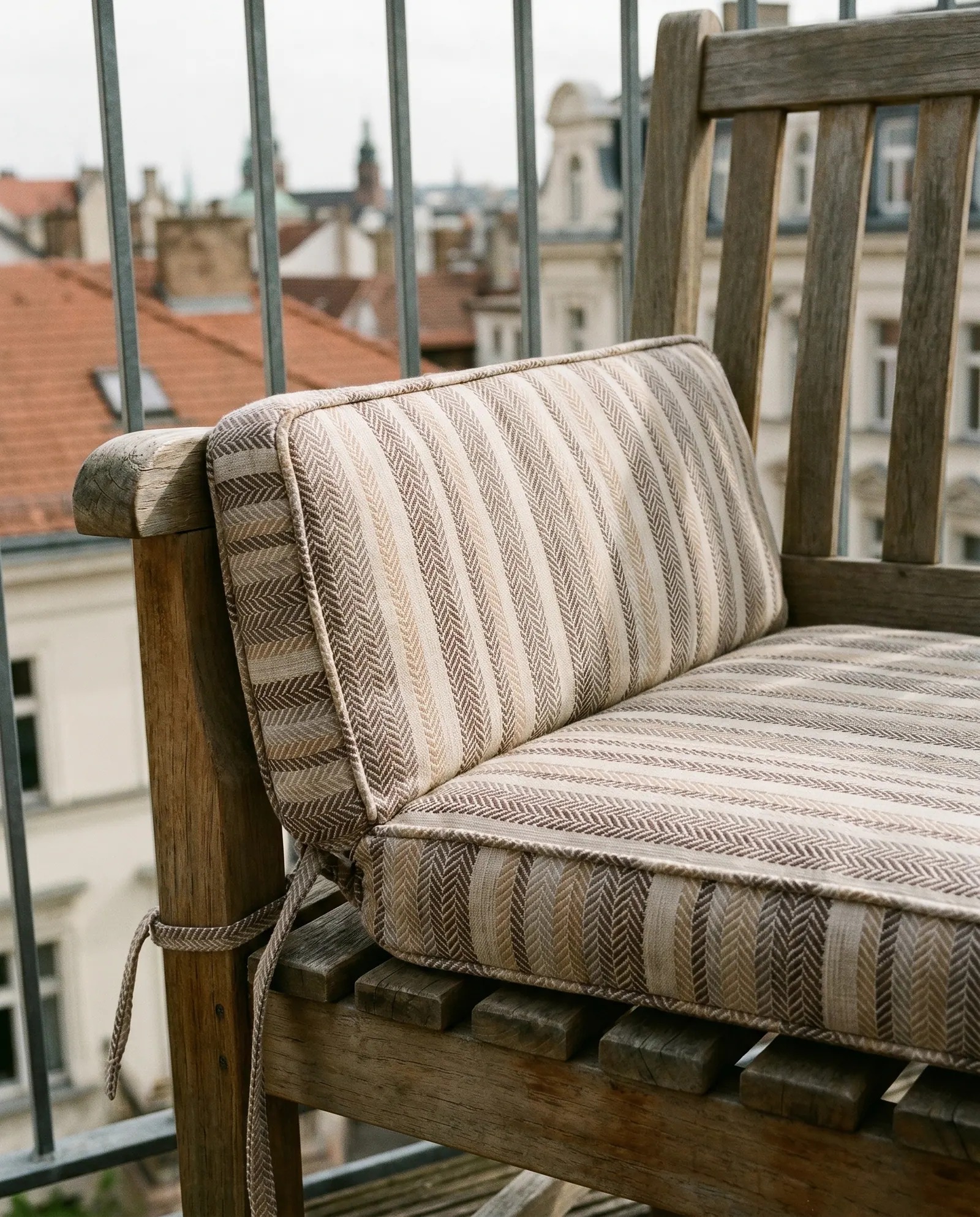
Now the after. Three pieces of sand and sage stripe, crossed with thin white branch lines, turn the same timber into a seat people stay on. The bench did not change by a single board. The cushions did all the work, so they deserve a proper teardown.
Module 1, the long seat. A plain rectangle on the long run. It lifts off with one hand, stands on edge to drain, and slides into a deck box. One L-shaped piece of the same footprint needs two people and a garage.
Module 2, the corner seat. Its seat depth matches the long run exactly, so the inside corner has no step and no gap. If the two depths differ by more than a finger, you feel it every time you slide into the corner. Tolerance is kindness to your future self: hold both runs to the same depth, ± 1/4 in.
Module 3, the back. Thicker than the seat. That keeps the sitting height low and relaxed while still giving a real lean against the fence. A thin seat plus a deep back is the right trick for benches that sit lower than a dining chair.
The edge. Box edge, with self piping cut from the same stripe. The piping draws the outline without adding a new color, which matters when the cloth already has lines in it. One square scatter pillow in the same fabric softens the corner and stops there.
The L-shaped bench cushion measurements Pattern walks through which run owns the corner square, and the L-shaped cushions atlas shows other layouts. What does your corner measure on each run, partner?
Pinned by Nate: five parts of a garden corner
Five pins mark the parts that matter: the long seat module, the corner seat, the tall back, the matching square pillow, and the herb bed the colors came from.
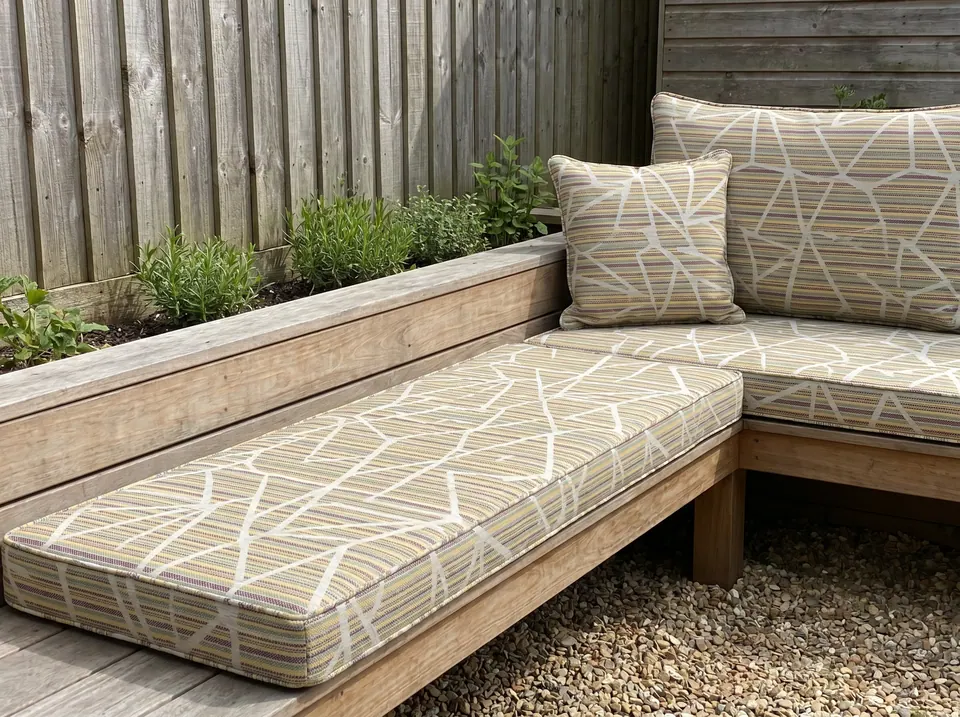
- Long seat module
The run is a separate rectangle, easier to lift and dry than one L piece.
- Tall back cushion
A thicker back than seat keeps the bench low but still good to lean on.
- Matching scatter pillow
One square pillow in the same fabric softens the corner.
- Raised herb bed
Lavender and herbs repeat the sage and lilac threads.
- Corner seat
Seat depth is equal on both runs so the corner is comfortable.
- Long seat moduleThe run is a separate rectangle, easier to lift and dry than one L piece.
- Tall back cushionA thicker back than seat keeps the bench low but still good to lean on.
- Matching scatter pillowOne square pillow in the same fabric softens the corner.
- Raised herb bedLavender and herbs repeat the sage and lilac threads.
- Corner seatSeat depth is equal on both runs so the corner is comfortable.
Before and after, measured in what changes
| Part | Bare bench | With the three modules |
|---|---|---|
| Back | A hard fence line | A back cushion thicker than the seat |
| Corner | A dead right angle | Equal seat depth on both runs, so the corner is a real seat |
| Color | Silver timber, gray gravel, green herbs | Sand and sage with white lines; lilac picked up from the lavender |
| After rain | Wipe and wait | Lift each module, stand it on edge, bring it in |
| Storage | Nothing to store | Three rectangles that stack in a deck box |
The 60 that should have read 70
A buyer wrote to the workshop about an L-shaped floor sofa built from two seats in one linen color. The first seat was 27 1/2 x 47 1/4 in (70 x 120 cm) with a full backrest. The second was 27 1/2 x 55 in (70 x 140 cm) with only a short 27 1/2 in (70 cm) backrest at the end. Round armrest pillows went with both.
When the custom listing came through, the short backrest read 23 5/8 in (60 cm). The buyer caught it before paying, and the workshop changed it to 27½ in (70 cm).
That is the lesson I would pin to every L. Two runs, two backs, a corner and pillows add up to a lot of numbers on one listing. Read every size against your own drawing before you pay.
Buyer questions: a color, a size and a date
- A common question
I'd like olive green, but in cotton or linen rather than velvet. What can you offer?
The workshop's answerThe olive shown on that listing is a linen. Each listing can only display one color chart, so the full range of colors and materials lives on the fabric samples listing, where you can see and order swatches.
- A common question
My bench cushion size isn't in the dropdown. How do I order my exact size?
The workshop's answerChoose the nearest option, usually the next size up, and write your exact size in the personalization note: for a 17 x 18 in cushion, pick the 18 x 18 in option. For other sizes the workshop adds a new option to the listing or sends a custom payment link, and the cushion is made to your exact measurements.
- A common question
How long does a custom bench cushion take, from order to my door?
The workshop's answerIt depends on the piece: a simple bench cushion is quickest, while patterned fabric or a custom velvet bench cushion takes longer, and express delivery to the US follows. Ask the workshop for current making and delivery times in writing before you order.
On the cutting table: the garden L
| Product | L-shaped bench cushion set: long seat, corner seat, back cushion |
|---|---|
| Build | Separate rectangular modules, not one L-shaped piece |
| Fabric | Outdoor acrylic stripe, sand and sage with white branch lines |
| Edge | Box edge |
| Piping | Self piping cut from the same stripe |
| Seat depth | Equal on both runs, held to ± 1/4 in |
| Back cushion | Thicker than the seat |
| Extras | One square scatter pillow in the same fabric |
| Best for | Backyard corner benches where cushions come in after rain |

Have it made
Have this made — ask Nate’s workshop
Every edge and both diagonals, to the nearest 1/4 in. If the numbers do not close, the workshop will say so on the call. — Nate
Leave your details and the workshop will call you to confirm measurements, fabric, foam and piping. No prices, dates or payment on this page: it is a request, not an order.
An L-shaped bench cushion works best as separate modules: the same seat depth on both runs, a back thicker than the seat, each piece light enough to lift.
Nate
Questions buyers ask next
Is a garden corner bench better cushioned in modules or as one L piece?
Several, in most backyards. Separate rectangles lift, drain and store more easily than one L-shaped piece, and a worn module can be replaced on its own. Keep the seat depth identical on both runs so the corner feels continuous.
Why is the back cushion thicker than the seat on a low garden bench?
A thin seat keeps the sitting height low and relaxed, while a thicker back gives you something real to lean on against a fence or rail. The combination suits benches that sit lower than a dining chair.
How do I pick outdoor cushion colors for a bench beside planting?
Take them from the planting and the hardscape. Here sand matches the gravel, sage matches the herbs and a thread of lilac echoes the lavender, while thin white lines add movement without a loud color.
± 1/4 in — Nate
More photographs to read
 Save
 Save
 Save
 Save
 Save
 Save