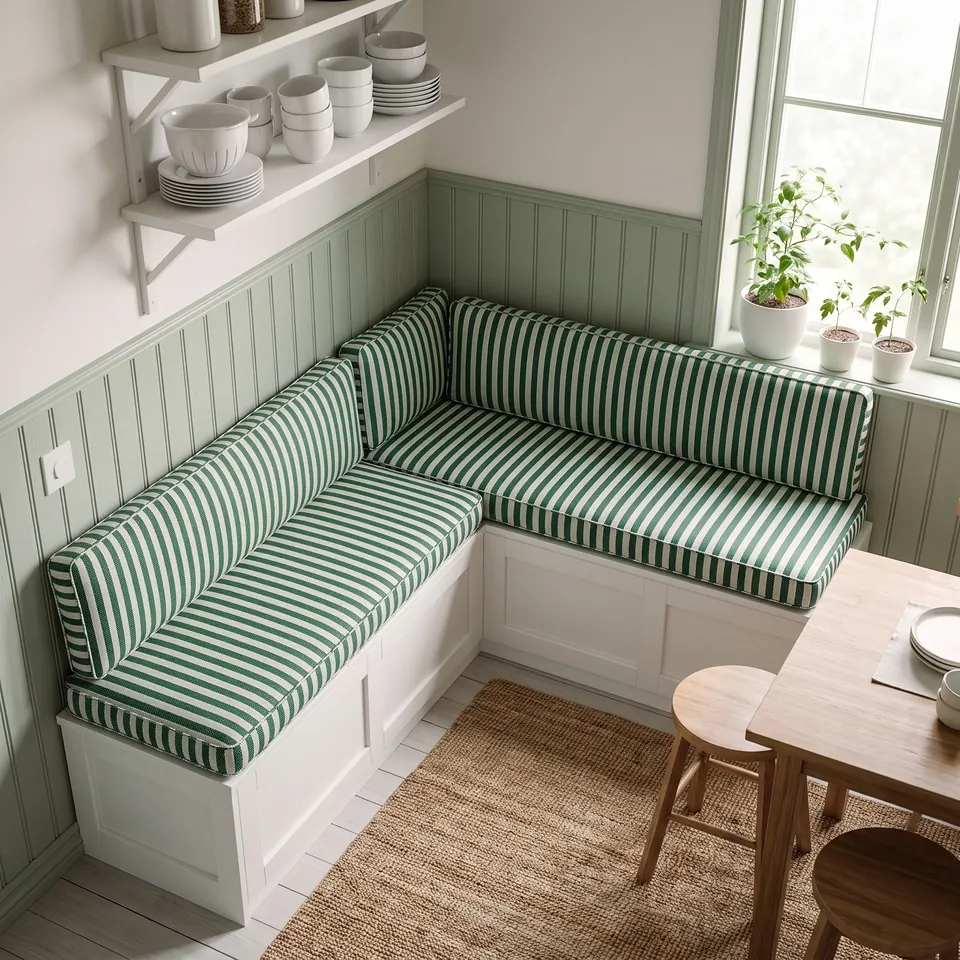
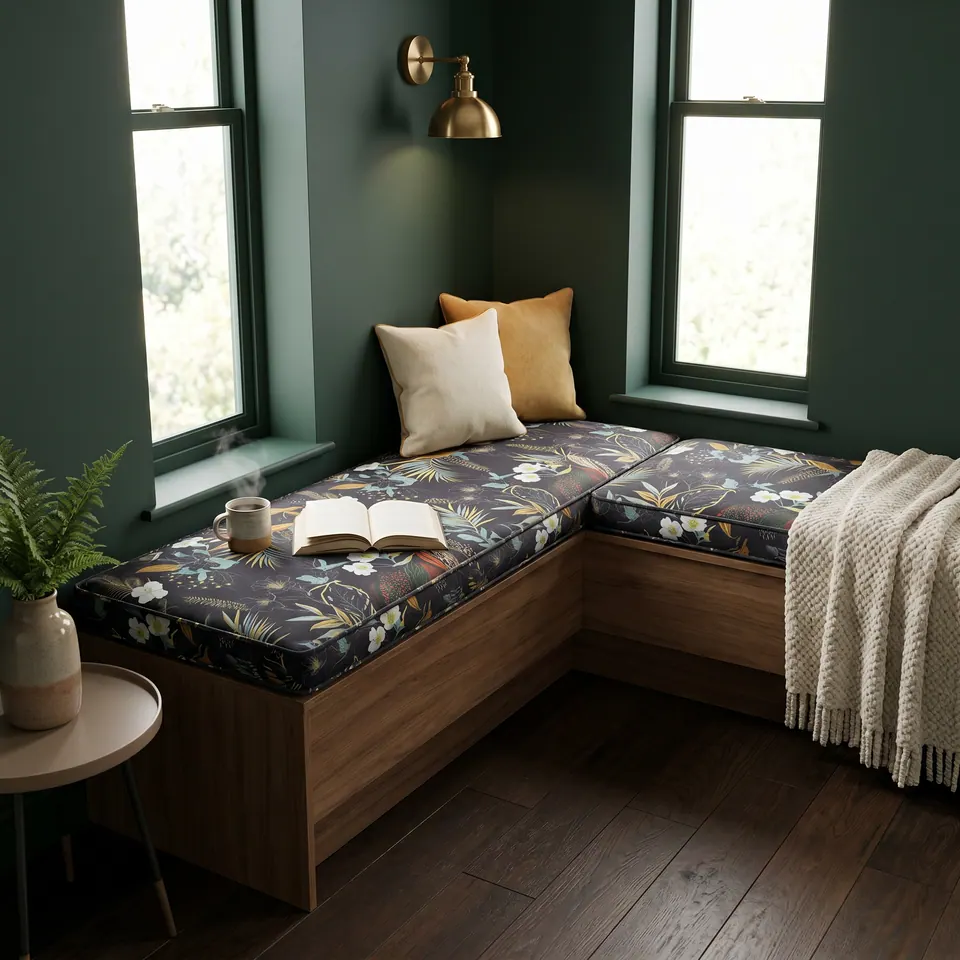
Concept Sketches · 8 scenes
Angled corner benches: where the cushions meet when the corner isn't square
Not every corner bench turns 90°. Eight real benches, each drawn and lettered edge to edge, and each settled by one question: which piece owns the corner?

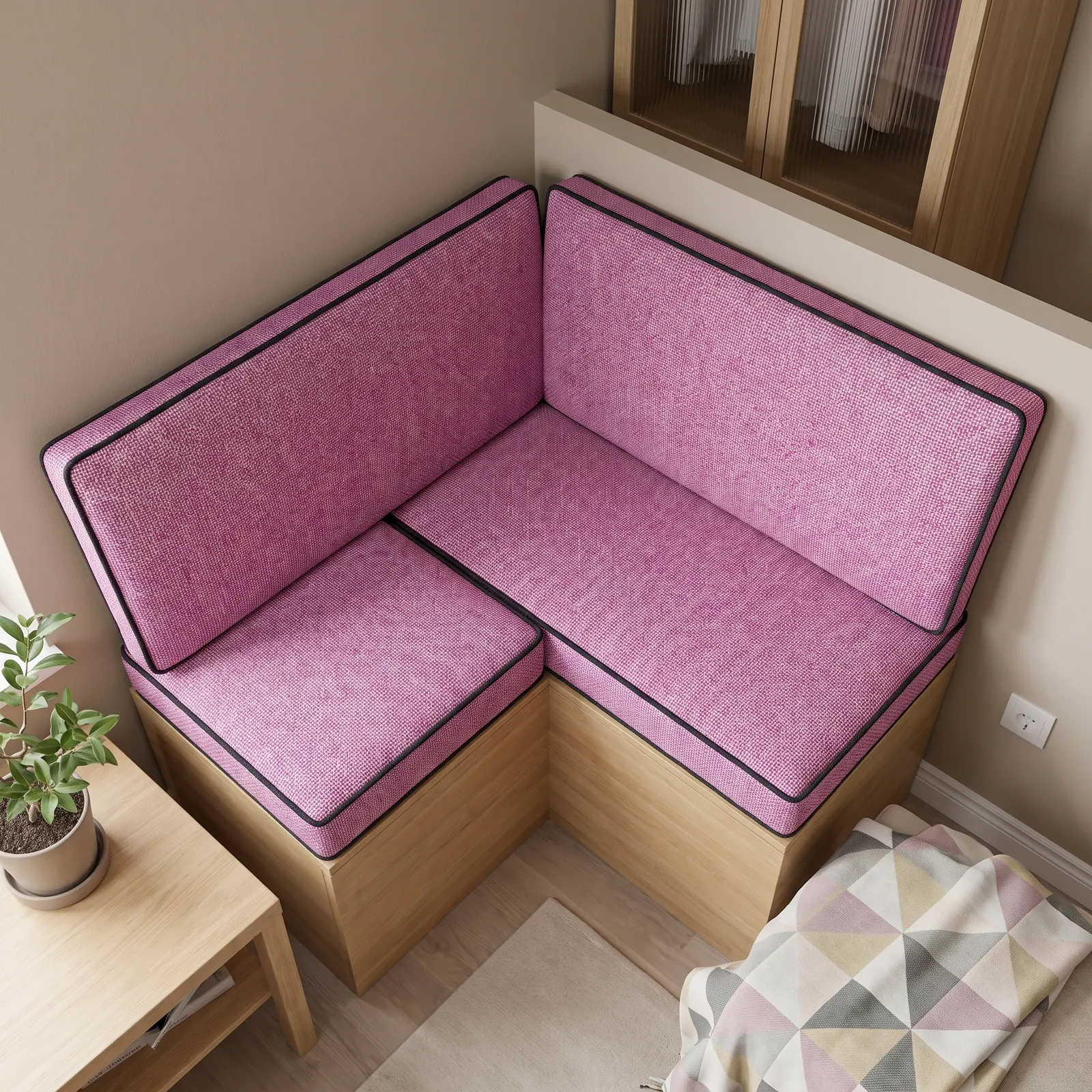 Save
The quick answer
Angled corner bench cushions are made as trapezoids that meet on the angle, not as rectangles forced into a corner that isn't square. At a 120° corner, two trapezoids share the corner line; with 45° chamfered fronts, each cushion carries its own chamfer. Measure every edge, short end sides included, on a lettered drawing. Square 90° corners stay plain rectangles.
One angle turns two rectangles into trapezoids
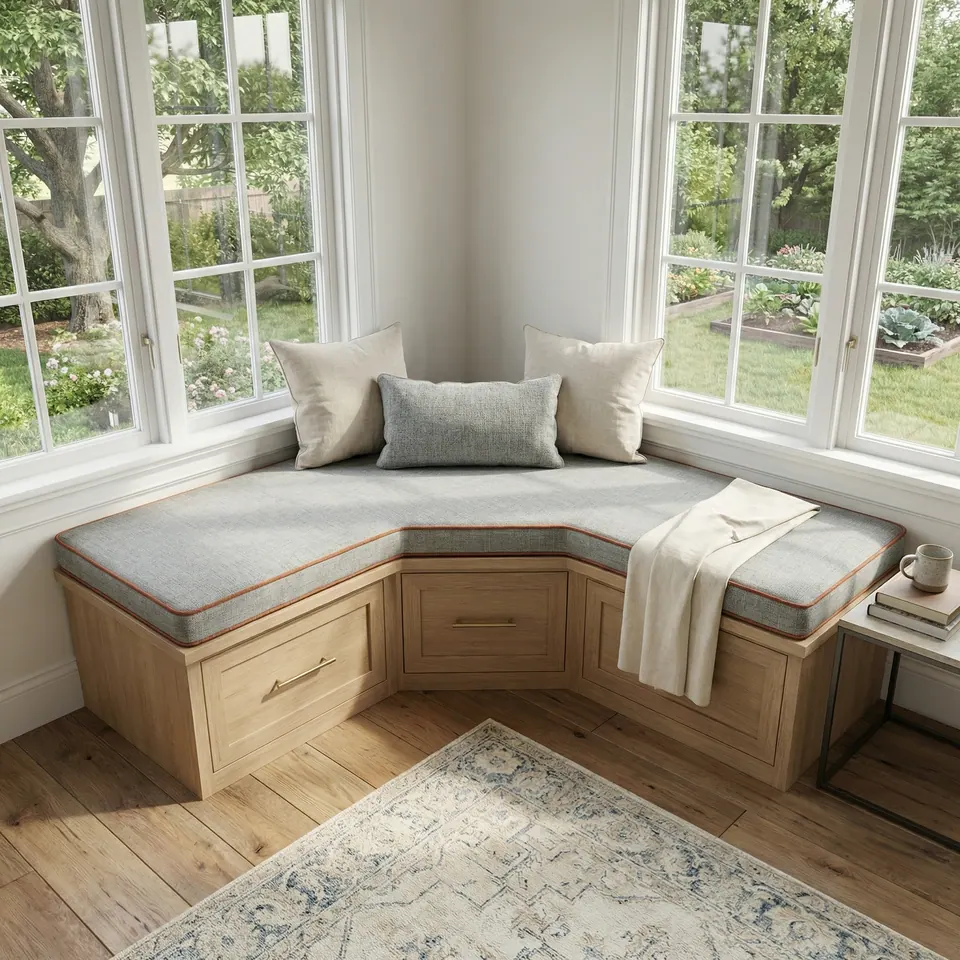
Two bench runs that meet at 120° can't share a square corner. That one number turns both cushions into trapezoids, and every other decision on the drawing follows from it.
An angled corner bench cushion comes down to one choice: a single continuous piece, or separate pieces that meet on the angle so each seam lands on a seat edge. The workshop's standing advice is separate pieces. They fit better, the covers come off for washing, and a wrong number costs one piece instead of the whole bench.
Here is the order I read every corner drawing in:
- Name the corner. 90°, 120°, a 45° chamfer on the front, or a bay. Angles are just lengths in disguise, so in an older house add both diagonals and let the numbers tell you.
- Decide who owns the corner. At 90°, one cushion runs into the corner and the other is shortened by the seat depth. At any other angle, the pieces meet on the angle line.
- Letter every edge. A, B, C and onward, including the short end sides and chamfers everybody skips, and write the units on the page.
- Mark the top face. A trapezoid can't be flipped to fix a mistake.
Square corners are covered on the L-shaped cushions hub; angled pieces belong with trapezoid cushions. The trapezoid cushion calculator checks that your sides close before you send anything, partner. What angle does your corner actually make?
Who owns the corner: eight benches
01A past project
A 120° dining corner with one run 1 in narrower
A buyer wrote in about a dining corner bench whose two runs meet at 120°. The right-hand run is 1 in (2.5 cm) narrower than the left, because a window frame steps into it. The workshop made two trapezoids that meet on the angle, and asked for every side of each piece measured on its own instead of copied across.
The takeaway: At a 120° corner both cushions are trapezoids; measure each run's depth separately, because trim and frames steal inches.
02A past project
A family kitchen L with 45° front corners, lettered A to J
A family sent the workshop a kitchen L-bench with 45° chamfers on its front corners, lettered A to J: ten measurements, including a 100.4 in (255 cm) run, a 75.6 in (192 cm) run and 5.3 in (13.5 cm) angled corners. The workshop split it into two cushions at the corner, each carrying its own chamfer. They chose an easy-clean light beige.
The takeaway: Ten edges is normal for a chamfered L. Every short 45° edge changes the cut, so each one gets a letter.
03A past project
Two rectangles and a trapezoid for an angled middle
A buyer got in touch about a corner seat with an angled middle section. The workshop proposed two rectangles, about 18 x 51.6 in (46 x 131 cm) and 18 x 20 in (46 x 51 cm), plus one trapezoid about 27 x 28 in (69 x 71 cm) to own the angle, all 4 in (10 cm) thick. The buyer chose dark red with dark green piping.
The takeaway: Let one trapezoid own the angle. The straight runs stay rectangles, ordered by plain length and depth.
04A past project
A bay wrap with 45° corners, 19 7/16 in between points
A buyer got in touch with a bench that wraps a bay with 45° corners, 19 7/16 in (49.4 cm) between the corner points along the front. One continuous wrap piece reads as a single seat but takes more work and forgives nothing; three segments meeting at the corners are easier to fit.
The takeaway: Measure the front from corner point to corner point, to the sixteenth; every segment is cut from those points.
05A past project
A corner sofa built from three angled pieces
A corner sofa reached the workshop as three angled frame sections, each about 20 in (51 cm) deep, with cushions 4 in (10 cm) thick. Not one of them was a rectangle, so every piece was priced and cut as a trapezoid from its own measured drawing.
The takeaway: Three angled boxes mean three trapezoids. Expect shaped-cushion pricing on every piece, not just the corner.
06A past project
Three deep trapezoids and the short end sides
A large corner bench was planned as three trapezoids about 27 in (69 cm) deep and 3 in (7.5 cm) thick. Before quoting, the workshop asked for the short end side at each corner. Without those short edges the long sides have nowhere to start, and the drawing never closes.
The takeaway: The short end side is the edge people skip, and it is the edge that locates the angle.
07A past project
The trapezoid against the oven, top face marked
A kitchen corner bench ended in a trapezoid piece against the oven: parallel sides of 36.2 in (92 cm) and 9.4 in (24 cm), 16.1 in (41 cm) on the bench side and 22.4 in (57 cm) on the oven side. When a rectangle's non-slip base ends up on the wrong face, you turn the cushion over and it still fits. Turn this trapezoid over and it becomes its own mirror image.
The takeaway: Write TOP on the drawing of any trapezoid with a non-slip base; flipping it can't fix a reversed base.
08A past project
The square baseline: a corner block and two long runs
For contrast, a family in the US sent a hand sketch of a plain 90° kitchen L, 20.75 in (52.7 cm) deep. The workshop settled on three pieces: 20.75 x 65 1/8 in (52.7 x 165.4 cm), a 20.75 in (52.7 cm) square for the corner, and 20.75 x 65 in (52.7 x 165.1 cm). After re-measuring, they held the lengths about 1/4 in (6 mm) short so nothing hangs over the edge.
The takeaway: At a true 90° corner, skip the miter. A square corner block plus two runs fits cleanly and orders as plain rectangles.
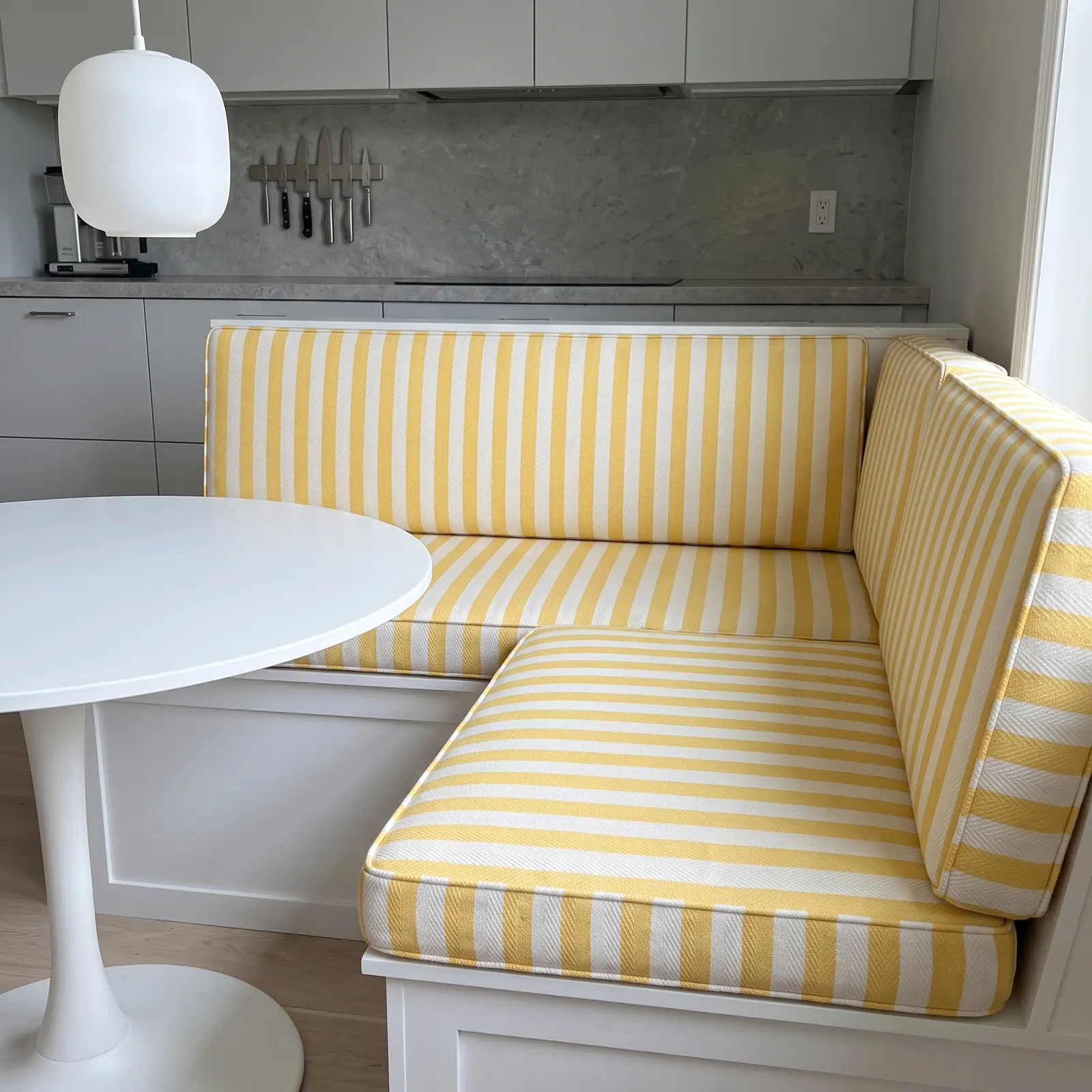
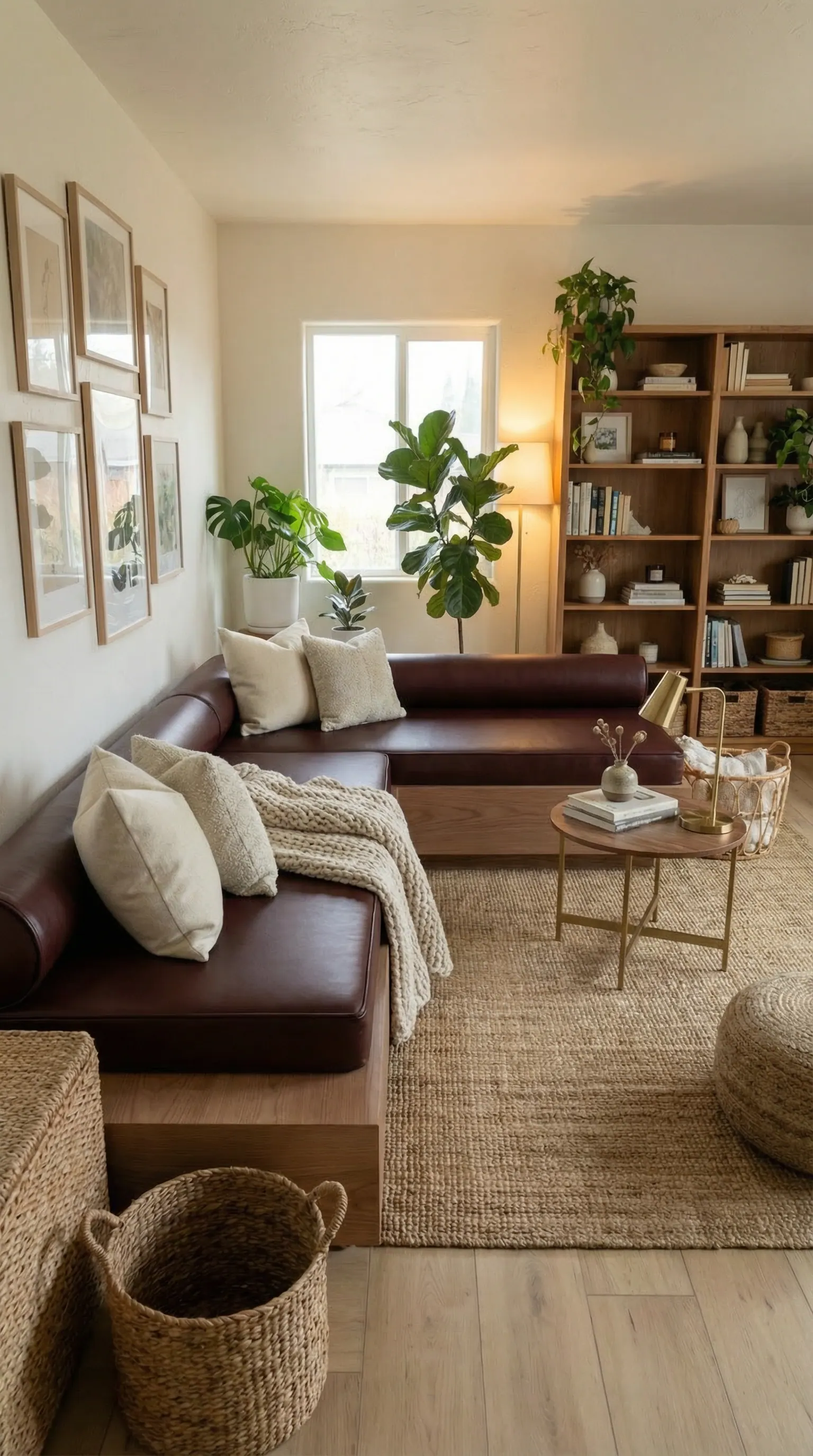
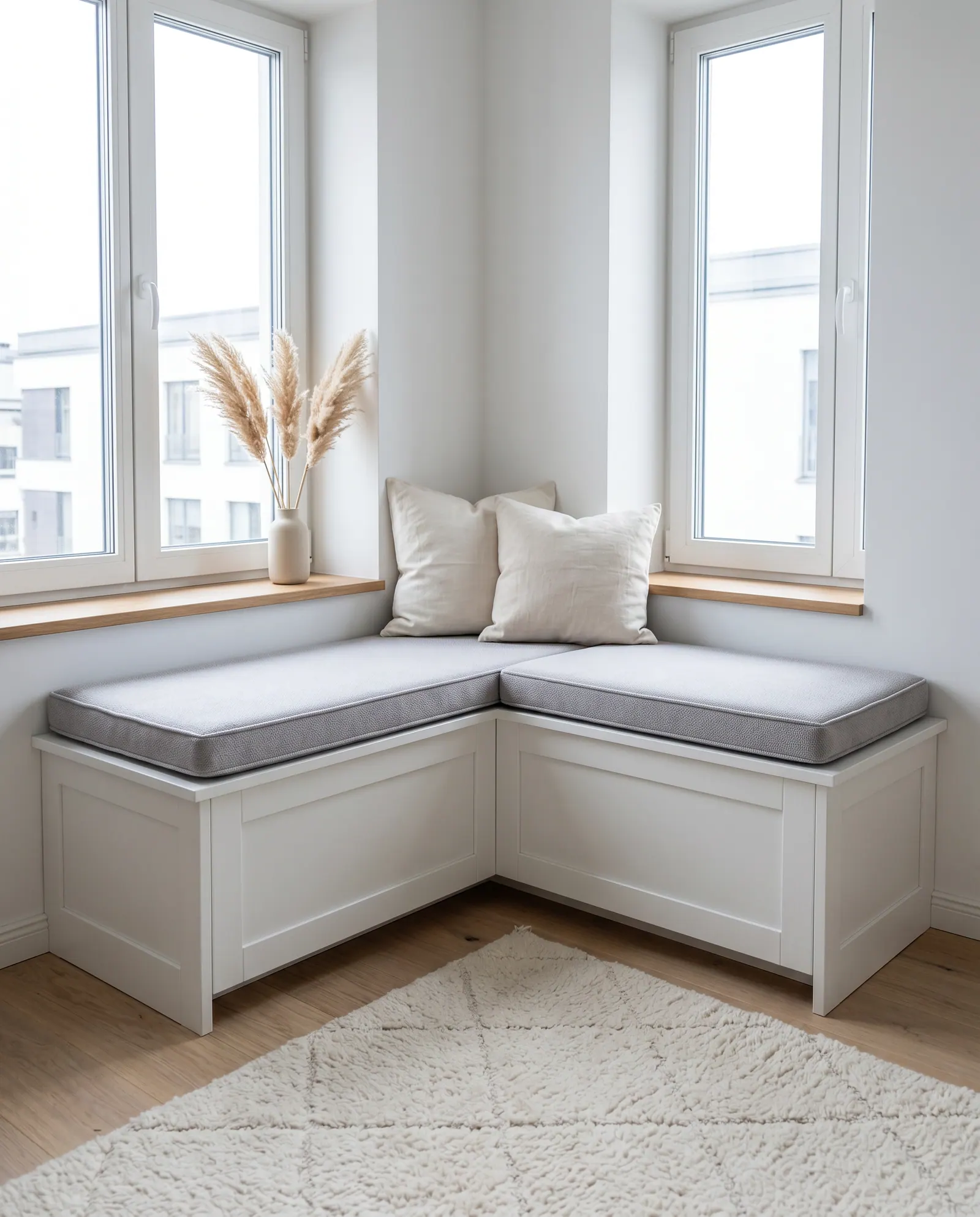
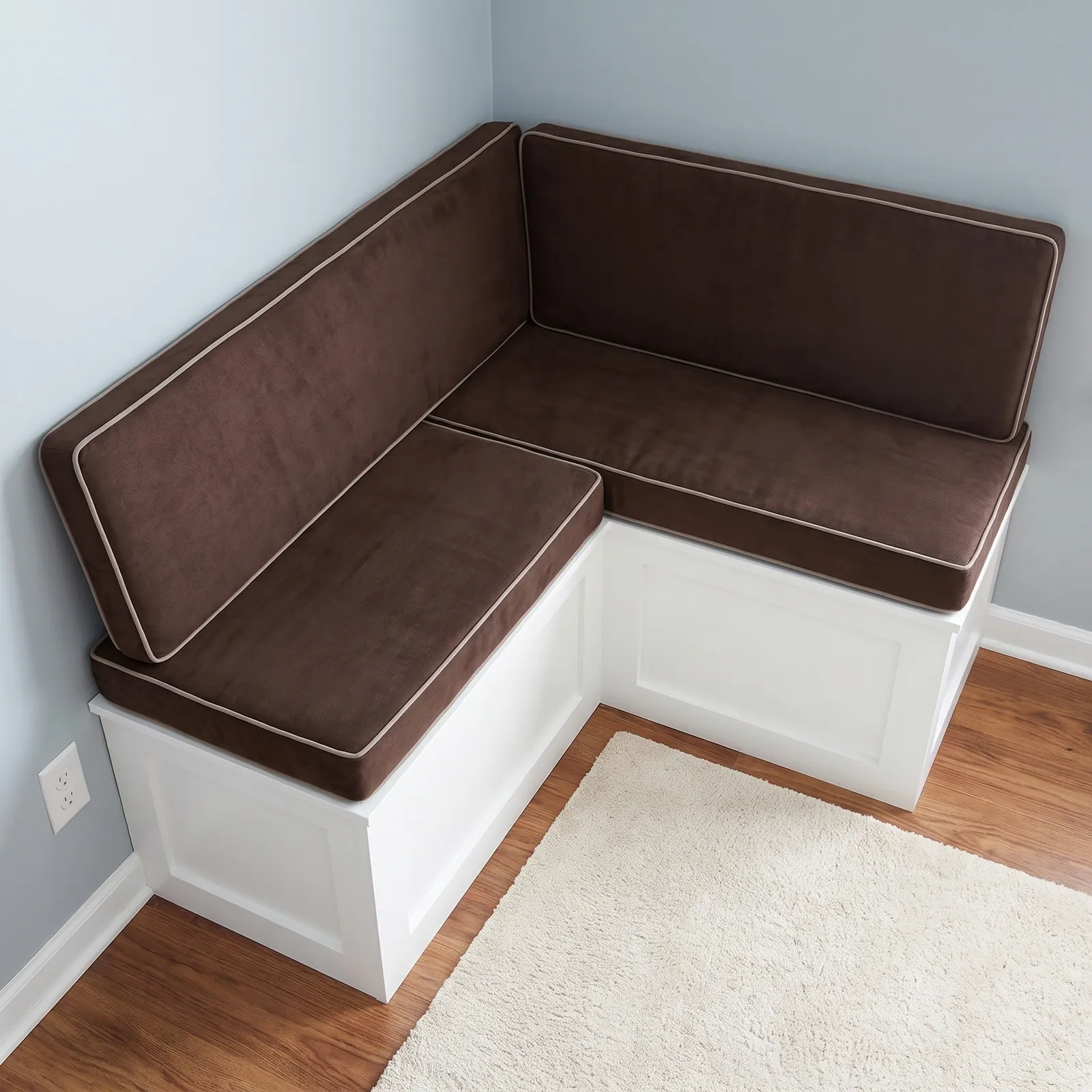
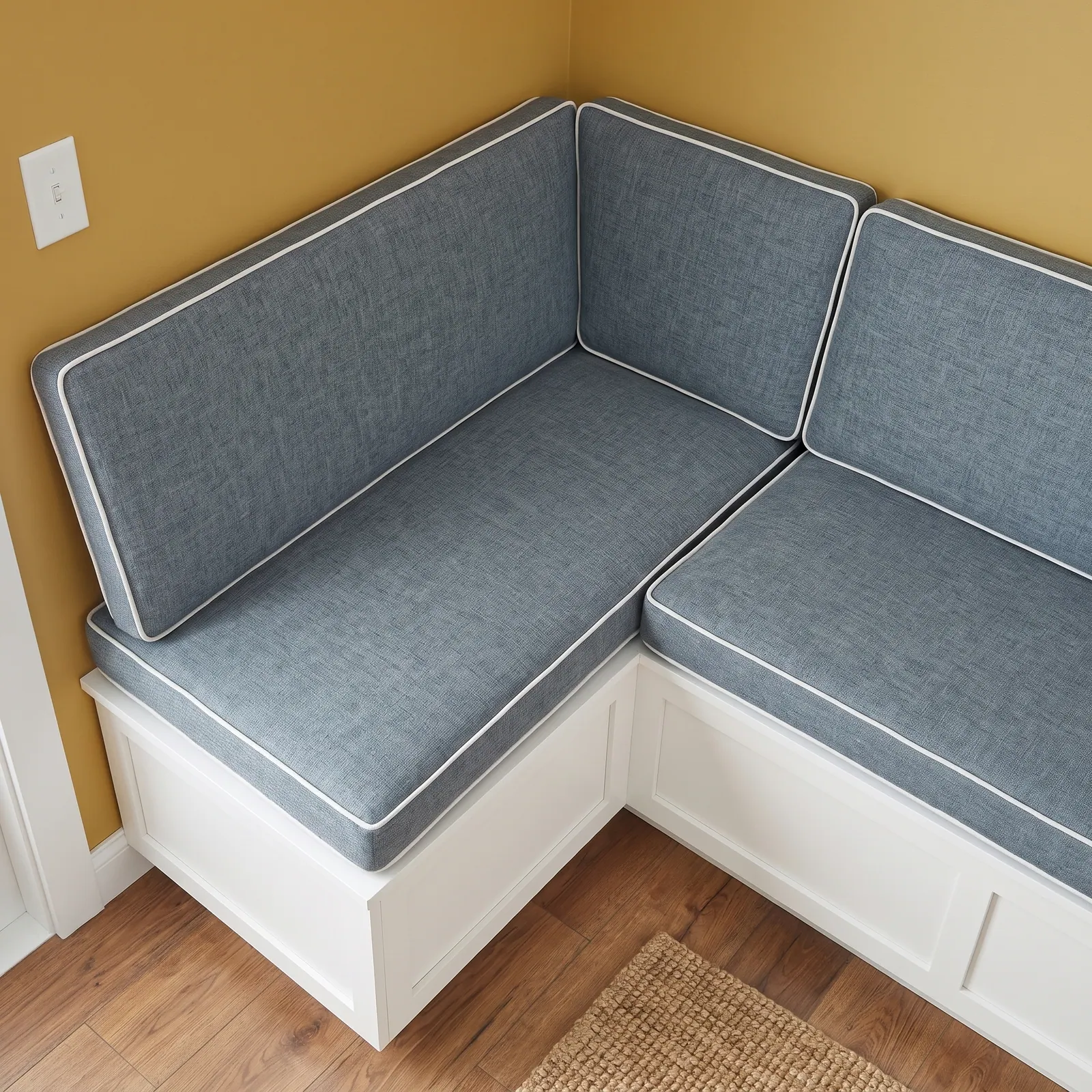
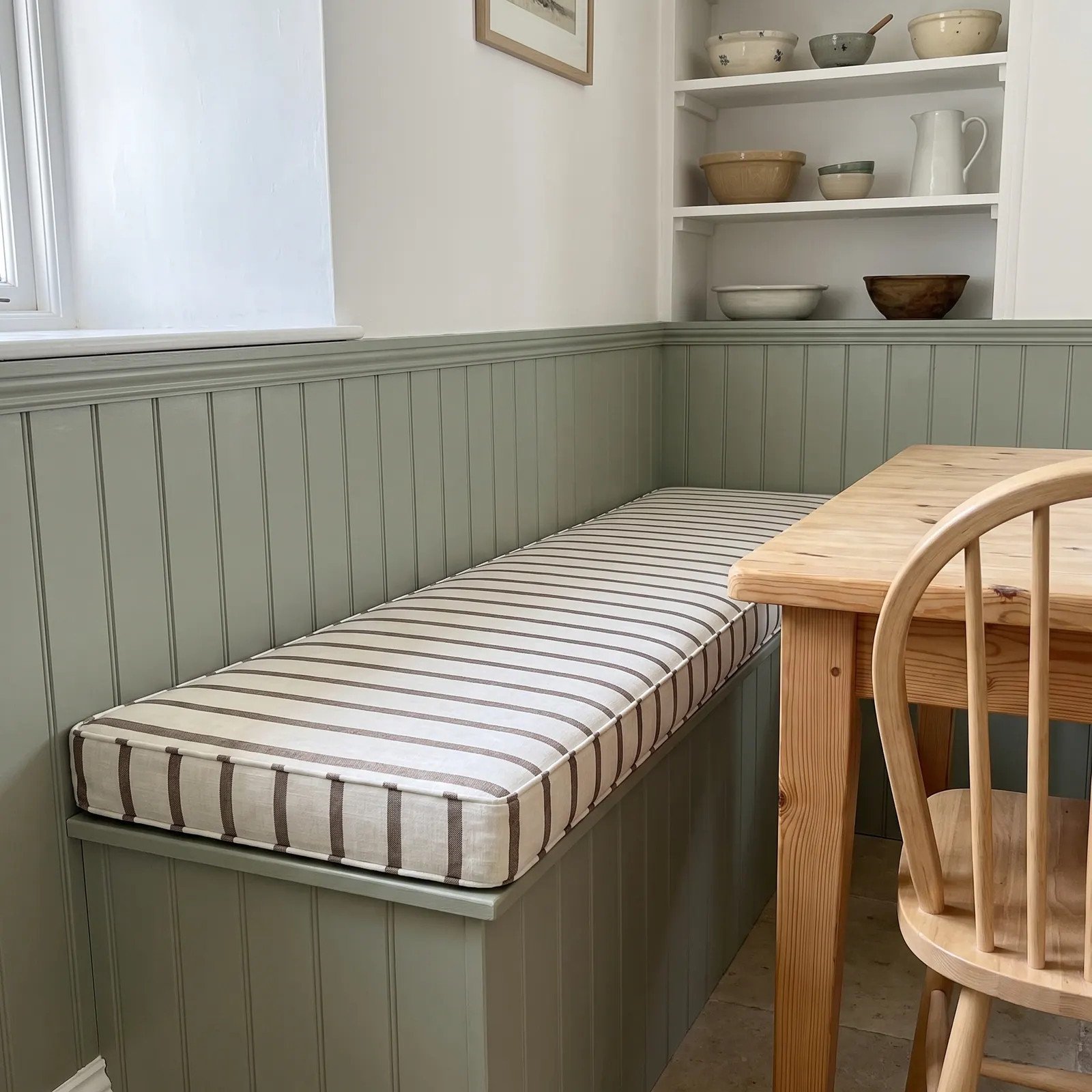
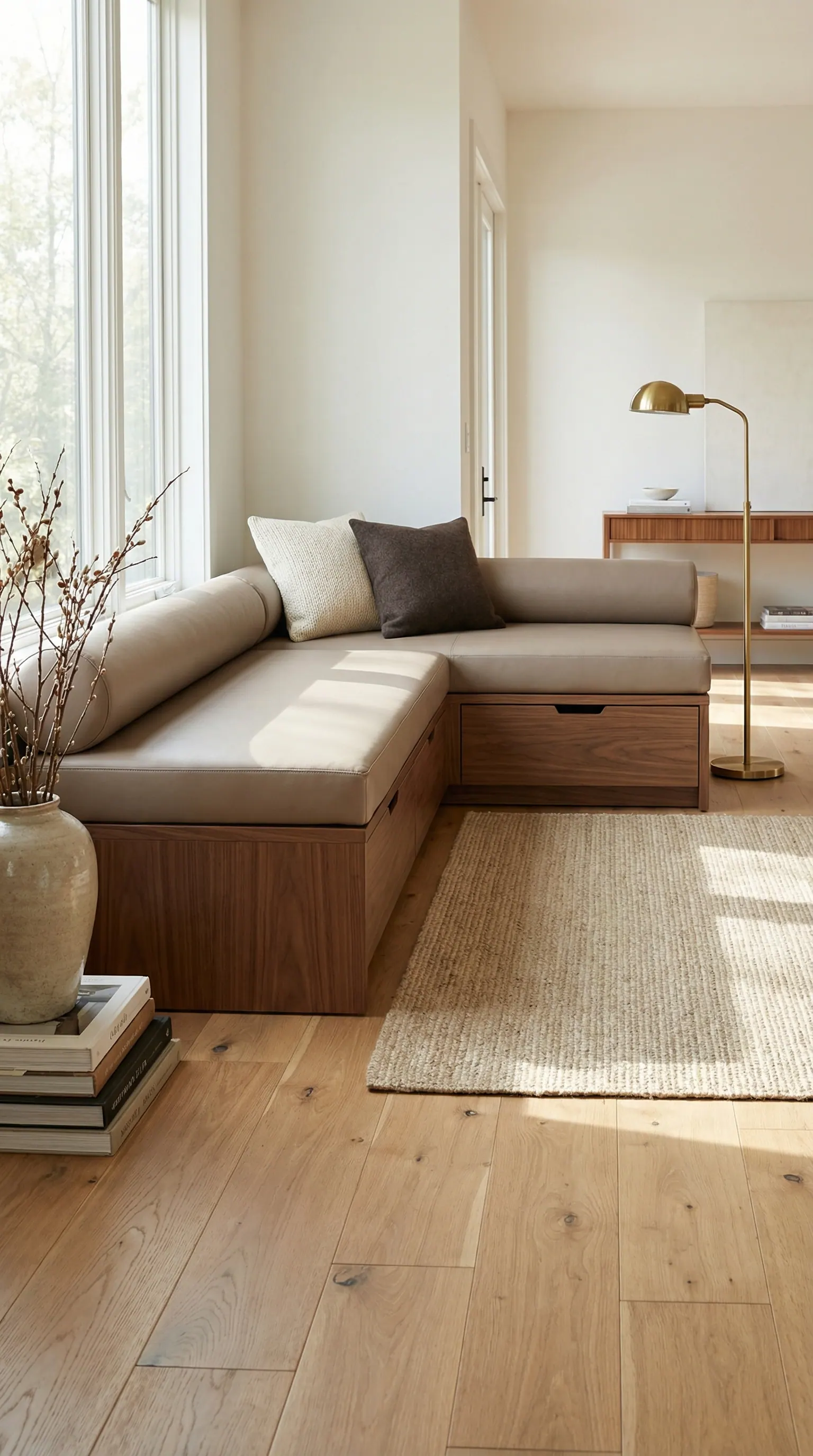
Which piece owns the corner, angle by angle
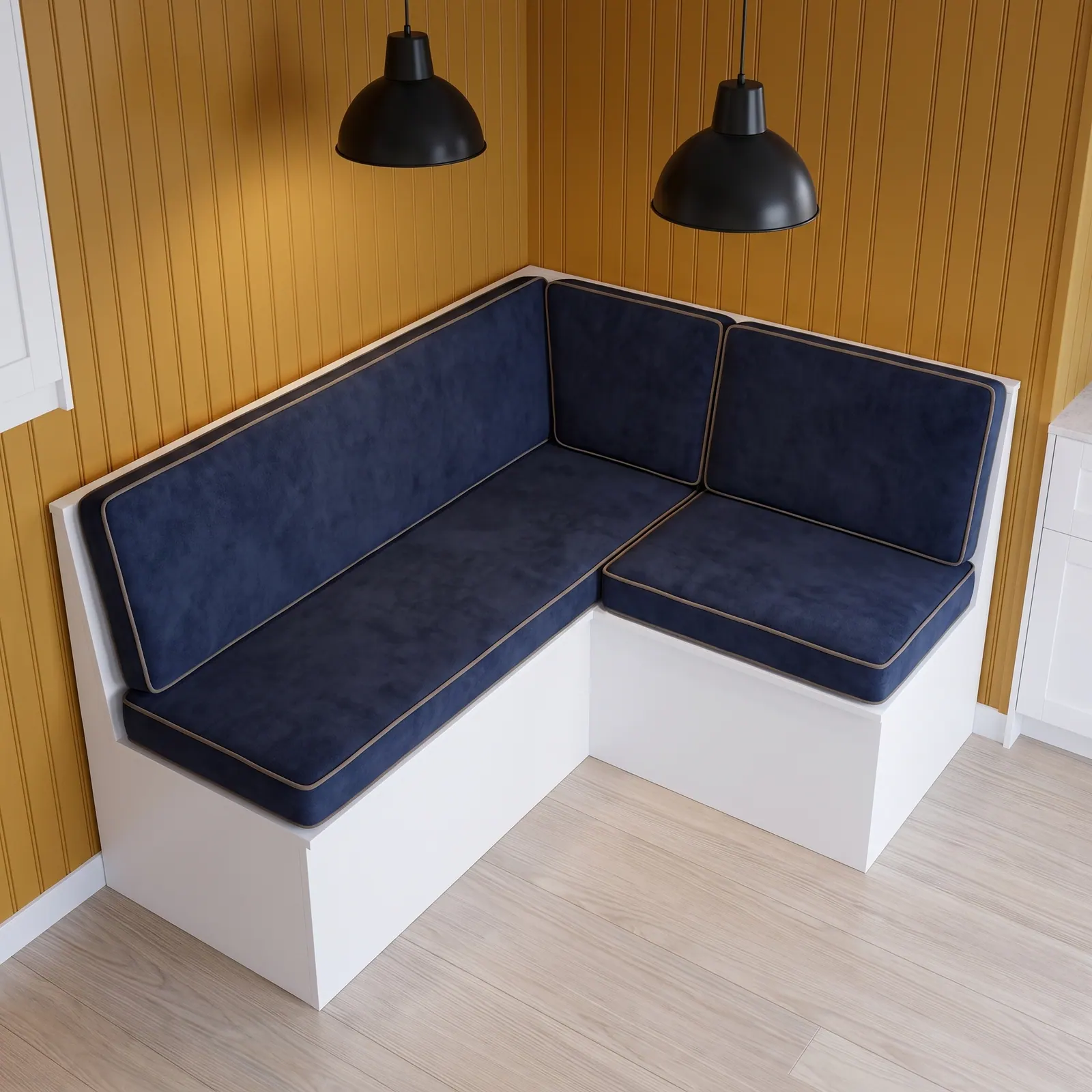
Here are the five corners from the sketches above. The L-shaped cushion corner joint Pattern goes deeper on the square case, trapezoid cushion measurements walks each angled edge, and the bench cushion builder sizes the straight runs. Fabric comes last; start with linen-look fabrics or velvet.
| Corner | Who owns it | Edges to send | From the sketches |
|---|---|---|---|
| Square 90° | One cushion runs into the corner, the other is shortened by the seat depth; or a square corner block with two runs | Each leg end to end, the depth, the thickness | 20.75 x 65 1/8 in, a 20.75 in square, 20.75 x 65 in |
| 120° turn | Two trapezoids meeting on the angle line | Every side of both pieces; each run's depth on its own | Right run 1 in (2.5 cm) narrower at a window frame |
| 45° chamfered fronts | Two cushions split at the corner, each carrying its chamfer | All edges lettered, short chamfers included | 100.4 in and 75.6 in runs, 5.3 in chamfers, A to J |
| Angled middle section | Two rectangles plus one trapezoid | Rectangle sizes, plus a full drawing of the trapezoid | 18 x 51.6 in, 18 x 20 in, 27 x 28 in, 4 in thick |
| Bay wrap with 45° corners | One continuous wrap, or three segments | Front from corner point to corner point, the depth, the back edge | 19 7/16 in between points |
At a 120° corner bench, two trapezoid cushions meet on the angle line; one L-shaped piece costs more and forgives nothing.
Nate
Buyer questions: corners that turn
- A common question
Is it better to make my corner bench cushion as one L-shaped piece or as separate cushions?
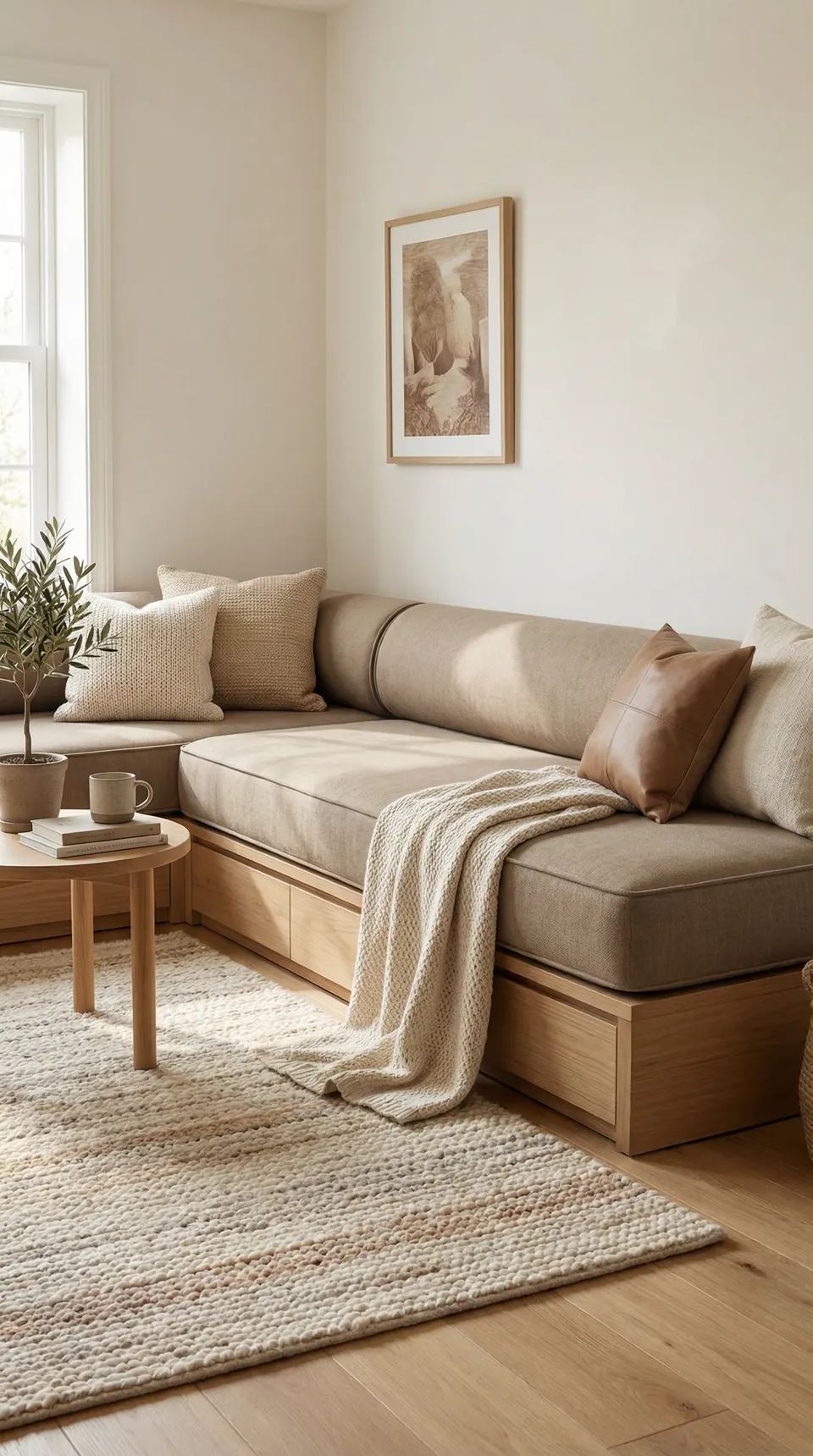
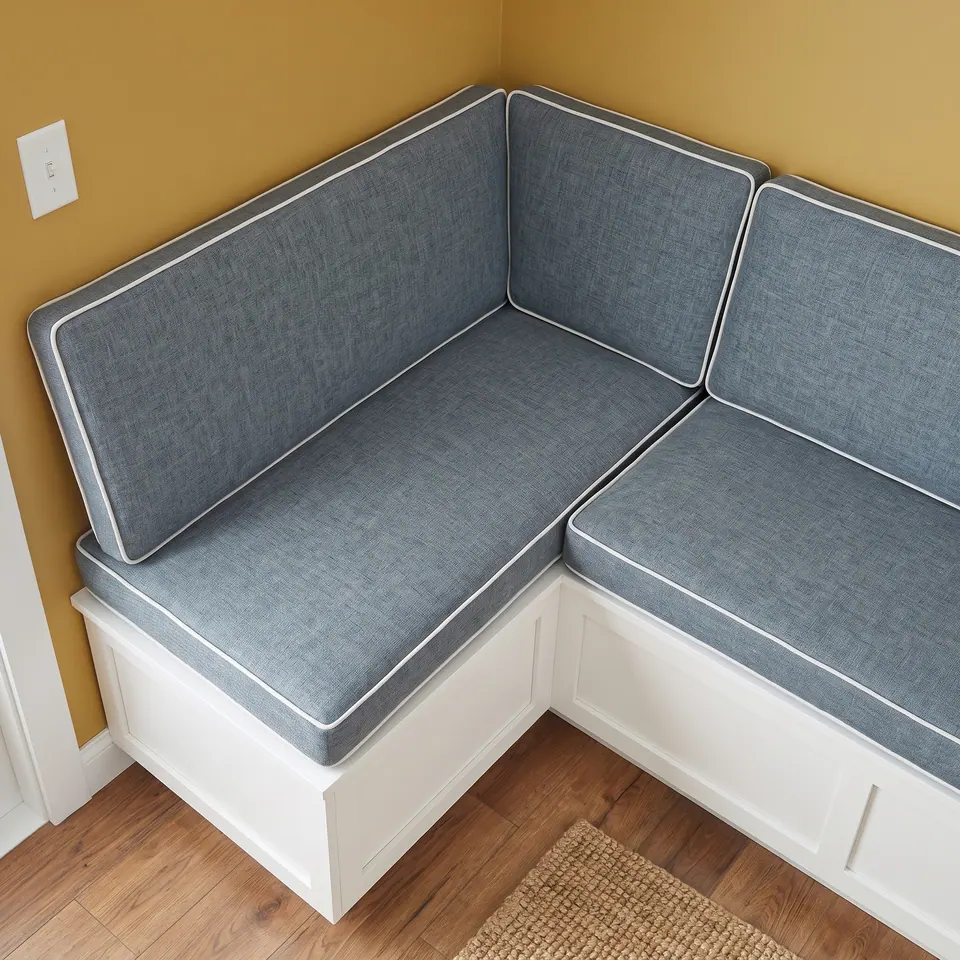
The workshop's answerSeparate cushions meeting flush at the corner. They fit more cleanly, ship more safely, and are easier to unzip, wash and keep snug. A one-piece L makes the cover hard to take off and put back, costs considerably more and leaves much less room for error. A small L can still be one piece: the workshop turns your sketch into a lettered template and asks you to confirm every edge and the thickness.
- A common question
We want an L bench with backs along one side only. Which numbers should I send?
The workshop's answerThe end-to-end length of each leg of the L, the seat depth and thickness, and a note on whether any part is angled and where you want backrests. Outside and inside dimensions of the L also work; the workshop plans the split and confirms it with you. A photo of the nook and a picture of the backrest style help. Backs can run along one side only, for example a foam wedge on the longer run. Standard thickness is 4 in (10 cm).
- A common question
How do I measure the angled pieces at the ends of my corner bench?
The workshop's answerMeasure every edge: front, back, both angled sides and any short end sides or clipped corners. Take the depth straight from the back line to the front, and measure each angled side separately from corner to corner, because an angled side is not the same as the depth. Mark any cut-outs, add the thickness, and send a drawing lettered A, B, C, D with a photo of the space. Very long trapezoids, around 79 in (2 m) or more on the long side, may be suggested in two pieces.
- A common question
My corner cushion has angled ends. Can I still order it like a regular rectangle?
The workshop's answerNo. Anything that isn't a rectangle goes through the custom-shape order. Pick the size range by the longest length and the deepest depth; that range only sets the price bracket. Then upload a drawing with a measurement on every edge, plus a photo of the seat, and note the thickness and fabric. The workshop cuts to the drawing, not the range, and will review a drawing before you order if you're unsure.

Have it made
Have an idea like this made — ask Nate’s workshop
Send the numbers in inches: length × depth × thickness, plus any angle. The workshop checks them with you, because foam has no undo button. — Nate
Leave your details and the workshop will call you to confirm measurements, fabric, foam and piping. No prices, dates or payment on this page: it is a request, not an order.
Questions buyers ask next
Do I need trapezoid cushions for a corner bench that isn't 90 degrees?
Yes. When two runs meet at any angle other than 90°, such as 120°, the cushions meet on the angle line and each one becomes a trapezoid. Each piece needs its own drawing with every side measured, since one run is often narrower than the other.
Where should the seam go on a corner bench with 45-degree chamfered fronts?
Split the bench into two cushions at the corner and let each one carry its own chamfer. One family's kitchen L-bench needed ten lettered edges, A to J, including 5.3 in (13.5 cm) angled corners, before the drawing closed.
Do angled corner cushions cost more than rectangles?
Yes. Shaped pieces take more cutting and sewing, so they cost more than rectangles of a similar size, and no extra discount applies to angled work. There is no template charge, and every foam cushion comes with a zippered, removable cover.
What if the walls at my corner aren't square?
Old walls rarely are. The workshop cut from the edges that sit against the walls and let the diagonals follow, accepting a result within about 1/4 in (6 mm). Adding both diagonals to your drawing lets the workshop catch an out-of-square corner before anything is cut.