CushionGuide

A Reading by NateL-Shaped Corner Bench Cushions

A slate blue L-shaped bench cushion set from above, and the sketch that orders it

An overhead photo is the best drawing an L-shaped bench will ever get. What it shows, and the five steps that turn it into an order.

The quick answer

To order an L-shaped bench cushion right the first time, send a photo from above, a sketch with both runs labeled and measured, the fabric by its number, and a note saying which seat runs into the corner. The other seat butts against it, and a short back pad fills the corner behind the join.

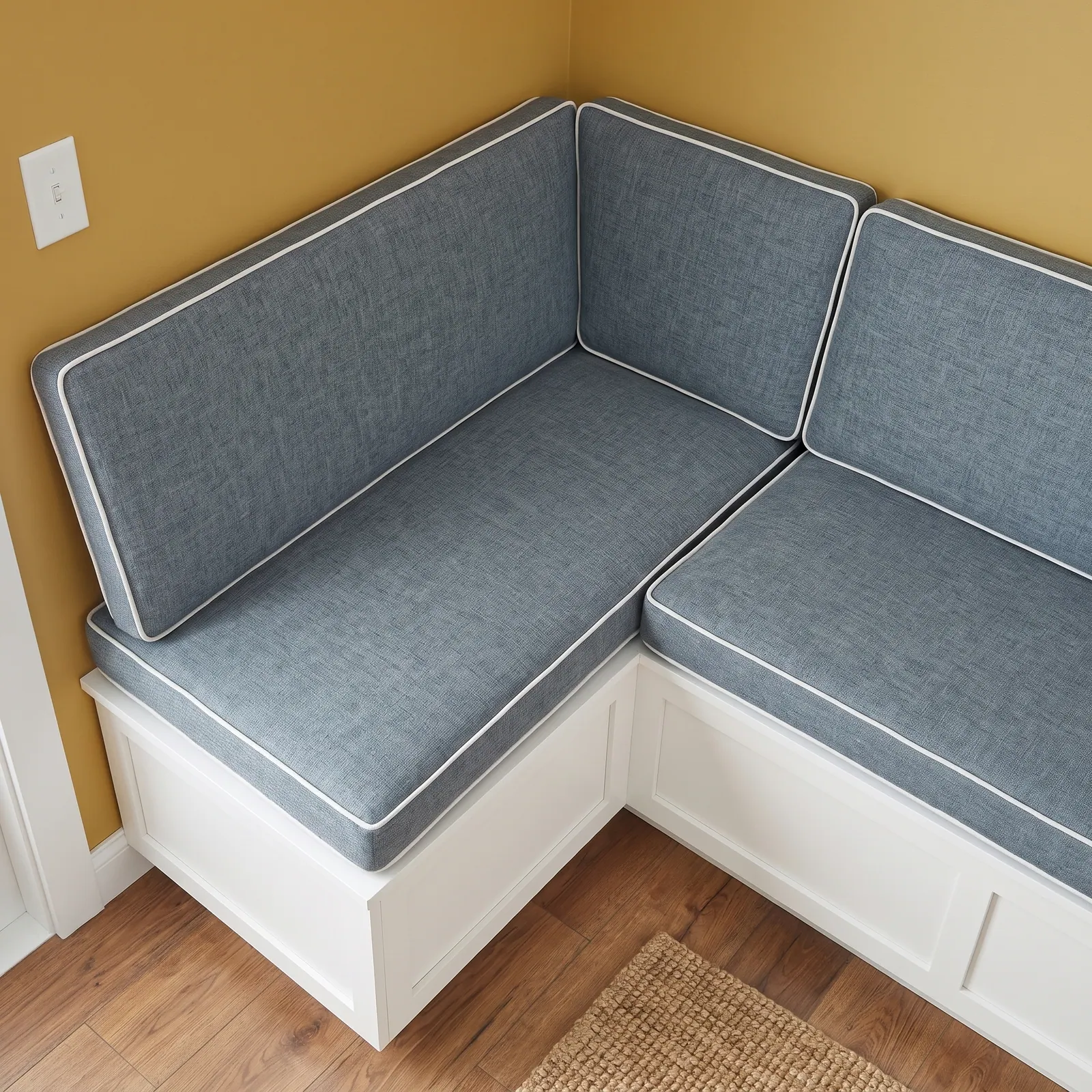
Overhead view of slate blue linen-look L-shaped seat and back cushions with white piping on white corner storage benchesSave
Seen from above, the slate blue set shows how two seats and three back pads fill an L-shaped corner.
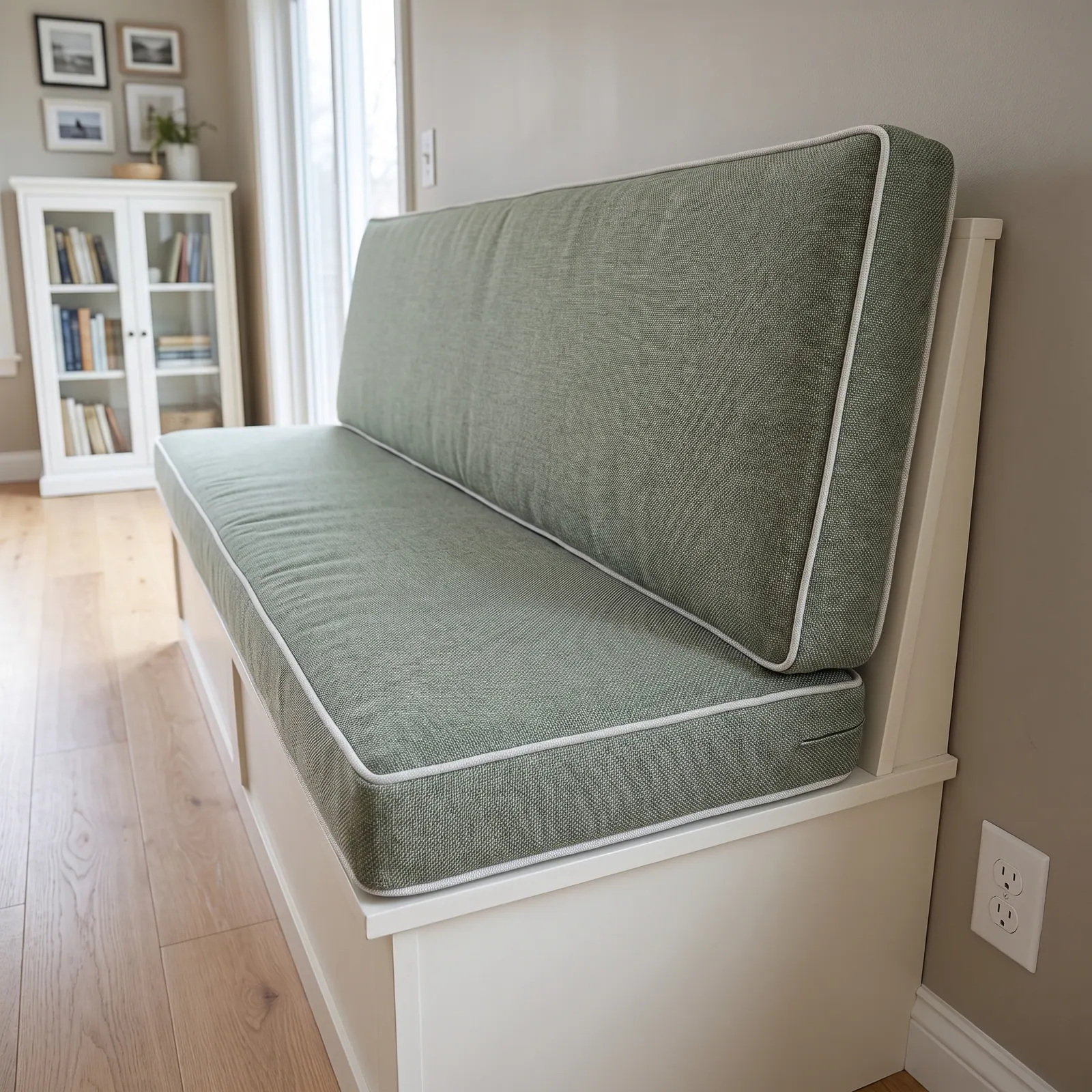
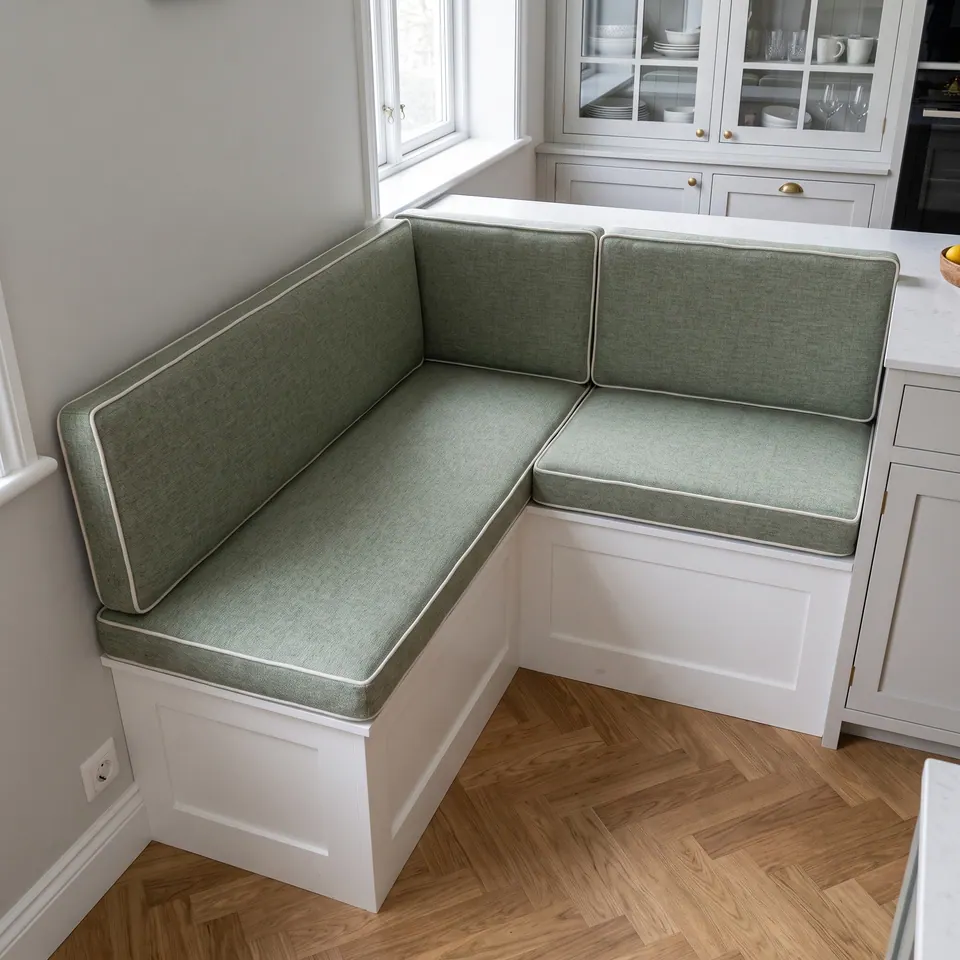
Side view of a sage green linen-look box seat and back cushion with white piping and a visible zipper end on a white benchSave
A low side angle shows the box depth, white piping and removable zippered cover of a sage bench set.
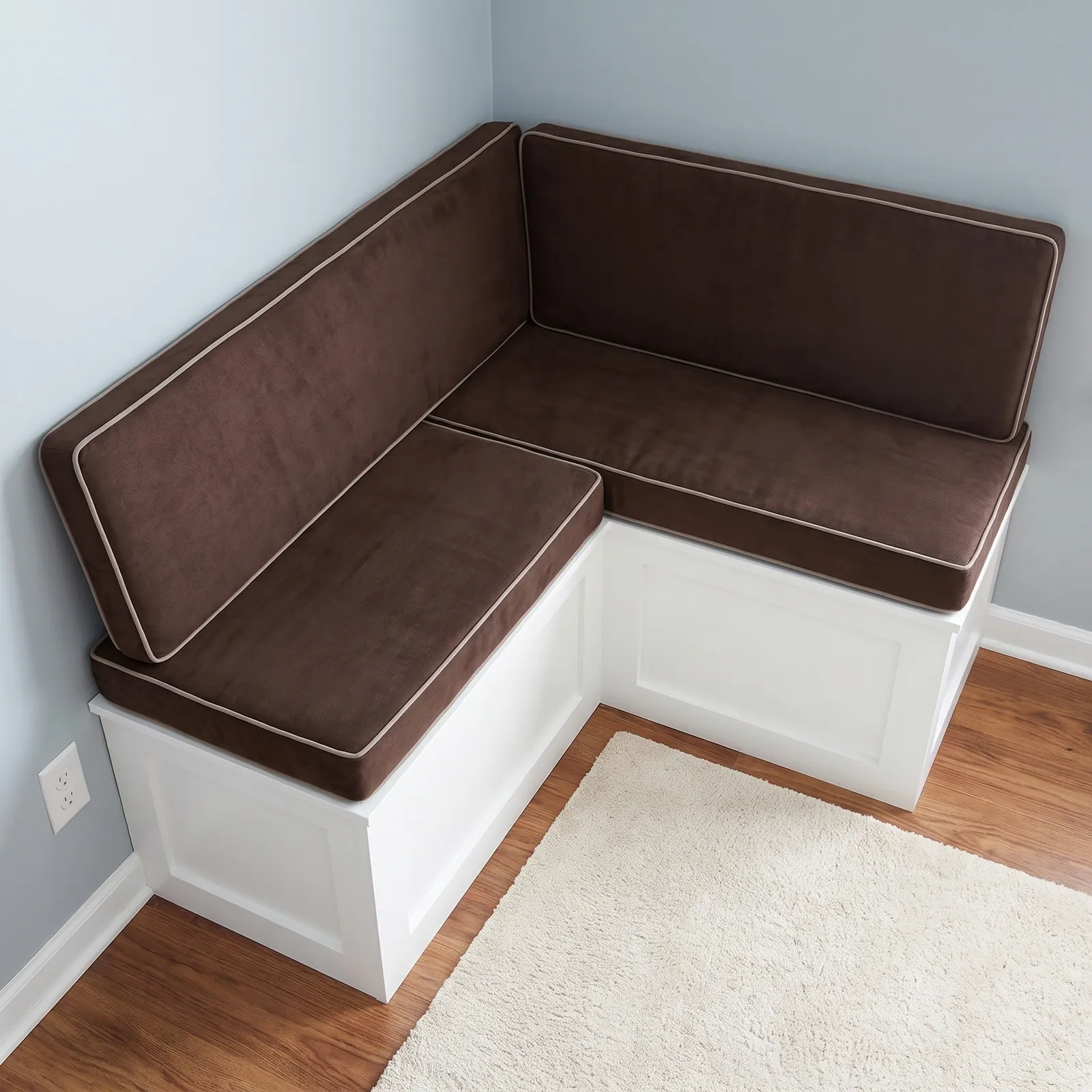
Chocolate brown suede-look L-shaped seat and back cushions with beige piping on a white corner storage benchSave
Dark brown suede-look cushions with beige piping make a forgiving choice for a busy corner bench.
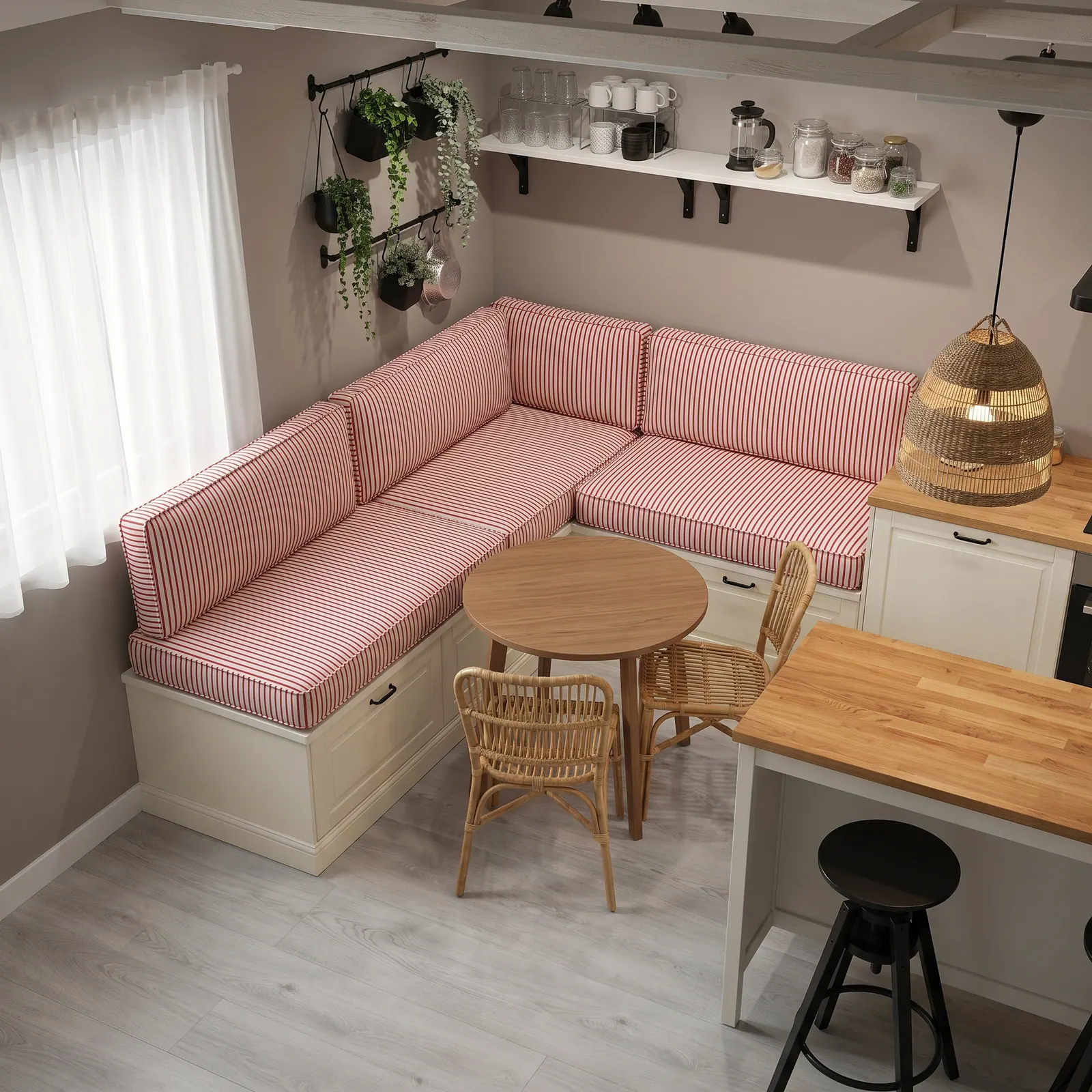
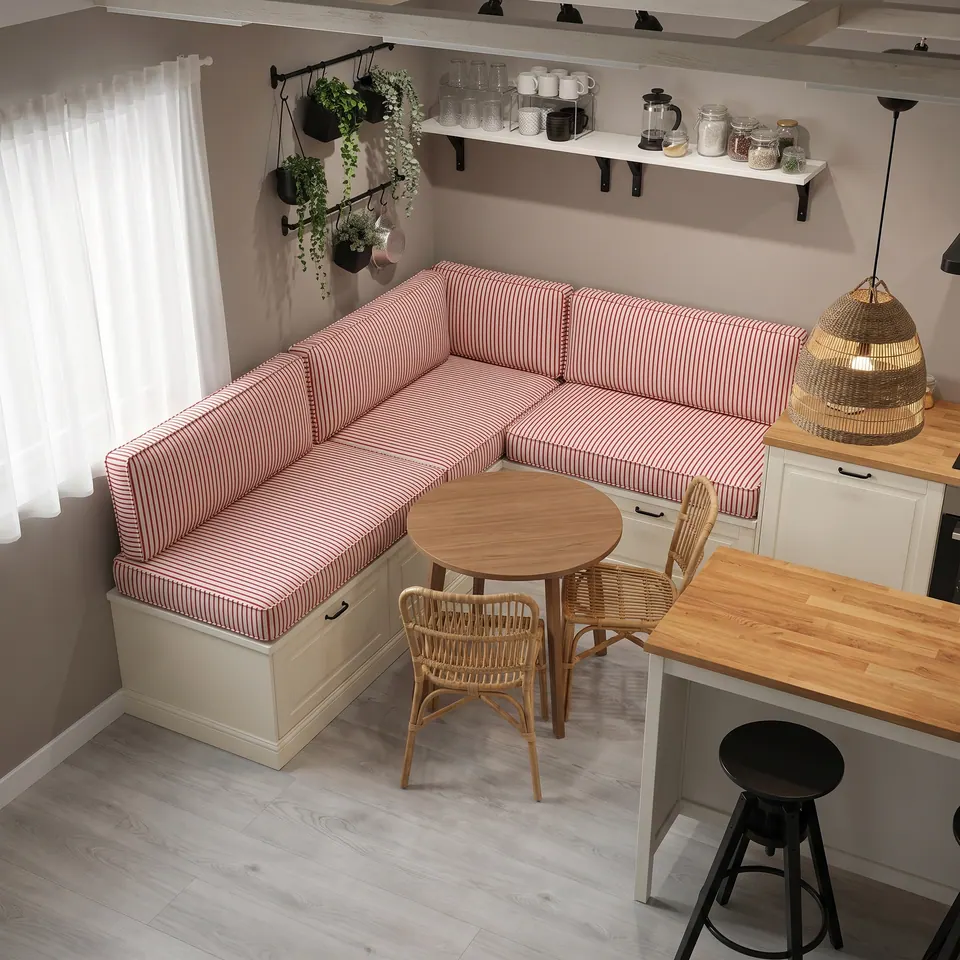
Red and white pinstripe L-shaped banquette cushions on cream drawer benches around a round table with rattan chairsSave
Fine red stripes wrap two walls of a small kitchen, framing a round café table and rattan chairs.
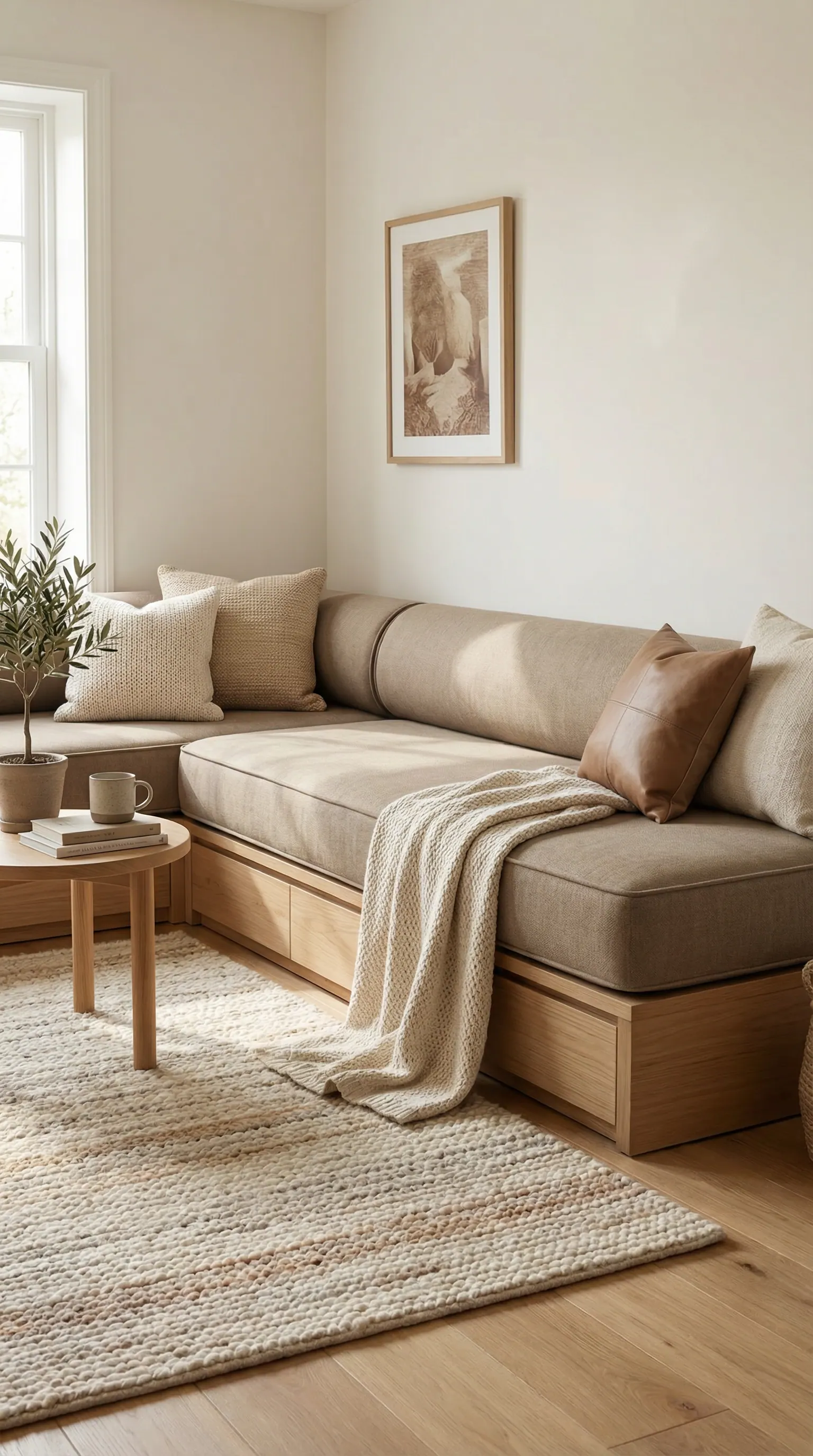
Greige linen-look L-shaped corner seat and back cushions on an oak drawer platform with cognac leather pillow and throwSave
Seat and back cushions are cut to meet cleanly at the corner, turning a built-in platform into a full sofa.
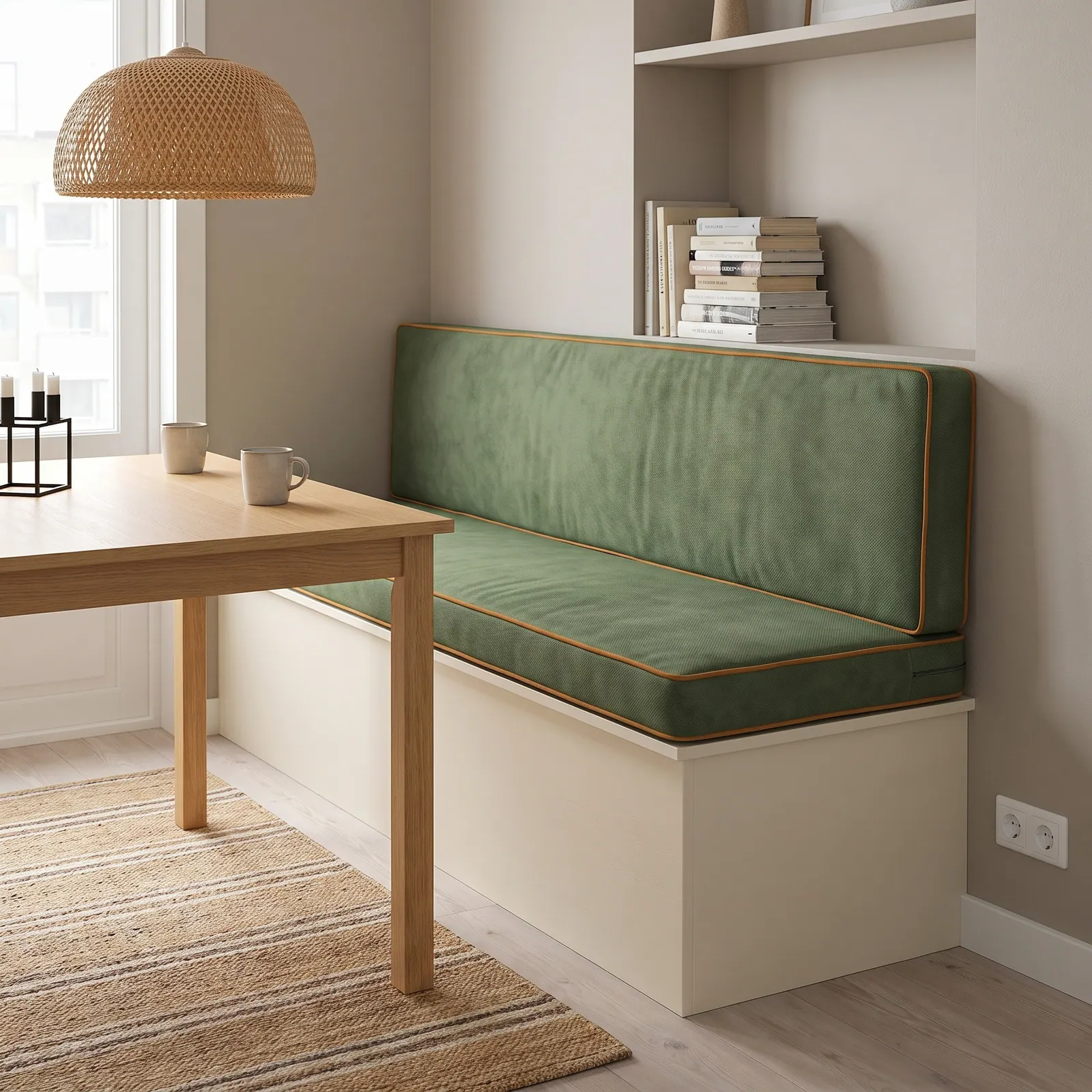
Sage green velvet seat and back cushion with caramel piping on a white box banquette beside an oak table and rattan pendantSave
Caramel piping links sage velvet to the oak table and rattan pendant in a compact dining alcove.
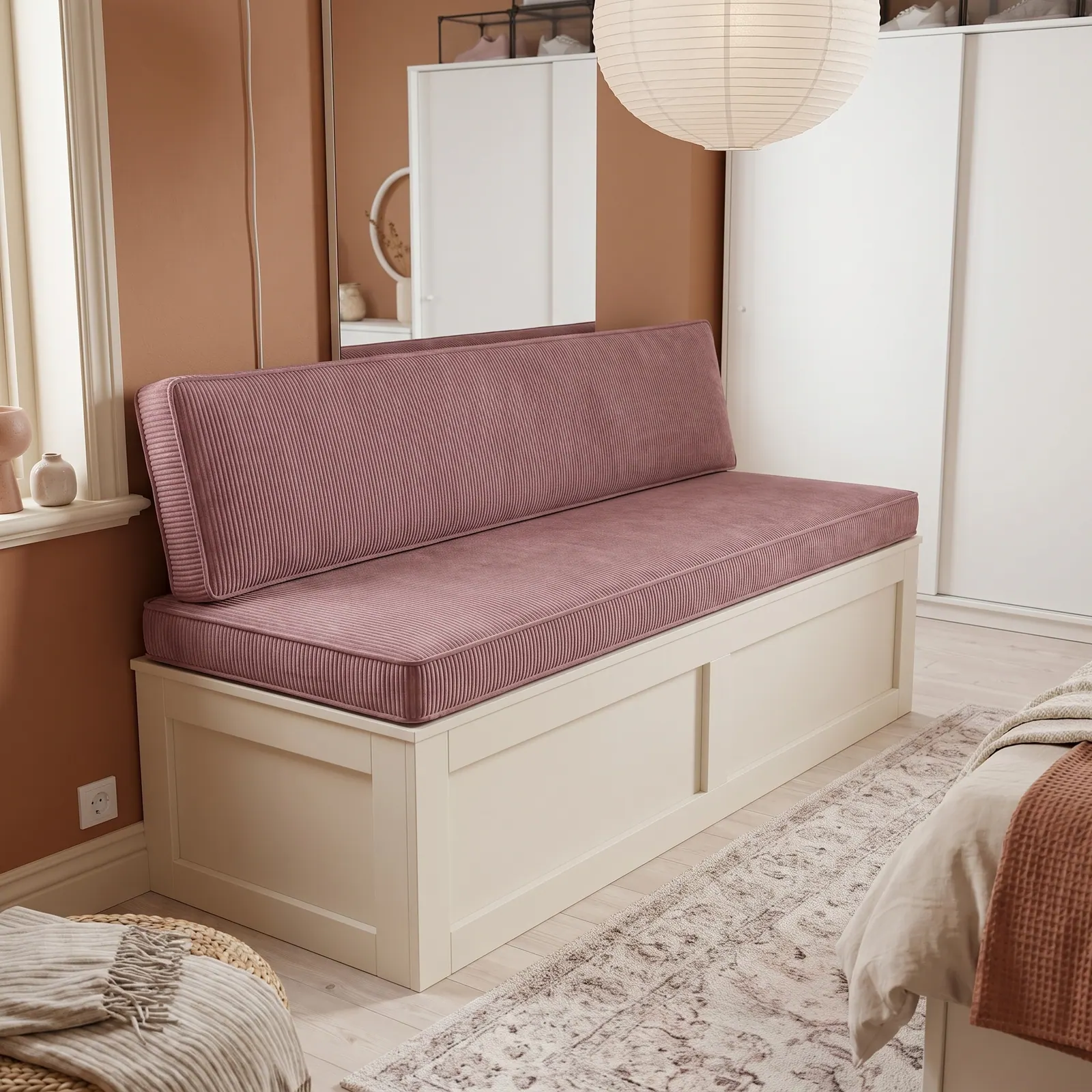
Dusty rose corduroy seat and back cushion on a cream storage bench against a terracotta bedroom wallSave
Unpiped dusty rose corduroy sits tone-on-tone with a terracotta wall in a warm bedroom corner.

Read the L-shaped banquette from above

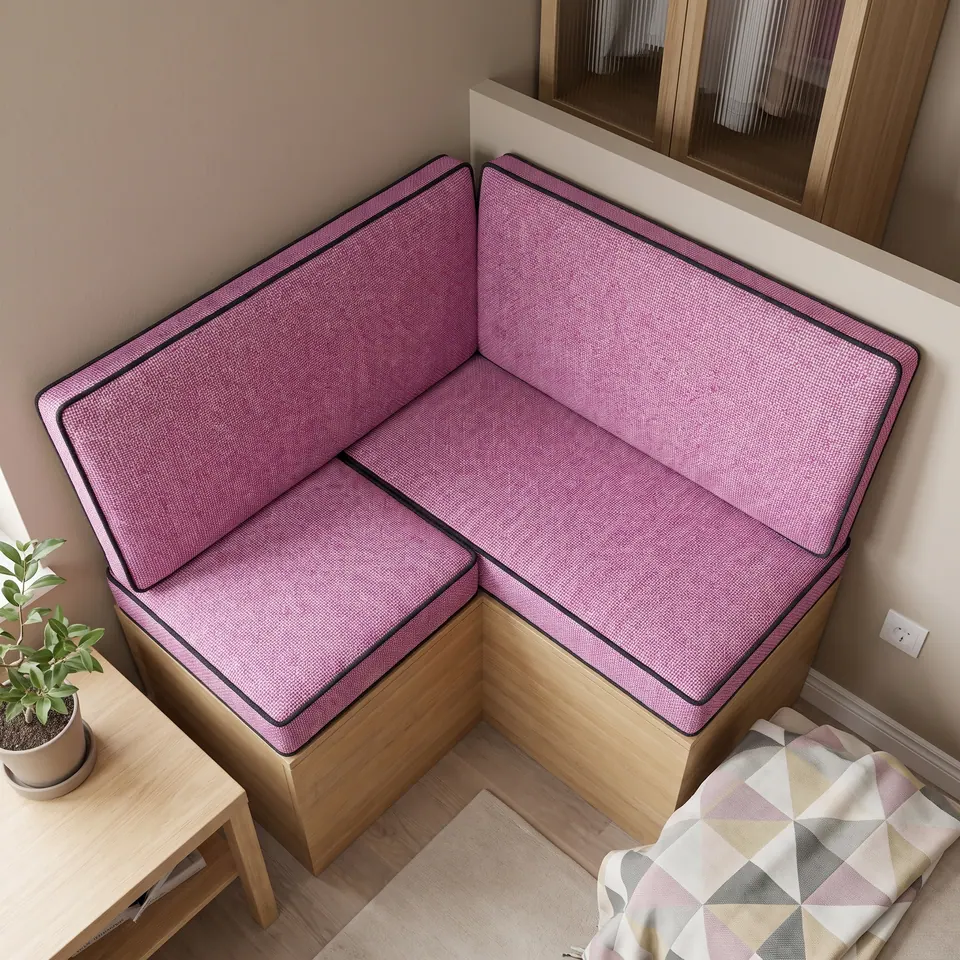
From above, an L-shaped bench cushion explains itself. Two seats, three backs, one corner. Count them, partner. That is the whole drawing.

One seat runs all the way into the corner. The other butts against its side. That is the simplest L there is, and the one I would pick for most kitchen nooks. The long back pad sets the line along the wall, a short back fills the corner so nothing gapes behind the join, and a third back finishes the short run. The notes on which piece owns the corner go deeper.

Color and light next. Ochre walls are warm and strong. Slate blue sits on the cool side of the wheel, so it calms them. The white piping matches the paneled bench bases, and it keeps the linen-look blue from sinking into the shadow at the back of the seat.

The props are few. A jute mat on a warm oak floor, and that is it, so your eye stays on the tailoring. The light switch is not a prop, but it is a warning: a back cushion that runs under a switch needs its height checked against it.

Which run of your L-shaped bench gets the corner?

Pinned by Nate: the L in five marks

Five marks from above: three backs, one seat join, one welt and the only prop.
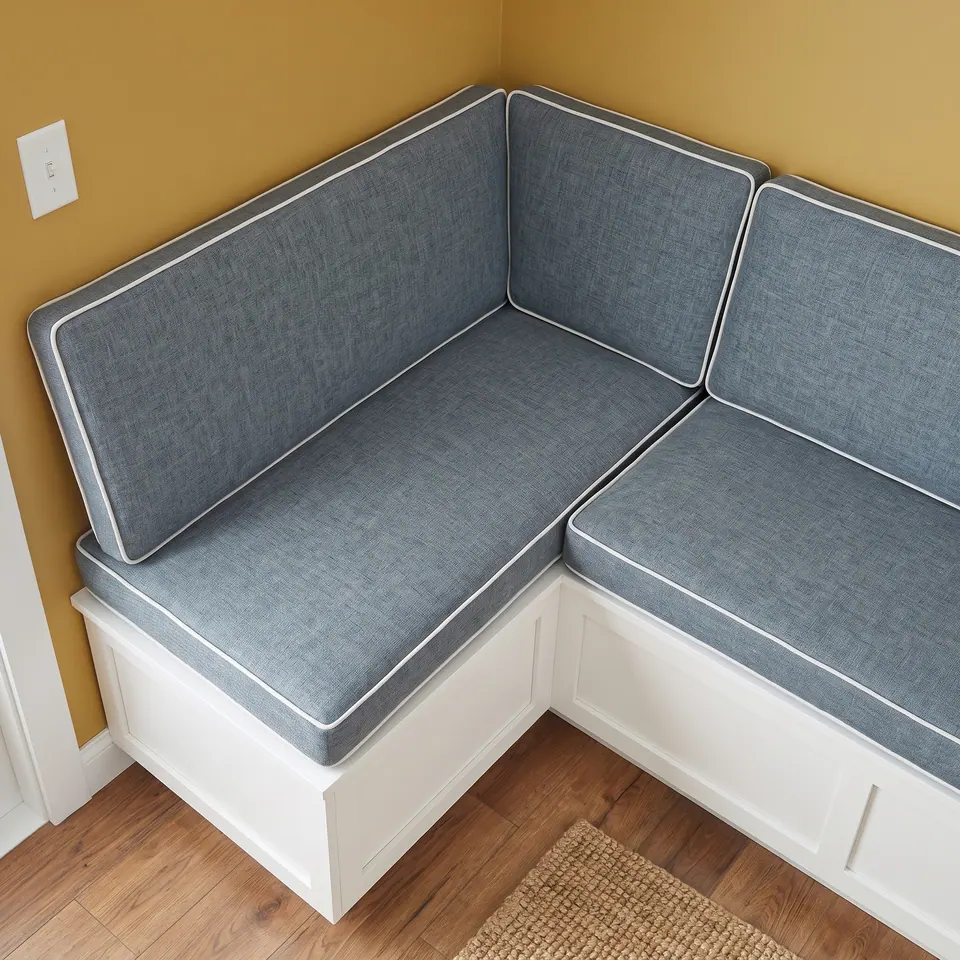
Pinned: Overhead view of slate blue linen-look L-shaped seat and back cushions with white piping on white corner storage benches
  1. Long back pad

    The longest back cushion runs into the corner and sets the line for the others.

  2. Corner back pad

    A short back piece fills the corner so there is no gap behind the join.

  3. Seat into corner

    One seat runs into the corner and the other butts against it, the simplest L arrangement.

  4. White piping

    White welts match the bench joinery and keep the blue from blending into the shadow.

  5. Jute mat

    A plain natural mat is the only prop, keeping focus on the tailoring.

  1. Long back padThe longest back cushion runs into the corner and sets the line for the others.
  2. Corner back padA short back piece fills the corner so there is no gap behind the join.
  3. Seat into cornerOne seat runs into the corner and the other butts against it, the simplest L arrangement.
  4. White pipingWhite welts match the bench joinery and keep the blue from blending into the shadow.
  5. Jute matA plain natural mat is the only prop, keeping focus on the tailoring.

Five steps from photo to order

  1. Photograph it twice

    One photo from above, like this one, and one straight on. From above the corner join is obvious; from the front, the back height is.

  2. Draw the L and label the runs

    Call the long run A and the short run B. Measure each along the wall, add the depth, and mark which seat runs into the corner.

  3. Name the fabric by number

    Two neighboring colors can look like twins in a photo. The number is what gets cut. Write the piping code on its own line.

  4. Read your own sketch again

    Add the runs up and compare them with the wall. A slip found before the price is final costs nothing but a second look.

  5. Mind the switch

    If a back cushion passes under a light switch or outlet, measure from the seat to the bottom of the plate and keep the back lower.

A real project

The platform sketch, corrected once

A buyer started simple: one 36 × 72 in (91 × 183 cm) cushion in linen. They compared two neighboring linen colors, 21 and 22, from our photos, and ordered by number.

Then came a harder one. They were building a platform and wanted an L-shaped cushion to stand upright on it as a back. They sent a photo of the build and a dimensioned sketch. Then a corrected sketch: they had found a measuring slip of their own.

We re-checked the corrected drawing against the photo before quoting, and the L shipped as drawn. The buyer promised a photo once the platform was finished. That is the order I would hold up as a model: photo, sketch, correction, then price. Tolerance is kindness to your future self.

Sizes
36 × 72 in (91 × 183 cm) seat; upright L-shape to the buyer’s sketch
Fabric
Linen, colors 21 and 22 compared

The lesson: Photograph the platform, send a dimensioned sketch, and correct any measuring slip before the price is final.

Codes, colors and extra pieces

  1. A common question

    If the seat is corduroy and the back pillows are plain velvet, will the same green match?

    The workshop's answer

    Not exactly. A color with the same name has a different tone in corduroy than in plain velvet. The workshop’s soft fabric comes much closer to the corduroy tones, so for a matched banquette it suggested soft fabric for the back pillows, for a small extra charge.

  2. A common question

    Can I buy extra backrests, or the arm pieces, for my floor sofa on their own?

    The workshop's answer

    Yes. Extra corner backrests, a set of backrest pillows and the two arm pieces (which are really corner backrests) can all be ordered separately, and extra support pieces can be sent. How the arms are built is not shared for DIY copies.

  3. A common question

    How is a custom trapezoid window seat cushion priced?

    The workshop's answer

    By its own size. Enter your size range on the trapezoid cushion page and the price shows. Past quotes include a seat 70 in at the front, 44 in at the back and 20.5 in deep, 2 in thick with 2.5 in notches, and a pointed bay seat 89 in (227 cm) long and 13 in (33 cm) deep.

On an L-shaped bench cushion, one seat runs into the corner and the other butts against it. Mark which one on your sketch.

Nate

On the cutting table: the L-shaped nook

CushionsL-shaped banquette set: two seats, three back pads
FabricSlate blue linen-look
PipingWhite contrast piping
CornerOne seat runs into the corner; a short back pad fills it
EdgeBox edge
BenchWhite paneled corner storage benches against ochre walls
Order byFabric number, piping code, labeled sketch with runs A and B
Best forKitchen nooks, corner banquettes, built platforms

Order this cushion

Have it made

Have this made — ask Nate’s workshop

Every edge and both diagonals, to the nearest 1/4 in. If the numbers do not close, the workshop will say so on the call. — Nate

Leave your details and the workshop will call you to confirm measurements, fabric, foam and piping. No prices, dates or payment on this page: it is a request, not an order.

Fabric · Foam · Pipingwhat the workshop will confirm with you

Fabric
Slate blue linen-look
Foam
The core: its density and thickness set the feel.
Piping
White contrast piping
Only for this request: no marketing calls or texts. Outside the US, add the country code.
In inches: length × depth × thickness, plus any angles or cut corners.

* Required. A member of the workshop team will call you to talk it through; nothing is charged and nothing is made until you have agreed on every detail with them.

We use these details only to answer this request and make your cushion: your name and contact details, the cushion details and photos you send, the page you came from and the ad or link that brought you, if any. The workshop that makes the cushions receives them. We don't sell them or share them for advertising, and we delete requests after 24 months. Privacy notice for requests.

Nothing is made or charged until you approve the details.

Want to pick the shape and add photos? Use the full quote form

Questions buyers ask next

Why white piping on a blue bench cushion?

White piping matches white bench joinery and draws a clean line where the blue meets shadow at the back of the seat. On a pale bench, contrast piping makes the cushion look tailored rather than dropped on.

How many back cushions does an L-shaped banquette need?

This one uses three: a long back along the main run, a short piece that fills the corner, and one for the short run. Split backs are easier to lift and stop a gap opening behind the corner join.

Can an L-shaped cushion stand upright as a backrest?

Yes. One buyer ordered an L-shaped cushion to stand upright on a platform they were building, made from a photo of the build and a corrected, dimensioned sketch.

What if two fabric colors look almost the same in photos?

Order by number, not by name, and ask for a daylight photo or a swatch of both. One buyer compared two neighboring linen colors, 21 and 22, from photos before choosing.

± 1/4 in — Nate