A Reading by NateL-Shaped Corner Bench Cushions
Anatomy of an oatmeal L-shaped breakfast nook, with a patio set's logic
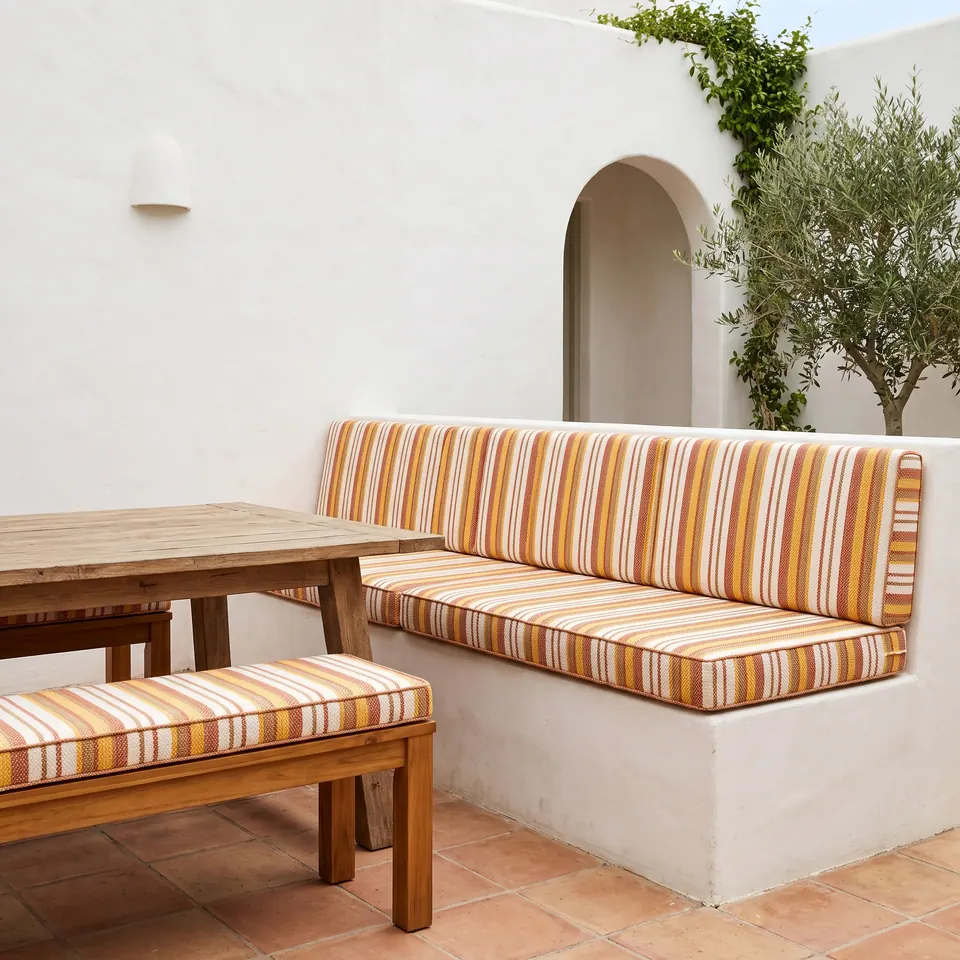
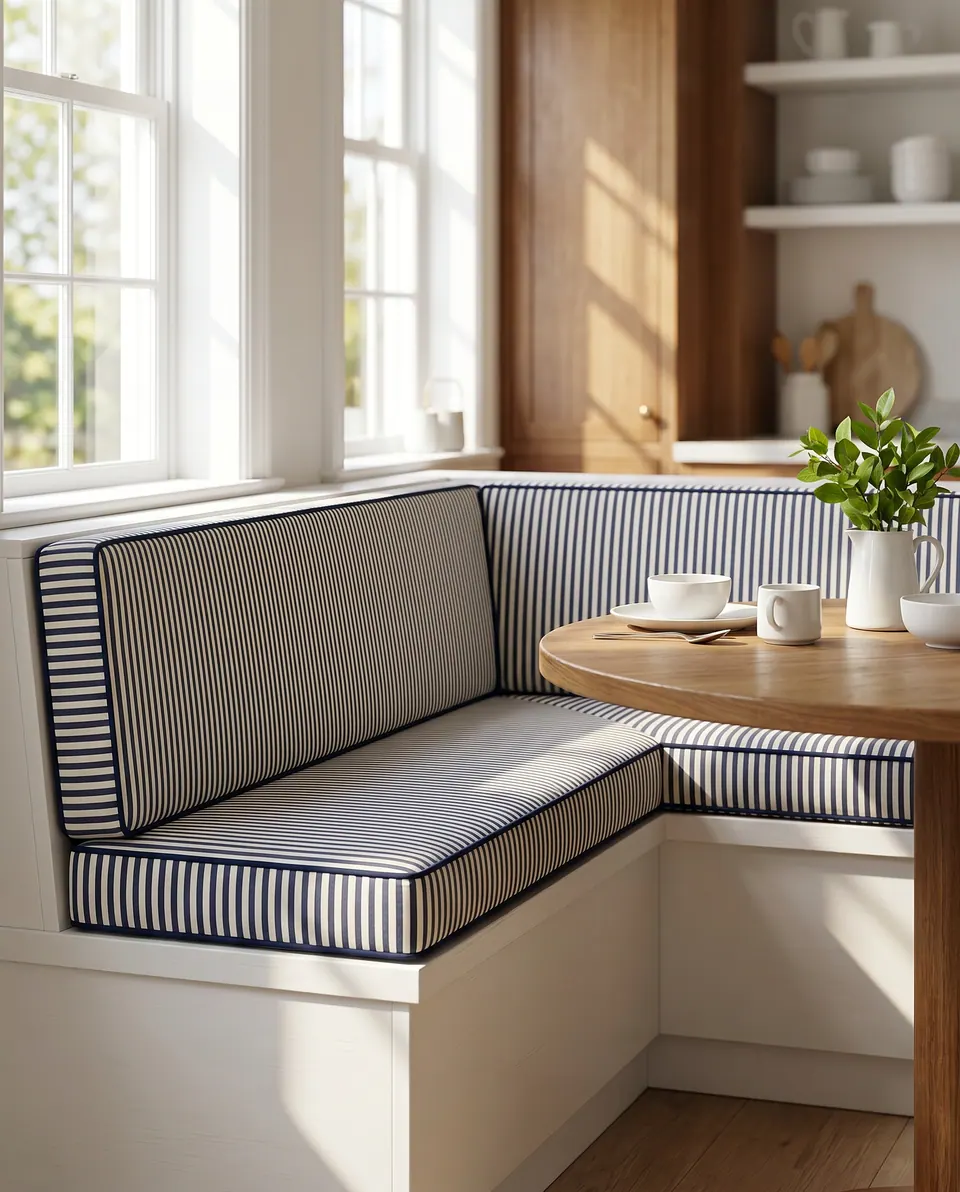
Several cushions, one corner, no gap. I read this kitchen nook the way I'd read a patio sectional, because the good ideas travel in both directions.

 Save
The quick answer
An L-shaped bench cushion is best made as separate pieces that meet at the corner: one run, a square corner block and the other run, each cut about 1/4 in (6 mm) short so nothing overhangs. Borrow that modular logic from patio sectionals, then keep what indoor seating does better: soft woven fabric and tall back cushions.
The cushion, cut open
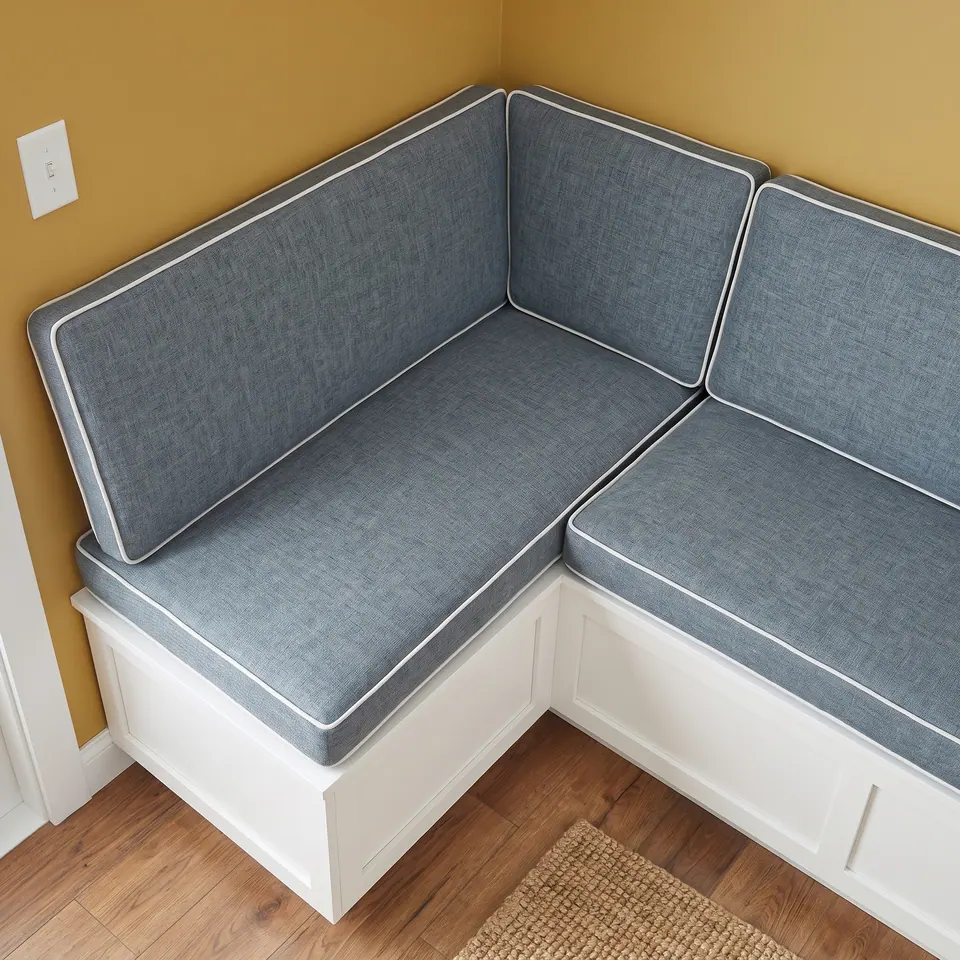
Cover fabric. A removable, zippered cover. Machine wash at 86°F (30°C) on a gentle cycle and air dry.
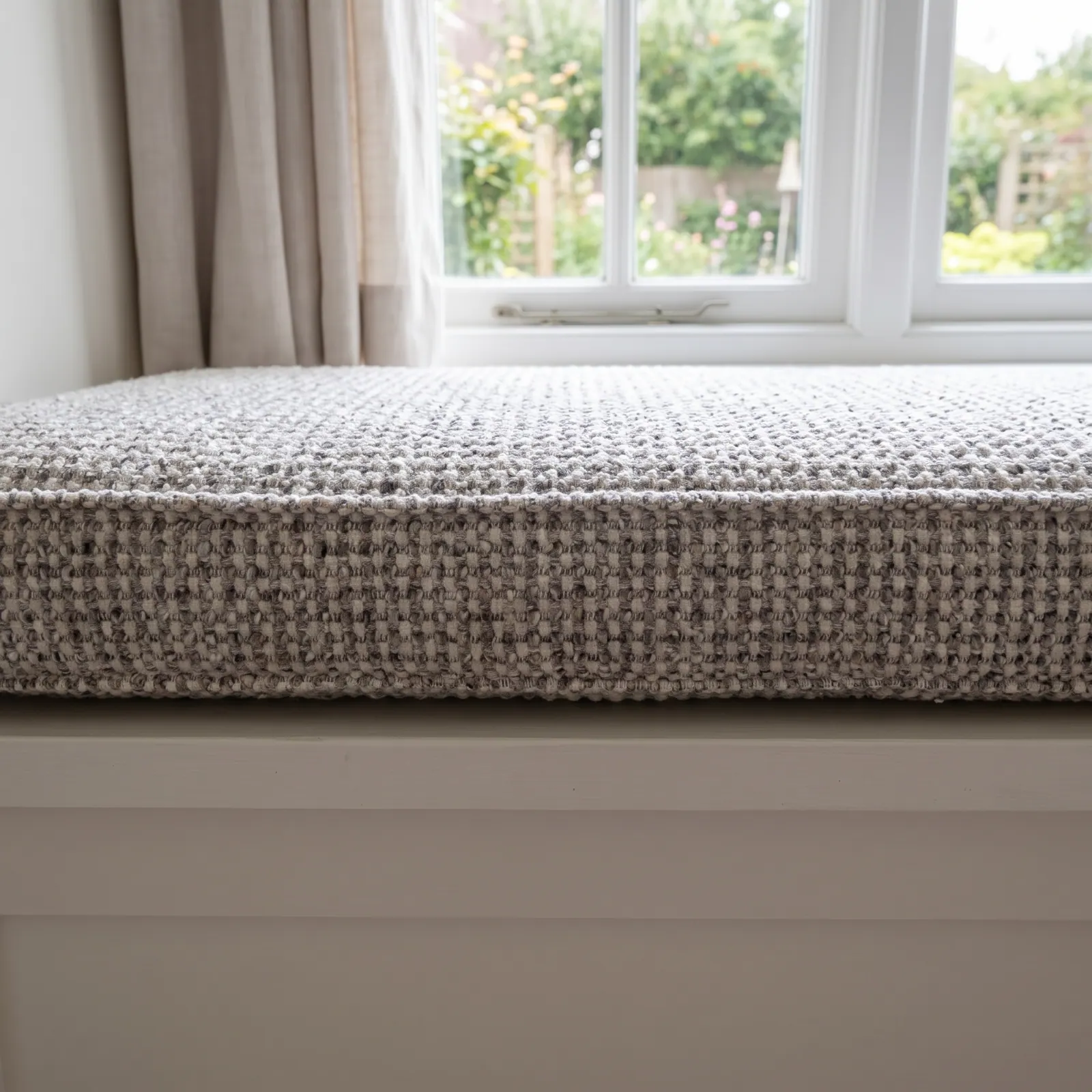
Piping. A fabric-covered cord sewn into the seams. It sits on the seam line, so it does not change the size.
Fiber wrap. Polyester fiber (Dacron) batting around the foam: it fills the cover out and softens the edges.
Foam core. About 2.0 lb/ft³ (32 kg/m³) high-resilience foam, firm to medium-firm, cut to the ordered size.
Zipper. Along the back band, as hidden as possible. The zipper side faces down or toward the wall.
Base panel. The underside of the cover. A non-slip fabric backing can cover the whole of it instead.
Cross-section: three rectangles that agree
An L-shaped bench cushion is not one L. It is three rectangles that agree with each other, and a good nook shows you where they meet.
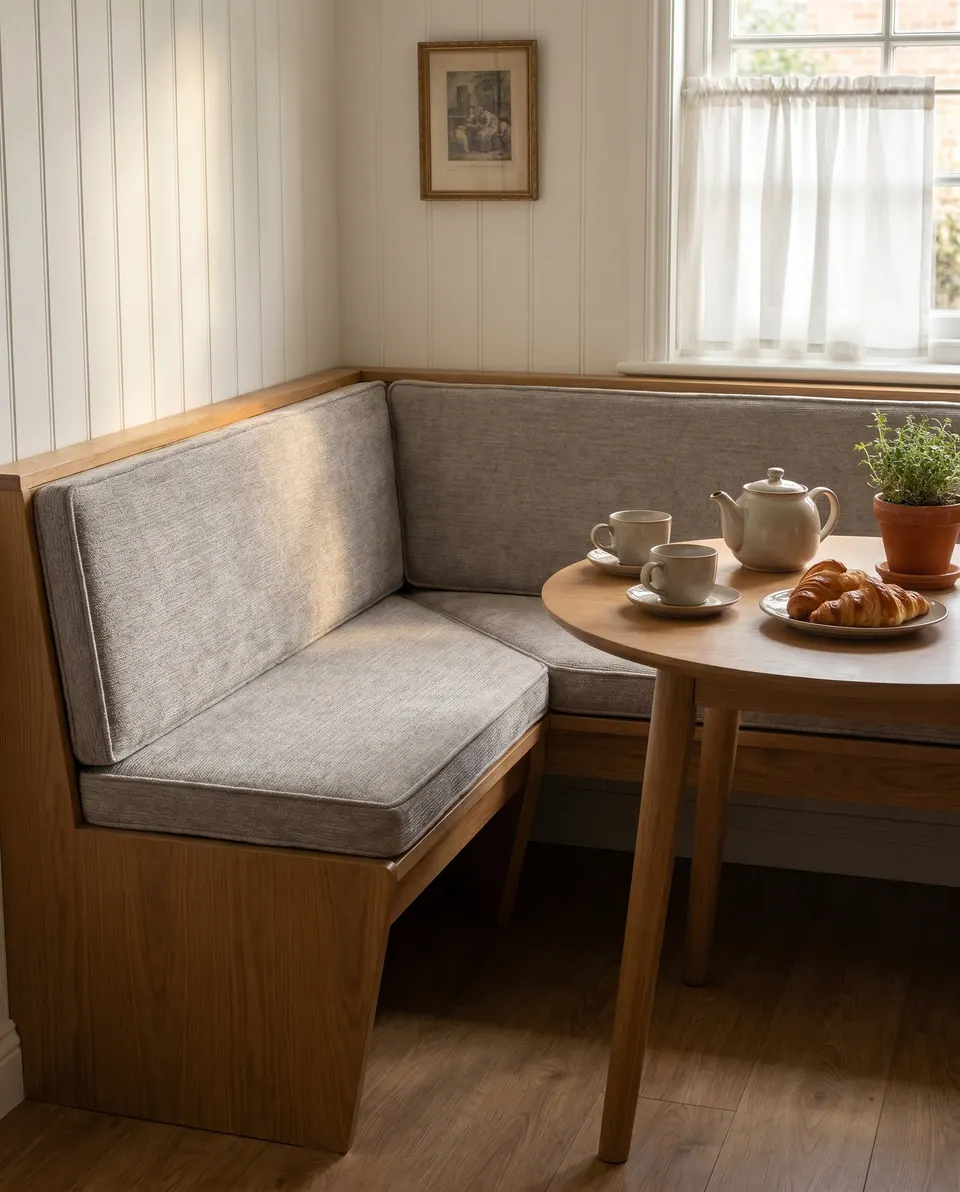
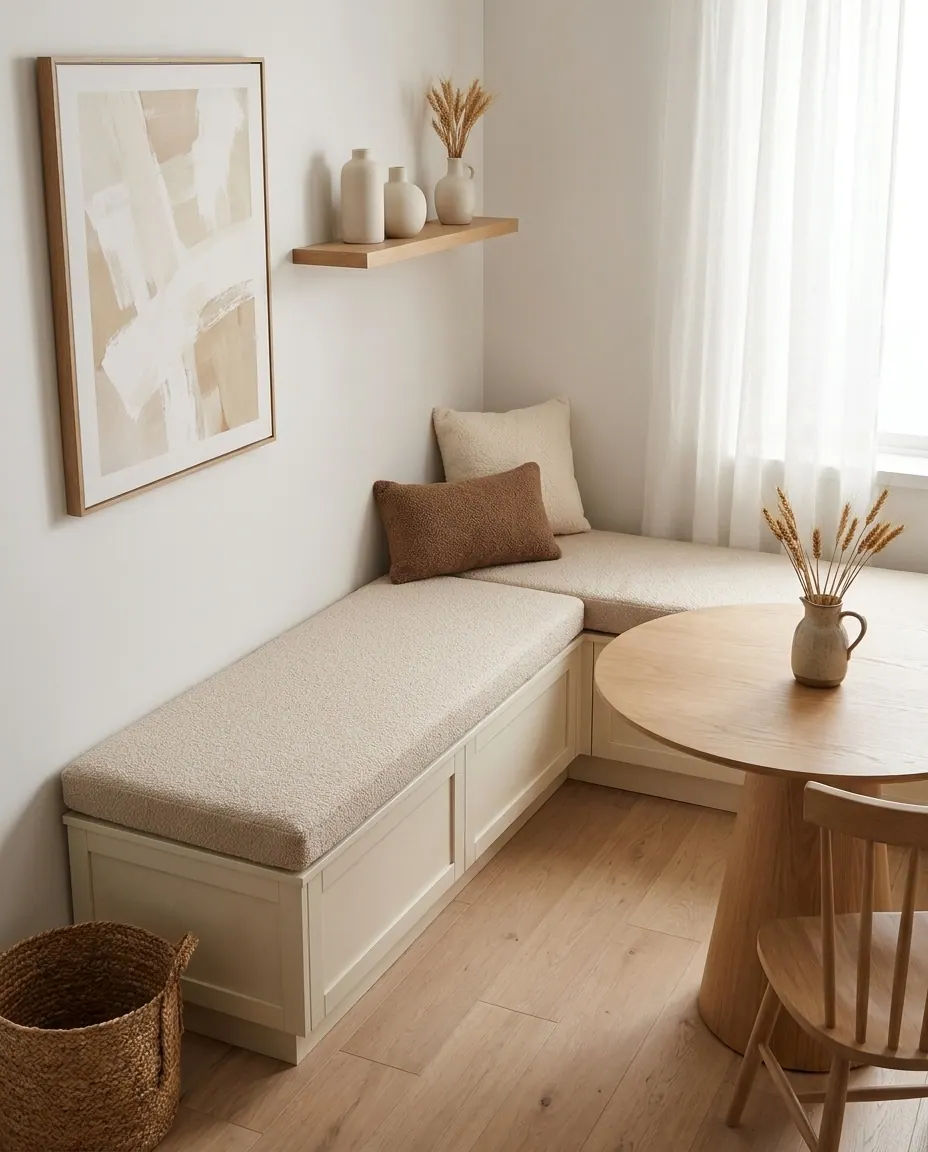
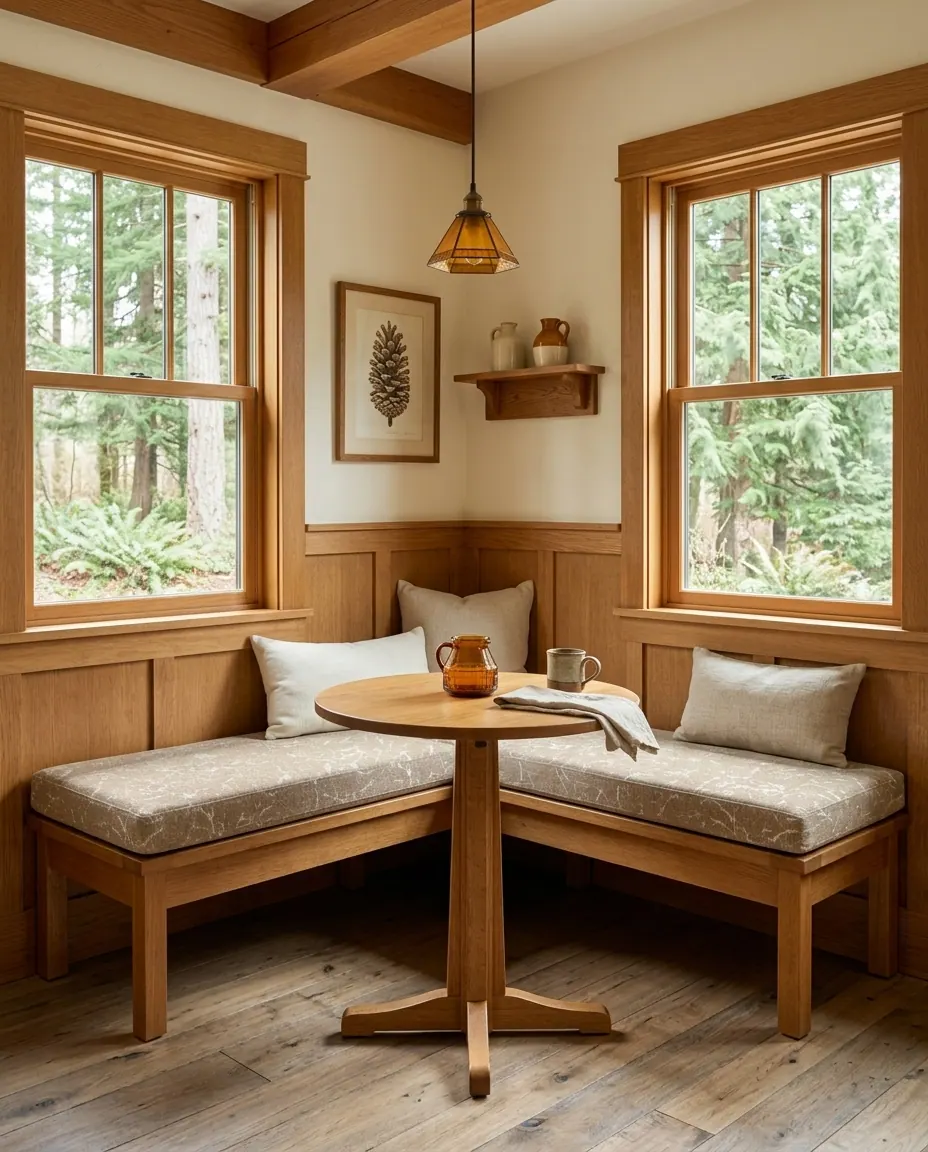
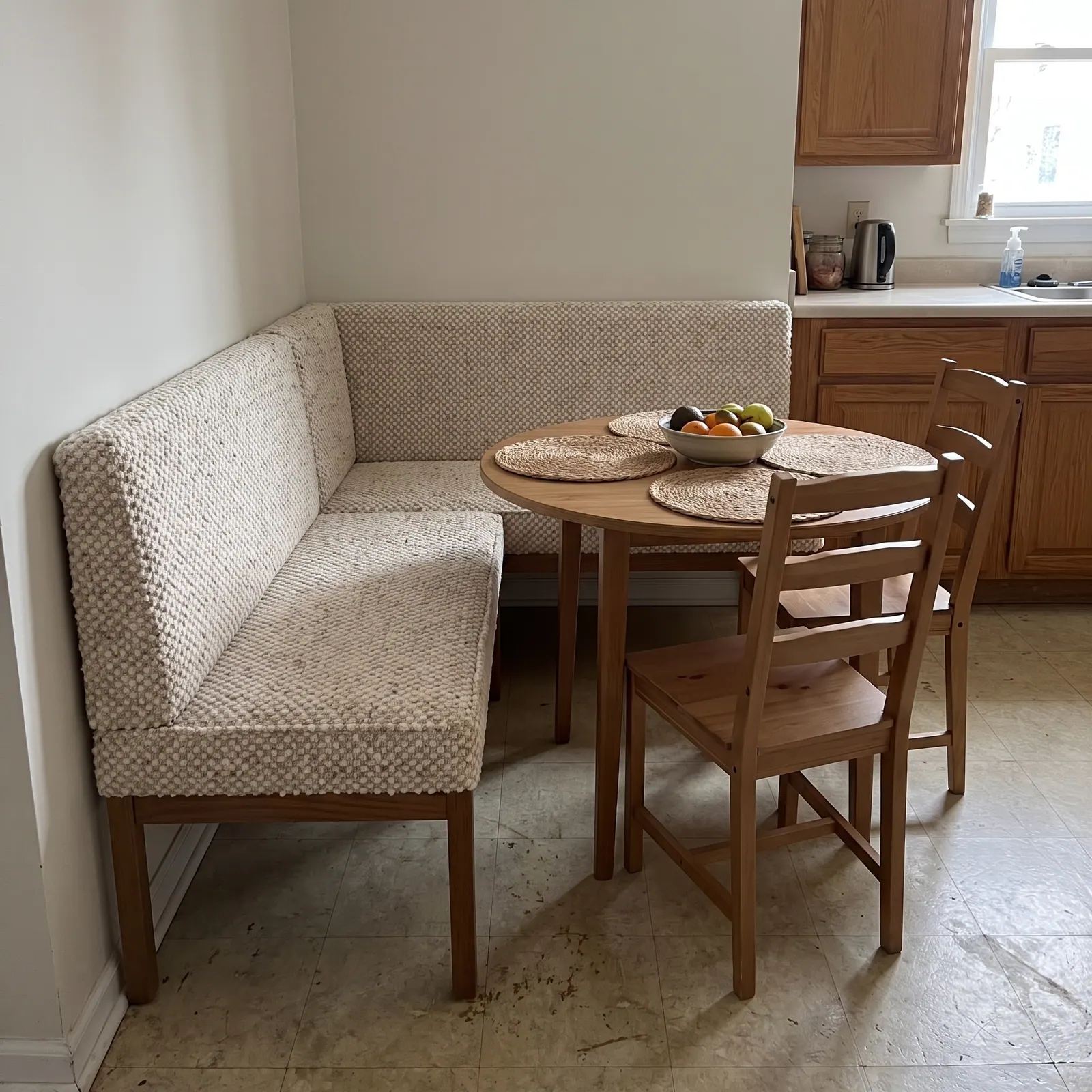
Start at the bottom. A simple wooden base runs along two walls. On it sit separate seat cushions with a box edge, flush with the base front, so the line at knee height is straight and nothing overhangs. Above them, tall back cushions stand on each run and butt together in the inside corner. No gap where the L turns. That joint is the hardest part of the whole job, and here it is clean.
The backs are tall enough to lean on, which is the difference between a nook you eat in and a nook you stay in. Short decorative backs look tidy and tire your spine by the second cup.
The fabric is an oatmeal nubby weave with cream and a taupe fleck, no piping. Oatmeal matches the pale walls and hands the warmth to the honey oak cabinets and the two pine ladder-back chairs. In flat morning light, texture keeps a pale color from going dead, and the fleck forgives breakfast.
The props earn their places. A round wooden table lets everyone reach the middle. Three seagrass placemats add a second natural fiber. The bowl of oranges is the only bright color in the frame, on purpose. The kettle and storage jar on the worktop and the window over the sink say this is a working kitchen, not a set.
More layouts live in the L-shaped cushion atlas and the kitchen nook collection; textured wovens like this one sit near our jacquard and damask shelf. What does your longer run measure, partner, wall to corner?
Pinned by Nate
Five pins, from the inside corner join to the pine chairs that close the table.
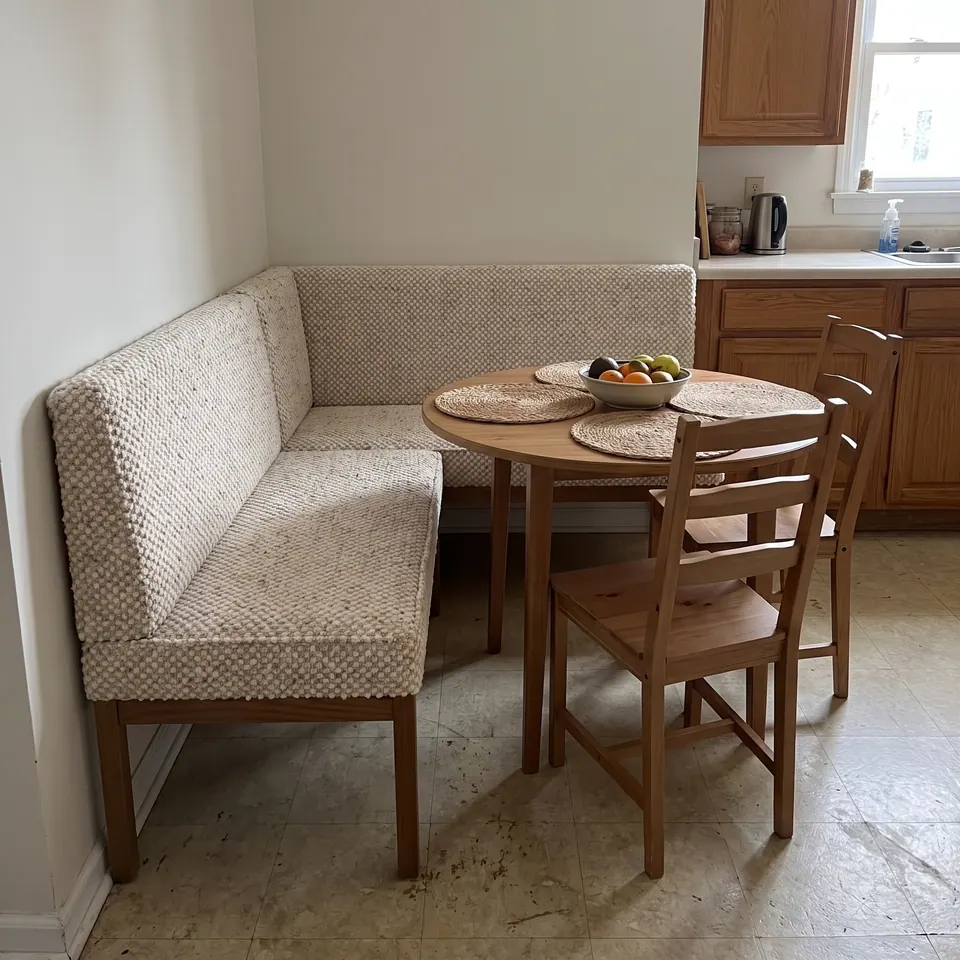
- Inside corner join
The two back cushions meet in the corner, so there is no gap where the L turns.
- Seat cushion front
The seats sit flush with the wooden base, keeping a neat line at knee height.
- Long back cushion
Tall back cushions give real support, so the nook works for long breakfasts.
- Fruit bowl
Oranges on the table add the only bright color against the oatmeal.
- Ladder-back chairs
Pine chairs on the open sides complete the seating without blocking the kitchen.
- Inside corner joinThe two back cushions meet in the corner, so there is no gap where the L turns.
- Seat cushion frontThe seats sit flush with the wooden base, keeping a neat line at knee height.
- Long back cushionTall back cushions give real support, so the nook works for long breakfasts.
- Fruit bowlOranges on the table add the only bright color against the oatmeal.
- Ladder-back chairsPine chairs on the open sides complete the seating without blocking the kitchen.
Borrowed from the patio, kept from the living room
| Idea | Borrowed from | What it does in the nook |
|---|---|---|
| Separate modules that butt together | Patio sectionals | The corner turns without a sewn L, and one piece can be replaced alone |
| Easy-clean fabric first | Outdoor thinking | Kitchens get spills; the shop rates its velvet very easy to clean |
| Removable covers | Outdoor cushions | Wash the cover, keep the foam |
| Box edge flush with the base | Indoor upholstery | A straight line at knee height, no overhang |
| Tall back cushions | Indoor sofas | Real support for long breakfasts |
| Soft textured weave | Indoor upholstery | Warmth against wood, and a fleck that hides crumbs |
The family sketch: 65 in, 20.75 in, three pieces
A family in the US sent the workshop a hand sketch of their L-shaped kitchen bench. Arms of 65 in (165 cm), a depth of 20.75 in (52.7 cm), piping wanted.
The shop explained the method first: an L is made as separate cushions that meet at the corner. They agreed on three pieces. One arm, one square corner, the other arm.
Then the family re-measured, which I always applaud. The final list: - 20.75 x 65 1/8 in (52.7 x 165.4 cm) - 20.75 x 20.75 in (52.7 x 52.7 cm) - 20.75 x 65 in (52.7 x 165.1 cm)
Notice the 1/8 in difference between the arms. Two walls, two numbers. Those sizes already keep about 1/4 in (6 mm) back so nothing hangs over the edge. Tolerance is kindness to your future self.
Each piece was ordered on the standard listing with its own thickness, fabric and piping. The full method is in L-shaped bench cushion measurements and the L-shaped corner joint, and the bench cushion builder will draw each run for you.
On the cutting table: the breakfast nook
| Piece | L-shaped seat and back cushions on a wooden base |
|---|---|
| Fabric | Oatmeal nubby weave with cream and taupe fleck |
| Edge | Box, seats flush with the base front |
| Piping | None |
| Backs | Tall, one set per run, butted in the inside corner |
| Corner method | One run, a square corner block, the other run |
| Fit allowance | About 1/4 in (6 mm) short of each edge |
| Care | Pick an easy-clean fabric; kitchens are spill zones |
| Best for | Kitchen corners, rentals without built-in joinery |

Have it made
Have this made — ask Nate’s workshop
Every edge and both diagonals, to the nearest 1/4 in. If the numbers do not close, the workshop will say so on the call. — Nate
Leave your details and the workshop will call you to confirm measurements, fabric, foam and piping. No prices, dates or payment on this page: it is a request, not an order.
Buyer questions: cleaning, backs only, and the wrong thickness
- A common question
Which of your fabrics is easiest to keep clean on a kitchen bench?
The workshop's answerThe shop says its velvet is very easy to clean. The soft fabric offered on the custom French-style tufted bench cushion is also easy to clean.
- A common question
Can I order just the back cushions for my banquette, seven of them?
The workshop's answerYes, backrest-only orders are fine. One buyer ordered seven plain back pillows in charcoal gray linen with matching piping: three at 21 x 14 in (53 x 36 cm), three at 26 x 14 in (66 x 36 cm) and one at 27 x 14 in (69 x 36 cm), all 3 in (7.5 cm) thick. Production took 4-6 business days.
- A common question
I ordered the wrong thickness. What are my options now?
The workshop's answerPlace a new order in the right size. When a buyer needed 2 in instead of 4 in (5 cm instead of 10 cm), the workshop refunded part of the price on each order. When cushions were made exactly to the size ordered but turned out too small, the options were a return at the buyer's expense or a discount on a new order.
An L-shaped bench cushion is three rectangles that agree: one run, a square corner block and the other run, each held about 1/4 in short of the edge.
Nate
Questions buyers ask next
Should an L-shaped bench cushion be one piece or several?
Several. The usual method is one run, a square corner block and the other run, fitted together at the corner. Separate pieces are easier to cut accurately, easier to wash and easier to replace one at a time.
How much smaller than the bench should the cushions be?
About 1/4 in (6 mm) short is a sensible allowance, so each cushion sits inside the bench edge instead of hanging over it. Measure each run separately, because two walls seldom match to the eighth of an inch.
What makes a breakfast nook comfortable for long meals?
Tall back cushions you can lean on, and seats that sit flush with the base at knee height. A low decorative back looks tidy but gives little support once breakfast turns into a second cup.
Does an L-shaped nook cushion need piping?
No. Piping outlines each piece, which can be handsome, but an unpiped box edge in a calm oatmeal weave keeps the corner quiet and lets the wood tones carry the room.
± 1/4 in — Nate
More photographs to read
 Save
 Save
 Save
 Save
 Save
 Save