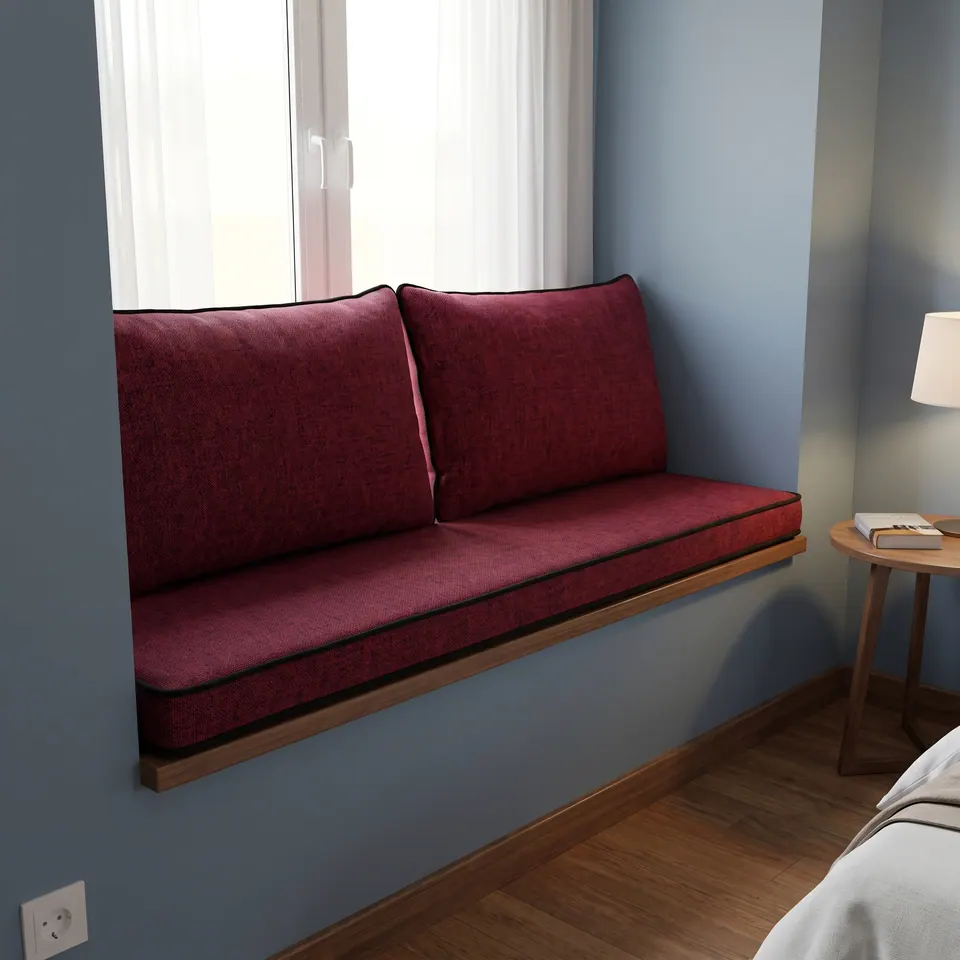
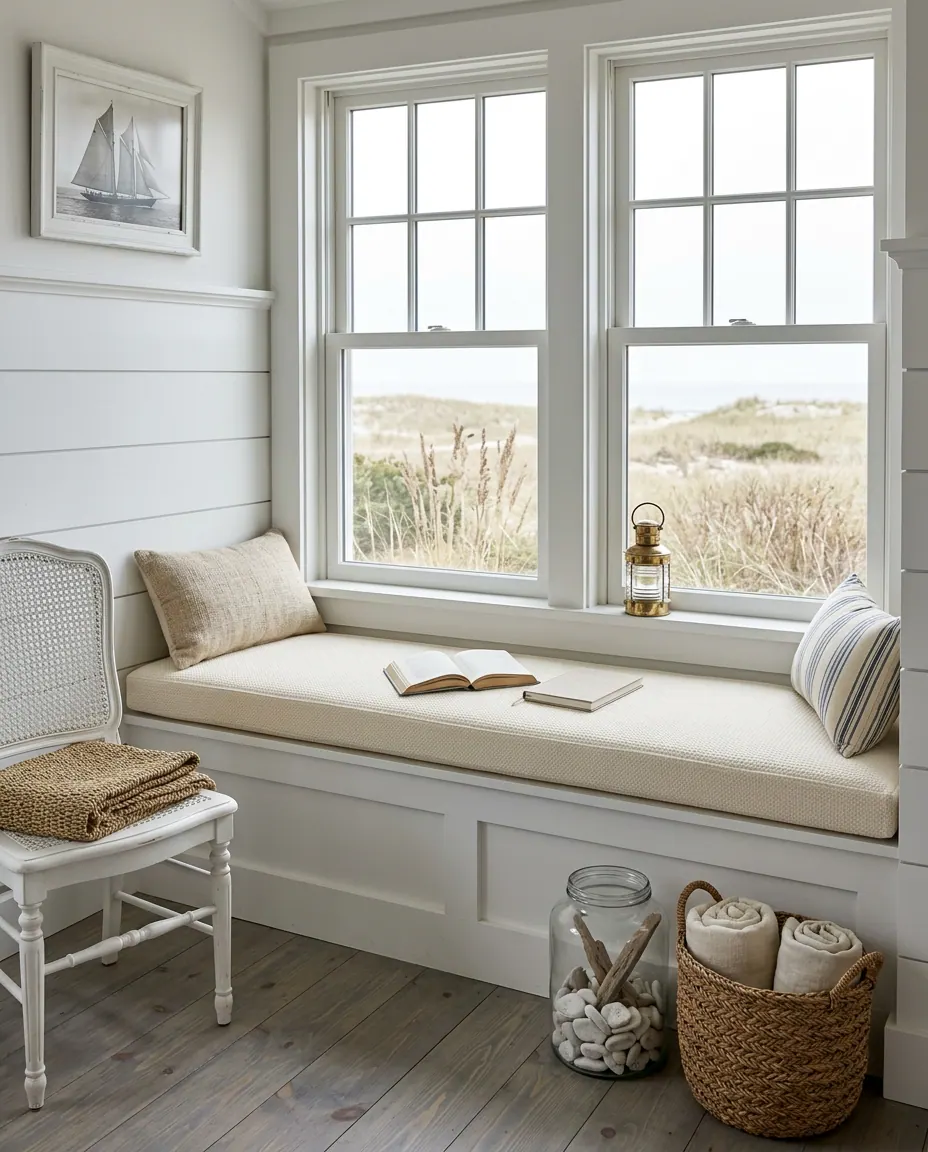
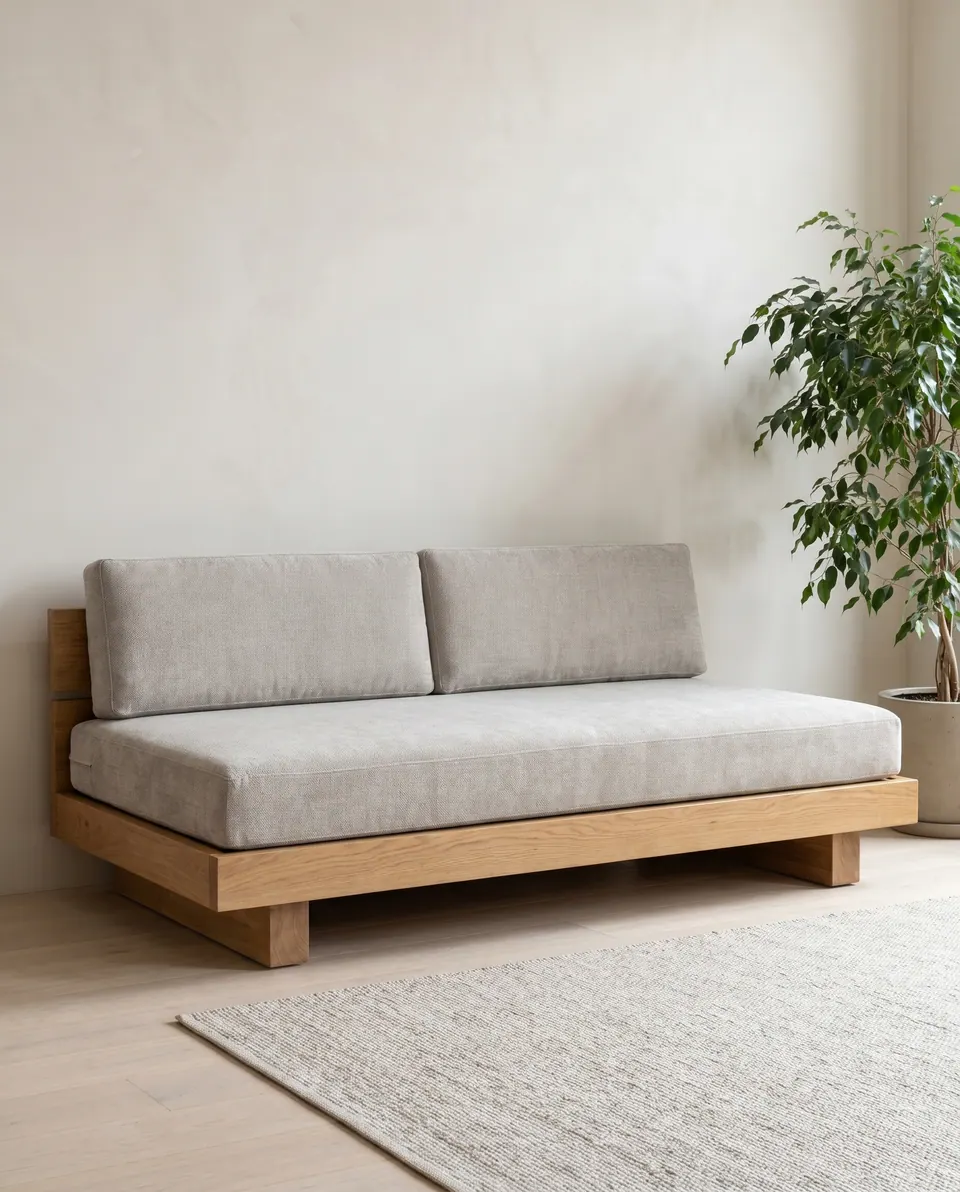
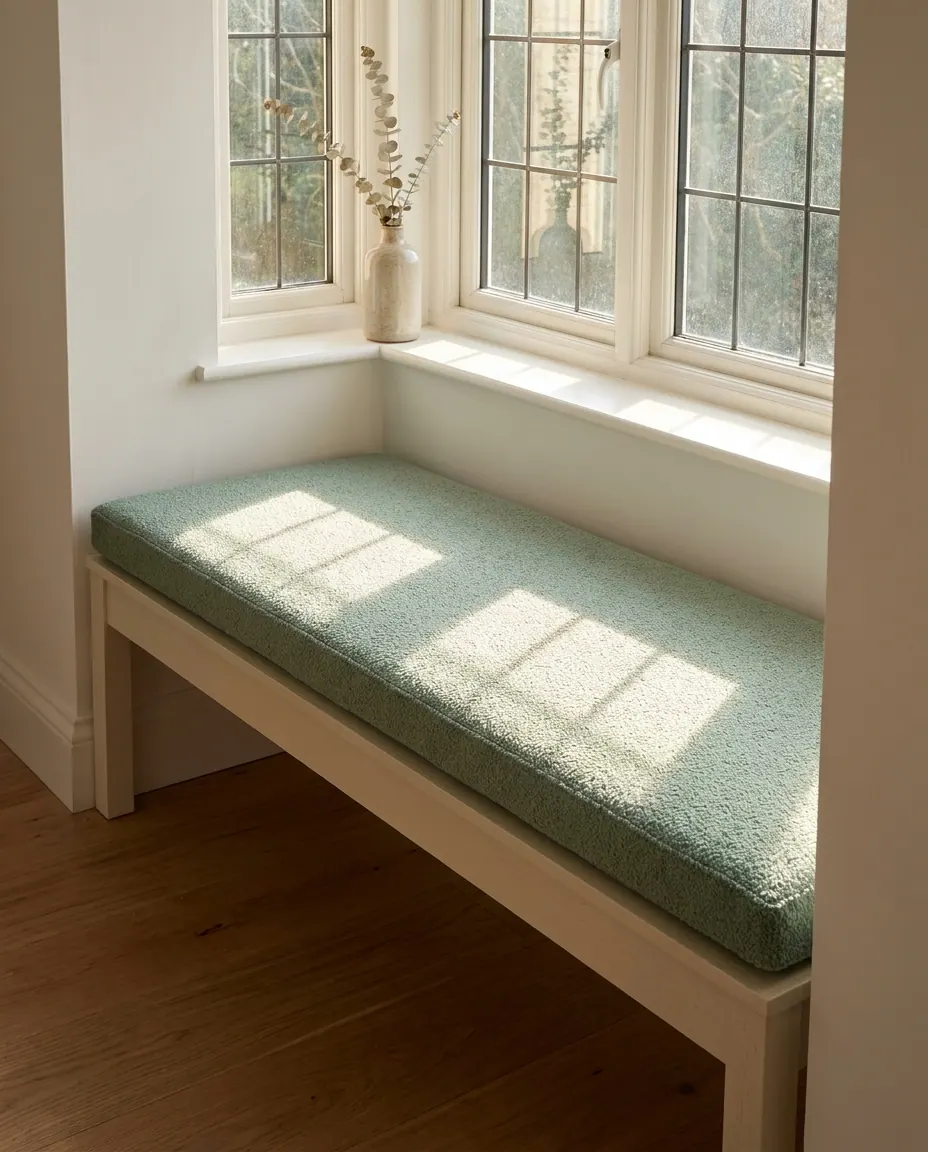
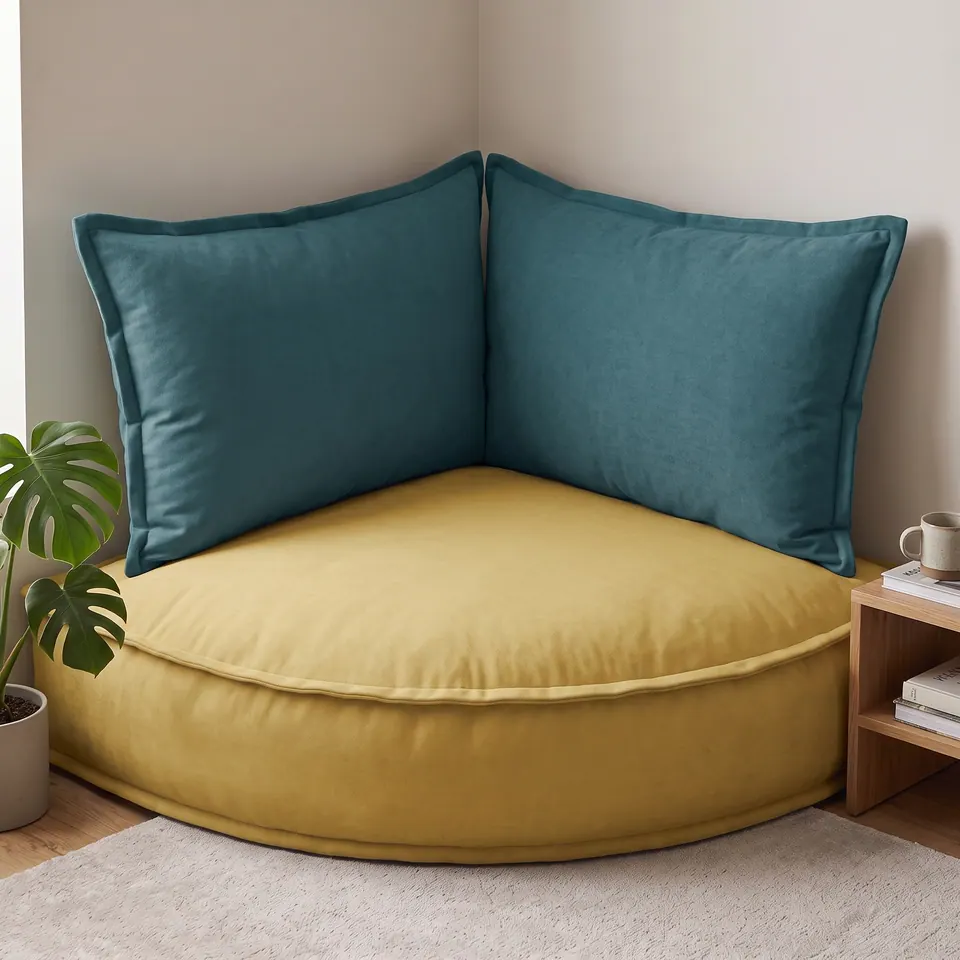
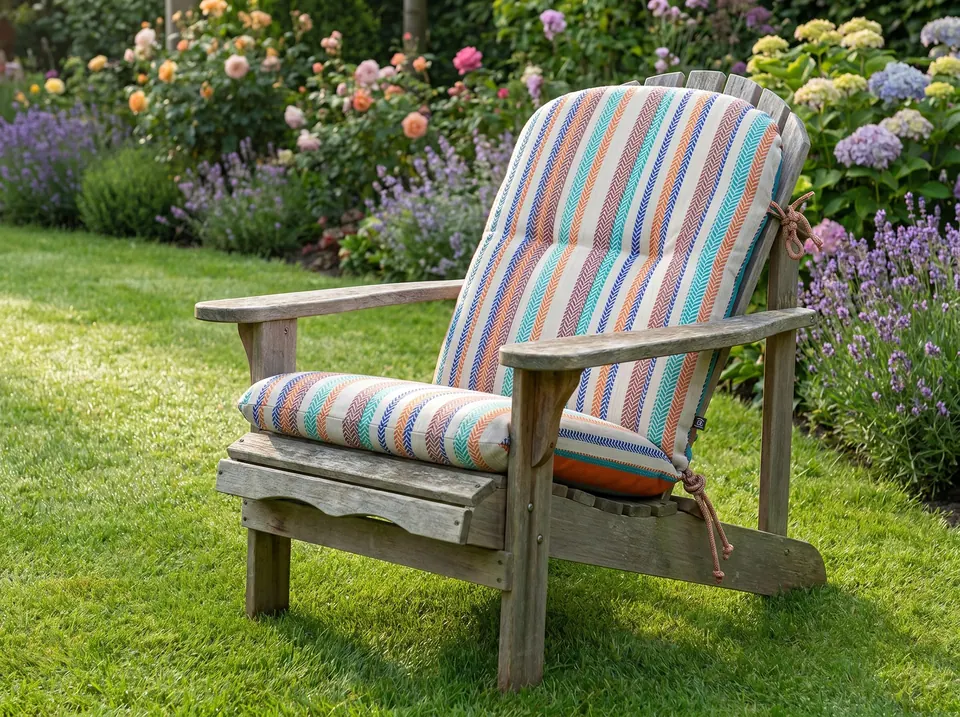
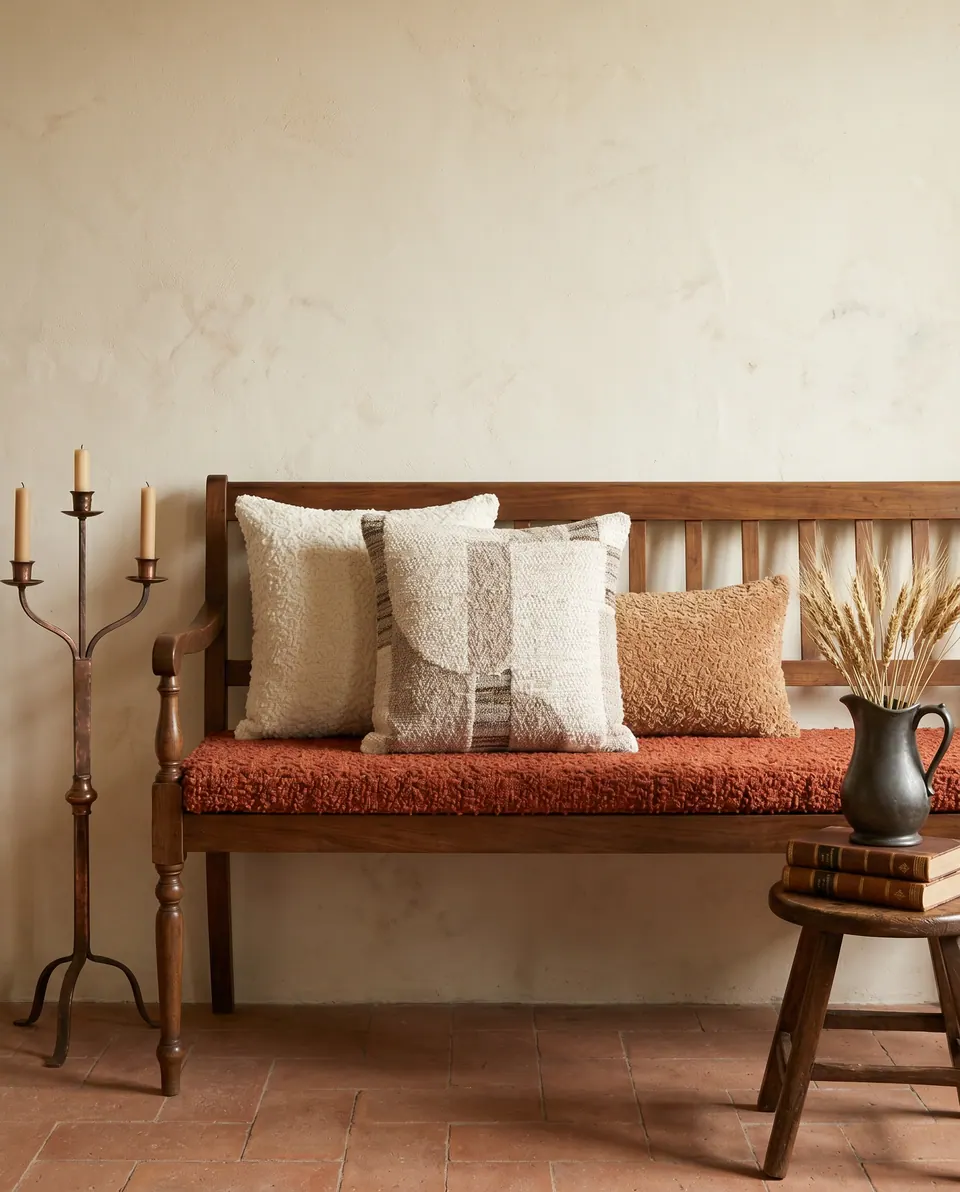
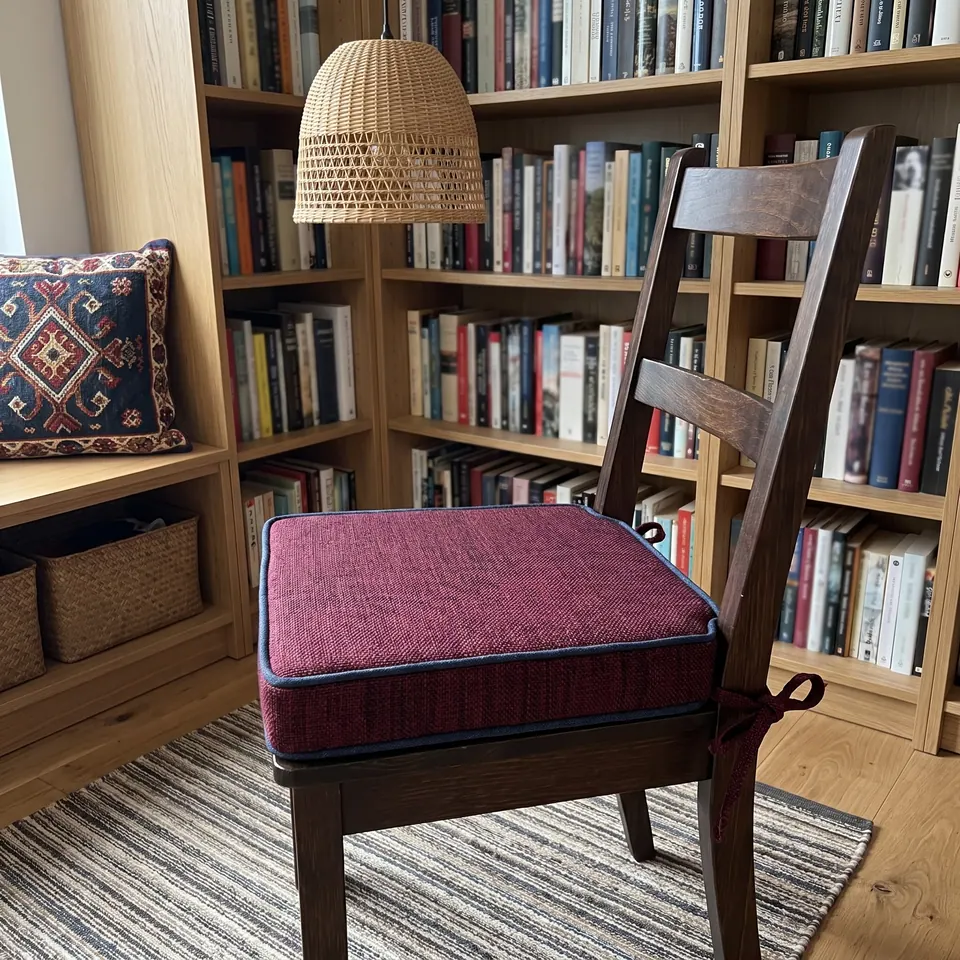
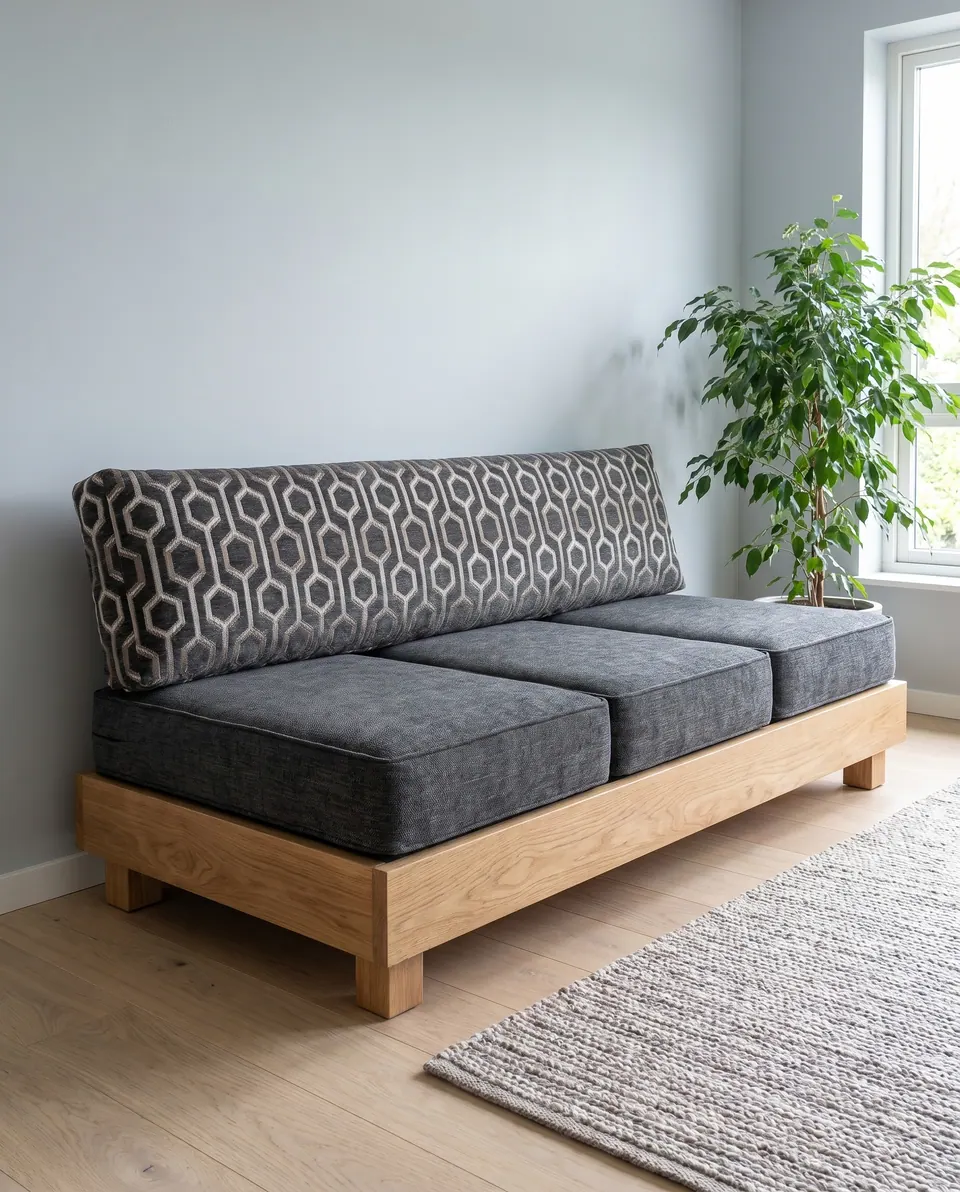
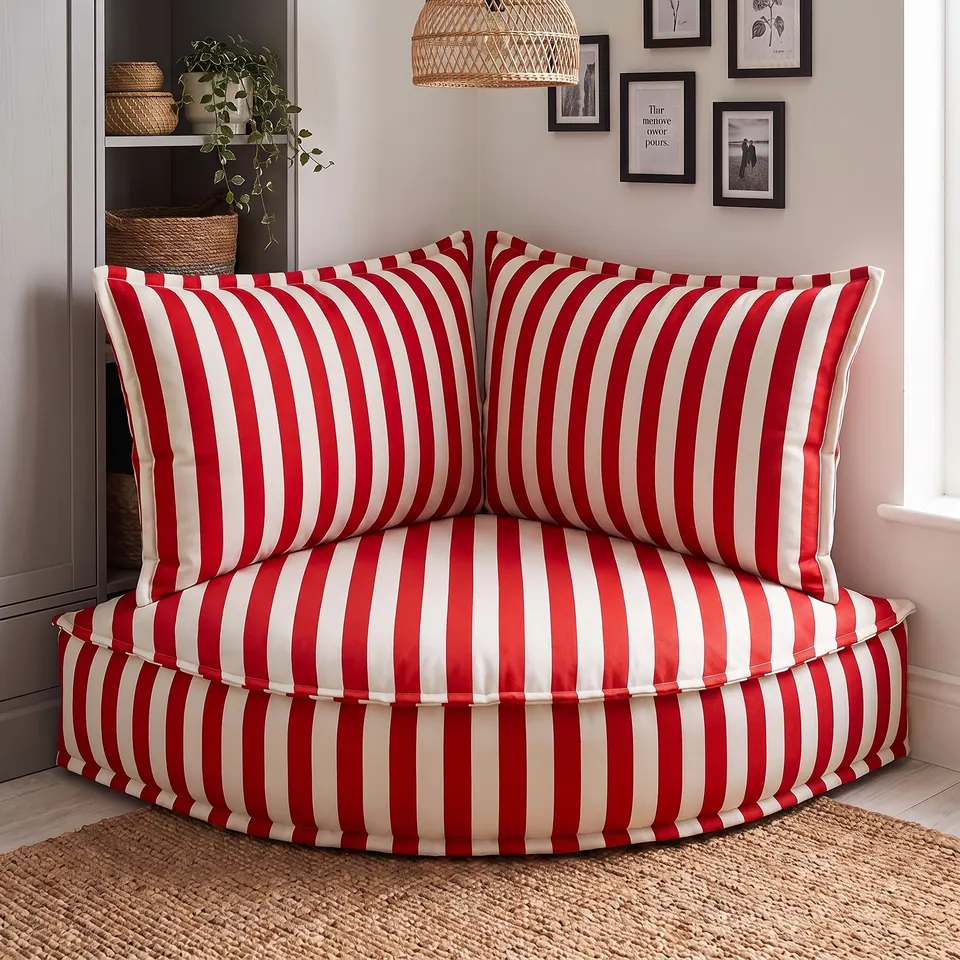
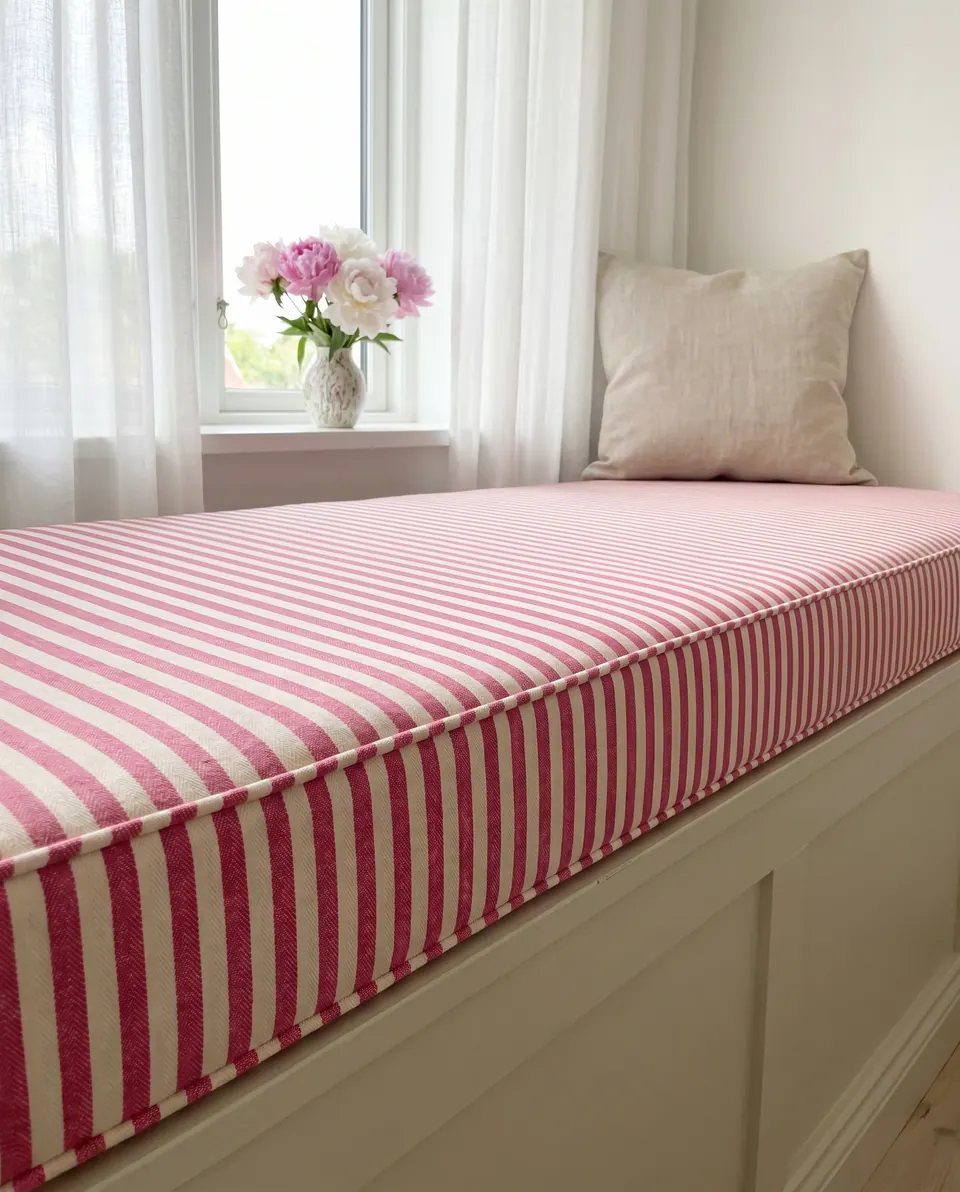
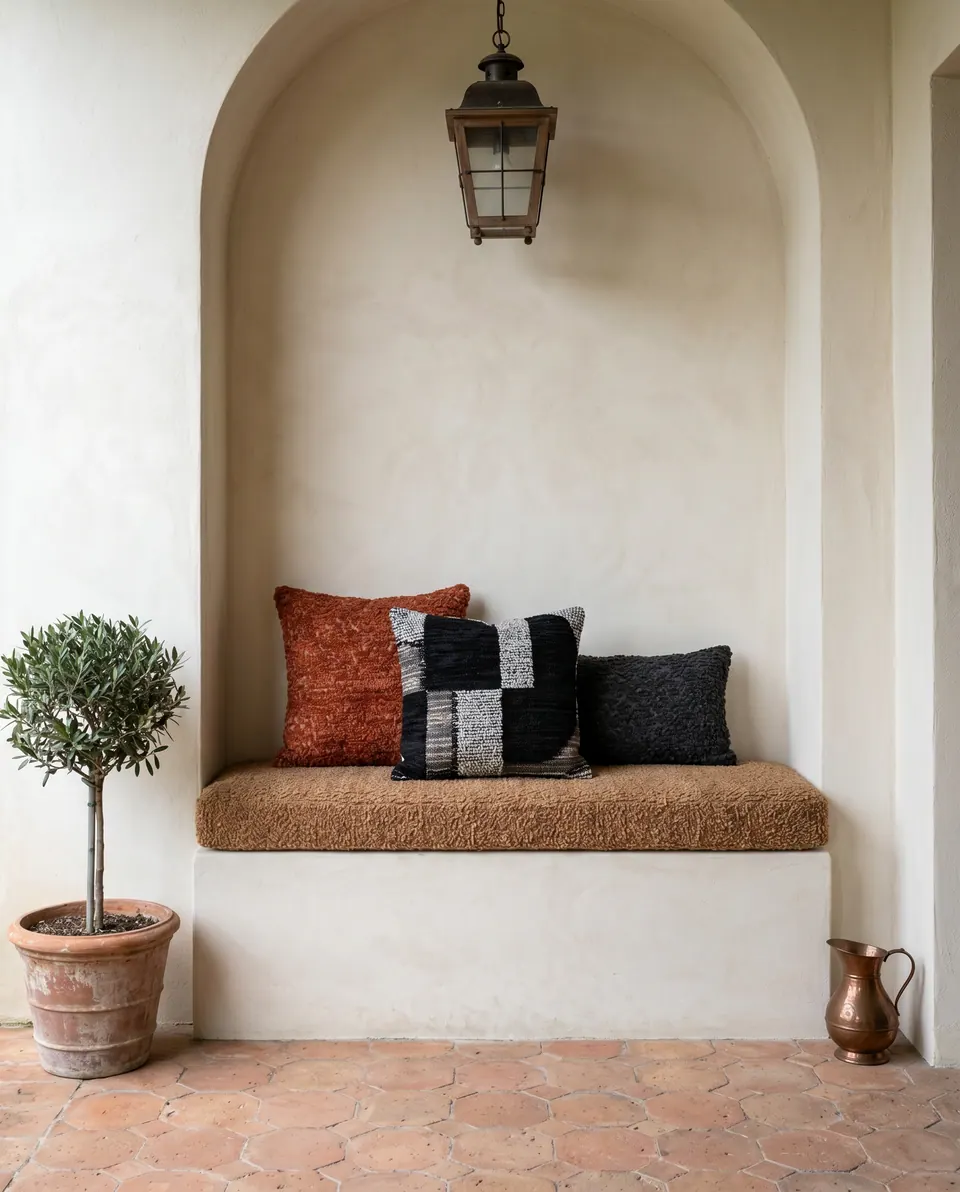
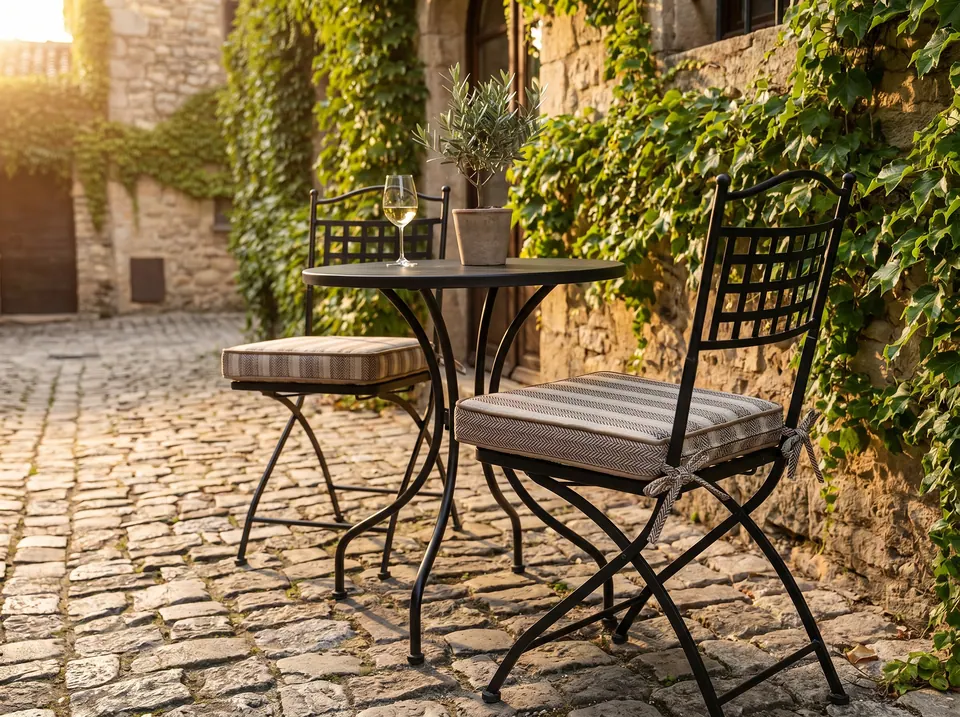
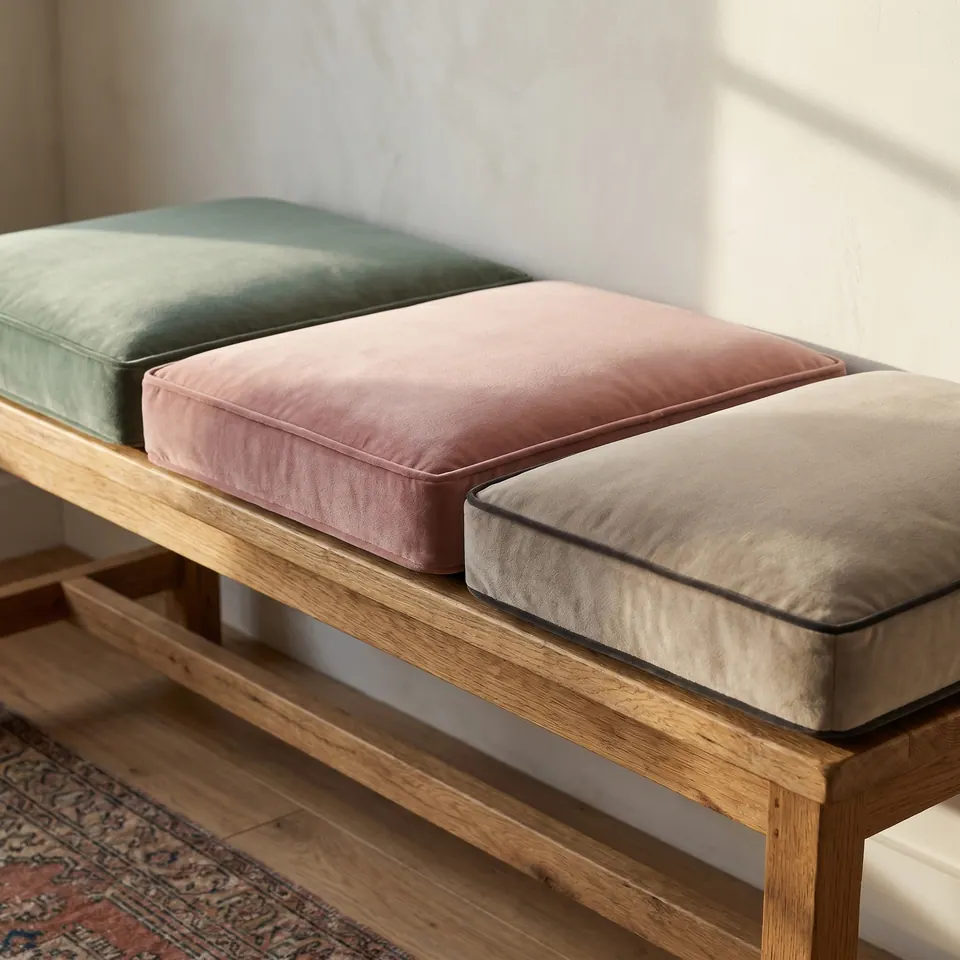
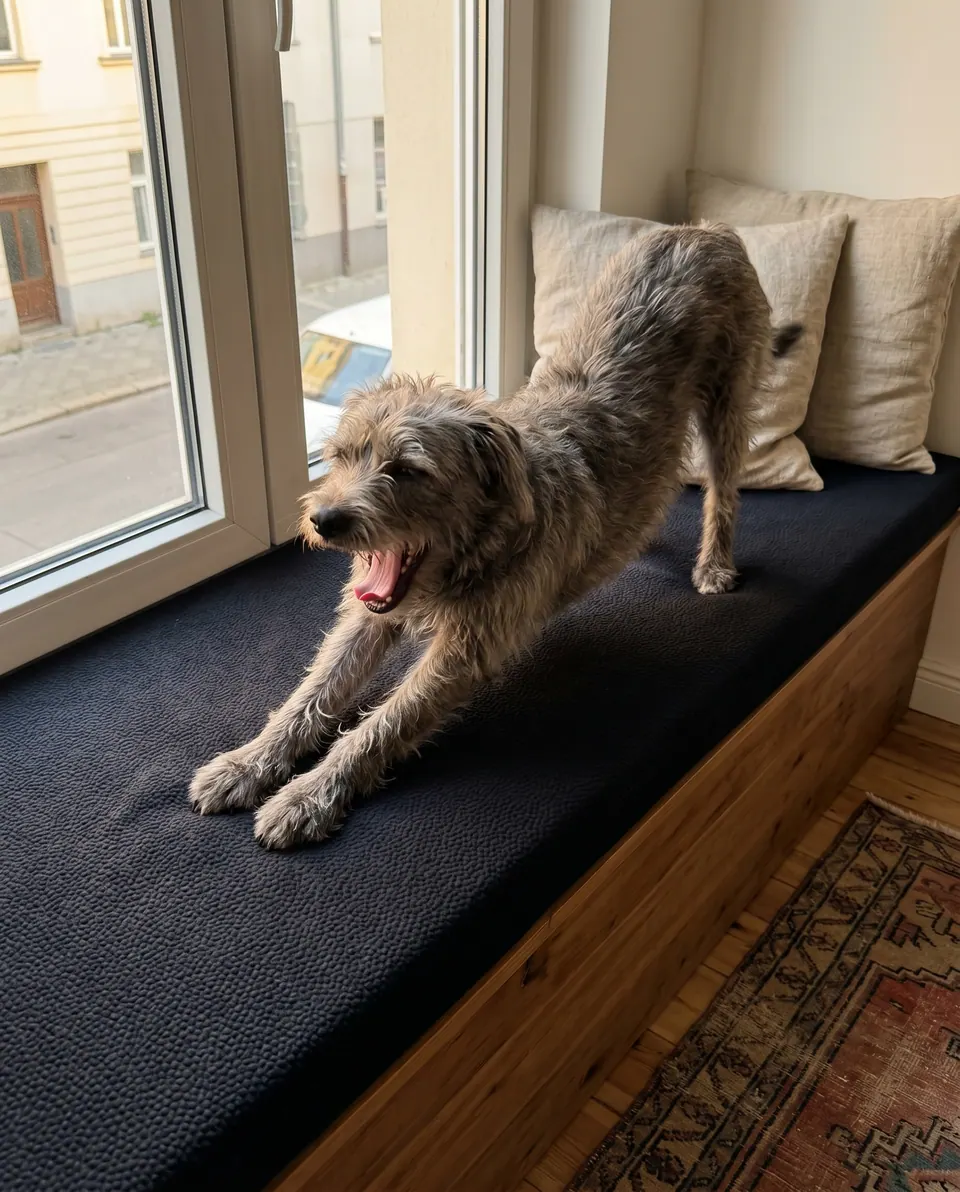
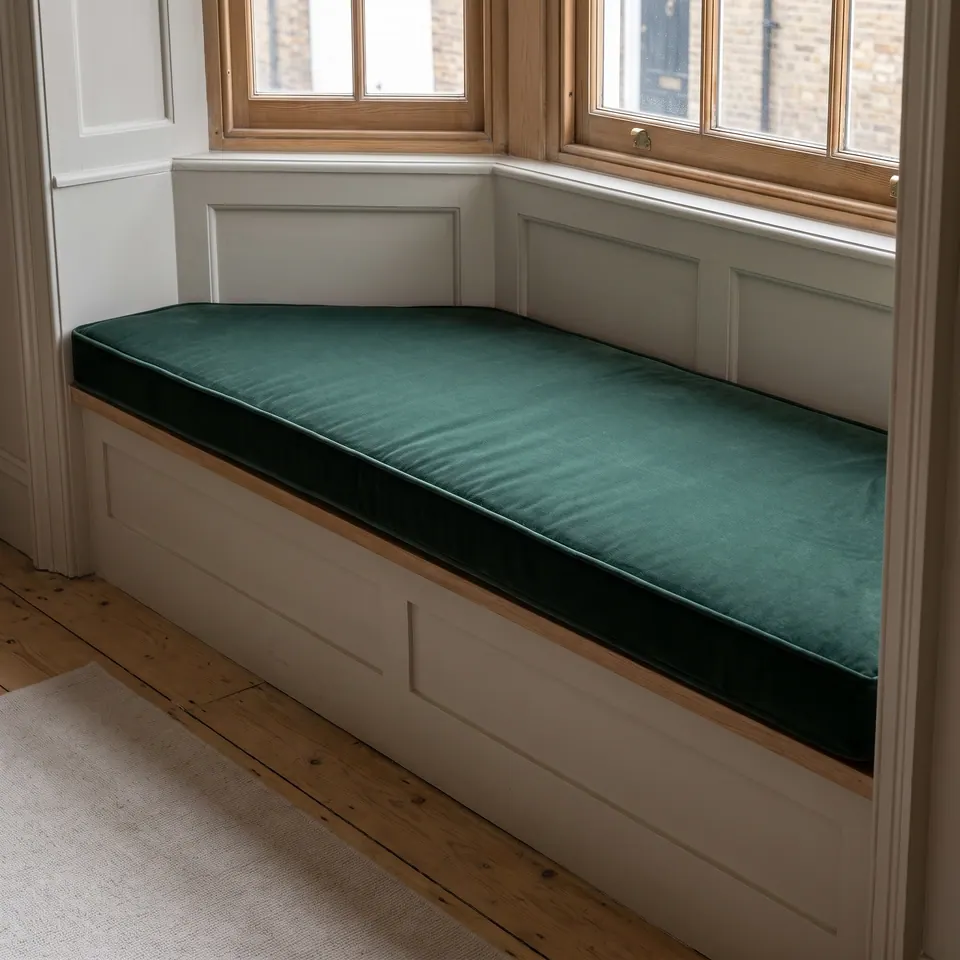
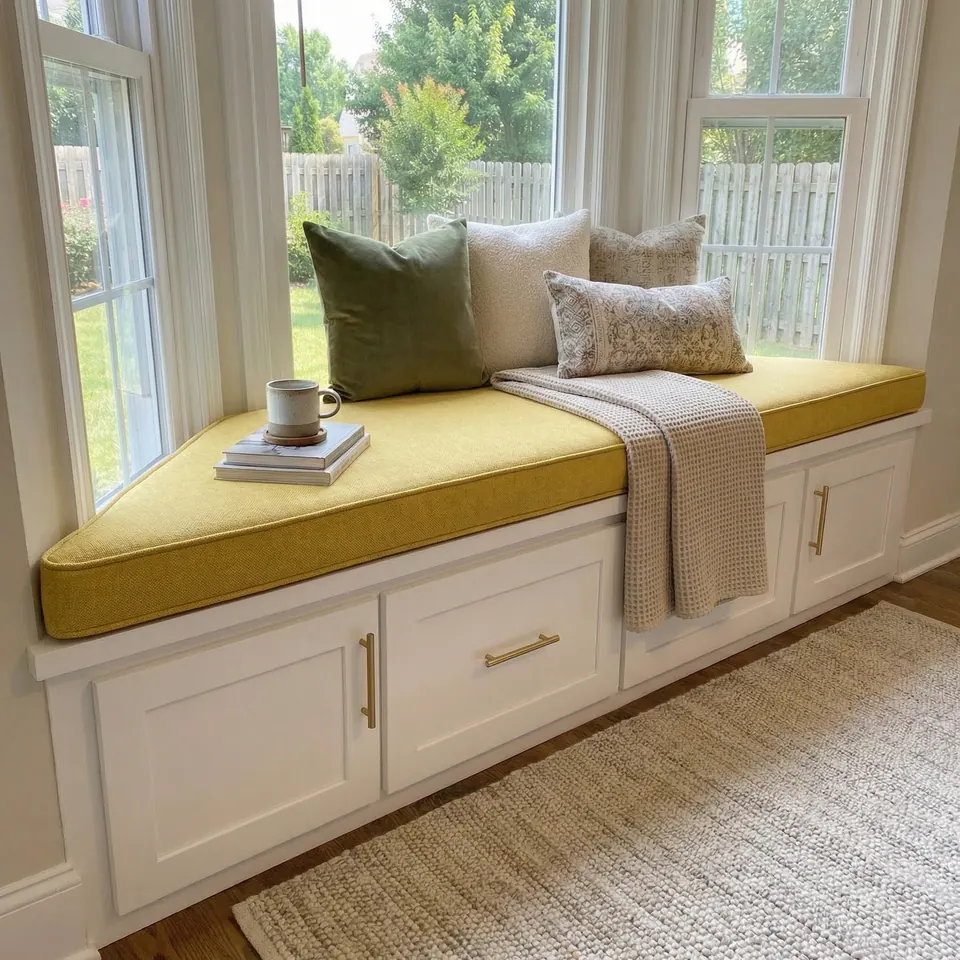
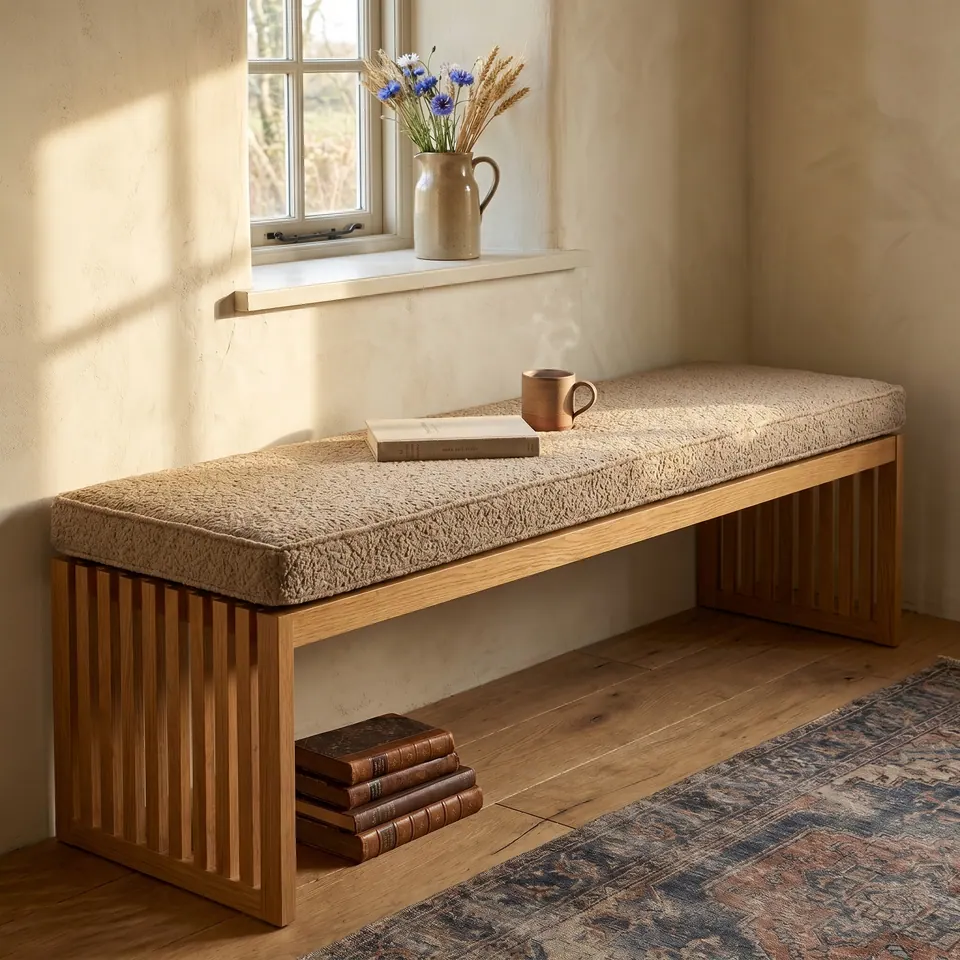
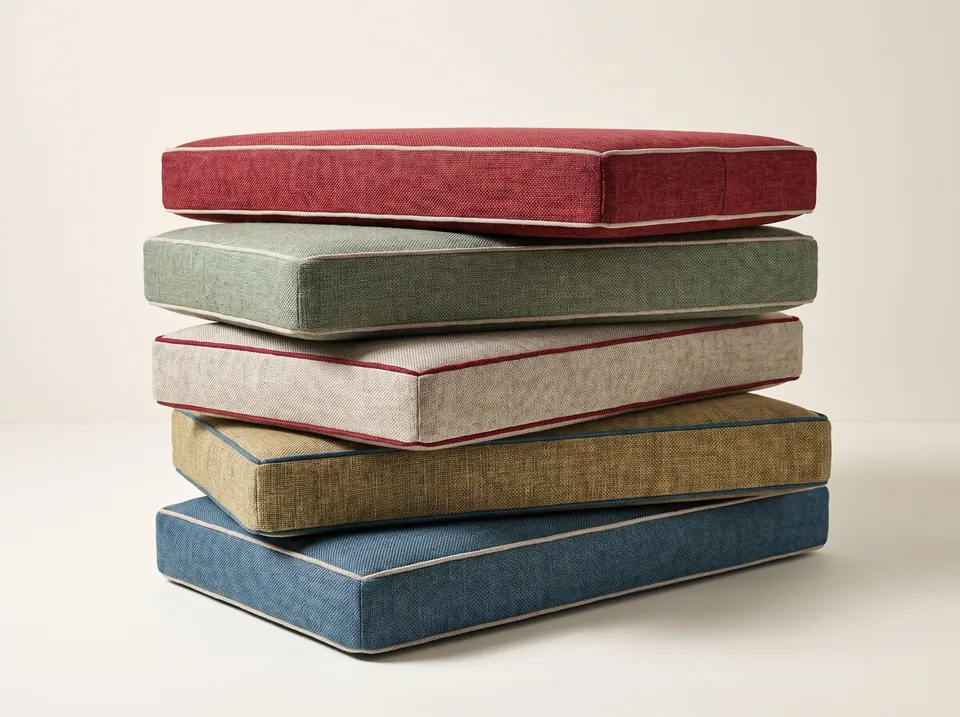
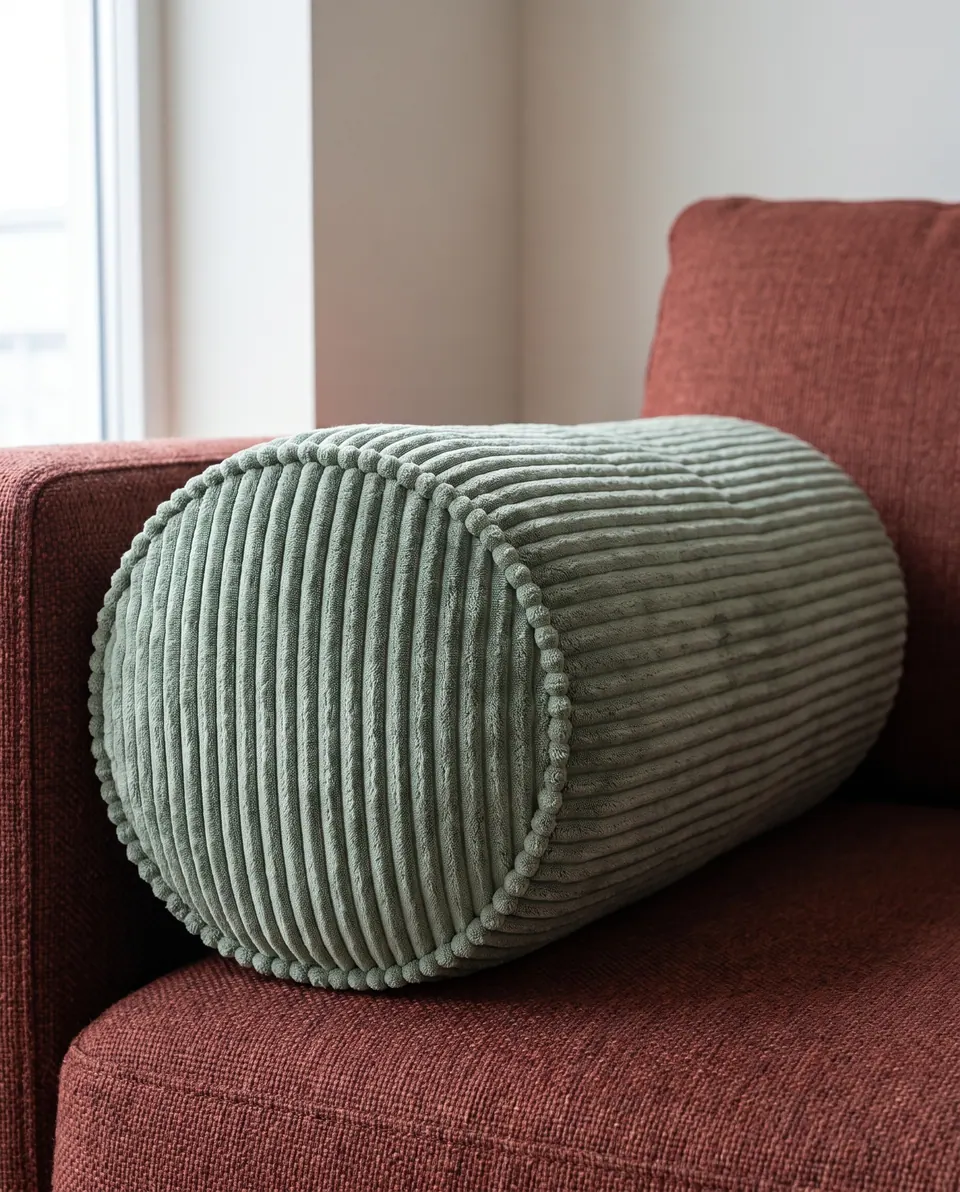
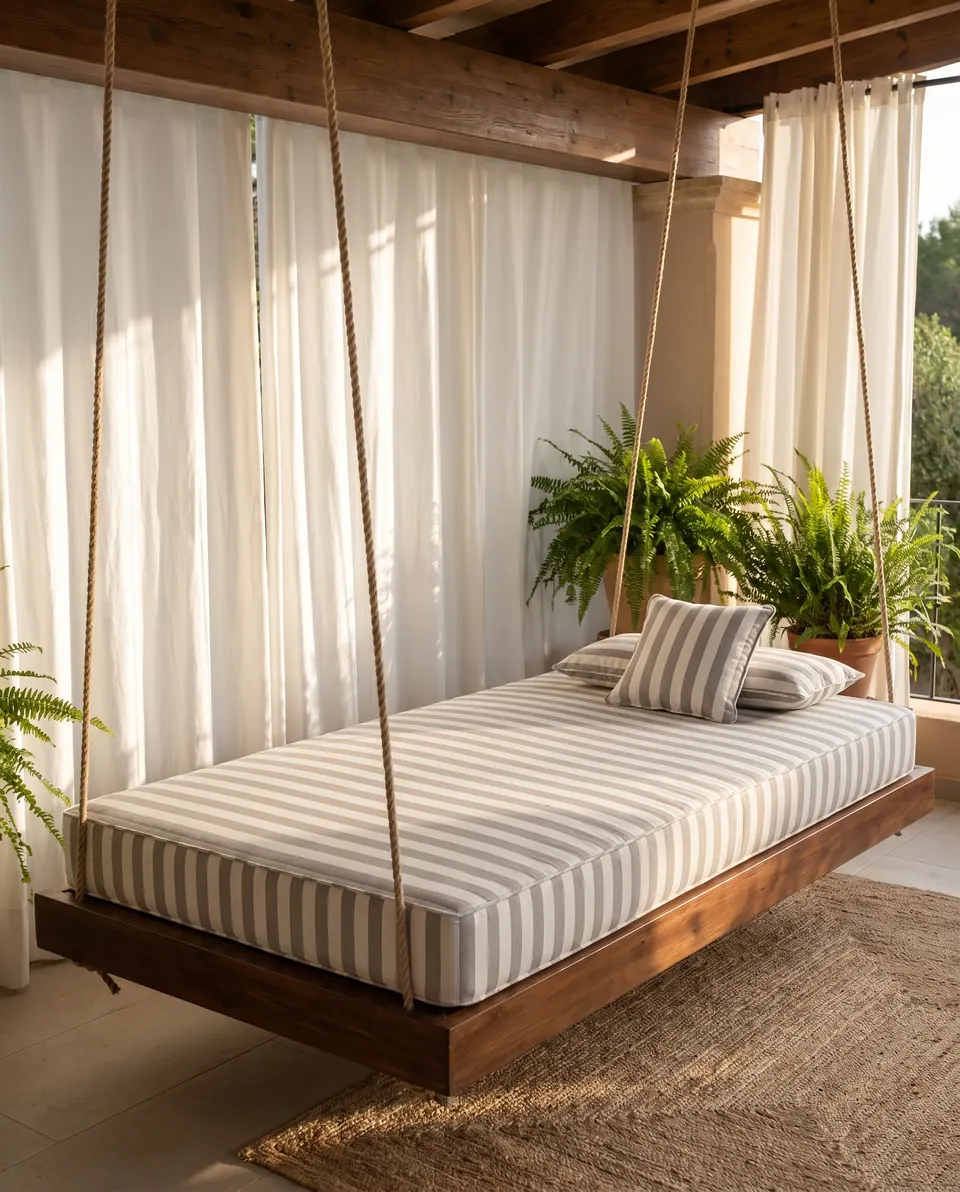
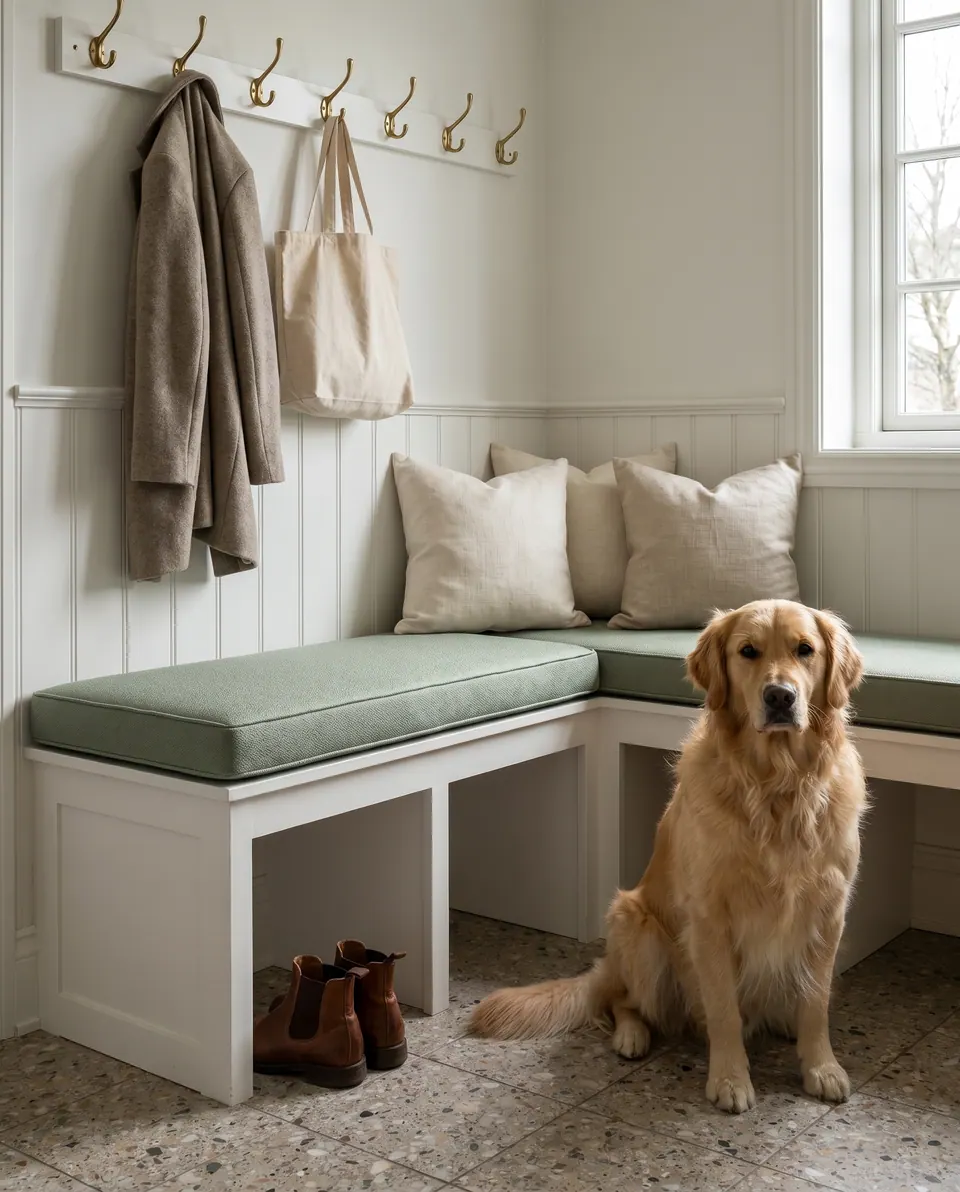
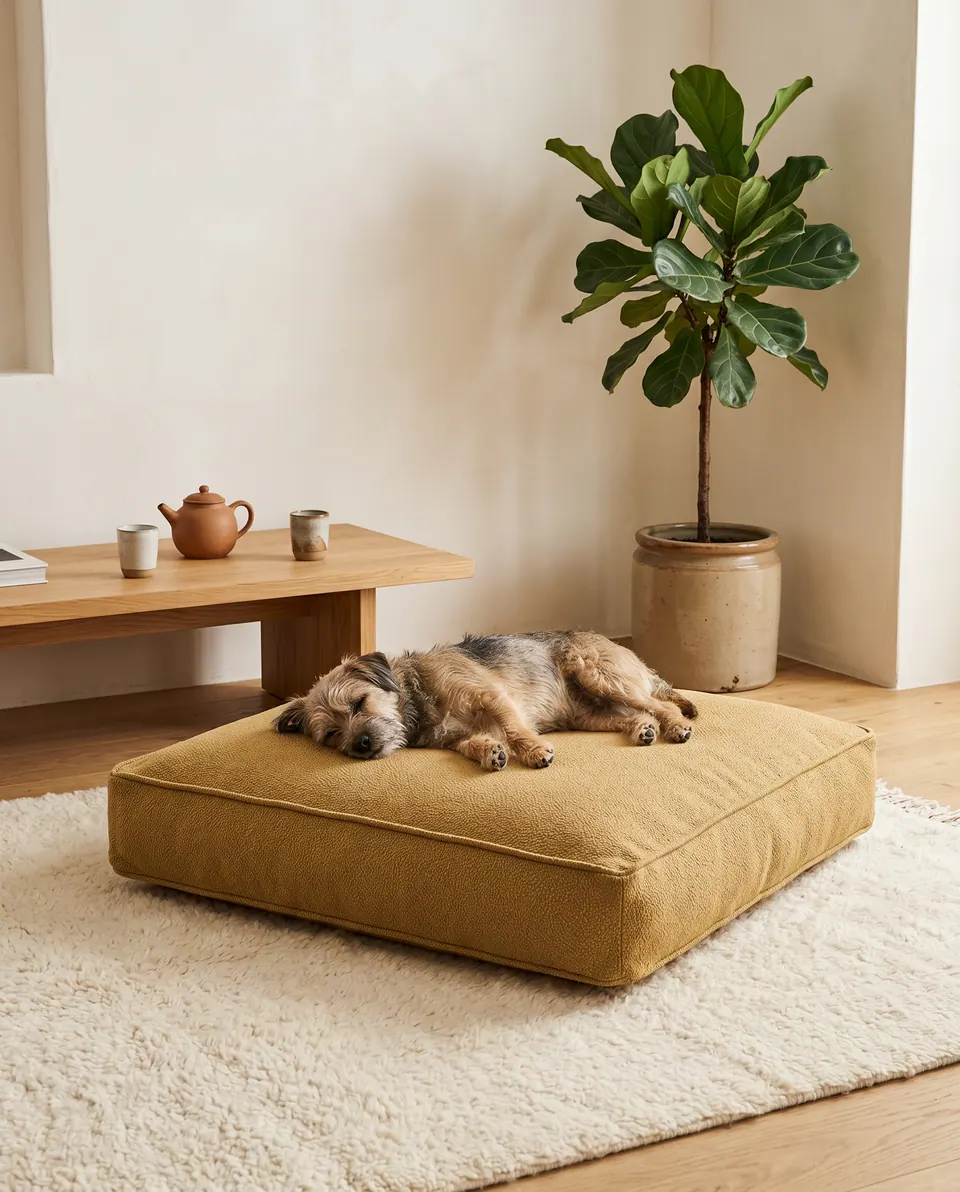
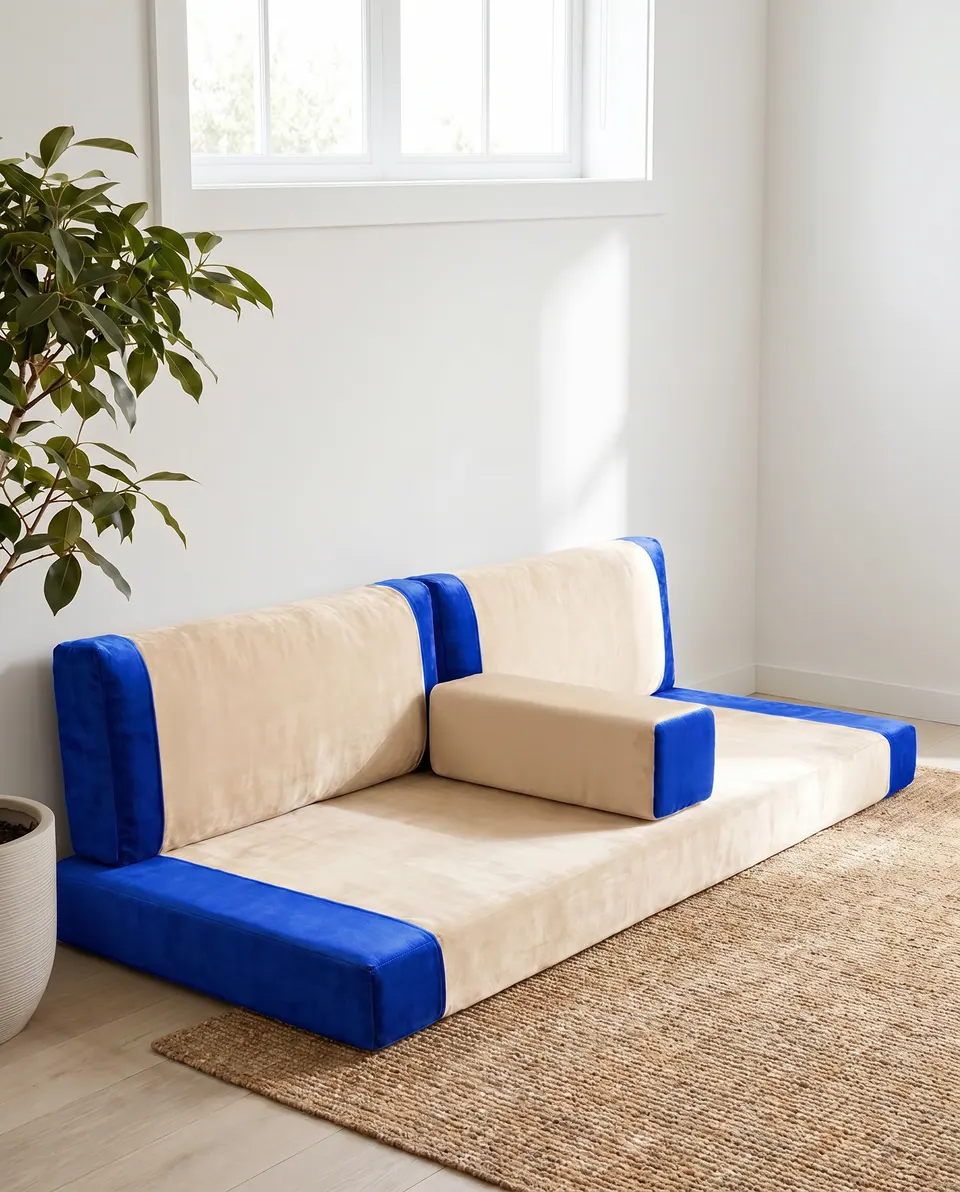
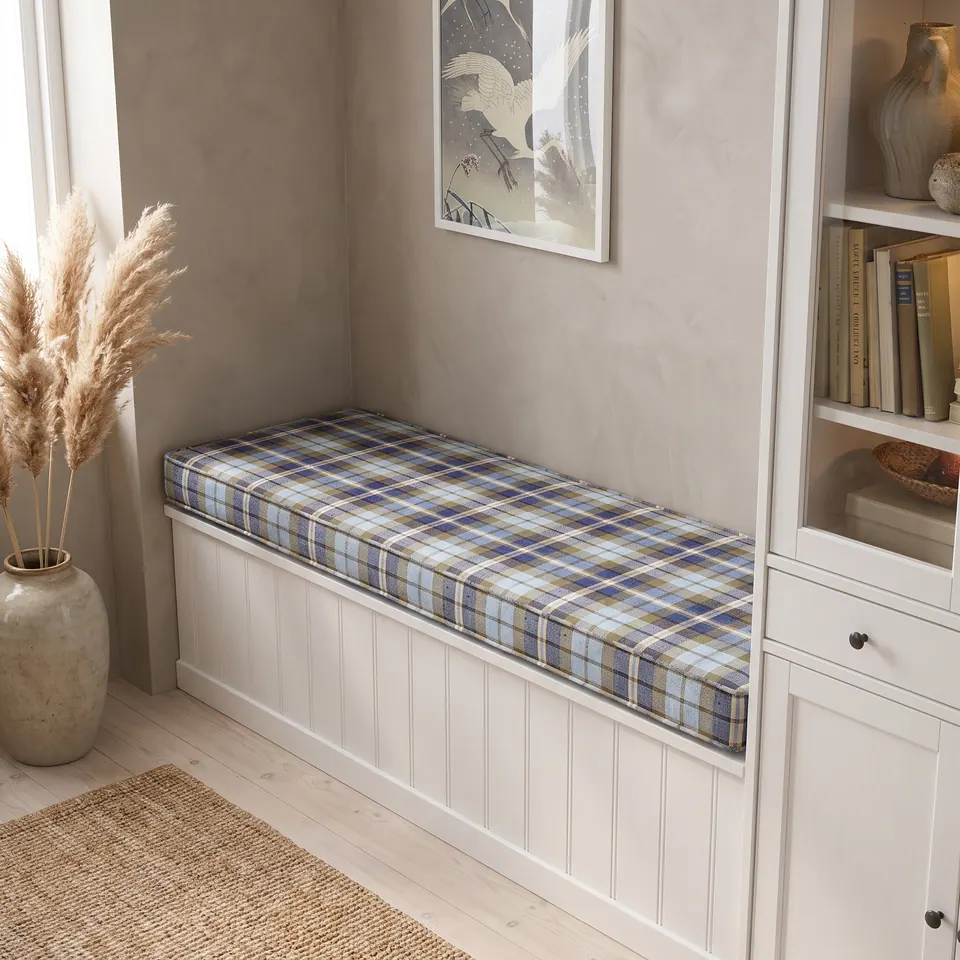
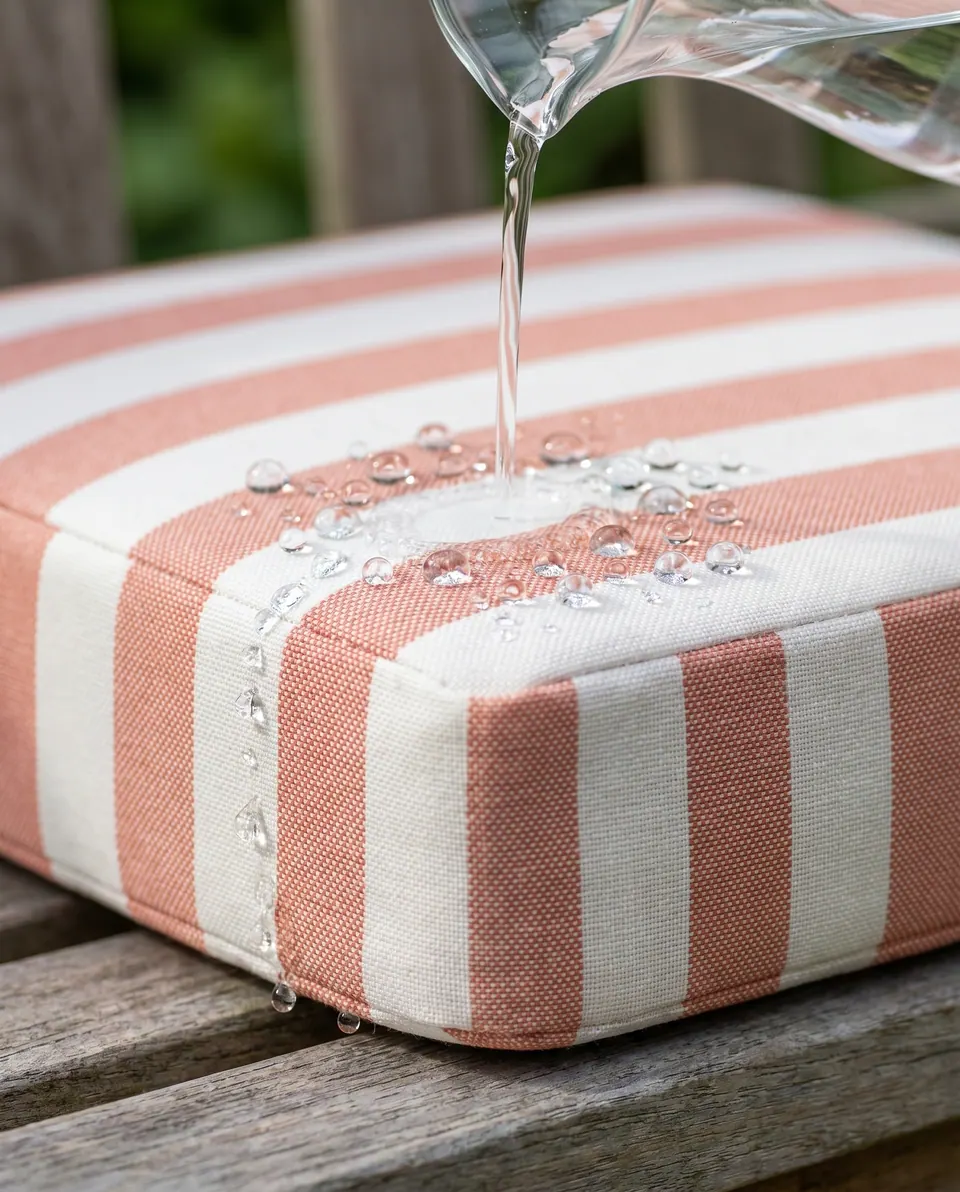
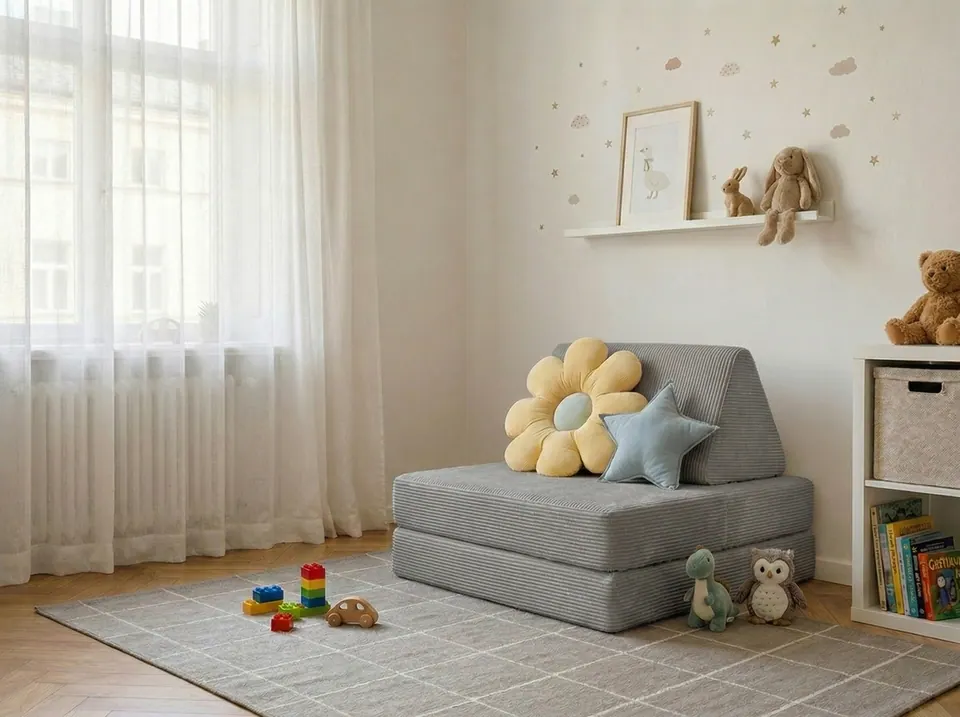
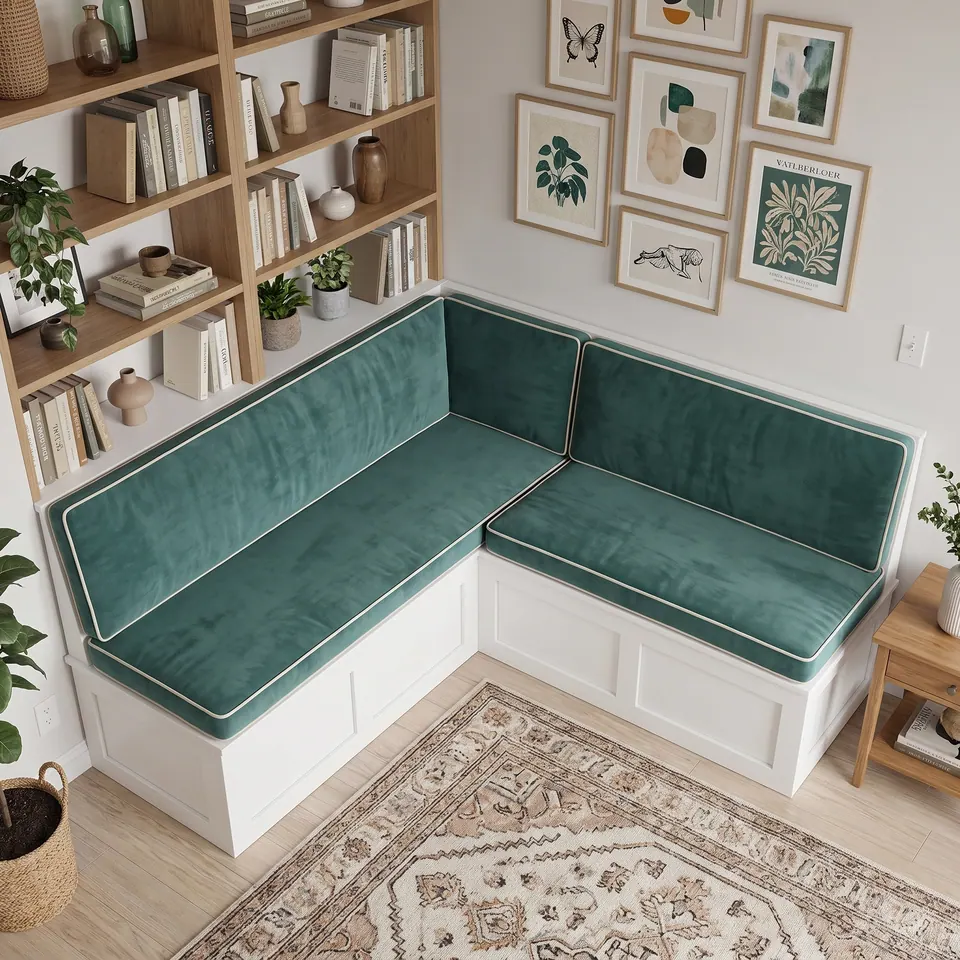
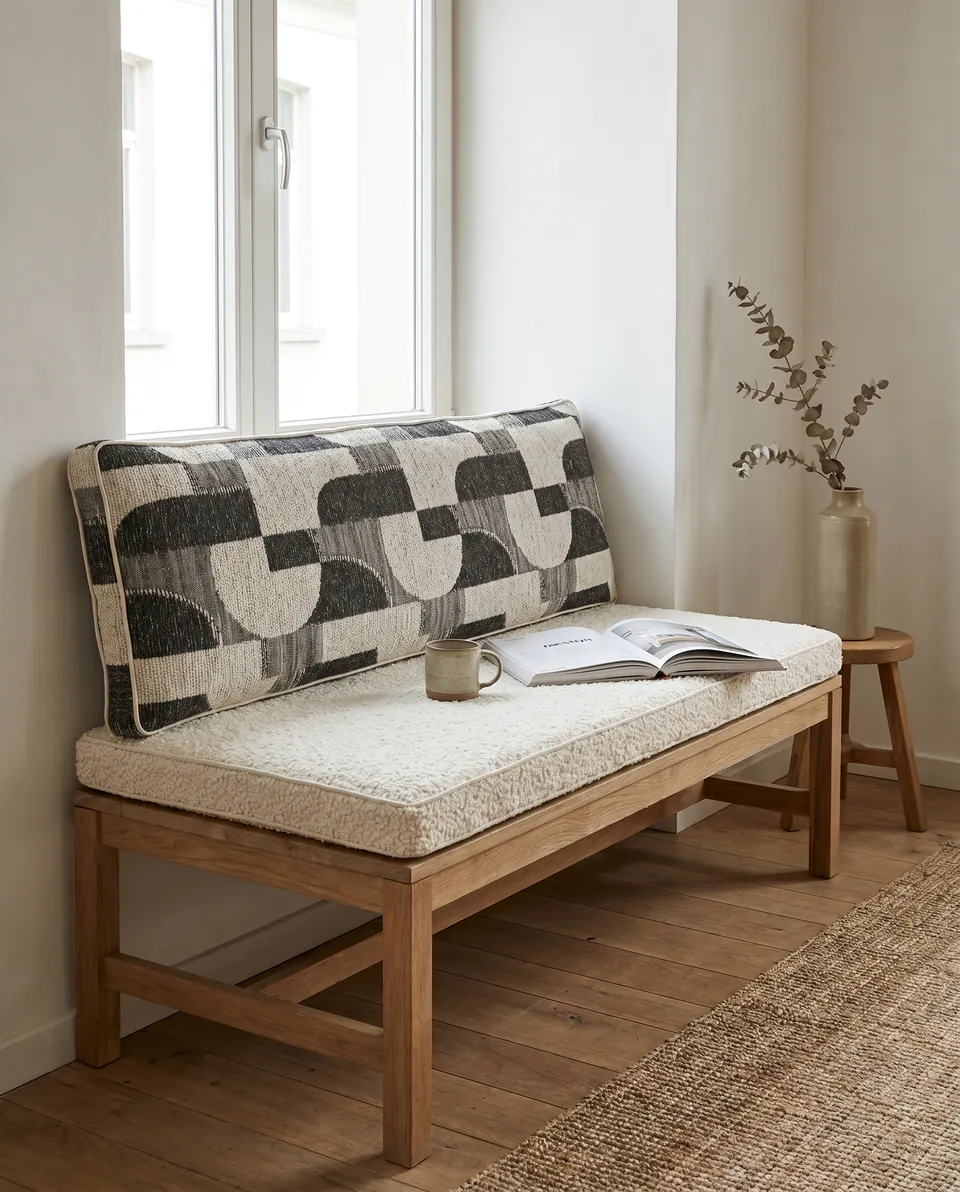
Series of real projects around one idea, told scene by scene: what the buyer had, what the workshop suggested, and the takeaway you can use on your own seat.
59 series
The quick answer
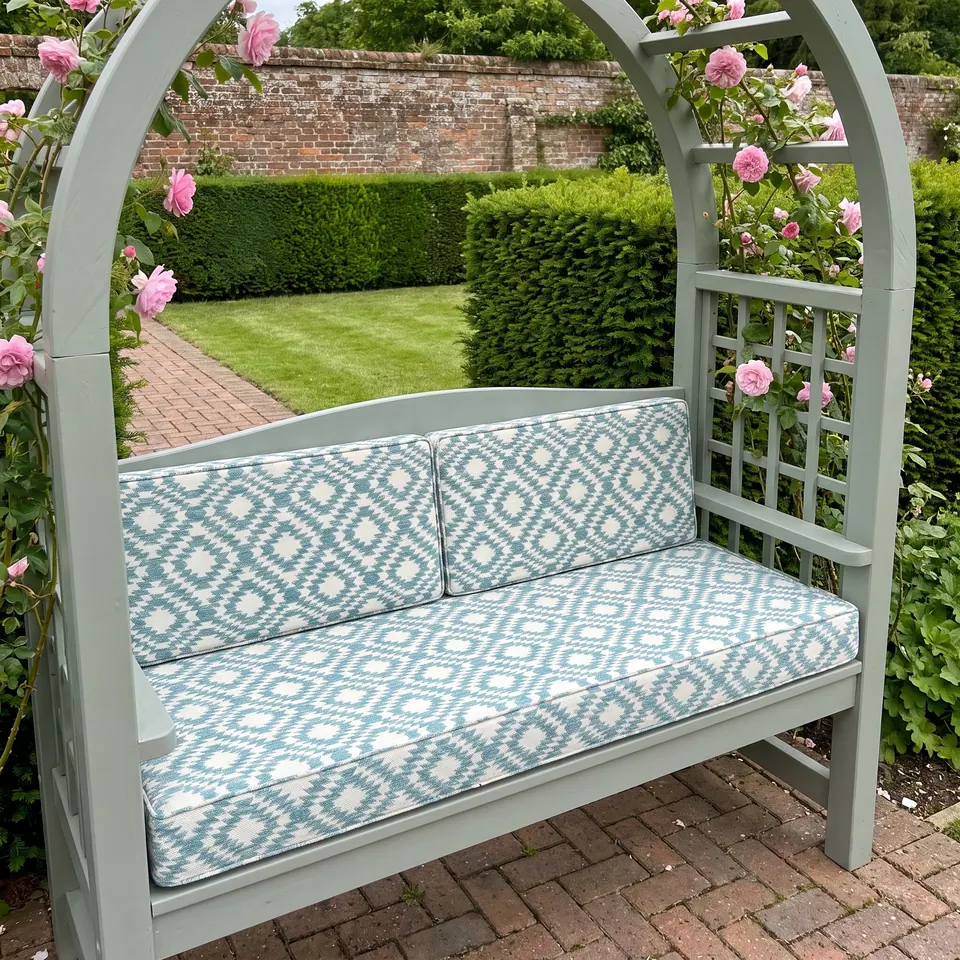
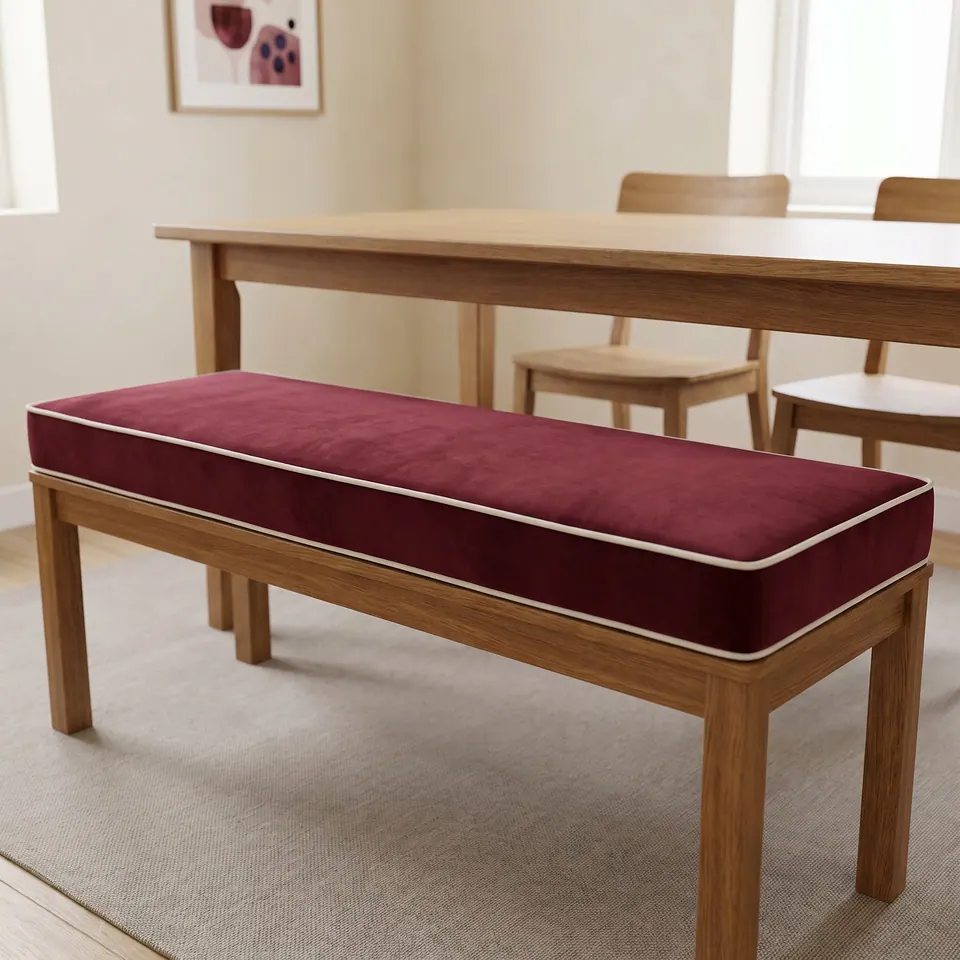
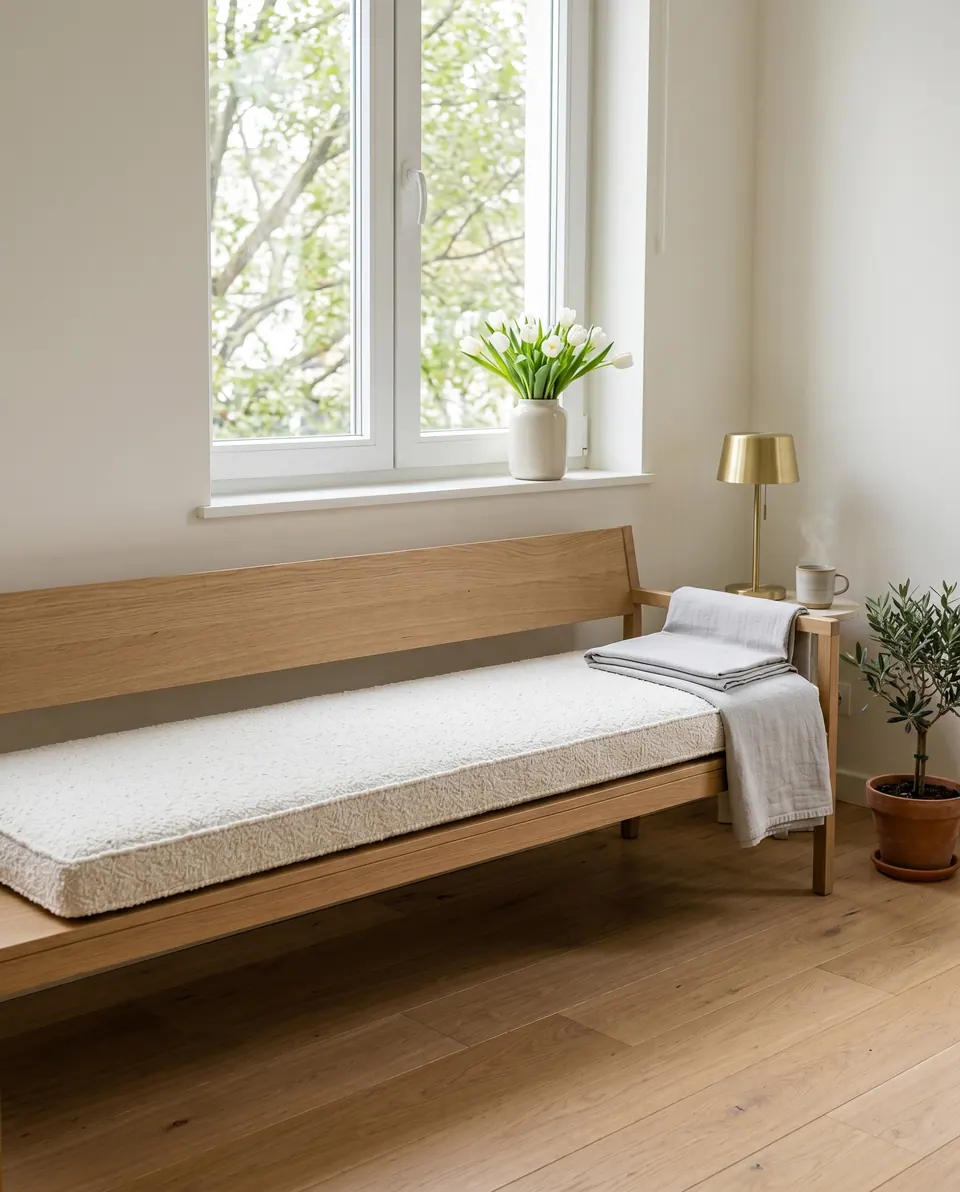
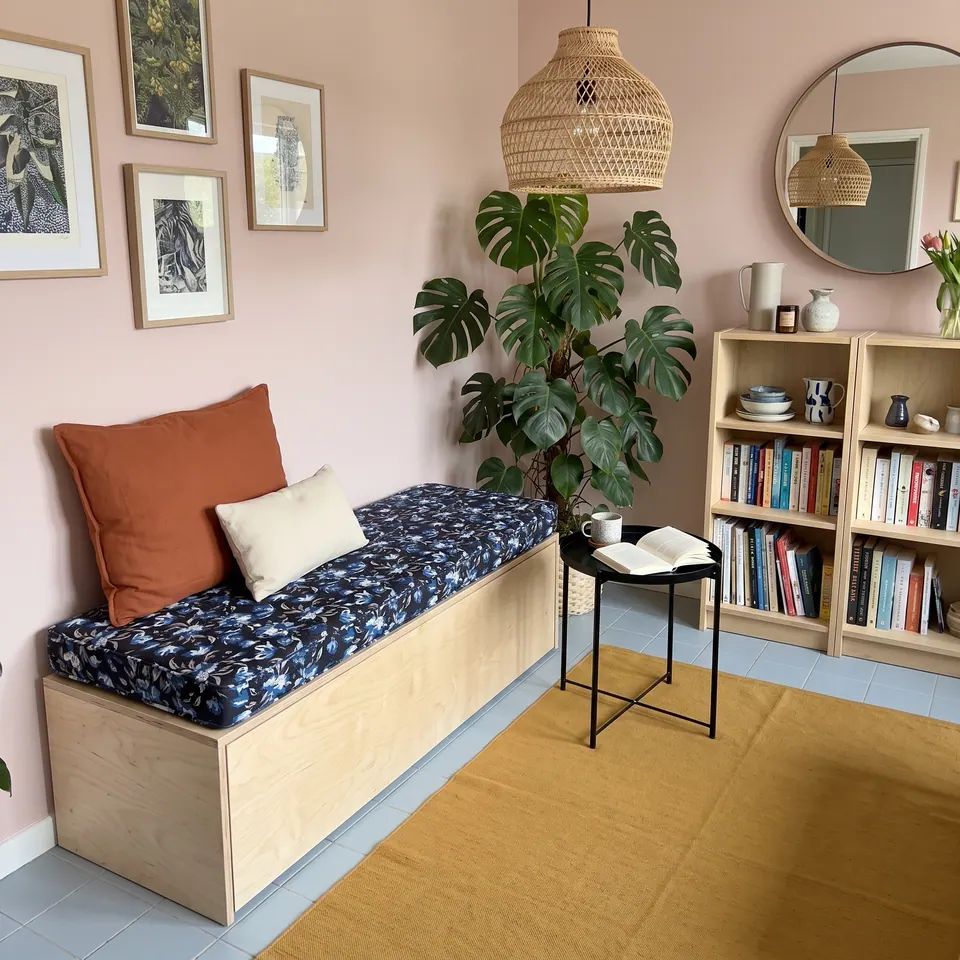
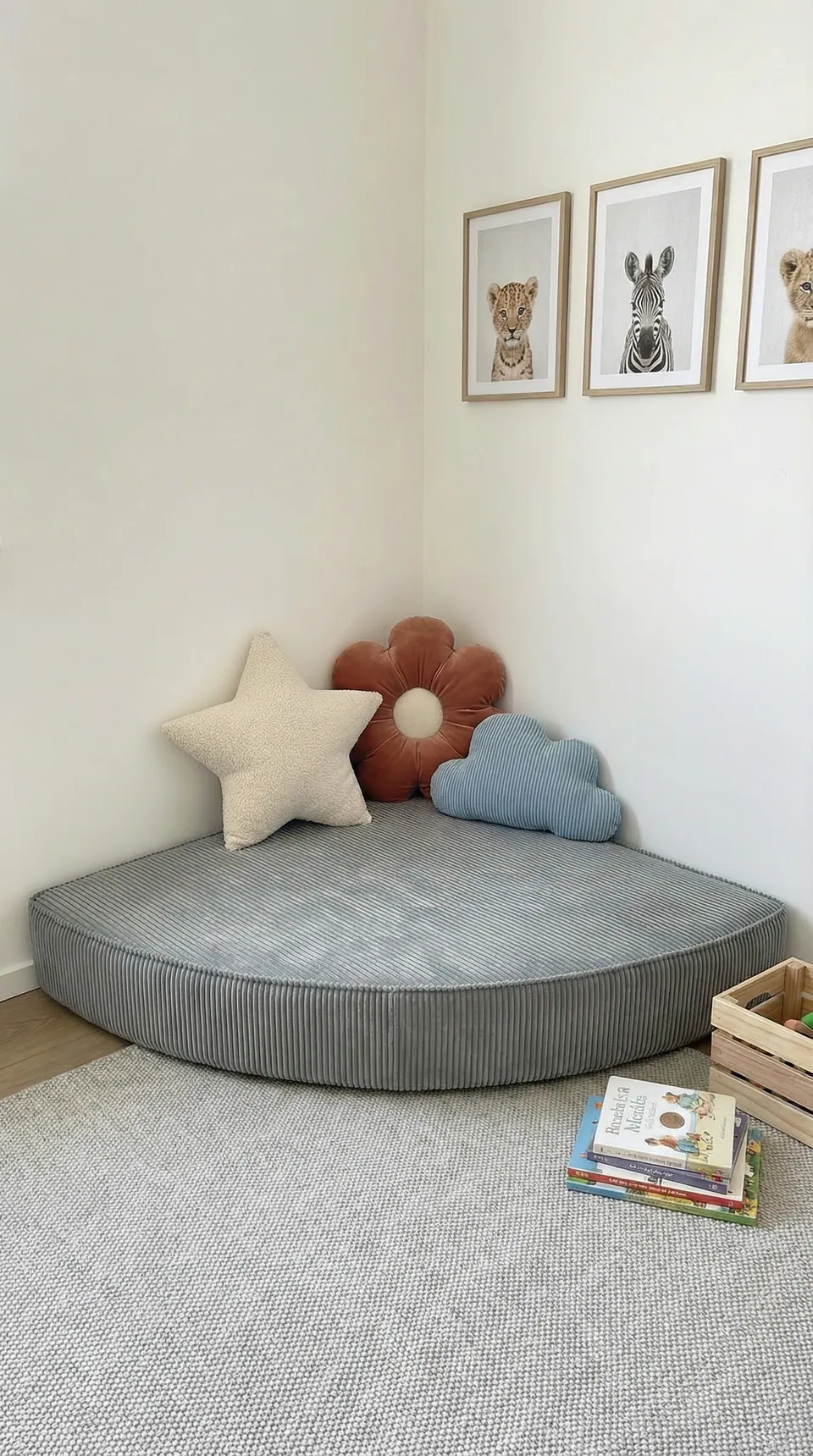
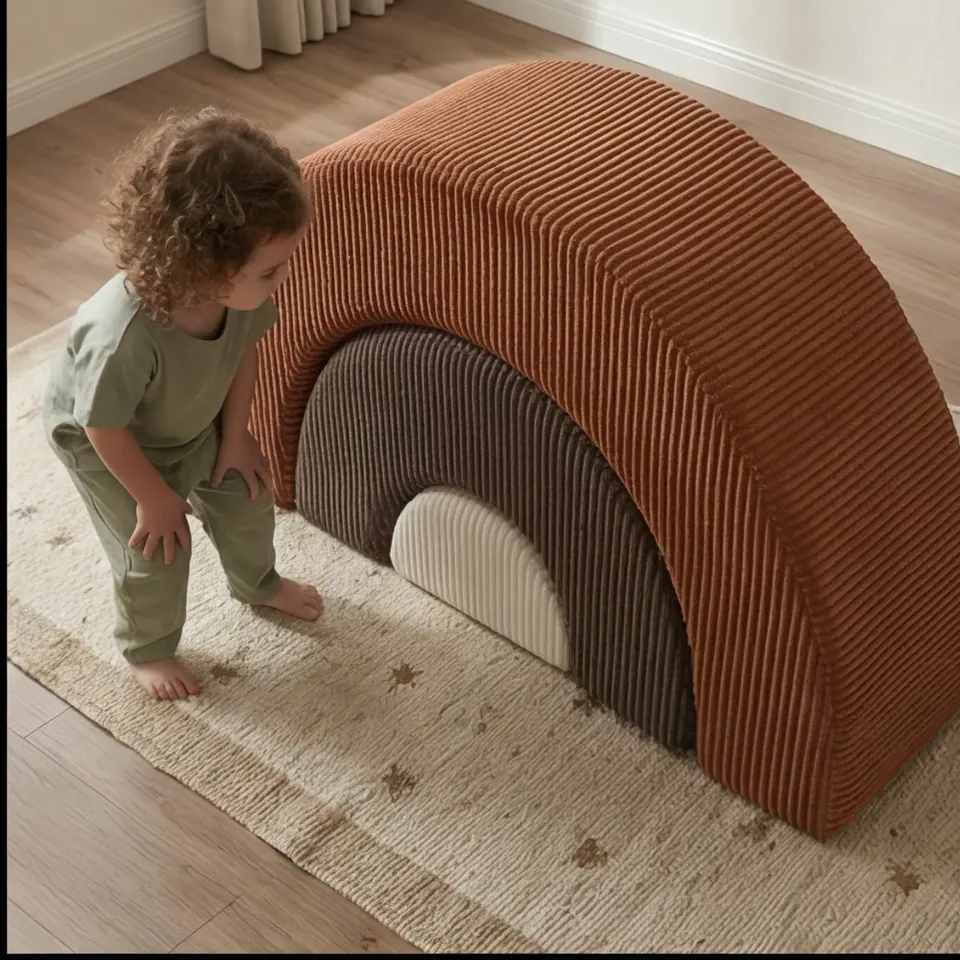
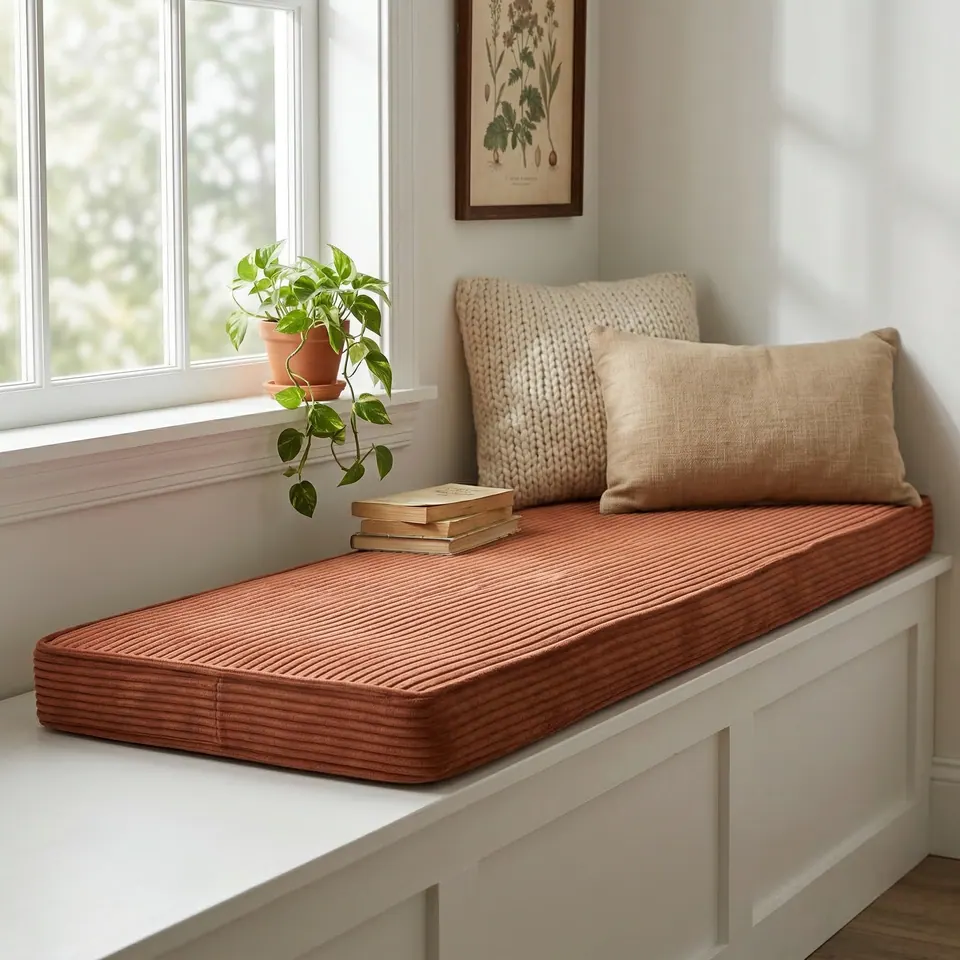
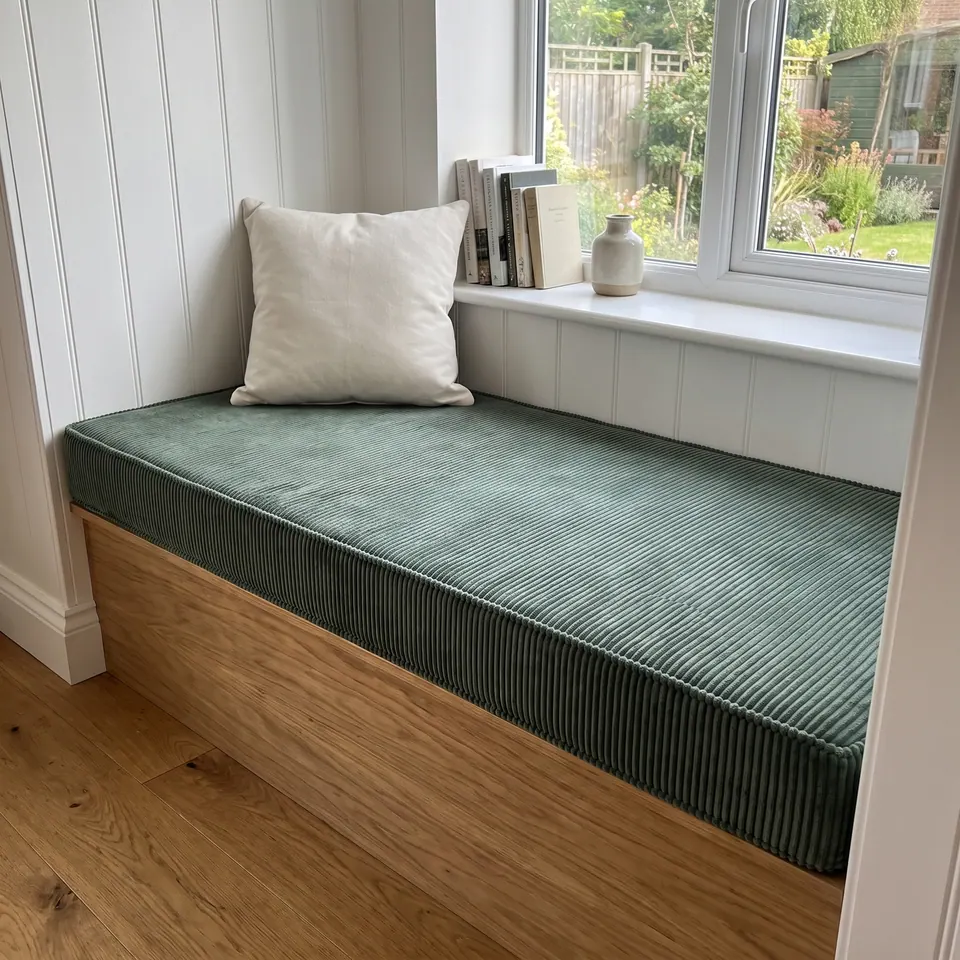
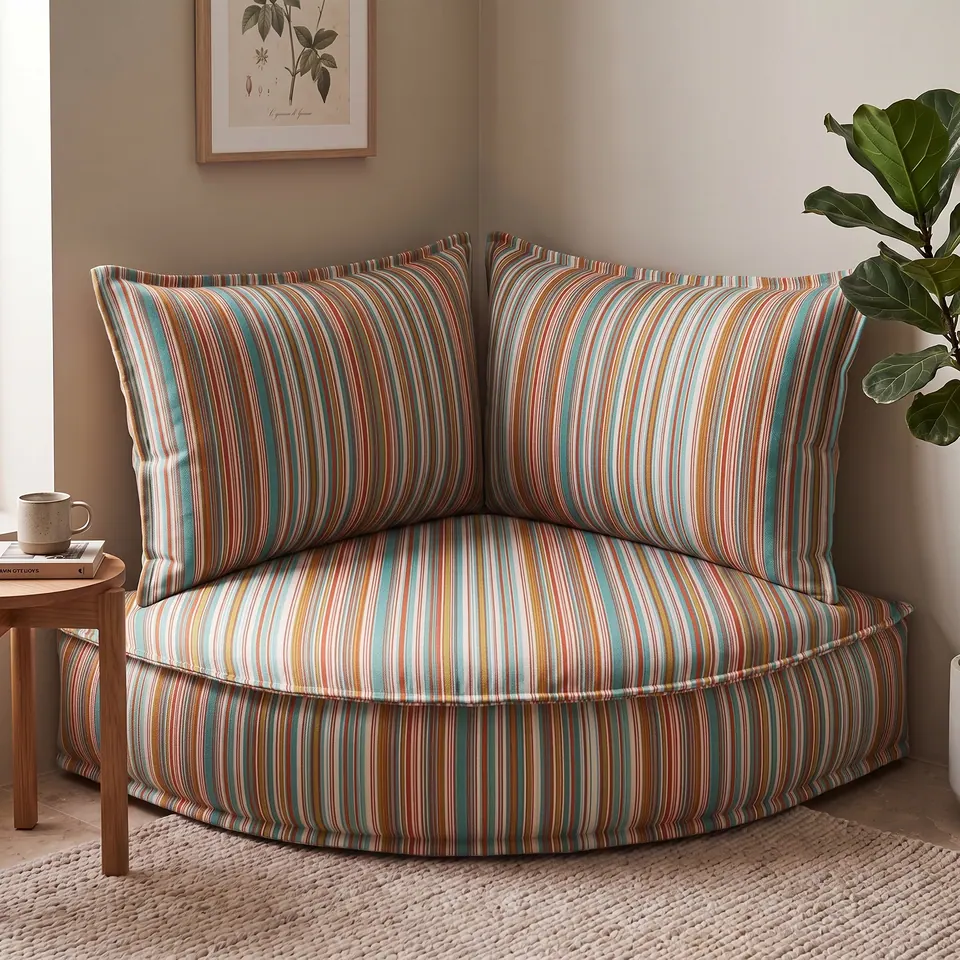
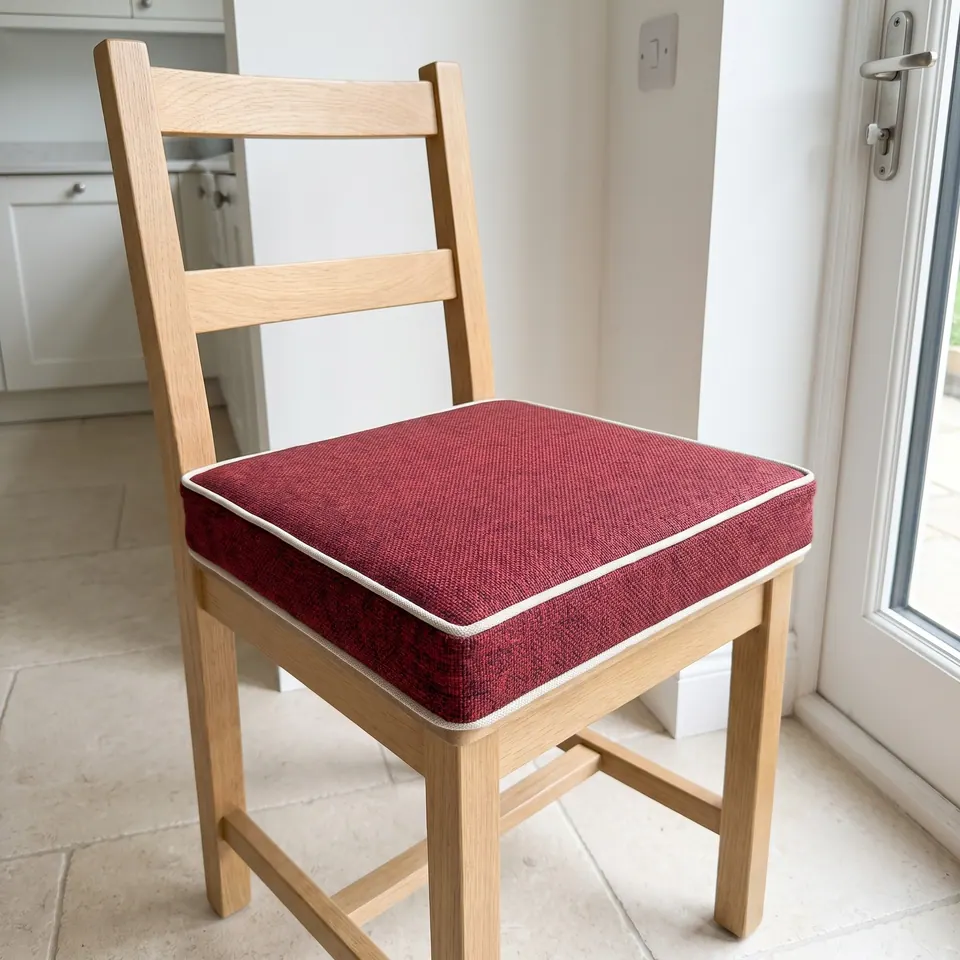
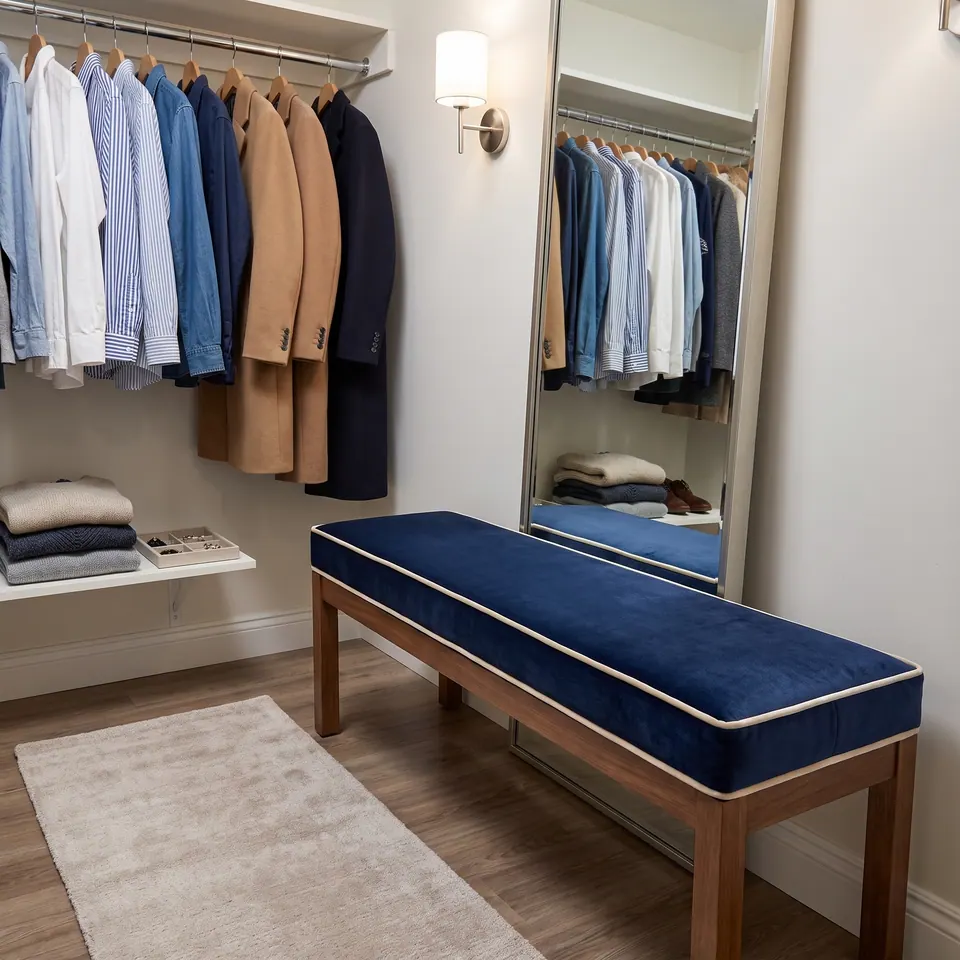
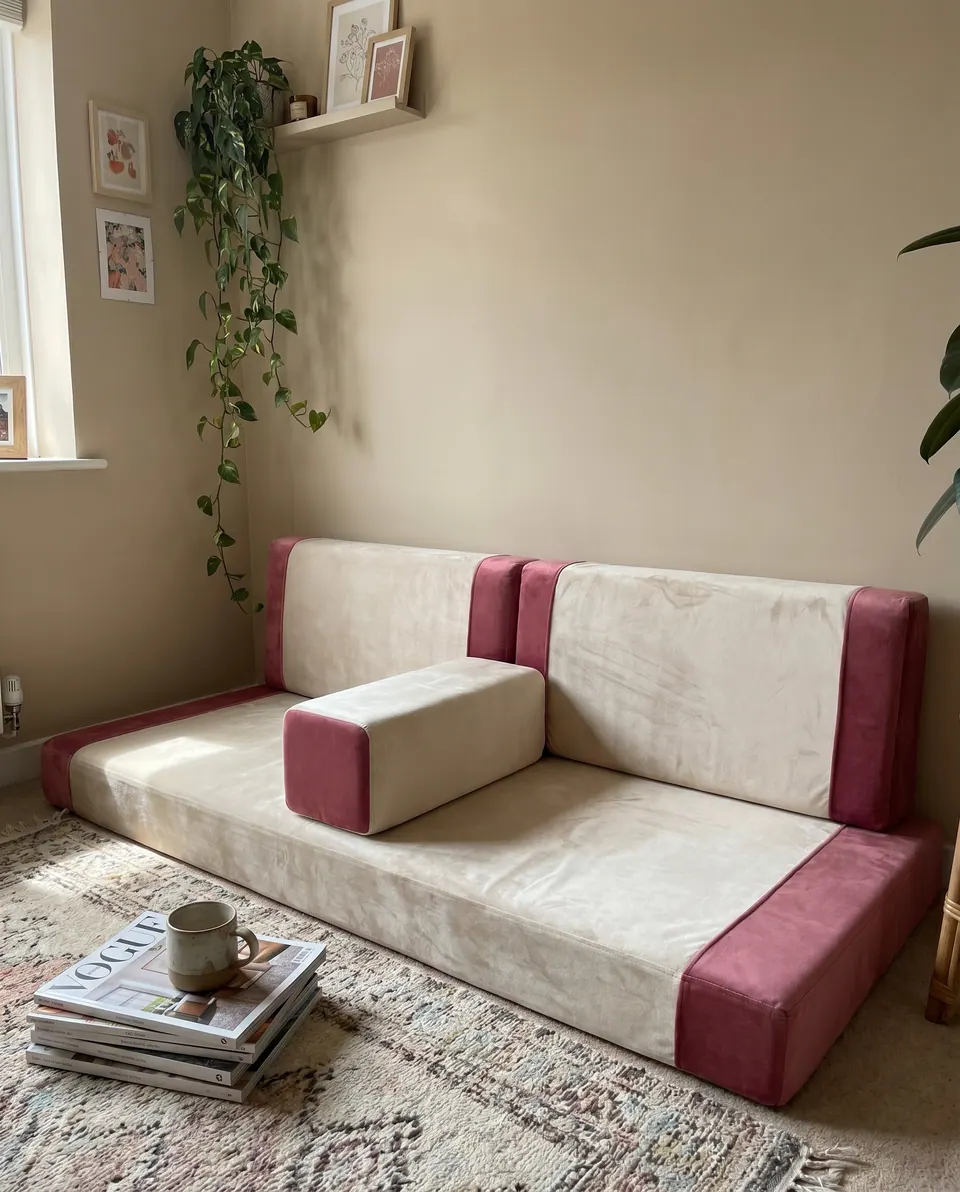
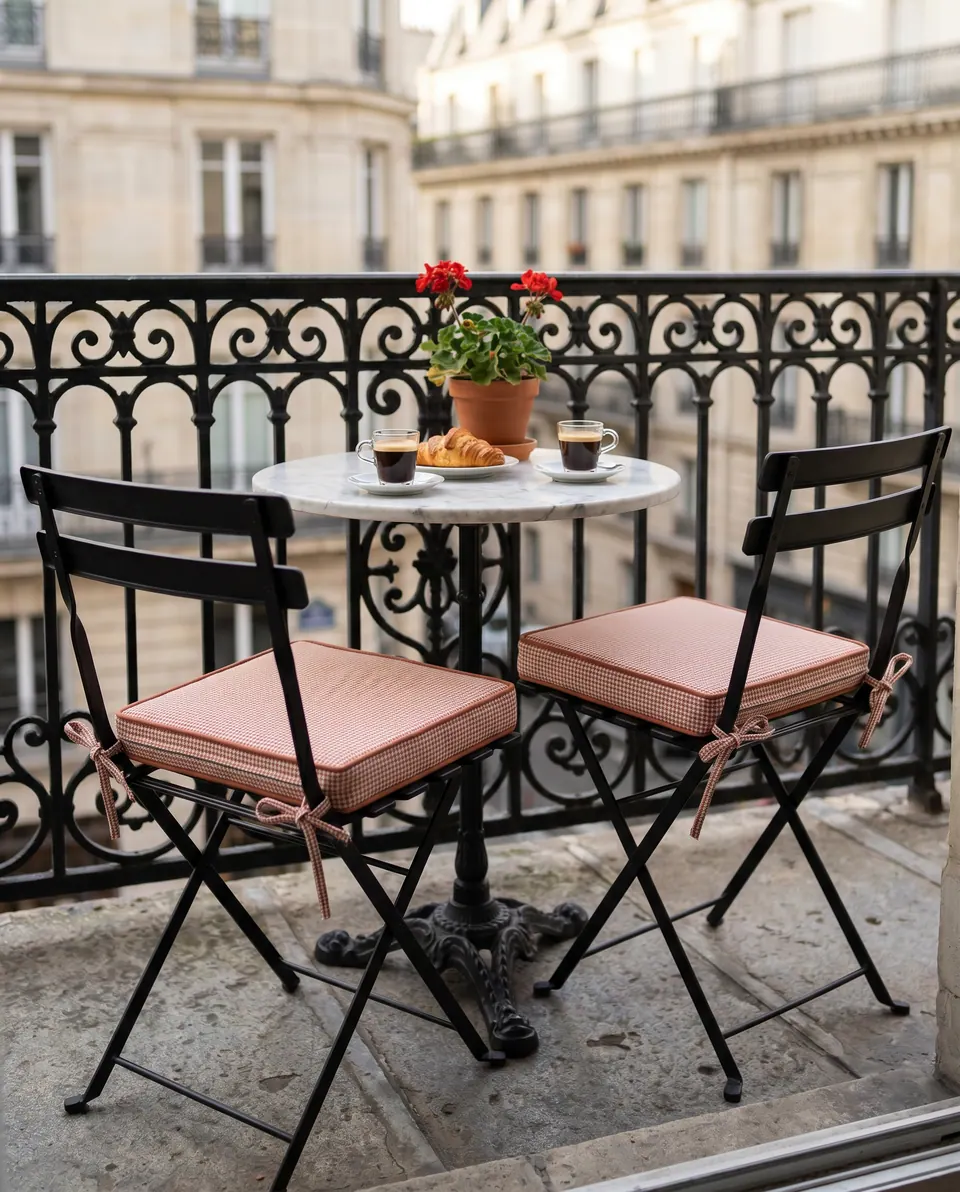
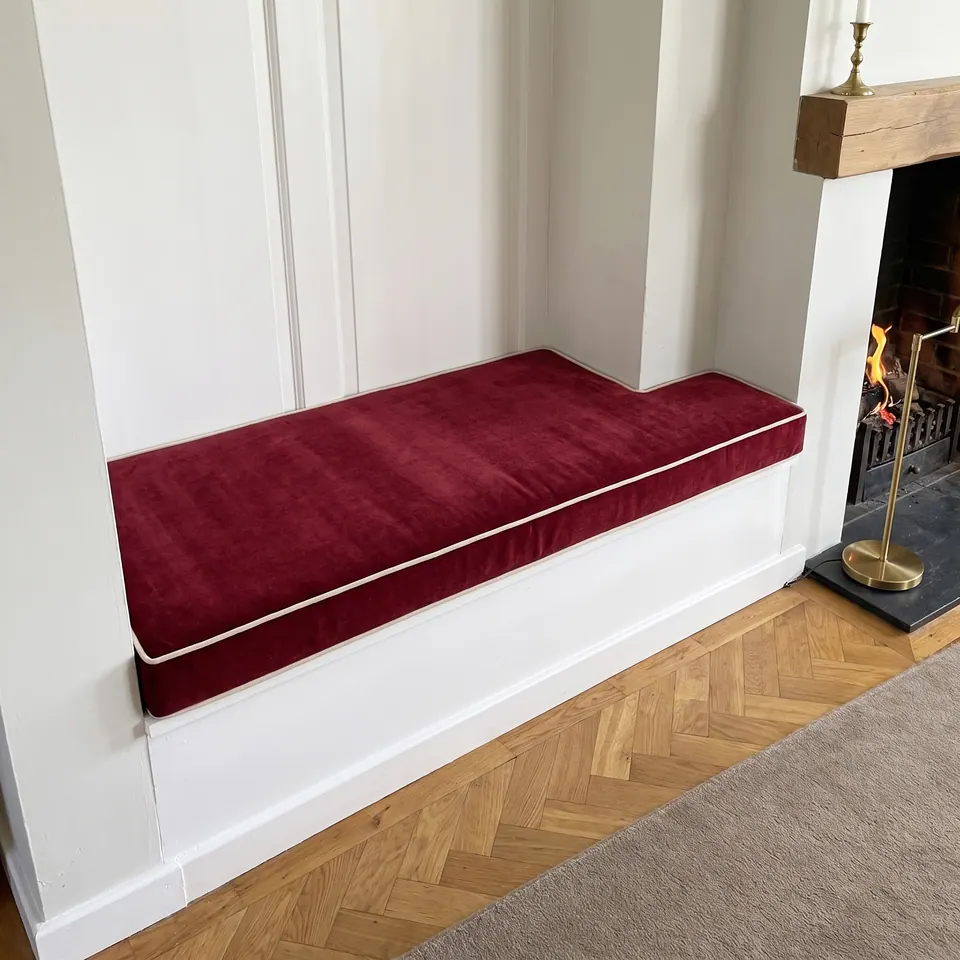
Concept Sketches are short series of real cushion projects grouped around one idea, such as a Victorian bay seat or a porch swing. Each scene retells a past project, shows the photograph, and ends with one practical takeaway and a tailor's margin note.
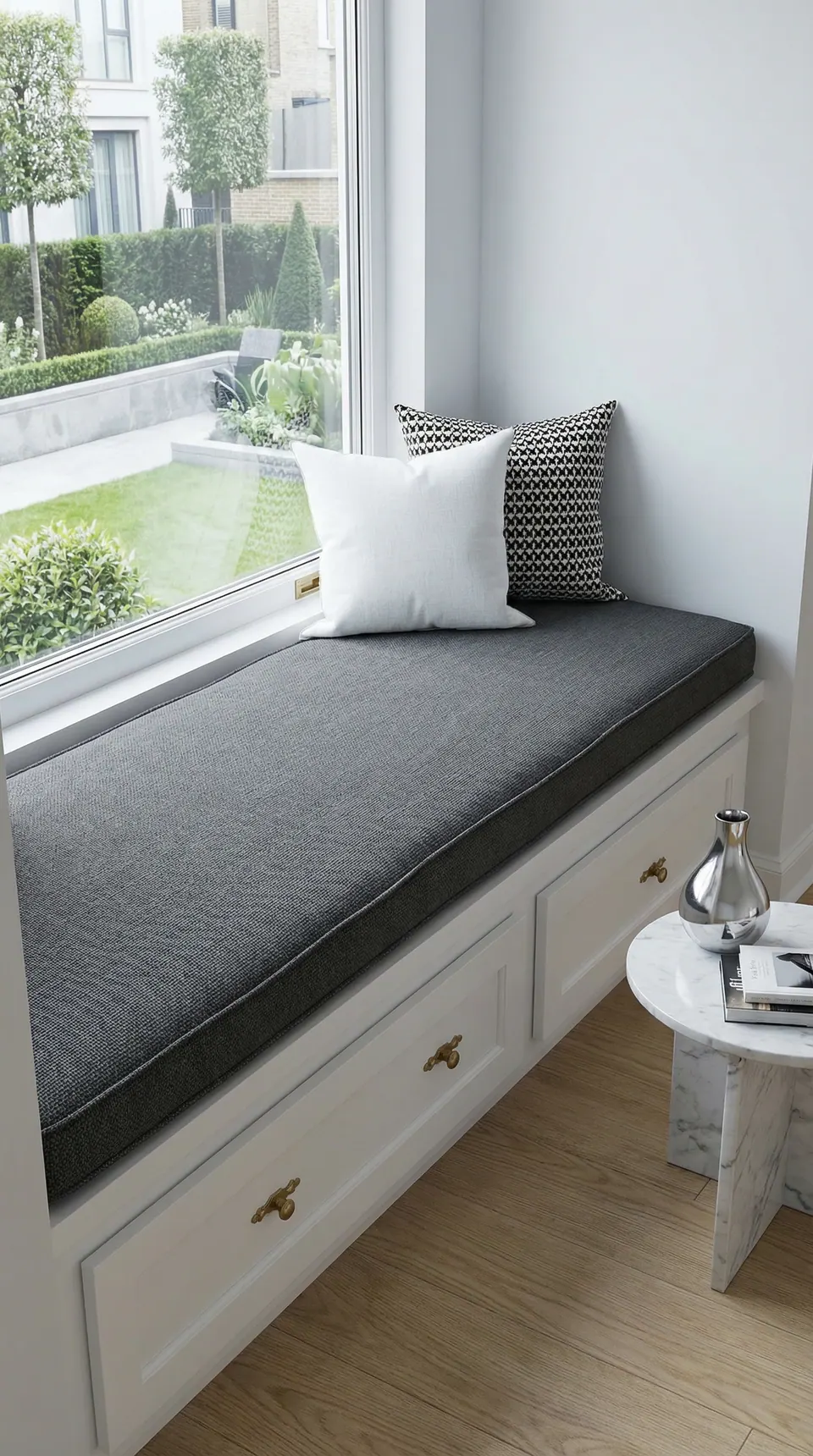
My bench is an odd shape. How do I send you the measurements?
The workshop's answer
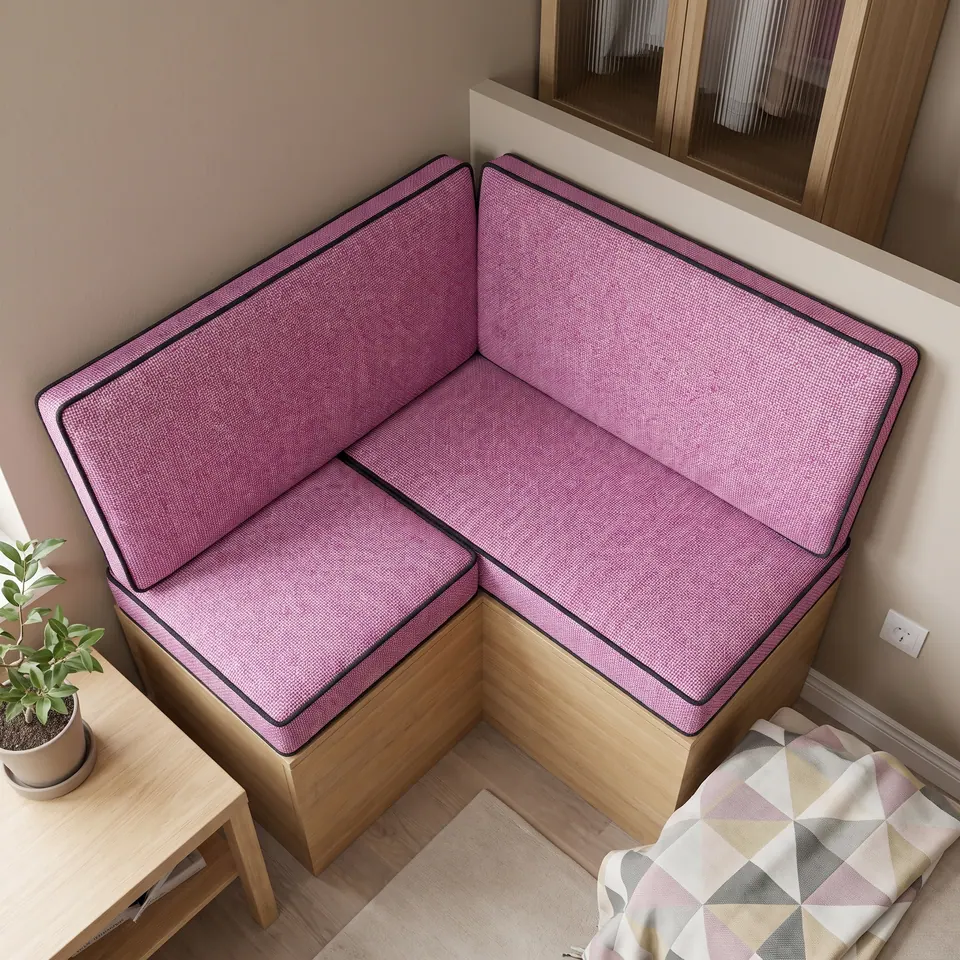
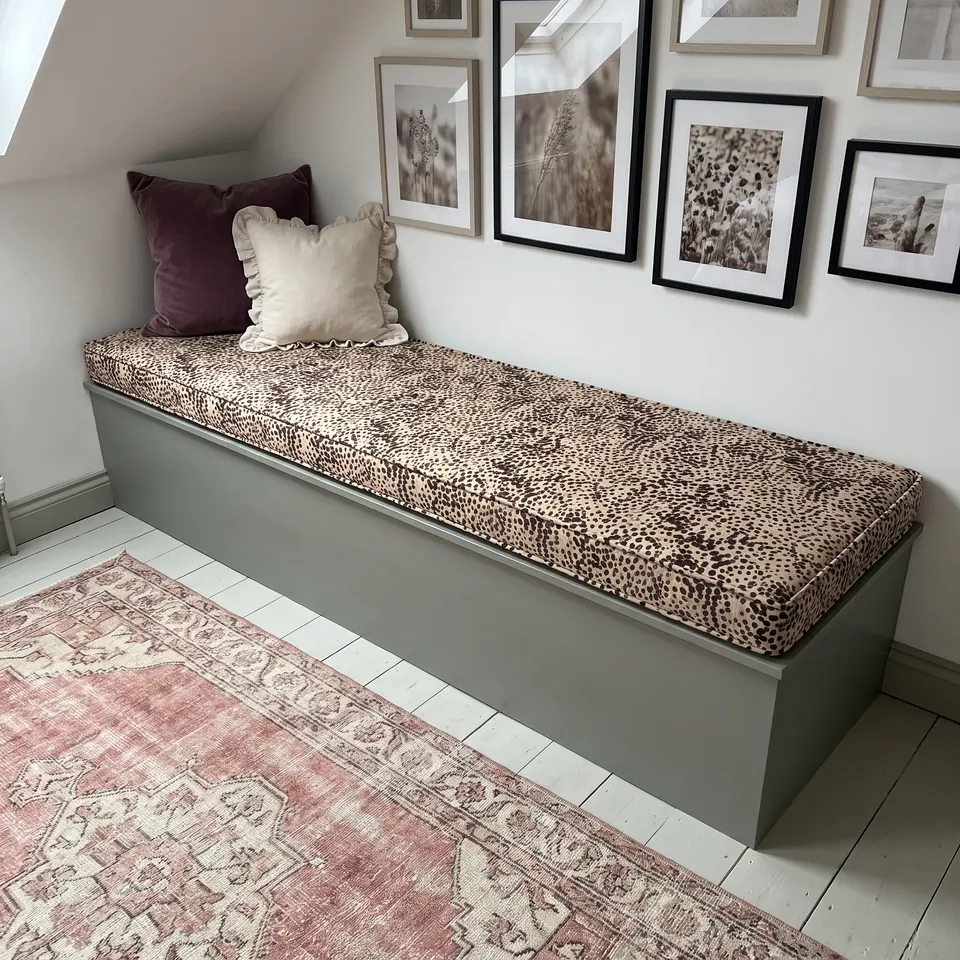
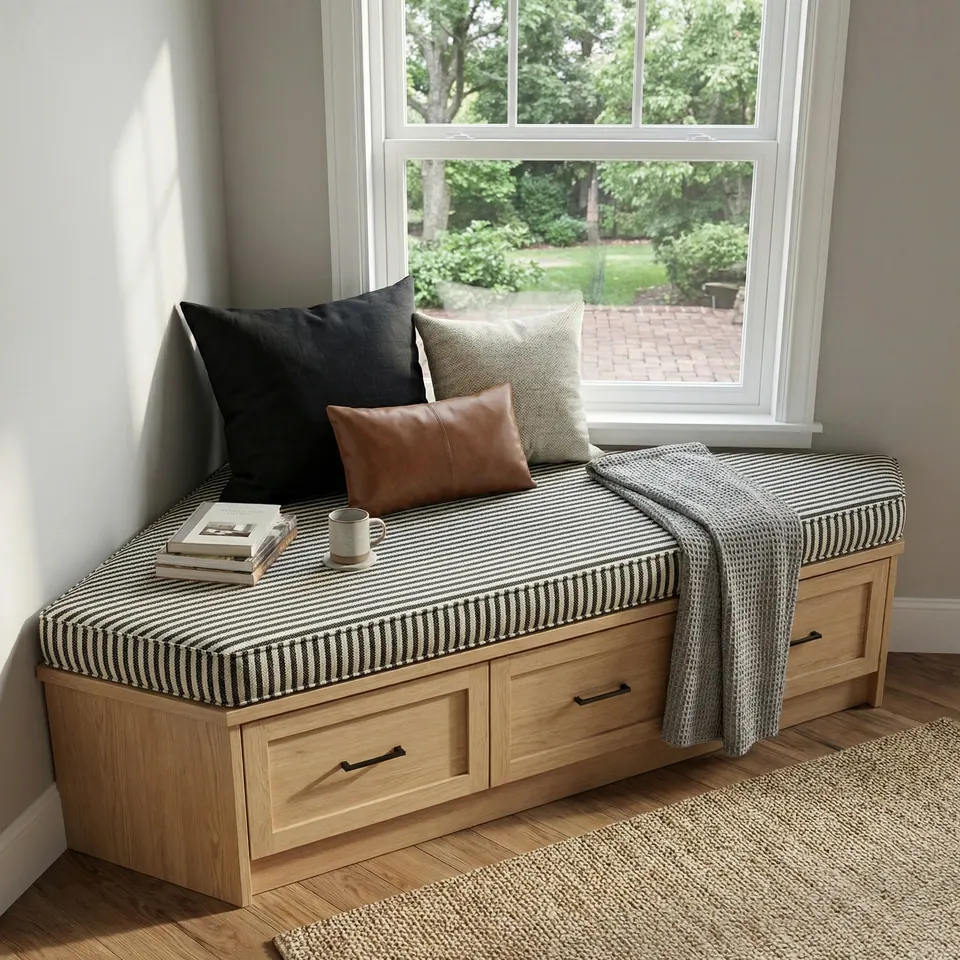
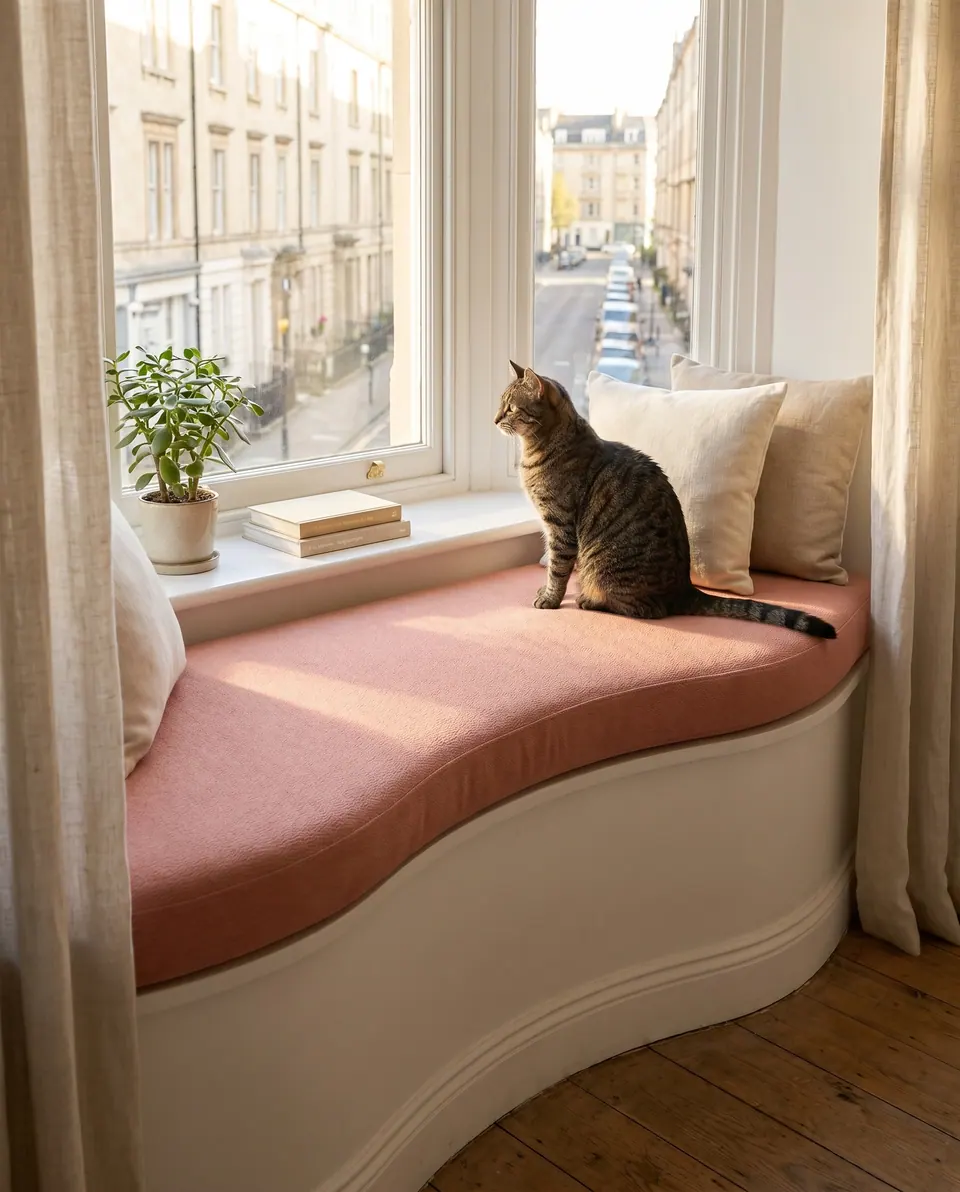
Send a photo of the space and a sketch on paper with every dimension written on it. Labeling the sides A, B, C works well, and for a back cushion add the wall height above the seat. Mention any trim or wood that sticks out, and the narrowest and widest points if the space is uneven. For complex pieces the workshop sends back its own drawing and waits for your OK before production.
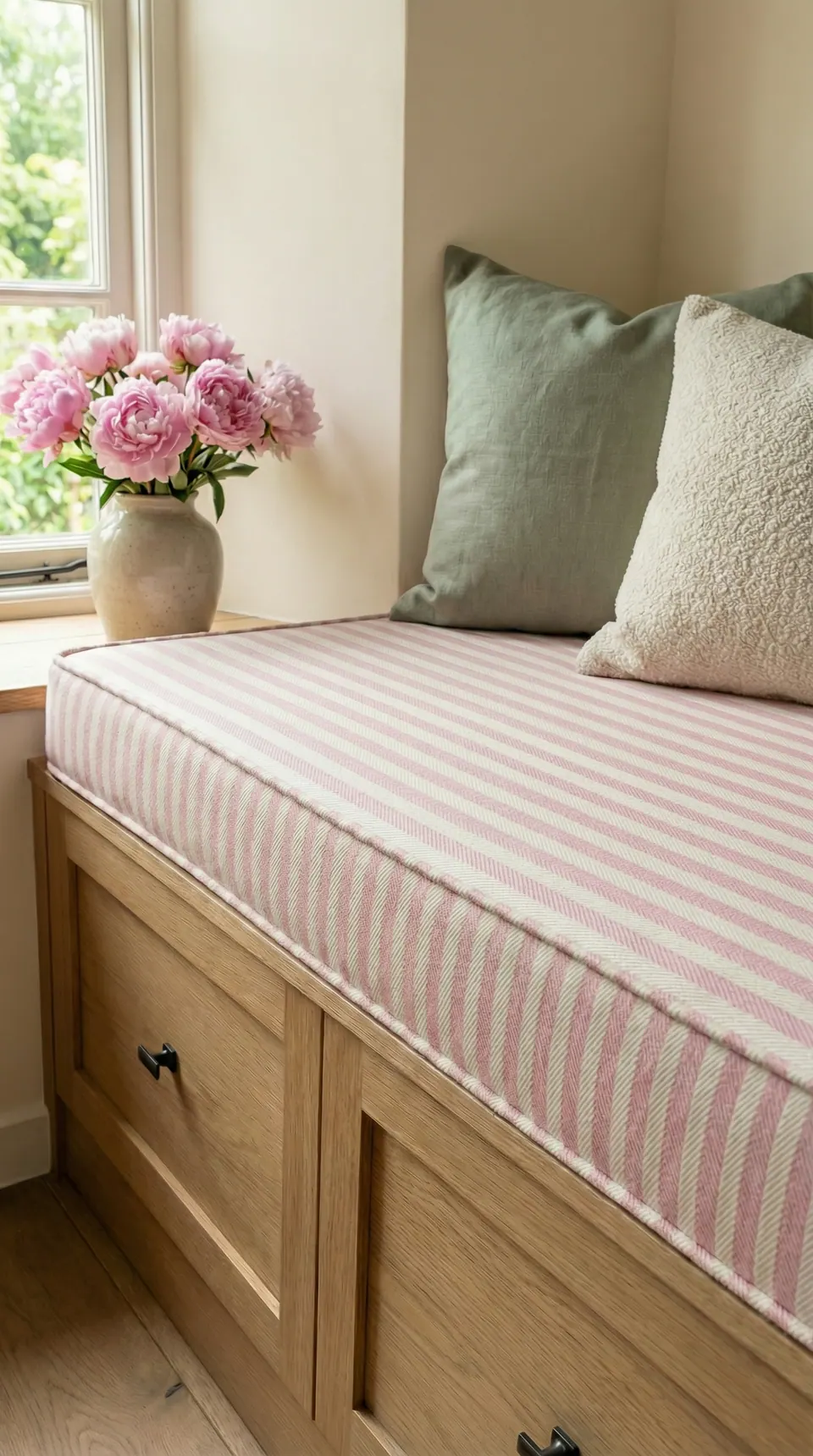
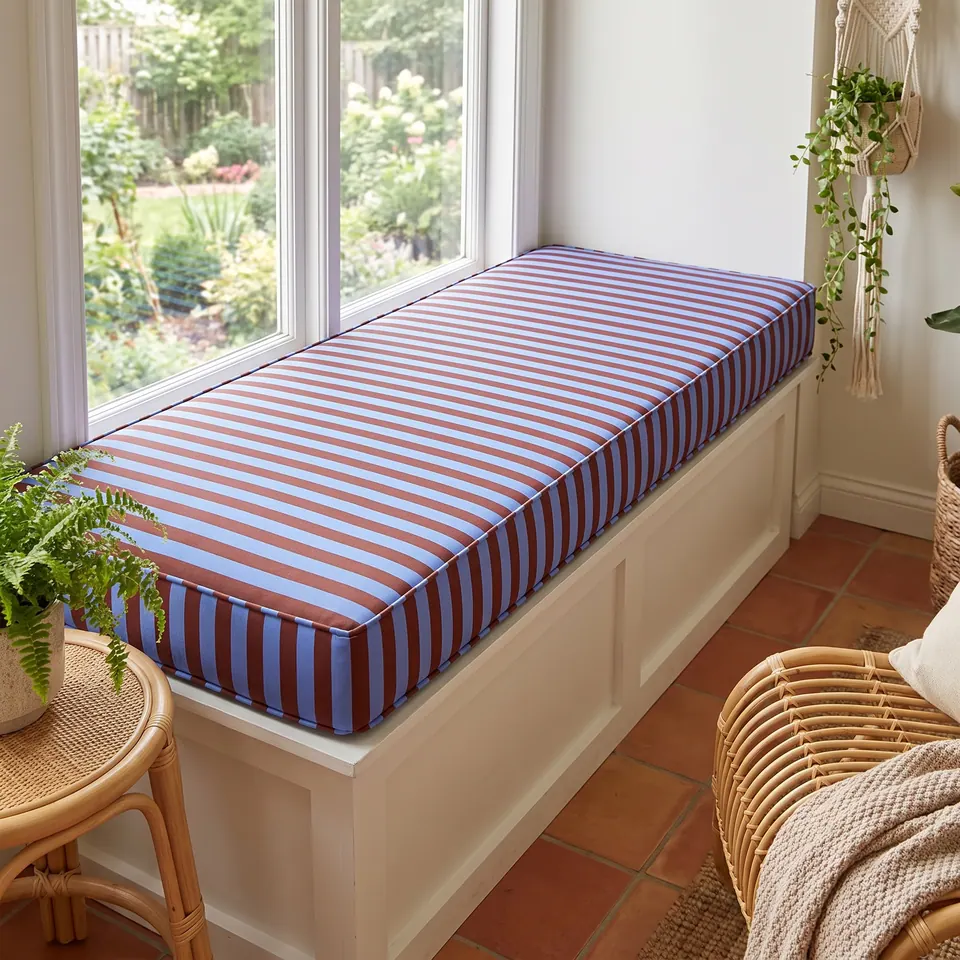
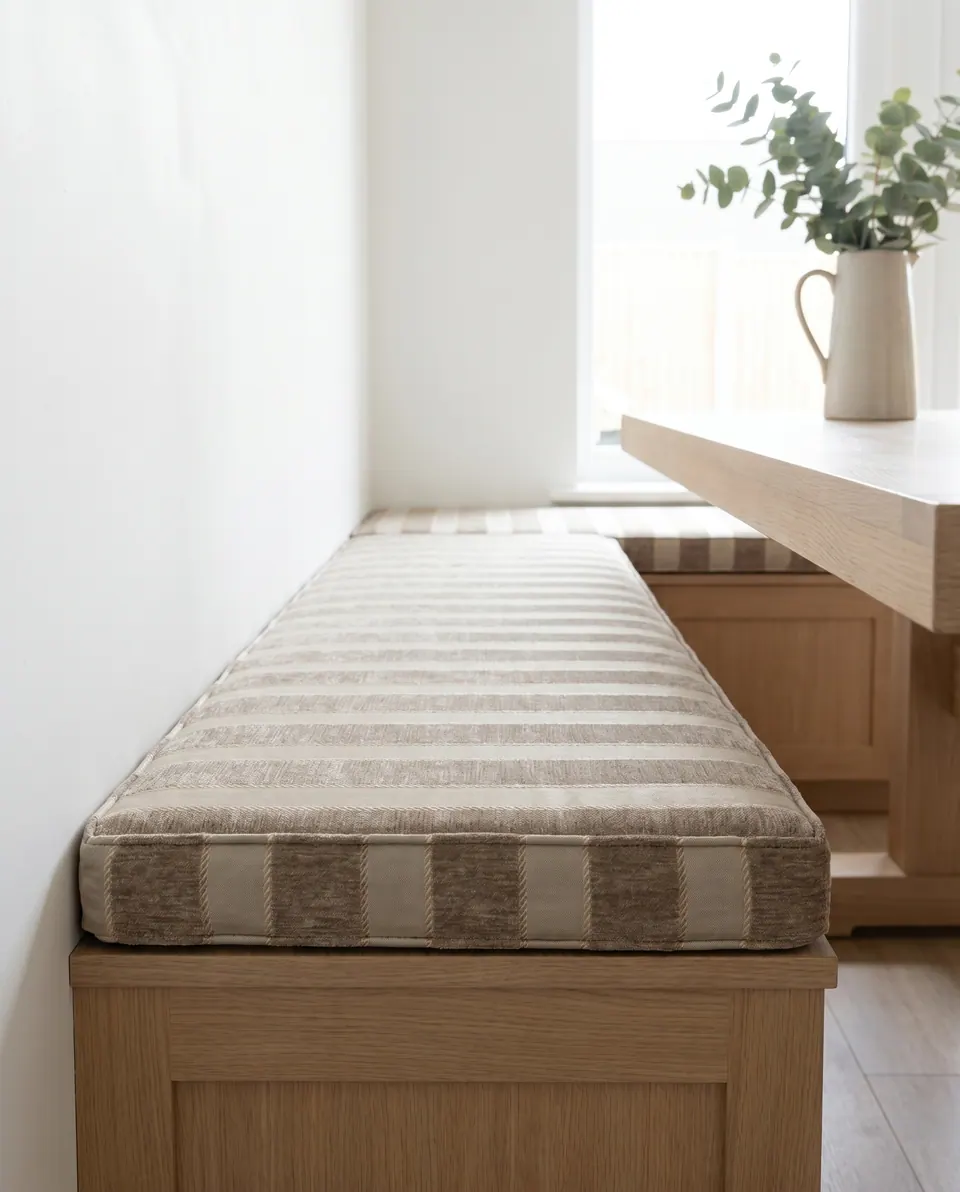
Which way will the stripes run on my long window seat, and can I change it?
The workshop's answer
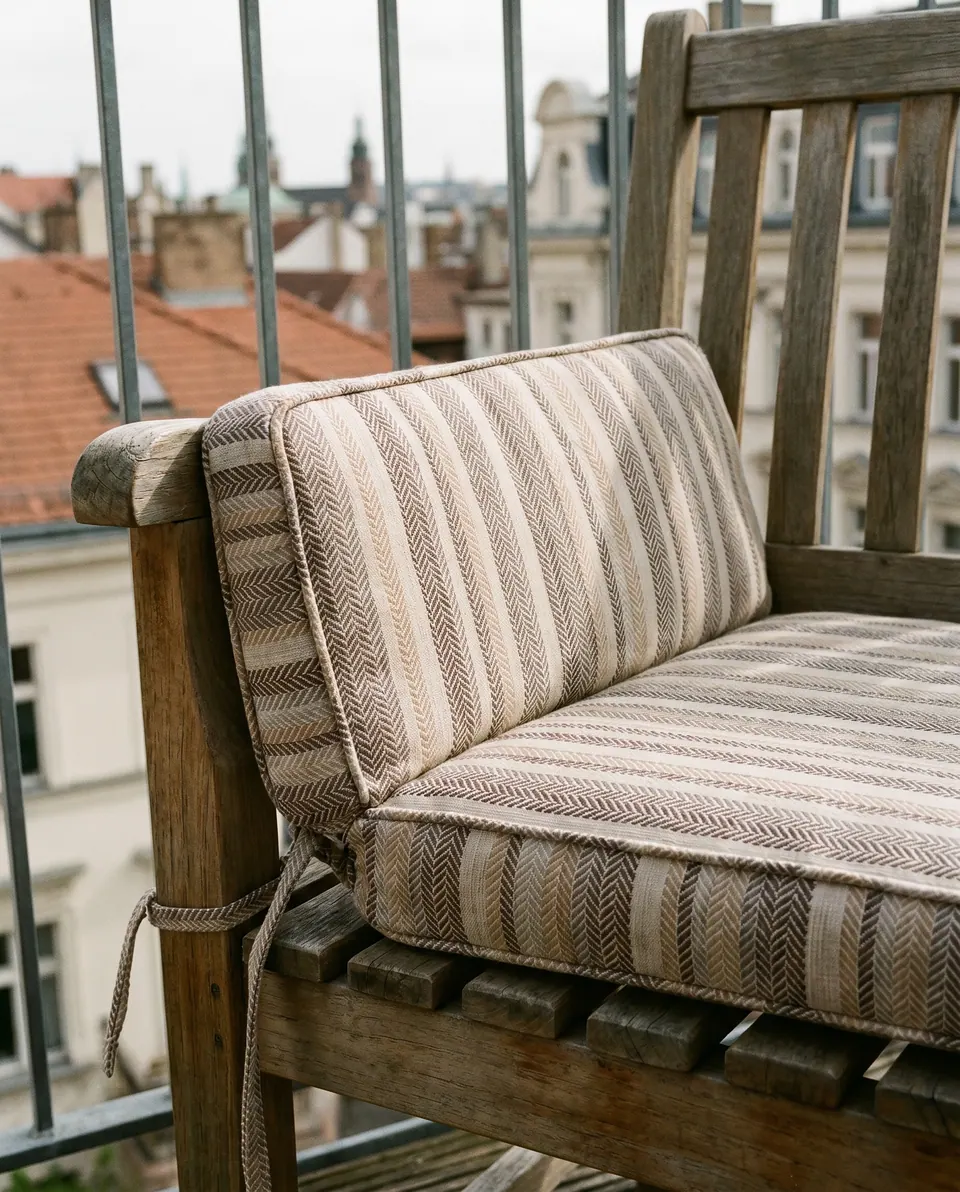
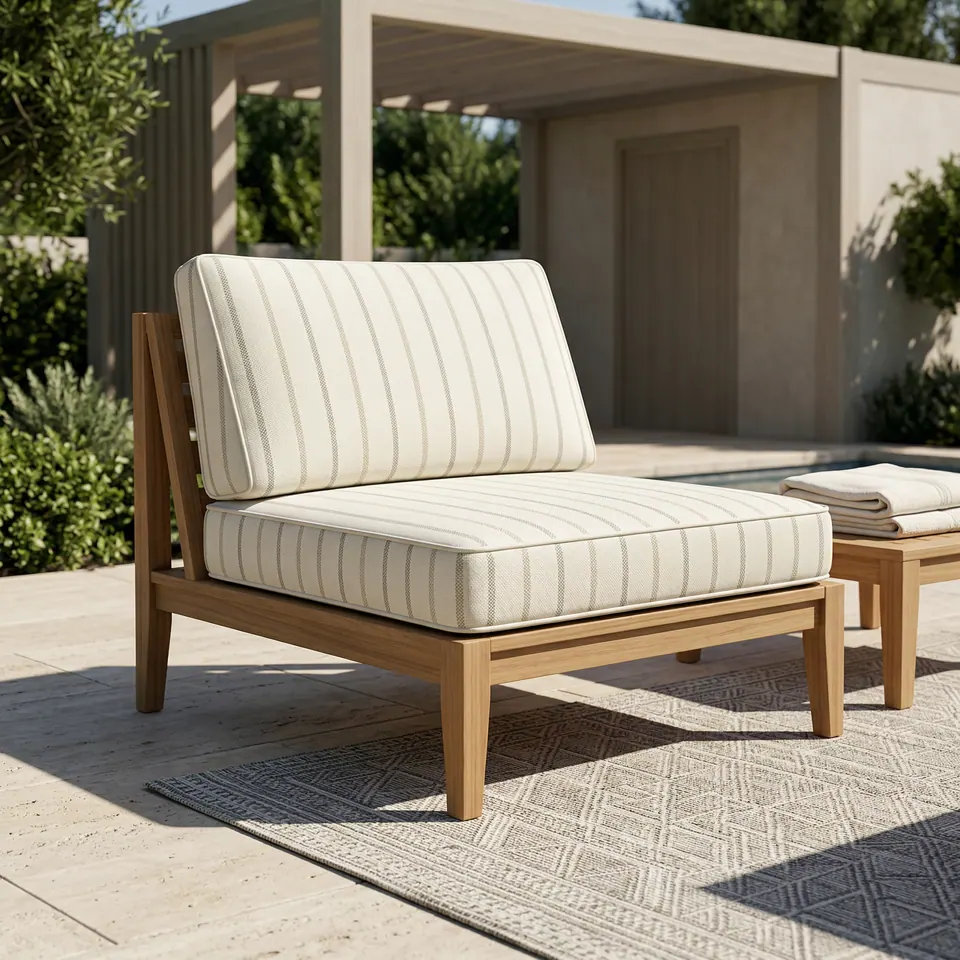
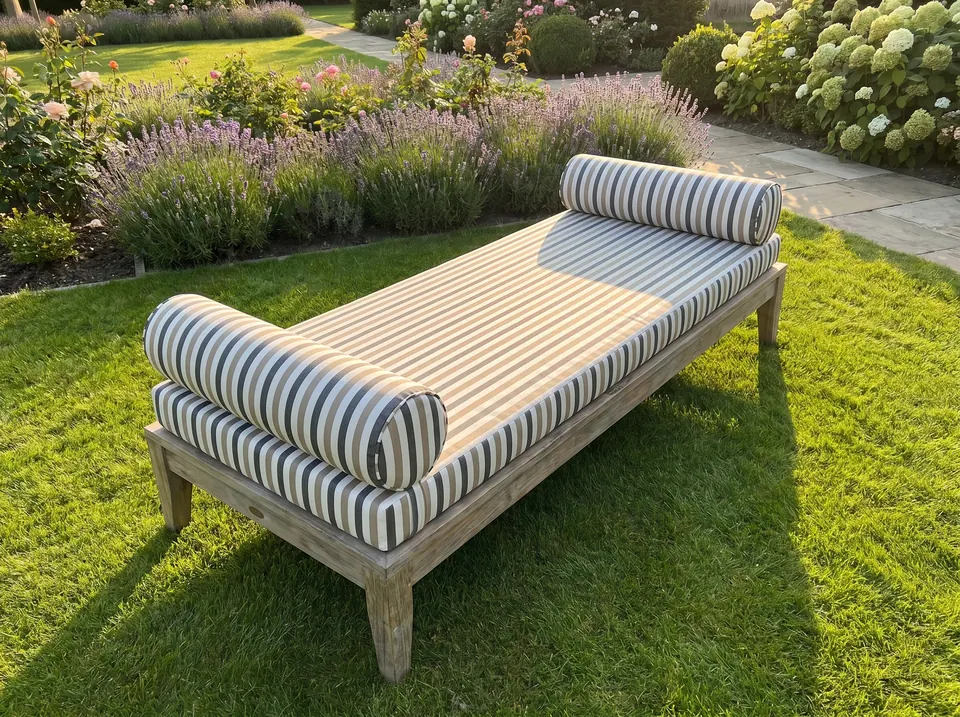
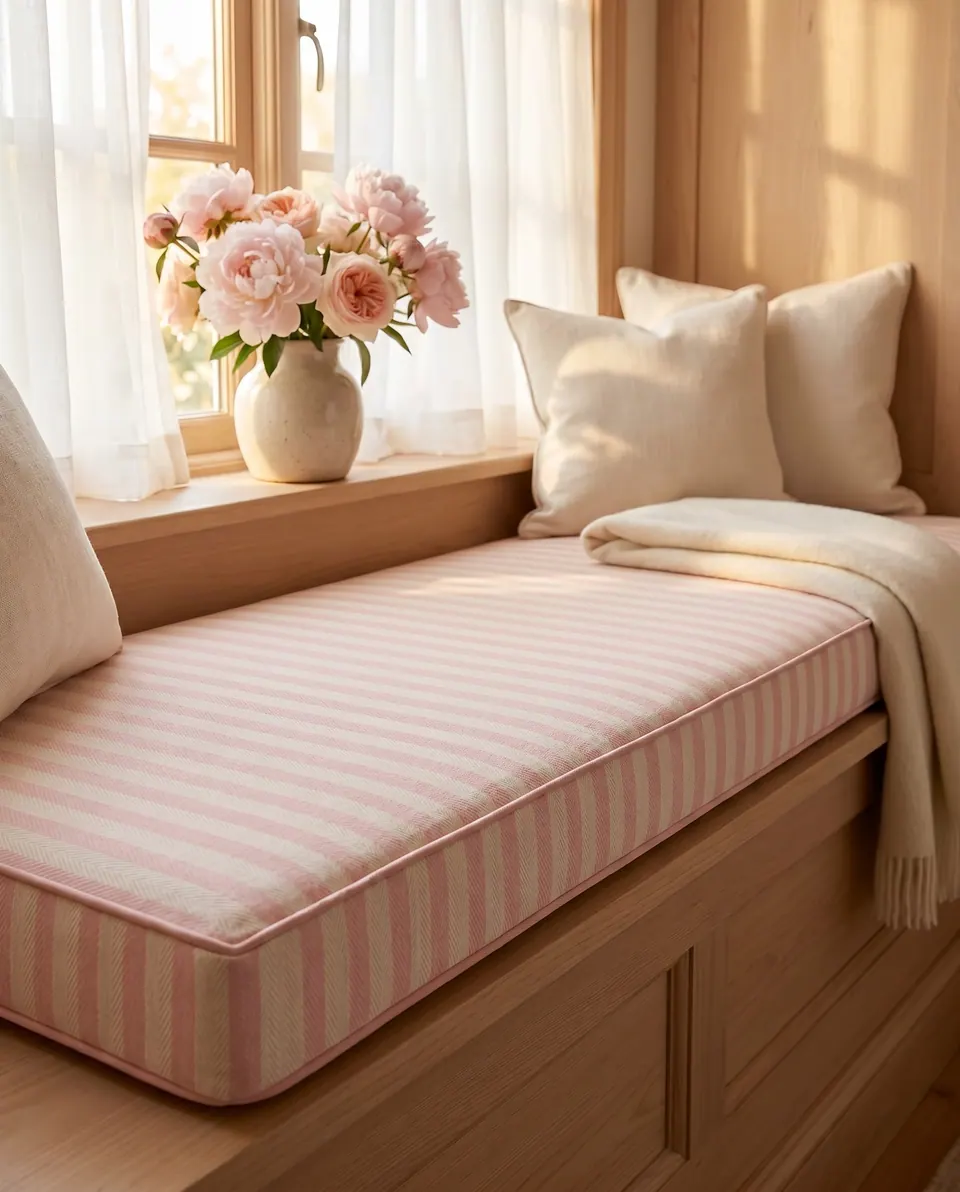
By default they run front to back across the depth. Most rolls are about 55 in (140 cm) wide, so stripes running the length of a long cushion would need two pieces and a seam; front to back gives a seamless, durable top. You can ask for another direction on the top and sides before production, ideally with a reference photo, and the team checks it can be done. Stripes too narrow for piping get a matching solid welt.
Can you build a back cushion with a board inside so I can screw it to the wall or hang it on a French cleat?
The workshop's answer
Not normally. These cushions have no rigid board, so they can't be screwed to a wall or hung on a French cleat. The backrest is made like a back pillow instead: a removable piped cover over shredded foam about 4 in (10 cm) thick, or a solid foam core wrapped in fiber for a firmer, flatter panel. It attaches with hook-and-loop tape, adhesive, loops on a rod, or ties sewn to the top corners to hang from hooks or a rail.