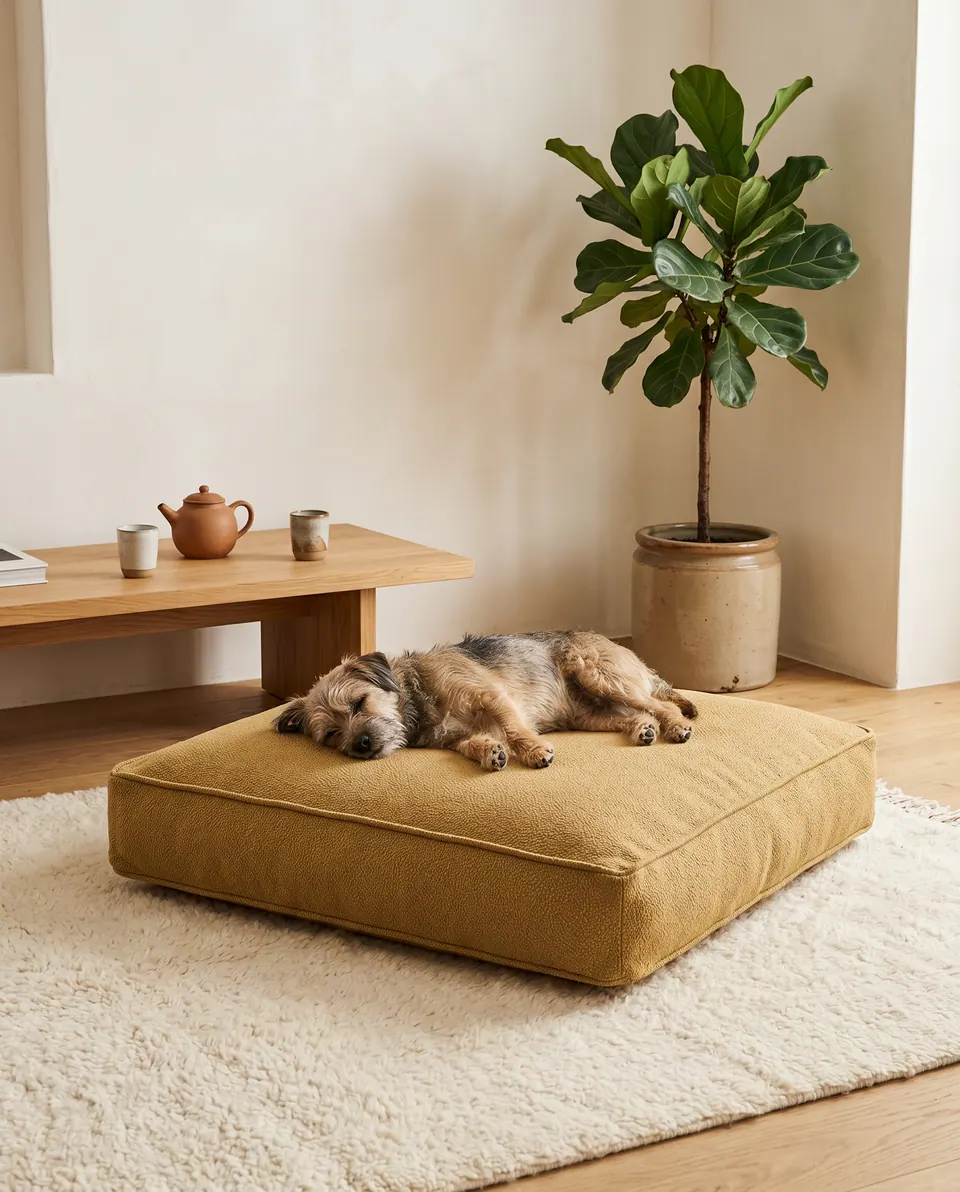
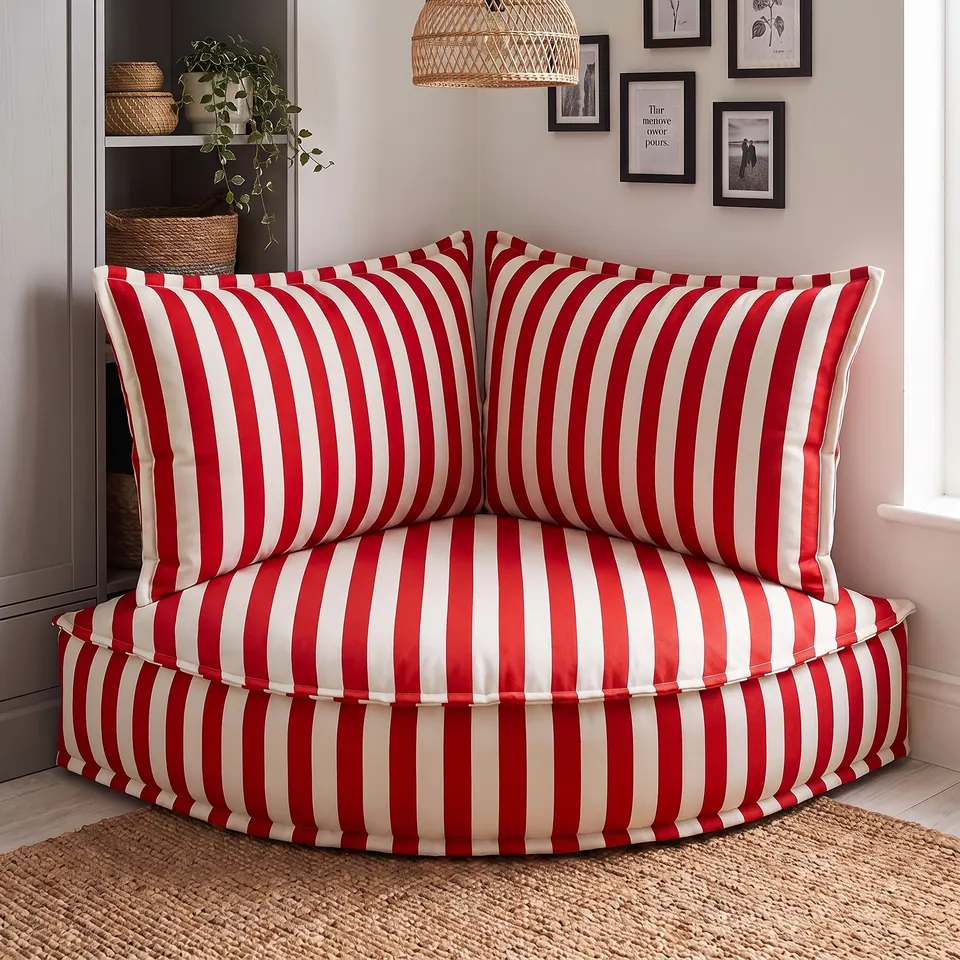
Concept Sketches · 8 scenes
Play tents, crash pads and sensory corners: cushions for climbers
Children do not sit on these cushions. They land on them. Eight real orders, from a round tent floor to a pad strapped to a loft-bed slide, and the one measurement each needed.
 Save
The quick answer
A play tent floor cushion is cut to the tent's inside diameter at floor level, such as 41 or 42.5 in (104 or 108 cm) round. Crash pads want zip-off, washable covers sized about 1 in (2.5 cm) larger than a soft insert. Mats and pads are for awake play: babies under one sleep only on a firm, flat crib mattress, as the AAP advises.
Why measure a play tent inside the walls, at floor level?
A play tent is smaller inside than out. The walls lean in, and the floor is what is left.
So a play tent floor cushion starts with a tape laid flat, inside the walls, from one side to the other. A round tent needs one number, the inside diameter. A square one needs two.
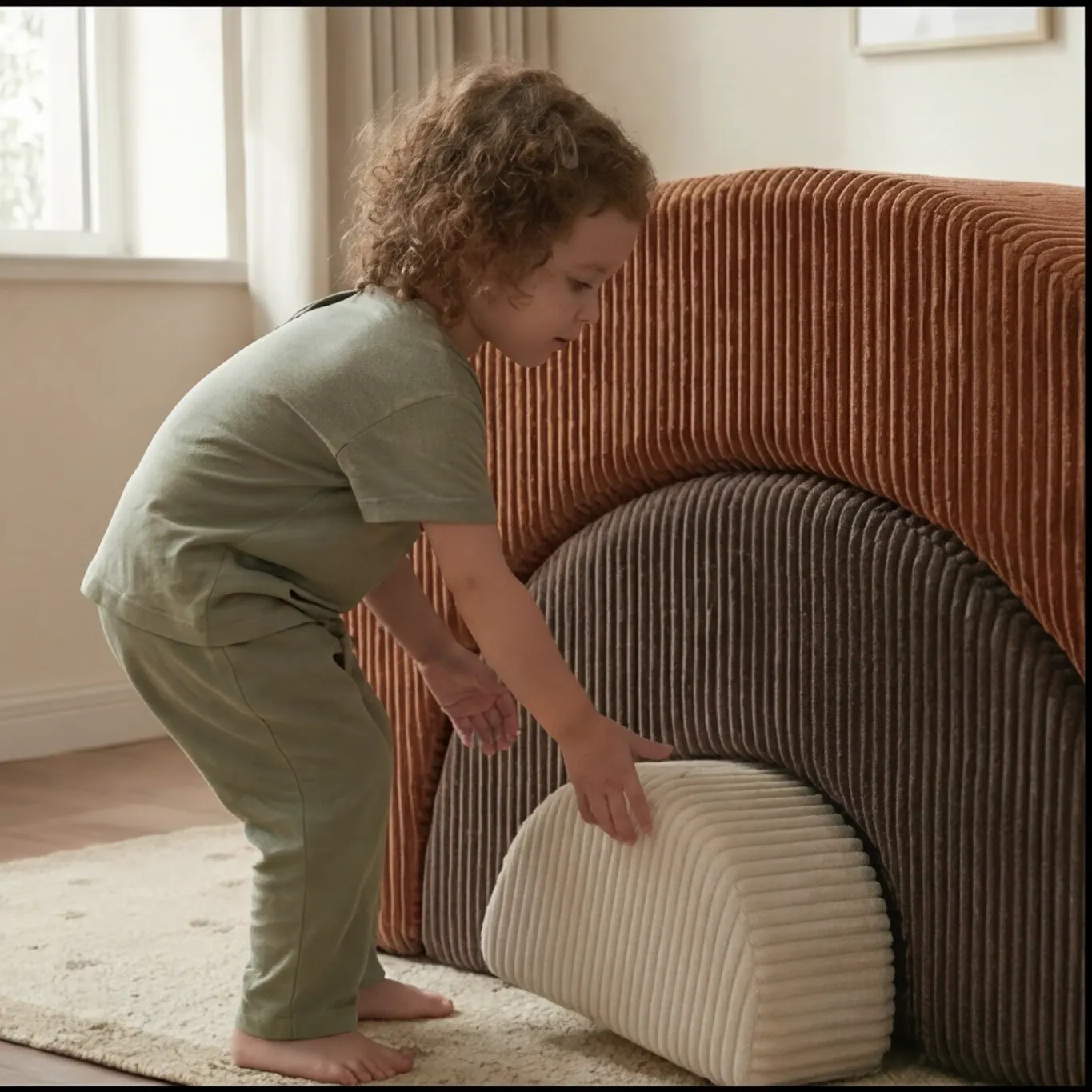
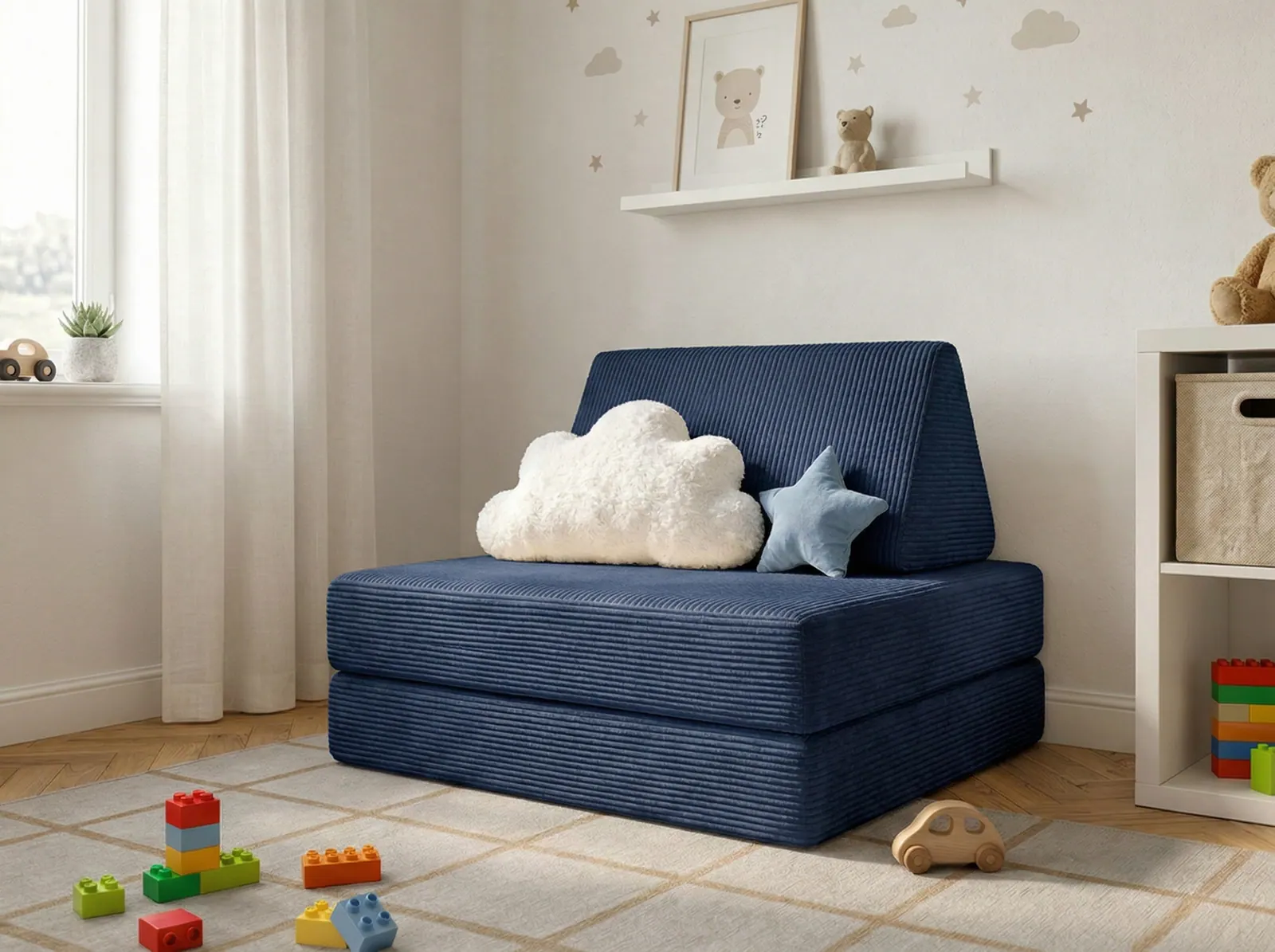
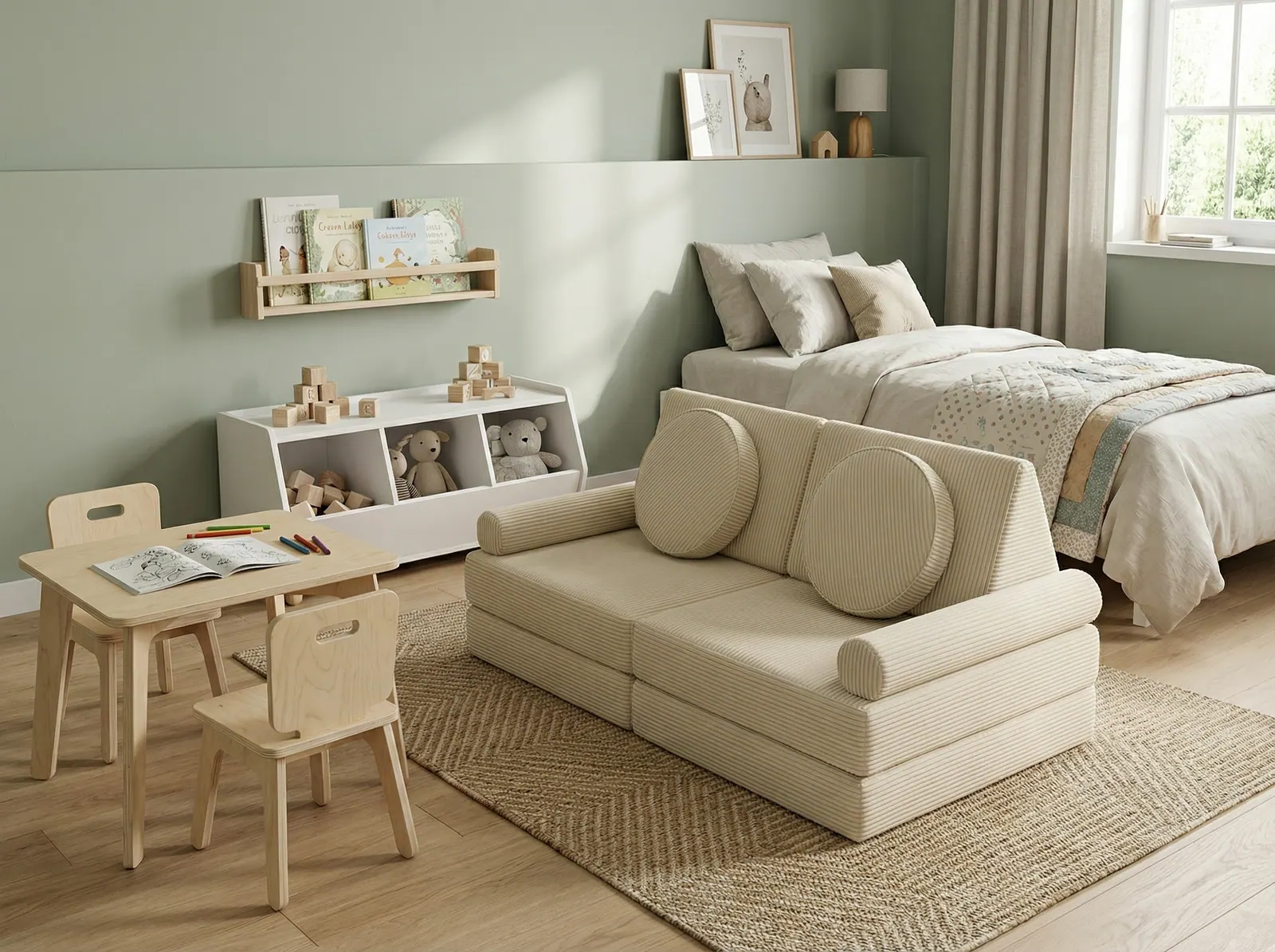
Crash pads and sensory corners ask something else. Not only how big, but how a child lands, and how often the cover comes off for the wash. The floor cushions and kids' room cushions hubs hold the shapes. The foam firmness finder helps with the landing, and the kid-friendly fabric Pattern with the cloth.
Children measure comfort with their whole body. What will yours do on it: read, roll or jump?
Eight floors that children land on
01A past project
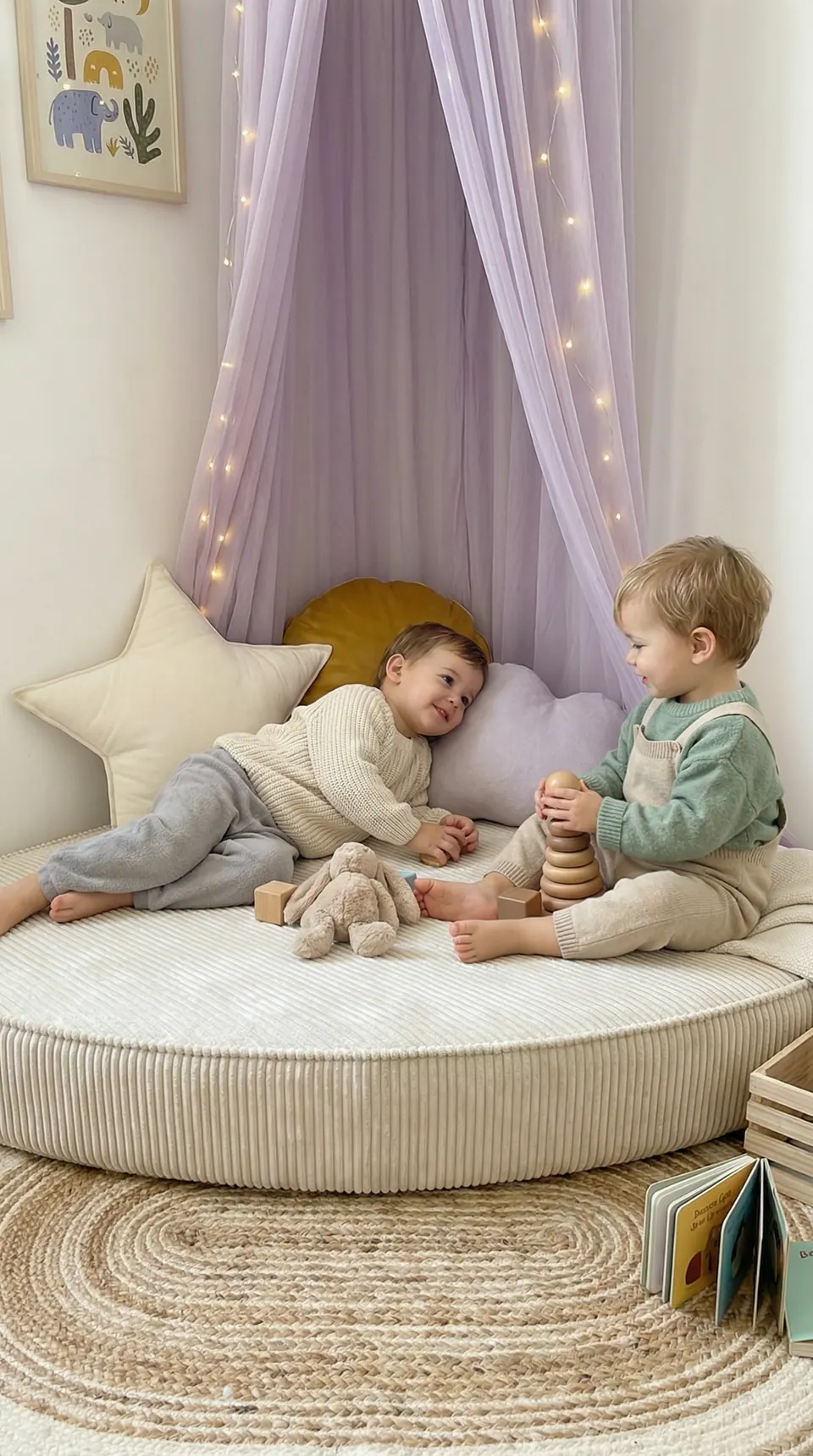
A white round for a 42.5 in tent
A parent in the US needed a round white floor cushion for a play tent, 42.5 in (108 cm) across. The workshop updated the listing so the parent could choose its 40 x 40 in option, then made the cushion at 42.5 in. White came in linen, soft fabric or velvet.
The takeaway: Measure the tent's inside diameter at floor level and order that exact figure.
02A past project
A floor couch for a 52 x 35 in tent
A parent in the US wanted a floor couch to fit inside a children's tent, 52 in (132 cm) wide and 35 in (89 cm) deep, in a blue velvet. It was not a listed size, so it was quoted and sent as a custom order link.
The takeaway: Measure the tent's inside floor, wall to wall, not its outer footprint.
03A past project
A 41 in round beside a reading set
A buyer in the US was choosing a 28 x 56 in (71 x 142 cm) floor sofa set with a backrest and two bolsters. They also asked for a round cushion to fill the floor of a play tent. The workshop quoted a 41 in (104 cm) round.
The takeaway: Measure the tent floor's inner diameter for a snug round, and order it with the set it sits beside.
04A past project
A cover for a 60 x 60 in crash pad
A parent in the US had a soft sensory crash pad of about 60 x 60 x 9 in (152 x 152 x 23 cm) and wanted a removable, washable cover in light oatmeal. The cover was sized 61 x 61 x 10 in (155 x 155 x 25 cm) to leave room, with a long zipper, from the linen chart.
The takeaway: Add about 1 in to each dimension of a soft-filled insert so the cover is not tight.
05A past project
A climbing wall, an L and two floor vents
A parent in the US wanted a crash mat under a climbing wall, shaped to an L, with 2.5 in (6.4 cm) round cut-outs for the floor vents. The production team reviewed the drawings and photos and could not make the round cut-outs. The workshop offered an L-shaped cushion plus a separate piece between the vents. The parent declined, which is also a reasonable answer.
The takeaway: Where a cut-out is not possible, split the mat into pieces that stop short of the vents.
06A past project
A sensory den, 36.2 in square
A family wrote to the workshop for a square floor cushion sized exactly 36.2 x 36.2 in (92 x 92 cm) to fit their child's sensory den, in light gray. It arrived beige, because fabrics were mixed up in production. The workshop remade it in the light gray at the same size and sent a free return label for the beige one.
The takeaway: Give the exact size and the color code in writing, so a mistake can be put right quickly.
07A past project
A pad strapped to a loft-bed slide
A grandparent in the US wanted a soft pad for a steep slide attached to a child's loft bed. It was 17.5 x 12 in (44 x 30 cm) and 4 in (10 cm) thick, with two 18 in (46 cm) straps at the corners of the 17.5 in side to tie it on.
The takeaway: Straps turn a small cushion into a pad that stays where it is tied.
08A past project
A mini crib mattress, turned play mat
A parent in the US was using a 37.75 x 23.75 x 3 in (96 x 60 x 7.6 cm) mini crib mattress as a floor play mat and wanted a fully zippered, washable box cover for it. The workshop pointed them to the cover listing, with the exact size and fabric code written in the personalization.
The takeaway: Any foam you already own can get a tailored zippered cover; on the floor, it is for awake play.
Where it goes, and what to measure
| Where it goes | Measure | from past orders | Ask for |
|---|---|---|---|
| Round play tent | Inside diameter at floor level | 41 in and 42.5 in (104 and 108 cm) rounds | The exact diameter in the order note |
| Square or oblong tent | Inside floor, wall to wall | 52 x 35 in (132 x 89 cm) floor couch | A custom order link for off-menu sizes |
| Sensory crash pad | The insert, then about 1 in more each way | 61 x 61 x 10 in cover for a 60 x 60 x 9 in pad | A long zipper and a washable cover |
| Climbing-wall landing | The whole L, plus each vent's position | L-shaped area with 2.5 in vents | Separate pieces around the vents |
| Loft-bed slide | Slide width and the length to pad | 17.5 x 12 x 4 in pad | Two 18 in straps on the long side |
| Floor play mat | The mattress or foam you already own | 37.75 x 23.75 x 3 in mini crib mattress | A fully zippered box cover |
Play is on the floor. Sleep is in the crib.
- Crash pads, tent cushions and play mats are for awake play.
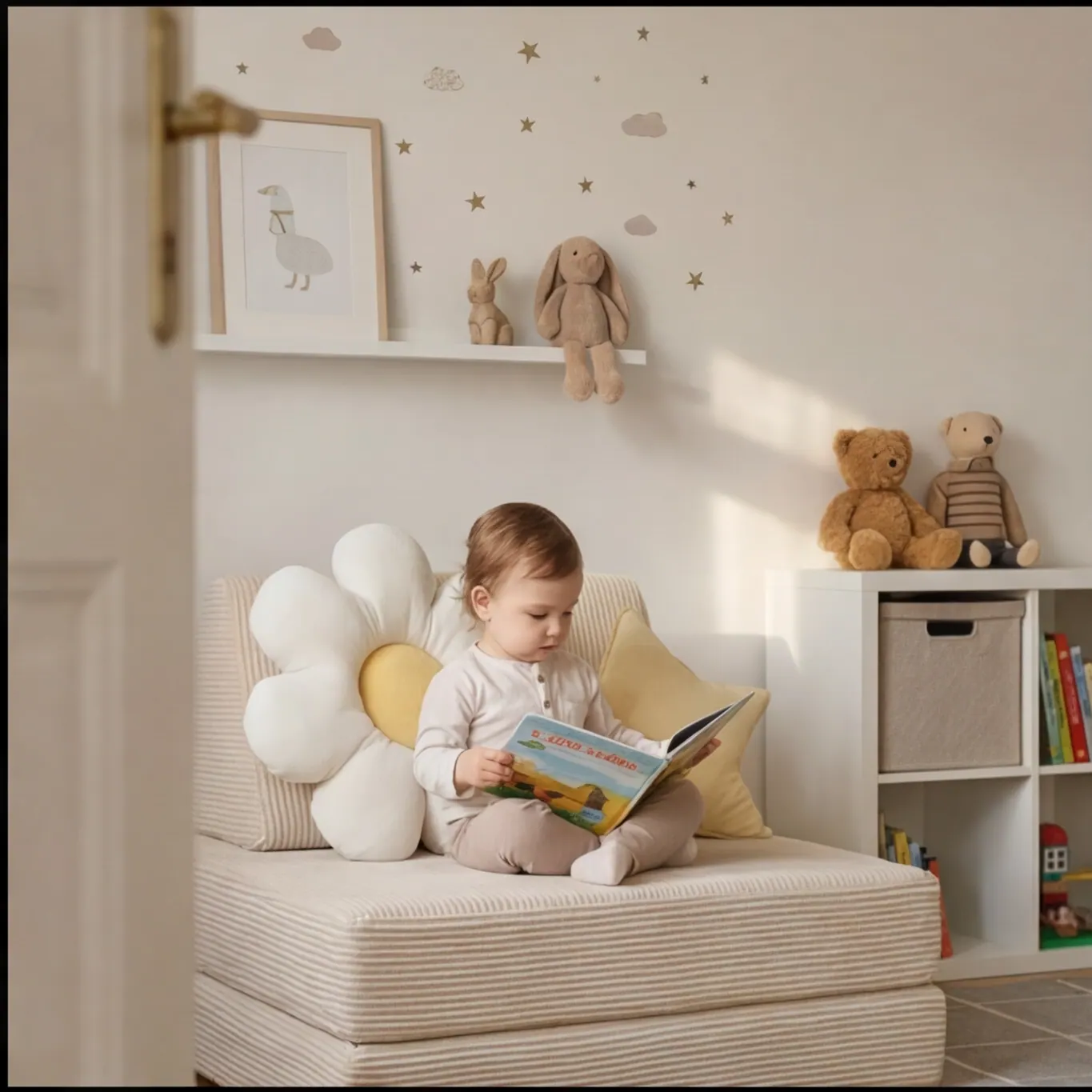
- Babies under one sleep on their backs, on a firm, flat crib mattress with a fitted sheet and nothing soft added. That is the safe-sleep advice of the American Academy of Pediatrics (AAP).
- A crib mattress must fit its crib snugly, with no gaps at the sides, as the U.S. Consumer Product Safety Commission (CPSC) advises. More in crib and toddler mattresses.
- Never put a floor cushion, crash pad or play mat inside a crib.
- For anything children tumble on, choose a non-tufted cushion with a zippered cover. Tufted cushions cannot have removable covers.
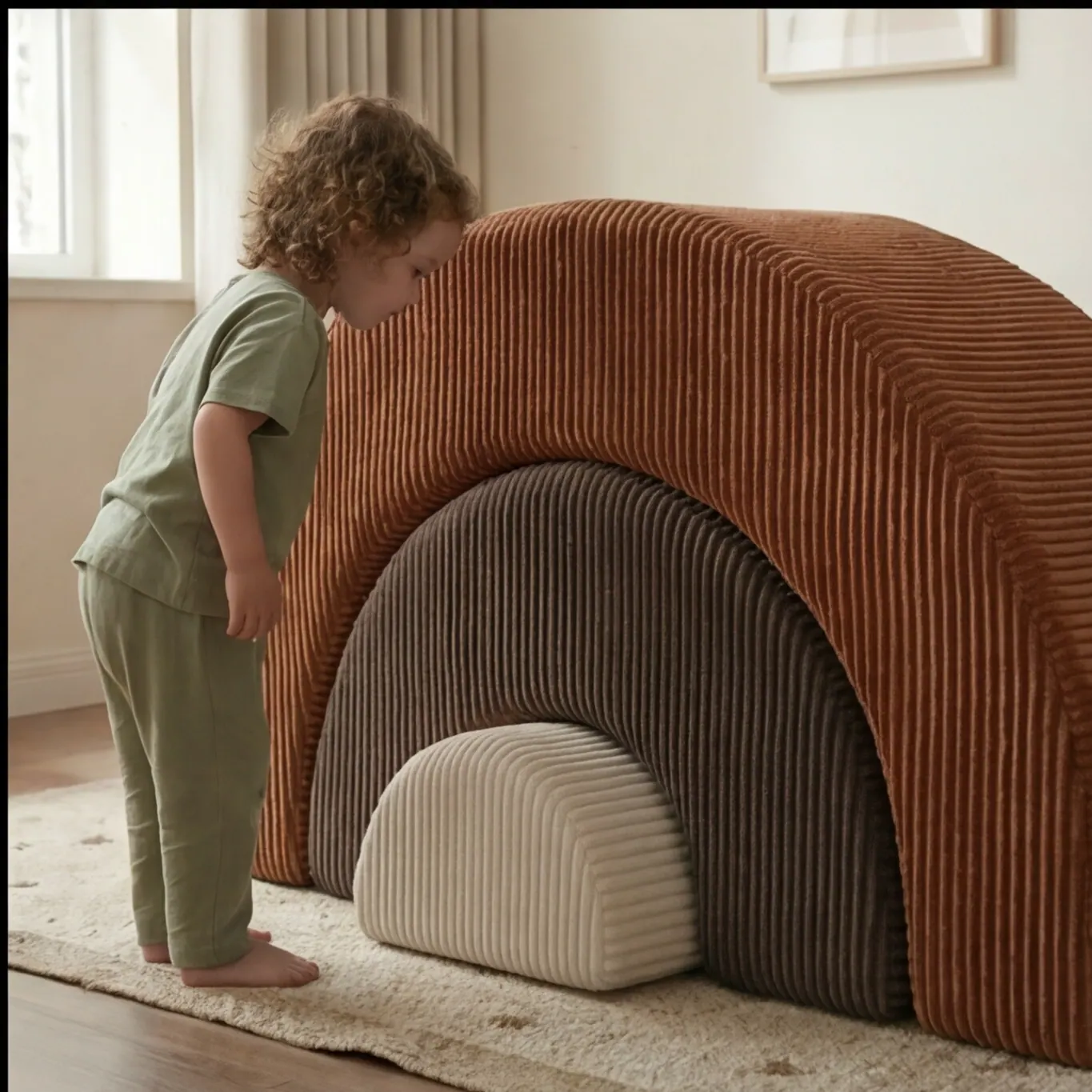
Measure a play tent at floor level, inside the walls: a round tent floor cushion is cut to the inside diameter, not the outer footprint.
Hana
Tent, crash pad, crib: three lines for the fridge door
Measure inside the walls. Zip the cover off. Keep the crib for sleep.
Buyer questions
- A common question
My kids will climb all over this. Which of your fabrics survives that and still cleans up?
The workshop's answerTwo ranges: the soft fabric and the velvet. The soft fabric is a microfiber, a little more durable than linen and thinner than velvet, and it wipes clean. Velvet stands up to daily wear and is the easiest to spot-clean, because marks lift off the pile. The striped cottons are harder to keep clean with children.
- A common question
Is the regular cushion fabric waterproof? Our toddler spills everything.
The workshop's answerNo. The standard indoor fabric is durable and easy to clean, and zippered covers machine-wash at 86°F (30°C) or lower, but it is not waterproof. For real liquid protection, ask for the water-repellent outdoor fabric option. Water-resistant premium charts and a faux leather chart are also available, and any product can be made in any fabric.
- A common question
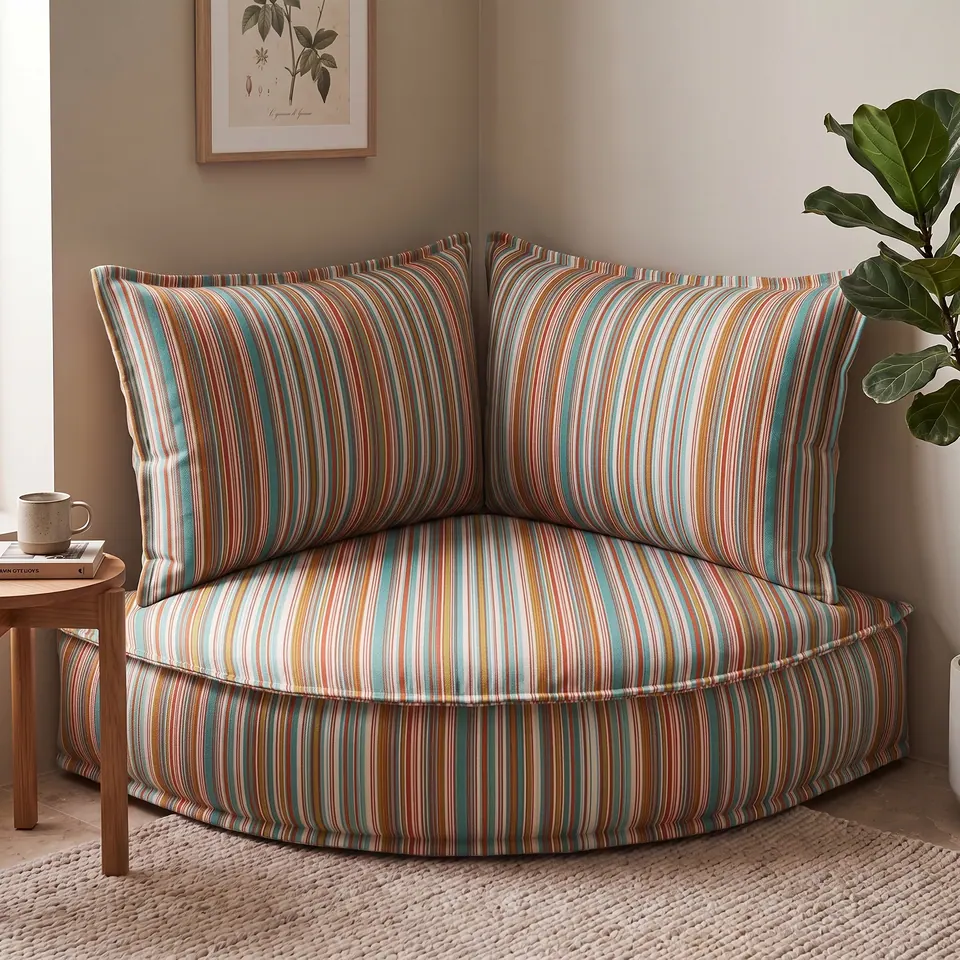
We want a corner cushion for two small kids in the play corner. What size, and can it be thicker?
The workshop's answerFor two toddlers around 3 years old, the workshop suggests 40 x 40 in (100 x 100 cm), measured along the two straight sides. The tufted corner cushion is 4 in (10 cm) thick by default, with 5 in and 6 in made to order. The kids' corner floor sofa is 8 in (20 cm) thick, with a removable cover.

Have it made
Have an idea like this made — ask Hana’s workshop
A good size is a quiet thing. You notice it only when it is wrong. Let the workshop check yours first. — Hana
Leave your details and the workshop will call you to confirm measurements, fabric, foam and piping. No prices, dates or payment on this page: it is a request, not an order.
Questions buyers ask next
How large can a round floor cushion be made?
Round French floor cushions go up to about 49 in (125 cm) across. The largest tufted square floor cushion is about 48 x 48 in (122 x 122 cm), and quarter-round corner cushions stop at 48 in along each straight side. Measure the tent first, then check it against those limits.
Can I order just a cover for foam I already have?
Yes. Any foam you already own, from a mini crib mattress to a crash pad insert, can get a tailored zippered cover. Order on the cover listing and write the exact size and fabric code in the personalization. For a soft-filled insert, size the cover about 1 in (2.5 cm) larger each way.
Where can ties go on a play cushion?
Anywhere in the seams, at the corners or along the back. Ties fix a cushion to a bench or frame, tie a backrest to a seat, or hold stacked cushions together. Write each tie's position and length in the order note so it is sewn where you need it.