Hana Lindqvist, floor seating and small-space cushions
The Quiet Geometer of Seattle
A tatami room on one side of the family, a flat-pack workshop on the other. She learned early that the body notices height before anything else.
At the bench since 1996 (30 years)
Seattle, Washington
163 readings on the site
95 answers on the site
19 patterns on the site
Reads and makes
floor seating
IKEA fits (Hemnes daybed, Kallax)
small apartments
kids' playrooms & floor sofas
modular layouts
calm minimal rooms
Who is Hana?
Hana Lindqvist is CushionGuide's floor seating and small-space master, reading cushions from Seattle since 1996. She covers floor cushions and floor sofas, modular layouts, kids' floor sofas, daybeds and IKEA Hemnes and Kallax fits, and answers questions about L-shaped corners, seat height, made-to-fit spots and color changes. She plans every room from its heights and its empty floor.
A tatami room and a flat-pack shop
My grandmother kept a tatami room in her Seattle house. Nothing in it was higher than my knee. You sat on the floor, and the floor was enough.
My father built flat-pack furniture in a small workshop near the ship canal. Everything in his shop came in a box and was measured to the millimeter. Between the two of them, I learned that a room is mostly air, and that the air matters.
I trained as a furniture designer. My first jobs were small city apartments, the kind with one good window and a radiator that knocks. People asked for a sofa. Most of the time they needed less furniture and better sitting.
That is how I came to cushions. A floor cushion or a modular floor sofa changes a small room more than any piece of wood. It lowers the eye line. It lets the window be the tallest thing. It can be stacked, split, moved for guests and put away.
Height is a feeling. A seat at 13 inches feels like the floor is holding you. A seat at 18 feels like a chair. Neither is wrong. But you should know which one you are buying before it arrives, and the floor sofa buying guide is where I would start.
At the atelier I read floor seating, daybeds, kids' play sofas and the IKEA frames people build around. Most of the questions are geometry. How two cushions meet in a corner without overlapping. How long a piece should be when a wall stops it. What a nearly square shape really is.
Kids' rooms taught me the rest. A child does not sit on a floor sofa. A child climbs it, builds a fort from it and falls asleep on it sideways. So I ask how old they are and how the pieces will be moved, and I plan for the room at bedtime, not the tidy one in the photo.
I answer slowly. I ask for the wall-to-wall numbers, the seat depth and a photo from the doorway. Then I draw it.
What would you do with the floor space you got back?
A room is mostly air. A cushion decides how you share it. Leave some for the light.
Have it made
Have Hana’s workshop make yours
Measure once, slowly. Write the numbers here. The workshop will go over them with you. — Hana
Leave your details and the workshop will call you to confirm measurements, fabric, foam and piping. No prices, dates or payment on this page: it is a request, not an order.
Tools on my bench
A folding carpenter's rule that opens in 8-inch sections.
Graph paper on a quarter-inch grid.
A pencil, usually behind my ear.
A roll of painter's tape for marking a cushion's footprint on the floor.
A small level for platforms and pallets.
Photos taken from the doorway, where a room is actually seen.
What I always check
01Whether the numbers on an L run wall to wall or corner to corner.
02The stacked seat height and the height with the backrest, not only the footprint.
03The strip of empty floor around the seating, so the room still breathes.
04Whether a model can be made custom at all. Some floor sofas come in standard sizes only.
05The exact color code, not a general color name, before an order is changed.
On an L-shaped bench, one cushion runs into the corner and the other is shortened by the seat depth. A 180 in run at 19 in deep becomes a 161 in seat.
A buyer in the US chose the standard teddy floor sofa for a first apartment. Before it arrived, they asked the right question: how high would they actually sit?
Each seat layer is 6.5 to 7 inches. Stacked, that makes a 13 to 14 inch seat. With the 14 inch backrest, the whole piece stands about 28 inches. The footprint is 39 by 79 inches.
When it came, they tried the two big cushions side by side instead of stacked. Now it was a low bed, and they worried the pieces would drift apart. The underside is nonslip fabric, made for exactly that. The two zippered pillowcases in the box were a gift.
They called the couch incredible. I remember it because the question came before the purchase, not after.
Measured
Footprint 39 x 79 in (100 x 200 cm); seat 13-14 in (33-36 cm); backrest 14 in (36 cm); overall about 28 in (71 cm)
What it taught
Ask for the stacked seat height and the height with the backrest, not just the footprint.
A stacked teddy floor sofa seat sits 13 to 14 in high. Add the 14 in backrest and the whole sofa stands about 28 in tall.
How should I measure an L-shaped bench so the two cushions don't overlap in the corner?
The workshop's answer
Measure each run wall to wall, from the back corner to its end, plus the seat depth, and send them with a photo or sketch; the workshop works out the corner. It makes two cushions: one runs the full length into the corner, the other is shortened by the seat depth. On runs of 74 in and 180 in at 19 in deep, the seats became 74 in and 161 in, and the 14 in high backs 74 in and 178 in, shortened by the 2 in backrest. Just say whether your numbers run end to end or corner to corner.
A common question
Can you make a floor cushion for an exact spot, like inside a kids' play tent or on top of pallets?
The workshop's answer
Yes. Send the measurements, plus a picture of the layout for L-shaped floor seating, and the workshop quotes a made-to-fit cushion with a custom purchase link. One 30 x 30 in (76 x 76 cm) cushion was made for a play tent with a 30.5 in (77.5 cm) floor, and 40 x 48 in cushions are made to sit on standard pallets for meditation rooms and pallet seating.
A common question
I picked the wrong color for my floor sofa right after checkout. Can I still change it?
The workshop's answer
Yes, as long as it hasn't shipped; the workshop checks with production first and has switched brick to navy, white to brown and khaki to emerald, among many others. Message the exact color name or number from the chart, since a general color isn't enough. If the order is already packed and leaving that day, it ships as ordered and an extra cover set in the other color is the fallback. Sizes can be corrected too if you message quickly, but a finished custom piece usually can't be altered.
Asking Hana
Which floor sofas only come in standard sizes?
The linen floor sofa, the fold-flat lounger chair and the bouclé modular floor couch aren't customized, though the bouclé modules are sold separately so you can build your own layout. The open-corner modular couch isn't normally custom either; its standard section is 39.5 x 79 in (100 x 200 cm).
What if my trapezoid seat is only slightly wider at one end?
If the ends differ only a little, such as 16.3 in versus 16.9 in (41.5 vs 43 cm) over 41 in (104 cm), both long sides can't stay equal. The workshop then suggests an averaged rectangle, in that case 41 x 16.5 in (104 x 42 cm).
Is a floor cushion firm enough to sleep on?
Yes. The cushions are solid enough to sit or lie on, and many buyers use them for sleepovers. Under a loft bed, 24 x 70 or 27 x 70 in is typical for a child, and a twin is about 38 x 75 in. For a toddler, the workshop points to its separate kids' foam bed instead.
Heard at Hana’s bench
Height is a feeling.
Leave a hand's width of floor.
Children measure comfort with their whole body.
Empty floor is not wasted floor.
Measure from the doorway first. That is where the room is seen.
A low seat asks for a low lamp.
Two cushions side by side are a bed. Stacked, they are a sofa.
Draw the corner before anyone cuts it.
— Hana
The rest of the bench
Six more masters read the cushions they know best. Pick the one who works on your kind of seat.


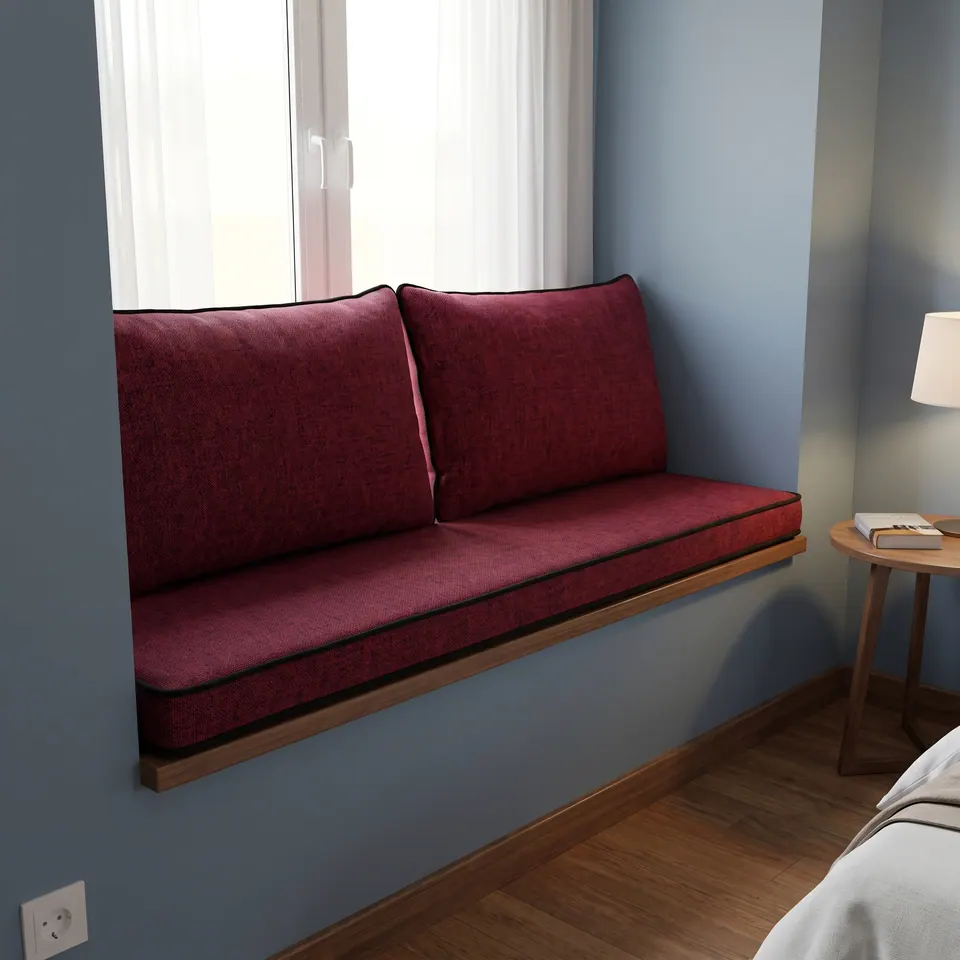
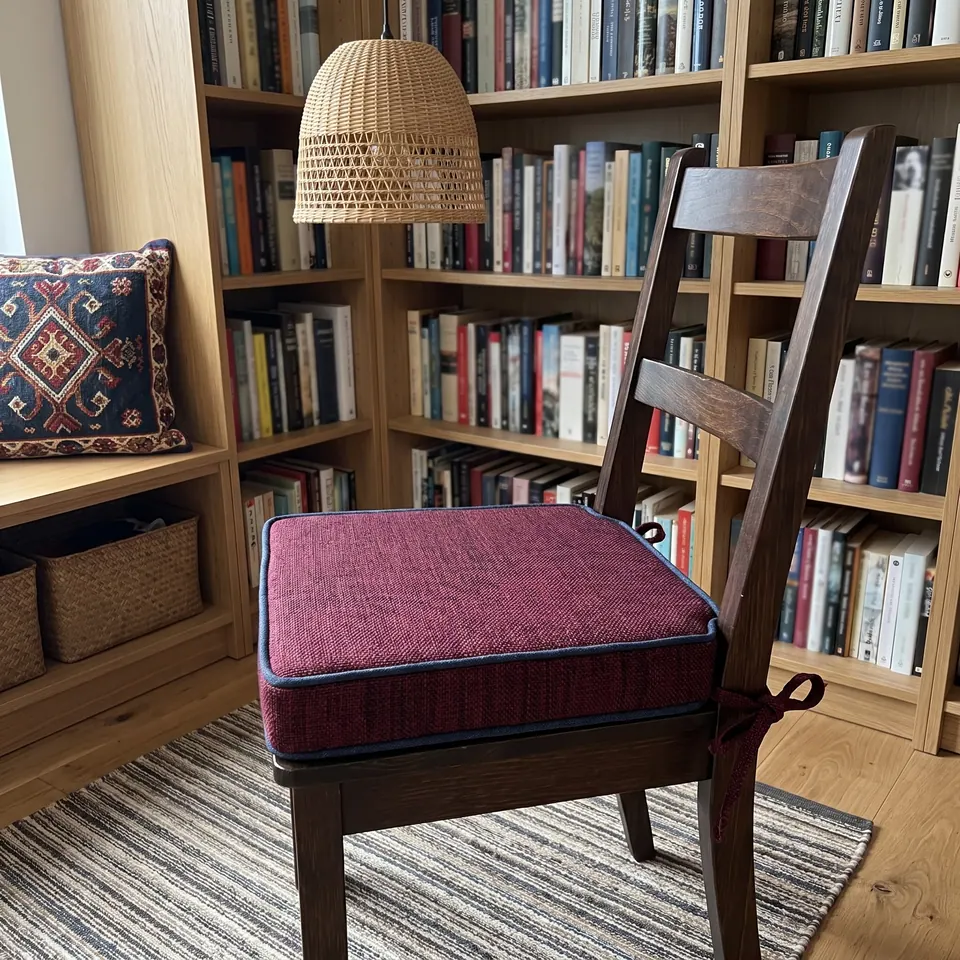
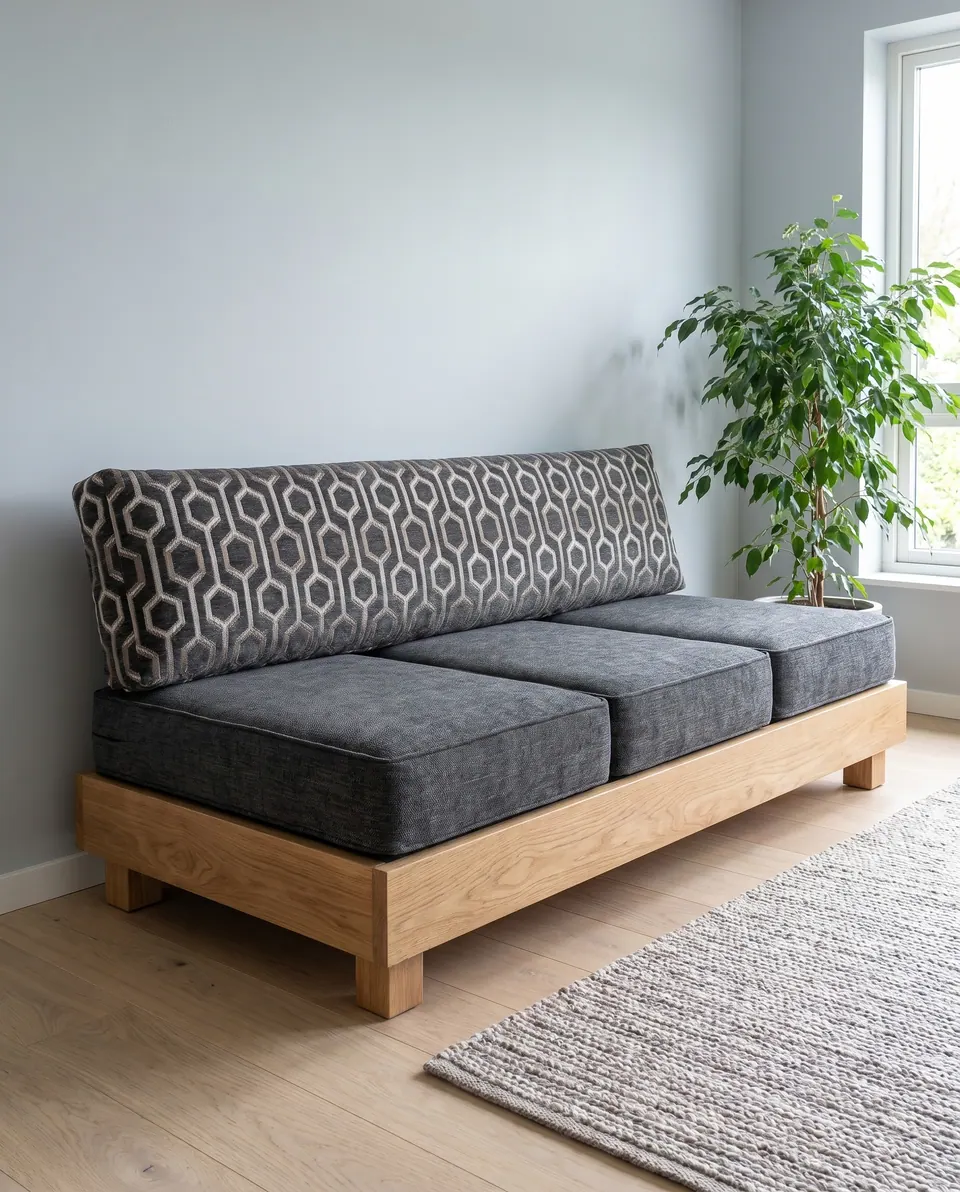
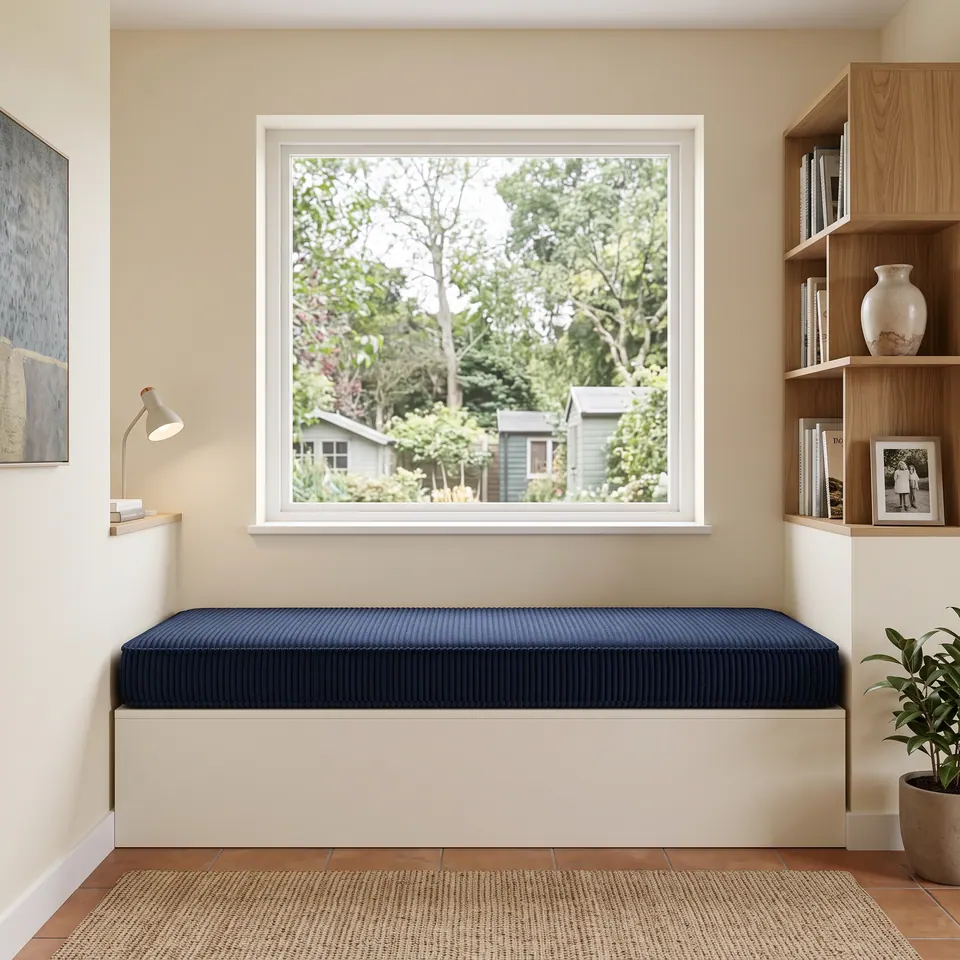
 Harlan PruittThe Elder of High PointHigh Point, North Carolina · since 1968“A cushion should outlive the chair it sits on.”
 Margaret HollowayThe Piping Queen of NewportNewport, Rhode Island · since 1981“Straight lines, honest seams, and a cushion that looks tailored rather than bought.”
 Élodie MarchandThe Colorist of New OrleansNew Orleans, Louisiana · since 1991“Color is the first comfort; the eye sits down before the body does.”
 Callum ReidThe Weather Man of Casco BayPortland, Maine · since 1984“Build it for the worst day of the season, and every other day is a gift.”
 Rosa DelgadoThe Porch Keeper of SavannahSavannah, Georgia · since 1985“The best cushion is the one everybody fights over.”
 Nate KowalskiThe Pattern Engineer of DetroitDetroit, Michigan · since 1994“Every odd shape is just a list of honest measurements.”