Concept Sketches · 8 scenes
Nursery gliders, rockers and window benches: calm, washable cushions
Night feeds happen in one chair. Eight nursery seats from past orders, and what each one taught about covers that come off, foam that holds and colors that forgive.
 Save
The quick answer
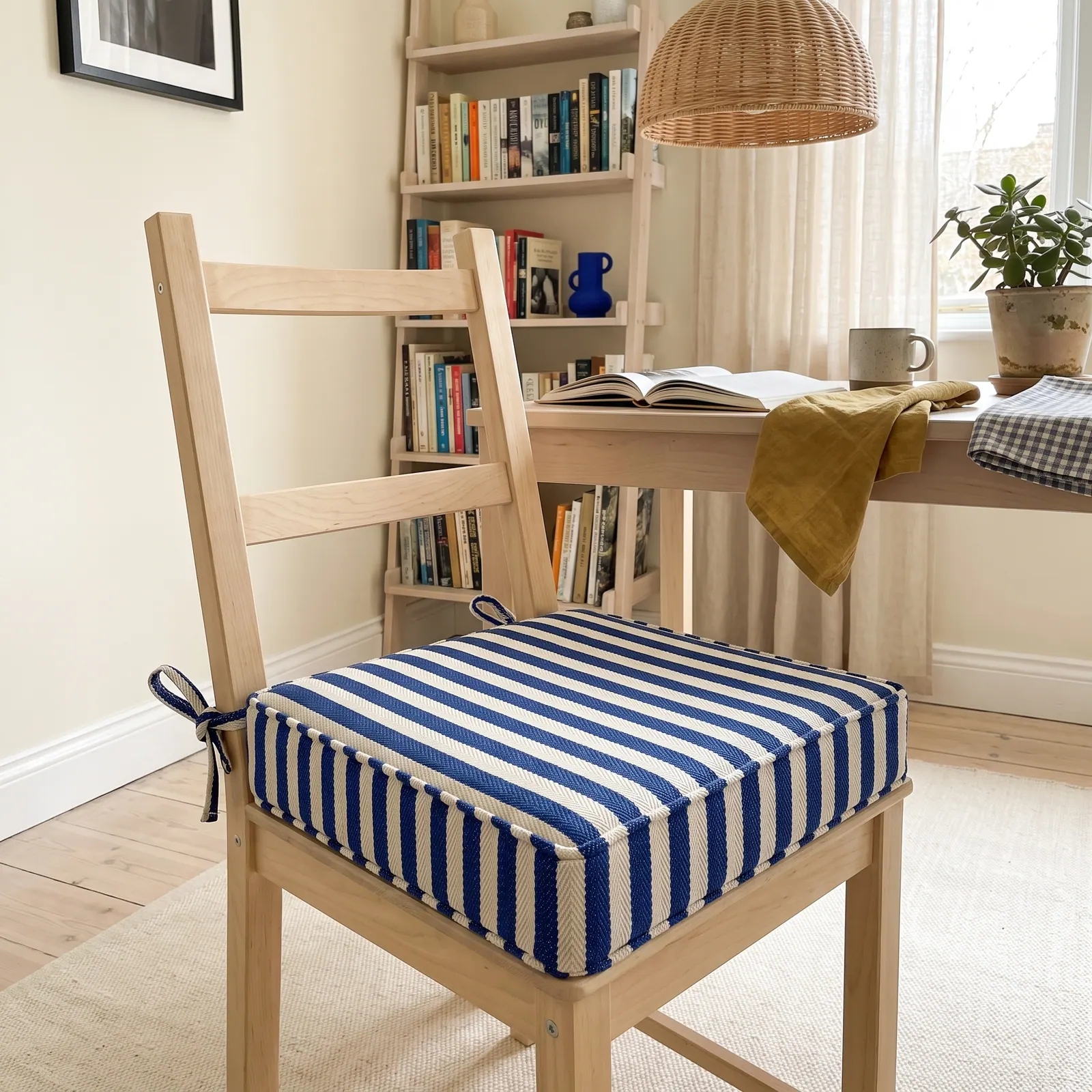
Nursery glider cushions should have zip-off covers that machine-wash at 86°F (30°C), a tight weave such as velvet or a wipeable linen-look performance fabric, and firm foam that does not collapse through long night feeds. Measure the old cushion's thickness first; one nursery armchair needed 5 in (13 cm). Babies under one sleep on a firm, flat surface, never on these cushions.
One chair, many nights
A nursery chair gets sat in at night, half asleep, with a baby in one arm. The cushion under you should forgive that.
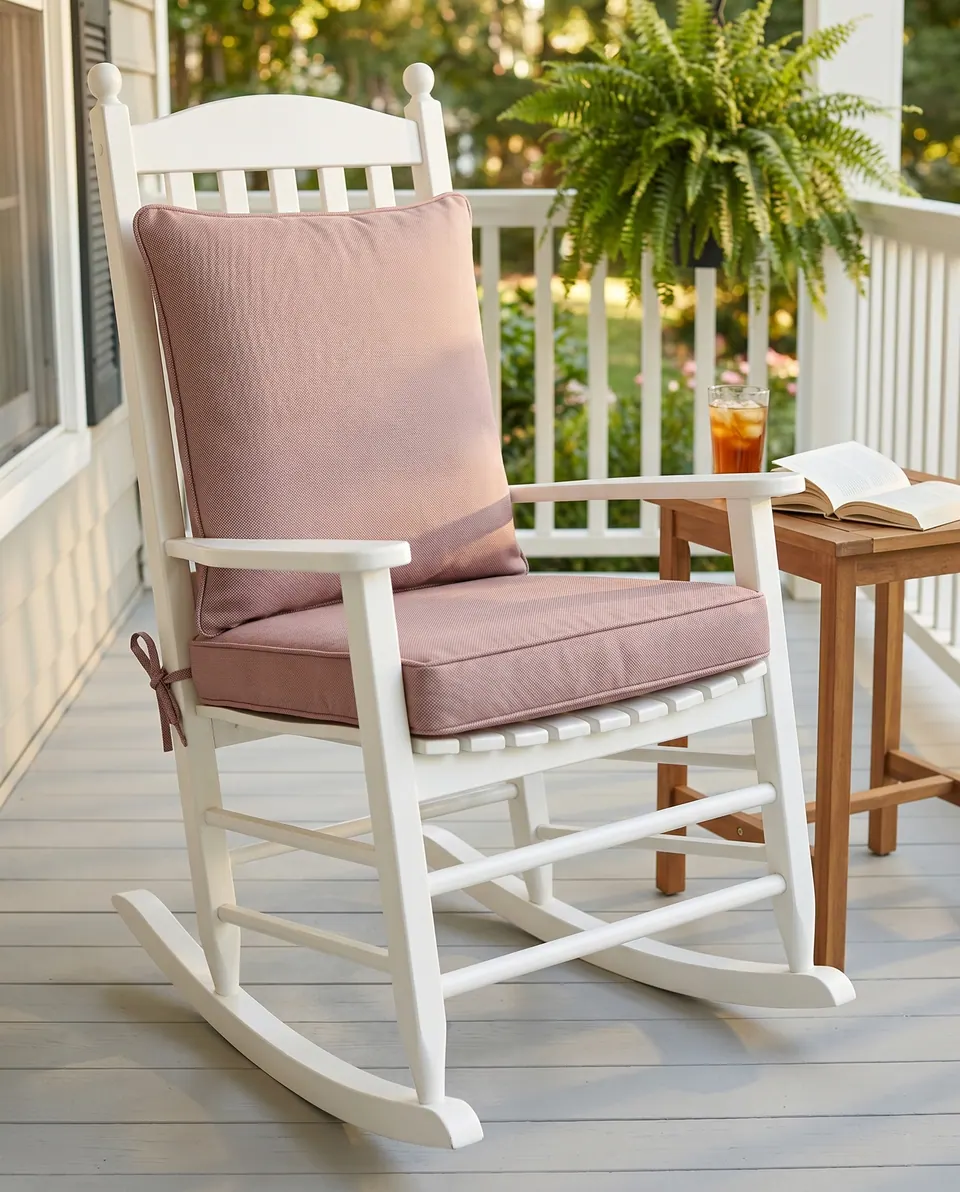
Nursery glider cushions are ordinary seat cushions with an unusual schedule. Most of what matters is settled before the order: the thickness of the old cushion, the fabric family, and whether the cover unzips. The rocking chair cushions hub covers the frames. This Concept Sketch covers the room, from the glider to the floor couch to the bench under the window.
Parents ask the same few things. Is it washable. Is the linen a performance fabric. Which ivory stays clean. Is anything waterproof.
One plain line before the rest. The American Academy of Pediatrics advises that babies under one sleep on a firm, flat surface with no pillows or soft items. Every cushion here is for the grown-up in the chair, or for an older child on the floor.
How thick is the cushion in your glider now?
Eight nursery seats, chair to floor
01A past project
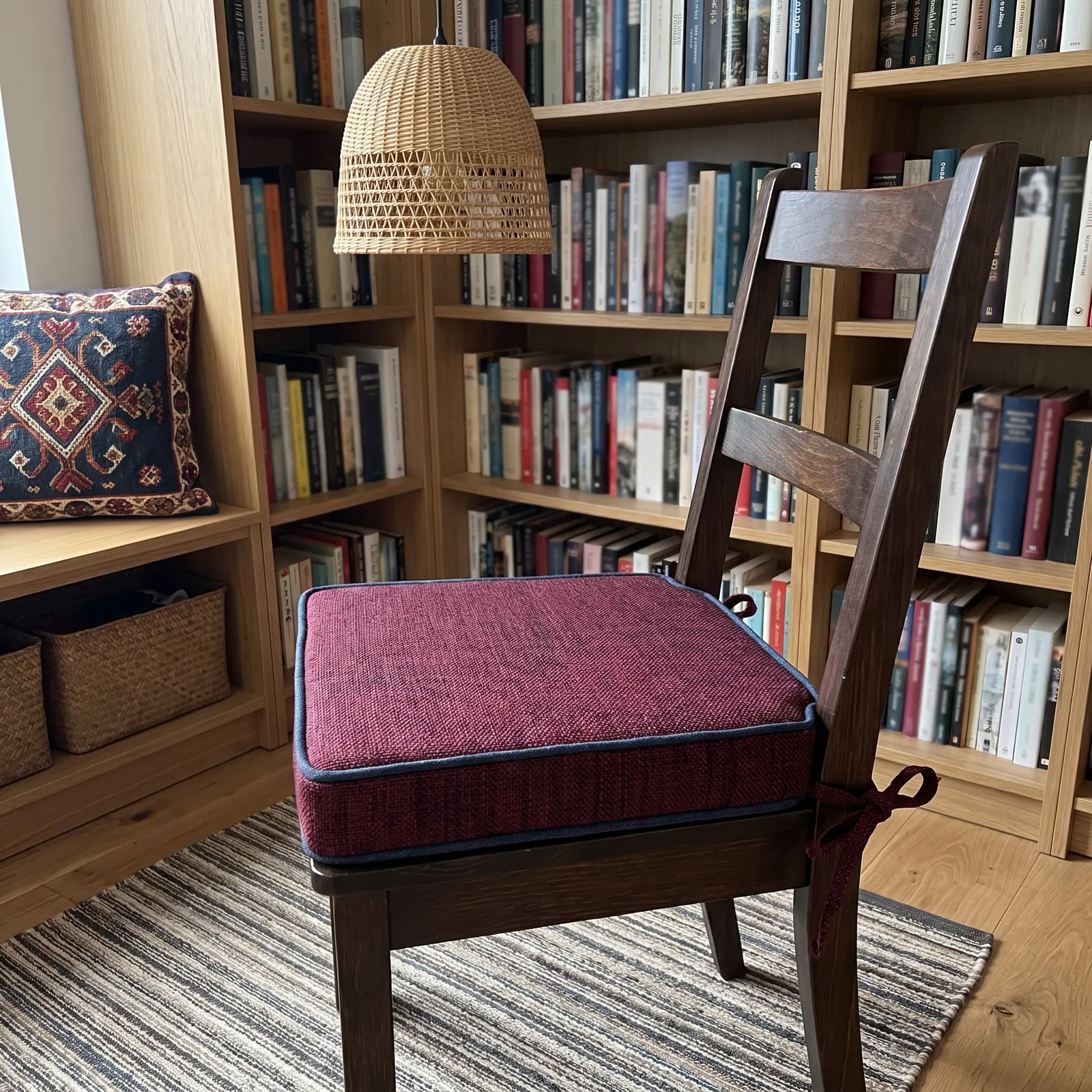
A nursery armchair measured at 5 in
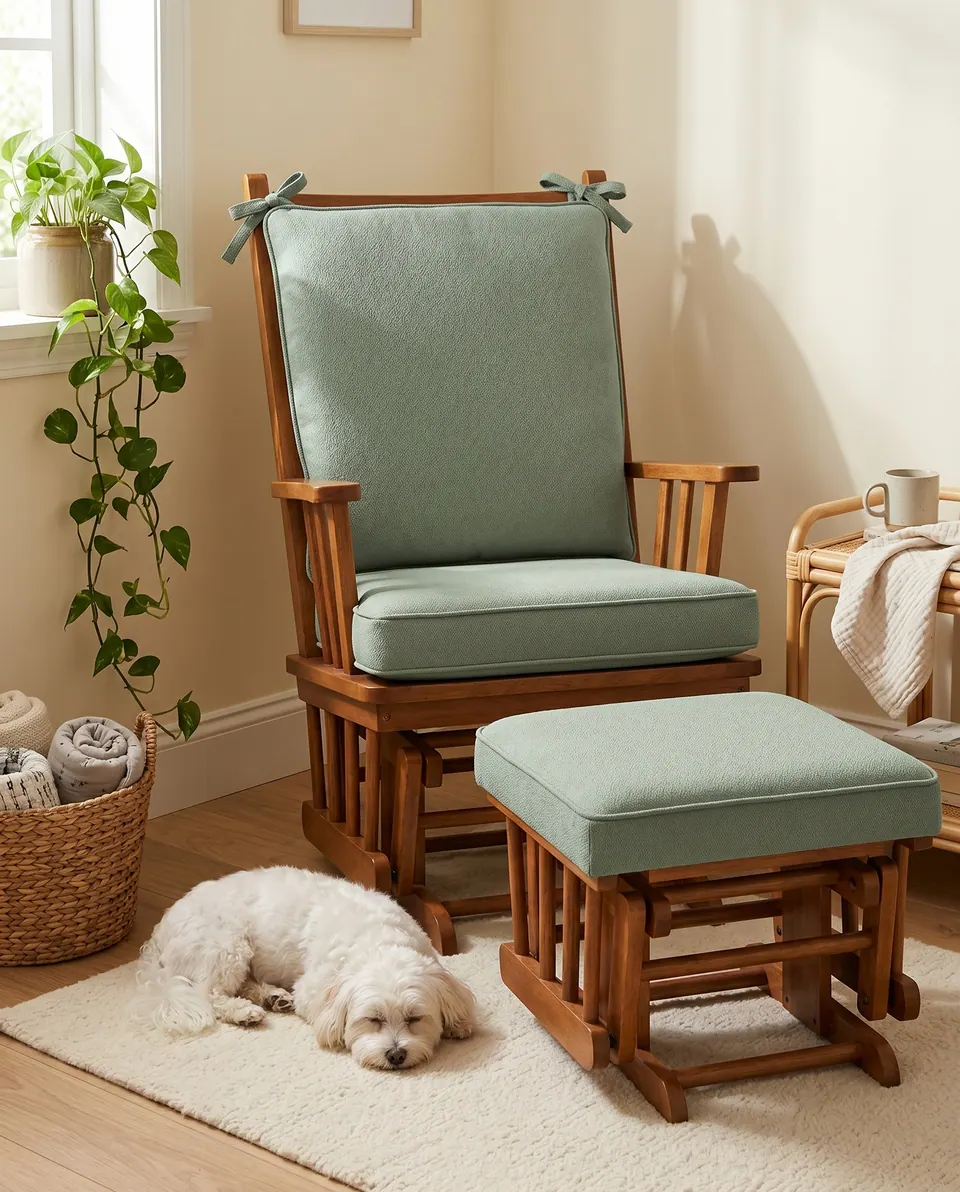
A parent in the US was replacing the cushions on an armchair headed for the nursery. The old ones measured about 5 in (13 cm) thick, so the new seat became 20 x 22 x 5 in (51 x 56 x 13 cm) and the back 21 x 27 x 5 in (53 x 69 x 13 cm), filled with fiber and silicone balls. One fabric-sample purchase showed several colors at once.
The takeaway: Measure the thickness of the cushion you are replacing. Comfort depends on that number carrying over.
02A past project
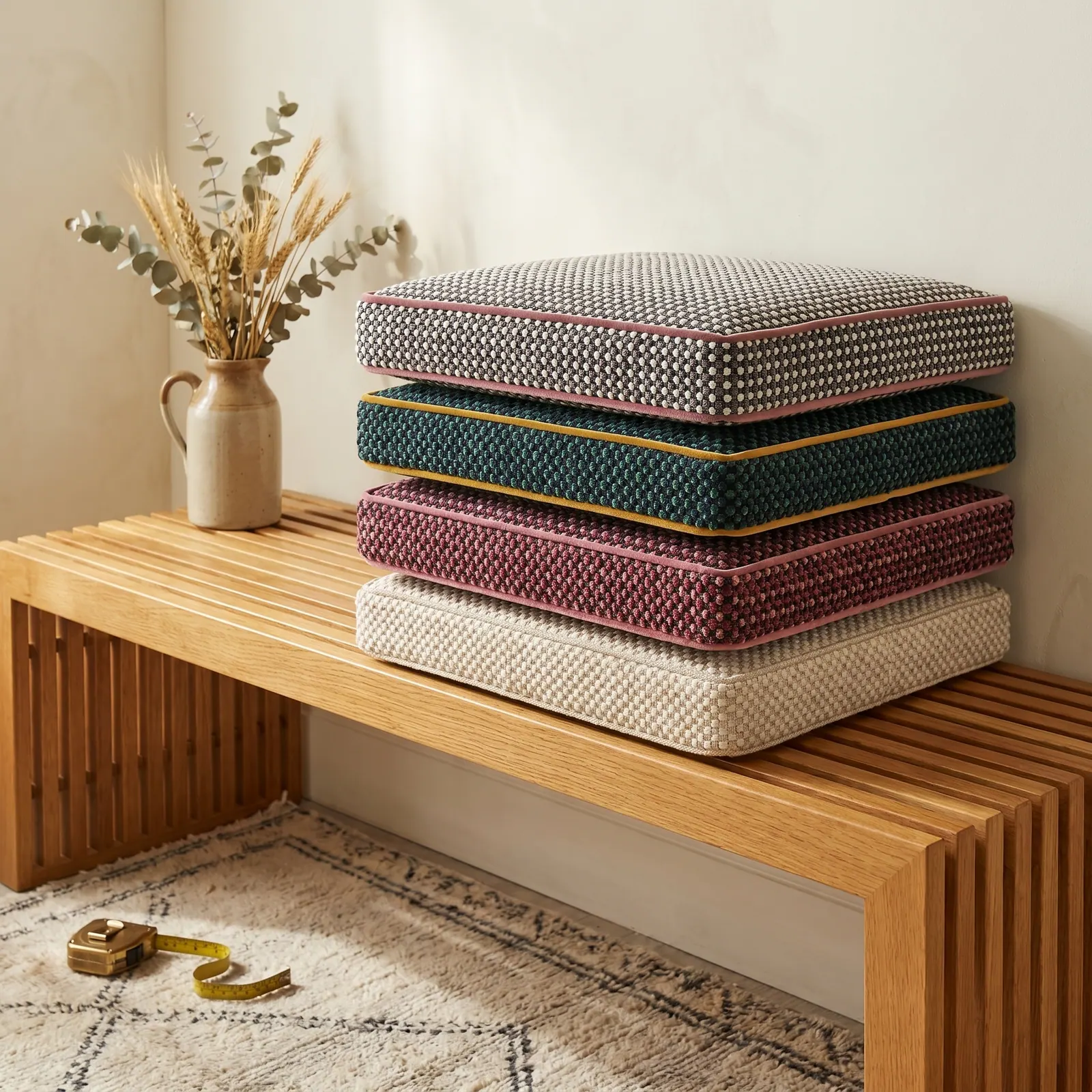
A low window bench built from stacked cushions
A buyer in the US wanted a low bench under the nursery window, made of cushions stacked like modular floor seating. She asked how tall each one was, so she could count how many to stack. The reference cushions were foam-filled, and the workshop offered foam cores so each layer kept a firm, flat shape.
The takeaway: Stacked cushions need foam cores. Ties sewn into the seams can hold the layers together.
03A past project
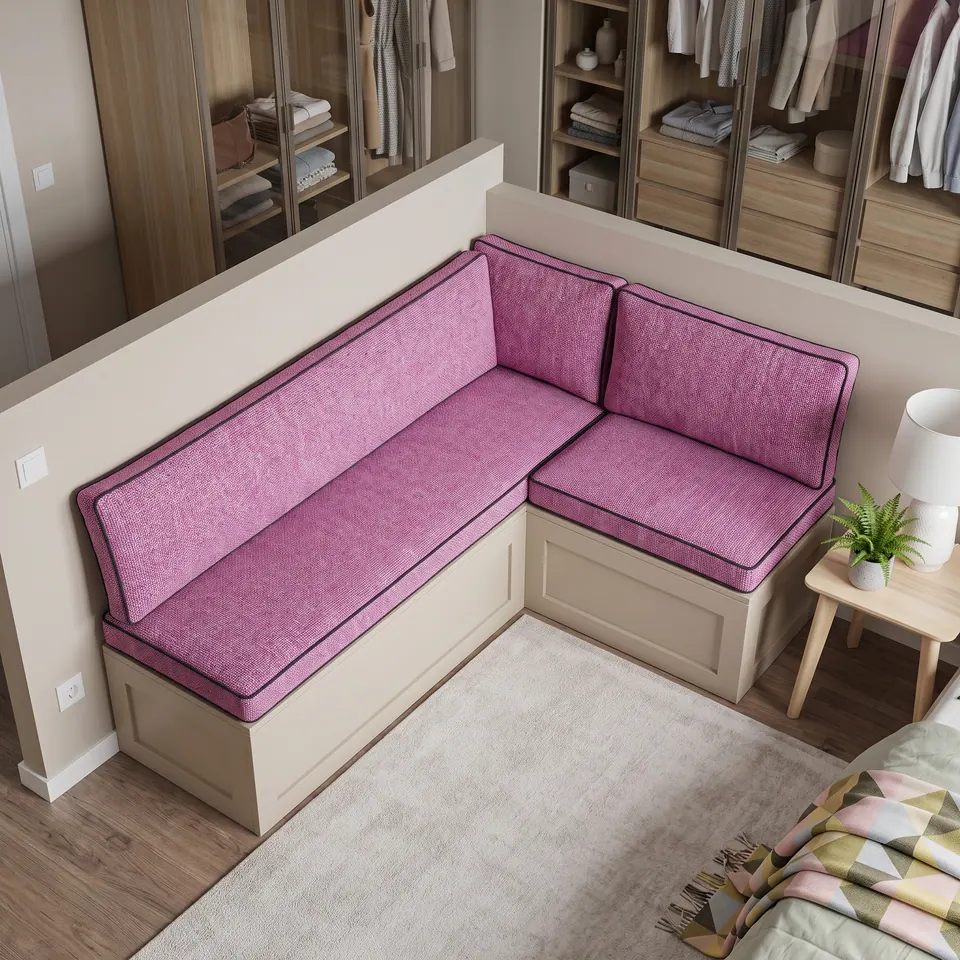
A 20 x 38 in floor couch in pink velvet
A buyer in the US loved a pink tufted velvet floor couch in a listing photo but could not tell which pink it was. The workshop matched it to chart number 27; another photo showed number 38. A custom 20 x 38 in (51 x 97 cm) option was added so the order could go straight through.
The takeaway: Match a photo to a chart number before ordering. Listing photos can show two different pinks.
04A past project
Which ivory is easiest to clean
A parent furnishing a nursery wrote to ask whether the linen was a performance blend, and which ivory would be easiest to keep clean. For children, the workshop points past the linen range to its soft fabric, a linen-look microfiber performance weave that wipes clean and machine-washes. Velvet is the other answer.
The takeaway: Choose the weave before the shade. The workshop's advice for kids leans to a mid-tone; if it must be ivory, choose it in the soft fabric or velvet.
05A past project
A daybed shared with a baby and the dogs
A buyer wrote to the workshop about a store-bought daybed in a home with a baby and dogs. The workshop steered away from 100% linen toward velvet, for its tight weave and a cover that machine-washes at 86°F (30°C). The choice was cream, with mushroom-taupe piping.
The takeaway: With a baby and pets in the house, the tightness of the weave matters more than the fiber name.
06A past project
A 39.4 x 78.7 in seat at the end of the crib
A buyer wrote to the workshop about a child's room with a gap between the end of the crib and the window. The gap became a window seat: a 39.4 x 78.7 in (100 x 200 cm) seat, a back cushion and two cylinder bolsters, all in dark green linen.
The takeaway: An awkward gap can take a seat, a back and two bolsters, each sized to the space. The seat is for sitting; the crib stays bare.
07A past project
A mini crib mattress turned floor play mat
A parent in the US was using a 37.75 x 23.75 x 3 in (96 x 60 x 8 cm) mini crib mattress as a floor play mat and wanted a fully zippered, washable box cover for it. The workshop pointed to its cover listing, with the exact size and fabric code written in the personalization note.
The takeaway: Foam you already own can get a tailored zippered cover. Send its exact length, width and thickness.
08A past project
A toddler reading corner without tufts
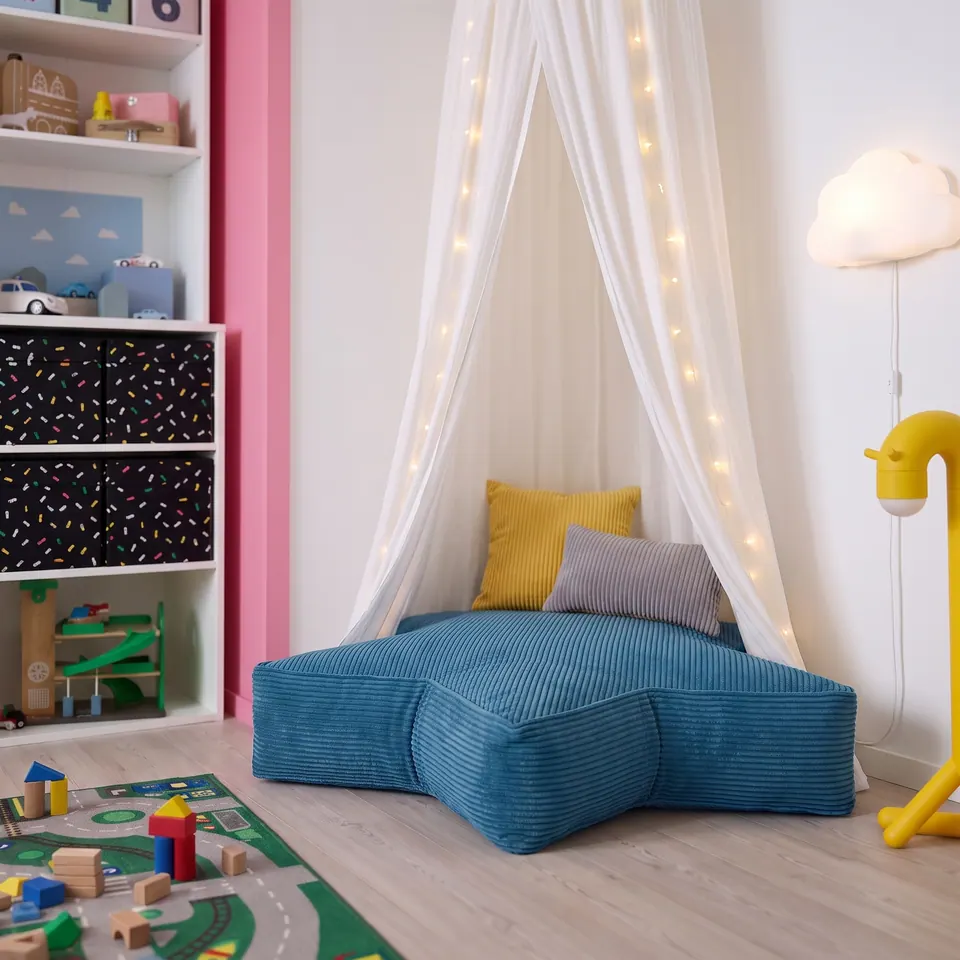
A parent in the US wanted a floor cushion set for a toddler's reading area, with covers that come off for cleaning. Tufted cushions cannot have removable covers, so the workshop offered a non-tufted, foam-filled version with a removable cover, requested in the order notes. More kids' room cushions follow the same rule.
The takeaway: Tufted cushions can only be wiped gently. Untufted ones unzip and go in the machine.
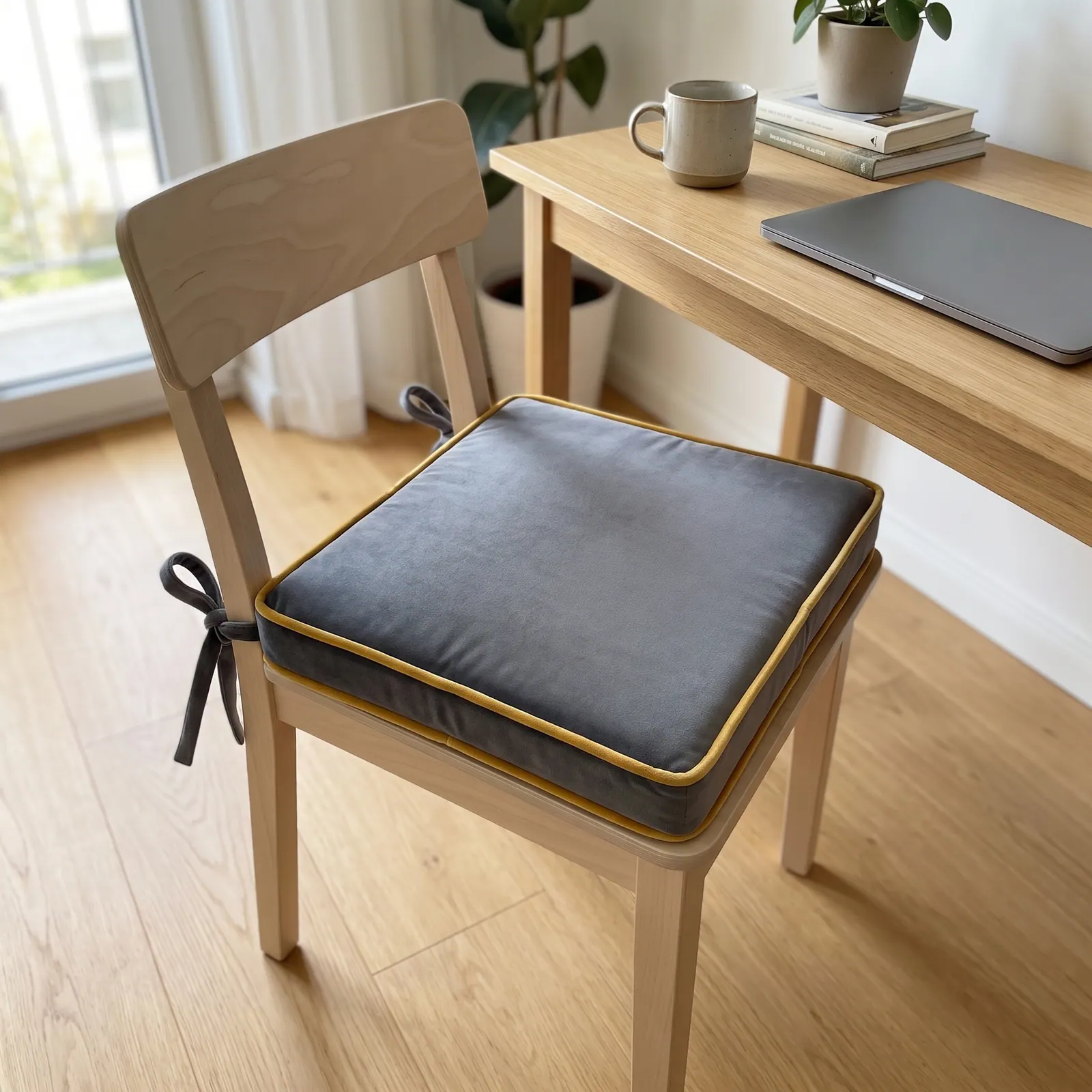
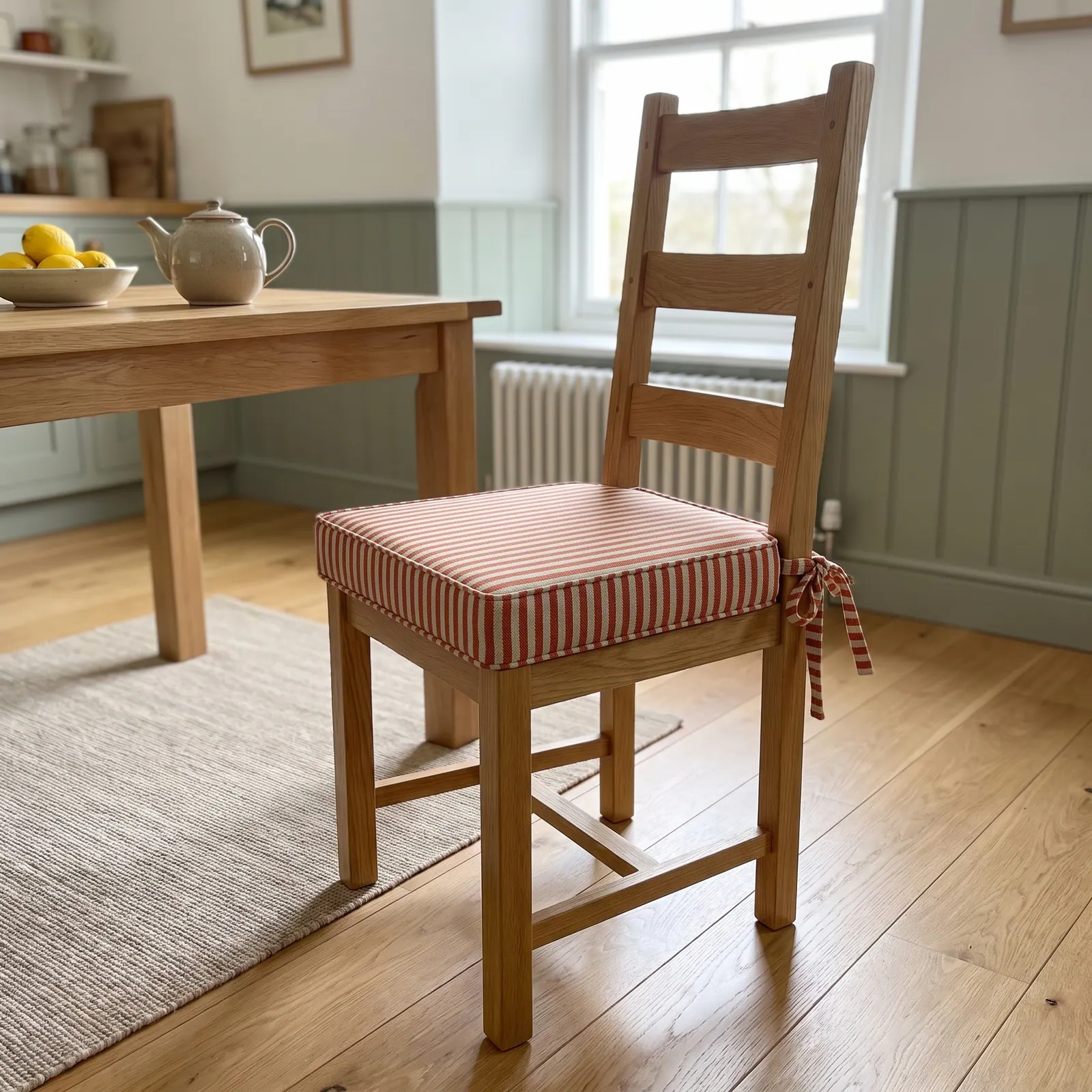
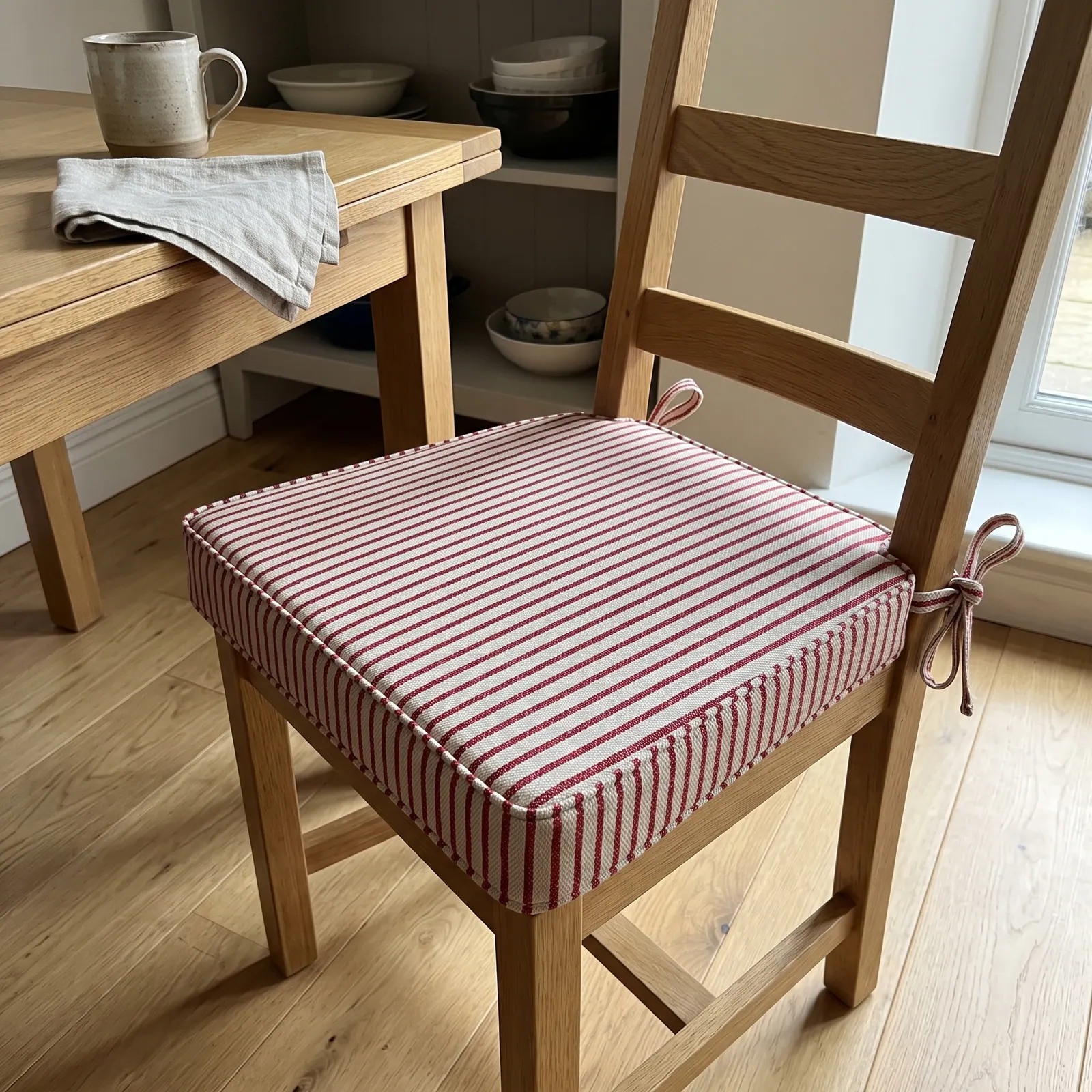
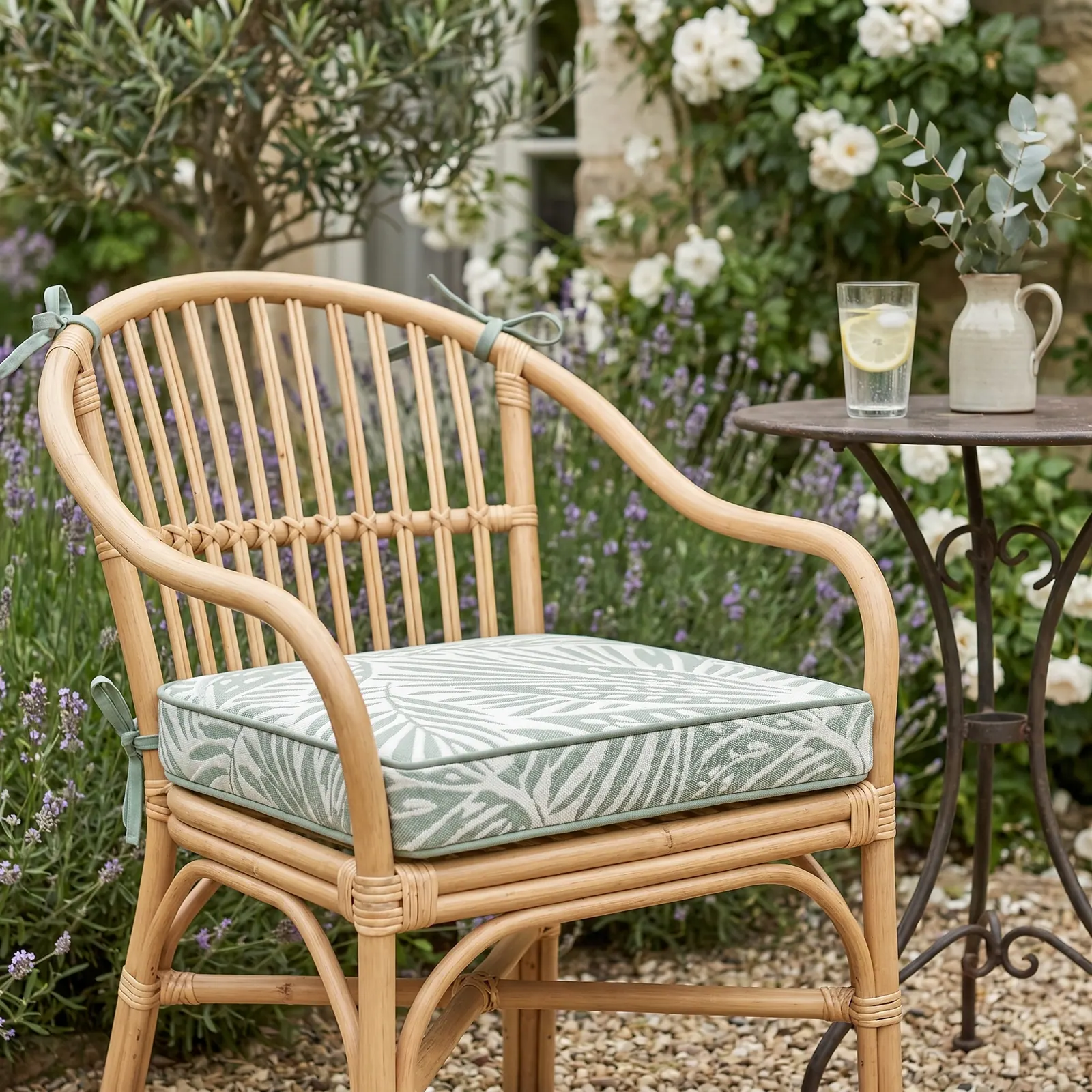

What cleans, and how, in a nursery
The word performance on a label tells you less than the weave and the zipper. The kid-friendly fabric Pattern goes further.
| Choice | How it cleans | In a nursery |
|---|---|---|
| Soft fabric (linen-look microfiber) | Wipes clean; the cover machine-washes | The workshop's first answer when parents ask for a performance fabric |
| Velvet | Easiest to spot-clean; marks lift off the pile | The most stain-resistant; stands up to daily use by children |
| Linen | An easy-clean range | Velvet's tighter weave was preferred for a home with a baby and dogs |
| Striped 100% cotton | Stains more easily | Beautiful, but not the easy choice with small children |
| Tufted cushion | Wipe gently only | No removable cover; choose untufted |
| Zippered foam cushion | Cover off, 86°F (30°C) on a gentle cycle | On a floor sofa, the non-slip bottom piece stays out of the machine |
| Waterproof | The regular fabrics are durable, not waterproof | Ask for a waterproof inner liner under the cover |
Foam, labels and the one safe-sleep rule
Night feeds are long sitting. For a bench used for long sitting, the workshop recommends 4 in (10 cm) of foam; on an armchair, match the thickness you are replacing. Its firm option is 32-density foam, about 2 lb/ft³, chosen because it does not collapse. General guidance for any daily seat is a density of at least about 1.8 lb/ft³ (29 kg/m³).
The foam firmness finder narrows the choice. The chair cushion builder takes a glider's seat and back as two pieces.
Parents also ask about flame retardants and certificates. Ask the maker what can be documented in writing, and rely on that. Here, the fabrics come from a mill certified to OEKO-TEX Standard 100 (03.T.3239). The Pattern on flame-retardant labels walks through what the US labels mean.
Children measure comfort with their whole body. The baby sleeps flat and bare. The cushion is for the arms that hold.
Nursery glider cushions need zip-off covers that wash at 86°F (30°C). Tufted cushions cannot have removable covers, so skip the buttons.
Hana
Nursery questions
- A common question
Do the floor sofa covers come off, and can they go in the washing machine?
The workshop's answerYes. Every cover on the modular floor sofa, pouf and bean-bag sofa unzips and comes off. Machine-wash at 86°F (30°C) at most on a gentle cycle, and spot-clean between washes. Take the white non-slip bottom piece off first; it must not go in the machine. Spare cover sets are sold, so the sofa stays in use on wash day, and the workshop sends a video if a cover is hard to refit. The fabrics come from a mill certified to OEKO-TEX Standard 100 (03.T.3239).
- A common question
We have a toddler. Which cushion fabric lasts longest and is easiest to clean?
The workshop's answerTwo ranges: the soft fabric and the velvet. The soft fabric is a microfiber, a little more durable than linen and thinner than velvet, soft to the touch and wipeable. Velvet is very strong under daily use by children and the easiest to spot-clean, because marks lift off the pile more readily than off textured weaves. The striped cottons are harder to keep clean with kids. When parents ask for a performance fabric, these two are the answer.
- A common question
Should a chair seat cushion be 2 in or 3 in thick?
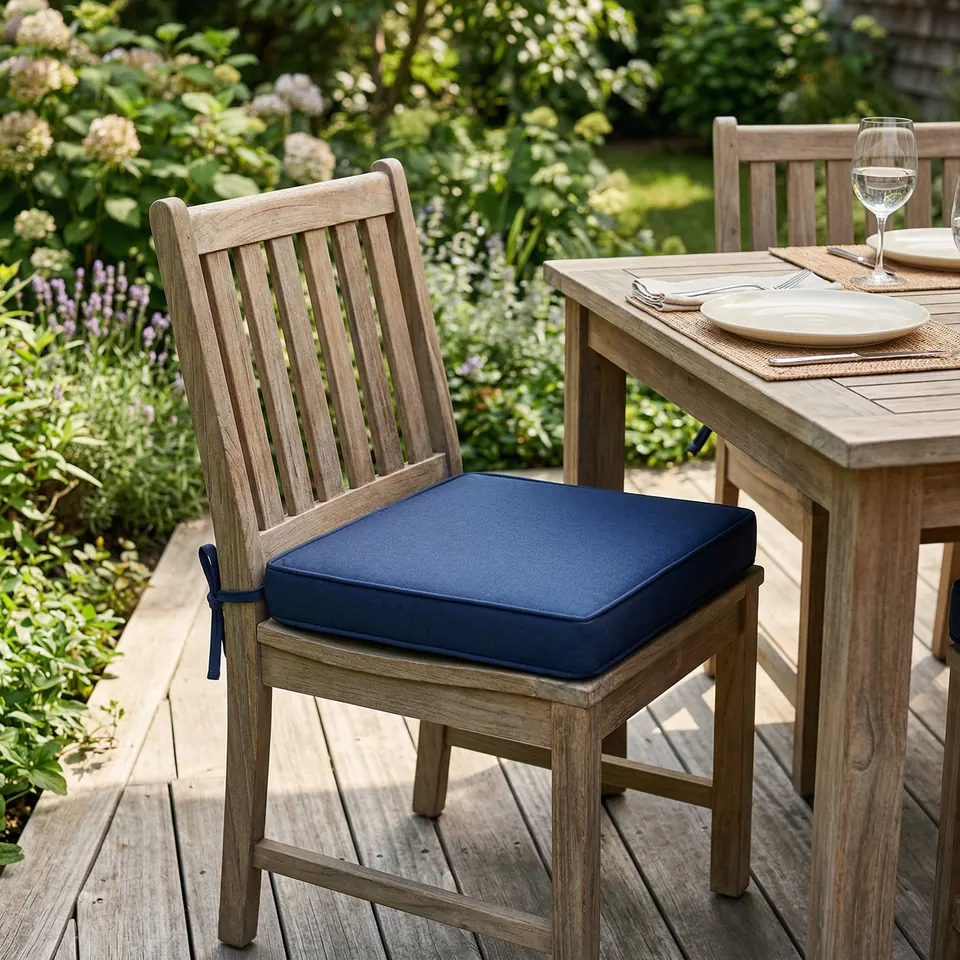
The workshop's answerFor chair pads, 2 in (5 cm) is usually right, with 3 or 4 in (7.5 or 10 cm) possible; the velvet seat cushion is 4 in (10 cm) as standard. The firm 32-density foam does not collapse, but a 2 in cushion compresses slightly, so on a 15.4 in (39 cm) chair it lands near a 16.5 to 17 in (42 to 43 cm) seat height. For long sitting on a bench, 4 in supports best. Nursery armchair seats and backs have been made 5 in thick with fiber and silicone-ball fill.
- A common question
With kids and a dog in the house, which cushion fabric holds up best?
The workshop's answerVelvet or the soft fabric. Velvet resists stains best, the soft fabric is the easiest to spot-clean, and both are the most durable in the range. Linen is also easy to clean, but the striped fabrics are 100% cotton and stain more easily. If the dog will live on the cushion, choose from the separate pet-friendly chart. All the fabrics wipe down for small spills, and zippered covers come off and machine-wash at 86°F (30°C) on a delicate cycle.

Have it made
Have an idea like this made — ask Hana’s workshop
Leave your numbers and the height you like to sit at. The rest is a short conversation. — Hana
Leave your details and the workshop will call you to confirm measurements, fabric, foam and piping. No prices, dates or payment on this page: it is a request, not an order.
Questions buyers ask next
Can a baby nap on a glider cushion or a floor couch?
No. The American Academy of Pediatrics advises that babies under one sleep on a firm, flat surface with no pillows or soft items. Glider cushions, floor couches and window bench cushions are seating for adults and older children, not sleep surfaces for infants.
Is there a waterproof fabric for nursery cushions?
The regular upholstery fabrics are durable and easy to clean, but they are not waterproof. Where spills are likely, ask for a waterproof inner liner under the zippered cover, and keep the cover itself in velvet or the wipeable soft fabric.
What foam density suits a glider seat used every night?
General guidance for a daily seat is at least about 1.8 lb/ft³ (29 kg/m³). The workshop's firm option is 32-density foam, about 2 lb/ft³, which does not collapse. Match the thickness of the cushion you are replacing. The foam density Pattern converts the units.
What can be documented about nursery cushion fabrics?
The fabrics come from a mill certified to OEKO-TEX Standard 100 (03.T.3239). For anything beyond that, such as flame-retardant questions, ask the maker what it can put in writing before you order. The OEKO-TEX Standard 100 Pattern explains what that label covers.