The Pattern Room · a measuring pattern
How to make a rocking chair cushion template that fits the seat
Every porch rocker has a seat shaped by somebody's grandfather and a hundred summers of sitting. Here's how to get that shape onto paper, so the cushion sits where you sit.
 Save
The quick answer
To fit a rocking chair cushion to a curved seat, trace the seat onto paper, cut it out, write the widest width and front-to-back depth on it, and photograph it flat from above beside a tape measure. Type the numbers too. Most rocker seats run 17 to 19 in (43 to 48 cm) wide and deep, with pads 2 to 3 in (5 to 7.5 cm) thick.
Two numbers describe a rectangle, and your rocker isn't one
Pull up a chair, and look at the seat. A rocking chair cushion sits on wood that was carved, steamed or scooped, and hardly any of it is straight. A width and a depth describe a rectangle, so on their own they will fool you.
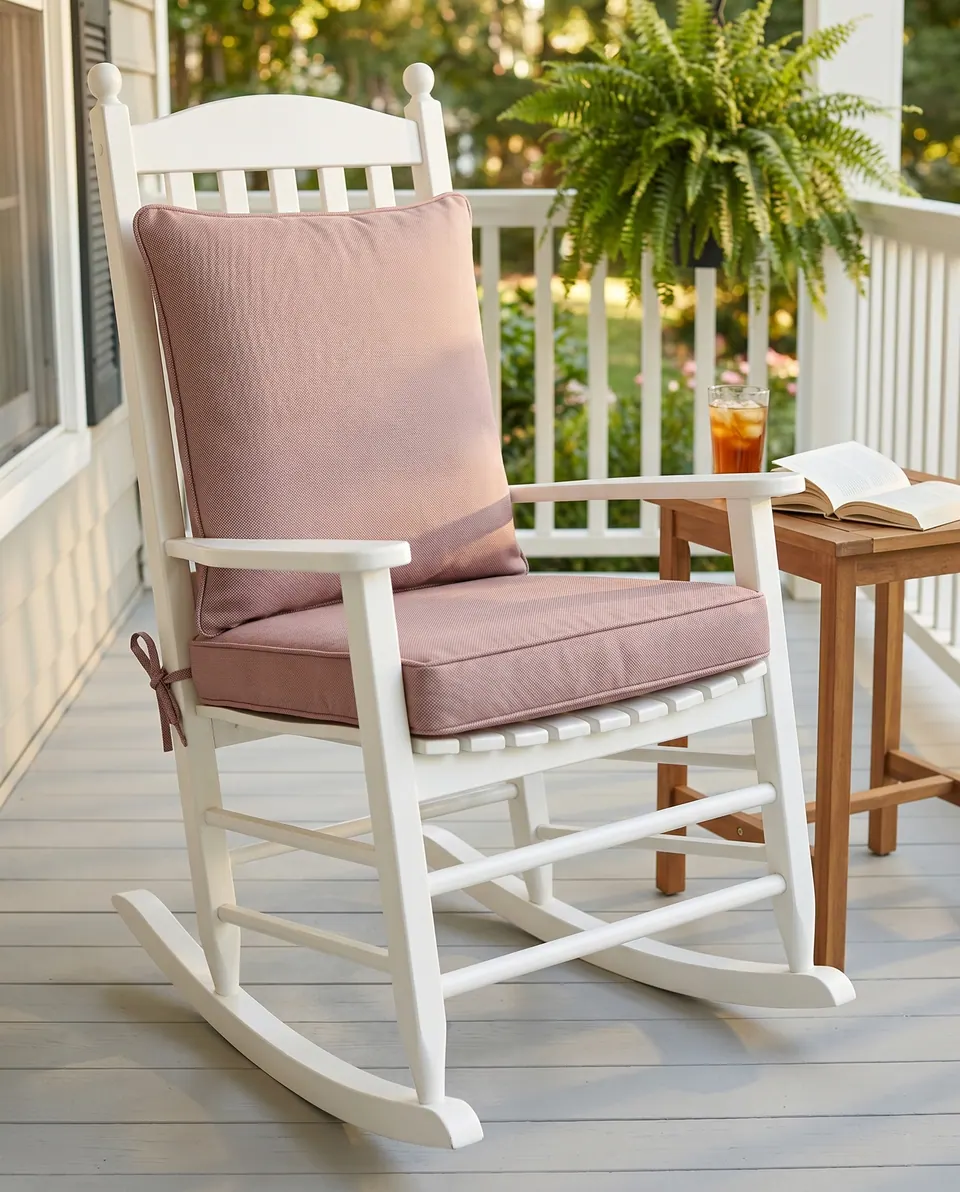
The workshop's answer is a paper template. It works for porch rockers, for a glider cushion replacement in the nursery, and for the curved-seat chairs that get handed down with the house. Finished pads are in rocking chair cushions.
Which rocker is waiting on your porch: a slat seat, a spindle back, or a glider with a round-top back?
Rocker, glider or dining chair: what goes on the template
| Chair | Typical seat | Add to the template |
|---|---|---|
| Porch rocker | 17-19 in (43-48 cm) wide and deep; pads 2-3 in (5-7.5 cm) | Where each spindle or back post meets the seat |
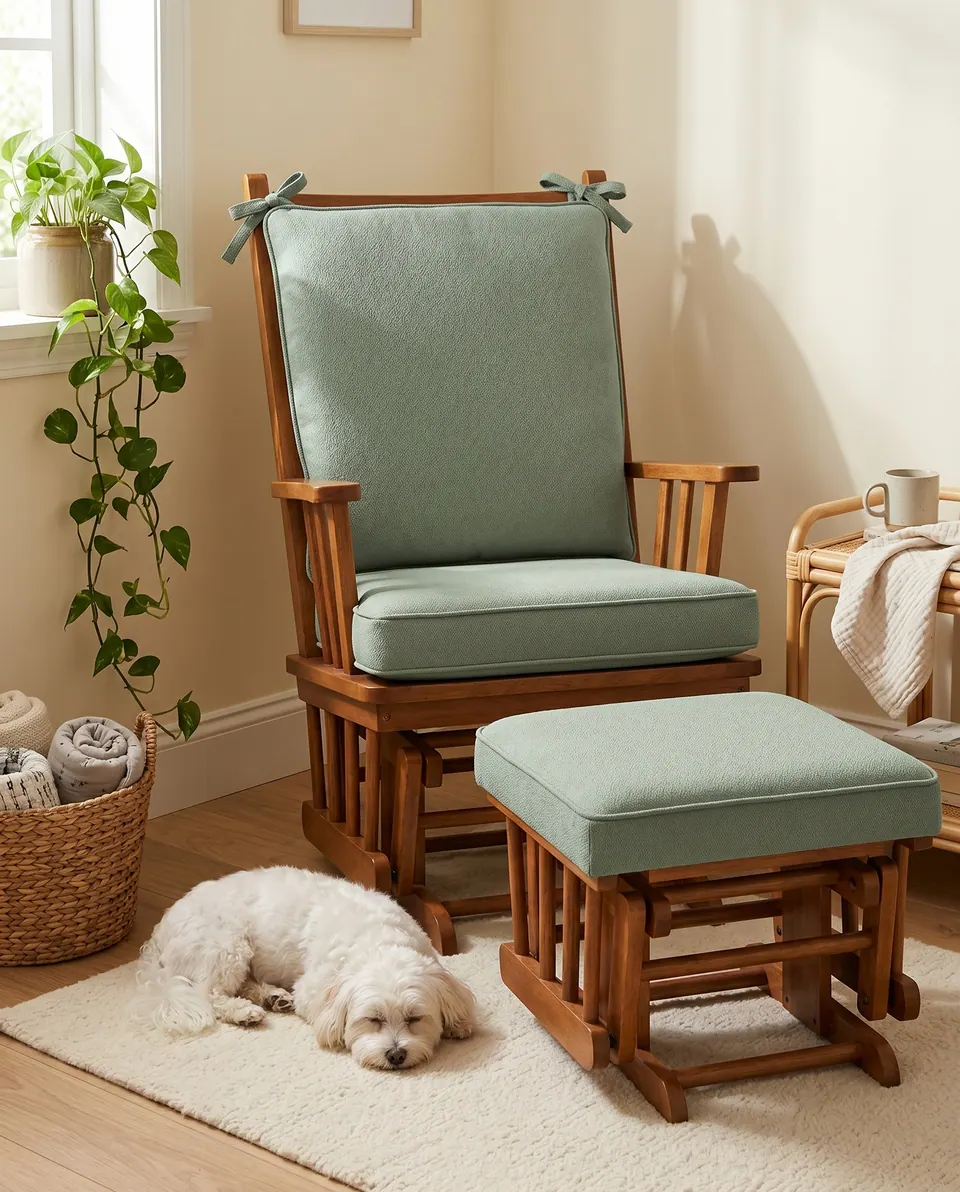
| Nursery glider | Square seat, round-top back; pads 2-3 in; foam 1.8 lb/ft³ (29 kg/m³) or more | The back's top width, bottom width and height |
| Vintage metal glider | 20-24 in (51-61 cm) deep, against 18-20 in (46-51 cm) on modern gliders | Depth at the center and at both sides |
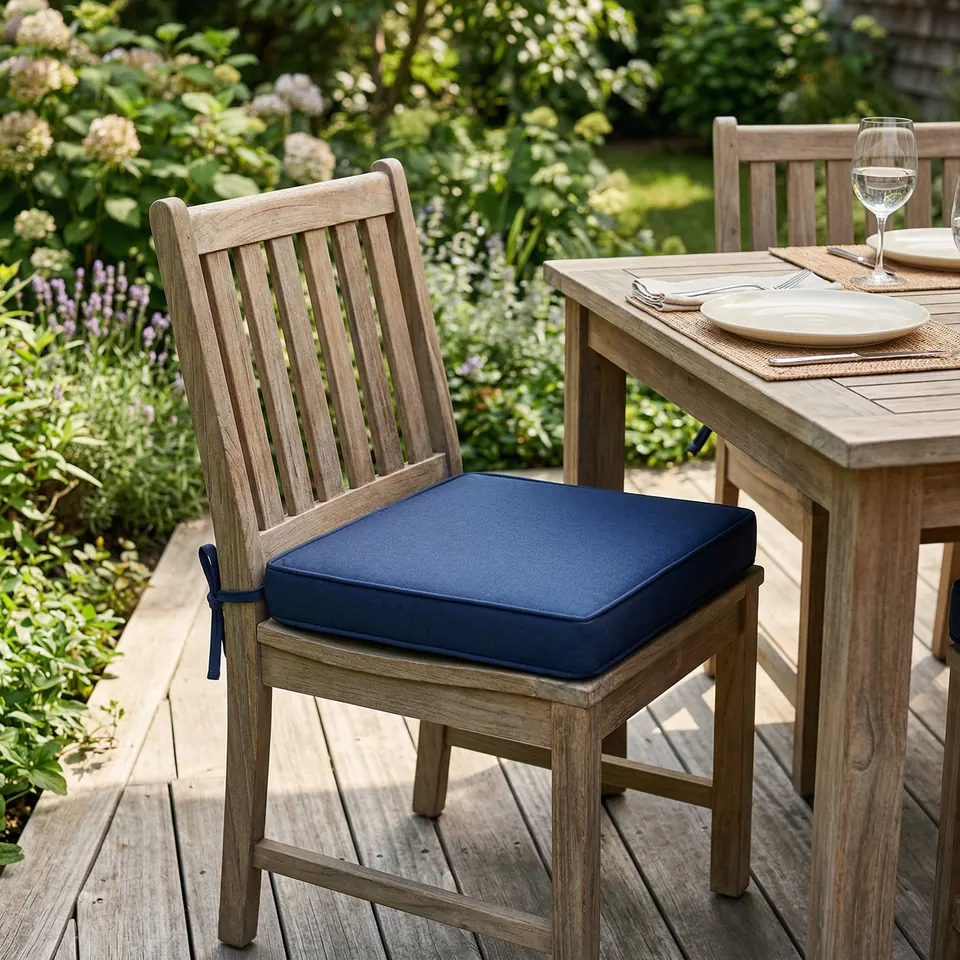
| Dining chair, for comparison | 16-20 in (41-51 cm) wide and deep; pads 2-2.5 in (5-6 cm) | Front and back width if the seat tapers |
Tracing the rocker seat, step by step
Tape paper over the bare seat
Take off the old pad and tape one sheet of kraft paper, wrapping paper or newspaper over the seat so it can't creep.
Pattern sheet Lay paper on the seat and trace the edge, write the widest width and the front-to-back depth on the template, then photograph it flat from directly above with a tape measure in the picture. Trace where the cushion should stop
Run a marker around the seat, pressing the paper into the curve. Decide whether the pad ends at the flat of the seat or at the rim, and trace that line.
Mark the spindles and back posts
Put an X where each spindle or post meets the seat and a dash where each tie should go. Ties are sewn in at the corners or along the back, in any position, but only on request.
Tick where each curve starts
Along each side, mark where the edge stops running straight. The craftsmen use those straight stretches as reference lines.
Cut it out and test it
Cut along the line, lay it back on the seat, and trim wherever it rides up a post. It should lie flat.
Write the two big numbers on it
Write the widest width and the front-to-back depth on the paper. On a curved front, add the depth at the center and at both sides; one buyer's seats were about 18 1/2 in (47 cm) deep in the middle and 17 1/4 in (44 cm) at the sides.
Pattern sheet Lay paper on the seat and trace the edge, write the widest width and the front-to-back depth on the template, then photograph it flat from directly above with a tape measure in the picture. Photograph it flat from above
Lay it on the floor with a tape measure along one edge and shoot straight down. Add a top-down photo of the seat and one of each chair. There's no need to mail the paper.
Type the numbers too
Tape photos get misread, so type the width, depth, thickness and fabric. The workshop draws the shape back with your figures on each edge and confirms before you order.

Have it made
Measured it? Have Rosa’s workshop make it
Every good cushion I know started with a long porch chat. This is the short version: leave your number and the workshop will call. — Rosa
Leave your details and the workshop will call you to confirm measurements, fabric, foam and piping. No prices, dates or payment on this page: it is a request, not an order.
The sculpted rocker that arrived as a photograph
A repeat customer wrote in about a wooden rocker with a sculpted, curved seat and offered to make a paper template. The workshop sent back the steps above: trace it, cut it, write the widest width and depth on it, and photograph it from above beside a tape measure.
When the photo came in, the craftsmen marked the straight sections of the side edges right on it and asked for two more measurements. That was all. The pad was cut 3 in (7.5 cm) thick in linen with matching piping.
Nobody guessed, and that's why it fit.
When the answer is no, and why that's a kindness
Not every rocker can be fitted from a photo. Another buyer offered a template for a seat pad that had to follow a shaped chair exactly. After the craftsmen studied the photos and drawing, the workshop declined: without the chair in the room, the risk of a poor fit was too high. The buyer thanked them for the honesty and ordered two rectangular bench cushions instead.
Here's the difference, neighbor. A pad that must hug every contour of a deep scoop needs the chair on the table. A slightly simplified outline, straight where the wood is nearly straight, can be made from a template. Curved pieces take longer than rectangles, so start before porch season. The chord and rise Pattern explains the geometry of a bend.
Where rocker orders go sideways
- Describing a curve with numbers alone; subtle curves read as square.
- Ordering from a style photo that suggests a shape your size doesn't have.
- Sending a photo of a tape measure instead of typed numbers.
- Assuming ties come standard. Ask for their position, length and color in writing.
- Burying the tie request in the size box. Confirm by message and check the pre-dispatch photo.
- Measuring a curved front only at the center.
A rocking chair seat is never a rectangle. Trace it on paper, write the widest width and the depth on it, and photograph the template flat.
Rosa
Settle the easy parts in the chair builder
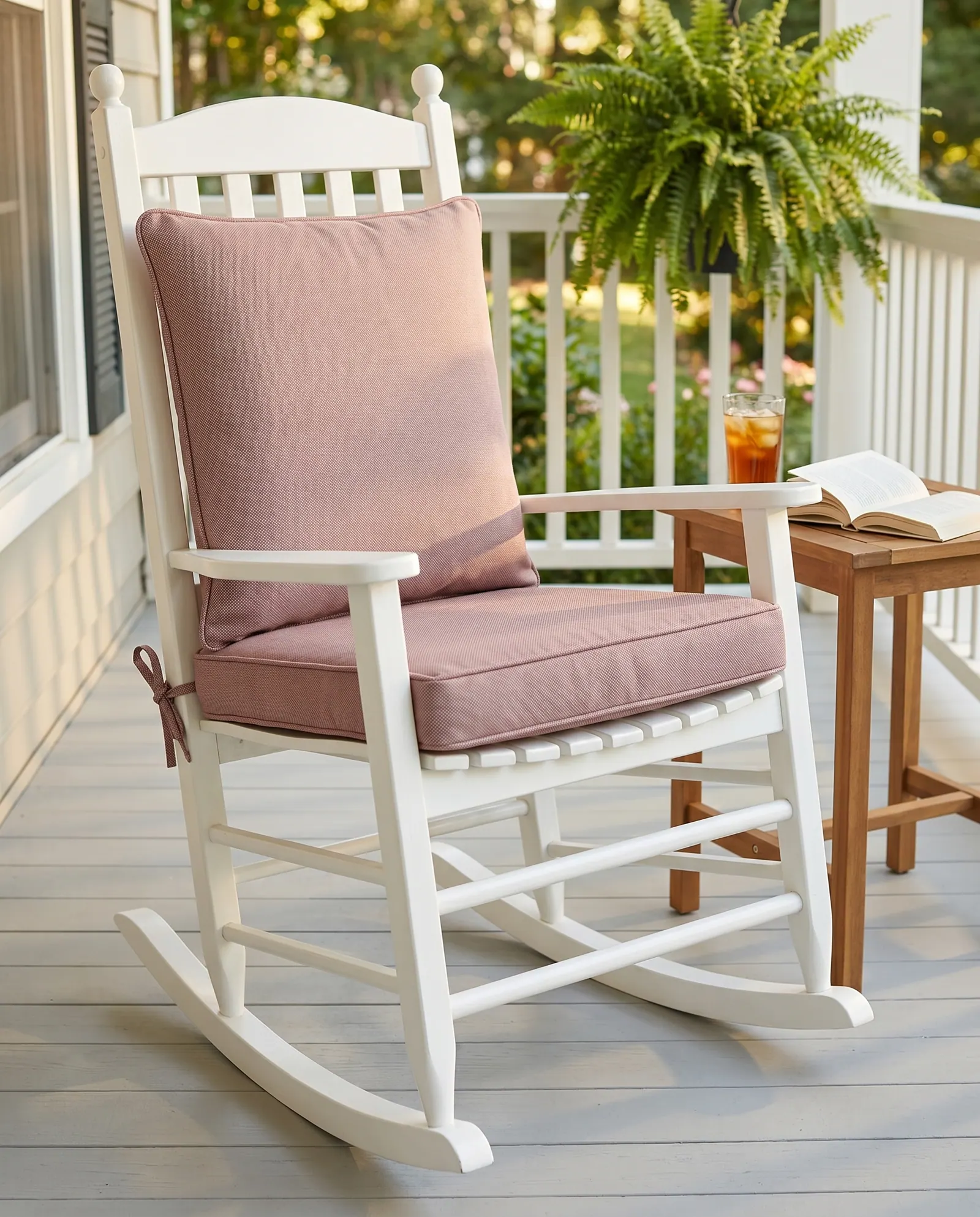
With the template traced, the chair cushion builder lets you settle thickness, ties and piping before the shape conversation starts. A rocker seat pad with ties at the back posts is the classic porch setup, and tie placement for chairs and swings shows where they go.
On an open porch, start with outdoor acrylic fabrics and the patio and porch cushions hub; the paper template Pattern covers benches too. Every curved chair seat cushion starts the same way: paper, marker, photo.
Buyer questions: curved seats and templates
- A common question
How do I measure a curved chair seat, like a rocker or a horseshoe-shaped chair?
The workshop's answerTrace the seat on paper, cut it out, write the widest width and front-to-back depth on it, and photograph it flat from above with a tape measure in the shot. Without a template, send width and depth (say 17 x 18 in), where each curve starts and ends, a top-down photo and one of each chair. The craftsmen confirm the shape before you order.
- A common question
Is there any curved shape you won't make?
The workshop's answerMild curves are fine, but nothing shaped is promised until the craftsmen review a measured drawing and photos. The workshop has declined a rocker seat pad that had to match a shaped chair exactly. A complex S-curve bench edge, first declined, was accepted once the buyer sent a full template.
- A common question
Can you work out my cushion size from a photo of the chair?
The workshop's answerNo; estimating from photos is how mistakes happen. Photos show the shape, but type the numbers out: front width, back width, depth and thickness. The workshop then draws a template with your figures beside each edge for you to check before it quotes.
- A common question
My chair seat has rounded front corners. How do I give the size?
The workshop's answerGive each edge's full length as if the corners were square, then mark how far from each corner the curve begins along both edges, for example 8 in (20 cm). Or trace the corner and photograph it beside a tape measure.
- A common question
Can the cushion be cut around the back posts of my chair?
The workshop's answerYes. Mark each notch's width, depth and position along the edge and add wide photos; the workshop redraws it as a template for you to confirm. Say where each tie goes and how long it is, and mention notches on the back edge, since the zipper runs there.
Rocker and glider questions
How thick should a rocking chair seat pad be?
Usually 2 to 3 in (5 to 7.5 cm); the sculpted rocker above was cut 3 in thick. A thicker pad lifts you higher against the arms, so check the arm height before going thicker.
Can the back cushion be tied to the seat cushion?
Yes. Ties can be sewn into the seams at the corners or along the back, in any position, to tie a backrest to a seat or a pad to the spindles. Give each tie's position and length in the order note.
Should I mail my paper template?
No need. A flat, overhead photo of the template with a tape measure in the frame, plus the widest width and depth written on it, is what the craftsmen work from. Keep the paper for follow-up measurements.
What foam holds up on a nursery glider seat?
Glider seats run 2 to 3 in (5 to 7.5 cm) thick, and foam below 1.8 lb/ft³ (29 kg/m³) tends to flatten fast. Aim for that density or more with a medium feel; a patterned fabric hides the odd spill.