Concept Sketches · 9 scenes
Rocking chair cushions, traced from the seat itself
A rocker's seat is carved like a saddle, and a plain rectangle has nothing to hold on to. Here are rockers and curved chairs from past orders, and the sheet of paper that saved most of them.
 Save
The quick answer
The recommended way to order a rocking chair cushion is to trace the seat onto paper, cut it out, write the widest width and the front-to-back depth on it, and photograph it flat from above beside a tape measure. There is no need to mail the paper. The craftsmen check the shape, may ask for a couple of extra edge measurements, and confirm before you order.
Why a flat cushion walks off a rocker
Set a flat cushion on a rocker, rock twice, and watch it inch toward the floorboards. Nobody did anything wrong. A rocker's seat is dished in the middle and rounded at the front, and a rectangle has nothing to grip.
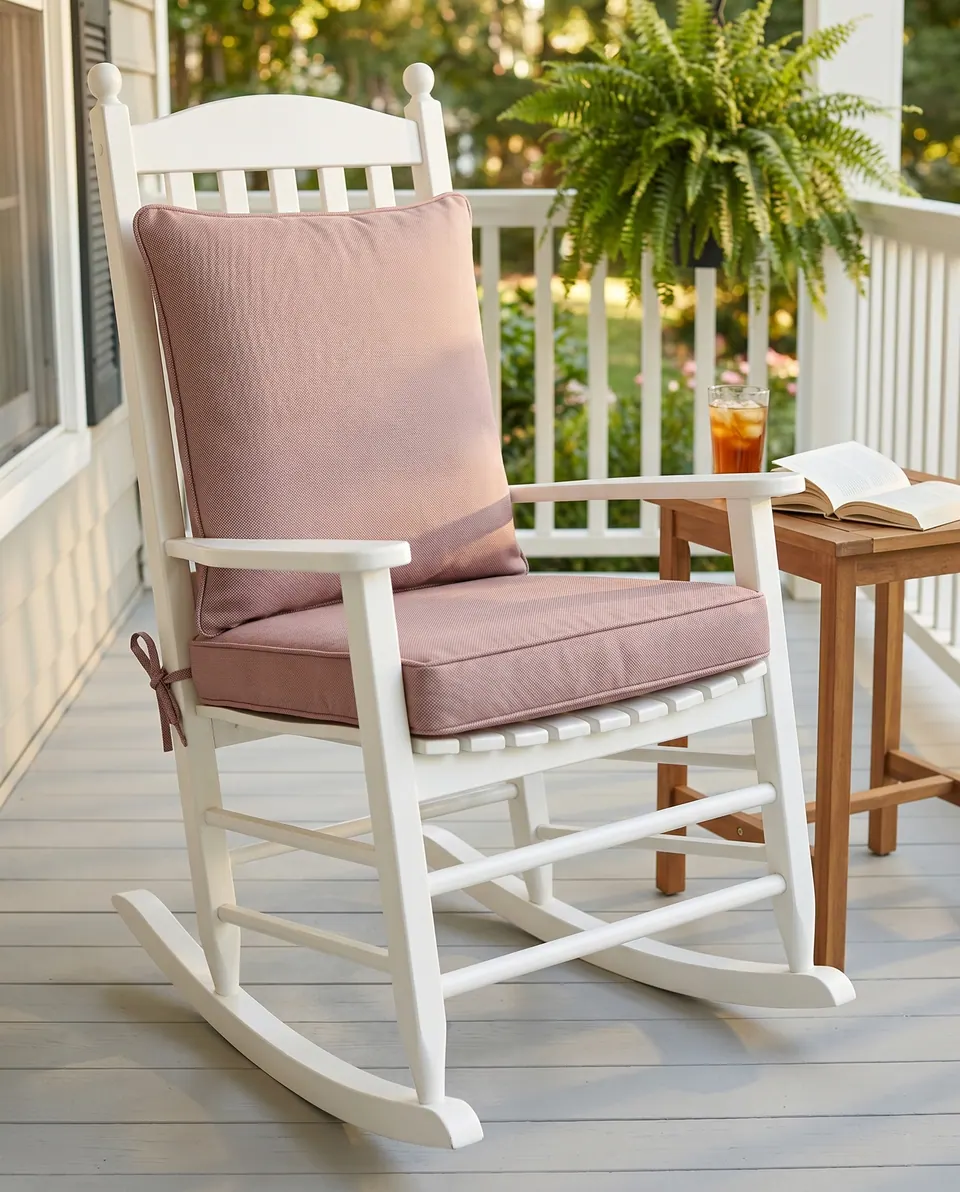
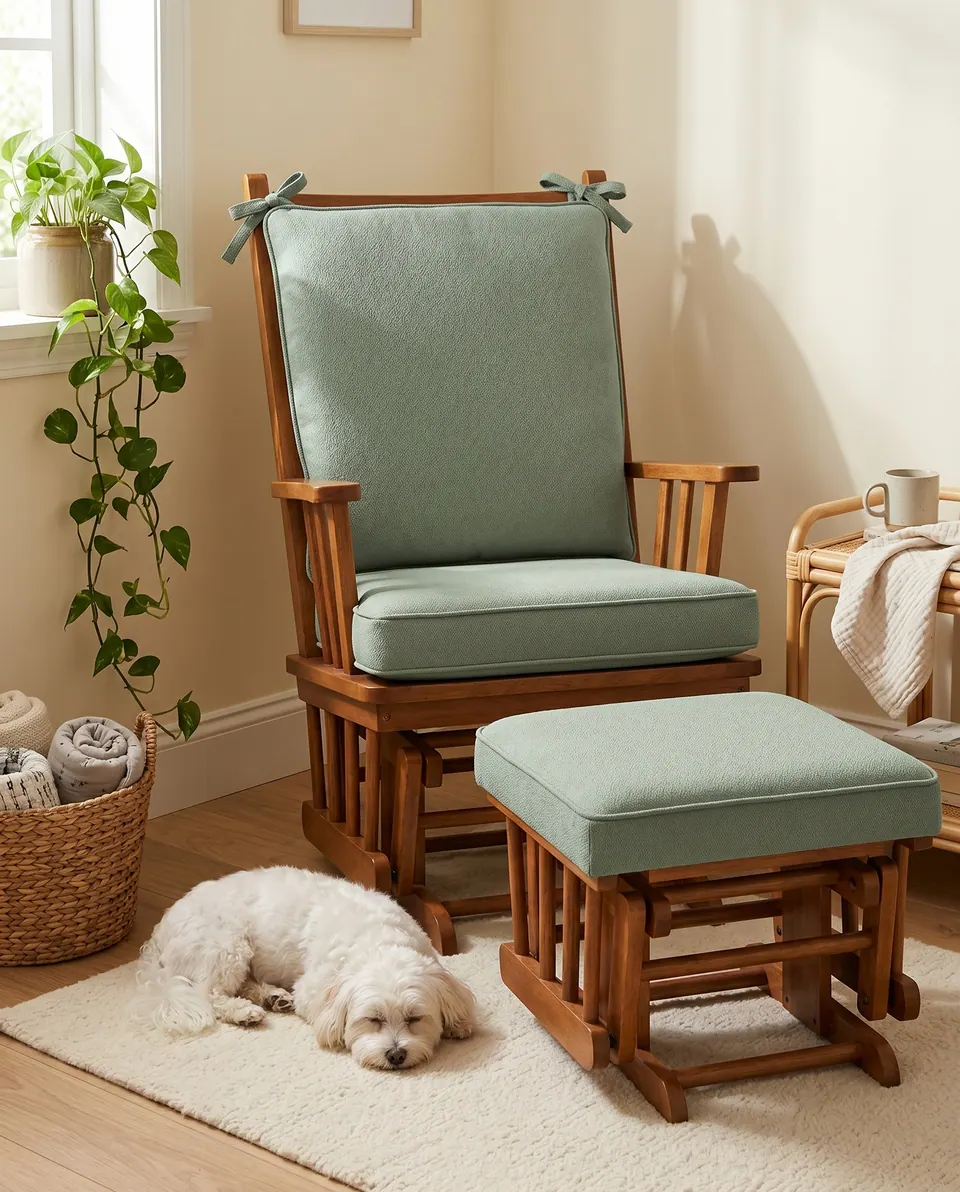
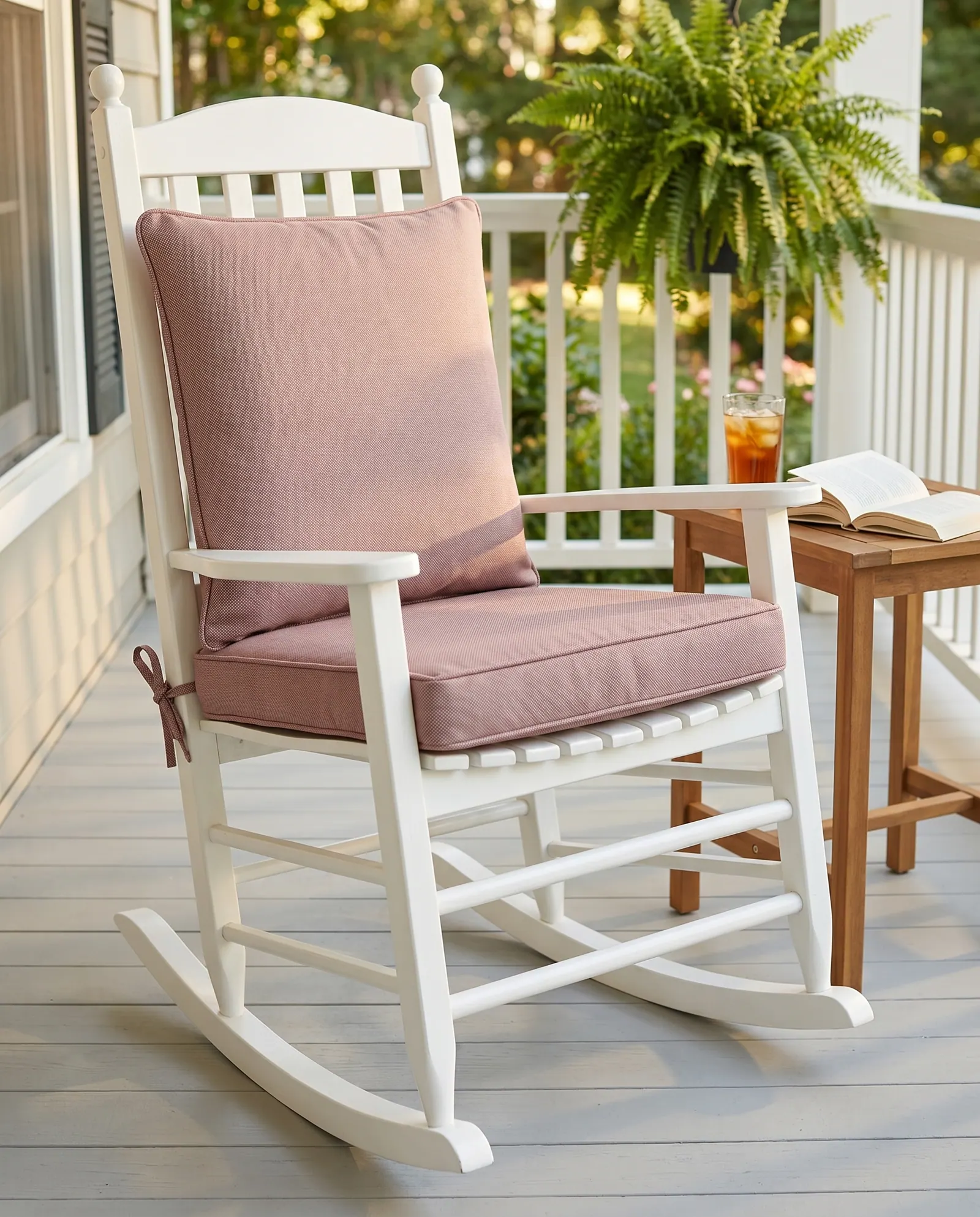
Pull up a chair. Rockers have sat on American porches since the 1700s, the painted Boston rocker in black with its stenciled flowers among them, and they nearly always come in pairs. A rocking chair cushion has to follow that carved seat, tie to the back spindles, and stay thin enough that the sitter still sits in the chair.
The stories below are real past orders: rockers, curved armchairs and one chair the workshop turned down. The rocking chair cushions hub holds the basics, and the paper template Pattern walks the tracing step by step. What does your rocker's seat look like from straight above?
Nine rockers and curved chairs, and what each one taught
01A past project
A sculpted rocker seat traced on paper
A returning buyer wrote to the workshop about a wooden rocker with a carved, curved seat and offered to make a paper template. The workshop sent the steps: trace, cut, write the widest width and the depth on the paper, and photograph it from above with a tape measure. The craftsmen marked the straight parts of the side edges on that photo and asked for two more measurements. The cushion was made 3 in (7.5 cm) thick in linen with matching piping.
The takeaway: A photographed template plus two reference measurements beats guessing a curve with a tape.
02A past project
The rocker the workshop said no to
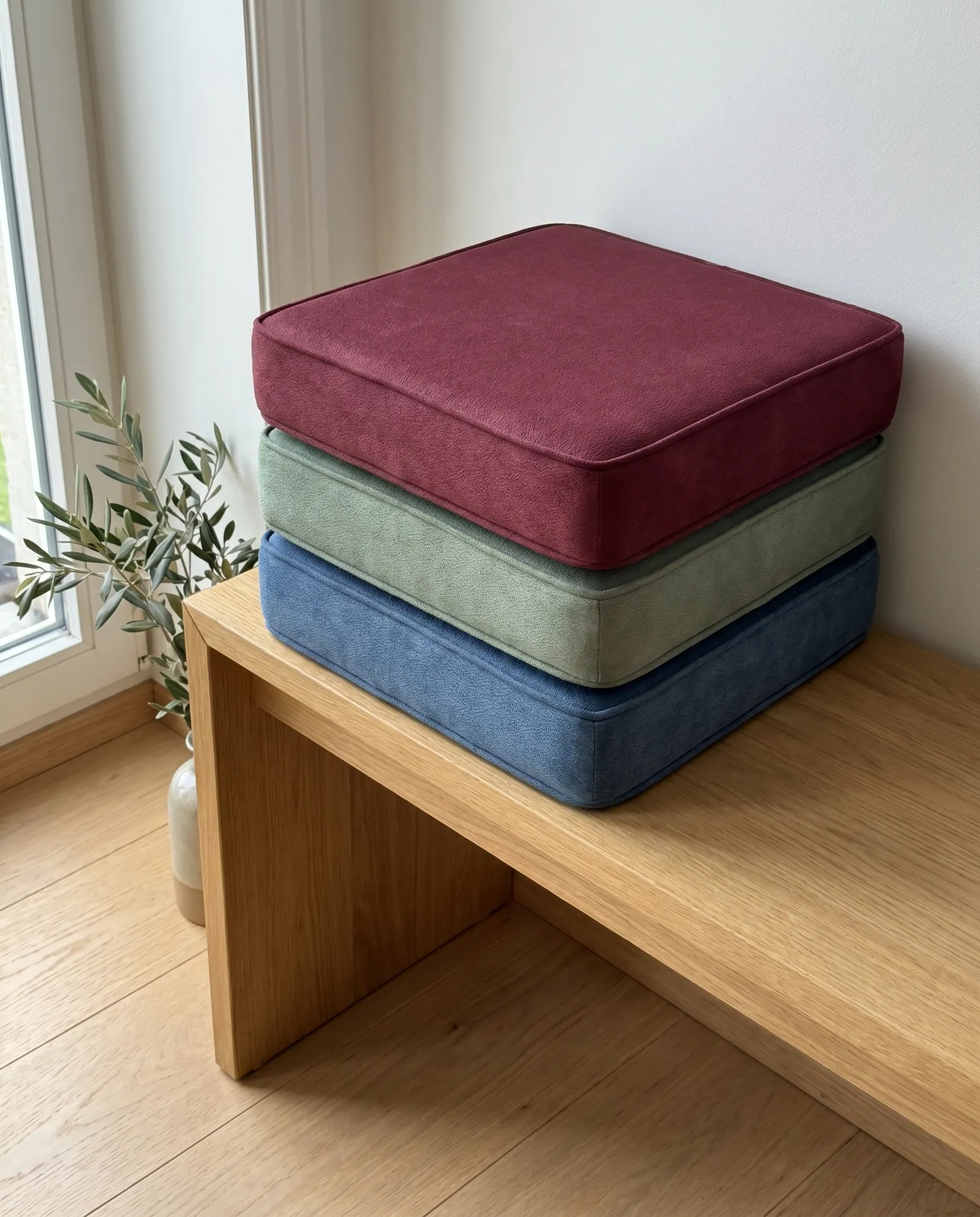
A buyer messaged the workshop wanting a seat pad for a rocking chair with a shaped seat, and offered to send a template. After the craftsmen studied the photos and drawing, the workshop declined: without the chair in the room, the risk of a poor fit was too high. The buyer thanked the workshop for the honesty, which is the nicest thing anyone says to a shop that just turned down work, and came back for two rectangular bench cushions in a sturdy sage, about 15.25 x 34.25 in (39 x 87 cm) and 12.25 x 20 in (31 x 51 cm).
The takeaway: Some shaped seats need the chair on the cutting table; rectangles are safe to order from home.
03A past project
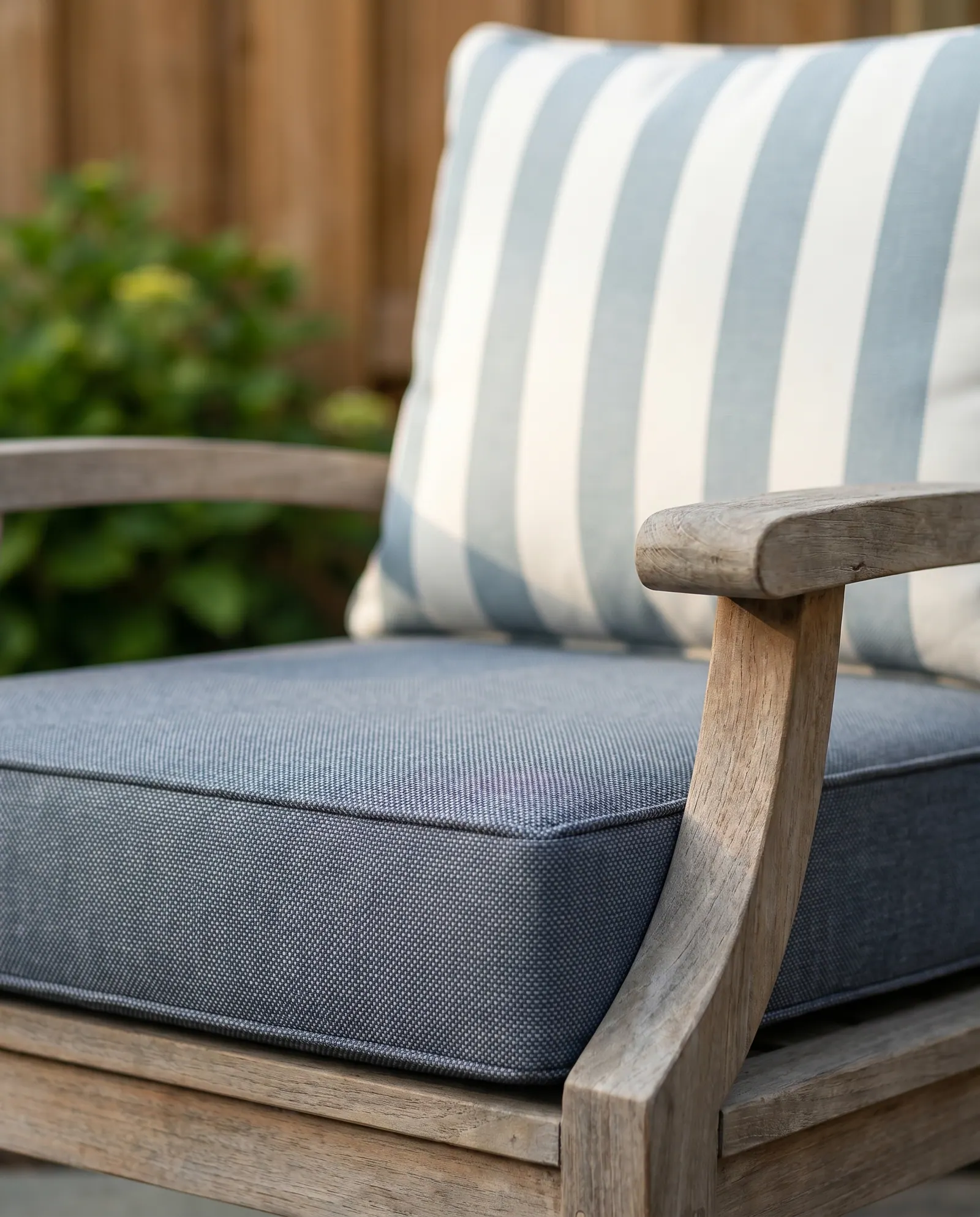
A rattan armchair: easy seat, risky back
A buyer in the US had a rattan armchair with a U-shaped seat, a little wider at the front and curved at the back corners. Measured, it came to 24 in (61 cm) deep and 21.25 in (54 cm) wide, under 3 in (7.5 cm) thick, and the workshop called the seat straightforward. The back cushion pressed against the curved frame was another story; it asked for measurements and a straight-on photo of that curve before promising anything.
The takeaway: On curved chairs the seat pad is the easy part; a back cushion against a curve is where fit goes wrong.
04A past project
Ties at the spindles, asked for in writing
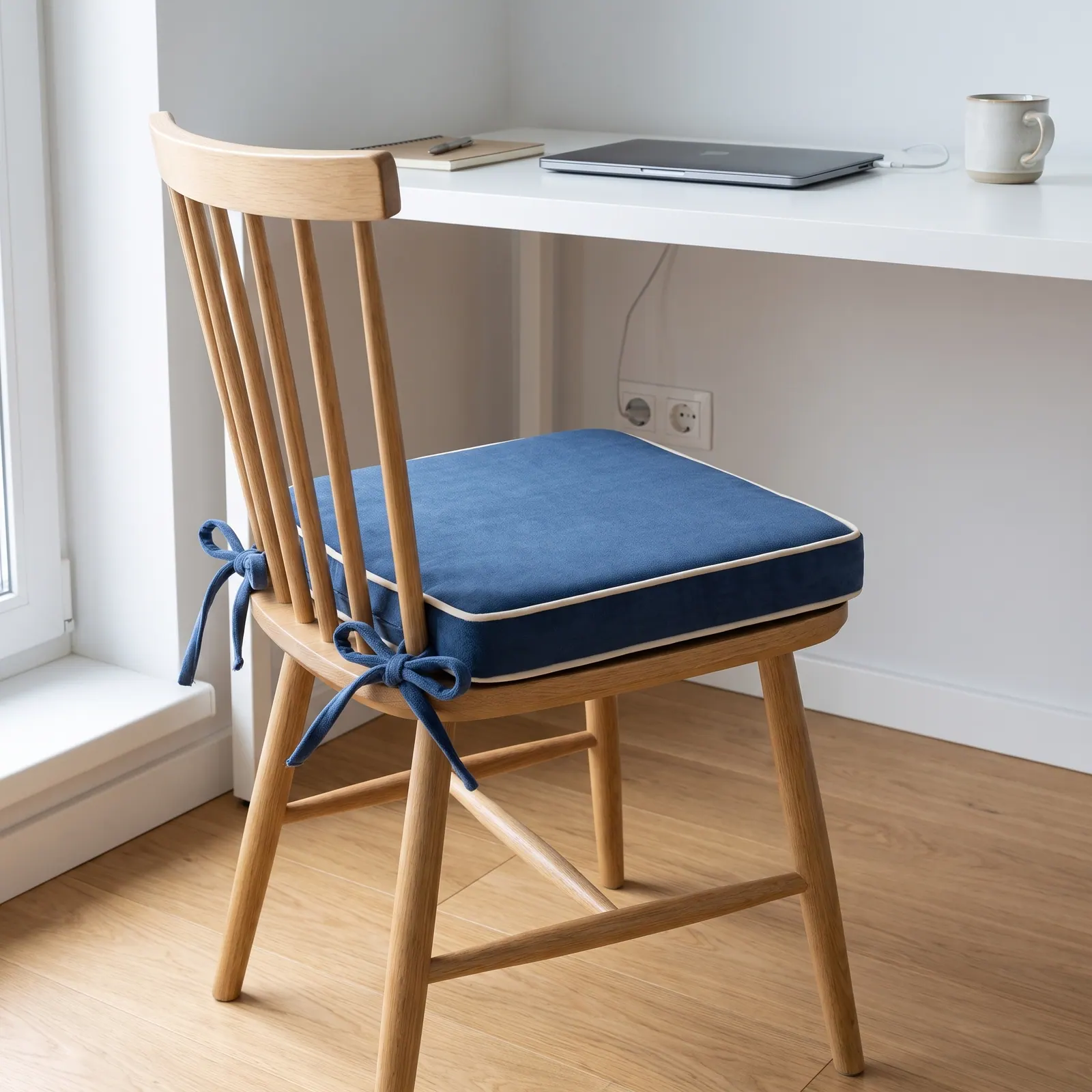
Ties are a rocker's seat belt, and they are never added unless you ask. A buyer in the US wanted ties on a small odd-shaped cushion, 14 x 18 in (36 x 46 cm), placed along the wider side; the request went into the personalization box and production sewed them into the seam. When ties have gone missing on other orders, a request typed into the size box was one of the reasons.
The takeaway: Write how many ties, where and how long in the order note, then look for them in the pre-dispatch photo.
05A past project
Why a rocker pad stays at 2 or 3 in
A buyer in the US asked what really changes between 2, 3, 4 and 5 in. The workshop's answer: 2 in is a slim pad, 3 in a neat middle ground, 4 in noticeably plumper and 5 in the deepest, all in the same firm 32-density foam, so 4 and 5 in feel alike and differ mostly in looks. On a rocker, where the arms and the carve of the seat are fixed, I keep the pad at 2 or 3 in.
The takeaway: Choose rocker thickness by height and look, not softness; the foam is the same at every thickness.
06A past project
Grip under a painted chair
A buyer in the US worried that a non-slip bottom would mark a wooden bench's finish. The workshop's answer: the base is a fabric backing, not glue or a rubber coating, so it is safe on wood, heirloom pieces included. It always covers the whole underside; a grippy middle with a plain fabric border can't be made.
The takeaway: Pair ties with a full non-slip base; underneath, it is all or nothing.
07A past project
Linen or outdoor fabric on a screened porch
A buyer wrote to the workshop asking whether indoor linen cushions would do outside. On a covered balcony that rain barely reaches, the workshop said, linen will work. On a screened porch, where pollen, dust and humidity drift through the mesh, it recommended outdoor fabric and offered to send samples first.
The takeaway: Where rain barely reaches, linen works; where pollen and humidity live, choose outdoor fabric.
08A past project
A curve so gentle it read as square
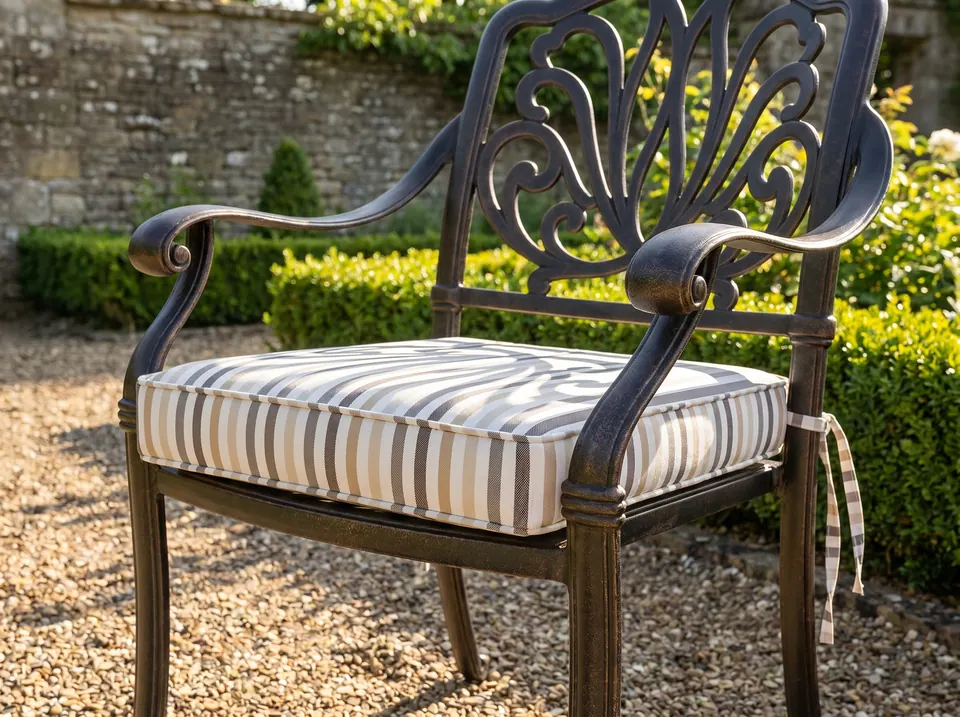
A buyer in the US received a well-made cushion for a U-shaped chair seat and felt the cut looked almost square. The workshop's lesson from that one: a subtle U reads as a rectangle with soft corners unless the curve is drawn in detail. The buyer kept the cushion, and the workshop kept the lesson.
The takeaway: Draw every curve with its depth and span, even a gentle one.
09A past project
Curved fronts: measure the depth twice
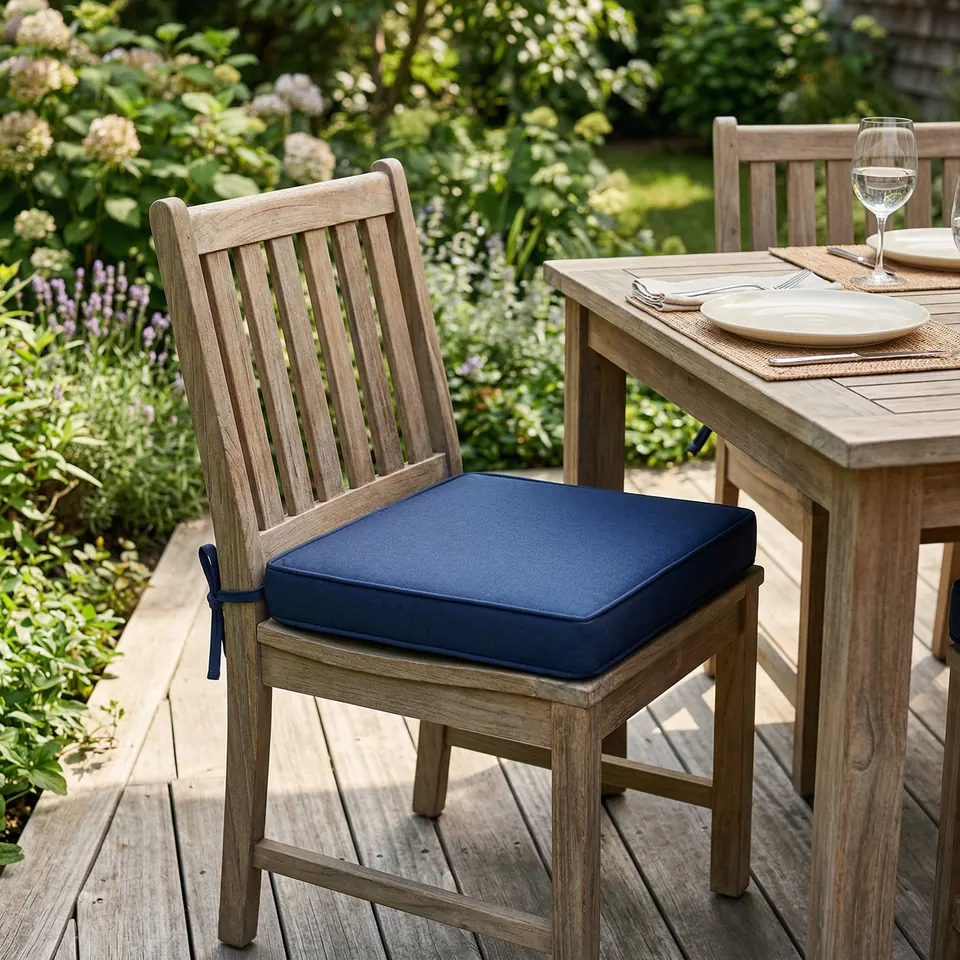
A buyer wrote in about outdoor chairs whose seats taper and curve at the front: 18.5 in (47 cm) across the front, 15.4 in (39 cm) at the back, 18.5 in (47 cm) deep at the center but 17.3 in (44 cm) at the sides, 2 in (5 cm) thick. The workshop asked for the numbers typed out rather than read off tape photos, then drew templates with curved fronts for approval.
The takeaway: On a seat with a curved front, measure depth at the center and at both sides.
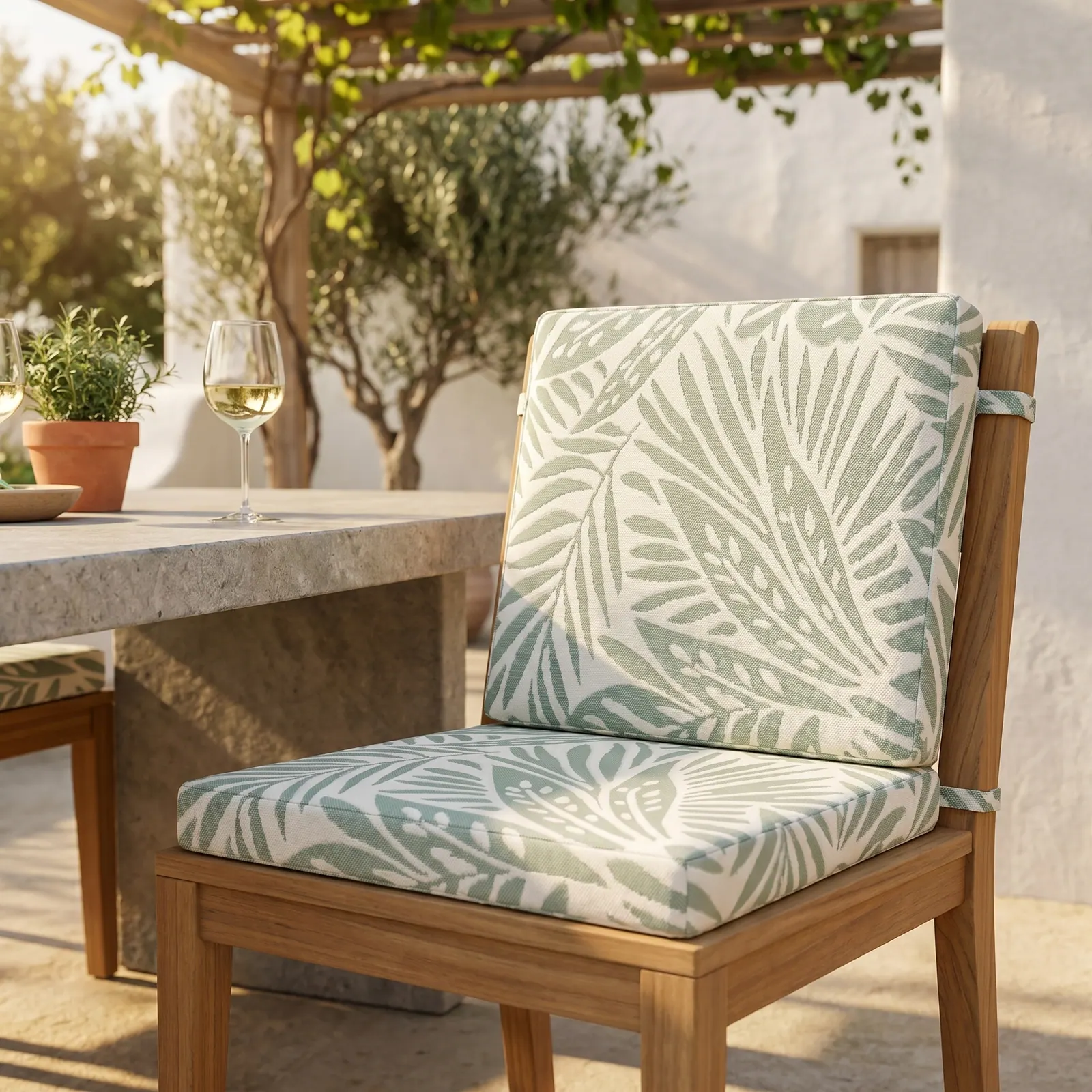
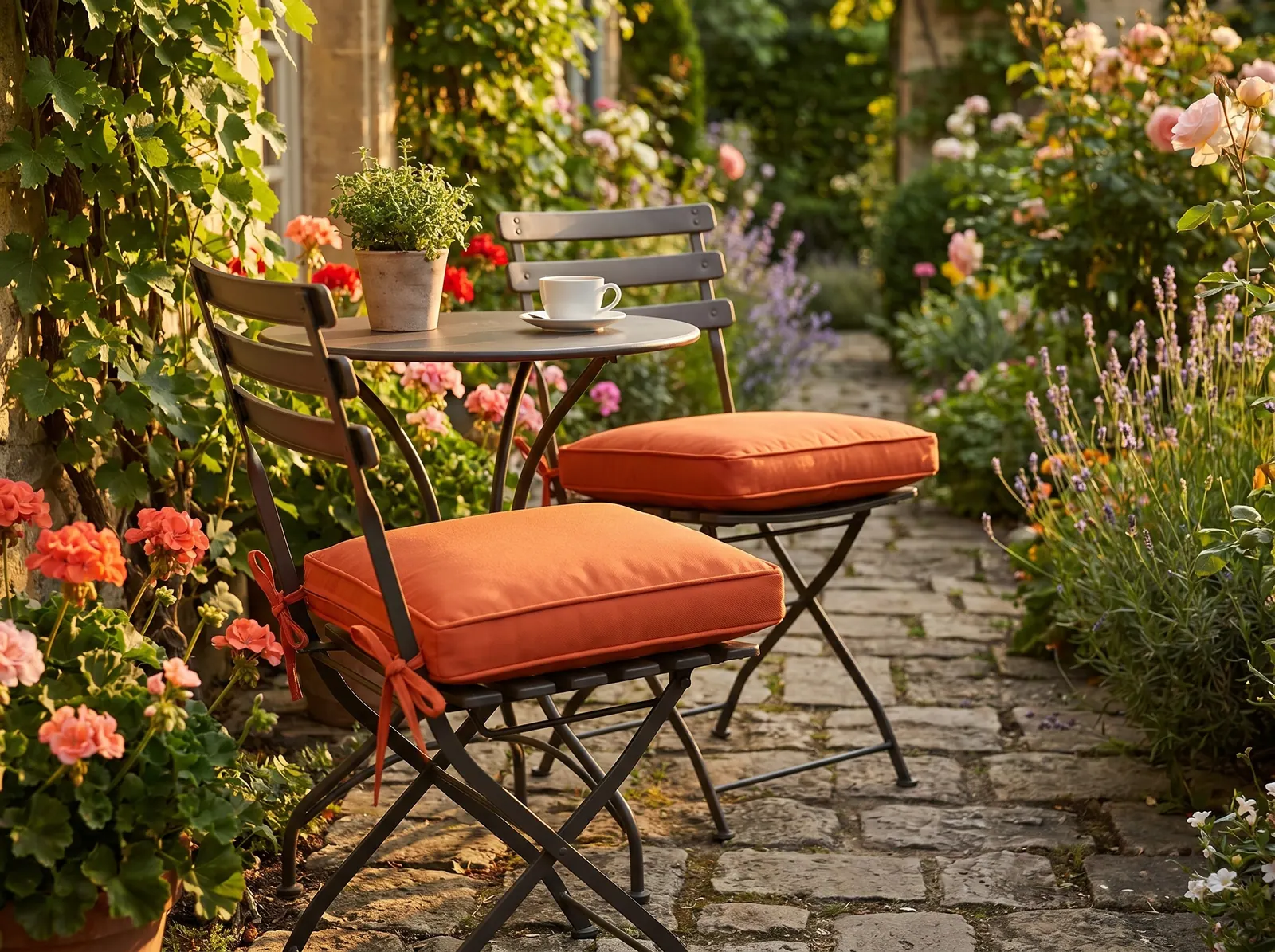
Three ways to send a rocker's shape, and one for the back
Here's how I'd choose, neighbor. The paper template wins on any carved seat. The rocking chair cushion template Pattern goes line by line, and the chair cushion builder lets you sketch the seat before you trace it.
| Method | What to send | Best for |
|---|---|---|
| Paper template | Traced and cut, widest width and depth written on it, photographed flat from above beside a tape | Carved or dished rocker seats |
| Measured drawing | Width, depth, where each curve starts and ends, how deep it runs, a top-down photo of the seat | Gentle curves, U-shaped or rounded-front seats |
| Plain rectangle | Width, depth, thickness and every tie position | Flat seats, or a shaped seat the workshop declined |
| Back cushion | Measurements plus a straight-on photo of the curve it presses against | Rockers and armchairs with a curved back frame |
Ordering the pair
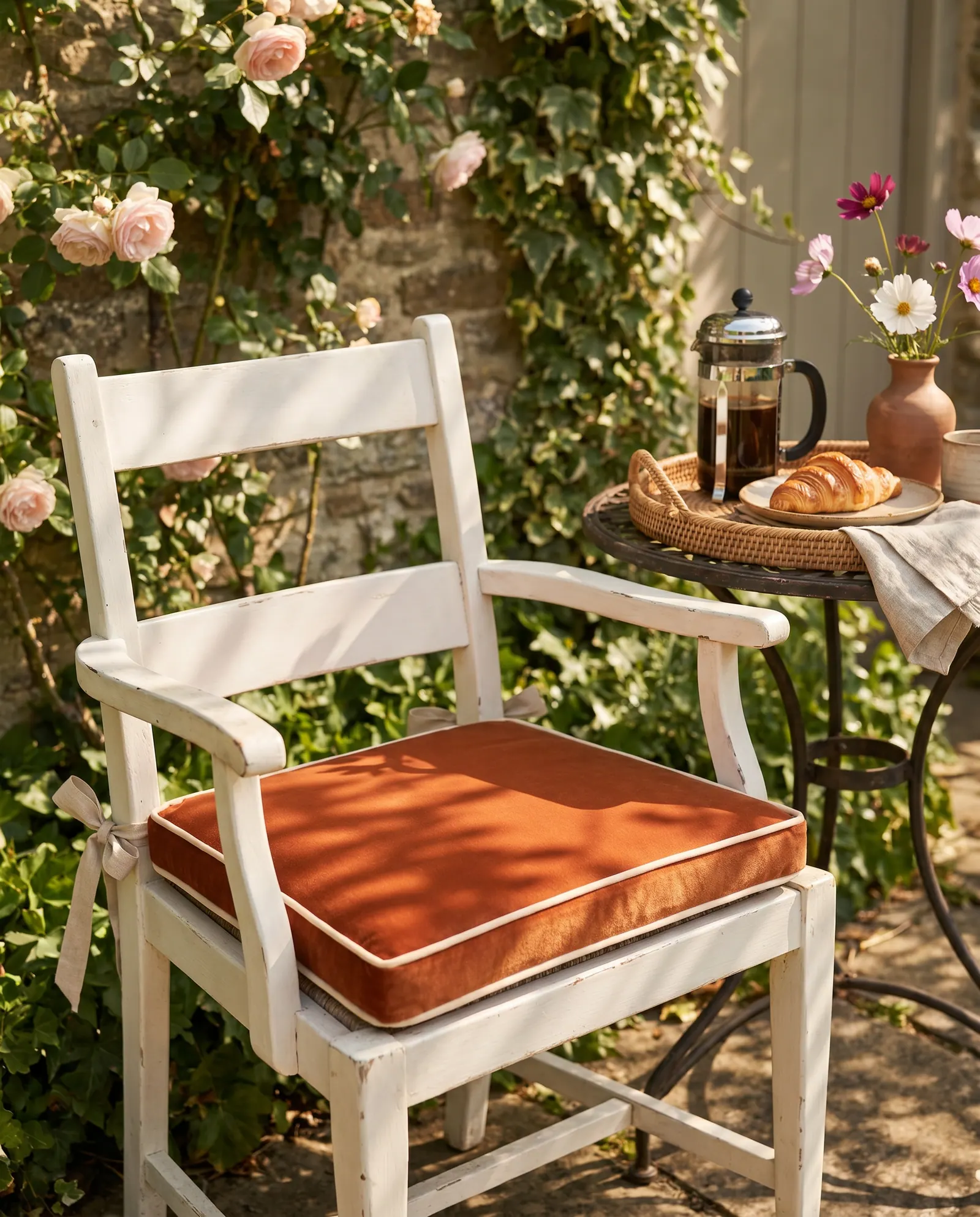
Order both rocker cushions together, in one fabric, with every tie written into the note. Indoors or under a deep porch roof, linen and cotton-linen sits soft and easy; where the weather reaches, look at outdoor acrylic and the patio and porch cushions hub. Kitchen rockers share their tie rules with dining chair cushions, and the tie placement Pattern shows where each string goes. For the rocker's cousin on chains, see porch swing cushions that stay put.
A rocking chair cushion fits when it's traced from the seat itself: paper, a marker, the widest width and depth, and one photo beside a tape.
Rosa
Rocker and curved-seat questions
- A common question
My rocking chair seat is carved and curved. How do I get its shape to you?
The workshop's answerLay paper on the seat, trace the edge, cut it out and write the widest width and the front-to-back depth on it. Photograph it flat from directly above with a tape measure in the shot; there's no need to mail it. Without a template, send the width, depth, where each curve starts and ends and how deep it runs, plus a top-down photo of the whole seat. The craftsmen check the shape and confirm with you before you order.
- A common question
Are there shapes you won't take on?
The workshop's answerMild curves are fine, but nothing shaped is promised until the craftsmen have reviewed a measured drawing and photos. The workshop has declined a round bay with a very strong curve and a rocking-chair seat that had to fit exactly, because neither could be made accurately without the piece on hand. A full template once turned a declined S-curve bench into a yes, and plain rectangles are quoted normally.
- A common question
I want strings sewn on so my cushion stays put. How do I ask for them?
The workshop's answerTies can be added to any made-to-measure cushion, chair pads and odd shapes included. Write how many you want and where in the personalization box: the corners, two on the back edge, or one side. They are sewn into the seam. Ties are never added unless requested, so say it plainly, and give a length if they must wrap around a frame.
- A common question
Can a round chair seat get a pad with ties too?
The workshop's answerYes. Round seats can be made, for example a 12 in (30 cm) diameter pad 4 in (10 cm) thick with a zip cover and ties or a loop. For any shaped seat, send a photo of the chair and a simple diagram with every edge measured, plus the quantity and thickness. Covers come off for washing and can match a bench cushion's fabric.

Have it made
Have an idea like this made — ask Rosa’s workshop
Tell the workshop who sits there: grandkids, the dog, a cup of coffee at six. The right fabric and foam follow from the people. — Rosa
Leave your details and the workshop will call you to confirm measurements, fabric, foam and piping. No prices, dates or payment on this page: it is a request, not an order.
Questions buyers ask next
How thick should a rocking chair cushion be?
Keep a rocker pad at 2 or 3 in (5 or 7.5 cm) so the chair's arms and carved seat still fit the sitter; the sculpted-seat cushion on this page was 3 in. Standard options are 2, 3, 4 and 5 in, all in the same firm foam, so going thicker mostly changes the look and how high you sit.
Should porch rocker cushions be indoor or outdoor fabric?
It depends on how much weather reaches them. On a covered porch or balcony that rain barely touches, indoor linen works. On a screened porch where pollen, dust and humidity get in, the workshop recommends outdoor fabric and can send samples first.
Where do the ties go on a rocking chair cushion?
At the back, around the spindles or uprights. Write how many, where and how long into the order, because ties are sewn into the seam and never added unless requested. Check for them in the pre-dispatch photo before you approve shipment.
What if my rocker's seat is too shaped to make?
The workshop says so before you pay. One shaped rocker seat was declined because a poor fit was too likely without the chair on hand, and the buyer ordered two plain rectangular cushions in a sturdy sage instead, which are safe to order from measurements.