The Cushion Atlas · Chairs, swings & rockers
Rocking chair and glider cushions that rock along with you
A rocking chair seat is carved, curved and wider at the front, and two numbers won't describe it. Here's how a rocker gets traced, how the cushions tie down, and when the workshop will say straight that a seat needs the chair on hand.

- 2readings
- 12photographs
 Save
The quick answer
A rocking chair cushion is best cut from a paper template: trace the seat, cut it out, write the widest width and the front-to-back depth on it, and photograph it flat from above beside a tape measure. Order the seat pad and back cushion as two pieces, ask for ties at the posts, and keep the pad thin; one sculpted wooden rocker took 3 in.
Shapes to choose from
- Chair pad88 readings
- Rocker & glider2 readings
- Porch swing12 readings
- Papasan1 readings
- Ottoman3 readings
- Custom Seat
- Sofa
- Round, Oval
Every one is cut to your measurements. The number is how many readings the atelier has published for that shape.
Sizes & measuring
Measuring a seat that isn't square
Rocker seats are carved, curved and wider at the front. Numbers alone won't describe one; a paper template will.
| Best method | A paper template: lay paper on the seat, trace the edge, cut it out |
|---|---|
| Write on the template | The widest width and the front-to-back depth |
| Photograph it | Flat, from directly above, with a tape measure in the shot; no need to mail it |
| Without a template | Width and depth (for example 17 x 18 in), where each curve starts and ends, how deep it runs, and a top-down photo of the whole seat |
| Also send | A photo of each chair, the thickness you want and a fabric code |
| Thickness | 3 in on a sculpted wooden rocker; 2 in (5 cm) is the thinnest standard foam; 1 in only without piping |
| Back cushion | A separate piece with its own measurements, held up by ties at the top corners |
| Ties | On request, in any position; write how many, where and how long |
| Cover | Zippered and removable, with the zipper on the back edge or underside |
The chair somebody always claims
Every family I know has one rocker that somebody claims. Grandma's on the front porch, the glider in the nursery at 3 a.m., the old ladder-back rocker in the den that the dog has decided is his. A rocking chair cushion makes that seat kinder without changing how the chair moves.
Most sets are two pieces, a seat pad and a back cushion, tied to the chair so they don't creep with every rock. Gliders often add a third, a pad for the footstool. For nursery sets, see nursery glider and rocker cushions; for the porch version, start at patio and porch cushions.
Gentle curves yes, sculpted seats with care
Mild curves are no trouble. A seat that flares at the front or rounds at the corners gets traced, drawn and cut like any other. The craftsmen study your template, may mark the straight stretches of the side edges right on your photo, and sometimes ask for a couple of extra measurements before they commit.
Deeply sculpted seats are another story. When a seat is carved like a saddle and the pad must hug it exactly, the workshop has said no rather than send something that almost fits. I'd rather hear that honestly than get a cushion that slides off the high spots. For describing a curve, see chord, rise and radius.
On edges: a knife edge lies flatter against the wood; a box edge with piping looks tailored and gives a little more depth.
Fabrics for porch rockers and nursery gliders
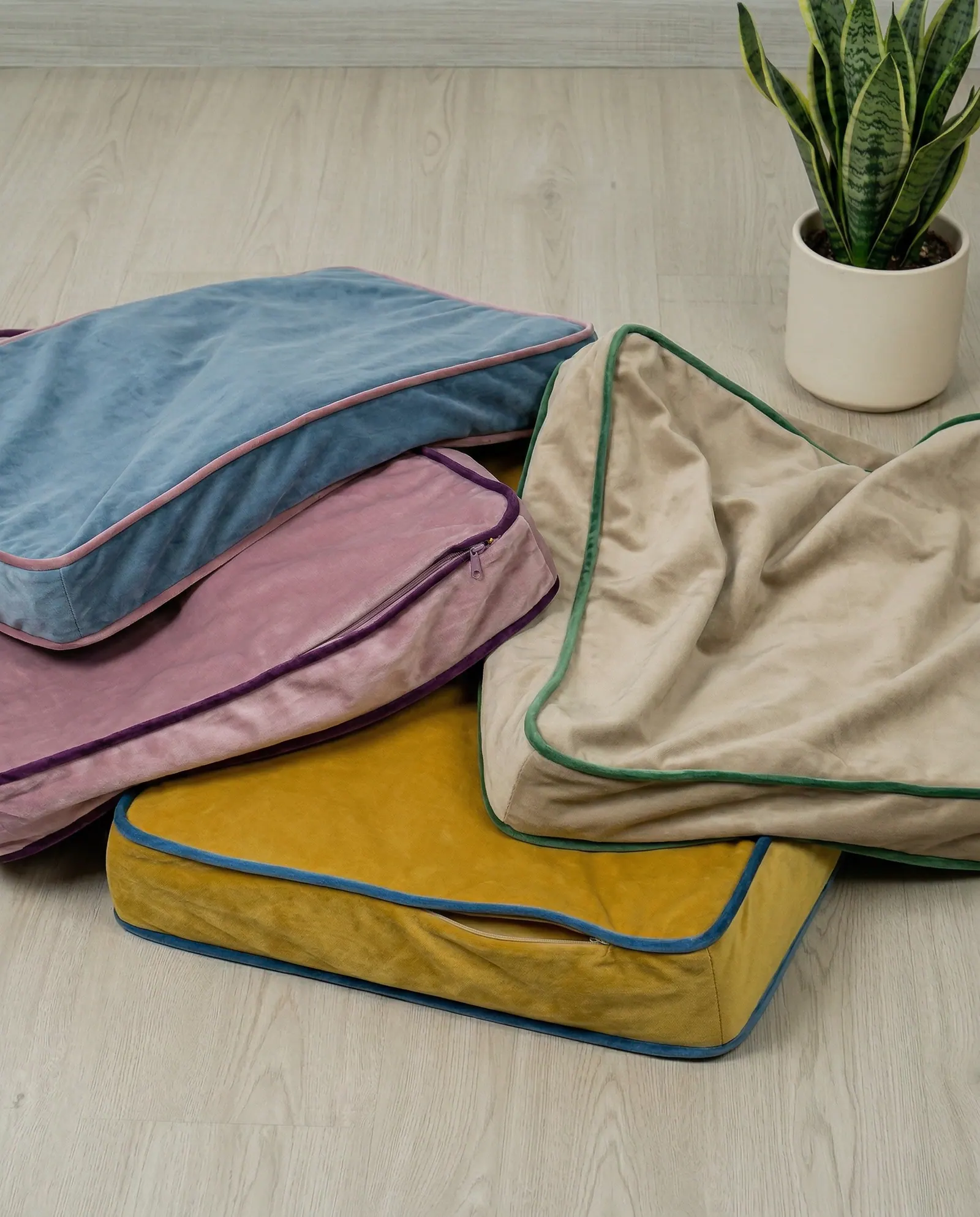
Indoors, linen and cotton-linen is a lovely rocker fabric; the sculpted rocker below went out in linen with matching piping. Velvet makes a glider feel like an armchair. In a nursery, pick something that washes, because kids and dogs are the real quality control, and performance and pet-friendly weaves earn their keep there.
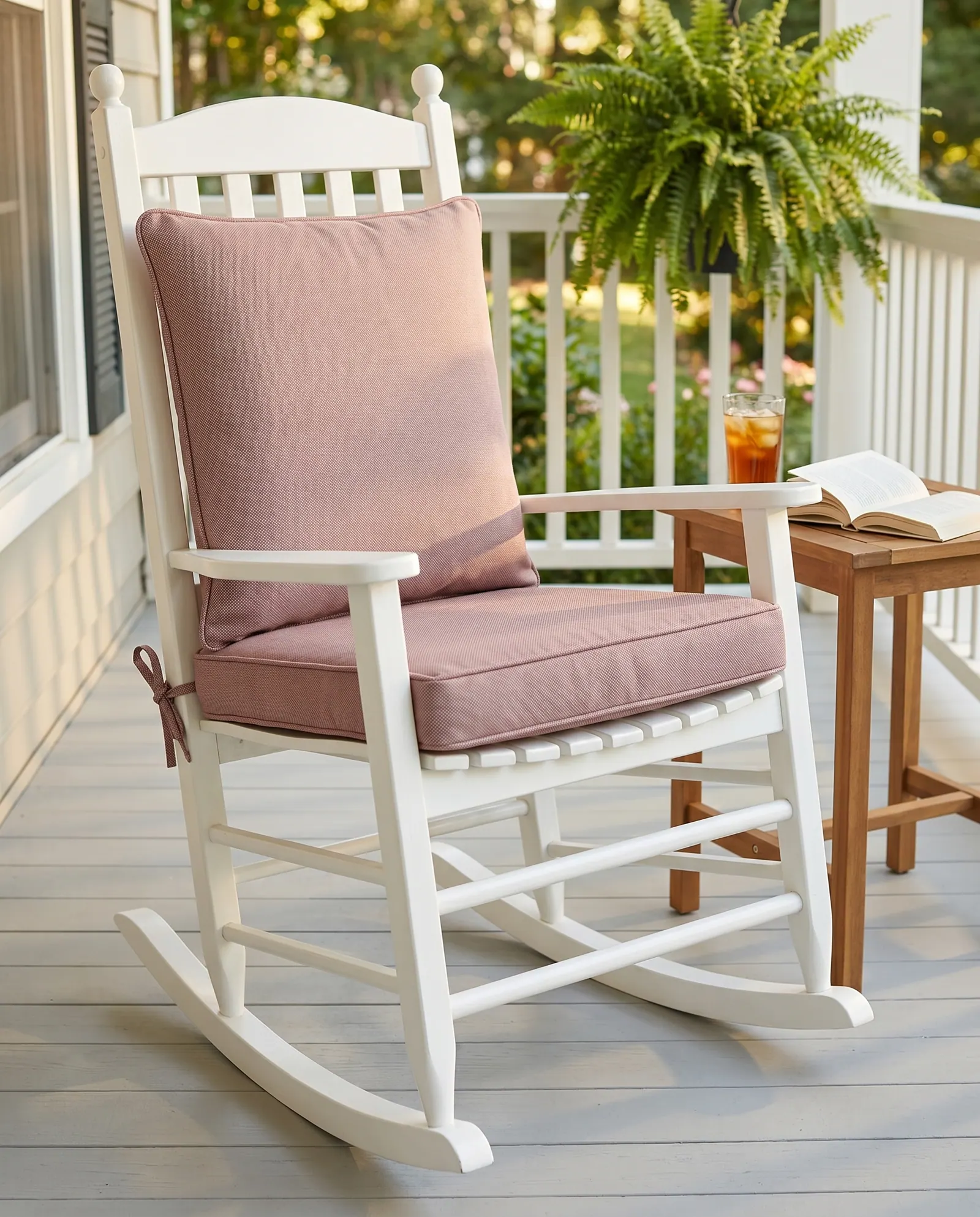
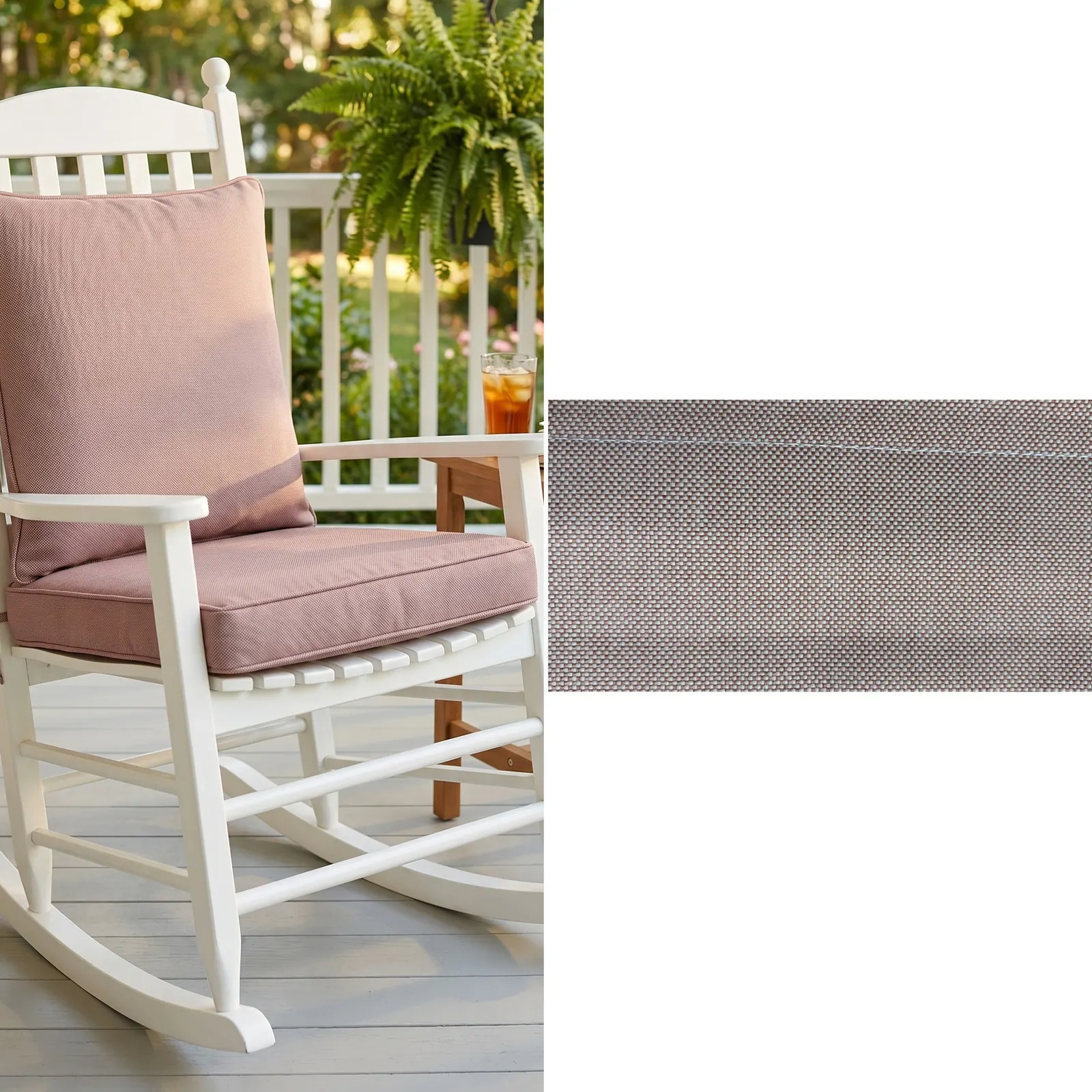
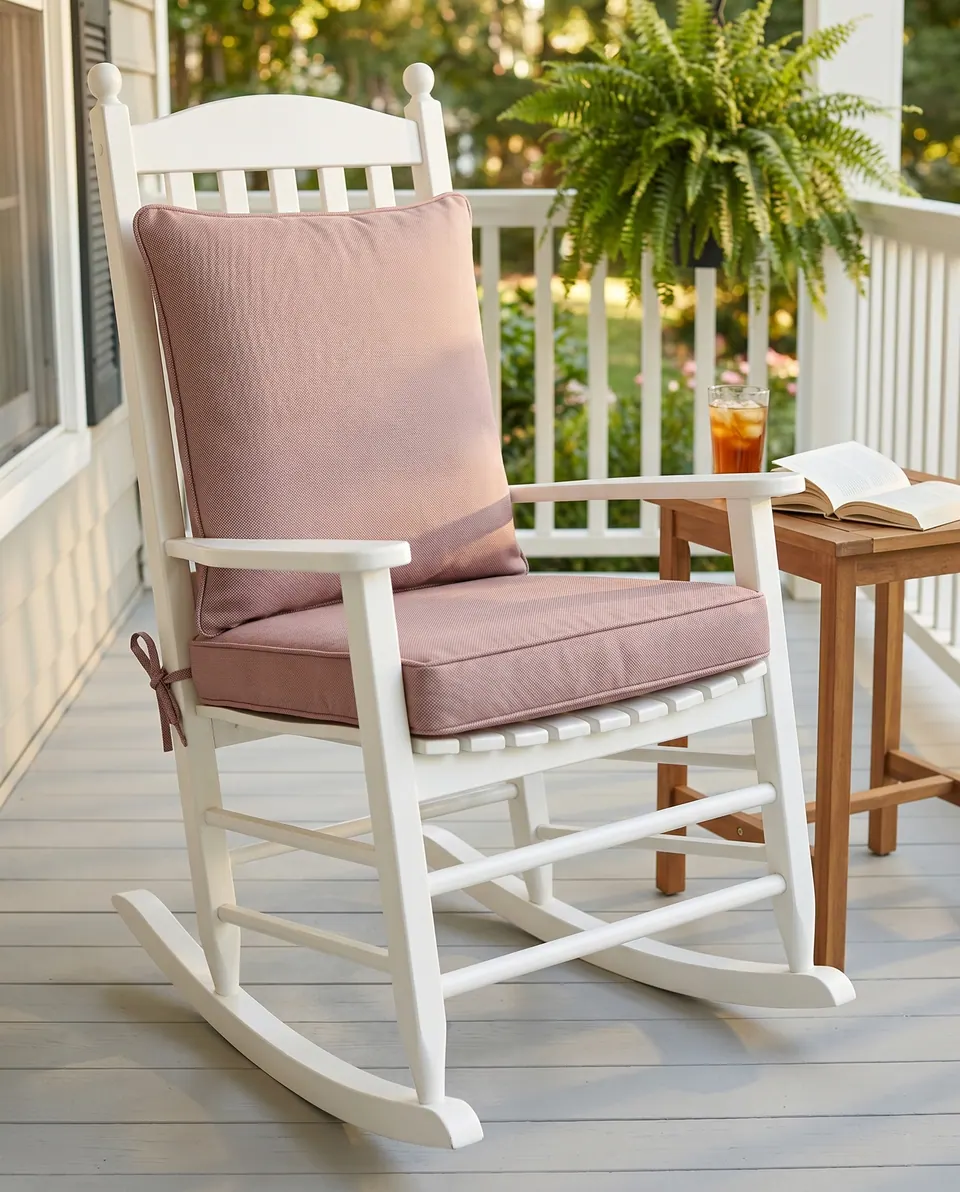
On a porch, even a covered one, go with the outdoor range, water-repellent membrane or outdoor acrylic, and bring the cushions in for the off-season. A dusty rose outdoor set on a white rocker, like the one in our gallery, reads fresh against a gray porch floor.
Open a swatch family
- Linen & Cotton-LinenNatural fibers, relaxed hand
- VelvetDense pile, deep color
- Performance & Pet-Friendly Weaves1 reading
- Water-Repellent Membrane Fabrics1 reading
- Outdoor Acrylic & Solution-DyedMade for sun and weather
The count is how many published readings use each family. Open a family for its swatch book, care notes and neighbors.
Foam: thin enough to rock, firm enough to last
A rocker's seat height and arm height were set by whoever built it, and a thick cushion throws both off. That's why rocker pads run thin. A 3 in pad was right for one sculpted wooden seat; 2 in is the thinnest standard foam, and anything thinner comes without piping.
The workshop's foam sits around 6-7 on a 10-point firmness scale, and backs come a touch softer than seats unless you ask otherwise. For an older rocker-sitter, choose firmer or a little thicker rather than a thin, soft pad. Try the foam firmness finder and the seat height calculator before you pick.
A sculpted rocker and a sheet of wrapping paper
A repeat customer wrote to the workshop about a wooden rocking chair with a sculpted, curved seat, and offered to make a paper template. The workshop sent the steps: trace the seat, cut it out, write the widest width and the depth on it, and photograph it from above with a tape measure lying across.
When the photo came in, the craftsmen marked the straight sections of the side edges on the picture and asked for two more measurements. With those two numbers, they cut a 3 in cushion in linen with matching piping.
- Measured
- Traced paper template; 3 in thick
- What it taught
- For a curved seat, a photographed paper template plus two reference measurements beats guessing with a tape.
Rocker mistakes I see every spring
- Measuring a curved seat with a tape alone. Trace a template; curves aren't guessed from numbers.
- Mailing the paper template. A flat photo from above with a tape measure in frame is all the workshop needs.
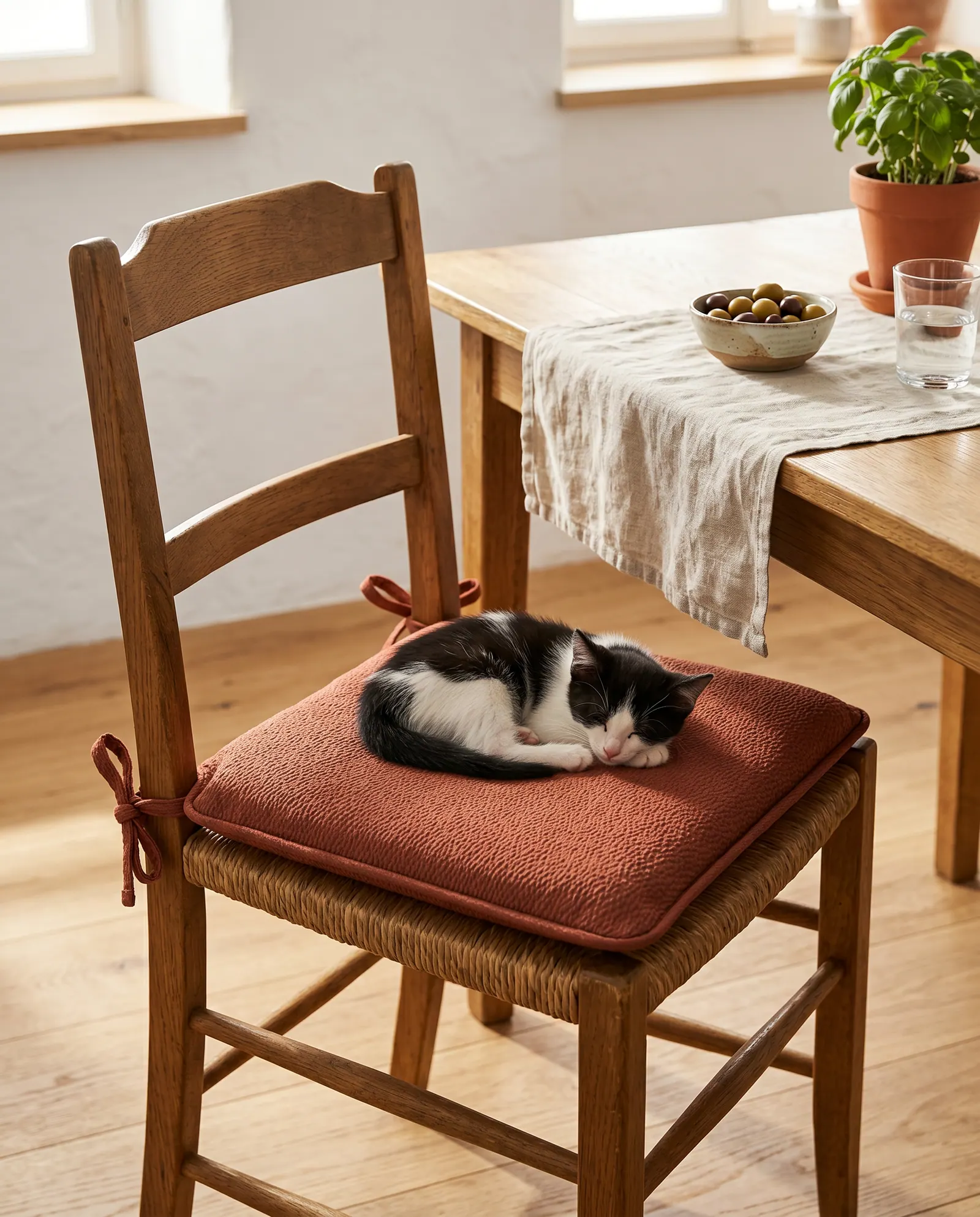
- Ordering the seat pad and forgetting the ties. Ties are added only on request, so write their position and length in the note.
- Choosing a thick, plush pad that lifts you toward the arms and changes how the rocker feels.
- Expecting an exact fit on a deeply carved seat without the chair on hand. Ask first; some shapes are honestly declined.
- Putting an indoor fabric on an open-porch rocker.
Photographs from the workbench
Open any photograph large; each one has its own link and a Save button.
 Save
 Save
 Save
 Save
 Save
 Save
 Save
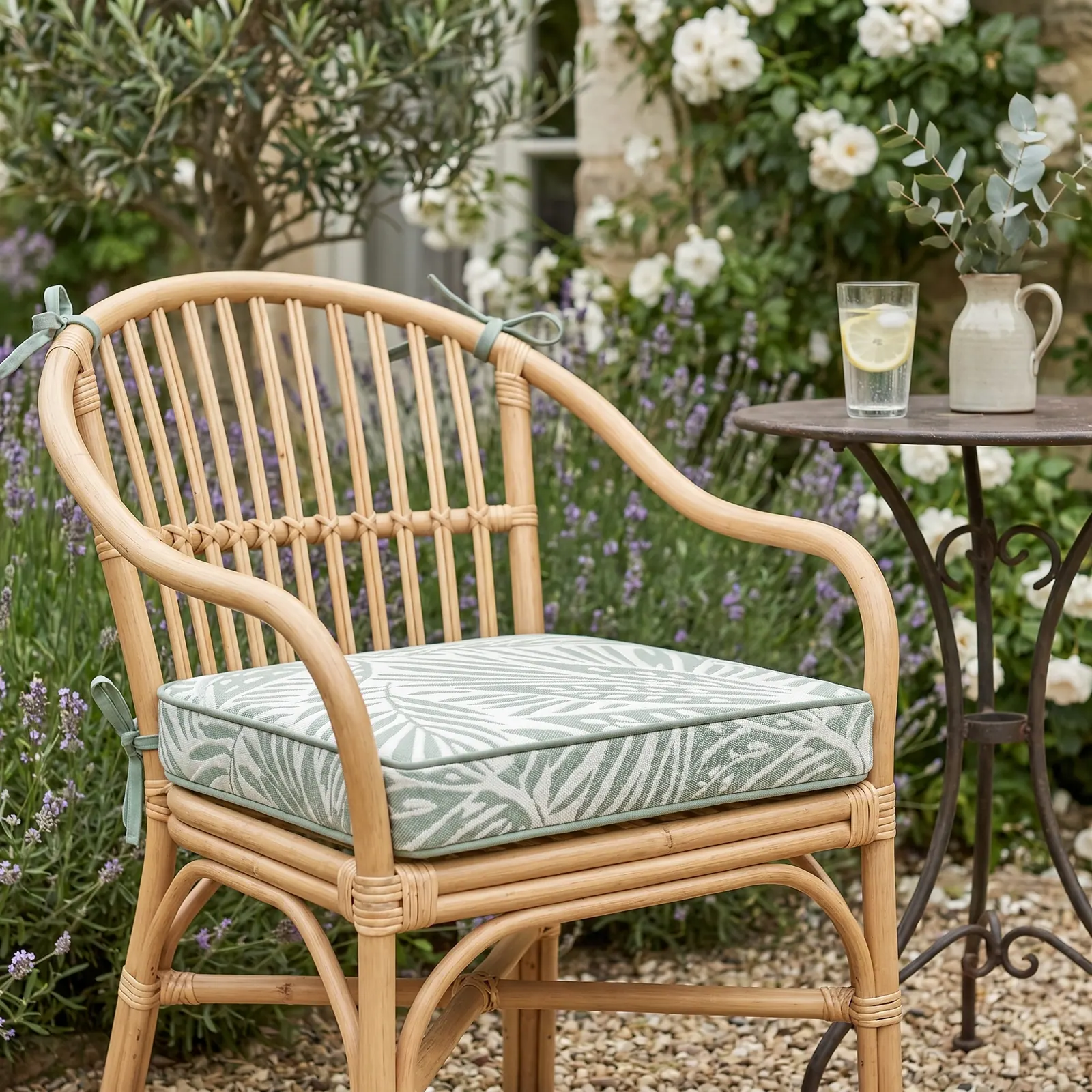 Save
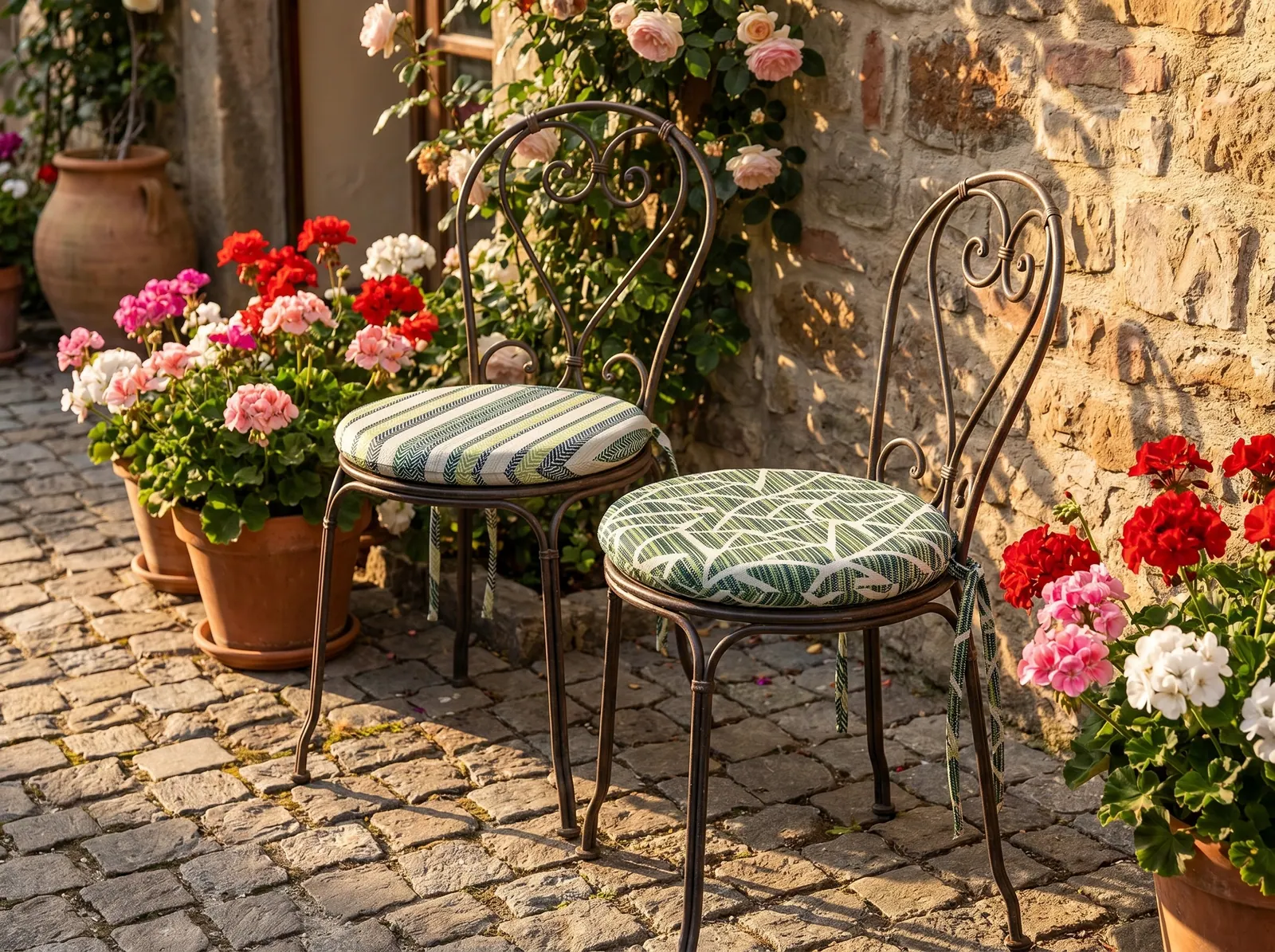 Save
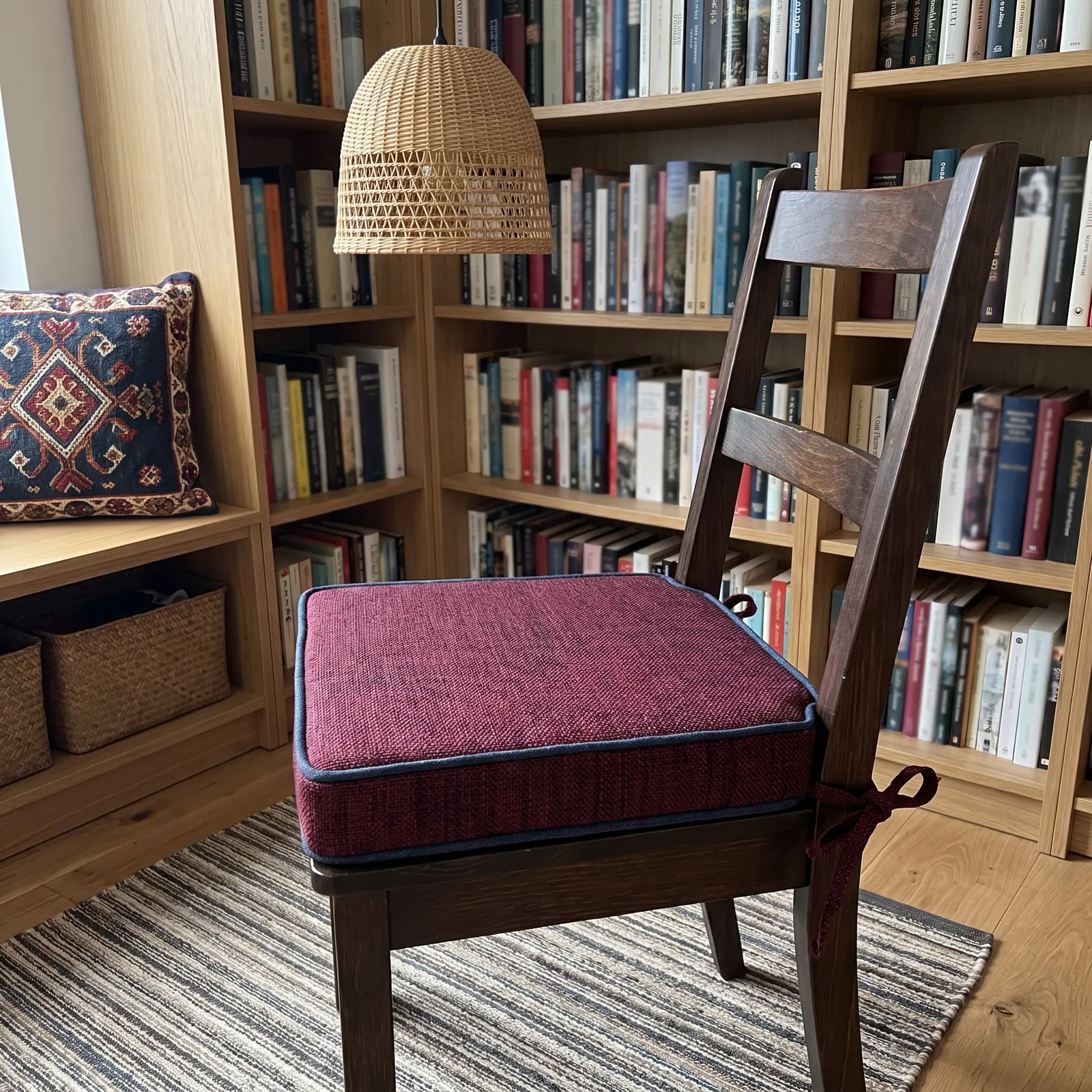 Save
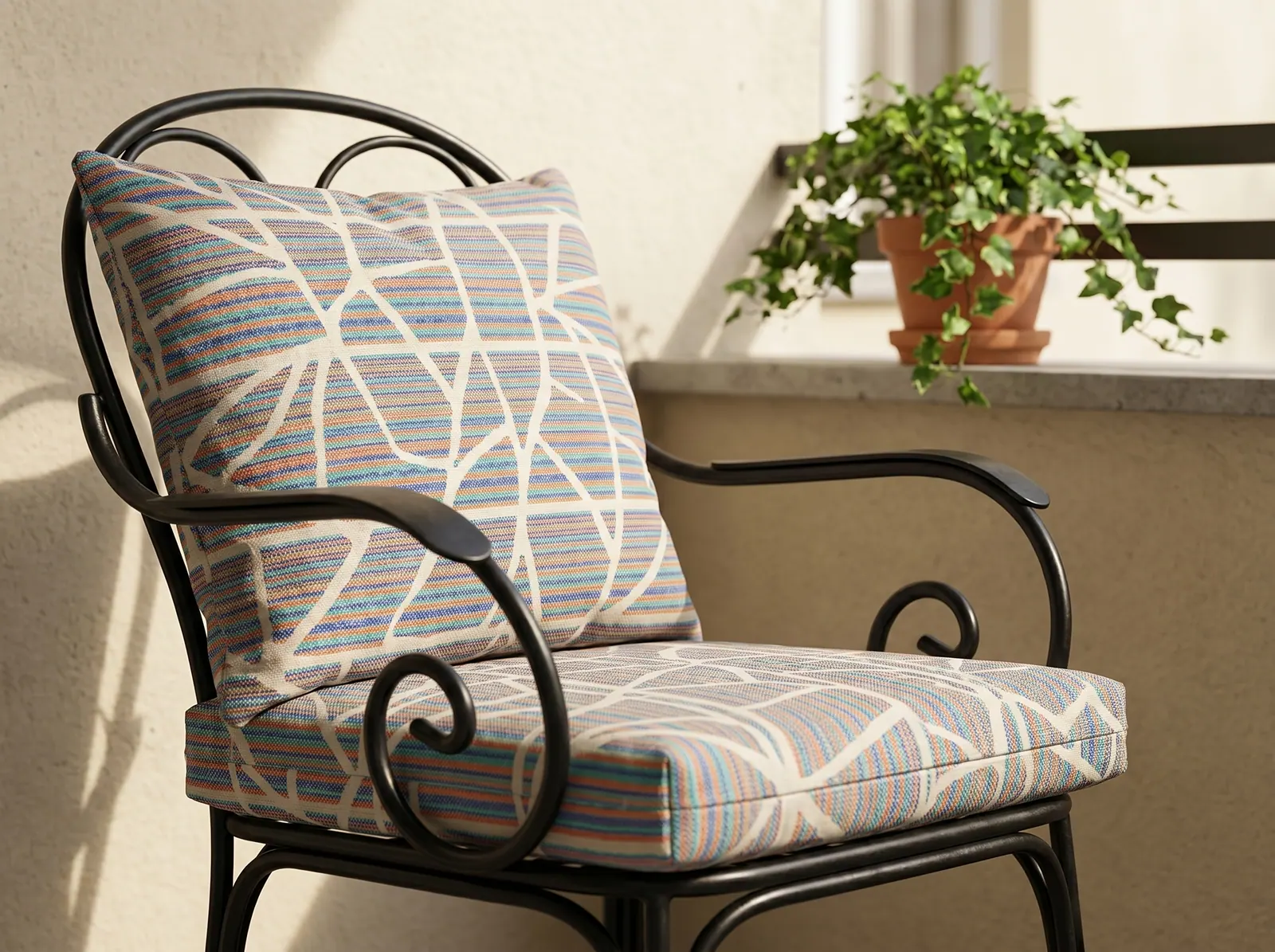 Save
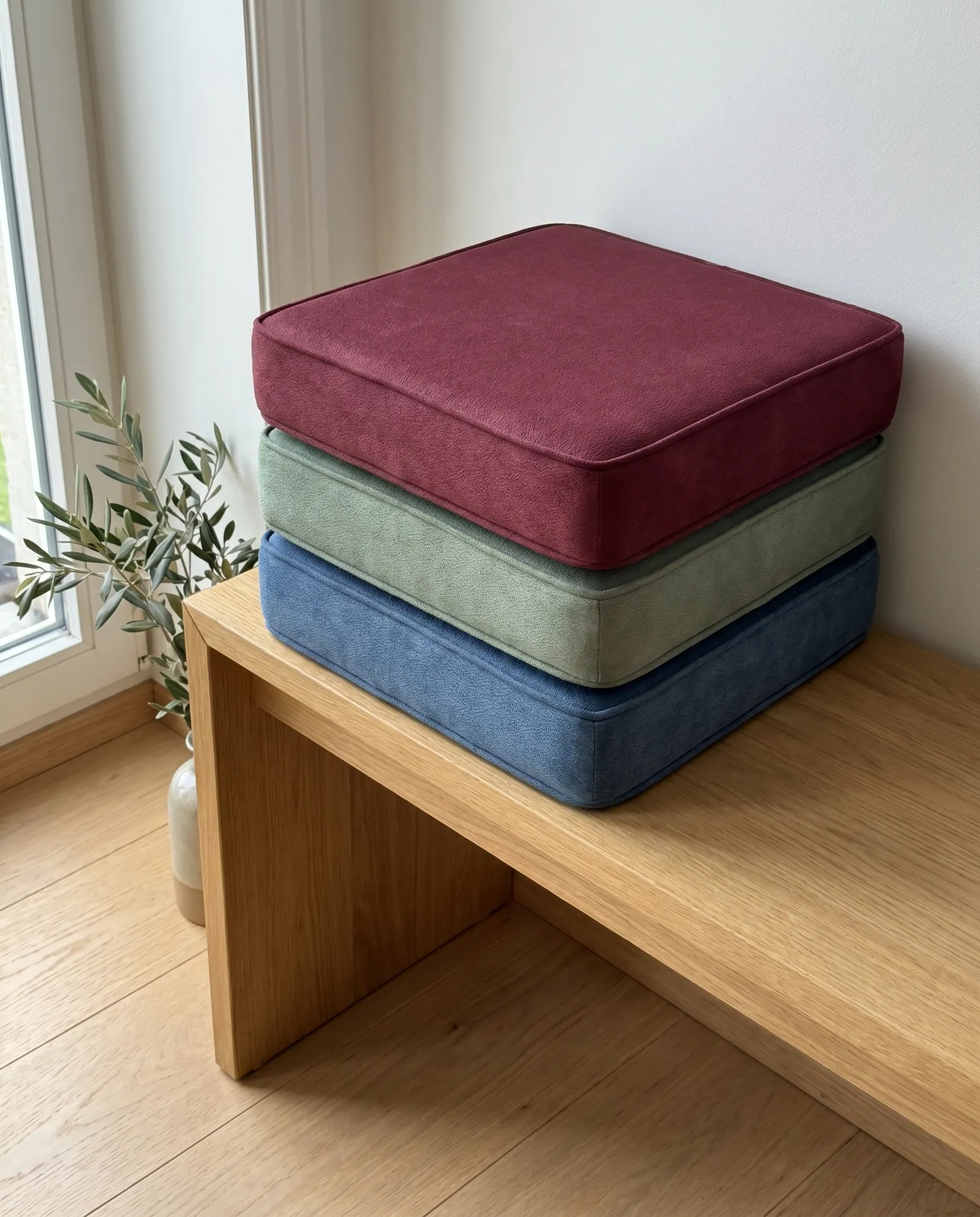
A rocking chair cushion starts with a paper template: trace the seat, write the widest width and depth on it, and photograph it beside a tape measure.
Rosa
Dressing a rocker, porch to nursery
Neighbor, a rocker looks best dressed simply: a seat pad and back cushion in one solid color, tied with bows at the posts, and a single lumbar pillow if the back is tall. On a white porch rocker, a dusty rose or sage set says all a porch needs to say. Add a fern and a glass of iced tea and you're done.
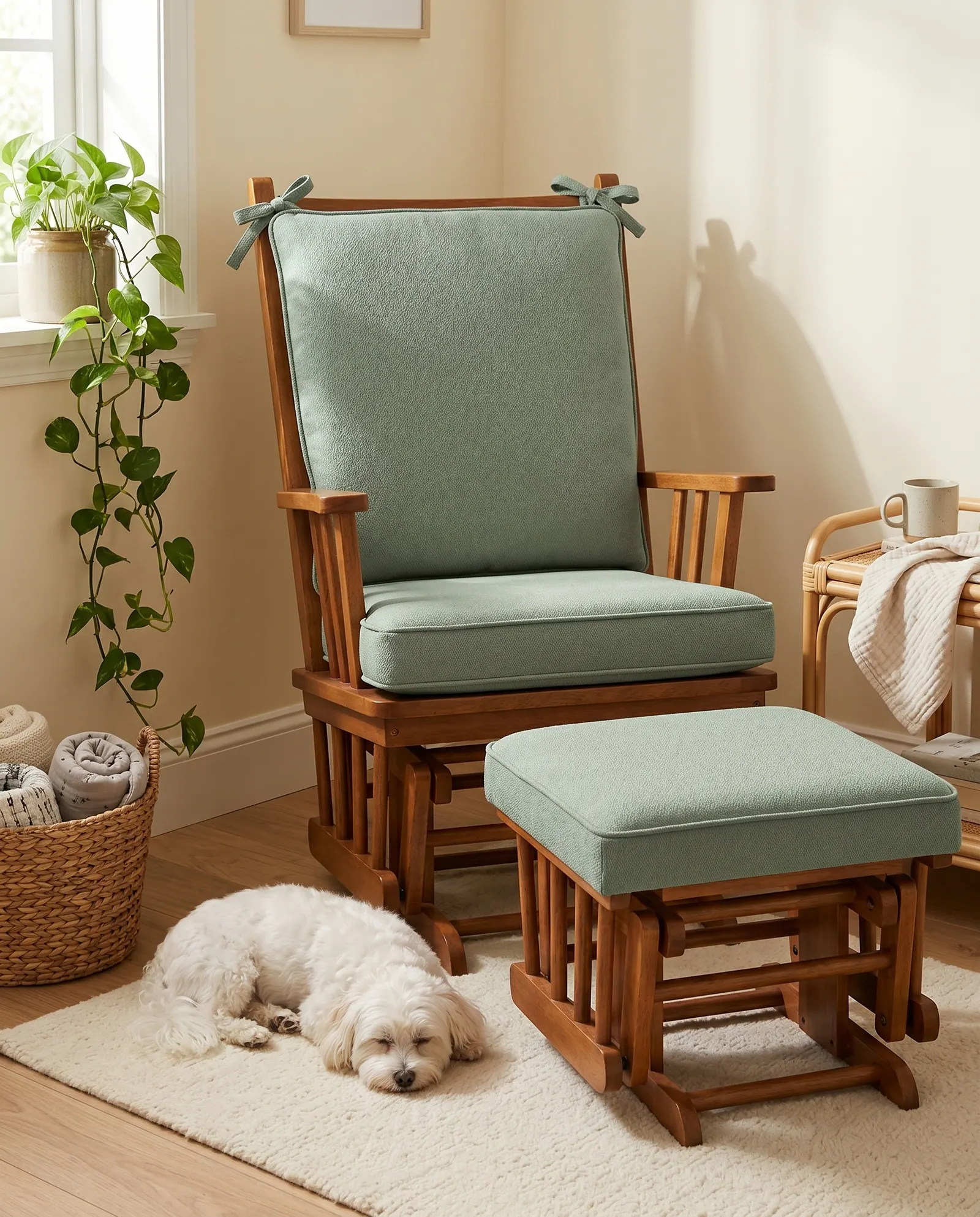
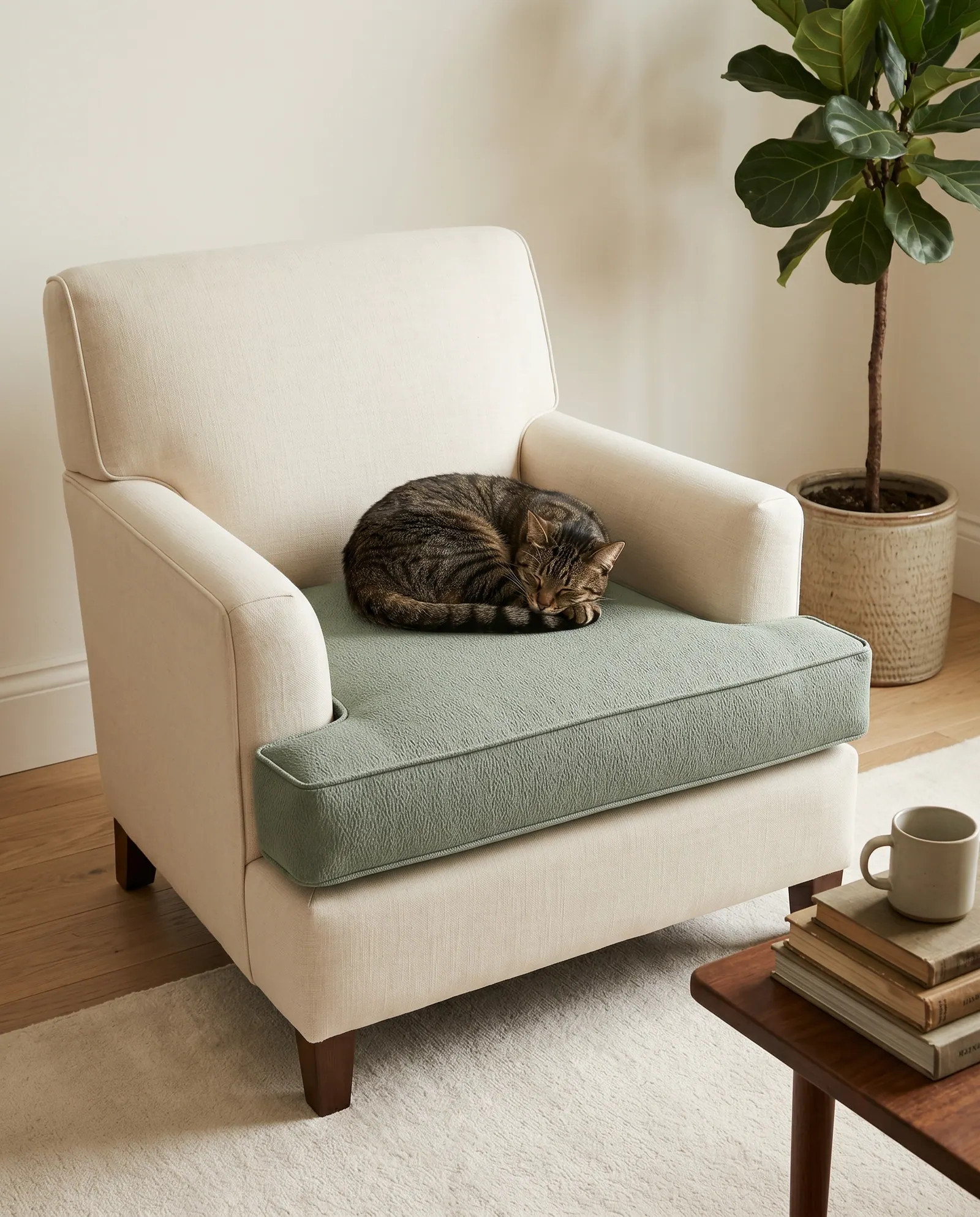
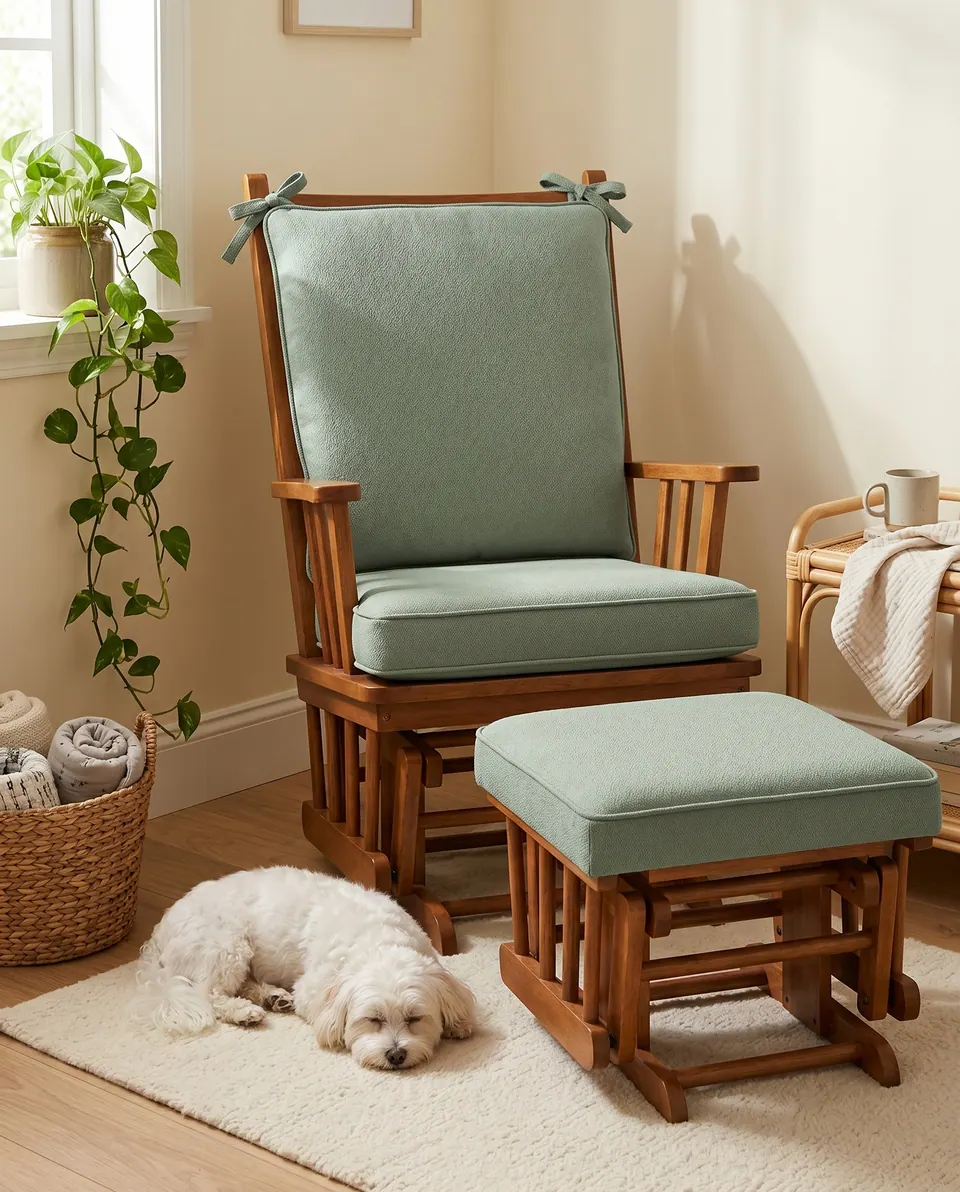
For a glider, match the footstool cushion to the seat so the set reads as one piece, like the sage glider set in our gallery with the little white dog asleep on the rug. See ottoman cushions for the footstool and lumbar pillows for the one extra.
Plan it in the chair cushion builder, then read tracing a rocking chair template and how to make a paper template. Whose rocker is it at your house?
When the rocker's back is taller than the cushion
Stock rocker sets come in a small and an extra-large size, and some sellers add a short extender strip for tall rocker backs or tall sitters. A made-to-measure back avoids the patchwork: it's cut to the height you want, straight or following the top curve on a template. A useful rule from rocker specialists is that a back cushion only needs to cover the spindles to be comfortable; running it all the way to the top rail is optional and changes the look more than the feel. If you're replacing only one half of a set, seat and back can be ordered separately.
Buyer questions
- A common question
How do I measure a rocking chair seat that's curved all over?
The workshop's answerMake a paper template. Lay paper on the seat, trace the edge, cut it out, write the widest width and the front-to-back depth on it, and photograph it flat from above with a tape measure showing. There's no need to mail it. The craftsmen check the shape, may ask for an extra edge measurement or two, and confirm with you before you order.
- A common question
Is any chair seat too curved for you to make?
The workshop's answerSometimes. Mild curves are fine, but the workshop doesn't promise a shaped piece until the craftsmen have reviewed a measured drawing and photos. It has declined a rocking-chair seat pad that had to fit a shaped chair exactly, because it couldn't be made accurately without the chair in the workshop. A full-size template has made a borderline shape possible, and plain rectangles are always quoted normally.
- A common question
What should my sketch show if I'd rather not make a template?
The workshop's answerTotal width and depth, the straight length of each edge before the curve starts, where each curve starts and ends, and how deep it runs, drawn on paper and photographed. Send one drawing per cushion. Curves aren't read from numbers alone, so the drawing matters more than the arithmetic.
- A common question
Can you hold my cushions so they arrive after we move into the new house?
The workshop's answerUsually, yes: order whenever you like and write 'please deliver on or after' with your date in the order note. The workshop holds the finished order or times production so it lands close to that date, and it can wait if a new-build address isn't taking deliveries yet. Transit time varies, so an exact day can't be promised; leave yourself a little margin, neighbor.
- A common question
I placed an order by mistake. Can I still cancel it?
The workshop's answerUsually, if production hasn't started yet, so message the workshop right away. It may ask why first: if size or color is the worry, a custom size or color can often be made instead. If you still want to cancel, it cancels, and the refund can take a few days to show.

Have it made
Have your rocking chair cushion made — ask Rosa’s workshop
Tell the workshop who sits there: grandkids, the dog, a cup of coffee at six. The right fabric and foam follow from the people. — Rosa
Leave your details and the workshop will call you to confirm measurements, fabric, foam and piping. No prices, dates or payment on this page: it is a request, not an order.
Rocker questions from the porch steps
Should a rocker's seat and back cushion be one piece or two?
Two, in most cases. The seat pad and back cushion are separate items, each with its own measurements and its own ties. Add the back at its own size and write 'backrest' in the note so it's made in the same fabric and at the same time.
How do I stop a rocking chair cushion from sliding forward?
Ties sewn into the seam where the cushion meets the posts are the usual fix; they can go at the corners or along the back, in any position. A non-slip base, which replaces the whole bottom panel with a grippy fabric, adds friction on a smooth wooden seat and is safe on wood.
Can a glider set include a cushion for the footstool?
Yes. A footstool pad is simply another made-to-measure cushion: measure its top like a seat and order it in the same fabric at the same time as the seat and back, so all three pieces come from one dye lot.
Can a rocker cushion live outside on the porch?
Yes, in outdoor fabric. The outdoor range is water-resistant, handling rain showers and spills, and comes with outdoor-suitable inserts. It isn't a sealed, coated material, so on an open porch bring the cushions in for long off-season stretches.
Can I wash rocking chair cushion covers?
Yes. Every foam cushion has a zippered, removable cover. Wash it at 86°F (30°C) on a gentle cycle and let it air dry. For a stain, try that gentle wash first before reaching for anything harsher.
Why does a curved seat cost more than a rectangle?
A complex curve takes a template, a drawing and an experienced hand, so it is quoted above a plain rectangle or trapezoid of the same size. Rectangular cushions on the same order are still quoted normally.
My rocker's back is taller than a standard back cushion. What are my options?
Have the back cut to your chair. Stock rocker sets come in a couple of fixed sizes, and some sellers offer a separate extender for tall backs; a made-to-measure back is simply cut to the height you want. As a rule of thumb, the cushion only needs to cover the spindles, not the whole top rail, to be comfortable.
What measurements does a rocking chair cushion set need?
Five numbers cover most rockers: the seat's front width, its back width and its depth, then the back cushion's width and its height. Measure the chair itself, not the old cushions. If the seat is sculpted or the back curves, add a paper template or a sketch with a photo, and the workshop sends a drawing back to confirm before anything is cut.
Porch light's on — Rosa
Readings
Photographs read by the masters: rocking chair & glider cushions
Real cushions made for real rooms, each read for proportion, fabric and fit.
The Pattern Room
Patterns and sketches
- The Pattern RoomReplacement cushions for a nursery glider, piece by piece
- The Pattern RoomOnline maker, local upholsterer or your own sewing machine?
- The Pattern RoomHow to make a rocking chair cushion template that fits the seat
- The Pattern RoomCushion tie placement for chairs, porch swings and benches
- Concept SketchesRocking chair cushions, traced from the seat itself
- Concept SketchesNursery gliders, rockers and window benches: calm, washable cushions