Lumbar pillows: the long, low line of color across a bed or banquette
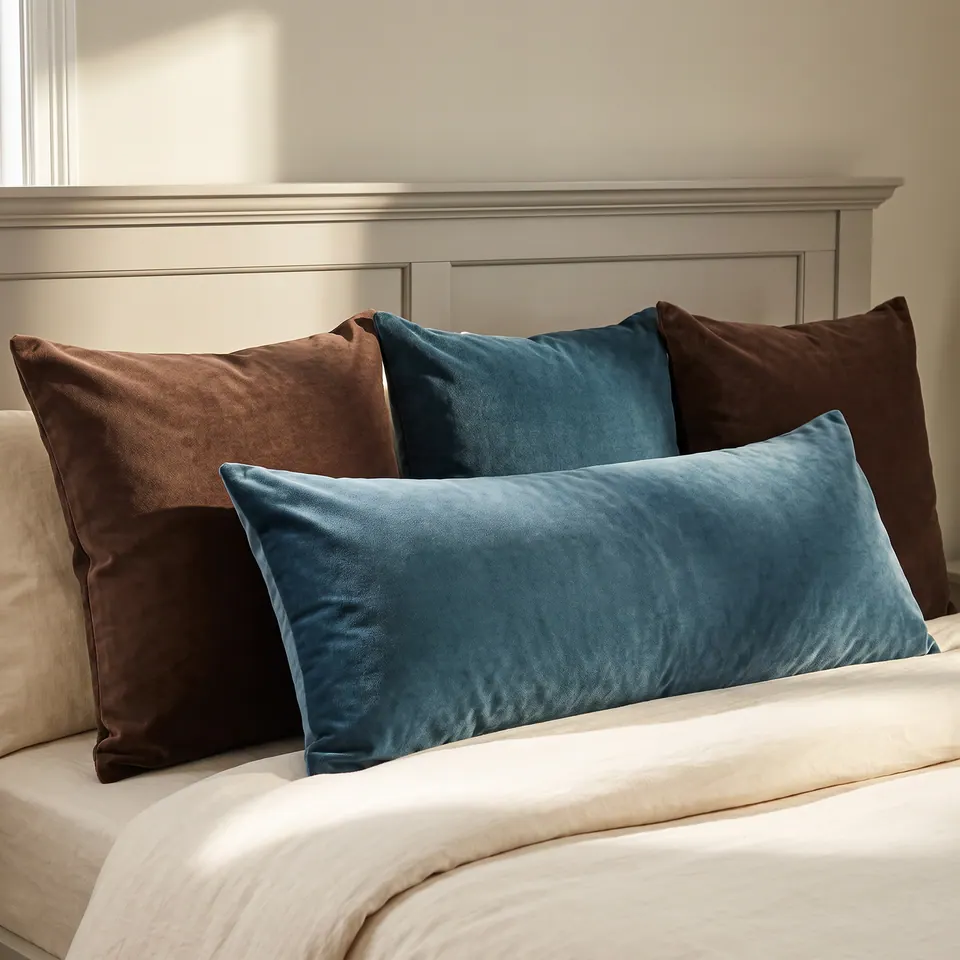
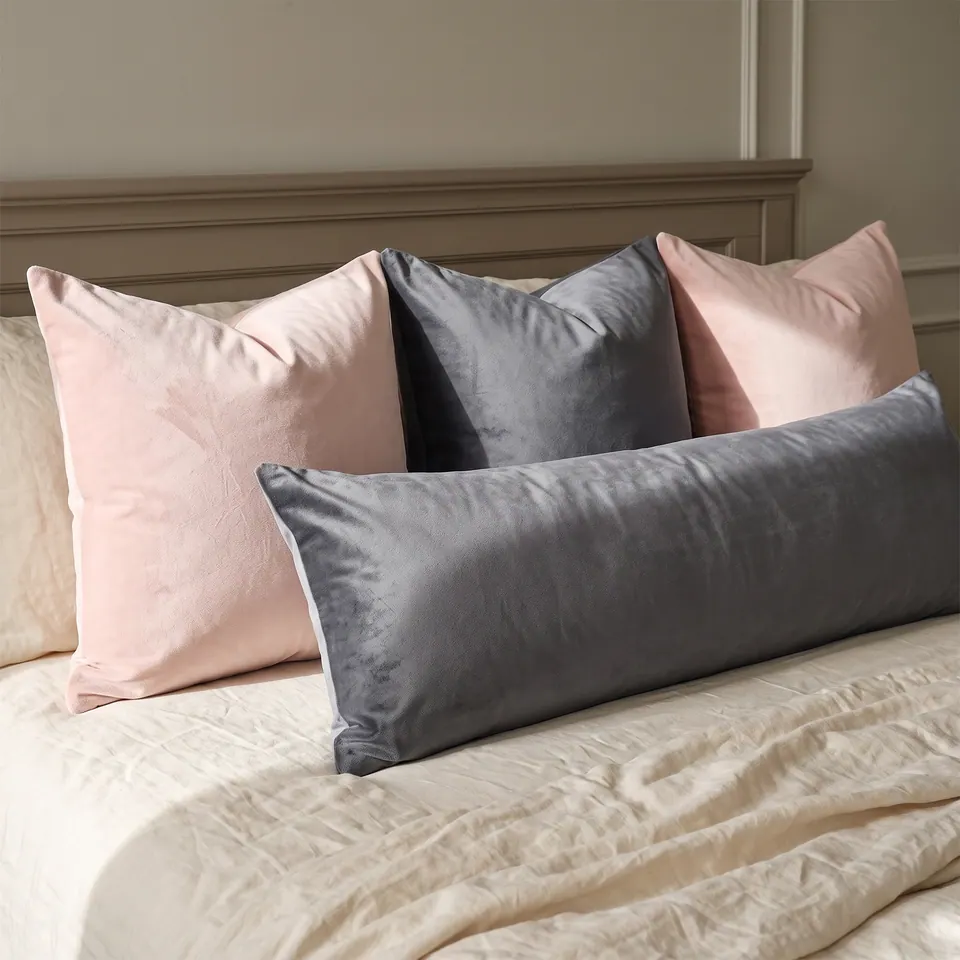
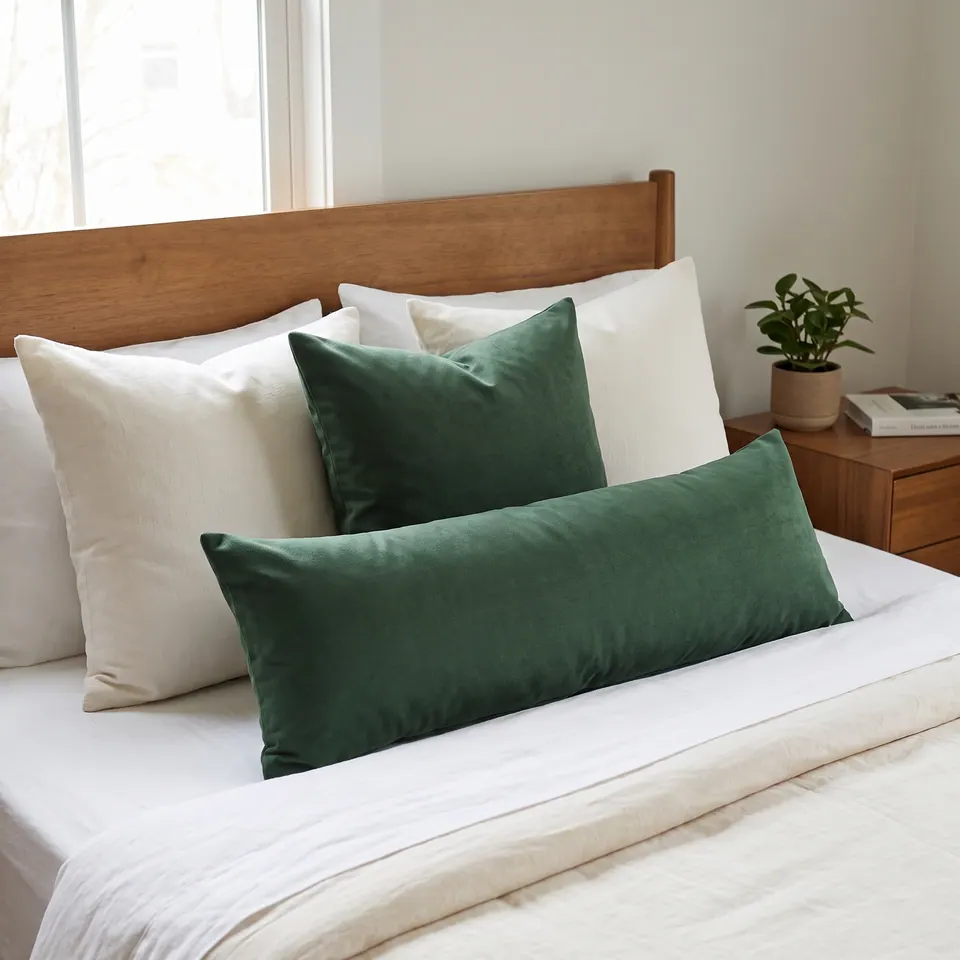
A lumbar is the one pillow that crosses the whole composition. I read it the way I read a horizon: for its color, its sheen and where the light falls along it.
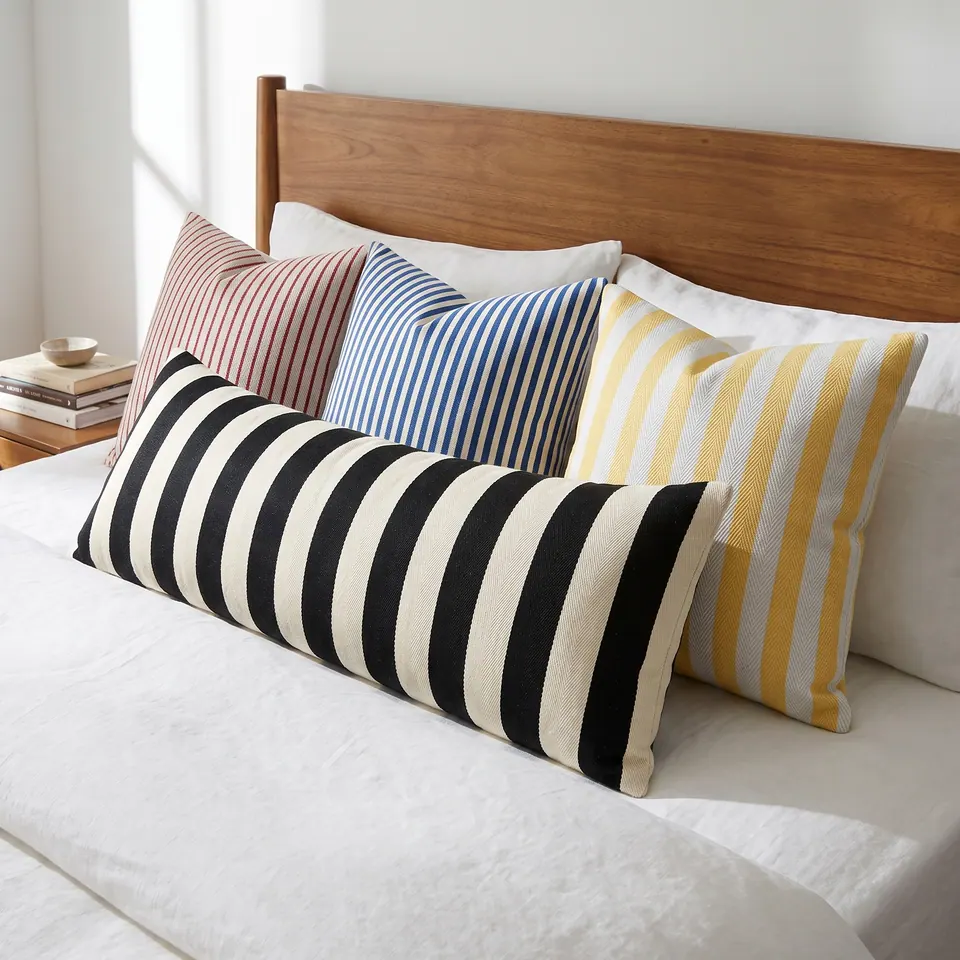
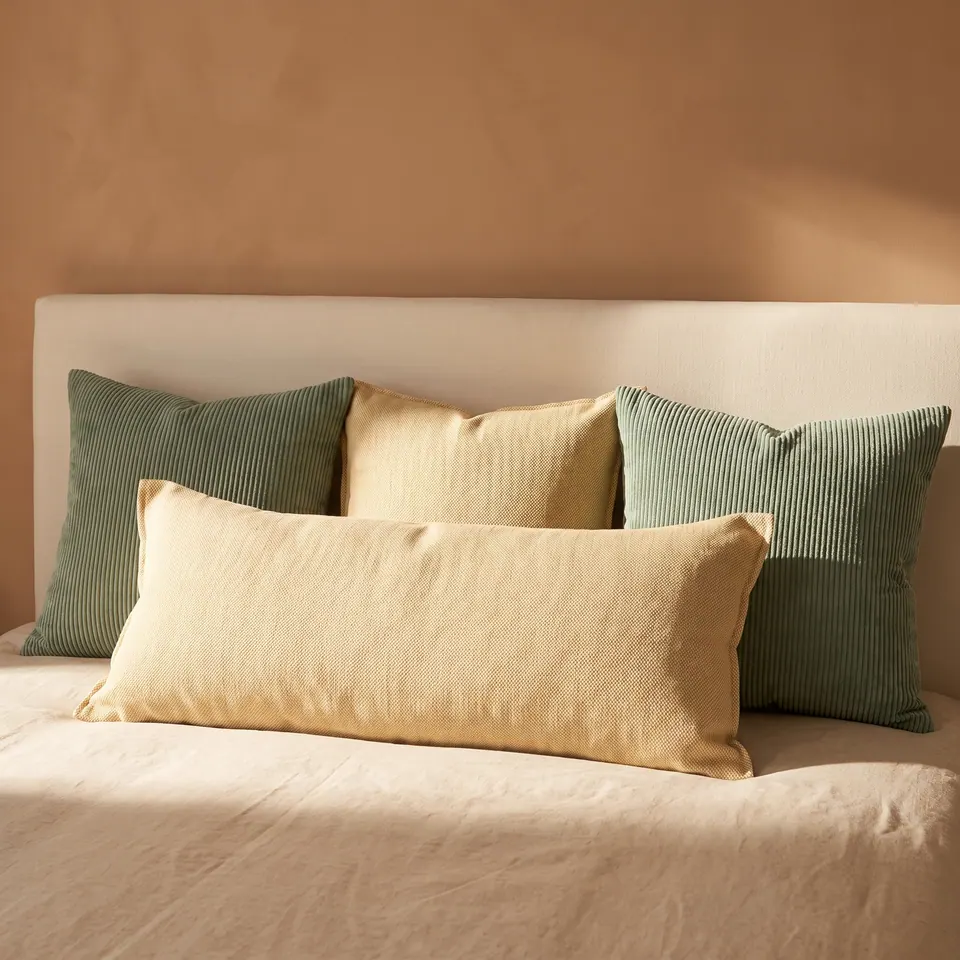
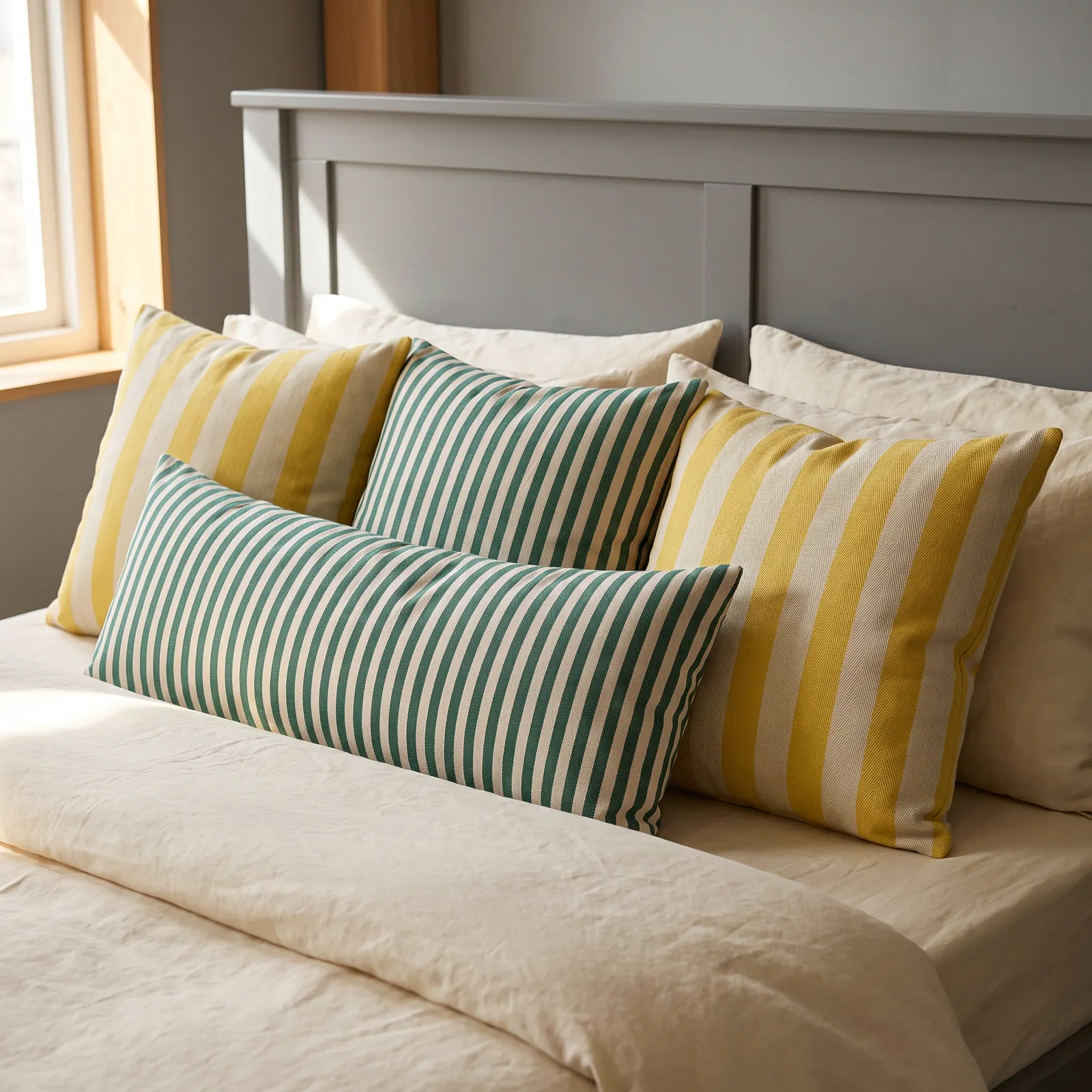
SaveNarrow green stripes and broad yellow stripes mixed on one bed, linked by a shared cream ground.
The quick answer
A lumbar pillow is a long, low rectangular pillow, made to any size in the same fabric as your bench, banquette or bed. For a full, plump look, fill the cover with an insert about 1 in larger each way: a 24 x 12 in cover takes a 25 x 13 in insert. Covers zip off for washing, and pillows ship filled or as covers only.
One extra inch of insert is the whole secret of a lumbar pillow that sits up. A 24 x 12 in cover over a 25 x 13 in insert looks full and generous; the same cover over a same-size insert sits flatter.
A lumbar pillow is the long, low rectangle that lies in front of the squares: on a bed before the shams, on a banquette against the wall, across the back of a floor sofa. It eases the small of the back, but in a room its bigger job is visual. It lays one horizontal line of color that the whole arrangement rests on.
Most lumbars the workshop sews are matched to a seat it has already made or to a sofa the buyer loves. For squares alongside, see custom throw pillows; for the round cousin, bolster pillows.
Knife edge, piping and the flat back pillow
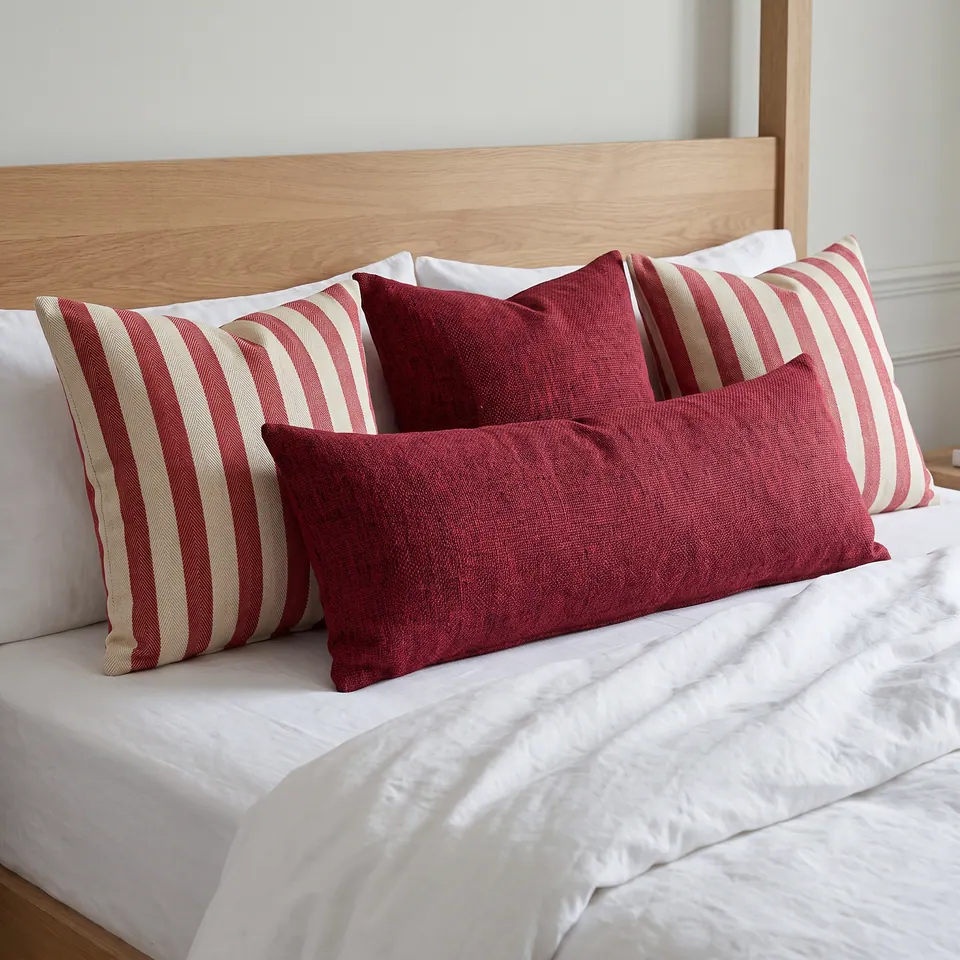
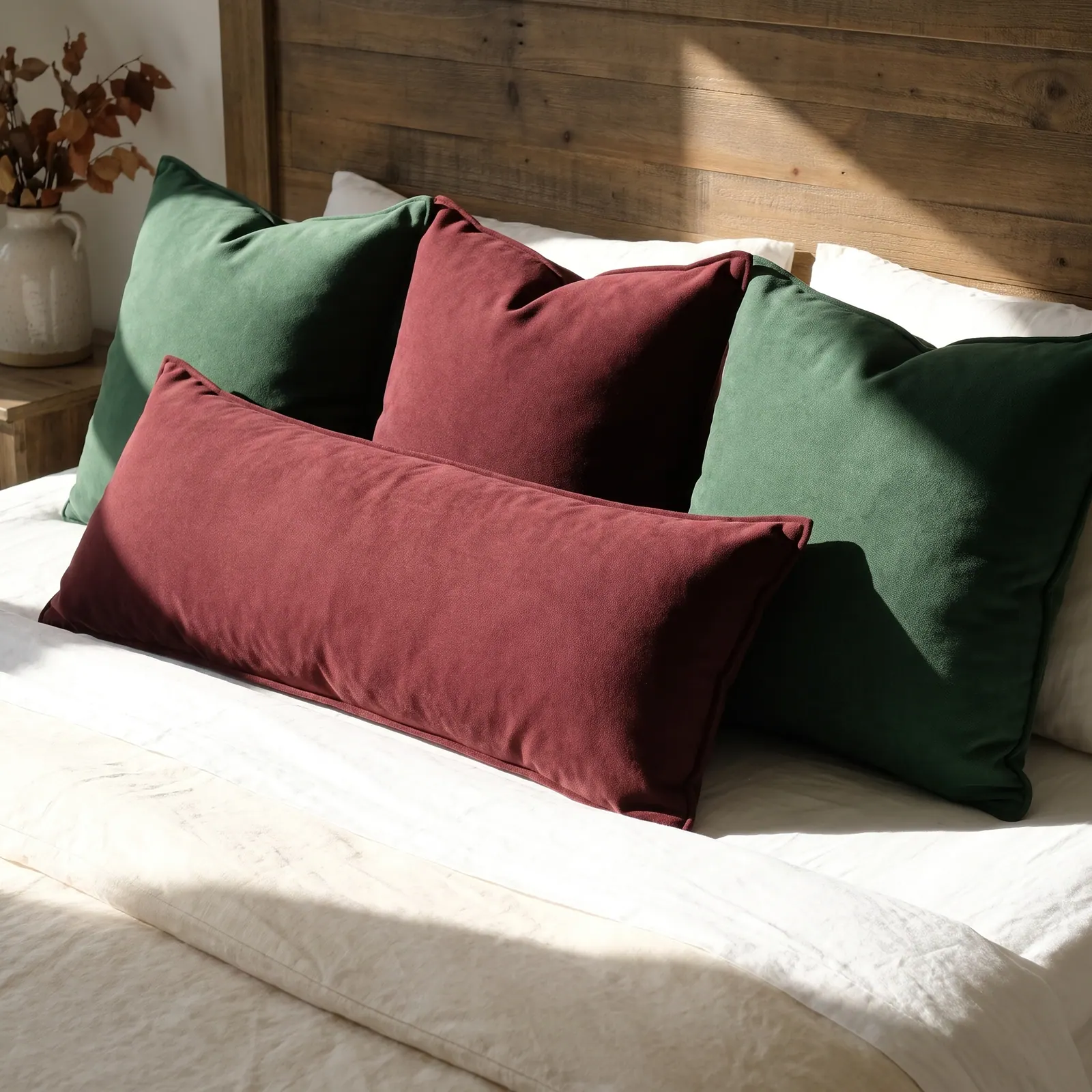
The classic lumbar is knife-edge: two panels sewn together at the rim with no side band, so the pillow crowns softly in the middle and thins toward the seam. A piped rim draws the outline in a second color; self piping, like the burgundy lumbar before forest green shams, keeps the line quiet and tailored. Box edge vs knife edge lays out the difference.
When a lumbar has to work as a backrest, make it long and flat. One kitchen window seat took a 14 x 63.5 in knife-edge back pillow with a hidden zipper, in the same fabric and piping as its 4 in box seat. It lies against the wall like a ribbon under a painting.
Fabrics and color that carry a lumbar
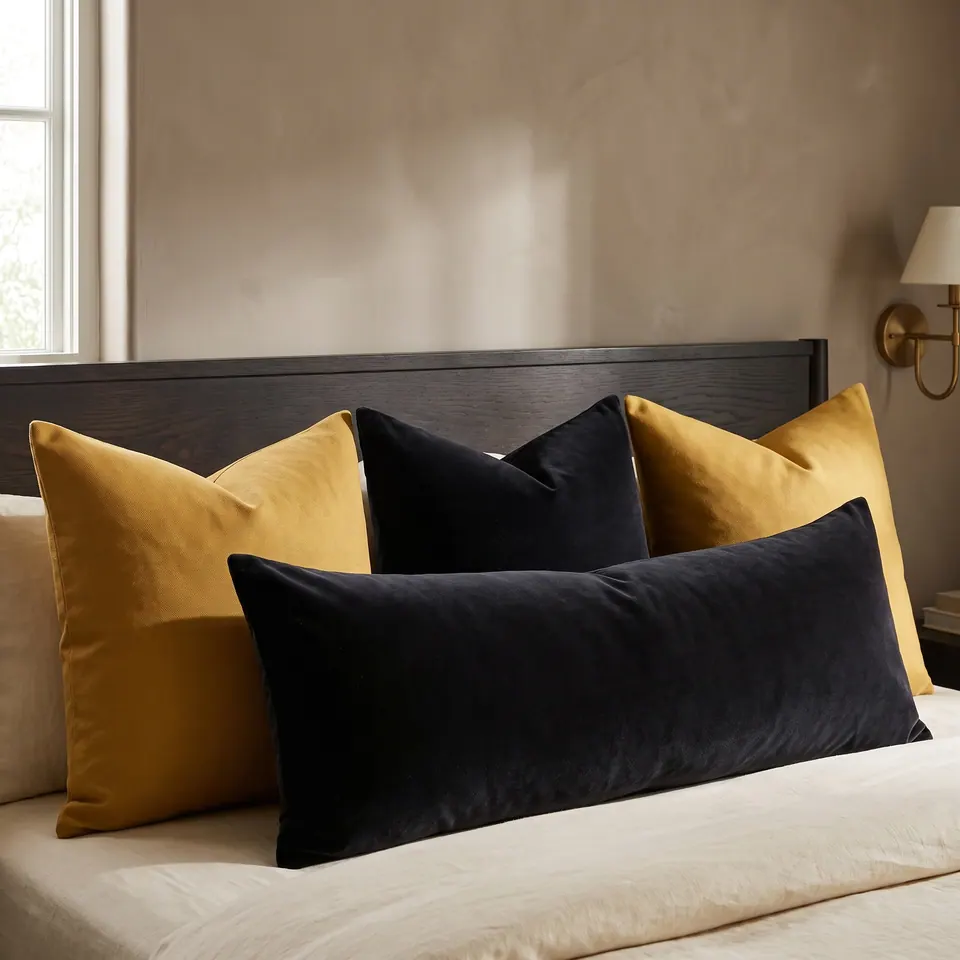
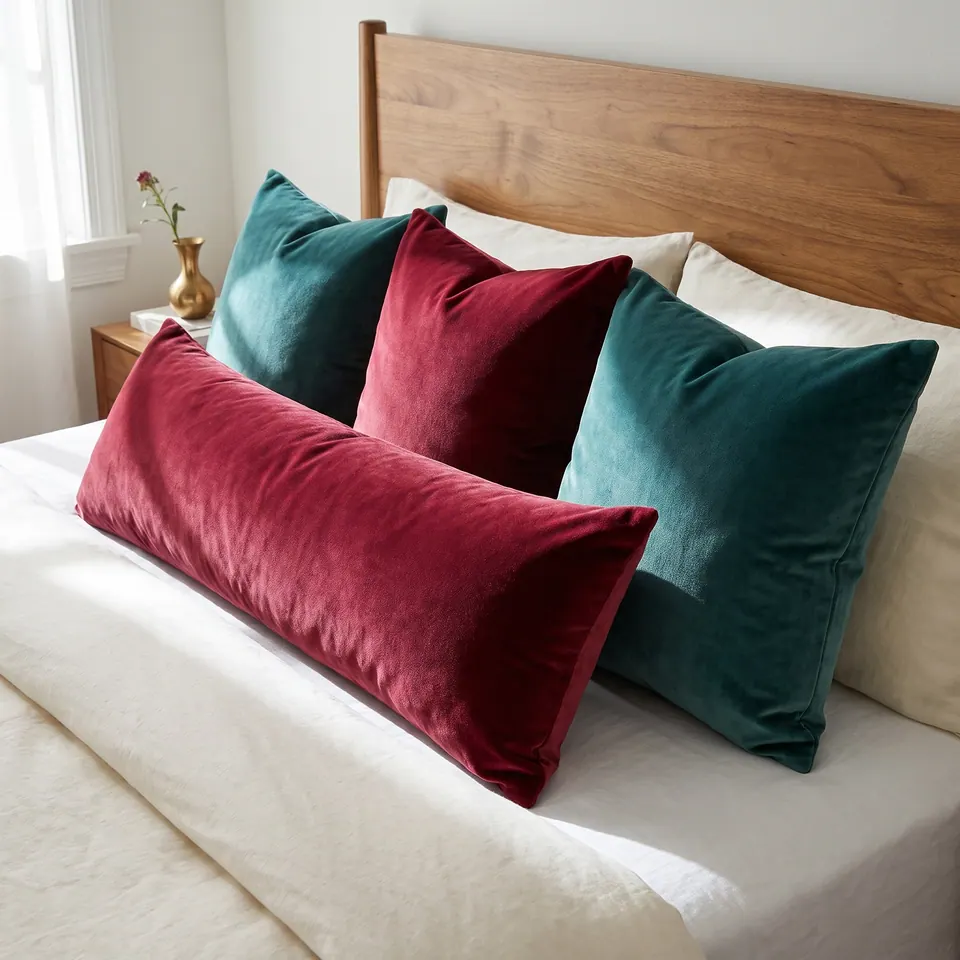
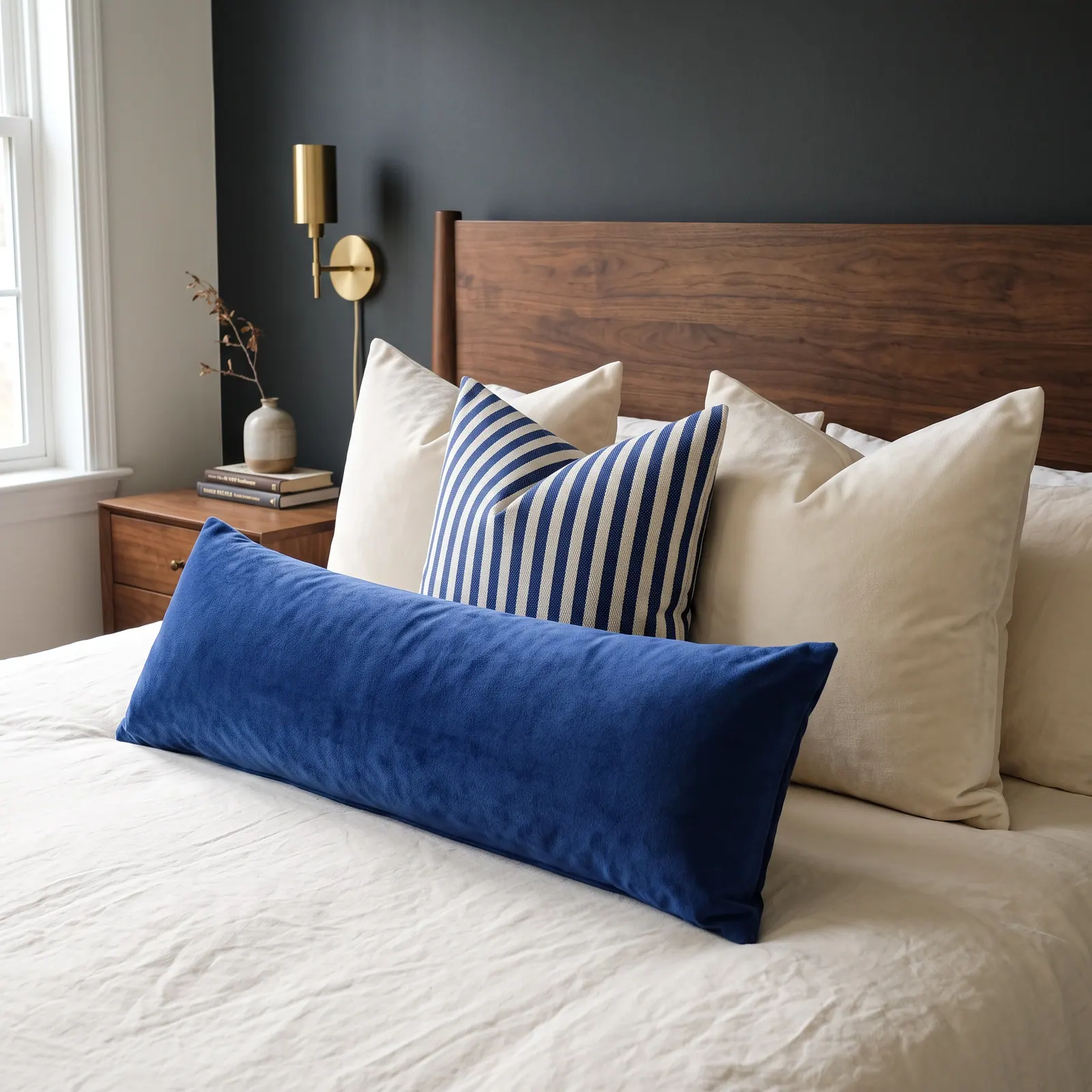
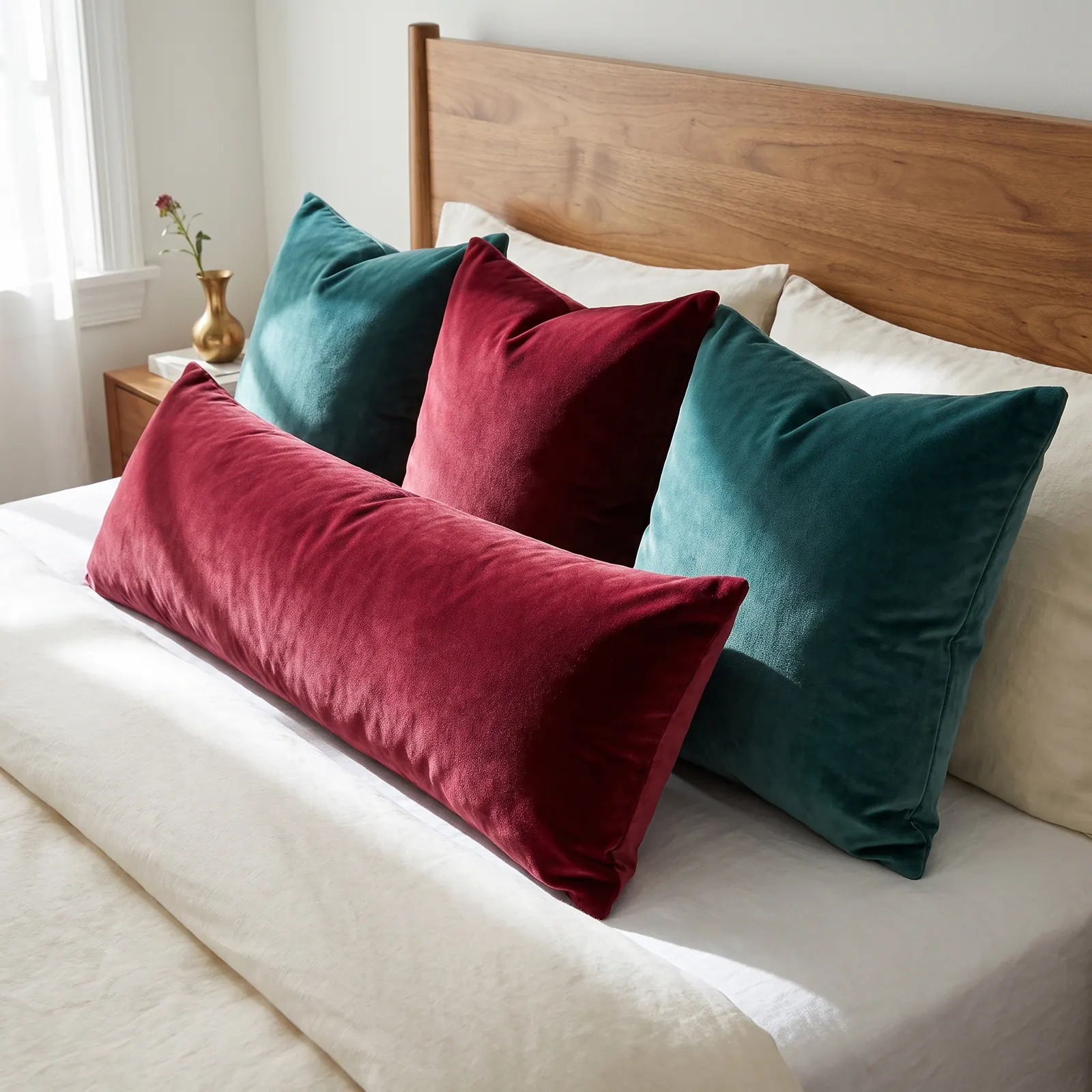
In our photographs the lumbar is the accent the whole bed turns on. A cranberry velvet angled across deep teal shams catches window light along its pile, so one end glows and the other deepens toward garnet. A royal blue velvet does the same against a near-black wall and a walnut headboard.
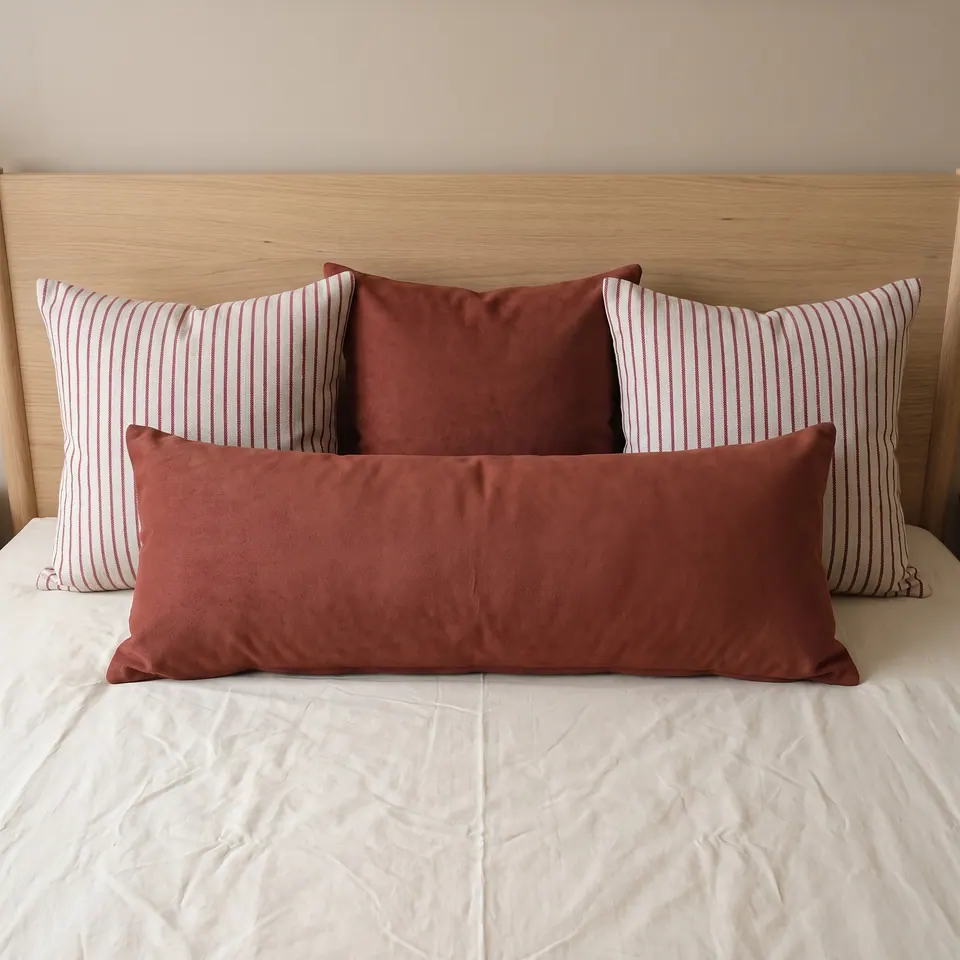
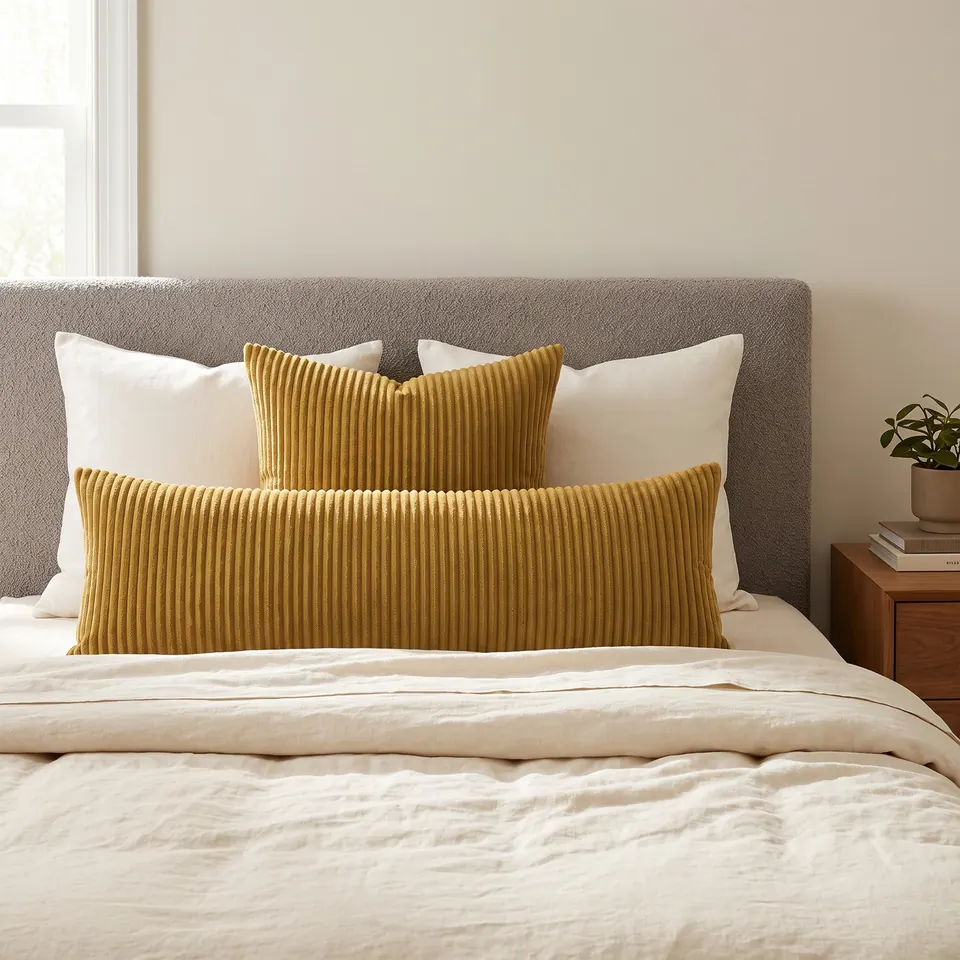
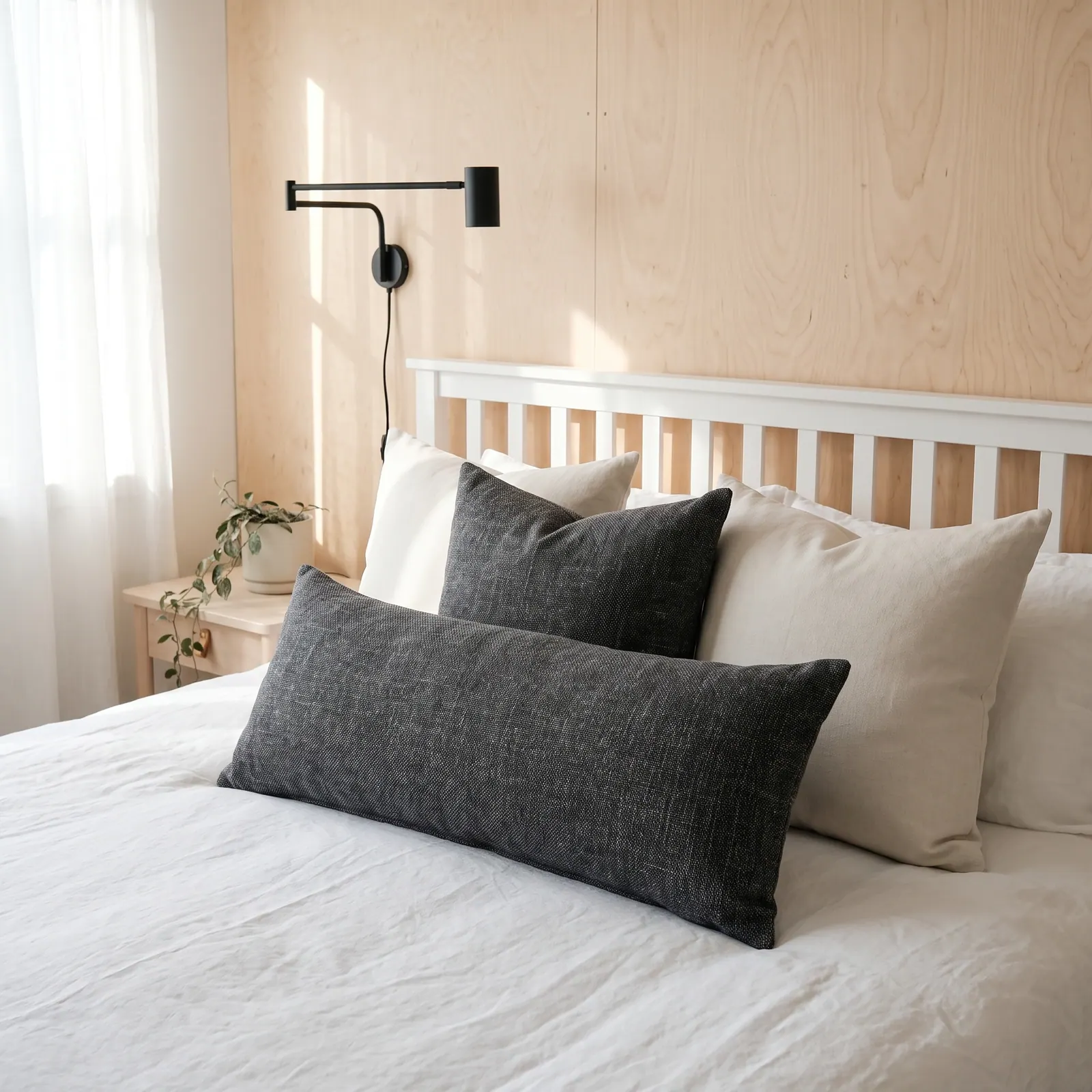
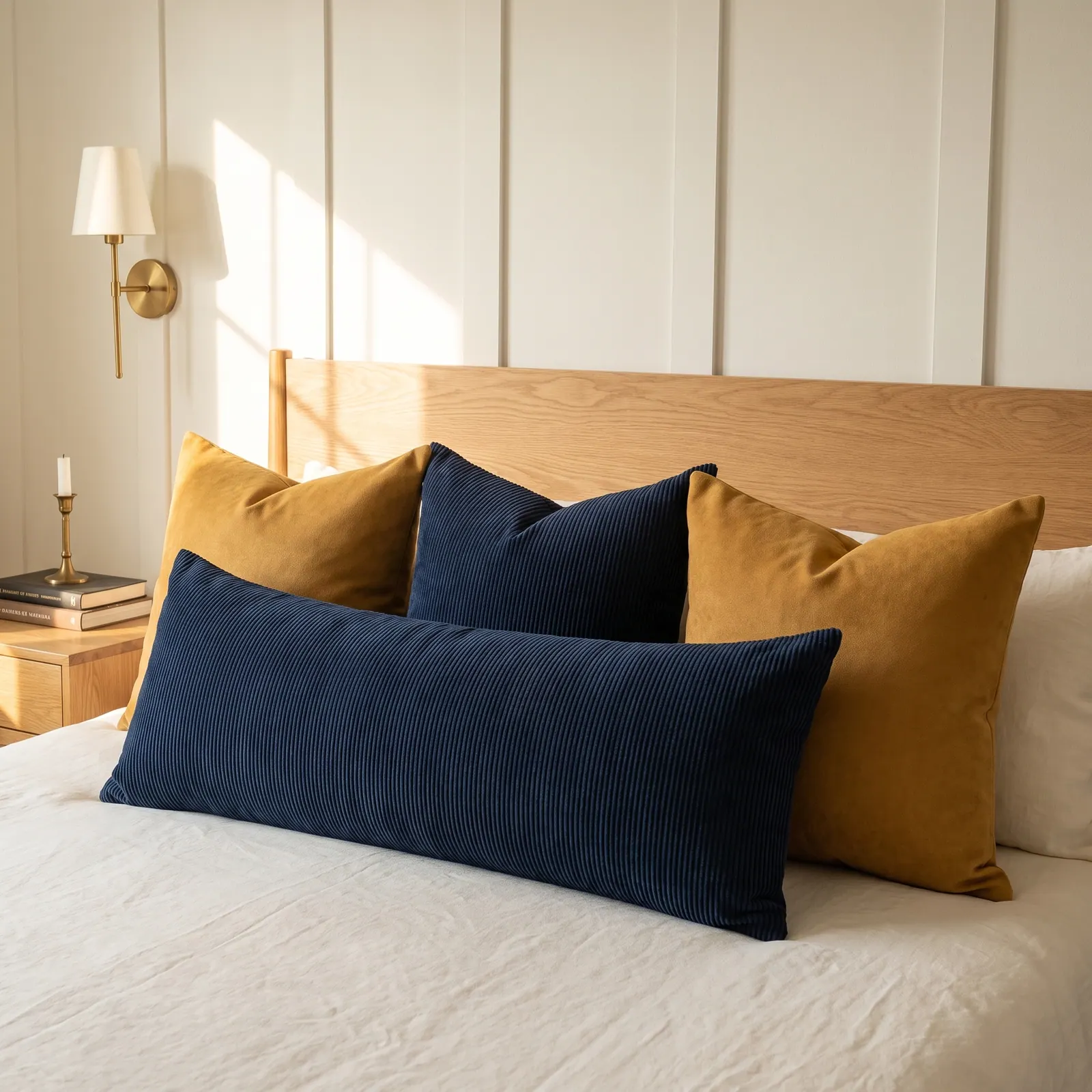
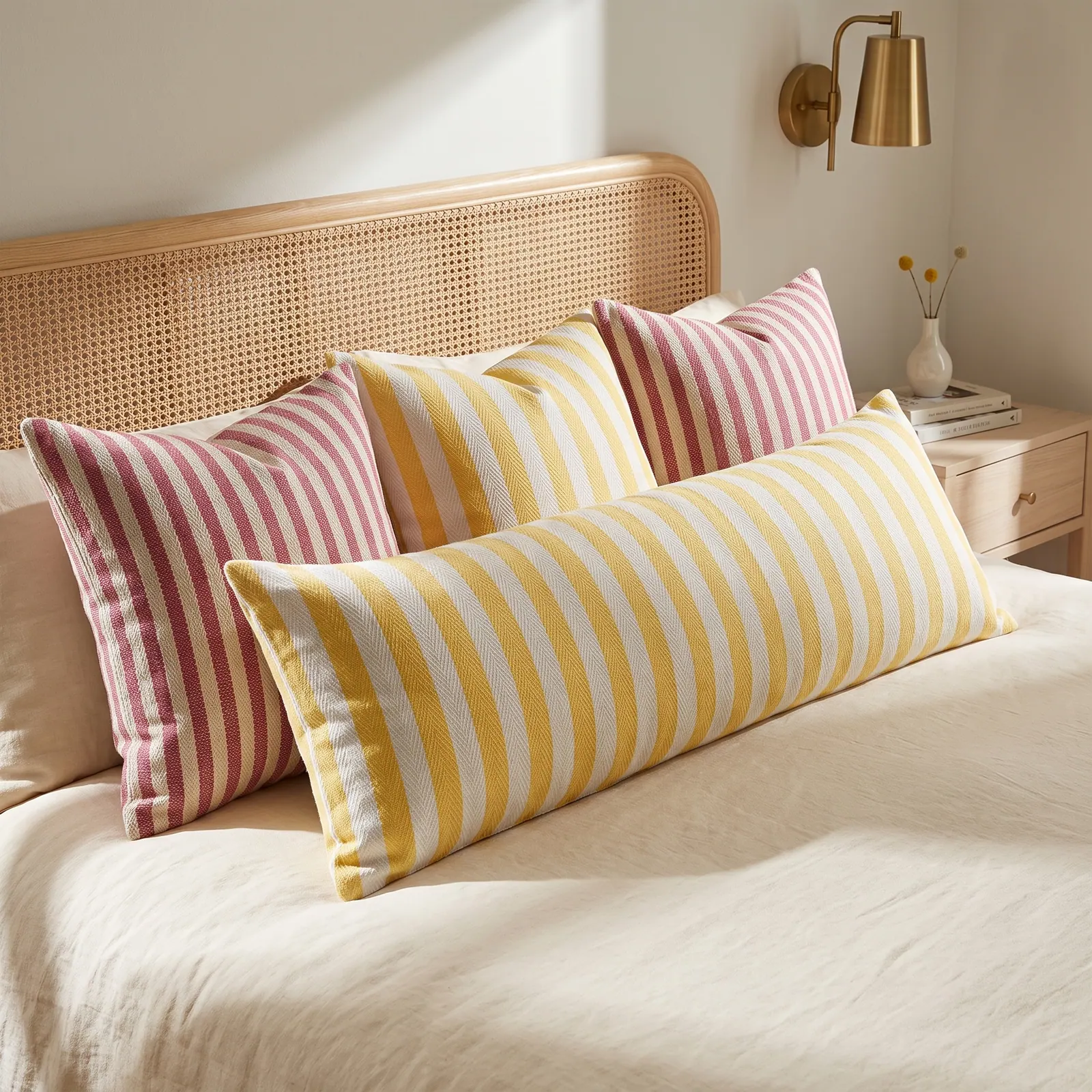
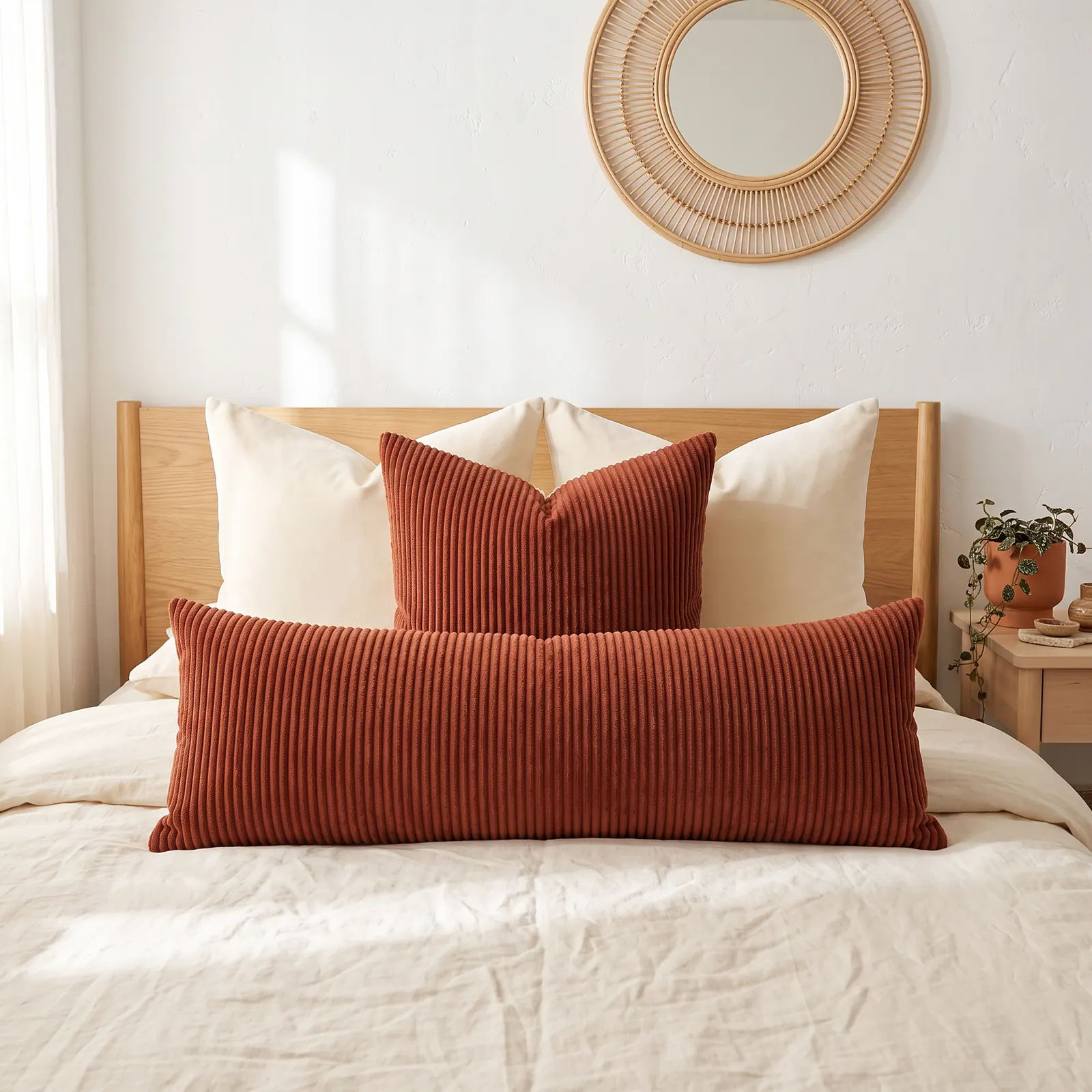
Corduroy gives a lumbar ribbed shadow: ink navy between mustard shams, rust under a rattan sunburst mirror. Stripes and ticking bring order, a navy ticking on a banquette or a green-and-cream stripe before wide yellow bands. For a quieter bed, a charcoal linen-look weave with a visible slub reads like handwriting against white sheets.
One honest note: the workshop's range is mainly plain solid colors. It sources and customizes fabric but does not weave its own or print custom patterns, so pattern lives in the stripes and ticking on the chart.
The count is how many published readings use each family. Open a family for its swatch book, care notes and neighbors.
Inserts, fill and measuring
The insert decides the silhouette. Go about 1 in larger than the cover each way and the lumbar sits full; match it exactly and the corners go soft.
The workshop's back pillows and throw pillows are filled with shredded foam made on its own machine: softer than solid foam, but not very soft, so a lumbar holds its shape against a back. The fill sits in a separate insert with its own inner cover, and the zipped outer cover comes off for washing.
Measure the finished pillow you want, width by height, and name the unit. A listing that shows both units is made to the centimeter size unless you write your exact inches in the note.
A real project
A navy ticking banquette, and three lumbars to follow
A buyer in the US chose a navy blue ticking stripe for a custom kitchen banquette cushion and loved it enough to come back. This time she wanted three lumbar pillows in the same stripe, to sit along the banquette.
The workshop made the covers 24 x 12 in and the inserts 25 x 13 in, so each pillow would sit full and a little proud, with removable zippered covers that wash. The stripe had already spoken on the seat; the lumbars repeated it, three soft echoes in navy and cream.
Measured
Three covers 24 x 12 in (61 x 30 cm) with 25 x 13 in (64 x 33 cm) inserts
What it taught
An insert about 1 in larger than the cover gives a lumbar pillow a full, plump look.
Lumbar mistakes I see most
Ordering the insert the same size as the cover. Go about 1 in larger each way for a plump lumbar.
Mixing inches and centimeters in one drawing. Give every measurement in one unit, and say which.
Trusting a dual-unit listing to follow your inches. It is made to the centimeter size unless you write the exact inches in the note.
Typing 'ties' into the size box for back pillows that must stay upright. Write position and length in the order note, then confirm by message.
Ordering a matching lumbar months later without the fabric code from the first order. Send the code so the match comes from stock.
Assuming the pillows in listing photos come with the seat. Styled pillows are decorative and sold separately.
Photographs from the workbench
Open any photograph large; each one has its own link and a Save button.
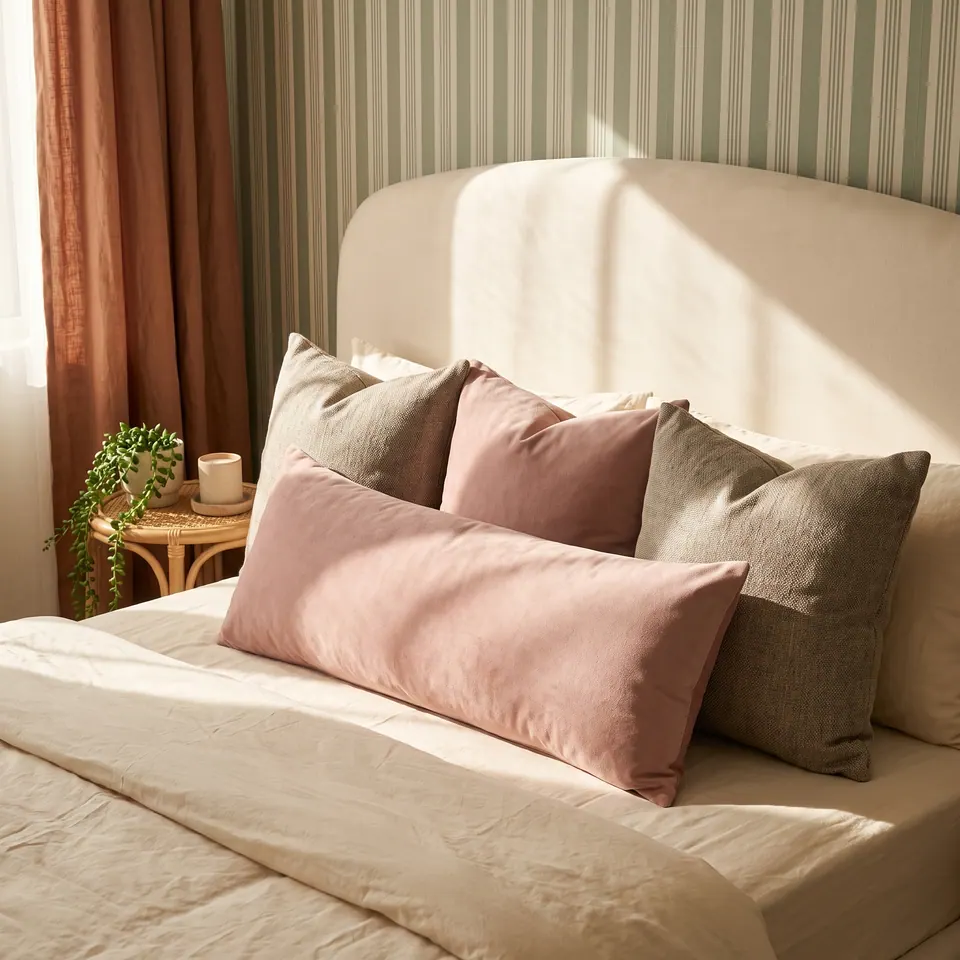
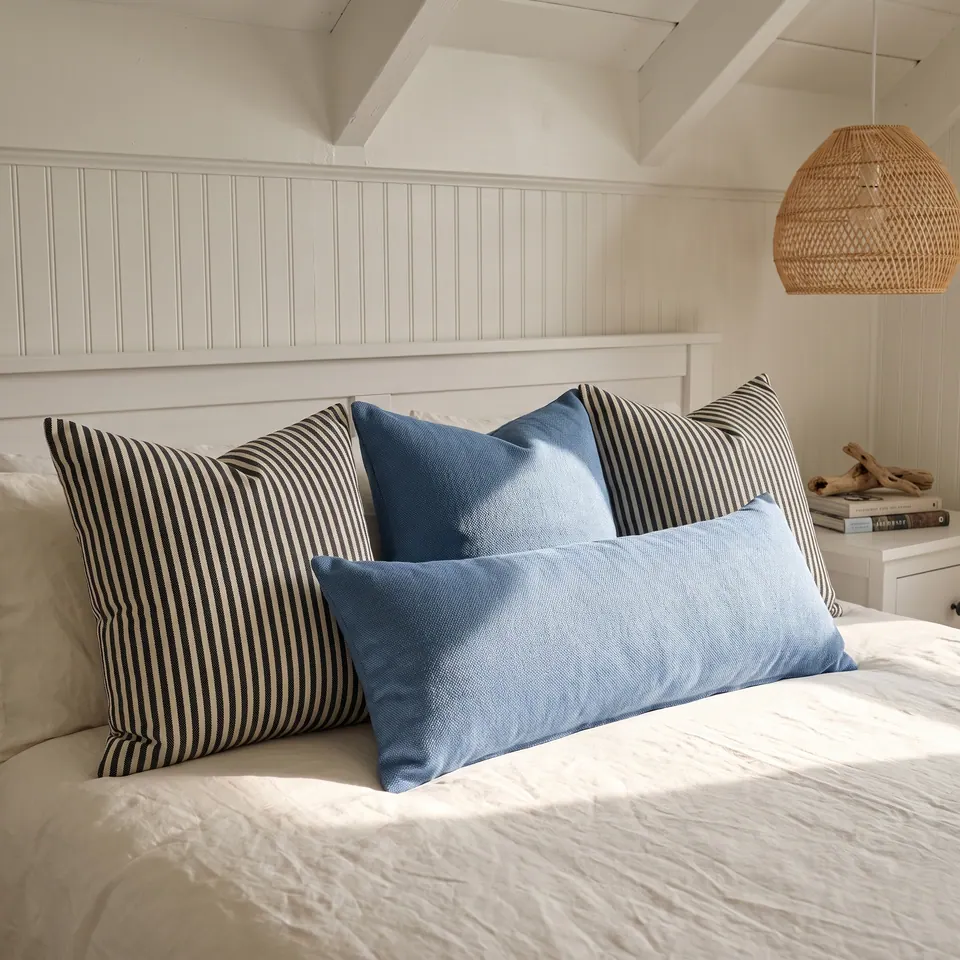
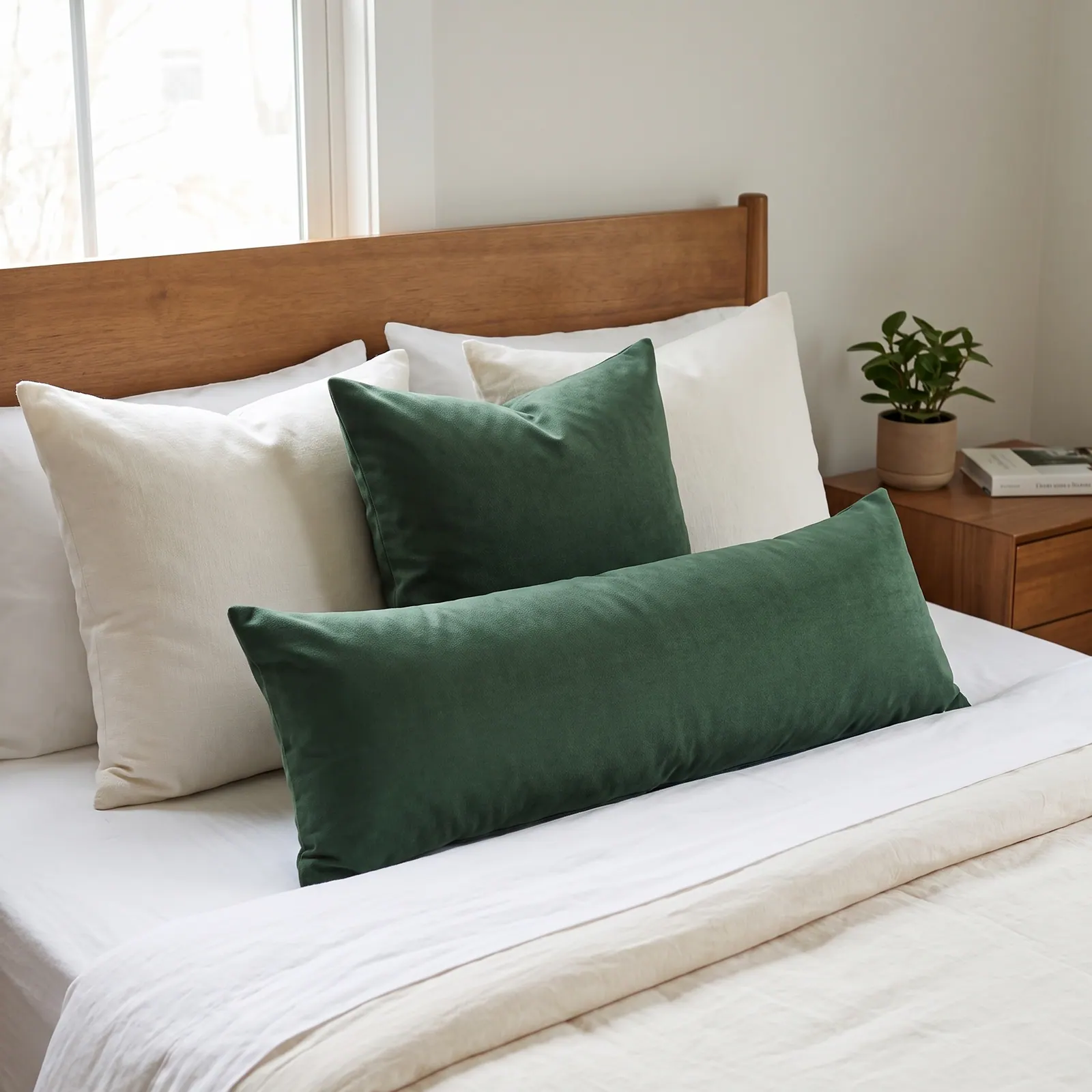
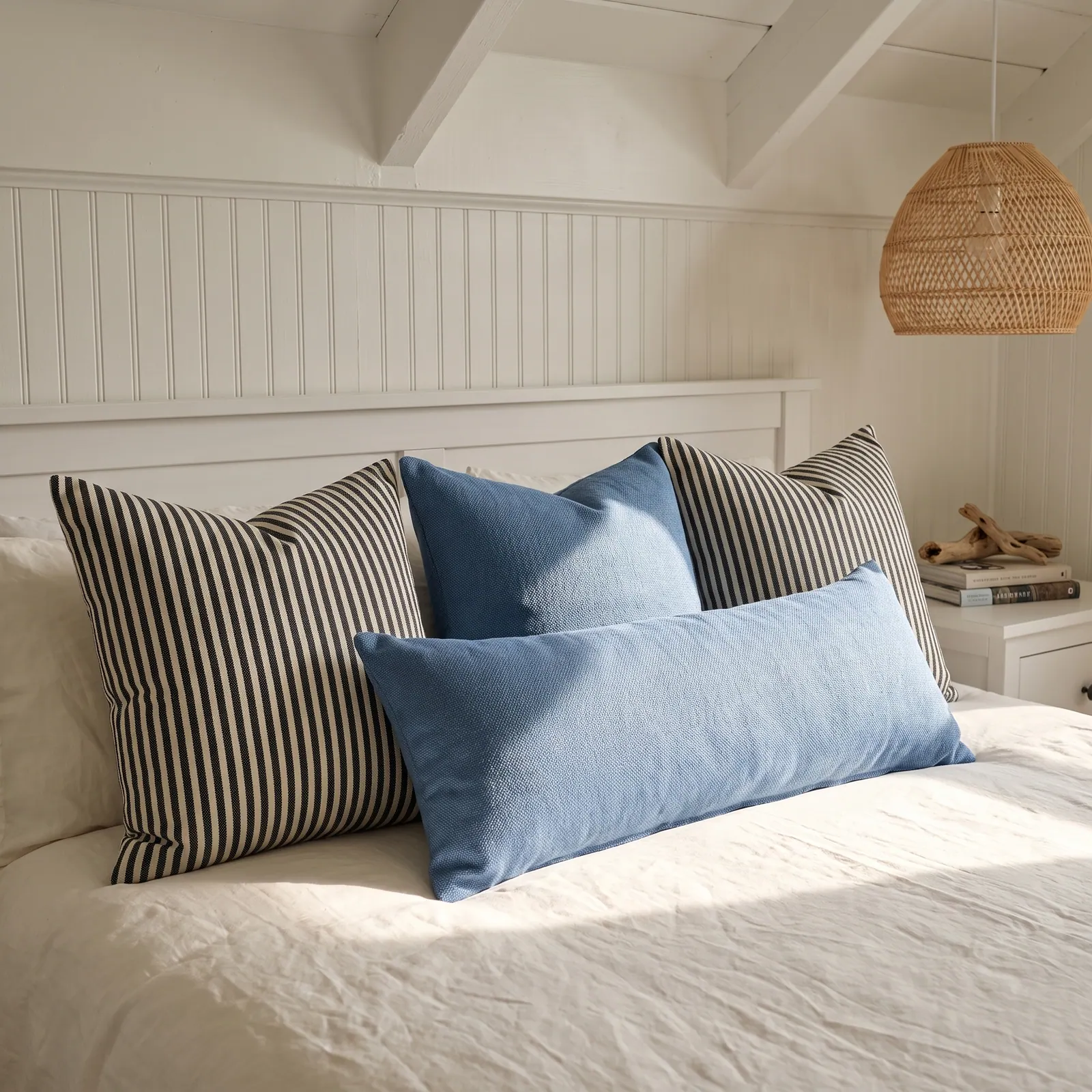
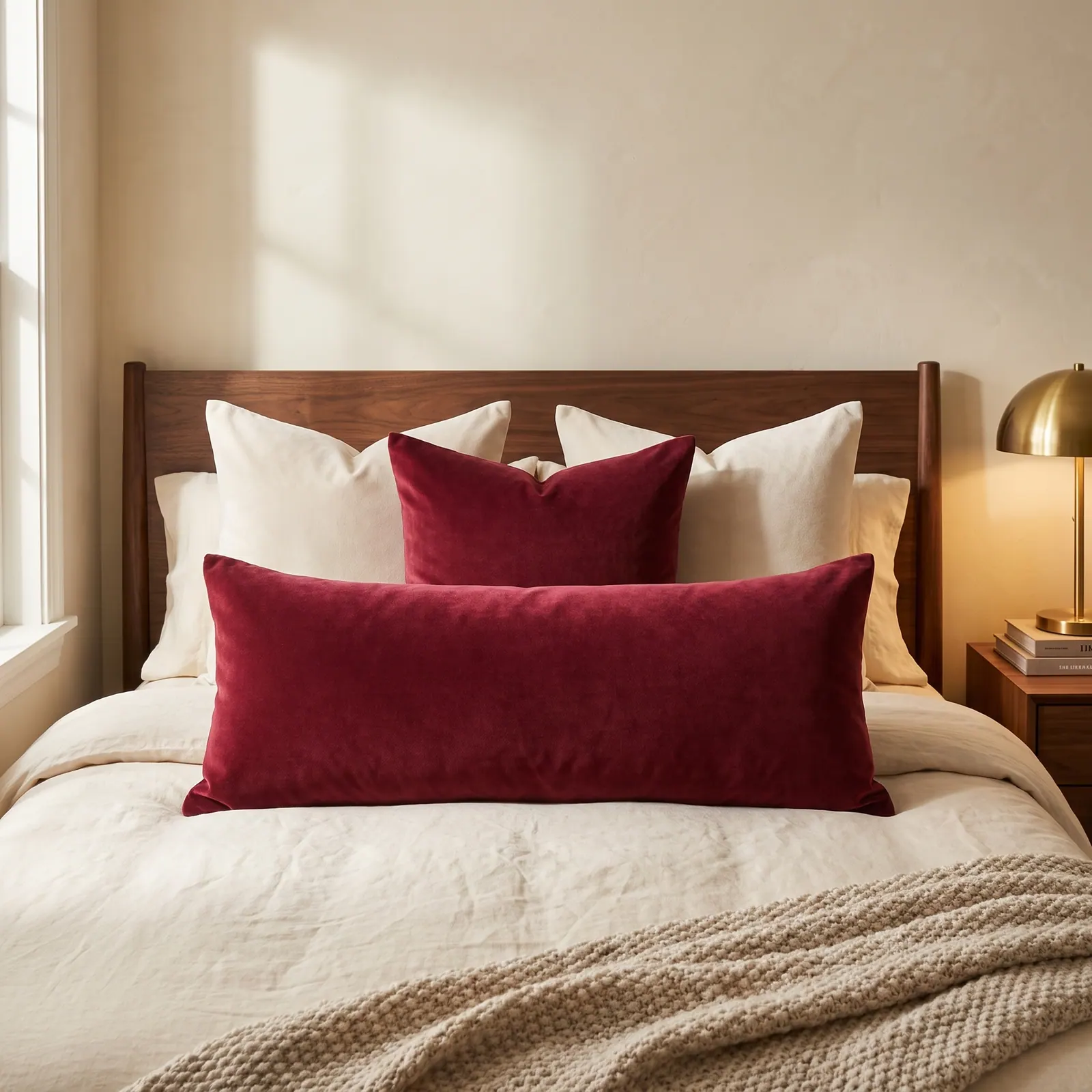
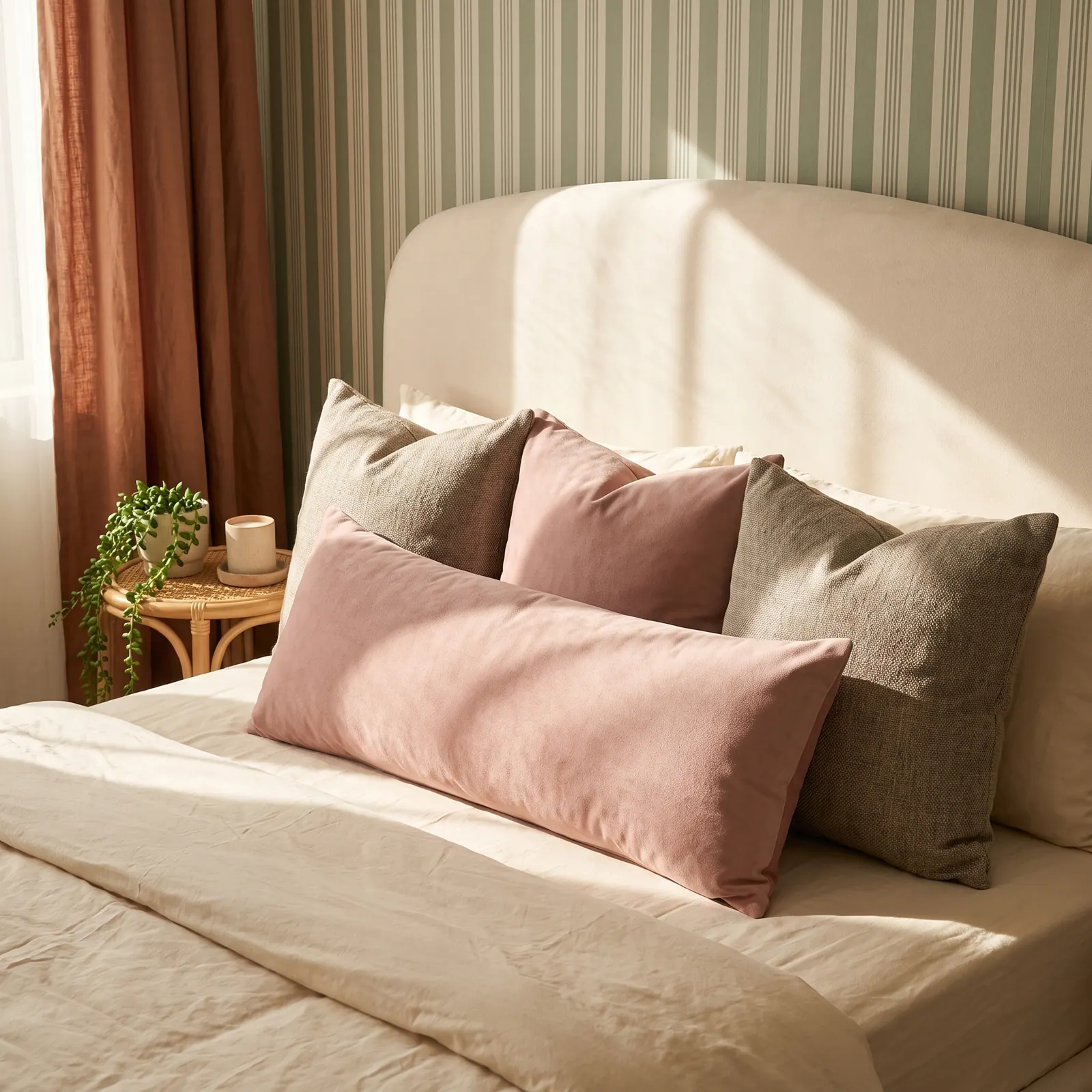
SaveCharcoal slub weave gives the only dark note in a pale birch-and-white bedroom, repeated by the black wall lamp.SaveA single forest green lumbar and a matching square carry all the color on an otherwise ivory-and-white bed.SaveNavy and mustard, a classic pairing, softened by corduroy ribs and afternoon sun.SaveA velvet lumbar and a cotton stripe in the same royal blue show how two textures can share one color.SaveJewel-tone velvet in cranberry and teal, with a brass vase and a single rose on the side.SaveA coastal attic bedroom where cornflower blue and fine black ticking echo the white beadboard lines.SaveDeep cranberry velvet and a chunky oatmeal knit make a warm, wintry bed set.SaveTwo cheerful stripes in yellow and rose, cut to the same width, on a cane headboard bed.SaveSoft blush and taupe cushions against a curved headboard, striped wallpaper and rust curtains.SaveA perfectly centered rust corduroy set with a terracotta pot echoing the color on the nightstand.SavePiped burgundy and forest green cushions bring a cabin feel to a reclaimed plank bed.
A lumbar pillow looks full when the insert is about 1 in larger than the cover: a 24 x 12 in cover over a 25 x 13 in insert.
Let one color speak and the others listen. On a bed, that means one lumbar in the boldest shade in the room, cranberry, rust or royal blue, before two quieter shams. On a banquette, repeat the seat fabric and change only the piping. On a floor sofa, one long lumbar across the backrest settles a busy pattern.
Can you make lumbar pillows in the same fabric as my bench cushion?
The workshop's answer
Yes. Lumbar, throw and scatter pillows are made to any size in the same fabric as your bench cushion, floor cushion or sofa, as covers only or filled, with zipped covers that come off to wash. You can mix, too: one pillow in a contrasting color with piping beside another in the bench fabric. Send the sizes, how many, piping or not, the fabric codes and a reference photo in one message, and the workshop replies with the exact price and a payment link.
A common question
I'd like a flat oblong back pillow on my window seat, not a round bolster. Possible?
The workshop's answer
Yes. Oblong knife-edge back pillows are made to length to sit flat against the wall. A kitchen window seat got a 14 x 63.5 in lumbar back pillow with a hidden zipper, in the same fabric and piping as its 4 in box seat cushion, and the two were quoted together.
A common question
Should I give my pillow sizes in inches or centimeters?
The workshop's answer
Either, as long as you say which. The workshop confirms the unit before quoting, because a mix-up changes both the price and the pillow. If a listing shows both units for one size, the piece is made to the centimeter figure unless you write your exact inches in the note.
A common question
Can you make matching lumbars for a restaurant booth?
The workshop's answer
Yes. Send a drawing with every dimension, all in inches or all in centimeters, never mixed, plus your fabric codes. The workshop checks the drawing for inconsistencies before quoting. Booths are made as separate pads, and matching lumbar pillows can be made at a set height, such as 12 in, in custom lengths; production and delivery times come with the quote.
A common question
Can you make a seat with matching back pillows and lumbars as one set?
The workshop's answer
Yes. Give the workshop the seat's length x depth x thickness and how many bolsters, back pillows and lumbar pillows you want, and it sizes them to match; the frame height isn't needed. Everything ships filled unless you ask for covers only. Window seat sets are 4 in thick as standard, and make and delivery times come with the quote.
A common question
What size floor sofa seats three, and can I add lumbar pillows to it?
The workshop's answer
For three people the workshop suggests 28 x 64 in, which comes with the seat, a matching backrest and two bolsters. The backrest is about 16 in (40 cm) high and the seat about 4 in (10 cm) thick. Extra lumbar pillows can be added and are priced by size.
Have it made
Have your lumbar pillow made — ask Élodie’s workshop
Color is easier to settle in a conversation than on a screen. Tell the workshop about the room and the light it gets, and the fabric choice follows. — Élodie
Leave your details and the workshop will call you to confirm measurements, fabric, foam and piping. No prices, dates or payment on this page: it is a request, not an order.
Fabric · Foam · Pipingwhat the workshop will confirm with you
No single standard; lumbars are made to any size. Sizes made often include 24 x 12 in covers for banquettes and beds, a small 8 x 20 in, and booth lumbars 12 in tall in custom lengths. Give width x height in one unit.
Can I order only lumbar covers for inserts I already own?
Yes. Covers alone are sold in any size through the zippered-cover listing, at a lower price than filled pillows. Measure the bare insert, not an old cover, and remember that a soft insert about 1 in larger than the cover gives the fullest look.
What is inside a lumbar pillow from the workshop?
Shredded foam made on the workshop's own machine, softer than solid foam but not very soft. It sits in a separate insert with its own inner cover, so the outer cover unzips and comes off for washing while the fill stays contained.
How long does a set with lumbar pillows take to make?
Ask the workshop for current make and delivery times in writing; trade orders for booths take longer than a single window seat set. The workshop confirms size and color by message before cutting.
How do I keep back pillows upright on a banquette?
Ask for ties when you order, with their position and length written in the note, then confirm by message; ties are never added unless requested. Double piping can also give back cushions enough structure to stand without straps.
Are the pillows shown in listing photos included with the cushion?
Usually not. Pillows and back cushions styled in listing photos are decorative and sold separately, each priced per piece. The exception is floor-cushion and French sets, whose price includes the backrest and bolsters.
Should a lumbar insert be bigger than its cover?
Guides disagree: some say match the cover on lumbars, others size up. For a full look, go about 2 in larger each way; one guide notes that a 14 x 36 in cover with a same-size insert looks flat and suggests a 16 x 38 in insert instead. Match the cover only if you want a flatter, tailored pillow.
What size lumbar pillow suits a window seat or reading nook?
About 12 x 20 in is the size nook-styling guides reach for, placed low where it meets the small of your back. On a long window seat, a single long lumbar in the cushion's fabric can replace a row of squares; the workshop makes flat knife-edge back pillows to any length, such as 14 in tall with a hidden zipper.
With color and care — Élodie
Share this atlas entry
Readings
Photographs read by the masters: lumbar pillows
Real cushions made for real rooms, each read for proportion, fabric and fit.

 Save
 Save
 Save
 Save
 Save
 Save
 Save
 Save
 Save
 Save
 Save
 Save