The Pattern Room · a side-by-side pattern
Box edge, knife edge, bullnose: cushion edge styles explained
Buyers rarely say knife edge or box edge. They say the border, the side band, like the photo. Here is what each edge is called, how it's sewn and what to write on your order.
 Save
The quick answer
A knife edge cushion is two panels sewn together with one seam around the middle of the edge, so it tapers soft and relaxed; a box edge cushion adds a side band, or gusset, between top and bottom, giving two seams and square sides that hold their shape. Foam seat cushions are usually box edge, with the gusset equal to the thickness.
Nobody orders a knife edge by name
Few buyers say knife edge, and almost nobody says bullnose. They describe what they saw: the border, the piping, the side band, like the photo. That's fine. On a sail loft it was the same: the owner points at the sail, and you find the name.
The name still matters, for one reason. It tells the maker how many seams to sew and where the piping runs, and that decides how the cushion holds its shape, how it handles weather and whether the cover fits the insert you already own. The glossary has the short versions: knife edge, boxed edge, gusset.
Five edges, side by side
| Knife edge | Box edge | Mock box | Bullnose / waterfall | French mattress edge | |
|---|---|---|---|---|---|
| How it's sewn | Two panels, one seam around the middle | Top and bottom joined by a side band; two seams | Two panels, corners pleated or seamed | Top fabric runs over the front in one piece | Box build, fiber wrap, hand-stitched edge |
| The look | Relaxed; tapers toward the seam | Tailored, square sides | A box look for less fabric and labor | Soft rounded front, no front seam | Firm rolled edge |
| Holds its shape | Partly Softest | Yes Longest | Partly Softer corners | Partly Soft front | Yes Resists edge sag |
| Piping | One line, mid-edge | Two lines, top and bottom | One line, mid-side | Only on the seams that remain | None; the rolled edge replaces it |
| Outdoors | Partly Depends on fill and fabric | Yes Non-tufted foam, self piping | Partly Depends on fill and fabric | Partly Depends on fill and fabric | No Tufted, and tufting lets water in |
| Removable cover | Partly Maker's choice | Yes Zipper on the back edge or underside | Partly Maker's choice | Partly Maker's choice | No Hand-closed; remade, not re-covered |
Naming varies by maker, and some use waterfall and bullnose for the same edge. Describe the look as well as the name.
What a box edge does that a knife edge can't
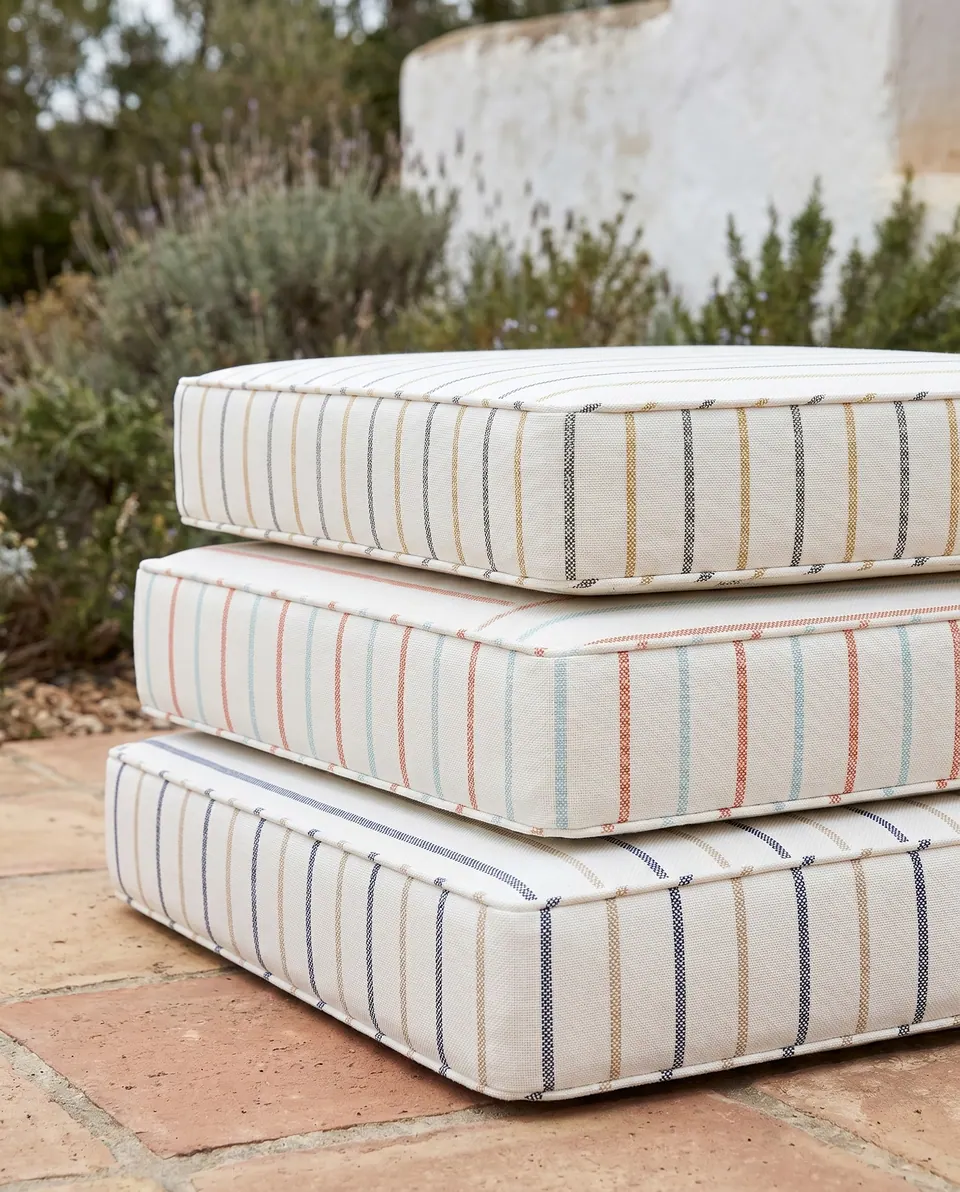
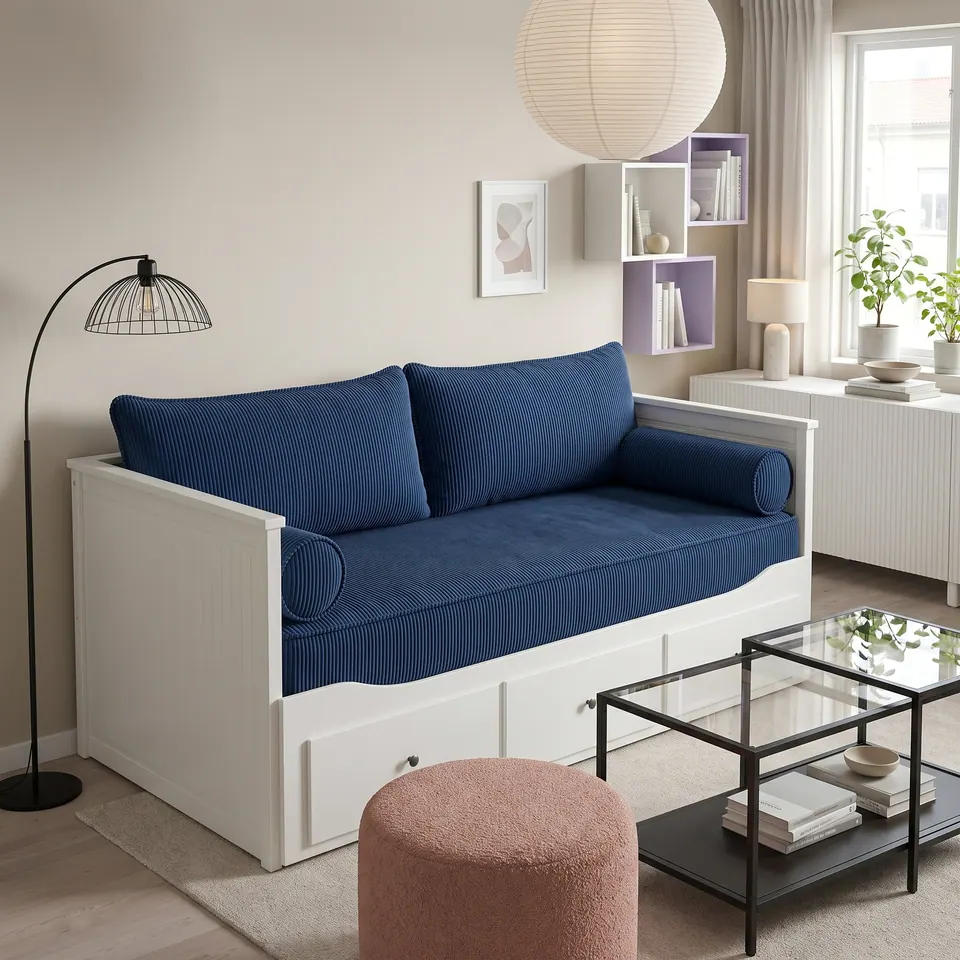
A box edge puts a strip of fabric, the gusset, between the top and bottom panels. That strip is the thickness: a 4 in (10 cm) gusset makes a 4 in cushion. Two seams means piping on both the top and bottom edges, and since both faces are the same fabric, the cushion flips; some buyers even pick a different piping color for each face.
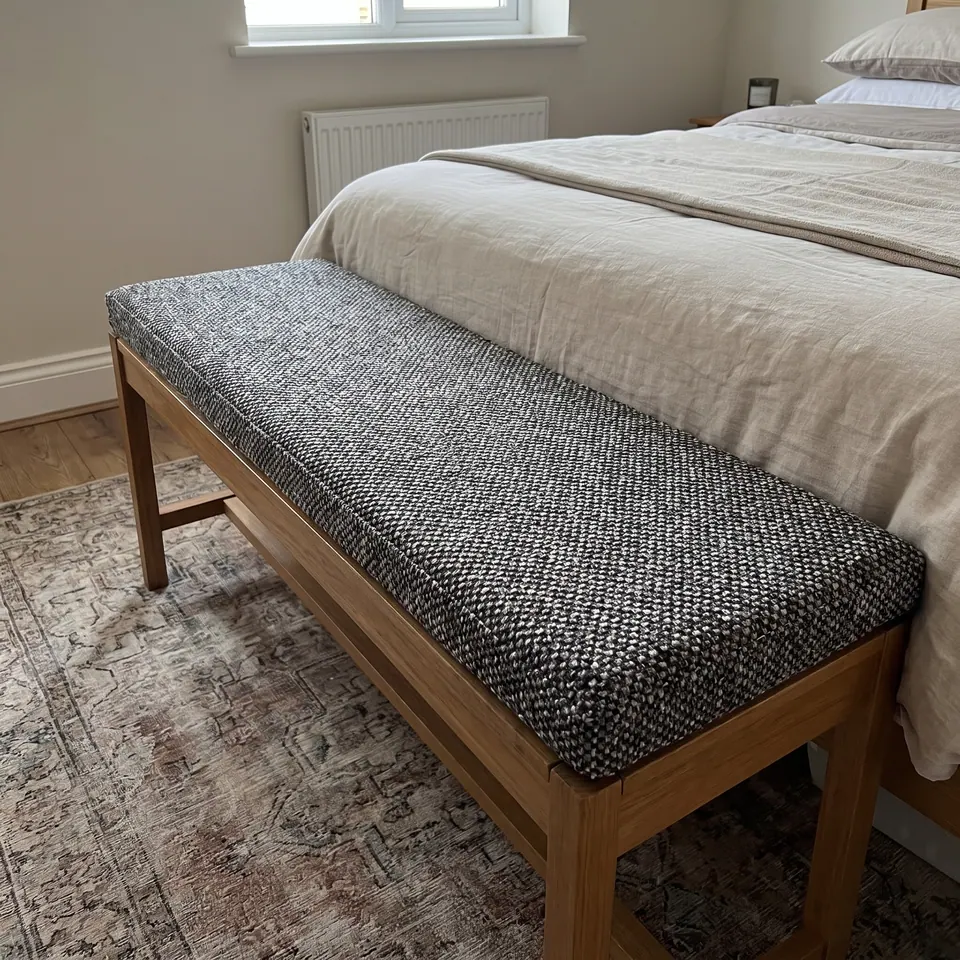
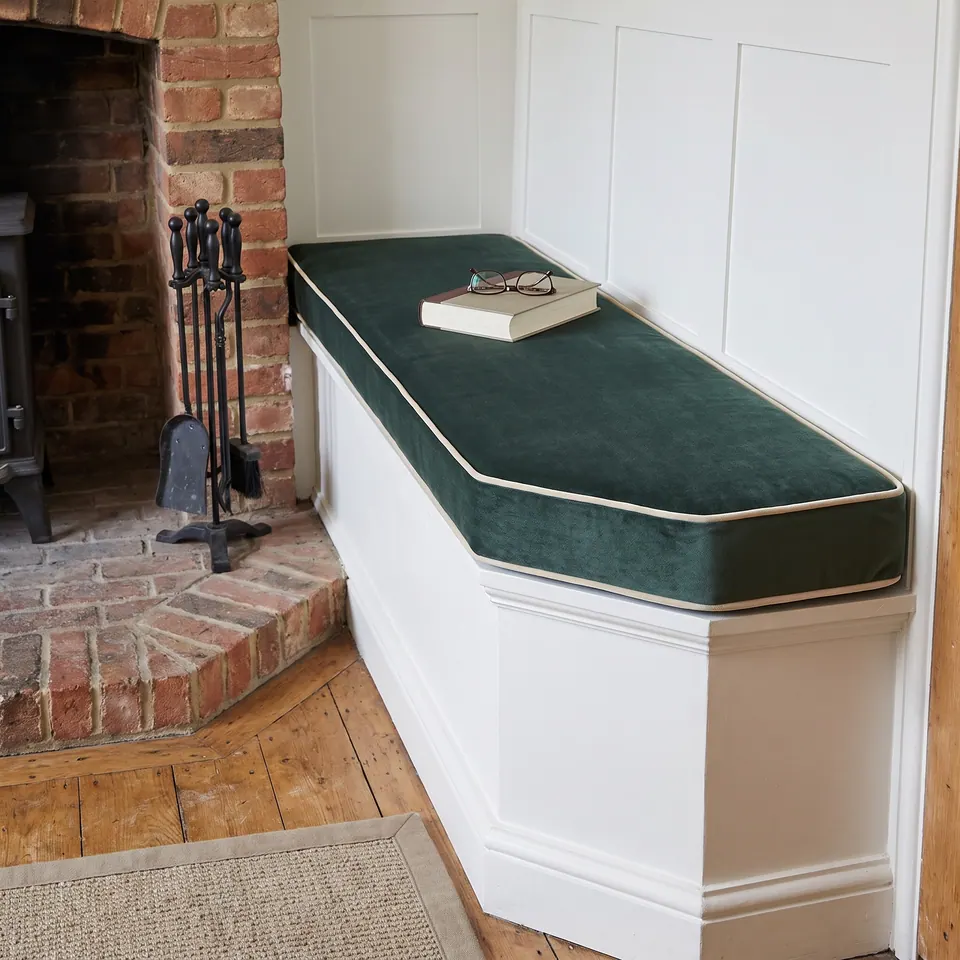
A knife edge has no side. The faces meet in one seam, so the fill domes in the middle and thins toward the edge. That suits a throw pillow and fights a 3 in bench seat that has to sit square against a wall. For benches, window seats and banquettes, box edge is the working default, and the zipper hides in the back or underside, wrapping two corners on bench cushions. See zipper placement and piping choices.
Gusset height when the cover must fit your own insert
Here is the question that usually starts the edge talk: an insert about 3 1/4 in (8 cm) thick, and a menu offering 3 in (7.5 cm) or 4 in (10 cm). Which one?
Neither, friend. The menu only sets the price bracket; the cover is sewn to the size written in the note. Pick the next size up and write the insert's real thickness, measured relaxed, seam to seam. Trade drafting cuts foam about 1/4 in larger per side than the cover for a snug, crowned fill, so the maker needs your true number. Firm inserts leave almost no margin: a cover about 1 in smaller than its insert made the foam bulge and feel over-firm.
The gusset is also the number most often wrong on mattress covers. Empty covers ordered for 10 in (25 cm) mattresses once arrived 6 in (15 cm) deep and were remade. More in covers for existing foam and the cushion covers collection.
A caramel velvet bench, boxed and self-piped
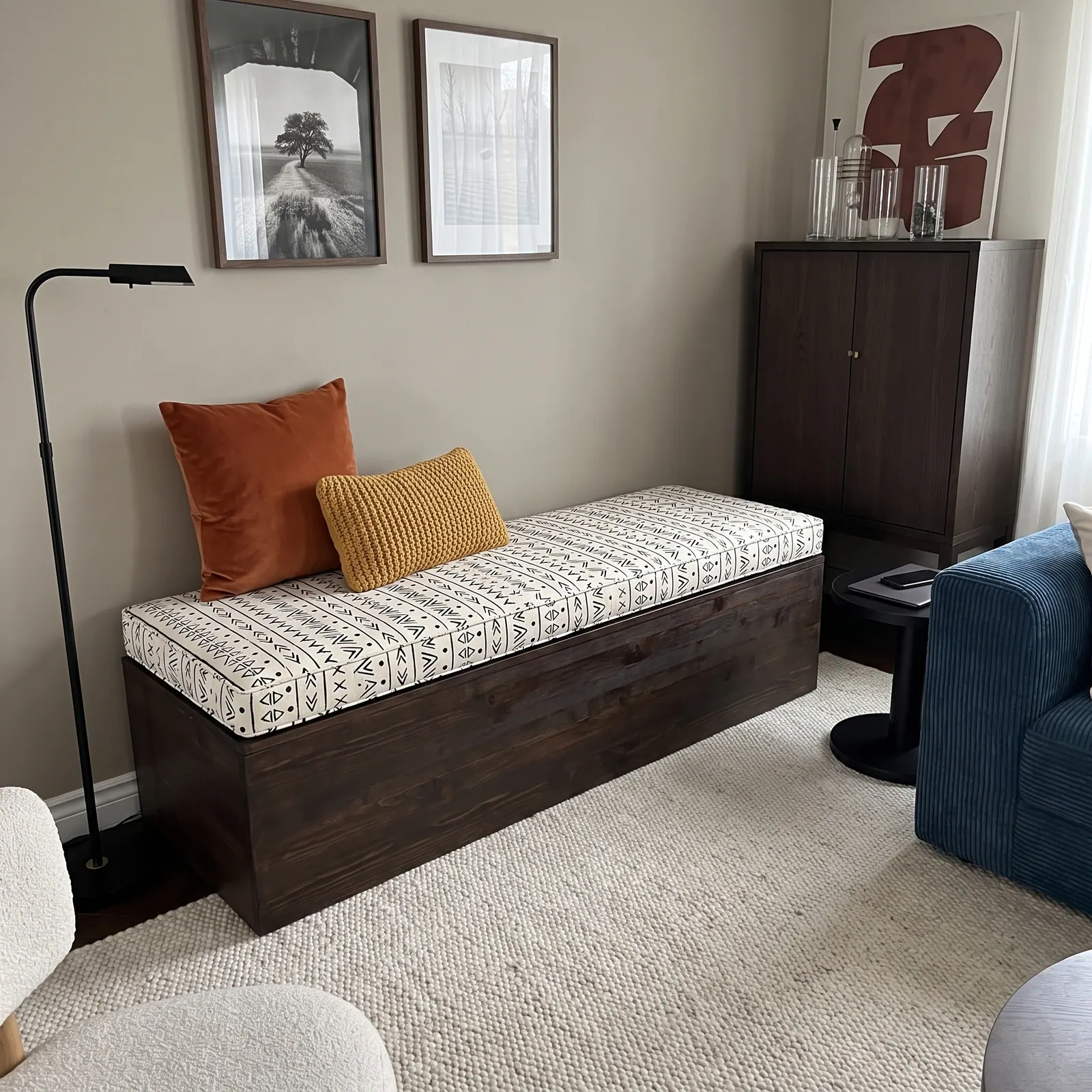
A buyer wrote in wanting a boxed velvet bench cushion, 84 1/2 x 23 5/8 in (214.5 x 60 cm), in warm caramel with same-fabric piping, a hidden zipper and high-density foam with a Dacron wrap. It was an everyday bench, pets included, and the buyer wanted it firm and structured but was torn between 2 and 2 3/4 in (5 and 7 cm).
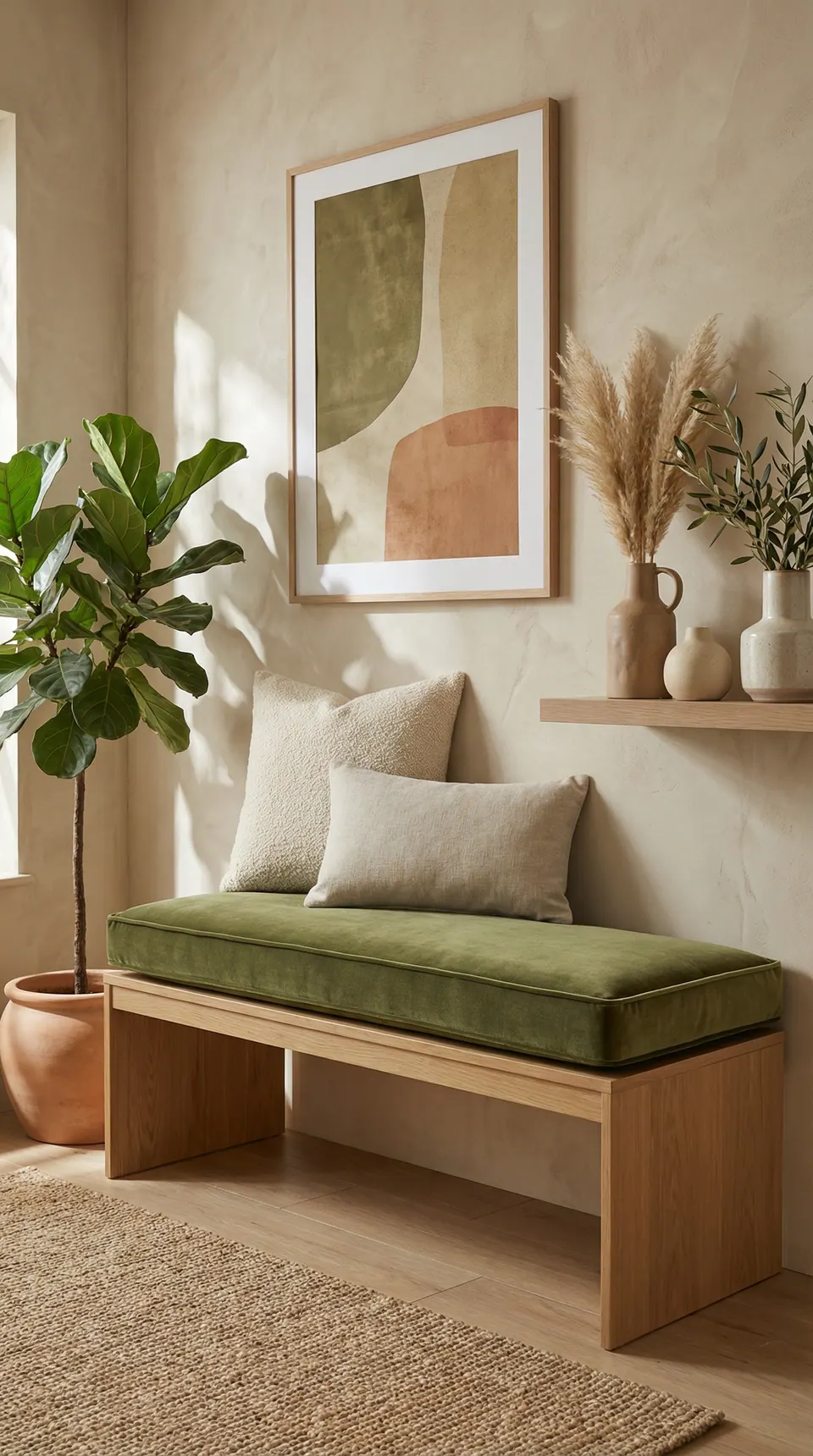
The workshop recommended 3 in (7.5 cm), the thickness most customers prefer. At that height the box edge shows a clean band of velvet all the way around, and the self piping outlines it without a second color. More boxed seats live under bench cushions.
- What it taught
- Around 3 in (7.5 cm), a boxed bench cushion stays firm and tailored and still sits comfortably.
Edge and fit mistakes, from real orders
- Two colors, top and bottom. The zipper shows on a two-tone cushion; keep both faces in one fabric and make the side band the second color.
- Forgetting that piping adds to the outside. Say whether your sizes are finished sizes, piping included.
- Ordering a cushion that must sit inside a ledge at full size. Handmade cushions vary by roughly 1/2 to 3/4 in (1 to 2 cm); call it a hard maximum and ask for it cut under.
- Wanting tufting and a washable cover. Tufted French-style cushions are hand-closed with no zipper, so choose one or the other.
- Ties typed into the dimension box. Ask for them in writing and check the photo sent before shipping.
A knife edge cushion has one seam around the middle; a box edge cushion has a side band and two seams, so it keeps square sides.
Callum
Gathered corners, bullnose fronts and patterns
| Edge | What it is | Patterned fabric | Removable cover |
|---|---|---|---|
| Box edge | Top, bottom and a side band (boxing) of 1 in to 10 in or more | Pattern has to be matched down through the band | Yes, with a zipper in the back band |
| Knife edge | Two panels seamed around the middle, tapering at the corners | One seam to match | Yes |
| Bullnose front | One piece of fabric wraps over the front edge | No front seam, so busy prints are forgiving | Ask the workshop |
| Gathered corner | Corners pleated into a soft rounded tuck | Ask how the pattern is placed | Ask whether it can be made |
| Tufted top | Buttons through the filling | Buttons dimple the pattern | No: tufted covers are sewn closed |
Buyer questions
- A common question
Can the top of the cushion be one color and the bottom another?
The workshop's answerIt isn't recommended: the zipper runs along one edge and shows on a two-tone cushion. What works well is keeping the top and bottom in one fabric and making the side band, the boxing, in the second color. Write both codes with the order.
- A common question
Does the piping go around both the top and the bottom edge?
The workshop's answerYes. Piping runs around both edges and both faces use the same fabric, so the cushion can be flipped. You can even pick a different piping color for each face; one set of 90 1/2 in (2.3 m) linen-look cushions, 3 in thick, had a different cord on each side.
- A common question
Can I get a French edge instead of piping?
The workshop's answerOnly on tufted cushions. The hand-stitched French edge is made only on tufted pieces, so covers sold on their own, such as replacement covers, come with piping. Bolsters and backrests that normally carry French trim can be made without it.
- A common question
Where does the zipper go on a box cushion, and will it show?
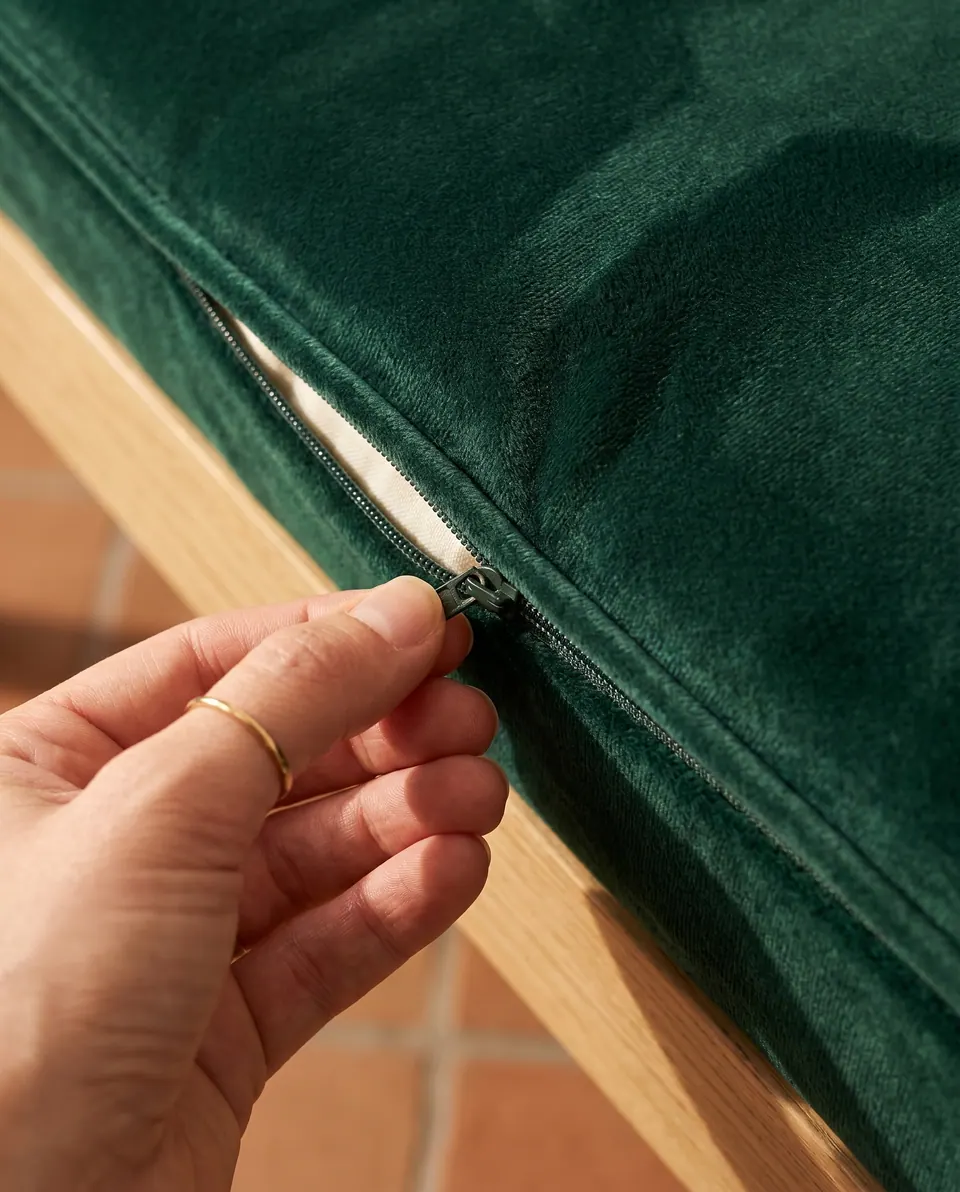
The workshop's answerEvery cover has a zipper at no extra charge, hidden on the back edge against the wall or chair back, or on the underside. On bench cushions it wraps around two corners so the foam slides out. If you can see it, the cushion is probably upside down.
- A common question
Can I leave the piping off, and is it cheaper?
The workshop's answerAny cushion can be made without piping: write 'no piping' next to your fabric code and the edges are sewn plain and flat. The price stays the same, because piping is already included. For a subtle edge, choose self welt, piping cut from the cushion's own fabric.
Have it made
Measured it? Have Callum’s workshop make it
Short list: size, sun hours, how fast it has to dry. The workshop goes through it with you. — Callum
Leave your details and the workshop will call you to confirm measurements, fabric, foam and piping. No prices, dates or payment on this page: it is a request, not an order.
Questions buyers ask next
What is a knife edge cushion?
A cushion made from two panels sewn straight together with one seam around the middle of the edge and no side band. The fill domes in the center and thins toward the seam, which gives a relaxed, casual shape suited to pillows and thin pads.
What is a gusset on a box cushion?
The gusset, also called boxing or the side band, is the strip of fabric between the top and bottom panels. Its height is the cushion's thickness, so a 4 in (10 cm) gusset makes a 4 in cushion. Check it first on any cover-only order.
Is a bullnose the same as a waterfall edge?
Close, and some makers use the names for the same thing. In both, the top fabric continues over the front instead of meeting a seam there, giving a soft rounded front that suits busy patterns. Describe the look you want as well as the name.
Which edge works best for outdoor cushions?
A non-tufted box edge with foam inside and self piping, which reinforces the edges that take the weather. Skip French edges and tufting outdoors: tufted cushions let water in even when they are made in outdoor fabric.
Is a box cushion or a knife-edge cushion more comfortable to sit on?
For a seat, usually the box cushion. Its side band holds the full thickness right out to the edges, so the front edge supports your legs. A knife-edge cushion is two panels seamed around the middle that taper toward the corners, so it's thinnest where you perch. Knife edges suit throw pillows, backs and thin chair pads better than seats.
Does the edge style change how a patterned fabric lines up?
Yes. On a box cushion the pattern has to be matched from the top panel down through the side band, which takes care and extra fabric. A bullnose edge wraps one piece of fabric over the front, so there's no front seam to line up, which makes it forgiving with stripes and large prints. Ask how the pattern will be placed before you order.
What is a gathered corner on a cushion?
It's a corner pleated into a soft, rounded tuck instead of sewn to a sharp point. It works on both knife-edge and boxed cushions and gives a relaxed, slightly puffy look, often seen on floor pillows and loose backs. The workshop's standard seat cushions have crisp box corners with piping, so ask before ordering if you want gathered corners instead.