The Pattern Room · a measuring pattern
Cushion zipper placement: back edge, underside and odd shapes
A zipper is the one part of a cushion you should never see. Here is where ours hide, how to choose the edge on a trapezoid or an L-piece, and what to do when a slider sticks.

 Save
The quick answer
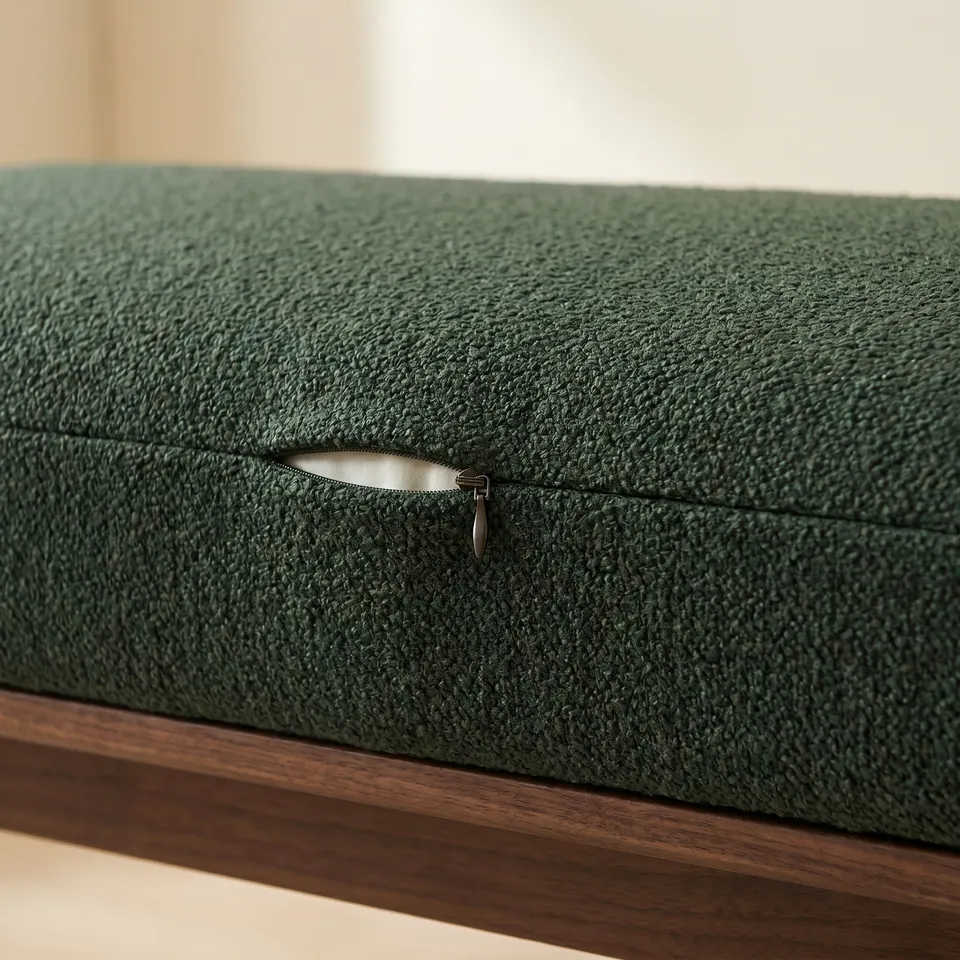
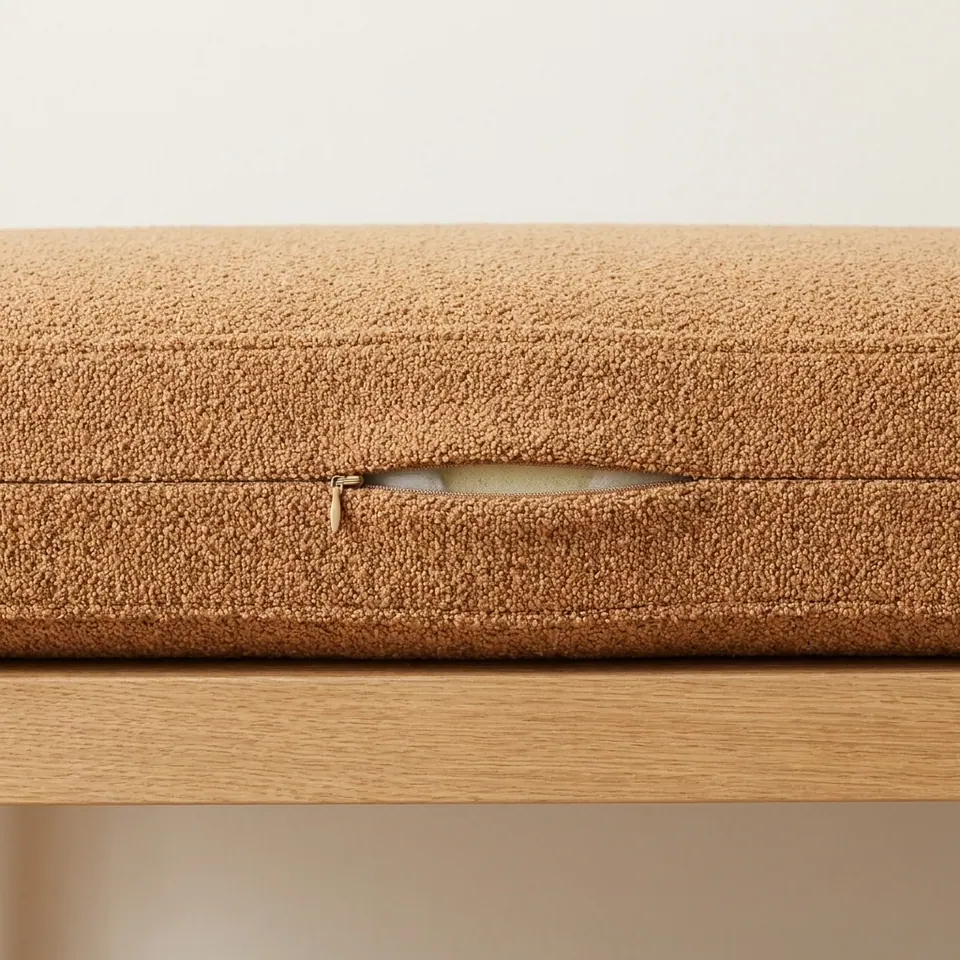
The zipper goes on the back edge of the cushion, the side that faces the wall, window or chair back, or on the underside, where nobody sees it. On bench cushions it wraps around the back corners so the foam slides out. On trapezoids and L-pieces, name the edge in writing. If you can see the zipper, the cushion is probably upside down.
The detail you are not supposed to notice
Every cushion the workshop makes has a zipper, and if the sewing is done right, you have never seen one. The question is nearly always the same: where does the zipper go on a cushion, and will it show?
Right, then. The short rule: the zipper lives on the back edge, the one against the wall, the window or the chair back, or on the underside. It comes standard on every foam cushion cover at no extra charge, so the cover comes fully off for washing. The cushion covers atlas and the hidden zipper entry cover the basics.
Picking the zipper edge, shape by shape
Bench cushions: the back edge, wrapped around the corners
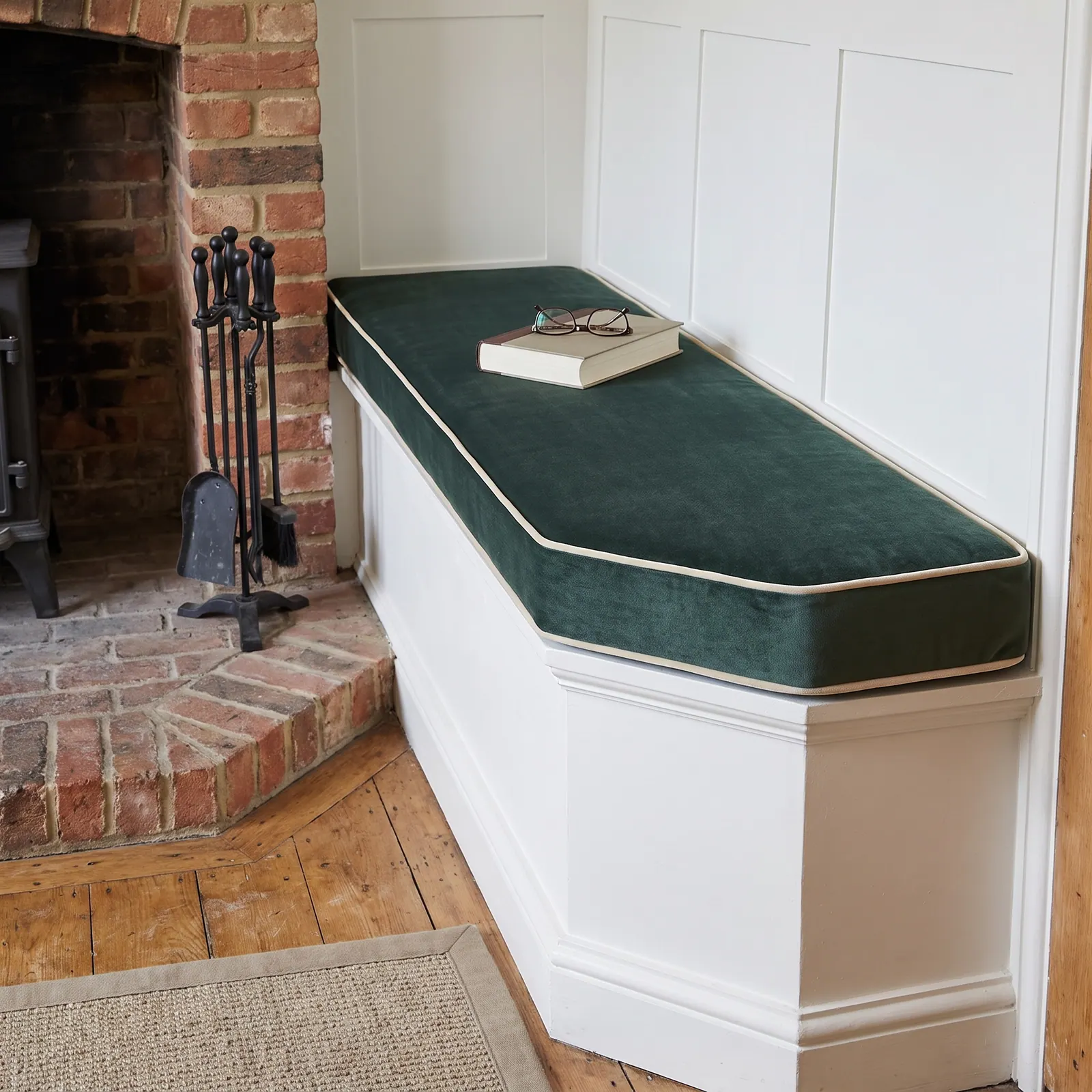
On a rectangle the zipper runs along the back edge and turns the back corners in an L, so the foam slides in and out without a wrestling match. In trade drafting the zipper panel runs about 4 in (10 cm) longer than the back side to make that turn, and the piping join hides at the back too. More in bench cushions.
Window seats and chair pads: the edge against the glass
A window seat's back edge is the one along the window; a chair pad's is the one against the chair back. When an order leaves it unclear, the workshop asks, for example whether the zipper belongs on the 23.6 in (60 cm) edge of a 23.6 x 17.7 in (60 x 45 cm) cushion.
Trapezoids: the shorter back edge
On a trapezoid cushion the zipper goes on the shorter back edge on request, so the long front edge stays clean. The zipper is sized to the shape, so the foam still slides out for washing even when the front is wider. Send the back width, front width and depth, say 15 in (38 cm) and 18.75 in (48 cm), and write the zipper edge on the same drawing.
Tapered covers: the narrow end, turned around a corner
A tapered cover can zip along the narrow end and around one corner, so it slides onto its wider end like a sock onto a foot.
L-pieces and corner benches: never in the corner
On an L-shaped cushion, keep the zipper on an outer back edge. A zipper in the inside corner is the classic trade mistake: once the cushion is in place, no hand can reach it. See how L corners join.
Reversible cushions: down a long side
If you plan to flip the cushion, ask for the zipper down a long side so either face can be the top. Write reversible on the order and no non-slip base gets added, because a grippy underside makes any cushion one-sided.
Draw it top side up, and write the zipper on the sketch
A rectangle forgives you. A trapezoid or notched seat has one true top, and if the drawing does not say which face is up, the zipper can end up on top. Mark viewed from above, the front edge and the zipper edge on every asymmetric drawing: the top side up habit.
Tufted? Then there is no zipper at all
Button-tufted cushions are hand-stitched closed, so the cover never comes off, and a tufted cushion cannot be re-covered later, only remade. Weigh it up in tufted vs plain cushions.

Have it made
Measured it? Have Maggie’s workshop make it
I once cut a lovely cushion two inches short, and I have not forgotten it. That is why the workshop goes over your measurements with you on the phone. — Maggie
Leave your details and the workshop will call you to confirm measurements, fabric, foam and piping. No prices, dates or payment on this page: it is a request, not an order.
A lounge chair, a trapezoid seat and one clear note
A buyer in the US wrote to the workshop about a mid-century lounge chair. The seat was a trapezoid: 23 in (58 cm) across the front, 22 in (56 cm) at the back and 24 in (61 cm) deep, 4 in (10 cm) thick, not tufted, with the zipper at the back. The back cushion was a plain rectangle, 22 x 19 in (56 x 48 cm) and 3 in (7.5 cm) thick.
What I liked was the note. Both cushions were to be reversible, so neither got a non-slip bottom, and the zipper edge was named before anyone had to ask. The workshop sent each shape through its own order and confirmed that piping came included while ties and a non-slip base stayed optional. Nothing was left to guess.
Zipper mistakes the workshop sees again and again
- Drawing a trapezoid or notched seat without marking the top face, so the zipper or non-slip base ends up on top and the cushion only fits upside down.
- Leaving the zipper edge off an odd shape and letting the maker guess.
- Putting the zipper in the inside corner of an L, where no hand can reach it.
- Typing extras such as ties or a non-slip base into the size box, where they get missed.
- Forcing a snug cover closed over firm foam instead of pressing the foam in first.
When the slider sticks
A stuck zipper is usually not a broken one. Fabric, or the tape underneath, has caught in the teeth, very often on the first opening. I have caught a lining in a zipper myself more than once, and I sew for a living.
- Ease the caught fabric out of the teeth.
- Run the slider all the way back to the open end, then forward again.
- On a snug cover, line up both sides and zip slowly while pressing the cushion inward.
- Squeeze a loose slider gently from both sides with your fingers or light pliers.
- Floor cushion covers have two zippers, so if one sulks, use the other.
If it still won't move, send the workshop a photo of the slider. A local tailor can swap a broken slider in minutes, and when it was a production fault, the workshop has replaced the cover.
Laundry day: unzip all the way
Laundry day is hard on zippers. Unzip fully before pulling the cover off the foam, wash at 86°F (30°C) or lower on a gentle cycle, and air-dry. Refit the cover while it is slightly damp and has a little give, and never haul on the pull tab to close a gap.
For the wash itself, see how to wash cushion covers; for a new cover on foam you own, cushion covers for existing foam.
Which edge of your seat faces the wall? Write it on the drawing before you order.
On a trapezoid cushion the zipper goes on the shorter back edge, so the long front edge stays clean and the foam still slides out for washing.
Maggie
How far the zipper runs
Placement is only half of it; length matters too. On a throw pillow the zipper usually runs along most of one edge, and sewing guides size it a few inches shorter than the insert. On bench, window seat and mattress covers, the zipper runs along the back edge and wraps around two corners in an L, which is what lets a firm, slightly oversized foam insert be folded and fed in without fighting the cover. Foam cutters recommend exactly this wraparound, because it turns refitting a washed cover from a struggle into a quick job. On a trapezoid, the zipper goes on the short back edge and is sized to the shape, so the insert still comes out.
Buyer questions
- A common question
Where will the zipper be on my cushion, and am I going to see it?
The workshop's answerYou shouldn't. Every cover gets a zipper at no extra charge, hidden on the back edge or underneath; on bench cushions it wraps two corners so the foam slides out. When a cut-out cushion once arrived with the zipper on top, the workshop sewed a new cover with it underneath.
- A common question
Can I pick which side of the cushion the zipper goes on?
The workshop's answerYes. Name the edge: the long back edge, down a long side so the cushion can flip, one specific side (such as the 21 in side of a 21 x 23 in cushion), or around the corner of a tapered cover. If you don't say, the workshop asks.
- A common question
On a trapezoid, can the zipper sit on the short back edge, and will the foam still come out?
The workshop's answerYes. On request it goes on the shorter back edge so the long front stays clean, and the zipper is sized to the shape so the foam slides out for washing. Send back width, front width and depth, and note the zipper edge.
- A common question
My cover's zipper won't budge. Is it broken?
The workshop's answerUsually not; fabric has caught in the teeth. Free it, run the slider fully back and forward, and press the cushion in while zipping a snug cover. If it still fails, send photos of the slider: a tailor can swap it in minutes, and production faults have been fixed with a new cover.
Quick zipper questions
Does a hidden zipper cost extra on a custom cushion?
No. A zipper is standard on every foam cushion cover at no extra charge, and every fabric in the range can take one. It sits on the back edge or underside and lets the cover come fully off.
Can a cushion have both a non-slip base and a zipper?
Yes, but it becomes one-sided: grip underneath, zipper on the back edge, no flipping. On trapezoids and notched seats, mark the top face on your drawing and ask whether the non-slip backing is washable.
Why does my floor cushion cover have two zippers?
Floor cushion covers are made with two zippers. If one slider jams or catches fabric, open the cover with the other, take it off the foam and free the stuck slider calmly on a flat table.
Can I order a spare cover later with the zipper on the same edge?
Yes. The workshop keeps your exact sizes, so extra covers can be made later in the same or a different fabric. Name the zipper edge again in your note, especially on trapezoids and L-pieces.