The Cutting Table · a common question
Can I choose which side the zipper goes on?
Also asked as:Can I choose where the zipper goes?Zipper along the back length?
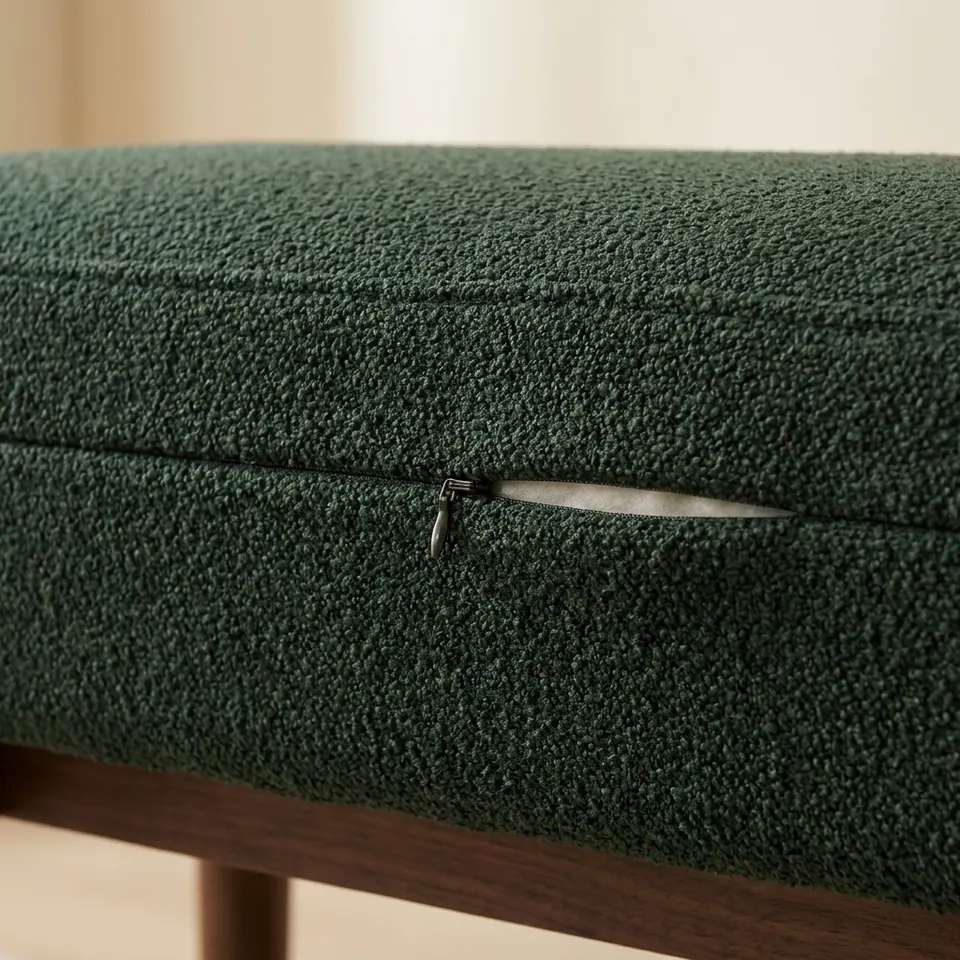
A zipper is the one line on a cushion you hope nobody reads, my friends. Tell the workshop where to hide it, and that is where it goes.
The quick answer
You can choose which edge of a custom cushion cover the zipper is sewn on. Name it in your order note: the long back edge, down a long side so the cushion can be flipped, one side only (such as the 21 in side of a 21 x 23 in cushion), or around the corner of a tapered cover. If you don't say, the shop asks.
 Save
Key facts
- The zipper edge on a custom cushion cover can be specified in the order.
- A zipper down a long side lets the cushion be flipped.
- The zipper can go on one named side only, such as the 21 in (53 cm) side of 21 x 23 in (53 x 58 cm) and 21 x 27 in (53 x 69 cm) cushions.
- On a trapezoid chair seat, the zipper can sit at the back.
- On a tapered cover, the zipper can run from the narrow end around the corner, so the cover slides onto its wider end.
- If no edge is named, the shop asks which side you want.
Have it made
Have Élodie’s workshop cut this for you
A fabric reads one way at noon and another at dusk. Mention your light, and the workshop will weigh it with you. — Élodie
Leave your details and the workshop will call you to confirm measurements, fabric, foam and piping. No prices, dates or payment on this page: it is a request, not an order.
Five edges you can ask for
- The long back edge, the one that faces the wall or the chair back.
- Down a long side, so the cushion can be flipped over.
- One named side only, like the 21 in (53 cm) side of a 21 x 23 in (53 x 58 cm) or 21 x 27 in (53 x 69 cm) cushion.
- The back of a trapezoid chair seat, away from the front edge your knees see.
- The narrow end and around the corner of a tapered cover, so the cover slides onto the wider end.
Hide the zipper where the light doesn't land
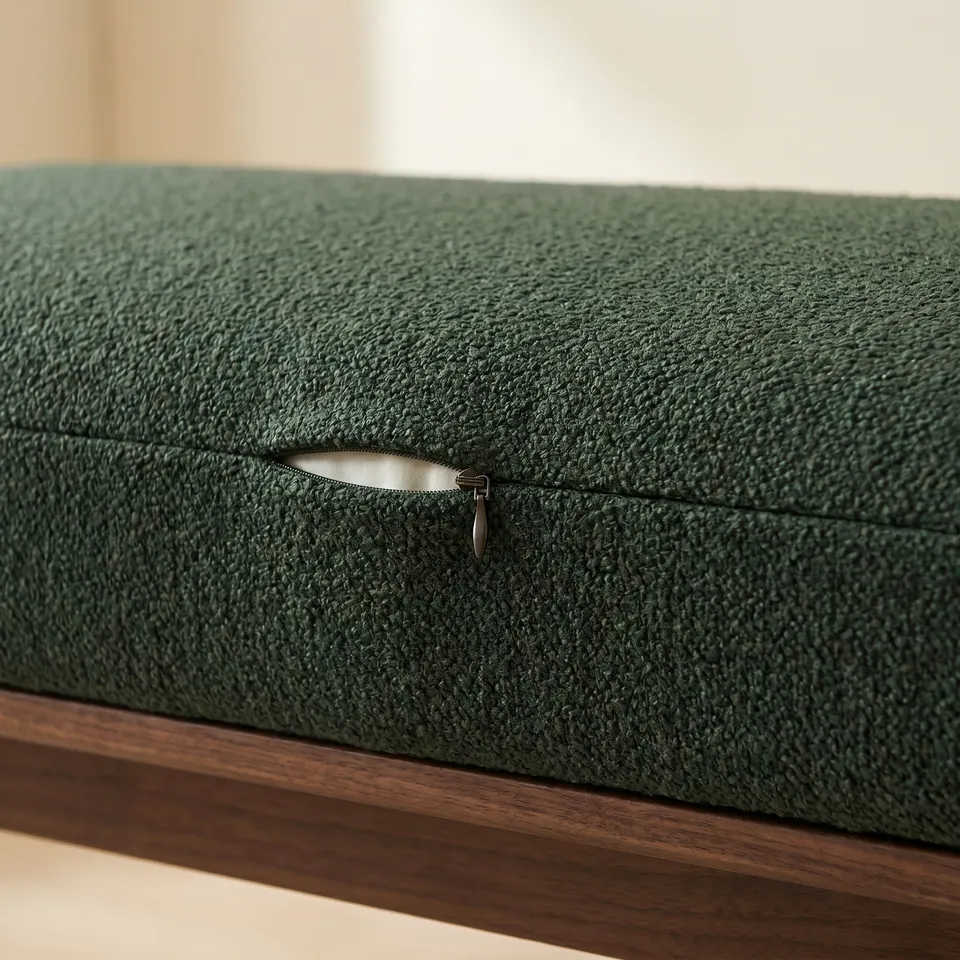
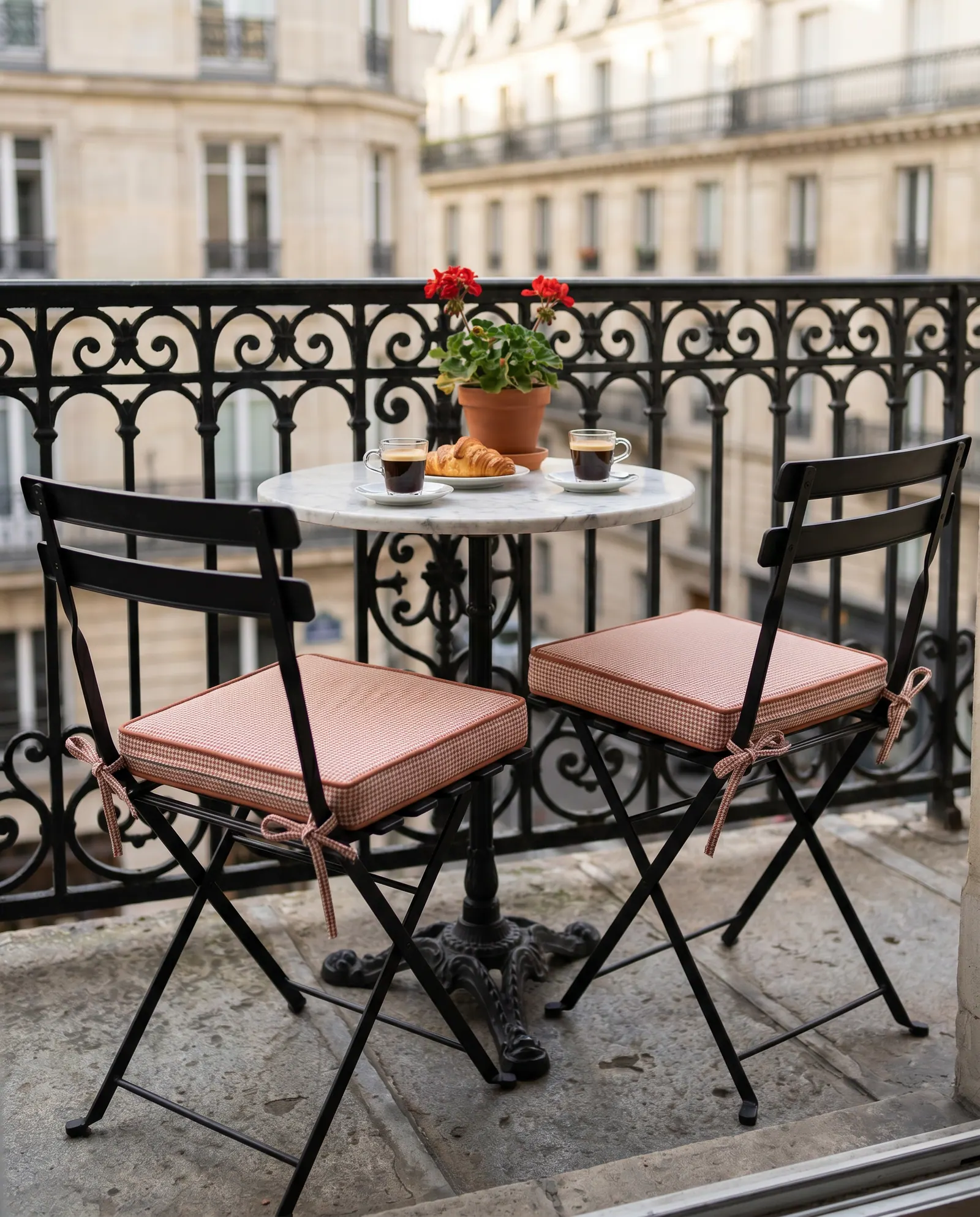
A zipper is a small change of texture, a ridge of tape and teeth that catches light differently from the cloth around it. On a salmon check bistro pad or a cream linen window seat, I want that ridge on the edge the eye never visits: the back, the wall side, the turn of a corner.
Name the edge by its measurement, not by 'left' or 'right'. One buyer wrote 'zipper on the 21 in side only' for two cushions, and the order was accepted with the zipper exactly there.
The zipper placement Pattern walks through the reasoning edge by edge, the trapezoid measuring Pattern shows which edge is the back, and finished covers live in the cushion covers atlas. Which edge of your seat faces the wall?
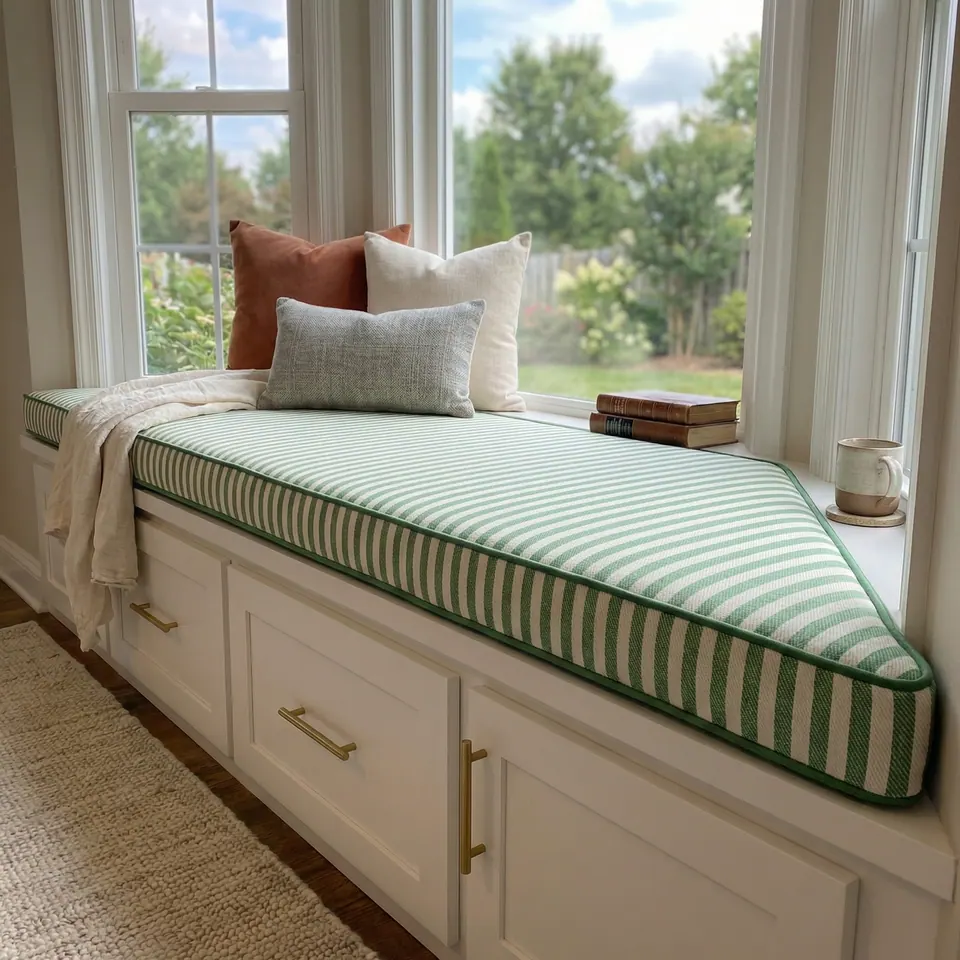
On a tapered cushion cover, the zipper can start at the narrow end and wrap around the corner, so the cover slides onto the wider end.
Élodie
Buyer questions
- A common question
Can I pick where the zipper goes on my cushion?
The workshop's answerYes. Tell the shop the edge you want: along the long back edge, down the long side so the cushion can be flipped, at the back of a trapezoid chair seat, or at the narrow end and around the corner so a tapered cover slides onto its wider end.
- A common question
Can the zipper go on one particular side of my trapezoid cushion?
The workshop's answerYes. The shop asks which side you want and puts the zipper on a long side or wherever you specify, for example the 48 in (121.5 cm) side.
- A common question
My two cushions are 21 x 23 in and 21 x 27 in. Can the zipper go on the 21 in side only?
The workshop's answerYes. Both custom cushions were accepted with the zipper placed on the 21 in (53 cm) side only.
- A common question
Could you make a cover with elastic, like a fitted sheet, instead of a zipper?
The workshop's answerMattress covers are zipper-only. For a cover you remove daily, the shop can make an open-bottom skirted daybed cover; elastic sofa covers are quoted with a warning that they fit poorly on soft, rounded cushions.
Questions buyers ask next
What is the clearest way to write the zipper side in an order note?
Name the edge by its length, such as 'zipper on the 21 in side', or by its position, such as 'back edge' on a trapezoid. A measurement can't be read two ways, while 'left' depends on where you stand.
Why ask for the zipper down a long side of a cushion?
So the cushion can be flipped. Buyers who plan to turn a cushion over ask for the zipper along a long side, and it is sewn there.
Will the foam come out of a trapezoid cover zipped on the short back edge?
Yes. On request the zipper goes on the shorter back edge and is sized to the shape, so the foam slides out for washing even when the front is wider. Send the back width, front width and depth.