Élodie Marchand, the colorist who reads light before fabric
The Colorist of New Orleans
She sorted thread spools by color before she could read. She still reads a photograph for its light before she looks at the cushion.
At the bench since 1991 (35 years)
New Orleans, Louisiana
199 readings on the site
148 answers on the site
21 patterns on the site
Reads and makes
color matching
fabric selection
velvet sheen
stripes & ticking
jacquard & damask
throw & lumbar pillows
styling props and light
Who is Élodie?
Élodie Marchand is CushionGuide's colorist, reading fabric and color from New Orleans since 1991. She covers throw and lumbar pillows, window seats, daybeds, stripes and ticking, jacquard and velvet sheen, and answers buyers who want to match an older cushion, compare fabric codes or see a fabric before it ships. Her first advice is always the same: judge color in daylight, on a real swatch.
A spool labeled Prussian
The first color I ever named was not blue. It was Prussian, written on a spool label in my grandmother's hand, in the fabric shop on Magazine Street where I grew up upstairs. I could sort a drawer of thread from ink navy to washed denim before I could read the words on the spools.
New Orleans teaches color the slow way. The late sun comes through a Garden District parlor window gold at five o'clock and rose at seven, and the same damask cushion wears three faces before supper. My grandmother carried every bolt out to the street door to show a customer, because, she said, the shop lights were liars. She was right. A bolt of washed-denim linen that looked gray under the tubes turned soft blue the moment it met the sidewalk light.
I trained as a textile designer and spent my early years on jacquards and ticking stripes, drawing repeats and arguing with mills about dye. Cushions pulled me back because a cushion is where a color finally lives with people. It is sat on, washed, faded by a south window and set beside a rug nobody warned you about.
At the atelier I read a photograph of a cushion in its room the way I would read a painting. First the light: north, south, lamp or sun. Then the palette of the room: the floor, the wall, the wood. Only then the cushion, its velvet sheen, the direction of a stripe or ticking, the piping that frames it. The eye sits down first. If the color is wrong, no foam in the world will make the seat feel right.
Most of the questions I answer are about matching: a new cover beside one bought years ago, a sofa cushion beside a pillow, a screen beside a swatch. The honest answer is that fabric is alive. Corduroy looks deeper from one side and yellower from the other. A cover washed many times turns a shade lighter. So I ask for close-ups, daylight photos and, whenever color truly matters, a physical sample; my notes on screen versus daylight color explain why.
Tell me, my friends: which window in your house shows a fabric's true color, and at what hour?
Have it made
Have Élodie’s workshop make yours
Color is easier to settle in a conversation than on a screen. Tell the workshop about the room and the light it gets, and the fabric choice follows. — Élodie
Leave your details and the workshop will call you to confirm measurements, fabric, foam and piping. No prices, dates or payment on this page: it is a request, not an order.
Tools on my bench
A ring of swatches I wear like jewelry, and sometimes forget I'm wearing.
A north-facing window, which I count as the most honest tool I own.
A gray card, so a photo of a fabric can't flatter it.
Colored pencils in 72 shades; I still sketch a palette before I name it.
A linen tester loupe for counting weave and checking the lay of a pile.
A shoebox of old cuttings from my grandmother's shop, labeled in her hand.
What I always check
01The light in the buyer's roomwhich window, which hour, which bulbs.
02Pile direction on velvet and corduroy, since one panel turned the wrong way reads as a second shade.
03Stripe direction against the roll width before a long cushion is cut.
04Whether an older fabric is still carried, or needs the nearest tone from today's charts.
05Bolster sizes written as diameter and length, never just a single number.
The same corduroy, from the same factory for years, looks deeper from one angle and yellower from another. Pile direction and light do that.
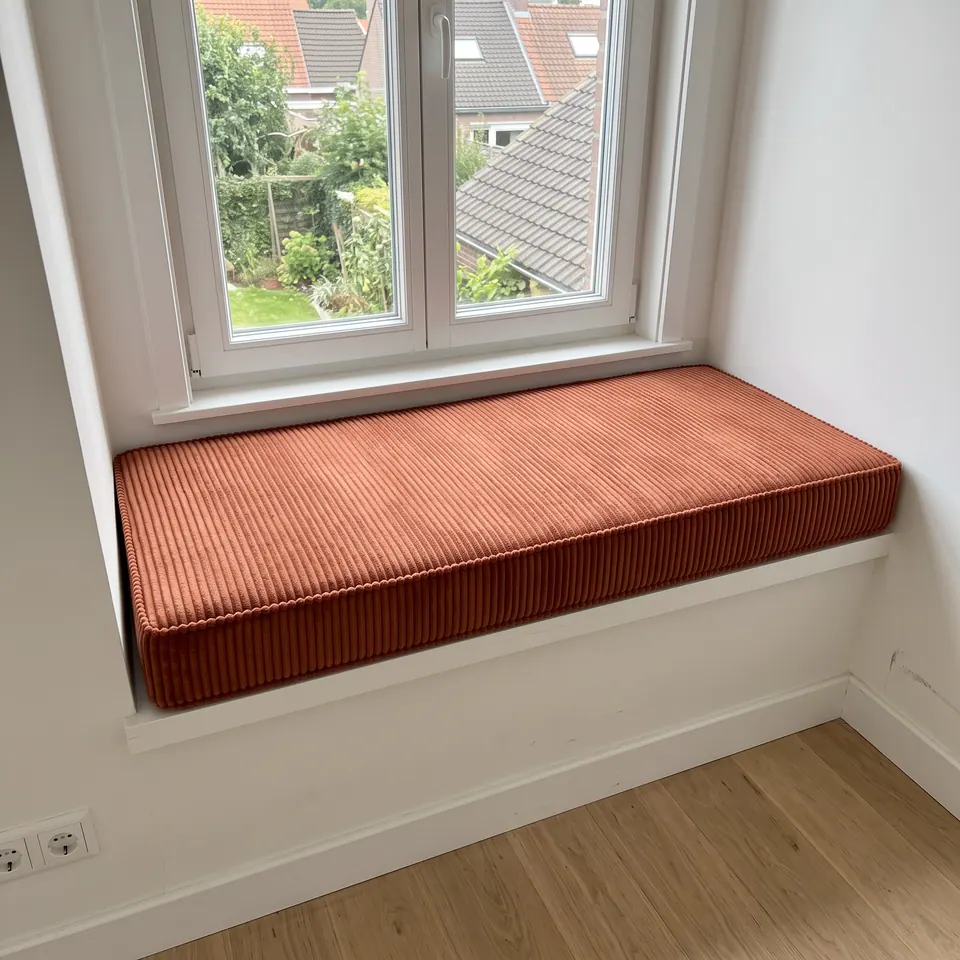
A buyer got in touch about a 20 by 73 inch window seat with two cylinder armrest pillows at the ends. At first the order was read as bolsters 20 inches across, which would have swallowed half the window. The buyer caught it and clarified: 7 inches in diameter, 20 inches long, in the same linen as the seat, with contrast piping.
The set came out the way they pictured it, and they came back for outdoor chair and back cushions with rounded corners. That is when I was proudest of the workshop. The buyer had fallen for a chenille, and their climate was humid. The workshop steered them toward mildew-resistant outdoor fabrics instead and offered close-up photos so the new color could be judged beside the old.
A good color story sometimes means saying no to a fabric you love. Keep the palette; change the fiber.
Measured
Seat 20 x 73 in (51 x 185 cm); two bolsters 7 in (18 cm) in diameter x 20 in (51 cm) long
What it taught
Give bolster diameter and length explicitly, and choose outdoor-performance fabric in a humid climate.
Photograph a velvet cover on its foam before judging the color. Velvet sheen shifts once the fabric is stretched over a cushion.
Will a new cover match the cushions I bought from you a couple of years ago?
The workshop's answer
Close, but not always identical. Older fabrics may no longer be carried, so the workshop suggests the nearest tone from the Velvet and Soft charts (linen options are still there) and sends close-ups to compare with your cushion. Even the same corduroy, bought from the same factory for about 3 years, looks deeper from one angle and yellower from another, and a used cover can look lighter. When a separately ordered velvet ottoman came out a warmer brown than the sofa, the workshop sent replacement covers, asked for photos with them fitted on the foam, and then refunded the cover cost.
A common question
Could you send a photo of my cushion before it ships?
The workshop's answer
Usually, yes. Ask in messages and the workshop photographs the finished pieces before they go to the courier. Custom shapes get final-check photos with measurements and wait for your approval, and color-sensitive orders can get a real-life photo of the actual fabric, even at the start. Changes are still possible then: one angled bay cushion was remade so the corduroy stripes ran vertically on the edges, which added about 2 days. It depends on the day's production schedule, so a photo can't always be promised.
A common question
My floor sofa is in rust corduroy from another maker. Which of your colors comes closest?
The workshop's answer
The closest tone is Brick (COR-205), but order a fabric sample before you commit, because a match on a screen is not a match in the room. If you are replacing covers, measure every piece, the height especially; another maker's foam-filled backrest may sit slightly loose in a new cover.
Asking Élodie
Why did my striped bench cushion arrive with the stripes running front to back?
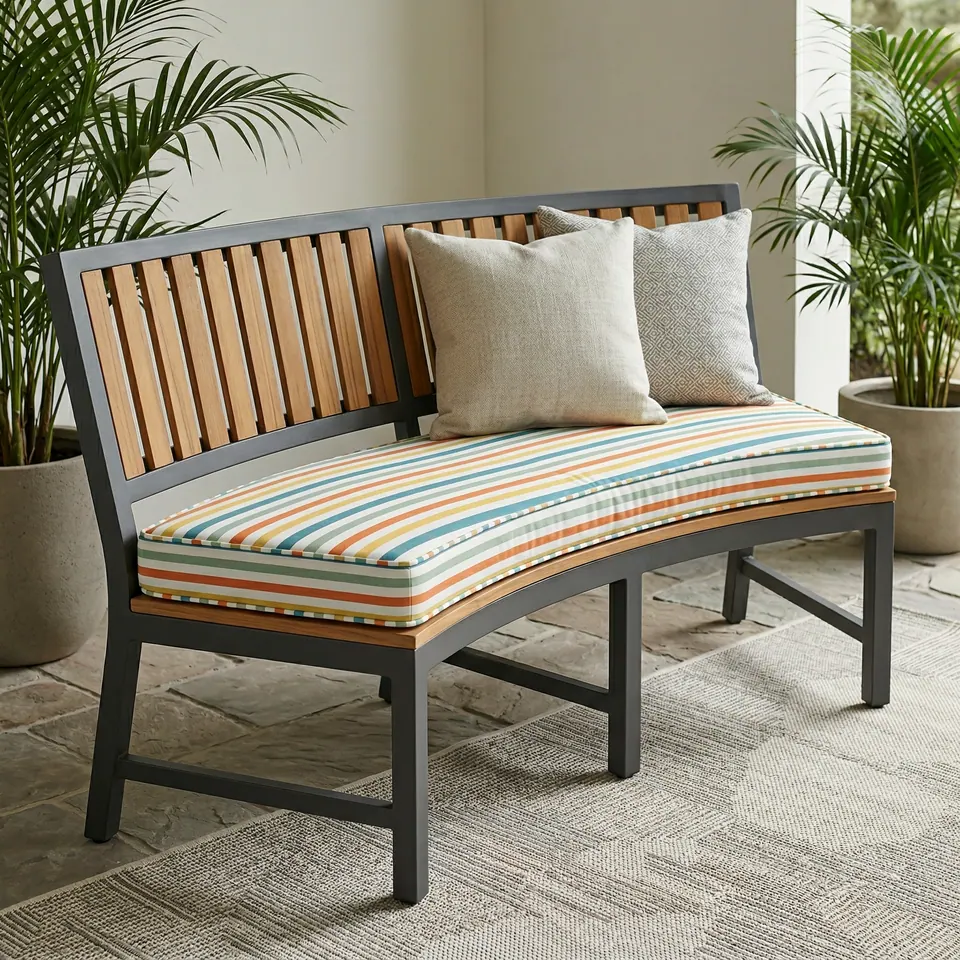
Usually because of roll width. Most fabric rolls are about 55 in (140 cm) wide, so on a 32 x 57.5 in bench cushion, stripes running side to side would have forced a seam across the top. Front to back gives a seamless top; ask about direction before cutting.
Can I trust the fabric color I see on my phone?
Not completely. Lighting and phone cameras can make a fabric look lighter or darker than it is. Close-up photos of any code are free on request, often a studio shot beside a real-light shot, but if color is critical, order a physical sample and look at it in daylight.
How do I order an arched window seat cushion?
Draw it as a rectangle plus an arc of a circle, or trace the seat on wrapping paper, cut the template out and photograph it flat beside a tape measure. Mark where each curve starts and ends; the workshop never guesses a curve from numbers alone.
Heard at Élodie’s bench
The eye sits down first.
Daylight never lies; your screen sometimes does.
Let one color speak and the others listen.
Name the color you mean. Blue is a family, not a fabric.
A south window fades what a north window flatters.
Stripes are a direction before they are a pattern.
Velvet has two colors: the one you see standing and the one you see sitting.
Sheen is a color too, and it changes its mind.
With color and care — Élodie
The rest of the bench
Six more masters read the cushions they know best. Pick the one who works on your kind of seat.


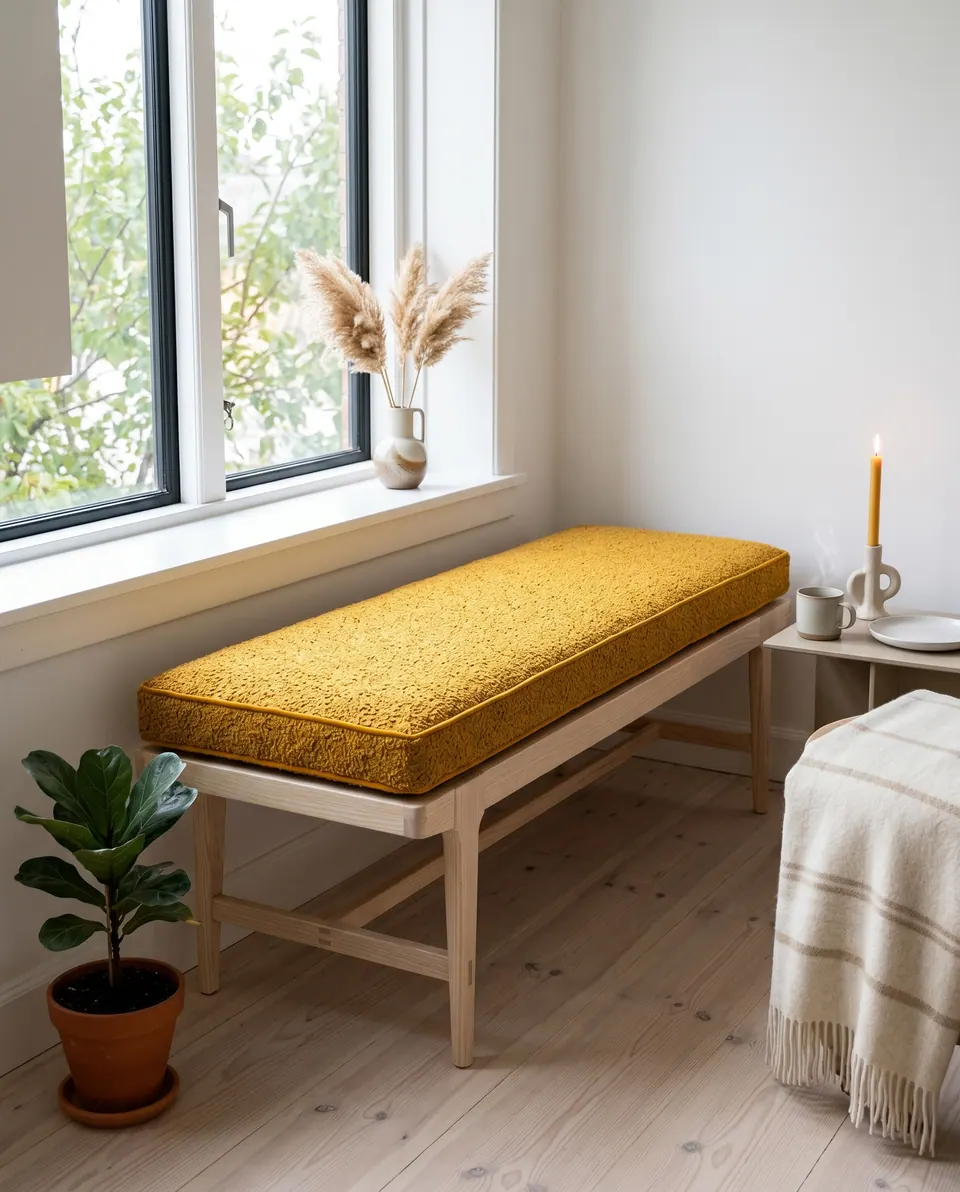
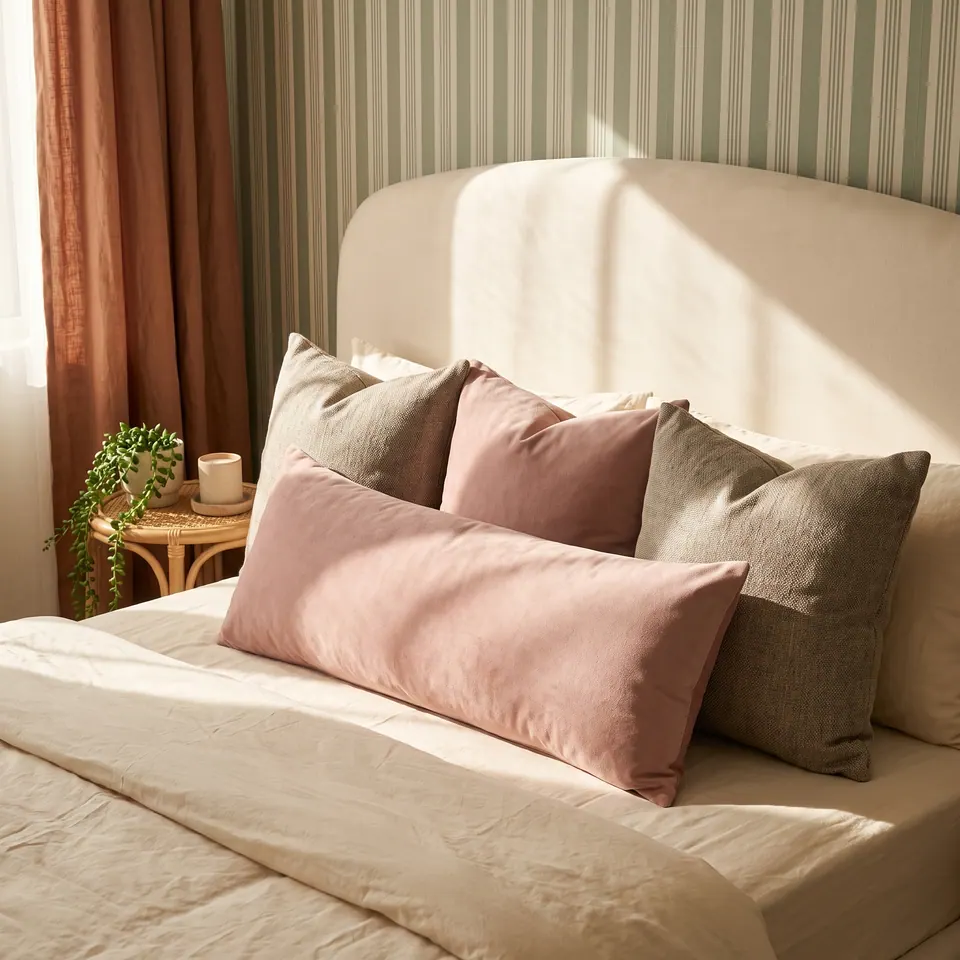
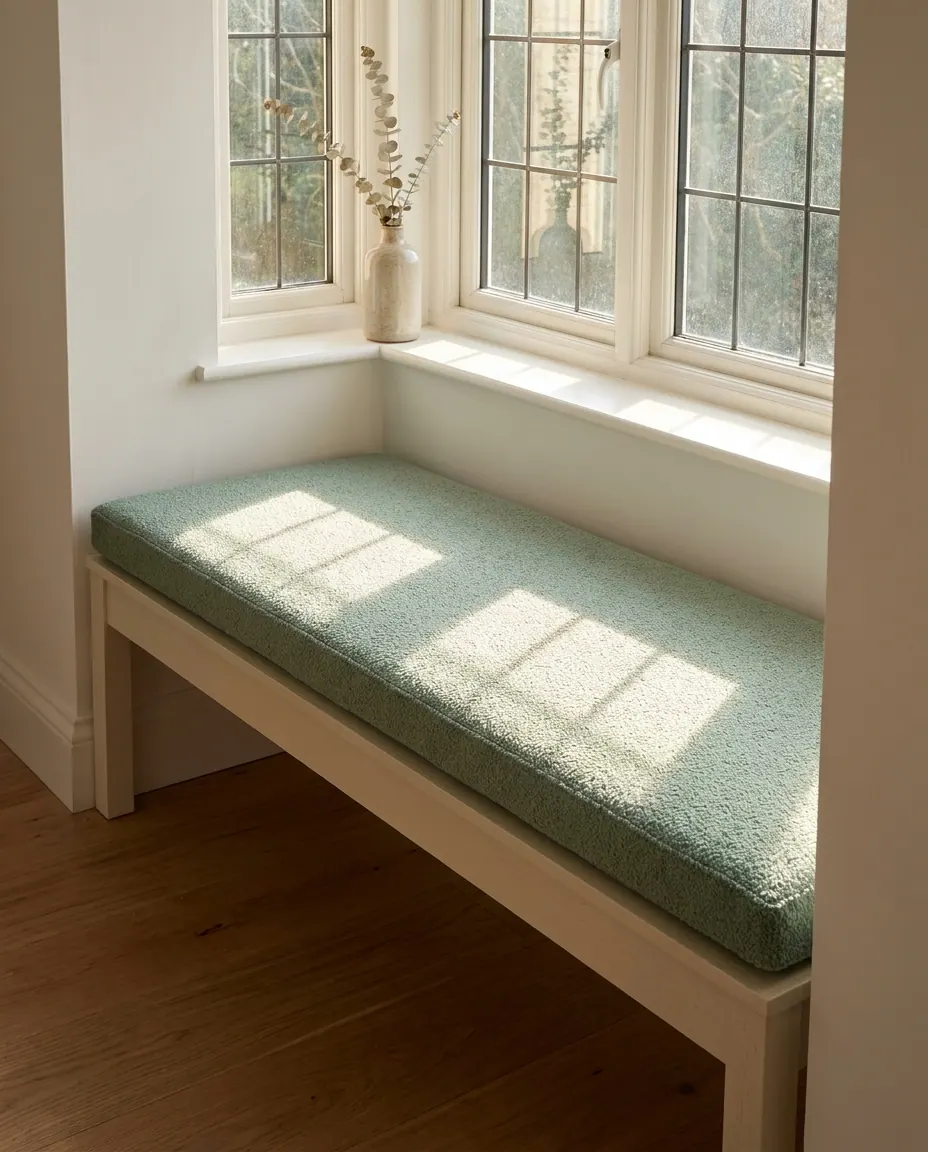
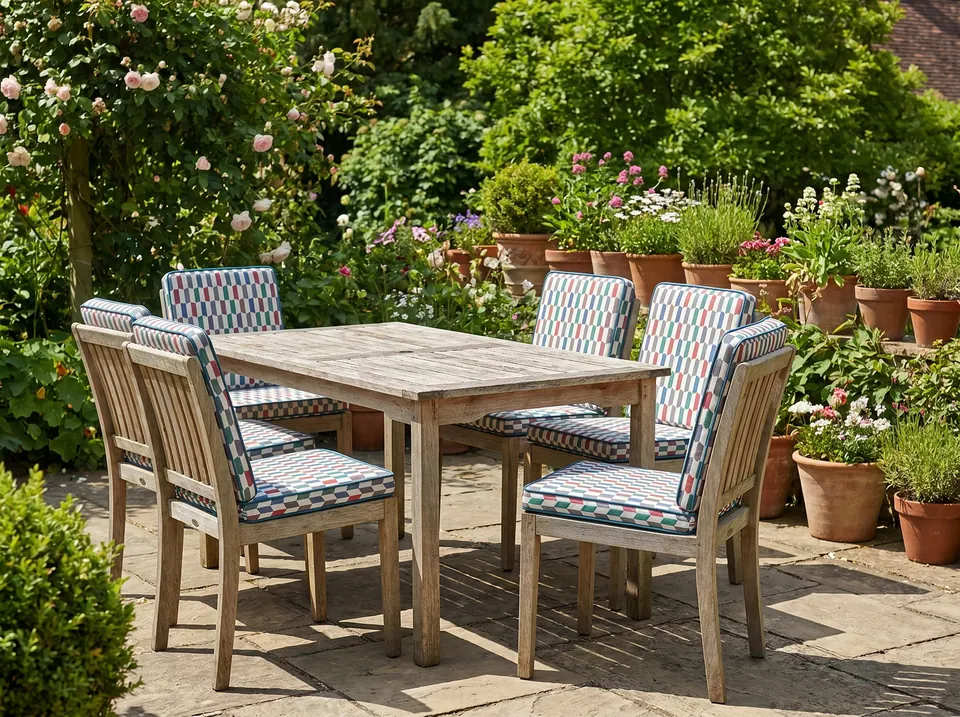
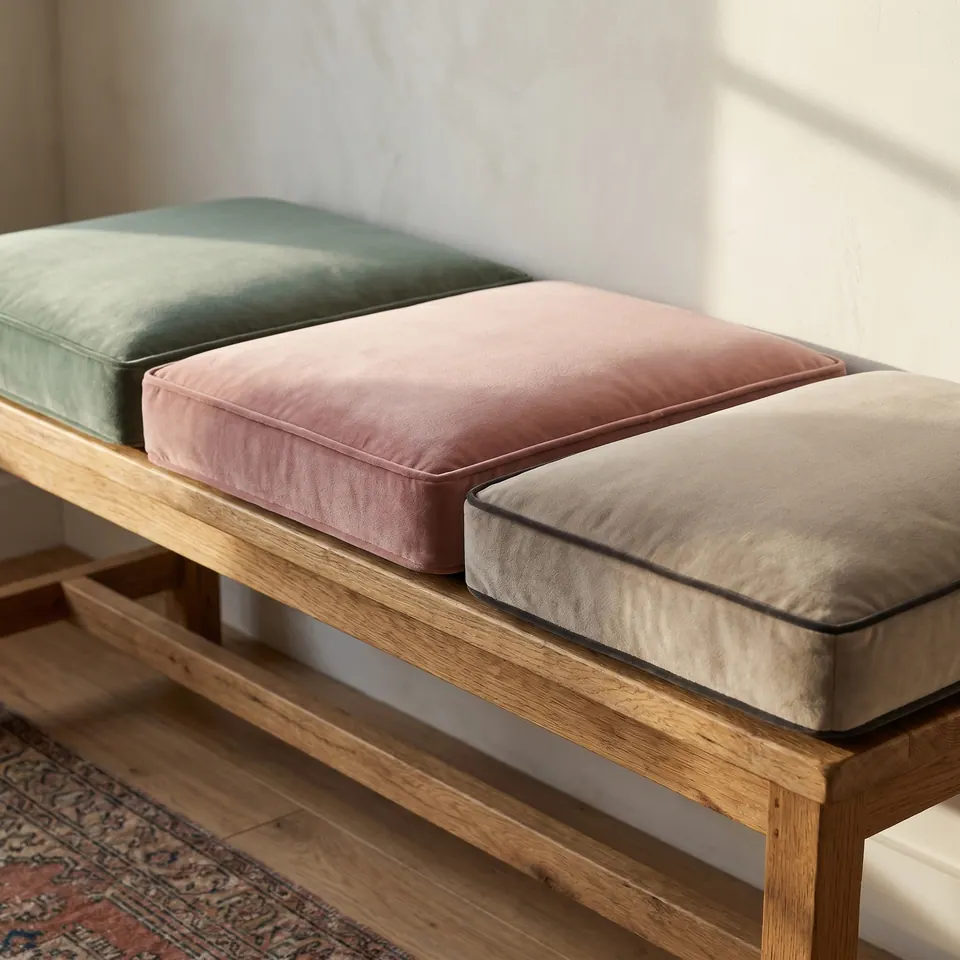
 Harlan PruittThe Elder of High PointHigh Point, North Carolina · since 1968“A cushion should outlive the chair it sits on.”
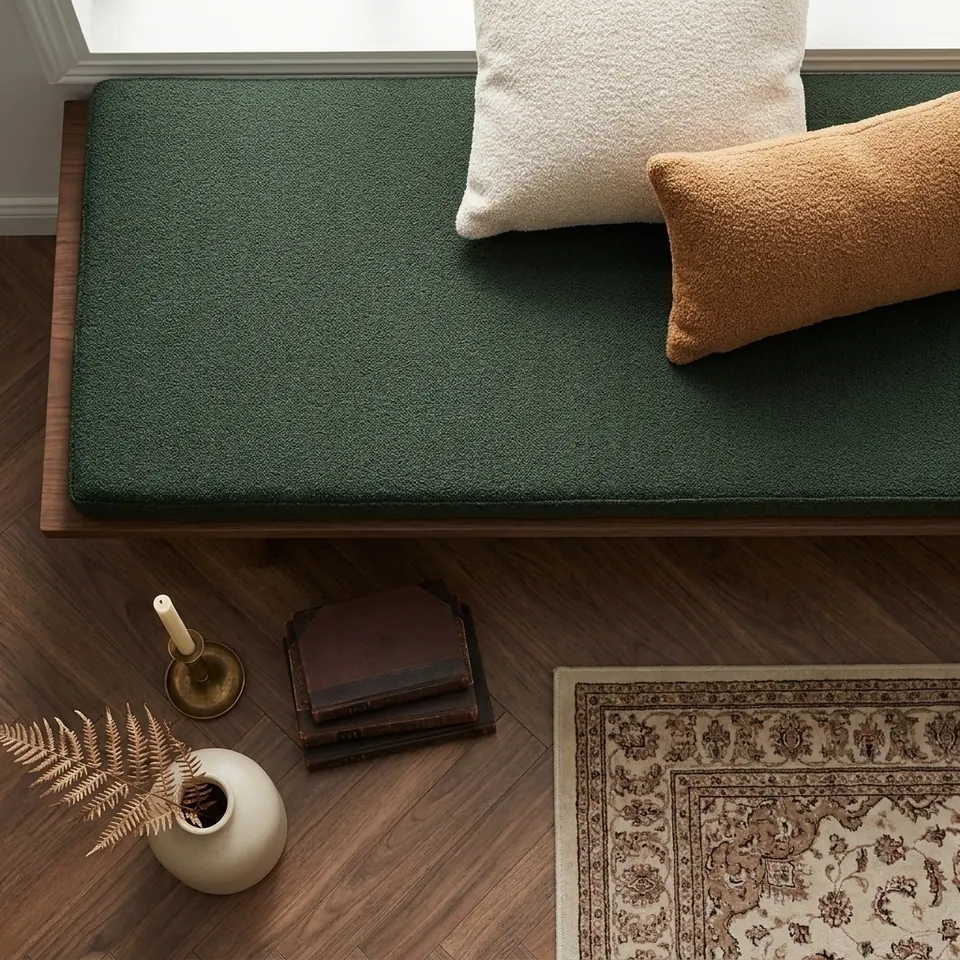
 Margaret HollowayThe Piping Queen of NewportNewport, Rhode Island · since 1981“Straight lines, honest seams, and a cushion that looks tailored rather than bought.”
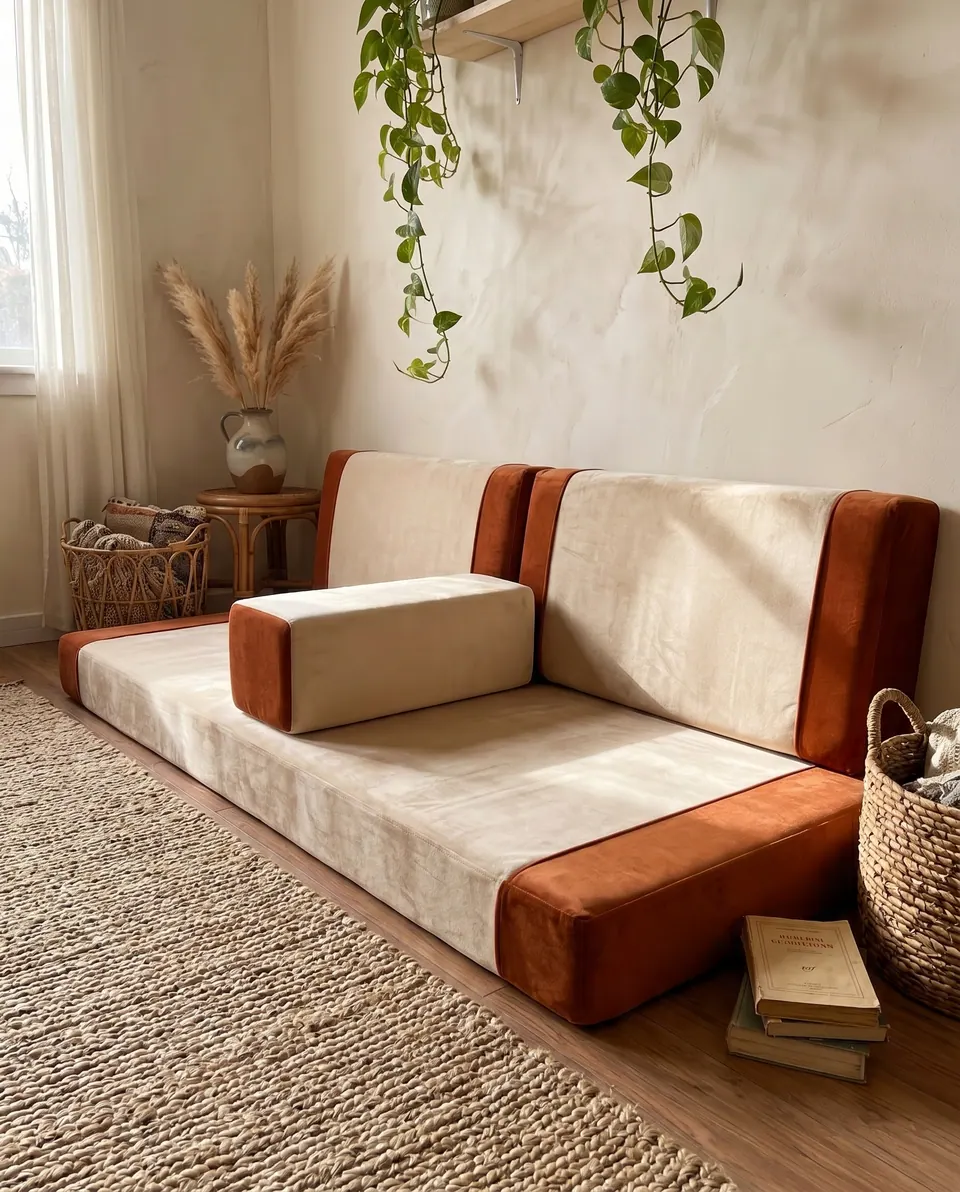
 Callum ReidThe Weather Man of Casco BayPortland, Maine · since 1984“Build it for the worst day of the season, and every other day is a gift.”
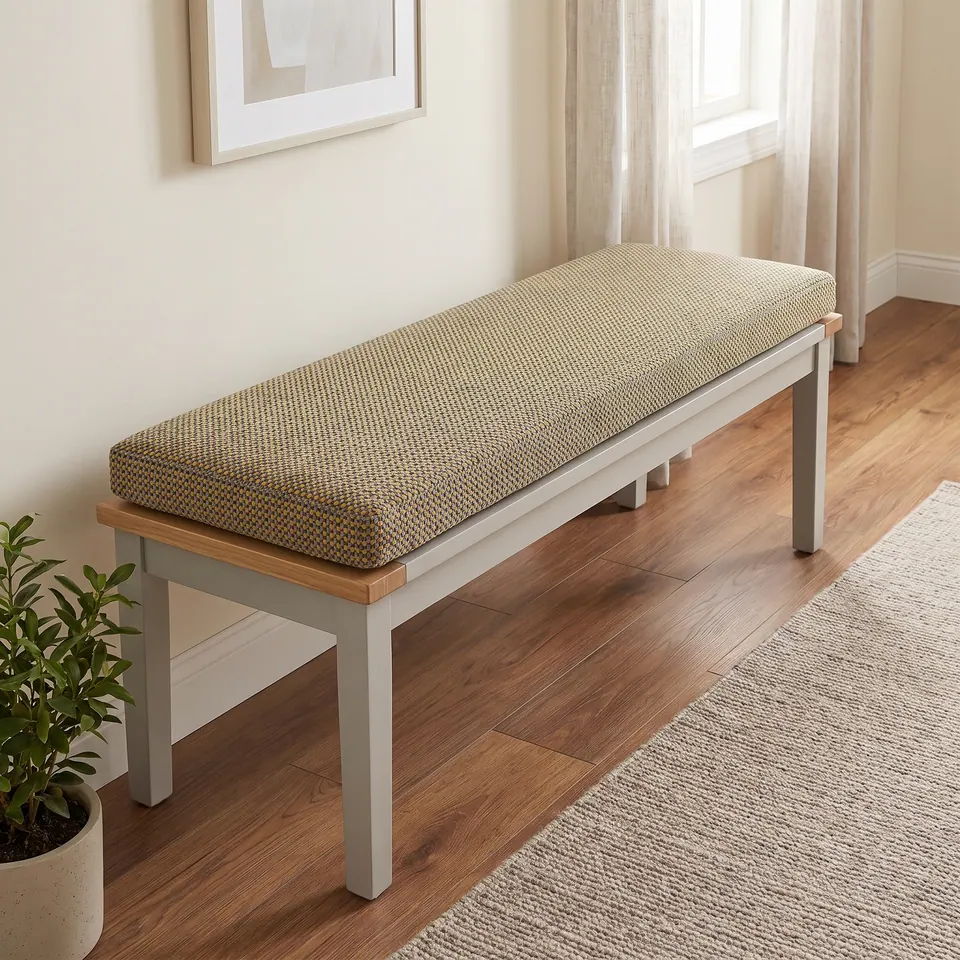
 Hana LindqvistThe Quiet Geometer of SeattleSeattle, Washington · since 1996“Less furniture, better sitting.”
 Rosa DelgadoThe Porch Keeper of SavannahSavannah, Georgia · since 1985“The best cushion is the one everybody fights over.”
 Nate KowalskiThe Pattern Engineer of DetroitDetroit, Michigan · since 1994“Every odd shape is just a list of honest measurements.”