The Pattern Room · a measuring pattern
Why the color on your screen isn't the cushion you'll get, and how to choose
Daylight never lies; your screen sometimes does. A swatch, a sheet of white paper, two windows and one lamp will tell you more about a cushion's color than any photograph can.

 Save
The quick answer
Fabric color looks different on screen because a screen shines light at you while cloth only reflects the light in your room, so tones can shift about 5 to 10%. Order a physical swatch, view it on white paper by a north window, a south window and under your evening lamps, and ask for photos of a finished cushion in that exact code.
A screen glows; a cushion only reflects
The ink navy you fell for on your phone was made of light. The cushion that arrives is made of cloth, and cloth can only give back the light your room gives it. That one difference is why fabric color looks different on screen, and why nobody at the workshop is surprised when a buyer writes that the color is not what they expected.
Screens mix red, green and blue light and are rarely calibrated; fabric absorbs part of the light and returns the rest. Two colors can even agree under one light and part ways under another, which is called metamerism. Add a phone camera with its own ideas about white, and you have three honest versions of one fabric, each describing different light.
The colors that travel worst from screen to sofa
- Warm pinks and oranges. A terracotta that photographs pink is still terracotta.
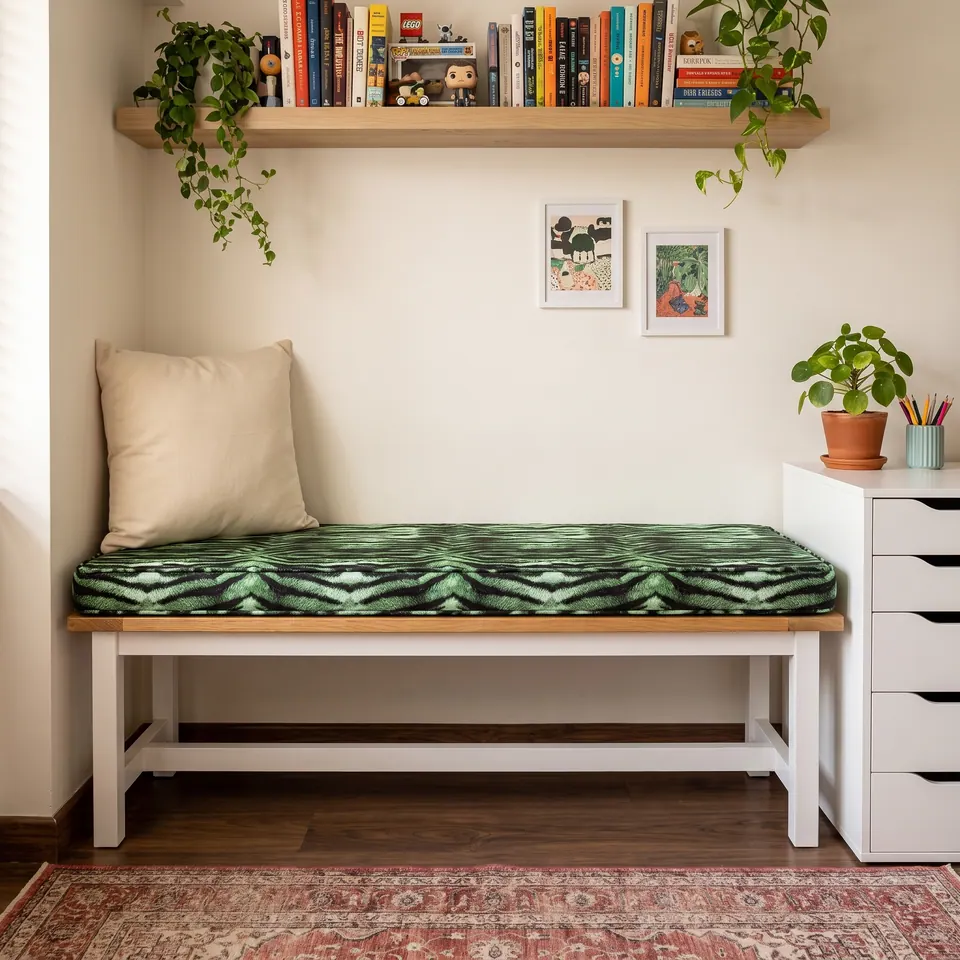
- Greens. Warm light calms a green; white light pushes it toward yellow-lime, so an olive can pass for lime.
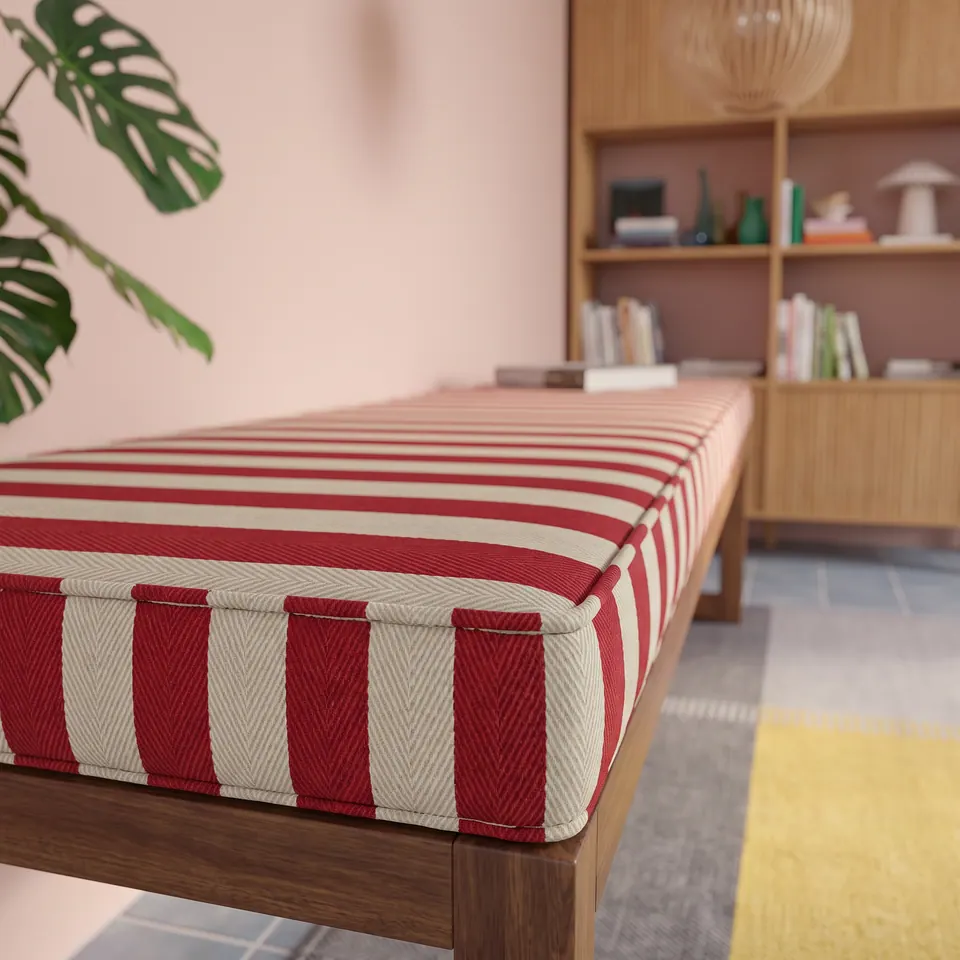
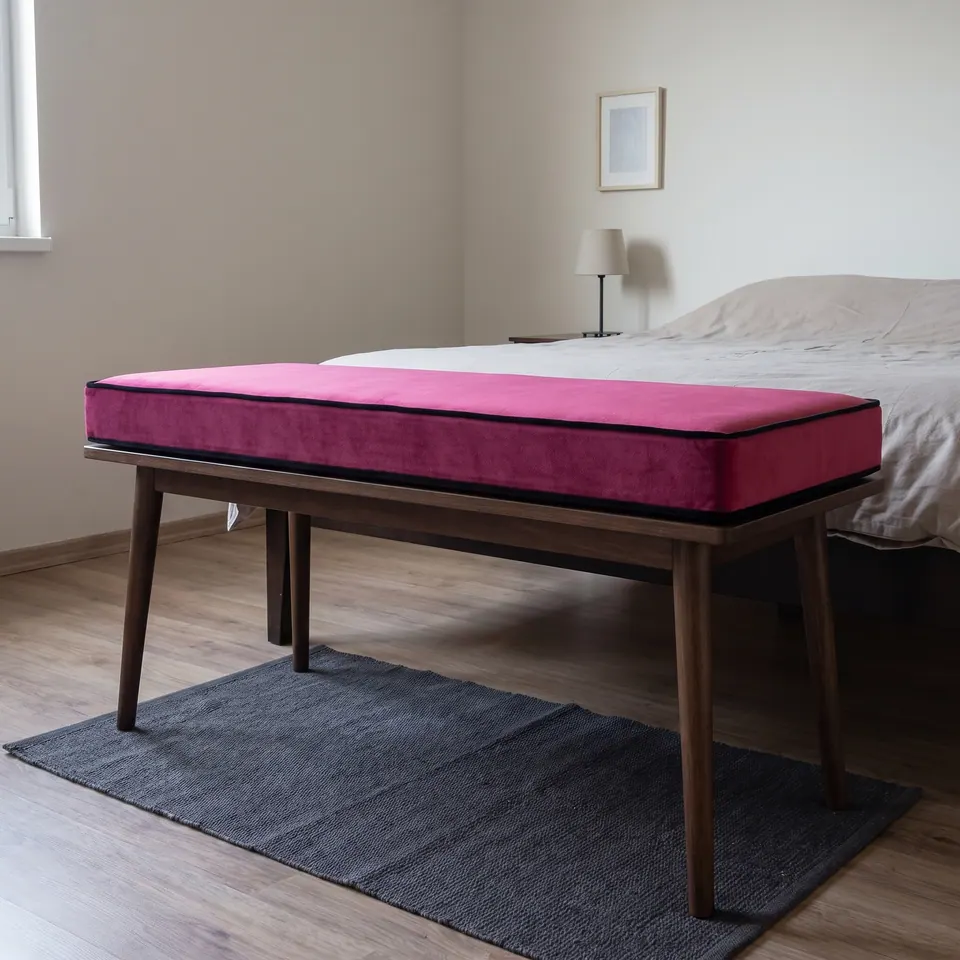
- Dark stripes. Navy stripes often read as black online.
- Off-whites and creams. Warm lamps turn off-white yellowish; daylight turns the same cream grayer.
- Browns and grays. These in-between neutrals swing the most between screens.
- Pastels. Mint is a little lighter in person than in some photos.
Choosing cushion color in your own light, step by step
Shortlist on the screen, then order swatches
Use the screen to narrow a chart of about 40 colors to three or four; that is all a screen is good for. One buyer matching copper tones in her curtains ordered four codes as swatches before choosing. More in ordering fabric swatches.
Lay each swatch on plain white paper
White printer paper is a neutral you already own. Against it, a greige shows whether it leans green or pink, and a cream shows whether it leans butter-yellow or bone.
Look by a north window, a south window, and under your lamps
North light is even and cool, south light is strong and warm at midday, and evening bulbs are warmer still. Warm light brings out cream and beige; daylight makes the same cloth read grayer. A fabric that pleases you in all three will live happily in the room.
Hold it against what stays
Pin the swatch to the cabinetry, the floor or the painted wall, never to a cushion you might replace next year. See matching cushions to a sofa, paint or wallpaper.
Brush velvet both ways before you judge it
Ask for the finished piece, not just the chip
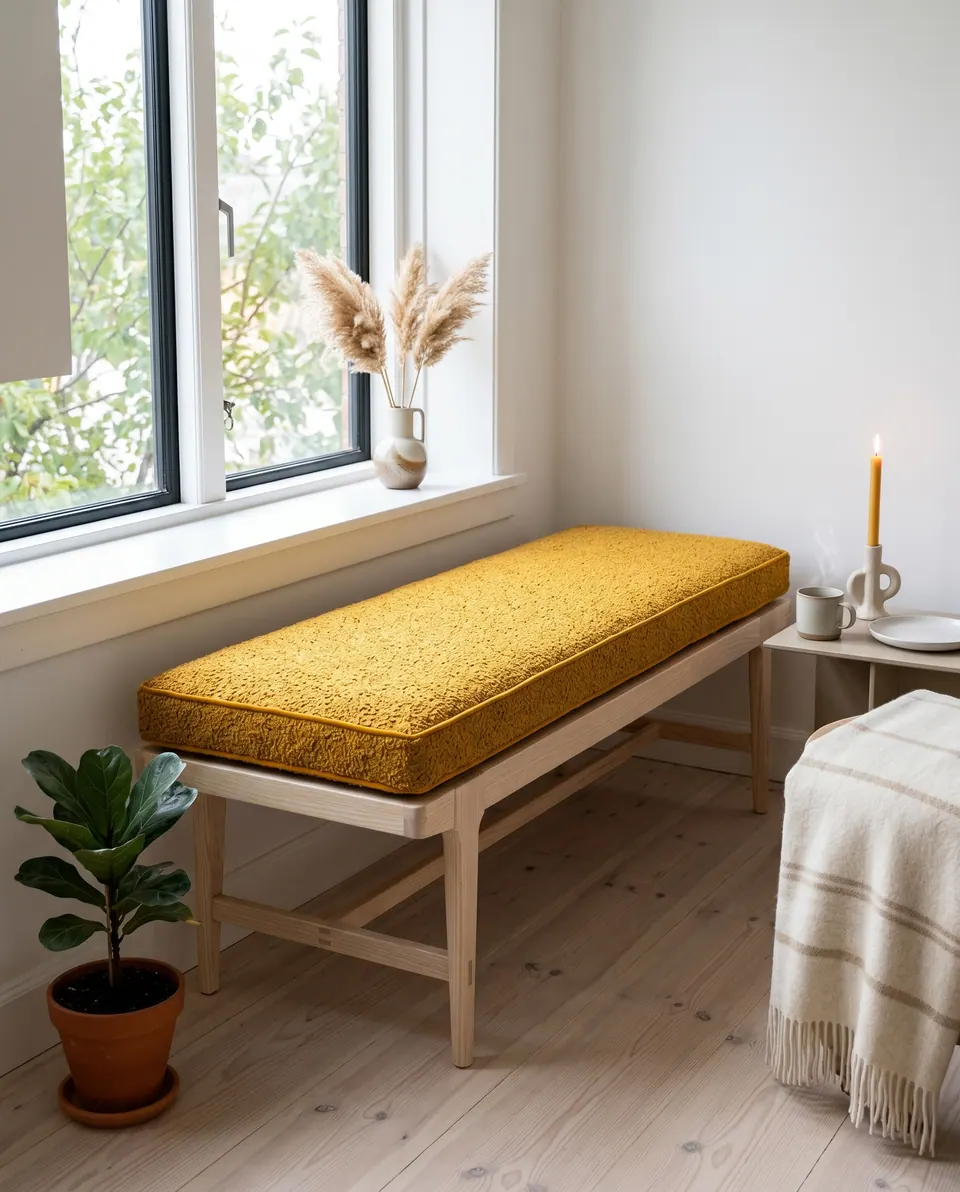
Photos of finished cushions in that exact code are the most accurate reference the workshop has, and review photos from real homes show a color across a room. Ask for body and piping swatches photographed side by side in daylight, in as many combinations as you need.
Confirm before cutting
Before production the workshop can send a photo of the actual fabric so you can confirm or switch codes, and every order is photographed again before it ships. If a color is borderline, this is the kindest moment to change your mind.

Have it made
Measured it? Have Élodie’s workshop make it
Color is easier to settle in a conversation than on a screen. Tell the workshop about the room and the light it gets, and the fabric choice follows. — Élodie
Leave your details and the workshop will call you to confirm measurements, fabric, foam and piping. No prices, dates or payment on this page: it is a request, not an order.
What the workshop can show you, and what it won't pretend
Close-up photos come out a little darker and make the weave look coarser than it does in daylight, so extra shots in different light are sent on request. New production fabric also tends to look cleaner and brighter than a well-handled chart swatch.
The workshop does not make AI mockups, because a rendering cannot show real tones honestly. And because each dye lot differs slightly, an exact match between two orders months apart is not guaranteed; order the whole room at once. The dye lot pattern explains why.
The brown that came home darker
A buyer in the US unpacked brown corduroy covers for a floor sofa and wrote that they were much darker than advertised. The workshop explained that color can vary 5 to 10% with daylight and screens. The buyer was still unhappy, and said so. Rather than argue, the workshop sent a replacement cover set in anthracite at no charge. The next message was pure delight.
Another US buyer found her teddy sofa far darker than the photos. Her room had little daylight, and a pile fabric reads deeper in low light. She chose a new cover in a soft lilac linen, and the foam stayed exactly where it was.
Both stories end with a new cover, not a new sofa.
- What it taught
- Brown and gray tones swing the most between screens; get a swatch and view it in the actual room.
Common mistakes when choosing color online
- Ordering a large piece from a screen alone. A floor sofa or a long window seat deserves a swatch first.
- Judging a swatch only at night. Warm bulbs, dark walls and shadow deepen a color: a green goes mossy, velvet much darker.
- Matching to a cushion you plan to replace. Match to cabinetry, flooring or paint.
- Skipping daylight close-ups for tricky colors. Warm pinks, oranges, pastels, greens and dark stripes need them.
- Reaching for a return first. Ask about a replacement cover over the existing foam.
If the color still surprises you
If a cushion arrives and the color feels wrong, my friends, take one photo near a window in natural daylight before you write. Listing photos are shot in daylight, so that is the fair comparison. The workshop checks your order's codes against its own pre-shipping photo, then talks through a new cover if the color truly isn't yours. The remake and color-change pattern has the details, and living room cushions and bench cushions show real colors in real rooms.
Which window in your house catches the last light of the day? Start your swatch there.
Cushion colors can shift 5 to 10% between a screen and a real room, so judge a fabric swatch in daylight and again under the evening lamps.
Élodie
Buyer questions: color, screens and swatches
- A common question
Will the fabric look the same in my living room as it does on my screen?
The workshop's answerNot always exactly. Screens, lamps and daylight all shift how a fabric reads, and digital swatches can look lighter or darker than the cloth. Before production the workshop sends a photo of the actual fabric so you can confirm or pick another shade; a physical swatch is the safest check.
- A common question
The listing photo and the color chart don't agree. Which one should I believe?
The workshop's answerUsually both show the same fabric in different light: warm light brings out cream and beige, daylight reads grayer. On the bench-cushion ranges the chart is more accurate than the styled photos, and the workshop confirms which one you want before it makes anything.
- A common question
Can you photograph my fabric and piping together before I order?
The workshop's answerYes, side by side, in as many combinations as you need, with extra shots in different lighting on request. The workshop won't send AI mockups, because they don't show real tones, and for exact tone a physical sample is still safest.
- A common question
Do you have a photo of a finished cushion in this color, not just the swatch?
The workshop's answerOften, yes: cushions and sofas made for other customers in that fabric, plus review photos from real homes. If a color has never been made up, you'll get a close-up of the fabric instead.
- A common question
If I send a photo of my couch, can you tell me which fabric matches it?
The workshop's answerYes. The workshop names the closest chart codes, checks stock in the fabric type you prefer and sends the options side by side. Screens vary, so for a large piece order swatches of the shortlist before you commit.
Color questions, answered plainly
How much can a fabric color shift between a screen and a room?
The workshop's working figure is about 5 to 10%, depending on daylight and screen settings. Warm pinks, oranges, pastels, greens, dark stripes and in-between neutrals shift the most, so those colors deserve a physical swatch before a large order.
Why does velvet look darker when it arrives?
Velvet's pile catches and returns light differently depending on its direction, so the same cloth reads deeper one way and lighter the other. Low light and dark walls deepen it further. Brush the pile, then judge it by a window in daylight.
Why does my new cushion look brighter than the swatch?
New production fabric tends to look cleaner and brighter than a chart swatch that has been handled and photographed many times. Close-up photos also look a little darker and coarser than the real cloth does in daylight.
Can a cushion ordered later match one I bought last year?
Closely, but not guaranteed. Dye batches differ slightly, so an exact match across separate orders can't be promised. Send a daylight photo of the first cushion with its code, and order everything for one room at the same time when you can.