The Pattern Room · a measuring pattern
When a custom cushion is the wrong size or color: remakes, fixes and what to send
Most size worries end with a tape measure and a little patience. The rest end with a remake. Here is how to tell which one you have, and what to send.
 Save
The quick answer
If a custom cushion arrives the wrong size, let the foam recover for 72 hours, measure across the flat middle, and send tape photos of length, depth and thickness with your order note. Past workshop errors were remade; ask the workshop to confirm its fix in writing. Measuring mistakes and a change of mind are a different conversation, though a new cover often costs less than a new cushion.
Ten inches is not a tolerance
A floor couch ordered at 35 x 40 in (89 x 102 cm) arrived at 35 x 50 in (89 x 127 cm). That is not a foam question. That is a remake.
Most worries about a custom cushion being the wrong size are smaller and quieter. A cushion fresh from its vacuum packing reads short. A handmade cushion can sit 1/2 to 1 in (1 to 2 cm) off the ordered size and still be right. A cream stripe looks warmer under a kitchen bulb than on a screen.
So the order of things matters. Let the cushion finish arriving. Measure it properly. Then write once, with photos that answer the questions before anyone asks them.
The steps are the same for bench cushions, floor cushions and cushion covers.
From the parcel to the message, in seven steps
Give the foam 72 hours
Foam cushions travel compressed. Most recover within 24 to 72 hours; the full size can take 3 to 5 days, occasionally a week. Lay the cushion flat and knead the foam if it looks slow. The first 72 hours have their own Pattern.
Measure across the flat middle
Push one end against a wall. Run the tape down the center of the top, edge to edge, not over a rounded corner. Then the depth, seam to seam. Then the thickness, tape held vertical at the side. Piping sits on the seams and does not change the size.
Find the size you wrote
Open your order and read the note that holds your dimensions. If you approved a drawing, read every length on it too. The size you wrote is the size the workshop was asked to cut.
Photograph each dimension with the tape in frame
Three photos: length edge to edge, depth seam to seam, thickness measured vertically. Lay the tape flat and keep the numbers readable. Add one photo of the whole cushion in its place. Every cushion is measured after sewing and before it ships, so the workshop compares your photos with its own records.
For color, stand at a window
If the question is color, photograph the cushion in daylight near a window, not under a lamp. Keep the piping in the shot. A swap of body and piping fabrics shows plainly in daylight.
Write one message that holds everything
Quote the size from your order note, then the size you measured, then attach the photos. Type the numbers out as well. Tape photos get misread.
Say which fix you would like
When the error was the workshop's, only the pieces that didn't fit have been remade, and the piping color can change on the replacement. If you would rather keep the piece as it is, ask about a partial refund; one has been offered before.
Have it made
Measured it? Have Hana’s workshop make it
A good size is a quiet thing. You notice it only when it is wrong. Let the workshop check yours first. — Hana
Leave your details and the workshop will call you to confirm measurements, fabric, foam and piping. No prices, dates or payment on this page: it is a request, not an order.
Workshop error or ordering error: where the workshop draws the line
| What happened | Whose side | What has followed in past cases |
|---|---|---|
| The size differs from your order note | Workshop | A remake; the first piece usually stayed with the buyer |
| Wrong color or fabric, or body and piping swapped | Workshop | A remake in the right fabric, cut to fit the foam the buyer already had |
| Open seam, broken zipper, missing part | Workshop | A new cover or part, sent after photos of the fault |
| You measured the space wrong | Buyer | Not a workshop error; the right size at cost, sometimes discounted, with the first kept |
| Right fabric, but you prefer another shade | Buyer | A new zippered cover in another shade at production cost; you keep the foam |
| Your approved drawing showed the wrong length | Buyer's approval | The correct piece at production cost |
| About 1/2 to 1 in (1 to 2 cm) off | Neither | Normal handmade tolerance, not an error |
The floor couch that came 10 inches long
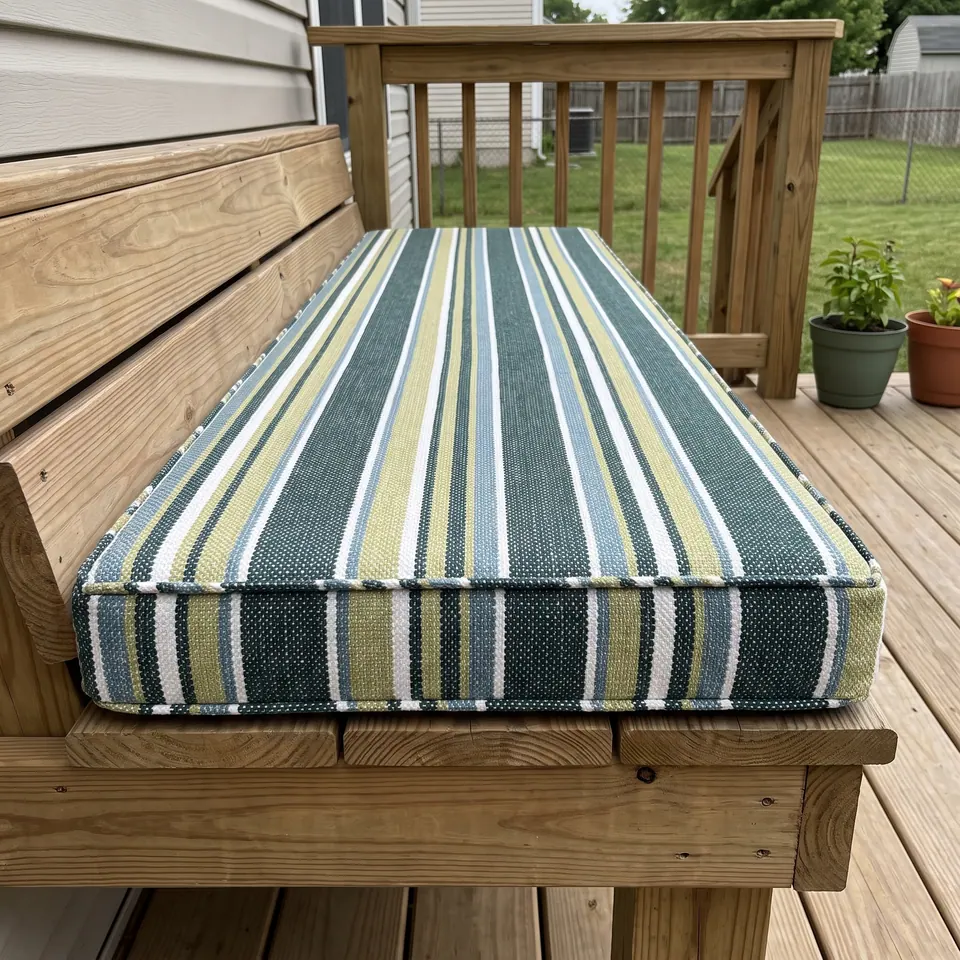
A buyer in the US built a wooden bench with a top of 35 x 40 in (89 x 102 cm). They ordered a custom floor couch for it and wrote the size in the order note.
It arrived at 35 x 50 in (89 x 127 cm). The color, they said, looked even better in person. The length did not fit the bench.
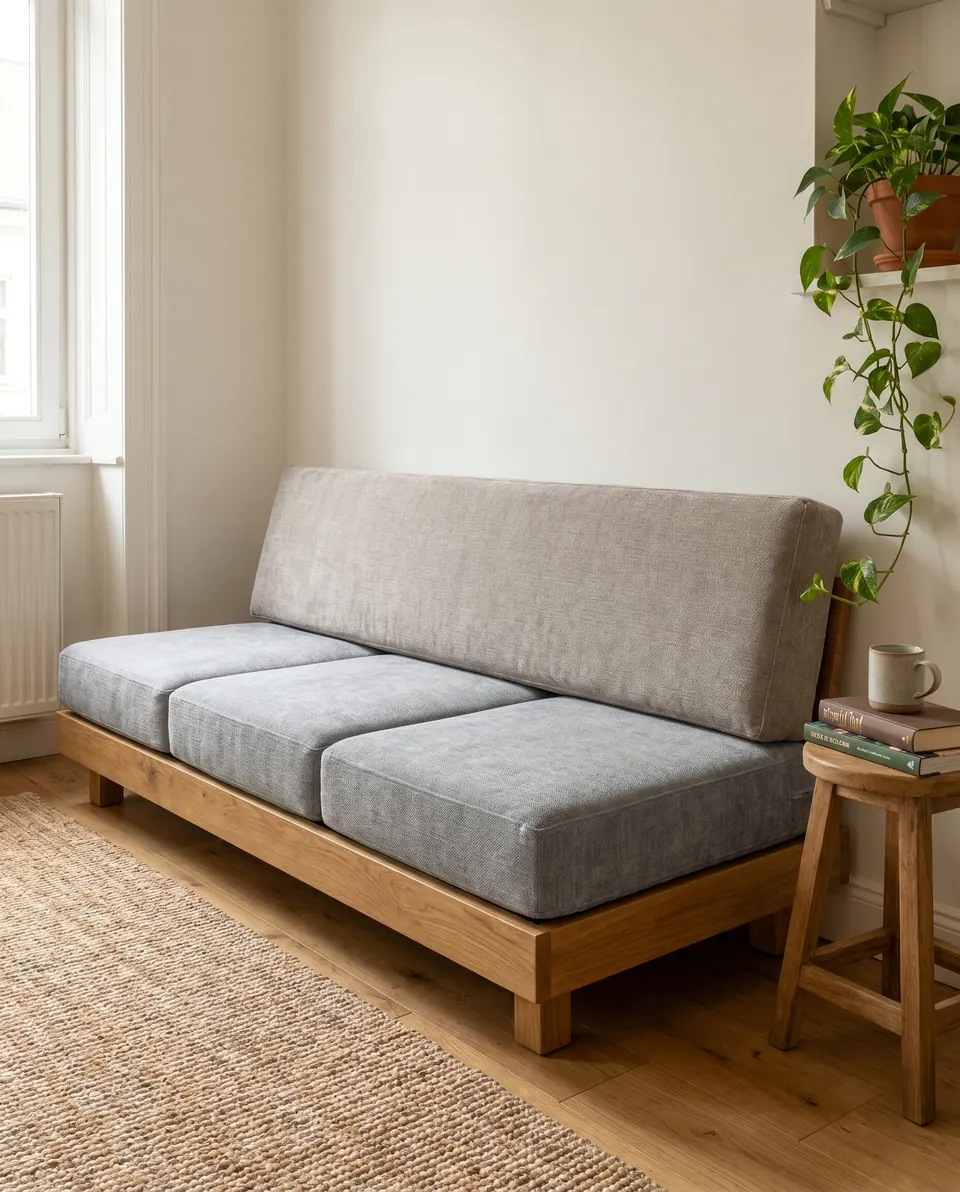
The first reply offered a discounted second piece. Then the note was read again, and the workshop agreed the error was its own. It made a new seat cushion and backrest free of charge, and the buyer kept the first set. The armrests already fit, so they stayed.
The note did the work. A size written in the order is a size anyone can check.
Size can be measured. Color has to be lit.
One of two bench cushions reached a buyer in the US at 36 in (91 cm) wide. They had ordered 44 in (112 cm). They also felt the off-white and cream stripe looked more yellow than the listing photos.
The size was a workshop error, and it was remade at 15 x 44 in (38 x 112 cm), same fabric, same thickness. The color was not an error. The fabric was unchanged; the listing and review photos had been taken in different light.
That is the usual shape of a color question. The workshop checks its production records for the fabric code, then asks for daylight photos. Screens cool warm neutrals. Lamps warm them again. Small dye lot differences are normal.
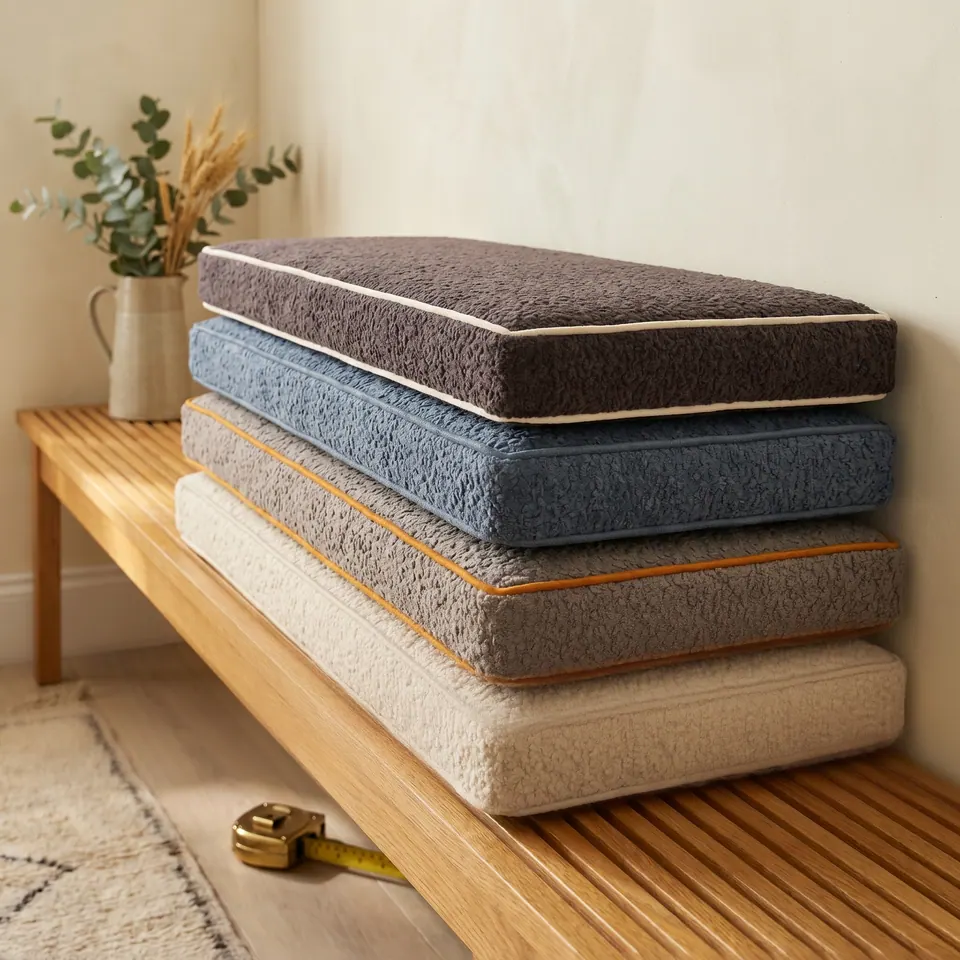
When a listing photo truly misrepresented the tone, the cover was remade in a fabric the buyer chose. When the right code was used, a new cover in another shade was offered at production cost, with close-ups or samples of neighboring shades first, and the first set stayed with the buyer.
When the mistake is yours, a cover is often enough
Measuring mistakes and a change of mind are not workshop errors, so they are a different conversation. That is fair. It is rarely the end.
Before production, little is lost. Size, thickness, fabric and piping can change until the fabric is cut, and the new specification is confirmed before cutting. In past changes, a bigger size was paid as the difference and a smaller one refunded it.
After production, look at the foam first. If the size is right and only the color is wrong for your room, a new zippered cover in the same measurements, charged at cost, can cost less than a new cushion. You keep the foam and swap the covers. Expect the same handmade tolerance; a quarter inch (6 mm) can recur.
If the size itself is wrong, the right size has been made at cost in past cases, and the first cushion did not need to go back. What to write in the personalization note keeps the second order the last one.
What did you write in your order note? Find it before anything else.
Wait three days. Measure the flat middle. Write once, with the tape in the photo.
Mistakes that turn one remake into two
- Measuring on the day it arrives. Compressed foam reads short for 3 to 4 days.
- Subtracting half an inch to be safe. Send the true size of the space; the workshop adds any fit allowance itself.
- Giving one thickness for a mixed order. List the thickness separately for each piece.
- Checking only the shape on the approval drawing. Read every length on it before you say yes.
- Letting a remake repeat the old numbers. Re-confirm the latest dimensions before any remake starts.
- Sending a tape photo nobody can read. Lay the tape flat, fill the frame, and type the numbers too.
A custom cushion that looks the wrong size gets 72 hours before the tape. Foam from a vacuum bag reads short until it has fully risen.
Hana
Buyer questions: sizes, colors and second chances
- A common question
My cushion came in the wrong size. Will you remake it, and do I have to send the first one back?
The workshop's answerSend a photo with a tape measure along the full dimension; the workshop compares it with the order. Past cases include 54 in (137 cm) delivered instead of 57 in (145 cm), and 36 in (91 cm) instead of 44 in (112 cm). When the error was the workshop's, only the parts that didn't fit were remade, and the wrong one stayed with the buyer.
- A common question
What photos do you need to check a size problem?
The workshop's answerWait 3 to 4 days after unpacking, because compression shrinks foam and cover for a while. Then send a photo of the whole cushion in place, plus tape photos: full length edge to edge, full width seam to seam, and thickness measured vertically, tape flat and readable. The workshop compares them with its production records.
- A common question
The color doesn't look like the swatch. Did you use the wrong fabric?
The workshop's answerThe workshop first checks its production records for the fabric code, then asks for photos in daylight near a window. Screens, chart scans and indoor light all shift color, and small batch-to-batch variation is normal. When a listing photo misrepresented the tone, the cover was remade; when the right code was used, a cover in another shade was offered at production cost.
- A common question
Instead of sending the cushion back, can I just get a new cover in a different color?
The workshop's answerYes, and it is usually the cheapest fix. The workshop makes a new zippered cover in the same measurements and your chosen fabric, at cost, and you keep the original foam and swap covers. It sends daylight photos of candidate fabrics first. The new cover follows the same handmade tolerance, so a quarter inch difference can recur.
- A common question
I typed the wrong size when I ordered. Can it still be changed?
The workshop's answerYes, before production starts and the fabric is cut. Message the corrected measurements and wait for the updated order to come back; in past changes a bigger size was paid as the difference and a smaller one refunded. Re-confirm any change: one update was missed and the cushion was made at the original size.
- A common question
Should I knock a little off my measurements so the cushion is sure to fit?
The workshop's answerNo. Give the true, exact size of the space, end to end, and subtract nothing, not even half an inch. The cushion is made to the numbers you write, and the production team handles any fitting allowance. Piping sits on the seams, so it doesn't change the size either.
Quiet answers about remakes
How far off can a handmade cushion be and still count as correct?
Roughly 1/2 to 1 in (1 to 2 cm) on an ordinary cushion. Very long one-piece cushions and fully hand-tufted pieces can vary by 1 to 2 in. A gap beyond that, measured after the foam has fully recovered, is worth a tape photo and a message.
What happens if I approved a drawing that already showed the shorter length?
Complaints are checked against the drawing you approved. If it showed the wrong length and you signed off on it, the corrected piece has been offered at production cost, not as a workshop error. Read every dimension on an approval drawing, not only its overall shape.
Can one piece of a set be remade while the rest is kept?
In past cases, yes. When the workshop made the error, only the parts that didn't fit were remade: in one floor couch order, a new seat and backrest were made while the correct armrests stayed with the buyer. Ask about yours, and whether the piping color can change on the replacement.
Is a small stain on a new cover a reason for a remake?
Try the wash first. The workshop suggests washing the zippered cover at 86°F (30°C) on a gentle cycle; the foam stays out of the machine. Open seams, broken zippers and wrong fabric are different matters: photograph them the day you find them and send the photos with your order details.