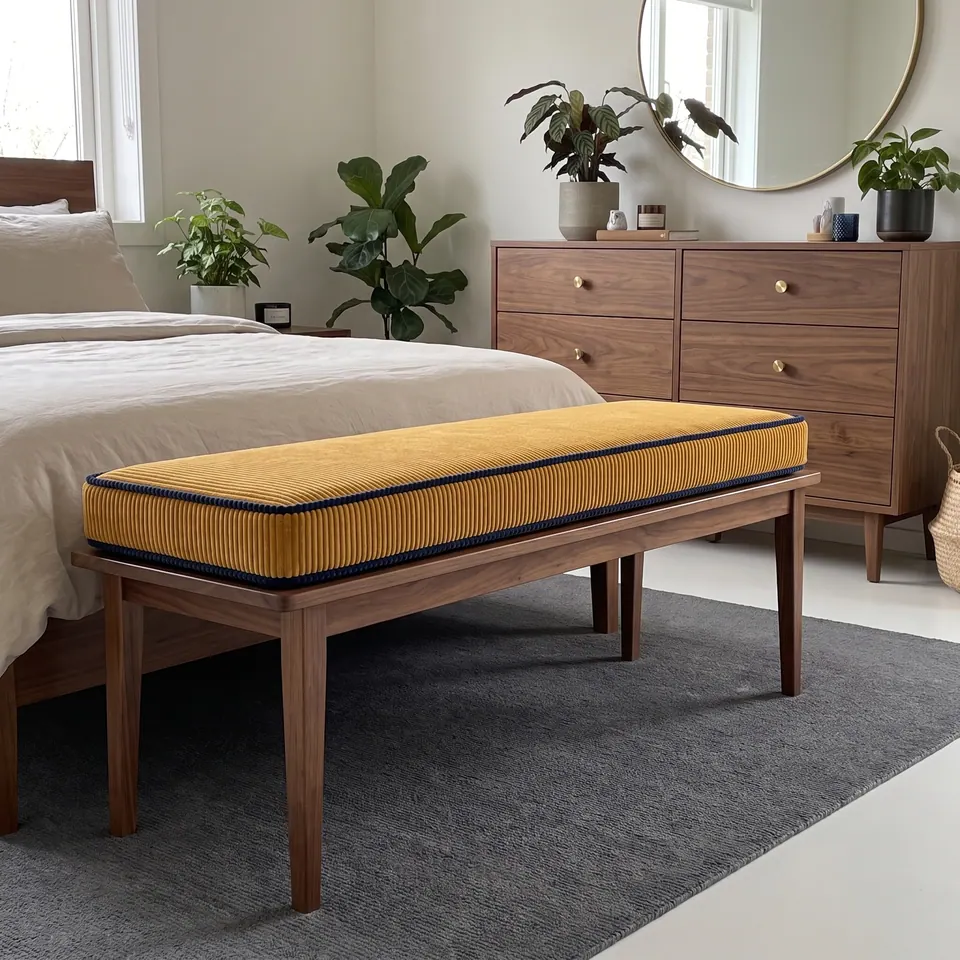
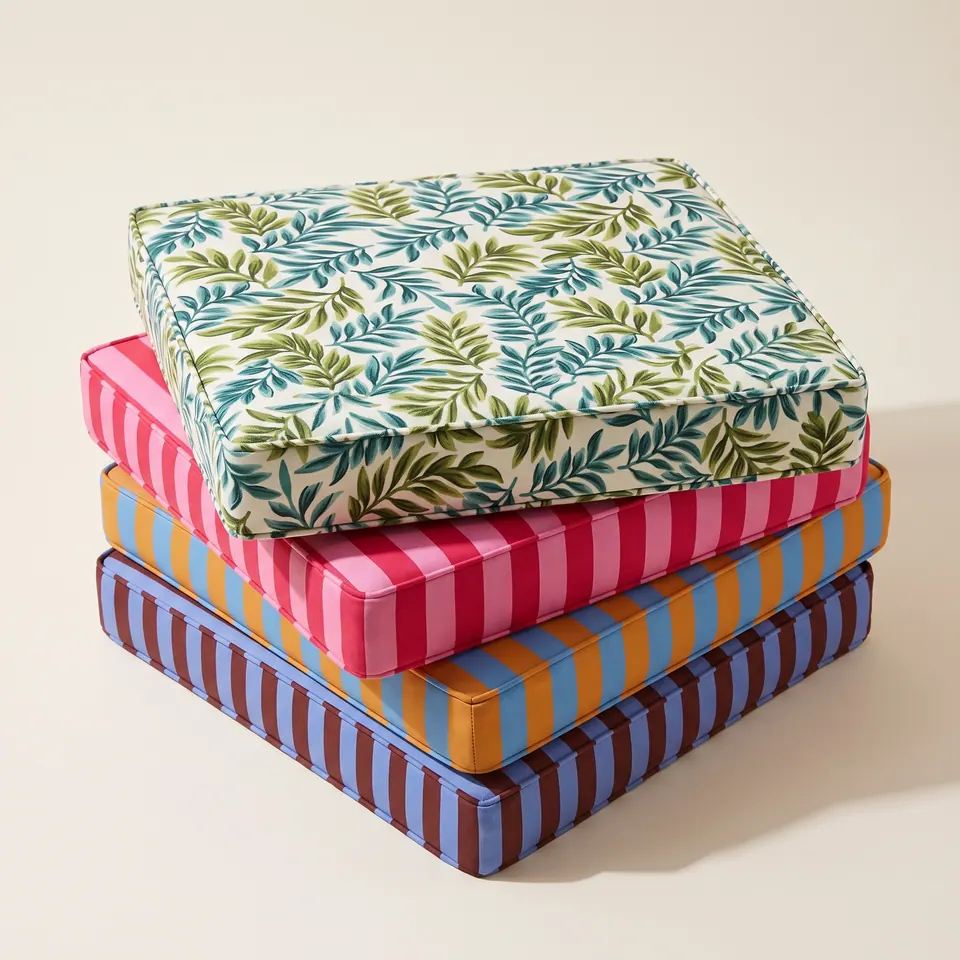
The Pattern Room · a measuring pattern
What to write in a custom cushion order note: sizes, codes and extras
Right, then. The size menu only sets the price. The little box underneath is where your cushion actually gets built, so let's fill it in properly.

 Save
The quick answer
In a custom cushion personalization note, write one line per cushion with length x depth x thickness and the unit, then the fabric code and piping code as chart codes, extras such as ties or a backrest, and any delivery date. The size menu only sets the price. The workshop cuts to the note and confirms codes and sizes before production.
Filling in the note, one line at a time
Choose the nearest size range, then stop thinking about it
Pick the size option closest to your cushion; if it falls between two ranges, take the next larger one. That choice sets the price bracket only. If your typed size sits outside the range you paid for, the workshop pauses and asks before cutting.
One line per cushion, unit included
Write length x depth x thickness for each piece, and say inches or centimeters. The workshop cuts in the unit you write, so a bare 65 x 139 with no unit is a guess nobody should have to make. Two pieces of an L get two lines, and both lines carry a thickness.
The main fabric code, prefix and all
Copy the code from the fabric's numbered chart, such as N20, L07 or TEAL 128. A bare 18 could mean L-18 or N-18, and 'deep red' could mean several shades. Write the full fabric code, then the shade name beside it as a double check.
The piping code, labeled
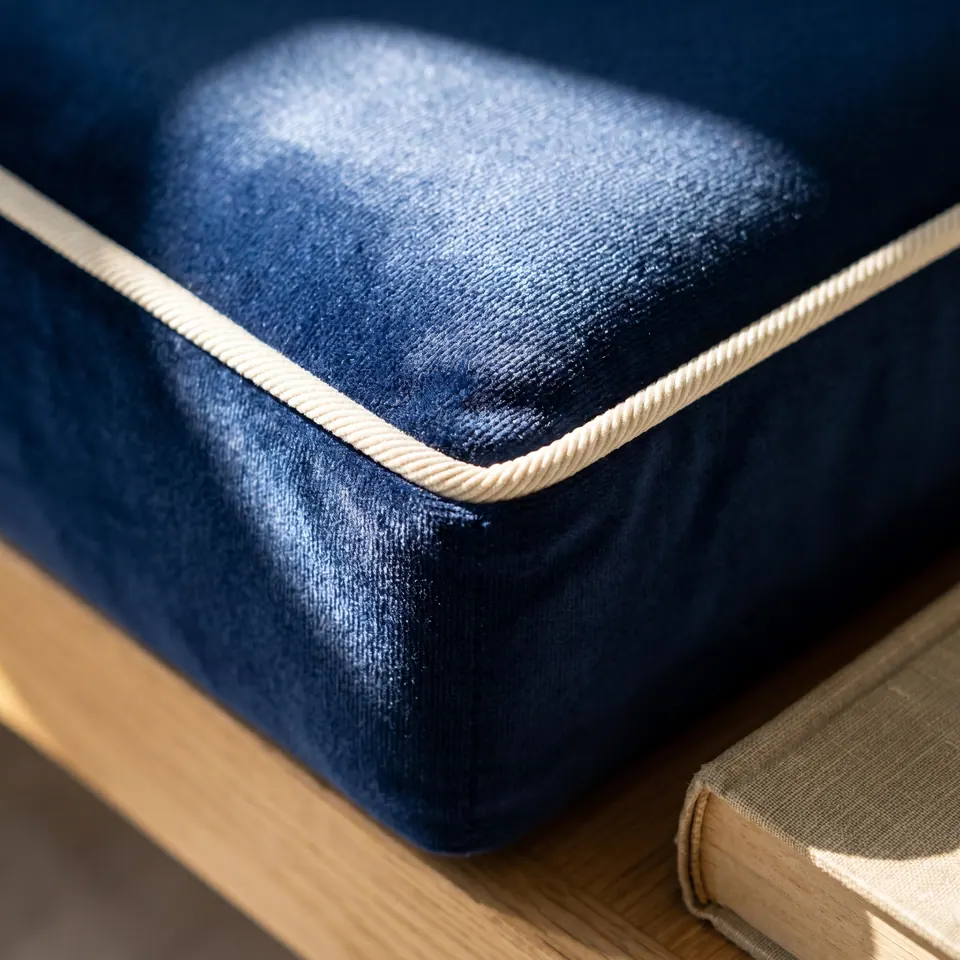
Write the two as a pair: Main: L09 / Piping: L24. Body and piping are the two codes most often swapped. For a matching cord or none at all, write 'same piping' or 'no piping'. Ranges can mix, such as a velvet body with L41 linen piping.
Pieces and extras, in plain words
'Backrest', 'open end', 'no handle', '1 L backrest and 1 straight backrest'. Ties go here too, with their position: corners or back. Say 'with foam' or 'covers only'. A paid option such as a non-slip base must also be chosen in the order options; written only in the note, it's treated as declined.
Dates and a phone number
If the cushion must arrive before a party or a move, put the deadline or the earliest delivery date in the note. Add a delivery phone number for the courier. On listings where size and color both come from menus, that phone number may be all the box needs.
Read the confirmation like a proof
Before production the workshop confirms codes, dimensions with their units, thickness and what the order contains, and sends a photo of the chosen fabric. Check the code on that photo against your note. Changes cost nothing until the fabric is cut; after that, a change is a remake.

Have it made
Measured it? Have Maggie’s workshop make it
Numbers first, fabric second, piping last. Jot down what you have, and the workshop will go down the list with you, item by item. — Maggie
Leave your details and the workshop will call you to confirm measurements, fabric, foam and piping. No prices, dates or payment on this page: it is a request, not an order.
Key facts
- The size menu on a custom order sets the size range and price only; the cushion is cut to the exact size typed in the note.
- Fabric and piping are written as chart codes with their prefix, labeled separately, for example Main: L09 / Piping: L24.
- Paid options such as a non-slip base must be chosen in the order options; written only in the note, they count as declined.
- Codes that don't exist or read two ways hold the order until the buyer confirms; a valid code is made exactly as written.
- Changes to fabric, piping or size are free until the fabric is cut; after cutting, a change is a remake.
A sample note, as the cutting table reads it
| Cushion 1 | 83 3/8 x 19 1/8 x 3 in, long run of an L-shaped bench |
|---|---|
| Cushion 2 | 23 5/8 x 19 x 3 in, short run, meets cushion 1 at the corner |
| Main fabric | Main: L09, with the shade name written beside it |
| Piping | Piping: L24, or 'same piping', or 'no piping' |
| Pieces | Two seat cushions, with foam, no backrests |
| Extras | Ties at the two back corners of each cushion |
| Dates | Earliest delivery date, if you have one |
| Phone | A delivery phone number for the courier |
The L-shaped kitchen bench that waited at the cutting table
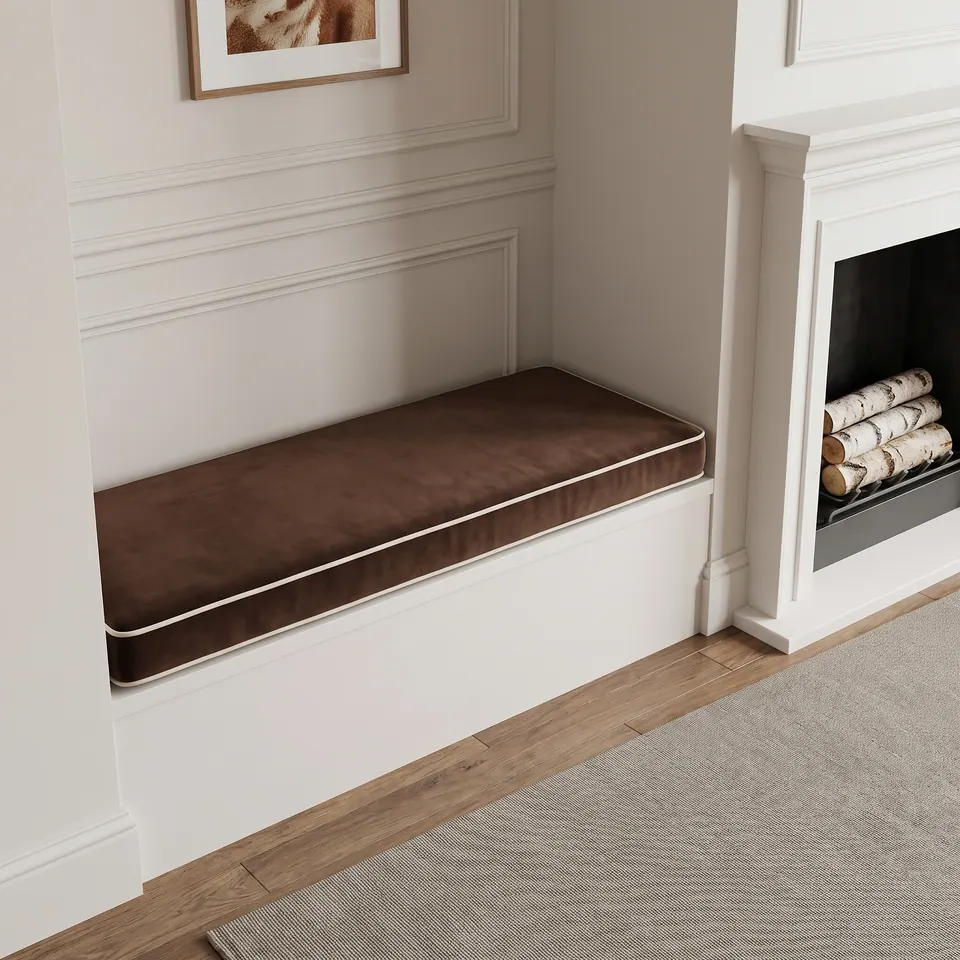
A buyer in the US ordered cushions for an L-shaped kitchen bench. Sensibly, they chose two cushions meeting at the corner rather than one L-shaped piece.
The order came through with 2 in on one piece and 3 in on the other. The size range paid for didn't match the second cushion's size either. Two mismatches in one note, so the workshop paused production and asked.
The answer came back clean: about 83 3/8 x 19 1/8 in (212 x 49 cm) and 23 5/8 x 19 in (60 x 48 cm), both 3 in (7.5 cm) thick in 32-density foam. They wanted two fabrics and shared photos of their previous cushions, so everyone was looking at the same thing.
Nothing was cut until the numbers agreed. But a pause is still a delay, and this one began in the note. In an L, write each cushion on its own line, give both the same thickness unless you truly mean otherwise, and pay for the size range each piece falls in. How the two pieces meet is its own question, answered in the L-shaped corner joint guide.
Why 'sky blue' can't be sewn
Every fabric range has a numbered color chart, and neighboring numbers can differ only in tone. 'Sky blue' could be several of them. A code is exactly one.
The workshop checks every code against the charts before cutting. A code that doesn't exist, or one that reads two ways, stops the order. 'L105' could be velvet 105 in cream or linen L-05, so production waits for your reply.
A real code you didn't mean is another matter. It sails straight through, because it's valid. HM-30 is a pale blue; HM-10 is the dark green. Mistype one for the other and pale blue is what you get, exactly as written.
So write the shade name beside every number. If you've never seen the shade in daylight, order a swatch first: fabric swatches before ordering explains how, and screen versus daylight explains why.
The chat is a conversation. The note is the spec.
Production works from the order record, not the message thread. A good many remakes trace back to that one sentence.
A change agreed in chat can miss the workshop if the order itself never changes, if it arrives after cutting starts, or if it was typed into the wrong box. So after any long chat about fabrics, restate the one final code in the note, and ask for written confirmation of whether production has started.
The workshop does its part. Before cutting it reads back codes, sizes, units and thickness, and holds anything unclear, duplicated or unusual. It also checks orders for a sample only, a single backrest or covers only, in case that wasn't the plan.
Even careful readers slip. A buyer in the US wrote 35 x 40 in (89 x 102 cm) for a floor couch on a bench they had built, and it came out 35 x 50 in (89 x 127 cm). That one was the workshop's misreading, and it remade the seat and backrest free. One misread number, one whole set. The remake guide covers what happens next when a size or color goes wrong.
Which line of your note would the cutting table have to guess at?
Common mistakes (I have made two of these myself)
- Writing a color name such as 'deep red' instead of the chart code.
- Giving a bare number without its prefix, so 18 could be L-18 or N-18.
- Leaving body and piping codes unlabeled, so they get swapped.
- Picking one color in the checkout menu and agreeing a different code in chat.
- Leaving the unit off, or giving the two pieces of an L different thicknesses by accident.
- Writing 'non-slip base' in the note without choosing the paid option.
- Agreeing a change in messages and never checking that it reached the order.
- Leaving out 'backrest', 'open end', 'with foam' or 'covers only', so the pieces are a guess.
Buyer questions: notes, codes and second thoughts
- A common question
What exactly goes in the personalization box when I order a custom cushion?
The workshop's answerEverything the cutting table needs: the exact size, thickness, main fabric code and piping code (or 'same piping' / 'no piping'), plus ties and piece notes such as 'backrest', an open end or 'no handle'. Choose the closest size in the menu first, then type the exact measurements in the box. Use chart codes, not color names. If your exact size doesn't match the range you bought, the workshop confirms with you before production.
- A common question
The menu only lists sizes. Where do my fabric color and piping go?
The workshop's answerType them in the personalization box or the note to seller before checkout, for example 'Main: L09, Piping: L24' or 'COR-207', which is a dark green corduroy. Different colors per piece are fine, such as backs in one pair of colors and seats in another. If you forget, the workshop messages you with the latest chart before production starts.
- A common question
I picked one size in the menu and typed a different one. Which gets made?
The workshop's answerThe typed exact size. The menu sets the size range and the price; production follows the measurements you wrote. Choosing 38-40 in and typing 18 x 20 gets a cushion cut at 18 x 20. For a size far outside every option, ask for a custom listing so nothing is ambiguous.
- A common question
Can you embroider our family name on the cushion?
The workshop's answerNo. The workshop doesn't embroider, print or letter anything, names or phrases included. 'Personalization' on a listing means your order details: size, fabric and piping codes, a delivery phone number and fabric requests. What you can customize is the cushion itself, down to small sizes such as 16 x 15.5 in (41 x 39 cm), with piping matched or in any fabric.
- A common question
I changed my color after ordering. How do I make sure the new one is used?
The workshop's answerSend the exact fabric code, not a description like 'dark gray'. The workshop sends a photo of the chosen color after ordering, since screens show colors differently, and buyers have switched shades after seeing it. If the receipt says one code and the messages another, the code agreed in messages is made. Changes are possible only before production gets too far.
- A common question
I've already paid. Is it too late to switch the fabric?
The workshop's answerNot if production hasn't started. Message the new color name or fabric code right away; the workshop checks with the tailor and, if sewing hasn't begun, updates the order at no extra cost and confirms the final colors in writing. Several items can change at once, such as all cushions in one color and the bolsters in another.
Order note questions, answered briskly
Should the cushion size in my note be in inches or centimeters?
Either works, as long as the unit is written. The workshop cuts exactly what the note says, in the unit the note gives. Use one unit for the whole order and write it on every line, thickness included.
What happens when a note has a fabric code that doesn't exist?
Every code is checked against the charts before cutting. A code that doesn't exist, or reads two ways, holds the order until you confirm. A valid code you didn't mean isn't caught, so check the fabric photo the workshop sends before production.
Does a backrest go in the same note as its seat cushion?
No. A backrest is its own item: add it to the cart at its own size and write 'backrest' in its note. Prices are per cushion. Floor-cushion sets are the exception, because their price already includes the backrest and bolsters.
Where can ties be sewn on a custom bench cushion?
Wherever you ask: at the corners or along the back, sewn into the seams. Write the position in the note. Ties fix a cushion to a bench or chair, tie a backrest to a seat, or hold stacked cushions together.
Can I add a missing detail after checkout?
Yes. Message the workshop right after ordering with the missing size, code or date. Changes to fabric, piping or size are free while the fabric is uncut. After cutting, a change means a remake at production cost, so send it the moment you notice.