The Pattern Room · a measuring pattern
How to order fabric swatches that actually settle the decision
A square of velvet on a windowsill tells you more than an hour of scrolling. Here is how I shortlist, what I ask for, and how I read a swatch once it comes home.

 Save
The quick answer
Order cushion fabric swatches by shortlisting up to 5 fabric codes, including the piping colors you are weighing, and writing every code in the note of a single sample order. Judge them in your own room in morning light, at noon and under lamps, and ask for free close-up photos of finished cushions in the same fabrics.
Why a screen can't choose a color for you
Five codes, one sample order, three kinds of light. That is the whole method, my friends, and it settles more cushion decisions than any number of photographs.
Why bother with cushion fabric swatches at all? Because a screen and a cloth make color in opposite ways. A screen adds light, and most are never calibrated; a woven fabric takes light away, and what it gives back depends on the lamp, the window and the hour. Two colors can agree under one light and quarrel under another, a trick the trade calls metamerism. Daylight never lies; your screen sometimes does.
"Can I see the fabric first?" is one of the questions the workshop answers most. The answer is yes, and the art lies in ordering swatches so they arrive ready to decide, not to open a second round of doubt.
The swatch method, step by step
Shortlist up to five codes
Plan on up to 5 fabric codes per sample order. The cap came in because very large sample requests were overloading the workshop; for a longer list, place extra sample orders (30 codes means 6) or trim to your strongest candidates. Each range has a numbered chart, and neighboring numbers can differ only in tone, so give exact codes.
Put the piping on the list
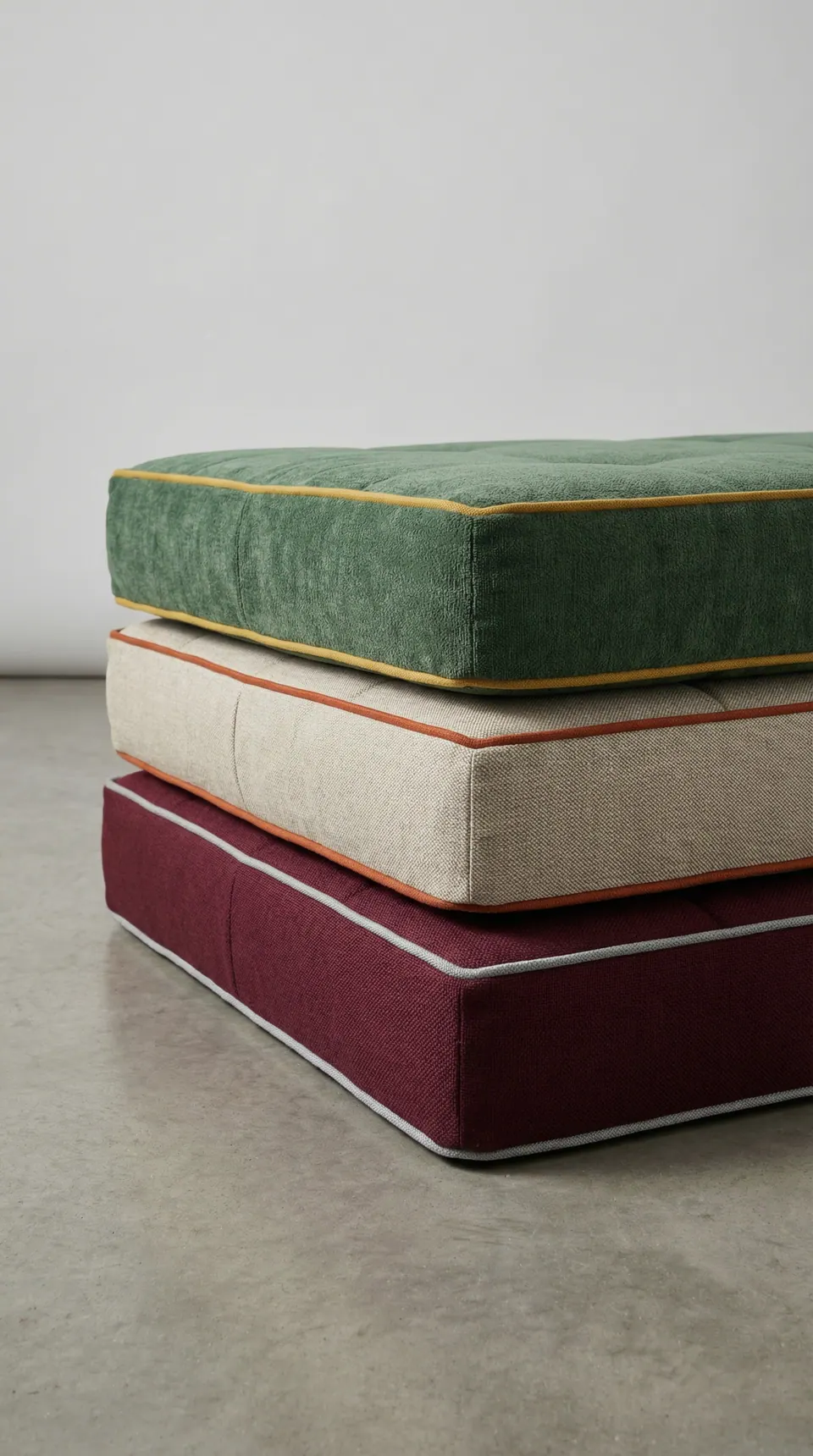
Piping is cut from the same fabric ranges as the cushions, so a piping color is sampled like any other code. Add the one or two you are weighing and you can lay body and trim together at home instead of guessing. Write body and piping codes separately. The piping Pattern helps you choose between matching, contrast and none.
Buy the sample option once, and write every code
Add the Fabric Sample option to your cart once; if it asks for a color, pick any. Then write the fabric type and each code, for example velvet 112 or L-18, in the personalization or note box. A sample order with no codes can't be prepared, and samples can't be ordered by message alone.
Ask for close-ups while you wait
Name your codes in a message and the workshop sends free, unedited close-ups: often a studio shot beside a daylight shot, side-by-side comparisons of near shades, and photos of finished cushions in that fabric when they exist.
Label them the day they land
Swatches arrive without code tags, though exactly the codes you ordered are sent. Lay them beside your list, photograph them, and ask the workshop to confirm any you can't tell apart.
Read them at morning, noon and lamplight
Tape each swatch where the cushion will live: on the bench, against the sofa, beside the rug. Look in cool morning light, again at noon, and again under your evening lamps. The color that keeps its character in all three is the one to trust.
Send a photo of the room with the finalists
A photo of the swatches on the rug or against the wall lets the workshop confirm a pairing. It can also match codes to a photo of a sofa or a paint color, though the final choice stays yours; matching to sofa, paint and wallpaper goes deeper.
Confirm stock, and note a backup
Before ordering the cushion, ask whether your code is in stock, and write a second choice in the note. Then put the final body and piping codes in the cushion order; the sample cost can be credited toward it.

Have it made
Measured it? Have Élodie’s workshop make it
A fabric reads one way at noon and another at dusk. Mention your light, and the workshop will weigh it with you. — Élodie
Leave your details and the workshop will call you to confirm measurements, fabric, foam and piping. No prices, dates or payment on this page: it is a request, not an order.
Key facts
- Plan on up to 5 fabric codes per sample order; longer lists need extra sample orders.
- The codes go in the personalization or note box, and a sample order with no codes can't be prepared.
- Piping is cut from the same fabric ranges, so piping colors are sampled like any other code.
- Swatches are small, from about 1.5 in (4 cm) squares to palm-sized pieces about 6 in (15 cm) across.
- Free close-up photos, side-by-side combinations and photos of finished cushions are sent on request.
What a swatch can't show you
A swatch is small, anywhere from a square of about 1.5 in (4 cm) to a palm-sized piece about 6 in (15 cm) across, and velvet can come as 4 x 4 in squares if you ask. That is enough for true color, weave and hand. It is not enough for everything.
- The whole cushion. A shade that looks gentle in your palm can feel stronger spread across 72 in of bench, and softer in a dim corner.
- Pile direction. Velvet shifts tone with its nap; an off-white velvet can read darker, even beige, from one side. Brush the swatch both ways and watch it move.
- Texture at scale. Boucle loops, corduroy wales and linen-look slubs look different across a seat than under a thumb. Sample any textured fabric before a large piece, and ask for the fiber content; assume linen-look is synthetic unless told otherwise.
- The finished edge. How the piping sits along a box edge, how a stripe runs across the front.
For those, ask for photos of a finished cushion or a customer's review picture in the same code. Workshop photos are phone shots, and close-ups tend to look a little darker and coarser than daylight, but beside the swatch they tell the whole story. There is more on this in screen versus daylight.
Five ways to check a color, and what each misses
| Check | What it shows well | What it misses |
|---|---|---|
| Chart on your screen | The range and the code numbers | True tone; screens are rarely calibrated |
| Close-up photos | Weave and near-shade comparisons, studio beside daylight | Close-ups read a little darker and coarser than in person |
| Finished-cushion or review photos | The color at a distance, across a whole piece | Not every code has been made up yet |
| Side-by-side fabric and piping photo | Whether the trim flatters the body fabric | The light in your own room |
| Physical swatch at home | True color, hand and texture in your own light | Scale, and nap direction across a full cushion |
Two sills, one rug and a light blue piping
A parent in the US was buying window-sill cushions for a daughter's apartment, two sills of different sizes, and ordered fabric samples before anything else. A wise first move.
When the swatches came, the choice was K-31 for the body with K-1, a light blue, as the piping, and a photo of the rug went to the workshop so the pairing could be confirmed against the room rather than against a screen. One sill sat above an air conditioning unit, which limited the height, so both cushions stayed at 2 in. Samples first, a photo of the real room, then the order: three quiet steps and no surprises.
Not every sample story is so calm. Now and then a buyer checks out without choosing a size and pays for a palette of swatches instead of a cushion, because the sample option sits in the same size menu and shows the lowest price on the listing. The workshop messages to ask what was meant, refunds the sample order and sends the link to the right size. Take a second look at the size field before you pay.
Common swatch mistakes
- Ordering samples with no codes in the note. The order can't be prepared until the codes arrive.
- Buying the swatch option when you meant the cushion. A surprisingly low price usually means the size field says Fabric Sample.
- Leaving the piping off the sample list, then choosing the trim from a screen.
- Judging a swatch once, under one lamp. Look at morning, noon and lamplight before you decide.
- Skipping the sample for a textured fabric. Boucle, corduroy and leather-look behave differently in the hand than in a photo.
- Letting swatches go unlabeled. One remake came out darker than expected because the swatch it was chosen from carried a neighboring code's label.
- Adding a matching piece months later from a new dye lot. Order every piece of a set together, or read dye lots and later matches first.
Judge a fabric swatch in the room where the cushion will live, at morning, noon and lamplight, before a single code goes into the order note.
Élodie Marchand
Buyer questions: samples and swatches
- A common question
Can I get fabric swatches before I commit to a cushion?
The workshop's answerYes. Buy the Fabric Sample option once, either at the top of the size dropdown on a cushion listing or on the separate fabric-samples listing; if it asks for a color, any will do. Then write the fabric type and exact codes, such as L-18 or velvet 112, in the personalization or note box. Any code the workshop sells can be sampled. You get small swatches on a card, not yardage, and the workshop follows up afterwards to ask which one you liked.
- A common question
How many colors can I sample at once?
The workshop's answerPlan on up to 5 fabric codes per sample order, written in the personalization box. The cap came in because very large requests were overloading the workshop, so for more, place extra sample orders or trim the list. In practice the workshop is often more generous; one buyer got 6 codes in a single order. Samples can come from linen, velvet and soft fabric in the same order.
- A common question
Is the sample fee charged for each swatch?
The workshop's answerNo, it's one fee per sample order. Add one fabric sample to the cart, list every color number you want in the note, and they're posted together in one package with no extra shipping. You can mix linen codes with velvet swatches, or ask for a full velvet or linen set, and the sample cost can be deducted from your cushion order later.
- A common question
Could you send close-ups of the codes I'm deciding between?
The workshop's answerYes, free, and usually right away in the message thread. Name the codes and the workshop sends unedited close-ups, often a studio shot next to a real-light shot, comparisons of similar shades, sometimes a short video, and photos of finished cushions in that fabric when they exist. Phone cameras can make fabric look lighter or darker, so order physical samples if color is critical. When production starts, you get a photo of the actual fabric.
- A common question
Can you show my fabric and piping together before I order?
The workshop's answerYes. The workshop photographs the swatches side by side, in as many combinations as you need, with extra shots in different lighting on request. There's no finished photo of every combination, because there are hundreds of colors, and it doesn't make AI mockups, since they misrepresent tone. Close-ups come out slightly darker and coarser than daylight, so physical samples remain the surest way to judge a pairing in your room.
- A common question
If I send a photo of my sofa, can you tell me which fabric is closest?
The workshop's answerYes. Send a photo of the color, the furniture or the room, and the workshop compares it with its charts, names the closest codes, checks stock in the fabric type you want and sends side-by-side photos. Velvet 924 was the closest dark olive for one nook, and velvet 34 for a green couch. Screens vary, so for a large piece, order swatches of the shortlist first.
Swatch questions, answered in daylight
How big is a fabric swatch?
Small. Standard swatches run from about 1.5 in (4 cm) squares to palm-sized pieces around 6 in (15 cm) across, enough to show true color, weave and texture. Velvet can be sent as 4 x 4 in squares on request; larger physical pieces generally aren't available, so photos of finished cushions fill the gap.
How soon will my swatch pack reach me?
Ask when the samples will leave and when to expect them; busy periods run slower. Order them early and ask for tracking, so a lost pack doesn't stall the whole project.
Should I sample the piping color as well?
Yes, unless the piping will be self-piping in the body fabric. Piping comes from the same fabric ranges, so its code goes into the same sample order, and you can judge body and trim together in your own light.
Can a foam sample come with the fabric swatches?
Yes. A foam sample can be added to a swatch order on request, so you can press the foam and handle the fabric in the same sitting. Mention it in the note alongside your fabric codes.
What if my chosen color sells out after I sample it?
It can happen: mill stock runs out and lines are discontinued. The workshop contacts you before production to offer a wait, an in-stock color or a close substitute. A backup code written in your order note saves a round of messages.
How long should I live with a swatch before deciding?
About a week. Cushion makers suggest taping the swatch to the actual furniture and checking it in morning, midday and evening light, beside the rug, the wall and the wood it will sit against. Color shifts with the light, so one glance at the kitchen table isn't enough, and a sunny seat deserves a spot in the window too.