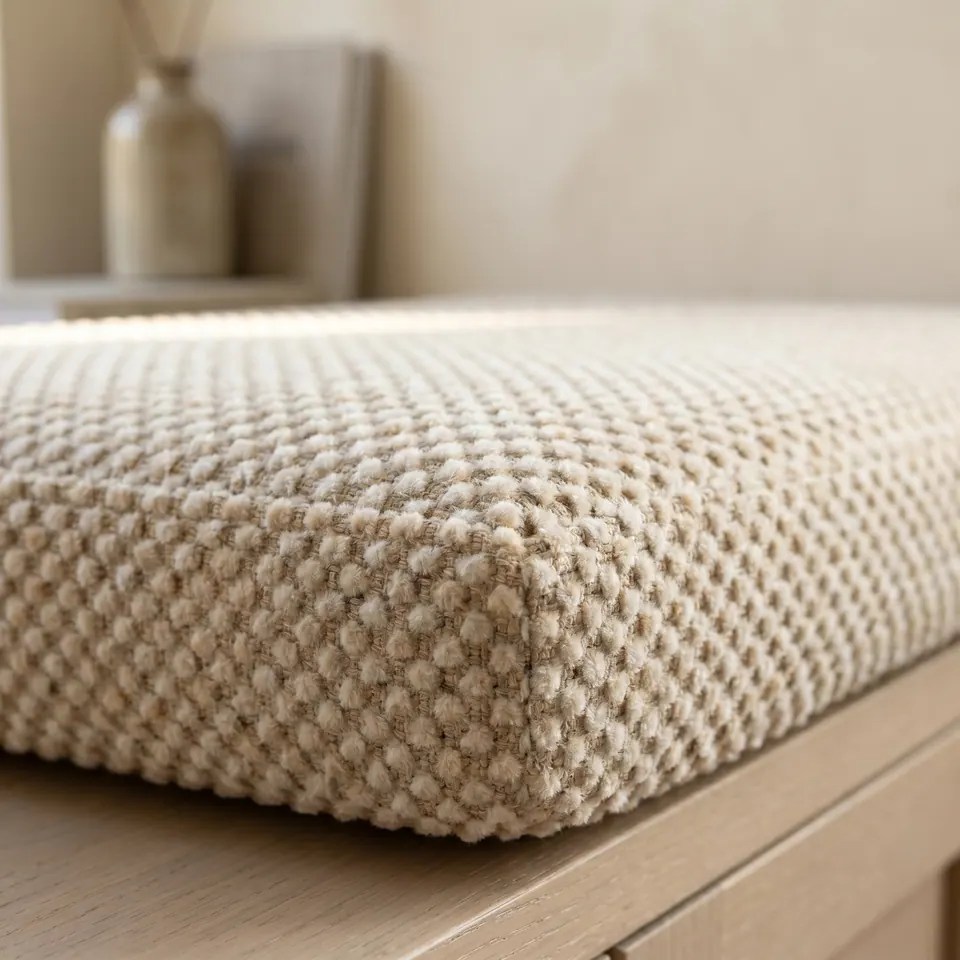
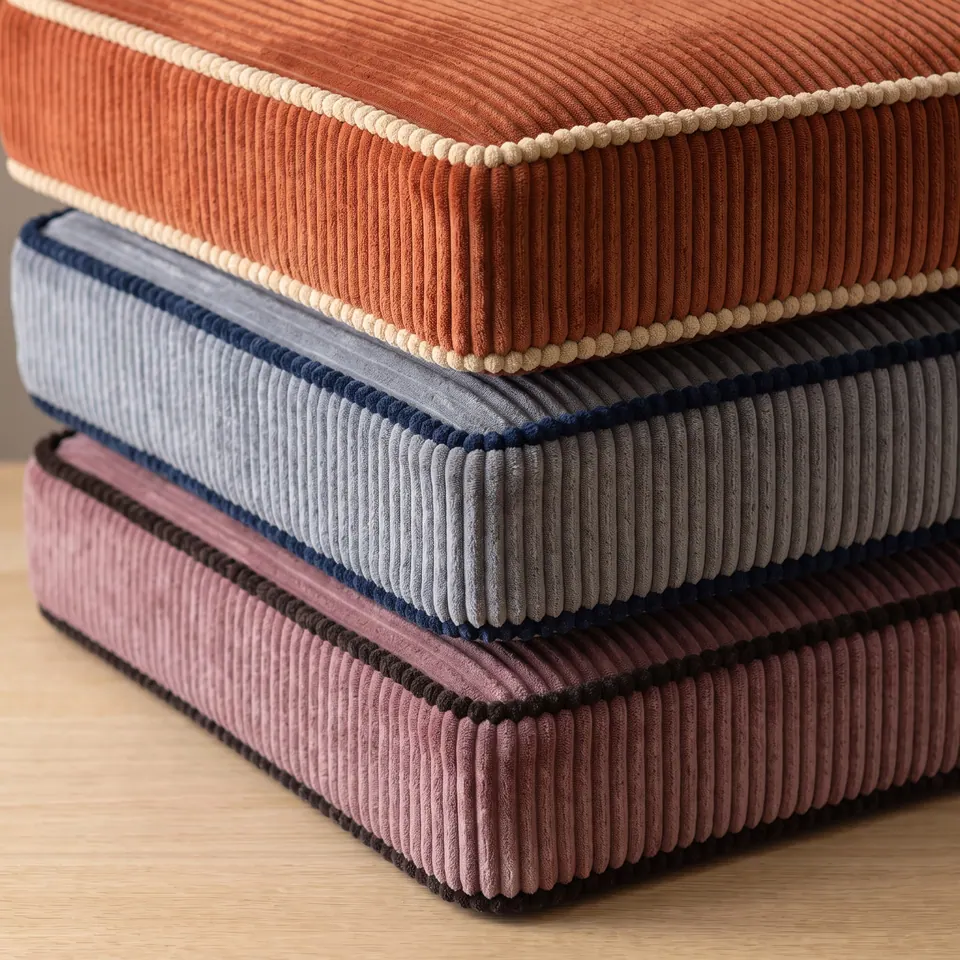
The Pattern Room · a side-by-side pattern
Matching, contrast or no piping: choosing the line around a cushion
Piping is the detail buyers decide last and notice first. Here is how the four edges compare, what can and can't take a cord, and the checklist I wish I'd had the year I ordered piping in 'the blue from the stripe.'

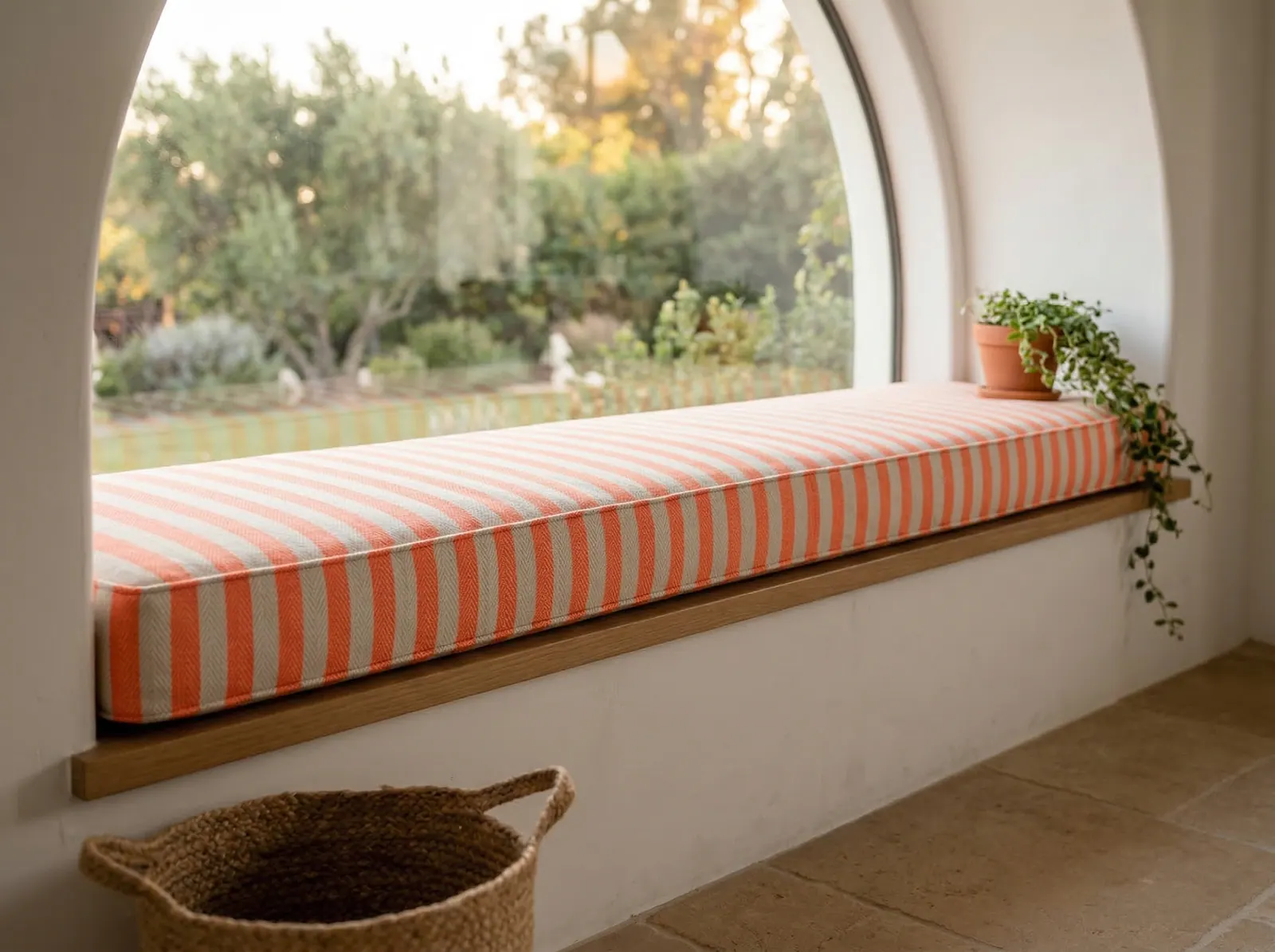 Save
The quick answer
Choose matching (self) piping for a guaranteed color match and a tailored edge, contrast piping when you want the outline to carry a second color, and no piping for a soft, flat seam. All three cost the same, and the cord can be cut from any fabric on the charts. Stripes, very thin cushions and corduroy pieces have limits worth checking first.
What piping is, and why the edge gets the last word
Piping, also called welt or cording, is a thin cord wrapped in fabric and sewn into the seam around a cushion's edge. It outlines the shape and reinforces the seam that takes the most wear. The standard finish is a single cord around both the top and bottom edges; double piping can be requested.
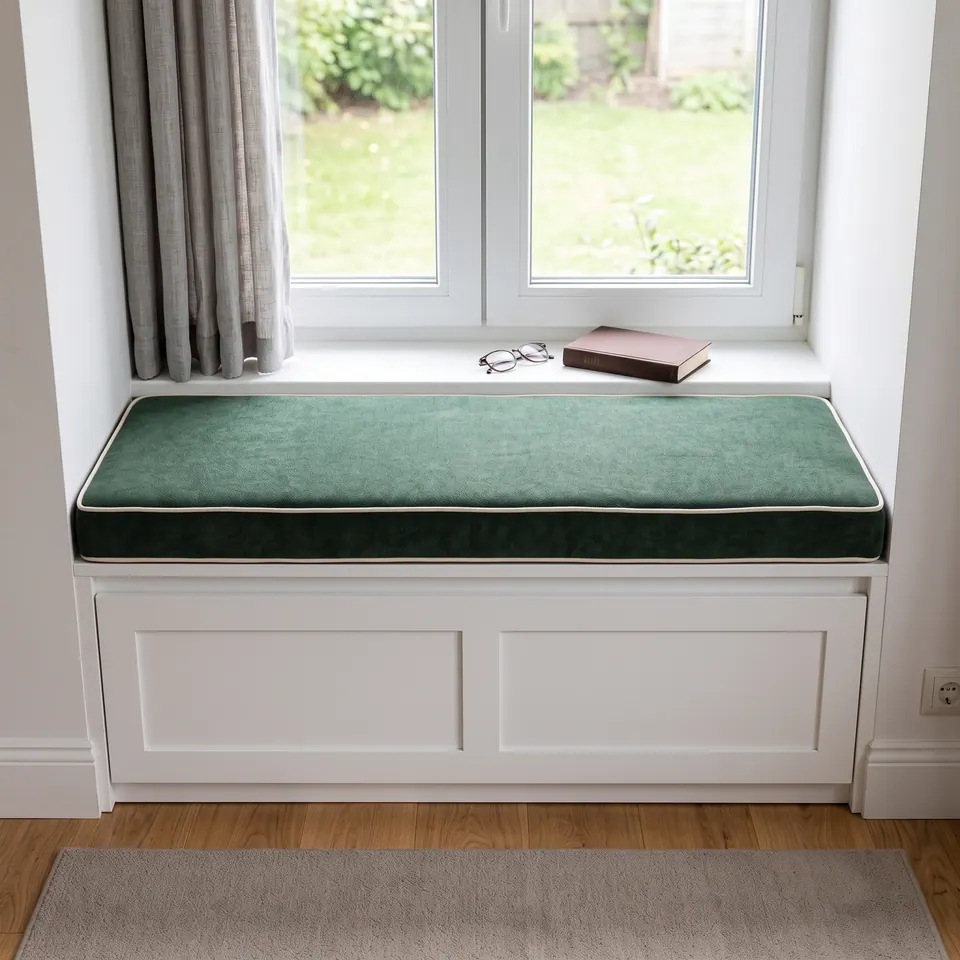
A contrast piping cushion takes its cord from a second color, cut from any fabric on any chart; there is no separate piping chart. Matching, contrast or none, the price is the same: piping is already included, and leaving it off doesn't lower the quote.
Across past orders, roughly half choose self piping and half choose contrast. A straight welt is a kind of honesty, whatever color it wears. So which color already in your room would you happily see traced around the seat?
Self, tonal, contrast or none: four edges side by side
| Self (matching) | Tonal | Contrast | No piping | |
|---|---|---|---|---|
| What it is | A cord cut from the cushion's own fabric | A cord one shade darker, same range | A cord in a second color, from any chart | A plain, flat seam |
| How it reads | Tailored and quiet | The outline is traced, not announced | The edge becomes a line of color | Soft and relaxed |
| Color-match risk | None: the only guaranteed match | Low within one fabric type | Tone can shift across fabric types and light | None |
| Stripes and prints | Recommended: the pattern runs into the cord | Only if a close solid exists | A solid from another range; may differ slightly | Works |
| Outdoor cushions | Recommended: reinforces the edge | Keep the cord in outdoor fabric | Keep the cord in outdoor fabric | Possible |
| Very thin cushions | From about 1 1/4 in (3 cm) up | From about 1 1/4 in (3 cm) up | From about 1 1/4 in (3 cm) up | Required at 1 in (2.5 cm) |
| Price | Included | Included | Included | Same price |
| Write on the order note | Piping: same as body | Body: code / Piping: next shade's code | Body: code / Piping: code | No piping |
Tonal, in the workshop's own examples, means the code one shade darker than the body: an outline you notice on the second look.
Stripes, ticking and the color you can't cut out
Here is the trap. You love the navy in a ticking stripe and ask for piping 'in the navy.' But stripe collections have no solid in the same tone, so the cord must come from another chart, usually velvet or a soft plain weave, and a different fabric type may not match exactly.
The workshop compares shades in natural light and says plainly when it can't promise more: a family in the US ordering a navy ticking set was told the solid navy piping might not match exactly. Thin stripes can't be cut into a solid strip at all.
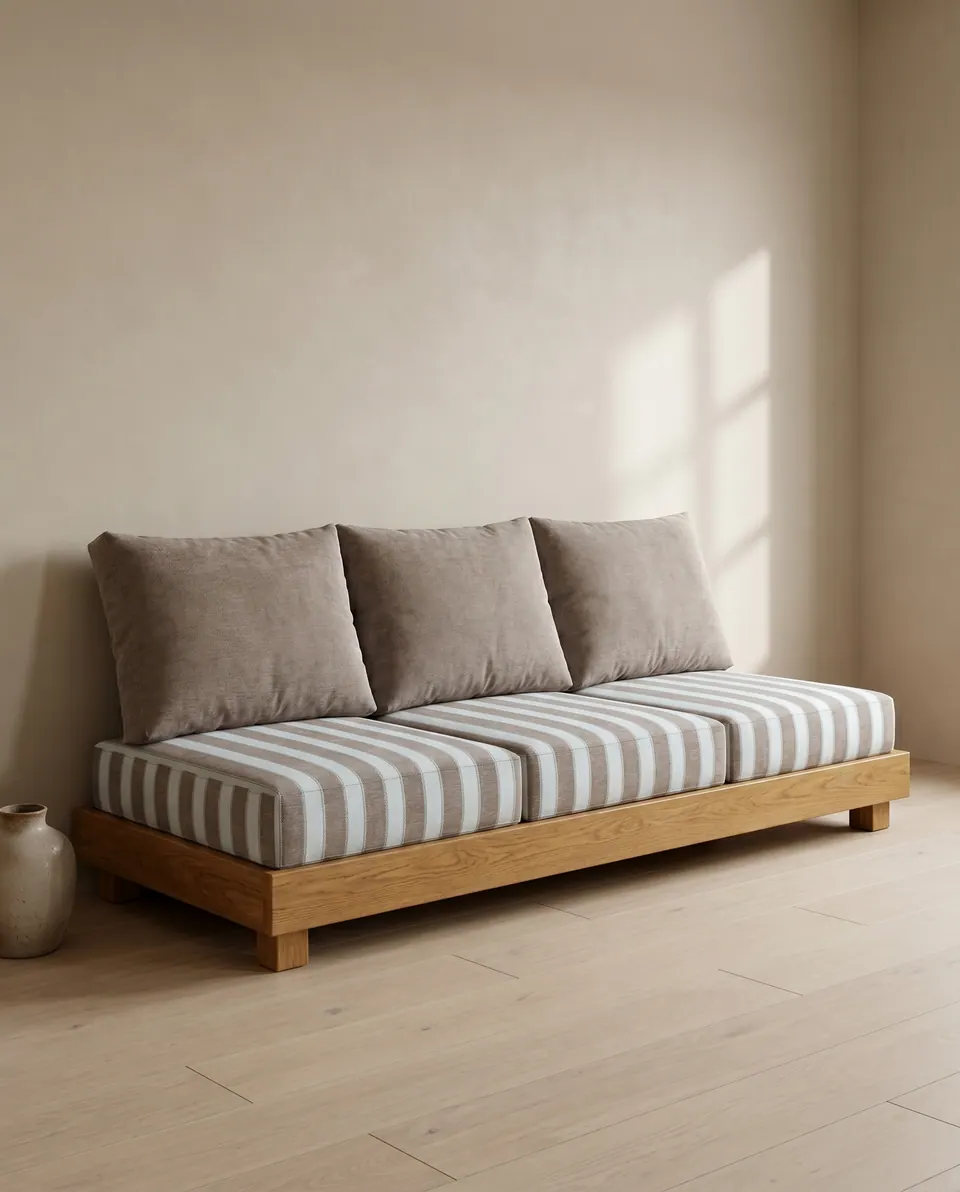
The guaranteed match is self piping cut from the stripe itself, and it's the workshop's usual advice. On long benches, check which way the stripes will run, and browse striped cotton and ticking with the cord already in mind.
When the right answer is no piping
Some cushions go without, by rule or by design:
- Very thin cushions. At 1 in (2.5 cm) there's no room for a cord, so the edges are sewn plain. A 1 1/4 in (3 cm) cushion can be piped, and so can the thinnest standard foam cushion at 2 in (5 cm).
- Corduroy pieces. Daybed covers and floor-sofa pieces in corduroy go without, because the ribs already draw the line. A corduroy box cushion has been piped on request.
- Tufted backrests and armrests. They can't take piping, so they switch to a plain style if you want piping everywhere else.
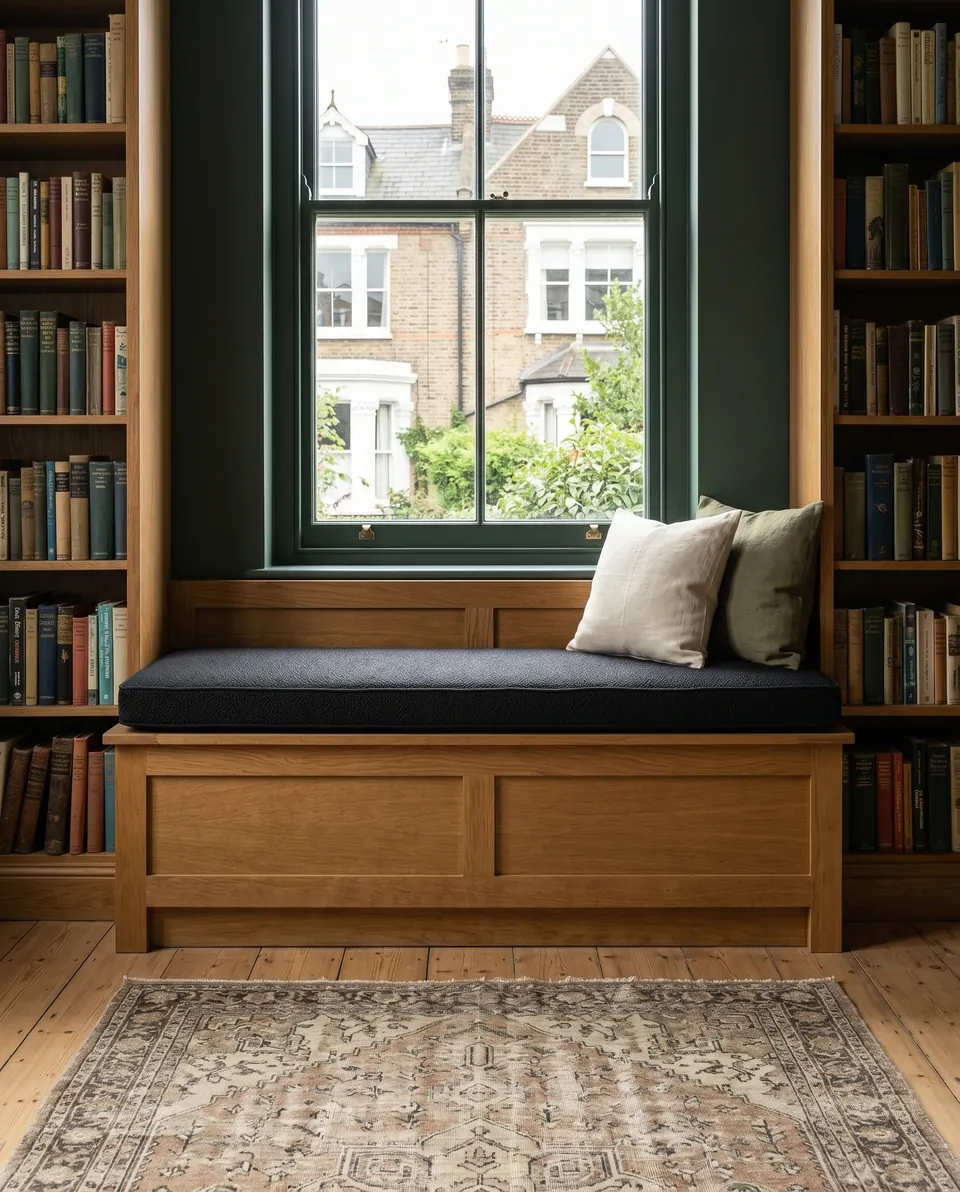
- Pale, plain linens. No rule, just taste: a light linen looks especially clean with a flat seam.
Mixing within one set works too: piped seat cushions with plain wedge backrests.
Two sills, one light blue, and a photo of the rug
A parent in the US was buying window-sill cushions for a daughter's apartment and did the sensible thing first: ordered fabric samples. With the swatches in hand she chose a light blue with a contrasting piping, then sent a photo of the rug so the workshop could confirm the pair.
The two sills were different sizes, so each cushion was cut to its own numbers. One sill sat above an air-conditioning unit that limited the height, so both cushions stayed at 2 in (5 cm): low, tidy and still thick enough to carry a cord. Samples first, a photo of the room's anchor second, codes last.
- What it taught
- Check for obstructions such as an AC unit before choosing thickness; 2 in keeps the profile low and still takes piping.
Two codes on the order note, and an edge that may wave
Write both codes, every time: Body: code, Piping: code, or Piping: same as body, or No piping. A blank piping line means the workshop checks with you before cutting, usually assuming matching. On a remake, write the piping spec out again in full.
Piping sits on the seam and doesn't change the size you order. The cord does stand a hair proud of the edge, so if a bench cushion must fit wall to wall including the piping, say so.
Now the honest bit. A long, hand-sewn edge can wave slightly, and vacuum-packed foam needs 48 to 72 hours to recover before the line settles. A cord still pulled after that is a fault: one narrow bench cover whose piping never settled was remade with an extra piping check and shipped uncompressed.
Four ways to end up regretting the piping
- Describing the color instead of naming a code. 'The blue in the stripe' may not exist as a solid.
- Judging a thin line from a big swatch. Ask for body and piping photographed side by side before a multi-piece order.
- Leaving the piping line blank. Write piping yes or no, and its code, in the order note.
- Forgetting the spec on a remake. Replacements follow what's written, so write 'no piping' or 'self piping' again.
Stripe collections have no matching solid fabric, so a solid piping cord may differ slightly. Self piping cut from the stripe is the only guaranteed match.
Maggie
What piping does for wear
Piping, also called welt or cording, is a cord wrapped in a strip of fabric cut on the bias, at 45 degrees, so it can bend around corners and curves without puckering. Sewn into the edge seam, it takes the rubbing that concentrates where a cushion's top meets its side, which is why same-fabric piping is recommended on outdoor cushions and busy benches. Flat piping without a cord stands out about 3/8 in (1 cm) past the seam; corded piping gives a firmer, rounder line. Piping sits on the seam and doesn't change the ordered size, costs nothing extra here, and can be added to covers-only orders.
Buyer questions: piping questions
- A common question
Is piping extra, and does a contrast color cost more?
The workshop's answerNo. Piping is included, and a contrast cord from any color on the fabric charts costs nothing extra; the price is the same with or without piping. The only piping surcharge is leather in a non-stock color.
- A common question
Can I see my body fabric and piping together before I order?
The workshop's answerYes. The workshop photographs the chosen swatches side by side, in as many combinations as you need. It doesn't make AI mockups, because they misrepresent tone, and close-ups look a little darker than daylight, so samples are the safest check.
- A common question
Can the solid piping match one color inside my striped fabric?
The workshop's answerSometimes. Stripes have no solid in the same tone, so the cord comes from another chart and may differ slightly; the closest shade is picked in natural light. Self piping cut from the stripe is the guaranteed match.
- A common question
Can I have plain edges, and will that cost less?
The workshop's answerPlain edges, yes; cheaper, no. Write 'no piping' next to your fabric code and the edges are sewn flat, at the same price. For a quiet edge rather than none, ask for self welt in the cushion's own fabric.
- A common question
Could the piping be a completely different color from the cushion?
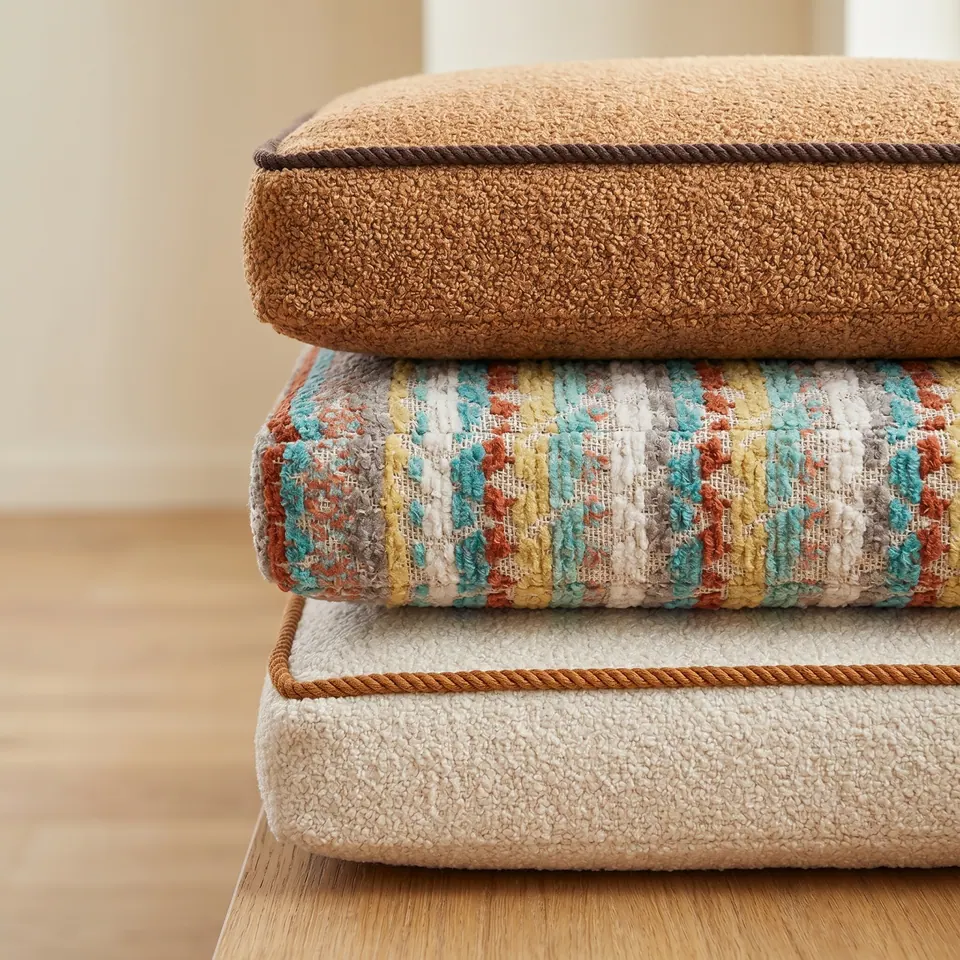
The workshop's answerYes, any color from the fabric charts, even from another fabric type. Real pairs include mustard velvet with olive, dark red with dark green and black linen with pink. Write 'Body: code, Piping: code'; both are confirmed before production.

Have it made
Measured it? Have Maggie’s workshop make it
Have the tape measure handy when they call. Old cushions shrink and sag; the seat underneath does not. — Maggie
Leave your details and the workshop will call you to confirm measurements, fabric, foam and piping. No prices, dates or payment on this page: it is a request, not an order.
What to settle about piping before you write the codes
Does piping make the cushion bigger than the size I ordered?
No. The cushion is cut to your numbers and the piping sits on the seam. The cord stands slightly proud of the edge, so say so if a tight wall-to-wall fit must include it.
Does piping run around the bottom edge too?
Yes. Standard piping runs around both the top and bottom edges, and both faces use the same fabric, so the cushion can be flipped. Each face can even take a different piping color.
What does double piping add on a back cushion?
Double piping replaces the standard single cord on request. Besides the look, it gives back cushions enough structure to stay in place without straps. Ask for it in the order note, matching or contrast.
Which piping suits an outdoor cushion?
Piping in the same outdoor fabric as the body. It looks tailored and reinforces the edges that take the weather. The workshop advises against pairing an outdoor body with indoor velvet piping.
Does piping make a cushion last longer?
It helps at the seams. Piping is a cord wrapped in a fabric strip cut on the bias, sewn into the edge seam where daily wear concentrates, so it takes the rubbing that would otherwise fray the seam. That's why same-fabric piping is recommended on outdoor cushions. Leaving it off doesn't make a cushion weak, just softer at the edge.
Can piping be added to new covers for cushions I already own?
Yes. Covers-only orders are sewn as plain zippered covers, and piping is standard on them, in the body fabric or in any contrast code from the charts. The one exception is tufting: a button-tufted look can't be sewn into a cover alone, because the buttons pass through the filling. Write both fabric codes in the order note.