 Save
A Reading by MaggieBench Cushions
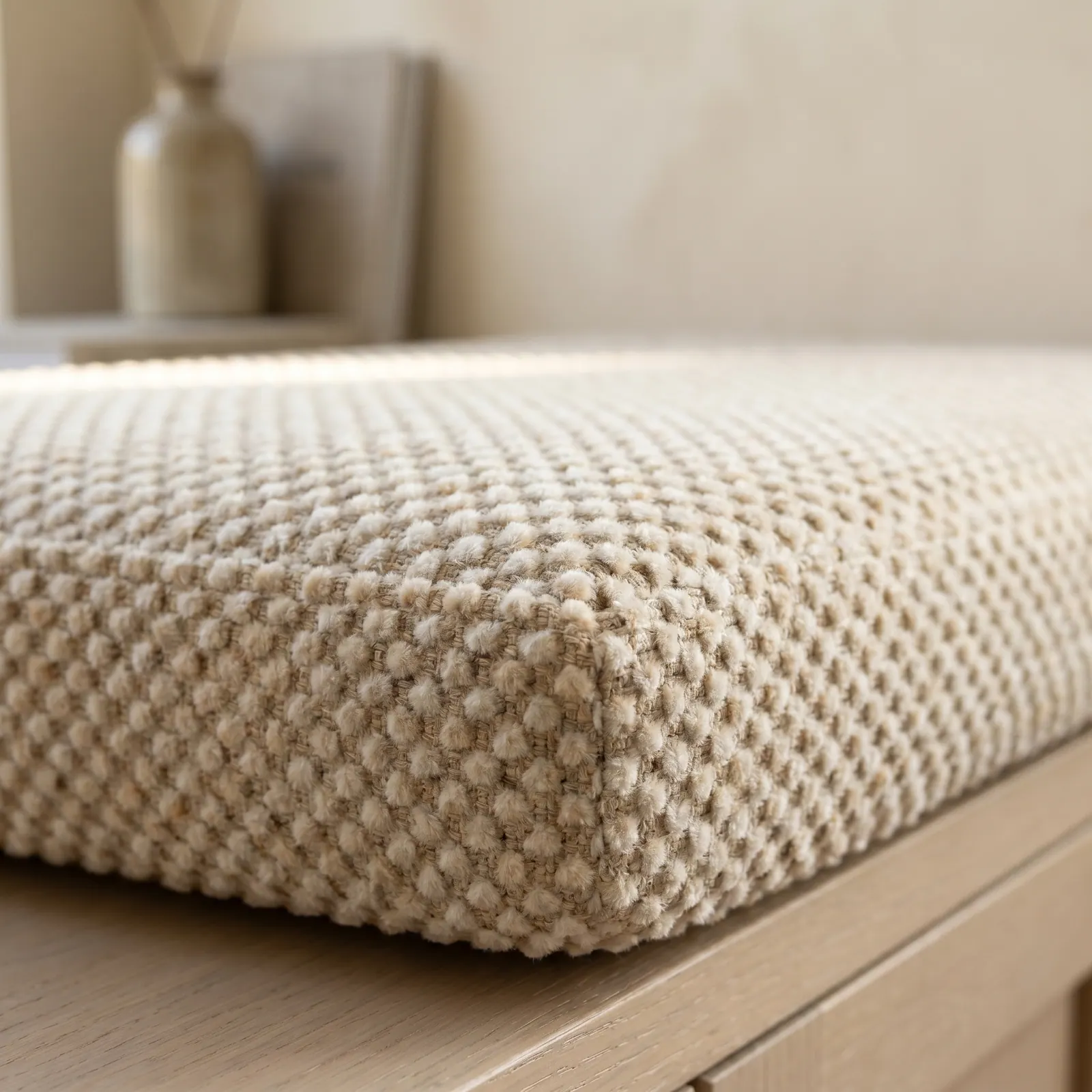
The piping queen's case for no piping: a tonal cream chenille bench cushion on pale oak
Maggie has spent nearly forty years insisting on a straight welt. Here she explains why this cream dotted cushion is better with none, from across the room and from an inch away.
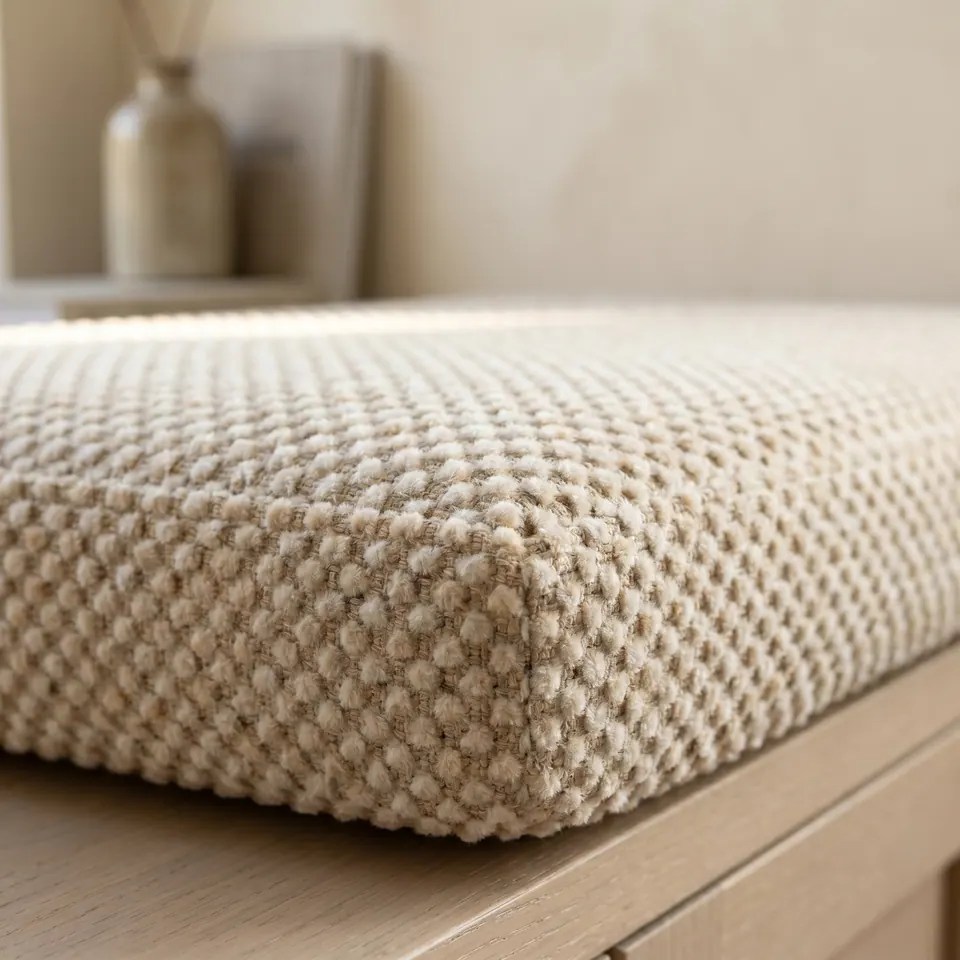
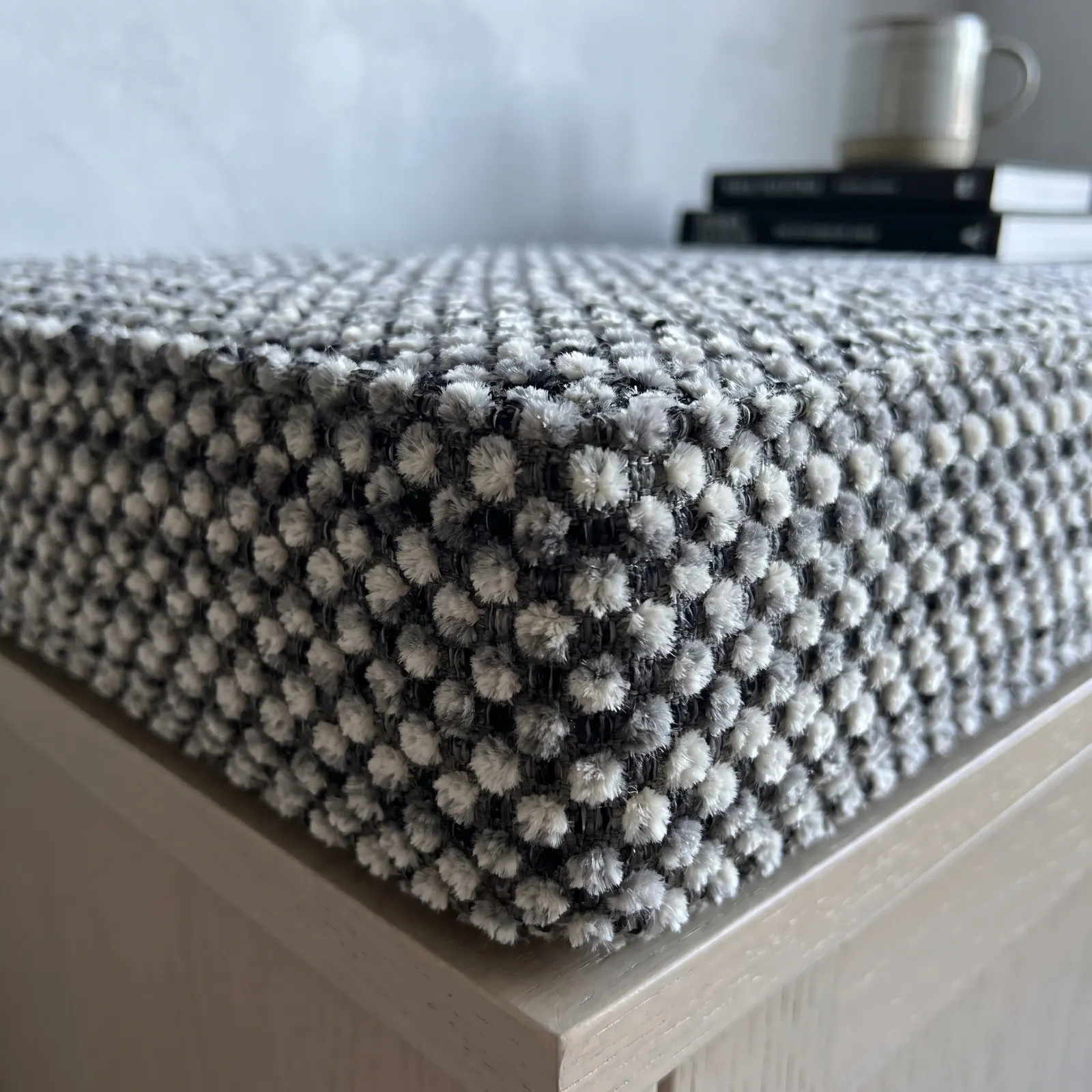
Tone-on-tone dots give the cream cushion depth without adding any color to a pale room.

The quick answer
A tonal cream bench cushion reads best with no piping when the room is all pale wood and plaster: from ten feet (3 m) away it melts into the oak, and up close its raised dots catch the side light. Piping would draw an outline around the shape. For texture without color, choose a tone-on-tone weave and a plain seam.
From the doorway: a cushion that almost isn't there
I'll say the thing nobody expects from me: this cushion is better without piping.
I've built a career on the straight welt, and I still believe a straight welt is a kind of honesty. But stand ten feet (3 m) back from this whitewashed oak bench and watch what the cushion does. It's cream on pale oak, in a room of pale plaster and soft afternoon light. From the door it reads as a gentle thickening of the bench itself, a quiet block with softly rounded corners. That's the design.
Now picture it with a dark welt. Suddenly there's an outline, a drawn rectangle floating on the oak. Even a matching cream cord adds a ridge that catches light along every edge. The plain seam lets the cream dots wrap the corner with no line at all.
What's the darkest line in your room right now?
Pinned by Maggie
Four pins, from the unpiped corner to the single stoneware vase that keeps the palette honest.
- Rounded corner
The plain seam lets the cream dots wrap the corner without a dark outline.
- Tonal dot texture
Raised cream dots catch side light, giving depth without color.
- Whitewashed oak bench
Pale oak lets the cushion almost disappear into the furniture.
- Stoneware vase
A single vessel in the same tone keeps the palette honest.
- Rounded cornerThe plain seam lets the cream dots wrap the corner without a dark outline.
- Tonal dot textureRaised cream dots catch side light, giving depth without color.
- Whitewashed oak benchPale oak lets the cushion almost disappear into the furniture.
- Stoneware vaseA single vessel in the same tone keeps the palette honest.
From an inch away: the dots do the work
Walk up close and the cushion changes character. The cream isn't flat. It's a chenille with raised tone-on-tone dots, and each dot throws a small shadow in side light. That's where the depth comes from. In an all-pale room the danger is flatness, and this cloth answers it with texture instead of contrast.
The props obey the same rule. One stoneware bud vase in the same tone. One linen-covered board leaning on the wall. A whitewashed oak top pale enough that the cushion nearly melts into it. Nothing in the frame is darker than it needs to be.
My checklist for skipping piping:
- The fabric has its own texture to define the edge.
- The room is tonal, and an outline would be its darkest line.
- You want the cushion to belong to the bench, not sit on top of it.
When all three are true, a plain seam is the tailored choice. When they aren't, dear, pipe it. The Pattern on matching, contrast or no piping lays out all three, and how to measure a bench gets the size right. More seats are on the bench cushions shelf, and textured wovens like this one sit near the jacquard and damask swatches.
Three light blues and a small bolster
A buyer got in touch stuck between three light blues: 905, 906 and 128. On a screen they looked nearly identical, which is exactly the trouble with pale shades. The workshop photographed all three side by side as soon as it was back in the studio after the weekend, and the buyer chose 906.
They added a small end bolster, 17 in (43 cm) long and 5 in (13 cm) in diameter, with matching piping. Then a coupon code blocked the custom order link, and after an account hiccup the order went through on a fresh link.
Two lessons, and both are on my list. Compare pale shades side by side, never one at a time. And keep coupon codes off custom order links.
- Sizes
- Bolster 17 in (43 cm) long, 5 in (13 cm) diameter
- Fabric
- Soft fabric, color 906
The lesson: Compare light shades side by side, and don't use coupon codes on custom order links.
Buyer questions: exact sizes, odd shapes, and the piping question
- A common question
Should I order my cushion an inch smaller than the bench so it fits?
The workshop's answerNo, don't go smaller. Order the exact bench size, such as 47 in wide by 18.5 in deep (119 x 47 cm), for a clean, full look, and measure the bench once it's installed.
- A common question
Our dining nook has a built-in window bench in an odd shape. How do I get a cushion made for it?
The workshop's answerDraw the shape, write the sizes on it and send a picture of the drawing; the workshop redraws it as a clean diagram for you to confirm. Chairs with a trapezoid seat work the same way: a drawing with exact dimensions plus a photo of the chair.
- A common question
Matching piping or contrast piping? I can't decide.
The workshop's answerIt's taste; roughly half of orders go each way. Matching piping in the same fabric is the lower-risk, clean look and the usual recommendation. Contrast makes the edges stand out, and a code one shade darker, like L-44 with L-43, gives a subtle outline. Ranges can mix too, such as a soft fabric body with velvet piping.
On the cutting table: the unpiped cream cushion
| Cushion | Rectangular box cushion for a whitewashed oak bench |
|---|---|
| Fabric | Cream tone-on-tone dotted chenille (P50) |
| Piping | None: a plain seam, so no outline |
| Edge | Box edge with softly rounded corners |
| Size rule | The exact bench size, measured after the bench is installed |
| Room | Pale Japandi and Scandinavian rooms with light wood |
| Best for | Softness without a color decision |

Have it made
Have this made — ask Maggie’s workshop
Numbers first, fabric second, piping last. Jot down what you have, and the workshop will go down the list with you, item by item. — Maggie
Leave your details and the workshop will call you to confirm measurements, fabric, foam and piping. No prices, dates or payment on this page: it is a request, not an order.
In an all-pale room, skip the piping on a cream bench cushion: from ten feet away any welt becomes the darkest line in the room.
Maggie
Questions buyers ask next
When does a bench cushion look better without piping?
When the fabric has its own texture, the room is tonal, and you want the cushion to blend into the bench. A plain seam lets the pattern wrap the corner with no outline; in a room with contrast, piping usually looks more tailored.
What is a tone-on-tone fabric?
A cloth whose pattern is woven in shades of a single color, like the raised cream dots on this chenille. It adds depth through texture and light rather than contrast, so it suits pale rooms where a print would feel busy.
How do I choose between two very similar pale colors?
Ask for the shades photographed side by side in one frame, or order samples and lay them together in daylight. Pale colors that look identical on their own often separate clearly once they touch.
Stitch straight — Maggie
More photographs to read
 Save
 Save
 Save
 Save
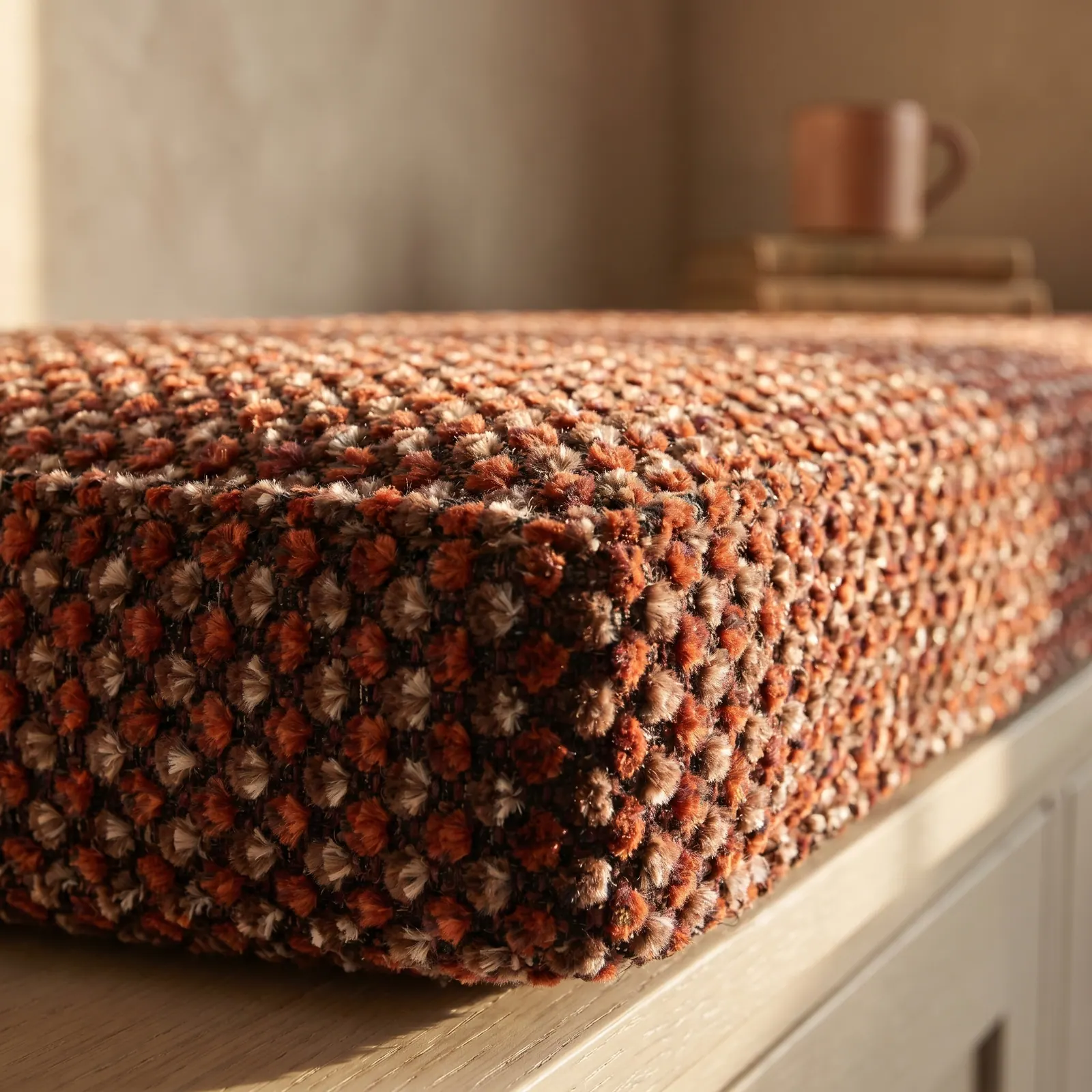 Save
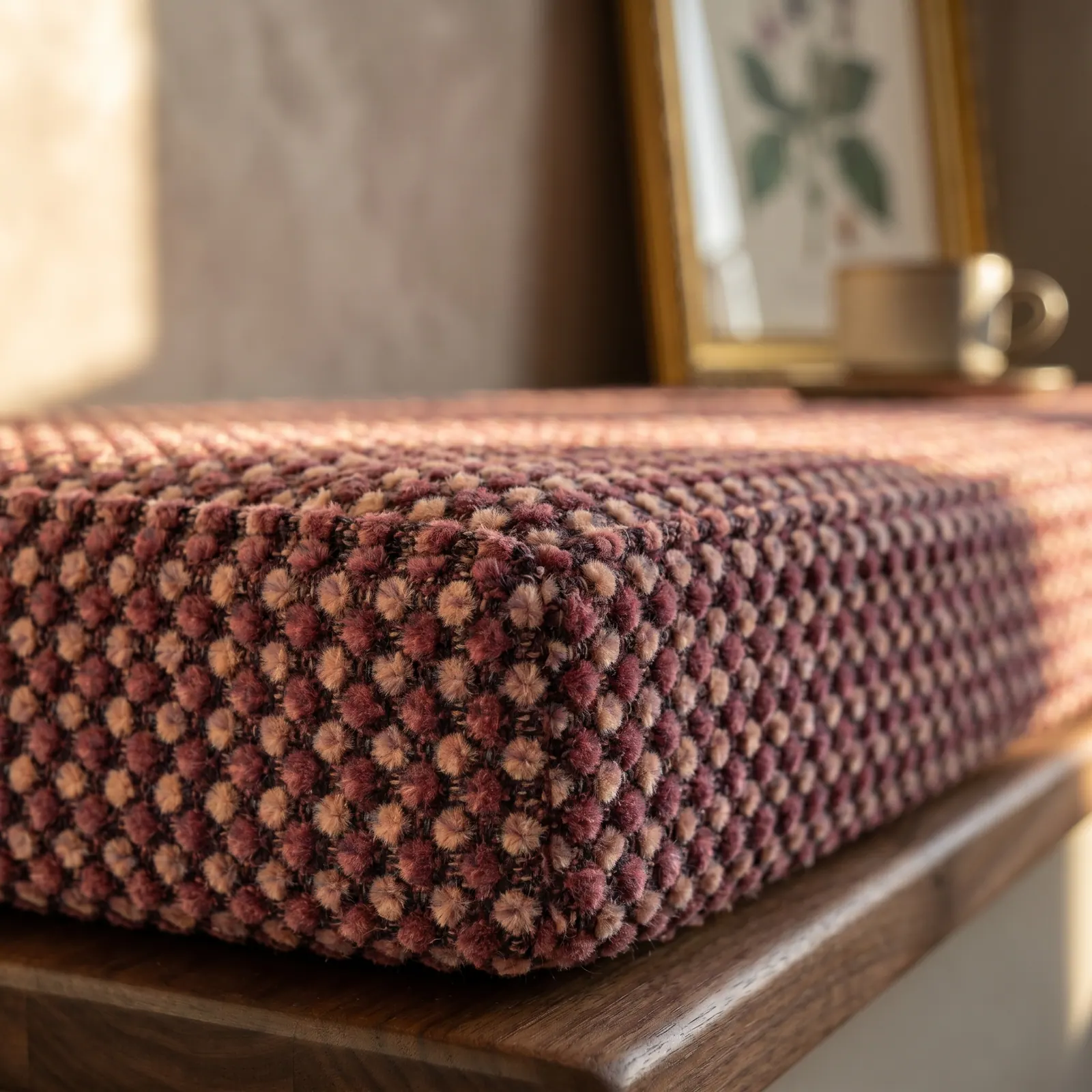 Save