 Save
A Reading by MaggieBench Cushions
Three Chenille Bench Cushions, Three Contrast Pipings, One Plain Oak Bench
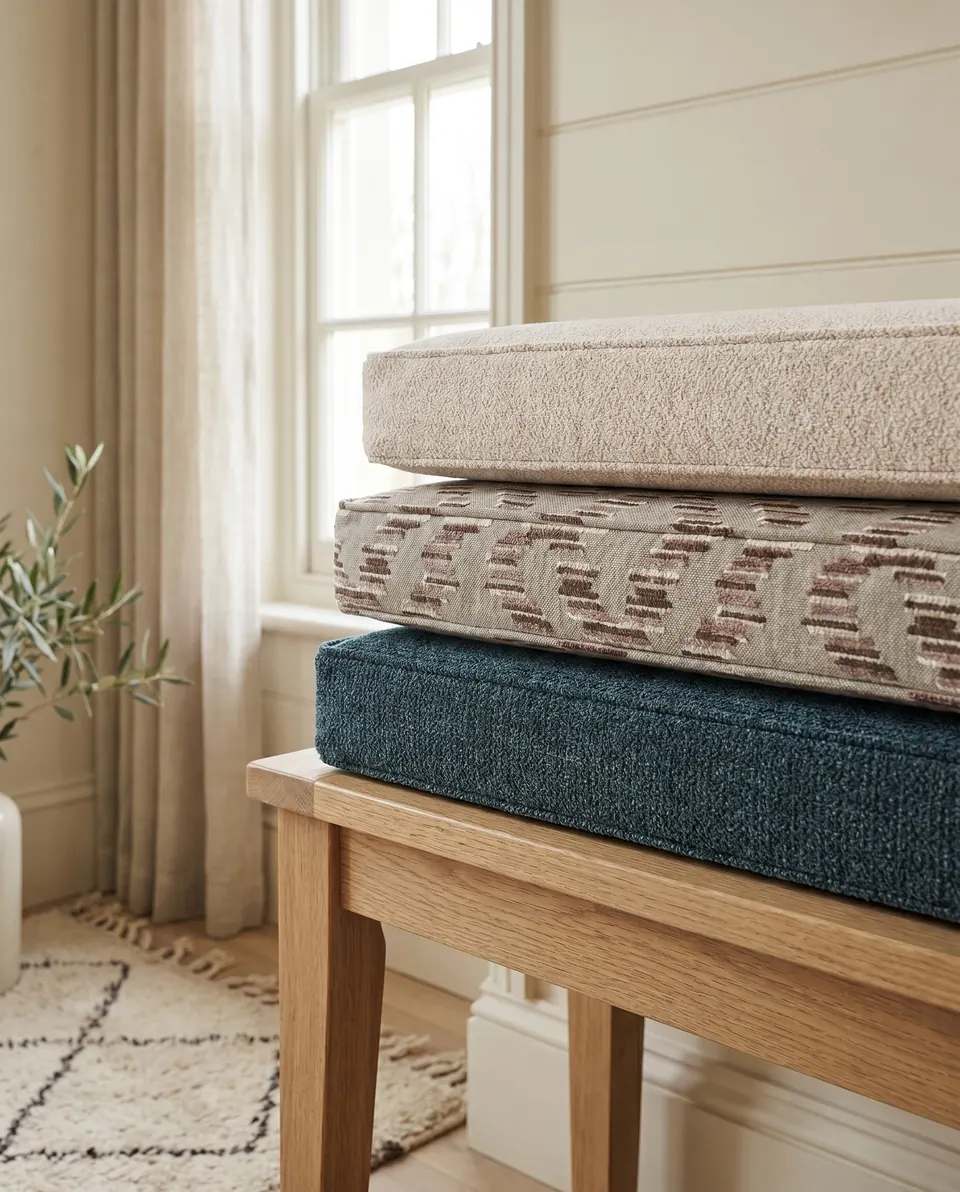
Rust, ivory and chocolate brown stacked on one bench, each wearing a welt borrowed from the others. Maggie reads the edges, and the four props chosen to keep out of their way.
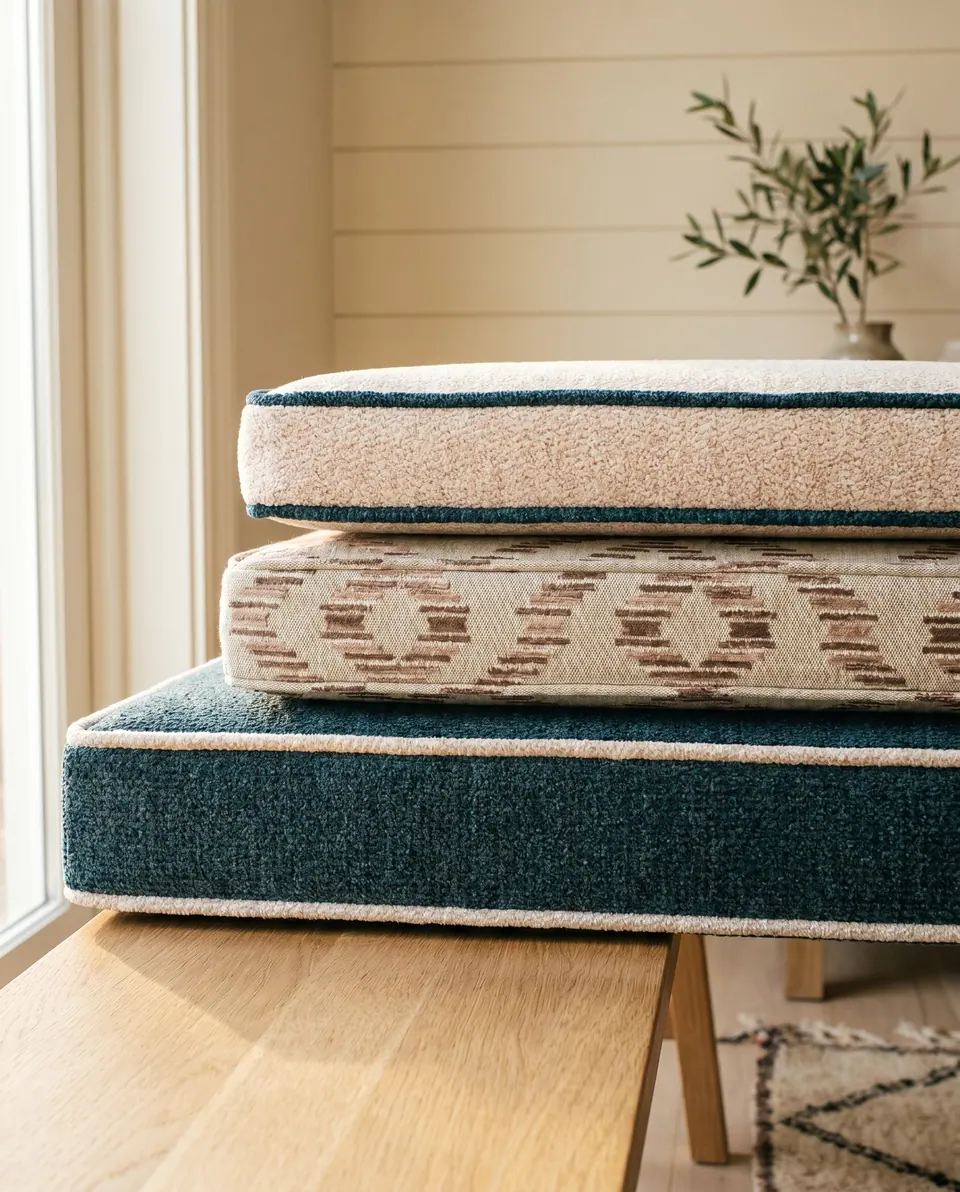
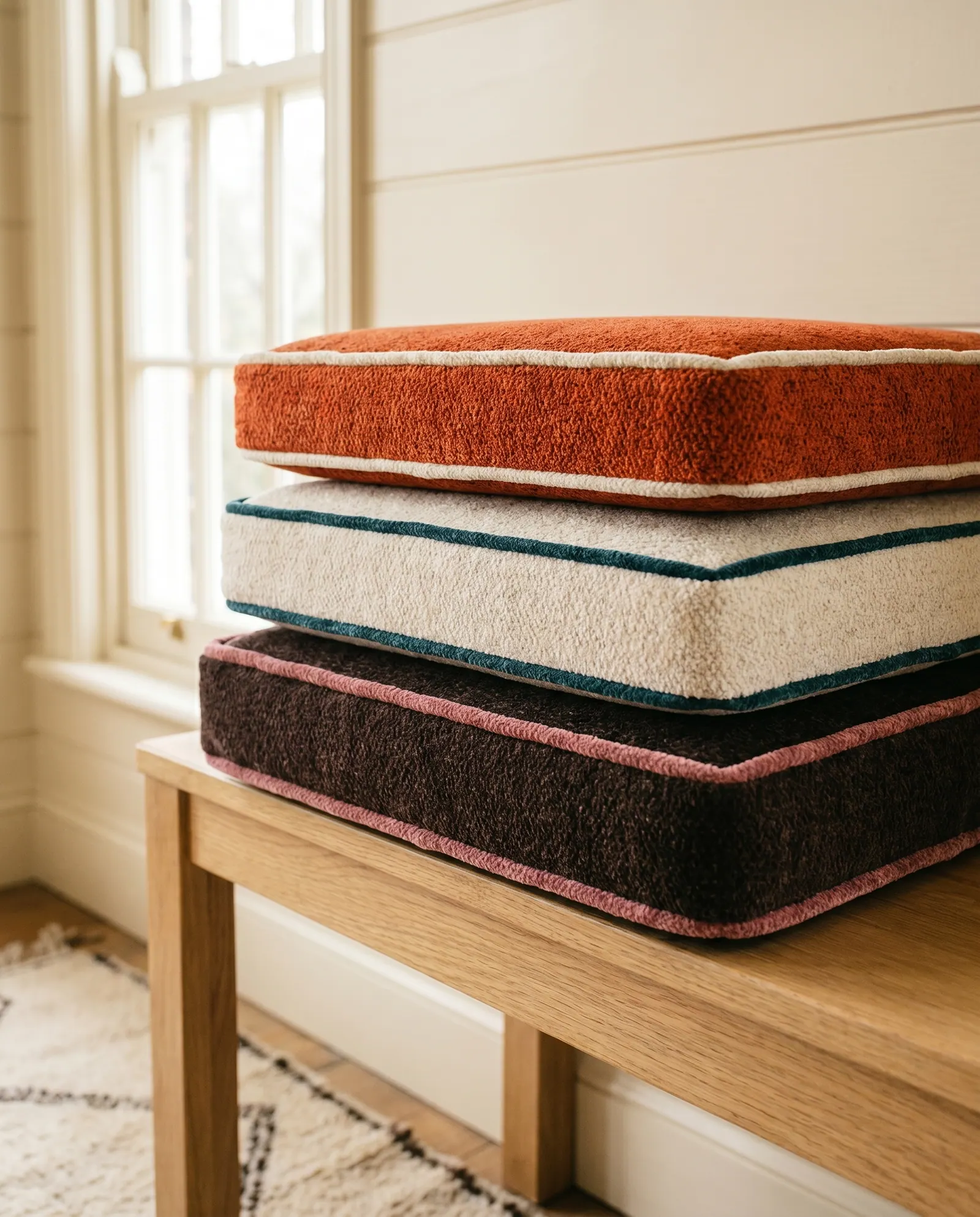
Three box cushions show how contrast piping changes a fabric: cream on rust, teal on ivory and pink on chocolate brown.

The quick answer
Contrast piping changes how a bench cushion reads: light piping on a dark fabric draws the outline, dark piping on a pale fabric hides wear on the edge that gets rubbed most, and a soft color like dusty pink warms a heavy brown. Hold the piping sample against the body fabric in daylight before you choose.
Right, then: a stack built to compare edges
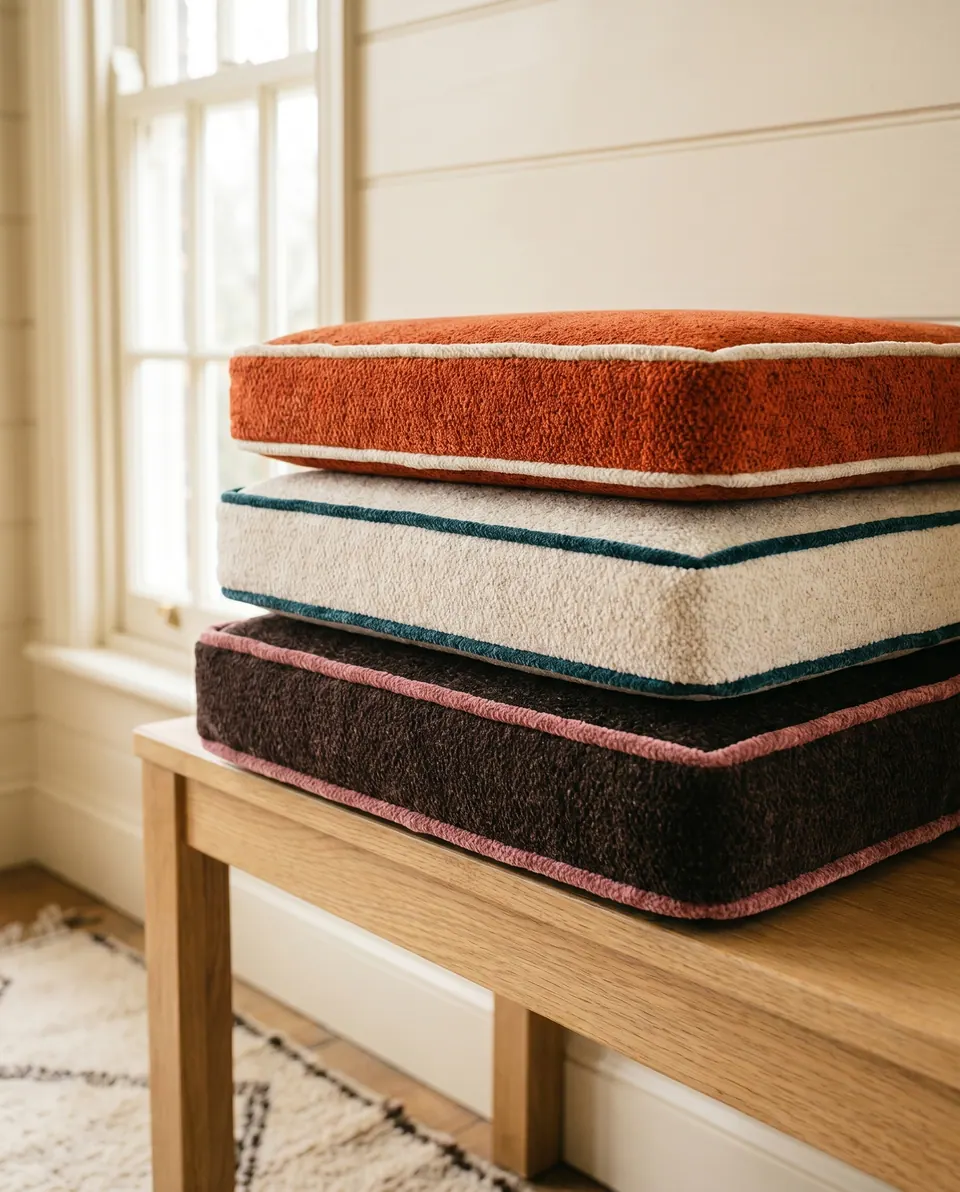
Right, then. Three box cushions on one oak bench, stacked like a tasting flight: rust on top, ivory in the middle, chocolate brown at the bottom. Each body is chenille, and each wears a piping color borrowed from somewhere else in the palette.
Cream on rust comes first. Light piping on a warm, dark cloth outlines the box like a pencil line, and every corner shows whether it was sewn square. There is nowhere to hide on that one.
Teal on ivory is the practical pairing. The front edge of a bench cushion is where hands, heels and bags rub, and dark piping on a pale body hides that wear. Ask me how I know.
Dusty pink on chocolate is the surprise. Brown alone can look somber; the pink lifts it from heavy to warm without shouting.
Now the props, because there are only four and each one earns its keep. The oak bench is plain, so it doesn't compete, and stacking on one bench makes the thickness of each cushion easy to compare. White shiplap behind is a backdrop full of straight lines, and a welt that wanders would show against them at once. The sash window gives side light, which is how you see the chenille pile catch light differently along the boxing than across the top. The cream Berber-style rug repeats the ivory and keeps the floor quiet.
To copy it at home: one plain bench, one pale wall, window light from the side, your swatches laid on top. Which edge in your house takes the most rubbing? Start your piping choice there, and read the piping Pattern on matching, contrast and none.
Pinned by Maggie: three welts, one pile, one bench
Five pins: the three piping pairings from the top down, the chocolate chenille's pile along the boxing, and the oak bench under the stack.
- Cream piping on rust
Light piping on warm rust chenille outlines the box like a drawn line.
- Teal piping on ivory
Dark piping on a pale cushion hides wear on the edge that gets rubbed most.
- Pink piping on brown
Dusty pink lifts a chocolate cushion and keeps it from looking somber.
- Chocolate chenille
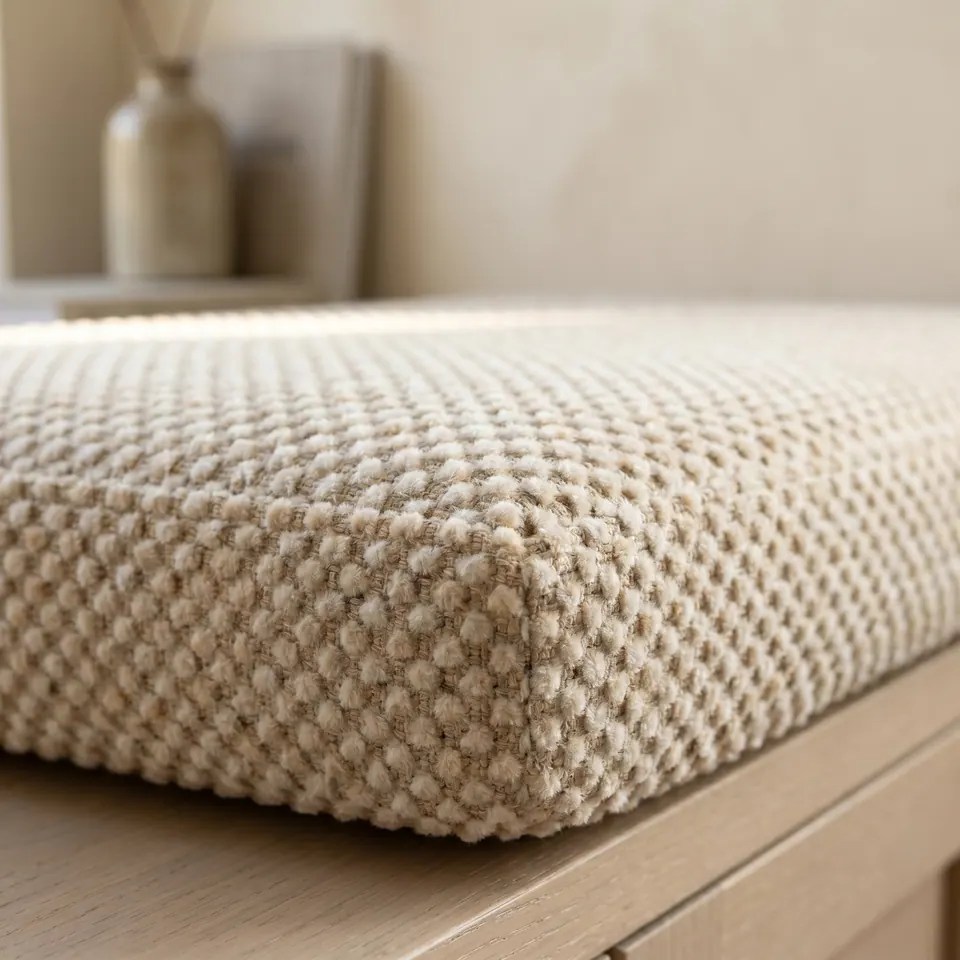
The deep pile shows how chenille catches light differently along the boxing.
- Oak bench
Stacking on one plain bench makes the thickness of each cushion easy to compare.
- Cream piping on rustLight piping on warm rust chenille outlines the box like a drawn line.
- Teal piping on ivoryDark piping on a pale cushion hides wear on the edge that gets rubbed most.
- Pink piping on brownDusty pink lifts a chocolate cushion and keeps it from looking somber.
- Chocolate chenilleThe deep pile shows how chenille catches light differently along the boxing.
- Oak benchStacking on one plain bench makes the thickness of each cushion easy to compare.
Swatch strip: body and piping, pair by pair
- Rust chenille, cream piping#B4552CLight on dark: the outline reads like a drawn line.
- Ivory chenille, teal piping#EDE5D2Dark on light: the welt hides wear where the edge is rubbed.
- Chocolate chenille, dusty pink piping#4A2F25Soft on deep: pink turns brown from heavy to warm.
- Teal welt#1F6B68Borrowed for the middle cushion, and calm next to oak.
- Dusty pink welt#D3A3A0Keeps the bottom cushion from looking somber.
A pillar in the middle of an L-shaped bench
A buyer messaged the workshop about an L-shaped bench with a structural pillar breaking up the seat, and sent every measurement in millimeters. The workshop offered two honest options: one cushion cut around the pillar, or separate sections that butt together beside it. The notches and cutouts Pattern compares both.
It was made in a mushroom color in 5 to 7 business days, plus 2 to 4 days of shipping, and a photo went out before dispatch. The buyer loved it and came back twice: once for the same size in a second fabric, and once for two covers only, in brown.
That second return is the one I like best, dear. When the cushions still fit, new cushion covers change the room without starting over.
Buyer questions: staging benches, stripes and softer backs
- A common question
Is the bench in your photos included, and how high is it?
The workshop's answerNo. The bench is only a staging prop, roughly 12 to 16 in (30 to 40 cm) from the floor. The workshop sells the cushions and pillows only, made to fit your own bench.
- A common question
Could one of your plain colors be made up in the broad-stripe pattern?
The workshop's answerNo. The plains and the stripes belong to different fabric charts, and because the fabrics come straight from the manufacturers, the workshop can't create a new pattern or colorway. You would choose from the existing striped options.
- A common question
Will the back cushion be softer than the seat?
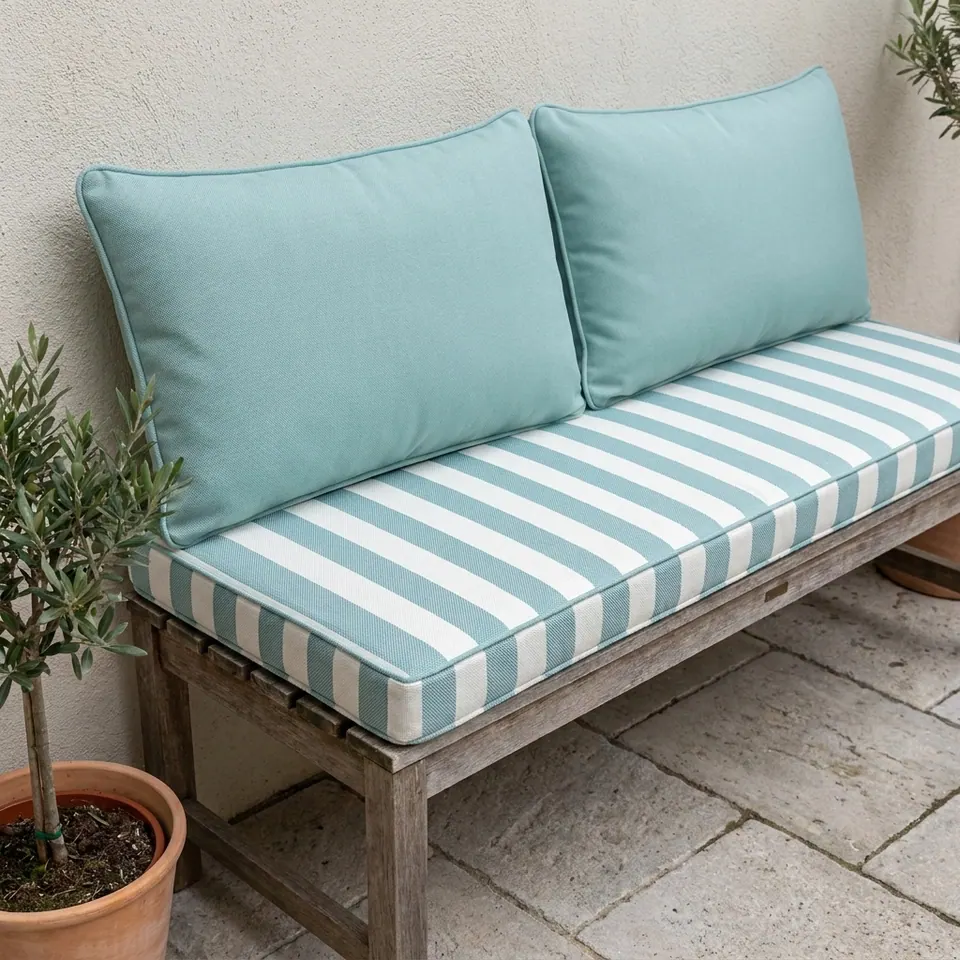
The workshop's answerYes. By default the backrest is filled softer than the floor seat. If you prefer, both can be made equally firm.
On the cutting table: the piping flight
| Pieces | Three box cushions, stacked for comparison |
|---|---|
| Fabric | Chenille in rust, ivory and chocolate brown |
| Piping | Contrast: cream on rust, teal on ivory, dusty pink on brown |
| Edge | Box edge, piped |
| Setting | Oak bench, white shiplap, sash window, cream rug |
| Hard-wearing pick | Dark piping on a pale body |
| Best for | Benches and window seats that see daily use |
| Before ordering | Hold the piping against the body fabric in daylight |

Have it made
Have this made — ask Maggie’s workshop
Have the tape measure handy when they call. Old cushions shrink and sag; the seat underneath does not. — Maggie
Leave your details and the workshop will call you to confirm measurements, fabric, foam and piping. No prices, dates or payment on this page: it is a request, not an order.
Dark piping on a pale bench cushion hides wear on the edge that gets rubbed most; light piping on a dark one draws every corner like a pencil line.
Maggie
Questions buyers ask next
Which piping color hides wear best on a bench cushion?
A darker piping on a pale body fabric, like teal on ivory. The front edge is where a bench cushion gets rubbed most, and a dark welt keeps that line looking clean longer than a pale one would.
Can the piping color come from elsewhere in the room?
Yes, and it often works best that way. Each cushion here borrows its piping from the rest of the palette, so the stack reads as one family even though the bodies are rust, ivory and brown.
Does chenille look different on the side band than on top?
It can. Chenille has a pile, so it catches light differently along the boxing than across the top. Look at a sample from the side as well as from above before you decide on a color.
Stitch straight — Maggie