A Reading by MaggieBench Cushions
A custom bench cushion makeover, tested in one stack on an oak bench
Three cushions on one oak bench: a before-and-after in a single photograph, with the ending left open. Buyers ask the practical questions first, so they go first.

 Save
The quick answer
Before ordering a custom bench cushion, test it on the bench itself: lay a light, a patterned and a dark option side by side in daylight and see which one the wood, walls and curtains agree with. Then measure the bench, add up every edge of your drawing, and settle piping, corner ties and backrests in the same order.
Three questions before the makeover
- A common question
Can you put corner ties on my bench cushion?
The workshop's answerYes. Corner ties are an add-on with their own charge per cushion, so two cushions means two sets. They are paid through a separate extra-payment link and sewn on with the order.
- A common question
How do I get a price for a custom rectangular bench cushion?
The workshop's answerChoose the size range on the bench cushion order page and the price shows right there; a written quote from the workshop matches it. Length, thickness and extras such as a non-slip base move the number, which is why a 133 in (337 cm) bench pad with a non-slip base was priced as its own case, with its discount already applied.
- A common question
Where do I add backrest cushions to my bench cushion order?
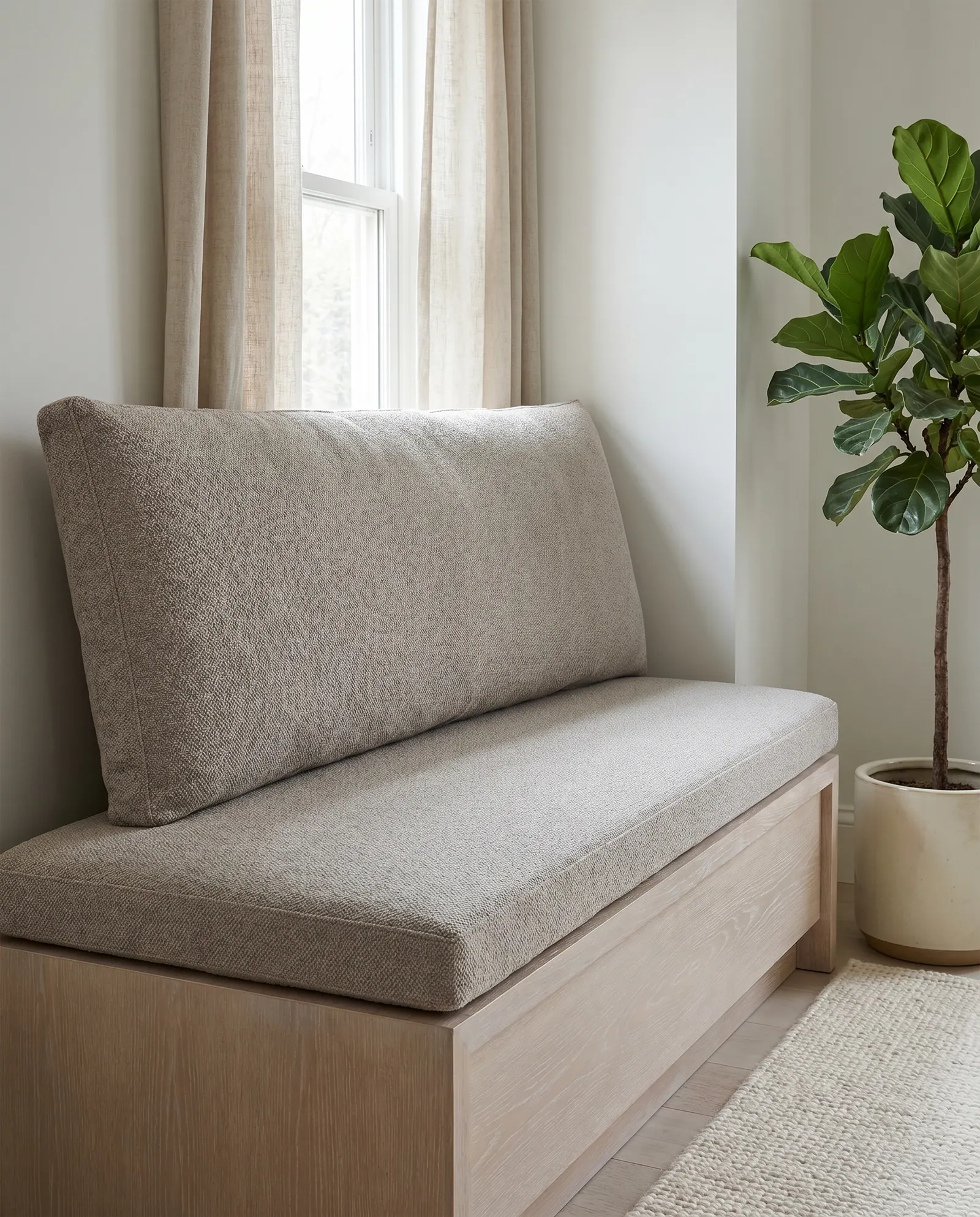
The workshop's answerAdd each piece to the cart separately from the same bench cushion page. For every piece, write the exact size and fabric code in the personalization box, and add the words 'backrest pillow' to the note for the back pieces so they are made as backs.
Now, the reading
One bench, three possible afters
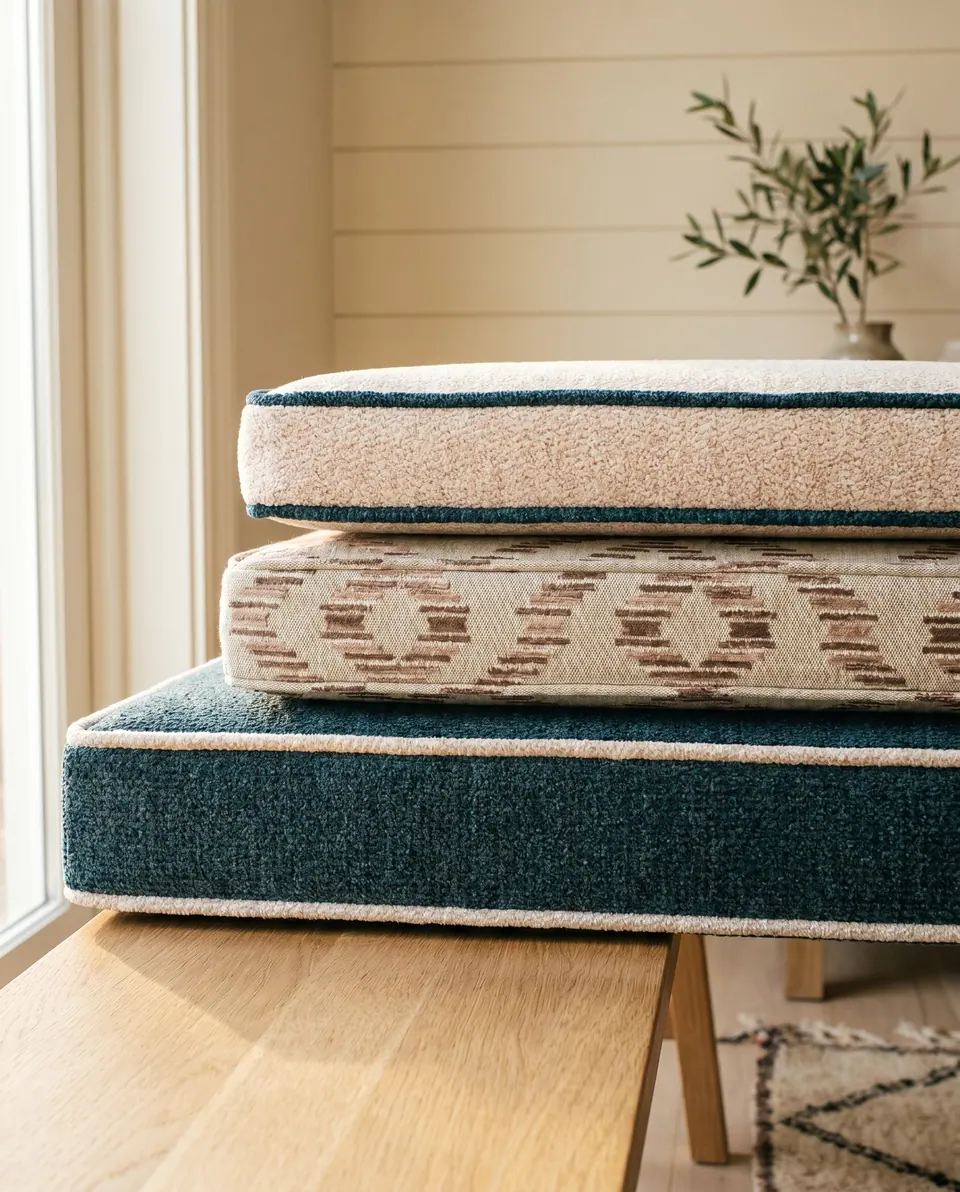
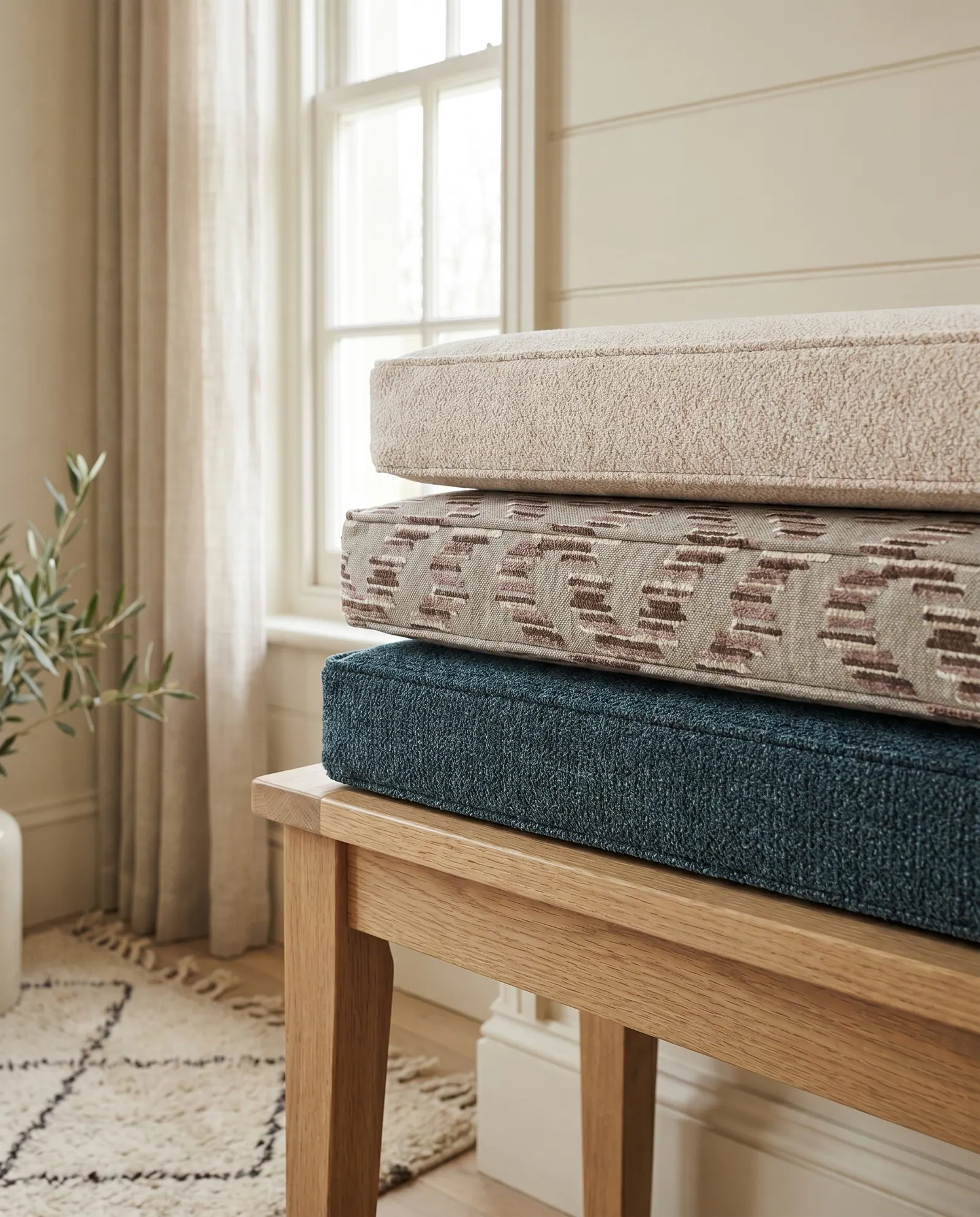
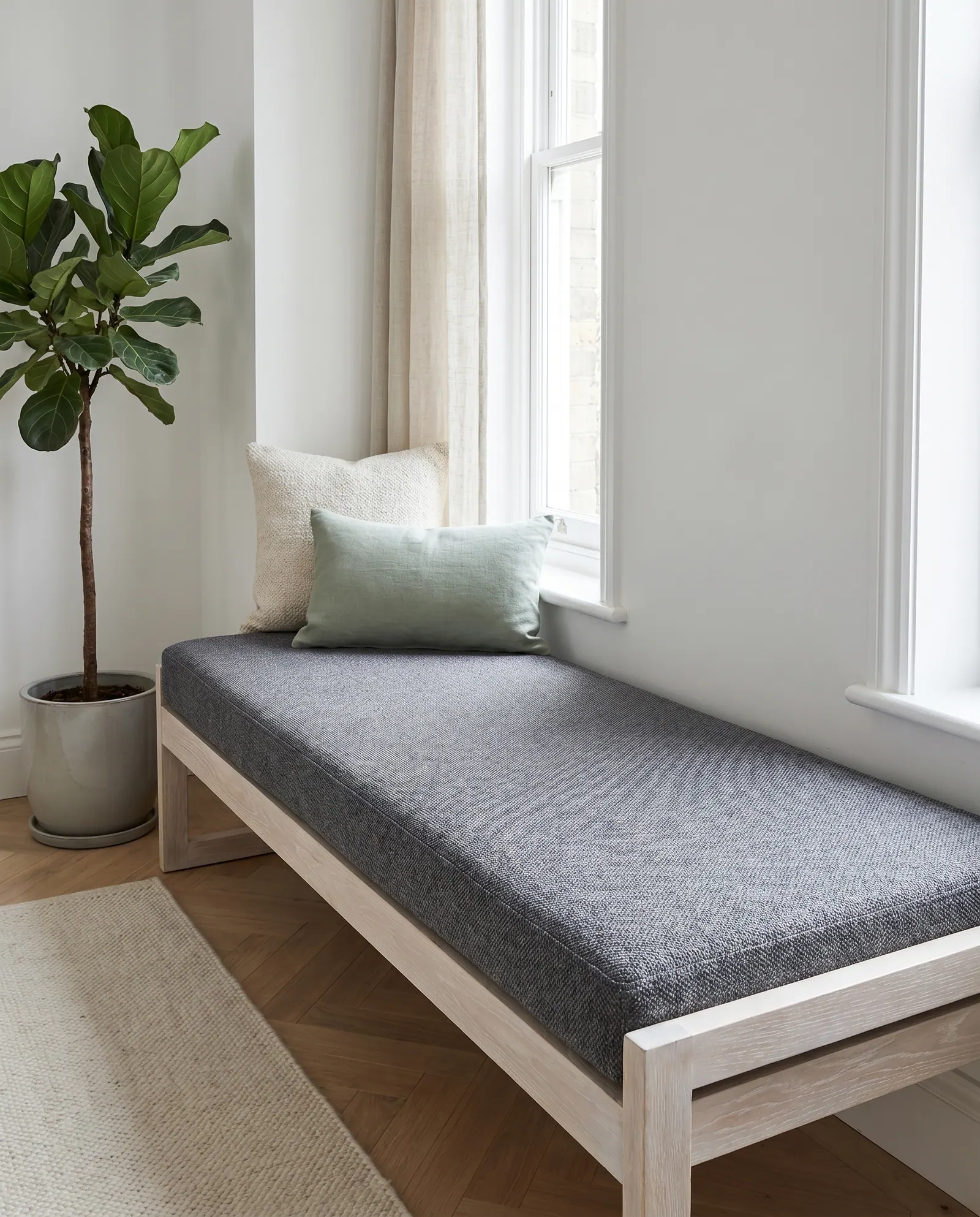
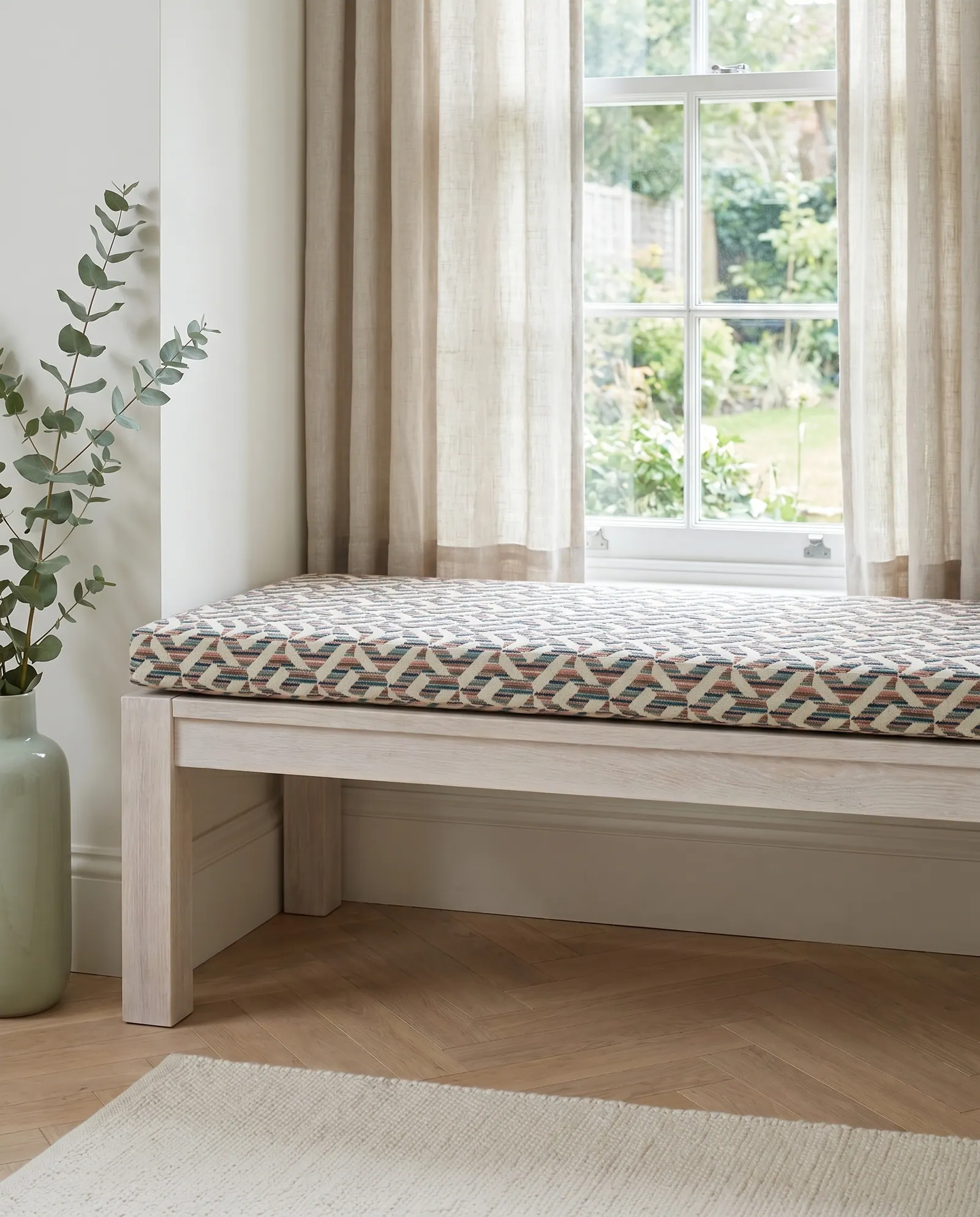
The bench in this photograph is the before: plain oak, cream shiplap behind it, a natural linen curtain softening the daylight. The three cushions stacked on it are three possible afters, and the stack lets you compare them without paying for all three.
On top sits an oatmeal chenille weave with self piping. In a pale room it keeps everything airy, and the piping draws a tailored line without adding a second color. A straight welt is a kind of honesty, and on a light cushion you can see every inch of it.
In the middle, a taupe jacquard with cocoa brushstroke marks. It carries the pale and the brown at once, which is the trick when you want one patterned custom bench cushion among solids. At the bottom, deep teal with a plain box edge and no piping at all. On warm oak it is the one that anchors the room, and the bare edge reads clean and modern.
The props all earn their place. Olive stems in a white vase pick up the gray-green in the teal, so the dark choice looks planned rather than dropped in. The linen curtain and the shiplap are the fixed parts of this living room; every cushion has to get along with them. The Berber-style rug keeps the floor as quiet as the walls, so the eye stays on the stack.
Which of the three would your room pick? I once chose a color from a screen, dear, and lived with it far too long. Stack the swatches instead.
Pinned by Maggie: five choices in one stack
Five spots where the stack shows its choices, from the piped oatmeal edge down to the oak.
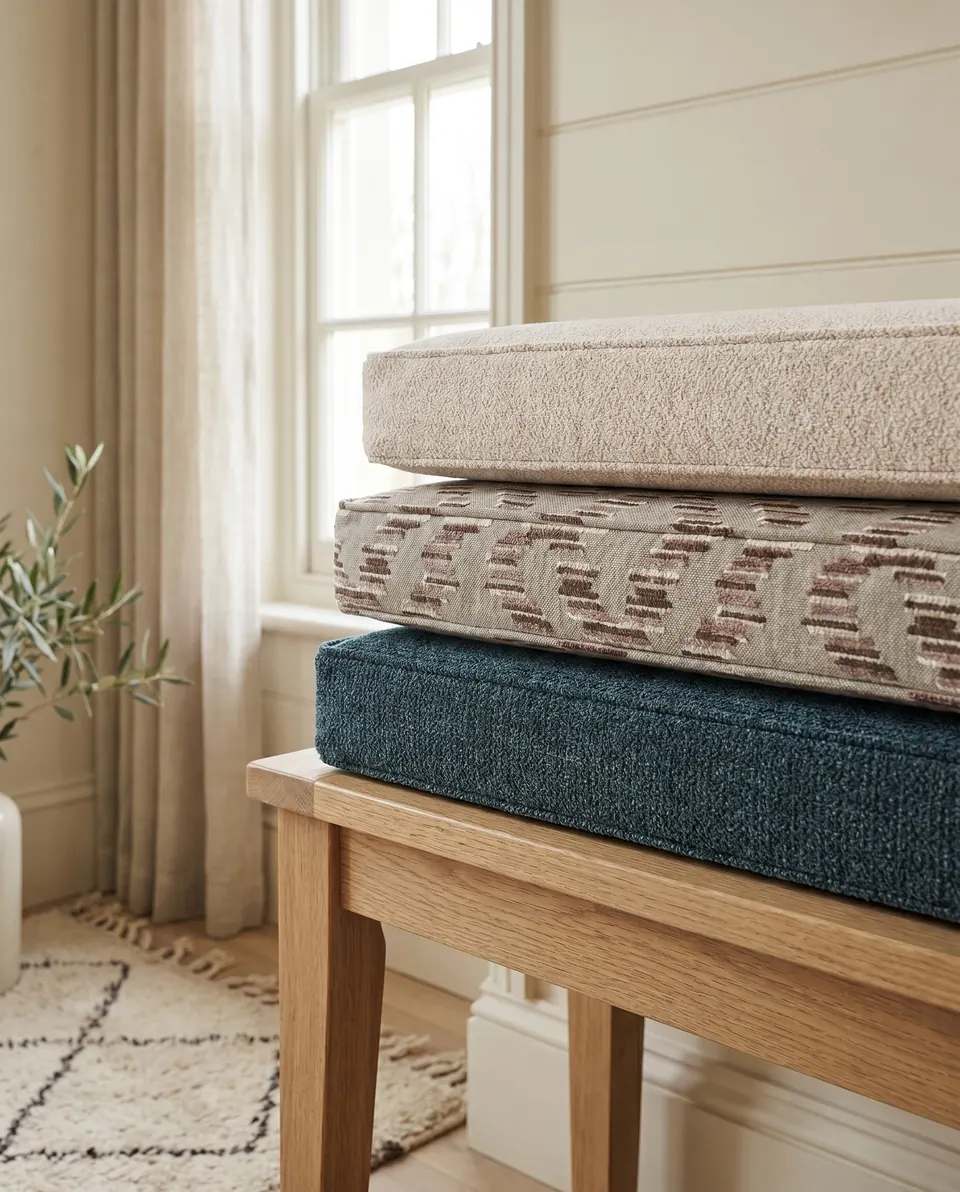
- Oatmeal top cushion
Self piping on oatmeal gives a quiet tailored edge for a calm room.
- Brushstroke pattern
Cocoa dash marks on taupe add texture that links the pale and dark cushions.
- Unpiped teal box
A plain box edge on the dark cushion shows how clean an unpiped finish can look.
- Olive stems
Olive leaves in a white vase echo the gray-green in the teal.
- Oak bench
A simple oak bench shows how each fabric sits on warm wood.
- Oatmeal top cushionSelf piping on oatmeal gives a quiet tailored edge for a calm room.
- Brushstroke patternCocoa dash marks on taupe add texture that links the pale and dark cushions.
- Unpiped teal boxA plain box edge on the dark cushion shows how clean an unpiped finish can look.
- Olive stemsOlive leaves in a white vase echo the gray-green in the teal.
- Oak benchA simple oak bench shows how each fabric sits on warm wood.
The stepped bench that was 2 inches short on paper
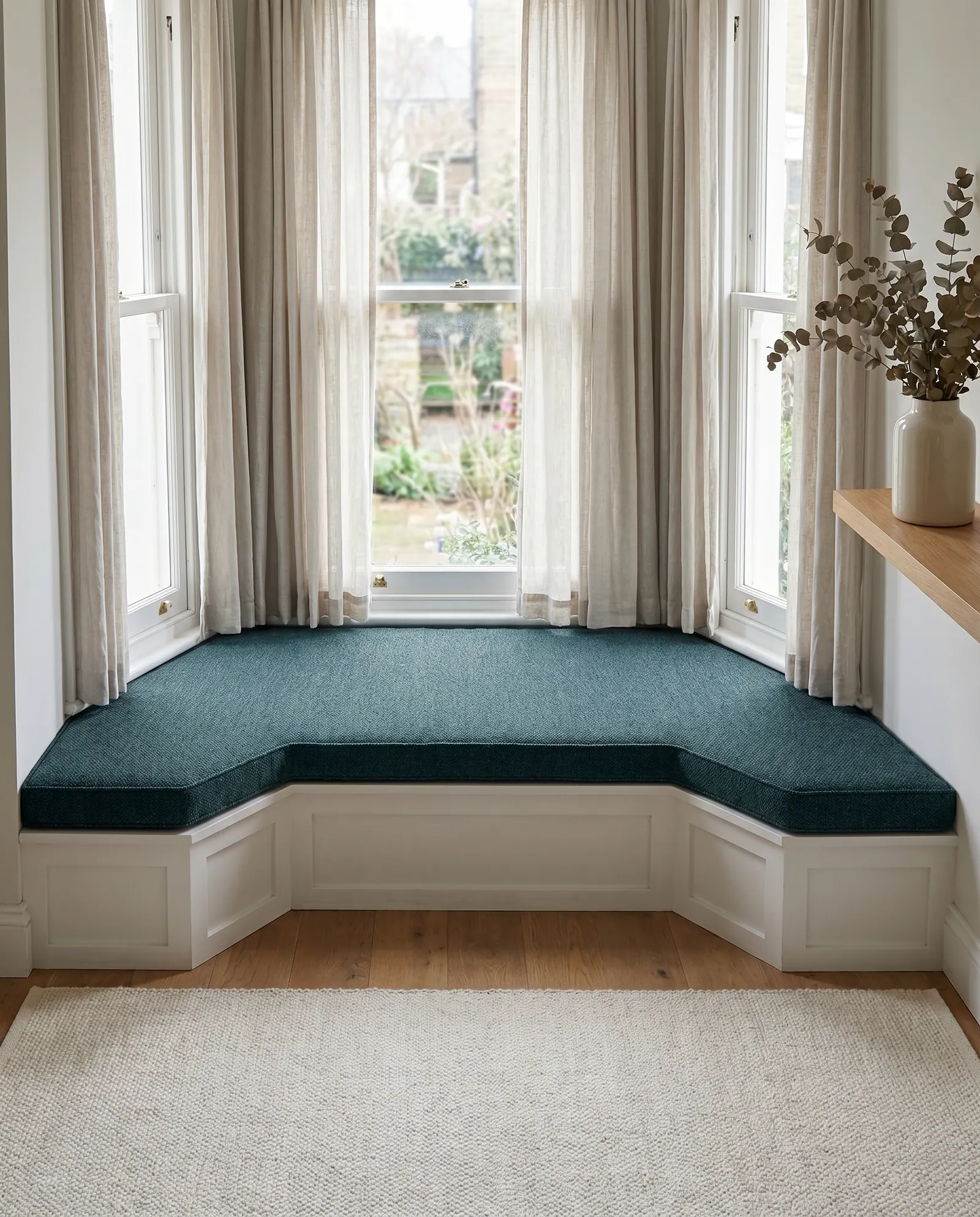
A buyer sent a drawing of a stepped bench, narrower at the back, instead of a plain rectangle. Before anything was cut, the workshop added up the edges. The top edge was 31 in (79 cm) and each of the two steps was 2 in (5 cm): 35 in (89 cm) in all. The drawing gave the bottom edge as 37 in (94 cm). The side sections, 11.5 in (29 cm) and 13.25 in (34 cm), matched.
The buyer re-measured, corrected the drawing and uploaded it again, then ordered at a length of 37 in (94 cm) and a depth of 24.75 in (63 cm). Two inches caught on paper cost one message. Caught on the bench, they would have meant a remake. Our drawing standard takes five minutes to follow.
- Sizes
- Long edge 37 in (94 cm), depth 24.75 in (63 cm), top 31 in (79 cm), sides 11.5 and 13.25 in (29 and 34 cm)
The lesson: Add up your edges before sending: the steps plus the short edge must equal the long edge.
Before-and-after checklist for one bench
- Photograph the bare bench in daylight, from where you usually stand.
- Lay a light, a patterned and a dark swatch on the actual bench, not the kitchen table.
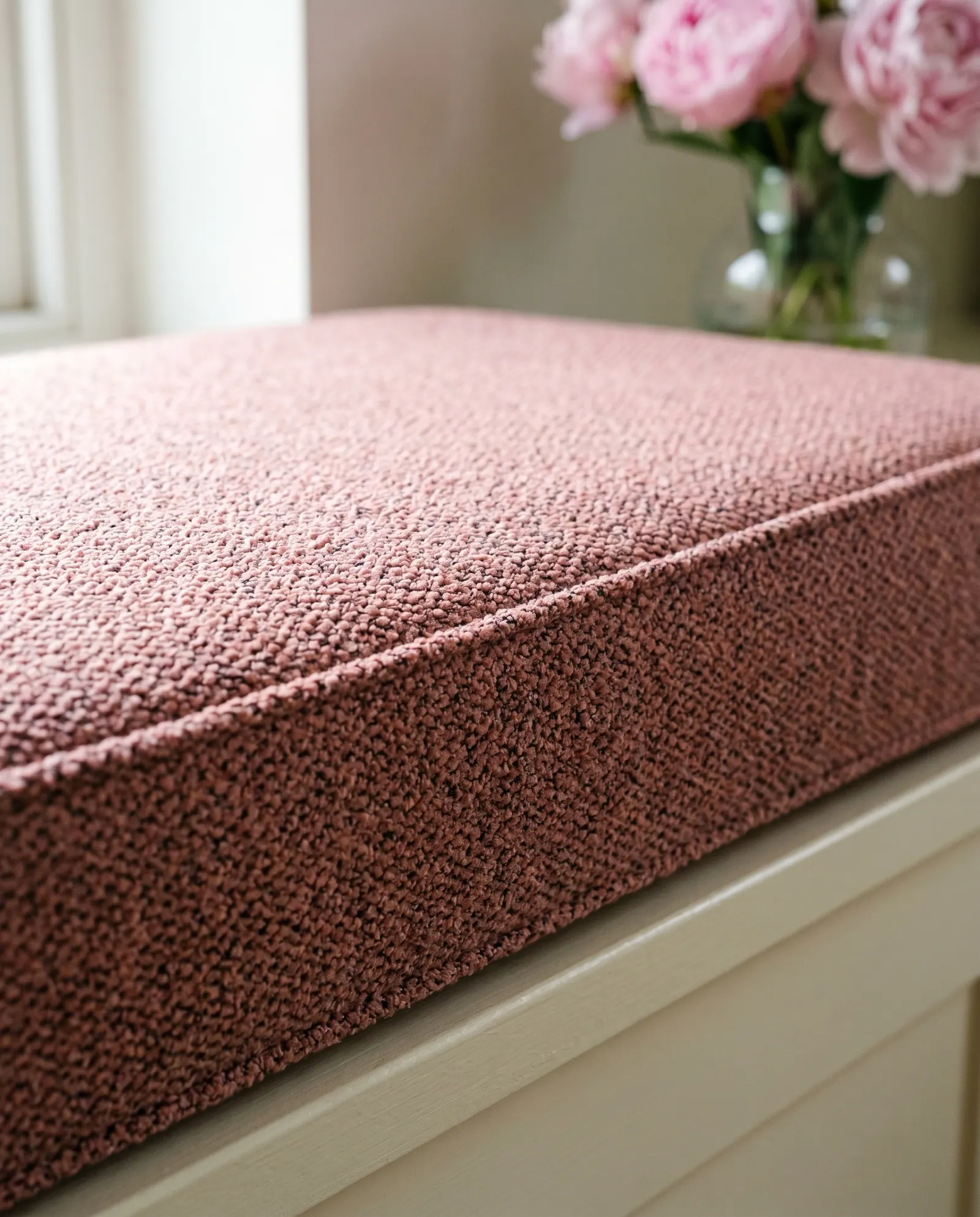
- Choose piping per cushion: self piping for a tailored line, none for a clean box edge. The piping Pattern shows every option.
- Measure the bench itself, never an old cushion.
- On a stepped or angled bench, check that the steps plus the short edge equal the long edge.
- Put corner ties and backrests in the same order, each with its size and fabric code written out.
On a stepped bench drawing, the short edge plus every step must equal the long edge: 31 in plus two 2 in steps makes 35 in, not 37 in.
Maggie
On the cutting table
| Cushions | Three box cushions, stacked to compare |
|---|---|
| Top | Oatmeal chenille weave, self piping |
| Middle | Taupe jacquard with cocoa brushstroke marks |
| Bottom | Deep teal, plain box edge, no piping |
| Bench | Open oak frame under a linen-curtained window |
| Corner ties | Optional add-on, charged per cushion |
| Backrests | Separate pieces, noted as 'backrest pillow' |
| Shaped benches | Drawing with every edge labeled; edges must add up |
| Best for | A living room bench in a pale, warm-wood room |

Have it made
Have this made — ask Maggie’s workshop
Have the tape measure handy when they call. Old cushions shrink and sag; the seat underneath does not. — Maggie
Leave your details and the workshop will call you to confirm measurements, fabric, foam and piping. No prices, dates or payment on this page: it is a request, not an order.
Questions buyers ask next
Does piping add to the size of a bench cushion?
No. Piping is a fabric-covered cord sewn into the seam, so it outlines the edge without changing the ordered size. It is included in the price, cut from the cushion's own fabric or from any contrast code you name.
What should I send if my bench is stepped or angled?
A drawing seen from above with every edge measured and labeled, plus a photo of the bench. The workshop draws shaped cushions to scale and flags edges that do not add up before anything is cut.
Why would a dark cushion suit a pale room?
A dark cushion gives a light bench visual weight, so it anchors the room instead of floating. A plain box edge keeps it clean. Test it beside your own wood and curtains in daylight before deciding.
Should I measure my old cushion or the bench?
The bench. Give the exact size of the space; the workshop handles the sewing allowances, and a snug fit works well. An old cushion may have lost its shape, so its numbers can mislead.
Stitch straight — Maggie
More photographs to read
 Save
 Save
 Save
 Save
 Save
 Save