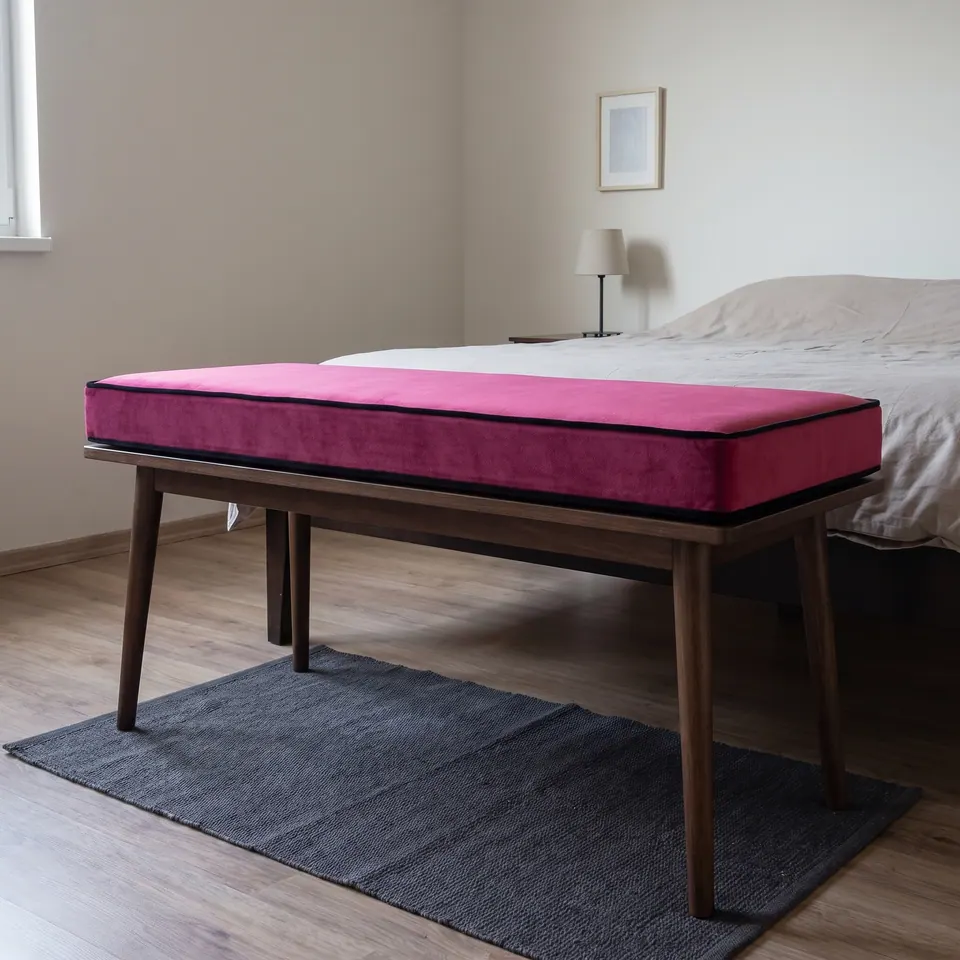
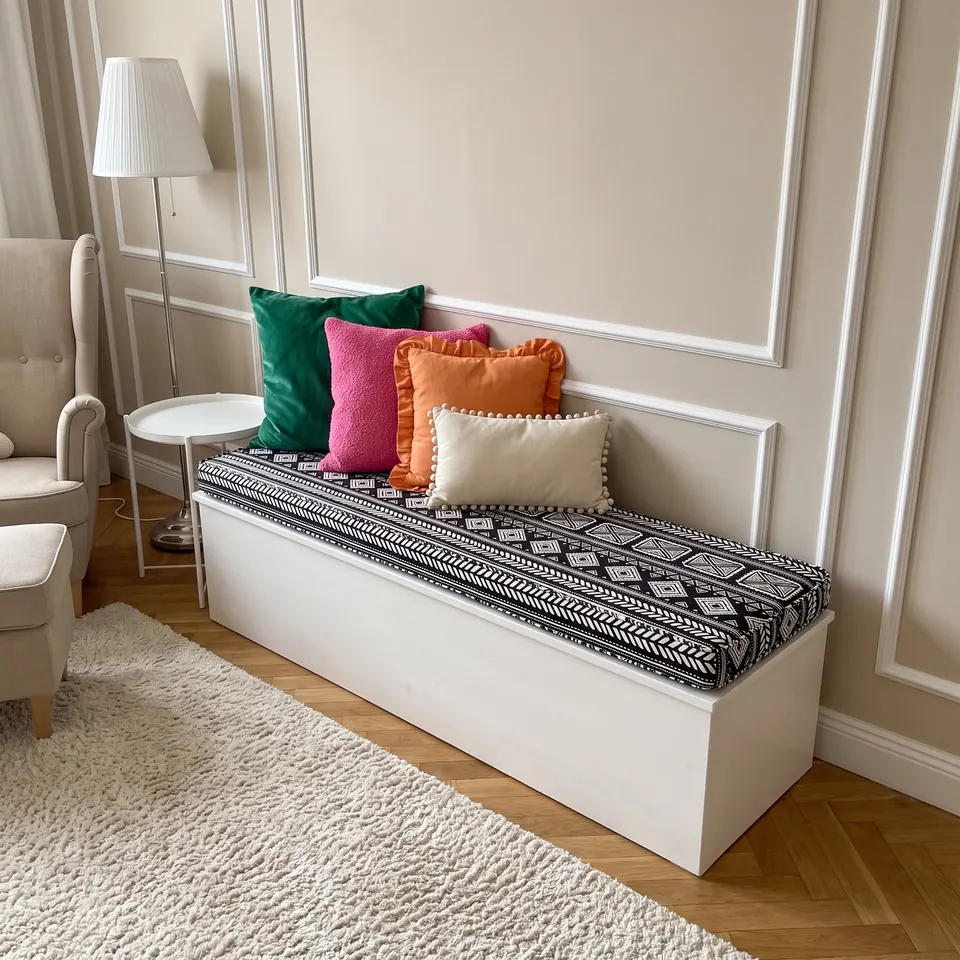
The Pattern Room · a side-by-side pattern
Real linen or linen-look? Reading a cushion fabric label honestly
A word on a swatch card can promise a field of flax and deliver a very good polyester. Both belong on a bench. The trouble starts only when nobody says which one you are buying.

 Save
The quick answer
Linen-look fabric is usually polyester woven to imitate linen's slub, while real linen is a natural flax fiber that softens, creases and can shrink in a warm wash. Between them sit linen-polyester and cotton-linen blends. Most standard 'linen' cushion charts are blends or linen-look, so ask for the fiber content of your exact color code in writing before you order.
Four words on the swatch card, four different fibers
Linen, linen-look, linen blend, cotton-linen. On a color chart they sit side by side in the same oatmeal and flax tones, and in a phone photo they look like cousins. Under the hand they are four different fabrics.
That is the whole question of linen vs linen-look fabric: one is grown, the other is engineered to resemble it. 'Is it really linen?' comes back again and again, and the honest reply is usually 'not entirely.'
The workshop's standard 'linen' charts are mostly blends or linen-look weaves chosen for durability and easy care. True 100% linen and cotton-linen exist too, on a separate chart you ask for. Neither is wrong. What hurts is expecting one and receiving the other.
The linen label decoder: fiber, seat life, shrinkage, heat
| Label on the chart | What the fiber usually is | On a seat cushion | Wash shrinkage (typical) | Heat and ironing |
|---|---|---|---|---|
| 100% linen | Flax only; a separate chart sent on request | Softens with use; wears and wrinkles faster than a blend | Up to about 10% if untreated; about 3-5% if pre-washed | Iron on low; air dry |
| Cotton-linen | About 50% cotton, 50% linen in one range | The natural-fiber choice for buyers avoiding synthetics | About 2-5% | Iron on low; air dry |
| Linen blend | Described as 50% linen, 50% polyester on the natural linen chart | Linen texture with polyester strength; wrinkle-resistant, resists stains better than pure linen | About 2-4% | Iron on low through a cloth |
| Linen-look | Polyester woven with a linen slub (L-codes such as L44) | Durable, easy to clean, a best seller | Ask for the code's care note | Can melt under a hot iron; low heat through a cloth only |
Key facts
- Standard 'linen' cushion charts are mostly blends or linen-look weaves; linen-look codes are polyester.
- A separate 100% linen chart and 100% cotton fabrics are available on request, and they cost more.
- Fiber content can change from color to color within one 'linen' chart.
- Pre-washed real linen can still shrink about 3 to 5% in a warm wash; linen-polyester blends about 2 to 4%.
- All covers wash at 86°F (30°C) on a gentle cycle, air dry, and are ironed on low only.

Have it made
Measured it? Have Élodie’s workshop make it
A fabric reads one way at noon and another at dusk. Mention your light, and the workshop will weigh it with you. — Élodie
Leave your details and the workshop will call you to confirm measurements, fabric, foam and piping. No prices, dates or payment on this page: it is a request, not an order.
How real linen lives on a bench seat
Real linen is an honest fiber, and it tells you everything. It softens with every sitting. It creases where you creased it. On a bench cushion used every day, the workshop's own note is plain: pure linen wears and wrinkles faster on seating than a blend.
Then there is water. Untreated linen can shrink up to about 10% on its first wash, pre-washed linen about 3 to 5%. On a 22 in (56 cm) deep cover, even 3% is two-thirds of an inch. A hot dryer can take more than 2 in (5 cm) off a 22 in cover.
So every cover here, linen or not, washes at 86°F (30°C) on a gentle cycle and air dries, and it meets an iron on low heat if at all. If a washed cover feels snug, refit it while slightly damp. The cover washing guide has the full routine.
I love those creases, on a bedroom bench under sheer curtains where morning light rakes across the slub. On a breakfast banquette with three children, I choose a blend and sleep better. What will your cushion live through, my friends: morning coffee or afternoon naps?
Why the best sellers are blends, and why that is no trick
A linen-polyester blend is a practical marriage. The linen brings the slub, the dry hand and the breathability; the polyester brings strength, shape retention and easy washing. The result is a medium-weight fabric that doesn't wrinkle easily and resists stains better than natural linen. No coating or stain-shield treatment is added.
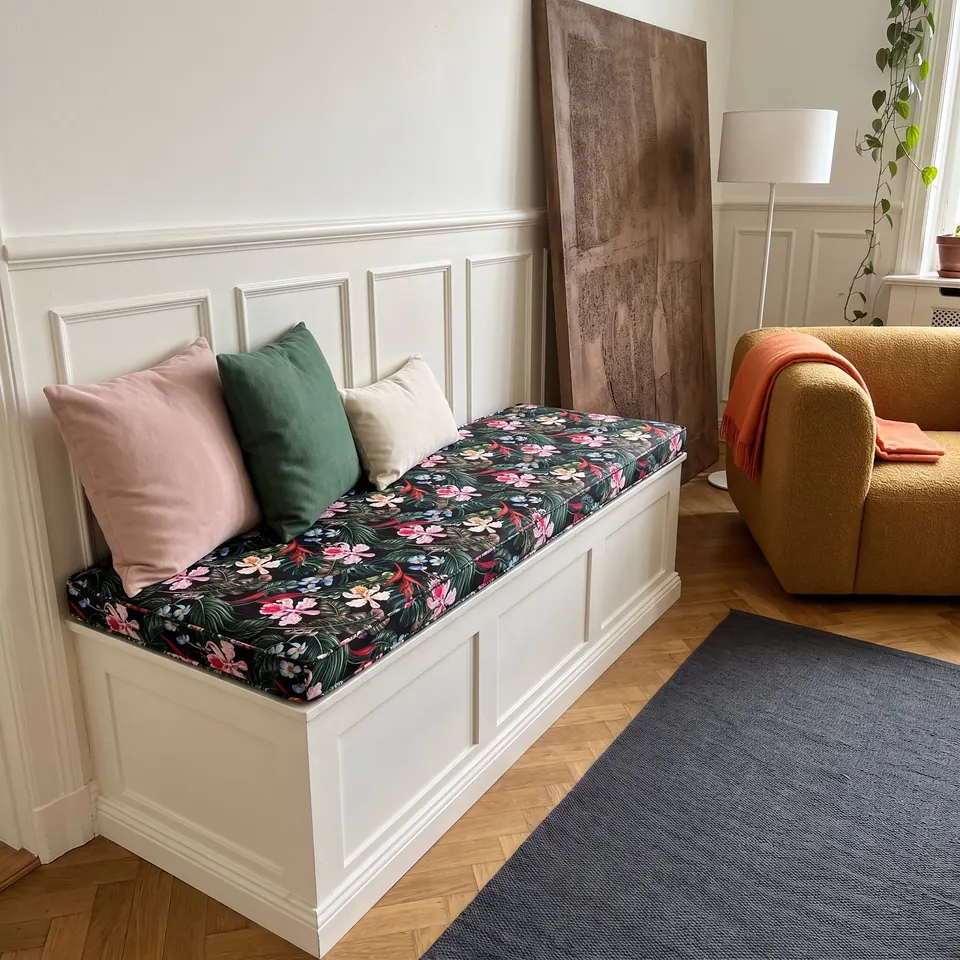
Linen-look fabric goes one step further: polyester through and through, durable and quick to clean, which is why the camel daybed in these photographs wears it. Respect its one weakness. A hot iron can melt it, so press only on low heat through a cloth, after testing a hidden seam allowance.
For a truly hard-working seat, an acrylic linen is also suggested. And natural fiber has a price: the standard linen-look, velvet and soft-fabric charts cost the same, while natural linen, 100% cotton and viscose cost more. The 100% linen chart comes on request, so allow one more message before cutting.
A floor cushion ordered in linen that arrived synthetic
A buyer in the US wrote to the workshop for a floor cushion and was precise about it: linen, or a natural linen-cotton blend. The cushion arrived on time and well made. The fabric, though, was synthetic.
The workshop checked and found production had used a linen blend. It apologized and offered a remake in a natural light-blue fabric from its chart, and after an honest conversation about costs, the buyer shared part of the price of the new cushion.
Nobody set out to mislead. The word 'linen' simply meant one thing on the cutting floor and another in the buyer's living room. A written fiber content and a swatch in hand would have closed that gap before a single seam was sewn.
What to ask before you order a 'linen' cushion
- The fiber content of your exact color code, in percentages. It can change within one chart: in one floor-cushion range the khaki and natural shades were confirmed 100% linen, while the cream and beige were 50% linen.
- Which chart you are looking at: linen-look, blend, or the separate 100% linen chart.
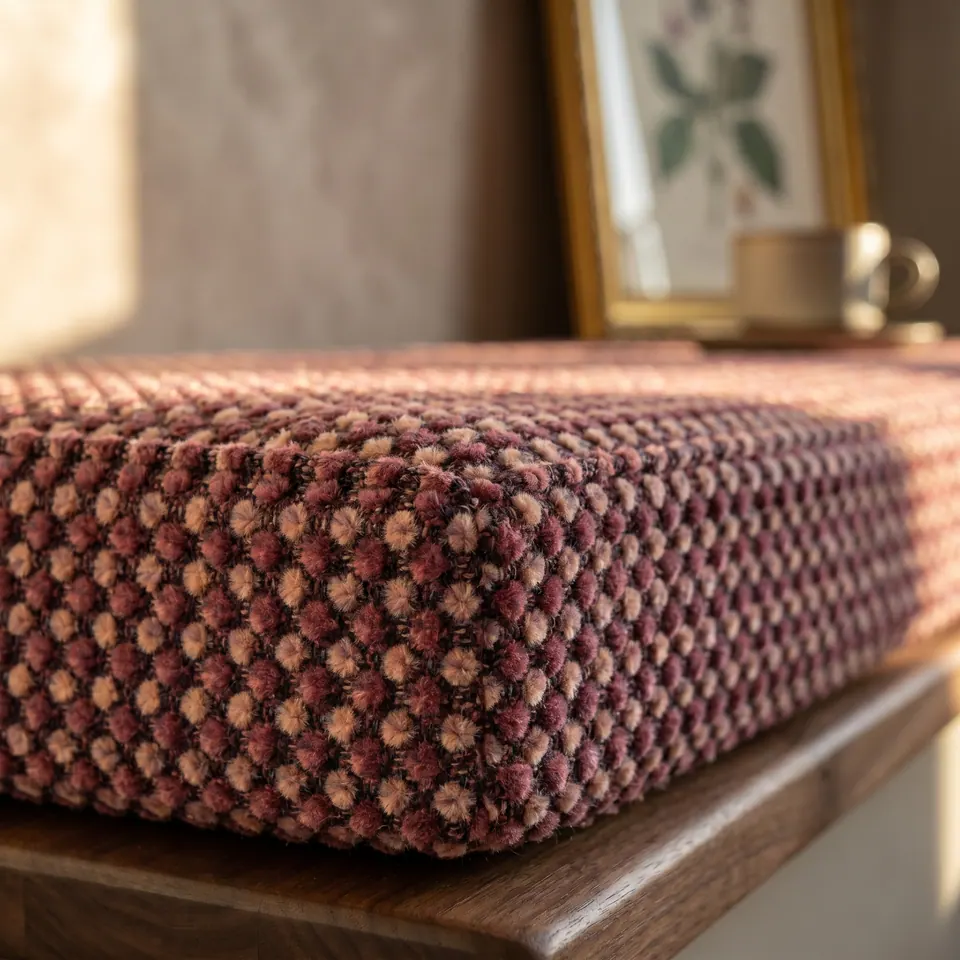
- A swatch, held by a window and rubbed between your fingers. Daylight never lies; your screen sometimes does. The swatch guide shows how to order samples that decide it.
- The care rule for that code: wash temperature, drying and ironing.
- If you avoid synthetics for eczema or allergies, say so, and you will be steered to 100% cotton, pure linen or cotton-linen.
Common mistakes with linen on cushions
- Assuming 'linen' on a chart means 100% flax. On upholstery, treat linen-look as synthetic until the code's fiber content says otherwise.
- Pressing a linen-look cover with a hot iron. Polyester can melt; use low heat through a cloth.
- Tumble drying a real linen cover. Heat plus agitation is how a 22 in cover loses 2 in.
- Choosing pale pure linen for a rental or a family bench. For heavy use, performance linen-look or velvet wears better.
- Judging fiber from a color thumbnail. Read the fabric type in the listing title and on the chart.
Pre-washed real linen can still shrink 3 to 5% in a warm wash, while a linen-look polyester cover can melt under a hot iron.
Élodie Marchand
Buyer questions: 'Is it really linen?'
- A common question
Is the linen on your cushions actually 100% linen?
The workshop's answerUsually not. The standard 'linen' charts are blends or linen-look weaves: the L-coded linen-look fabrics, such as L44, are polyester; the natural linen chart is described as 50% linen and 50% polyester; another range is 50% cotton and 50% linen; and some colors sold under the linen name have been 100% cotton. These are used because they are durable, easy to clean and the best sellers, and a sturdy acrylic linen is suggested for hard-working projects. For pure fiber, ask for the separate 100% linen chart or the 100% cotton fabrics.
- A common question
Synthetics bother my skin. Can my cushion be made in pure cotton or linen?
The workshop's answerYes. The standard corduroy, velvet and soft fabric all contain polyester, so buyers dealing with eczema, allergies or microplastic worries are steered to natural-fiber options instead: a 100% cotton chart, pure linen, or a cotton-linen fabric in its own color range. Cotton costs more on a sofa. Covers can be ordered without filling, and swatches are sold through the fabric-samples listing.
- A common question
Do the covers come off, and can linen go in the washing machine?
The workshop's answerYes. Every cover has a zipper on the underside and comes off the foam completely. All the fabrics, linen and velvet included, machine wash at 86°F (30°C) on a gentle or delicate cycle, for full cushions and cover-only orders alike. Air dry rather than tumble dry, and iron on low only if needed. Button-tufted cushions are the exception: their covers are sewn through and don't come off.
- A common question
What exactly is the 'soft fabric' listed next to the linen?
The workshop's answerIt is the workshop's best-selling upholstery weave, codes 901 to 946: a thick, durable performance fabric with a soft hand. Most replies describe it as a polyester-cotton blend, earlier ones as 100% polyester; it is neither chenille nor 100% cotton. It wipes clean, machine washes at 86°F (30°C) and lasts for years. If you need a natural fiber, choose cotton-linen instead.
- A common question
Which fabric families can a made-to-measure cushion come in?
The workshop's answerThree main indoor families, each with its own numbered chart of about 40 colors: linen (including linen-look), velvet and 'soft fabric', an easy-clean upholstery weave. Teddy, corduroy, 100% cotton, 100% linen, chenille, faux leather and a separate outdoor range are available too, and more than 10,000 fabrics, hundreds of linens among them, can be sourced on request. Models shown in linen can also be made in velvet.
Linen and linen-look, asked another way
Does real linen shrink when a cushion cover is washed?
It can. Untreated linen may shrink up to about 10% on its first wash and pre-washed linen about 3 to 5%, while linen-polyester blends typically move about 2 to 4%. Wash at 86°F (30°C) on a gentle cycle, skip the dryer and refit the cover while slightly damp.
Is linen-look fabric a sensible choice for a bench cushion used every day?
For most homes, yes. Linen-look and linen-polyester blends are durable, easy to clean and wrinkle less than pure linen, which wears and creases faster on seating. Choose pure linen when you love its softened, rumpled character and the bench sees gentler use.
Why does my 'linen' cover feel smooth and synthetic?
Because it is probably linen-look, which is polyester woven to imitate linen's slub, or a linen-polyester blend. Fiber content can even change between colors on one chart. Ask for the exact code's composition in percentages before ordering, and judge a swatch by hand.
Can a linen-look cushion cover be ironed?
Carefully. Linen-look polyester can melt under a hot iron, so use low heat through a pressing cloth and test on a hidden seam allowance first. Real linen also takes a low iron. Both are air dried rather than tumble dried.
Does natural linen cost more than linen-look?
Yes. The standard linen-look, velvet and soft-fabric charts are priced the same, while natural linen, 100% cotton and viscose cost more. The 100% linen chart is sent on request, so ask for it early and allow an extra exchange before cutting.