The Pattern Room · a measuring pattern
Cushion fabric pilling: why it happens and how to handle it
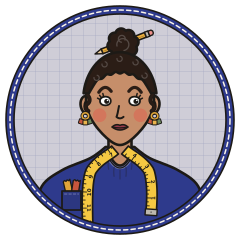
In low evening light, pills catch the eye before the hand finds them: a faint gray bloom along the front edge of a bench. Here is what that bloom is made of, and how to lift it without harming the cloth.
 Save
The quick answer
Cushion fabric pills when friction teases loose fibers into small knots and strong polyester fibers hold those knots on the surface instead of letting them fall. It shows first where people sit most, often within the first 4 to 6 months. Remove pills with a fabric shaver, never your fingers, and slow new ones by vacuuming and washing covers inside out at 86°F (30°C) on gentle.
A pill is friction that stayed
Look along a well-loved bench at dusk and you may see it before you feel it: a soft haze on the front edge, where every pair of knees passes. Up close it is a scatter of tiny knots. That is cushion fabric pilling, made of two things, friction and fiber.
Friction teases loose fiber ends out of the yarn and rolls them into balls. Wool and linen pill too, but their pills break off and fall away. Polyester is so strong that the pill stays anchored, which is why a synthetic cover looks fuzzy while a natural one only looks worn.
Pilling on sofa cushions and bench seats tends to appear within the first 4 to 6 months, where people sit most: the front edge of a seat, the corners of a bench cushion, the middle of a living room floor cushion. No fabric is pill-free, and I won't pretend one is.
Which textures show it first
| Fabric | Surface | What to expect |
|---|---|---|
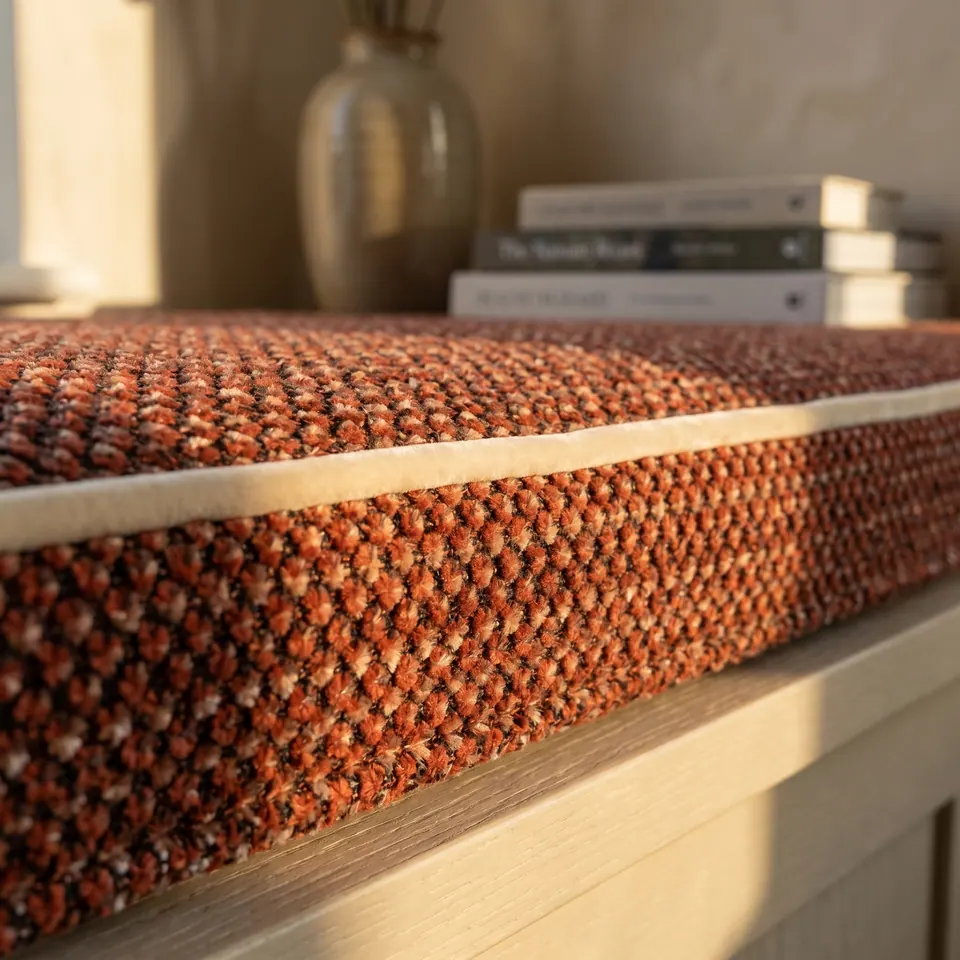
| Bouclé and teddy | Loops and a deep, curly pile | Texture can hide pills, but cheap synthetic loops fuzz; snags are the bigger risk |
| Chenille | Short pile twisted between core yarns | Very soft, but pills and snags at friction points |
| Brushed polyesters | A napped, fuzzy face | Among the first to haze on a busy front edge |
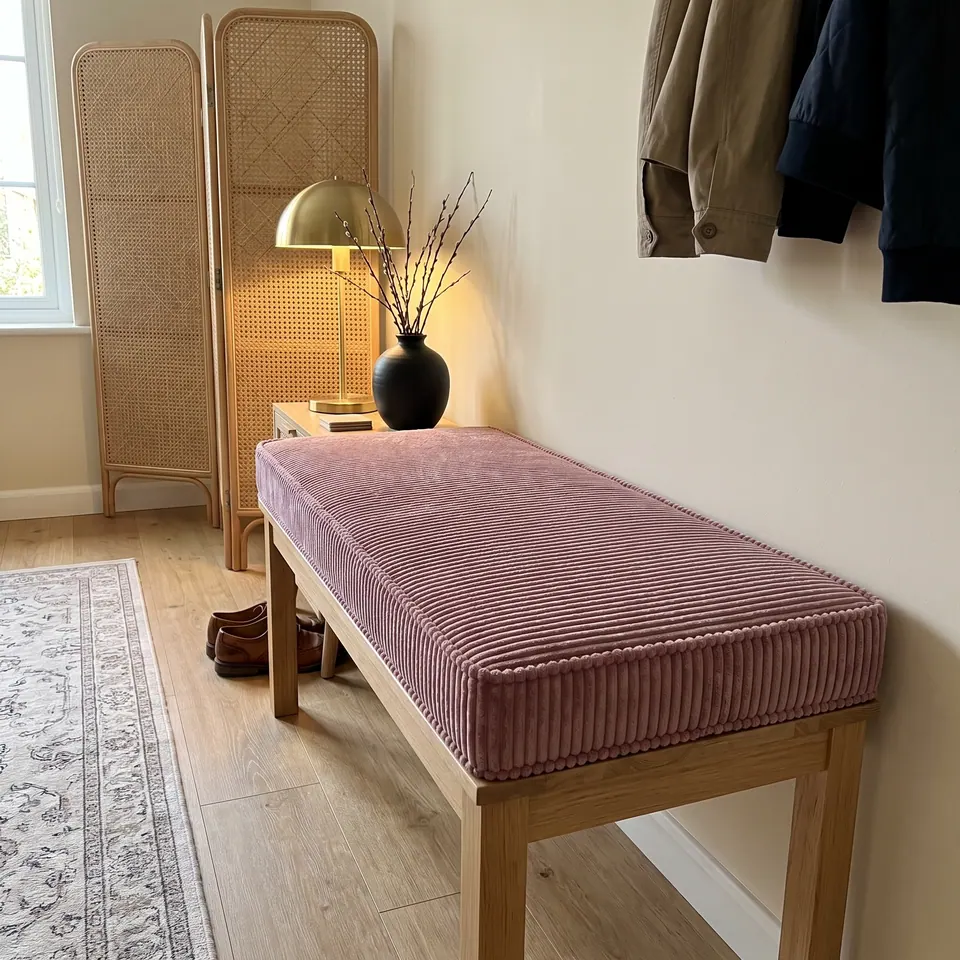
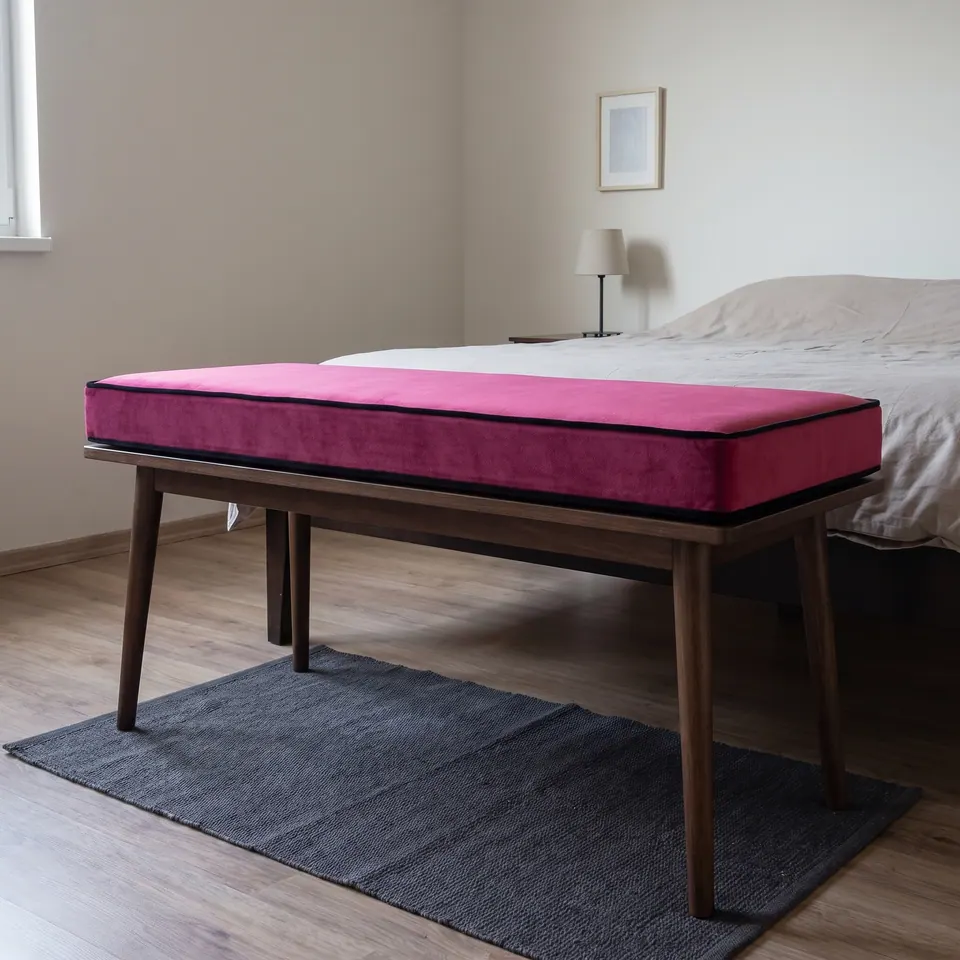
| Polyester velvet | Short, tight cut pile, no loops | Pressure marks and shading show first; both brush out |
| Linen blend and linen-look | Flat weave, linen with polyester | Holds its shape; a flat face gives friction less to grab |
| Pet-friendly polyester | Tight flat weave, 88,000 Martindale rubs | Tough against abrasion, a separate test from pilling |
Reading a fabric pilling grade, 5 to 1
- Grade 5: no change from before the test.
- Grade 4: slight fuzzing or a few partly formed pills. Grades 4 and 5 are premium.
- Grade 3: moderate pilling. Grades 2 and 3 are the acceptable band for standard fabric.
- Grade 2: distinct pilling across the tested area.
- Grade 1: severe, dense pilling.
- Read the rub count beside the grade. The ISO 12945-2 test rubs fabric face to face on a modified Martindale machine and checks it at set points, so a 4 at 7,000 rubs beats a 4 at 2,000, and a 5 only promises no change within the cycles tested.
How to remove pilling from cushions, gently
Find it in daylight
Take the cushion to a window and look across the surface, not down at it; pills cast tiny shadows in raking light. Daylight never lies; your screen sometimes does.
Vacuum first
Use the upholstery brush to lift dust and loose fuzz. Dust works as an abrasive in the weave, so this also slows the next round.
Make the surface taut
Leave the cover on its insert, or lay it flat on a table. A slack cover bunches under the shaver; a taut one lets the blades skim.
Test the fabric shaver somewhere hidden
Try a few passes on the underside or beside the zipper. Deep piles and loops need the lightest touch.
Shave in light, overlapping passes
Hold the shaver flat, press nothing, and let the blades cut pills level with the weave. Never pull pills with your fingers; that drags fresh fiber up and starts the next pill.
Brush pile fabrics, then stop
On velvet or corduroy, brush against the nap and then with it so the color reads even. Stop when the surface looks even; chasing every fiber thins the cloth.
Have it made
Measured it? Have Élodie’s workshop make it
Color is easier to settle in a conversation than on a screen. Tell the workshop about the room and the light it gets, and the fabric choice follows. — Élodie
Leave your details and the workshop will call you to confirm measurements, fabric, foam and piping. No prices, dates or payment on this page: it is a request, not an order.
A floor sofa, two backrests and one thin lining
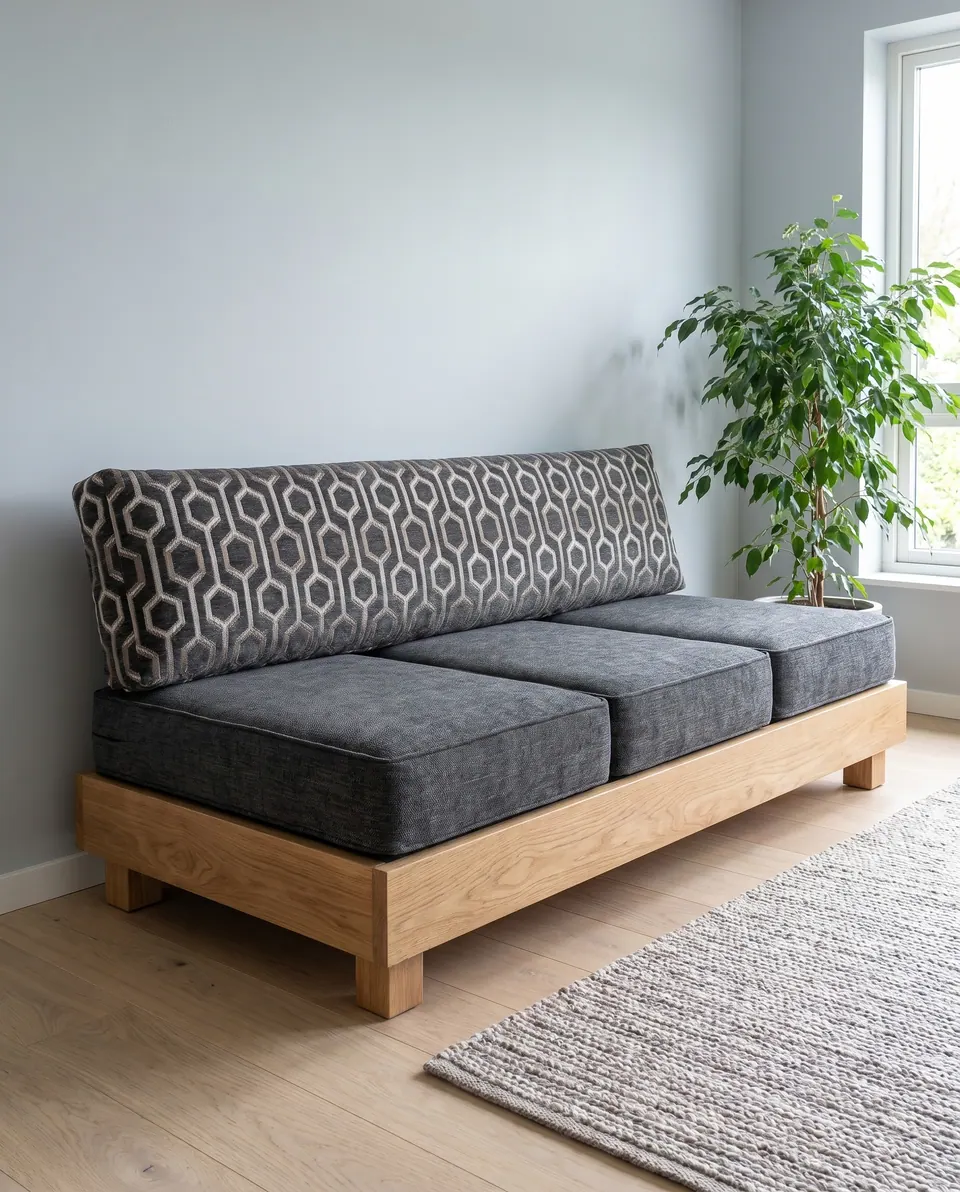
A couple in the US wrote about their modular floor sofa in a soft water green. They loved it, and before its first birthday they unzipped the covers to wash them.
The sofa has two L-shaped backrests. Under one cover the insert lining was thick and wearing as it should. Under the other it was much thinner, and in places it had pilled and pulled apart until crumbs of foam escaped. Their question wasn't about the outer fabric at all; the pilling lived where the insert rubs inside its cover each time someone leans back.
The workshop sent a replacement insert, and the couple covered only the shipping. What I keep from it: when you wash covers, look at the linings too. The modular floor sofas hub shows how those backrests sit.
Keeping new pills away, and choosing cloth that ages well
Prevention means taking friction and heat out of a cushion's life:
- Vacuum seats regularly with the upholstery brush; dust in the weave acts like fine sandpaper.
- Wash covers inside out at 86°F (30°C) at most, on gentle with mild detergent and a low spin, then air dry. The full routine is in washing cushion covers.
- Rotate and flip cushions so one edge doesn't take all the sitting.
- Keep hook-and-loop fasteners, studded jeans and pet claws away from the cloth.
If you're still choosing, read the pilling grade next to its rub count, and feel swatches in your own light. The Martindale vs double rubs Pattern explains why a high abrasion number says nothing about pills. For heavy family use the workshop points to soft fabric and velvet; for dogs, the performance and pet-friendly chart. Before you fall for bouclé and teddy, read the pilling glossary entry.
Tell me, my friends: where does your household sit hardest, the sofa's front edge or the bench corner?
Common mistakes that make pilling worse
- Picking pills off by hand. It pulls up the fiber for the next one.
- Choosing fabric for looks alone. Corduroy ribs can split under hard use; for rentals and heavy family seating the workshop steers people to linen or velvet.
- Washing hot and tumble drying. That is friction on friction.
- Forcing a zipper over a freshly washed cover. Unzip fully before removing it, refit it slightly damp, and never yank the zip.
- Reading a Martindale number as a pilling promise. Abrasion and pilling are separate tests.
Pilling on polyester cushion covers clings because the fiber is too strong to break; linen and wool pill too, but they shed their pills.
Élodie
Buyer questions: wear, washing and which fabric lasts
- A common question
Our floor sofa isn't a year old. When we unzipped the covers to wash them, the lining on one backrest insert was pilling and pulling apart, with bits of foam coming out. Is there any warranty?
The workshop's answerWe were sorry to see it. That lining was much thinner than its twin and wore through far too early, so the workshop sent a replacement insert and the buyer paid only the shipping.
- A common question
Is your velvet cotton velvet or polyester?
The workshop's answerSynthetic: polyester or a poly-cotton blend, not pure cotton, linen or silk. It's long-lasting, easy to clean and mostly doesn't wrinkle, while cotton velvets crush and wear faster on seating. For natural fiber, choose 100% linen or cotton-linen.
- A common question
Velvet and the soft fabric cost the same. Will one of them wear out faster?
The workshop's answerBoth come from the same manufacturer at the same quality, so we treat them as equally durable. If one edges ahead for heavy family use, it's the soft fabric, which is also a little easier to clean.
- A common question
Which of your fabrics holds up best to hard use?
The workshop's answerAll are upholstery-grade, and velvet, soft fabric and linen are broadly equal. For the heaviest use choose soft fabric; between linen and velvet, velvet is tougher. Velvet is indoor-only, so use the outdoor range where a cushion may get wet.
- A common question
The care note says 30 degrees. Is that Fahrenheit, and which cycle should I use?
The workshop's answerCelsius, so the maximum is 86°F (30°C). Turn the cover inside out if you can and wash it on a gentle or delicate cycle with mild detergent and no bleach. Air dry, and iron on low only if needed.
Pilling, briefly
Does velvet pill?
It can, since any polyester surface can pill, but upholstery velvet's short, tight cut pile has no loops for friction to tease out. Owners usually notice pressure marks and shading first, and both brush out.
What pilling grade should a cushion fabric have?
On the ISO 12945-2 scale, grades 2 to 3 are acceptable standard quality and 4 to 5 are premium. Read the rub count beside the grade: a 4 at 7,000 rubs beats a 4 at 2,000.
Does a high Martindale rating mean a fabric won't pill?
No. Martindale abrasion counts rubs until threads break and doesn't measure pilling. A pet-friendly polyester rated at 88,000 rubs is tough, but its pilling behavior needs its own test result.
Is pilling a defect?
Light pilling on the busiest edge in the first months is surface wear, and a fabric shaver removes it. Pilling that splits the fabric or a lining, or lets filling escape, is different: photograph it and write to the maker.