Living room cushions for the window seat, the floor sofa and the daybed
The living room is where a cushion is looked at most, so it is where color has to be right. Here is how buyers choose shape, fabric and fill for the seats their families actually use.
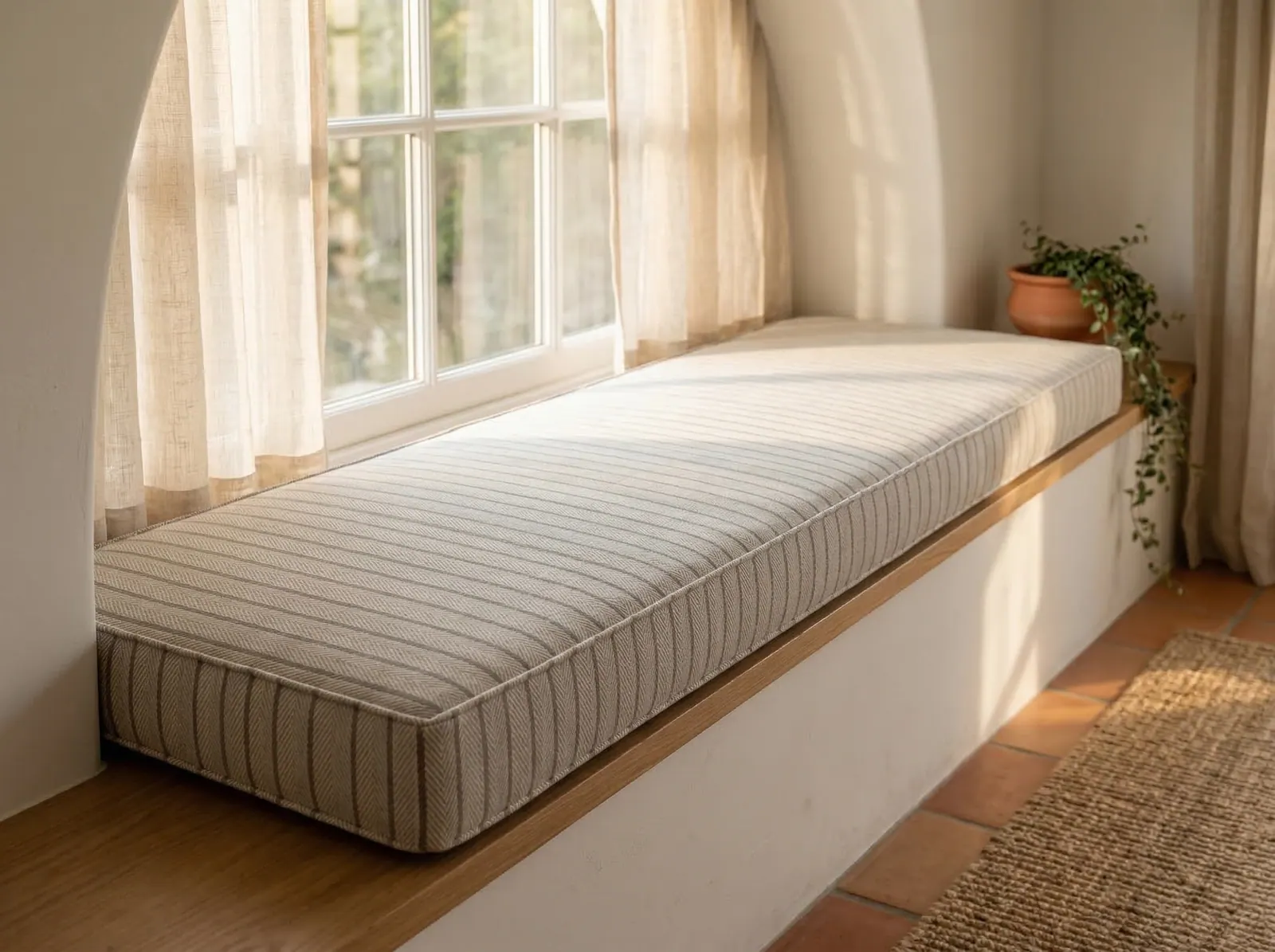
SaveA soft slate pinstripe cushion on an oak ledge glows in the low sun of an arched, terracotta-floored alcove.
The quick answer
Living room cushions are usually made-to-measure window seat, bay window, daybed and floor sofa cushions, 4 in (10 cm) thick for seats and 4 to 5 in (10 to 12 cm) for tufted floor pieces. Judge color from photos of finished cushions in daylight, order every piece for one room together so the dye batch matches, and measure curves with a template.
Every one is cut to your measurements. The number is how many readings the atelier has published for that shape.
Where a living room actually sits
Most living rooms have one seat everyone wants, and it is rarely the sofa. It is the window seat in evening light, the bay with the radiator underneath, the daybed beside the arc lamp, or the floor sofa the children claimed the day it arrived.
This page gathers living room cushions for all of them, and for the studio apartment and home office where one seat does three jobs. Shape-by-shape detail lives under window seat cushions, bay window cushions, daybed cushions and modular floor sofas. The pillows that finish the scene are under throw pillows. This page is the room-level view: how the pieces sit together, and how their colors survive the lamp.
On the cutting table: living room seats side by side
Seat
Build
Thickness
What to measure
Window or alcove seat
Zippered foam box cushion
4 in (10 cm) standard; 2 in (5 cm) thinnest
Seat length and depth; a template if curved
Bay window seat
Zippered foam cushions cut to the bay
4 in (10 cm)
Panel by panel, front and back edges
Tufted French floor cushion
Fiber-filled, button-tufted, stitched closed
4 to 5 in (10 to 12 cm)
Length and width; squares up to about 48 x 48 in (122 x 122 cm)
Seat 6.7 in (17 cm); backrest 15.4 in (39 cm) tall
Every piece, height above all
Buttons or piping: choose one per piece
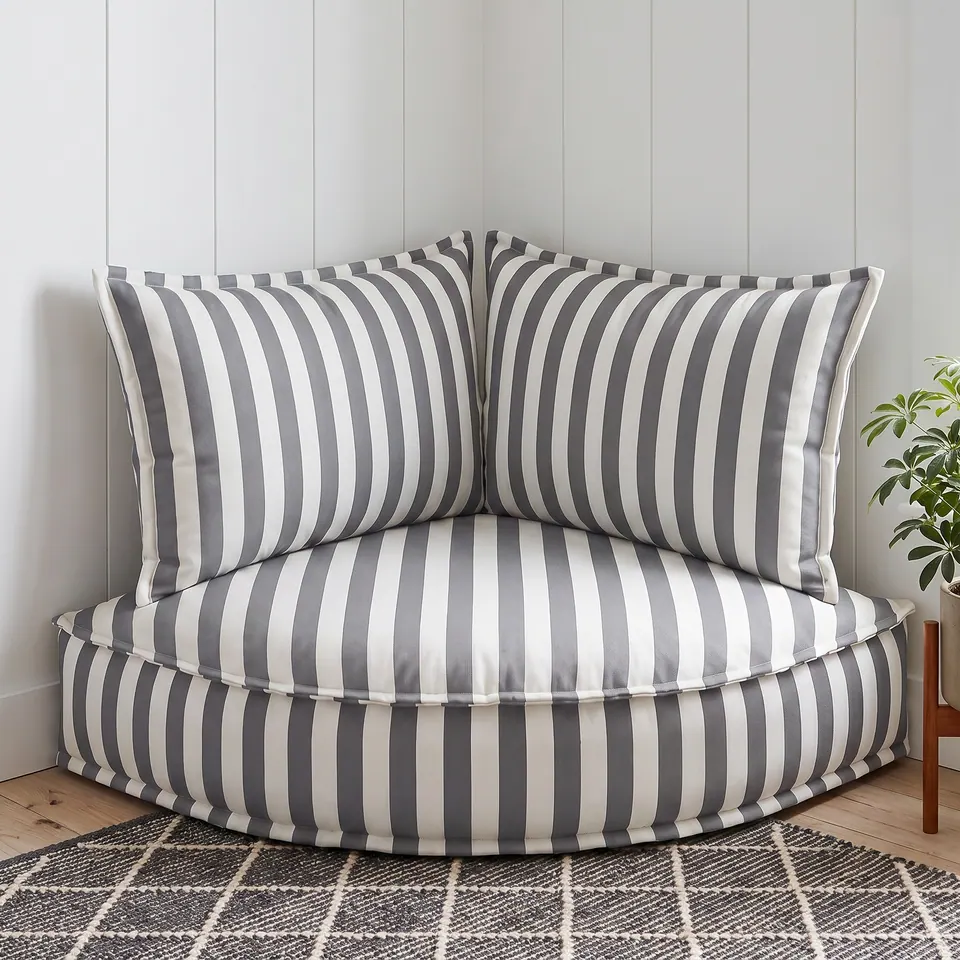
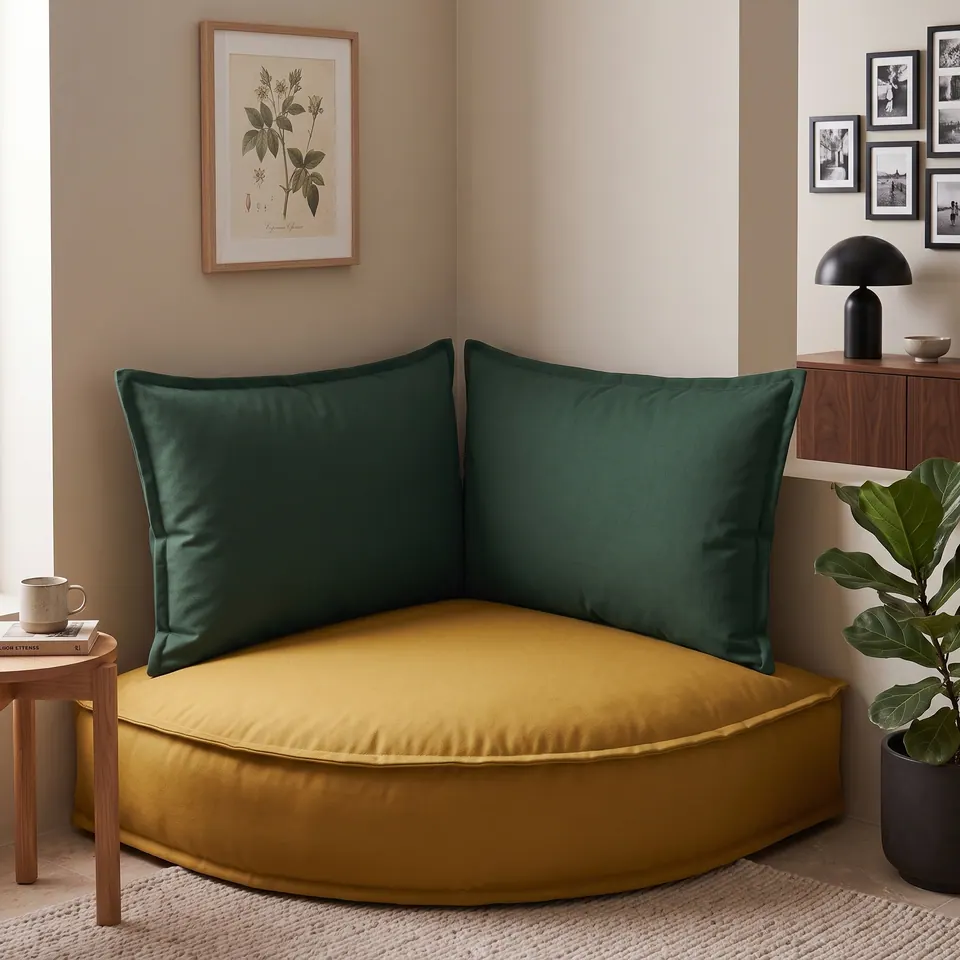
Living room seats come in two families. The box cushion: foam, square-edged, zippered, usually piped. And the tufted French cushion: fiber-filled, buttoned, finished with a hand-stitched edge, and no zipper at all.
One piece can't be both. The French hand-stitched edge exists only on tufted cushions, and piping on a backrest or armrest needs a non-tufted style. Tufting is possible only when the workshop makes the filling, so an empty zippered cover can't be tufted.
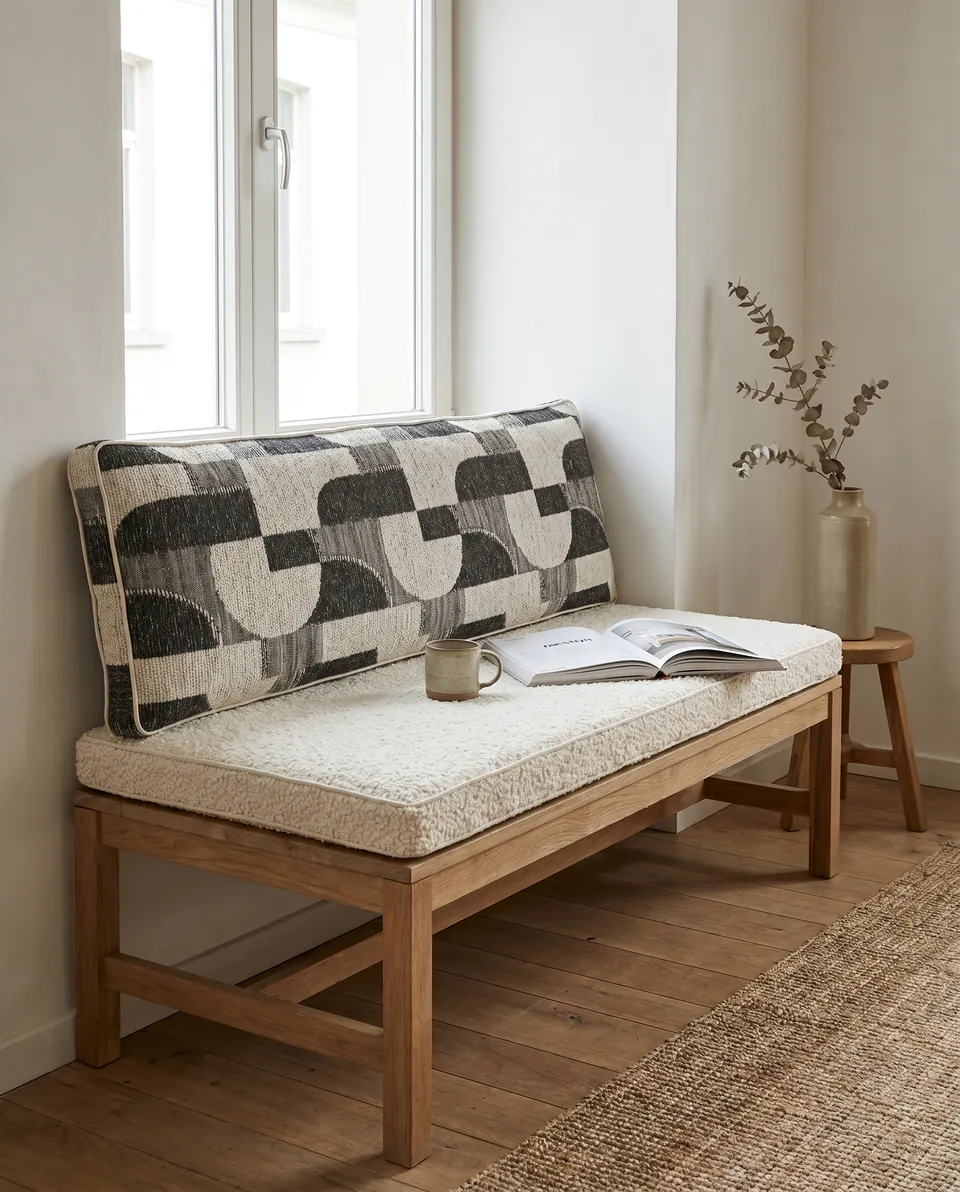
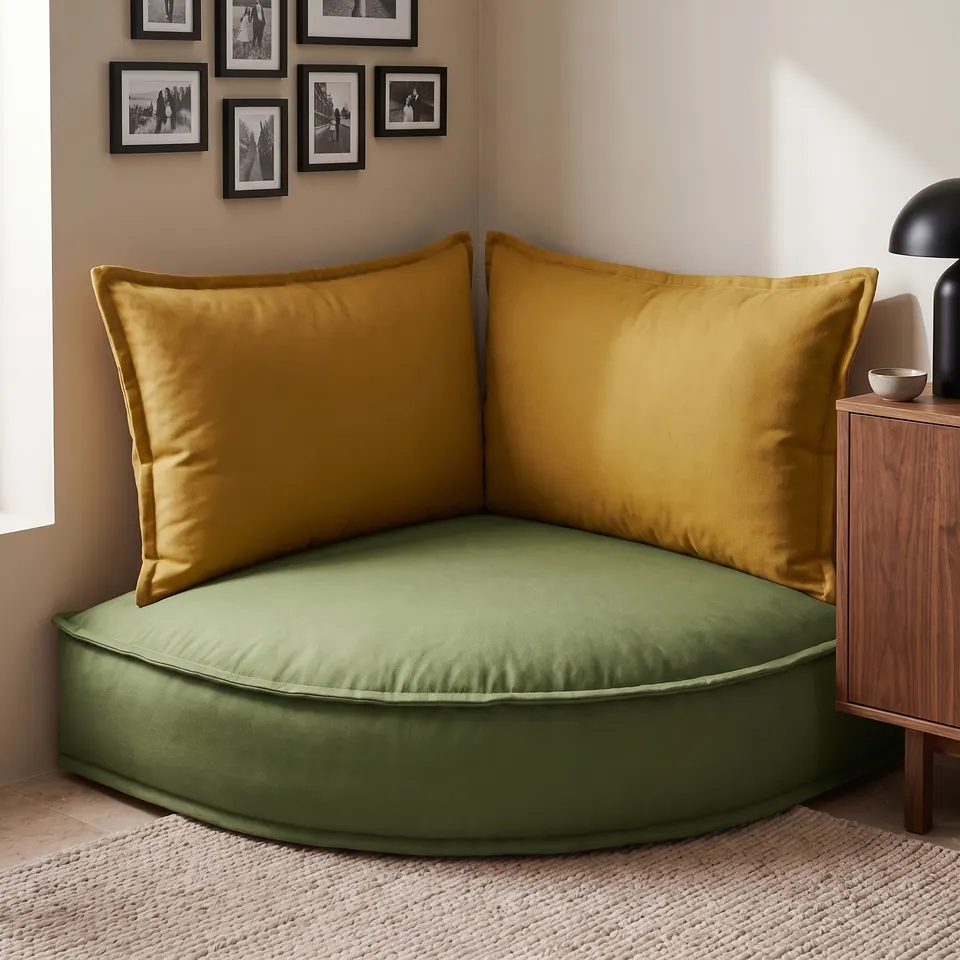
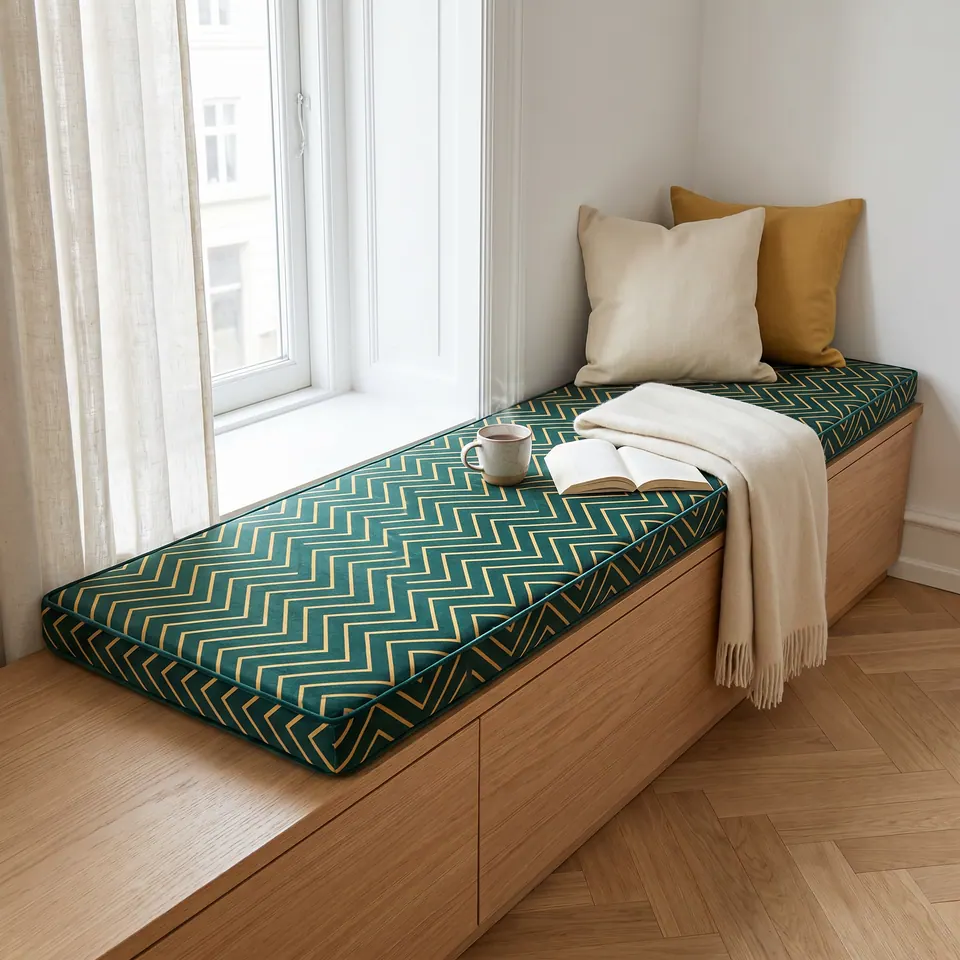
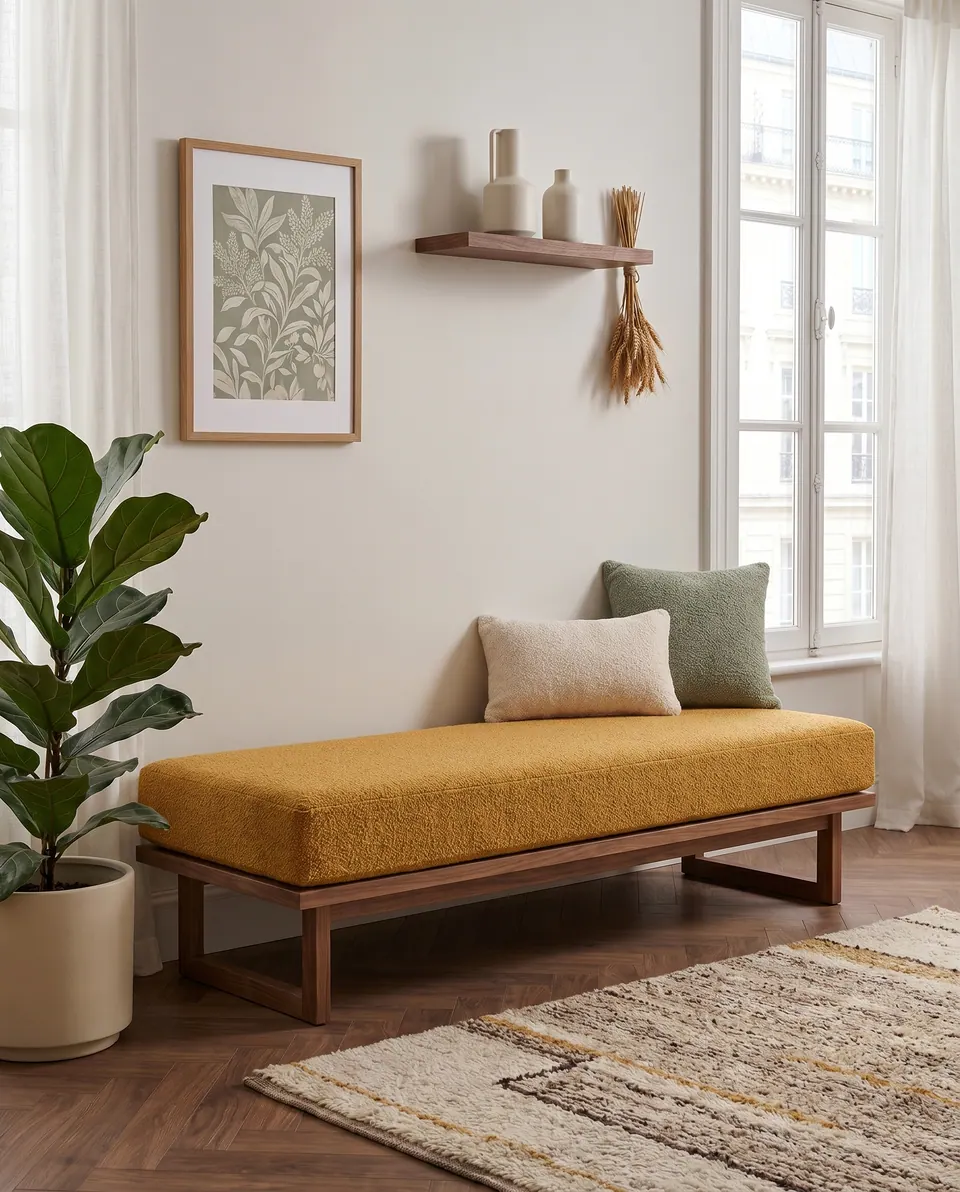
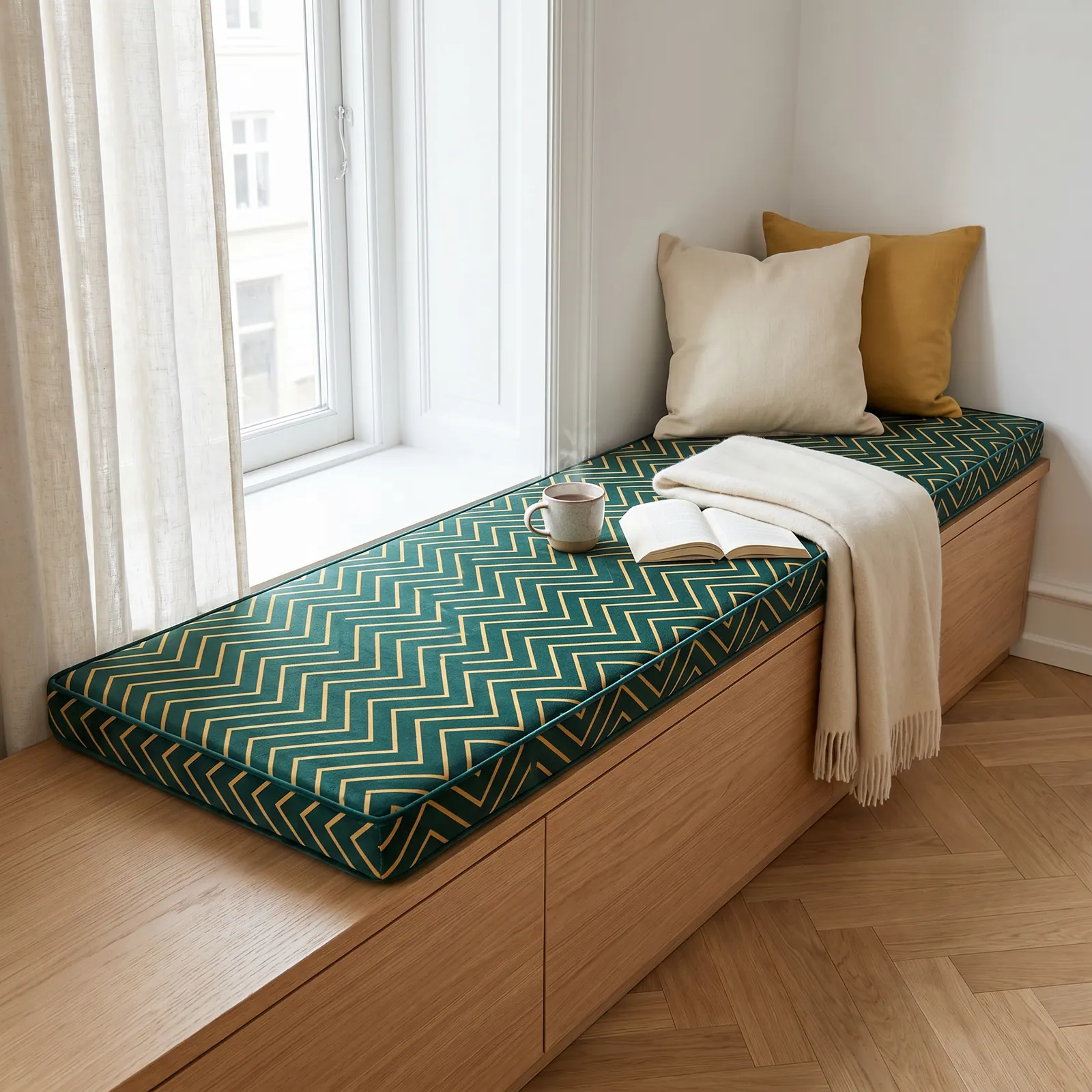
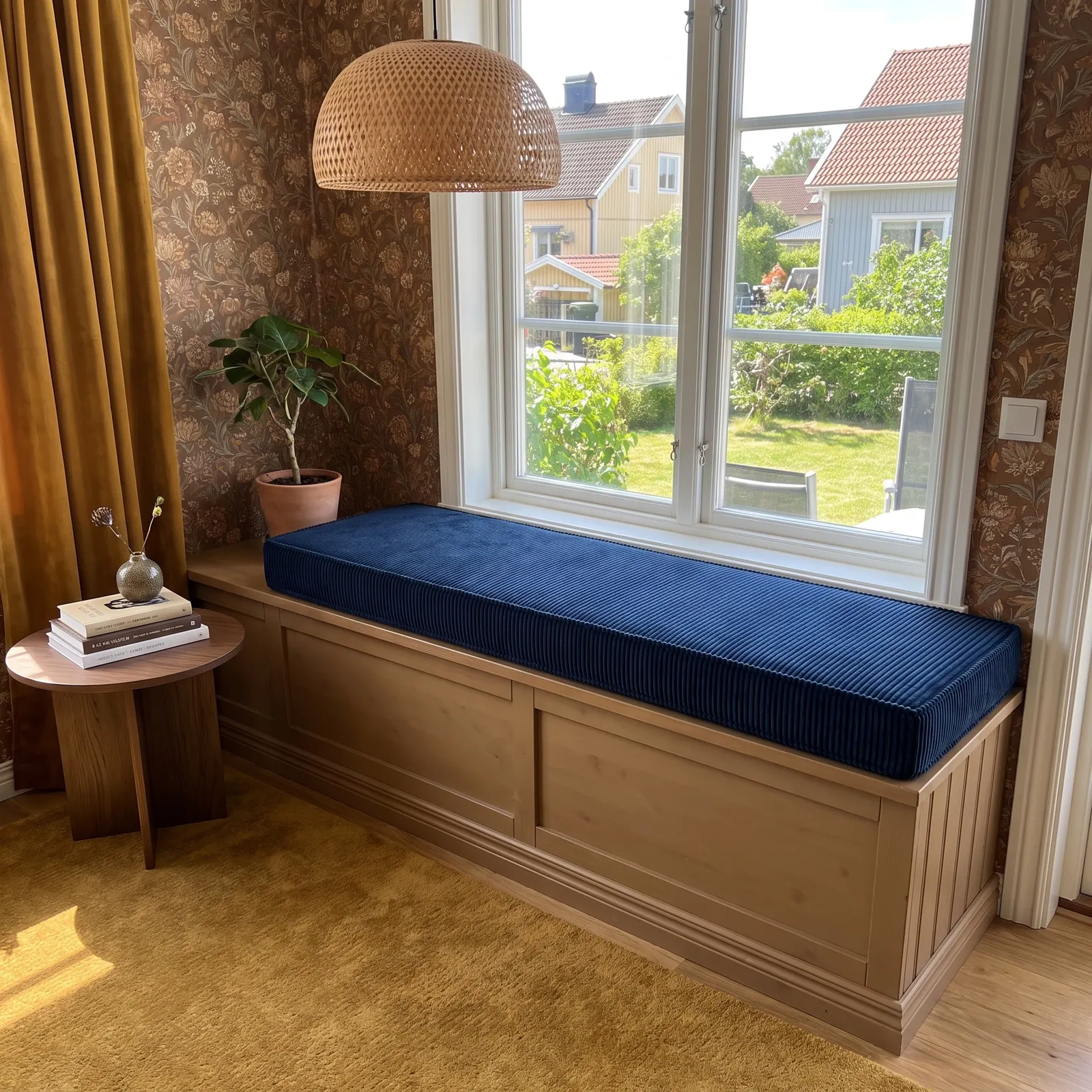
Let one color speak and the others listen. In the gallery: emerald and gold chevron on light oak over herringbone parquet; mustard bouclé on a walnut daybed; navy corduroy under a rattan pendant against brown floral paper; slate pinstripe in an arched alcove at golden hour.
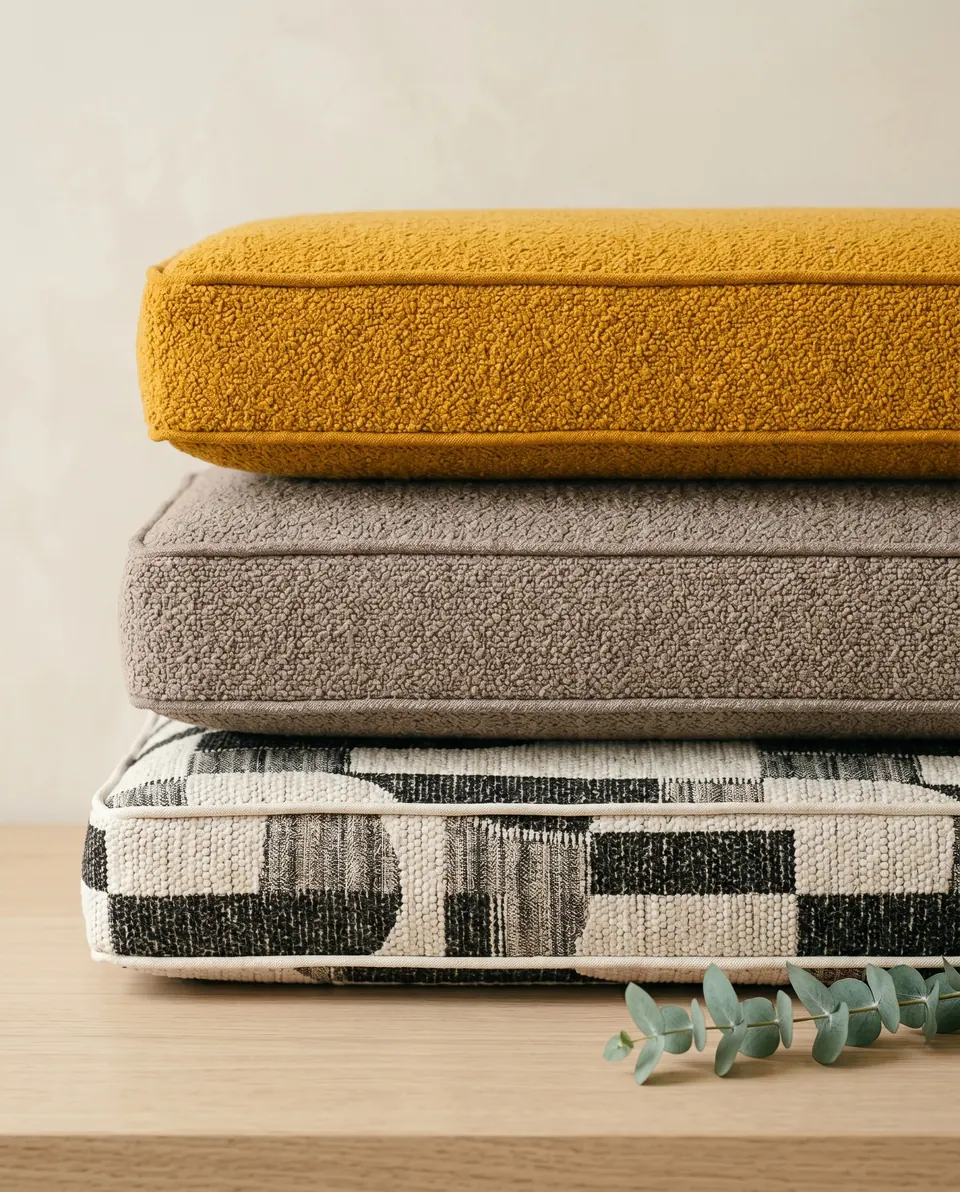
Now the hard part. Color shifts between daylight, lamplight and screens, and chart swatches can look darker or coarser than the cloth. Photos of finished cushions are the truest guide, and new production fabric looks cleaner and brighter than an old swatch. Dye batches differ slightly, so order every piece for one room together.
Foam, fiber, and how high the room sits
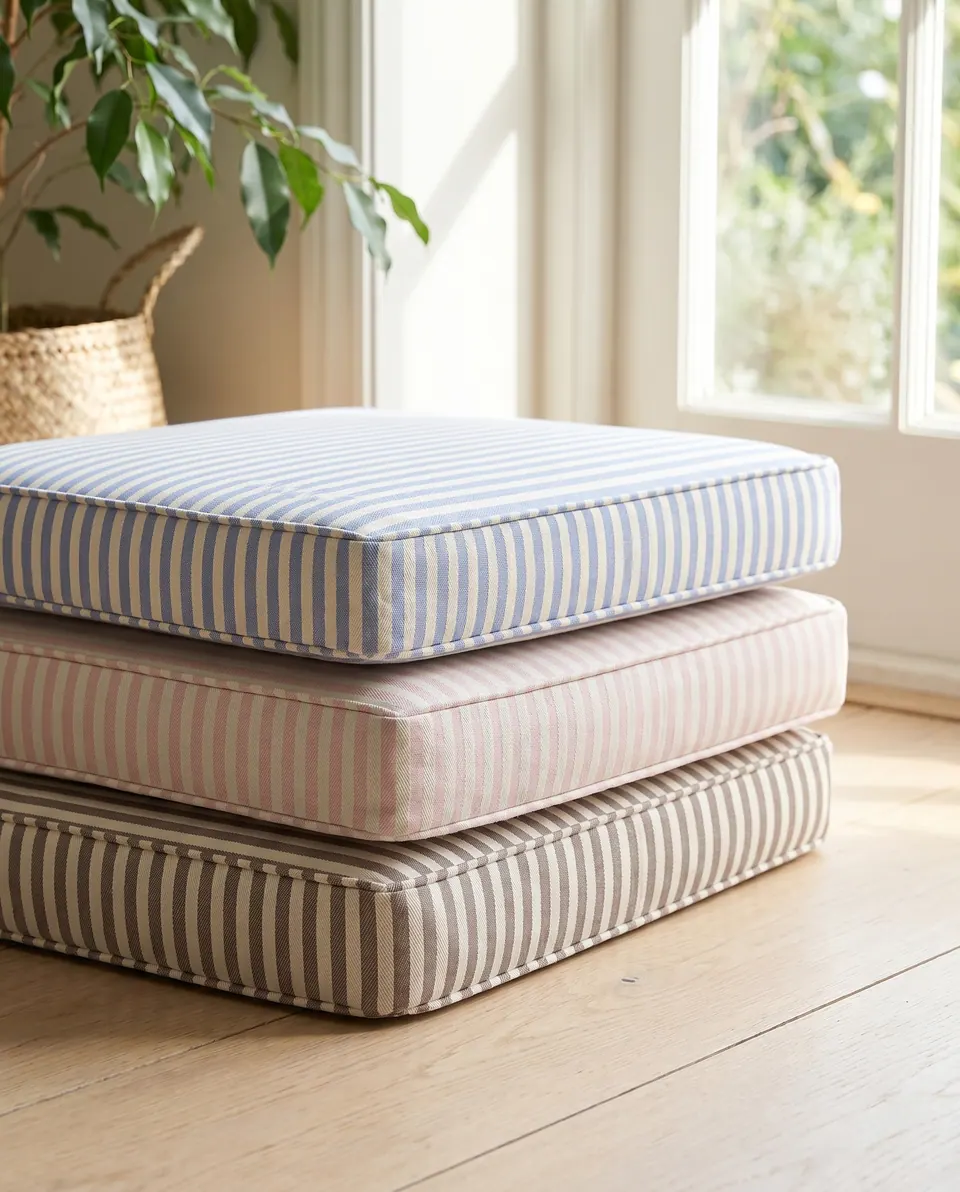
Window seats and benches take 4 in (10 cm) of foam as standard, firm at roughly 6 to 7 on a 10-point scale, with backrests a touch softer unless you ask for a match.
Floor seating is built another way. Tufted French floor cushions have no foam core: they are packed with siliconized polyester fiber balls and deliberately overfilled, so they stay firm instead of pressing flat. Velvet floor seating sits about 6 in (15 cm) high, 8 in (20 cm) on request, and deep-base floor cushions reach 12 in (30 cm).
New covers for a teddy floor sofa, and a rust to match
A buyer in the US wrote to the workshop about a designer teddy floor sofa and a question we hear often: would the workshop's replacement covers fit it?
The answer lived in the measurements. Our seat covers are 79 x 39.5 x 6.7 in (200 x 100 x 17 cm) and the L-shaped backrests 39.5 x 39.5 x 15.4 in (100 x 100 x 39 cm), the same as or very close to the original. The workshop has sold more than 1,000 of these covers, many to owners of that sofa. Still, the workshop asked for every piece to be measured, height above all, because a foam-filled backrest from another maker may sit slightly loose.
Then came color. The buyer wanted rust corduroy; the workshop's closest tone is Brick. The workshop asked for a fabric sample before anything else. A rust on a screen and a rust beside your floorboards are two different colors.
Measured
Seat covers 79 x 39.5 x 6.7 in; L-shaped backrests 39.5 x 39.5 x 15.4 in
What it taught
Measure the height of every piece, and order a fabric sample before matching an existing color.
The count is how many published readings use each family. Open a family for its swatch book, care notes and neighbors.
Living room mistakes that come back to the workshop
Leaving connector bars out of a modular floor sofa. Use every bar supplied, or the modules drift apart.
Setting bare metal bars on hardwood. They slide and can scratch; put felt pads or fabric underneath.
Floor seating on a smooth, bare floor. Lightweight foam moves when you sit; lay a rug or grip mat first.
Choosing a color from a phone at night. Compare with photos of finished cushions, in daylight.
Ordering a matching piece months later and expecting the same dye batch. Order the room at once.
Typing add-ons such as ties or a non-slip base into the dimension box. Put them in writing and confirm by message.
Photographs from the workbench
Open any photograph large; each one has its own link and a Save button.
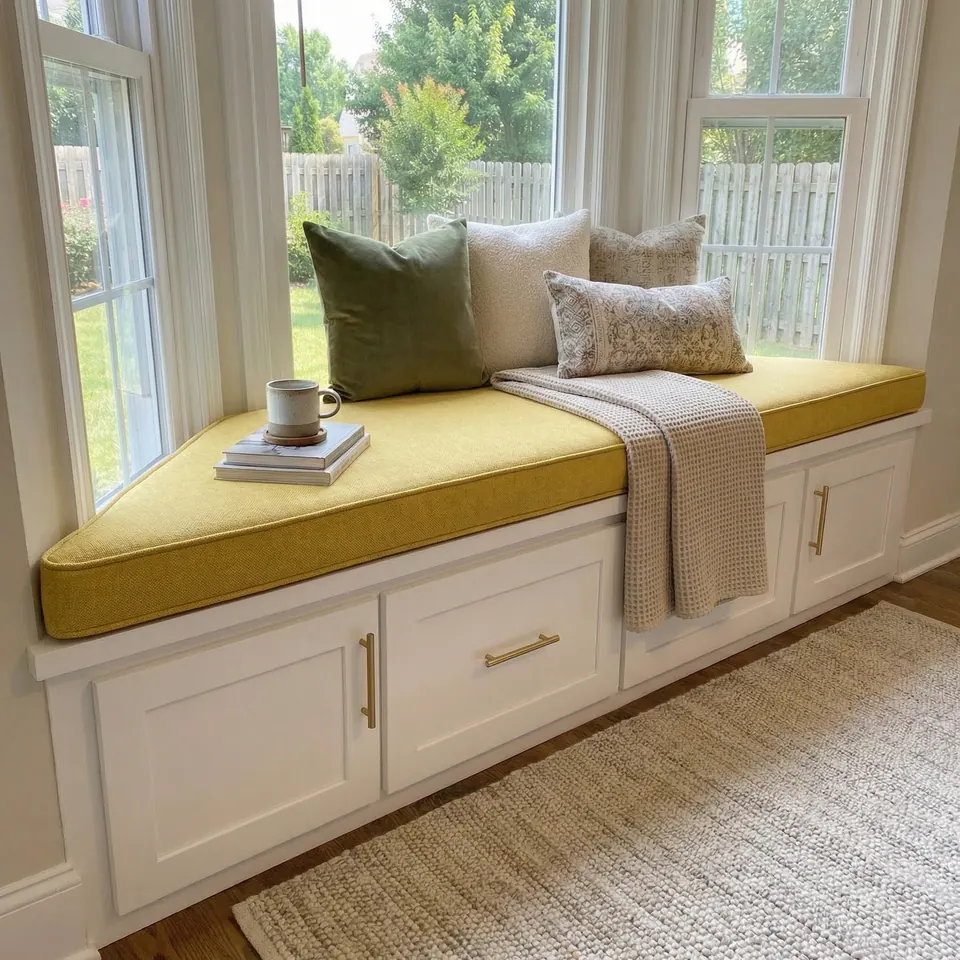
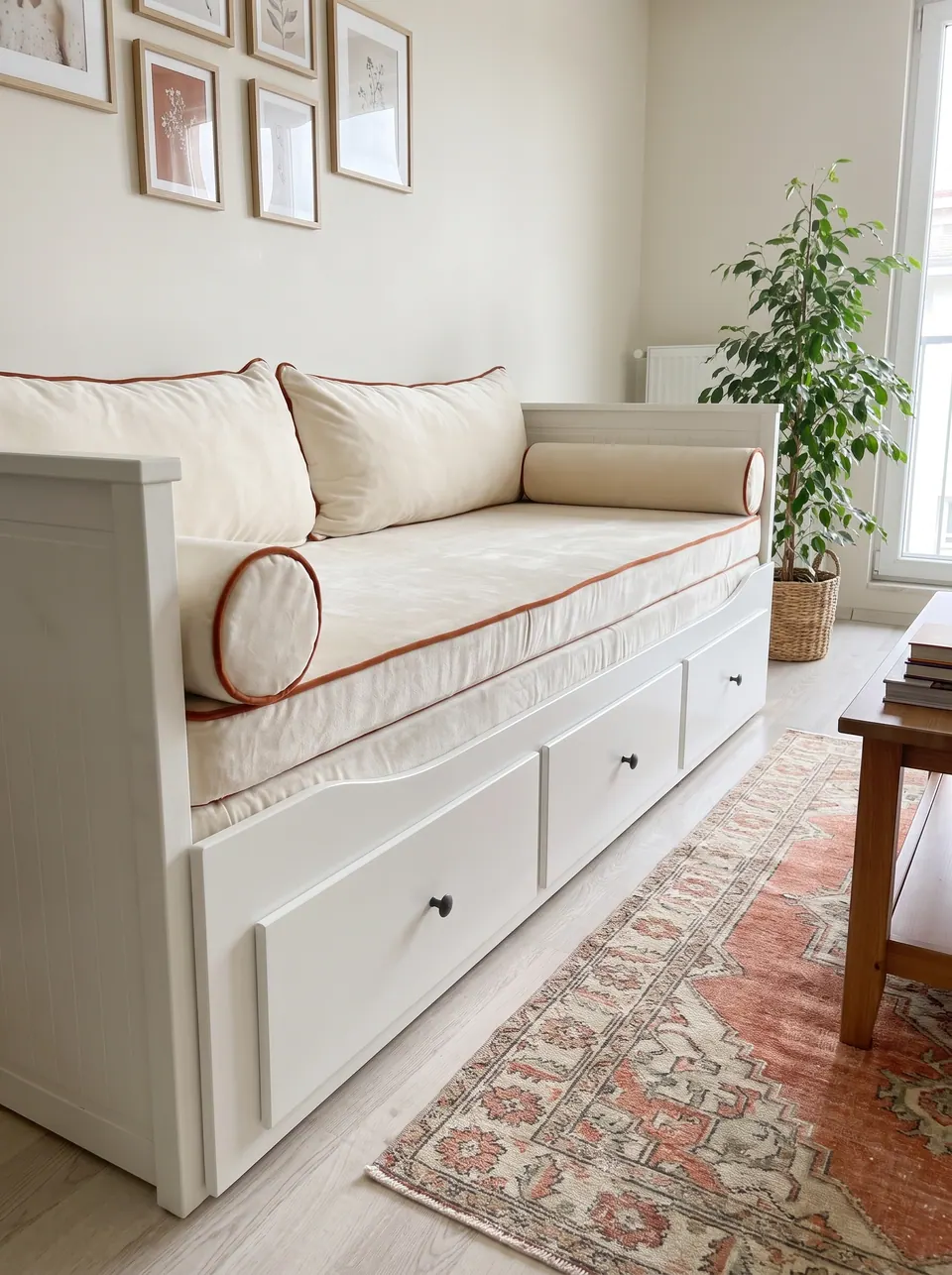
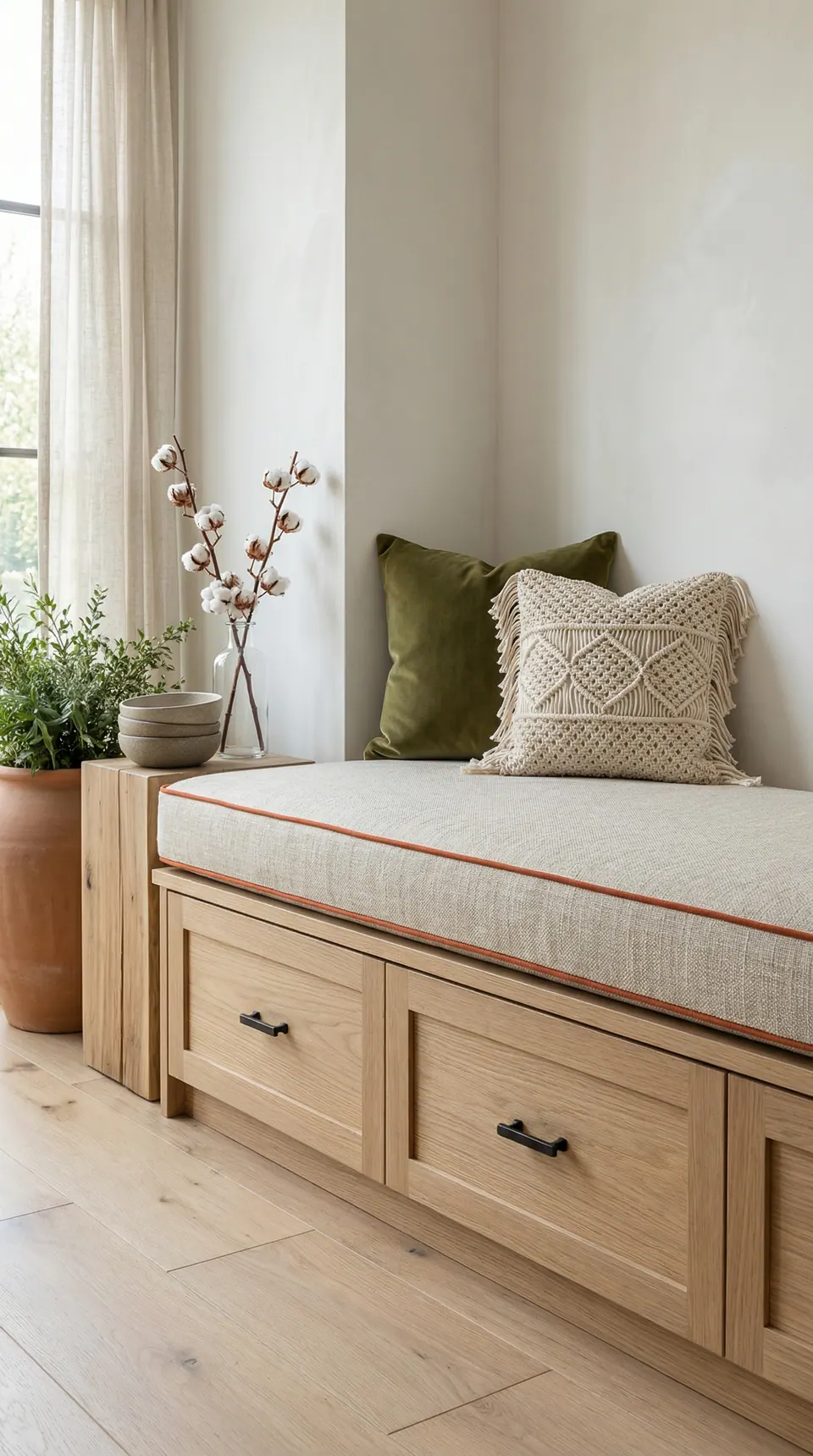
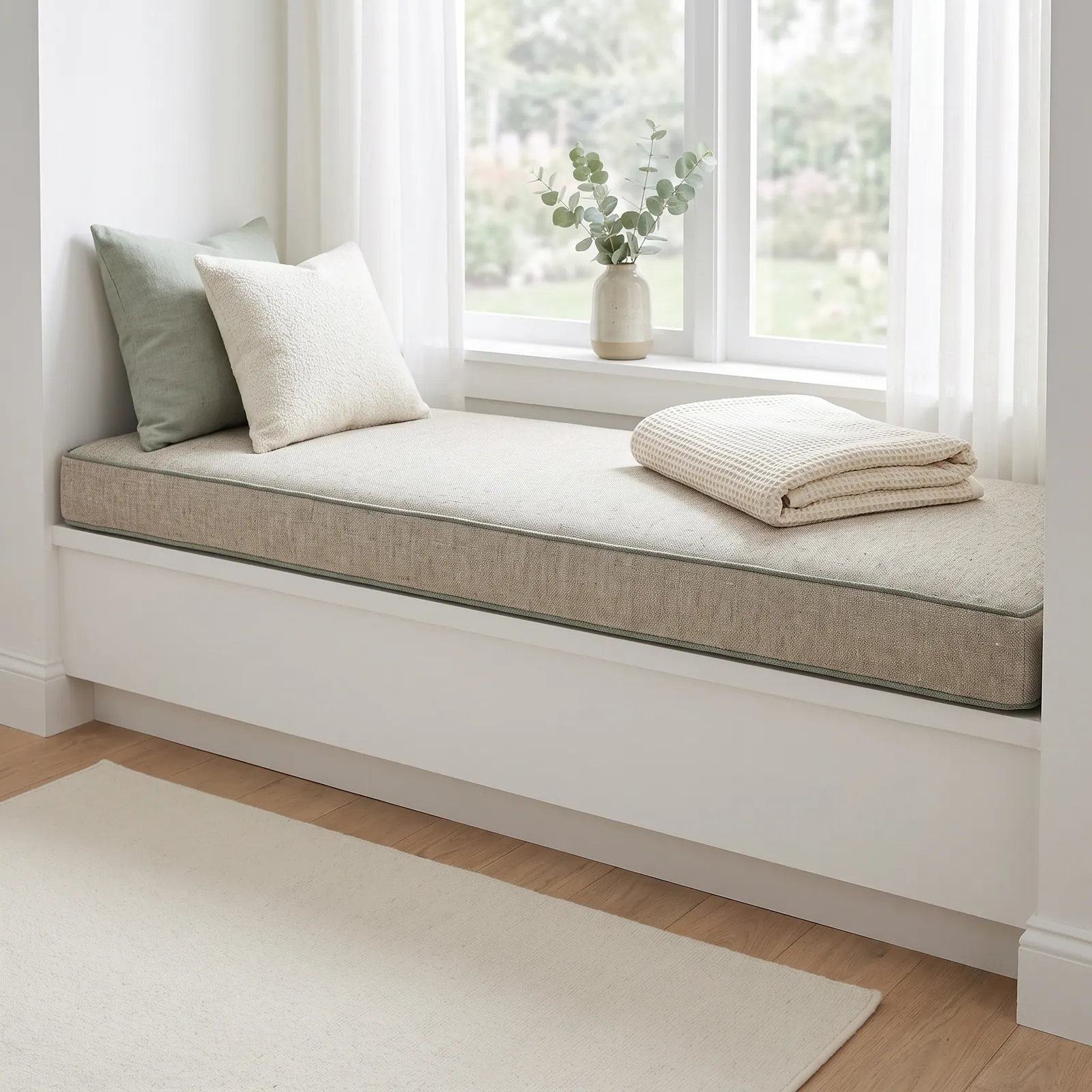
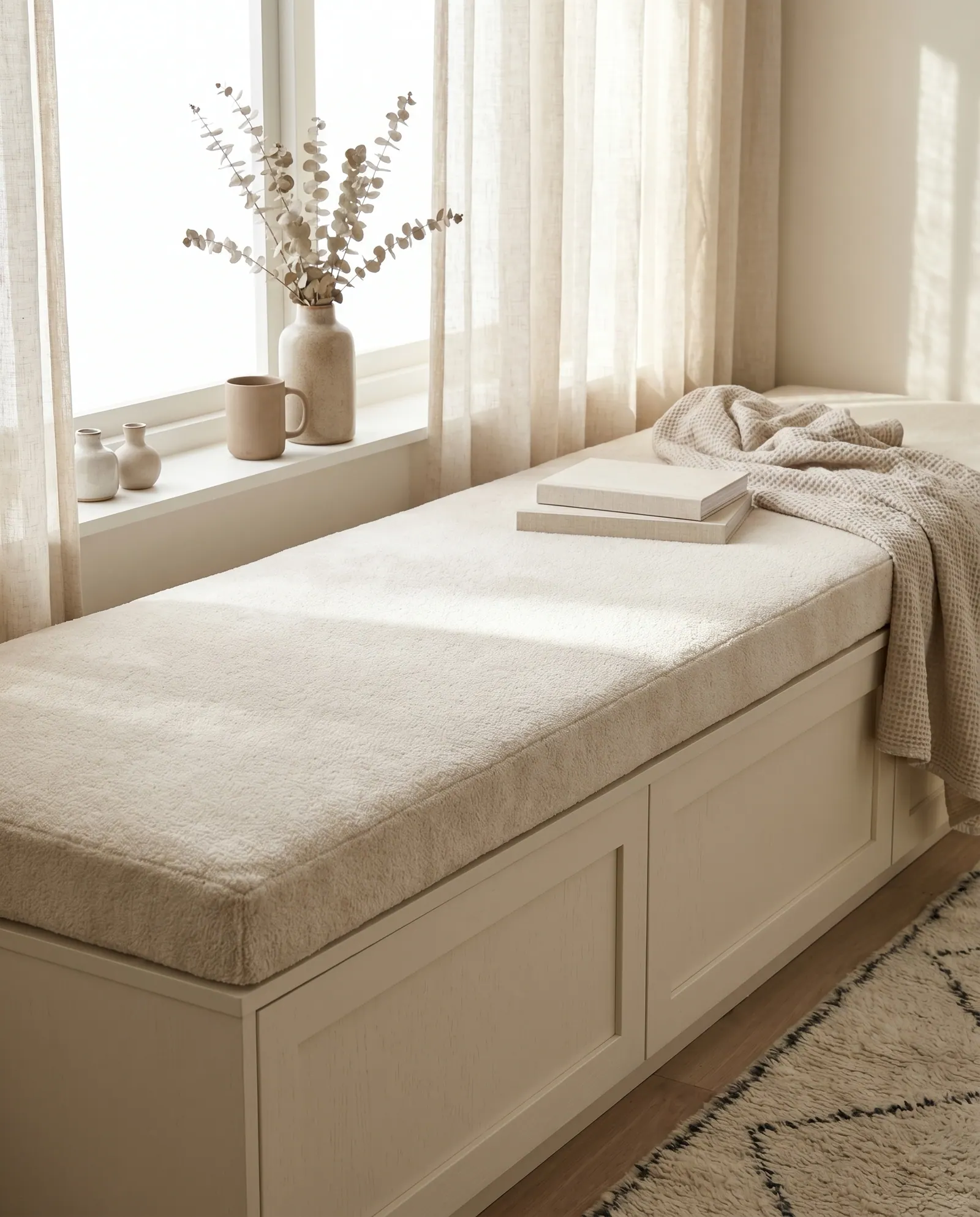
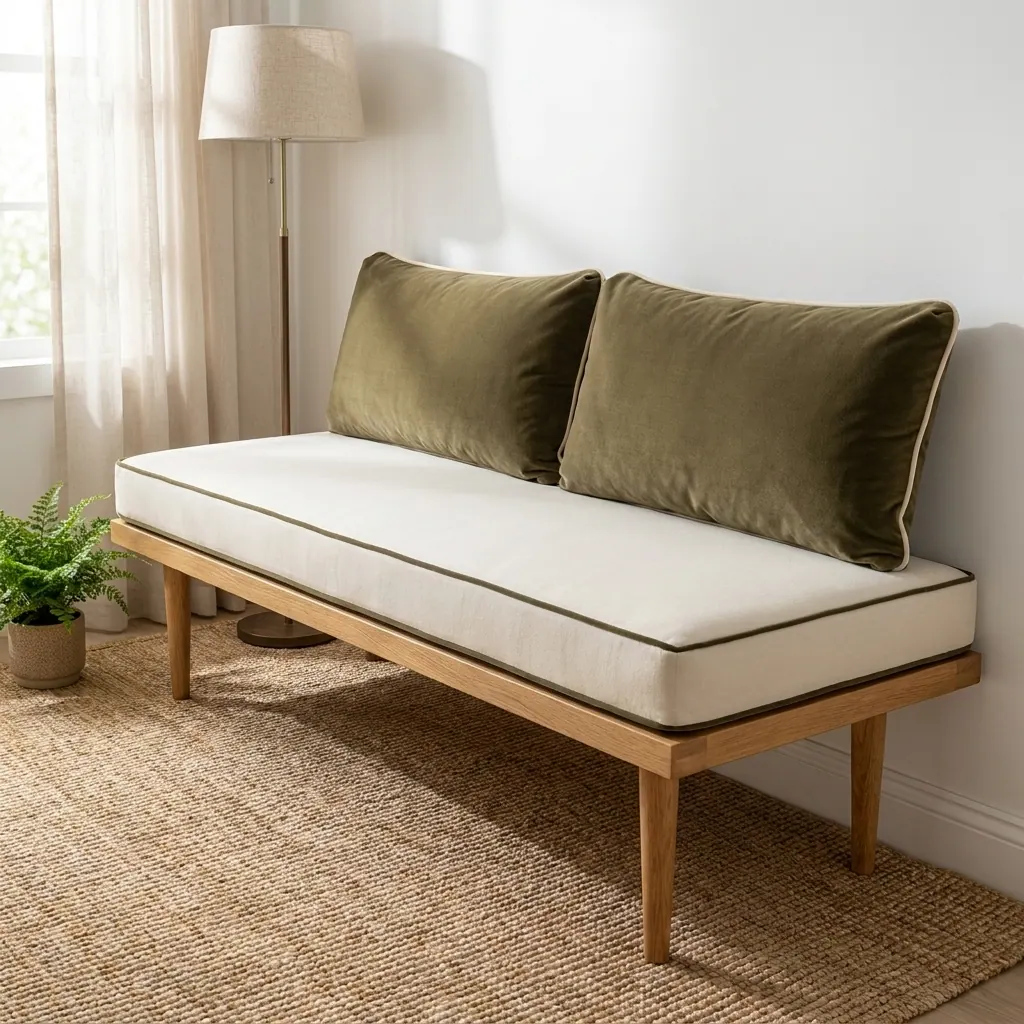
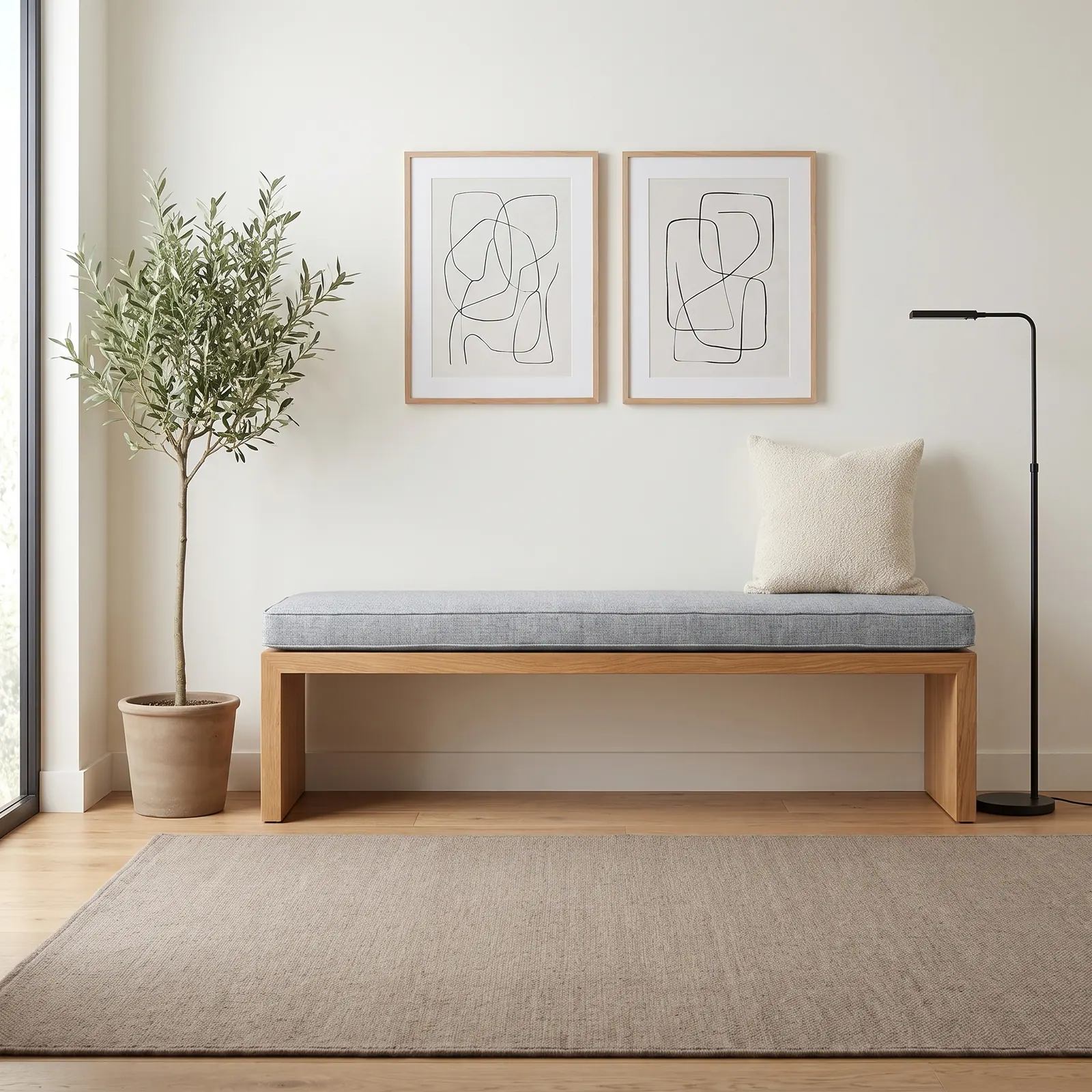
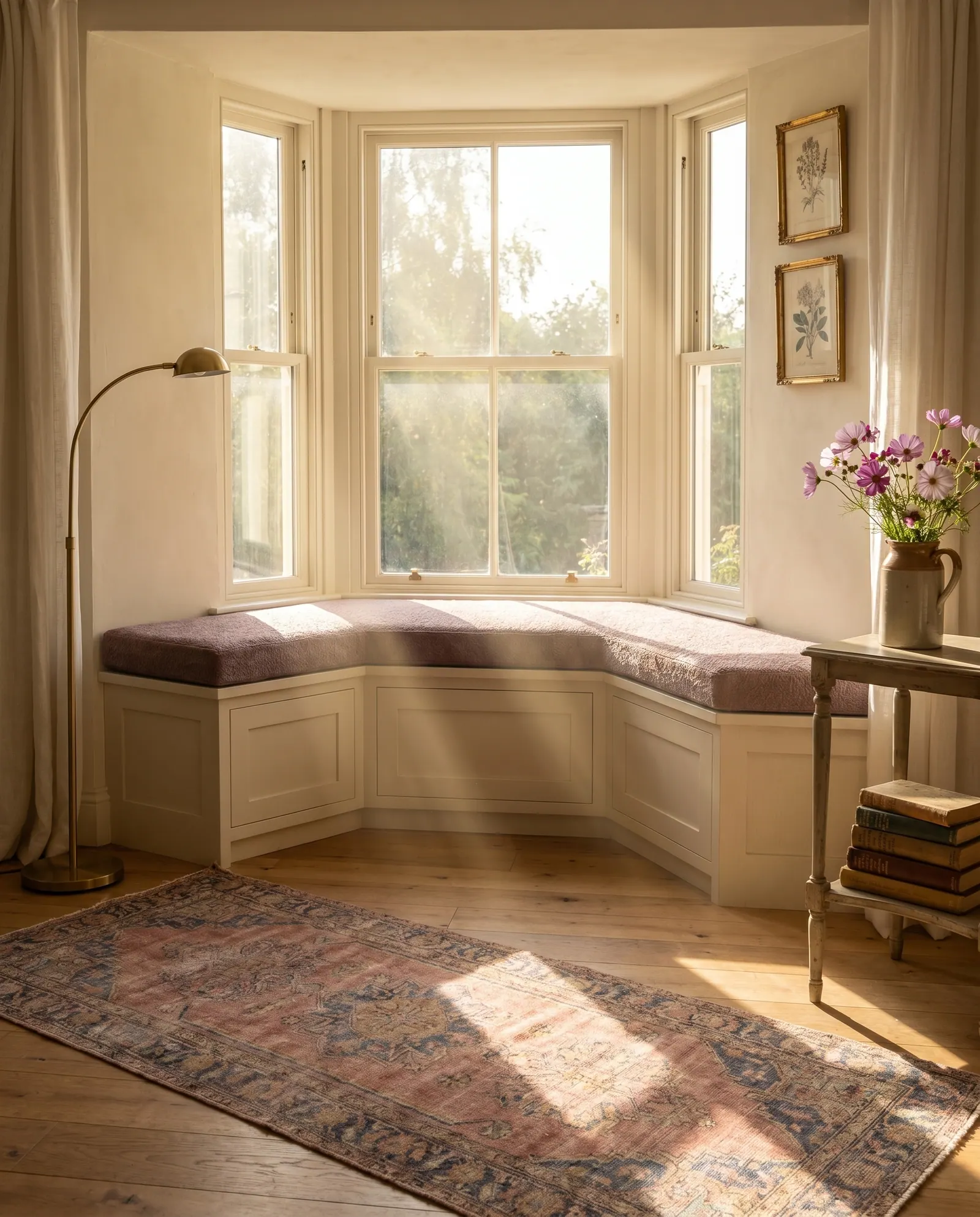
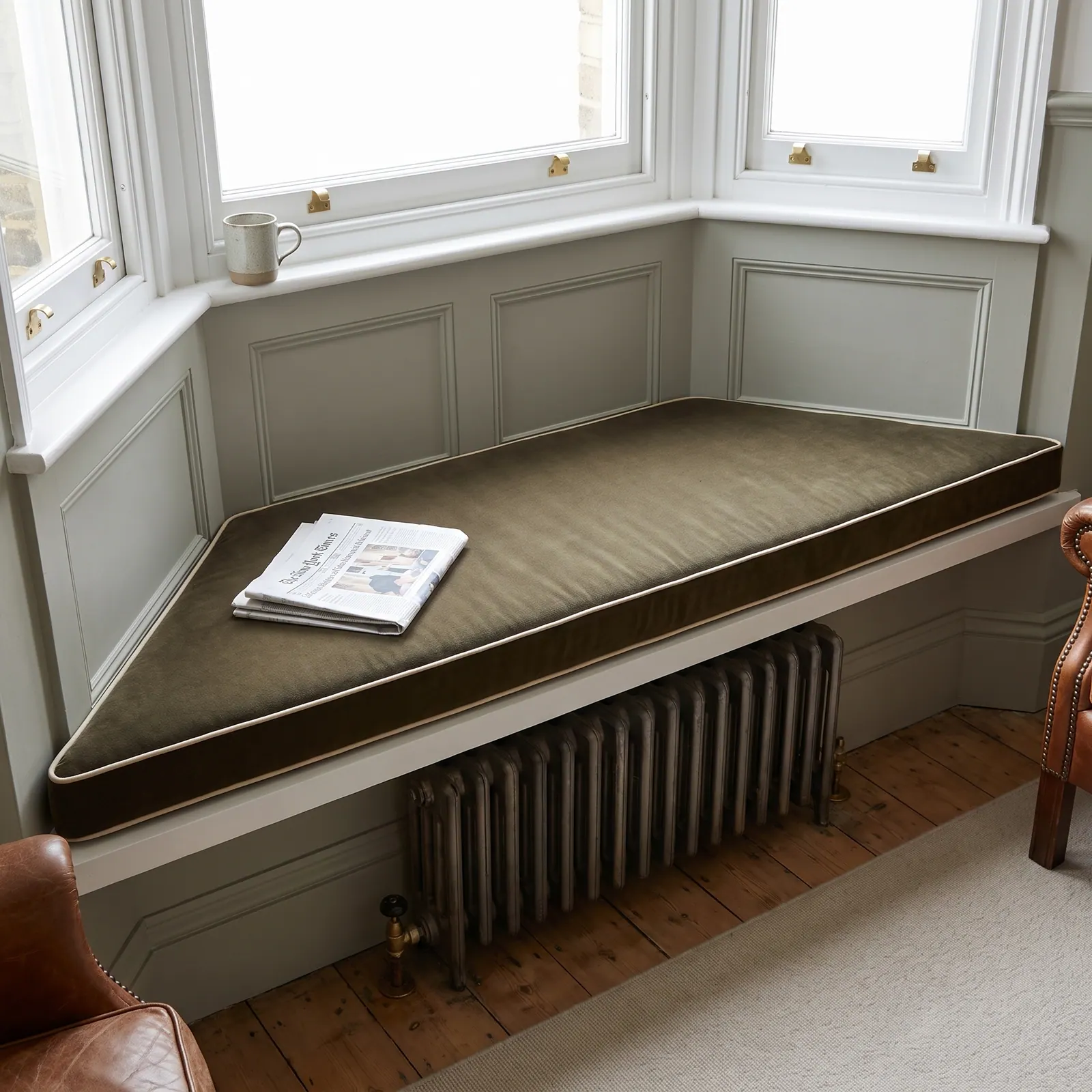
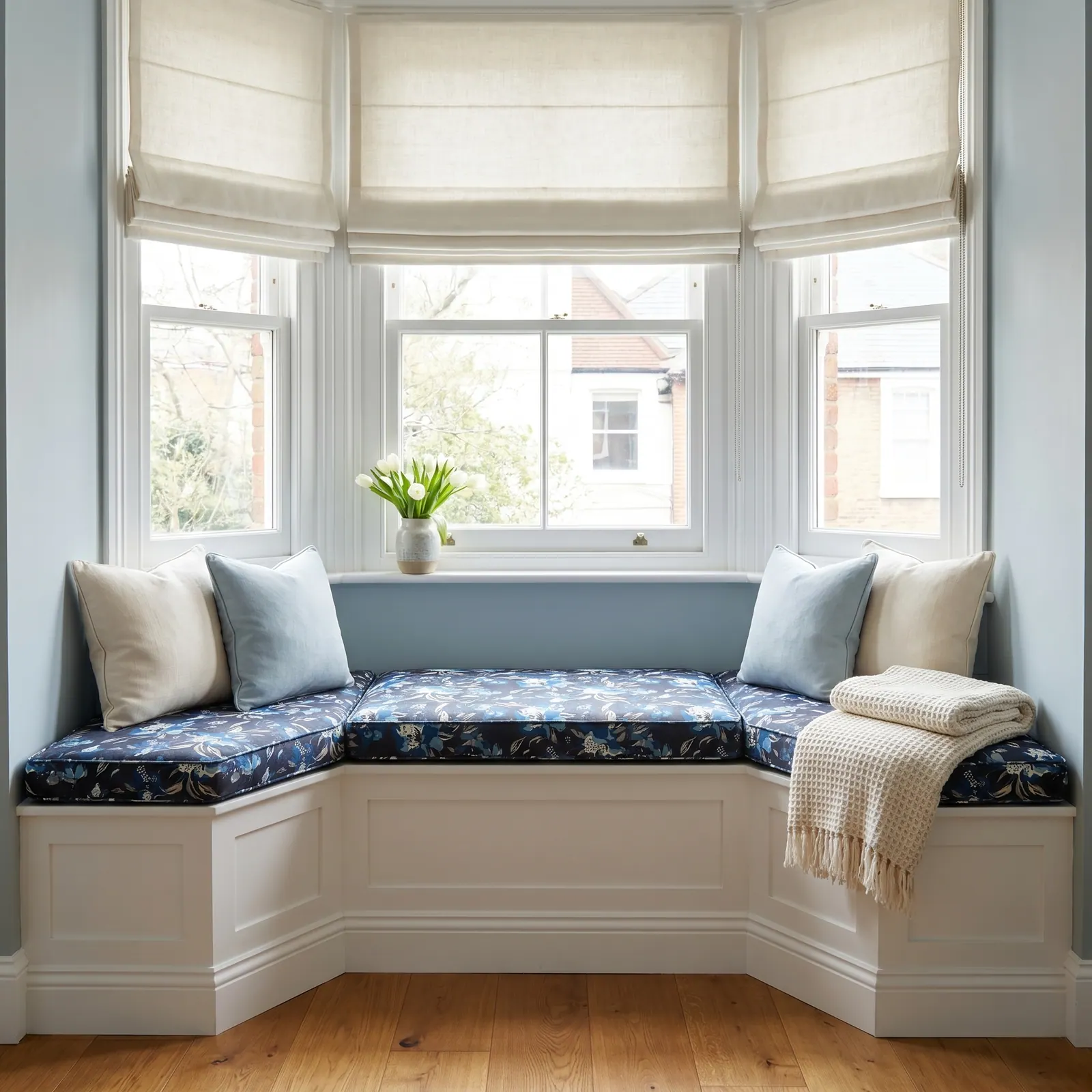
SaveA mustard bouclé mattress on a walnut daybed, backed by pillows that step from charcoal to cream.SaveSage piping on an oatmeal cushion takes its cue from eucalyptus on the sill and a sage pillow at the wall.SaveTone on tone: cream bouclé, an oatmeal throw and linen curtains let the light do the decorating.SaveThe colors swap at the seams: olive piping outlines the ivory seat, and ivory piping outlines the olive pillows.SavePale oak and white walls leave room for one strong print; the gold chevron runs the length of the seat toward the light.SaveA slim gray melange cushion on an oak bench, styled with an olive tree, line drawings and a single boucle pillow.SaveA graphic black-and-cream cushion spans a white bay, grounded by a faded Persian rug and a potted fiddle leaf fig.SaveDusty rose crinkle-textured cushions follow the angles of a cream bay, lit by morning sun.SaveSage paneling, a leather armchair and a morning newspaper make this olive seat a sitting-room reading ledge.SaveA bay window seat split into three cushions, each cut to its own wall, in one navy floral with self piping.SaveNavy corduroy cools a room full of mustard, pine and brown florals. Hung low over the seat, the rattan pendant marks it as a spot of its own.
If living room cushions are ordered separately, dye batches can differ slightly; order the window seat, floor sofa and pillows together.
The hero photograph is an arched alcove near the end of the day: an oatmeal and slate pinstripe cushion on an oak ledge, linen sheers, terracotta tile below. The stripe is quiet enough to let the light speak, and the terracotta warms the gray. When a room already has a strong floor or wall, give the cushion the supporting role.
Elsewhere in the gallery: crossed piping on a mid-century bench, ivory seat and olive pillows; a dusty rose bay seat catching morning sunbeams.
Does the floor sofa come with its metal bars, and how many are there?
The workshop's answer
Yes. The bars are included and needed to hold the backrests and armrests; bed-setup photos just don't show them. A single teddy sofa has 2 armrests, 2 seat cushions and 4 bars, a 3-seater uses 5 pieces, the L-shape with ottoman 6, and a full corner set 8 large and 8 small. A plain ottoman needs none. Bars may arrive in a separate parcel with set-up instructions; if a piece is still missing, photograph what came and ask the workshop what it will send.
A common question
My floor sofa came out of the box flat and folded. Did I get the wrong thing?
The workshop's answer
No, that is how it travels: seats and backrests are vacuum-compressed and roll-packed. Unwrap every piece. Most fill out in 24 to 36 hours and reach the photographed shape in about 36 to 48, with full firmness after 3 to 5 days, occasionally a week. Shaking them by hand helps, and you can sit on the sofa meanwhile. If a piece is still flat after another 4 to 5 days, photograph it and ask the workshop about a replacement insert.
A common question
I chose the wrong color for my floor sofa. Can it still be switched?
The workshop's answer
Usually, until it ships. Buyers have gone from brick to navy, white to brown, beige to mustard and more after checkout; production is checked first. Send the exact color name or number from the chart, not a general shade. If the order is already packed and leaving that day, it goes as ordered, and an extra cover set in the other color is the answer.
A common question
Our sofa base curves at both ends and the old cushions are gone. Can you still make new ones?
The workshop's answer
Yes. Curves need a sketch or a template, not numbers alone: mark where each curve starts and ends and how deep it runs, or trace the seat onto paper, cut it out and photograph it flat beside a tape measure. One base measured 68 in along the back and 63 in along the front with curved ends. When the original cushions are missing, the team can work out the sizes from the sofa itself.
A common question
Only part of my set came out the wrong size. Will you remake all of it?
The workshop's answer
Only the parts that don't fit. Send a tape-measure photo of each piece that doesn't fit. In past cases of a workshop error, just those pieces were remade, for example a new seat and backrest while correct armrests were kept, and the wrong ones weren't returned. A partial refund has been the other choice. Remakes traveled by FedEx with tracking.
Have it made
Have your living room cushions made — ask Élodie’s workshop
A fabric reads one way at noon and another at dusk. Mention your light, and the workshop will weigh it with you. — Élodie
Leave your details and the workshop will call you to confirm measurements, fabric, foam and piping. No prices, dates or payment on this page: it is a request, not an order.
Fabric · Foam · Pipingwhat the workshop will confirm with you
Is there foam inside a tufted living room floor cushion?
No. Tufted French floor cushions and backrests have no foam core. They are packed tightly with siliconized polyester fiber balls, a cotton-like hollow fiber, and deliberately overfilled so they stay firm and don't press flat. They are normally 4 to 5 in (10 to 12 cm) thick.
Why does my new cushion look brighter than the swatch I chose from?
New production fabric looks cleaner and brighter than chart swatches, and swatches and close-up photos can read darker or coarser than the real cloth. Color also shifts between daylight, lamplight and screens. Photos of finished cushions are the most reliable reference before you order.
Can a tufted living room cushion have piping on its backrest?
Not on the same piece. Piping on backrests and armrests needs a non-tufted style, and the French hand-stitched edge exists only on tufted cushions. Choose one look per piece: tufted with the hand-stitched edge, or plain with piping.
How large can a living room floor cushion be made?
The largest tufted square floor cushion is about 48 x 48 in (122 x 122 cm), and round French floor cushions go up to about 49 in (125 cm) across. Quarter-round corner cushions are sized by their two straight sides, up to 48 in as standard.
How high off the floor does velvet floor seating sit?
The velvet floor-seating seat is about 6 in (15 cm) thick, with 8 in (20 cm) as an option. For a taller perch, deep-base floor cushions are 12 in (30 cm). Tufted French floor cushions sit lower, at 4 to 5 in (10 to 12 cm).
With color and care — Élodie
Share this atlas entry
Readings
Photographs read by the masters: living room cushions
Real cushions made for real rooms, each read for proportion, fabric and fit.

 Save
 Save
 Save
 Save
 Save
 Save
 Save
 Save
 Save
 Save
 Save
 Save