The Pattern Room · a measuring pattern
Measuring a T-cushion for an armchair or sofa, ear to ear
A T-cushion reaches out in front of the arms like a handshake. Measure both hands, and the new one will sit the way the old one did on its best day.
 Save
The quick answer
For a T cushion replacement, measure six things: the front width ear to ear, the back width between the arms, the total depth, the ear depth from the front edge to where the arm begins, the step on each side, and the thickness. Check that the back width plus both steps equals the front width, and trace a paper template if the step is curved.
The cushion that shakes hands with the arms
A T-cushion is the one seat that has to shake hands with the arms. Behind them it runs narrow. In front of them it widens into two ears that reach out to the edge of the chair. Get an ear wrong by an inch and you will see it every time you sit down.
That is why a T cushion replacement never starts with two numbers. Two numbers make a rectangle. A T takes six, and the one most folks forget is the ear depth.
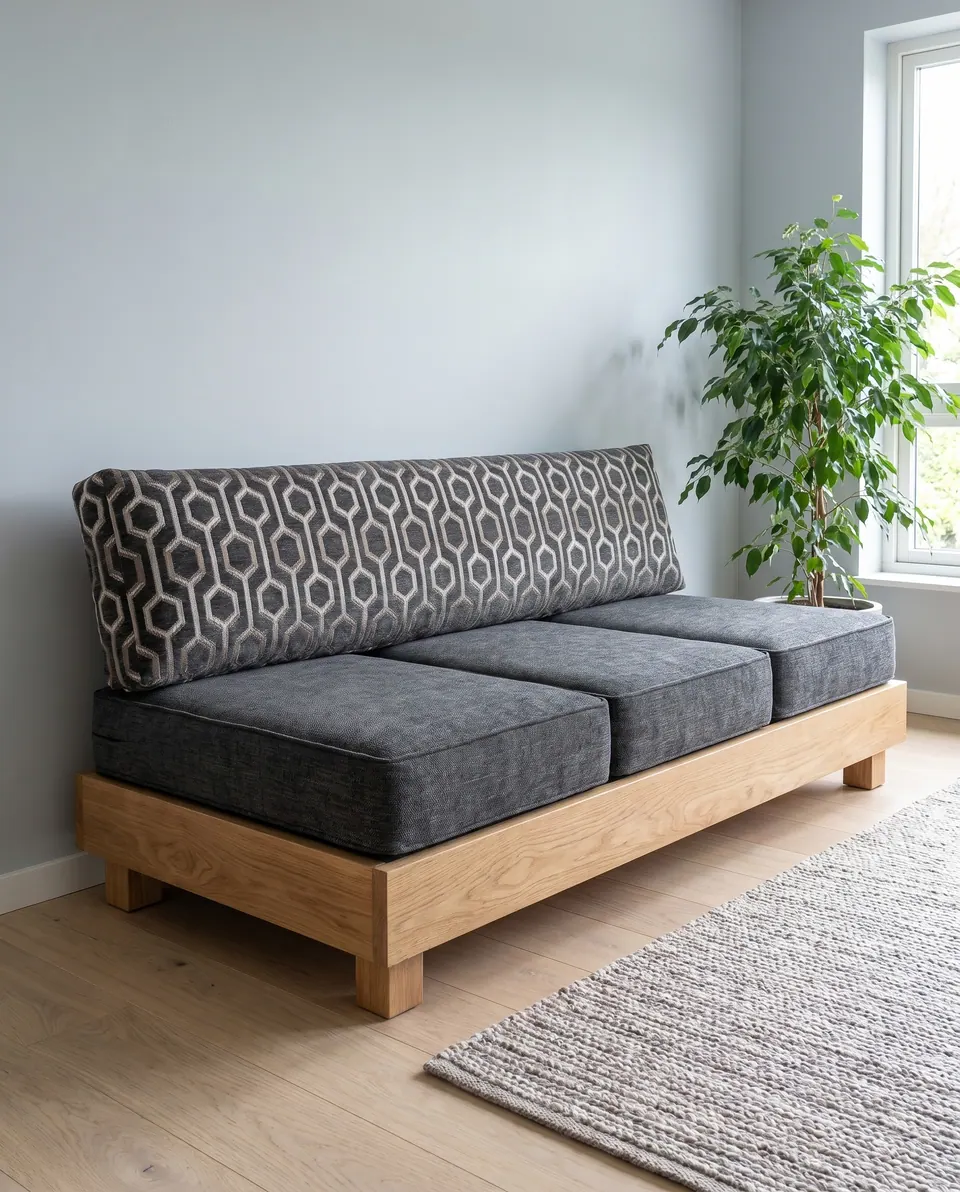
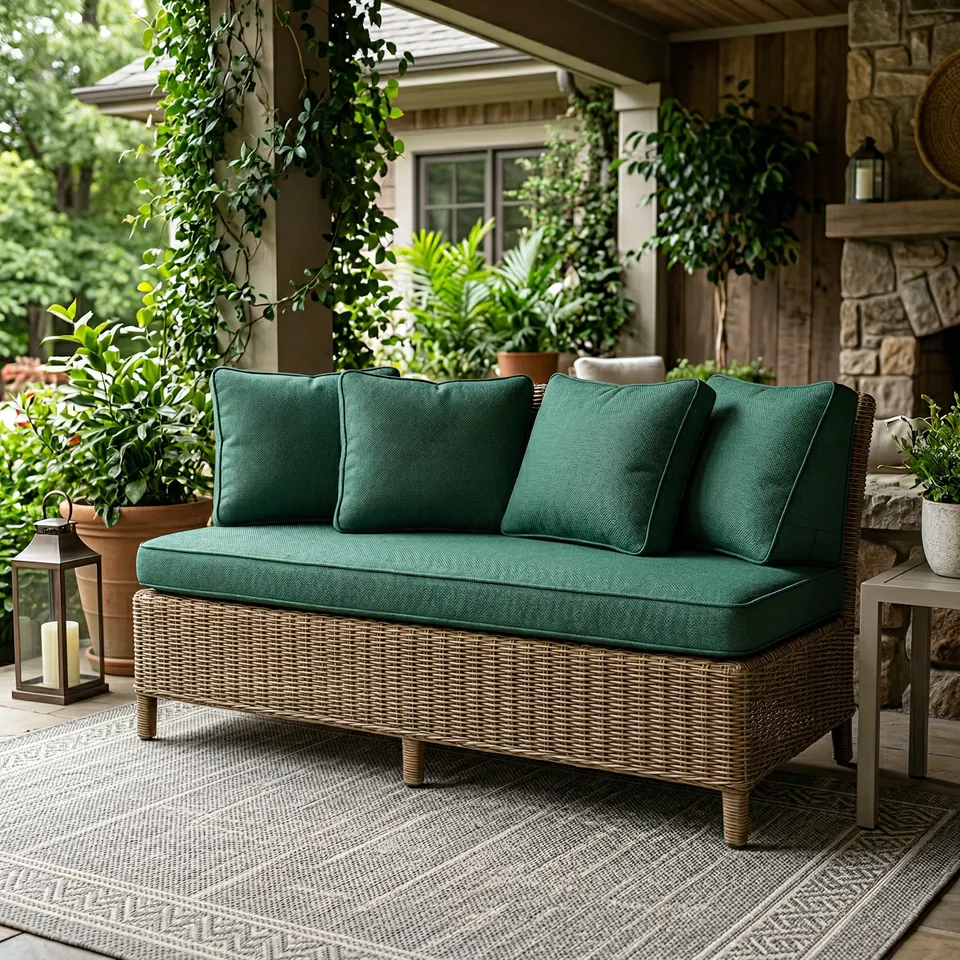
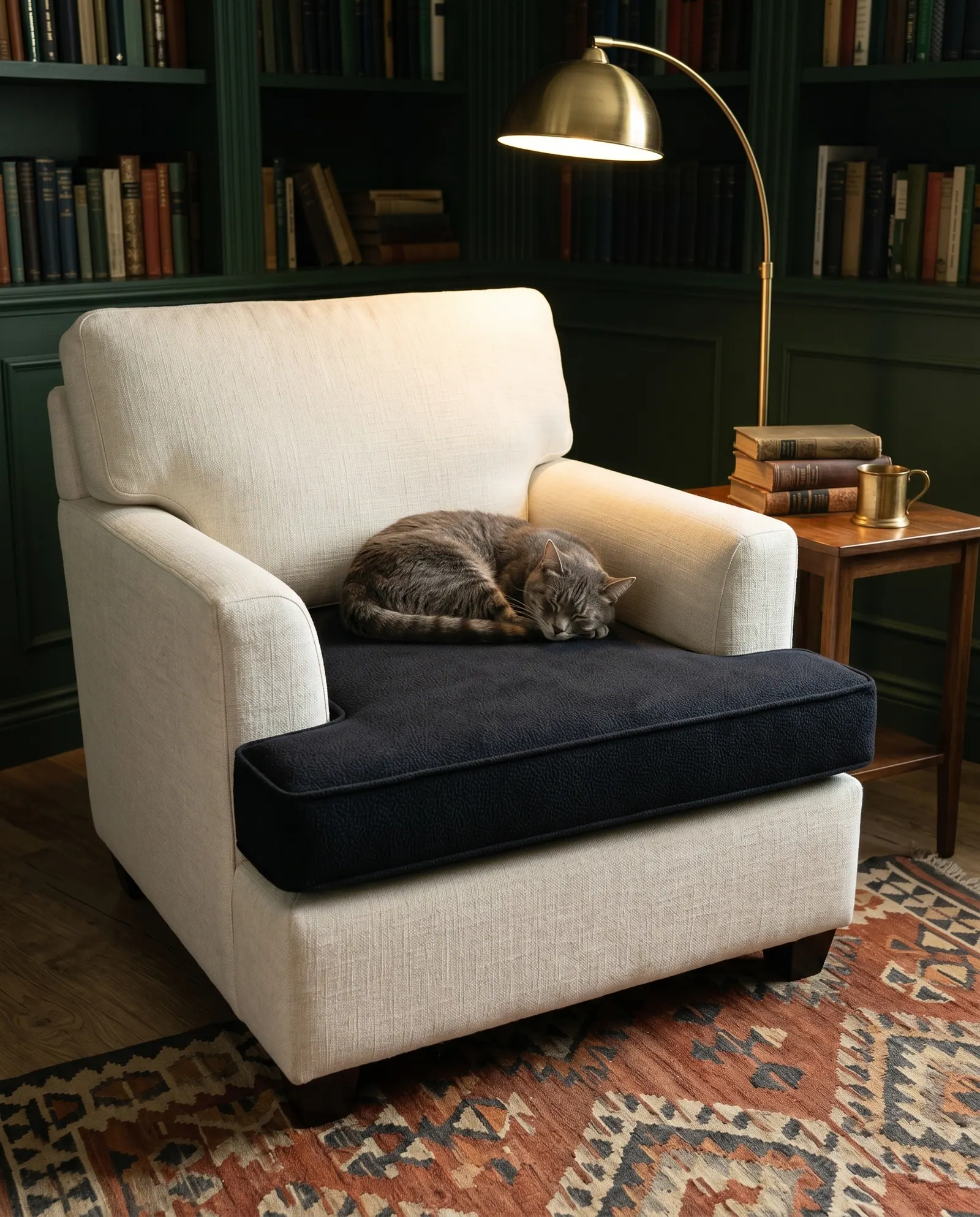
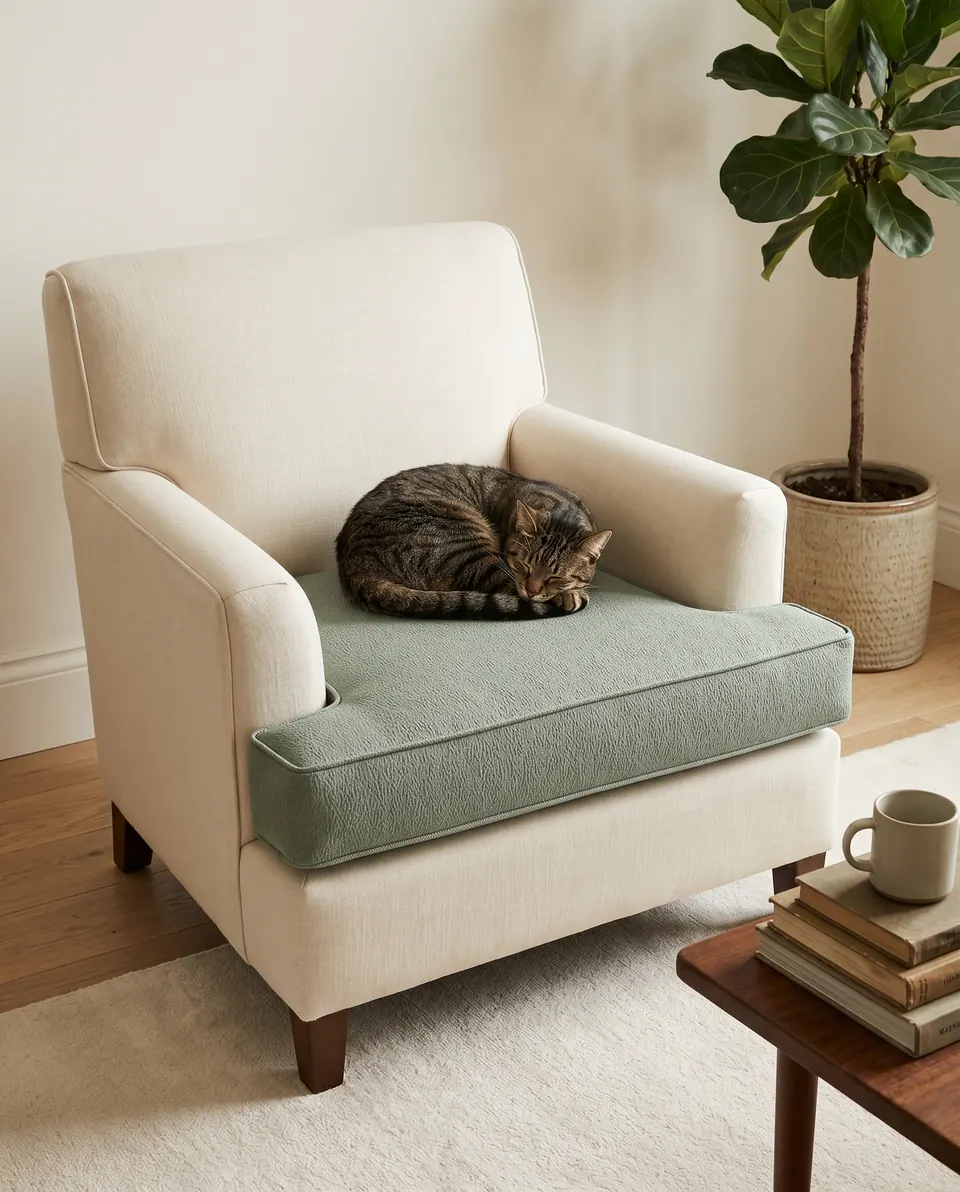
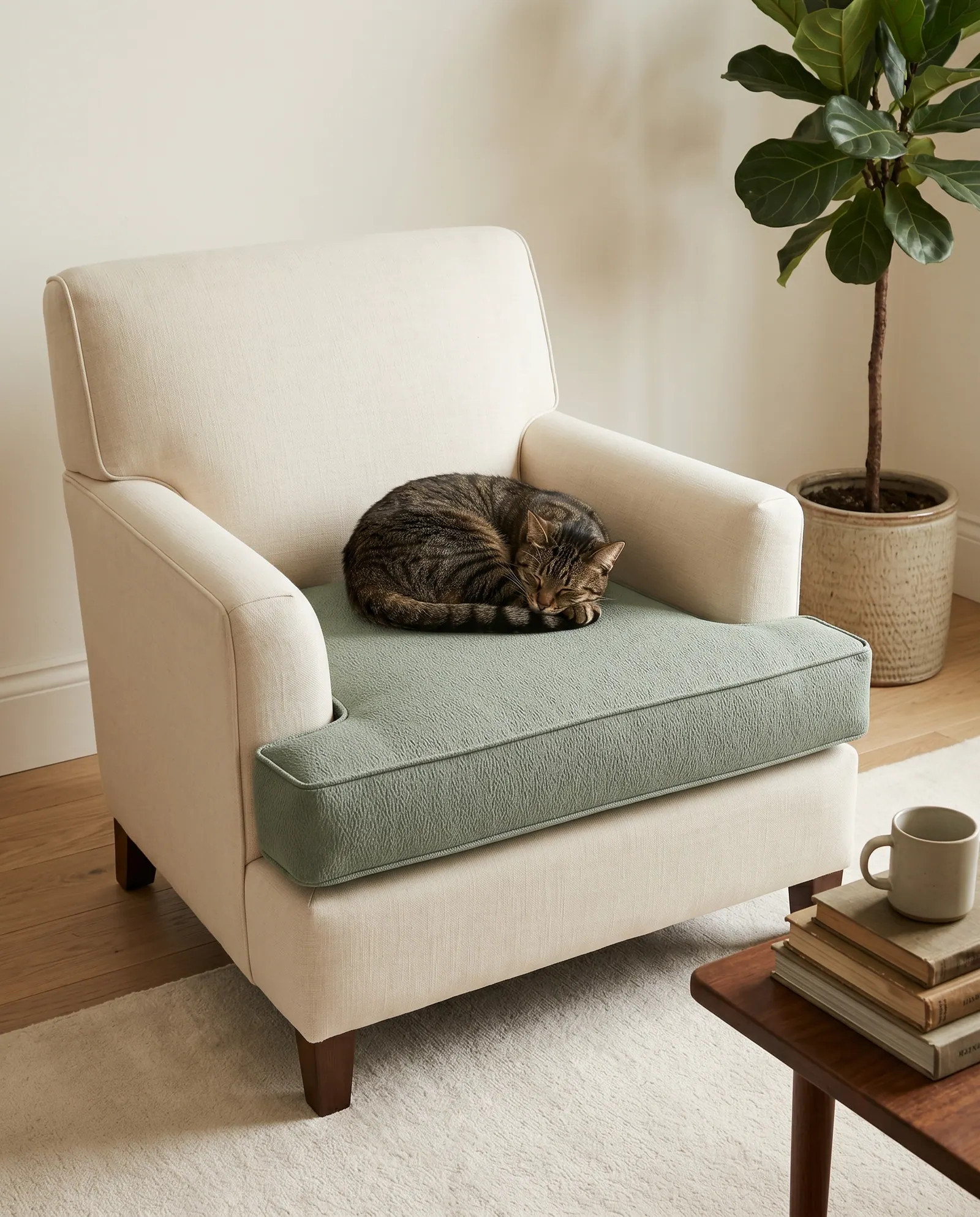
The photos show two of them: a black seat on a cream library armchair and a sage one on another cream armchair, both in tight pet-friendly weaves, and both with a tabby asleep on top. More armchair and sofa seats live under sofa and couch cushions.
Six numbers and a tracing, step by step
Lift the old cushion out and set it on the floor, top side up, zipper to the back. If it still fit the chair well, measure the cushion. If it slumped or spread, measure the seat deck inside the arms instead. Work to the nearest 1/4 in and give every number a letter.
A: front width, ear to ear
Measure straight across the front edge from the tip of one ear to the tip of the other, seam to seam. This is the widest number on the cushion. Take it at the square edge, not over the domed top, which reads long.
B: back width between the arms
Measure across the back edge, the narrow section that sits between the arms. Many old armchair seats taper as well, so if the width just behind the ears differs from the back edge, write both.
C: total depth
From the middle of the front edge straight back to the back edge, square to the front. Take it again at each side. If the three numbers differ, the front or the back is curved, and you will want a tracing.
D: ear depth
From the front edge back to the point where the cushion steps in, which is where the arm begins. Measure the left ear and the right ear separately. Old chairs are not always symmetrical, and neither are the cushions that lived in them.
 Save
A sage T-cushion replaces a worn armchair seat and adds a new color. The notched front fits snugly around the arms. S: the step on each side
Measure how far each ear reaches out past the back section, left and right. Then add it up: B plus the left step plus the right step must equal A. The trade letters its T-cushions the same way for that very reason. If the sum does not close, one number is wrong, and the floor is a kinder place to find it than the cutting table.
T: thickness
Measure the side band seam to seam with the cushion at rest, not pressed flat. Comfort lives in this number. Keep the old thickness unless the chair always sat too low or too high.
Trace it if the step is curved
If the ear curves into the arm instead of turning a square corner, lay paper on the cushion or the seat deck, trace the outline and cut it out. Write A and C on it, photograph it flat from above with a tape in the shot, and keep the paper at home. The paper template Pattern walks through it.
Pattern sheet Lay paper on the seat and trace the edge, write the widest width and the front-to-back depth on the template, then photograph it flat from directly above with a tape measure in the picture. Draw it, letter it, send it
Sketch the T from above as you stand in front of the chair, with A, B, C, D and both steps written on their edges and the thickness beside it. Add a photo of the chair. The workshop redraws it as a clean diagram and waits for your yes before anything is cut. Custom shape drawings covers the lettering, and the quote page takes the finished sketch.
Have it made
Measured it? Have Harlan’s workshop make it
The best cushions I have known began with somebody asking one more question. Ask yours here. — Harlan
Leave your details and the workshop will call you to confirm measurements, fabric, foam and piping. No prices, dates or payment on this page: it is a request, not an order.
On the cutting table: a T-cushion, letter by letter
| A · Front width | Ear to ear across the front edge, seam to seam |
|---|---|
| B · Back width | Across the back edge, between the arms |
| C · Total depth | Front edge to back edge, at the center and both sides |
| D · Ear depth | Front edge to where the arm begins, left and right |
| S · Steps | How far each ear reaches past the back section; B + S + S = A |
| T · Thickness | Match the old cushion; 4 in (10 cm) is the standard seat, and 5 and 6 in chair cushions have been made |
| Edge | Box edge, with the piping following the T around the top and bottom |
| Zipper | Across the back edge, against the chair back; underside on request |
| Foam | 32-density HR foam wrapped in polyester wadding, as the workshop recommends for armchair seats |
| How it's ordered | Custom-shape listing, sized by the widest width and deepest depth, with the lettered drawing uploaded |
Copy the old cushion, or measure the chair?
If the old cushion fit well, copy it. The workshop replicates chair seats and backs from photos of the chair plus the size of each cushion, and quotes per chair. Thinner foam costs less, 4 in less than 6 in, and piping in the cushion's own color costs nothing extra.
If the old cushion has slumped, spread or gone missing, measure the chair. A buyer wrote to the workshop with a two-seater frame and no cushions at all, wanting curved seats. The workshop asked for the straight length of each side before the curve began and how deep the front curve ran, and its craftsmen worked the rest out from the sofa itself.
An old cushion tells you what it has become, my friend. The seat deck tells you what it ought to be.
One T, one rectangle, and a tape photo that settled it
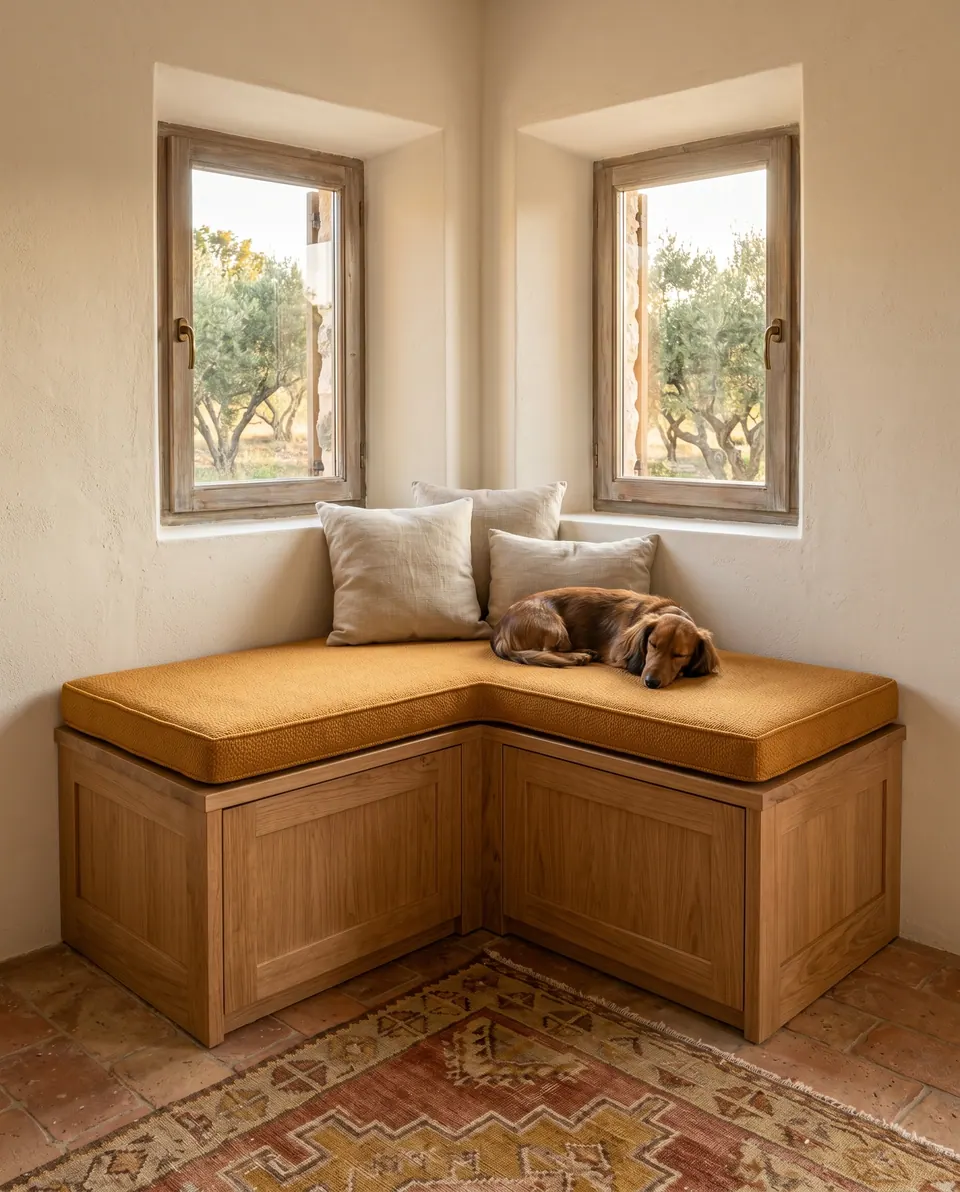
A buyer ordered an inverted T-shaped window seat cushion and a rectangular one to sit beside it, both at the same thickness, with a sketch for the T. It was the plain rectangle, not the shaped piece, that came up short: about 75 3/4 in (192.5 cm) instead of 77 1/4 in (196 cm).
The buyer laid a tape along it and sent the photo. The workshop apologized and remade it at the right length.
What I took from it: measure every piece the day it arrives, flat and at rest, the plain ones as carefully as the T. A seam is a promise, and so is a size. A photo of the tape is how you hold a maker to both.
- Measured
- Inverted T plus a rectangle; rectangle 75 3/4 in (192.5 cm) instead of 77 1/4 in (196 cm)
- What it taught
- Measure every piece on arrival and send a tape photo; plain pieces need checking as much as the shaped one.
When a T grows too big to be one piece
Small Ts are simple. The workshop makes an inverted-T cushion in one piece from a sketch that shows every dimension and where the cut-outs go, in the same 2, 3 or 4 in (5, 7.5 or 10 cm) thicknesses as a rectangle beside it.
Big Ts are another matter. For three T-shaped window seats wrapped around columns, the workshop would not sew T shapes at all. It drew a plan that split them into six simpler pieces, and offered a contrasting fabric along the front edges at no extra cost so the joins read as one line. The story is in T-shaped window seat cushions.
One more thing from the bench. When you wash the cover and put the foam back, fold the foam gently and feed the ears in first. The back section follows without a fight.
T-cushion mistakes I still see
- Two numbers for a T. Width and depth describe a rectangle, and a rectangle leaves gaps beside the arms.
- A shaped seat on the rectangle listing. One shaped armchair order placed that way was cancelled with a full refund and placed again on the custom-shape listing, photos attached.
- Only one ear measured. On an old frame, left and right can differ more than you would think.
- Measuring over the dome. A crowned top reads long. Measure seam to seam at the square edge.
- Sizes typed into a box that drops them. One buyer's personalization text kept vanishing at checkout, so the sizes went by message and the workshop drew a sketch to confirm.
- A back cushion for a curved frame, ordered by numbers alone. Seat pads on curved chairs are straightforward; the back pressed against the curve is the risky piece, so send a straight-on photo of it.
A T-cushion takes six numbers, not two: front ear to ear, back between the arms, depth, ear depth, each side step and thickness.
Harlan Pruitt
Buyer questions: shaped seats, templates and cut-outs
- A common question
My chair cushion isn't a rectangle. Which listing do I order it on?
The workshop's answerThe custom-shape listing. Pick the size range by the longest length and the deepest depth, which only sets the price bracket, then upload a drawing with a measurement on every edge and put the thickness and fabric code in the personalization box. The cushion is cut exactly to the drawing.
- A common question
Do I need to make a paper template and mail it to you?
The workshop's answerNo. A drawing with every edge measured, or photos plus measurements, is enough. If you do make a full-size template, or want to copy an old cover, photograph it with the measurements marked instead of posting it. The shop checks that the numbers add up before quoting.
- A common question
Can a cushion be cut to fit around posts or legs?
The workshop's answerYes. Mark each notch's width, depth and position along the edge on a drawing, and add a few wide photos of the seat. The shop redraws it as a template for your approval before cutting. If a notch sits on the back edge, say so, because that's where the zipper runs.
- A common question
My chair is small. Can you make a cushion below your smallest size option?
The workshop's answerYes. Choose the smallest or closest option and write your real size in the personalization box; the cushion is cut to your numbers. The price can't go below the smallest option, because shipping is a large part of a small cushion's cost. Several small cushions ordered together earn a discount.
T-cushion questions from the workbench
Where does the zipper go on a T-cushion?
Across the back edge, where it faces the chair back and stays out of sight; you can ask for the underside instead. The zipper stays on the narrow back section, so the ears and the front edge keep a clean line.
Can a replacement T-cushion be flipped over?
Yes, when both faces are cut from the same fabric and the piping runs top and bottom, as on a boxed cushion, and when there's no non-slip bottom. A lopsided T flips into its mirror image, so check that both ears match before counting on it.
Does a T-shaped cushion cost more than a rectangle?
Yes. Shaped pieces take more cutting and sewing, so they're priced above a rectangle of the same overall size. There's no charge for the template or the drawing, and the quote comes back as one price for the cover and the foam; ask it to spell out shipping too.
How close to my numbers will the new T-cushion be?
Handmade cushions land within about 1/2 to 1 in (1 to 2.5 cm) of the ordered size, and a full, crowned cushion can measure a touch over. Every cushion is measured after sewing and photographed before shipping; ask for a photo with the tape on the shaped edges.