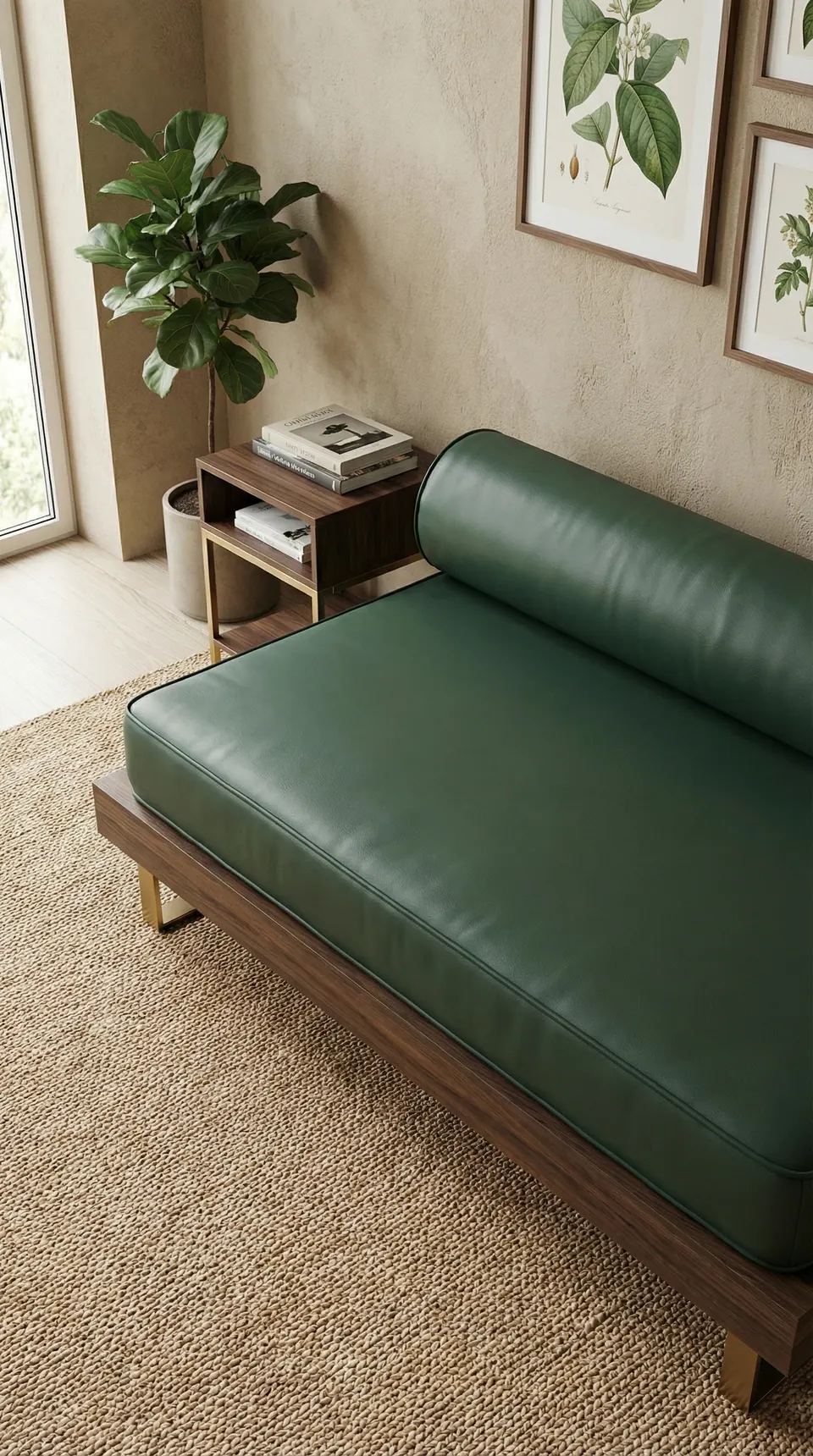
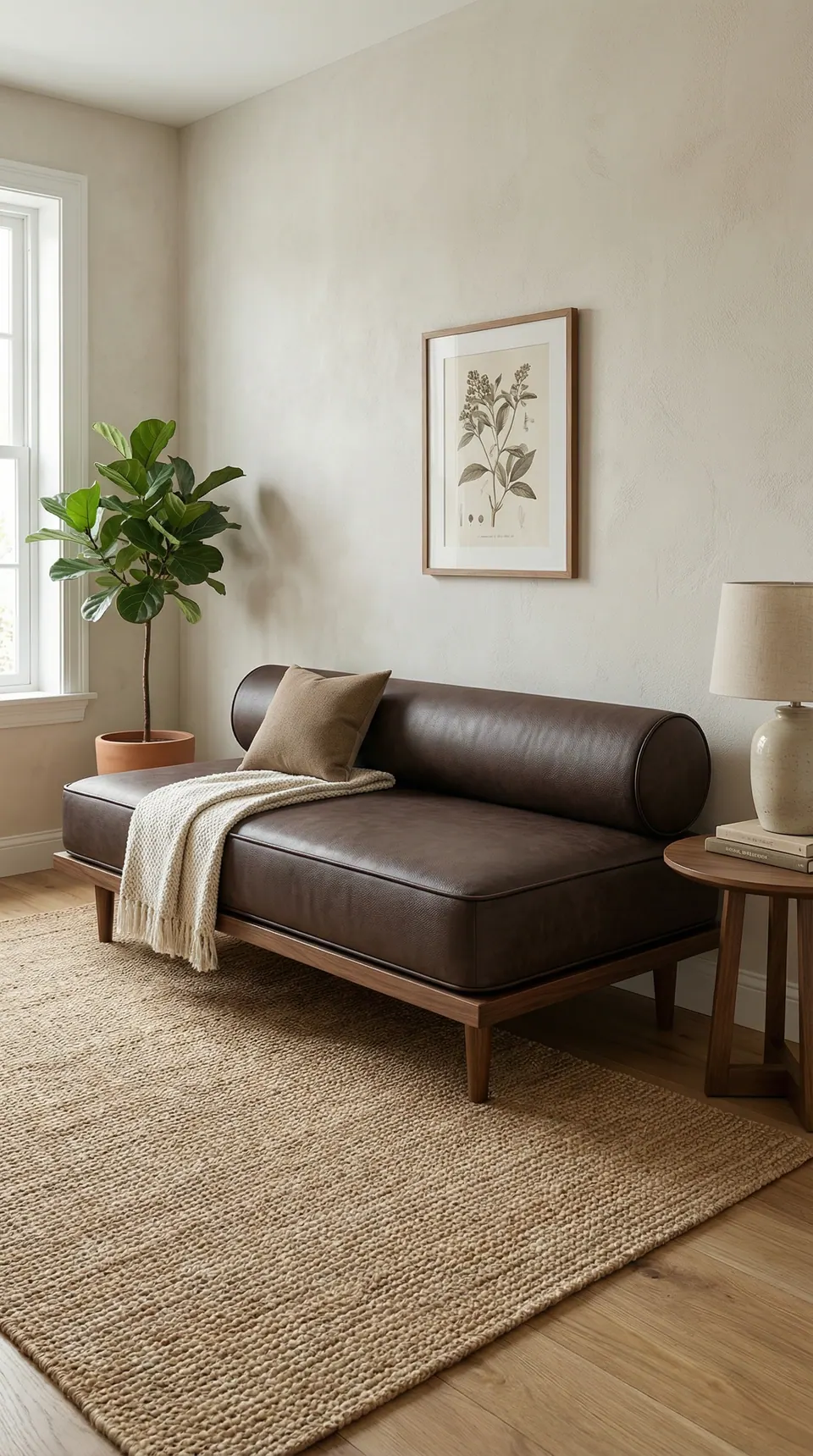
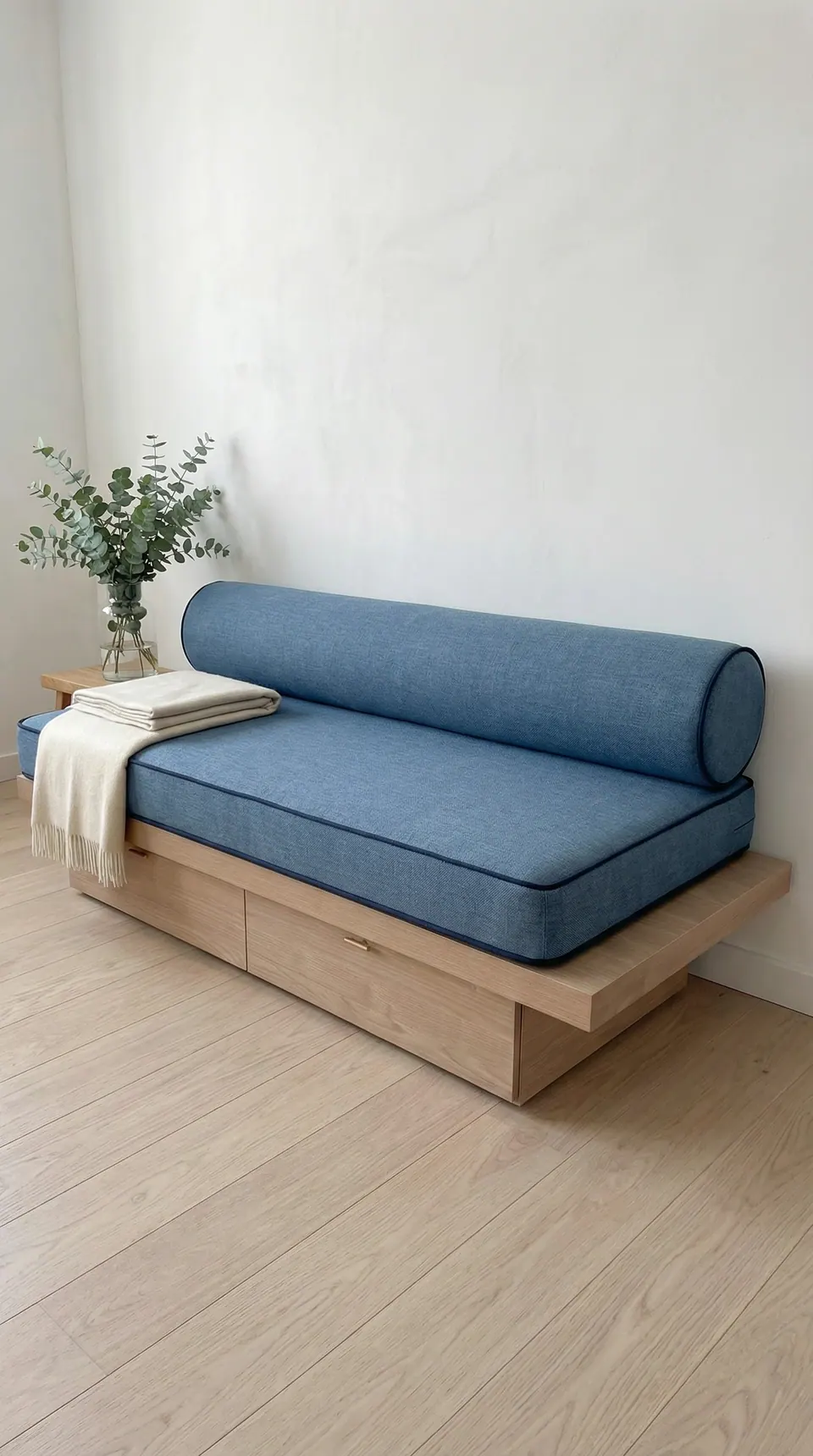
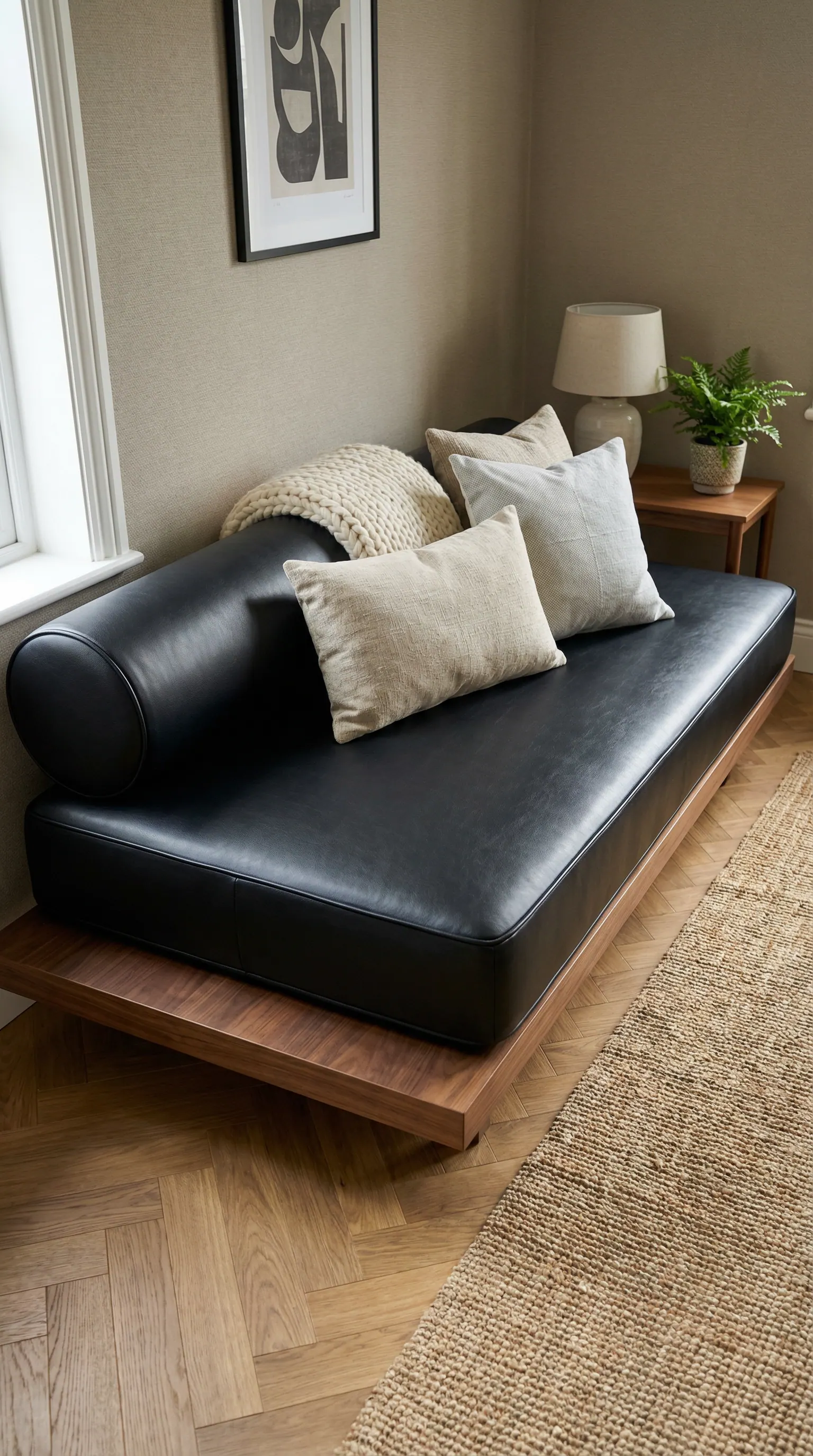
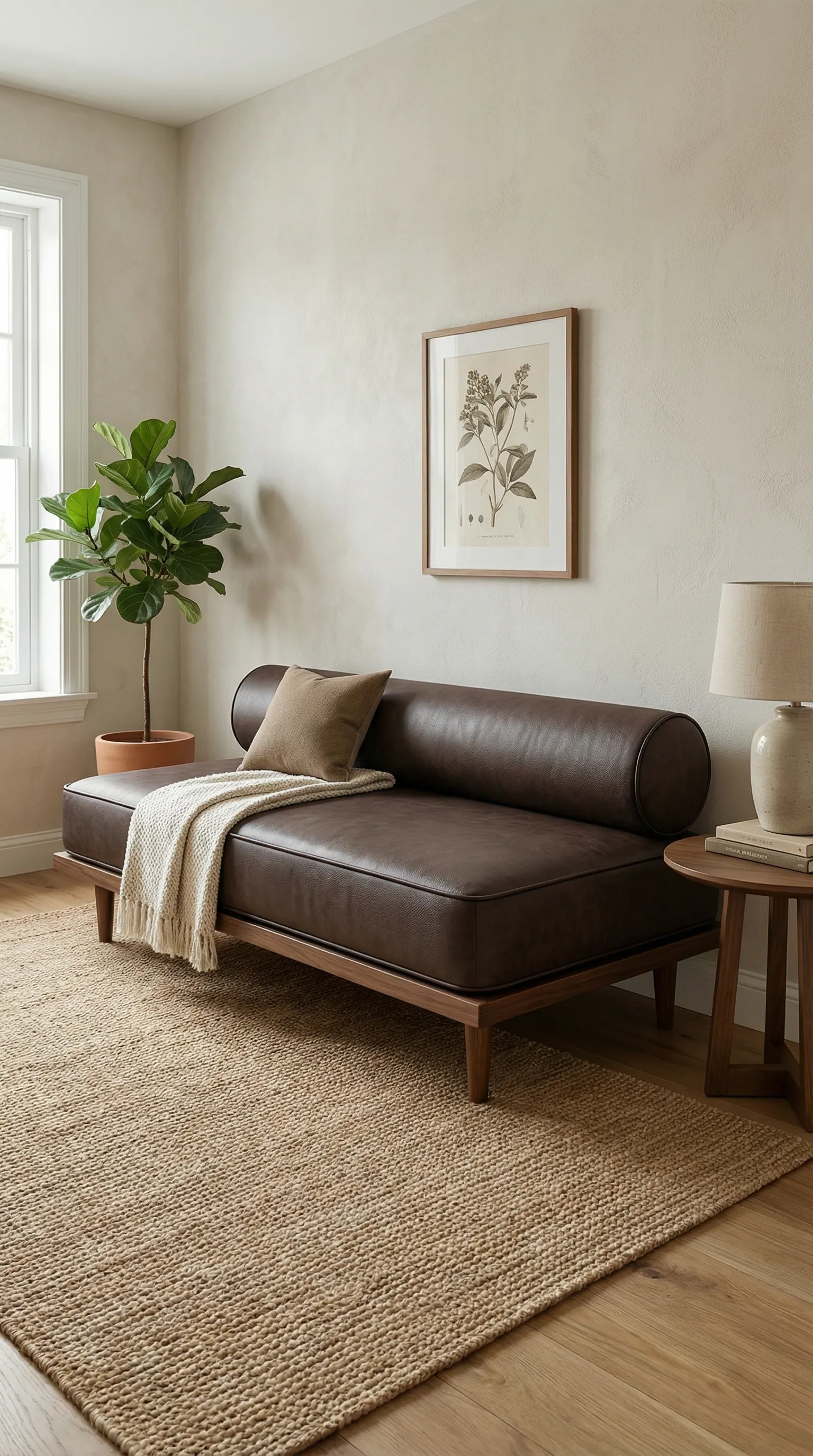
SaveBlack leather-look fabric on a warm walnut plinth, softened by three pale linen pillows and a chunky knit throw.
The quick answer
A daybed cushion is usually a fitted, zippered cover made to the exact length, width and thickness of the mattress, from twin (about 38 x 75 in) and twin XL (38 x 80 in) to full or queen. Back cushions about 20 in (50 cm) tall and a bolster at each end turn it into a sofa by day. Measure the mattress, not the frame.
Every one is cut to your measurements. The number is how many readings the atelier has published for that shape.
Sizes & measuring
Daybed cushion sizes, measured on the mattress
Measure the mattress once the daybed has arrived and the mattress is in it. Mattresses sold under one size name still vary.
How to measure Seen from above, the cushion fills the frame: measure length and depth inside it, wood to wood. Seen from the front: the thickness you want.
Measure the mattress once the daybed has arrived and the mattress is in it. Mattresses sold under one size name still vary.
Mattress or deck
Typical size
What to send
Standard twin
About 38 x 75 in (97 x 191 cm)
Length, width and thickness
Twin XL
About 38 x 80 in (97 x 203 cm)
The same three numbers
Thick twin (real order)
39 x 75 x 12.5 in
Thickness at the fullest point
Two stacked mattresses
One cover at the combined height, e.g. about 31.5 x 79 x 12 in (80 x 200 x 30 cm) for two 6 in (15 cm) layers
A daybed is a twin-size bed framed on three sides. By day it is a sofa. By night it sleeps one, and sometimes a trundle underneath sleeps a second.
The cushion is a mattress in a tailored jacket. A fitted daybed cover wraps the mattress like a box cushion, with a band as deep as the mattress. Back cushions stand against the wall. Bolsters take the arms. A platform daybed with no mattress takes one thick cushion cut to the deck.
It suits guest rooms, studios and the corner of a small apartment where a sofa and a bed will not both fit. For the IKEA frame many buyers own, see Hemnes daybed covers. For the room, bedroom bench and daybed cushions.
The box, the band and the zipper
A daybed cover is a box. Top and bottom panels are joined by a band as deep as the mattress, and the zipper usually runs around two corners so the mattress slides in. It hides on the back edge, against the wall.
The cover is made about ½ in (1 to 2 cm) under the measured thickness. The fabric gives a little. The cover sits snug instead of loose.
Piping draws the outline. Self piping is calm; contrast piping, dark on mushroom taupe or navy on ivory, pulls the eye to the edge. Corduroy daybed covers have no piping by design. A tufted daybed mattress is another build: fiber-filled, tufted by hand, sewn closed. For zipper choices, see where the zipper goes.
Fabric for sleeping, not only sitting
Skin touches a daybed. Choose with that in mind.
Smooth, breathable soft fabric is the workshop's answer for hot summers and overnight guests: not scratchy, not plush. It looks close to linen, without slubs or pile.
Linen-look weaves carry most of the colors in our gallery, raspberry to sage.
Linen and cotton-linen: most standard 'linen' charts are blends, so ask for the 100% linen chart if pure fiber matters.
The count is how many published readings use each family. Open a family for its swatch book, care notes and neighbors.
Foam, thickness and a surface that stays put
Most daybed mattresses already belong to the buyer, and the workshop makes the cover. When it makes the cushion too, the foam is high-density and cut slightly larger than its cover so the cover looks full.
Height is a feeling. On a bare platform, 4 in is the workshop standard for seats, and floor beds of 6 or 8 in sit higher off the floor. Check where the seat lands with the seat height calculator.
On smooth wood, add a non-slip base. It replaces the whole bottom panel with a grippy fabric that holds by friction, not adhesive, and it is safe on wood. On a daybed set only the seat cover goes in the machine; filled back cushions do not.
A real project
A yellow daybed for hot summers
A buyer in the US wanted a yellow daybed cushion that guests could sleep on through hot summers. Nothing scratchy. Nothing plush. The workshop matched the color in its breathable soft fabric with self-colored piping, made it 23 5/8 x 79.5 in, and moved it forward for a July deadline.
The courier left the parcel in an unsecured lobby, and it disappeared. The workshop opened a carrier claim and remade the cushion.
Two lessons. Choose a smooth, breathable fabric for a surface people sleep on. Give the courier secure delivery instructions.
Measured
23 5/8 x 79.5 in, self-colored piping
What it taught
Choose smooth, breathable fabric for sleeping surfaces, and give couriers secure delivery instructions.
Where daybed orders go wrong
Quoting a small cushion when the deck needs a large one. One buyer asked for two 18 x 32 in pieces, then measured the whole daybed at about 74 x 36 in.
Measuring the frame, or the old cover, instead of the mattress.
Leaving out the thickness. A maker may assume a double-layer depth.
Forgetting the trundle. Its mattress needs its own cover.
Laying a cushion on a smooth wooden top with nothing to grip.
Choosing fabric by color alone. A guest who sleeps on it notices a scratchy weave first.
Photographs from the workbench
Open any photograph large; each one has its own link and a Save button.
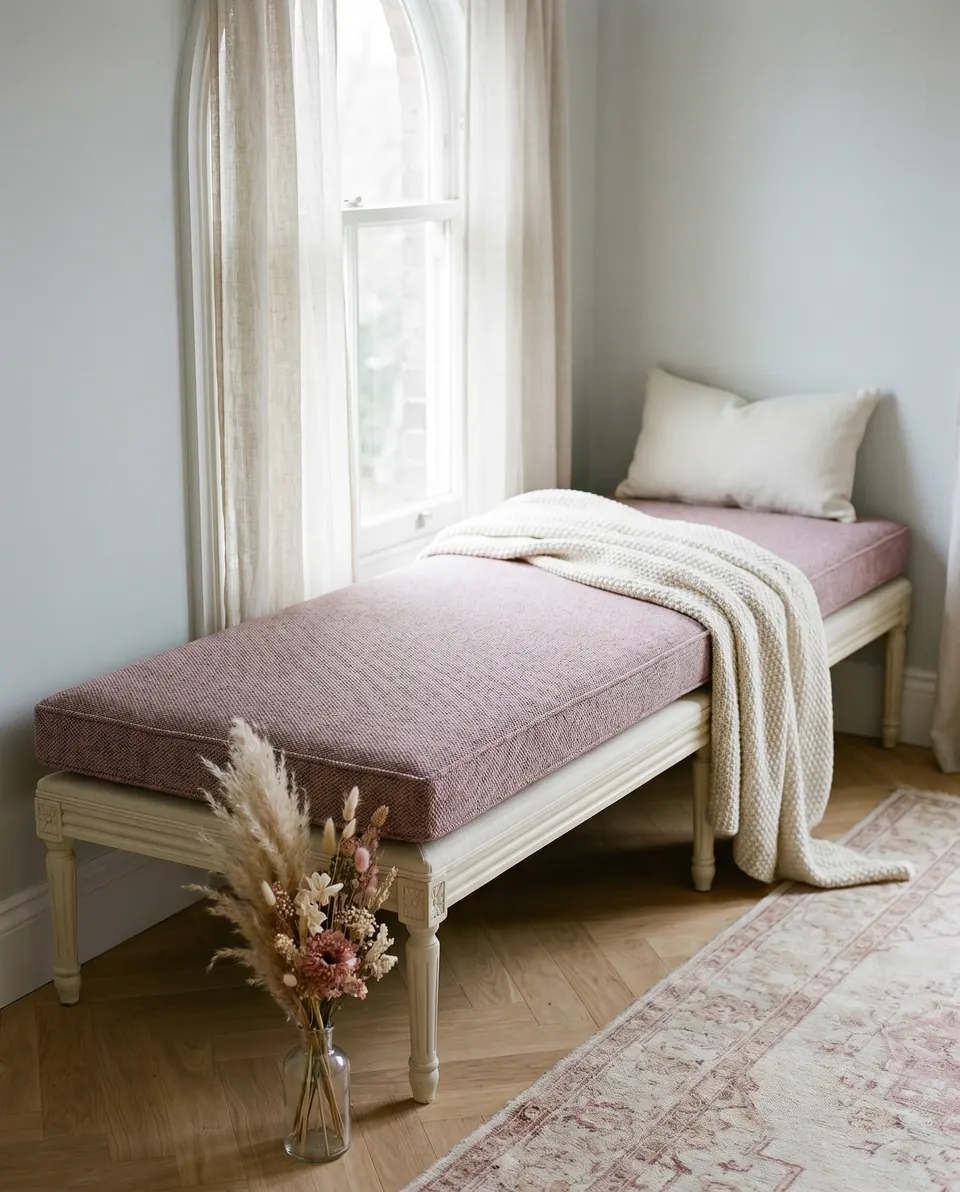
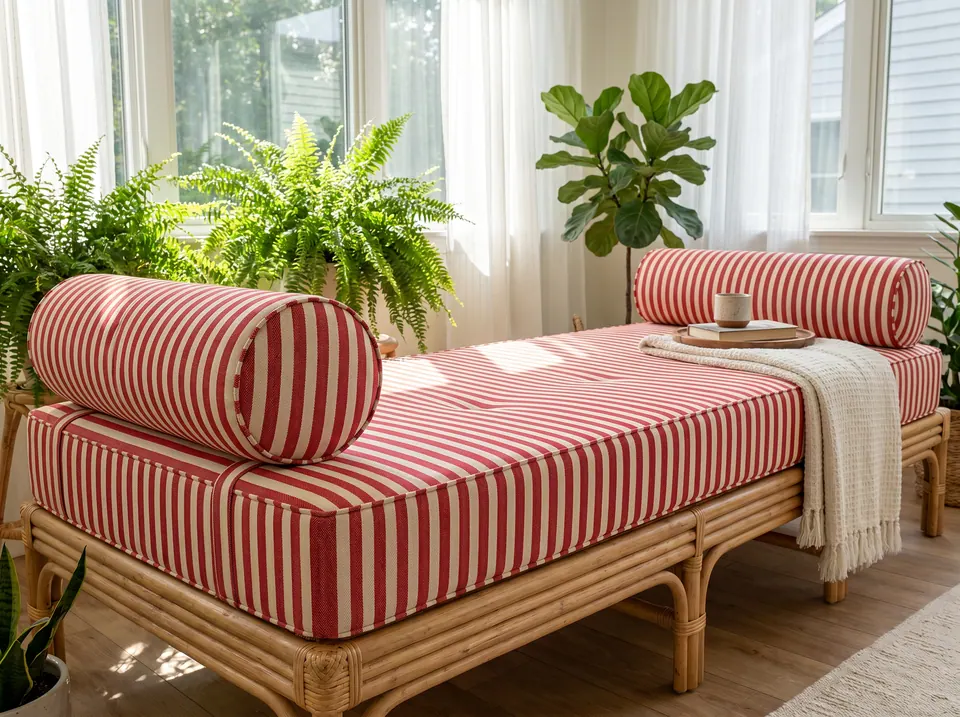
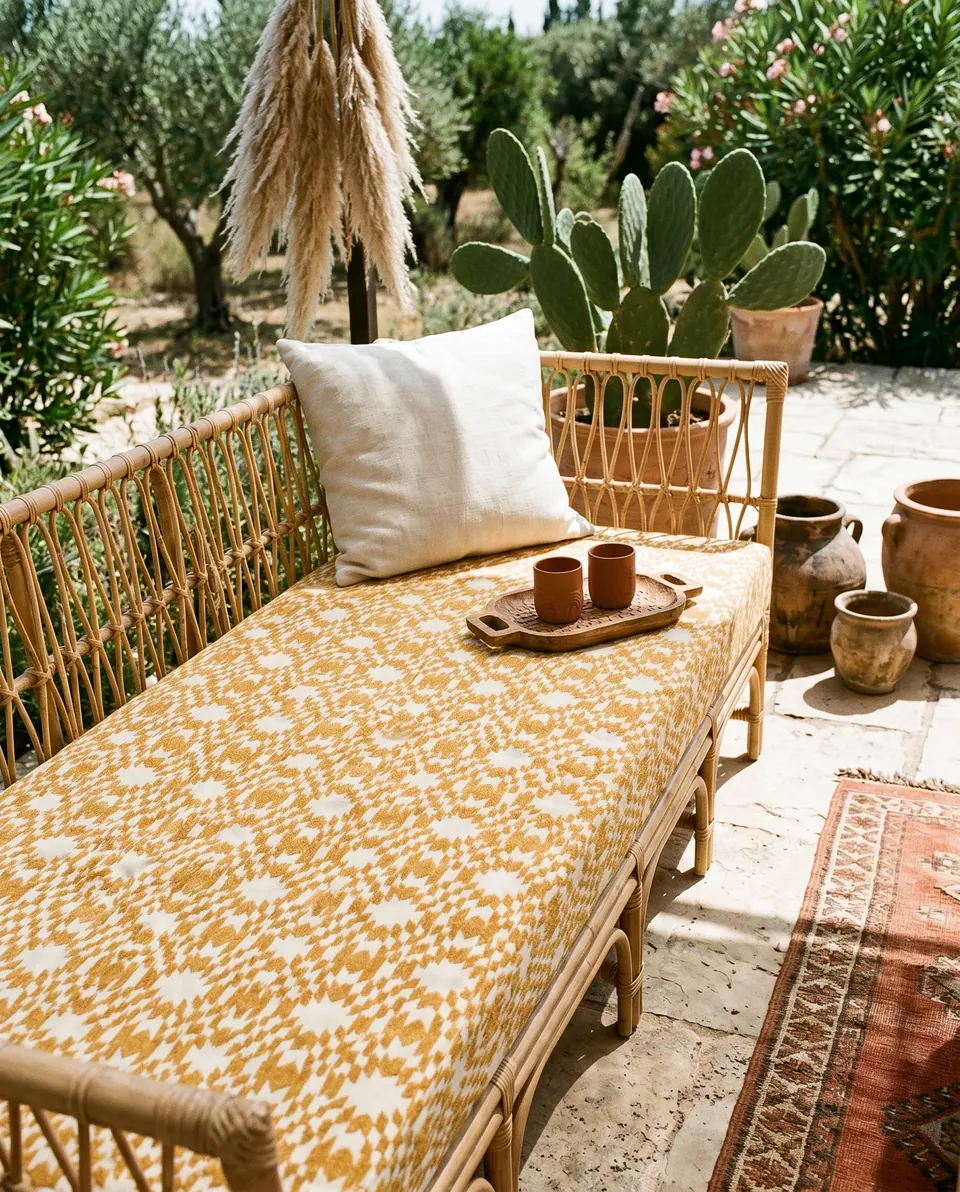
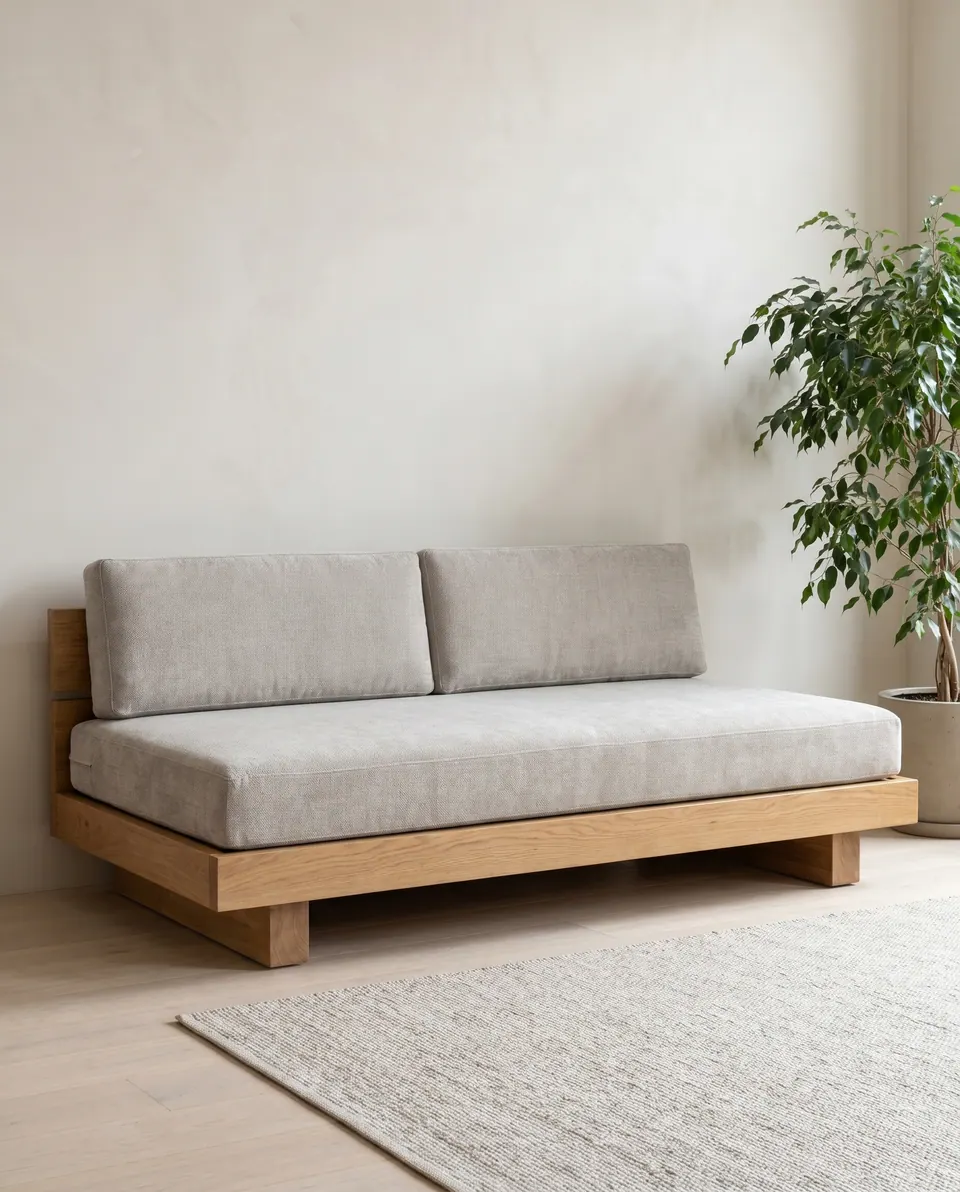
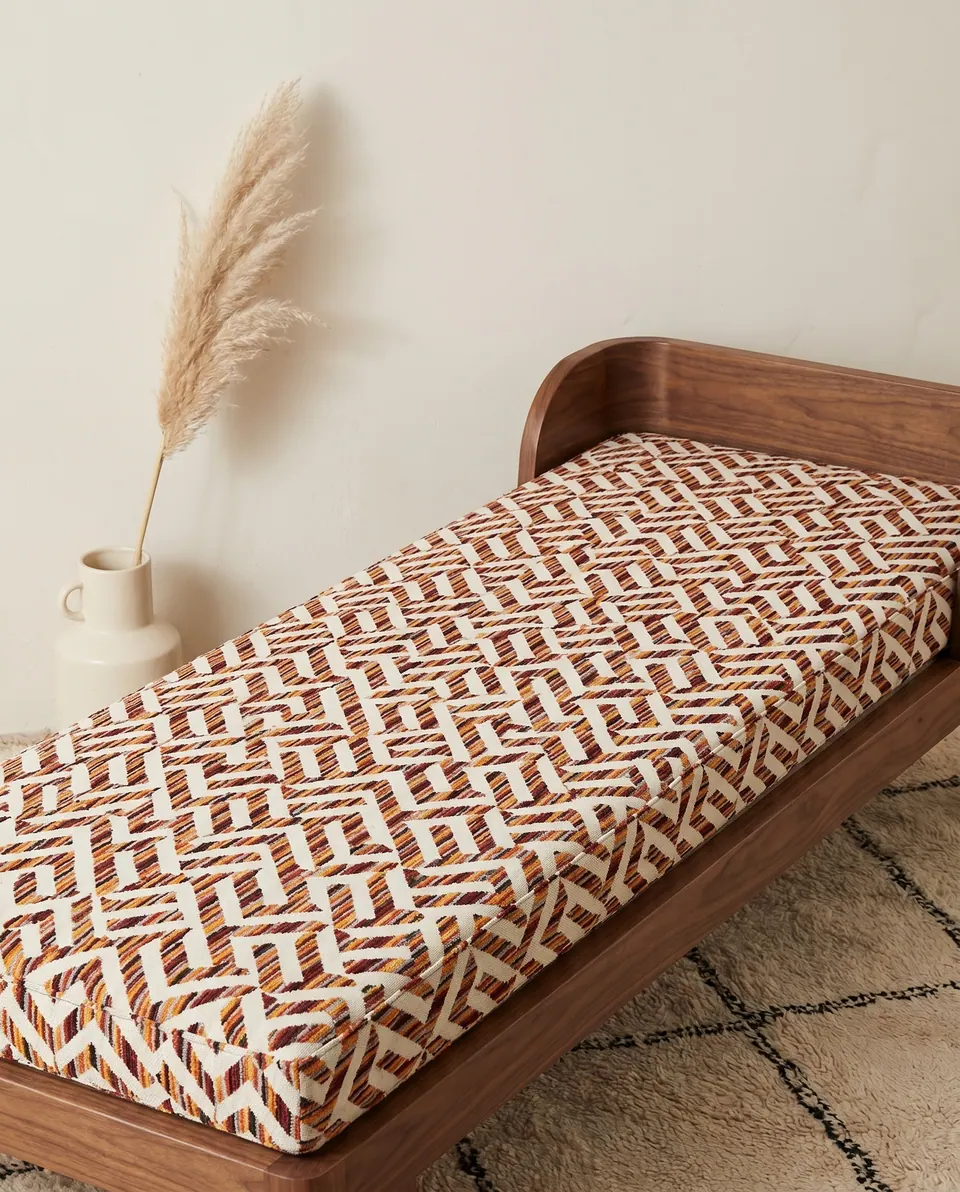
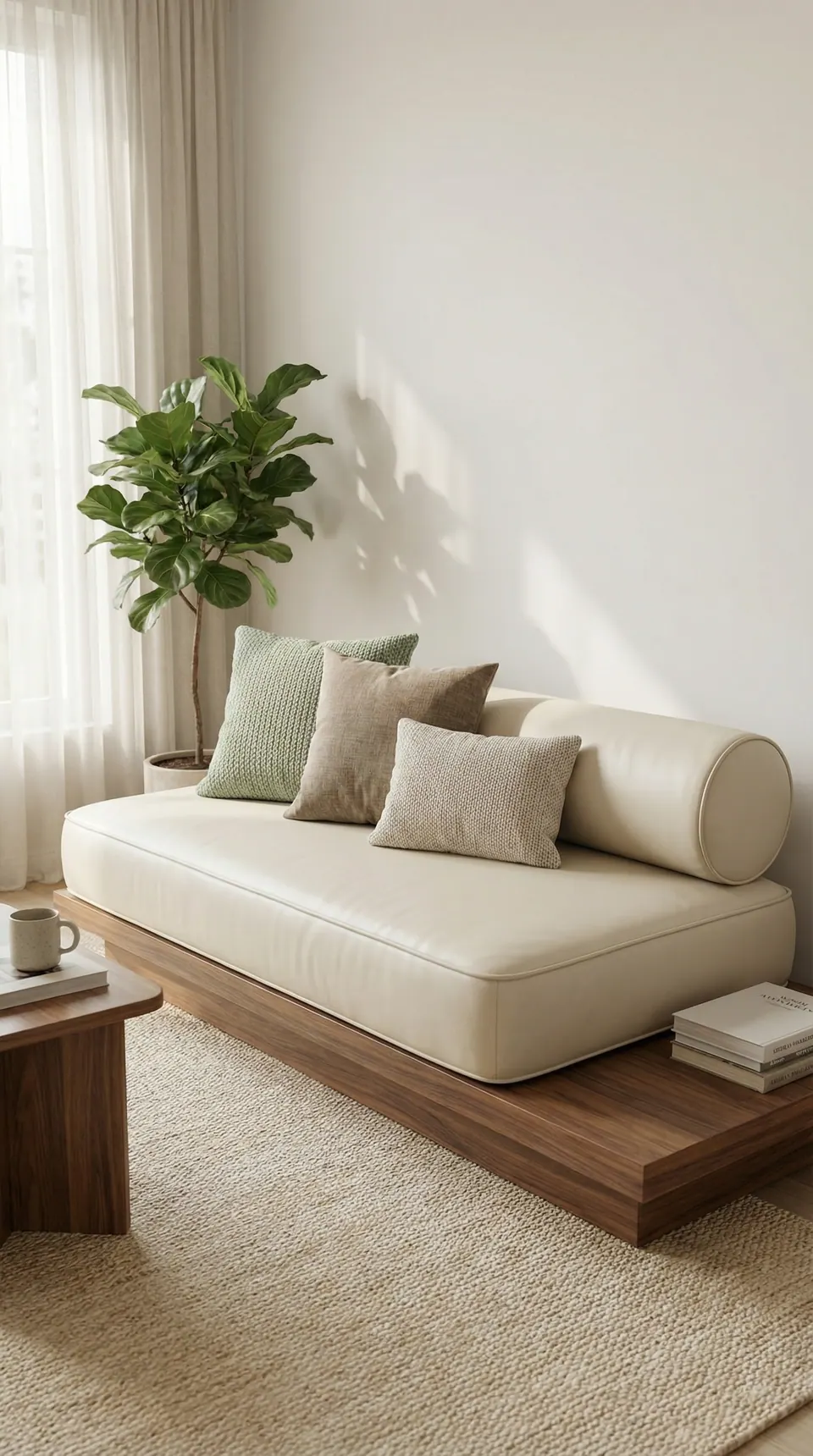
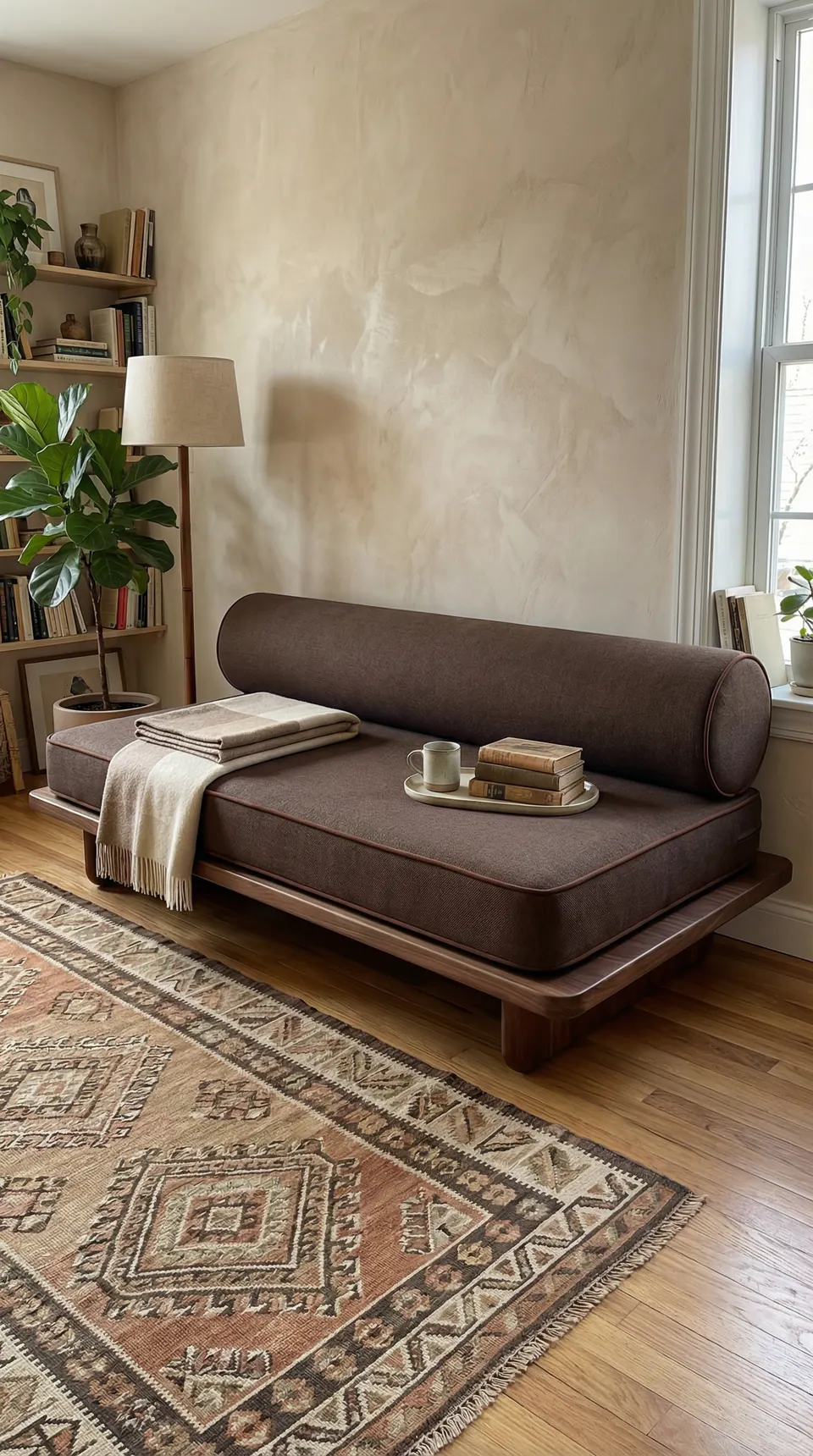
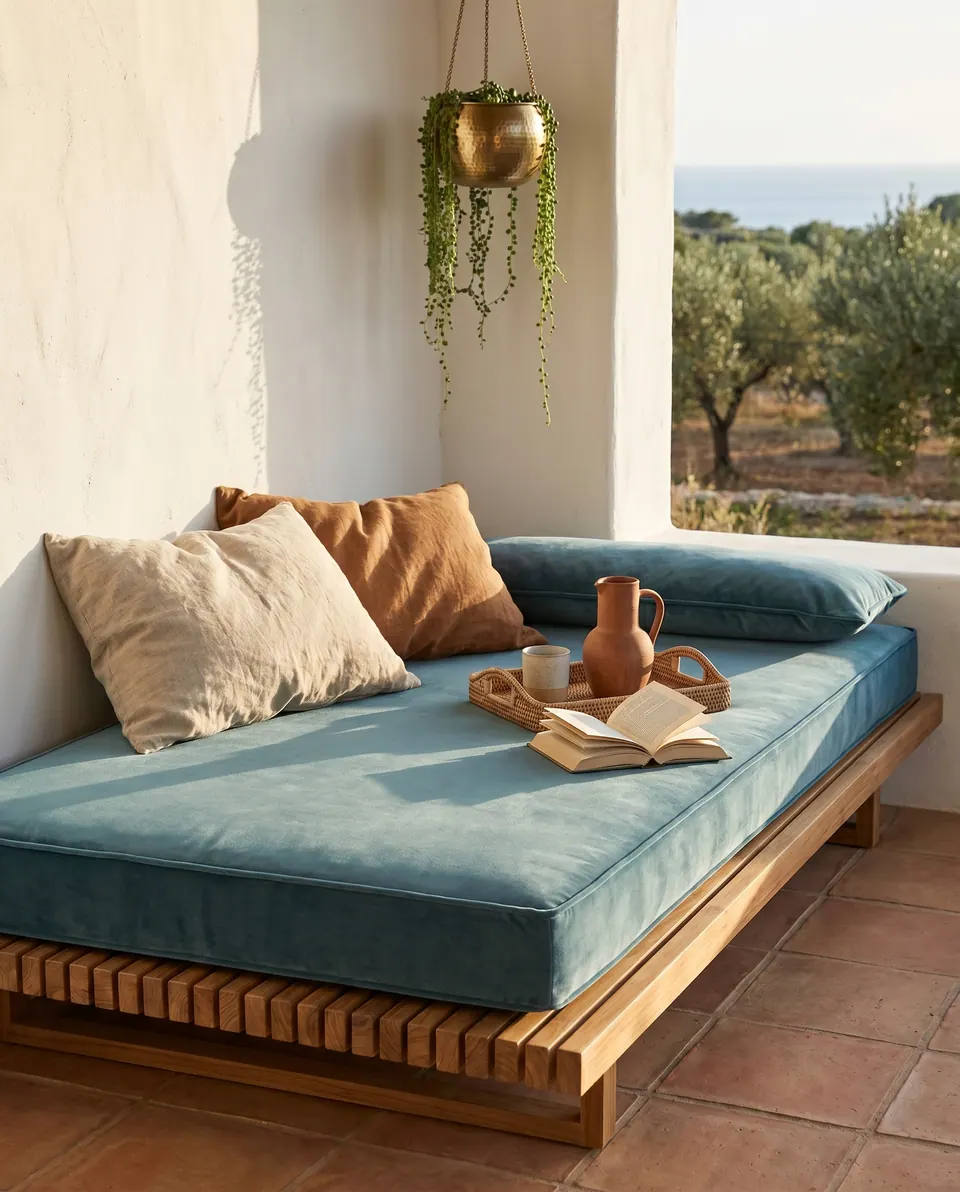
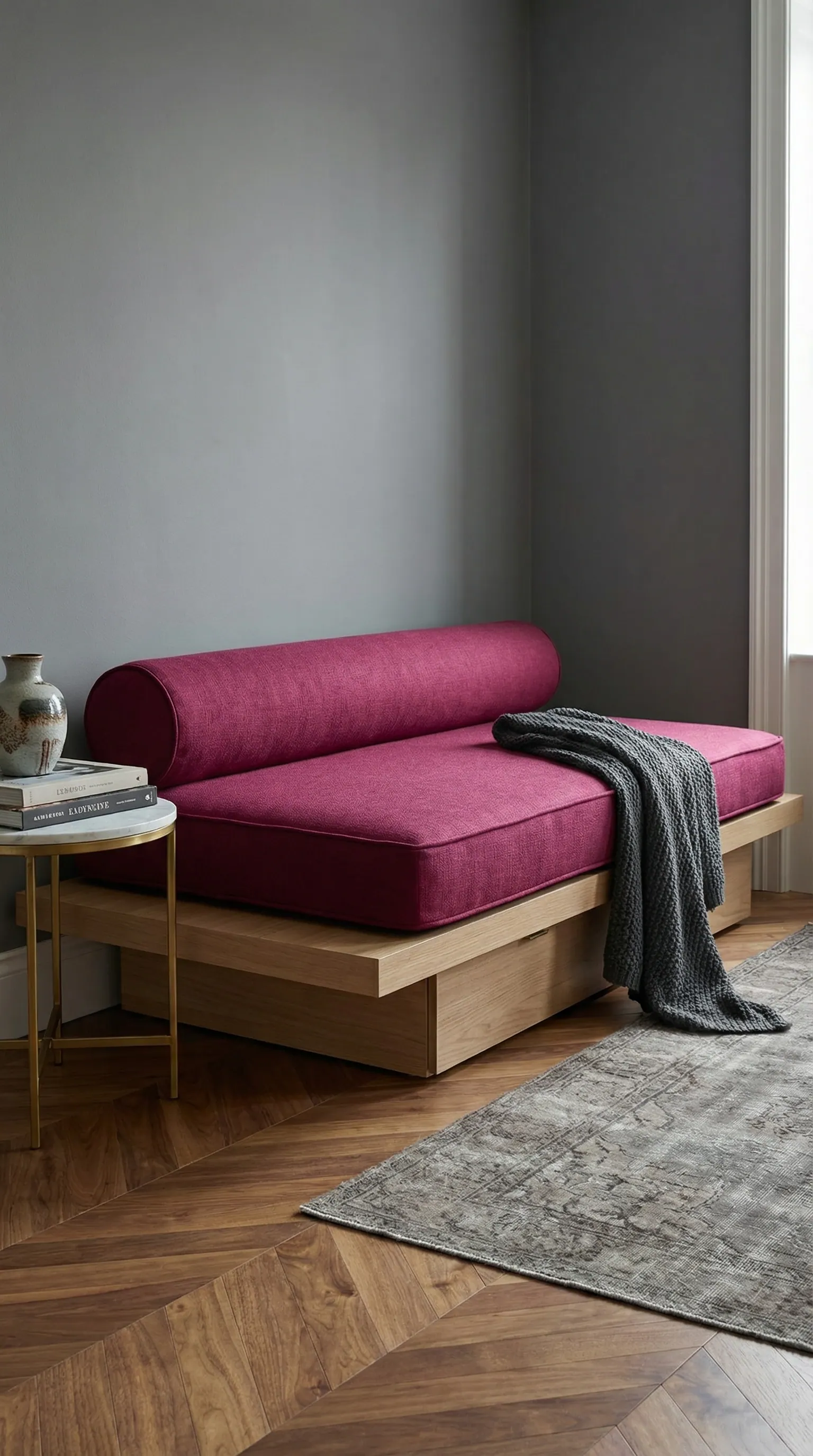
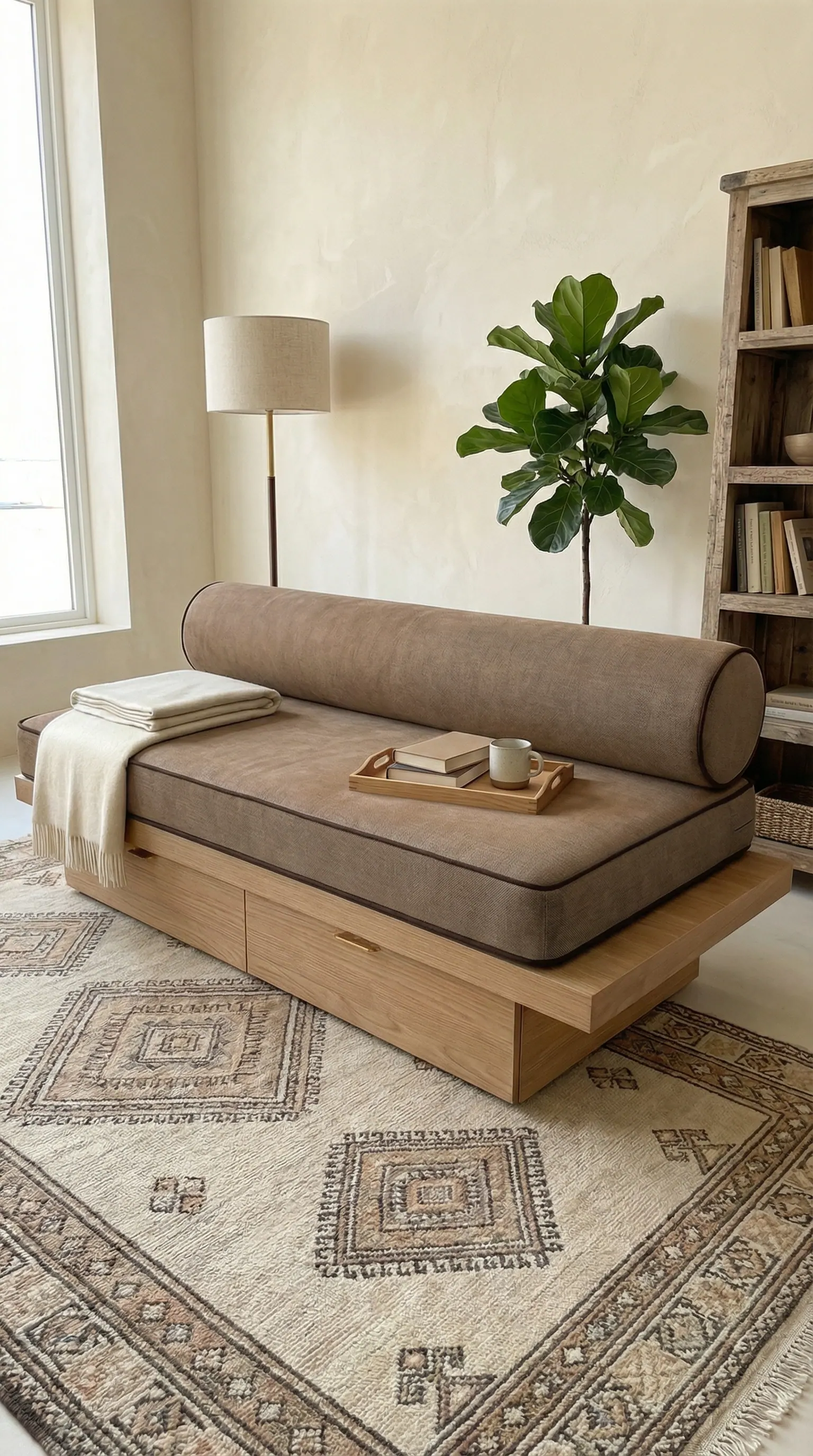
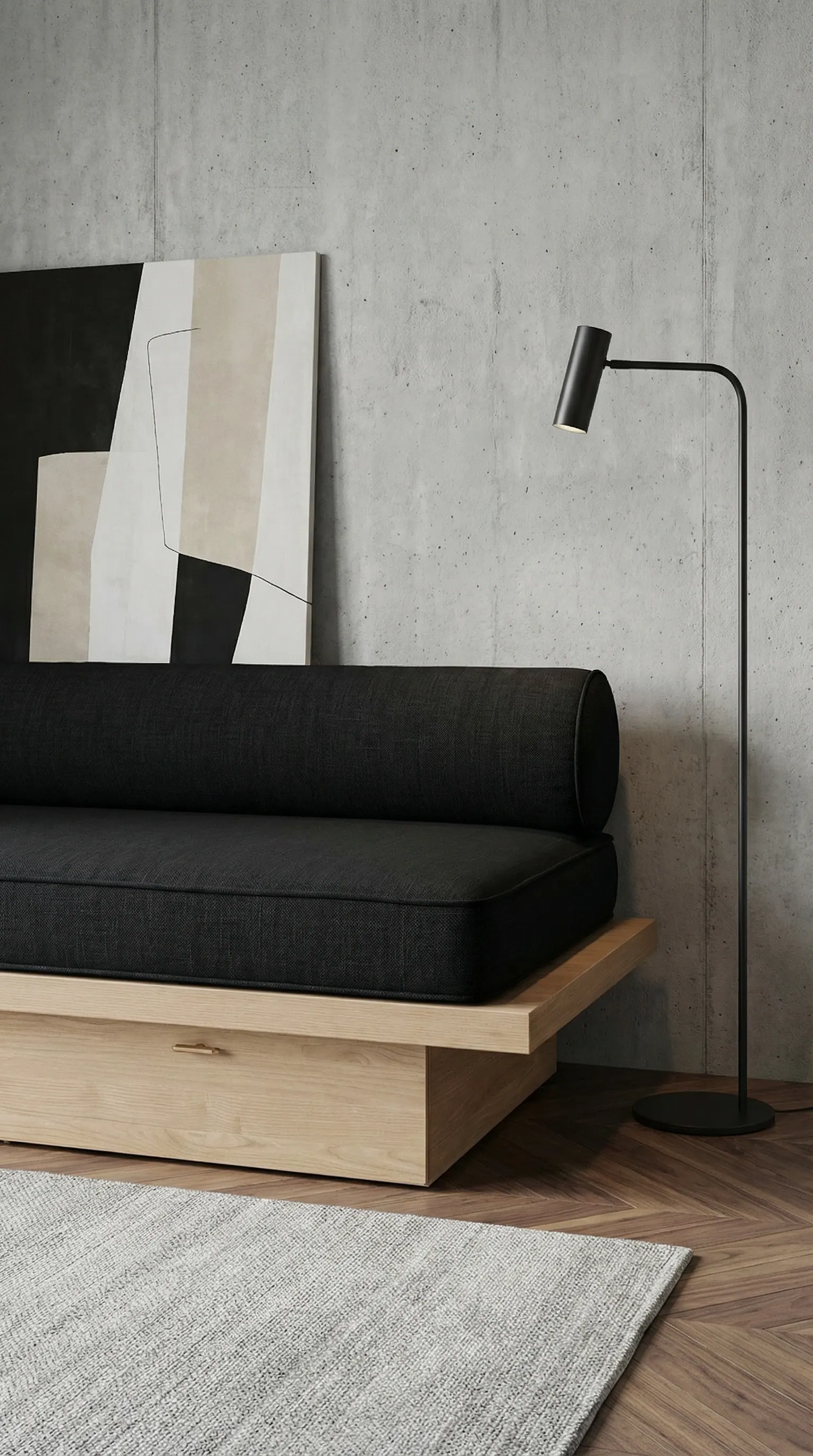
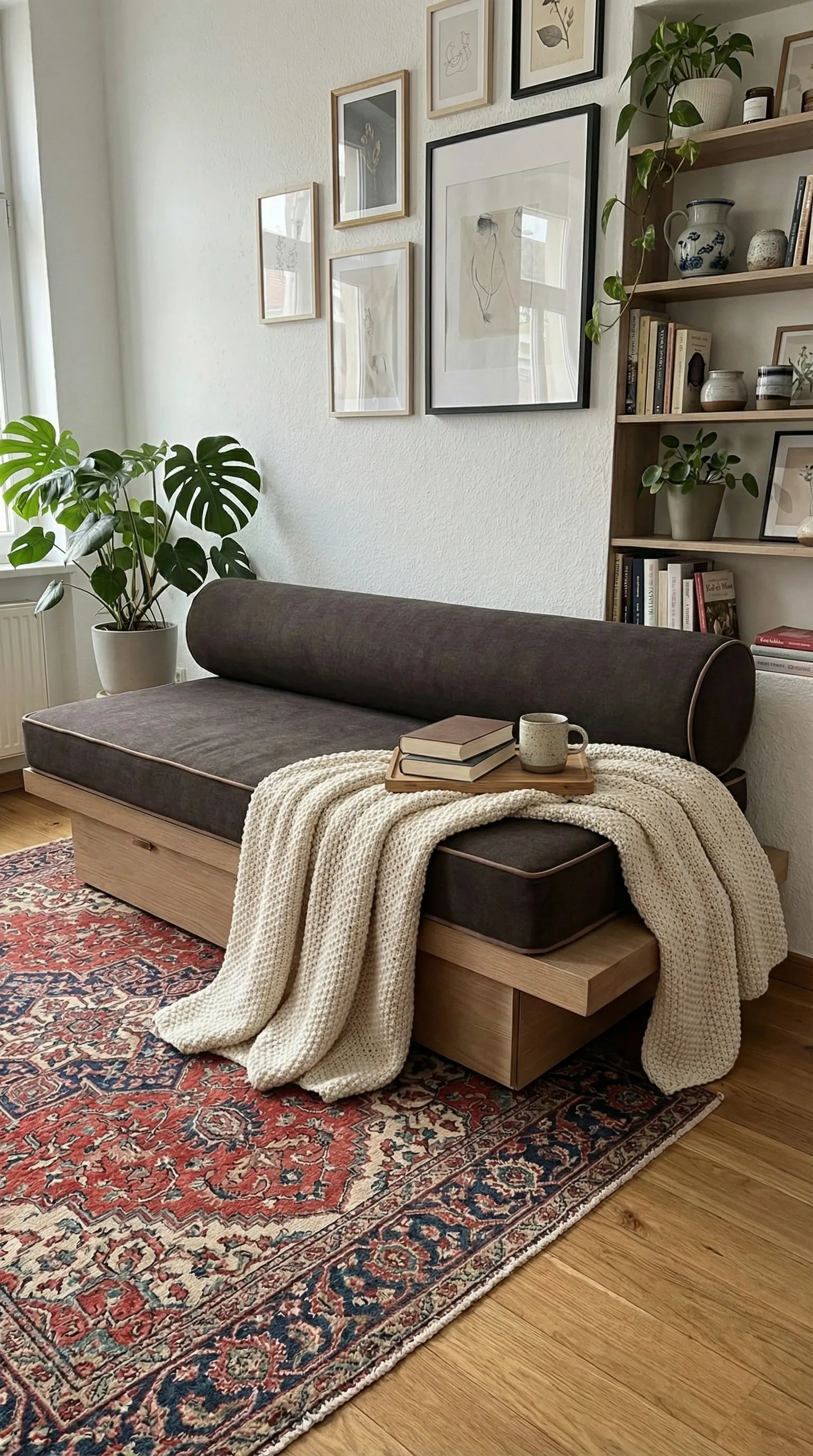
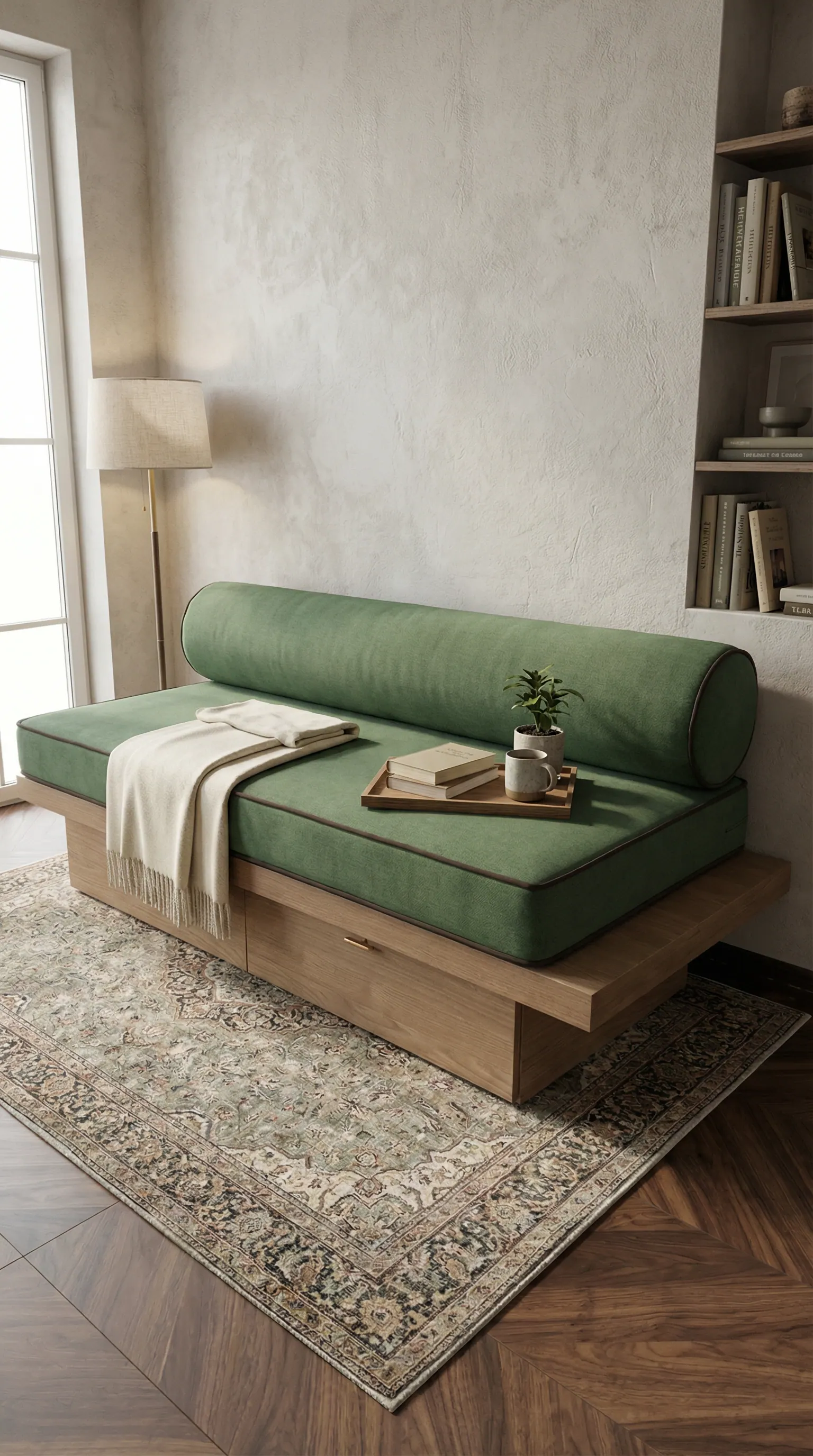
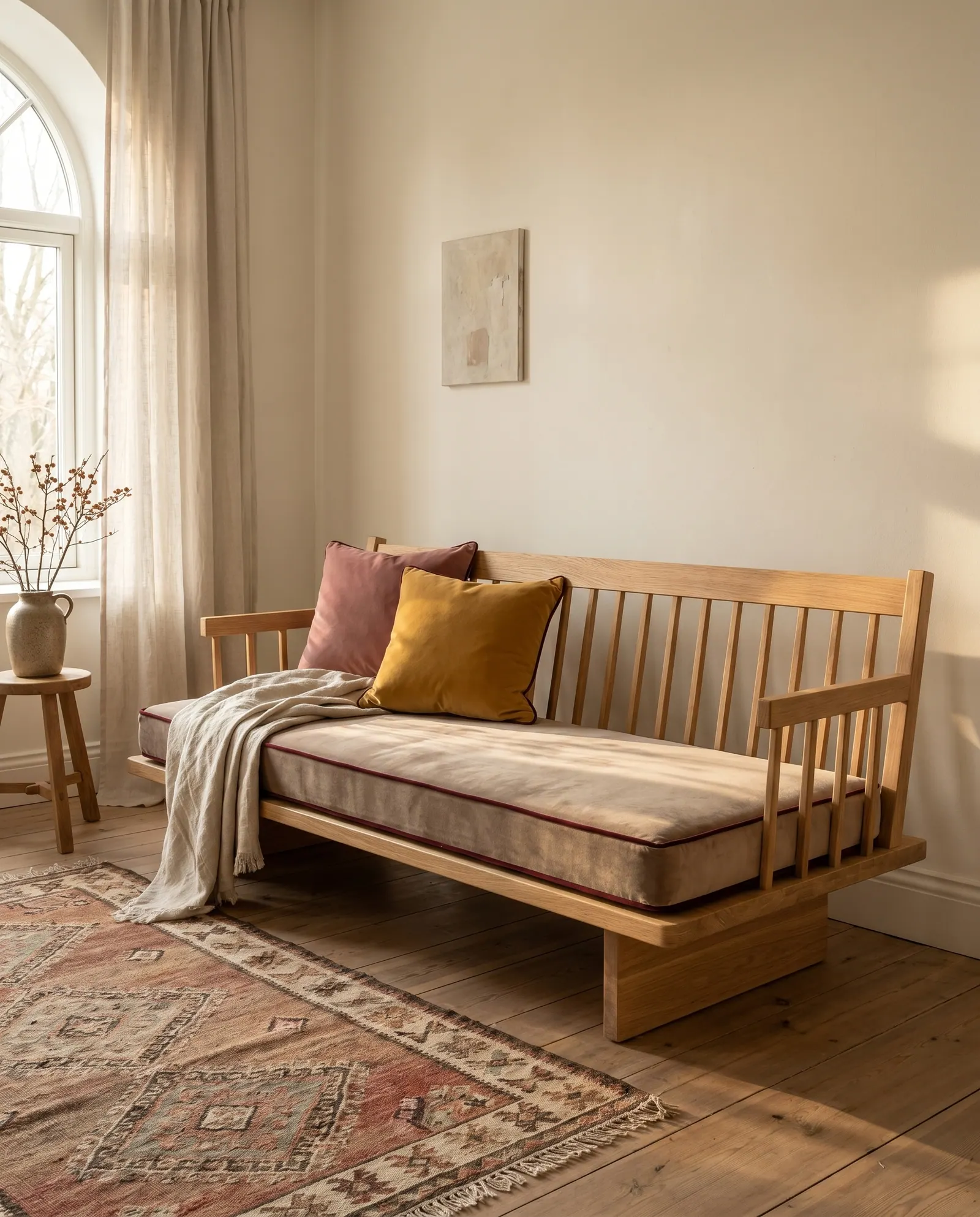
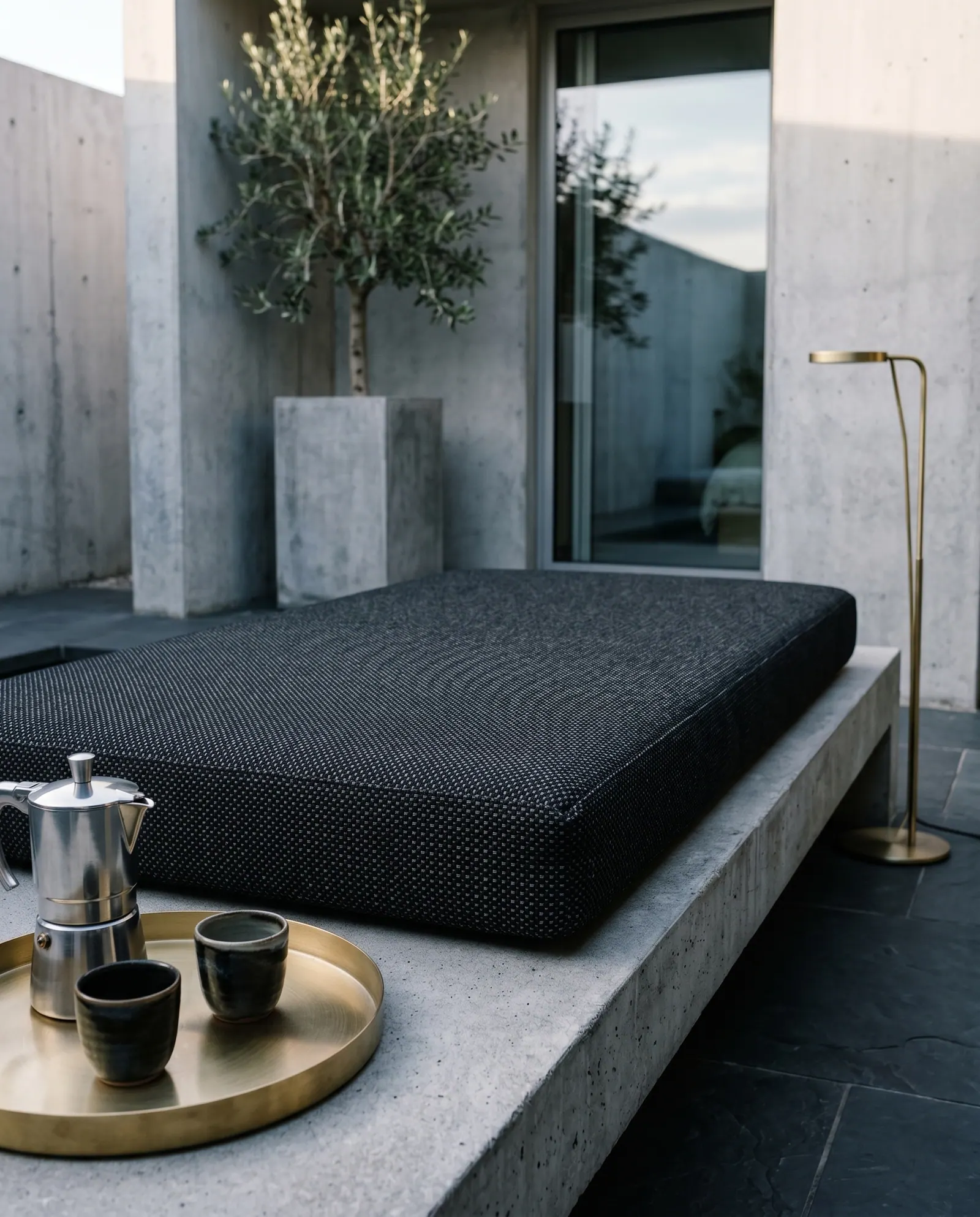
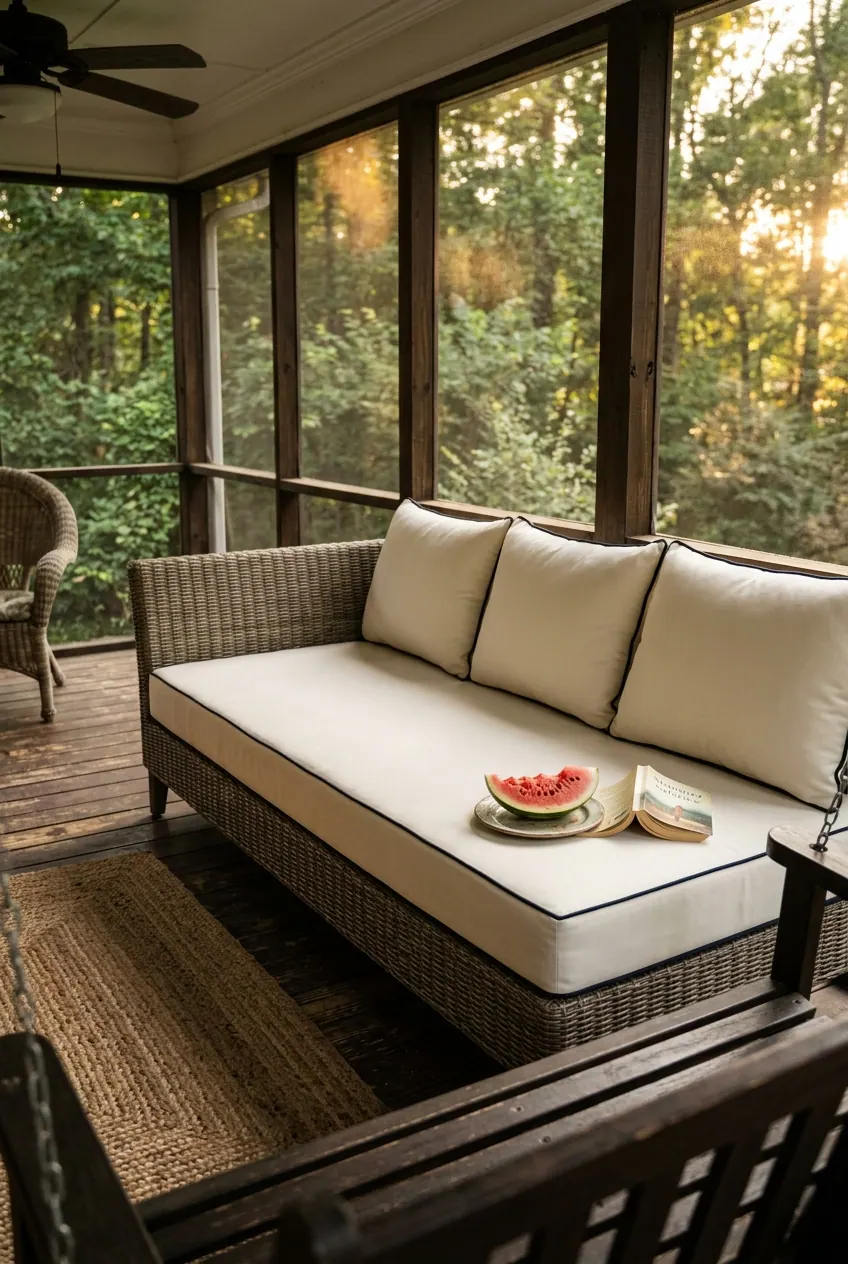
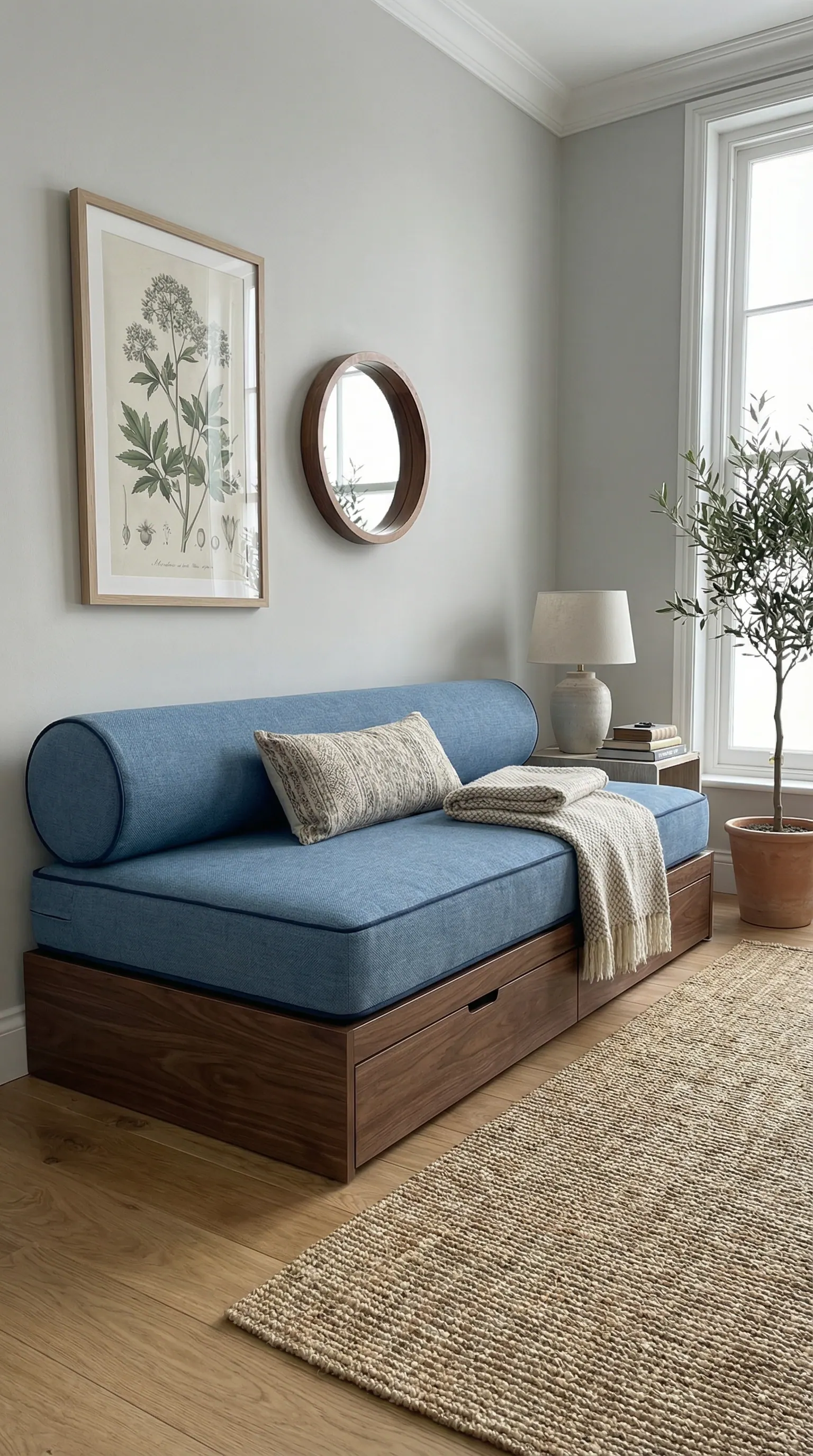
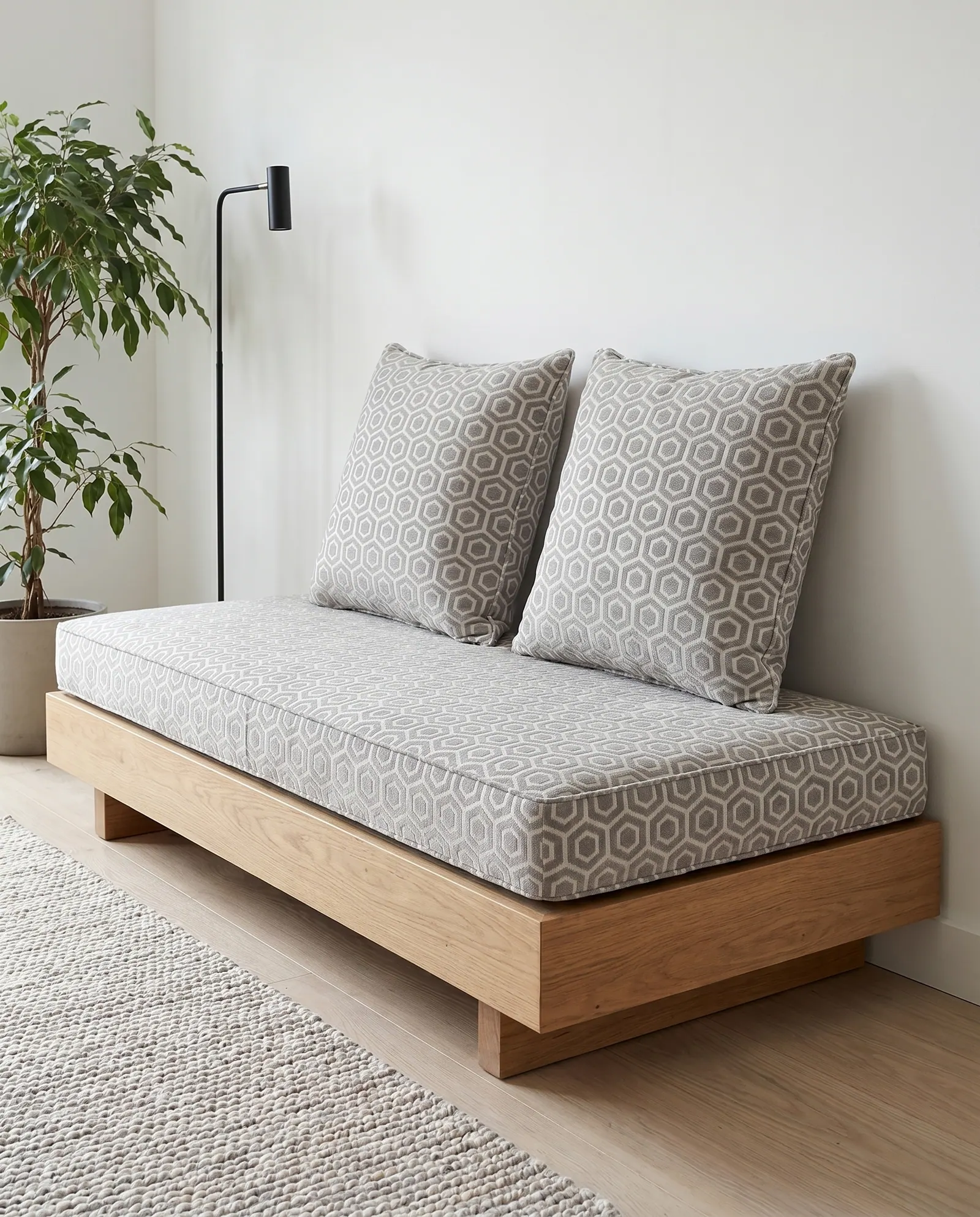
SaveRaspberry against slate gray: a bold daybed cushion and bolster made calm by pale oak and a charcoal throw.SaveMushroom fabric matches the rug's brown motifs, so the daybed and floor read as one layer.SaveA charcoal seat and matching bolster turn a low oak plinth into a daybed sofa with nothing more than fabric.SaveA cream knit poured over the espresso seat is the room's biggest contrast, and the beige piping echoes it at the edges.SaveThe rug's sage border was chosen with the cushion in mind; brown piping ties both to the dark floor.SaveBurgundy piping gives a pale mushroom velvet daybed cushion a clear outline; rose and mustard pillows pick up the warmth.SaveA dense charcoal cushion on a cast concrete platform, styled with a brass tray, moka pot and slim brass lamp.SaveA thick ivory mattress cushion with navy piping turns a wicker daybed into the porch's summer reading bed.SaveThe same blue fabric looks richer on dark walnut, with a lumbar pillow and an olive tree adding texture.SaveA single hexagon-pattern mattress and two matching back pillows turn a floating oak platform into a daybed for sitting or napping.SaveOne boxed seat and one long bolster turn a plain walnut platform into a daybed; the knit throw and linen pillow take the edge off the leather-look sheen.
A daybed cover follows the mattress, not the frame: send its length, width and thickness, and the cover is cut about 1/2 in under that thickness to sit snug.
Keep it simple. One cover, a row of back cushions, a bolster at each end, one accent pillow. Back cushions about 20 in tall stand against the wall and stop the seat reading as a bed; two cover a twin-length daybed. A bolster, like the black one in our hero photo, becomes the arm.
Which should people notice first: the cushion, or the room around it?
A sofa by day. A bed by night. One cover, measured once.
Indoor daybed or porch swing bed?
Searches for a twin daybed cushion often mean the platform of a porch swing bed, not an indoor frame. The measuring is the same: the platform or mattress deck, wood to wood, plus the thickness you want, usually about 4 in. What changes is the fabric and how the cushion stays put. A swing bed lives outside, so order it from the outdoor range, which is water-repellent and UV-resistant rather than waterproof, and ask for ties at the corners where the chains or frame are, since swinging walks a loose cushion off the platform. Bring it in or cover it during storms and over winter, because the standard foam doesn't dry quickly. For the swing bed's back and side pillows, the porch swing guides cover sizes.
Buyer questions
A common question
Which fabric stays coolest on a daybed in a hot summer? Nothing scratchy or plush, please.
The workshop's answer
Soft fabric. It's smooth, soft and breathable, so it won't feel scratchy or hot for guests sleeping on it. The base and the piping can be the same color or contrasting.
A common question
Can you make a daybed cover to fit the mattress I already have?
The workshop's answer
Yes. Covers are made to your mattress, twin, full or queen: write its length, width and height in the personalization box, ideally measured once the daybed has arrived. The height can be raised too; a 31½ x 78¾ in (80 x 200 cm) cover was made 11¾ in (30 cm) high so two 6 in (15 cm) mattresses stack inside. A trundle mattress needs its own cover.
A common question
Is one long daybed cushion cheaper than two smaller ones?
The workshop's answer
Usually about the same, because price mainly follows the total surface. Separate pieces add cutting, sewing and zippers, yet on one daybed two 36.5 in squares came in below one 74 x 36 in cushion of the same area. Very long cushions, around 108 in and up, are made in two pieces anyway.
A common question
Does the non-slip bottom come standard, or is it extra?
The workshop's answer
It's an optional add-on, not standard, and it's available on daybed cushions as well as benches, window seats and trapezoids. The cost scales with the cushion size. Note 'non-slip base' and your exact size in personalization, and the workshop includes it in your quote or sends a link for the difference.
A common question
Why does a tufted daybed mattress cost more than a plain one?
The workshop's answer
Tufting is done fully by hand, so real quotes ran about a third to a half above the same size in plain foam. Tufted daybed mattresses with a round bolster are made through the tufted listing; if that's over budget, a non-tufted foam cushion is the cheaper route.
A common question
Is your linen fabric 100% linen?
The workshop's answer
Usually not. The standard linen charts are blends or linen-look fabrics, chosen because they're durable and easy to clean: the linen-look codes are polyester, and other ranges are linen-polyester or cotton-linen. A separate 100% linen chart and 100% cotton fabrics are available on request.
Have it made
Have your daybed cushion made — ask Hana’s workshop
A good size is a quiet thing. You notice it only when it is wrong. Let the workshop check yours first. — Hana
Leave your details and the workshop will call you to confirm measurements, fabric, foam and piping. No prices, dates or payment on this page: it is a request, not an order.
Fabric · Foam · Pipingwhat the workshop will confirm with you
Measure the mattress. A standard twin is about 38 x 75 in and a twin XL about 38 x 80 in, five inches longer. Mattresses sold under the same name still vary, so send the real length, width and thickness.
How tall should daybed back cushions be?
About 20 in (50 cm) on daybed sets, measured from the top of the seat cushion. Standard back pillows elsewhere run about 16 in (40 cm), and the workshop won't go lower than that for support reasons.
Can a daybed cover go in the washing machine?
The seat cover, yes: it unzips completely and washes on a gentle cycle at 86°F (30°C) or lower. The filled back cushions and bolsters on a daybed set are not machine washable, so spot-clean them.
Why is the cover a little smaller than my mattress?
On purpose. Fitted mattress covers are made ½ to ¾ in (1 to 2 cm) under the measured thickness because the fabric stretches slightly. The result is a cover that sits snug instead of wrinkling along the band.
Can a daybed cushion live on a screened porch?
Yes, in the right fabric. A fully covered porch can take regular fabric; anywhere rain or damp can reach, use outdoor-rated fabric. The ivory cushion with navy piping in our gallery sits on a wicker daybed in a screened porch.
Will a daybed cushion slide on a wooden platform?
It can. Lightweight foam on a smooth top moves when you sit. A non-slip base grips by friction and is safe on wood, while ties work where there is a rail to tie to. Ask for either when you order.
— Hana
Share this atlas entry
Readings
Photographs read by the masters: daybed cushions & covers
Real cushions made for real rooms, each read for proportion, fabric and fit.
 Save
 Save
 Save
 Save
 Save
 Save
 Save
 Save
 Save
 Save
 Save
 Save