The Pattern Room · a measuring pattern
What to measure for a custom daybed mattress cover
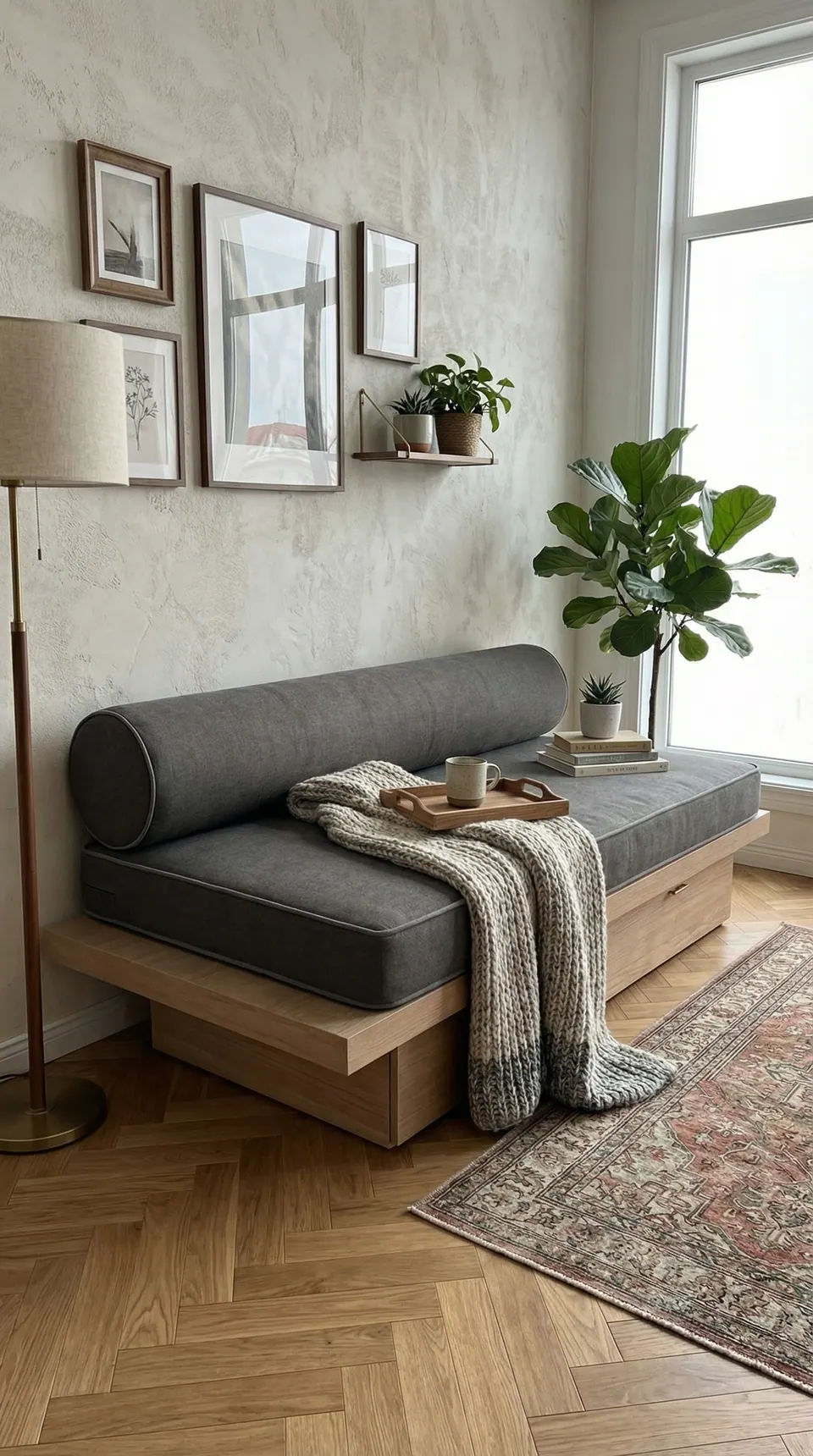
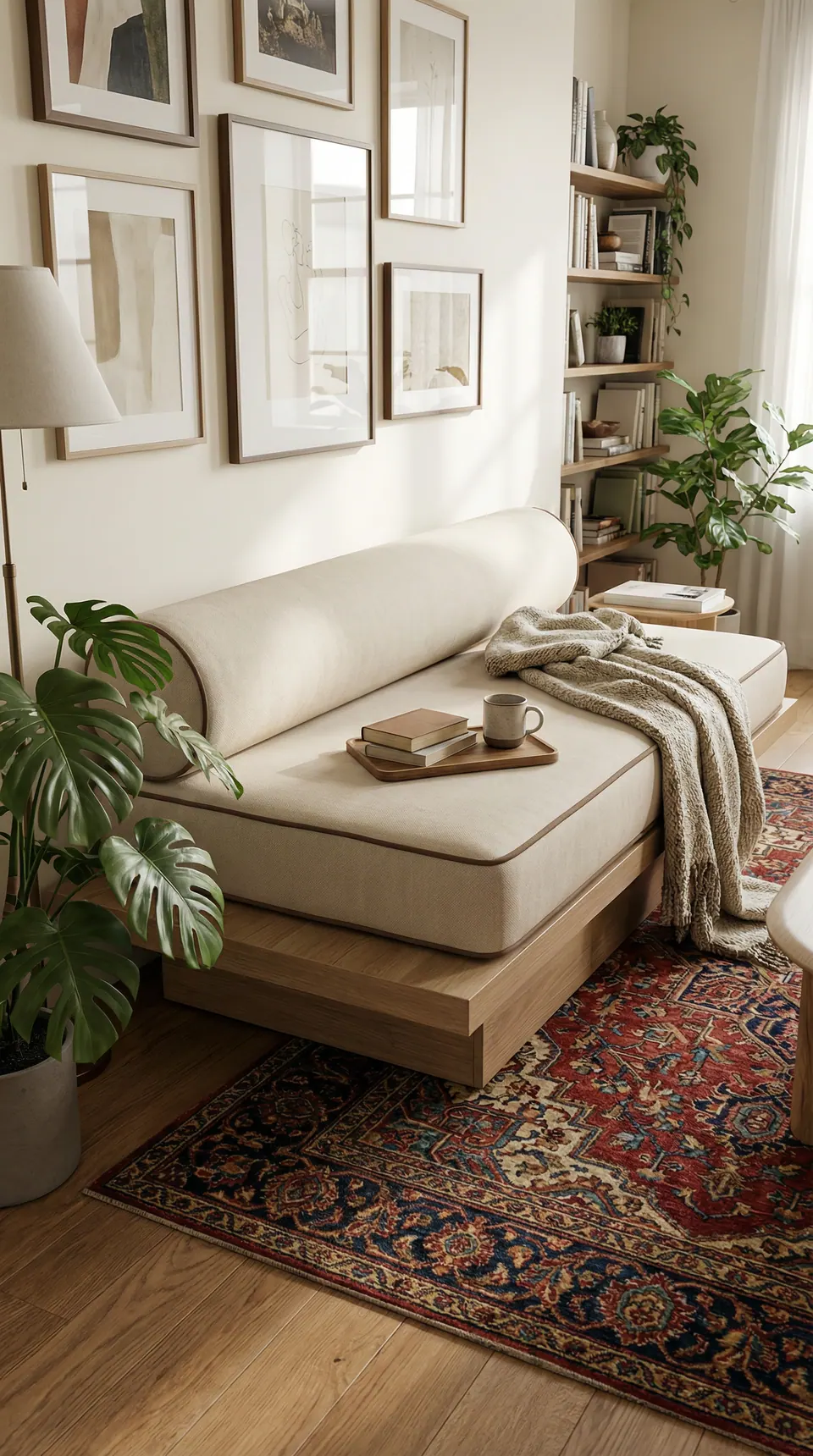
A daybed spends most of the day pretending to be a sofa. The cover does that work, and it begins with three honest numbers from the mattress you already have.

 Save
The quick answer
For a custom daybed mattress cover, measure the mattress itself, not the daybed frame: length, width and thickness at the widest and thickest points, plus the corner shape. A twin often measures about 39 x 75 in (99 x 191 cm) and 8 to 12.5 in thick. The cover is a zippered box cover, cut slightly under the measured thickness because fabric gives.
Three numbers from the mattress, none from the frame
A daybed cover fits the mattress it holds. Not the frame around it.
So the tape goes on the mattress: length, width and thickness, read at the widest and thickest points. The inside of a frame and the mattress in it are rarely the same numbers, and a custom daybed mattress cover cut to the frame can bag at the corners.
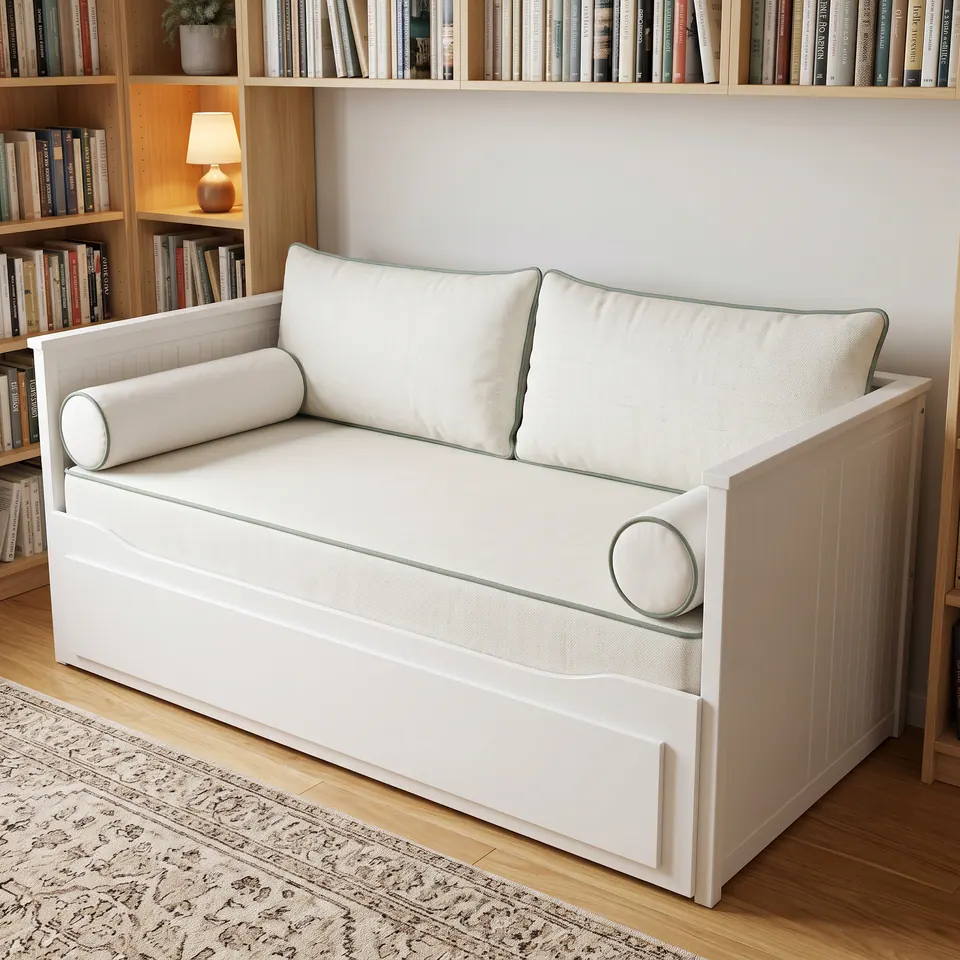
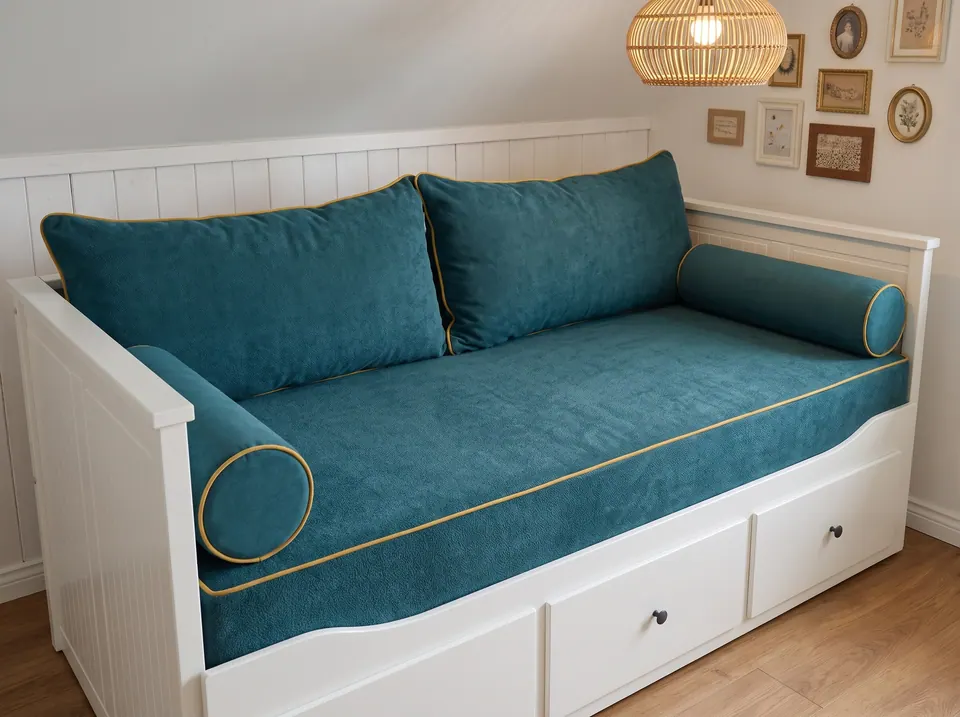
This Pattern sits beside the Hemnes daybed cover guide. That one follows a single model. This one is for every other daybed, trundle and built-in bed nook, and for mattresses you already own.
When a cover doesn't fit a buyer's own mattress or foam, the usual cause is a number: a missing thickness, or the old cover measured instead of the mattress.
Measuring the mattress, in eight steps
Let the mattress settle first
Measure once the daybed has arrived and the mattress lies in it. If the mattress came roll-packed, give it 48 to 72 hours flat first; compressed foam needs that long to recover.
Length, end to end
Run the tape along the top from one end seam to the other, down the center. Repeat along one side. Keep the larger reading.
Width, at the widest point
Measure across the middle and near each end. Softer mattresses often crown in the center. The widest reading is the one the cover must hold.
Thickness, every time
Stand a ruler upright against the side and read the thickest point. Without a thickness, a cover may be made for a double-layer mattress, twice as tall as yours.
Add up anything stacked
Two mattresses, or a mattress and a topper, sharing one cover need their combined thickness. One cover was made 11.75 in (30 cm) tall instead of 8.25 in (21 cm), so two 6 in (15 cm) mattresses could stack inside.
Look at the corners
Square, softly rounded or clipped. Rounded corners change the pattern, so say which you have and photograph one corner from above with the tape across it.
Photograph the tape, then type the numbers
One photo per dimension, numbers readable. Then write length x width x thickness in the order note, in the unit you measured in. Inches and centimeters both work.
Give a trundle its own cover
A trundle's second mattress is a second cover and a second order. Mattresses of different heights, such as 74 x 38 x 10 in and 74 x 38 x 8 in, are two orders; the first can be held so both ship together.

Have it made
Measured it? Have Hana’s workshop make it
Leave your numbers and the height you like to sit at. The rest is a short conversation. — Hana
Leave your details and the workshop will call you to confirm measurements, fabric, foam and piping. No prices, dates or payment on this page: it is a request, not an order.
Key facts
- Daybed covers are made to the mattress's own length, width and thickness, in inches or centimeters.
- Mattress covers are zipper-only; the zipper often wraps two corners so the mattress slides in.
- Covers are cut 3/8 to 3/4 in (1 to 2 cm) under the measured thickness because the fabric gives slightly.
- Stacked mattresses or a topper in one cover need their combined thickness.
- Backrests and bolsters on a daybed set are sized from the mattress cover.
Why a zipper, and not elastic like a fitted sheet
Elastic feels easier, and many buyers ask for it. Mattress covers are made with a zipper only.
A fitted sheet grips the top and lets the sides go soft. On a daybed the sides are the front of your sofa, and they need to stand straight all day. A zippered box cover has a top, a bottom and a boxed side strip, so the edge keeps its line.
The zipper hides along the back edge, against the wall, or underneath. You choose the side. On mattress covers it often wraps around two corners in an L, a wraparound zipper, so the mattress slides in without a struggle.
If a cover must come off every day, there is another answer. For one 79 x 35.5 x 7 in (200 x 90 x 18 cm) daybed, the workshop made an open-bottom skirted cover. The skirt covers the front and tucks between mattress and base.
Cut a little under the thickness, on purpose
Mattress covers are made 3/8 to 3/4 in (1 to 2 cm) under the measured thickness. Fabric gives slightly once it is filled. A side strip cut to the exact height would soften into ripples.
So send the true number and subtract nothing. The allowance is made in production. Subtract it yourself as well and the cover will not close.
Firm foam works the other way. It is cut slightly larger than its cover so the cover looks full, which is why a new foam insert can take two people to zip in.
What does your mattress read at its thickest point?
A mini crib mattress that became a play mat
A parent in the US wrote to the workshop about a mini crib mattress. It no longer lived in a crib. It lay on the floor as a play mat, 37.75 x 23.75 x 3 in (96 x 60 x 7.6 cm).
They wanted a fully zippered box cover that could come off and go in the wash. The answer was yes. The exact size and fabric code went into the personalization box, and the cover was cut to those three numbers, not to a standard crib size.
A sensory crash pad of 61 x 61 x 10 in (155 x 155 x 25 cm) was quoted the same way, with a long zipper so the cover comes off without wrestling.
Children measure comfort with their whole body. They test zippers too. A crib and toddler mattress cover should open wide and wash easily.
From a bed at night to a sofa by day
The mattress cover is sized first. Backrests and armrests take their lengths from it.
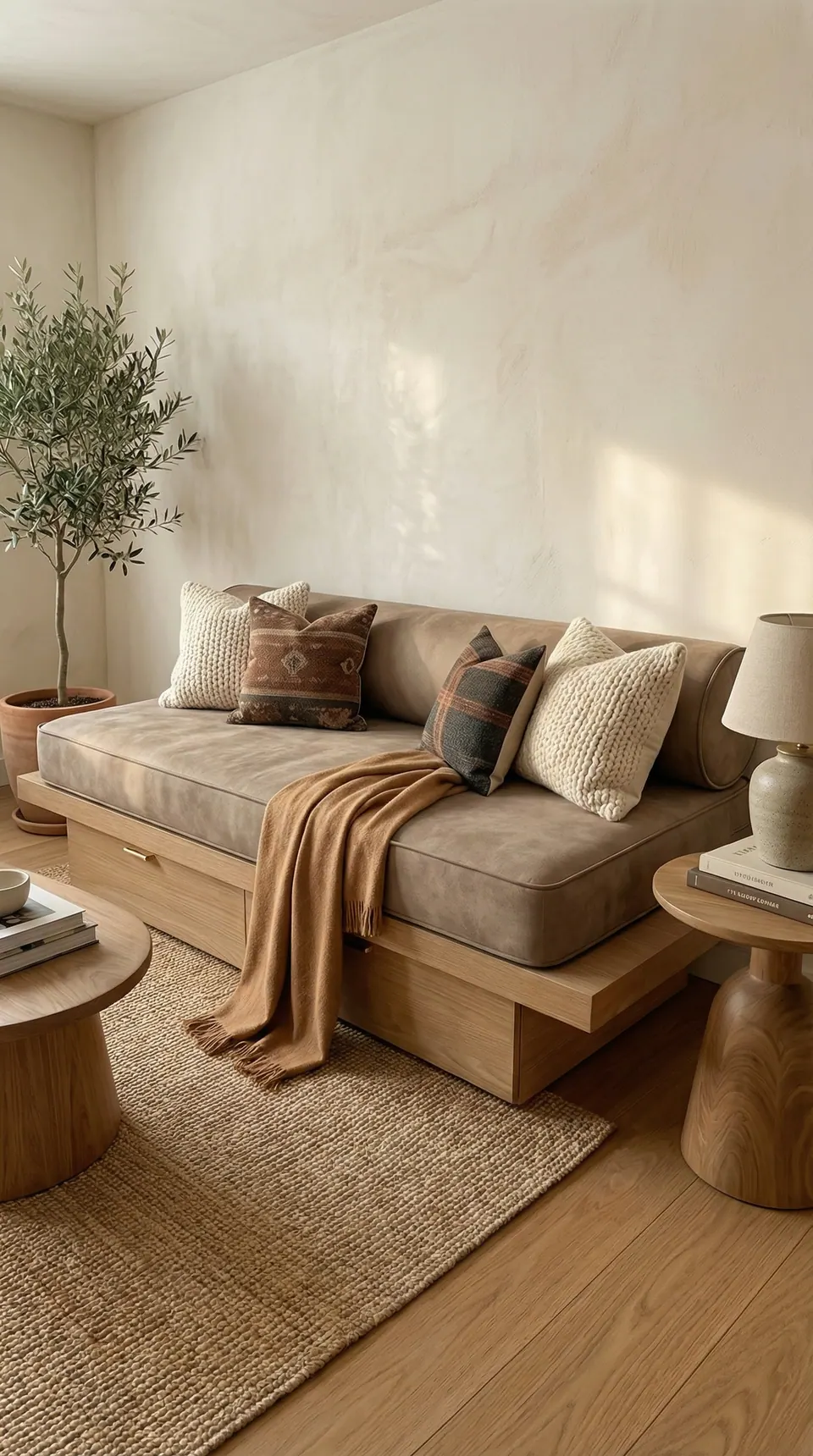
A full-length bolster along the wall is the simplest way to turn a single bed into a sofa. A fuller set might be a 76 x 36 x 6.5 in cover with three 22 x 22 in back cushions and two 36 x 10 in bolsters. Behind a twin 38 x 79 in cover, two stuffed L-shaped back pillows about 20 in tall can run end to end. Round or L-shaped backs are your choice; daybed back cushions covers the sizing.
A buyer in the US used a twin daybed mostly for sitting. They skipped the full set and asked for one long back cushion firm enough to sit upright against, one armrest bolster, and a cover for a 39 x 75 x 11.5 in mattress in green corduroy. The workshop filled the backrest and armrest with foam. Loose fiber fill slumps under a leaning back.
Only the mattress cover goes in the machine. Filled backrests are not washed.
A bed at night. A sofa at noon. The same three numbers.
Common mistakes with covers for a mattress you own
- Measuring the old cover instead of the bare mattress.
- Leaving out the thickness, so the cover is cut for a double-layer mattress.
- Under-measuring a stacked height, or counting it twice. Say whether you want one cover around the stack or one each.
- Sizing the cover from the frame when the mattress is staying.
- Forgetting to write 'covers only' or 'with foam' in the request.
- Subtracting a fit allowance yourself when the cover is already cut under the thickness.
- Choosing a scratchy or plush fabric for a bed guests sleep on in summer. Smooth, breathable weaves suit a sleeping surface.
A daybed mattress cover is cut to the mattress, never the frame: length, width and thickness, read at the widest and thickest points.
Hana Lindqvist
Fitted, zippered or skirted: three daybed covers
| Cover type | What it does | What to measure |
|---|---|---|
| Bedding set (quilt, shams, skirt) | Dresses the daybed as a made bed | Mattress size only |
| Elastic fitted cover | Pulls on like a sheet up to a set thickness | Mattress size and thickness |
| Zippered box cover | Upholsters the mattress so it reads as a sofa | Length, width and thickness; combined height if stacked |
| Skirted cover to the floor | Hides the base or frame | Length, width and the drop from mattress top to floor |
Buyer questions: covers for mattresses already at home
- A common question
Can you make a cover to fit the daybed mattress I already have?
The workshop's answerYes. Daybed covers are made to your mattress, twin, full or queen. Enter its length, width and height in the personalization box, ideally measured after the daybed has arrived and the mattress is in it. Covers have been made at 39 x 75 x 12.5 in and 39 x 75 x 8 in, and the height can be raised so two mattresses stack inside one cover. Send a photo of your couch and the workshop suggests fabrics that match.
- A common question
Which measurements do you need for a daybed cover and its back cushions?
The workshop's answerThe mattress length x width x thickness, in inches or centimeters, for example 39 x 75 x 12.5 in. Always give the thickness: without it, the cover may be made for a double-layer mattress. Stacked mattresses need their combined thickness. On a daybed set the mattress cover is sized first, and the backrests and armrests are sized to match it.
- A common question
My mattresses are odd sizes. Can you still make zippered covers?
The workshop's answerYes. Box-style zippered covers have been made for a 37.5 x 25 x 18.5 in folding mattress, a standard twin at 38 x 75 x 8 in and a twin XL at 38 x 80 x 12 in, among others. The zipper can run along the long edge, contrast piping is possible, and matching pillow covers can be added or left off. Two mattresses of different heights take one order per size, and the first cover can be held so both ship together.
- A common question
Could the cover have elastic, like a fitted sheet, instead of a zipper?
The workshop's answerNot for mattress covers; those are made with a zipper only. For a cover you take off every day, the workshop has made an open-bottom skirted daybed cover whose skirt tucks between mattress and base. An elastic cover over an existing sofa seat can be quoted, with a warning first that it may not sit snugly on cushions that aren't square or sharp-edged.
- A common question
Can you cover a mini crib mattress we use as a floor play mat?
The workshop's answerYes. A fully zippered, removable, machine-washable box cover for a 37.75 x 23.75 x 3 in mini crib mattress is no problem. Write the exact size and fabric code in the personalization note, and say whether you want piping and in which color. Warm oatmeal and beige tones are on the linen chart.
Daybed cover questions, answered plainly
When does a daybed cover need the frame size instead of the mattress size?
Only when the mattress is being replaced by a new foam cushion. Then measure the inside of the frame and send a photo with the numbers. A daybed that takes a twin mattress usually takes a 38 x 75 in cushion, in one piece or two equal halves, and 3 to 4 in is a comfortable seat thickness.
Why is a mattress cover made shorter than the mattress is thick?
The side strip is cut 3/8 to 3/4 in (1 to 2 cm) under the measured thickness because the fabric gives slightly once filled. That keeps the edge smooth instead of rippled. Send the true thickness; the allowance is made in production, not by you.
Can one cover hold a mattress and a topper together?
Yes. Add the two thicknesses and say that both go inside one cover. For a bed that works as a sofa by day, the cover and the backrests are sized from the length, width and combined height of the mattress plus topper.
Which parts of a daybed set can be machine washed?
The zippered mattress cover. On a daybed set the filled backrests and bolsters are not machine washable, and inserts are never washed. If spills are likely, choose a tight, washable weave in a mid-tone.
What fabric suits a guest daybed used in hot summers?
Something smooth and breathable, neither scratchy nor plush. A buyer in the US asked for exactly that and received a soft, breathable weave with matching self piping, made at 23 5/8 x 79.5 in. Every fabric family works for a mattress cover; velvet is indoor-only.
How do I measure for a skirted daybed cover that reaches the floor?
Measure the mattress length and width as usual, then the drop: from the top of the mattress straight down to the floor. A fitted or zippered cover needs only the mattress thickness, but a skirted cover hangs over the base, so the drop sets its length. The workshop can make an open-bottom skirted cover for a daybed on request.