The Pattern Room · a measuring pattern
How to make a daybed look like a sofa with back cushions and bolsters
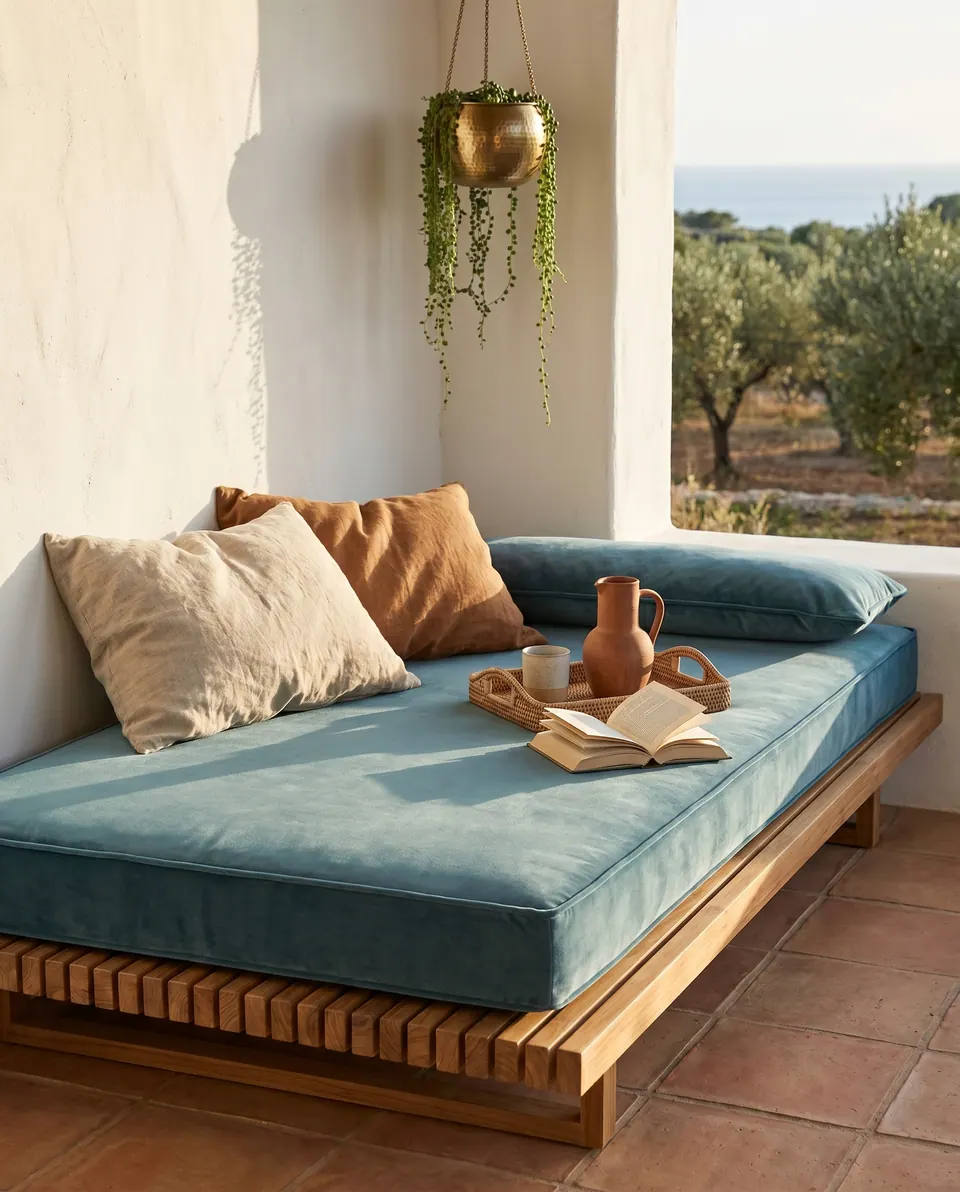
A daybed becomes a sofa the moment its back stands up, my friends. Here are the back cushions, the pair of bolsters and the single accent pillow that do it, in sizes and colors taken from real orders.
 Save
The quick answer
To make a daybed look like a sofa, dress the mattress in a fitted cover, line the wall with back cushions about 20 in (50 cm) tall, and finish each end with a bolster or rectangular side pillow. Split the mattress length between the backs, so a twin-length bed takes two. Add one accent pillow, and choose foam-filled backs if you sit upright.
Why a bare daybed still reads as a bed
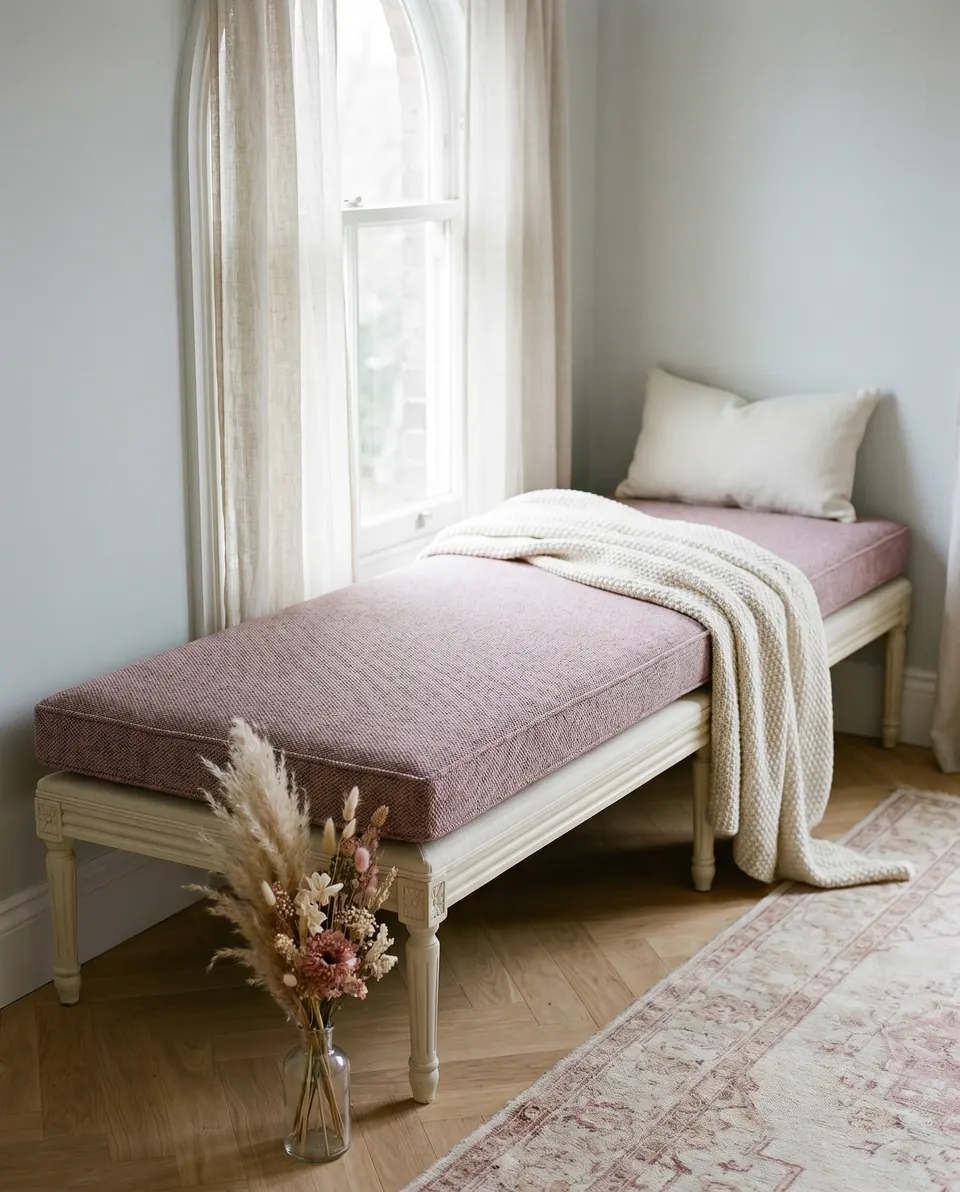
A bare daybed is a mattress with a railing, and the eye knows it. Give it a back and two arms and it reads as a sofa by day, while it still sleeps a guest at night.
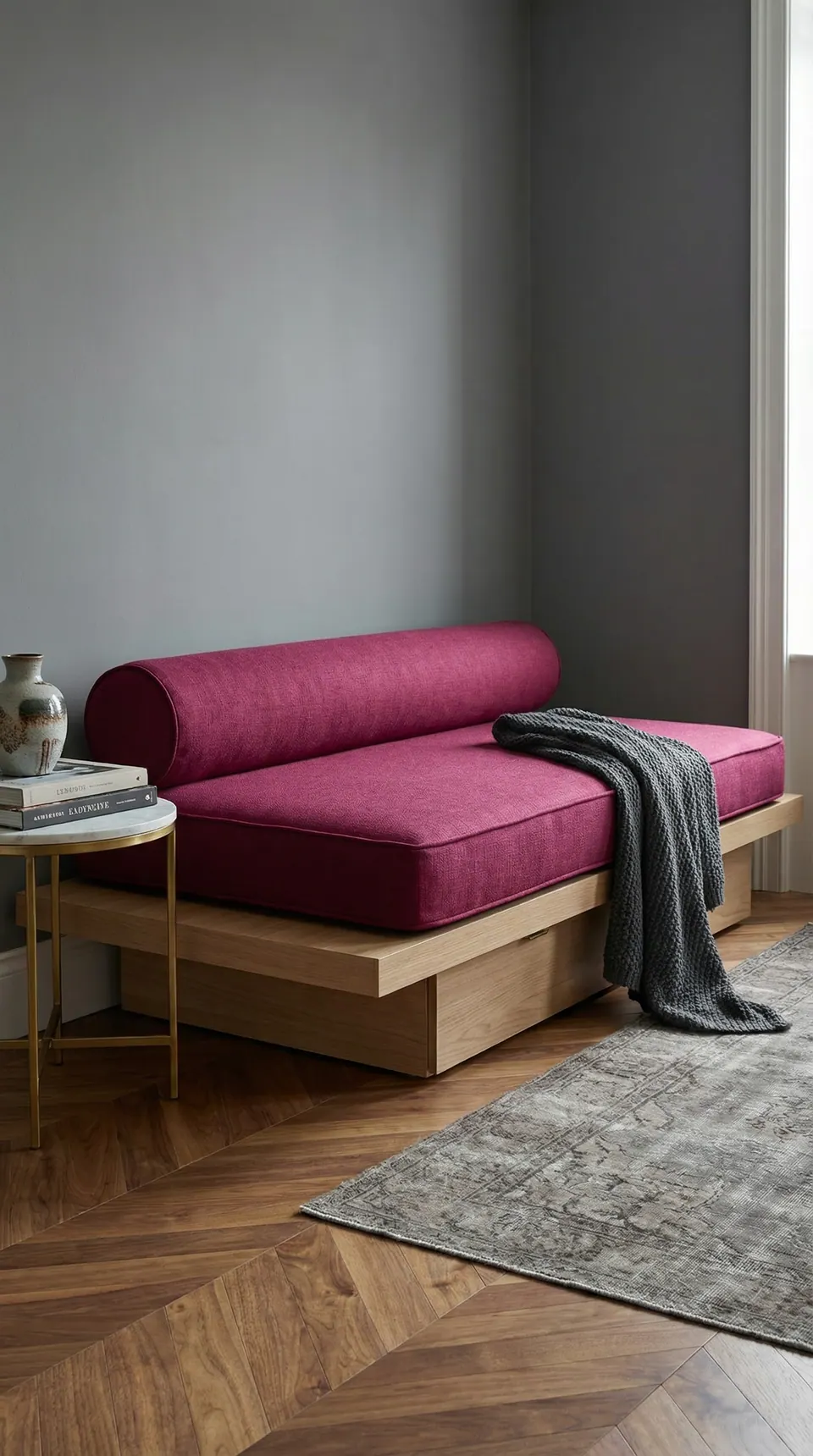
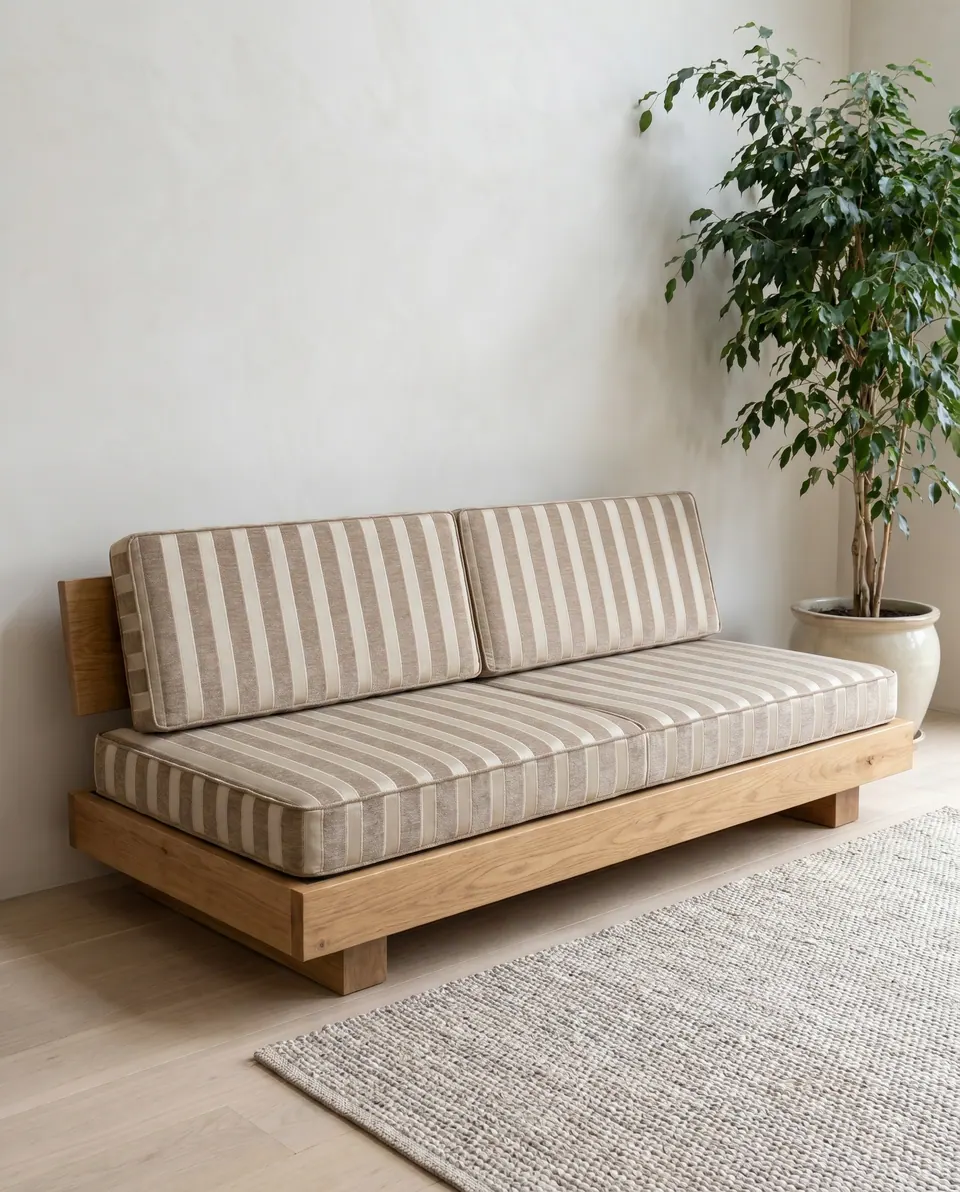
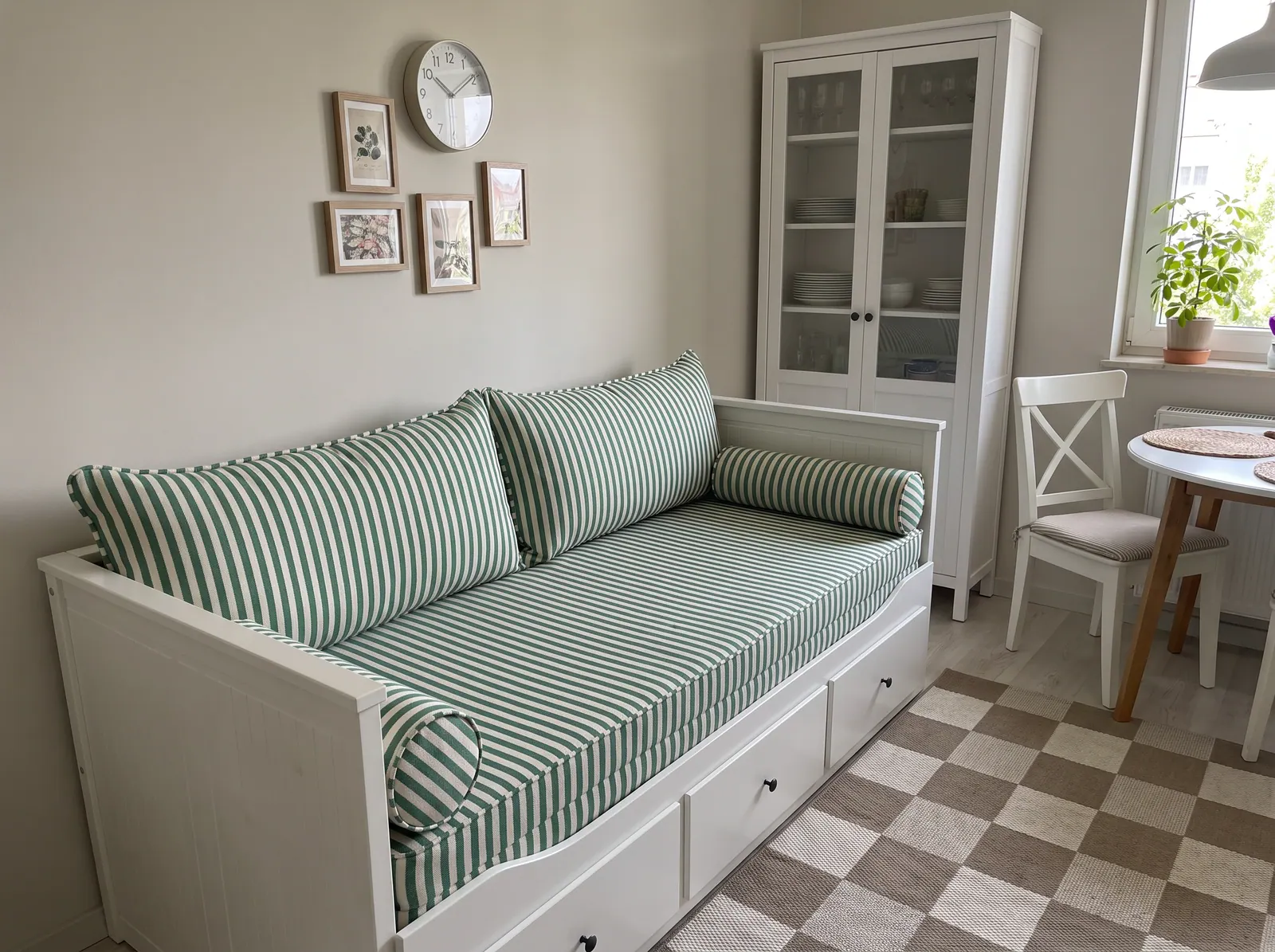
The workshop's daybed sets do it with three parts: a fitted, zippered mattress cover, two filled back cushions and two filled bolster armrests. The requests rhyme: make it look like a couch, one long back for sitting upright, structured rather than loose. The daybed cushions collection shows the whole family; this Pattern is about the back row.
Dressing a daybed as a sofa, in seven steps
Measure the mattress: length, width and height
A twin daybed mattress runs about 39 x 75 in (99 x 190 cm), a twin XL 38 x 80 in (97 x 203 cm), and the US IKEA Hemnes holds two twins of 38 1/4 x 74 1/2 in (97 x 189 cm). Stacked mattresses? Add their heights; one cover is made to the combined height. The frame itself is in the Hemnes cover measuring Pattern.
Divide the length between the back cushions
Backs are sized by dividing the full span so they sit flush, end to end. A 78 3/4 in (200 cm) daybed takes two backs of 39 x 16 in (100 x 40 cm); one US Hemnes set used two of 17 x 36 in (43 x 91 cm). A custom set paired a 76 x 36 in cover with three 22 x 22 in (56 x 56 cm) backs. Standard Hemnes backs are L-shaped, turning the corners to wrap the sides.
Set the height at about 20 inches
Standard back pillows are about 16 in (40 cm) tall and 4 in (10 cm) thick; daybed sets use about 20 in (50 cm), measured from the top of the seat. The workshop won't go below 16 in, where a back stops supporting you, and 27 1/2 in (70 cm) is too tall. The exception: backs 26 in (66 cm) tall for a mattress set against a window. Details in back cushion height.
Choose the fill for how you sit
A twin mattress is 38 to 39 in deep, far deeper than a 22 to 24 in lounge seat, and a back cushion takes only about 3 in off that. So the back has to hold you. Foam-filled backs and bolsters stay structured for sitting upright; soft-filled ones are plumper, better for reading half lying down.
Finish the ends: bolsters or side pillows
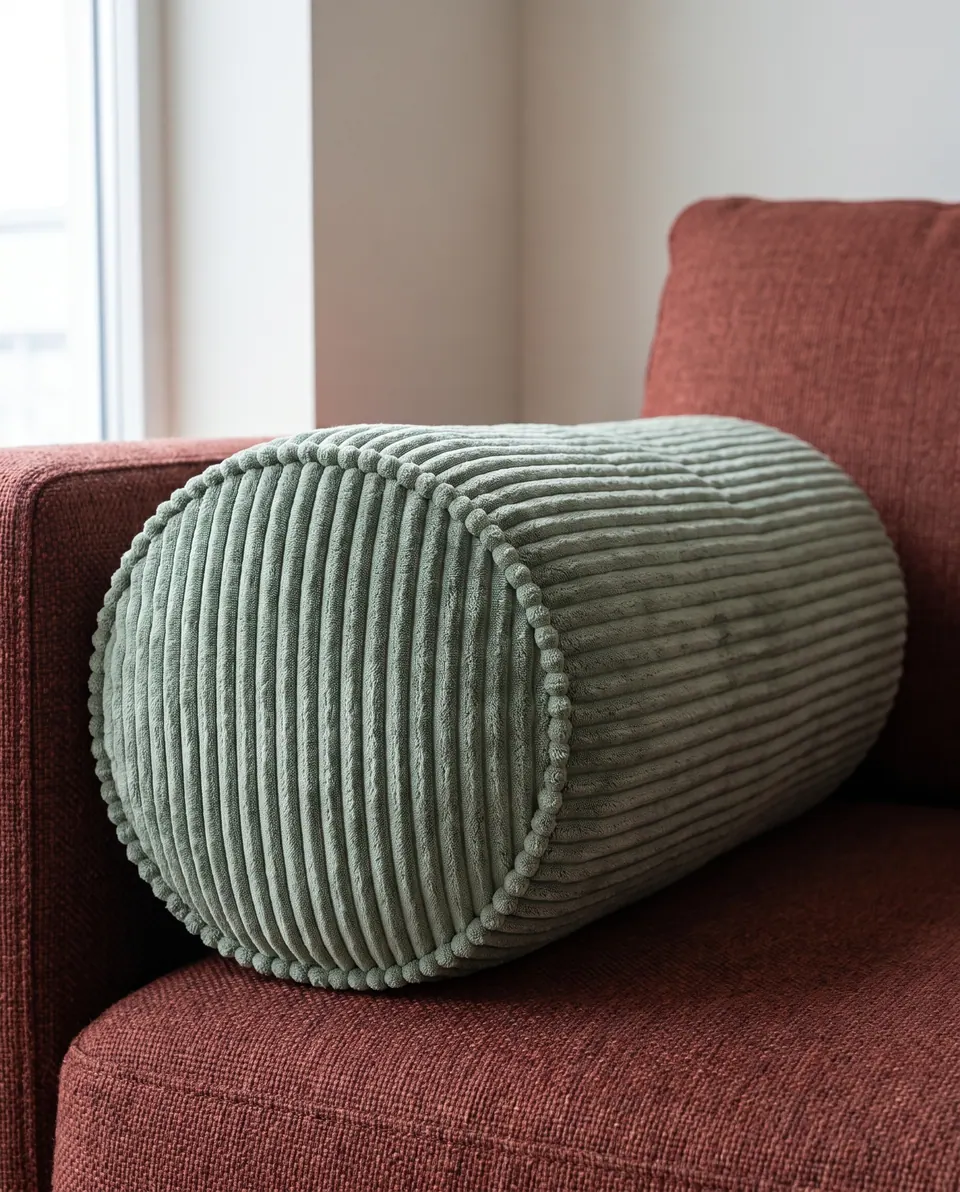
The full set comes with round bolster armrests, for example 8 in (20 cm) across and 37 1/2 in (95 cm) long. They can be swapped for rectangular side pillows, and mixing is fine: one buyer ordered one long back and a single bolster.
Build the palette: body, trim, one accent
The eye sits down first, so settle color before stitching. Body fabric goes on the cover and the backs. Piping is included and can be another color: a burnt-orange cord on cream velvet, gold piping on teal, honey-gold striped backs over a plain taupe seat. Then add one accent pillow in a third tone or a new texture. One accent says sofa; five say bed again.
Order the set, or only the backs
With the full set you give only the mattress size; backs and bolsters are proportioned from it, and a different back height can be requested. Already dressed your daybed? Backs and bolsters are sold without the cover, quoted on request, and a matching back can be added later by quoting your original fabric code.
Have it made
Measured it? Have Élodie’s workshop make it
A fabric reads one way at noon and another at dusk. Mention your light, and the workshop will weigh it with you. — Élodie
Leave your details and the workshop will call you to confirm measurements, fabric, foam and piping. No prices, dates or payment on this page: it is a request, not an order.
Round bolster or rectangular side pillow
| Round bolster | Rectangular side pillow | |
|---|---|---|
| Size seen in real orders | 8 in (20 cm) across, 37 1/2 in (95 cm) long | 12 x 30 in (30 x 76 cm) |
| How it reads | Soft and traditional, a daybed dressed up | Squarer and more tailored, closer to a sofa arm |
| In the full set | Yes Standard | Partly On request, in place of the bolsters |
Terracotta with cream trim, on two stacked mattresses
A buyer in the US wanted the full Hemnes set in terracotta with cream trim, with rectangular side pillows instead of round bolsters. The mattress was 74 1/2 x 38 1/4 in, two 4 3/4 in layers, so the workshop advised one cover made for 9 1/2 to 10 in rather than 8 in, to look filled, not loose. Backs: 17 x 36 in. Side pillows: 12 x 30 in.
Terracotta is a warm clay red that turns rosy by lamplight, and the cream cord draws each outline without competing. The buyer ordered samples in two rounds first, since each sample order holds five codes.
- What it taught
- Size the daybed cover to the combined height of stacked mattresses.
Where daybed sofa sets go wrong
- Two covers for two stacked mattresses: they come out too tight. One cover sized to the combined height fits.
- Guessing the cover height. Two 4 3/4 in mattresses take a 9 1/2 to 10 in cover, not 8 in.
- Backs with nothing to hold them. Ties can tie a backrest to the seat, and double piping gives backs enough structure to stay put; see keeping back cushions upright.
- Extras typed into the size box, where they get missed. Ask for ties in writing and check the photo sent before shipping.
- Fabric chosen for looks alone. Corduroy ribs can split under hard daily use; performance linen or velvet wear better on a daybed sat on every day.
Two stacked twin mattresses need one daybed cover sized to their combined height, 9 1/2 to 10 in; two separate covers come out too tight.
Élodie
Filling a 39 in deep daybed: pillows, foam backs or a wedge
| Back option | How it fills the depth | Look and upkeep |
|---|---|---|
| 3 or 4 large square pillows, 24 to 26 in | Soft layers against the wall | Relaxed; needs regular plumping |
| Foam backrests, about 20 in tall | Firm, even line across the length | Crisp; stays put |
| Wedge backs | Thicker at the bottom, pushes you forward | Tailored; supports deep seats |
| Round bolsters at each end | Adds arms, not depth | Pairs with any of the above |
Buyer questions
- A common question
What comes in the Hemnes daybed cover set? Is the mattress included?
The workshop's answerThe full set is one fitted, zippered mattress cover made to your mattress size, two filled back pillows and two filled bolster armrests, ready to use. The mattress and foam are not included. Piping comes at no extra charge and can be a different color from the cover.
- A common question
My daybed has two mattresses stacked. Can one cover fit both?
The workshop's answerYes. Order one cover in the mattress length and width plus the combined height. Two 4 3/4 in twins total about 9 1/2 in, so choose a 9 1/2 to 10 in cover, not 8 in. A stacked pair once made as two separate covers came out too tight; a single 31 1/2 x 79 x 9 1/2 in cover fixed it.
- A common question
Will the Hemnes cover set fit a Brimnes, a standard twin or a thicker mattress?
The workshop's answerYes. The set is designed around the Hemnes but made to measure, so it fits a Brimnes, a standard twin or any custom size, including mattresses 8 in or 9 1/2 in thick. Write length, width and thickness in personalization.
- A common question
Can I buy the L-shaped corner backrests alone to turn a twin daybed into a sofa?
The workshop's answerYes. Each L-shaped backrest covers a 39 x 39 in (100 x 100 cm) corner along the L and stands about 15 in high, so two span a 39 x 79 in sofa or a 75 x 38 in daybed. They have no hook-and-loop tape or other attachments, so they work as standalone cushions.
Questions buyers ask next
How tall should back cushions on a daybed be?
About 20 in (50 cm) from the top of the seat, the height the workshop's daybed sets use. Standard back pillows are 16 in (40 cm), the lowest it makes for proper support, and 27 1/2 in (70 cm) is too tall.
How many back cushions does a twin daybed need?
Two, in most cases. Backs are sized by dividing the mattress length so they sit flush end to end: a 78 3/4 in (200 cm) daybed takes two 39 in backs. Longer custom daybeds can take three, such as three 22 x 22 in backs along a 76 in cover.
Should daybed back cushions be foam or soft-filled?
Foam-filled if the daybed is mostly for sitting upright: the back stays supportive and structured instead of slumping. Soft-filled backs are plumper and more relaxed, which suits lounging. Say which look you want when you send your sizes.
Can a daybed back cushion double as a headboard?
Yes, as a soft one. Backrests are made without a rigid board, so they lean or hang rather than screw to the wall. Ties on the top corners let one hang from hooks or a rail.