The Cutting Table · compared on the table
Can I mix fabrics, like a different fabric for the piping or sides?
Also asked as:Linen for the base, velvet for the piping?Different fabric for the top and sides?
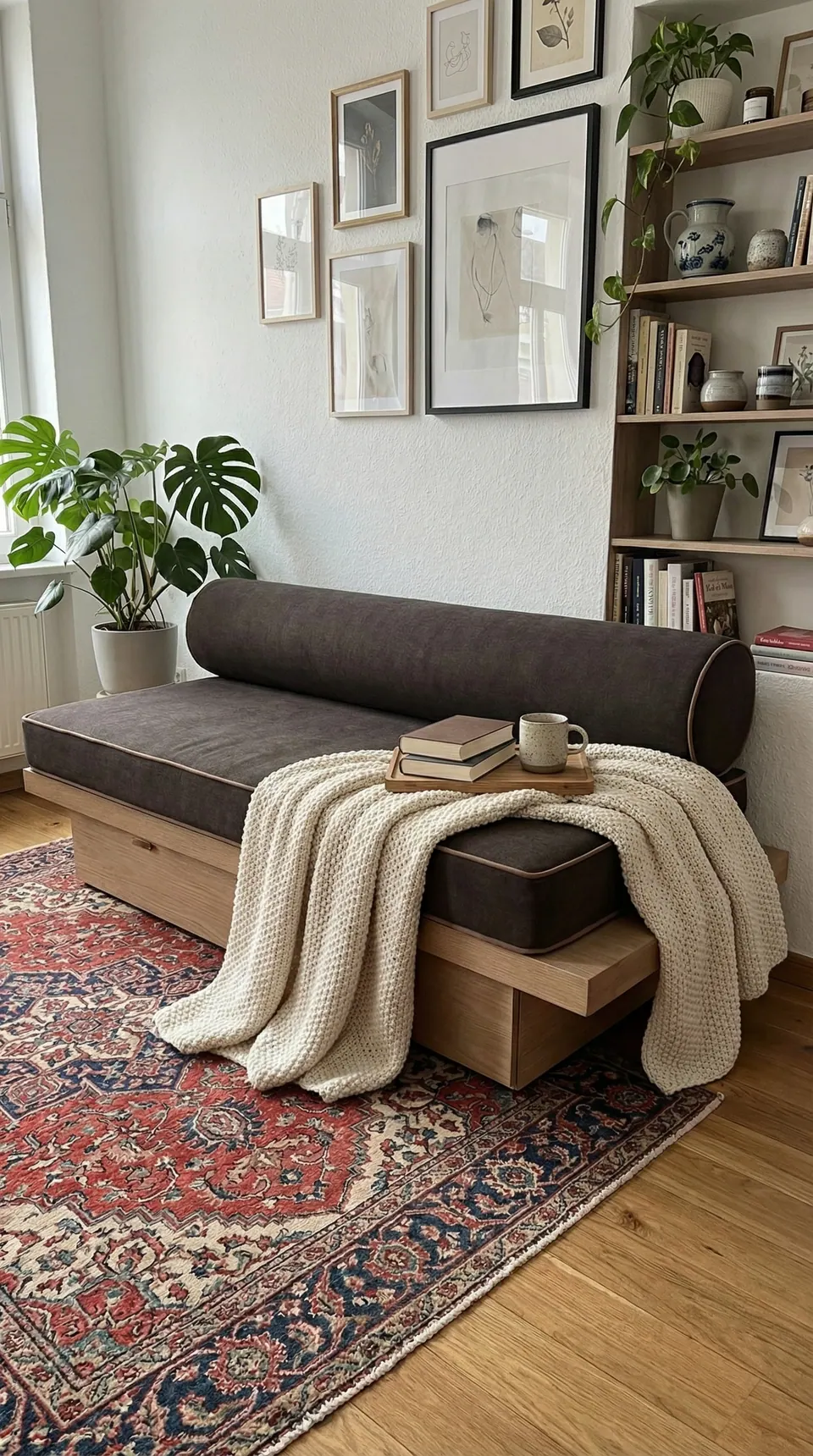
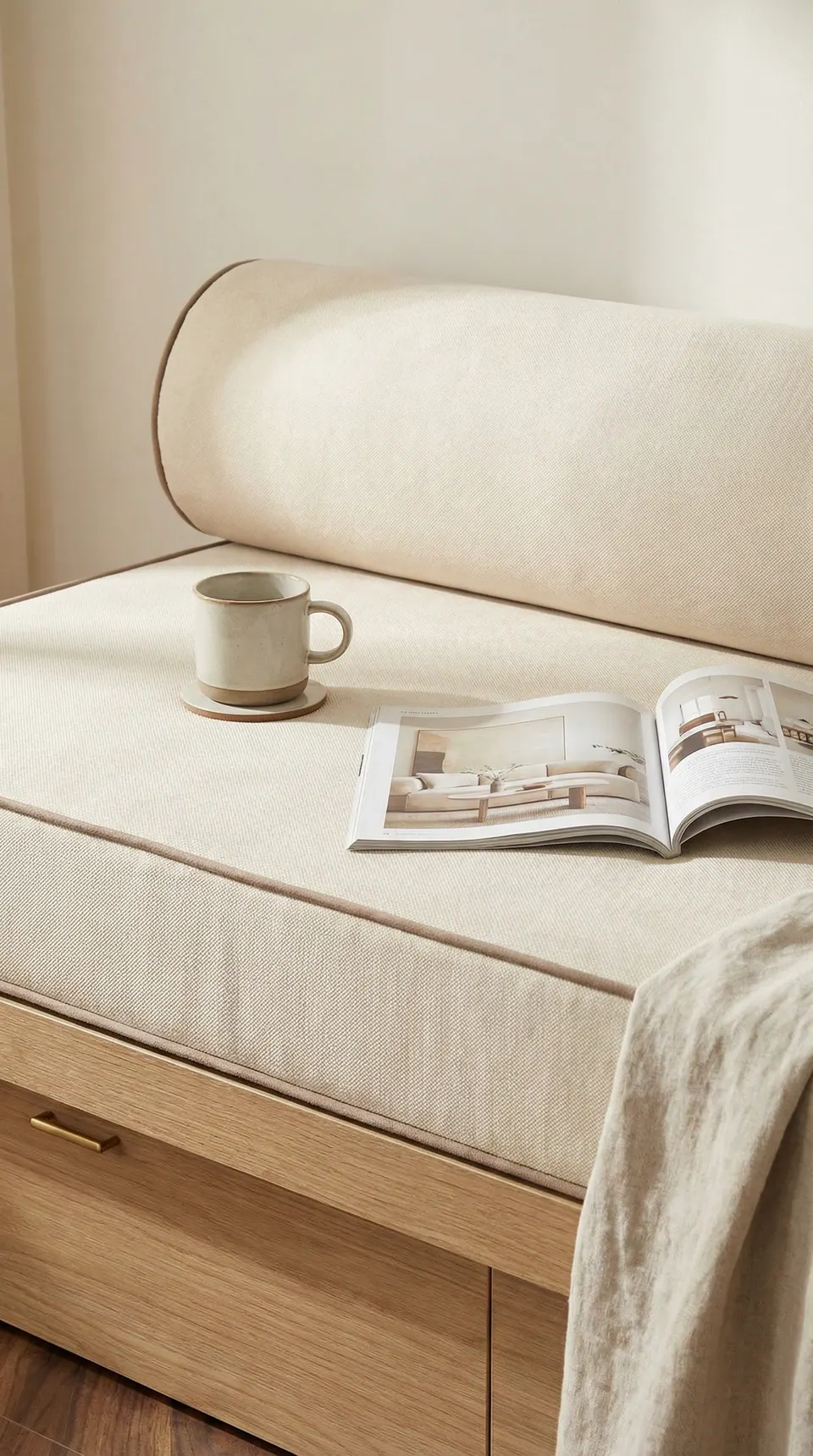
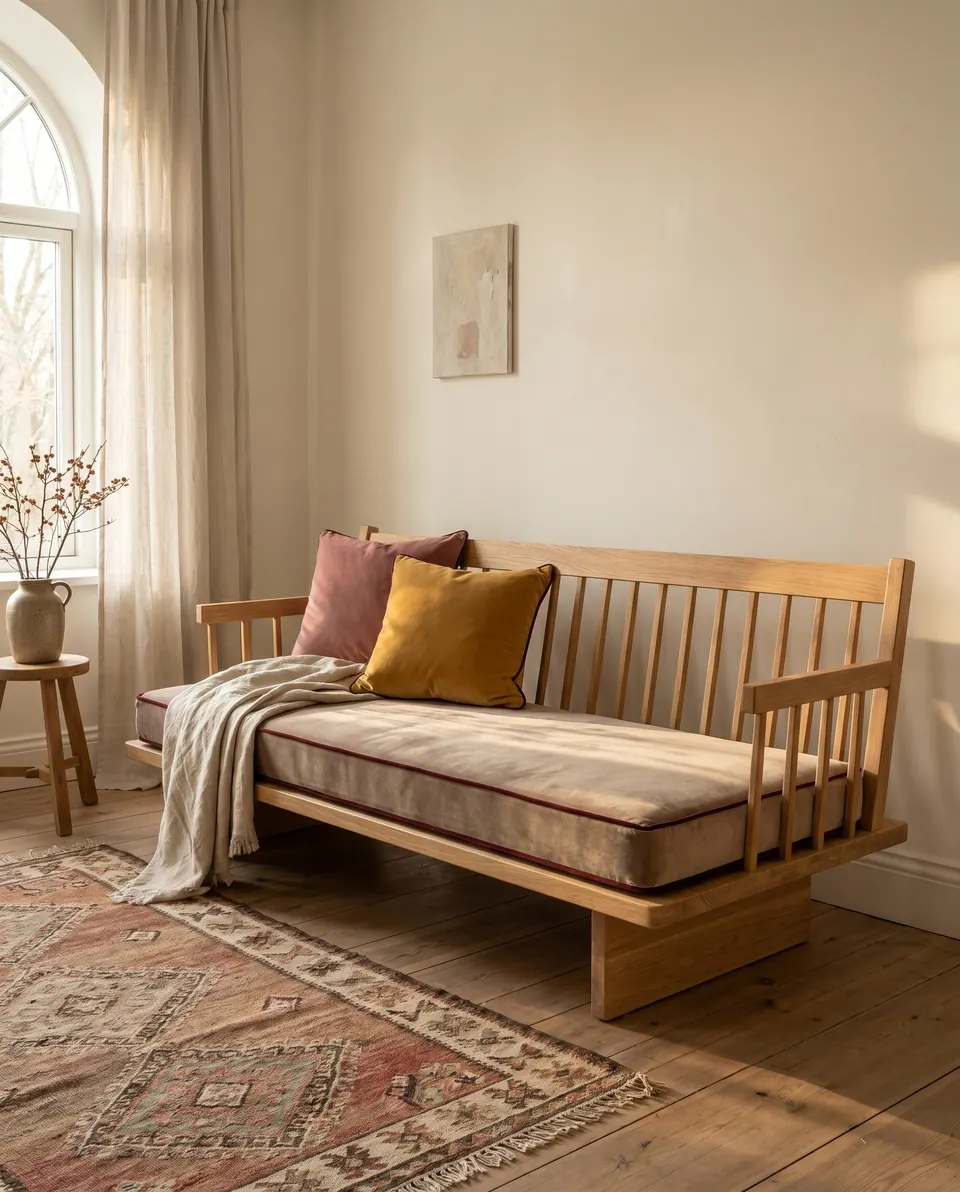
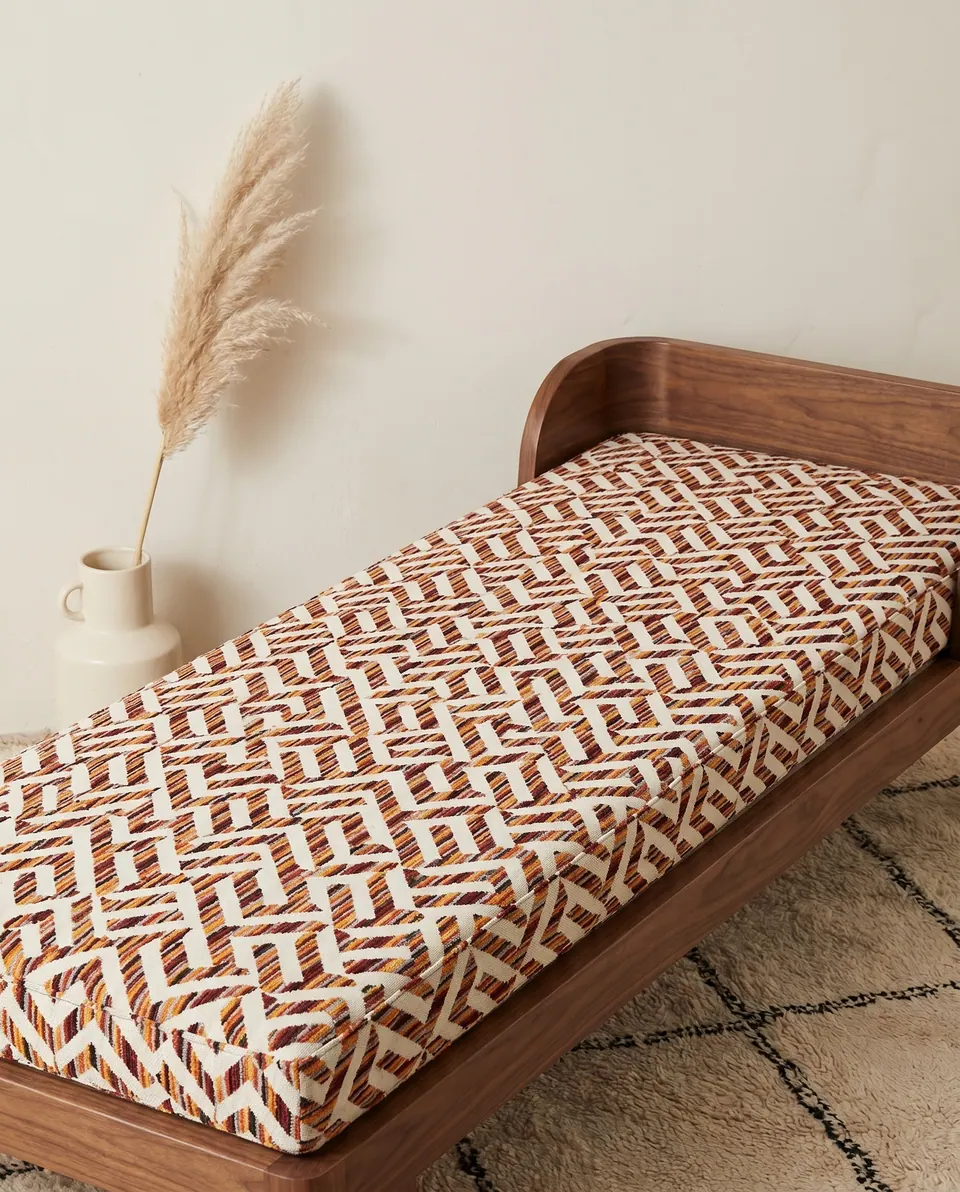
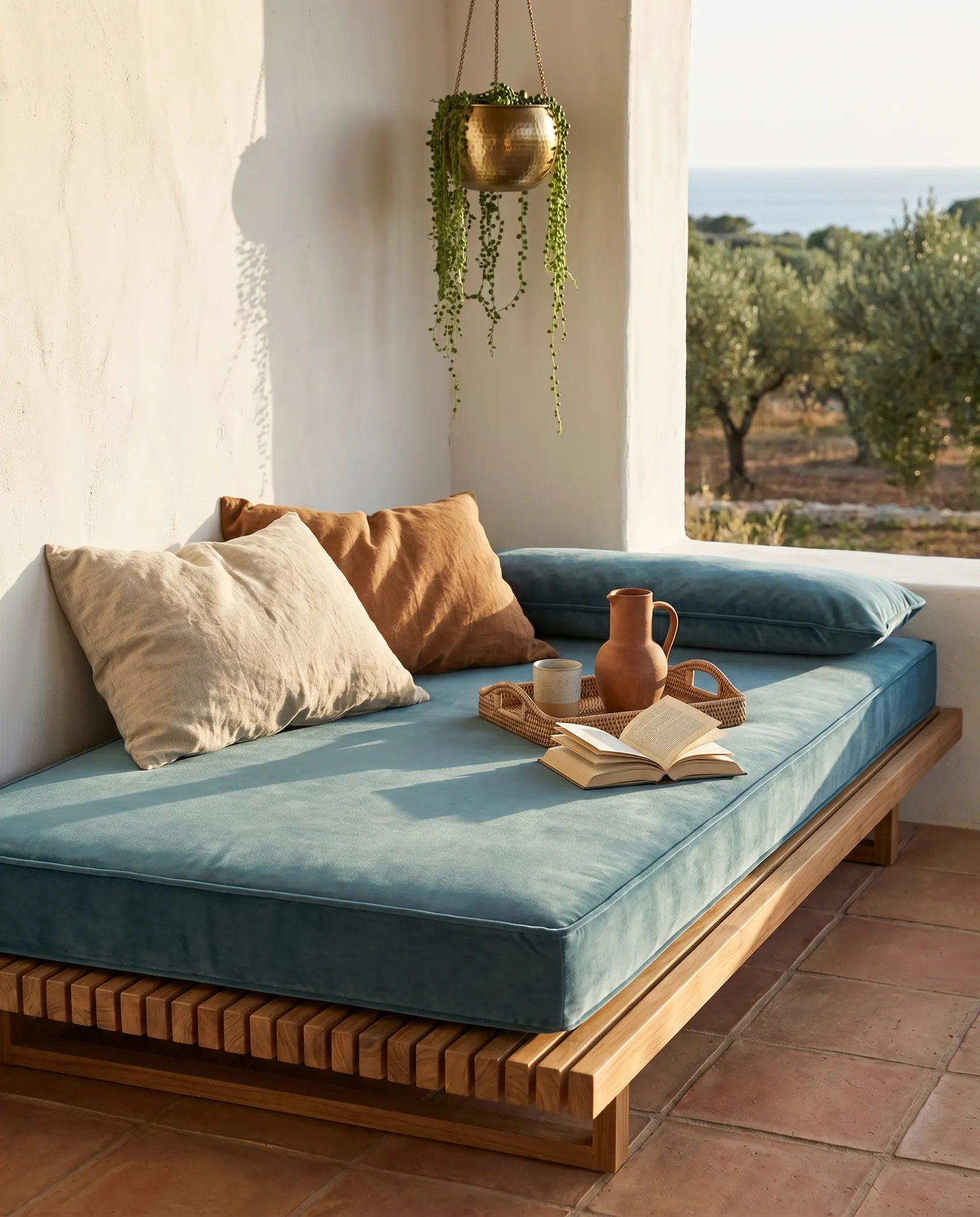
A velvet welt around a linen seat is one of my favorite quiet luxuries: a matte field and one thin line of sheen. The workshop allows it, and a little more besides.

 Save
The quick answer
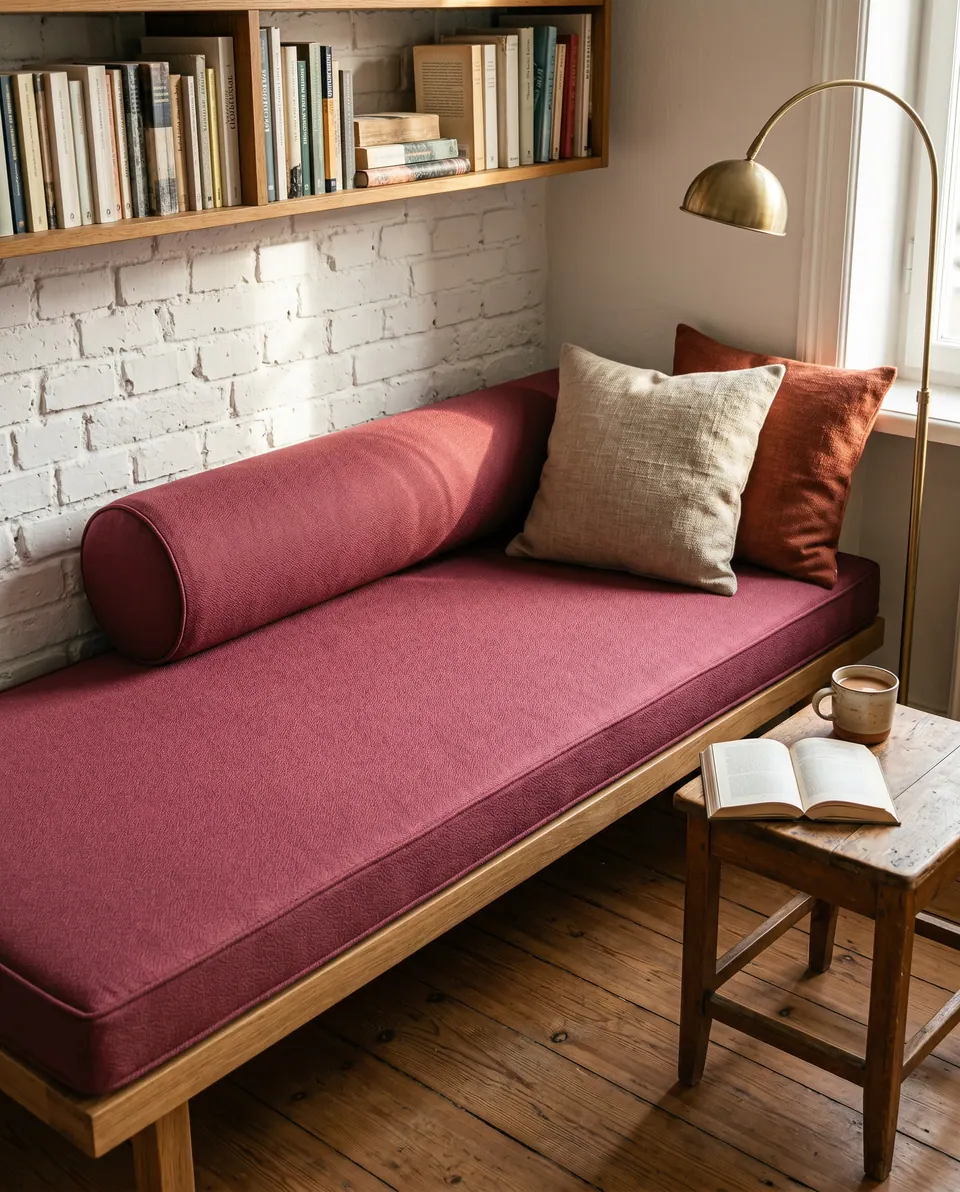
Yes, you can mix fabrics: every fabric family can be used for bench cushions and daybed mattress covers, and families can be combined, such as a linen body with velvet piping or one fabric on the top and bottom and another on the sides. Two fabrics add a small surcharge for the extra cutting and labor. Write each part's fabric code in Personalization.
Get a quote for a daybed cushion
Three ways to split one cushion
| Combination | Where each fabric goes | Codes to write |
|---|---|---|
| Contrast piping | One fabric on the body, another on the welt | Body code + piping code |
| Split body | One fabric top and bottom, another on the sides | Top and bottom code + side code |
| Three-part | Top and bottom, sides and piping each different | Three codes, one per part |
Key facts
- Every fabric family works for bench cushions and daybed mattress covers.
- Families include velvet (100s), soft fabric (900s), linen and stripes (L and N codes), the outdoor range (M codes) and the P-code family.
- Fabric families can be mixed, such as a linen body with velvet piping.
- The top and bottom can be one fabric and the sides another.
- Two fabrics add a small surcharge for extra cutting and labor.
- Each part's fabric code goes in Personalization.
- Velvet is indoor-only and not water resistant.

Have it made
Have Élodie’s workshop cut this for you
A fabric reads one way at noon and another at dusk. Mention your light, and the workshop will weigh it with you. — Élodie
Leave your details and the workshop will call you to confirm measurements, fabric, foam and piping. No prices, dates or payment on this page: it is a request, not an order.
Is any fabric off-limits?
No family is off-limits for a bench cushion or a daybed mattress cover. Velvet, soft fabric, linen and stripes, the outdoor range and the P-code family can all be used, and mixed.
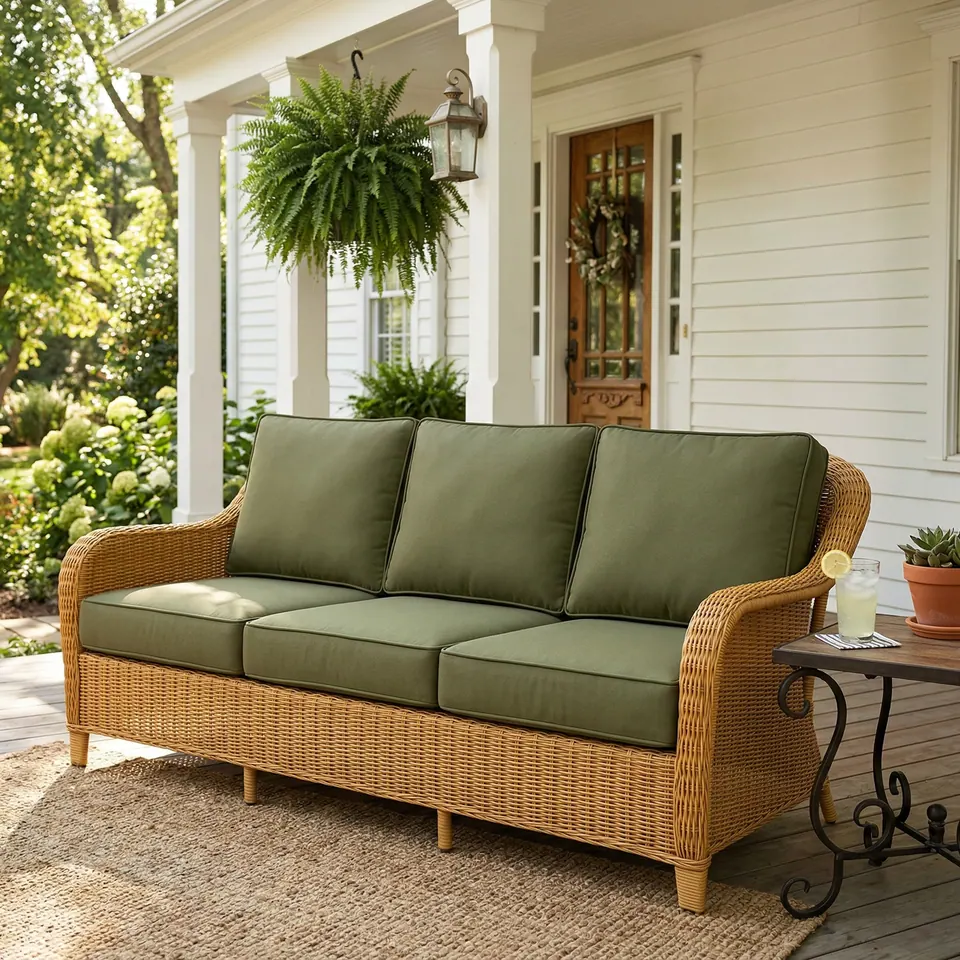
The one practical note is weather. Velvet is indoor-only and has no water resistance, so a daybed that may get damp wants the outdoor range, piping included.
Three codes on one slim cushion
A buyer messaged the workshop about a slim cushion, about 12 x 37 in (30.5 x 93.5 cm), with three fabrics in mind: one stripe on the top and bottom, a second stripe on the sides and a linen for the piping. Two fabrics mean extra cutting and labor, so the workshop covered the small surcharge by asking the buyer to select the next size option up, 15.75 x 39.5 in (40 x 100 cm), and to write the true dimensions and all three codes in Personalization.
It is tidy bookkeeping: the larger size option carries the surcharge, and the note carries the truth.
Choose which fabric leads
When you mix, decide which fabric leads. Let one color speak and the others listen, my friends: a flax linen body with an ink navy velvet welt, or a cream stripe on top with a solid rust on the sides. A change in sheen often reads richer than a change in color alone.
The piping Pattern walks through matching, contrasting or no welt at all. Which part of your cushion will people see first, the top or the edge?
A linen cushion with velvet piping is allowed; two fabrics simply add a small surcharge for the extra cutting and labor.
Élodie
Buyer questions
- A common question
Are there any fabric types I can't use for a bench cushion or daybed mattress cover?
The workshop's answerNo restrictions: velvet, soft fabric, linen and stripes, the outdoor range and the P-code family can all be used, and families can be mixed, such as a linen body with velvet piping. The one practical note is that velvet is indoor-only and not water resistant, so choose the outdoor range for anything that may get damp.
- A common question
Can the top and bottom be one fabric and the sides another?
The workshop's answerYes. Two fabrics take extra cutting and labor, so for a cushion of about 12 x 37 in (30.5 x 93.5 cm) the buyer selected the 15.75 x 39.5 in (40 x 100 cm) option and wrote the dimensions and fabrics (one stripe top and bottom, another on the sides, linen piping) in Personalization.
- A common question
Will linen wrinkle or stain on a seat cushion?
The workshop's answerIt holds up. The linen is a linen-polyester blend, so it keeps its shape, wrinkles little and resists stains better than pure linen. It has no coating and washes at 86°F (30°C) on a delicate cycle, then line dries.
- A common question
I'm sensitive to synthetics. Can my cushion be 100% cotton or linen?
The workshop's answerYes. Standard corduroy, velvet and soft fabric contain polyester, so the workshop uses its 100% cotton chart, pure linen or a cotton-linen fabric instead. Covers-only orders are fine.
Questions buyers ask next
Does velvet piping on a linen cushion cost more?
A little. Using two fabrics adds a small surcharge for the extra cutting and labor. Write the linen code for the body and the velvet code for the piping in Personalization so both are clear before cutting.
Can an outdoor fabric be mixed with an indoor one?
Families can be mixed, but think about where the cushion lives. Velvet is indoor-only and not water resistant, so on a cushion that may get damp, keep every part, piping included, in the outdoor range.
How do I tell the workshop which fabric goes where?
Name each part and its code in Personalization: top and bottom, sides and piping. One buyer listed a stripe for the top and bottom, a second stripe for the sides and a linen for the piping, which is exactly the detail needed.