A Reading by HanaDaybed Cushions & Covers
Taupe and cream striped daybed cushions that make a shallow seat look deep
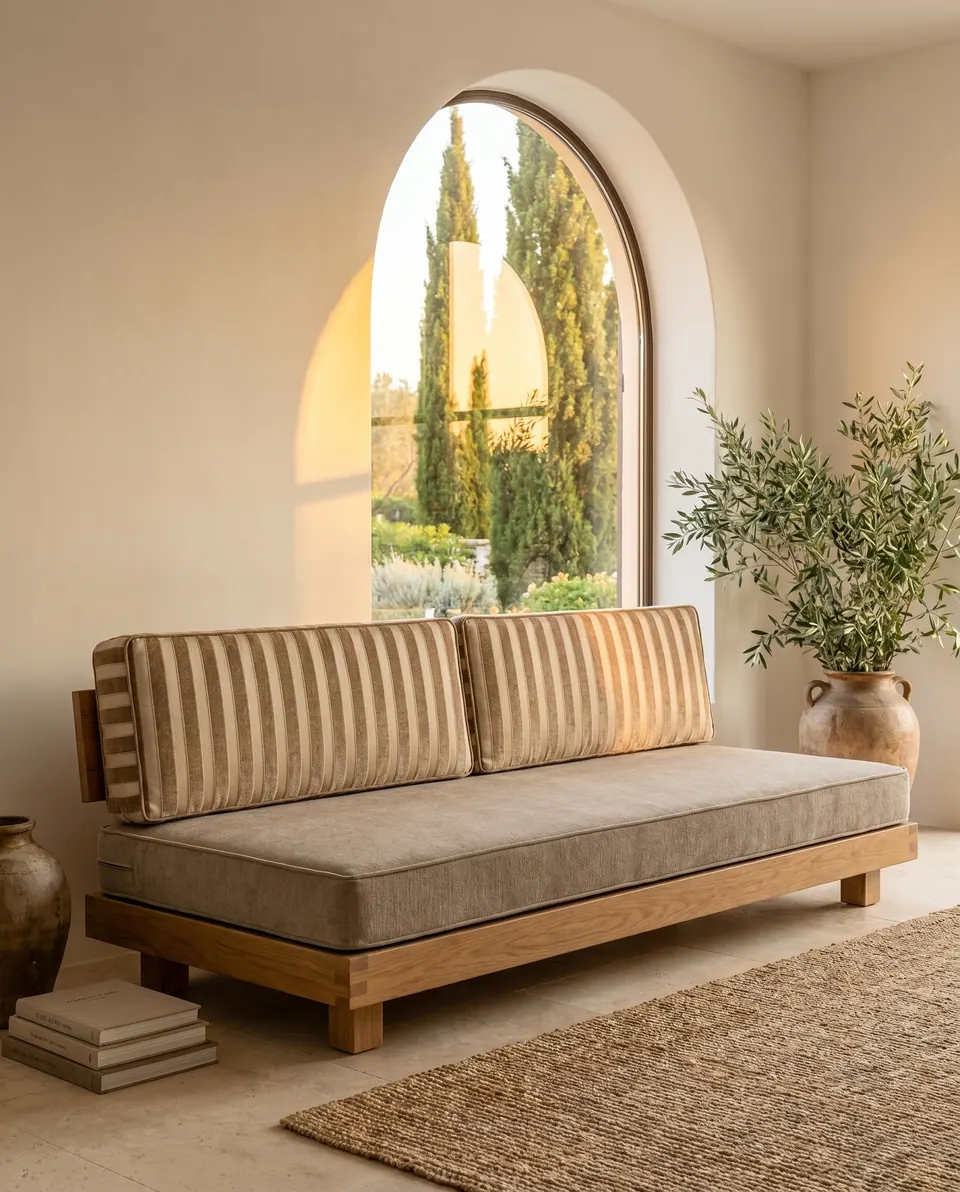
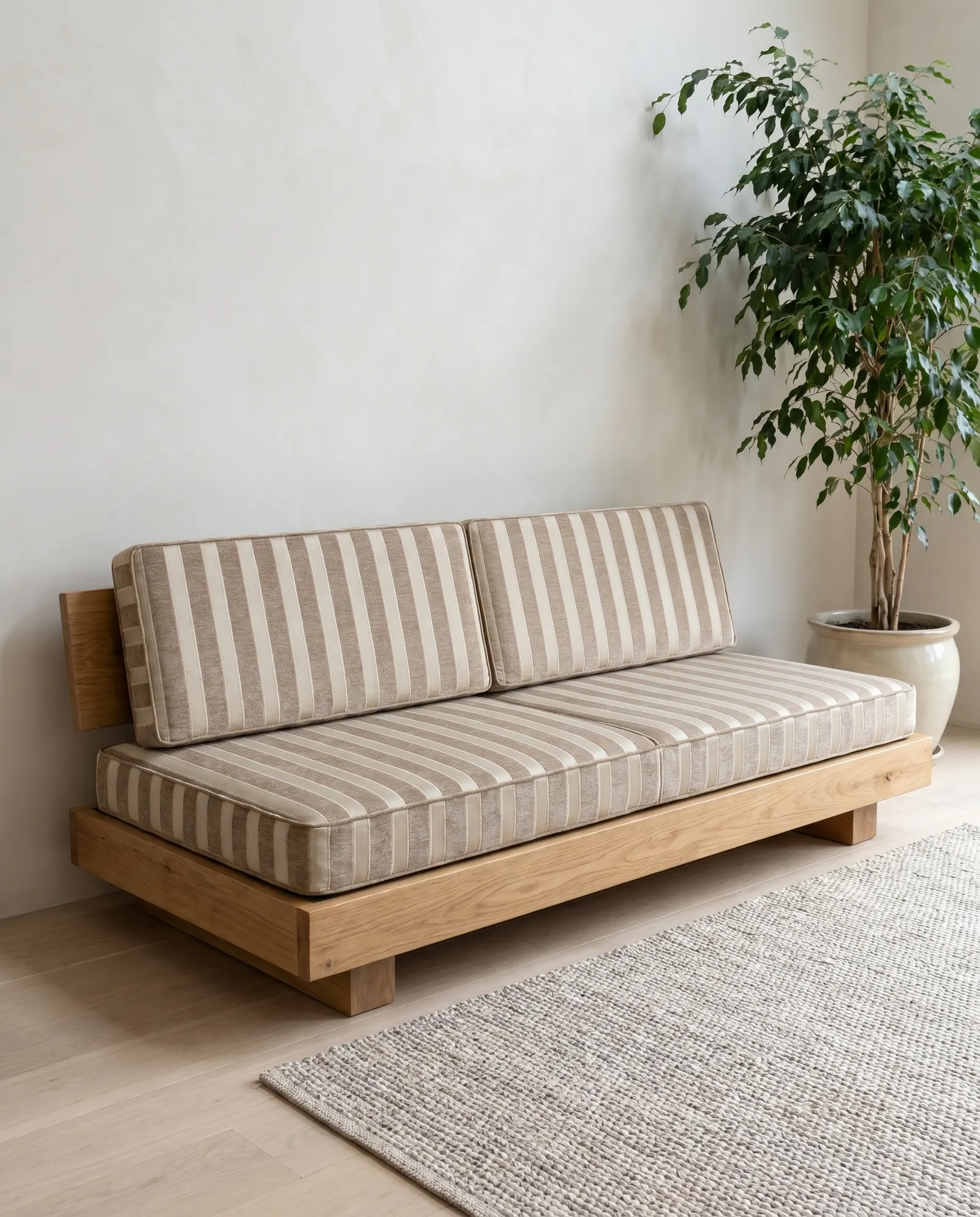
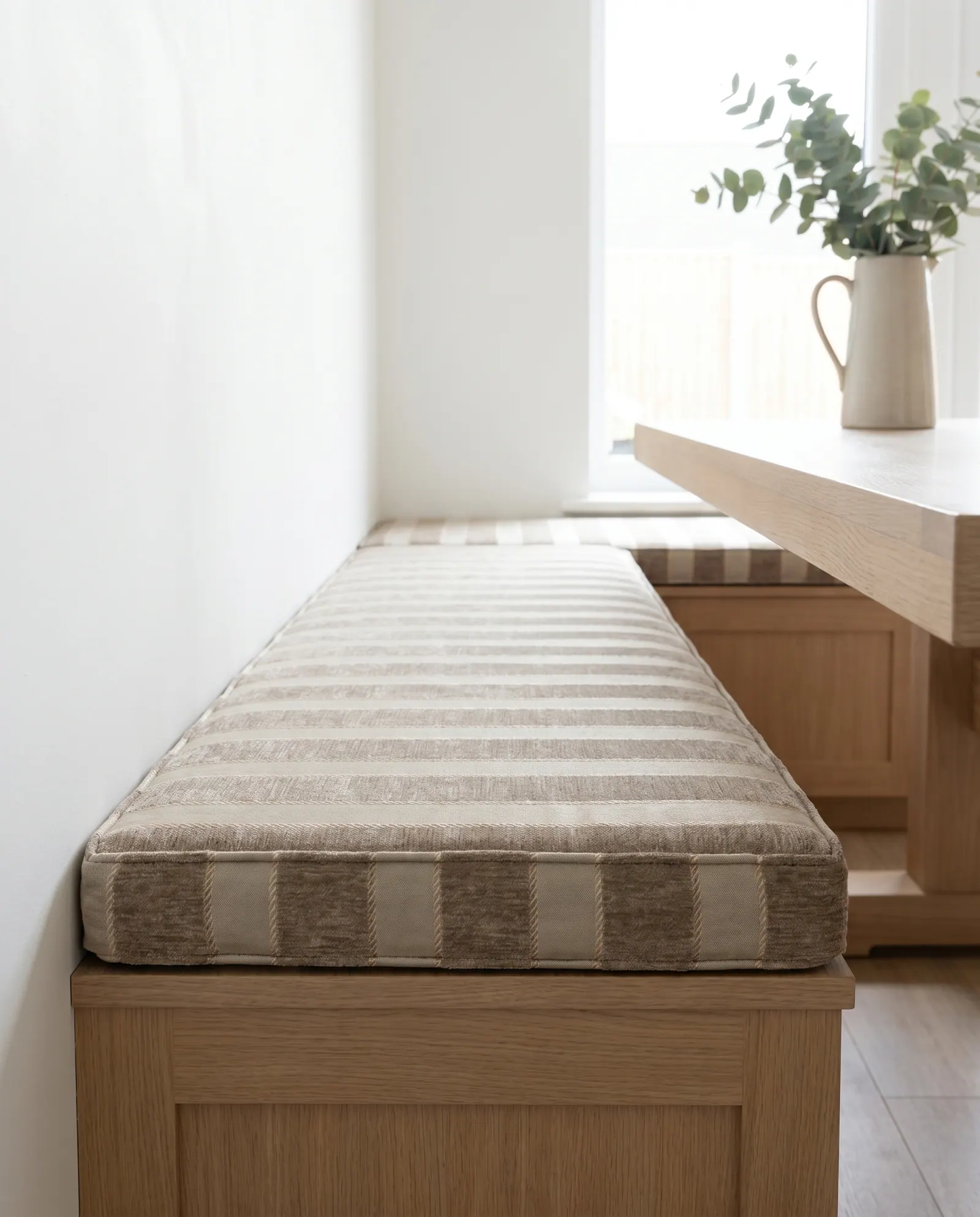
A stripe is a measuring tool you can sit on. On this low oak platform it adds depth the wood does not have.
The quick answer
Run the stripe front to back on a daybed seat cushion and top to bottom on the back cushions, and a shallow platform looks deeper and taller. Match the stripes where seat meets back so the pattern flows. Then check the insert: a new cover over an old soft filling stays slouchy, because the foam, not the cover, decides the final look.
 Save
 Save
 Save
 Save
 Save
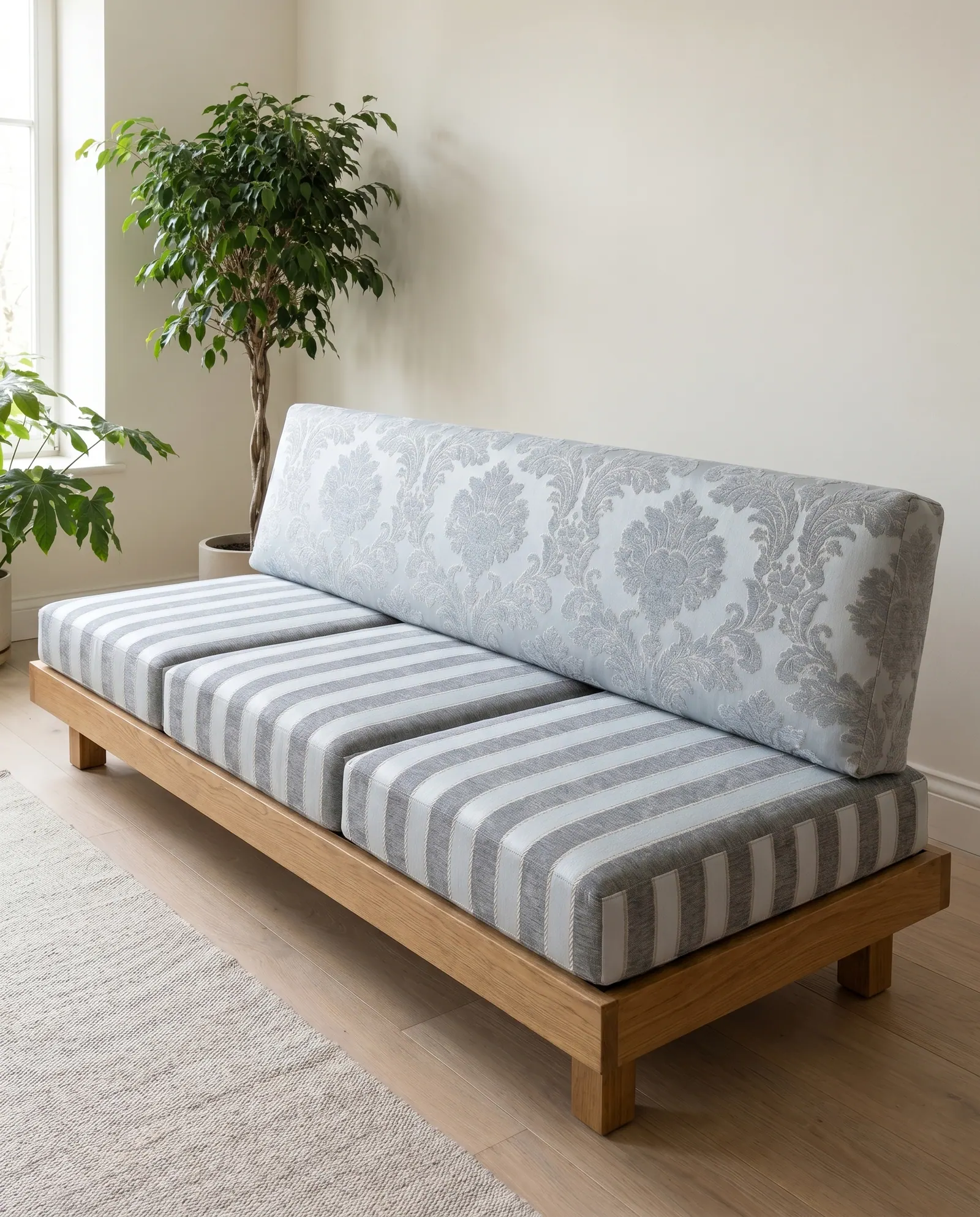 Save
 Save
Pinned by Hana: where the stripes point
Read the pins in order and watch each stripe send the eye somewhere useful.
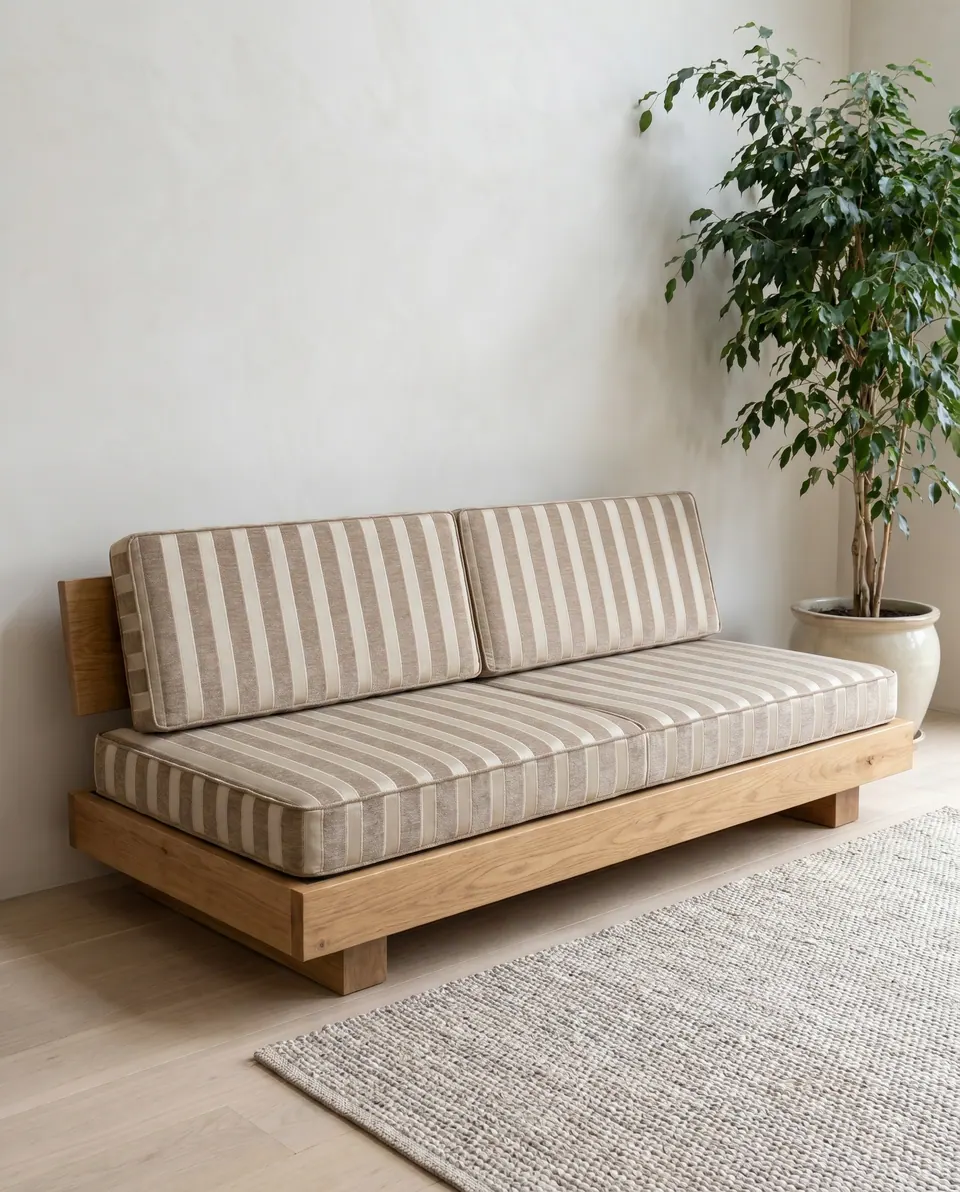
- Vertical stripe backs
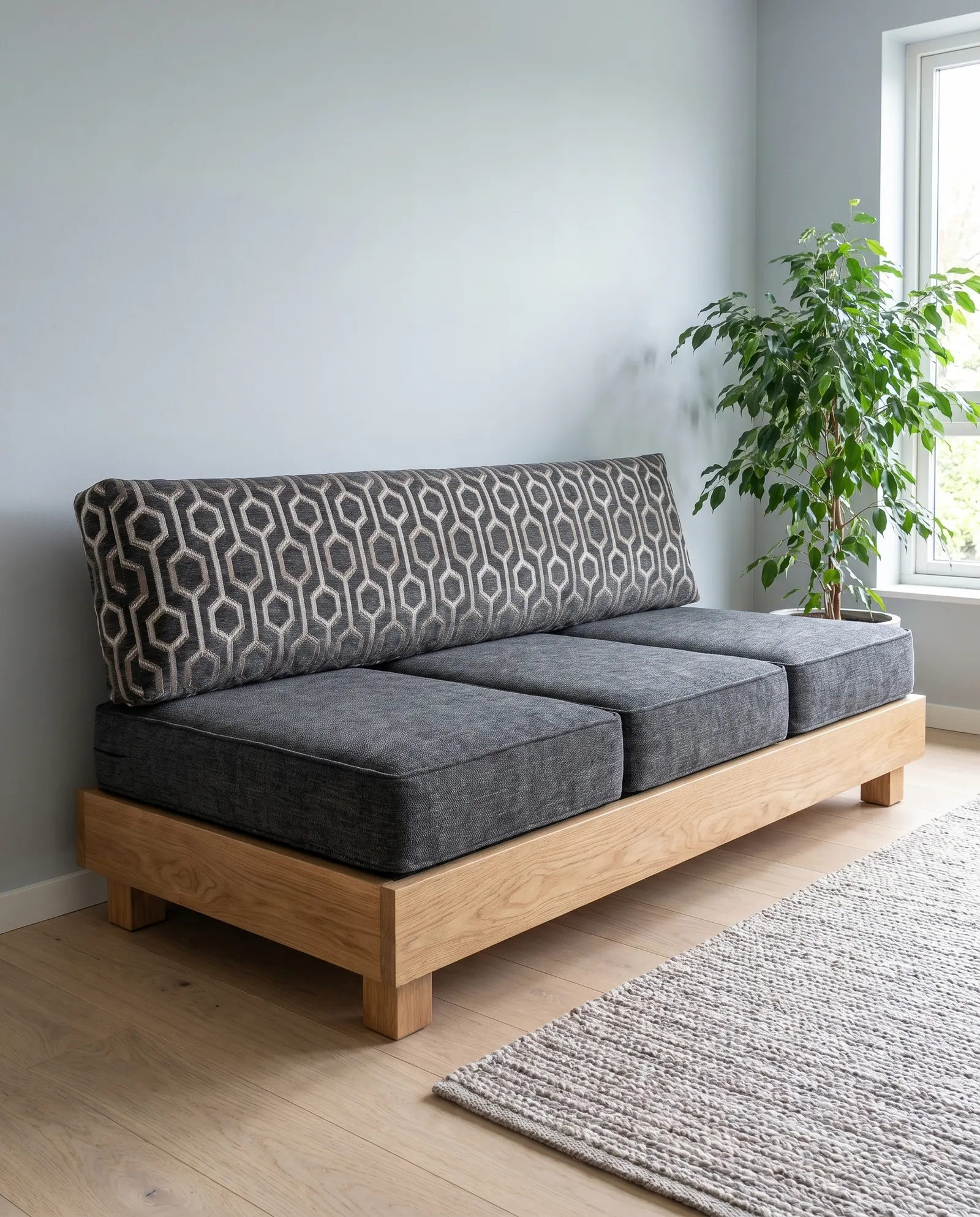
Stripes run top to bottom on the back pads so the seat looks taller than it is.
- Stripe matched at front
Seat stripes line up with the back cushion stripes, a cutting detail that makes the set look tailored.
- Oak plinth base
The warm oak picks up the taupe bands and grounds the lighter cream ones.
- Fig in glazed pot
The cream pot repeats the pale stripe and softens the corner.
- Wool loop rug
A plain textured rug keeps the stripe as the only pattern in the room.
- Vertical stripe backsStripes run top to bottom on the back pads so the seat looks taller than it is.
- Stripe matched at frontSeat stripes line up with the back cushion stripes, a cutting detail that makes the set look tailored.
- Oak plinth baseThe warm oak picks up the taupe bands and grounds the lighter cream ones.
- Fig in glazed potThe cream pot repeats the pale stripe and softens the corner.
- Wool loop rugA plain textured rug keeps the stripe as the only pattern in the room.
Reading the stripe on a shallow platform
This platform is shallow. You would not guess it.
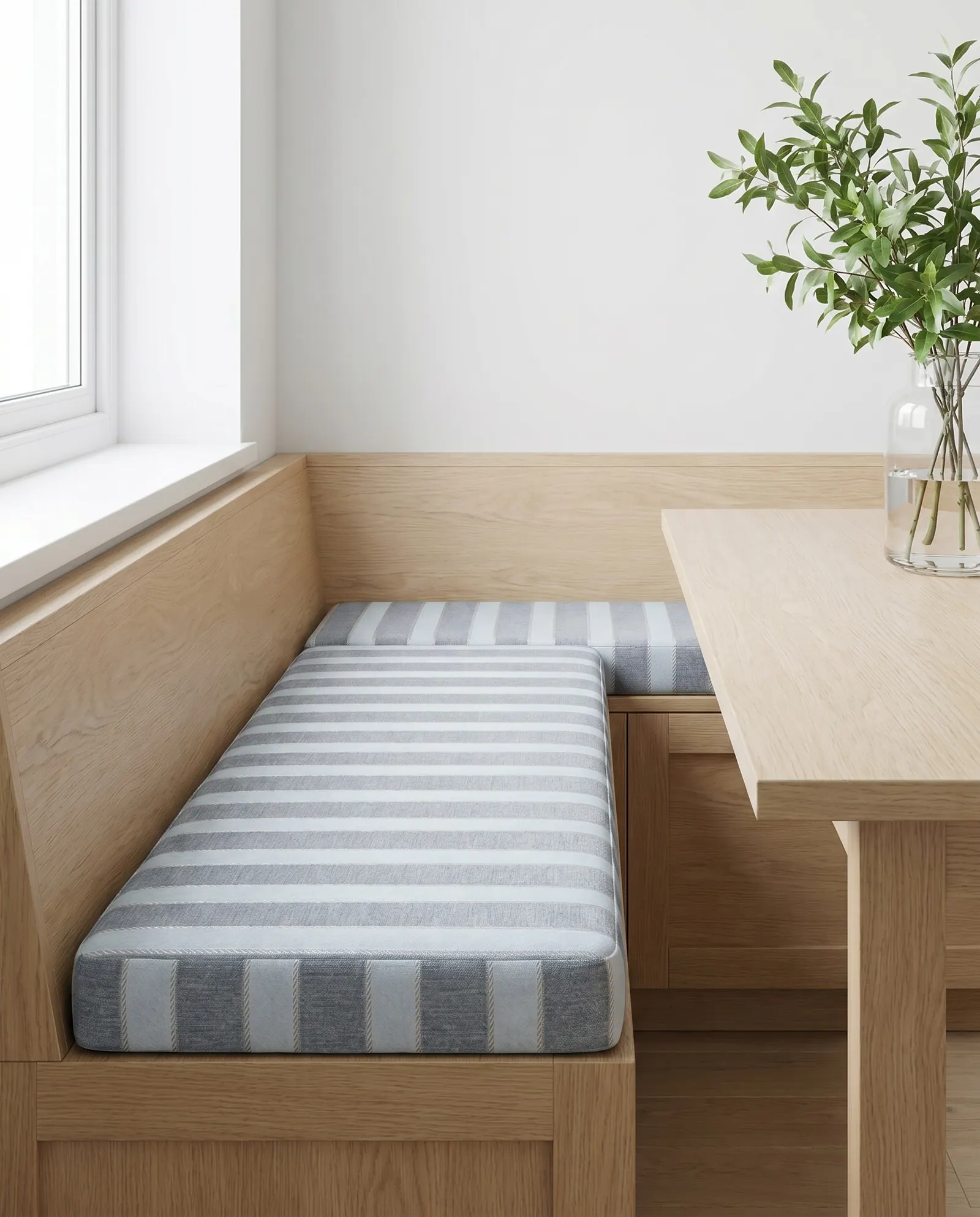
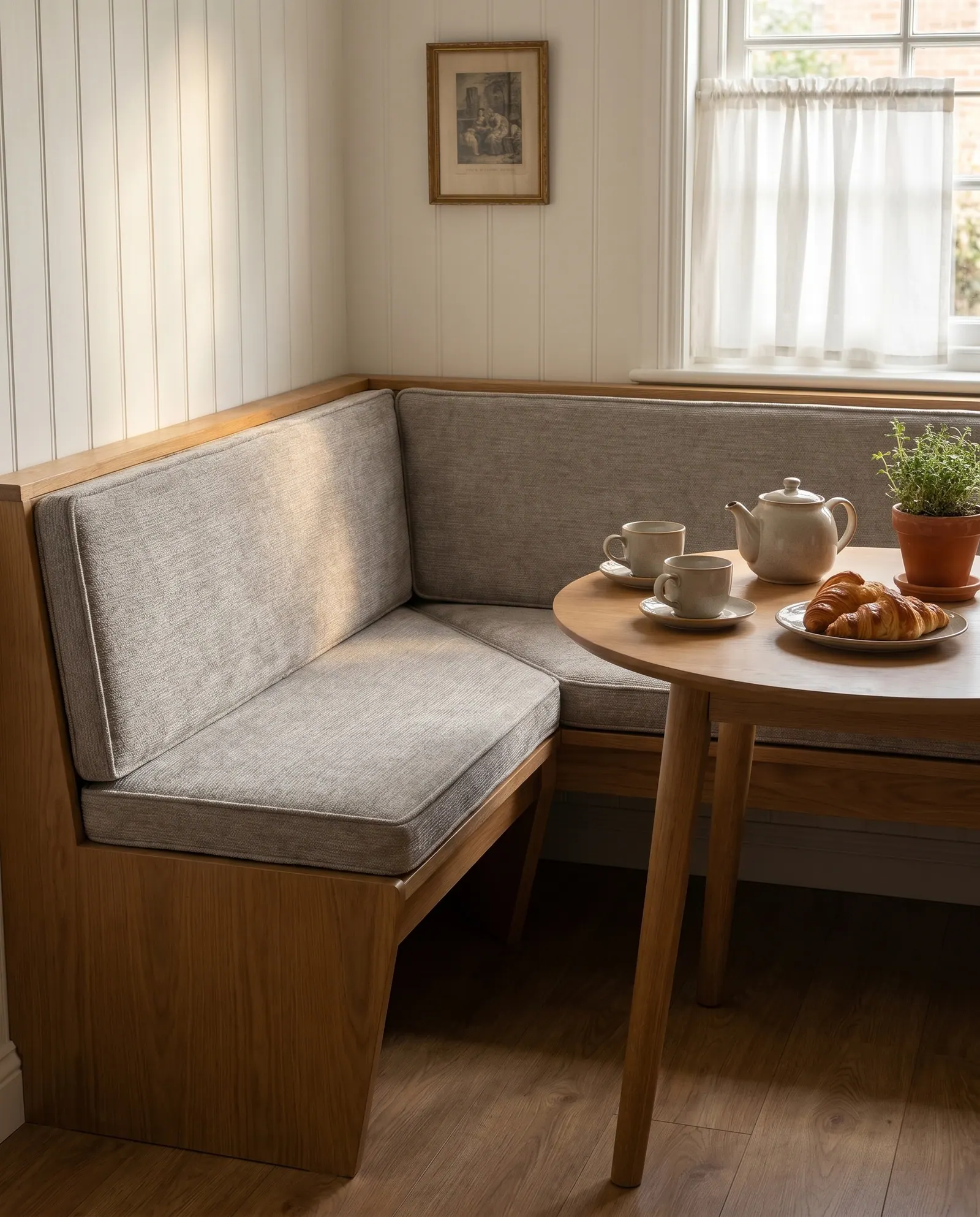
The back cushions carry vertical bands, taupe and cream, running top to bottom. The eye climbs them, so the backrest seems taller than it is. On the seat, the same stripe runs front to back and meets the back bands without a jump. That match is a cutting decision, made before any seam. It is what makes a set of daybed cushions look tailored instead of assembled.
The cloth is a woven stripe from the jacquard and damask family. Self piping keeps the box edges quiet. A contrast cord would draw a frame and stop the stripe at every edge.
The chunky oak plinth picks up the taupe bands. Its raised back board holds the cushions upright. A weeping fig in a cream glazed pot repeats the light stripe and softens the corner. The oatmeal wool loop rug is plain on purpose. One pattern per room, and here the stripe has it.
Cool morning light keeps the cream from turning yellow. Nothing else asks for attention.
In a small room, a pattern that points somewhere is worth more than another piece of furniture. Stripe direction costs one line in your order note.
How deep is your platform, from the front edge to the back board?
Leave a hand's width of floor around it. Let the stripe do the stretching. The room will follow.
Four notes for a striped set on a narrow platform
- Measure the platform depth and the back board height first; a stripe can flatter a shallow seat but cannot fix a wrong size.
- Write the stripe direction for each piece in your order note: seat front to back, backs top to bottom.
- Ask for the stripes to meet where the seat touches the back cushions.
- Decide on the insert before the cover: structured high-density foam holds a crisp box edge, an old soft filling slouches.

Have it made
Have this made — ask Hana’s workshop
Leave your numbers and the height you like to sit at. The rest is a short conversation. — Hana
Leave your details and the workshop will call you to confirm measurements, fabric, foam and piping. No prices, dates or payment on this page: it is a request, not an order.
— Hana