A Reading by HanaDaybed Cushions & Covers
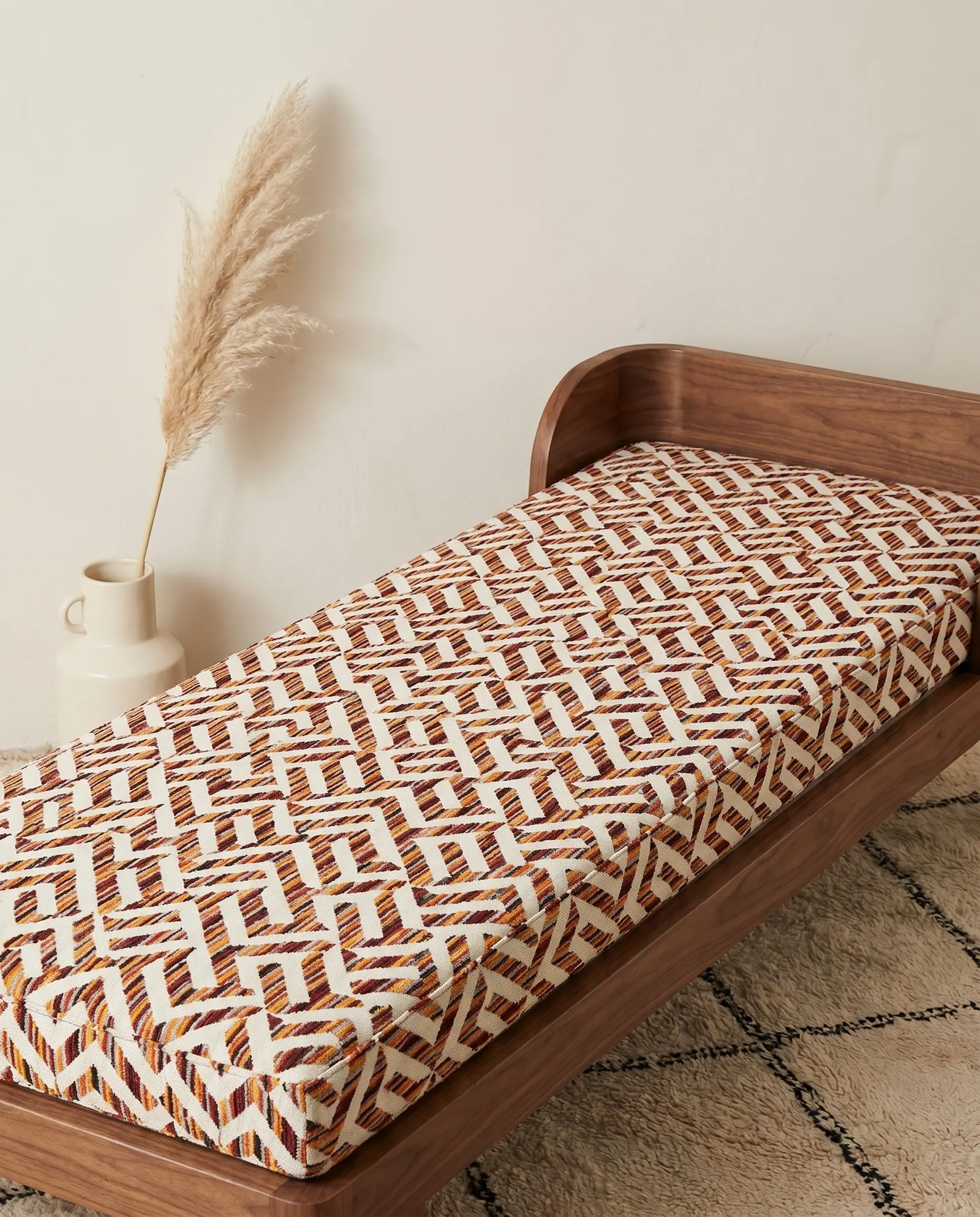
A burnt orange lattice daybed cushion on walnut, ordered by the code
Hana reads a walnut daybed with a curved end and a woven lattice on top, then sets out the messages that name a fabric so nobody has to guess.
The quick answer
Order a daybed cushion by fabric code, not color name, writing the body code and the piping code separately. Send the exact width, depth and thickness before asking for a quote, and include a daylight photo of the frame if the color must match it. If a color isn't made in the fabric you want, ask for the two closest codes.

 Save
Pinned by Hana: five marks on the walnut daybed
Five pins move from the lattice top to the curved walnut end, the pampas and the rug that answers the pattern.
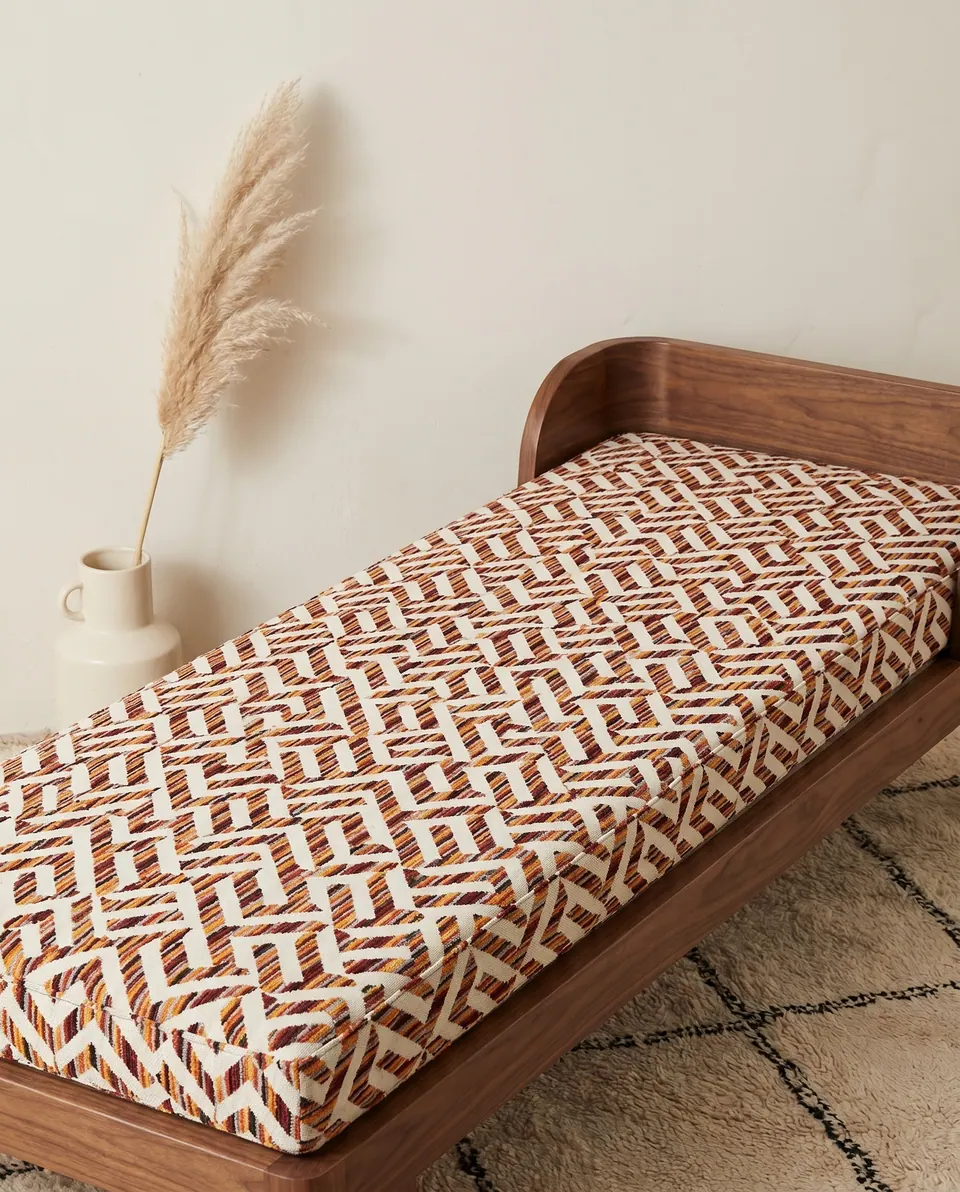
- Lattice jacquard top
A bold woven lattice suits a daybed because the top is seen from above as much as from the side.
- Unpiped box edge
Leaving out piping lets the pattern continue unbroken over the sides.
- Curved walnut end
The cushion is cut square to sit inside the curved walnut rail without gaps.
- Pampas in jug
Pampas repeats the cream ground of the weave and adds soft height.
- Berber rug
Fine dark diamonds on the rug echo the lattice without competing with its color.
- Lattice jacquard topA bold woven lattice suits a daybed because the top is seen from above as much as from the side.
- Unpiped box edgeLeaving out piping lets the pattern continue unbroken over the sides.
- Curved walnut endThe cushion is cut square to sit inside the curved walnut rail without gaps.
- Pampas in jugPampas repeats the cream ground of the weave and adds soft height.
- Berber rugFine dark diamonds on the rug echo the lattice without competing with its color.
Why a woven lattice belongs on a daybed
A daybed mattress is seen from above more than from the side. That is why a strong pattern works here. The top does the job a throw would otherwise do.
This daybed cushion is a lattice jacquard: burnt orange and rust lines, a little plum, on a cream ground. Because the pattern is woven in, not printed, it stays sharp where people sit.
There is no piping. The box edge is left plain so the lattice runs over the sides without a break. A welt would draw a line through it.
The cushion is cut square and sits inside the curved walnut end rail with no gap. The curve belongs to the frame. The cushion does not try to follow it.
The warm tones of the weave meet the walnut halfway. The cream ground keeps the whole thing from turning dark against the cream plaster wall. One cream jug of pampas repeats that ground and adds soft height. The Berber-style rug has fine dark diamonds that echo the lattice in a quieter voice, pale enough not to compete for color.
What is the warmest color in your wood? Match the pattern to that, and keep the rest cream.
A pattern seen from above. A frame left to curve. Nothing else asked to speak.
Ordering by code: four messages, in order
Name the fabric by code
Color names change from shop to shop. The chart code does not. Write the body code and the piping code on separate lines.
Ask for the two closest
If the color you want isn't made in the fabric you want, ask for the two nearest shades in that fabric, with their codes. Then order swatches of both.
Send the sizes before the quote
Exact width, depth and thickness of every cushion, and the height of any back cushions. The quote is built from those numbers.
Show the frame in daylight
If the cushion must match wood or paint, send daylight photos of the frame. A suggestion made from a photo can still be checked against a swatch.

Have it made
Have this made — ask Hana’s workshop
A good size is a quiet thing. You notice it only when it is wrong. Let the workshop check yours first. — Hana
Leave your details and the workshop will call you to confirm measurements, fabric, foam and piping. No prices, dates or payment on this page: it is a request, not an order.
— Hana