 Save
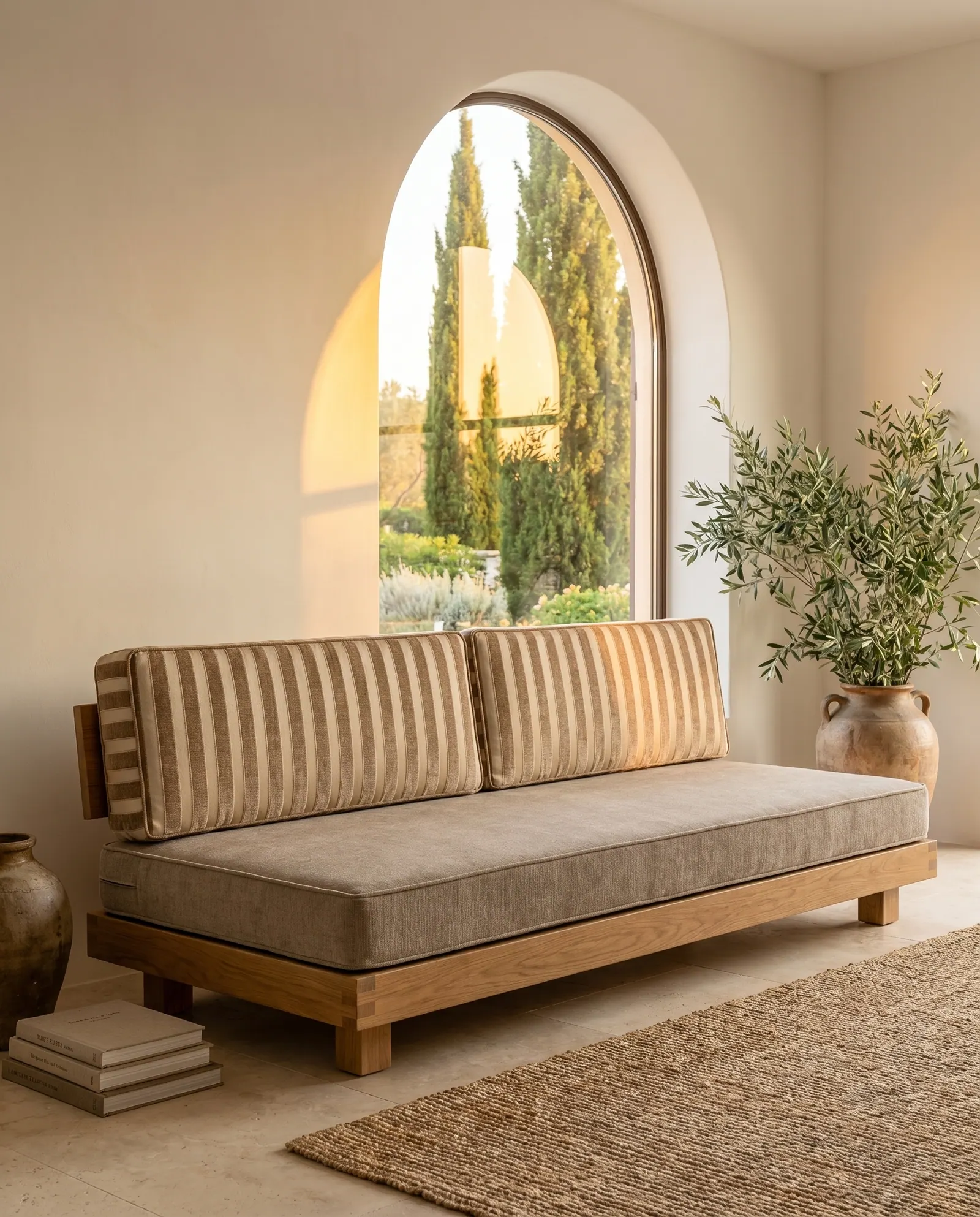
- Striped backrests
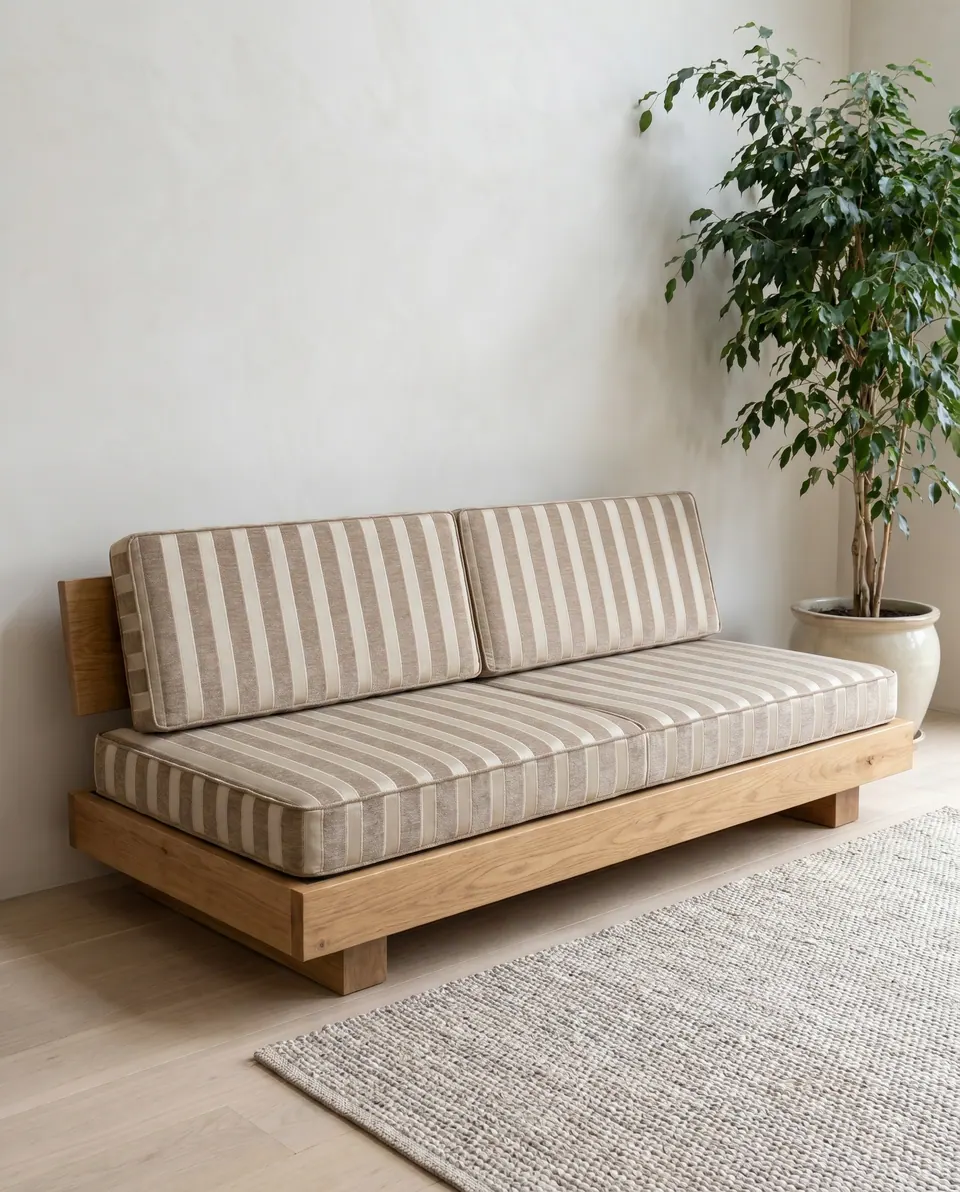
The honey stripe is used only on the backs, where it catches the low sun and shows off the pattern.
- Plain taupe seat
A solid seat hides wear and lets the patterned backs take the attention.
- Arched window
The arch frames cypress trees and throws warm light across the cushions in the evening.
- Olive in amphora
Terracotta repeats the warm earth tone of the stripe on the opposite side.
- Stacked books
Books on the floor keep the arrangement relaxed rather than showroom-stiff.
Plate Plain Taupe Seat with Gold Striped Backrests Under an Arched Window
A plain seat and striped backs split the work between durability and pattern in this sunlit villa lounge.
A Reading by HanaDaybed Cushions & Covers
A daybed cushion set in two cloths: taupe to sit on, gold stripe to lean on
Hana reads an oak daybed under an arched window by touch first: one soft plain cloth for sitting, one woven stripe for leaning, and what each asks of you.
The quick answer
A daybed cushion set can use two fabrics: a plain, soft weave on the seat, where friction and crumbs land, and a patterned jacquard on the backrests, where shoulders only brush it. Here a taupe chenille-textured seat hides wear while honey-gold striped backs catch the evening light. Ask for zip-off covers wherever washing will matter.
Pinned by Hana: a two-fabric daybed under an arched window
Five pins mark the striped backrests, the plain seat, the arched window, the olive in its amphora and the books stacked on the floor.
The numbers match the pins on the plate.
- Striped backrestsThe honey stripe is used only on the backs, where it catches the low sun and shows off the pattern.
- Plain taupe seatA solid seat hides wear and lets the patterned backs take the attention.
- Arched windowThe arch frames cypress trees and throws warm light across the cushions in the evening.
- Olive in amphoraTerracotta repeats the warm earth tone of the stripe on the opposite side.
- Stacked booksBooks on the floor keep the arrangement relaxed rather than showroom-stiff.
Two fabrics, two jobs: a taupe seat and gold stripe backs
Two cloths share one daybed here. That is the whole idea.
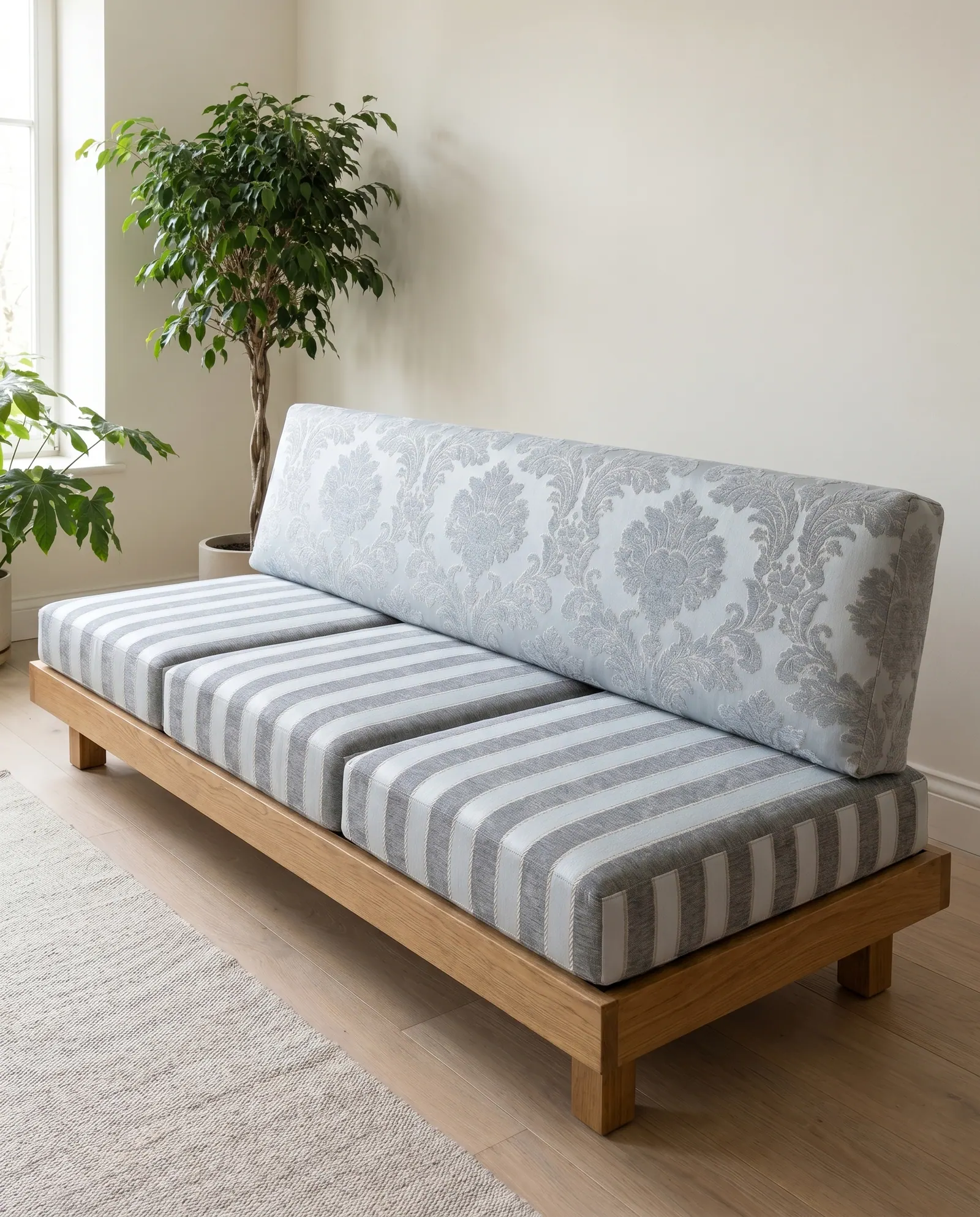
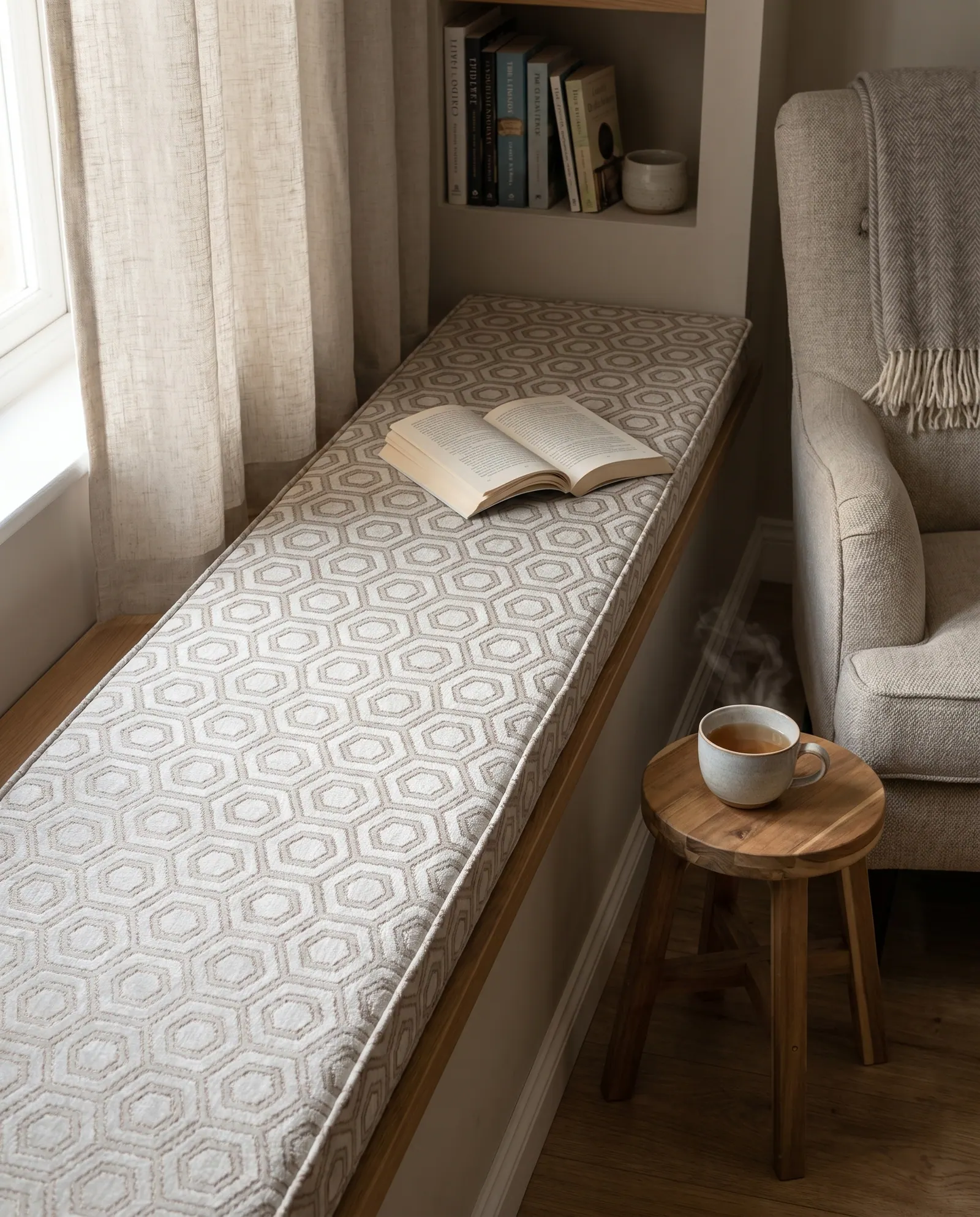
The seat is a plain taupe weave with a chenille texture. It is soft under the palm and has no pattern to line up, so small marks and uneven wear sink into it. The backrests are a honey-gold and cream jacquard stripe. The stripe is woven in, not printed, and it has a slight relief you can feel with a fingertip.
Proportion is quiet. The backs stand upright against the wall, shallower than the seat, and self piping traces each box edge in its own cloth. Nothing contrasts except the stripe.
Light finishes the reading. Evening sun comes low through the arched steel window, past the cypresses, and lands on the backs first. Gold takes that light and holds it. The taupe below stays calm in the shade.
The props repeat the warm earth. An olive tree in a terracotta amphora answers the stripe from the other side of the room. Cloth-bound books on the floor and an earthenware vase keep the scene lived in. A jute rug adds a third texture underfoot.
If you want a bold fabric but not everywhere, put it where you lean. The daybed cushions hub shows more sets built this way, and the jacquard and damask library explains woven pattern. Where does your hand rest most on your daybed?
The seat takes the wear. The backs take the light. The hand learns which is which.
How the taupe chenille and gold jacquard feel in the hand
| Question | Plain taupe seat | Gold jacquard stripe backs |
|---|---|---|
| Under the hand | Soft, velvety chenille texture | A woven relief you can feel along each stripe |
| Where it works hardest | Every sit, slide and nap | Light contact from shoulders and heads |
| What it forgives | Small marks and uneven wear | Little; pattern draws the eye, so keep it where wear is light |
| Cleaning | Zip-off cover so the seat can come off | Spot-clean first and check the care label before a full wash |
A 32.5-inch daybed asked to be a sofa
A parent wrote to the workshop with a deep daybed, 32.5 in (83 cm), and young children in the house. They wanted it to work as a daytime sofa: one long, thick backrest and two round arm bolsters.
They asked for zip-off covers for washing. That ruled out tufting.
Then the numbers. To leave a normal seat depth of about 19.5 in (50 cm), the backrest had to be 12 to 14 in (30 to 35 cm) thick. Silicone ball fill could not hold that shape. The shop proposed a foam wedge, 12 in (30 cm) at the bottom and 8 in (20 cm) at the top, 77.5 in (197 cm) long and 19.5 in (50 cm) high. The French trim was left off, and hidden ties went near the top for lifting. The bolsters were 17.75 in (45 cm) long and 7 in (18 cm) across, in a soft, easy-clean mustard.
The first parcel was lost in transit. The shop remade the order and shipped it again.
Backrest thickness is daybed depth minus the seat depth you want. Above about 8 in (20 cm), use a wedge. The back cushion fill pattern explains why.
Buyer questions: Hemnes sizes, back pillow height and a beige surprise
- A common question
What size cover do I need for an IKEA Hemnes daybed with two mattresses stacked?
The workshop's answerHemnes sizes vary by country, so the shop checks before cutting. It assumed 39 x 75 in (99 x 190 cm) for a US version, but another buyer's mattresses measured 31.5 x 78.75 in (80 x 200 cm). Two stacked mattresses stand about 8 to 9.5 in (20 to 24 cm) tall, one cover can wrap both, and it is cut slightly larger so they slide in easily.
- A common question
How tall are the back pillows in the daybed set? Could mine be 27.5 in (70 cm)?
The workshop's answerThe standard back pillow is 15.75 in (40 cm) tall, and the set price is based on that, so a 78.75 in (200 cm) daybed gets two 15.75 x 39.5 in (40 x 100 cm) pillows spanning its full length. At 27.5 in (70 cm), a pillow is too tall to work as a backrest. Bolsters with inserts are included in the set.
- A common question
I ordered off-white velvet and it looks beige. Did I get the wrong fabric?
The workshop's answerVelvet has a directional pile, so the same cloth can look lighter, darker or warmer depending on which way it is brushed, the viewing angle and the light. Brush the pile the other way and look at it in daylight. In that case the shop confirmed the correct off-white had been used and its pre-shipping photo matched the chart.
On the cutting table: seat and backs
| Product | Daybed cushion set: one seat, striped backrests |
|---|---|
| Seat fabric | Plain taupe weave with a chenille texture |
| Back fabric | Honey-gold and cream jacquard stripe |
| Edge | Box edge on seat and backs |
| Piping | Self piping in each cloth |
| Frame | Low oak platform daybed |
| Light | Low evening sun through an arched steel window |
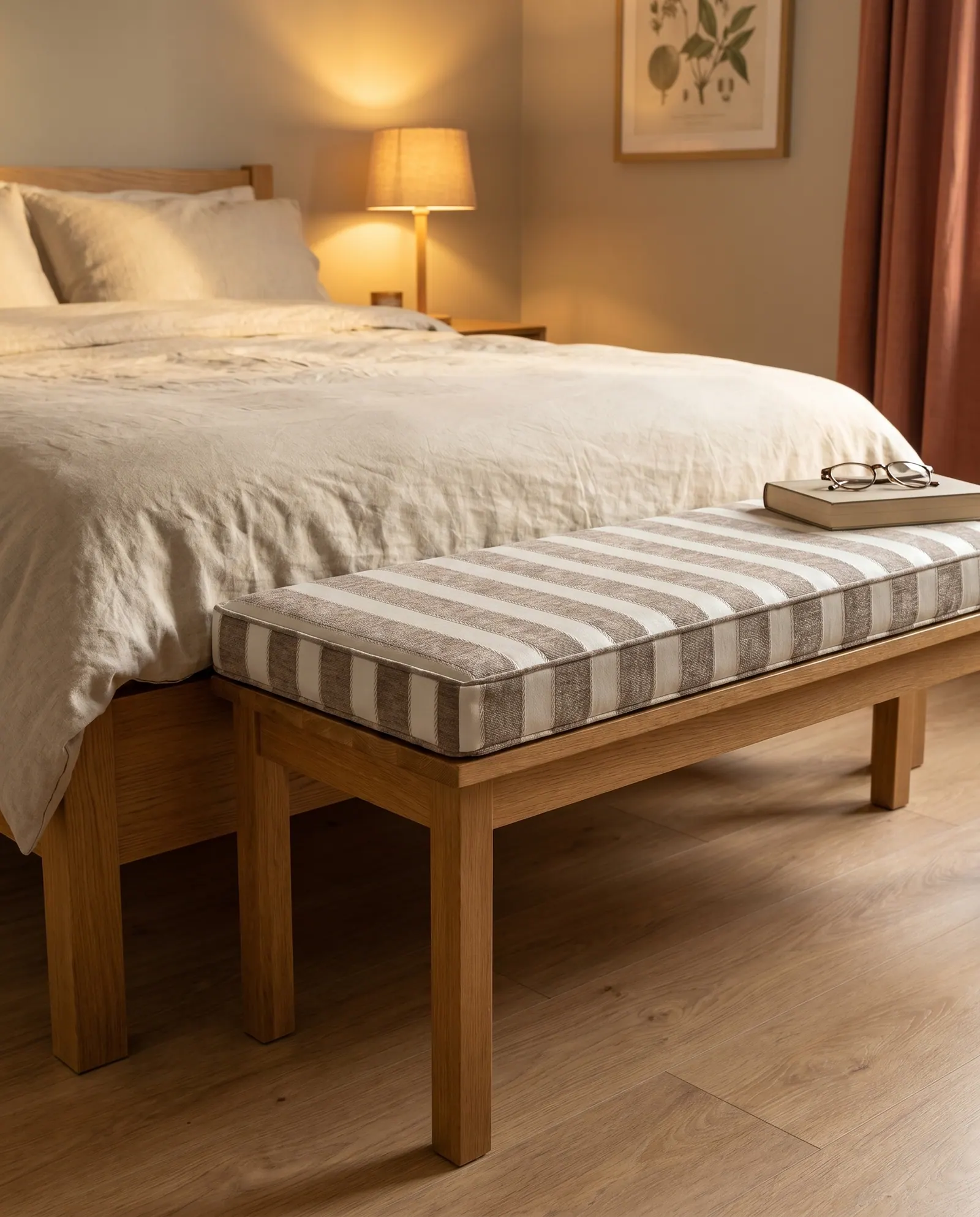
| Care habit | Zip-off covers where children or pets sit |
| Best for | A living-room daybed that works as a sofa by day |

Have it made
Have this made — ask Hana’s workshop
Leave your numbers and the height you like to sit at. The rest is a short conversation. — Hana
Leave your details and the workshop will call you to confirm measurements, fabric, foam and piping. No prices, dates or payment on this page: it is a request, not an order.
Put the patterned fabric on the daybed backrests and the plain one on the seat; a plain seat hides wear, and a jacquard stripe shows best where shoulders only brush it.
Hana
Questions buyers ask next
Is chenille a good fabric for a daybed seat?
It is soft and plain, which suits a surface that gets sat on, slid across and napped on. A plain seat also hides small marks better than a pattern. If children use the daybed, ask for zip-off covers so the seat cover can come off.
Why use a striped jacquard only on the daybed backrests?
Backrests get light contact and sit near eye level, so a pattern shows off there without taking the daily friction of the seat. A woven stripe also has a slight relief that catches low sun, which is what makes the gold glow in this room.
Can a very thick daybed backrest still have a removable cover?
Yes. For one deep daybed the buyer asked for zip-off covers, which ruled out tufting, and the 12 in (30 cm) backrest used a foam wedge instead of loose fill so it would keep its shape inside the cover.
— Hana
More photographs to read
 Save
 Save
 Save
 Save
 Save
 Save